A scientific diagram illustrating chemical structures, sunlight hitting a brown cloud, text like VSFG, Albedo, Climate, and an arrow pointing to the Earth, all on a textured brown background.
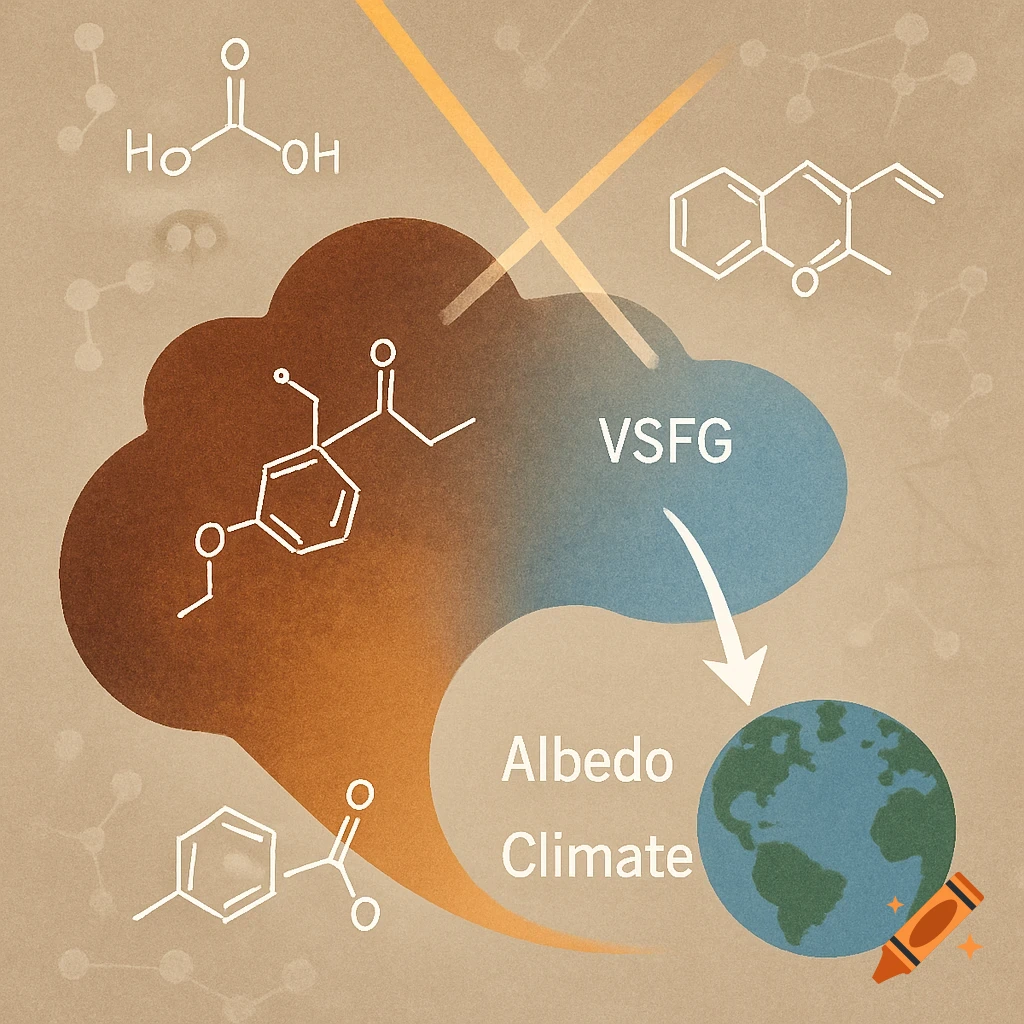
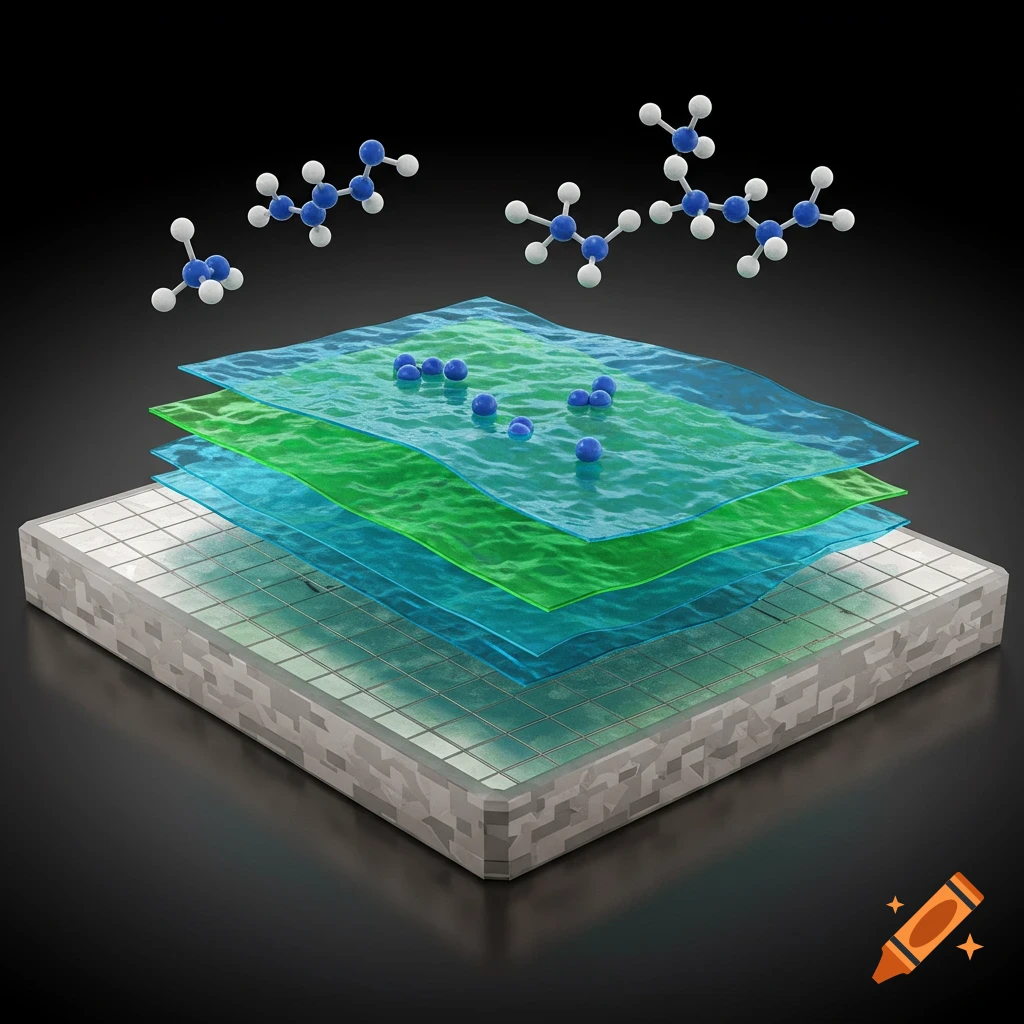
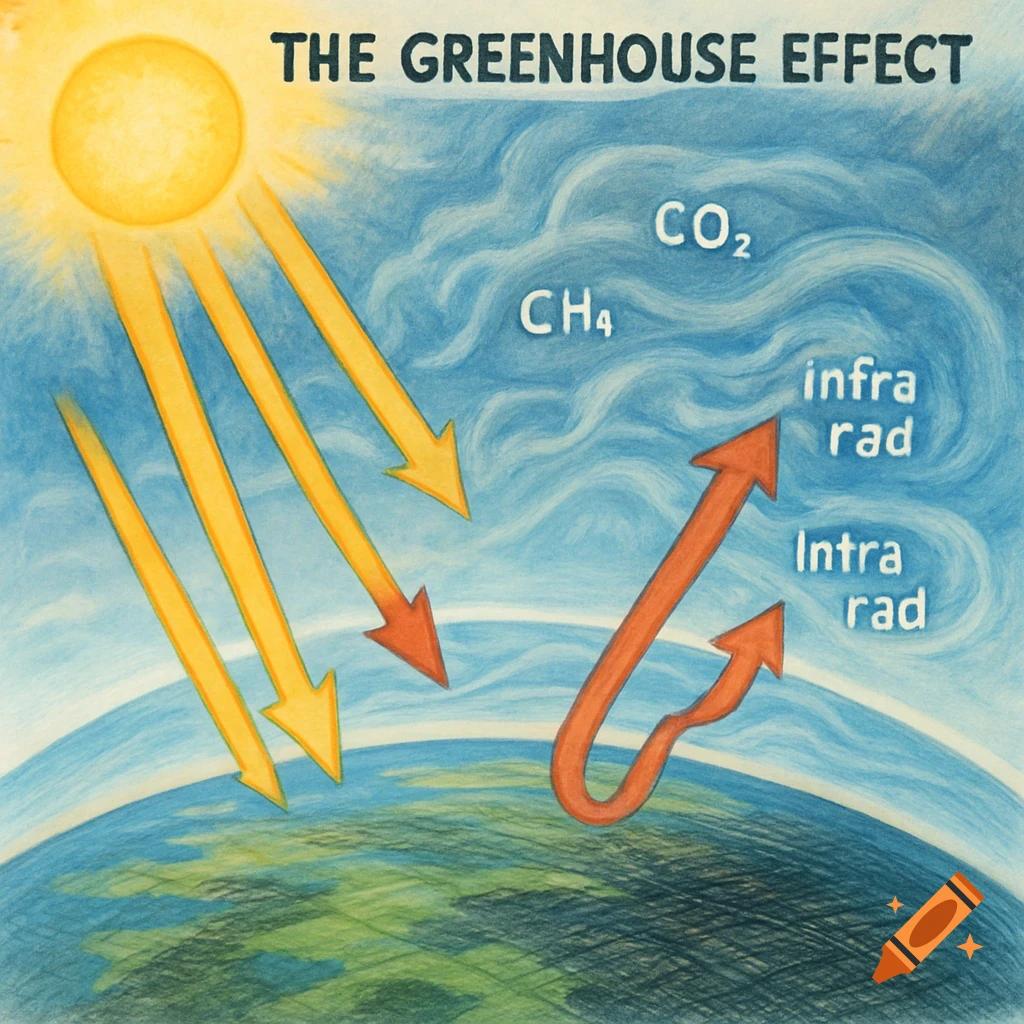
generate a simple graphical abstract or table of contents figure to go along with this abstract: Organic aerosols are prevalent throughout the earth’s atmosphere and contribute substantially to climate change. Recently, brown carbon-containing organic aerosols have gained attention as a substantial contributor to the destruction of the earth’s albedo. Improving our understanding of brown carbon chromophores, particularly at interfaces within aerosols, can help build better atmospheric and climate models. To address this knowledge gap, we used several laser spectroscopy methods to investigate several brown carbon chromophores at aerosol interfaces. Vibrational sum-frequency generation (VSFG) spectroscopy was used to study the behavior of brown carbon chromophores at the water/oil interface and the results interpreted using molecular dynamics simulations. Furthermore, in order to mimic the partially solvated environment at air/water aerosol interfaces, we used resonant ion-depletion infrared spectroscopy (RIDIRS) to characterize the single water microsolvation of brown carbon. Additionally, the noncovalent solute-solvent interactions were revealed and compared with high-level theoretical calculations. By combining these experimental and theoretical methods, we aim to unravel the relative orientations and intermolecular interactions of interfacial brown carbon chromophores at aerosol interfaces. See more