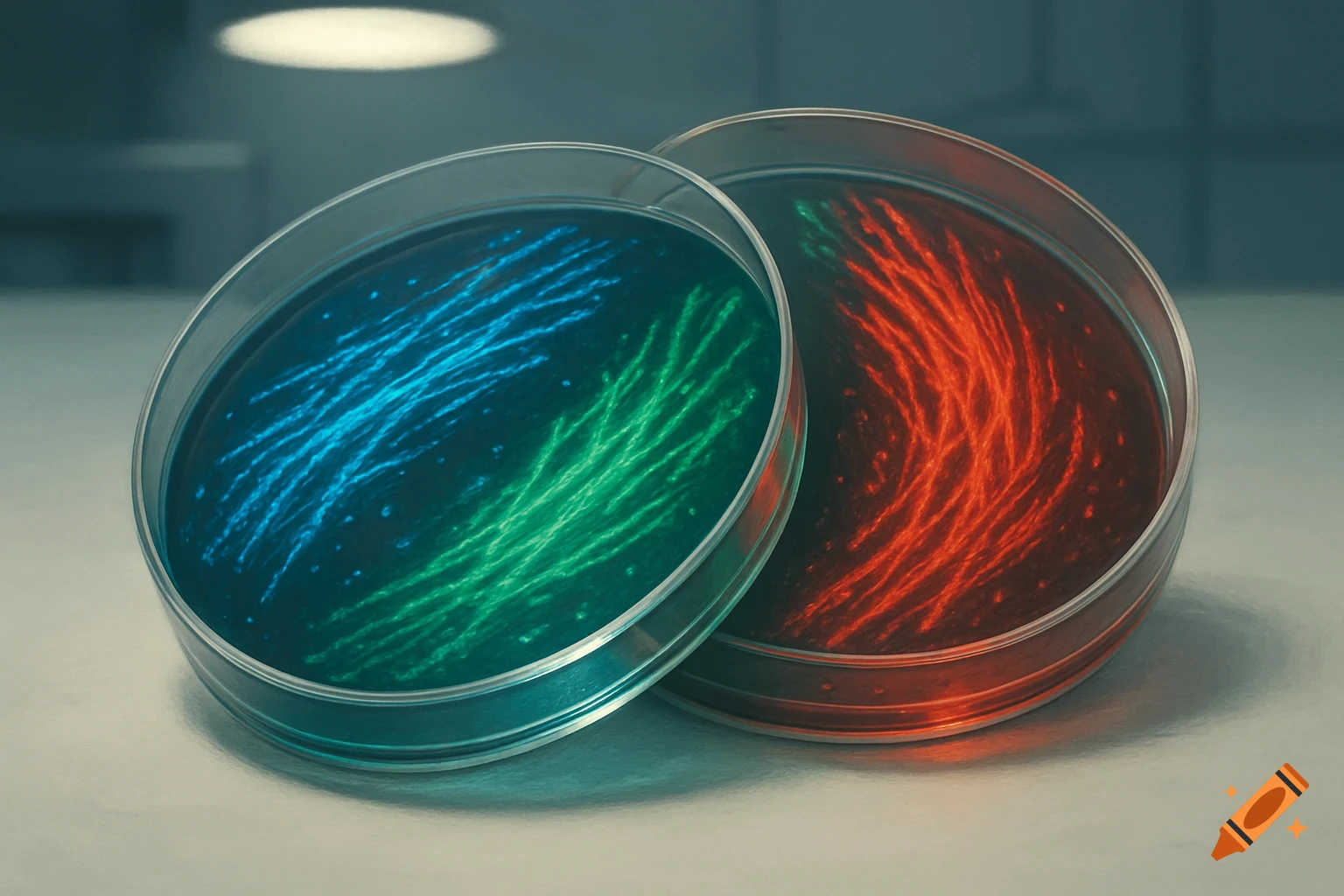
A diagram shows two Petri dishes divided into sections labeled Control, Antibiotic 1, and Antibiotic 2, demonstrating bacteria growth inhibition. One dish is labeled 'Phone screen', the other 'Bathroom sink'.
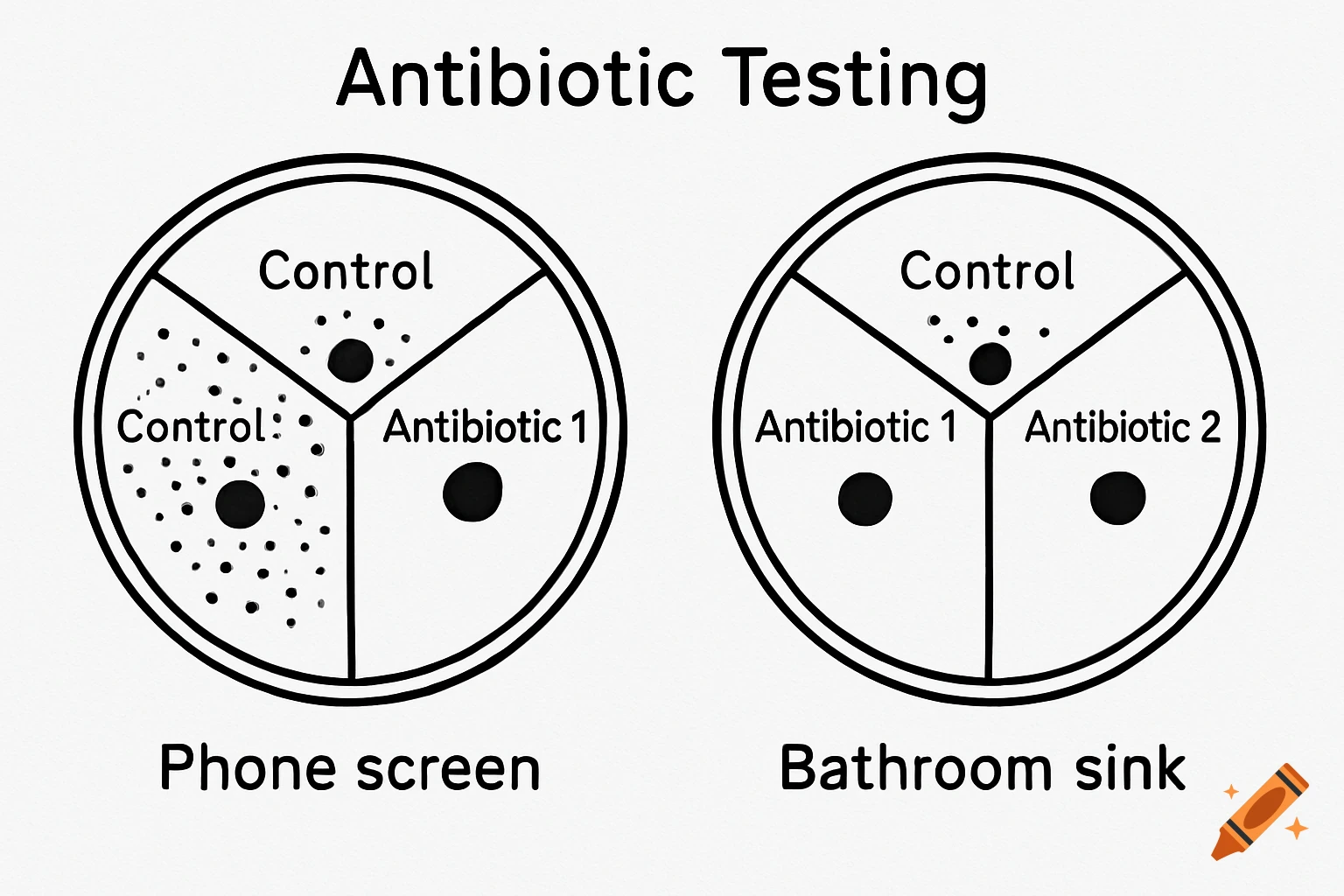
1. Draw Two Petri Dishes Draw two large circles side by side. These represent the two Petri dishes you used in your experiment. Make them each about the size of the bottom of a cup or a little bigger. 2. Divide Each Circle into Three Sections Use two straight lines to divide each circle into three equal parts, like slicing a pizza into thirds (imagine drawing a peace sign). You now have three labeled sections per dish. 3. Label Each Section In each Petri dish, write these three labels outside or inside the pie slices: Control Antibiotic 1 Antibiotic 2 Make sure the labels are easy to read and match across both dishes. 4. Add the Sample Source Label Below Petri Dish 1, write the source of bacteria you swabbed (e.g., “Phone screen”). Below Petri Dish 2, write the second sample (e.g., “Bathroom sink” or “Backpack strap”). 5. Draw the Discs In the center of each section (inside the “slice”), draw a small filled-in circle. These are your discs (paper discs with or without antibiotics). In the Control section, label the circle “Control Disc.” In Antibiotic 1, write “Antibiotic 1.” In Antibiotic 2, write “Antibiotic 2.” 6. Optional: Show Bacteria Growth You can draw little dots or cloudy blobs around the discs in the Control area to show bacteria growing. In the Antibiotic 1 area, draw fewer dots or empty space to show less growth. In the Antibiotic 2 area, draw almost no dots (just the disc) to show the strongest antibiotic stopped most bacteria. 7. Add a Title At the top of your See more