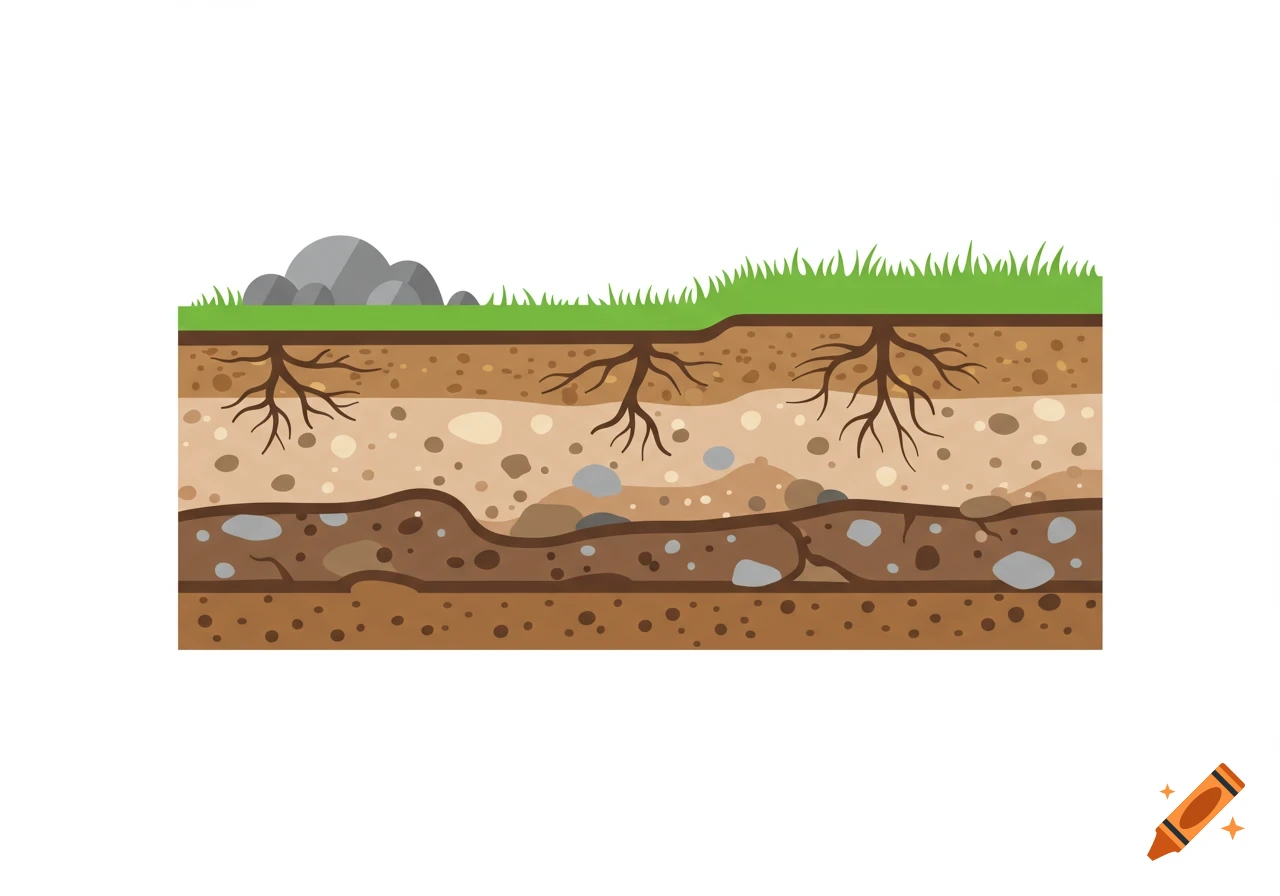
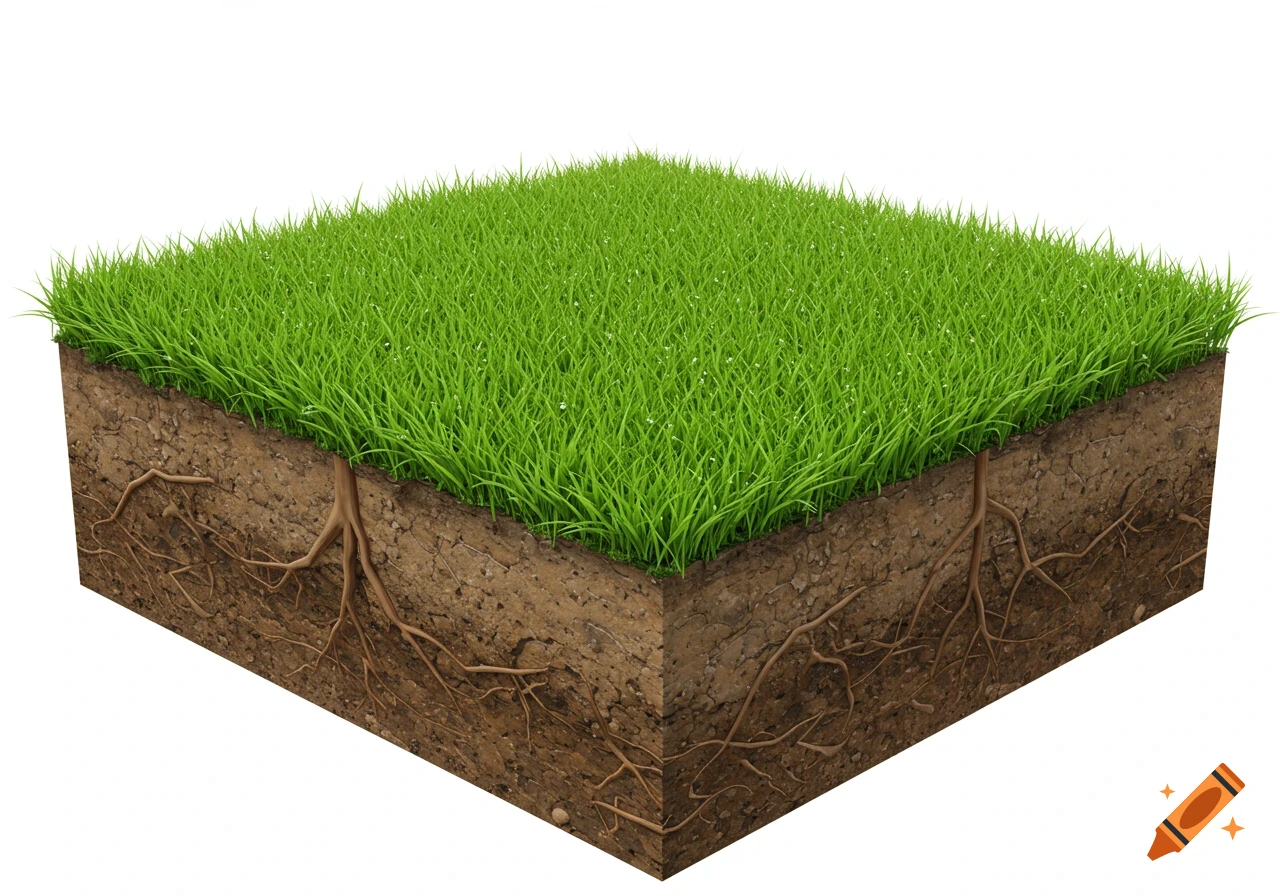
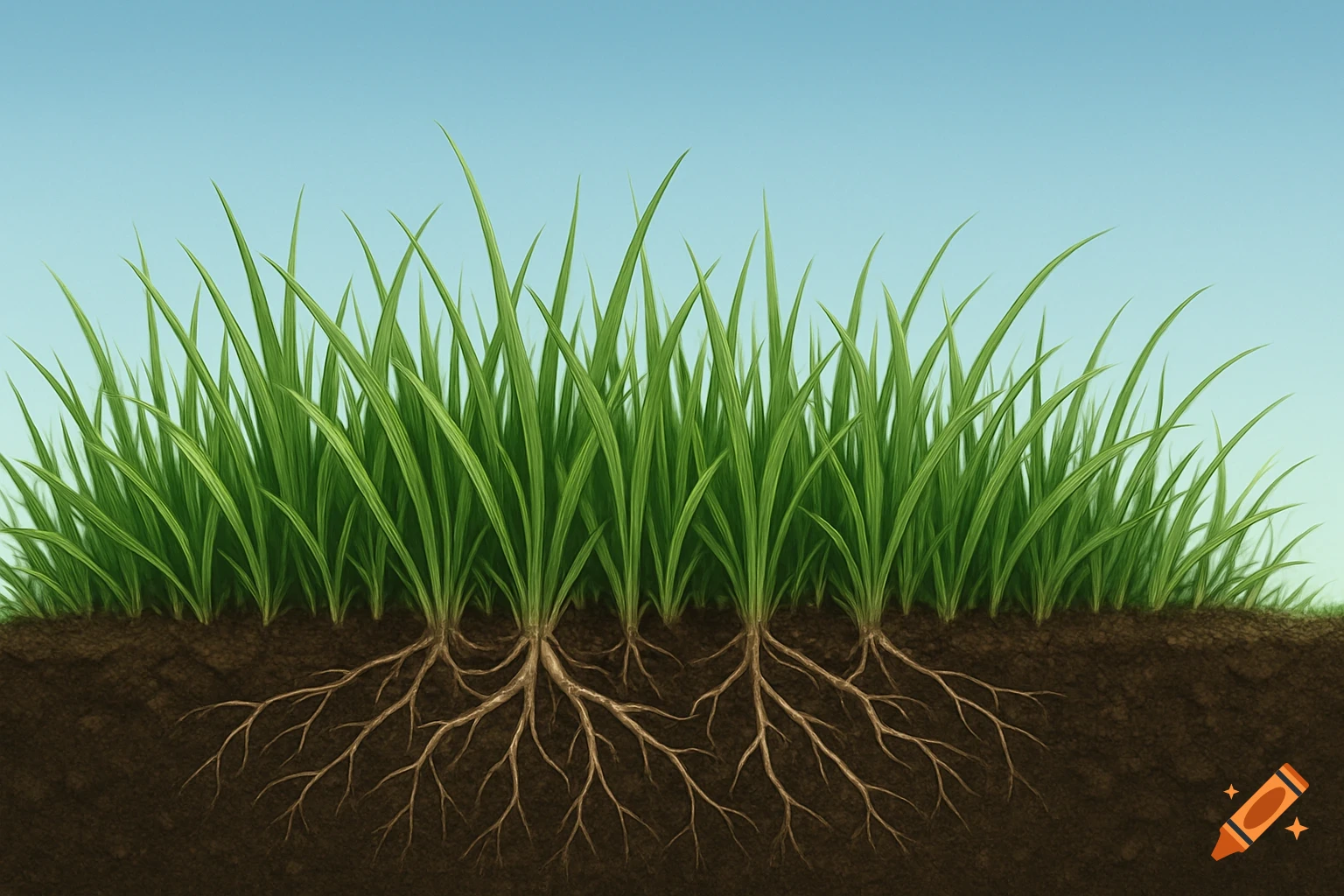
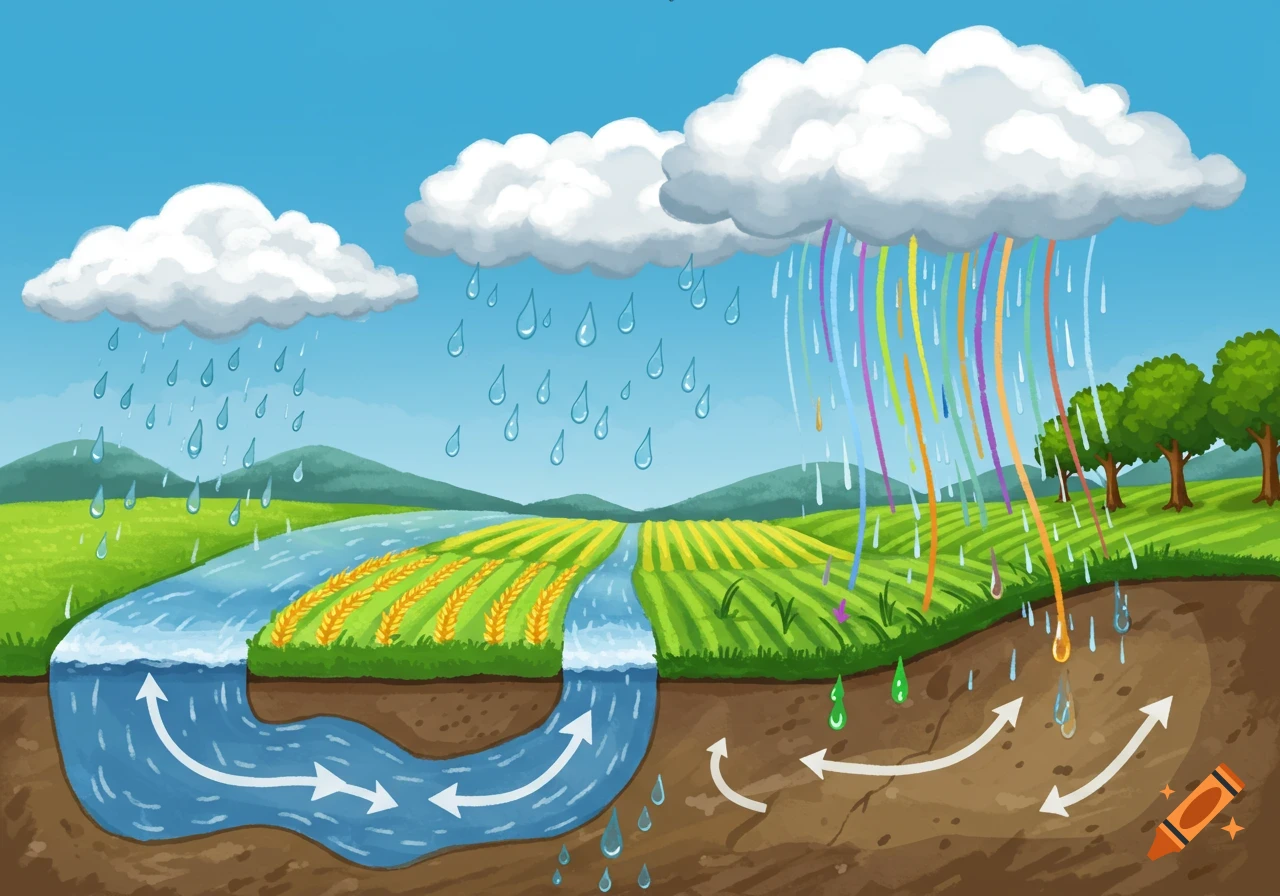
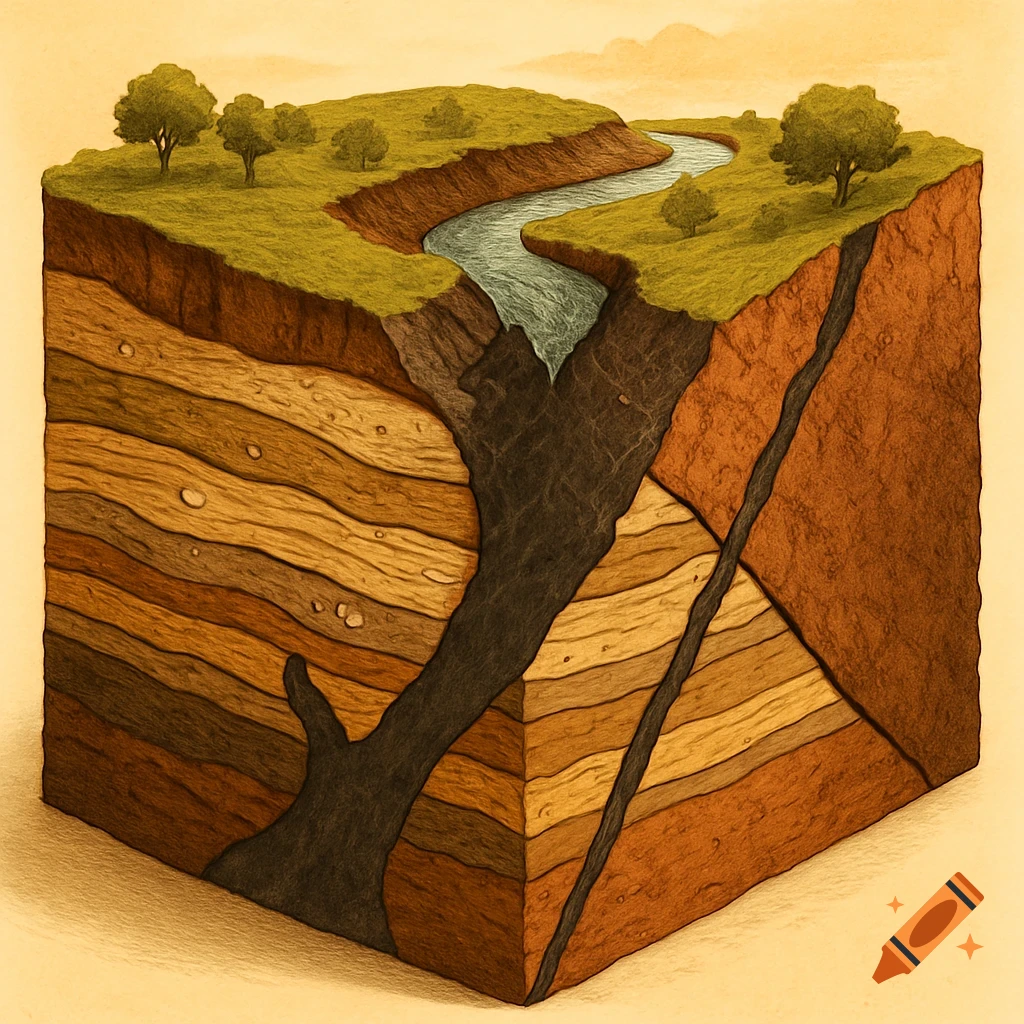
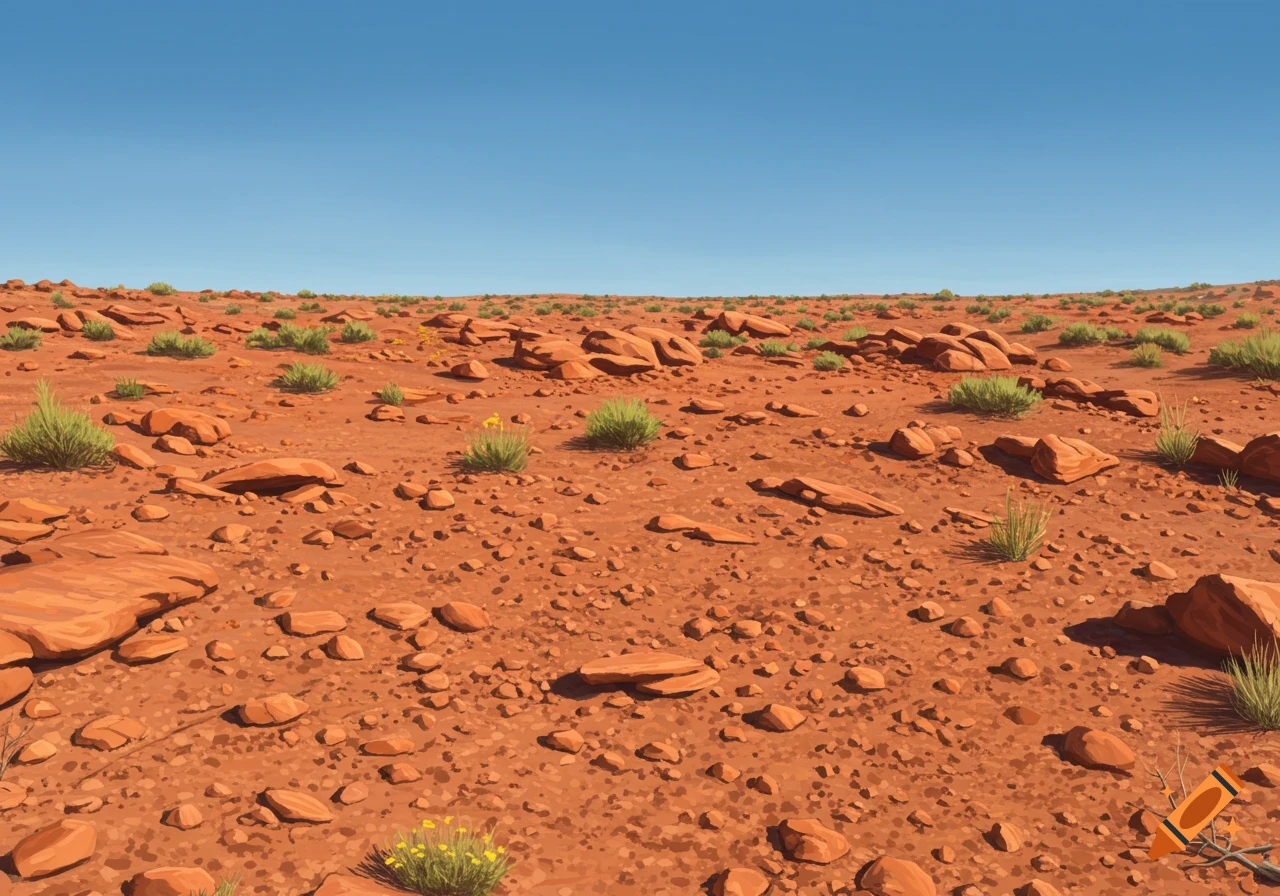
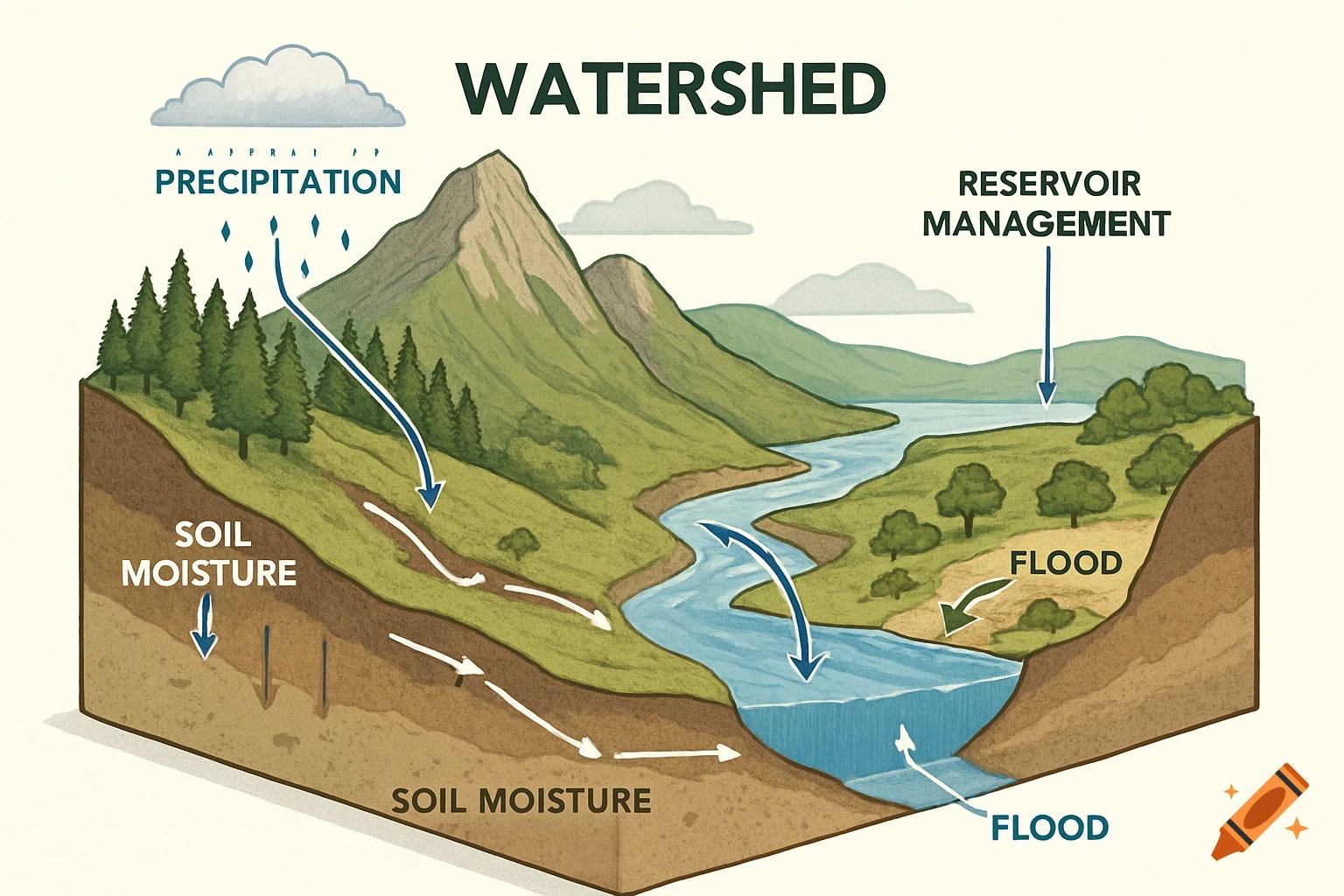
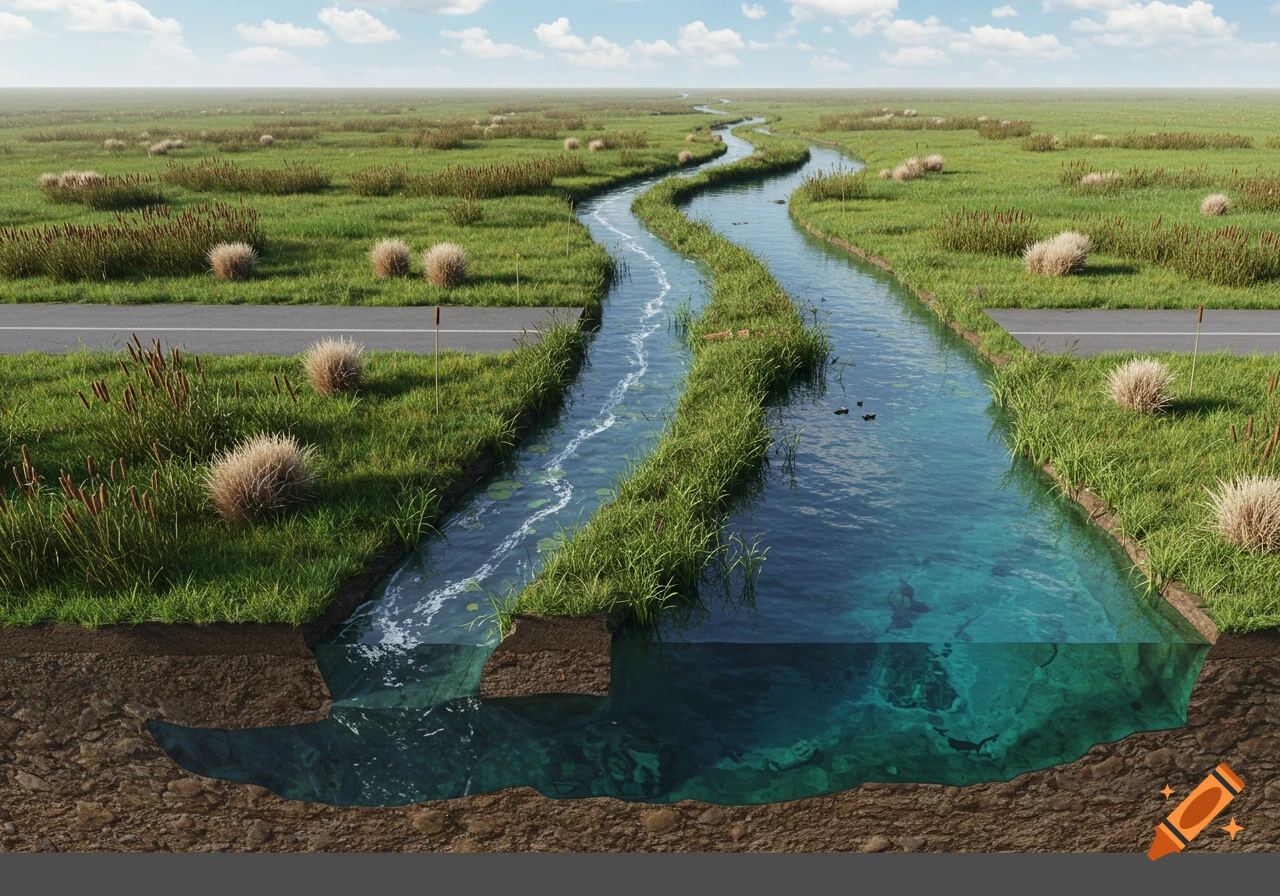
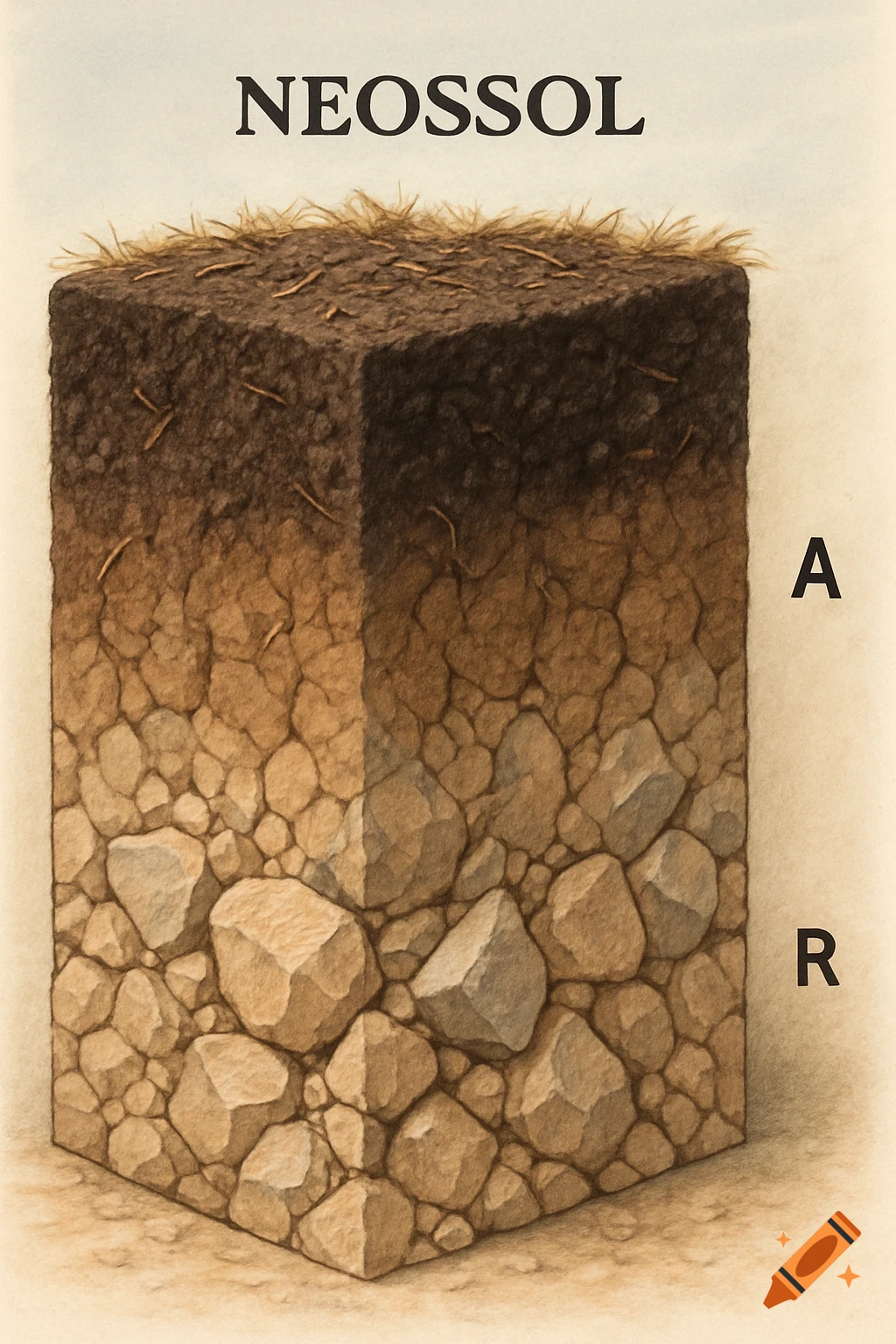
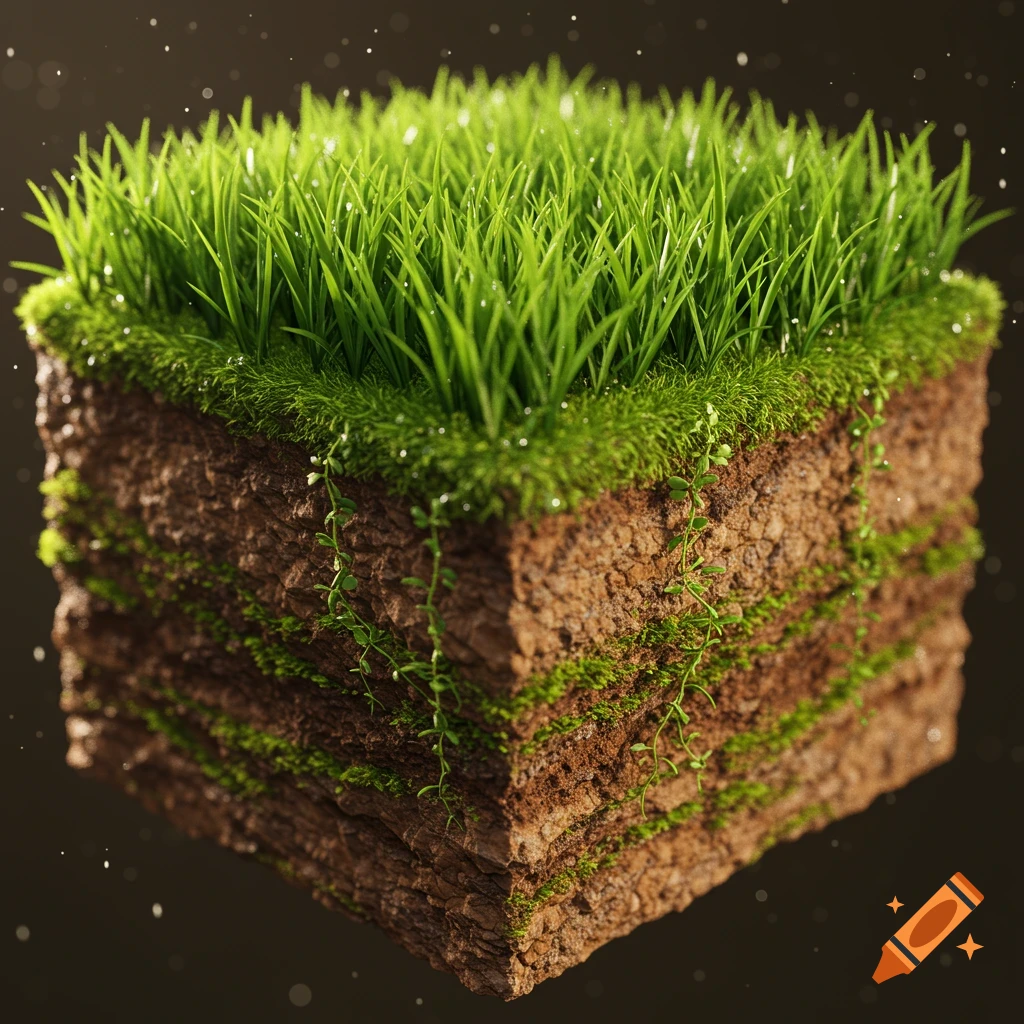
Diagram illustrating three stages of hillslope morphology and vegetation as soil transitions from frozen to unfrozen.
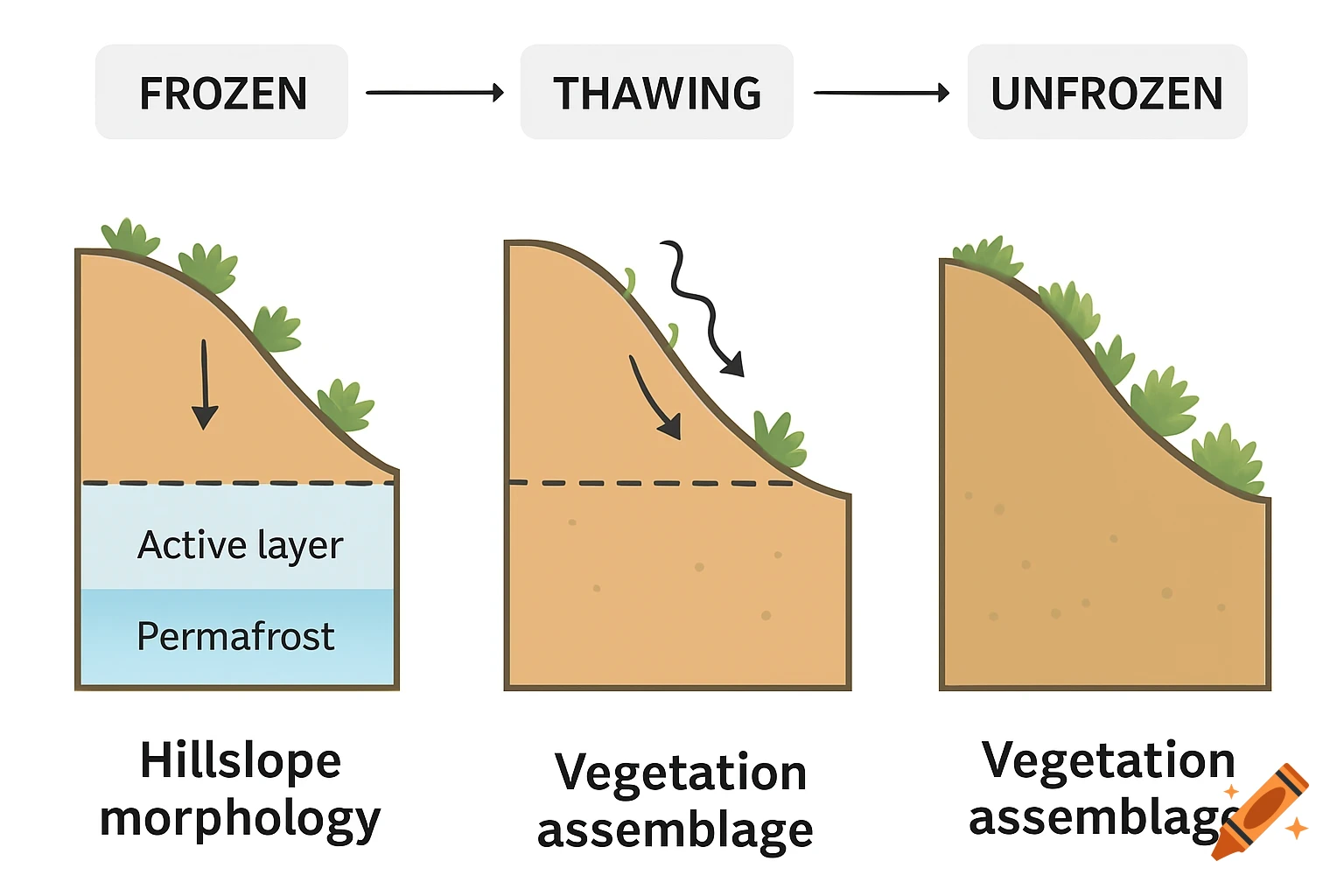
can you illustrate a conceptual model for me with three stages as indicated by the text below? Our evaluation of the rates of soil surface displacement and vegetation heterogeneity across soil thermal groups indicates a coupled geomorphic-ecosystem response to warming soil conditions across the study site and has deeper implications for more informed physical and ecological interpretations of observable changes in landscapes across the Arctic. Here we discuss a conceptual model for the co-evolution of hillslope morphology and vegetation assemblages as soils transition from frozen to thawing to unfrozen across permafrost regions. Continuous monitoring of soil displacement depth profiles through the active layer and into permafrost in 2022 showed, that while the total annual displacement is similar (Figure 5), there are distinctly different displacement behaviors between the three hillslopes and soil thermal groups studied at the site (Fiolleau et al., 2024), and these displacement behaviors drive change in vegetation heterogeneity across the site. On the east-facing and the lower portion of the south-east facing hillslope (Figure 1b), which are largely occupied by soils in the cold thermal group, displacement rates were largely spatially and temporally uniform. While the rates of soil movement are high (median = 0.0475 m yr-1), the spatiotemporal uniformity of soil displacement rates does not generate catastrophic hillslope failures, such as slumps or active layer See more