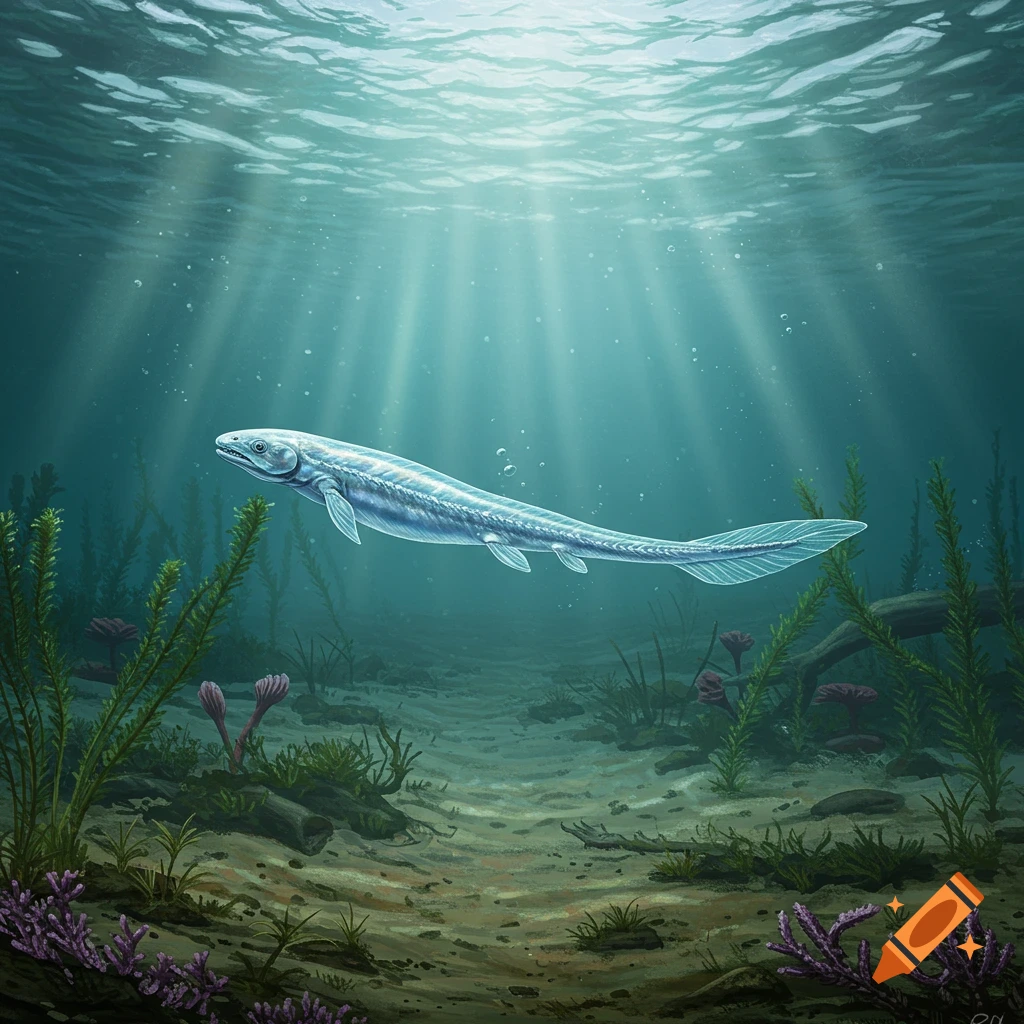
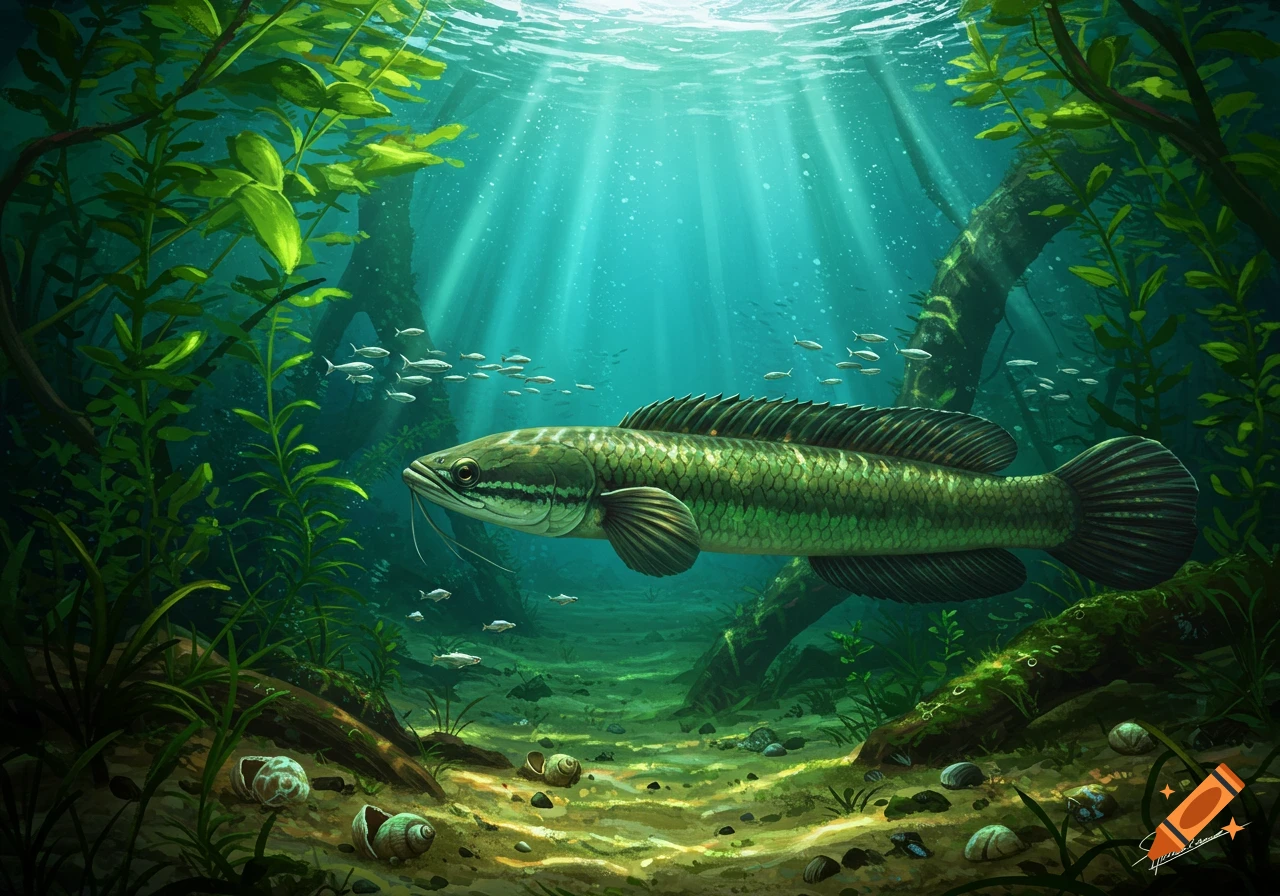
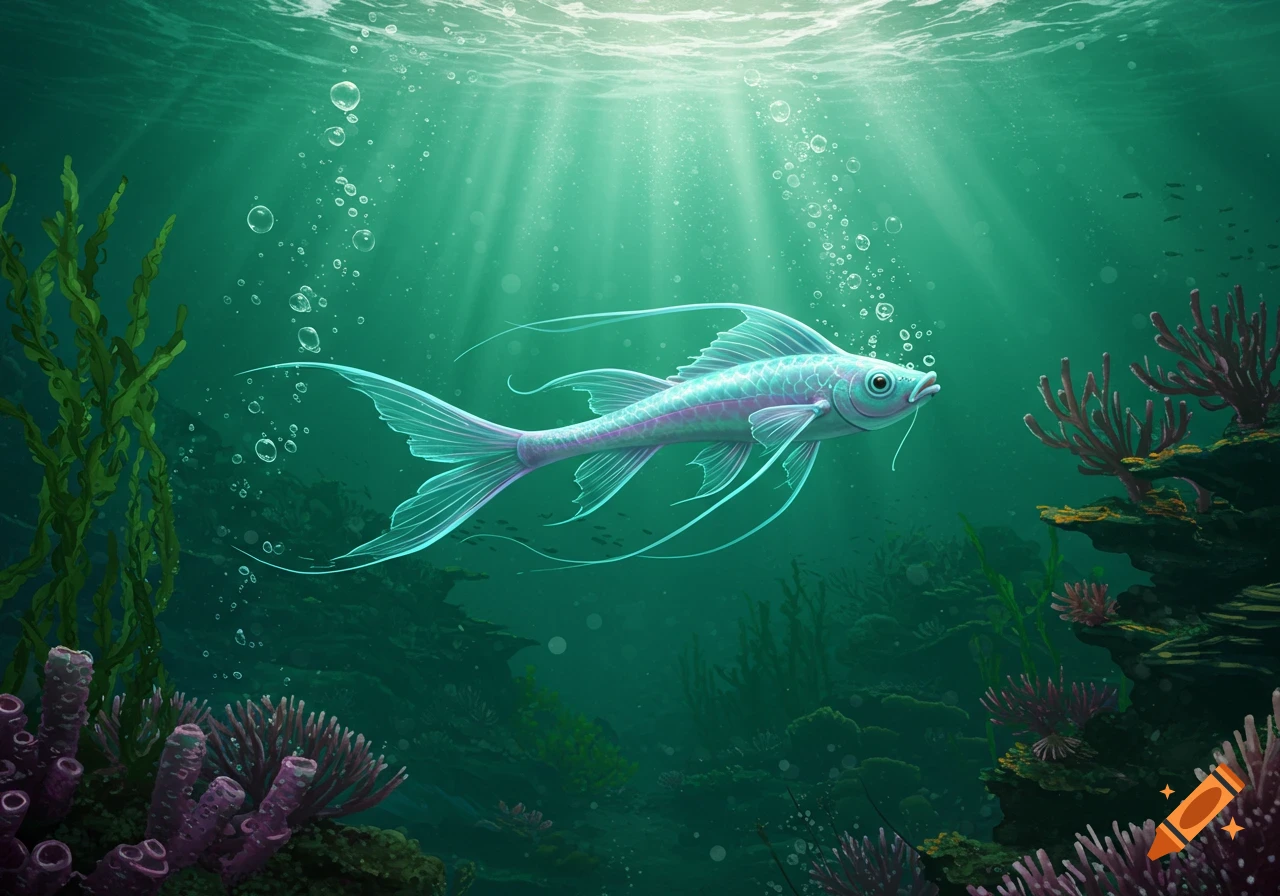
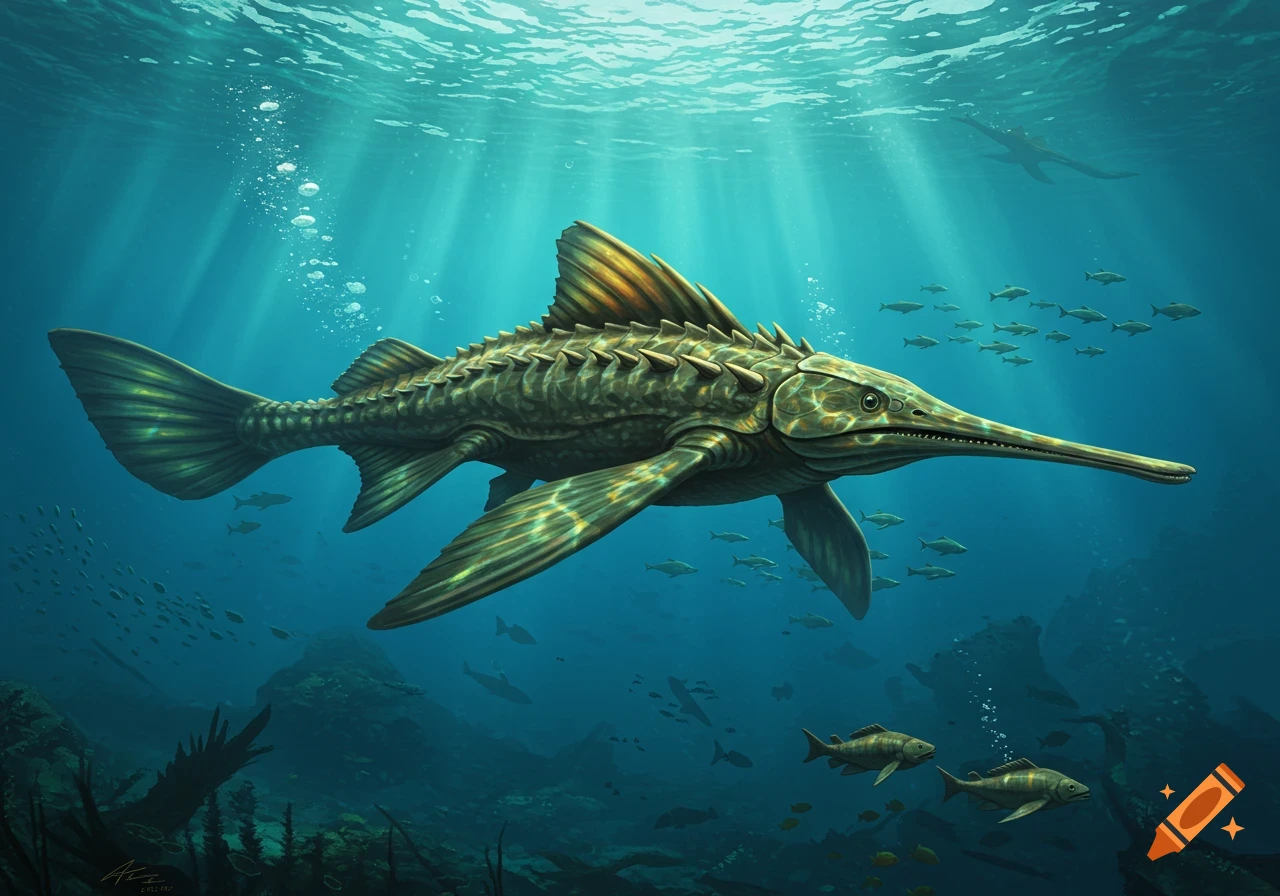
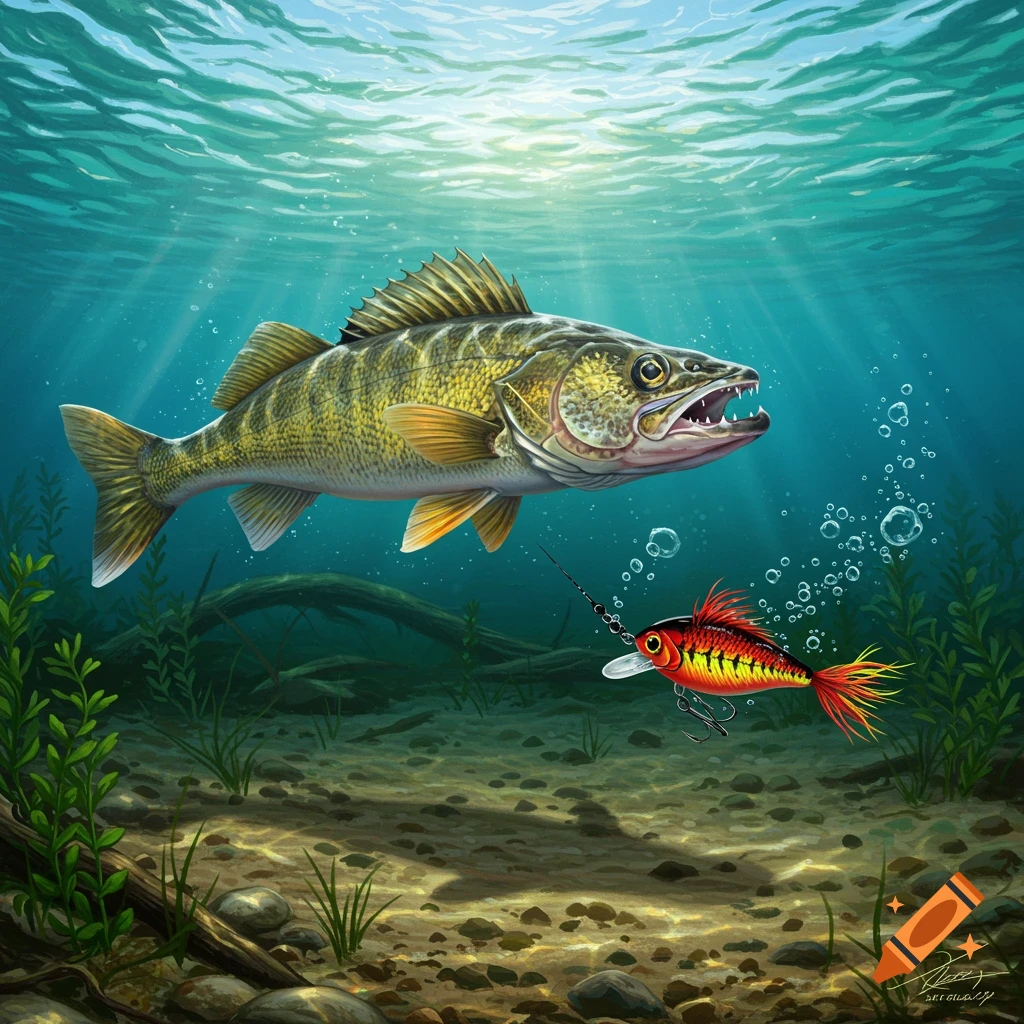
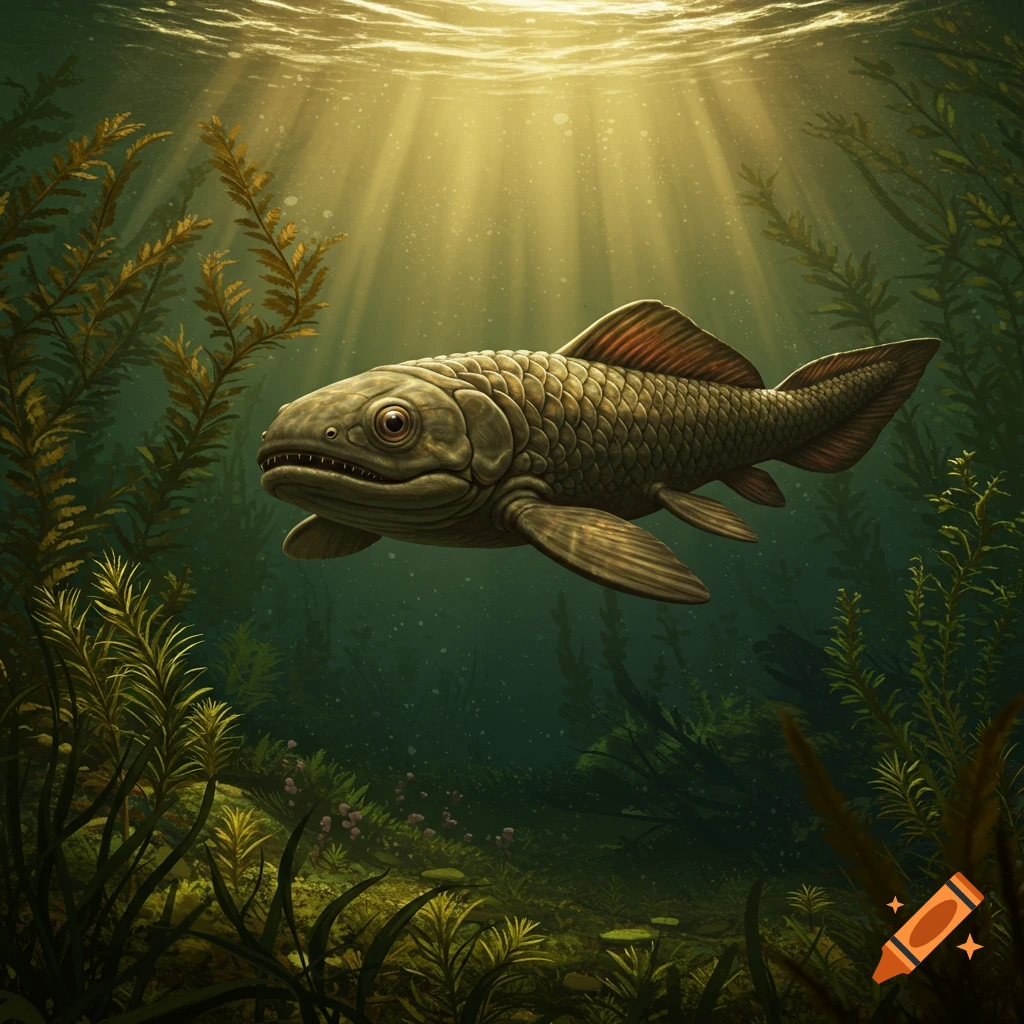
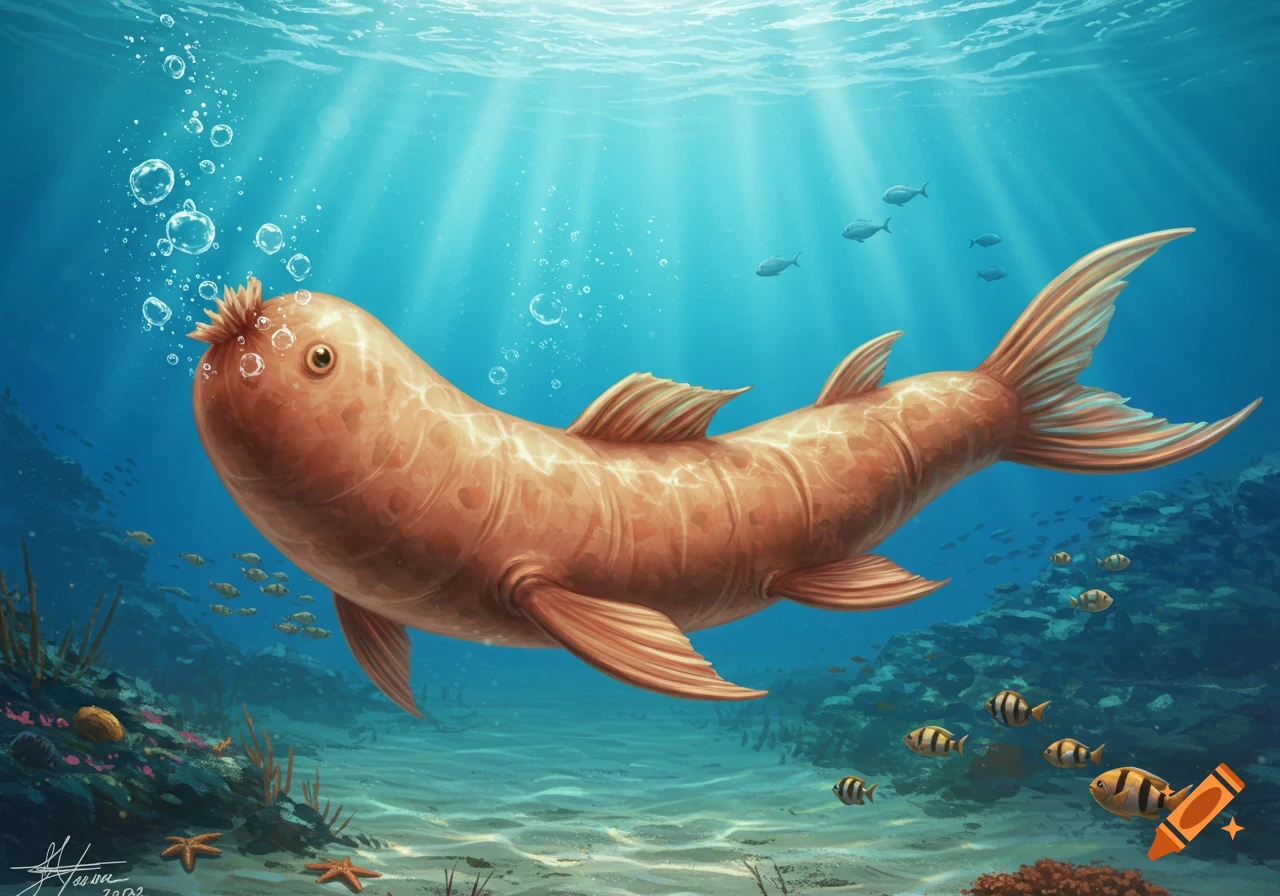
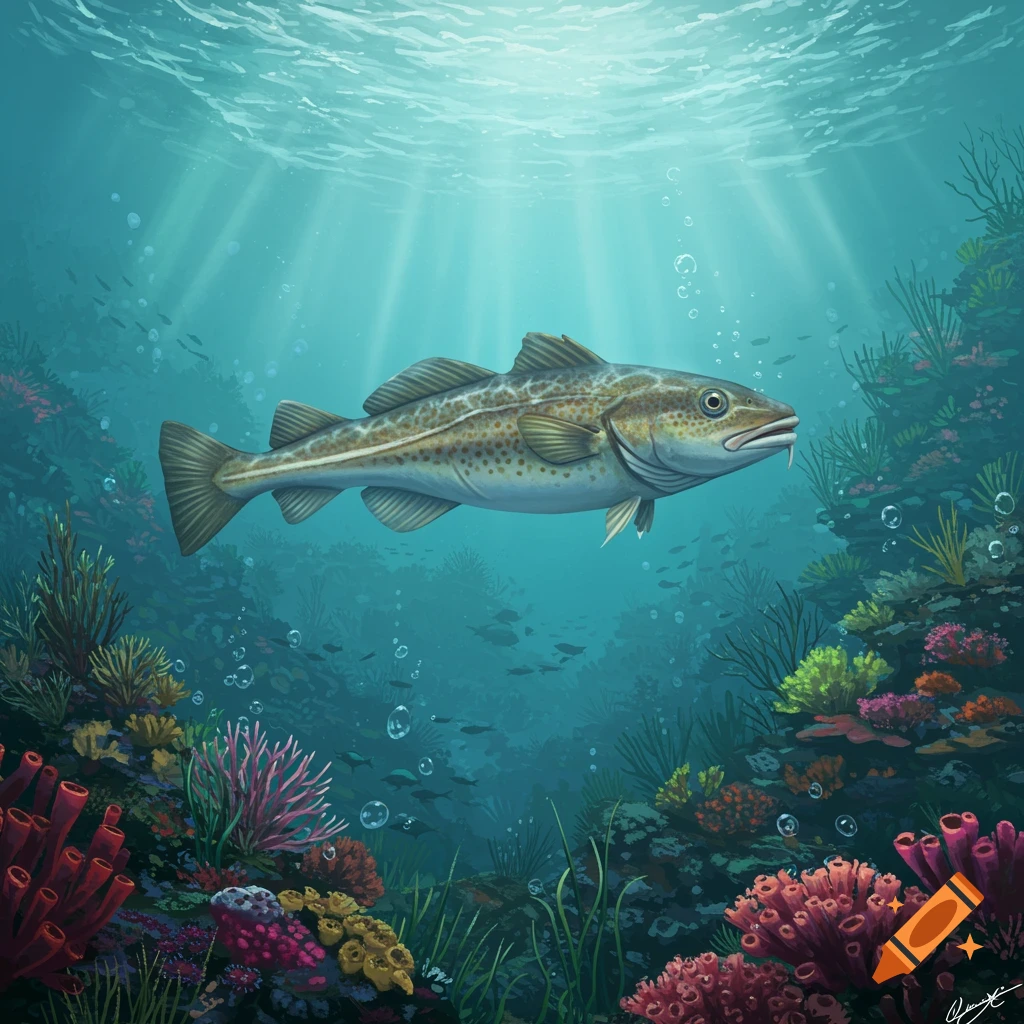
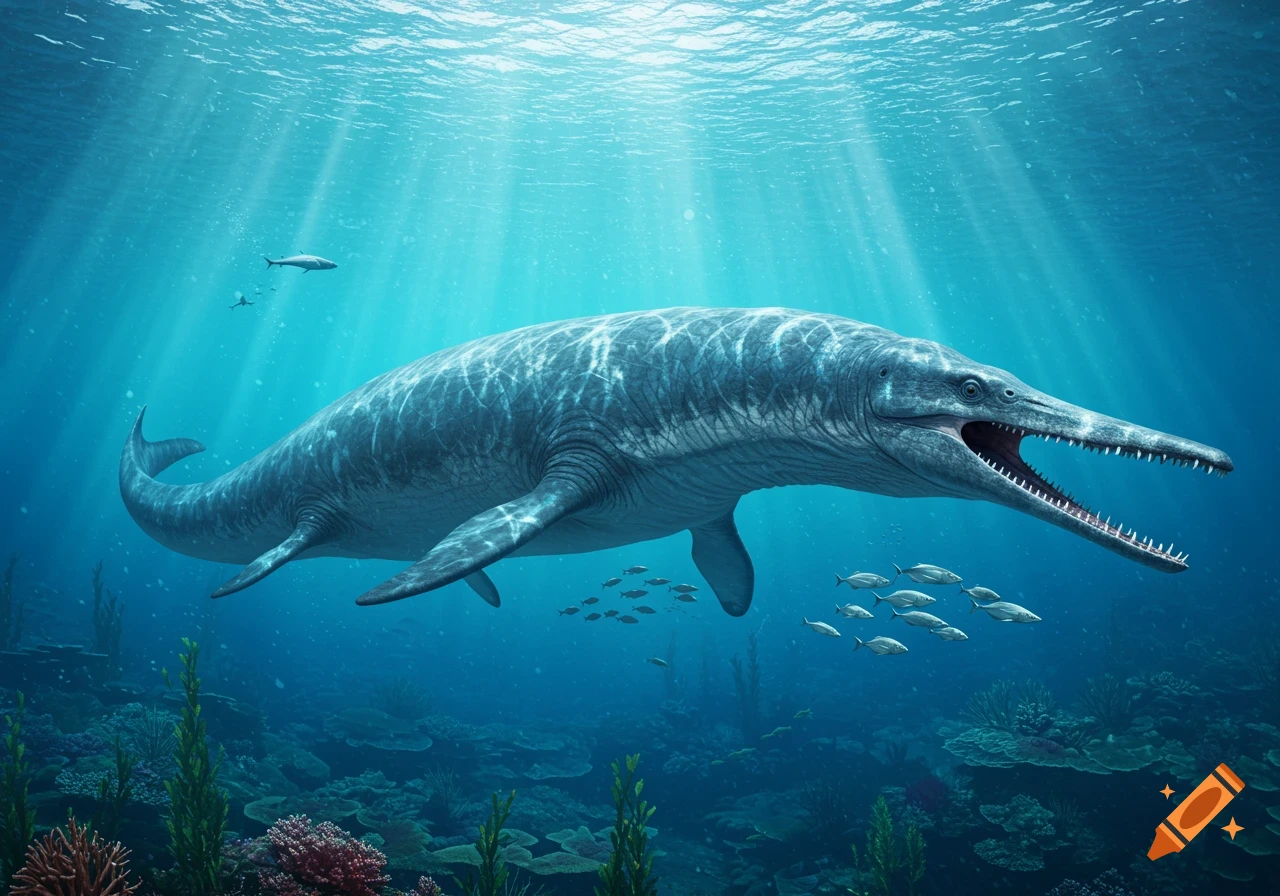
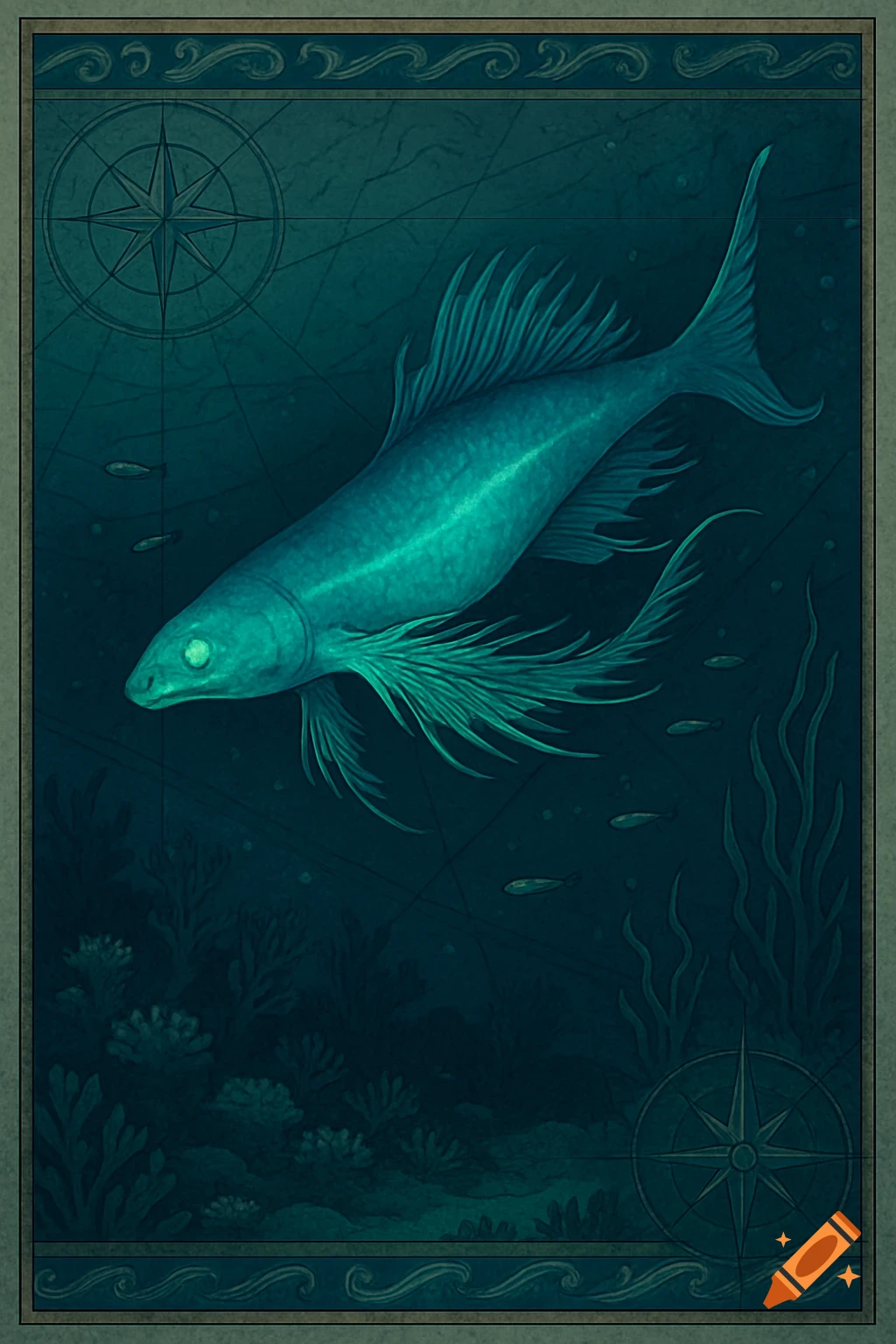
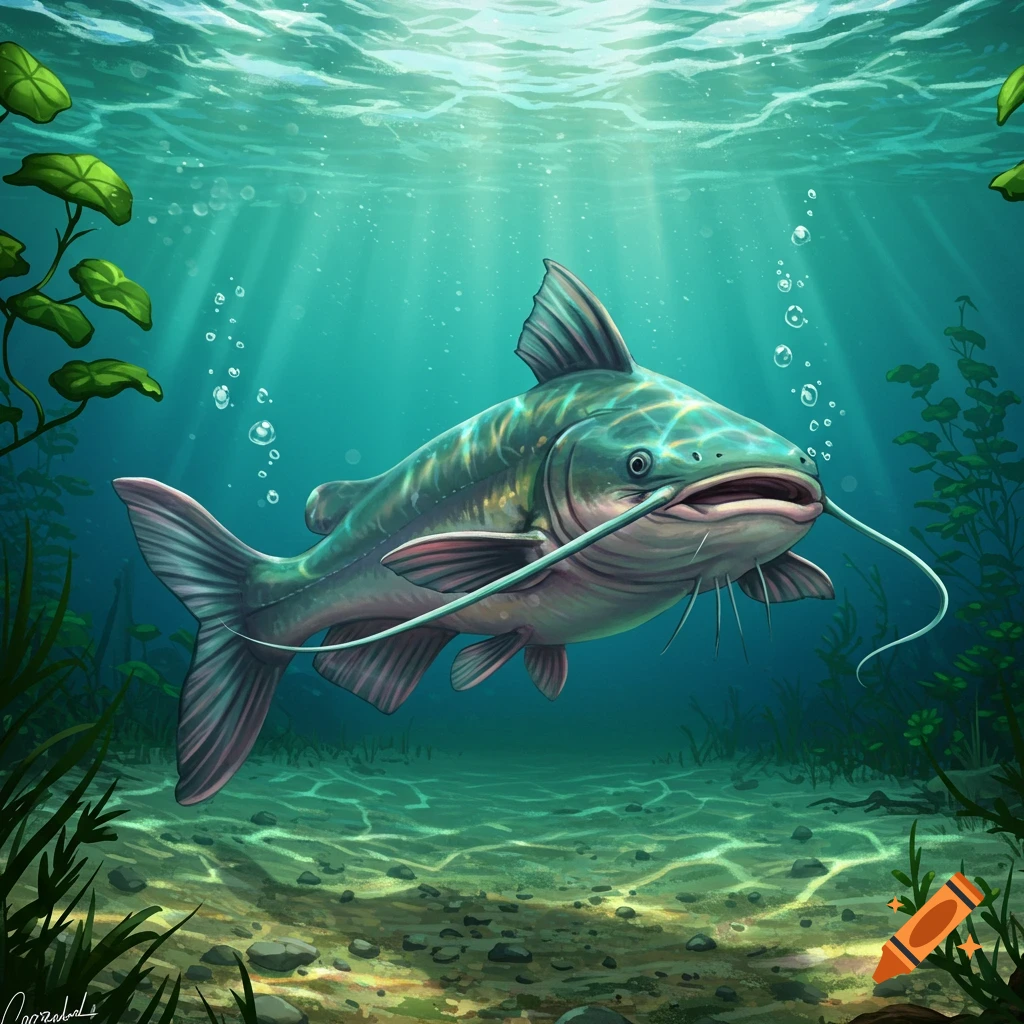
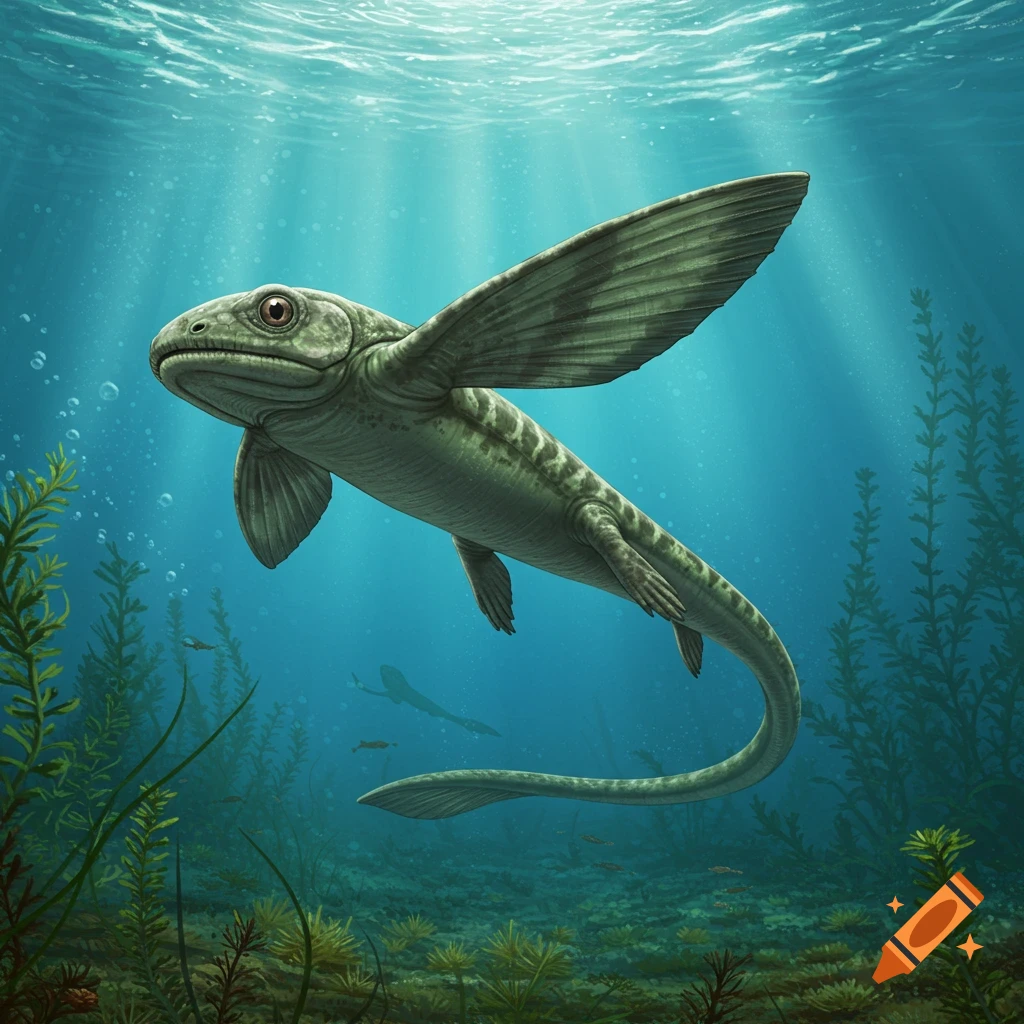
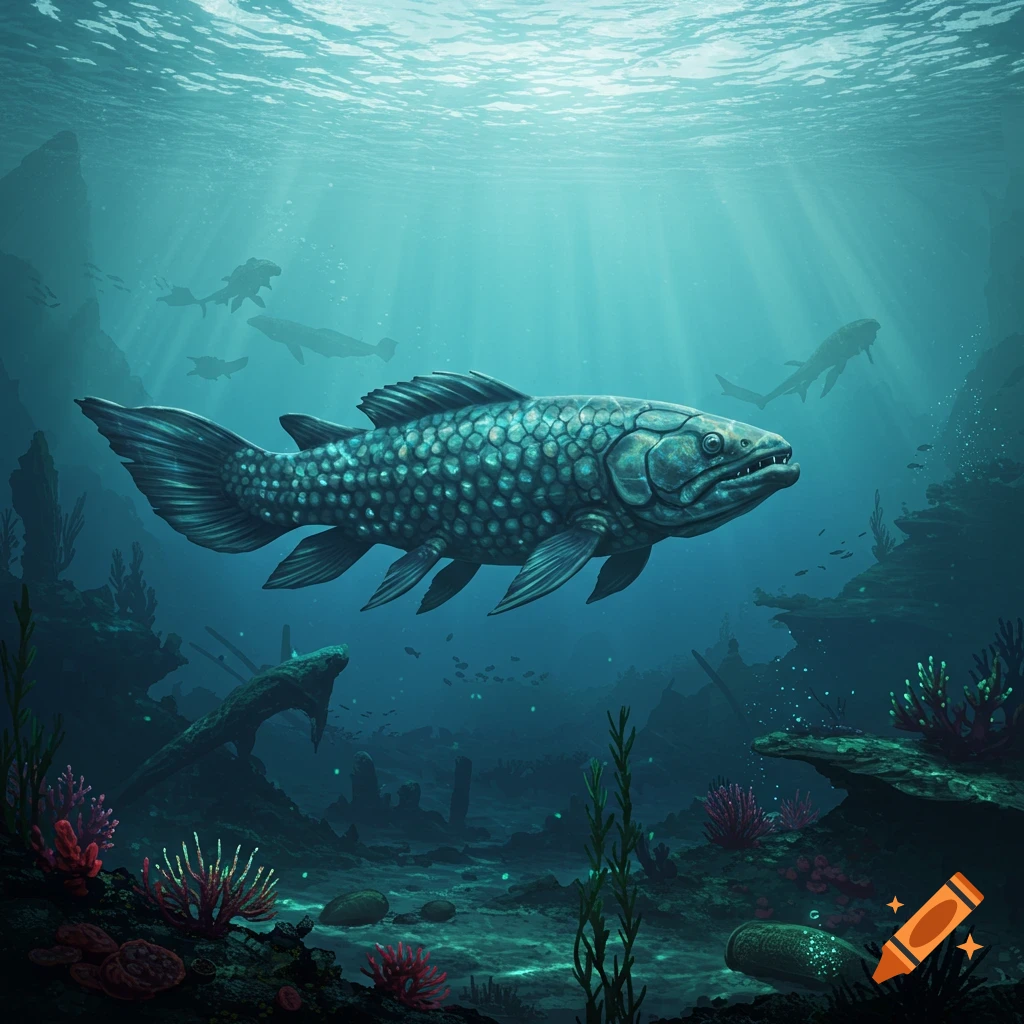
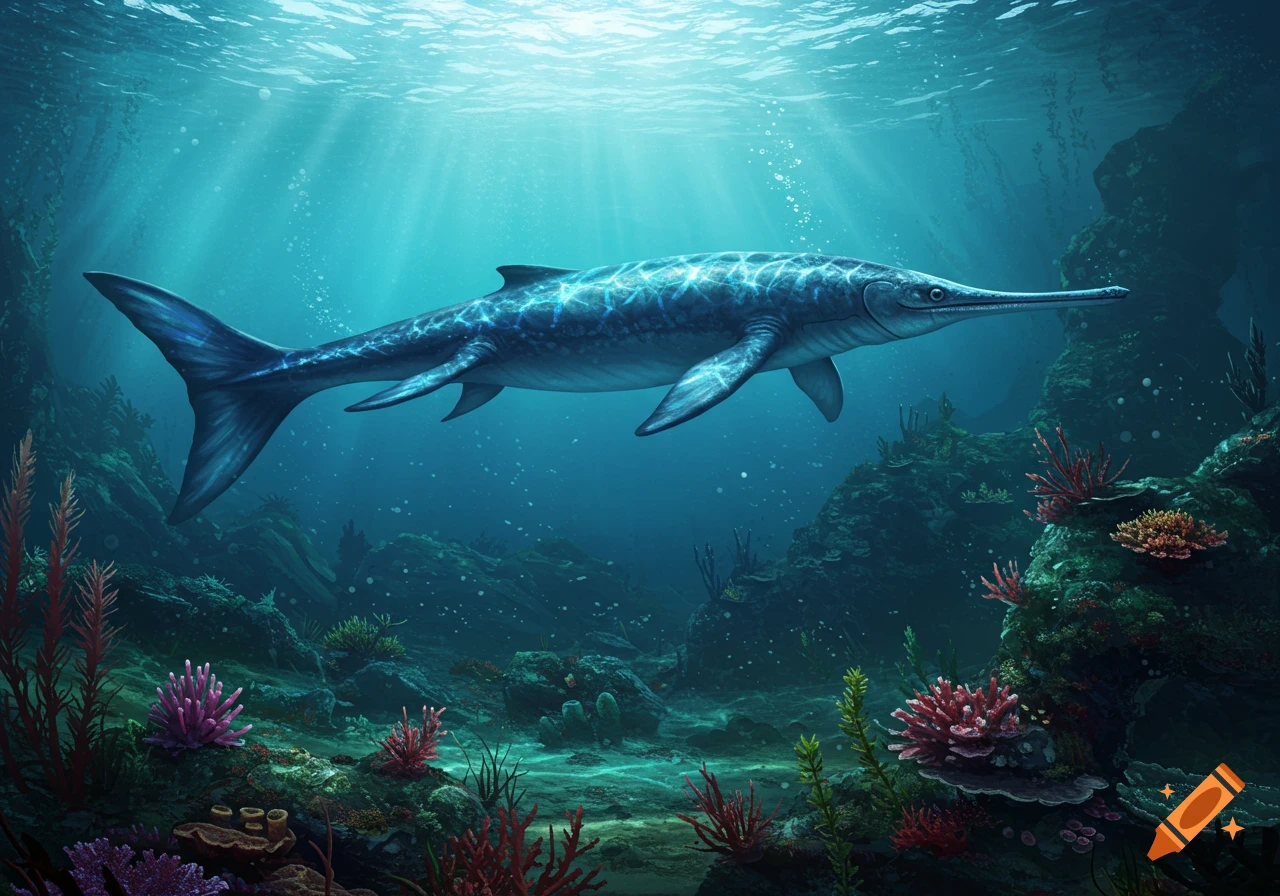
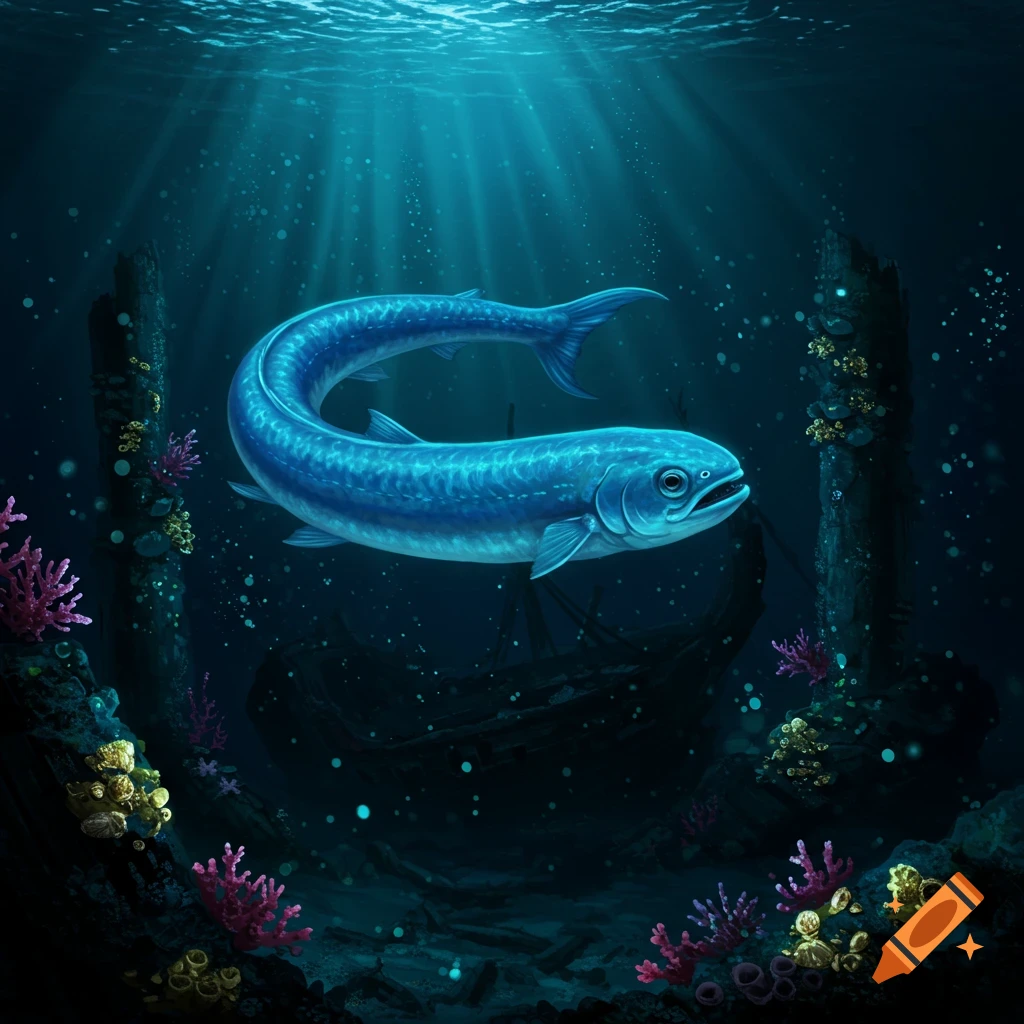
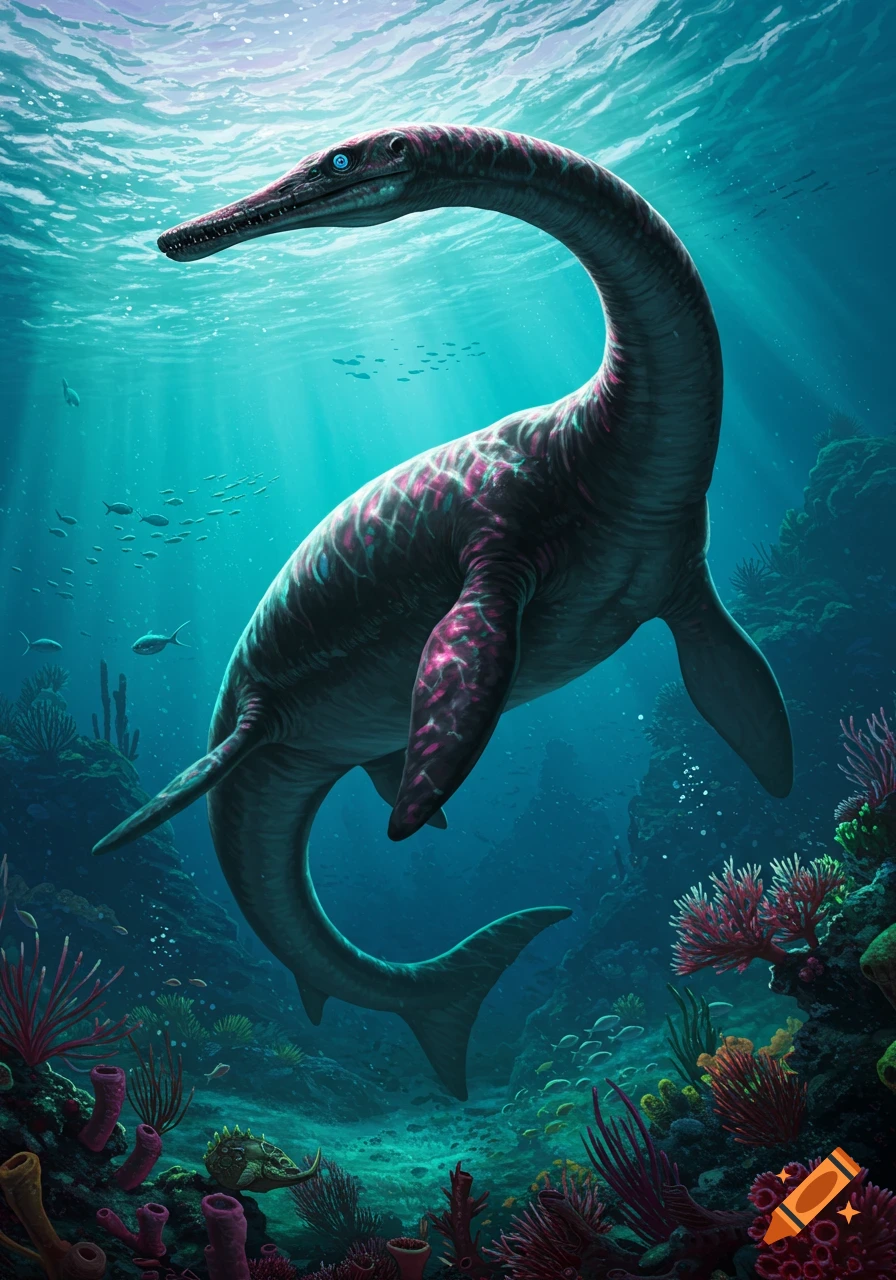
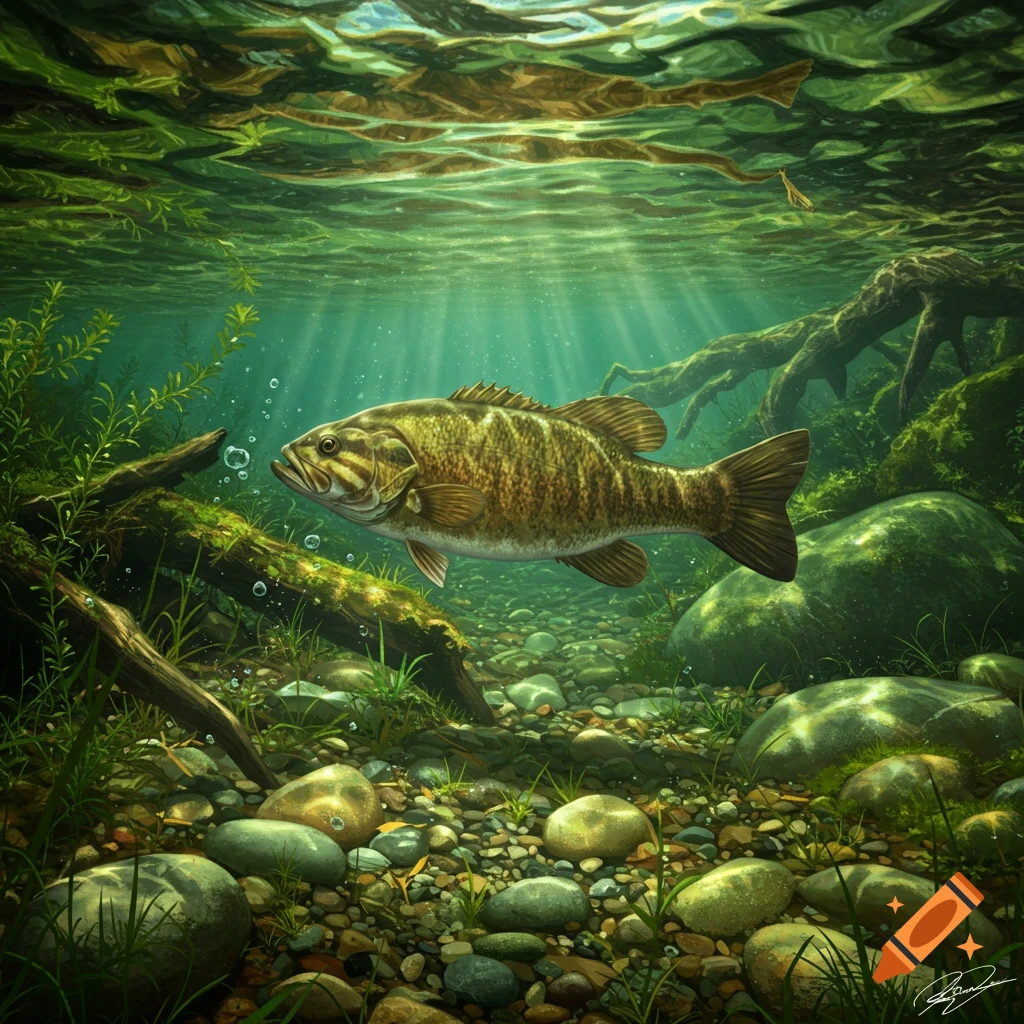
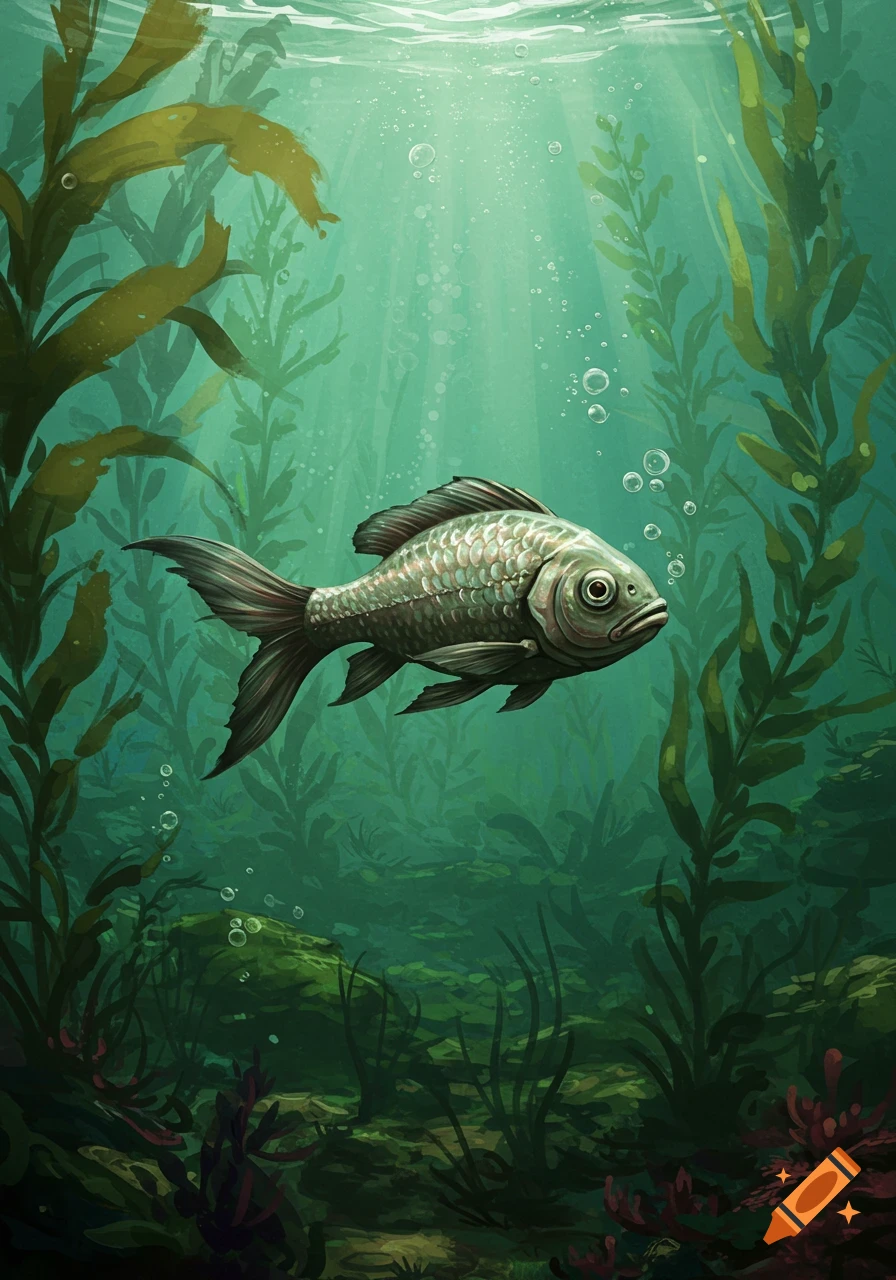
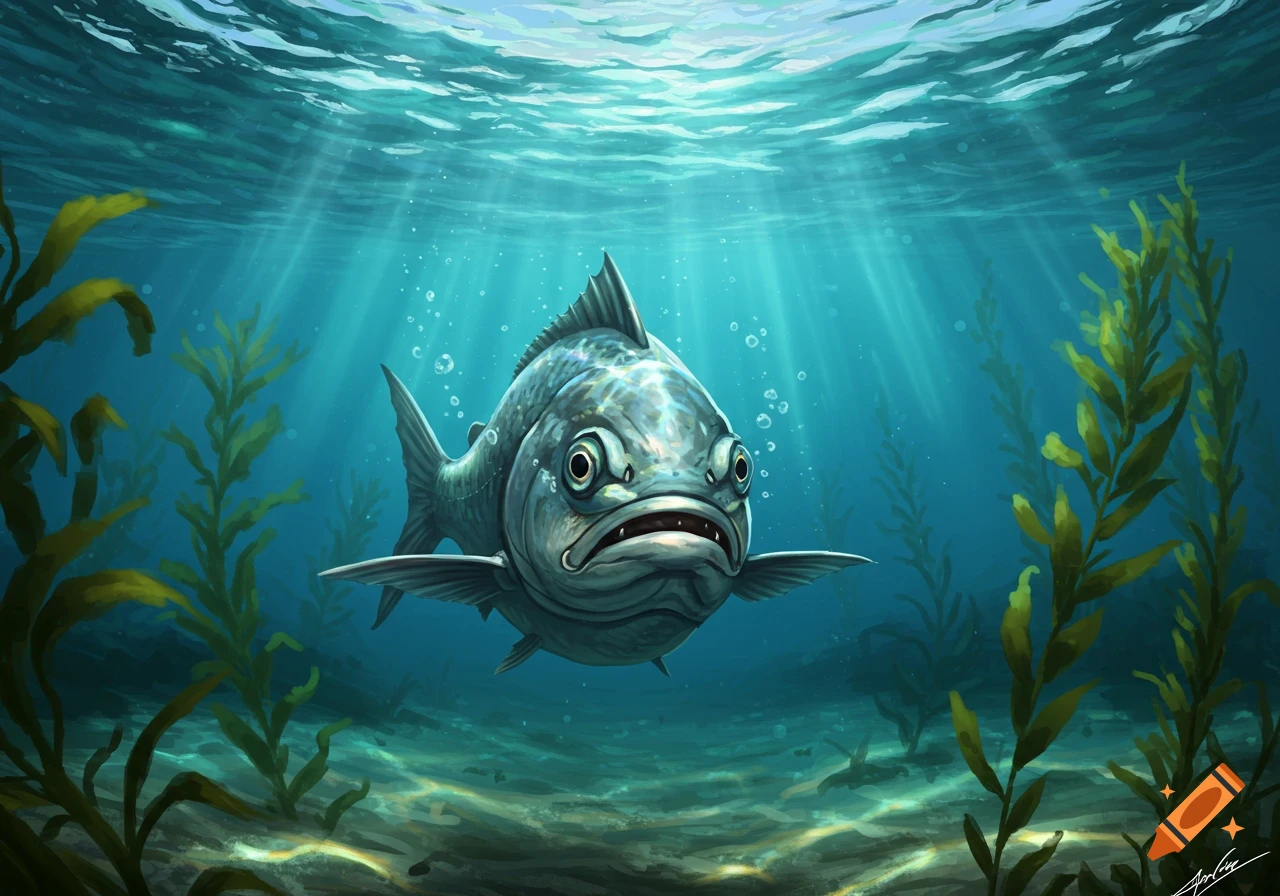
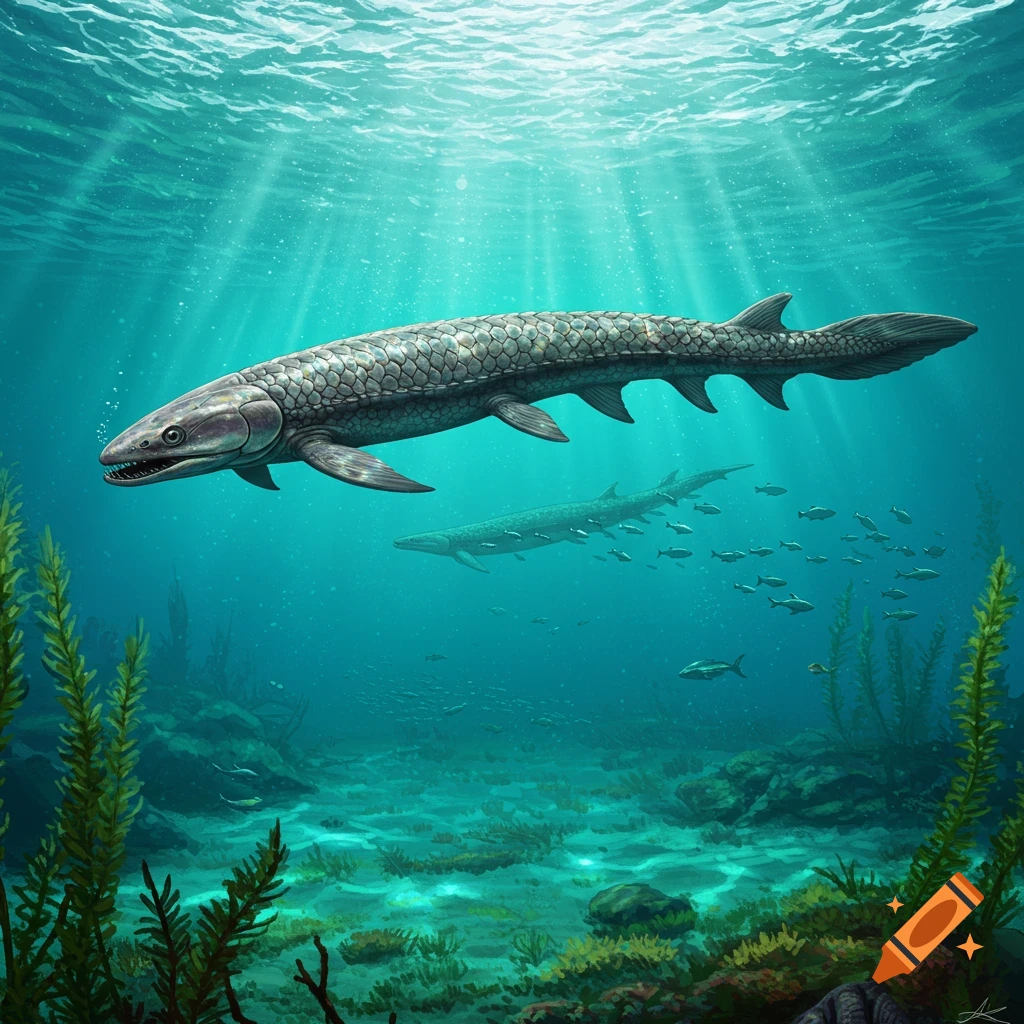
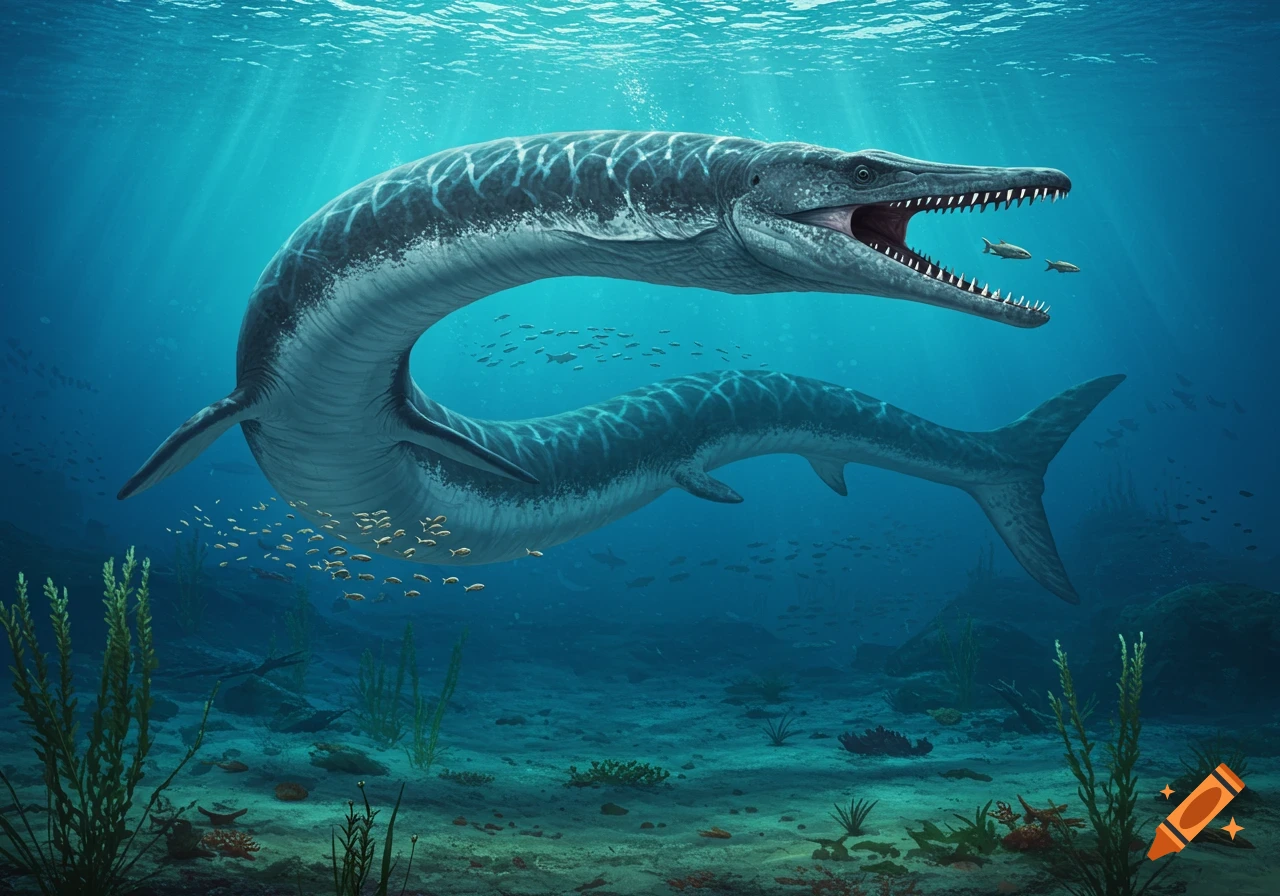
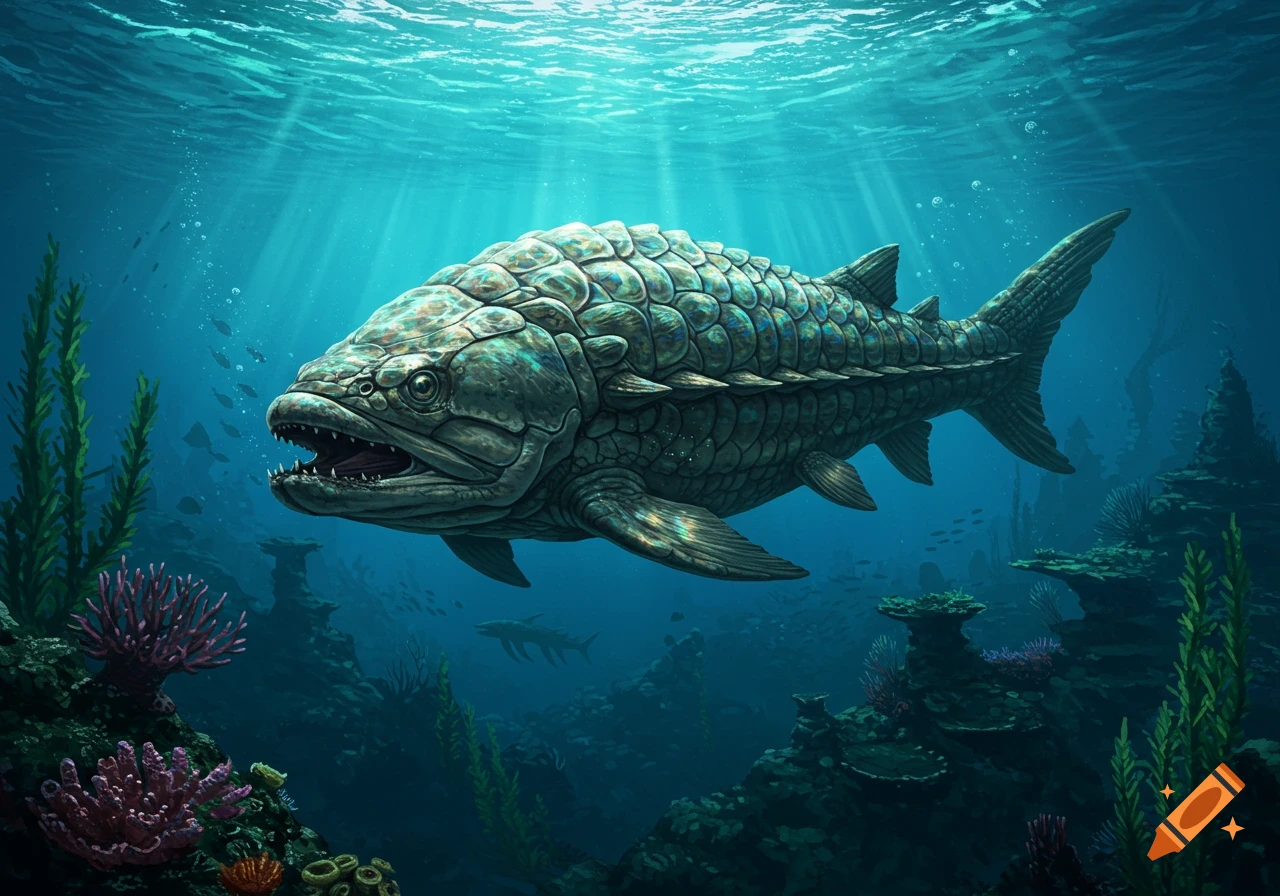
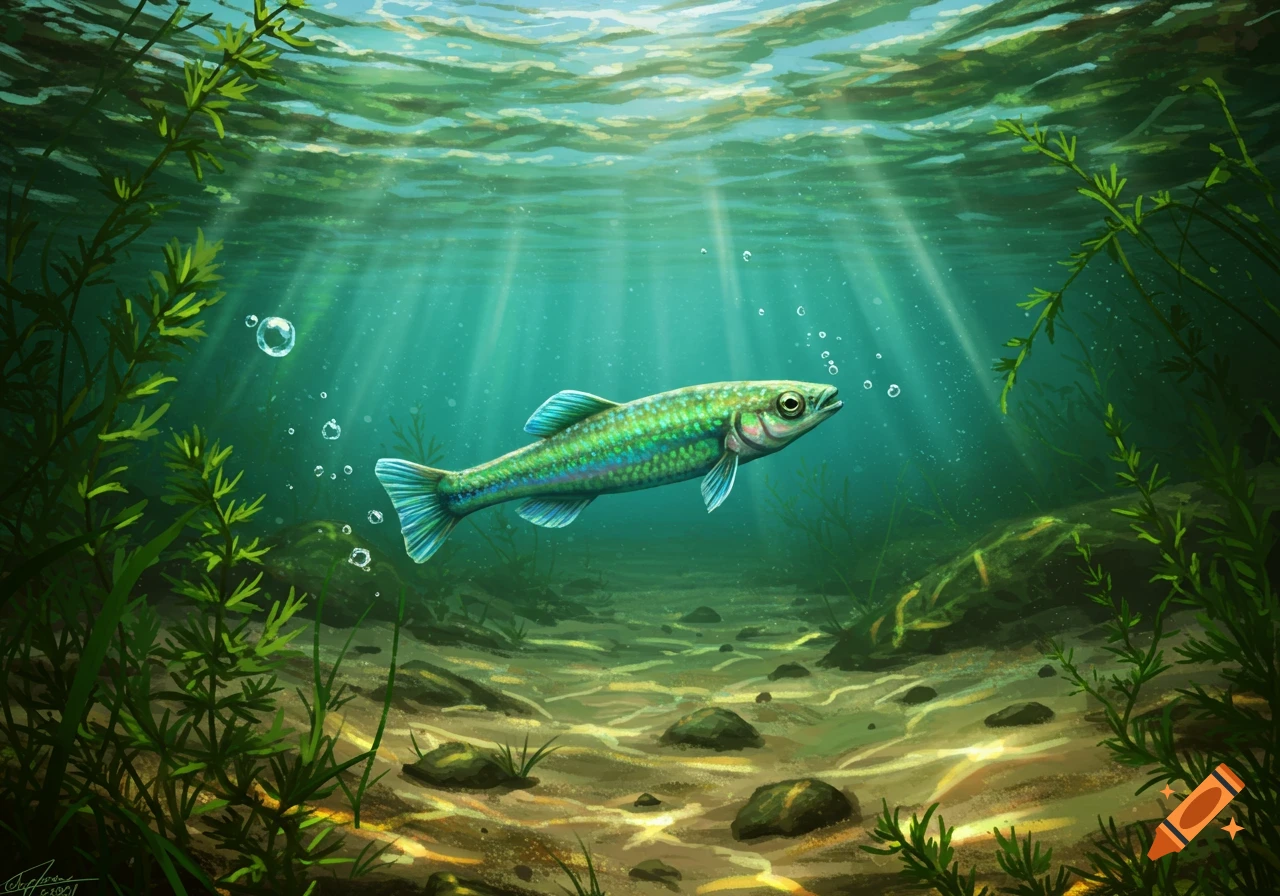
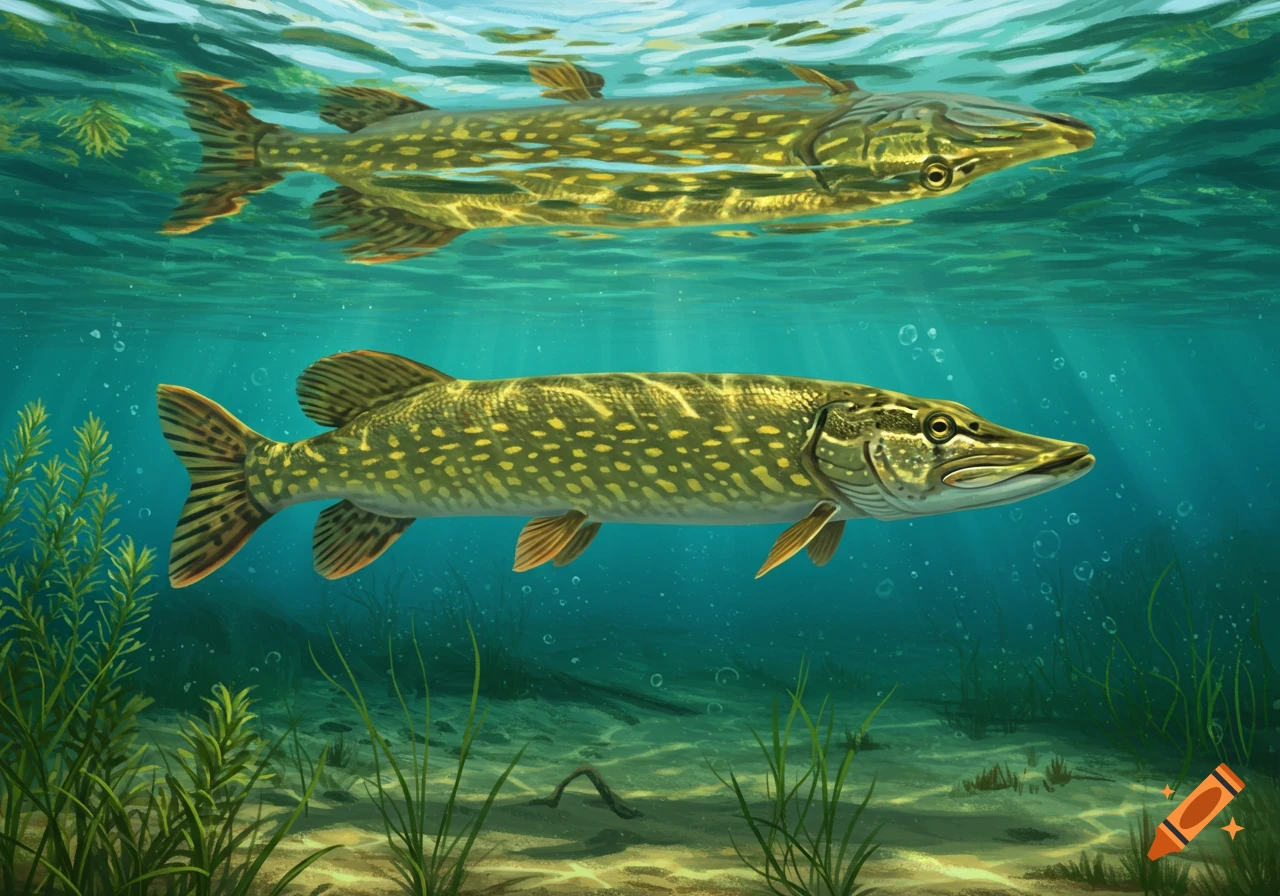
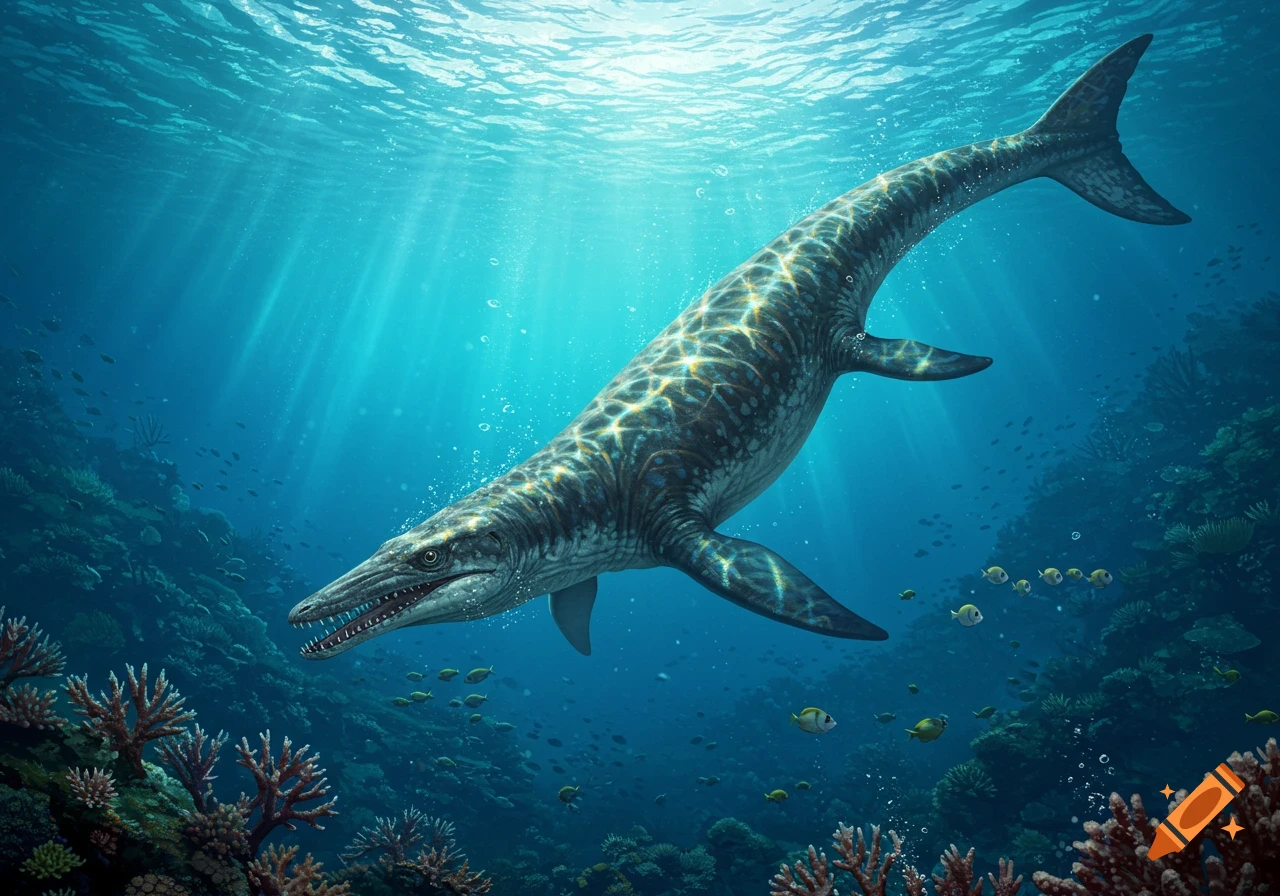
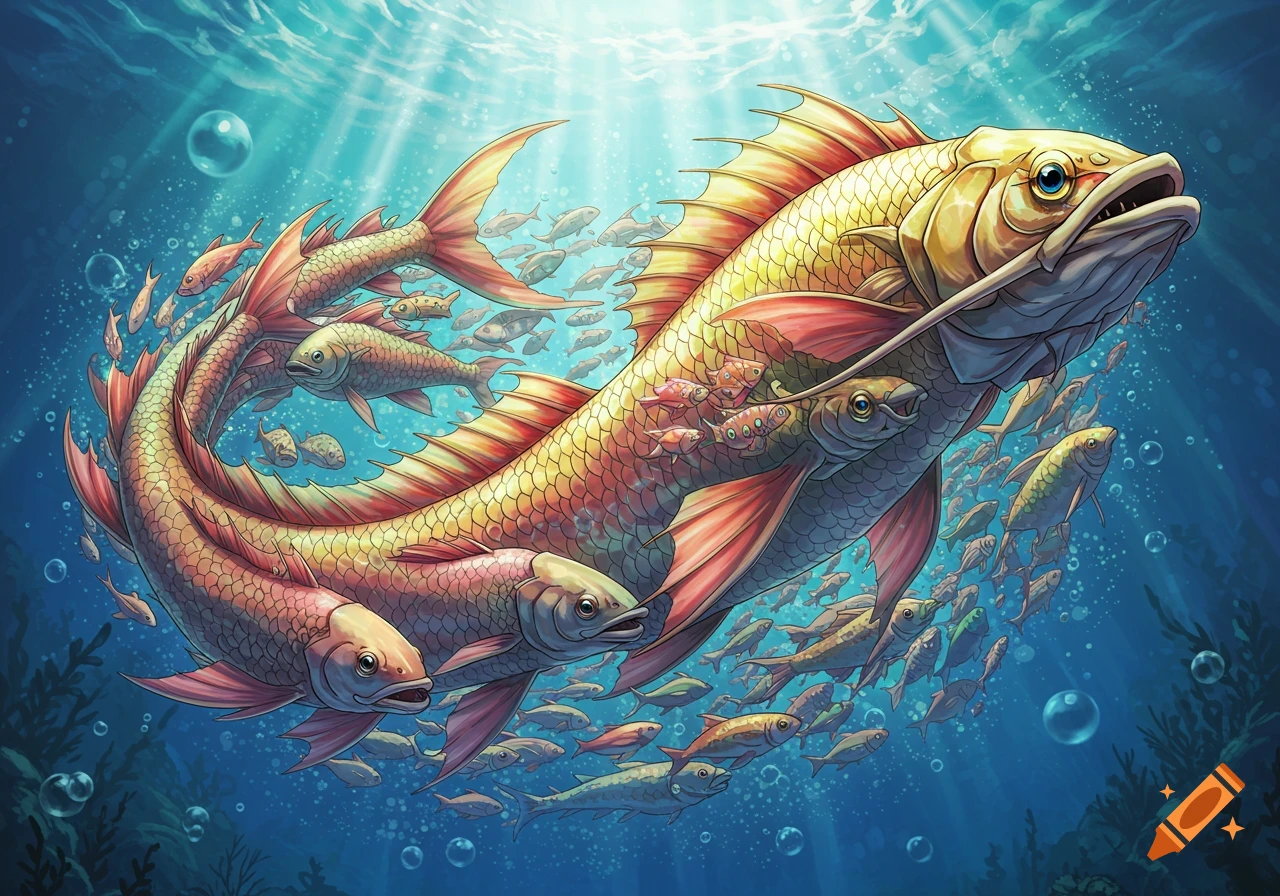
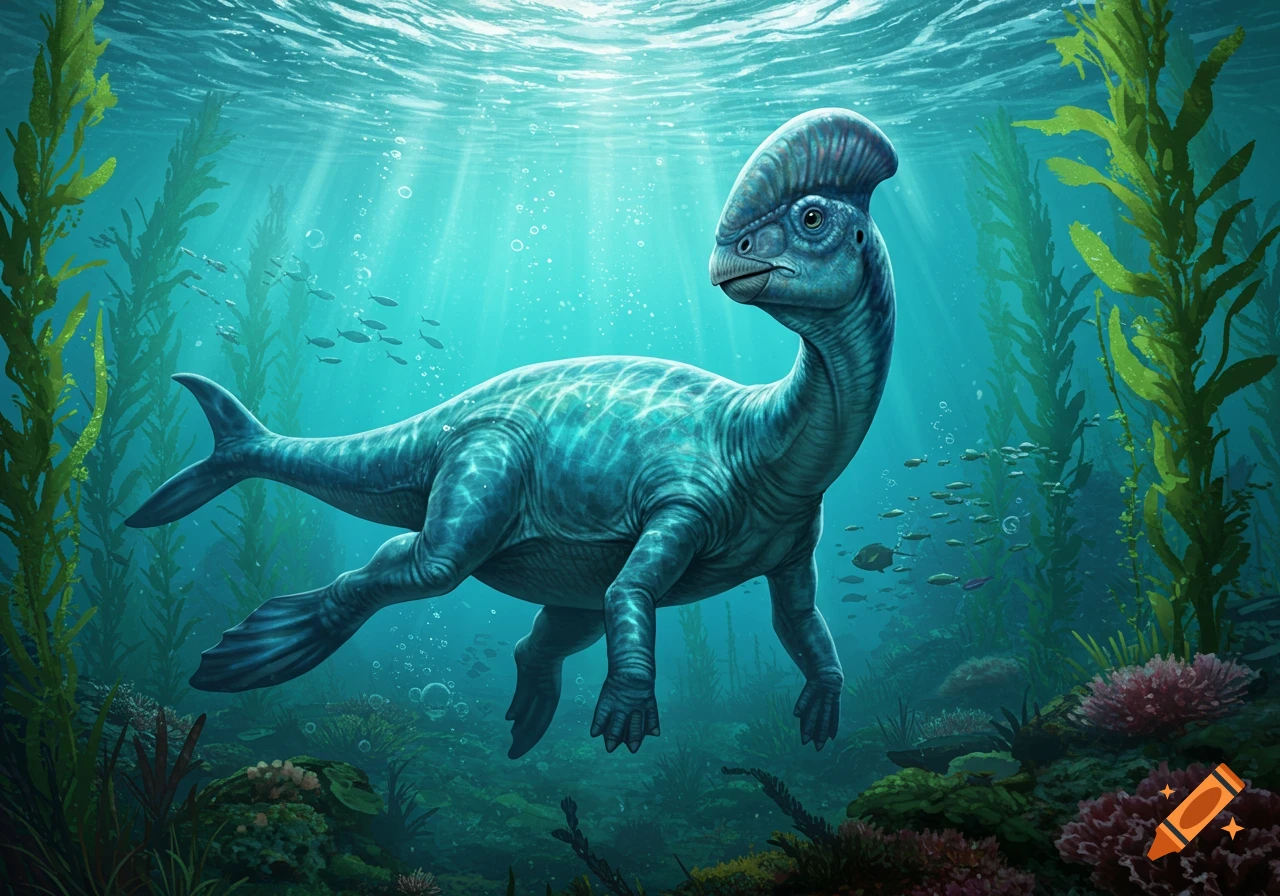
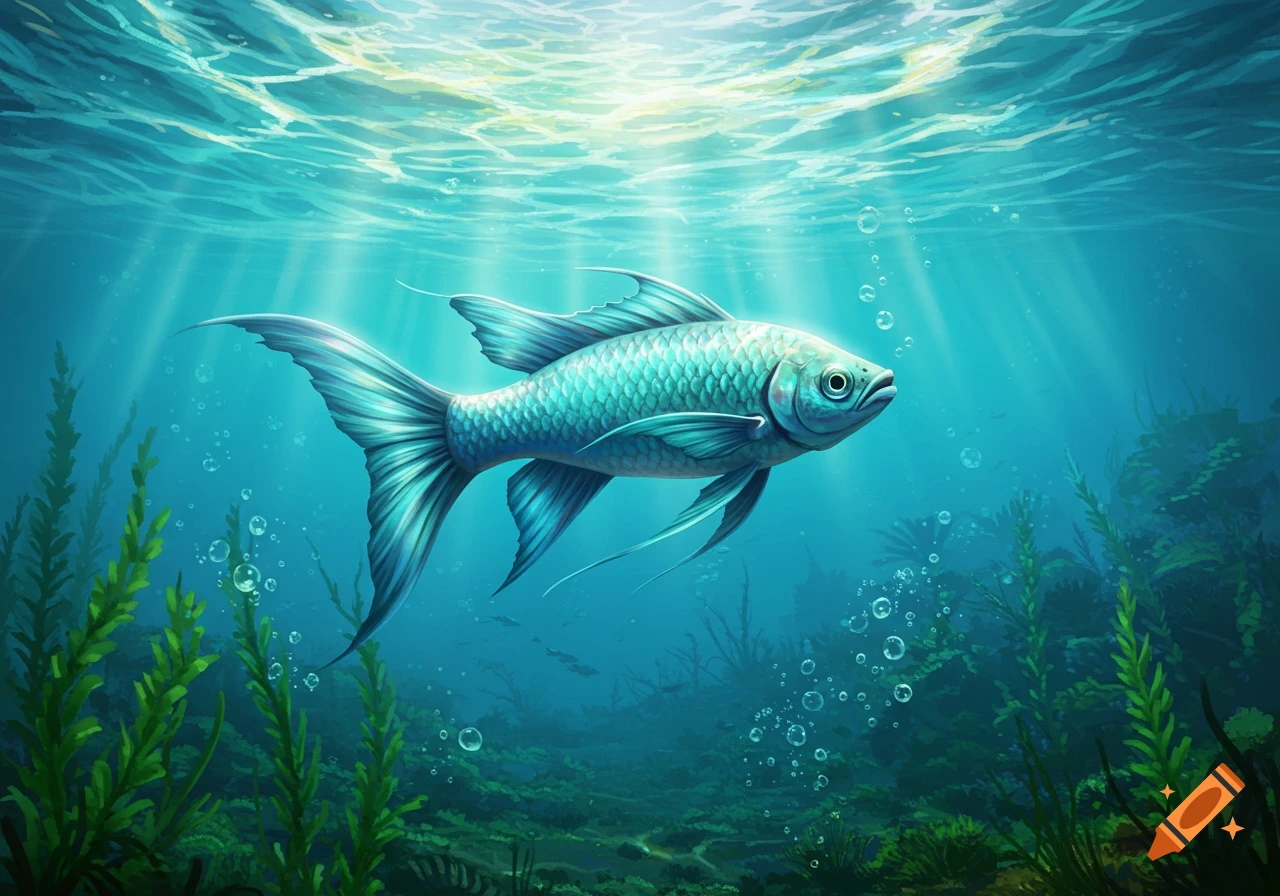
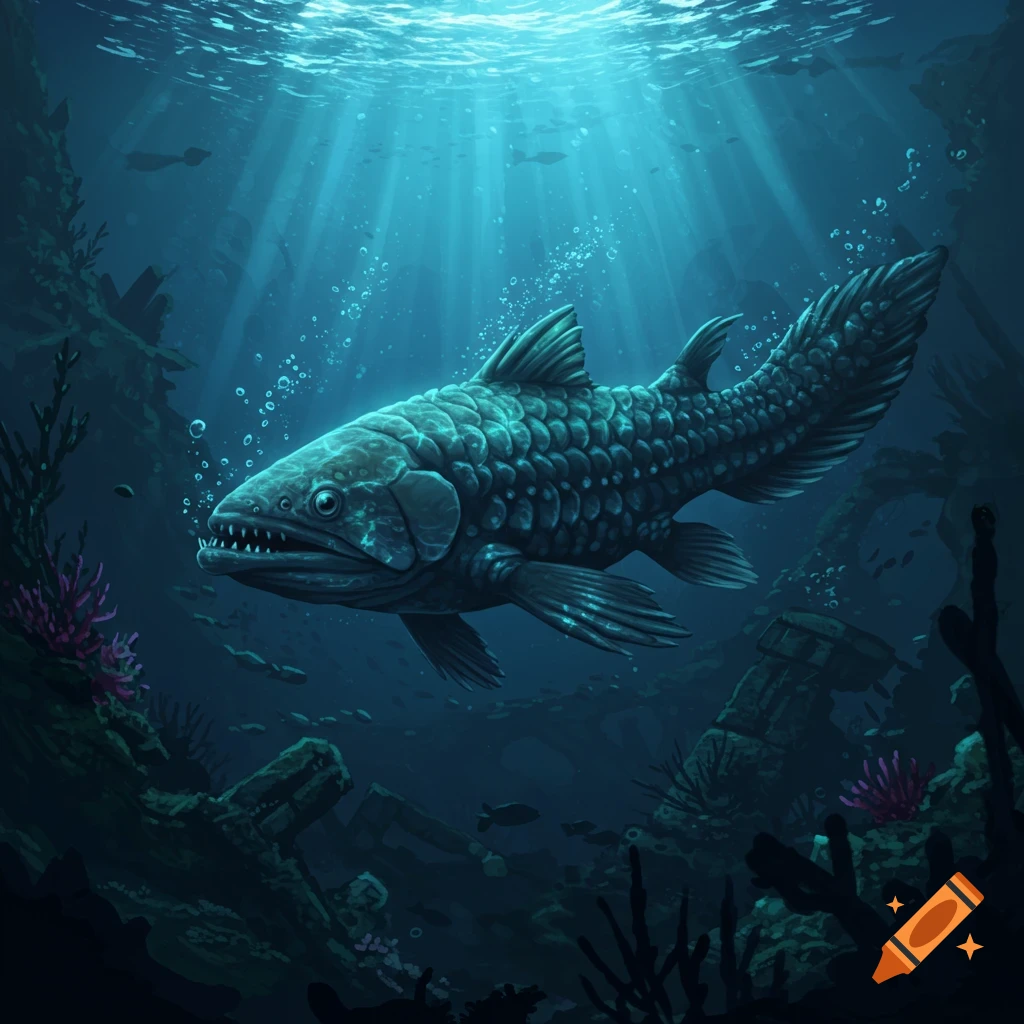
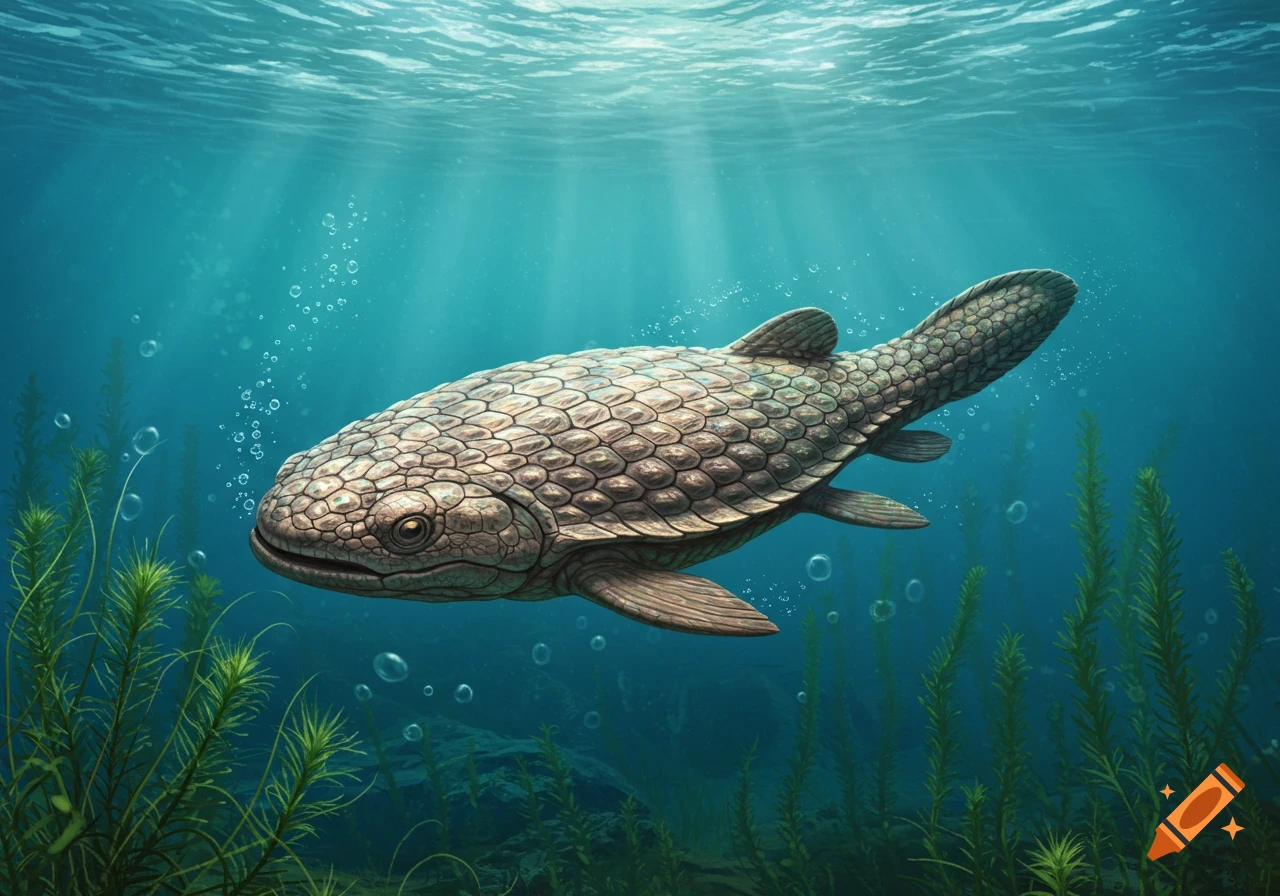
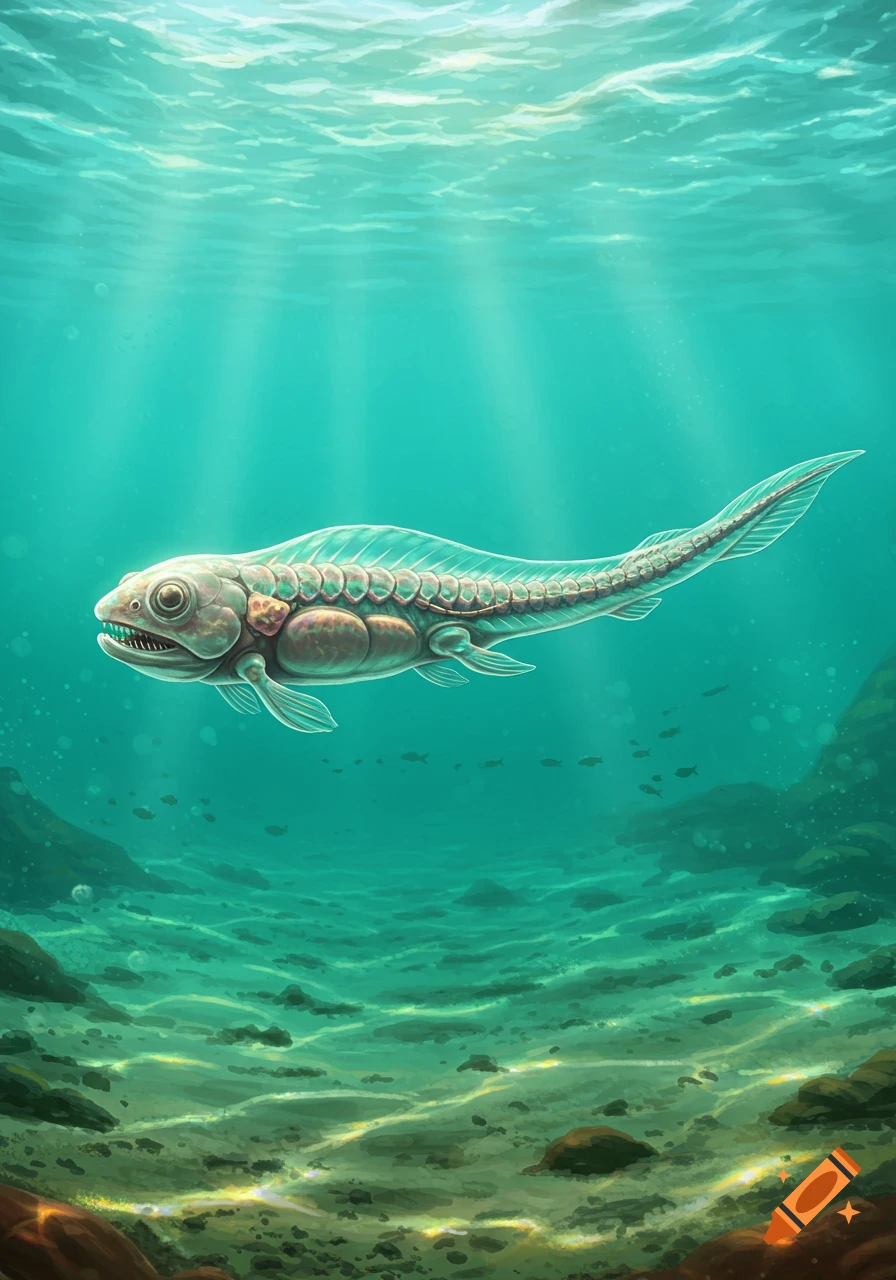
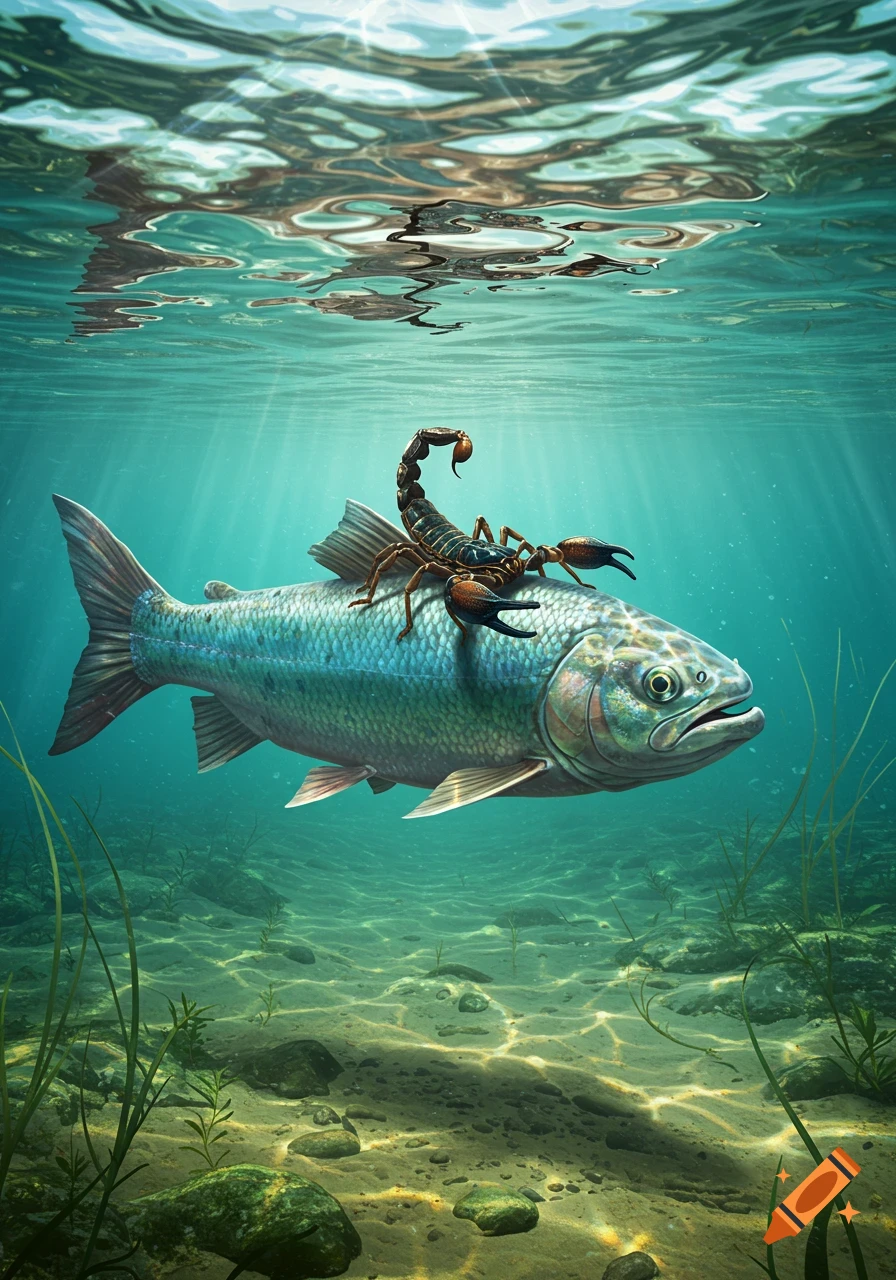
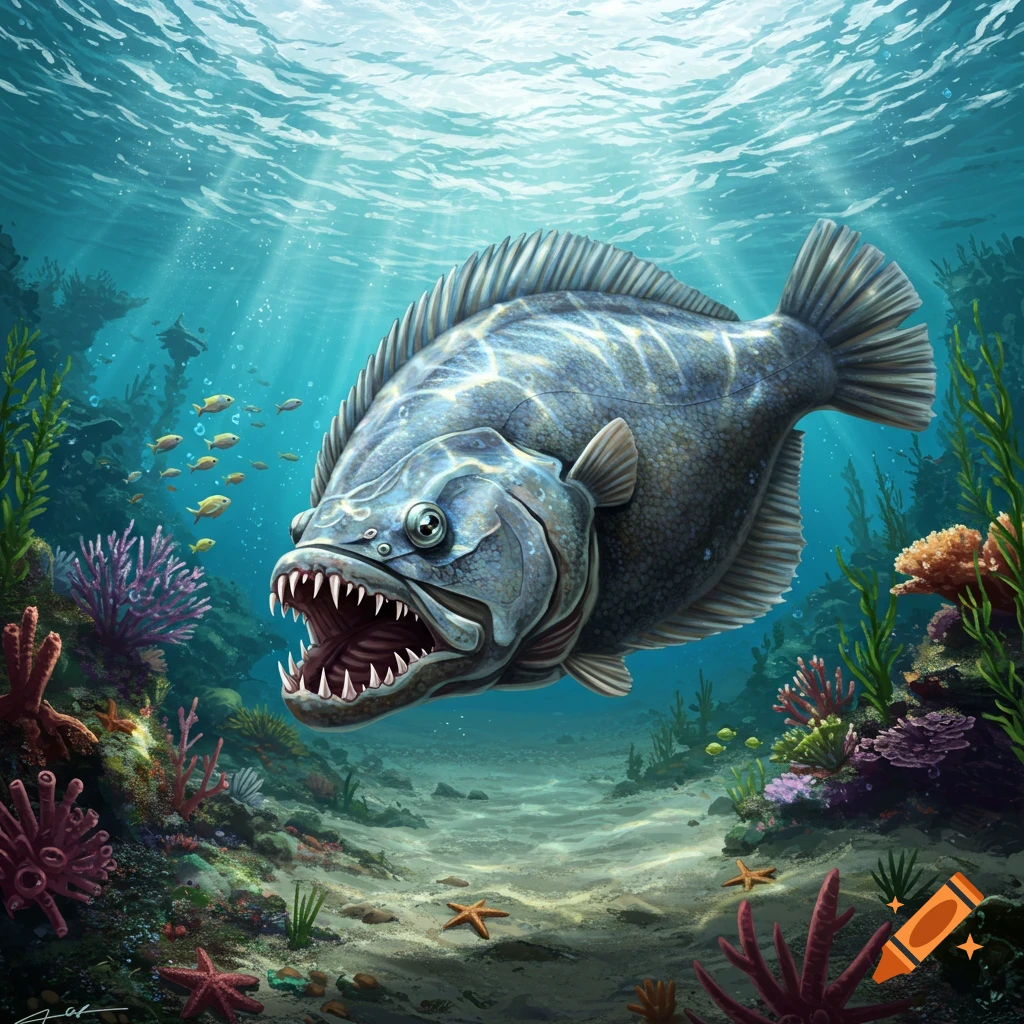
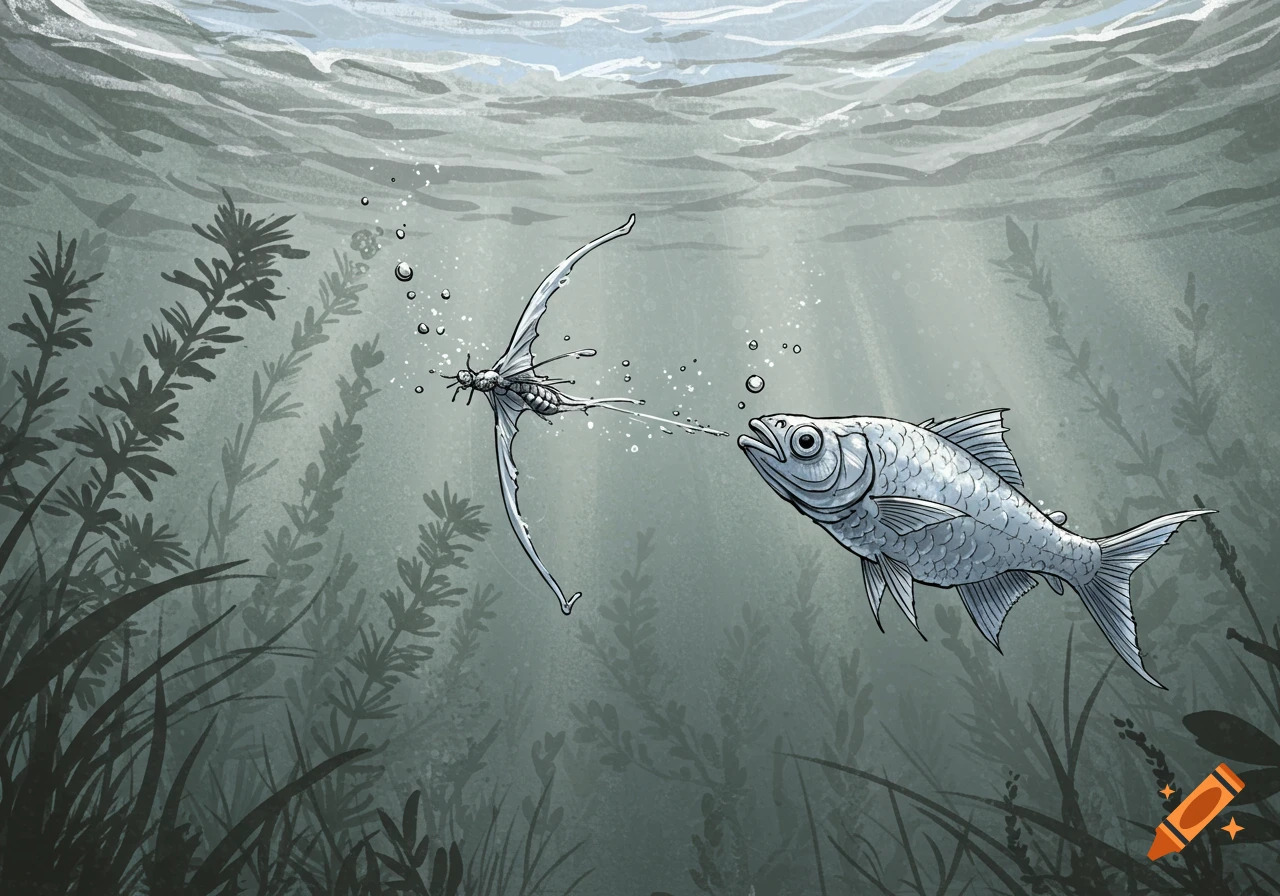
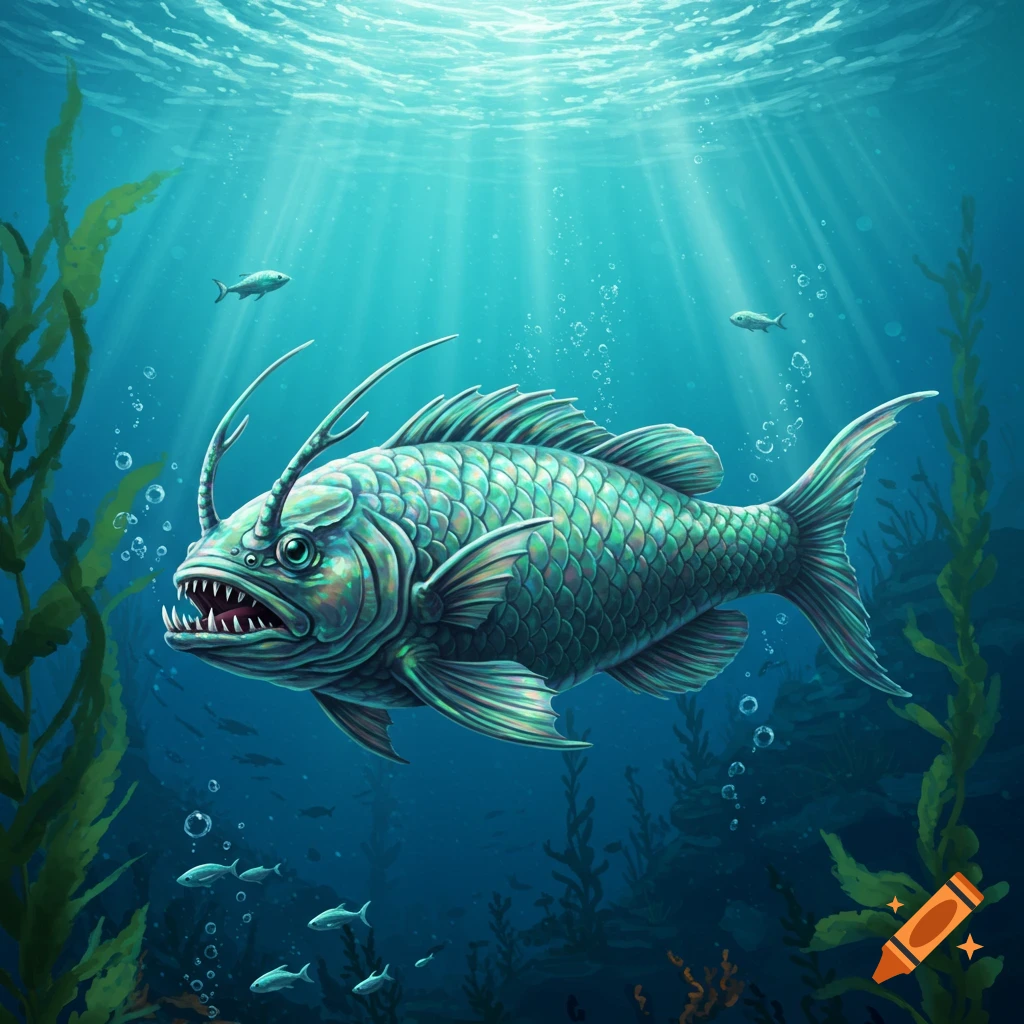
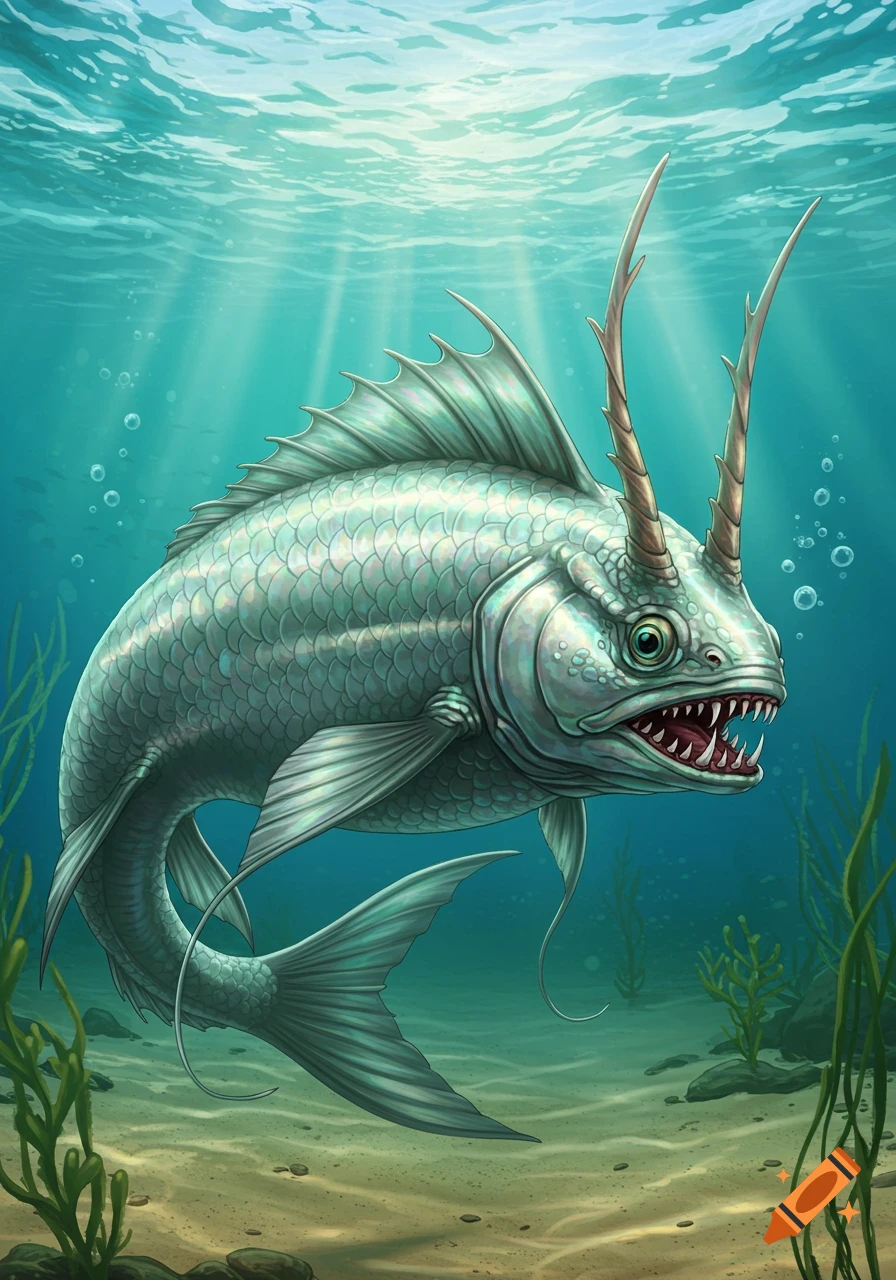
A prehistoric, blue-scaled lobed-finned fish swims in clear, sunlit water with green plants on the seabed.
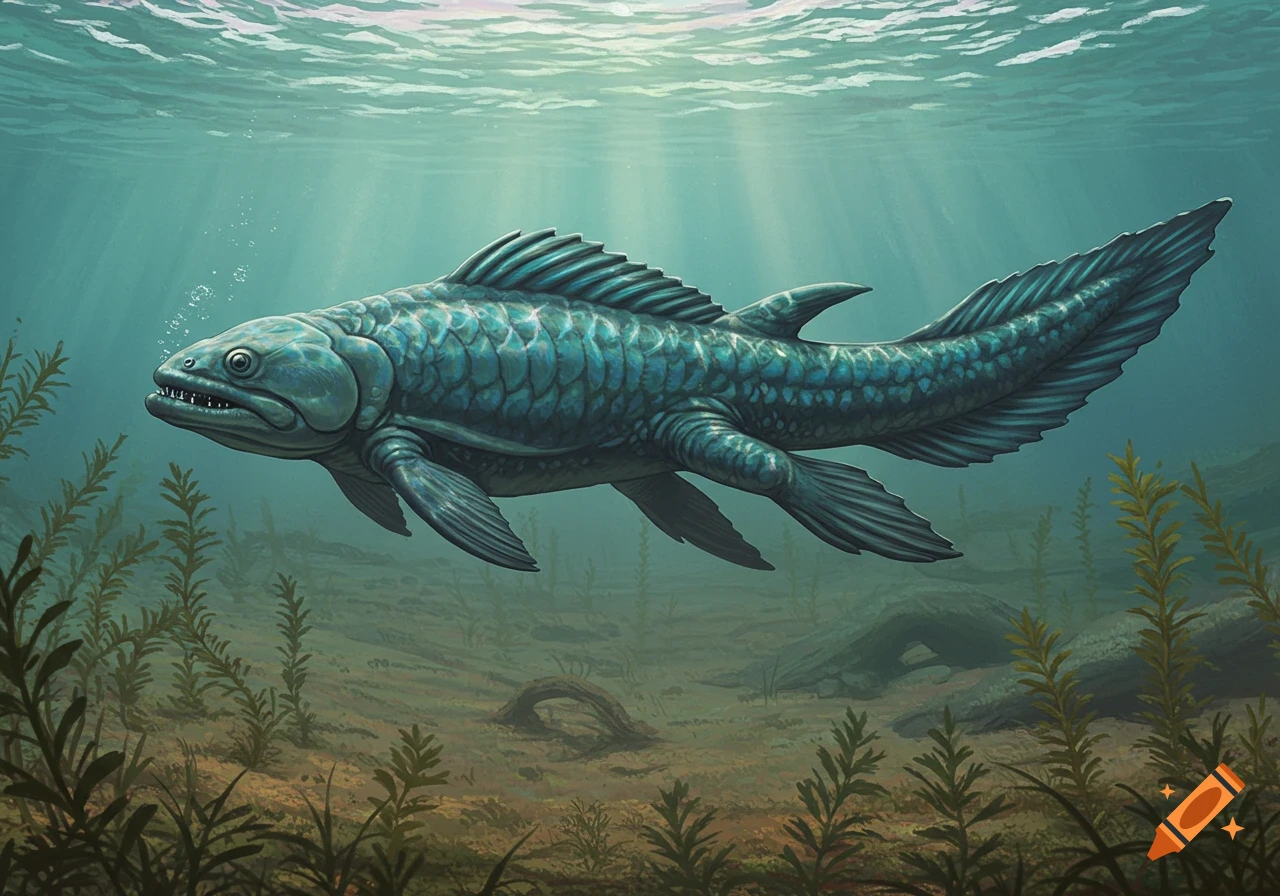
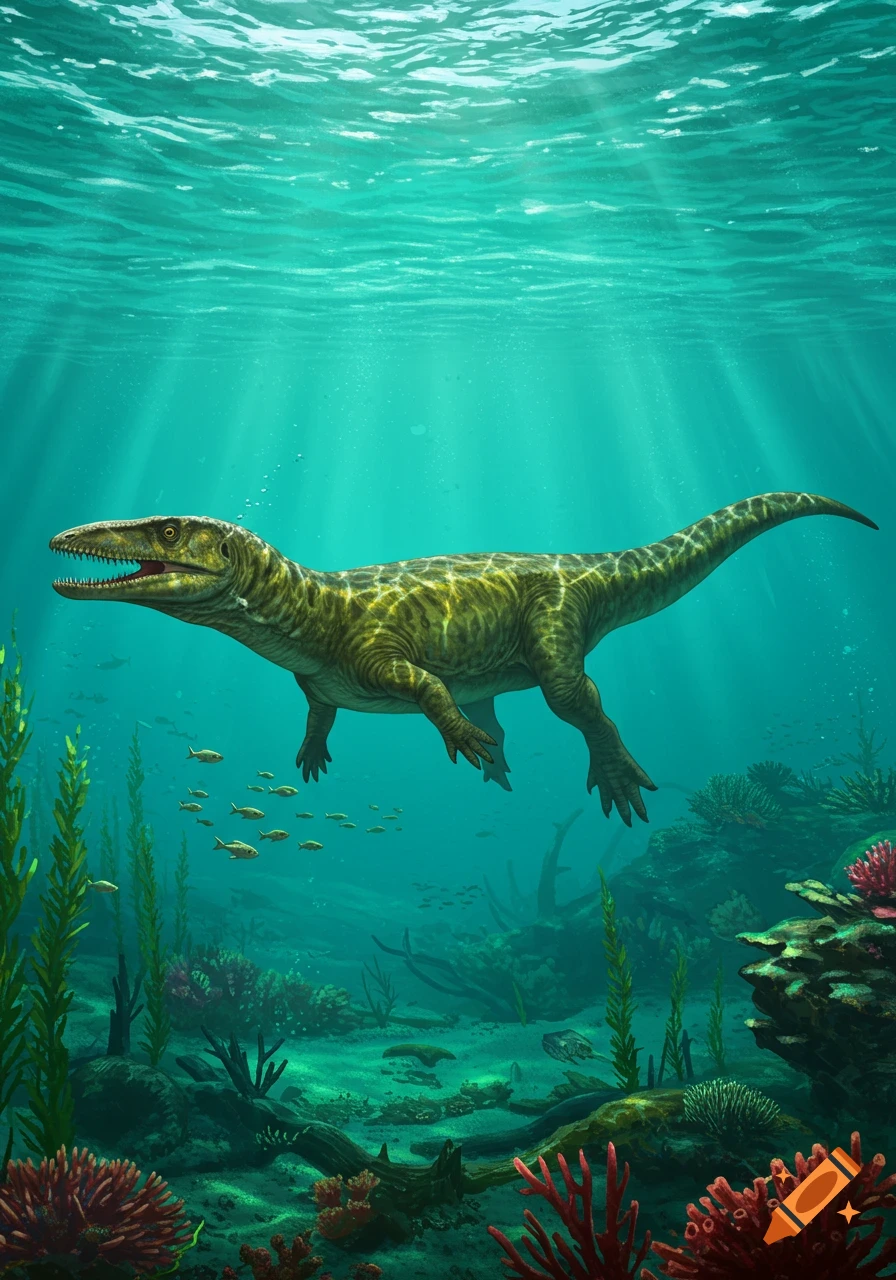
fish-like in appearance, similar to a modern coelacanth or the lungfish. It had a long, streamlined body with fins, but unlike the fins of typical fish, its fins were lobed and supported by bones. These lobed fins were the precursor to the tetrapod limbs (arms and legs). 2. Fins with Bones: The key feature distinguishing lobed-finned fish from ray-finned fish (like most modern fish) is the structure of the fins. In lobed-finned fish, the fins were more robust, with a central axis of bone and flesh that allowed for more maneuverability and strength. These fins would evolve into the four limbs of tetrapods, which could eventually support weight on land. 3. Lungs and Gills: The tetrapod ancestor was likely amphibious, capable of both gill-breathing (like a fish) and air-breathing (via lungs, like modern lungfish). It would have been adapted to an environment with low oxygen or fluctuating water levels, using its lungs to breathe air when necessary. This is an important feature that set the stage for vertebrates to move onto land. 4. Primitive Limbs: Though it still had fins, the early tetrapod ancestor had the beginnings of what would become legs. The front fins would have been more robust and capable of supporting some weight, allowing the animal to use them for crawling on the edges of ponds or shallow water. These limbs wouldn’t have been fully functional legs at first—more like rudimentary walking paddles. 5. Tail: It would still have had a tail for swimming, but this tail See more