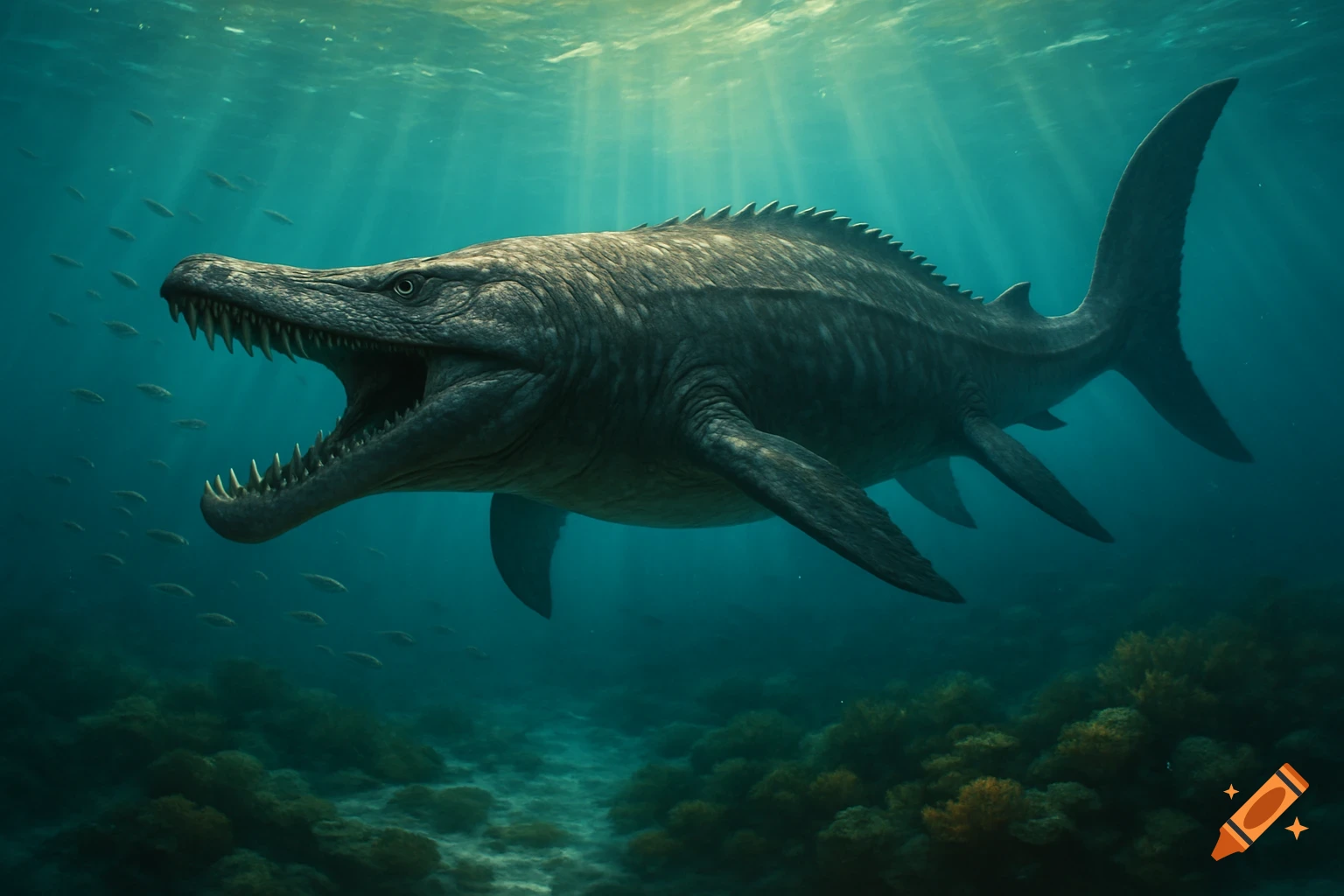
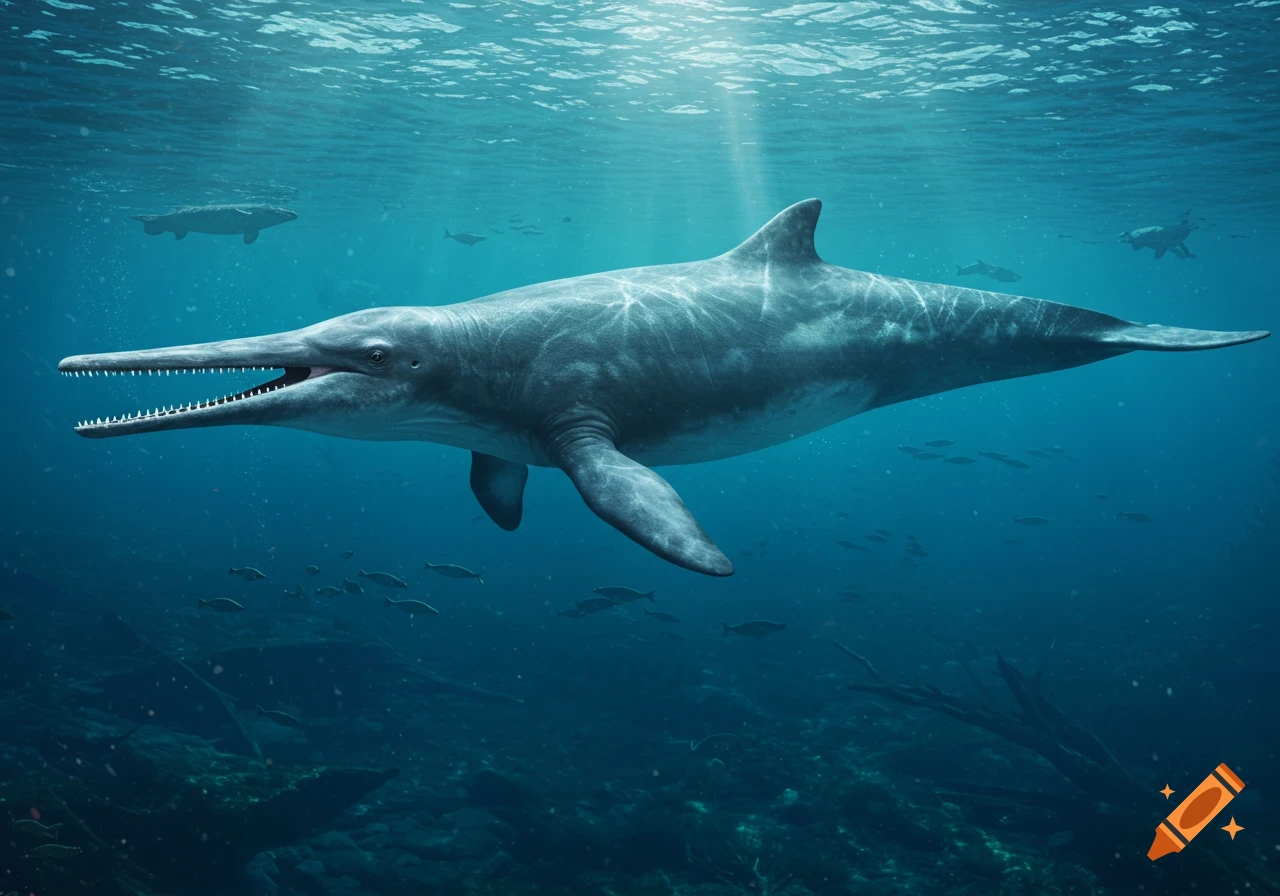
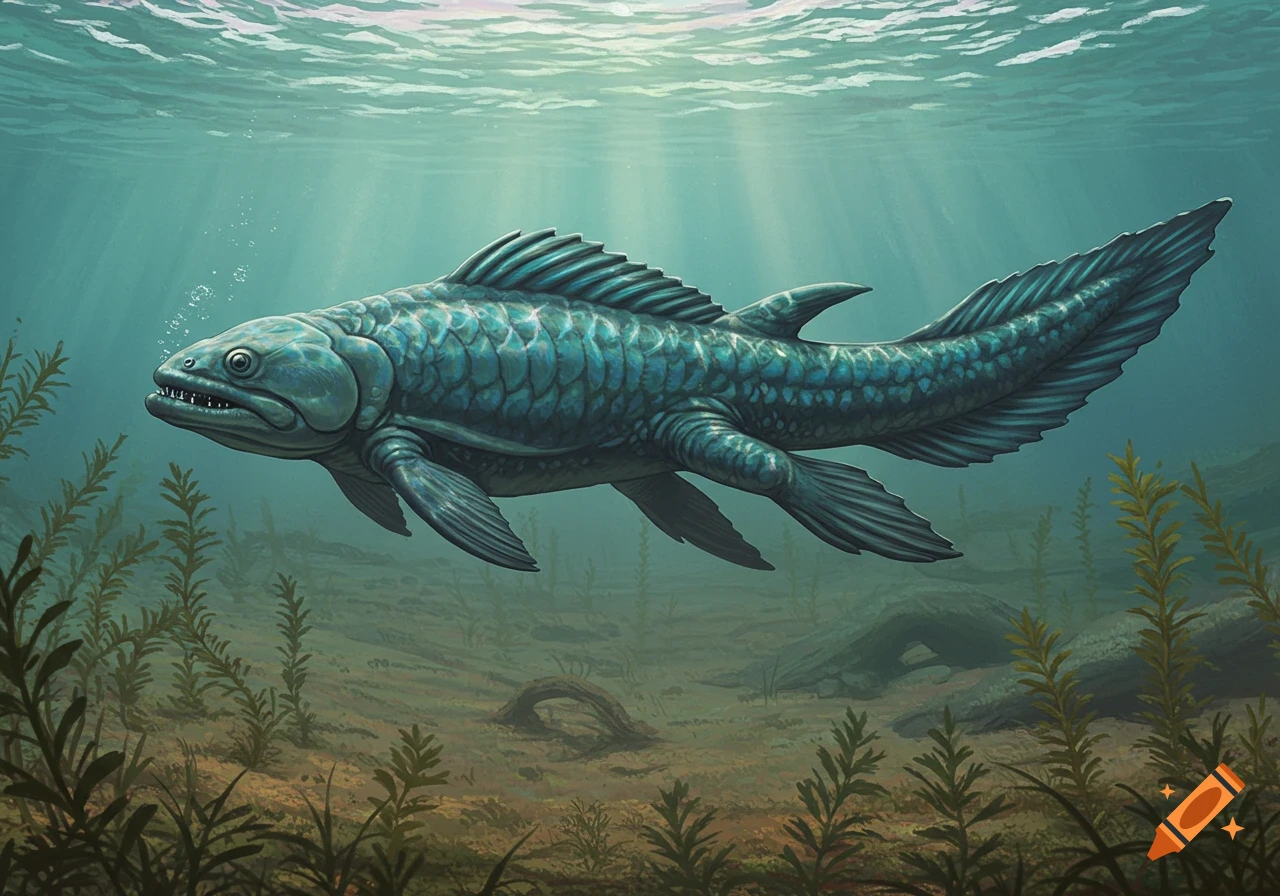
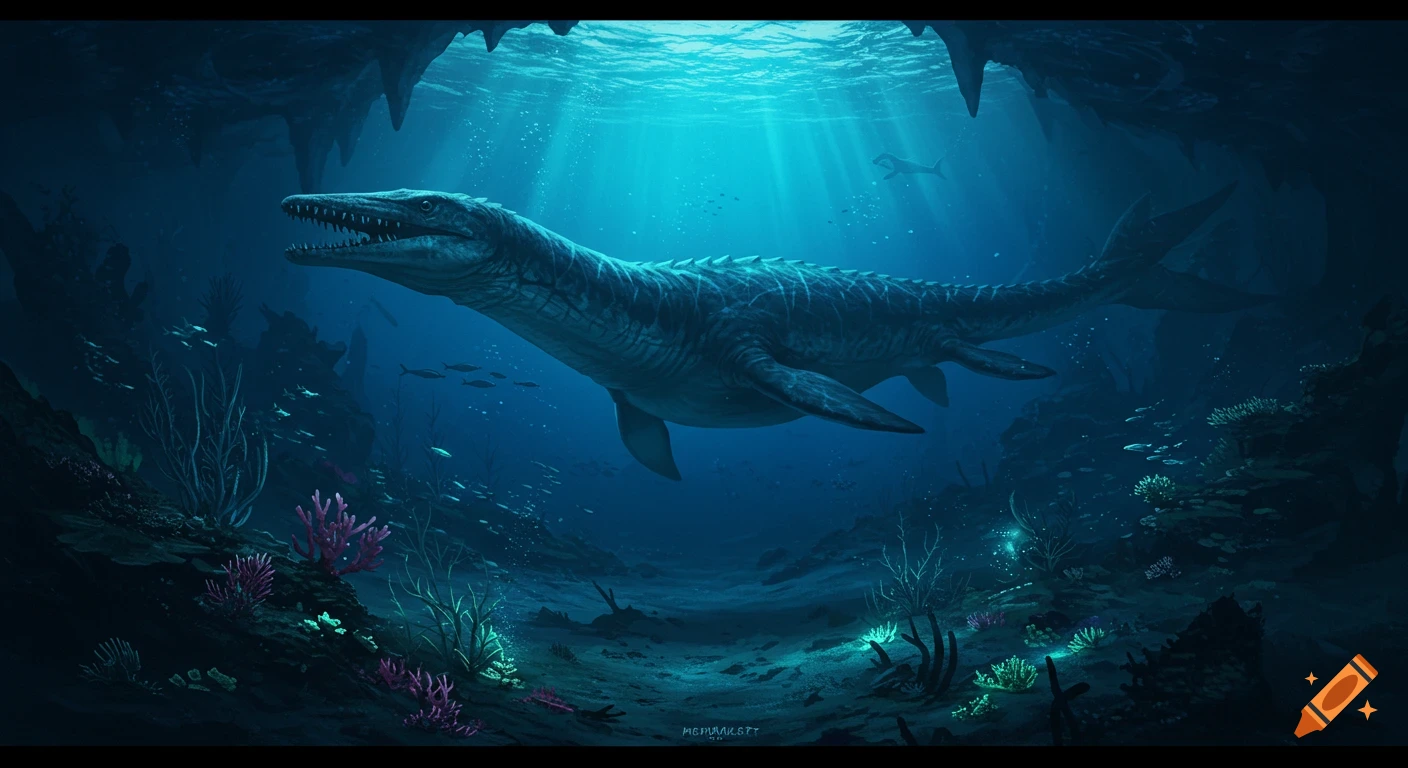
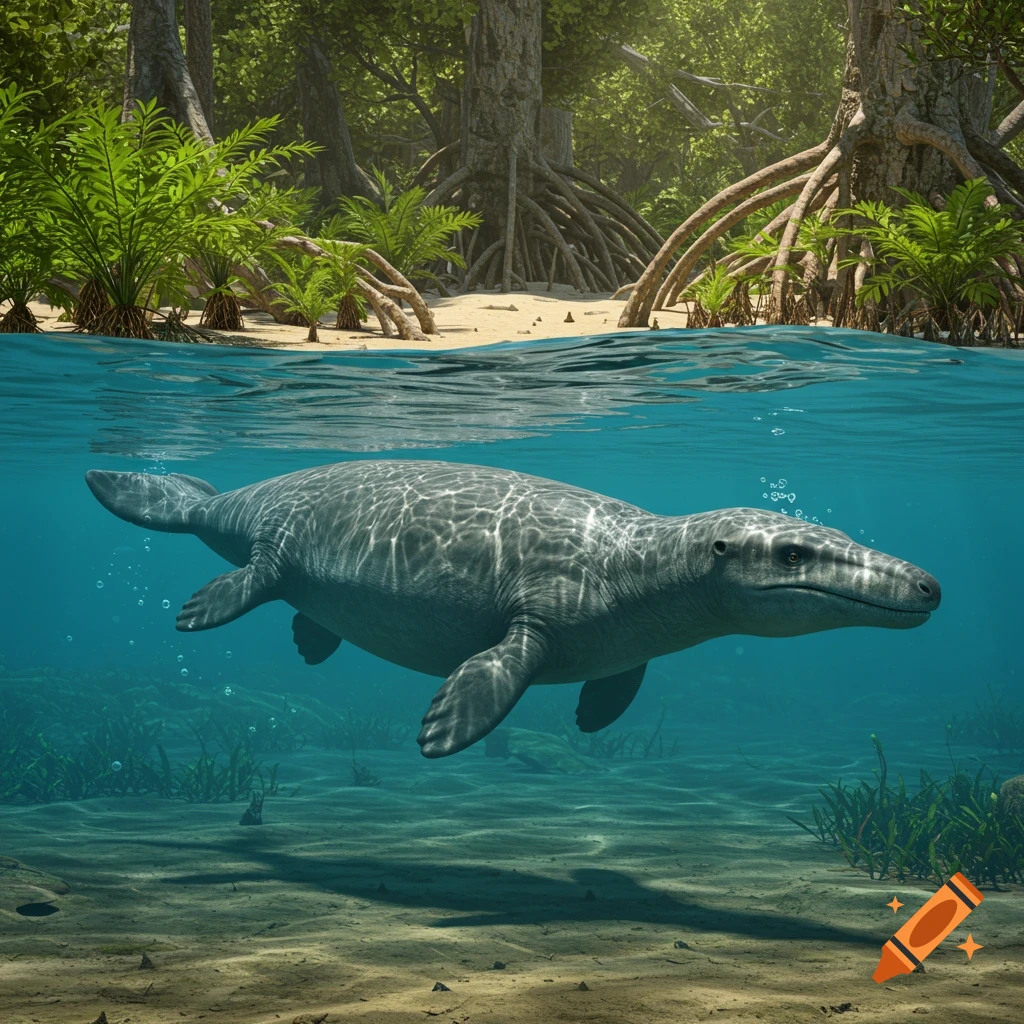
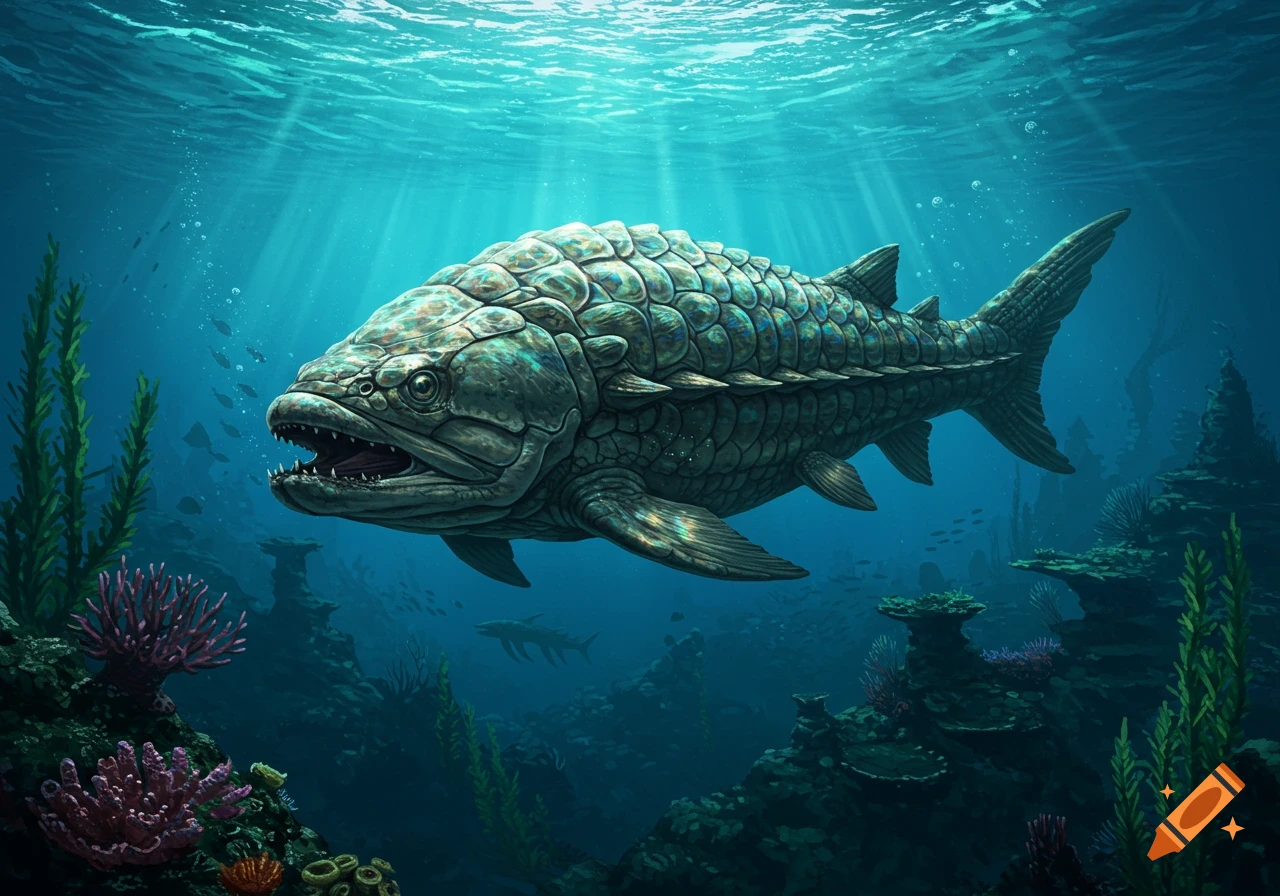
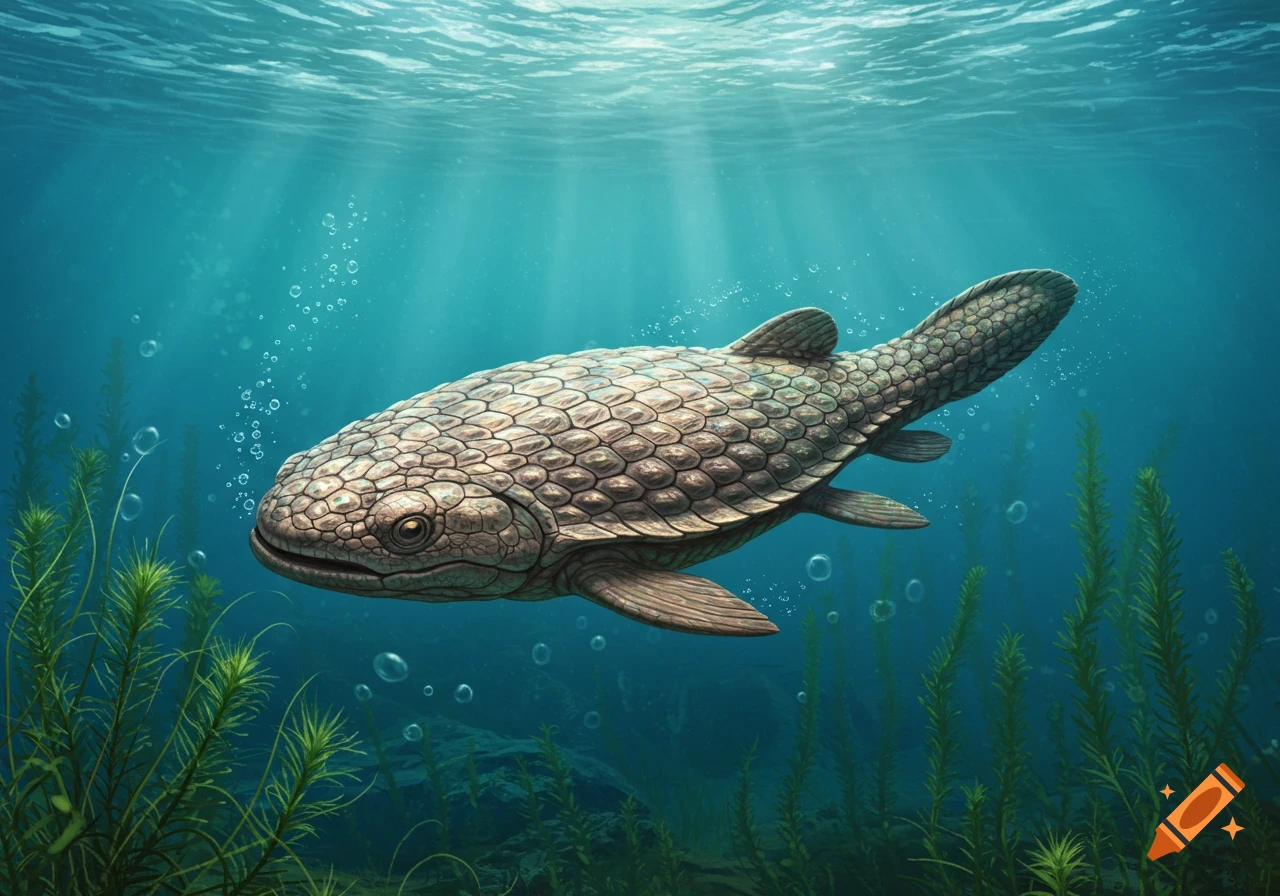
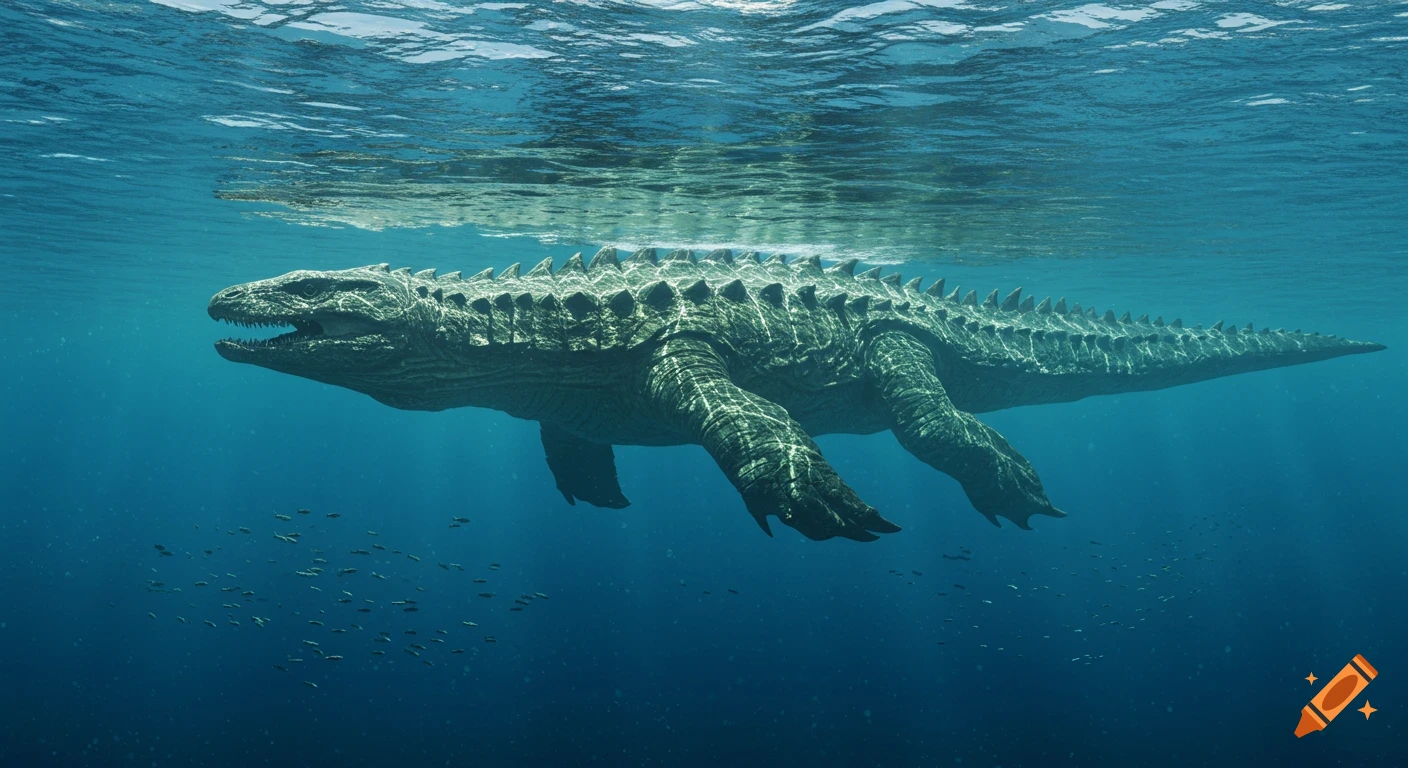
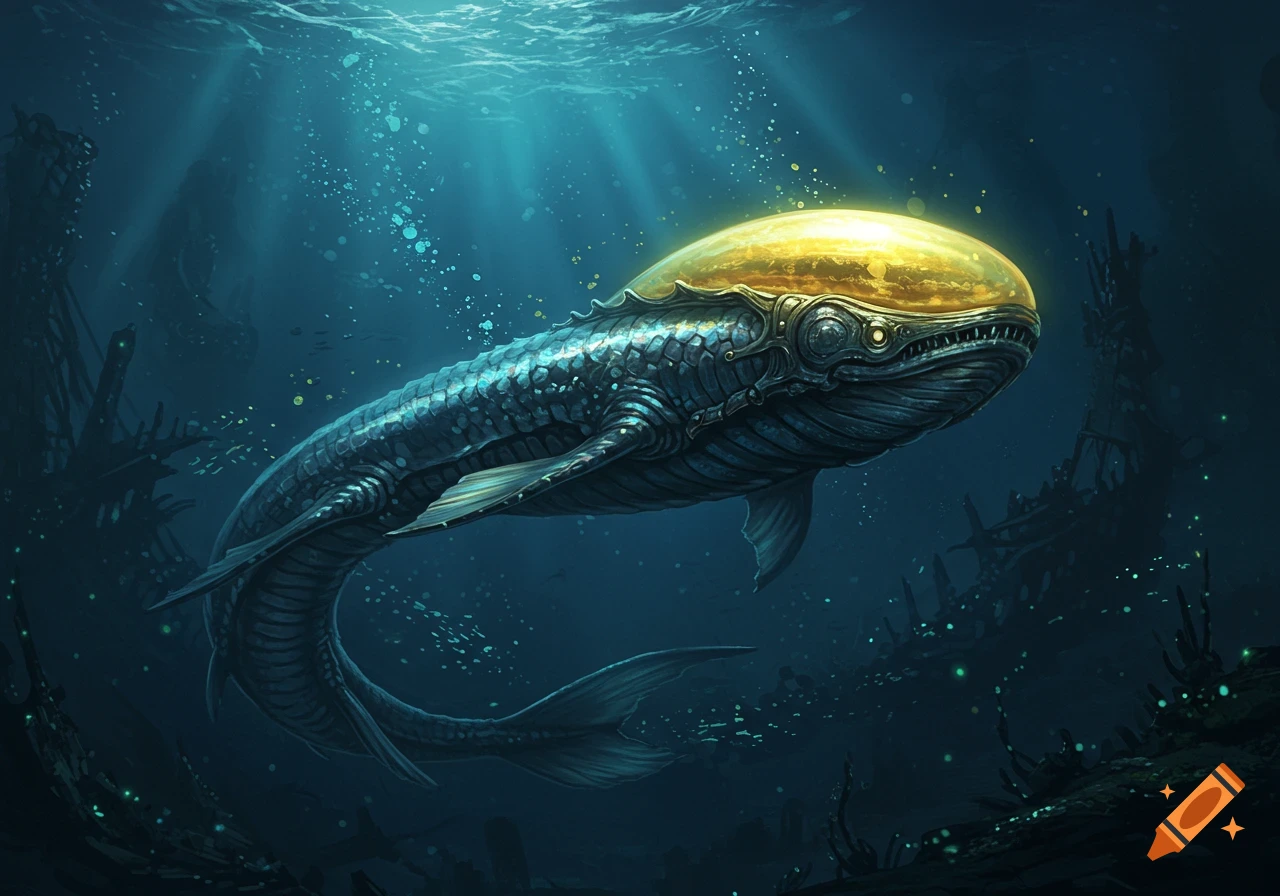
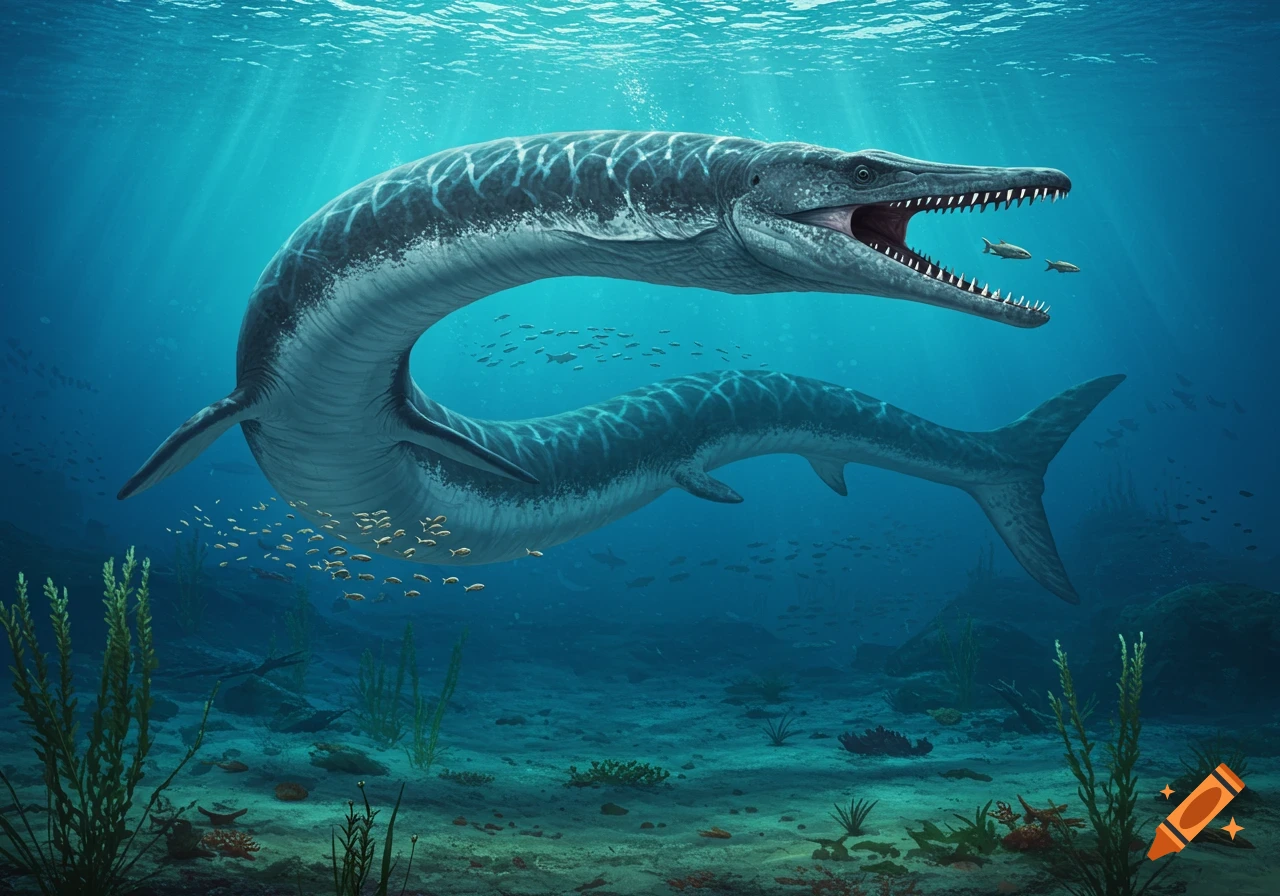
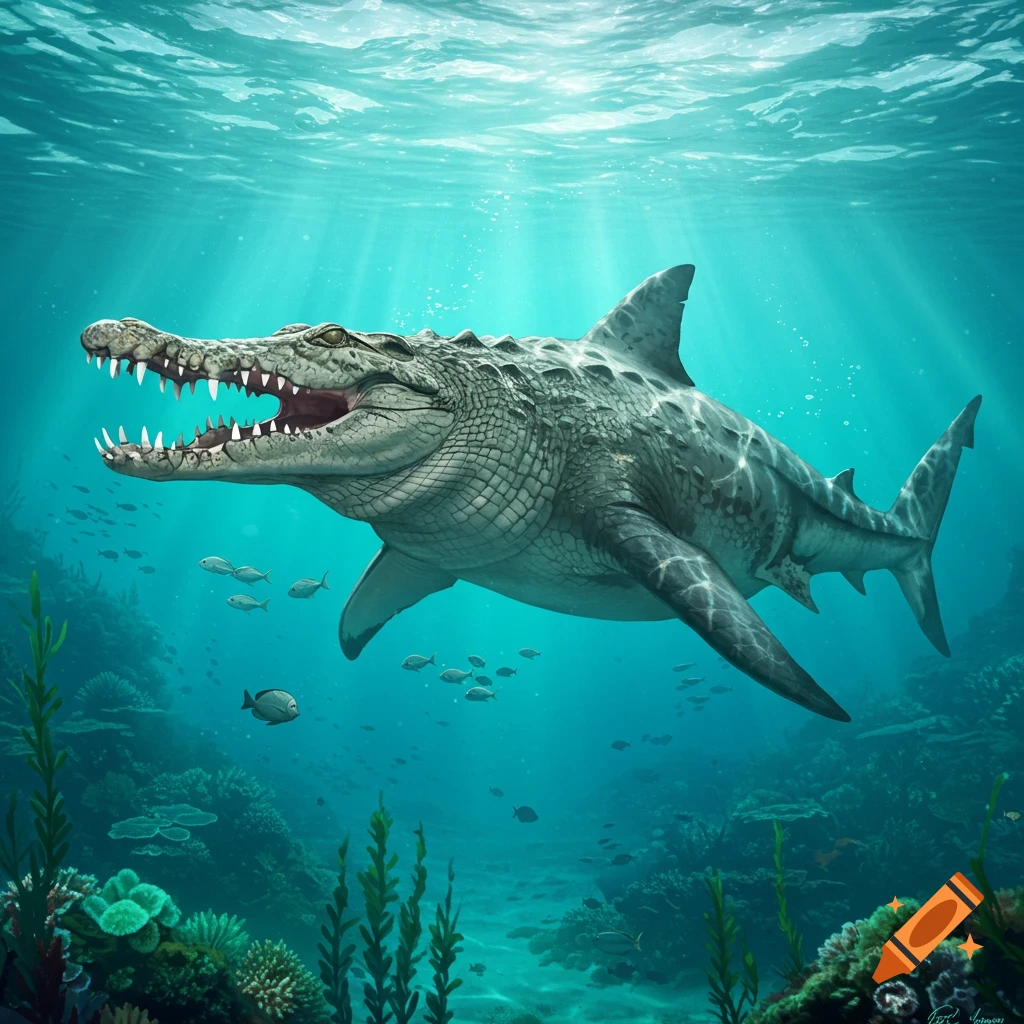
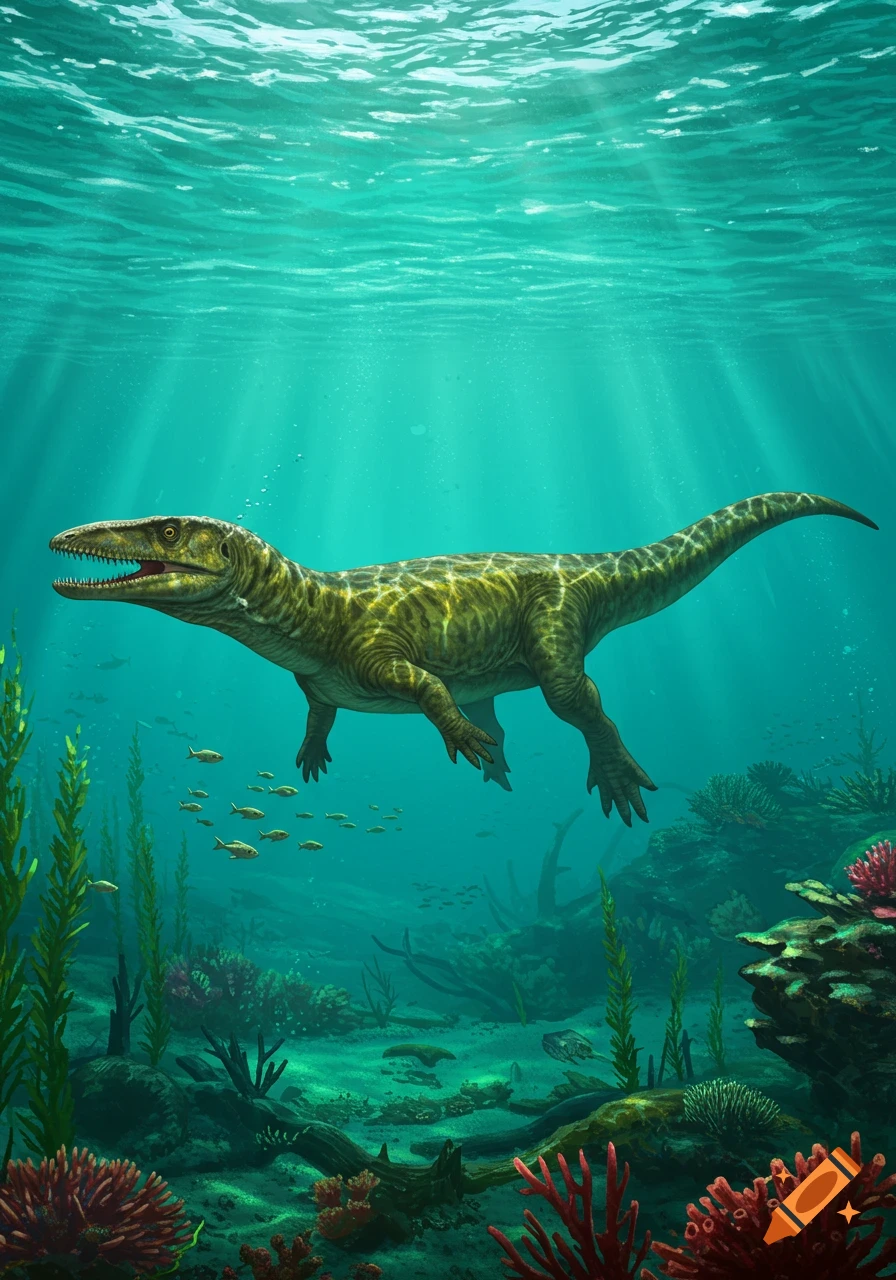
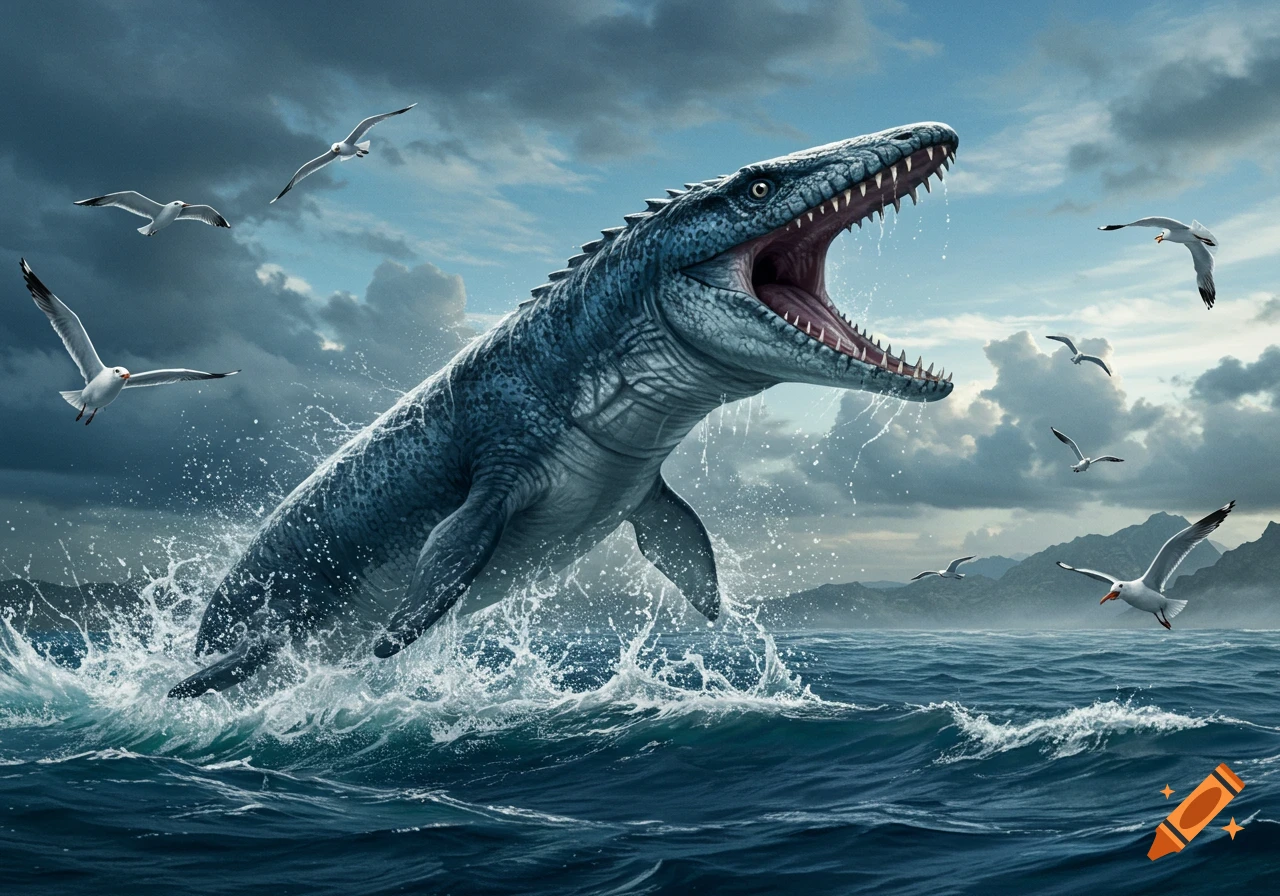
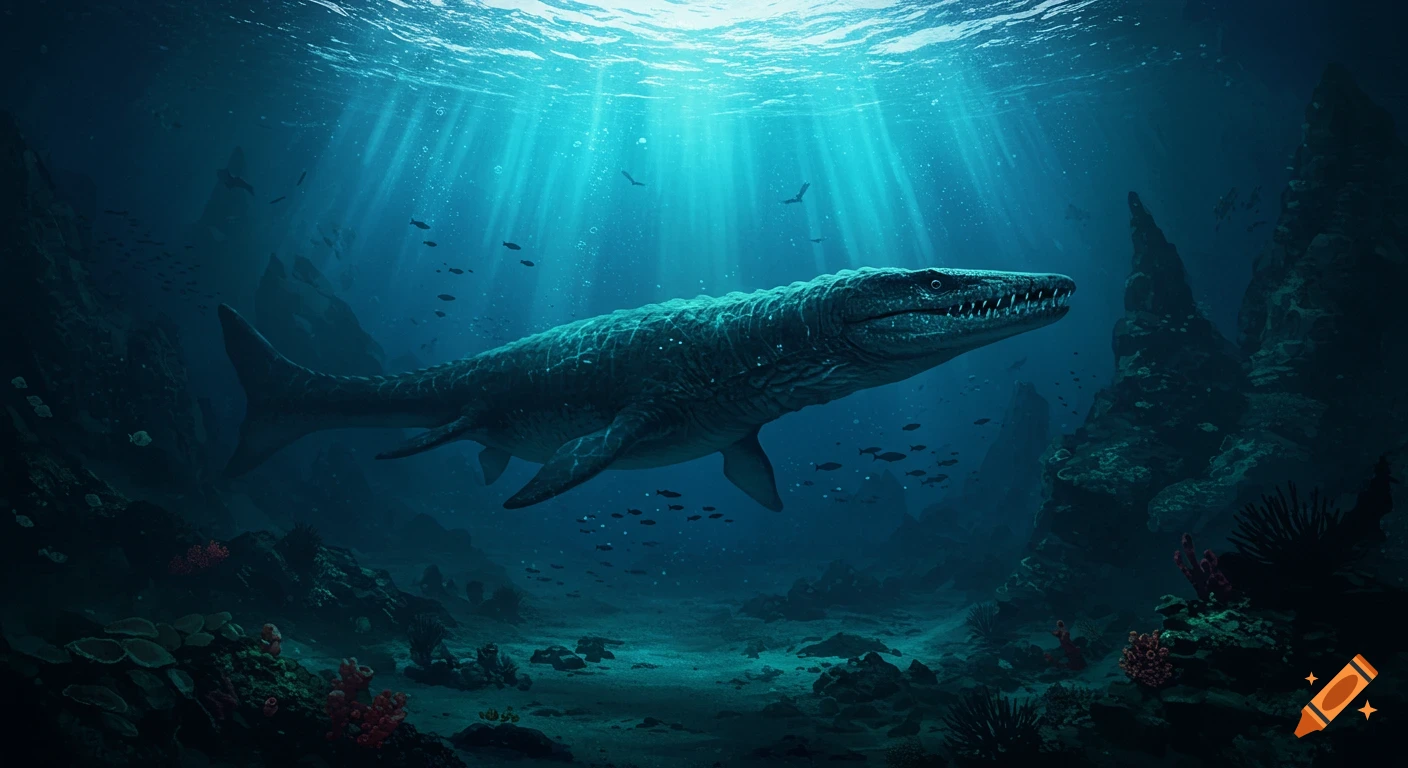
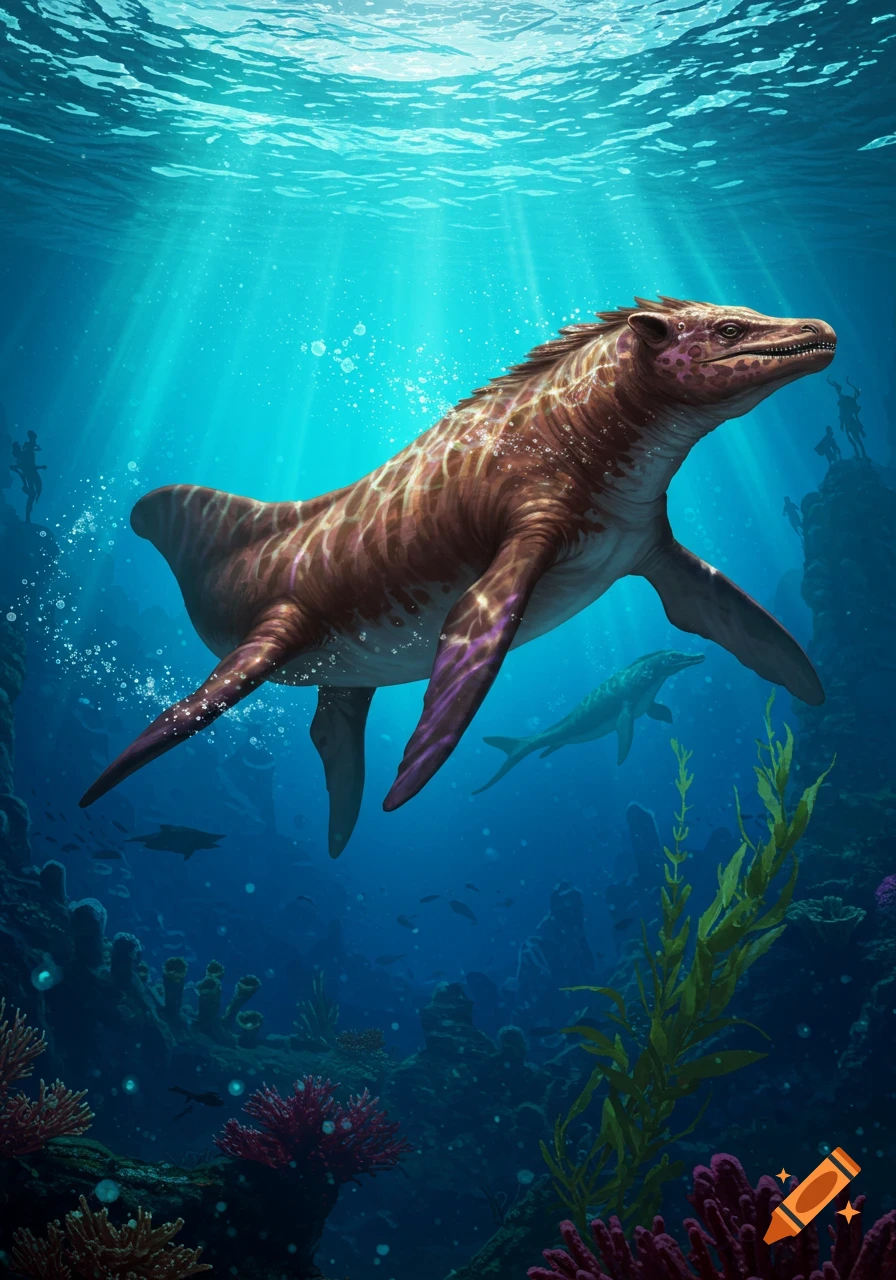
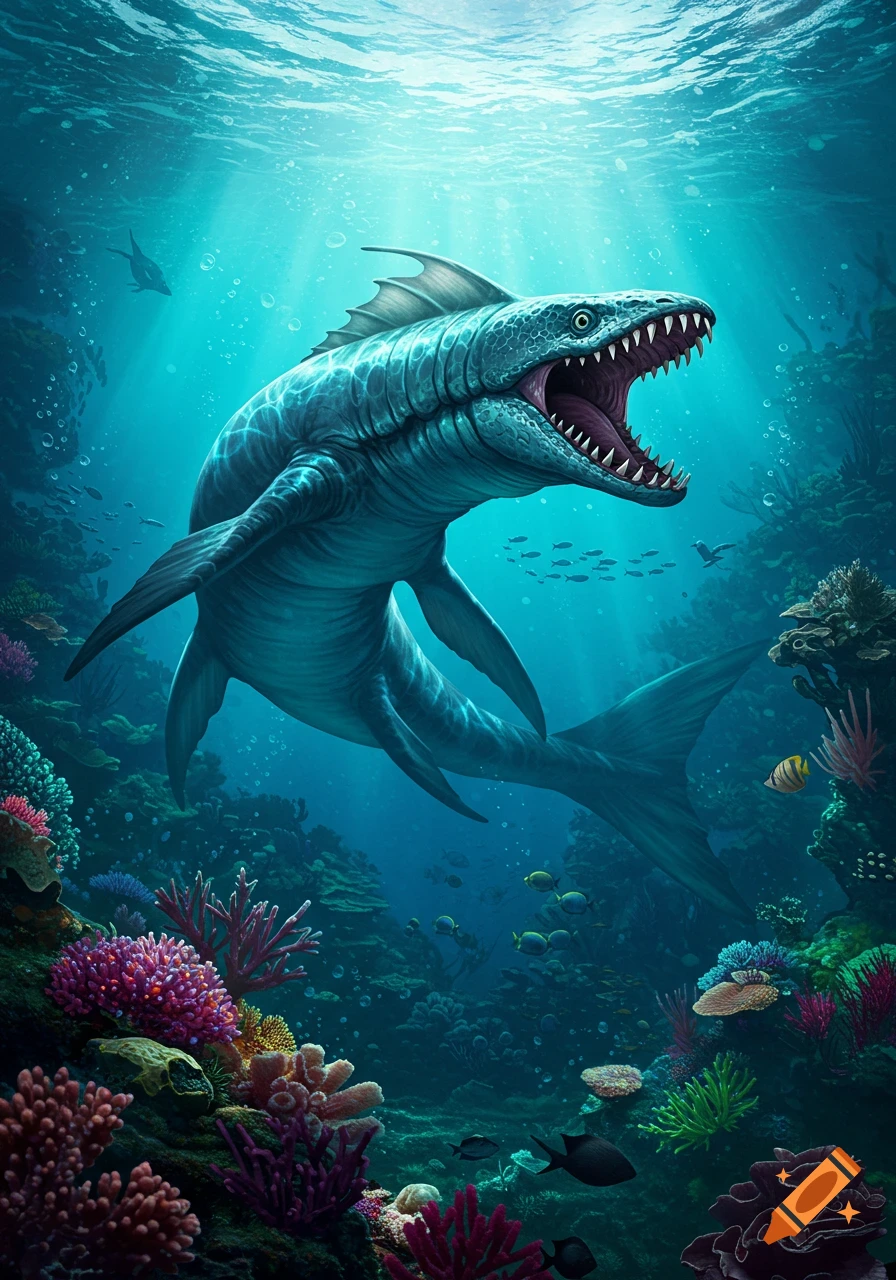
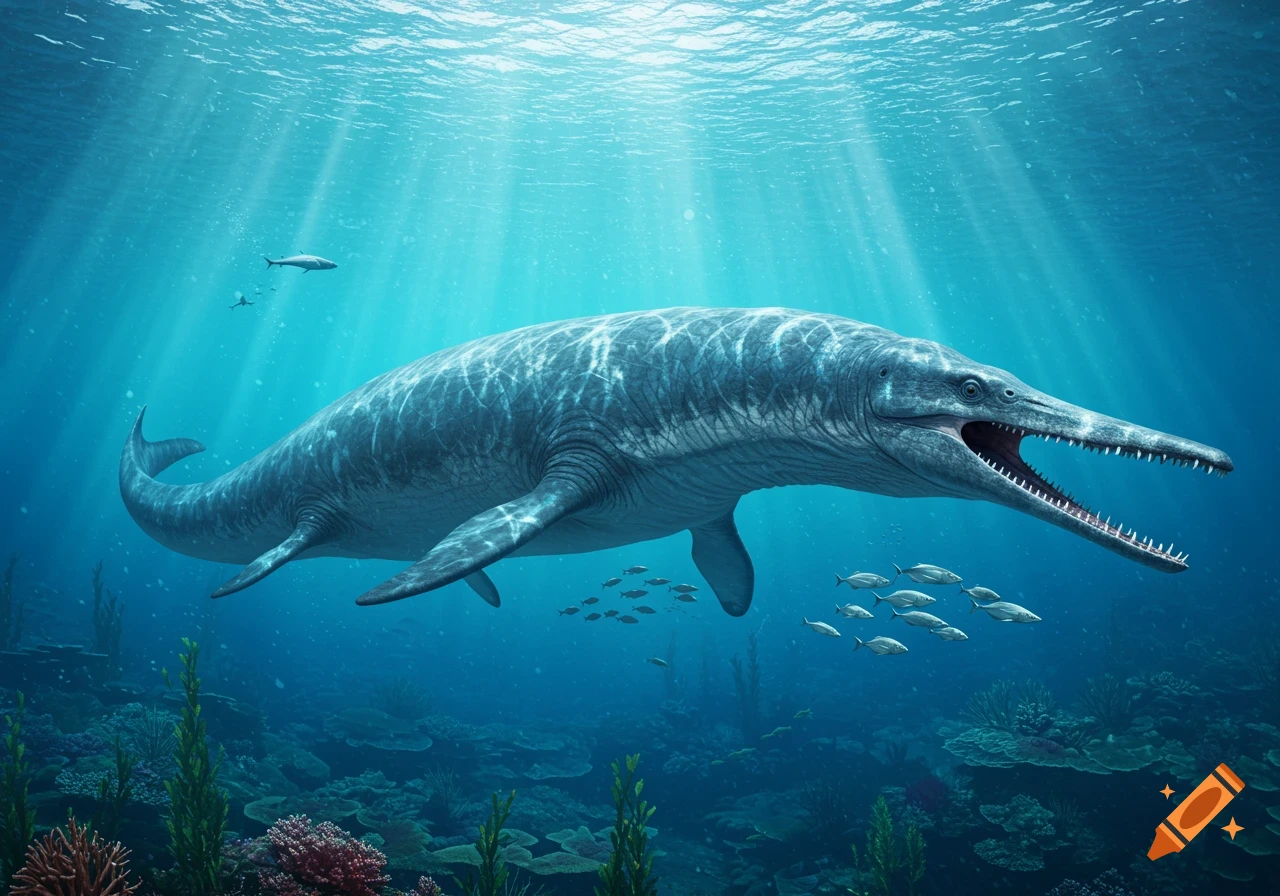
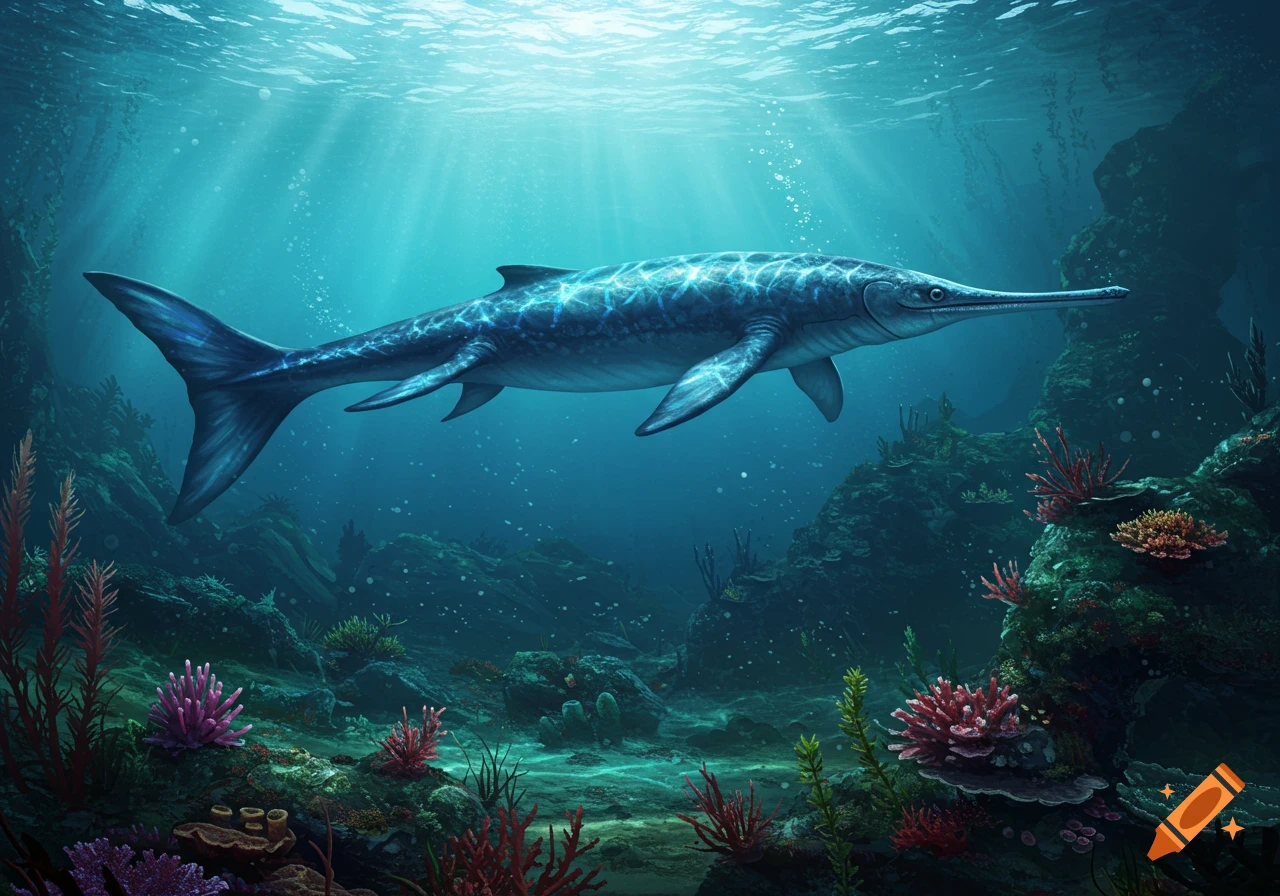
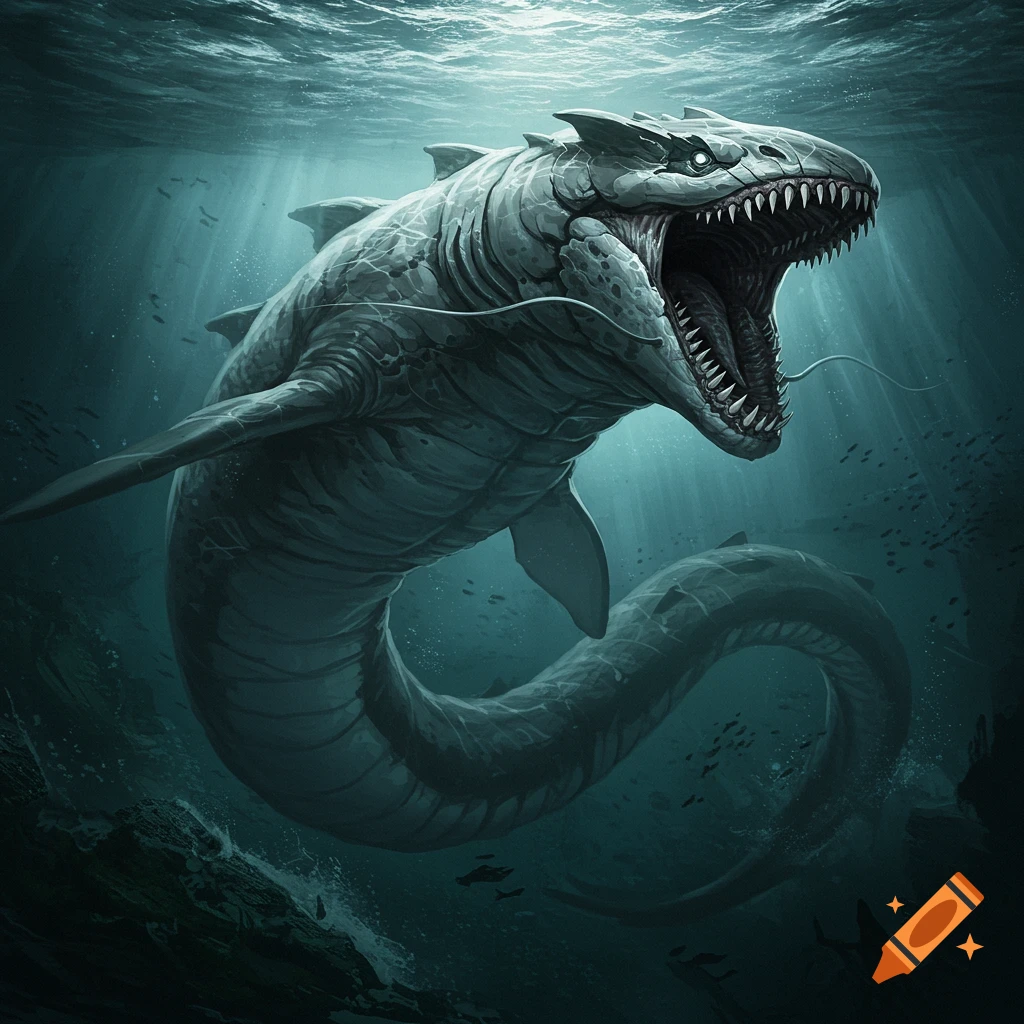
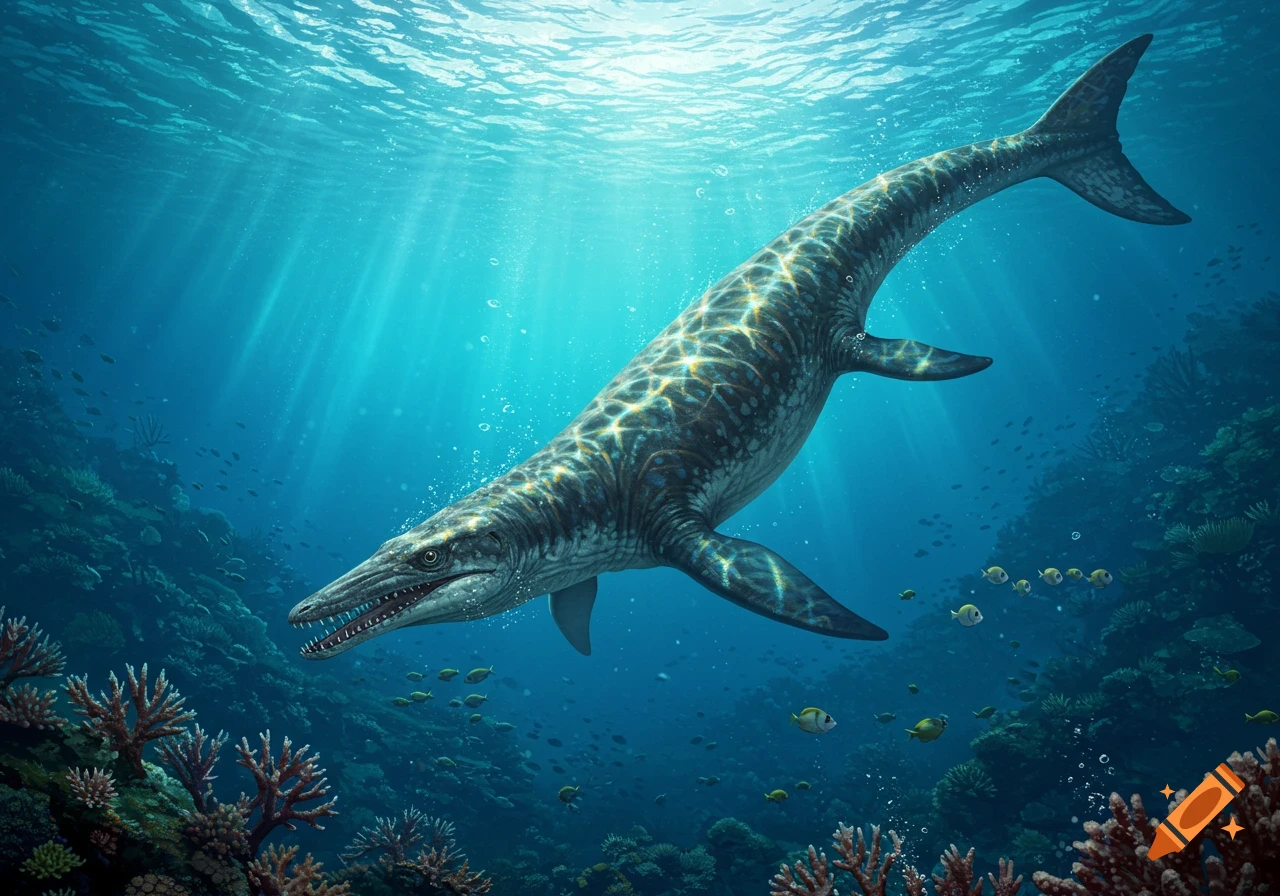
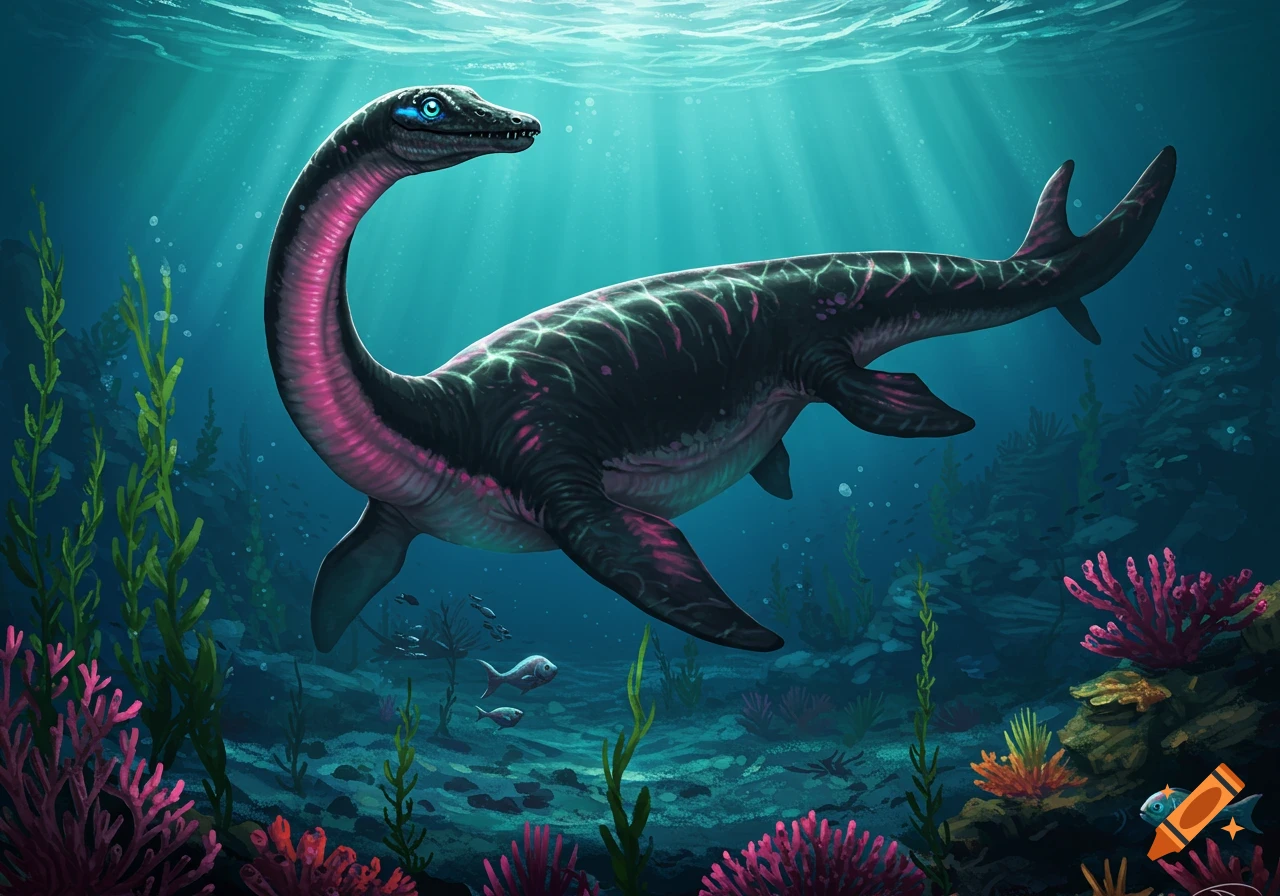
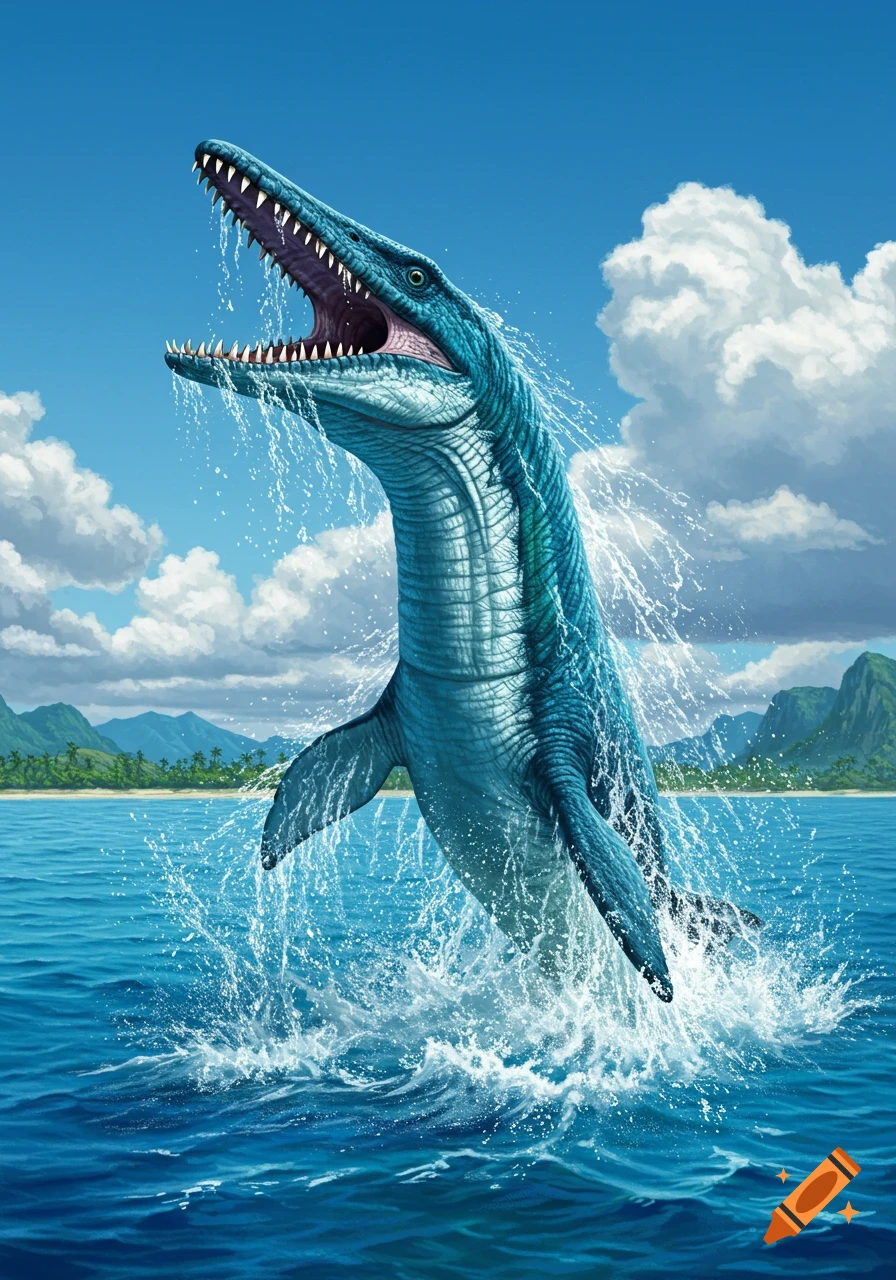
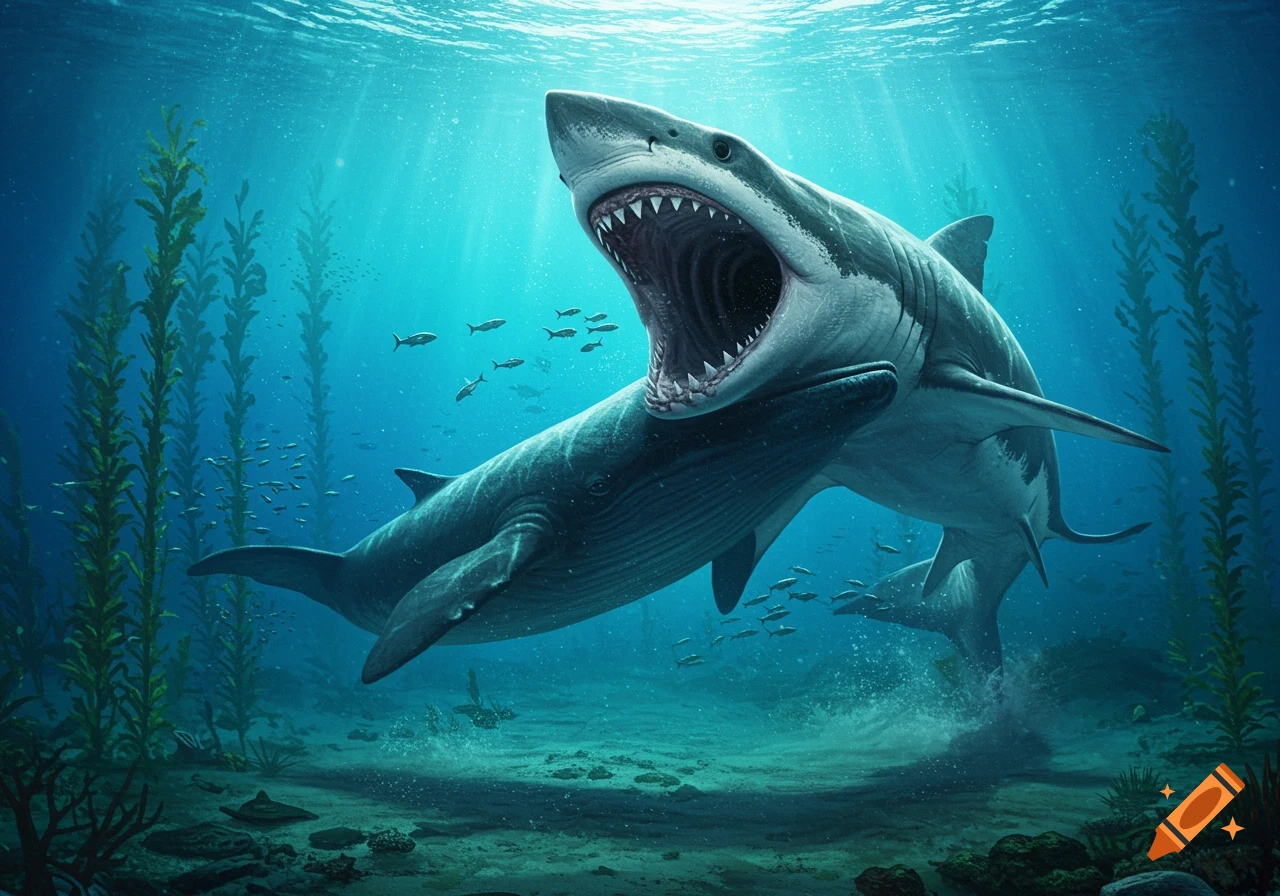
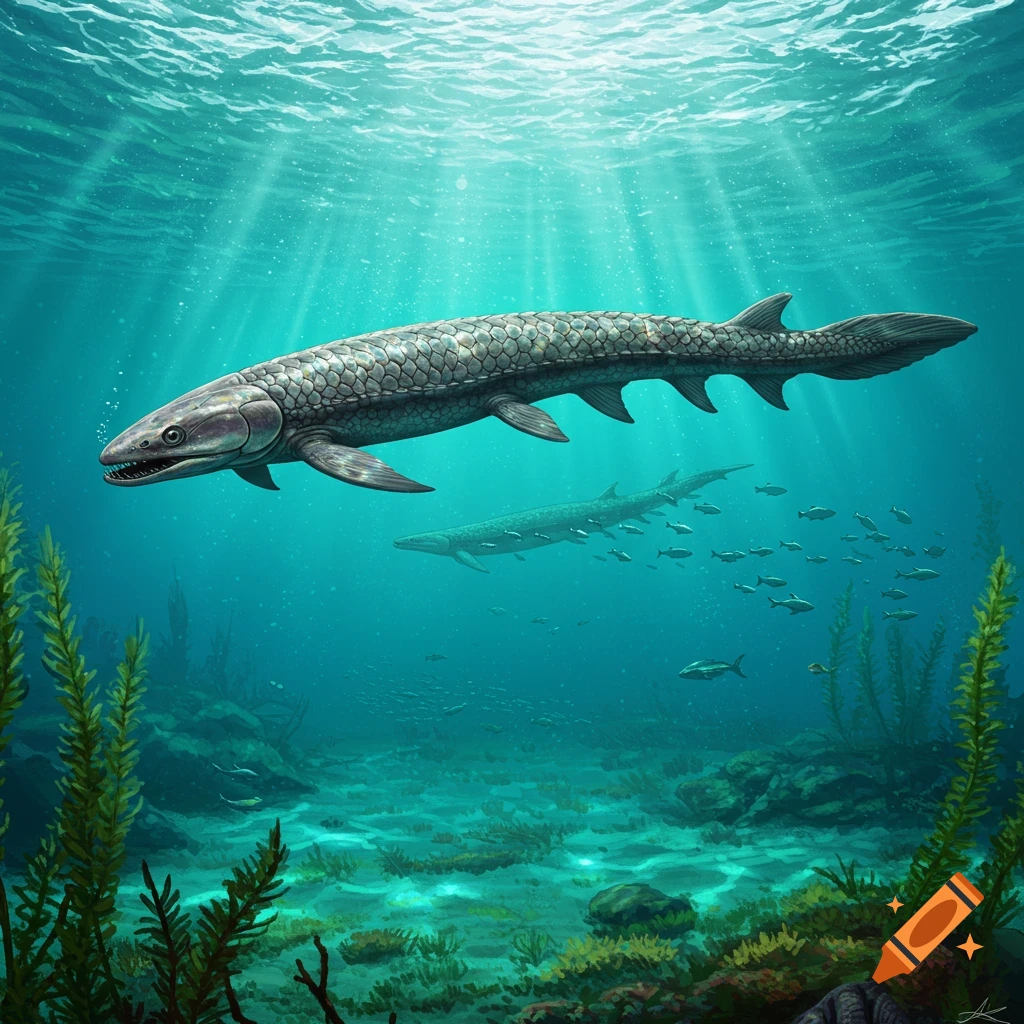
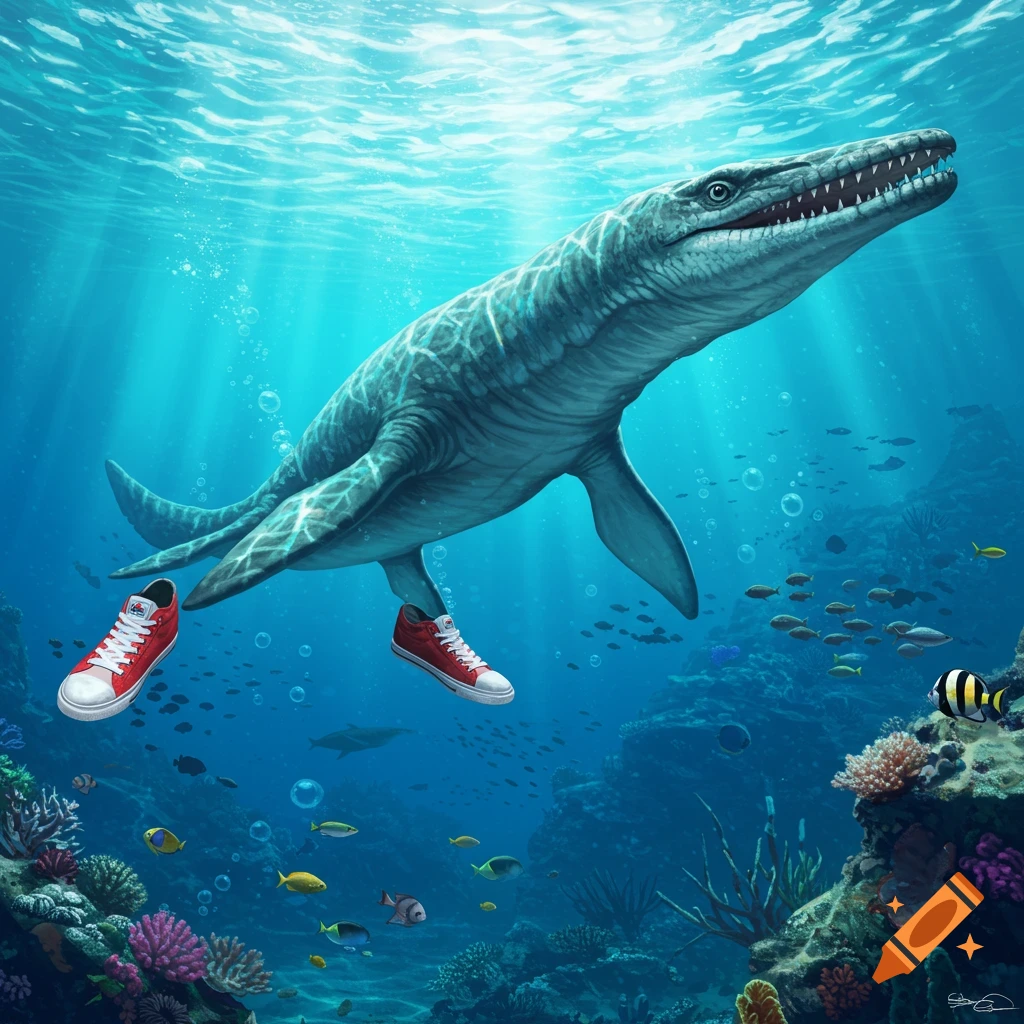
A large, ancient-looking marine creature with an elongated snout and sharp teeth swims in deep blue-green water.
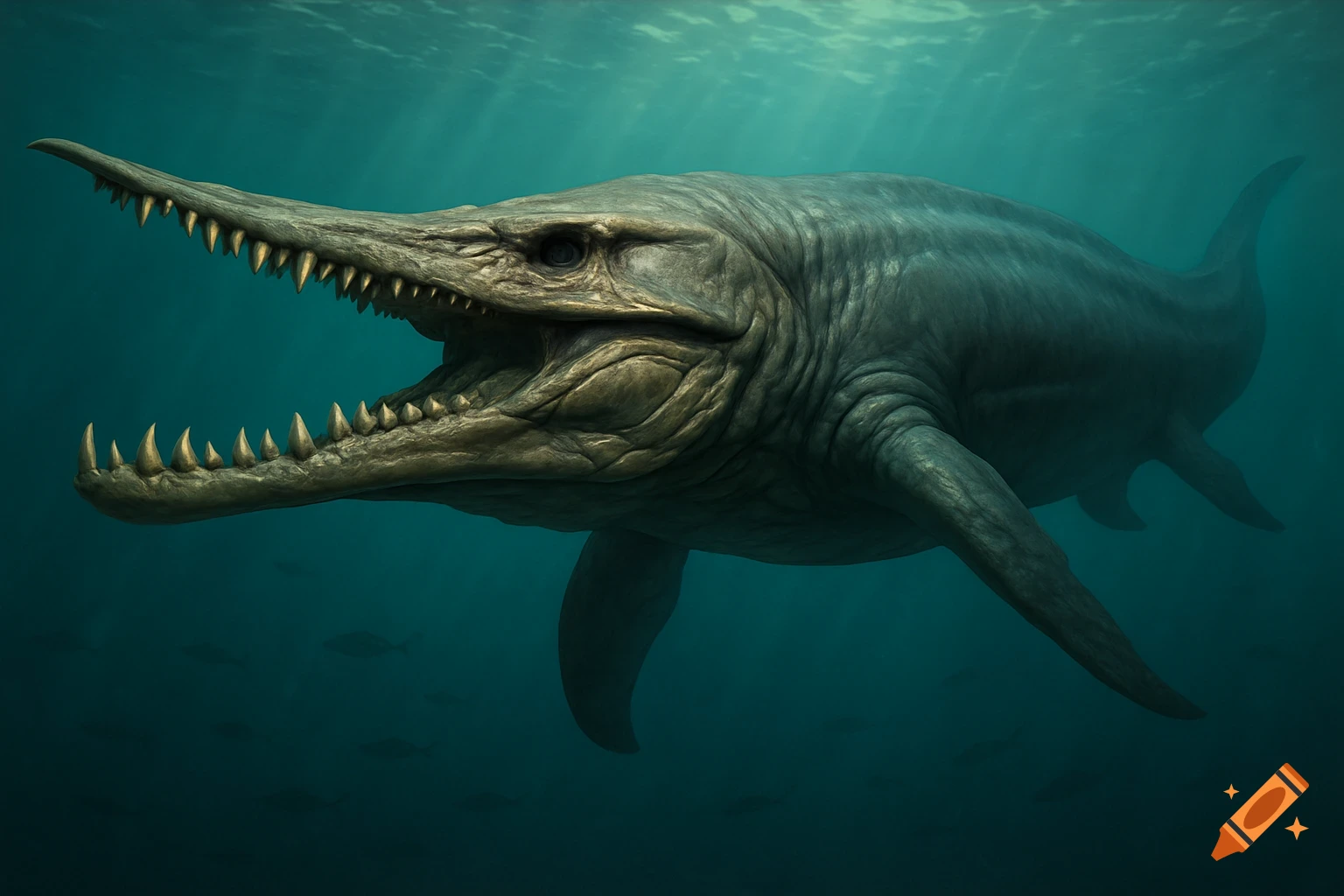
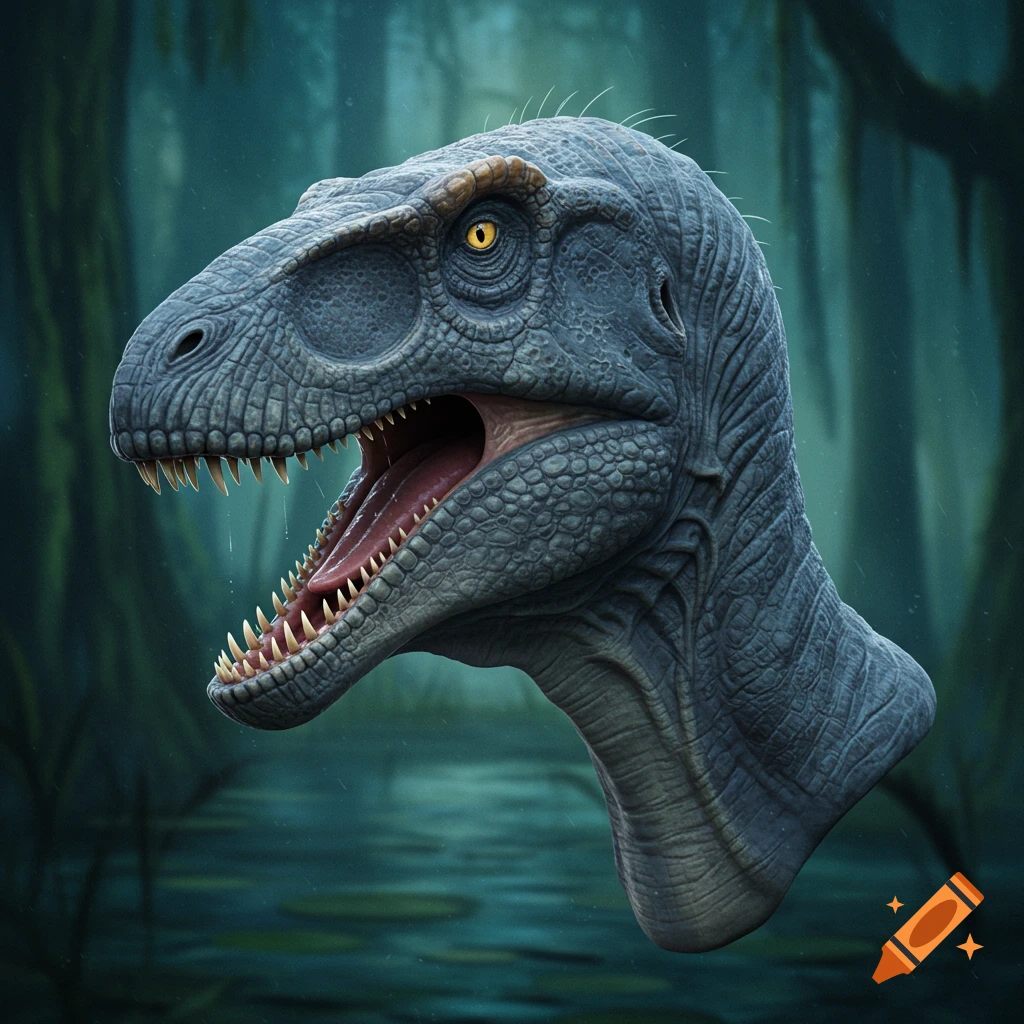
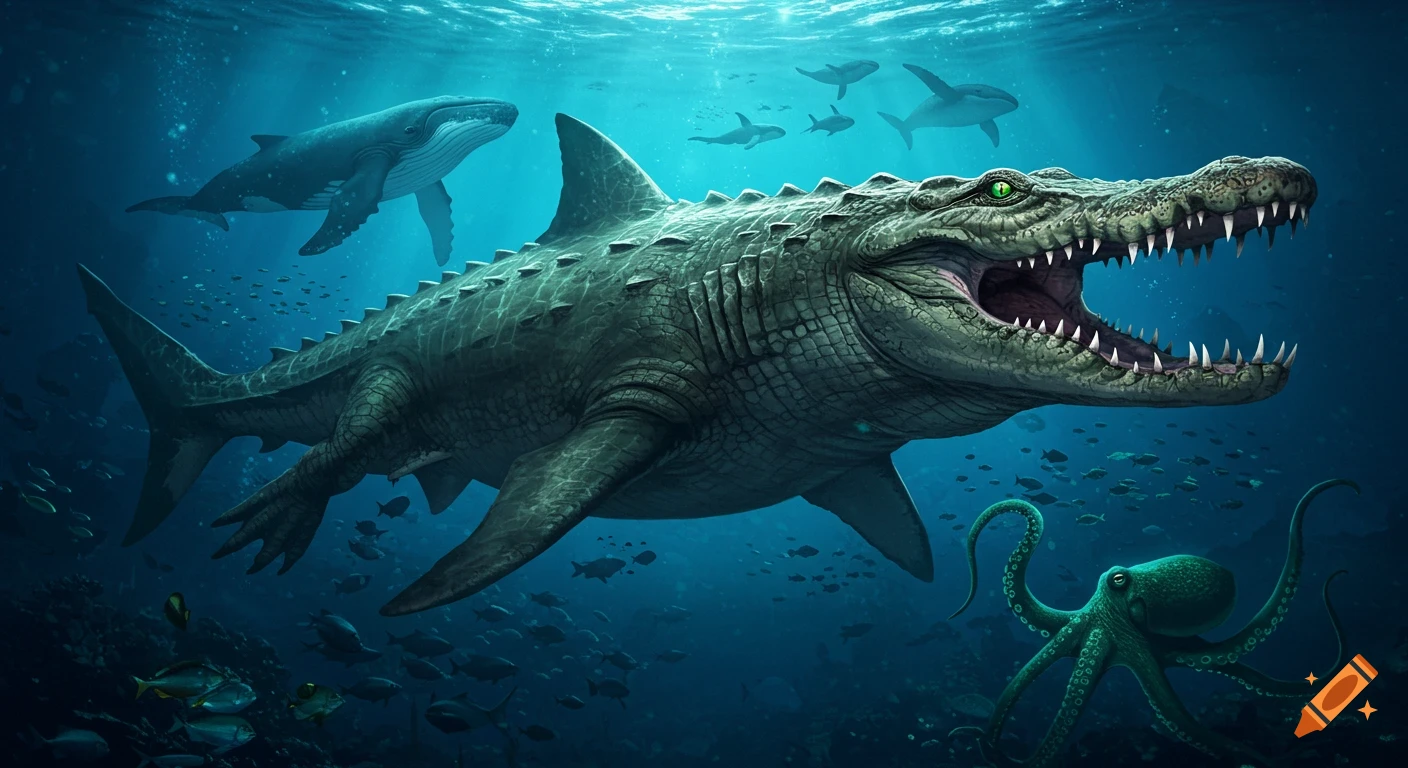
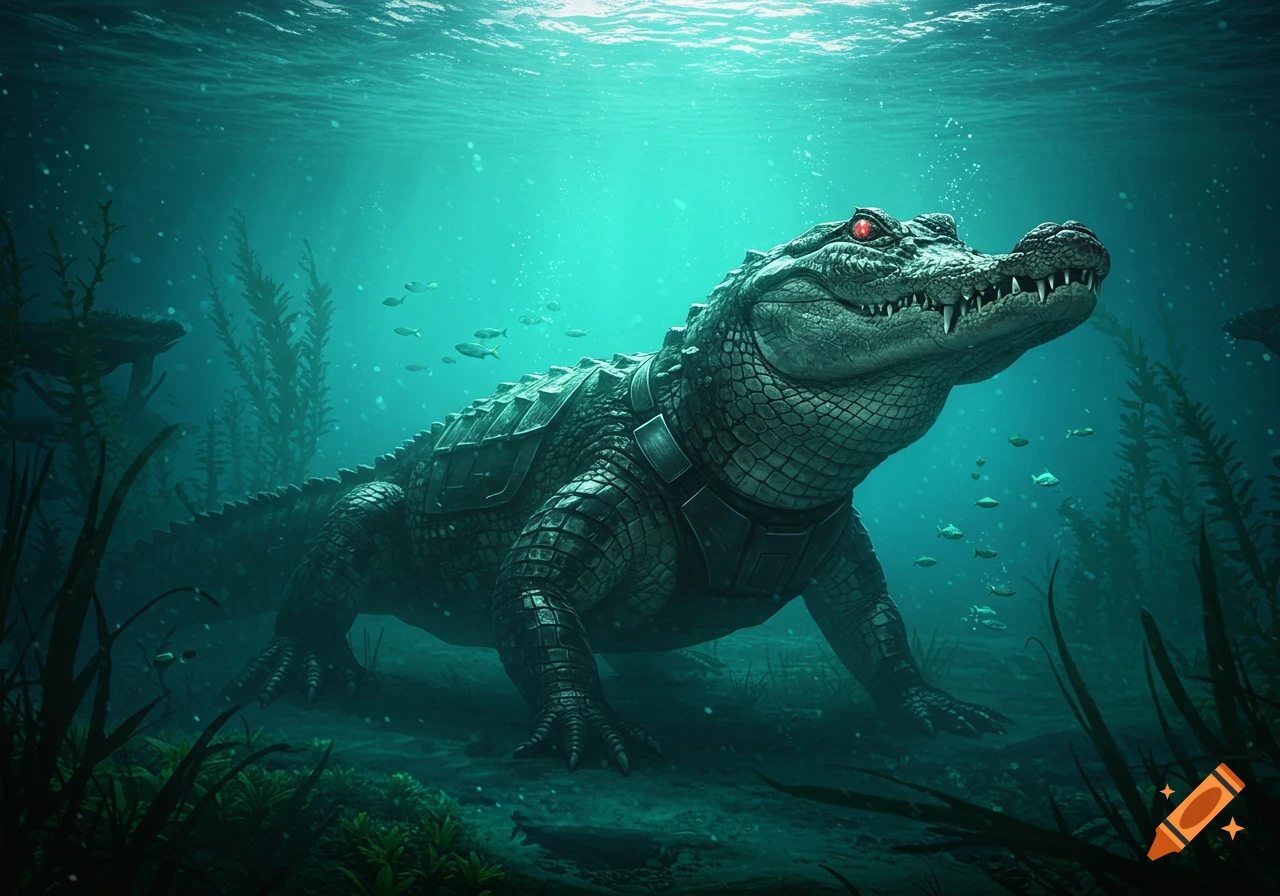
Make this: Basilosaurus (an early archaic whale) had: An elongated, narrow rostrum with conical, interlocking teeth for seizing fish and tearing flesh. A jawline and skull suited to lateral shakes and strong anterior grip. Good reach and a mouth geometry that resists torsion during struggle. I’m hybridizing that form with your existing crushing adaptations (reinforced skull, TMJ locking, posterior crushing plates) so you get both piercing reach and bone‑crushing power. --- Concrete anatomical changes implemented 1. Rostrum (front jaw) elongated The snout extends ~25–35% beyond a typical short‑necked skull, giving extra reach for seizing prey while your arms grapple. Rostrum bones remain hollow‑lattice to keep mass low. 2. Dentition mix Anterior (rostral) zone: elongated conical, interlocking teeth (Basilosaurus‑style) for piercing and holding slippery prey. Posterior zone: large, stout molariform/crushing plates (reinforced, osteoderm‑backed) for bone/crust crushing — this keeps your high crush numbers at the back of the mouth. 3. Skull reinforcement & TMJ Basilosaurus rostrum integrated into a deep, buttressed skull with internal struts, keeping the posterior skull stiff for crushing even though the rostrum is long. Temporomandibular joint modified to allow both: fast snapping at the tip and locked‑in crushing bites posteriorly. 4. Neck & bracing Because the rostrum is longer, cervicals at the skull base are thickened and anchored with extra muscular and ligamentous bracing See more