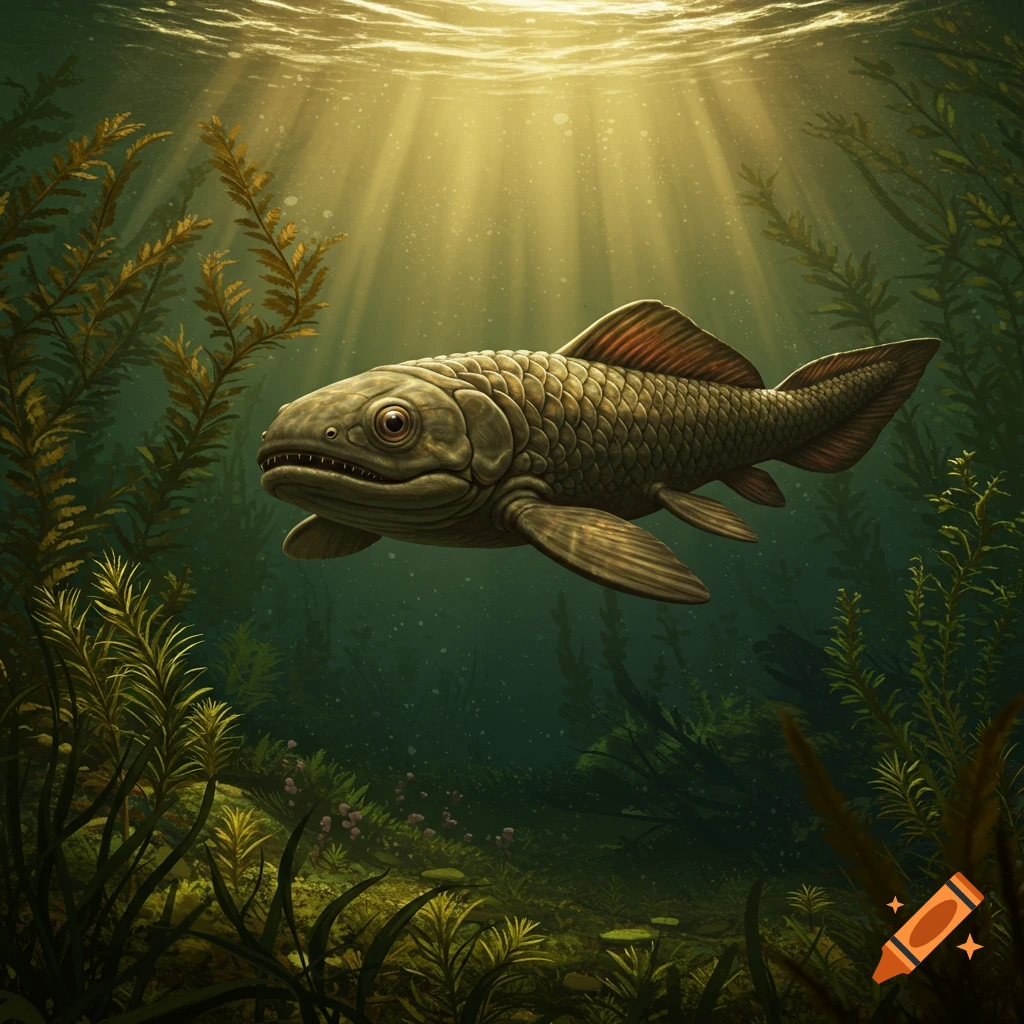
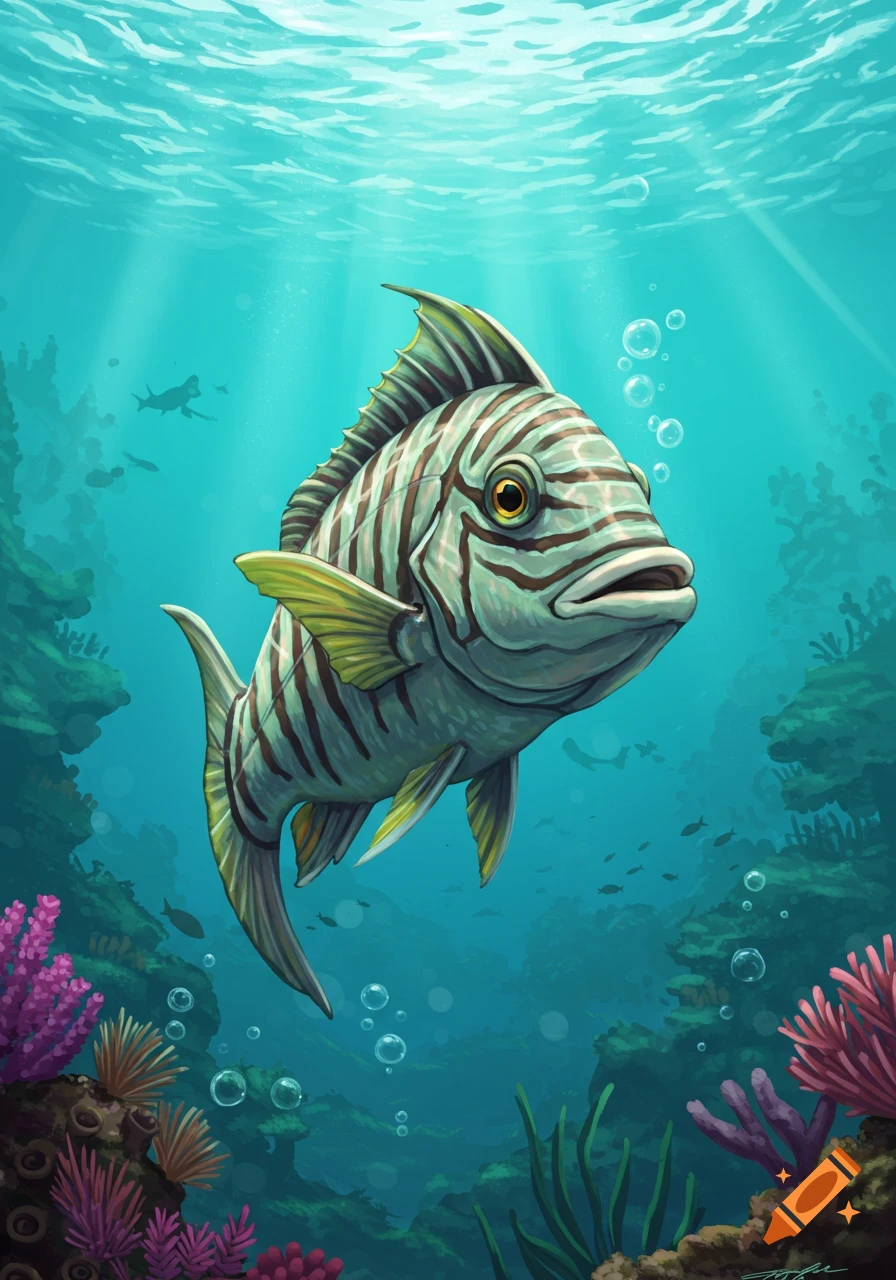
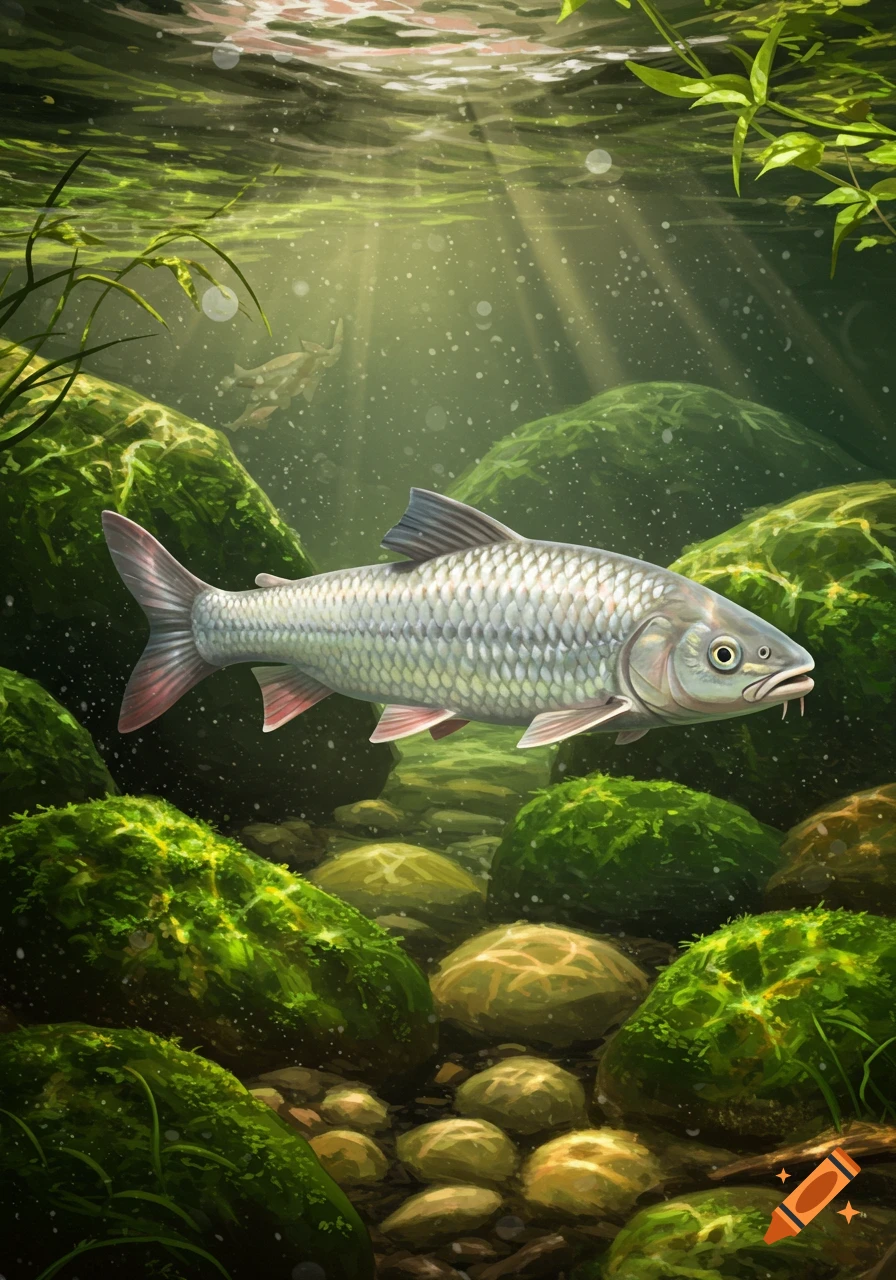
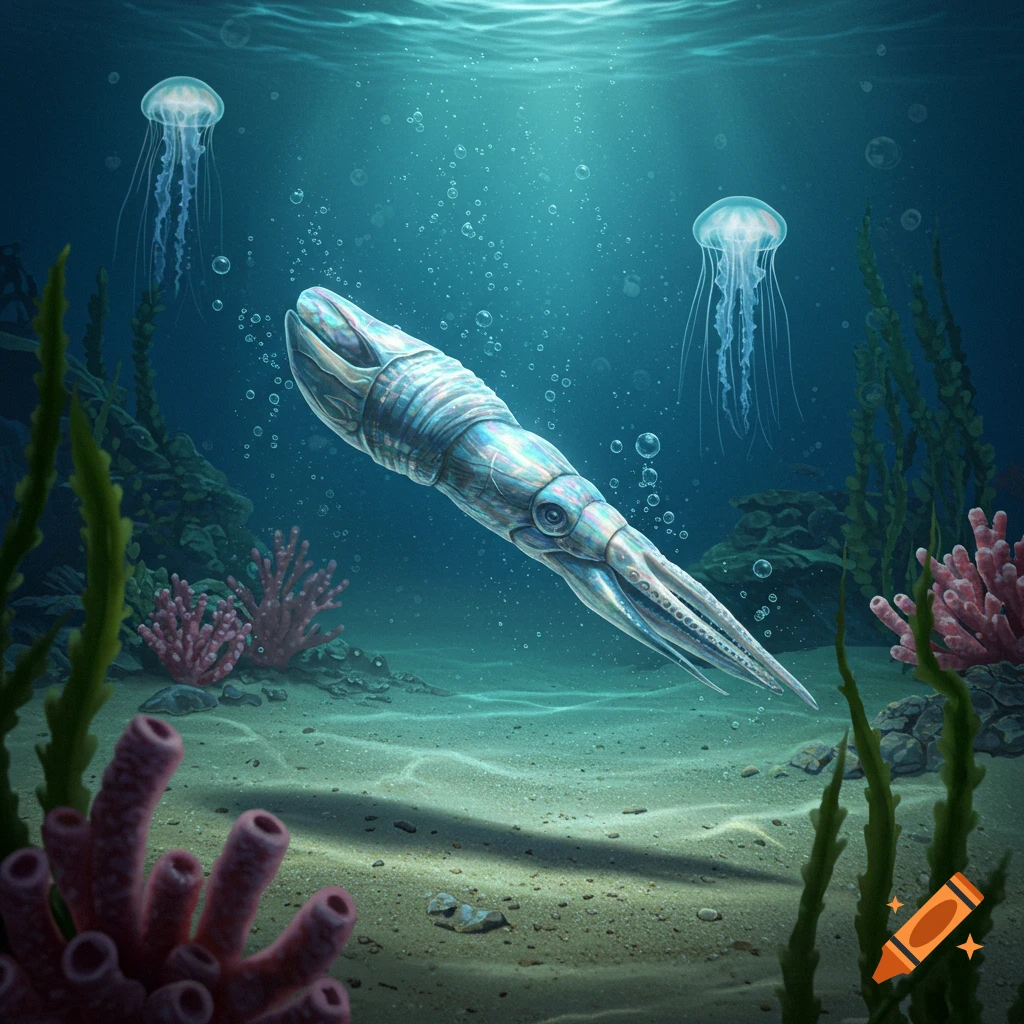
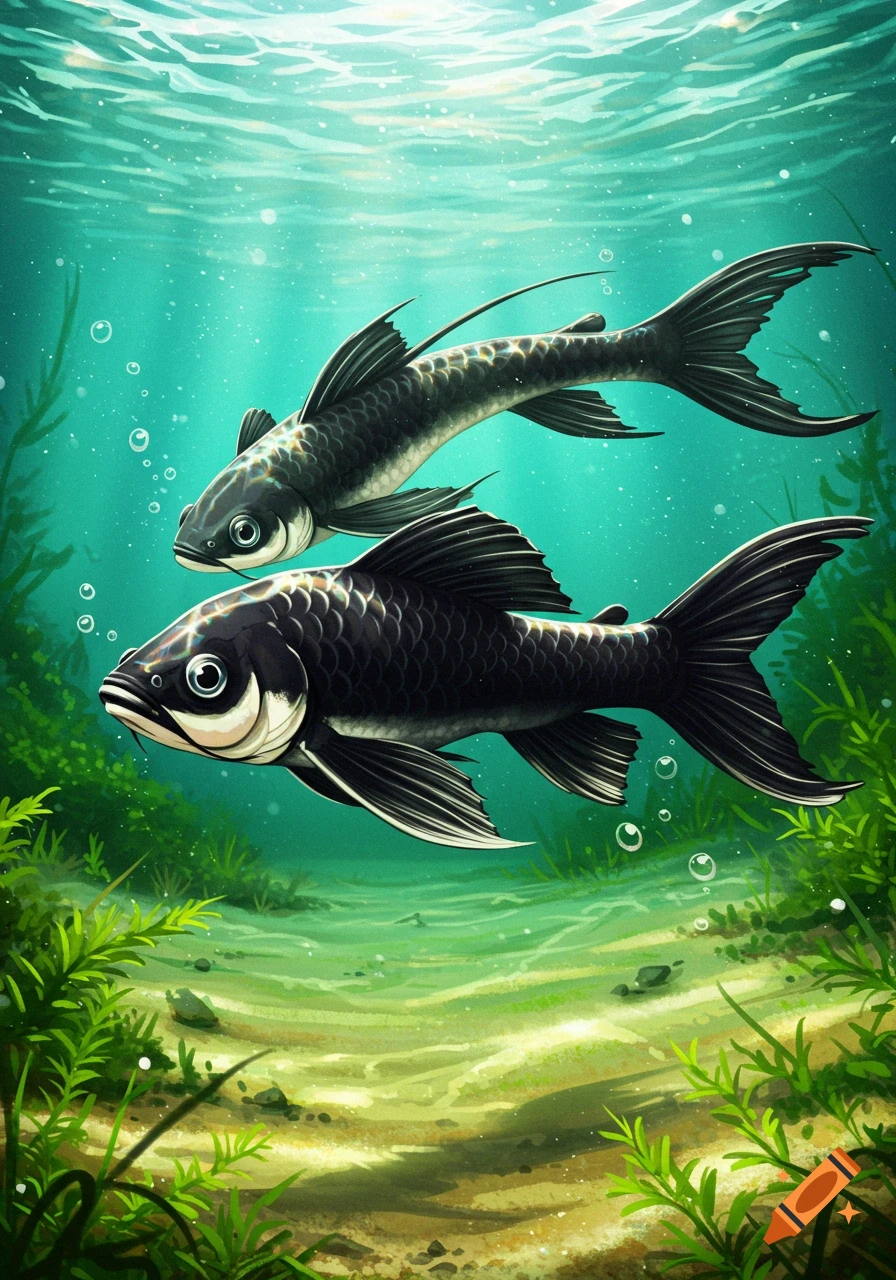
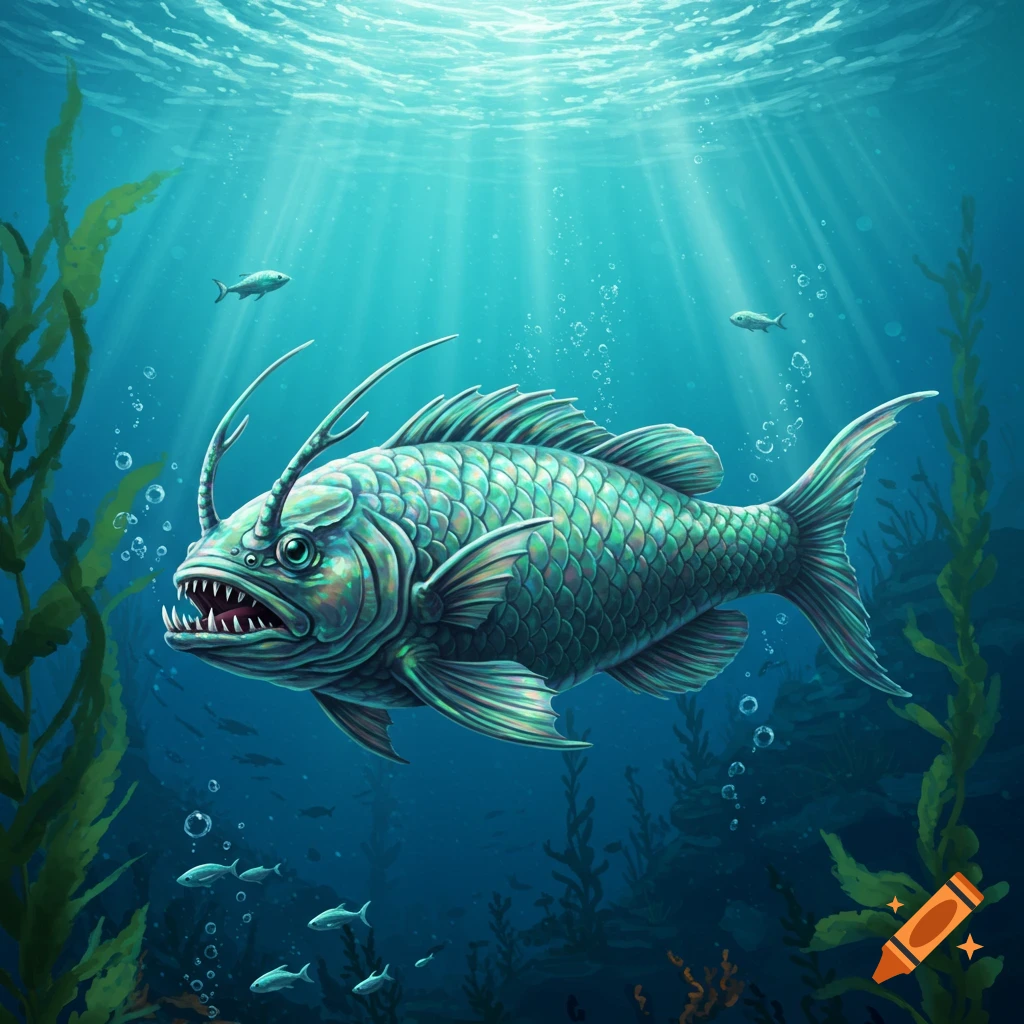
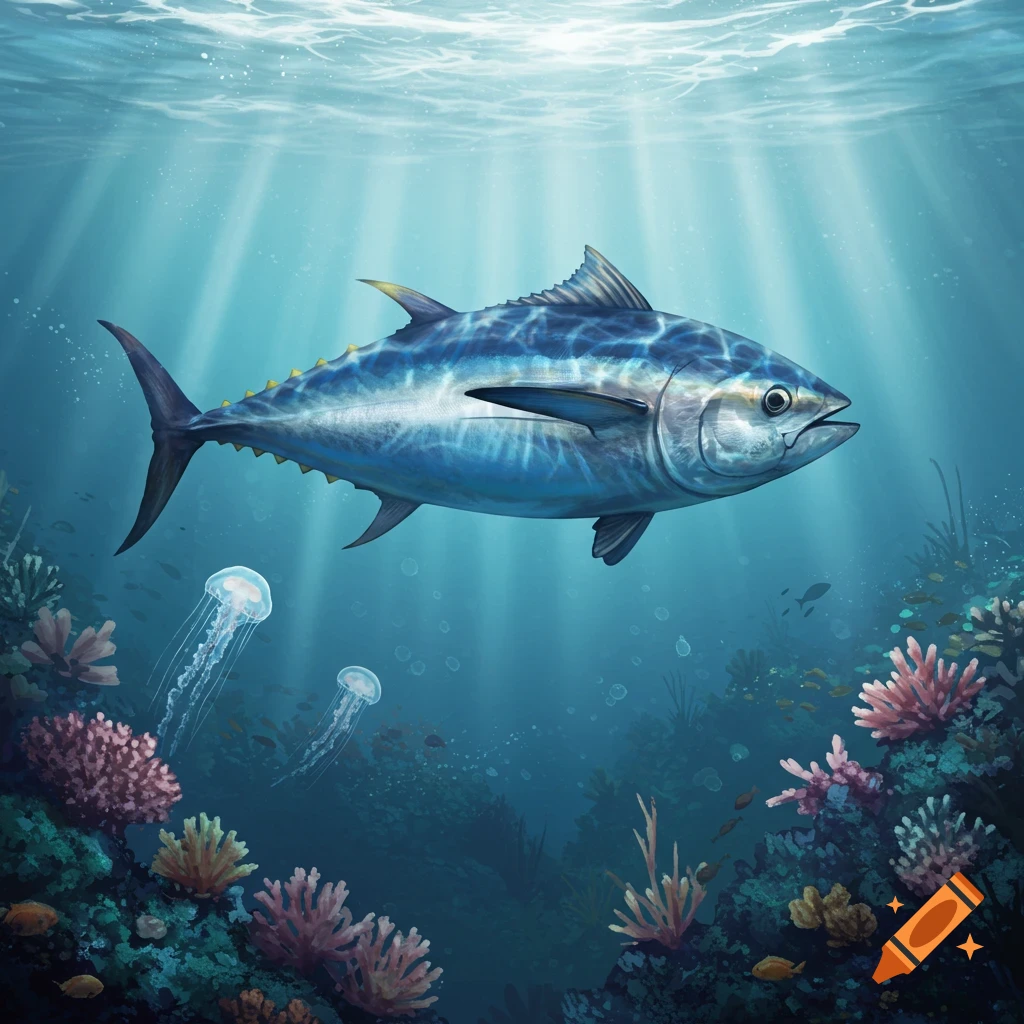
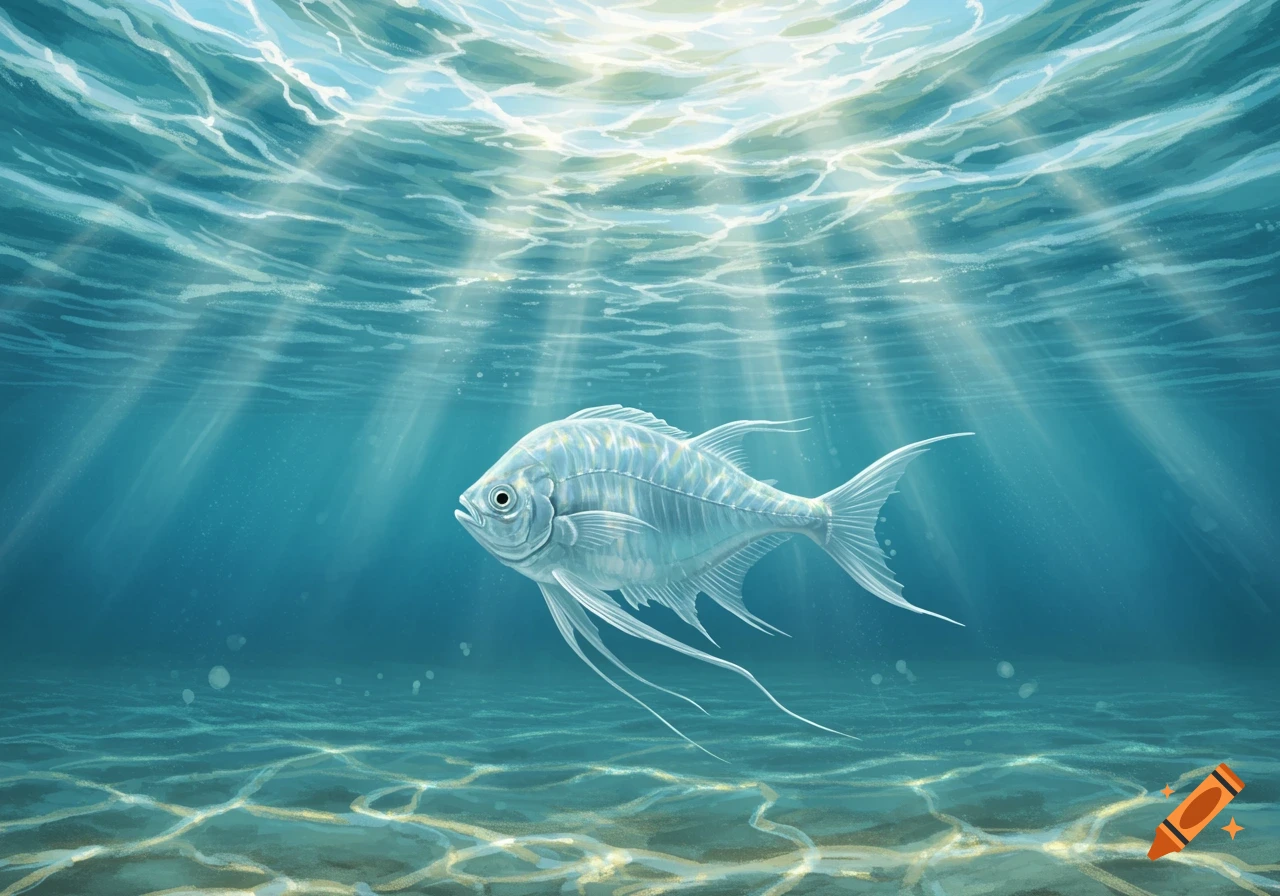
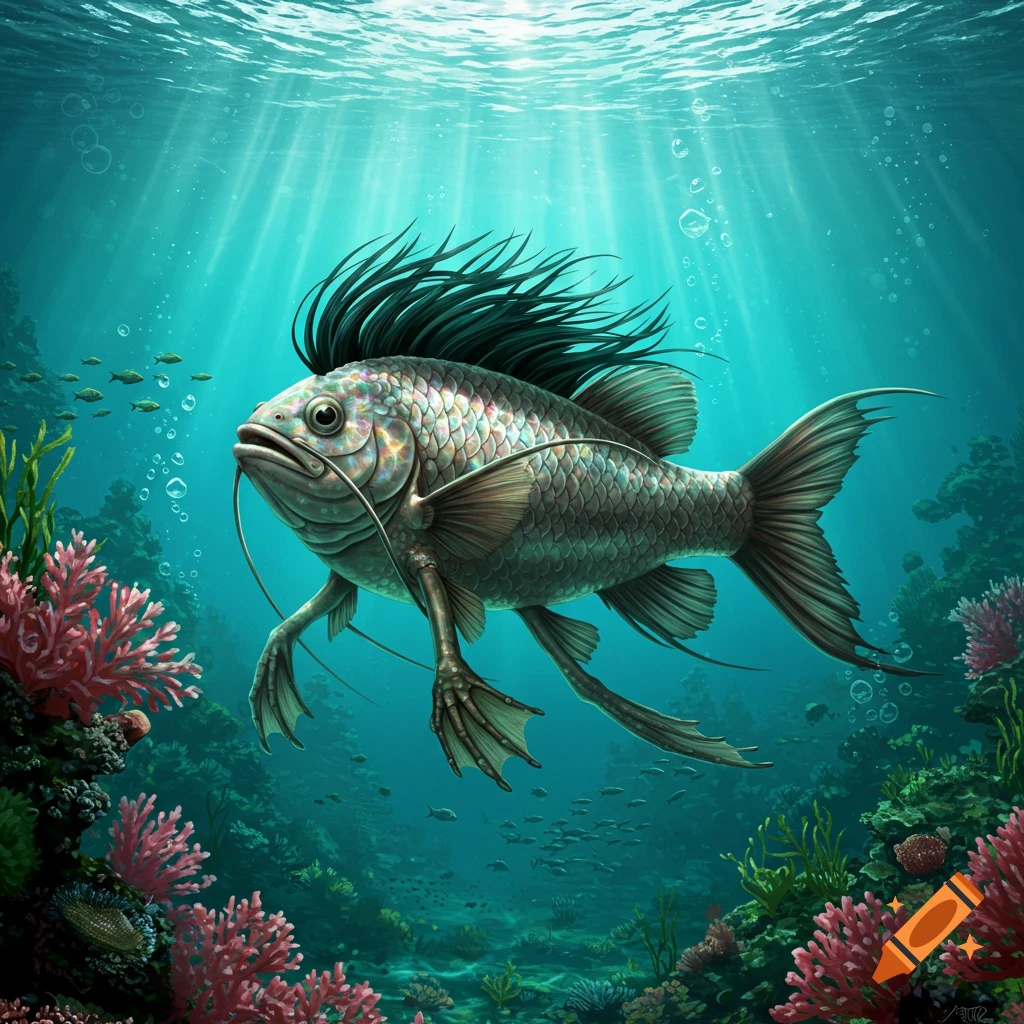
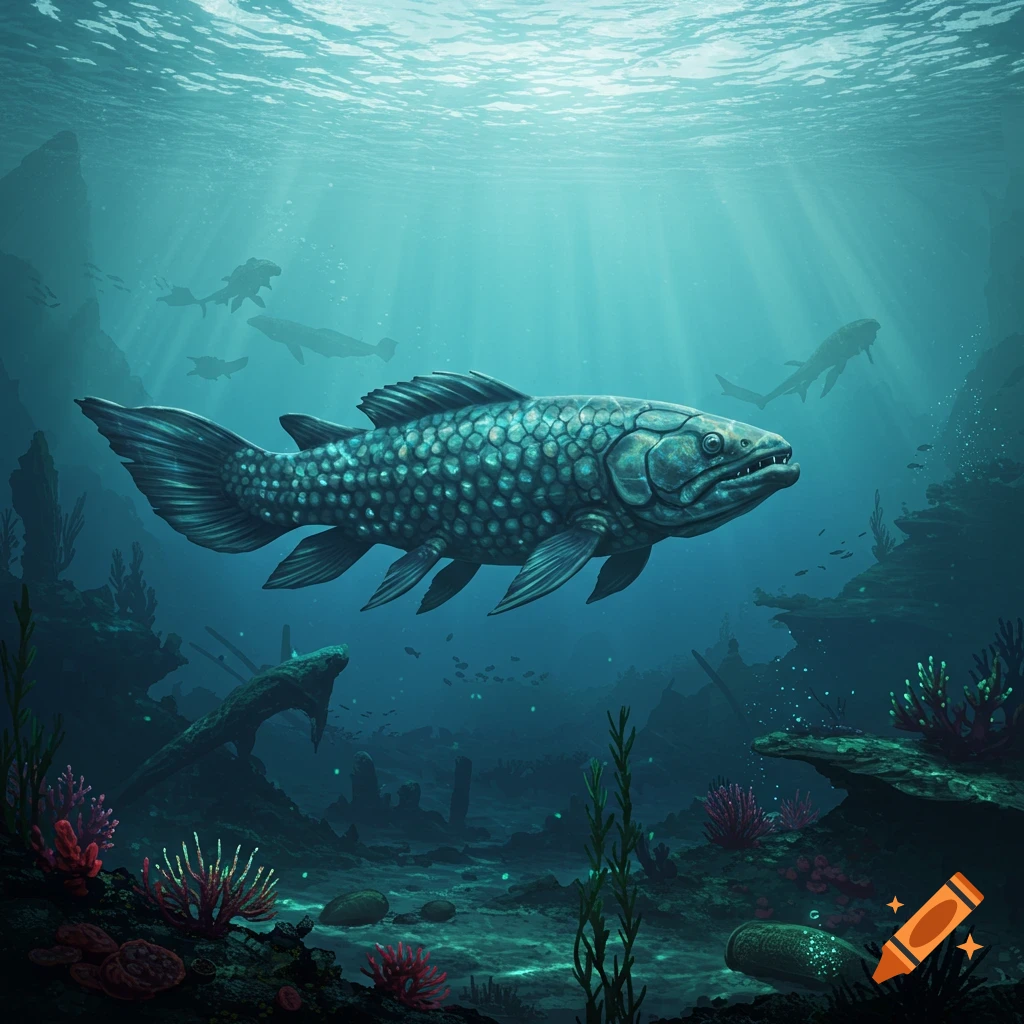
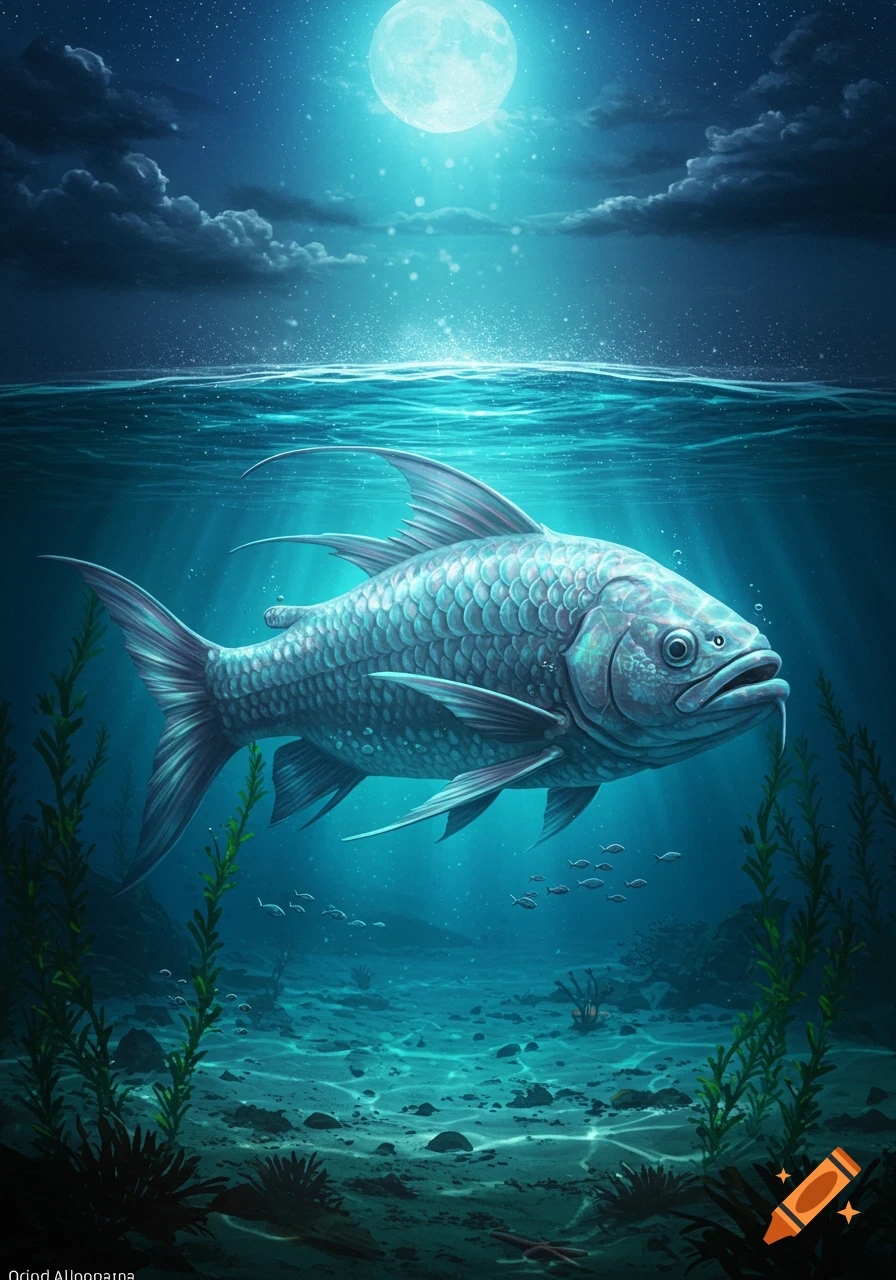
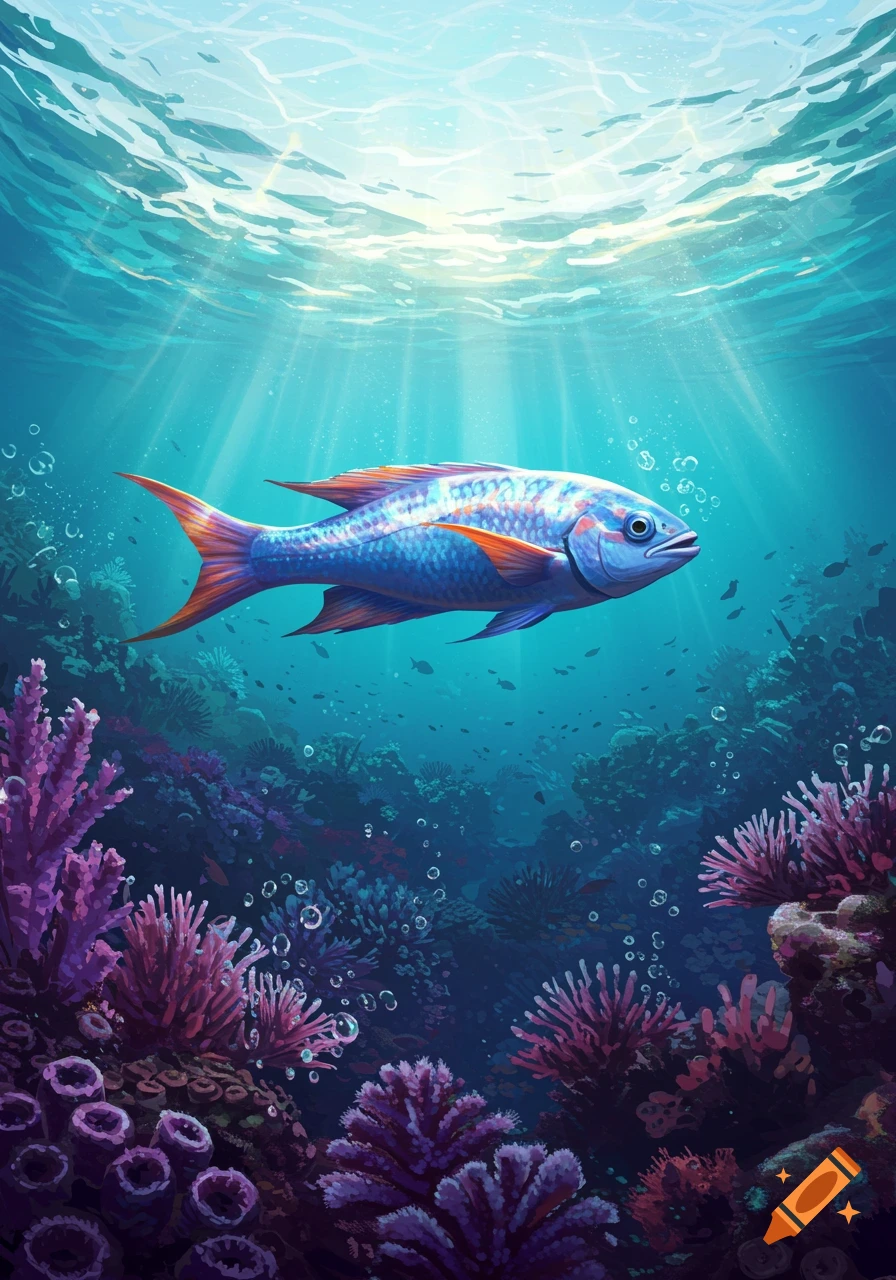
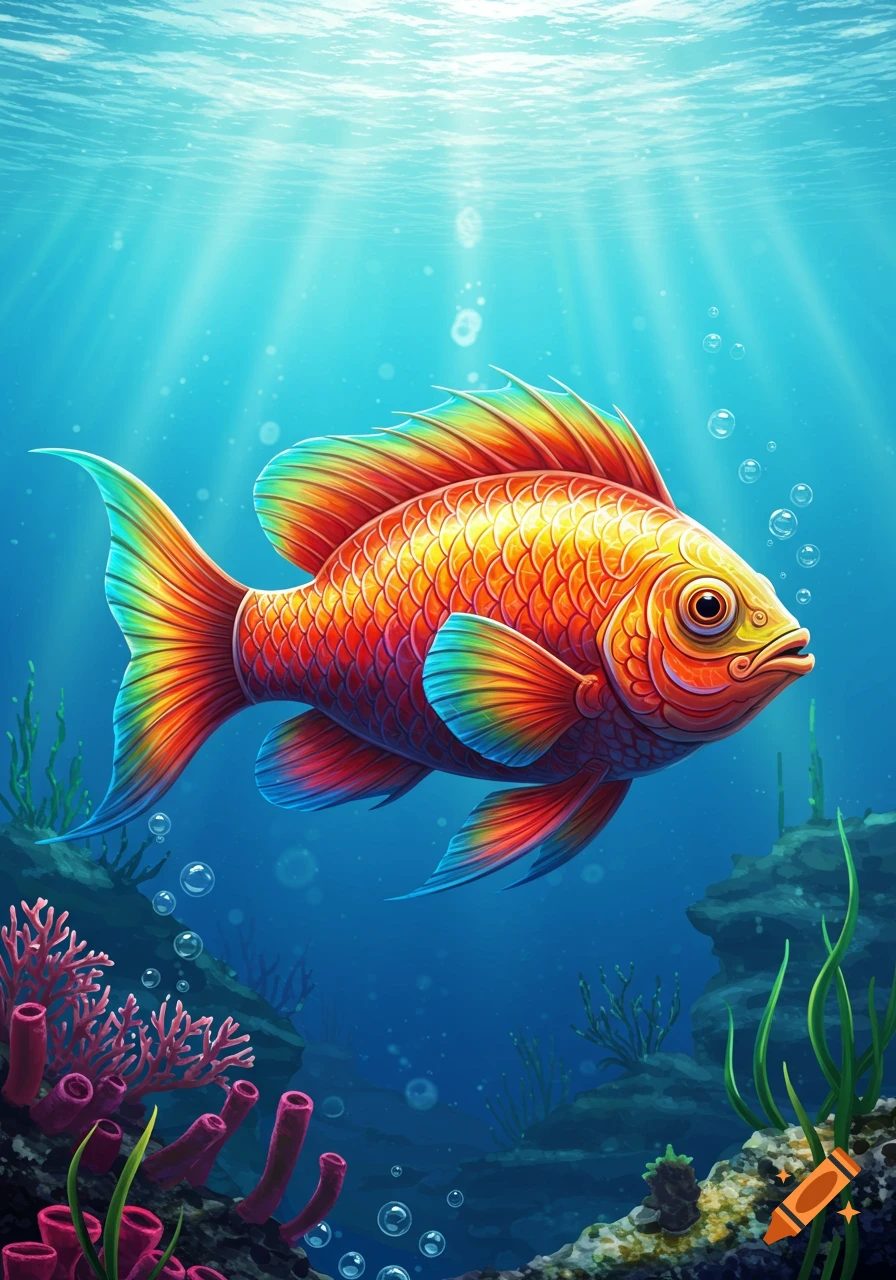
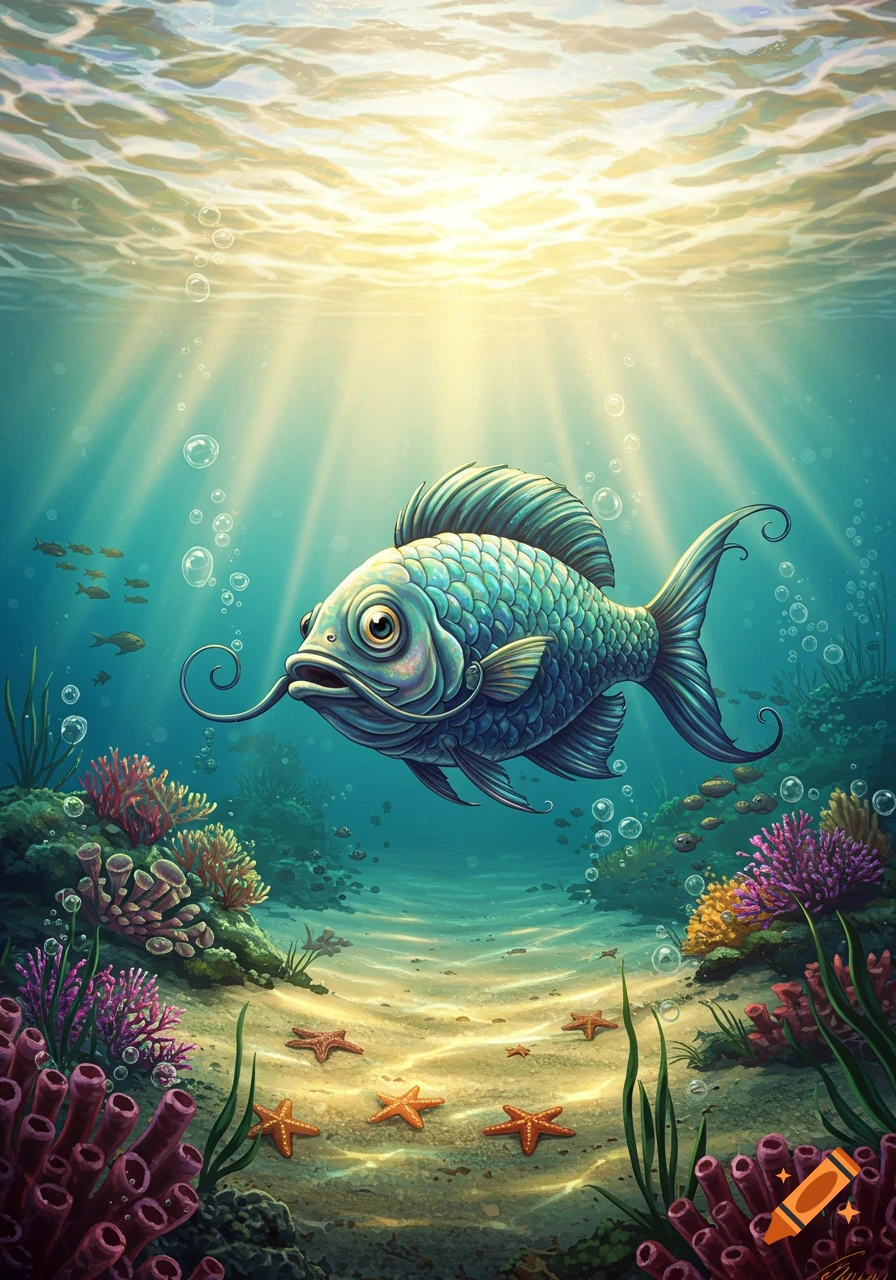
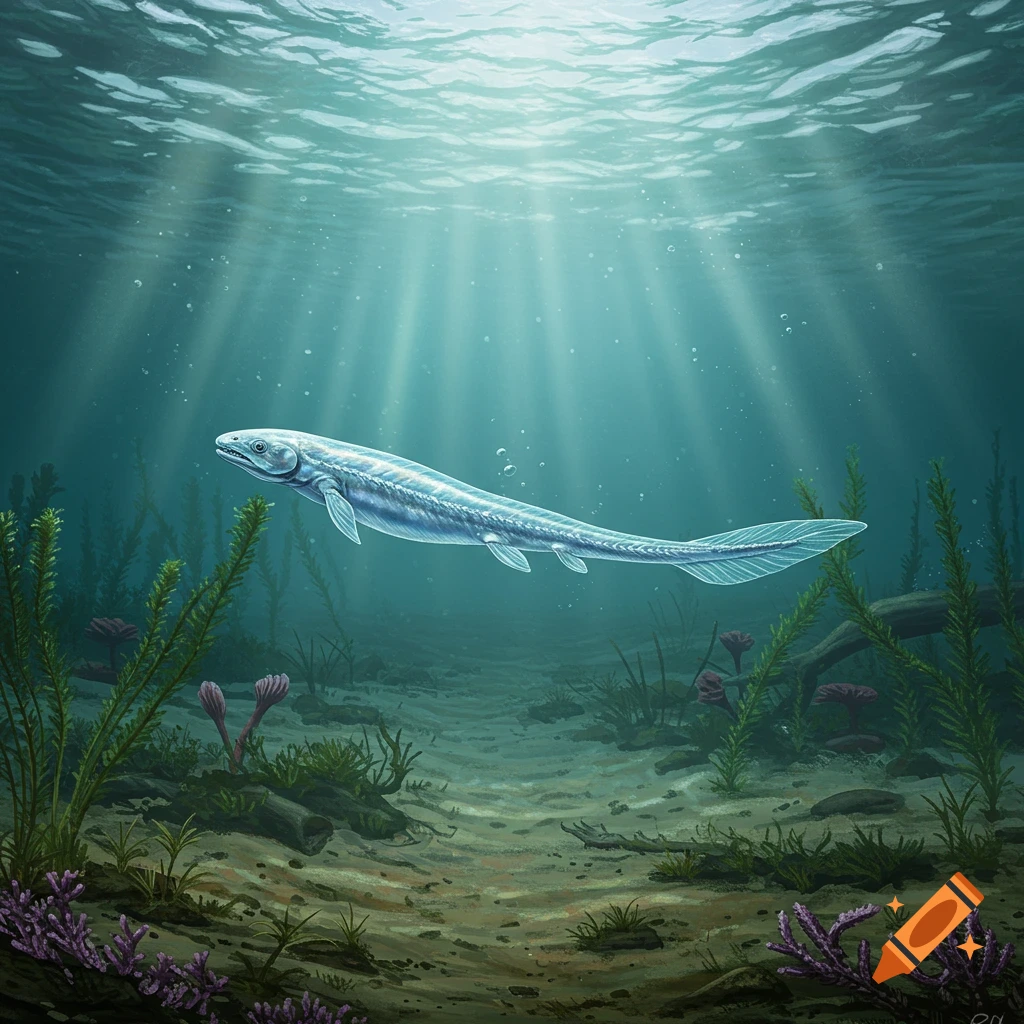
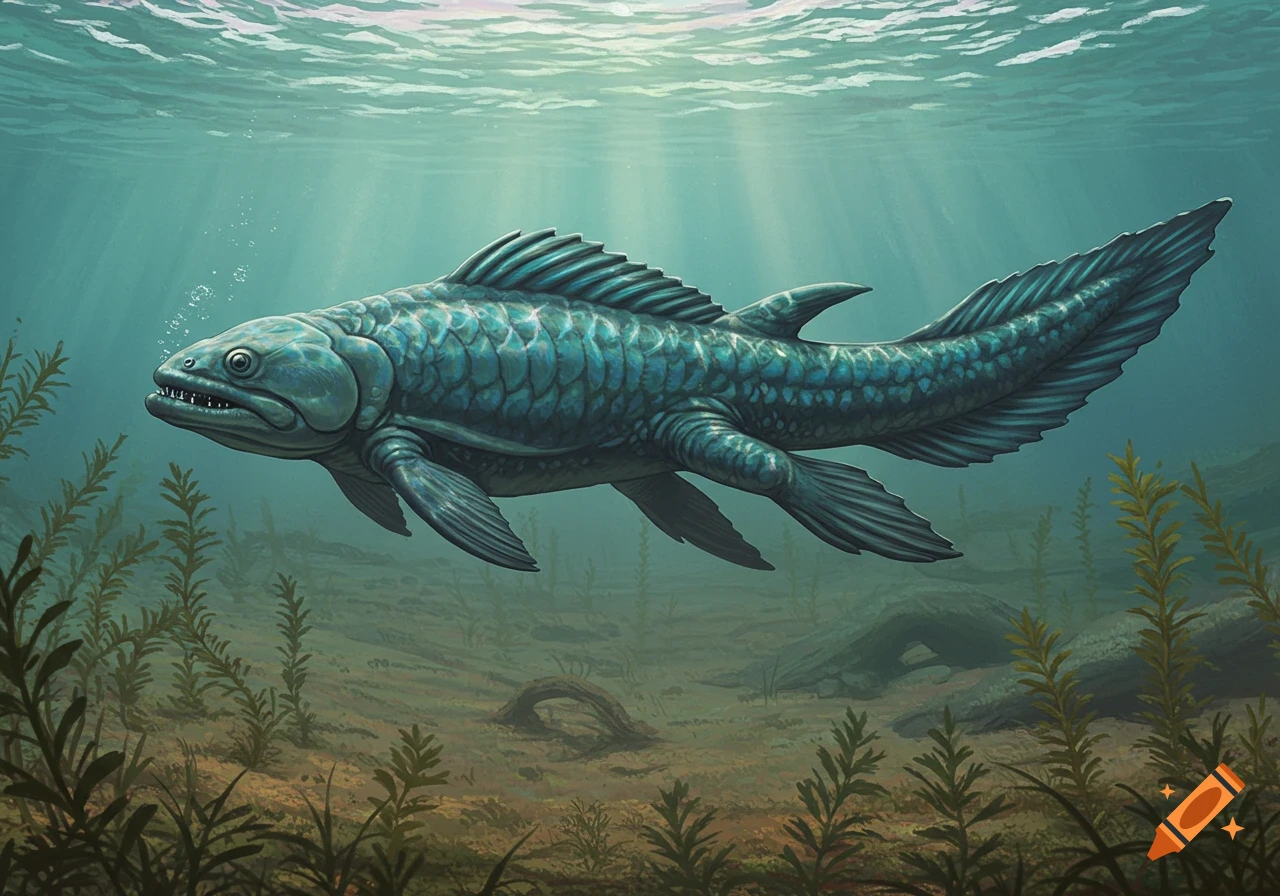
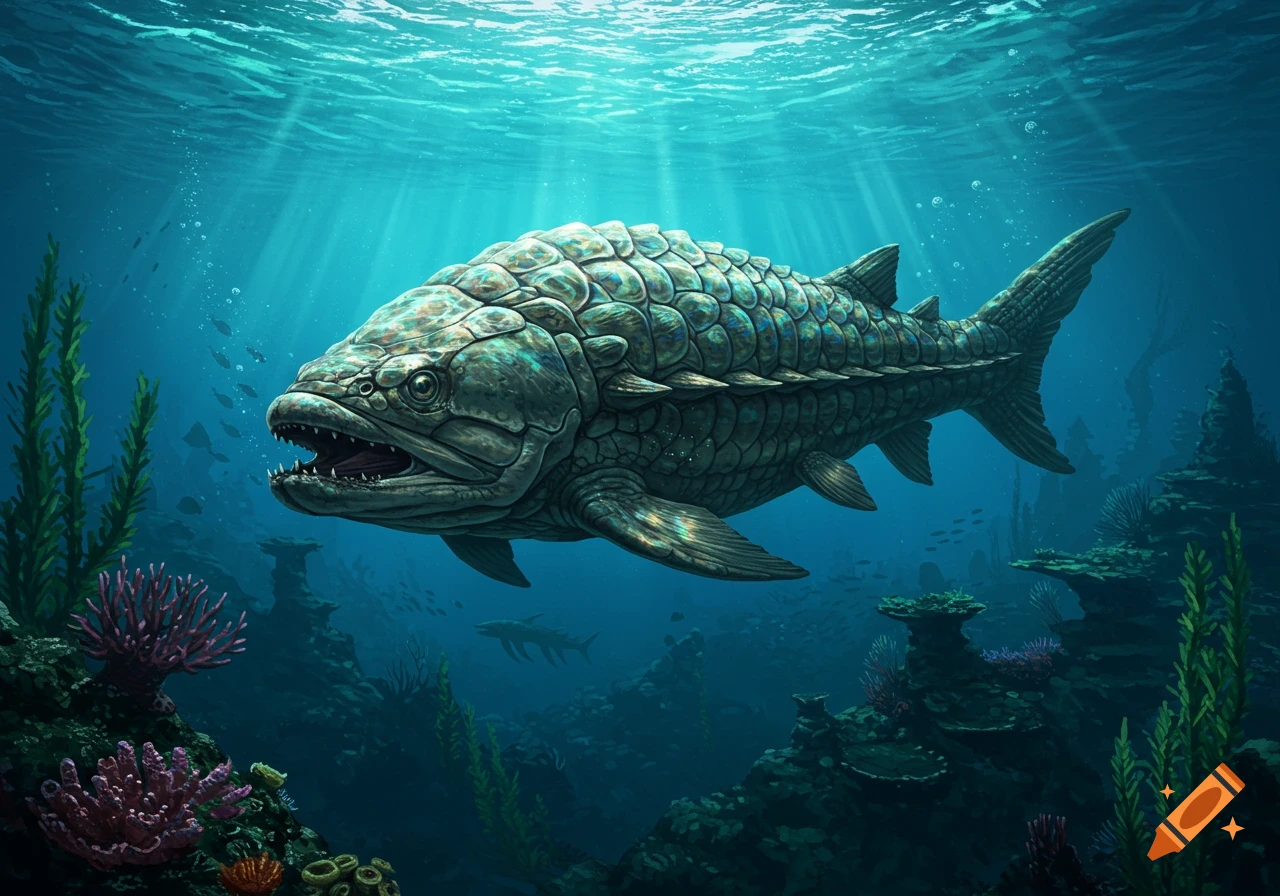
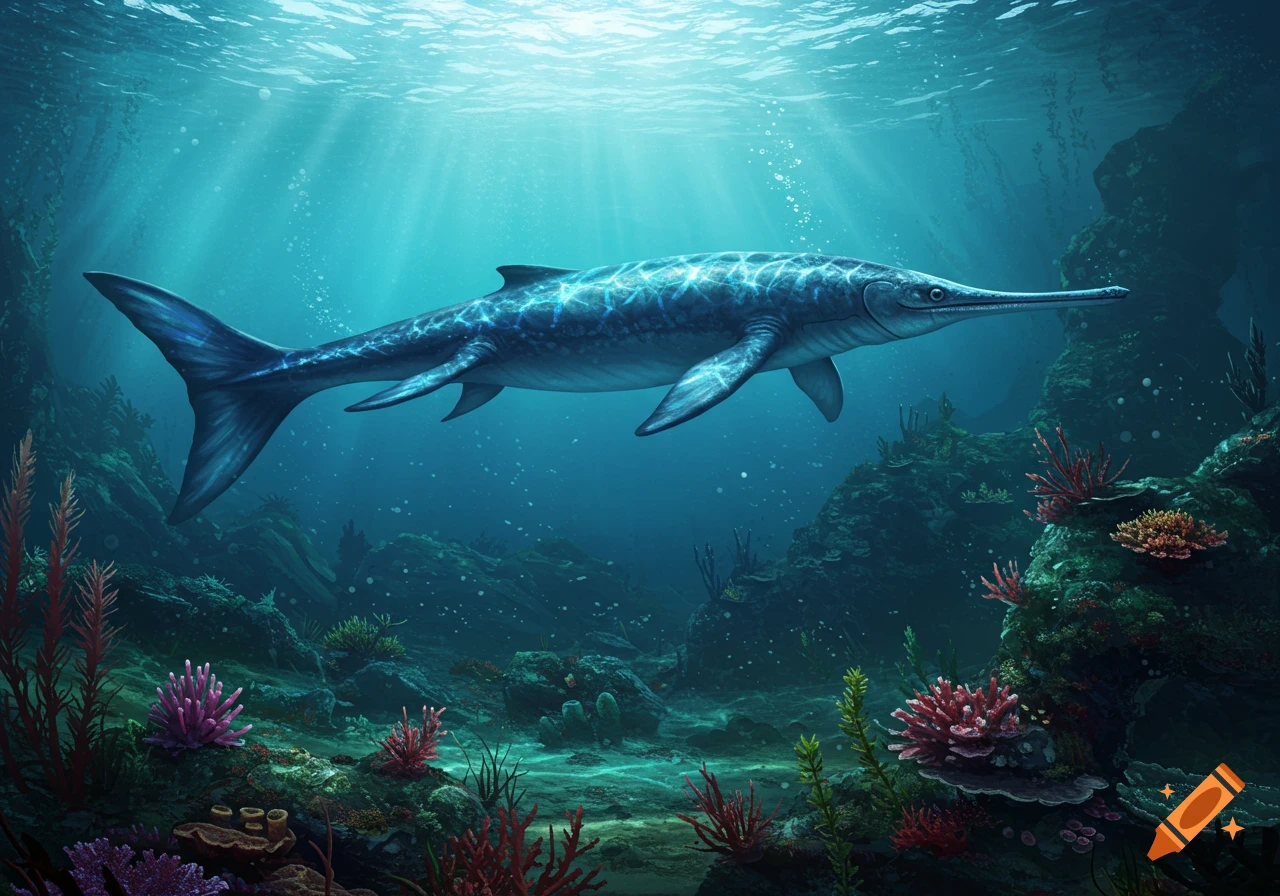
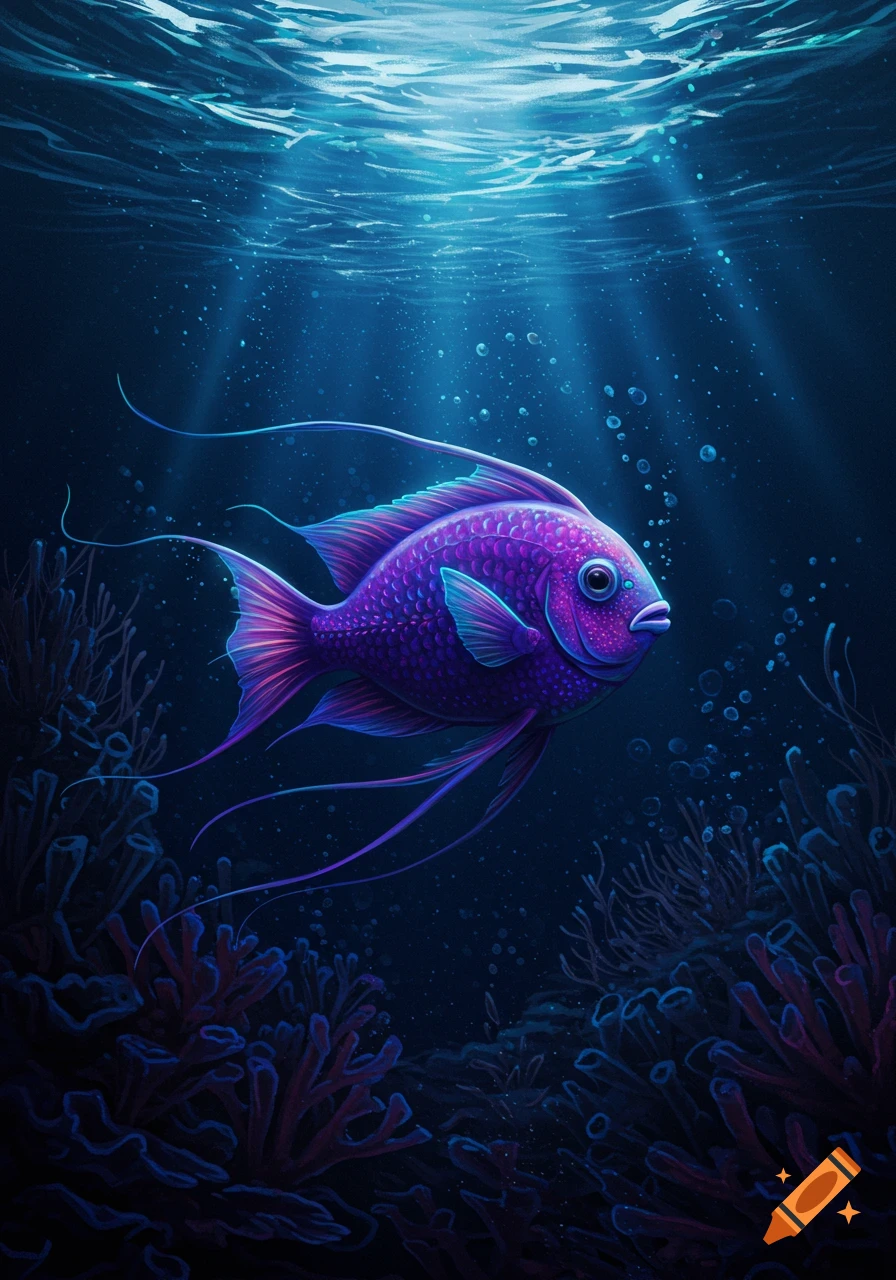
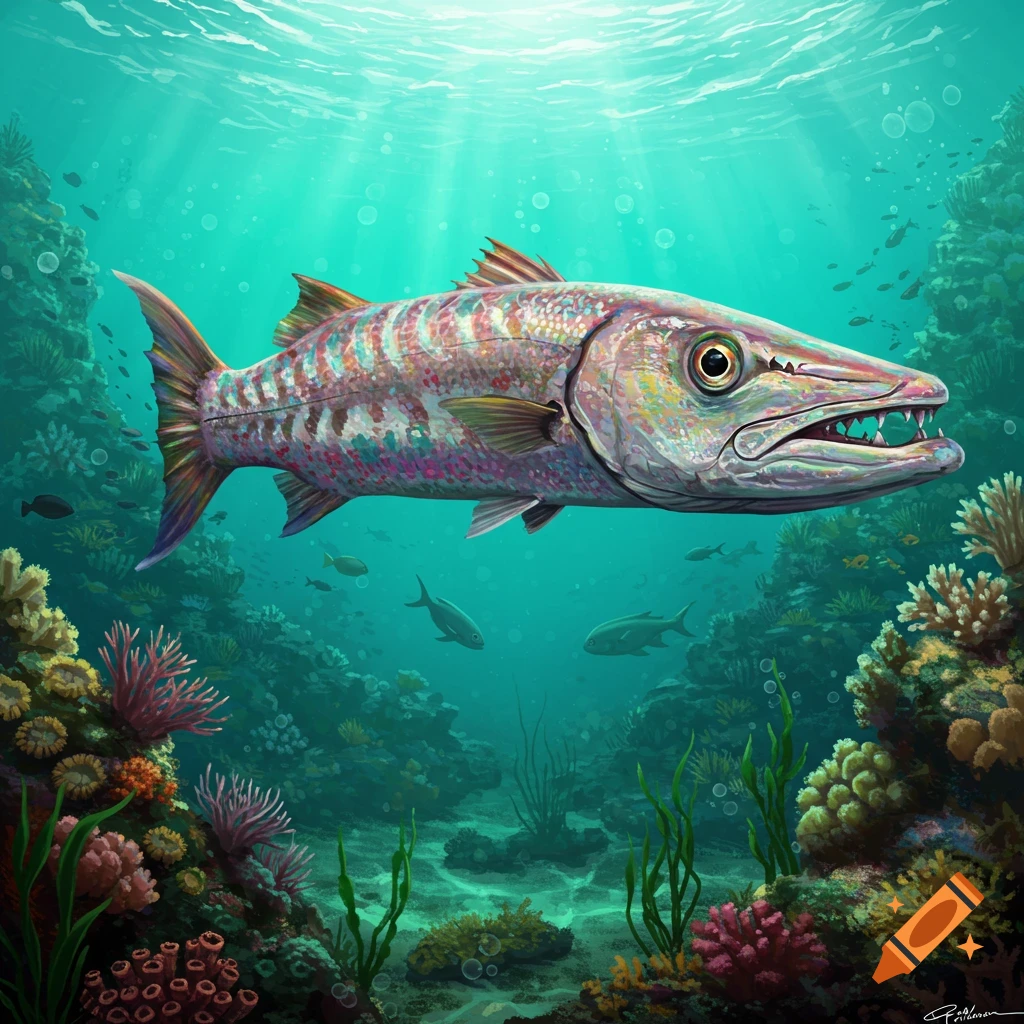
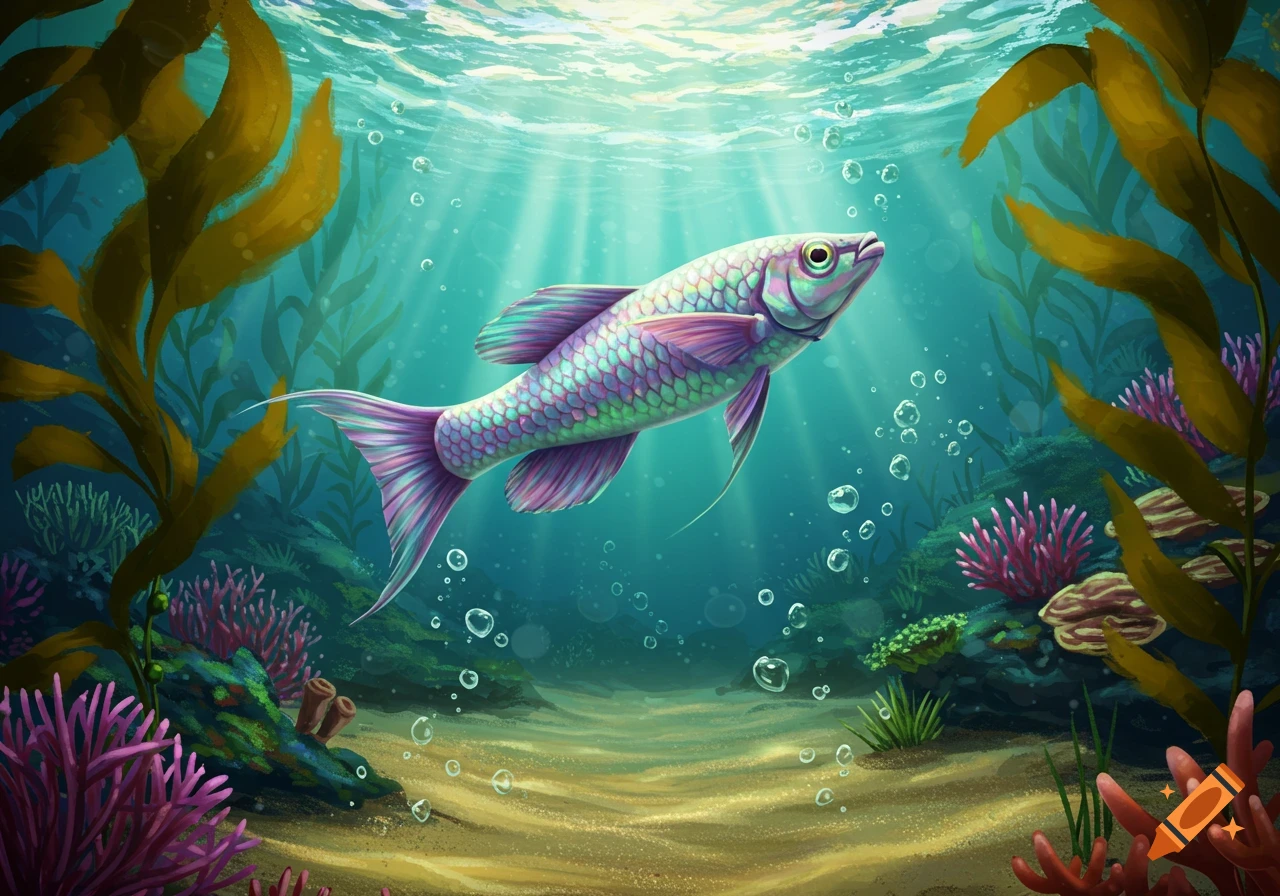
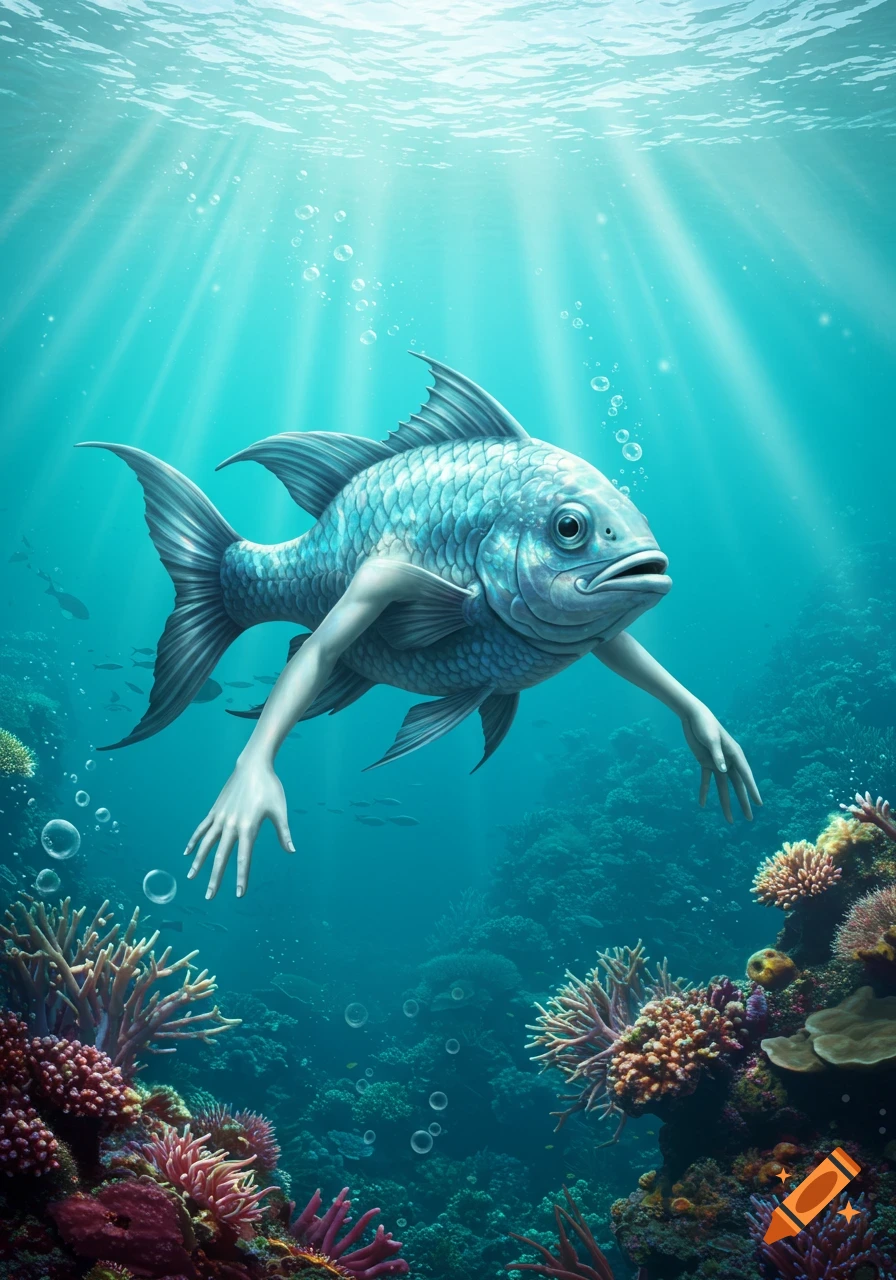
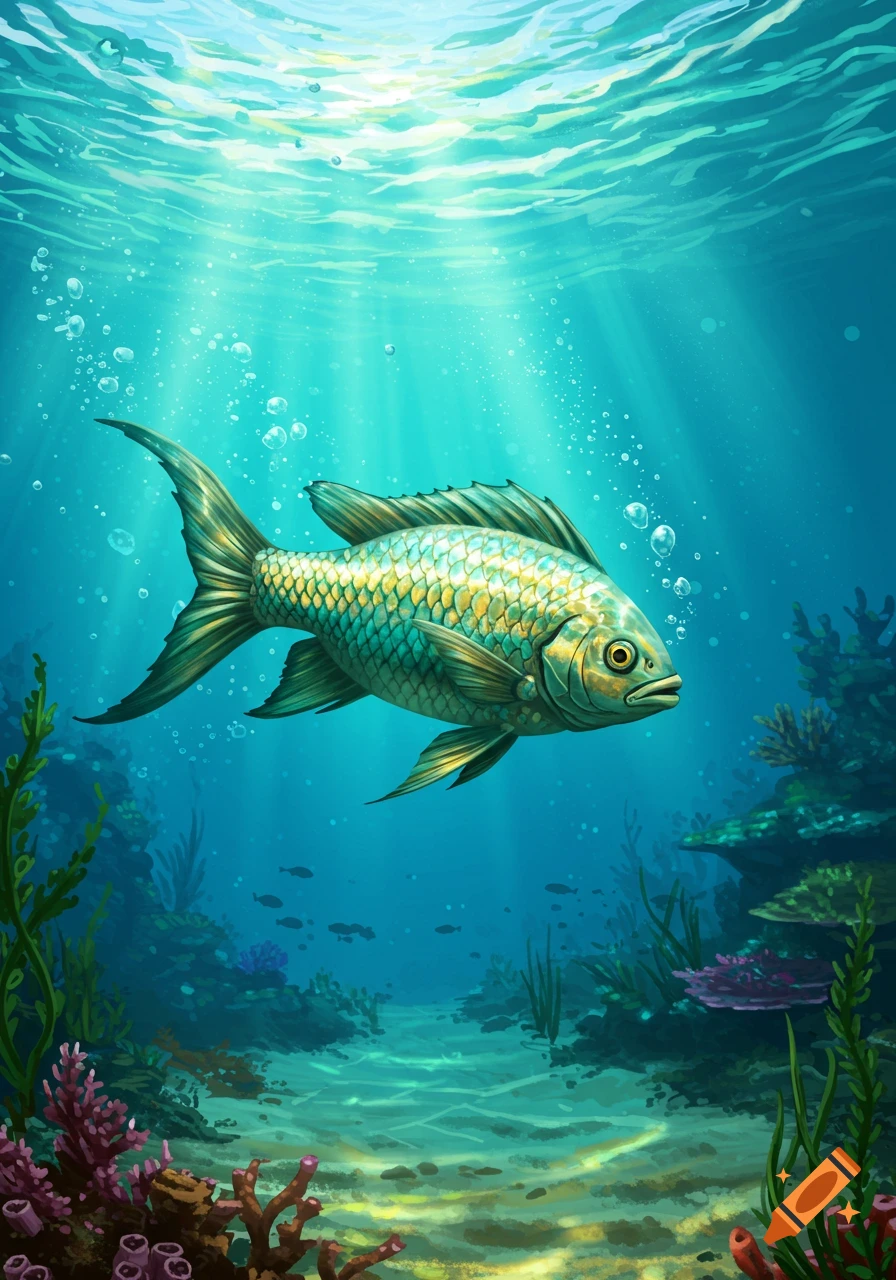
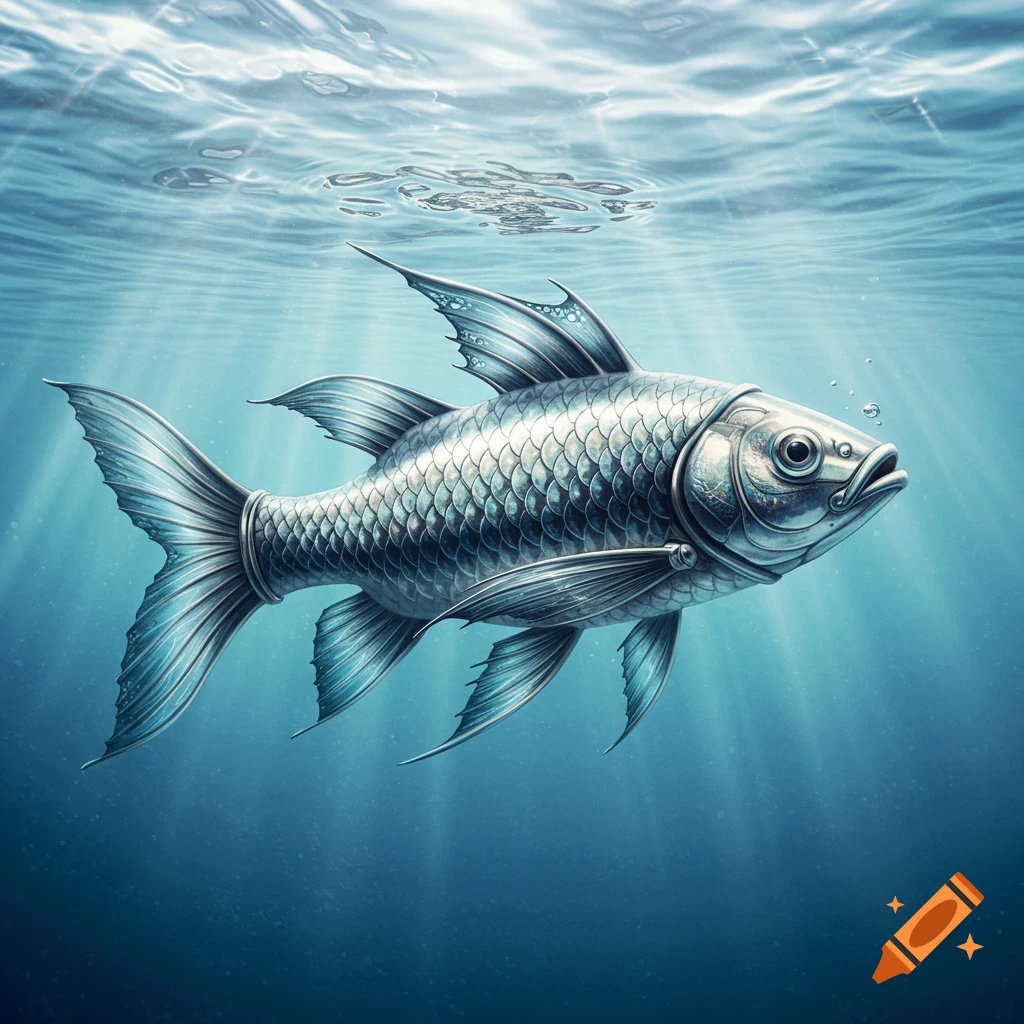
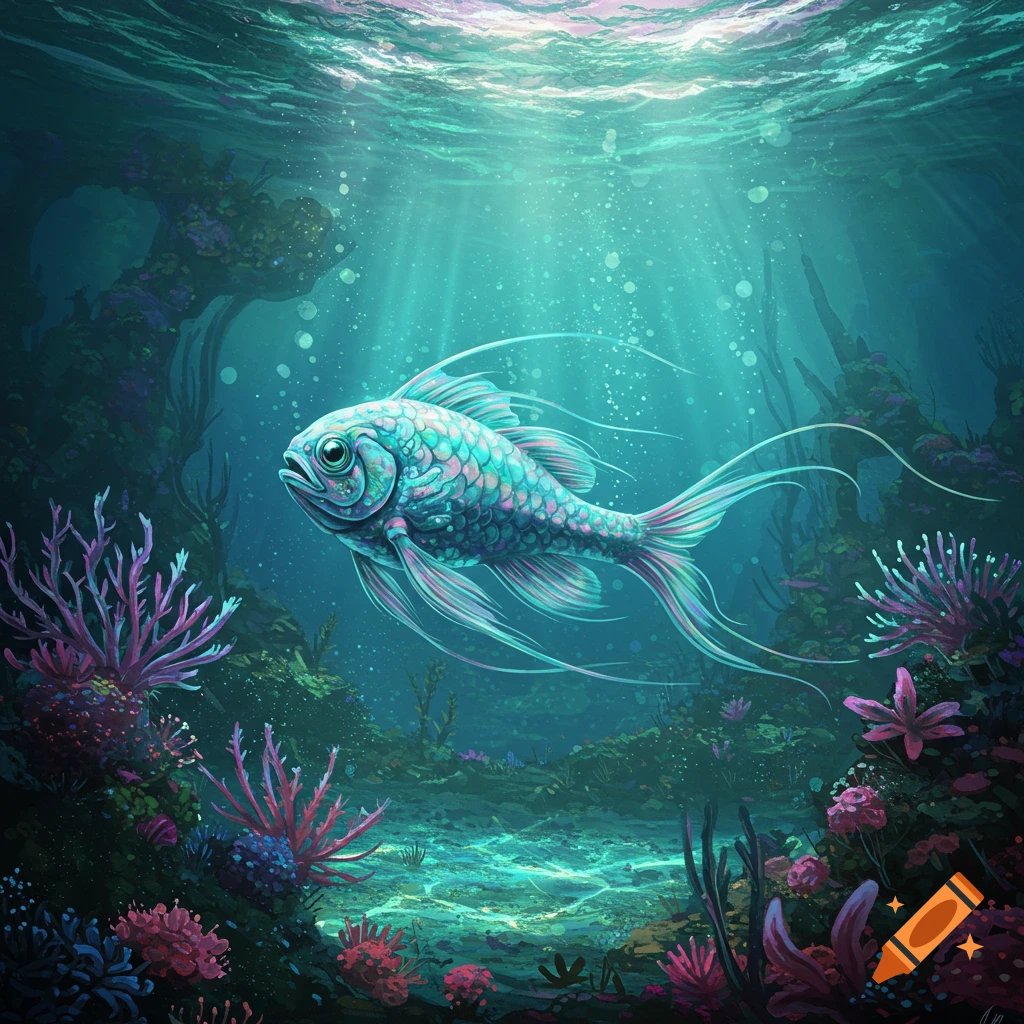
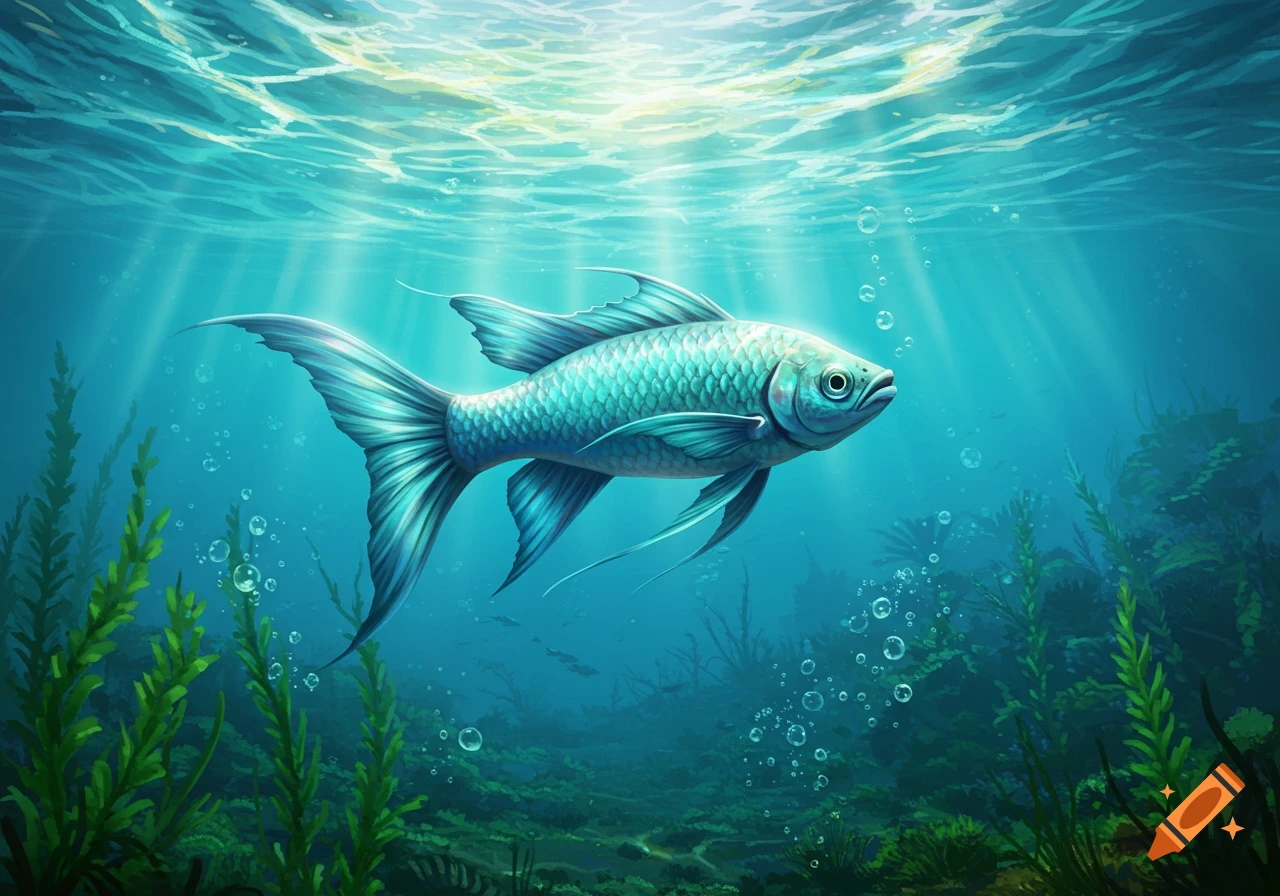
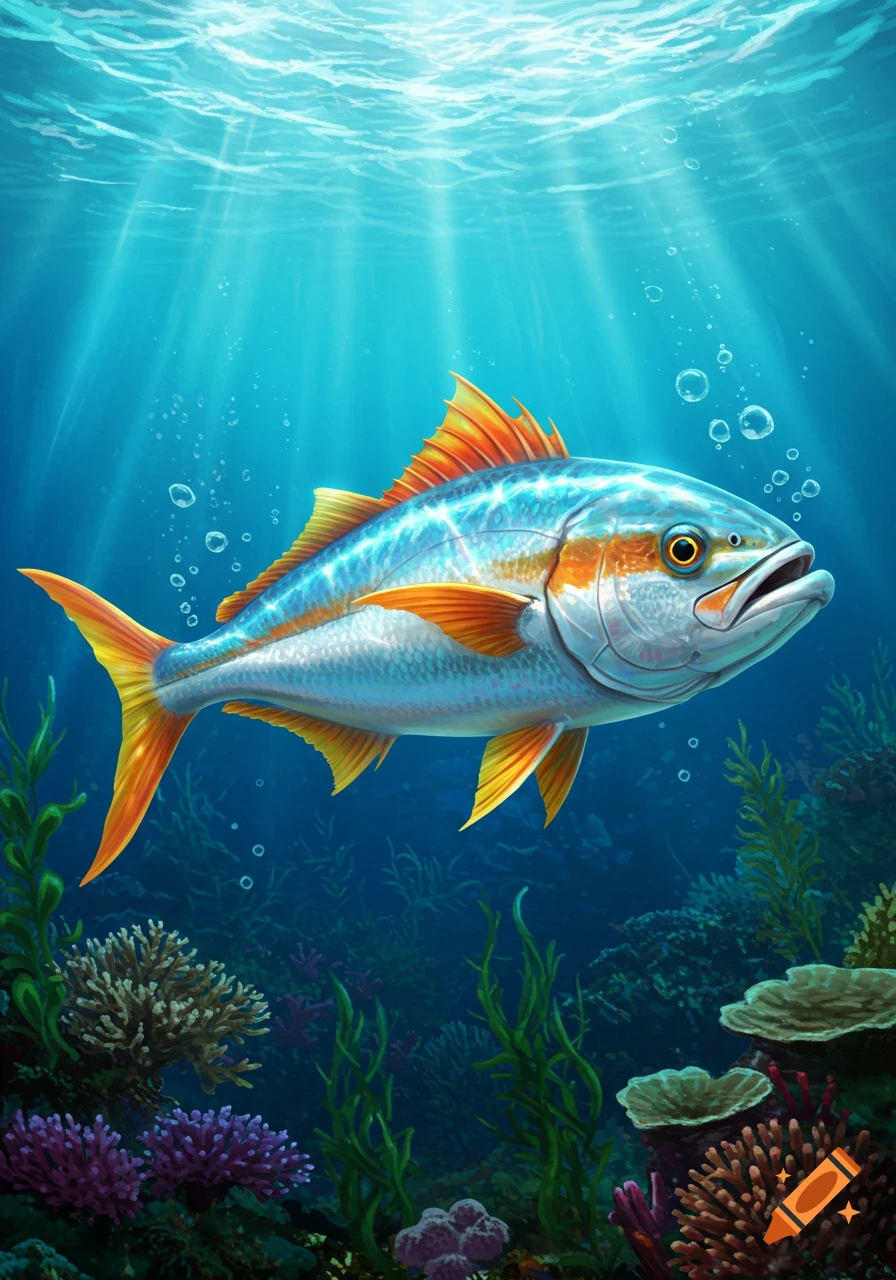
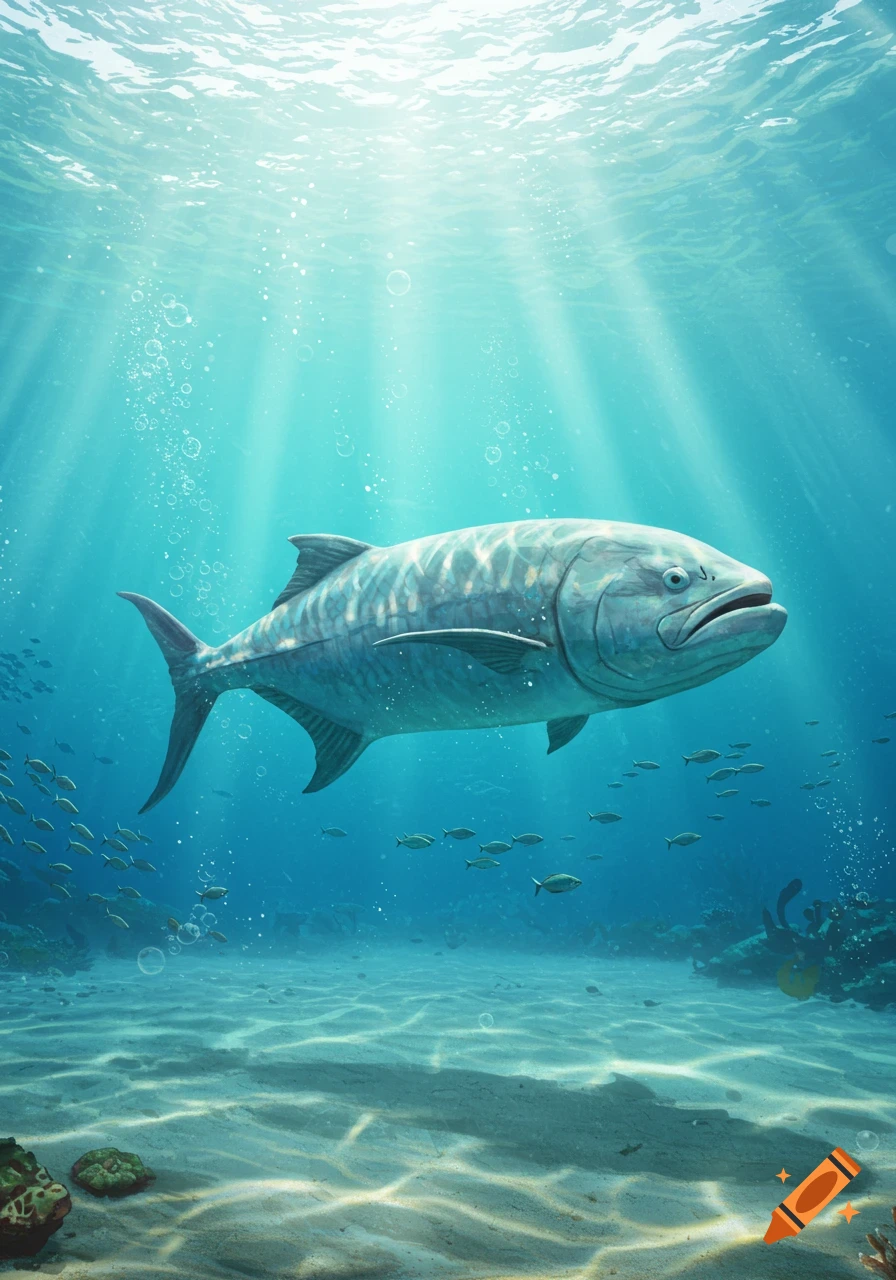
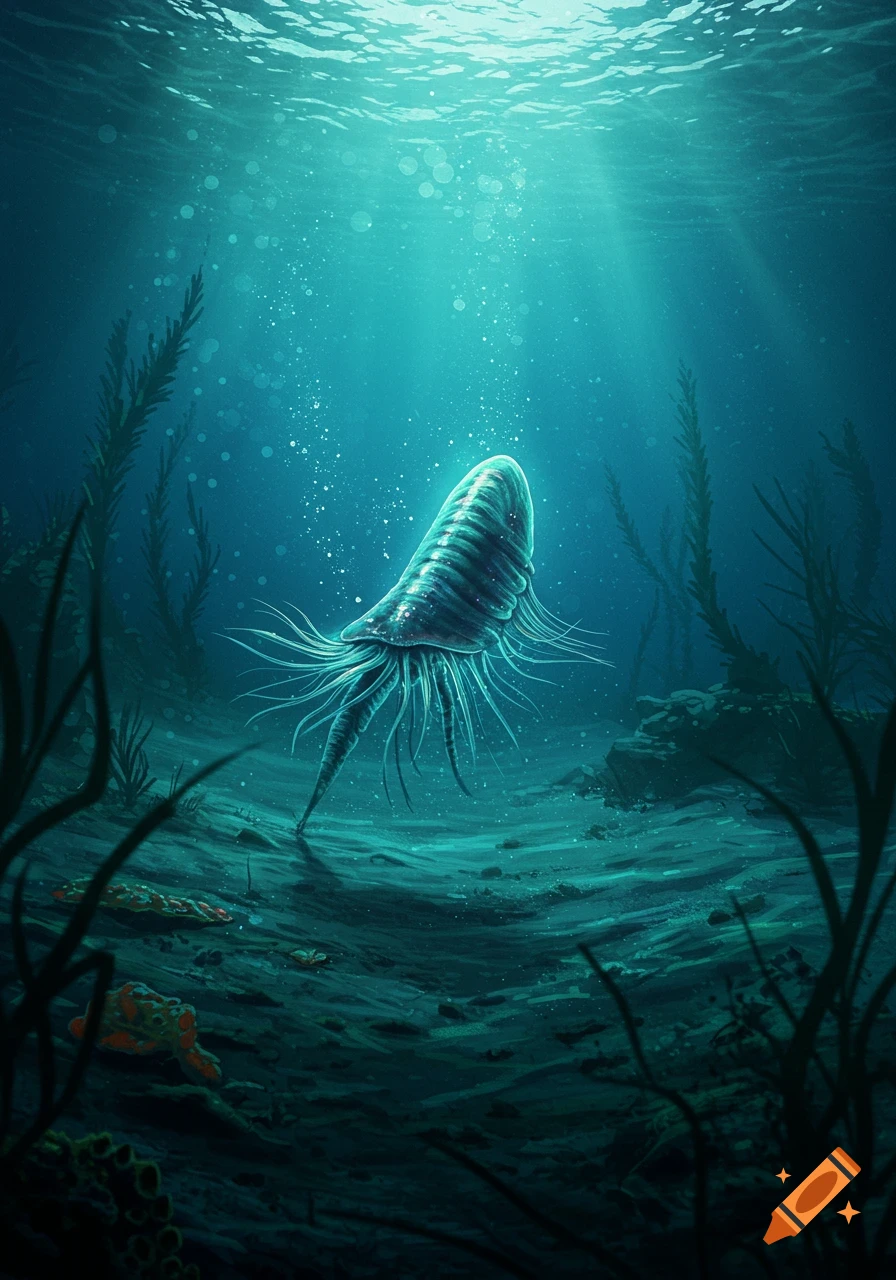
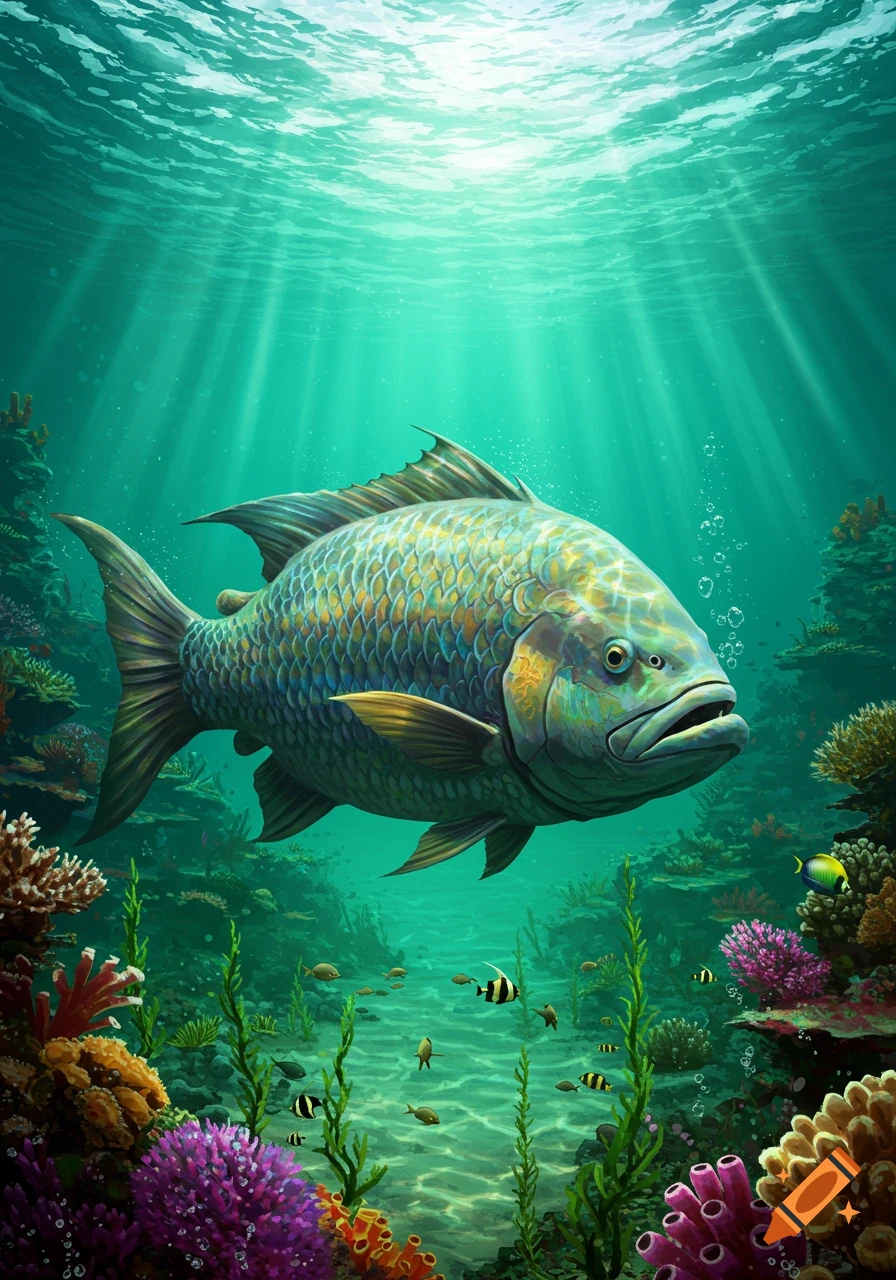
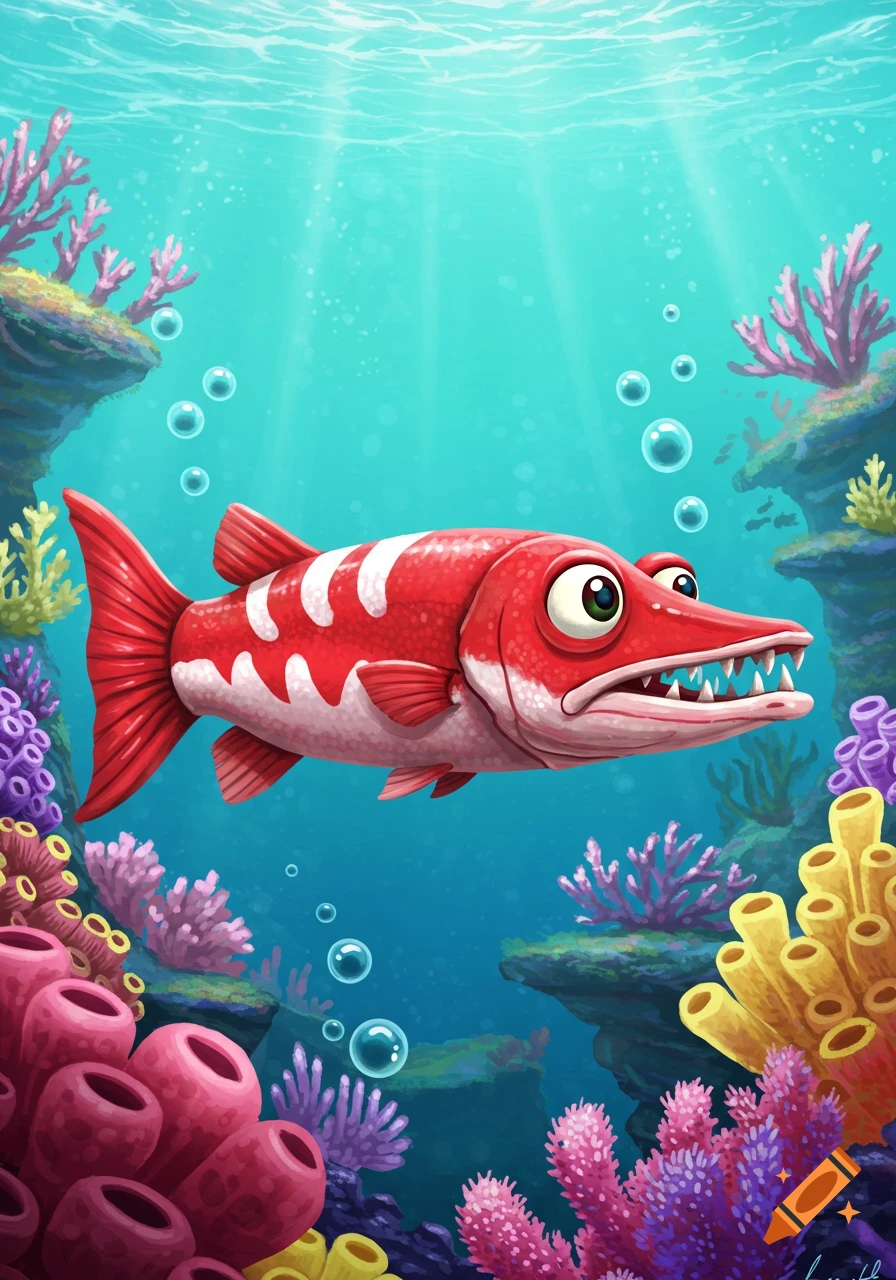
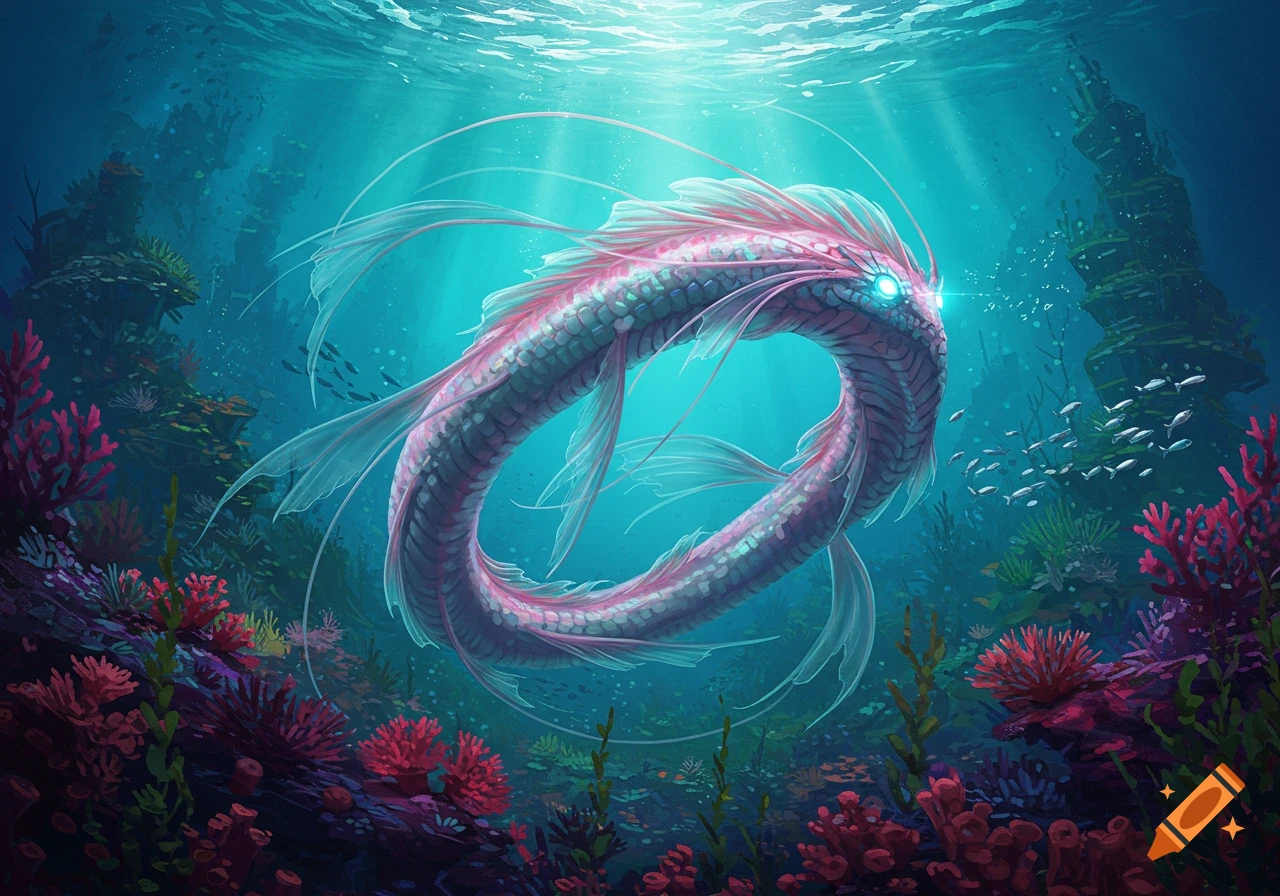
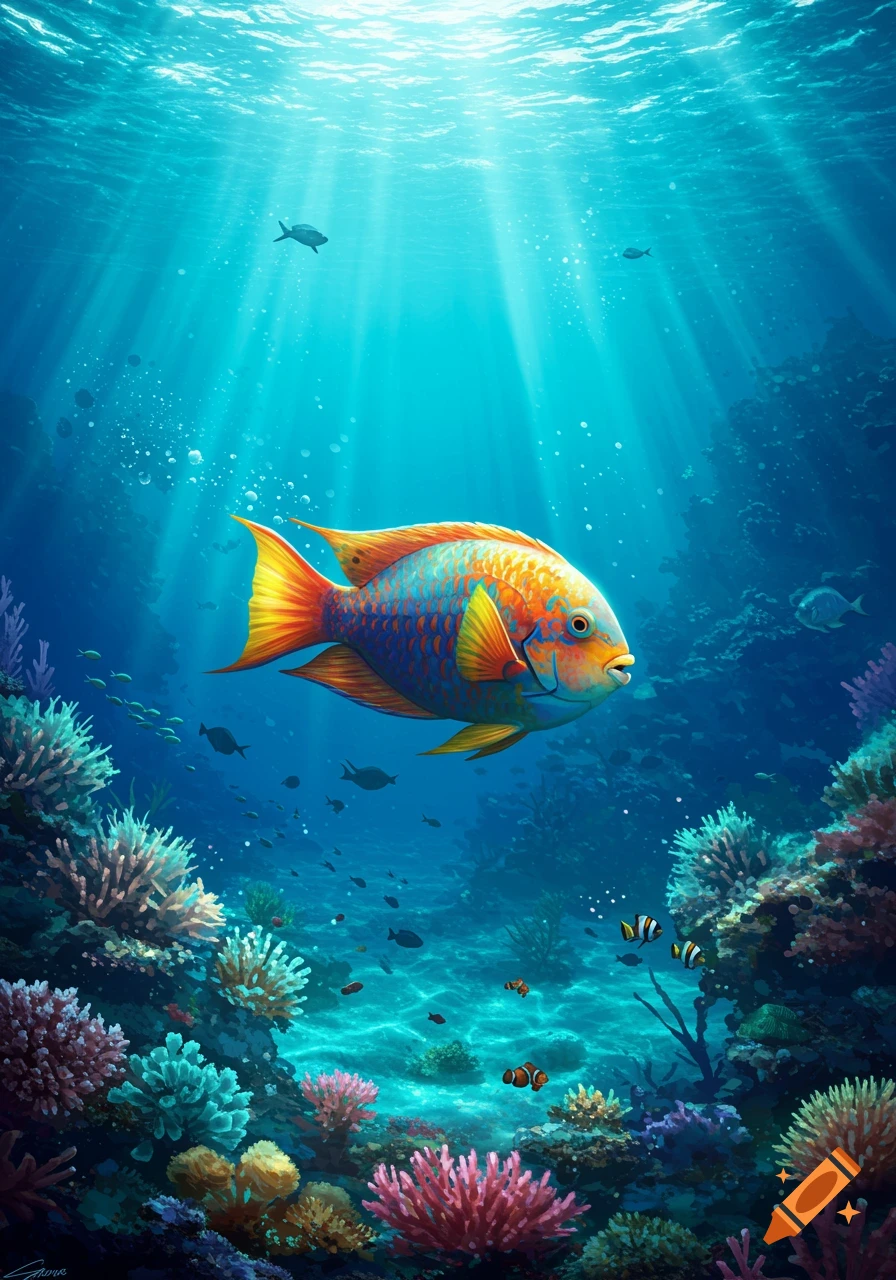
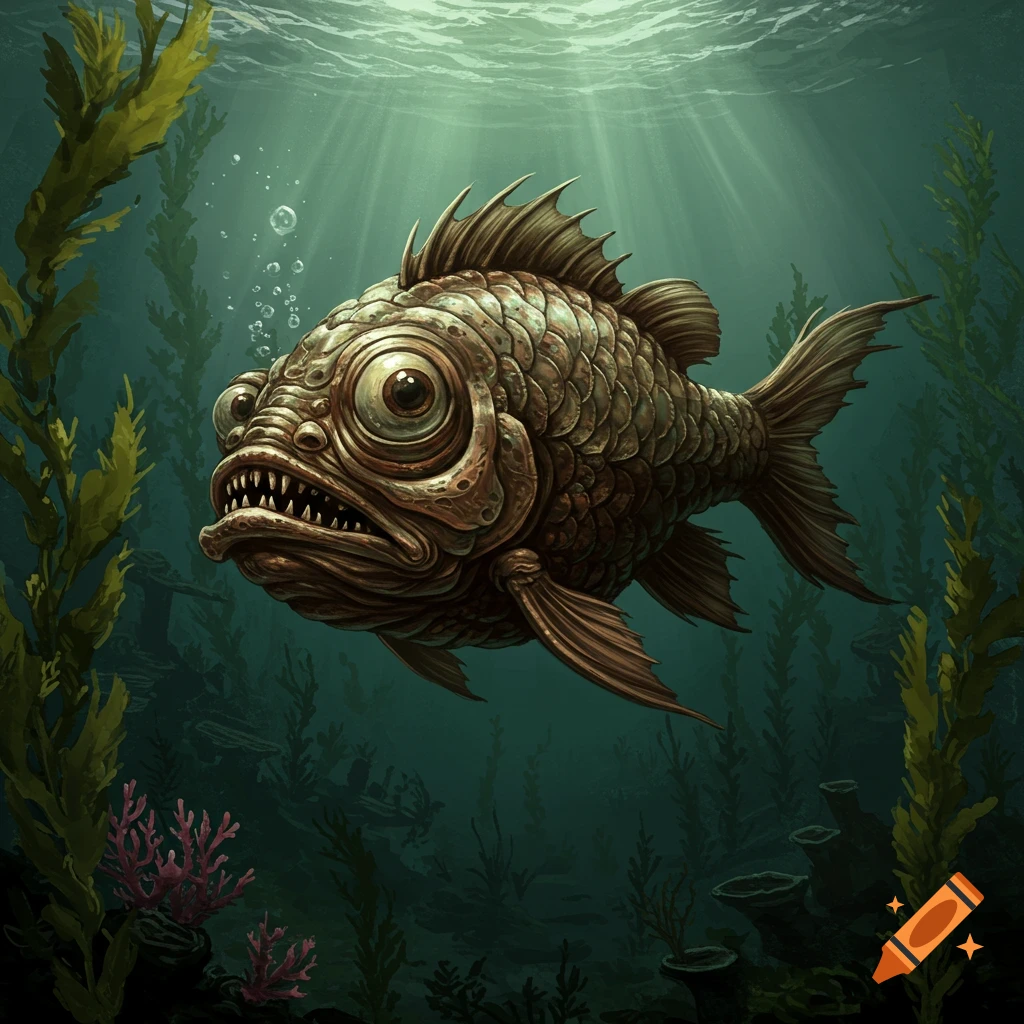
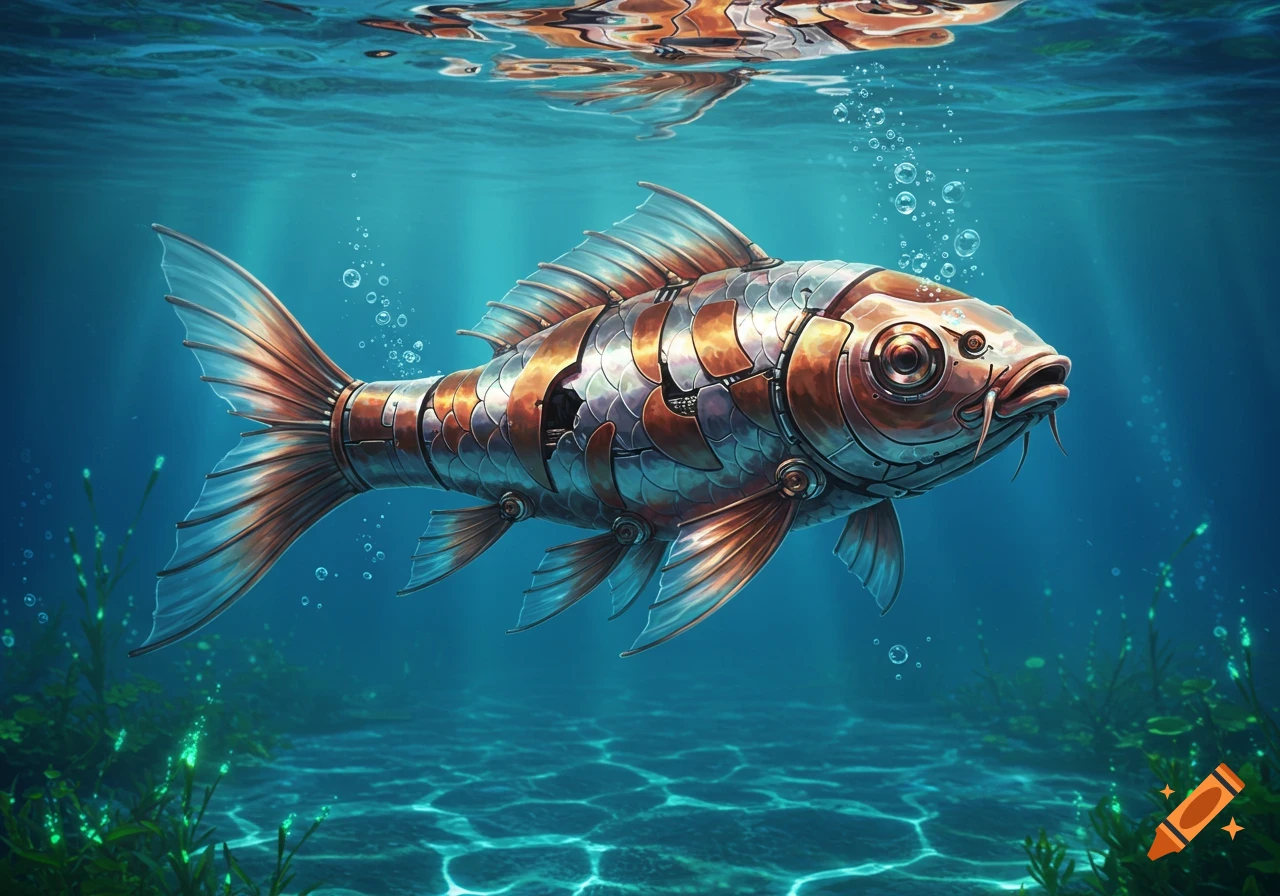
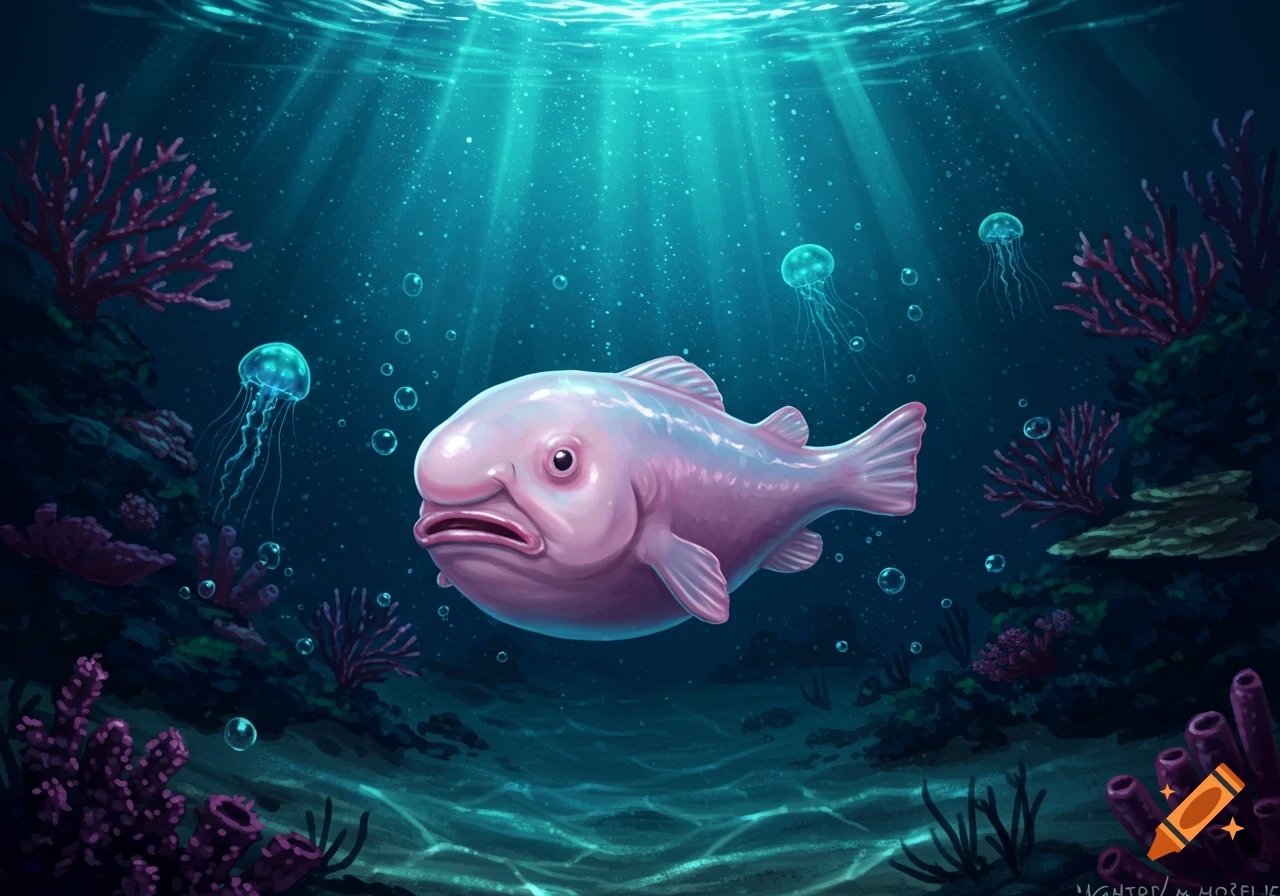
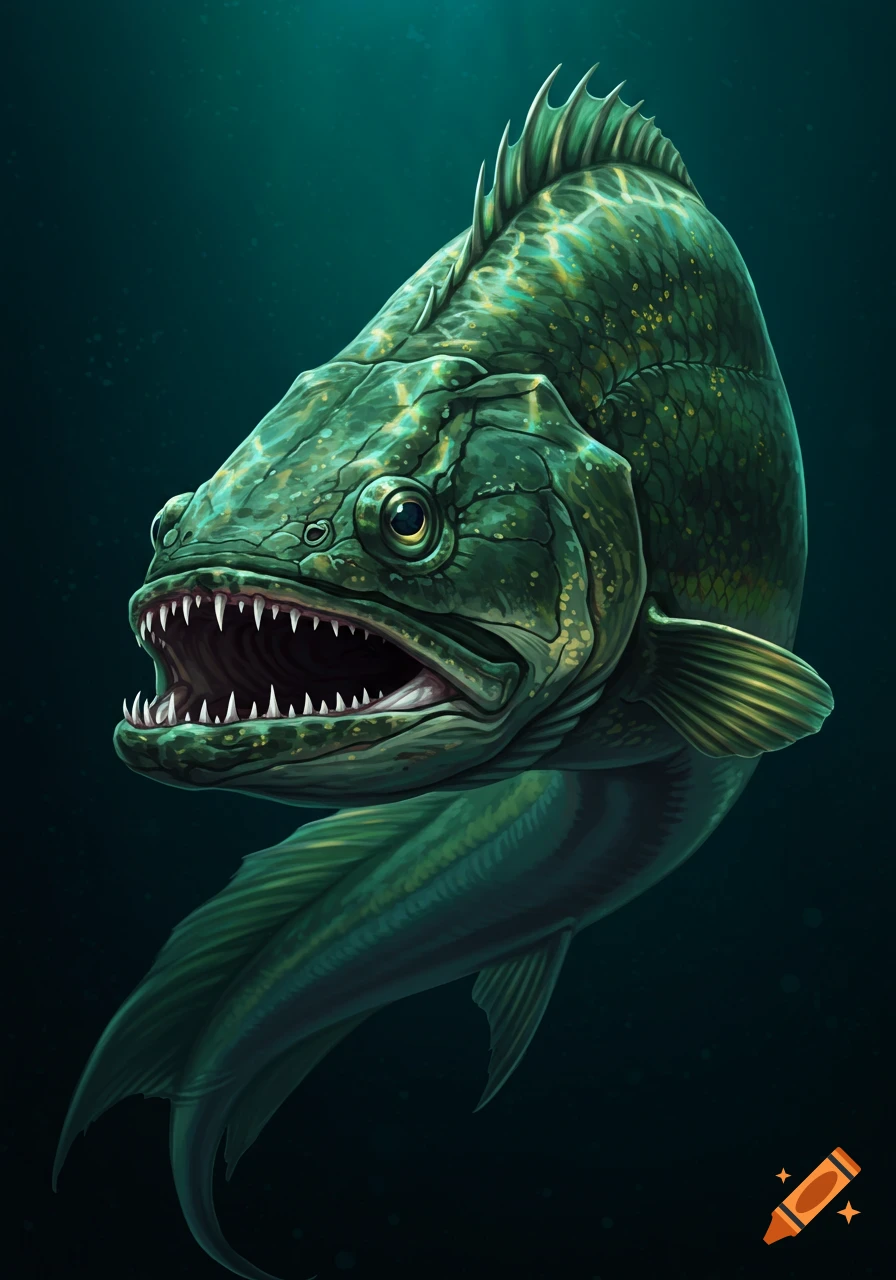
An illustration of a prehistoric, transparent-bodied fish with visible internal structures swimming in clear, sunlit ocean water over a rocky seabed.
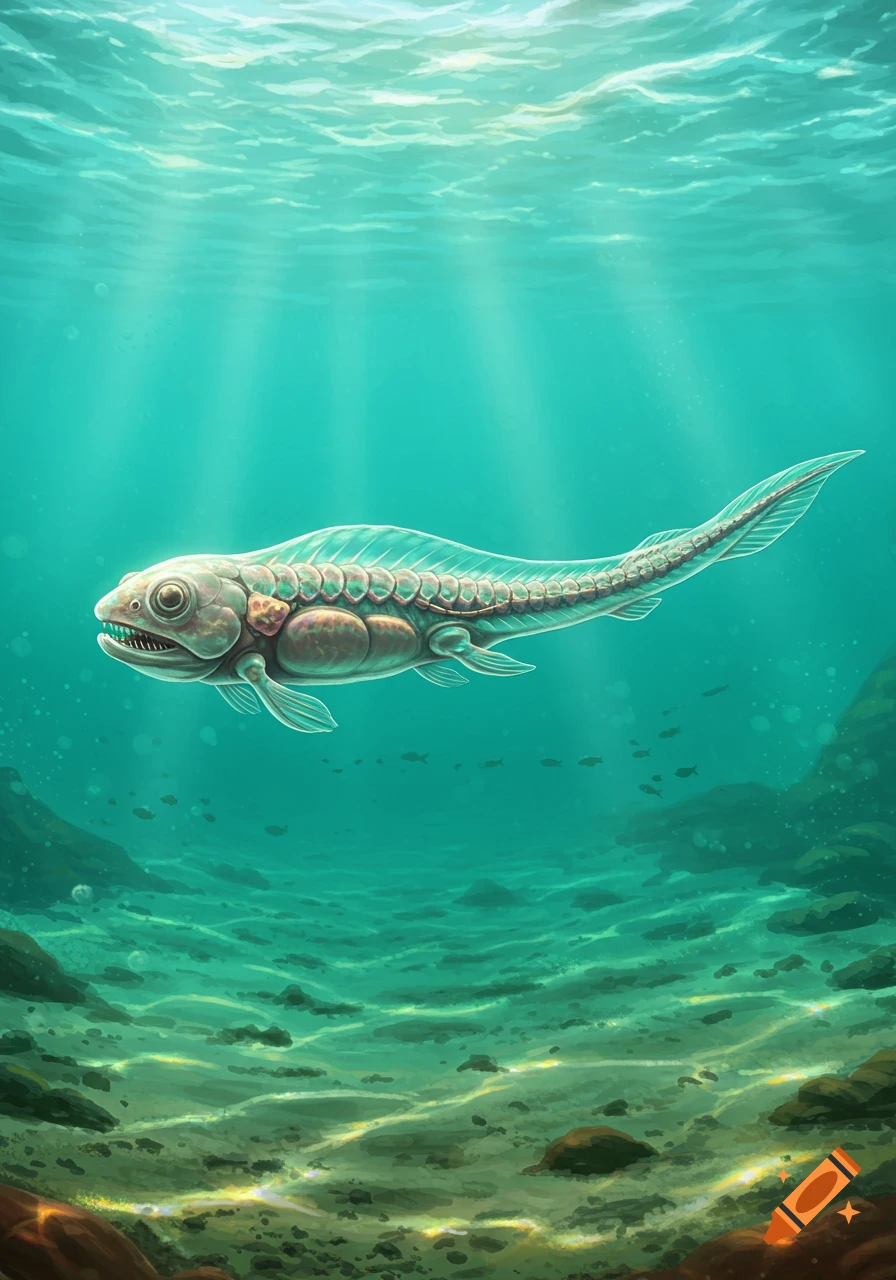
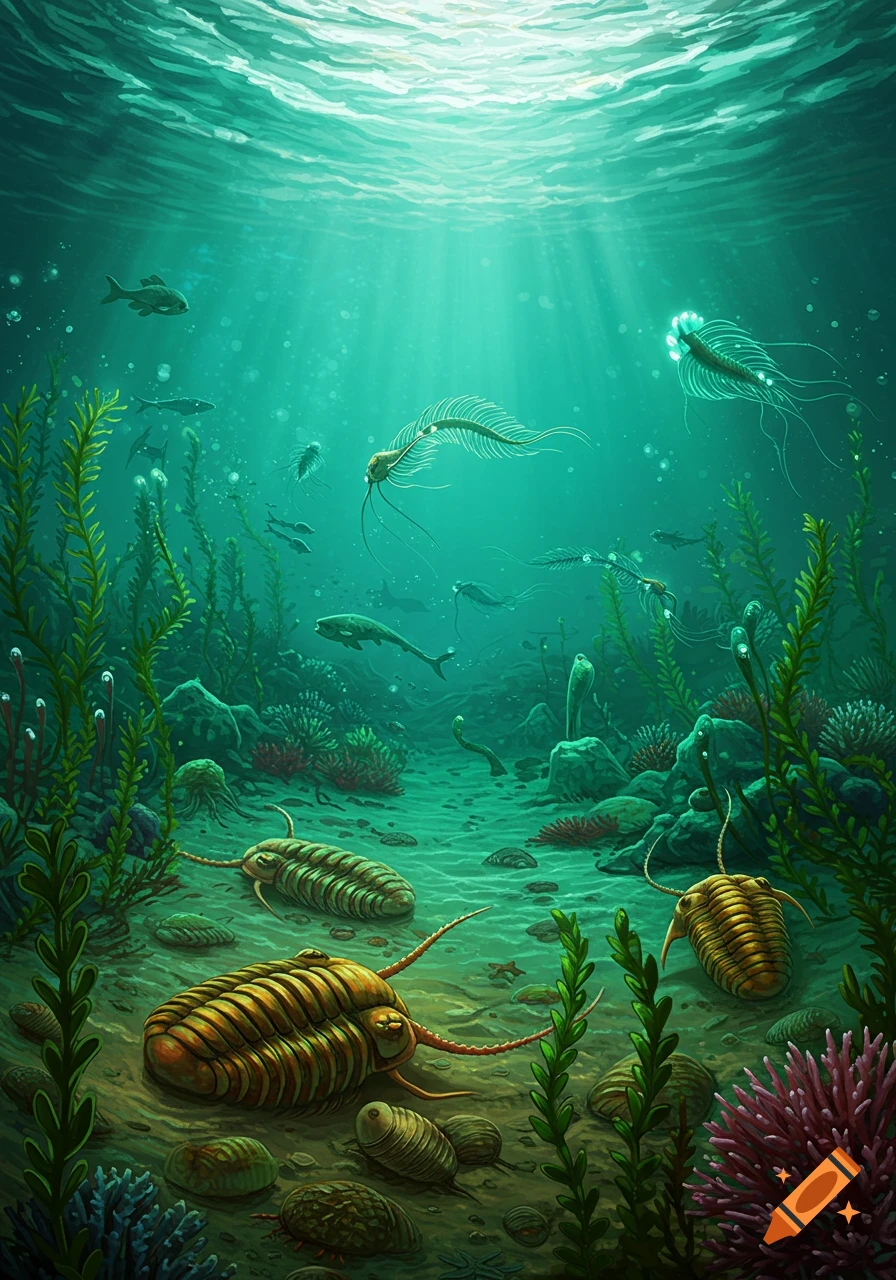
It was likely small, maybe just a few centimeters long, with a simple, elongated body that resembled some of the earliest chordates like Haikouichthys or Myllokunmingia—ancient fish-like creatures that had some vertebrate features. Nervous System: The ancestor would have had a dorsal nerve cord, which is characteristic of all chordates, with a primitive, unsegmented brain. This nerve cord would’ve run along the back of its body, protected by a simple, cartilaginous vertebral column (the precursor to the backbone). Skeleton: This ancestor may have had a simple notochord—a flexible, rod-like structure that supported the body. It would eventually evolve into the vertebral column in later vertebrates. It might also have had a cartilaginous skeleton, with no bones yet. Head and Sensory Features: It probably had a small, simple head with basic sensory organs (like eyes) and a mouth. The mouth might have been an opening for filter feeding, similar to modern jawless fish. Tail: Like most chordates, it likely had a tail that extended beyond its anus, used for movement and stability in water. Habitat: It lived in the ocean, likely swimming in shallow waters, and may have been a small, free-swimming filter feeder or scavenger. See more