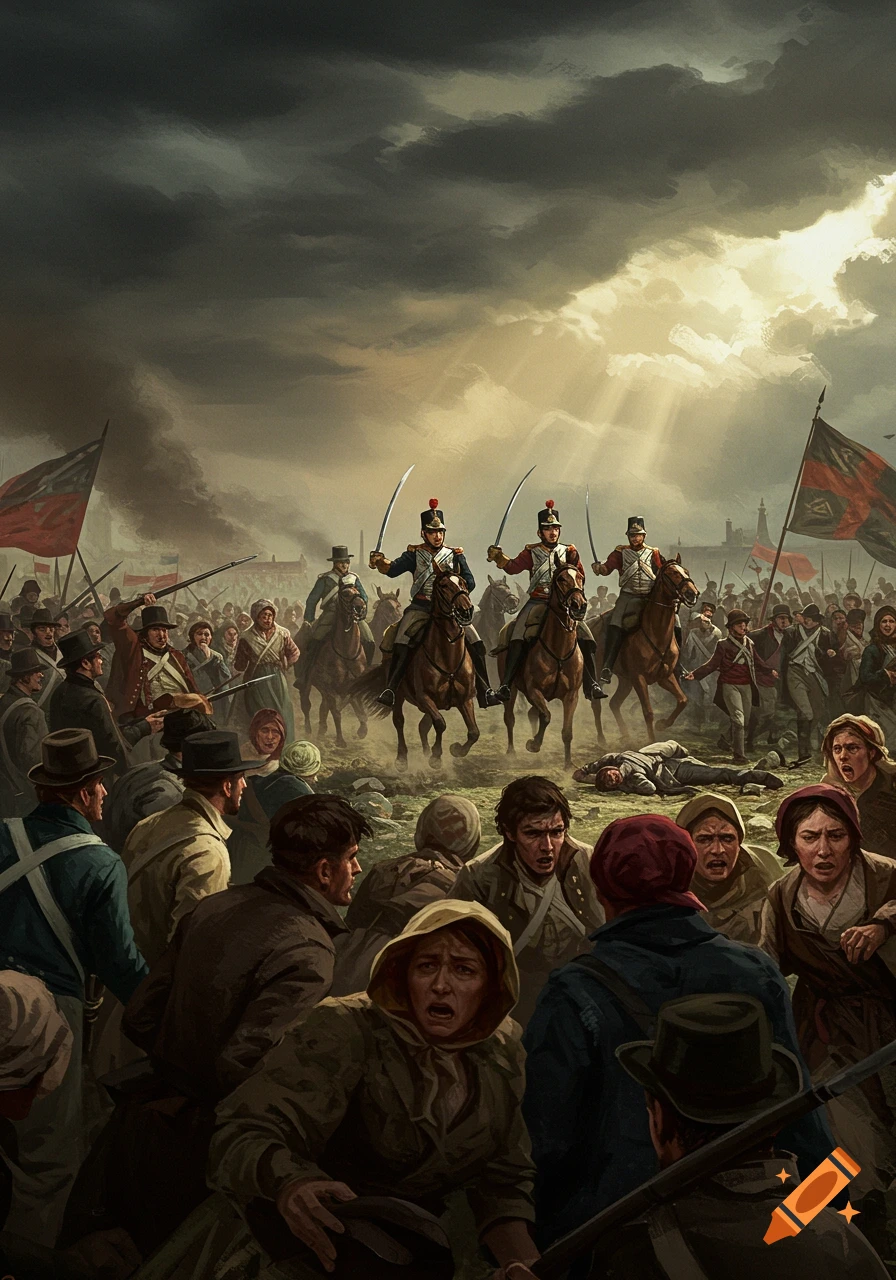
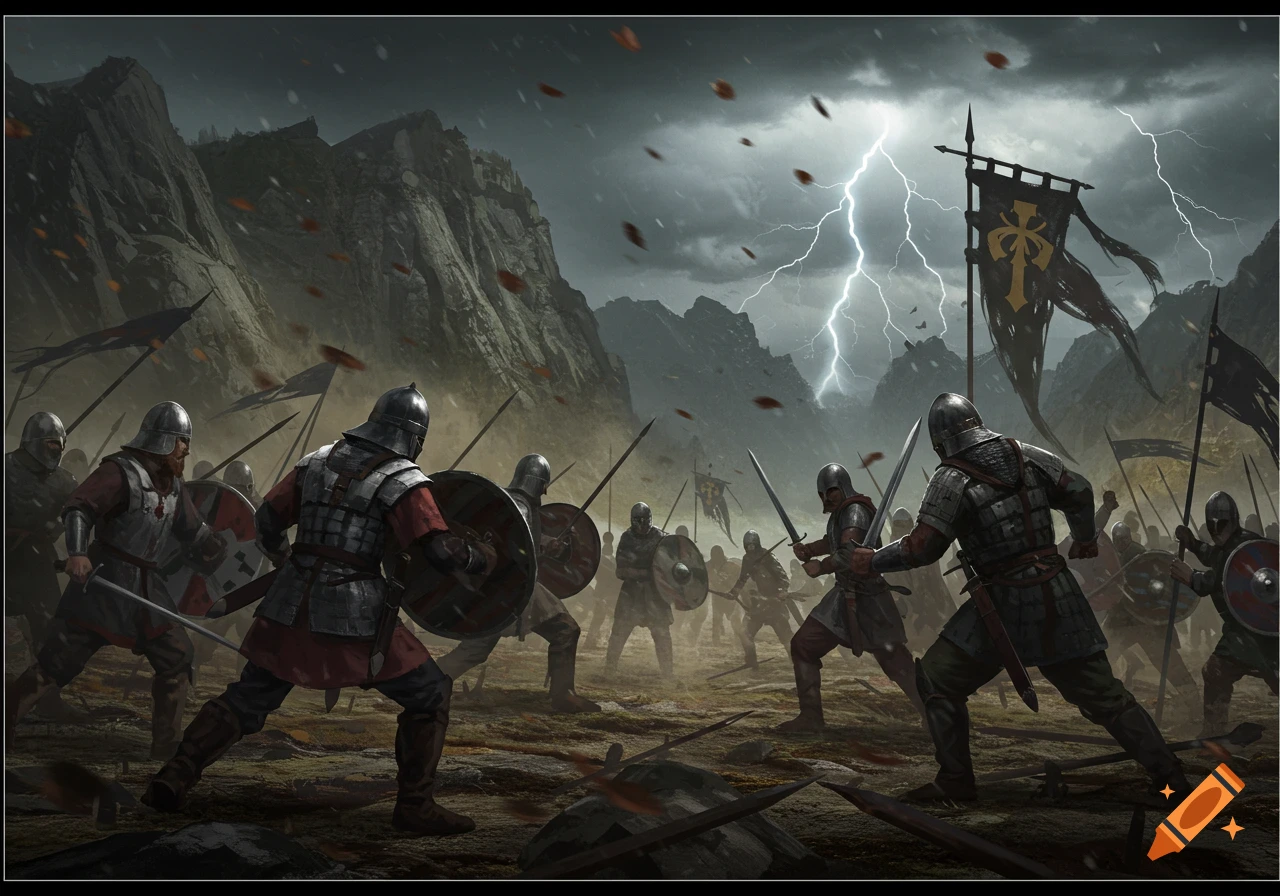
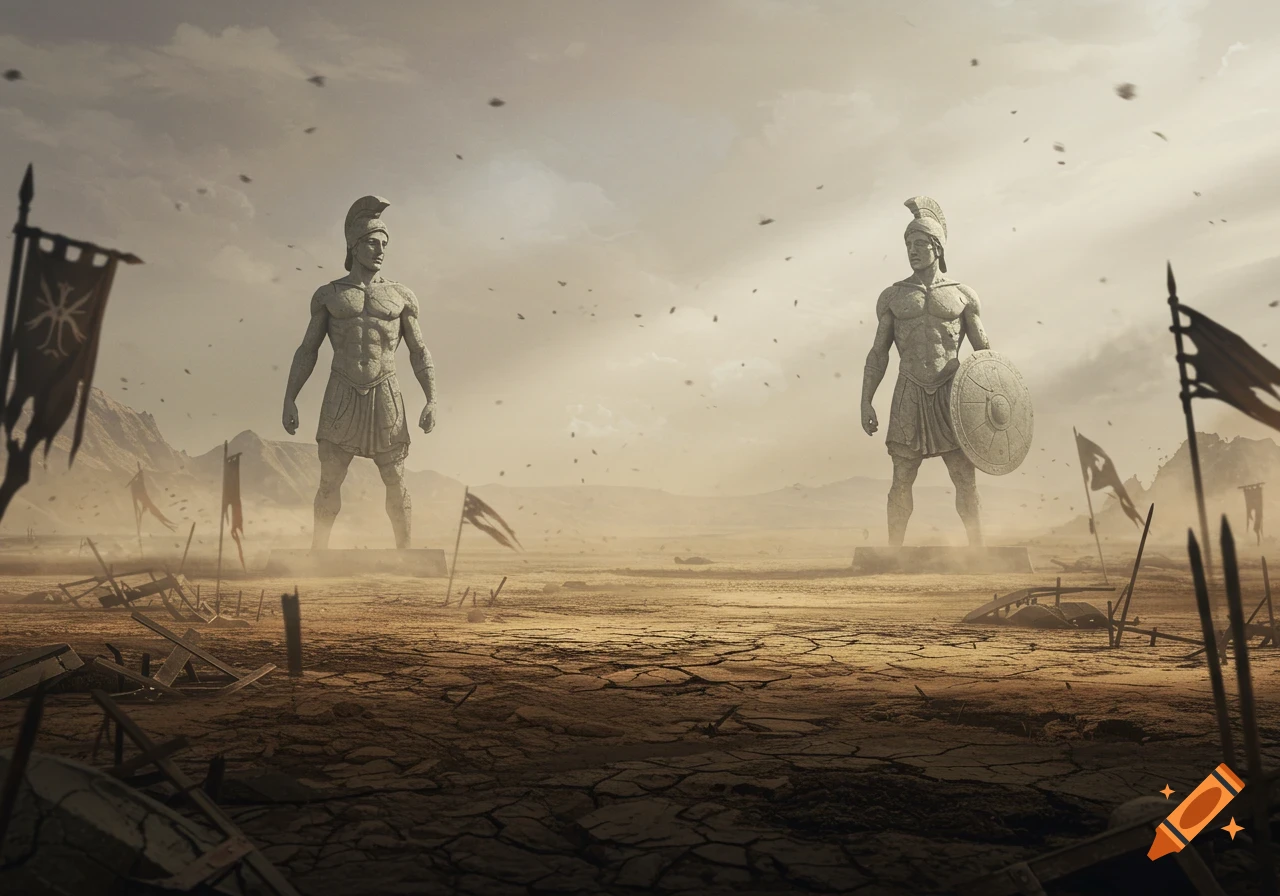
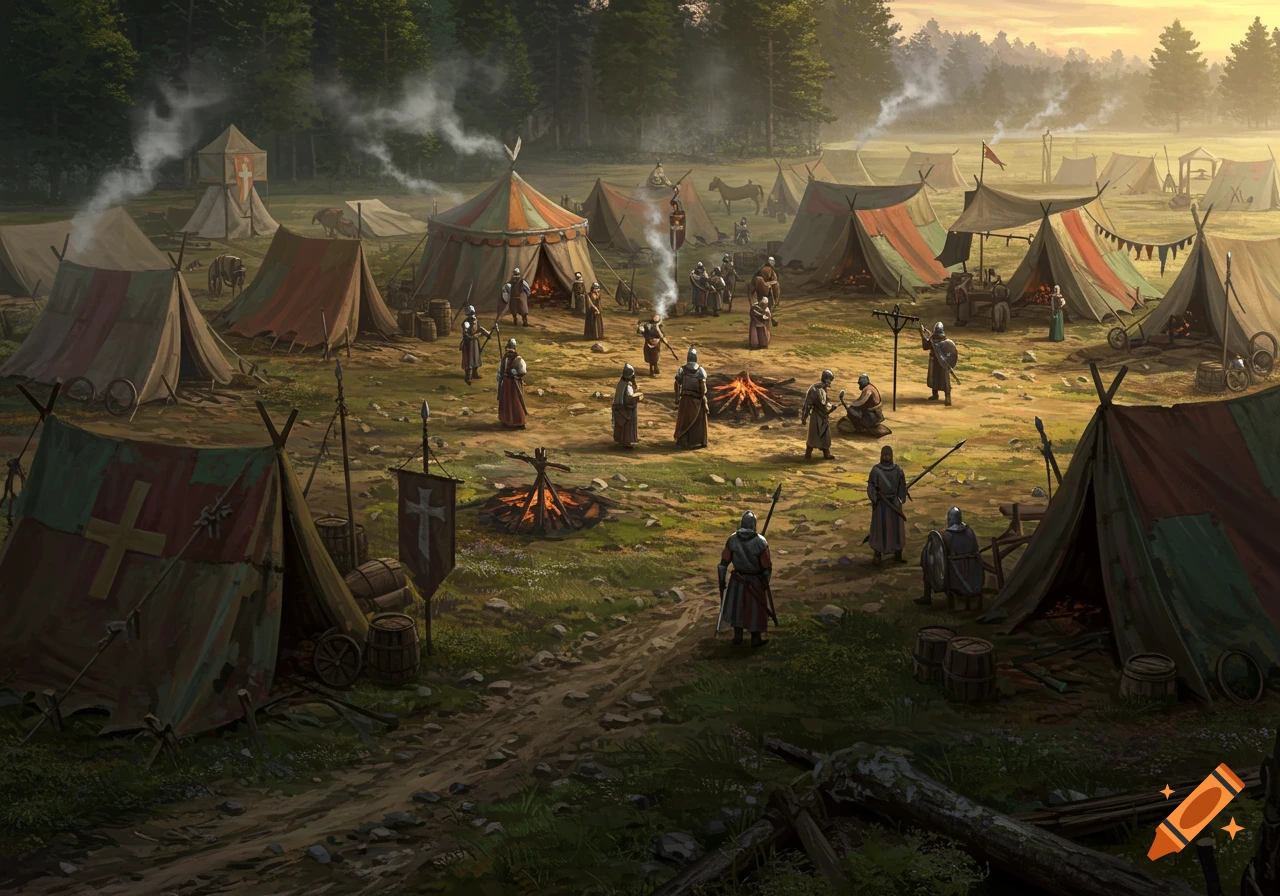
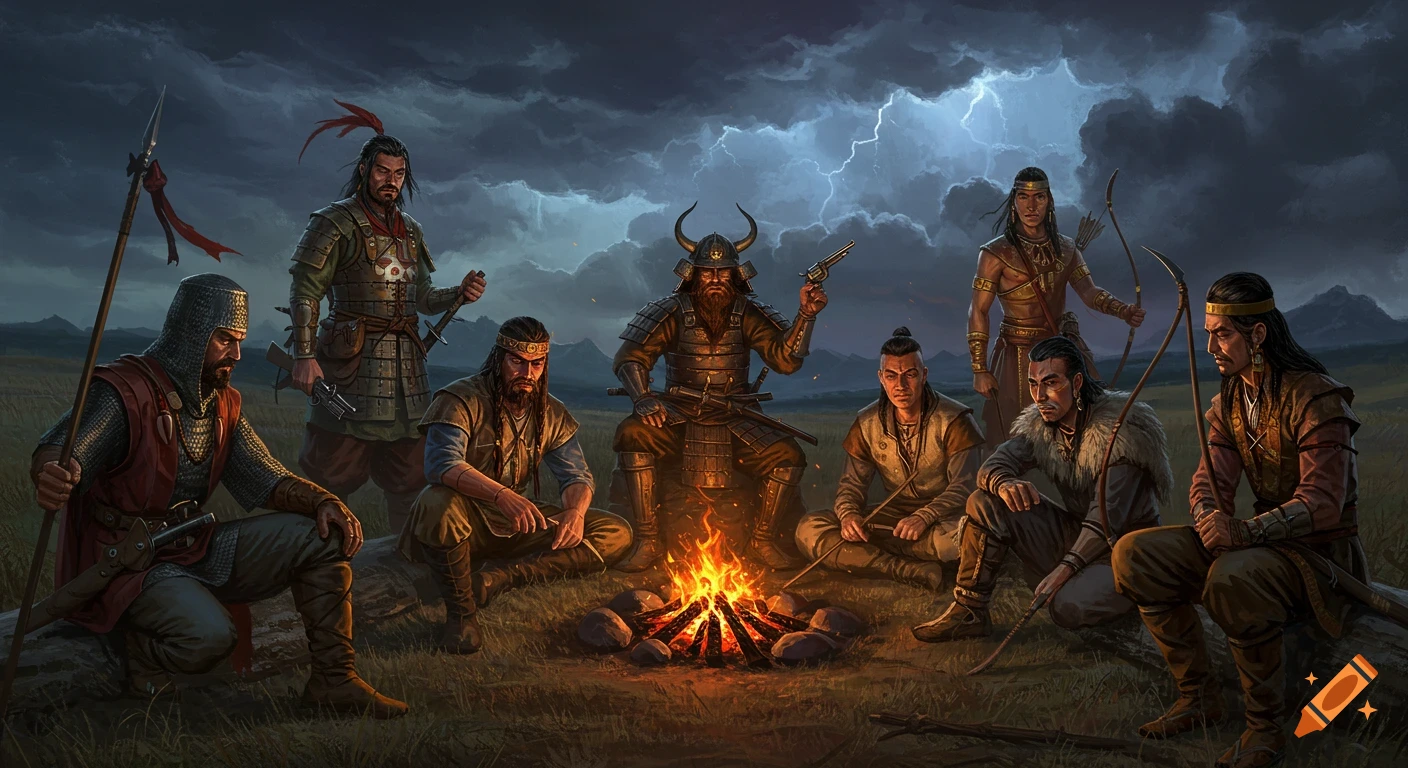
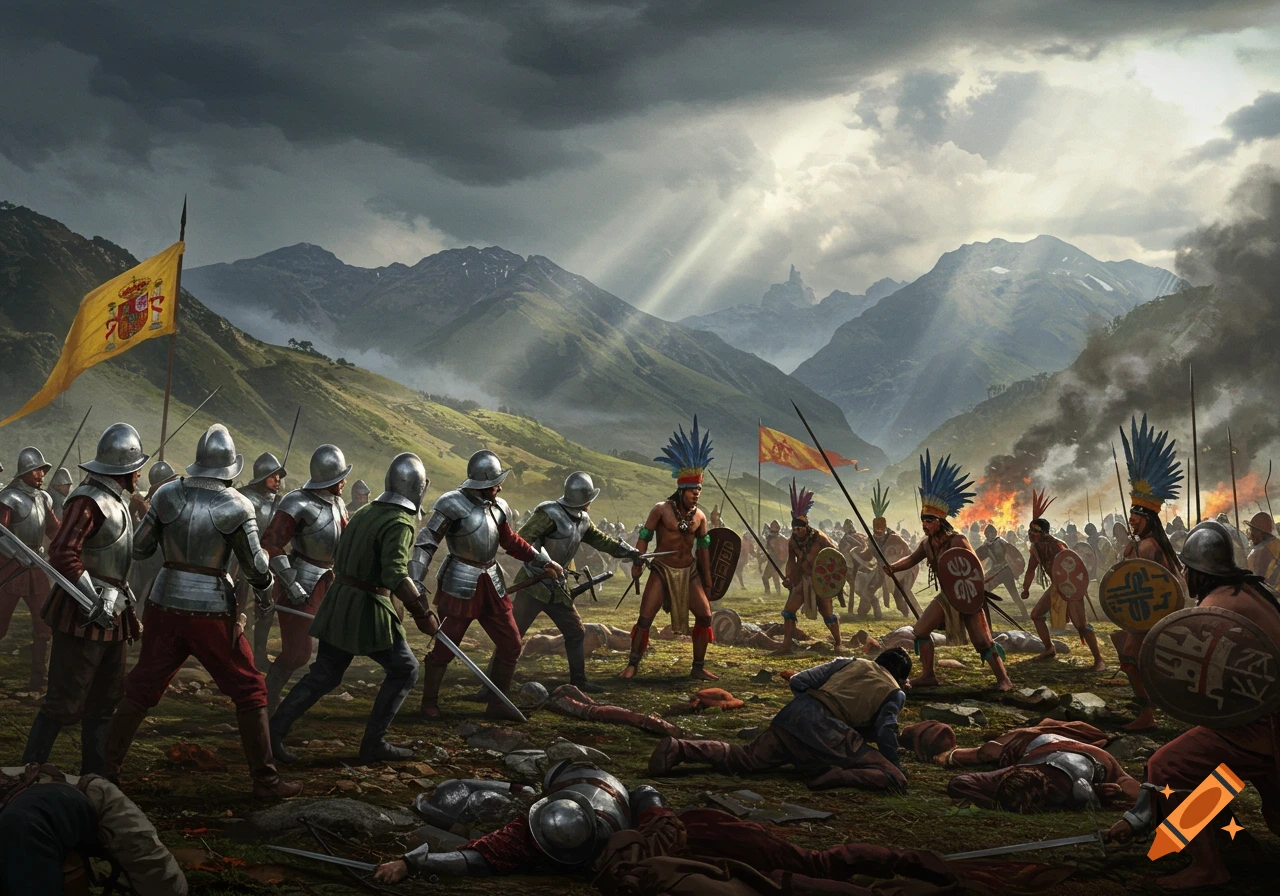
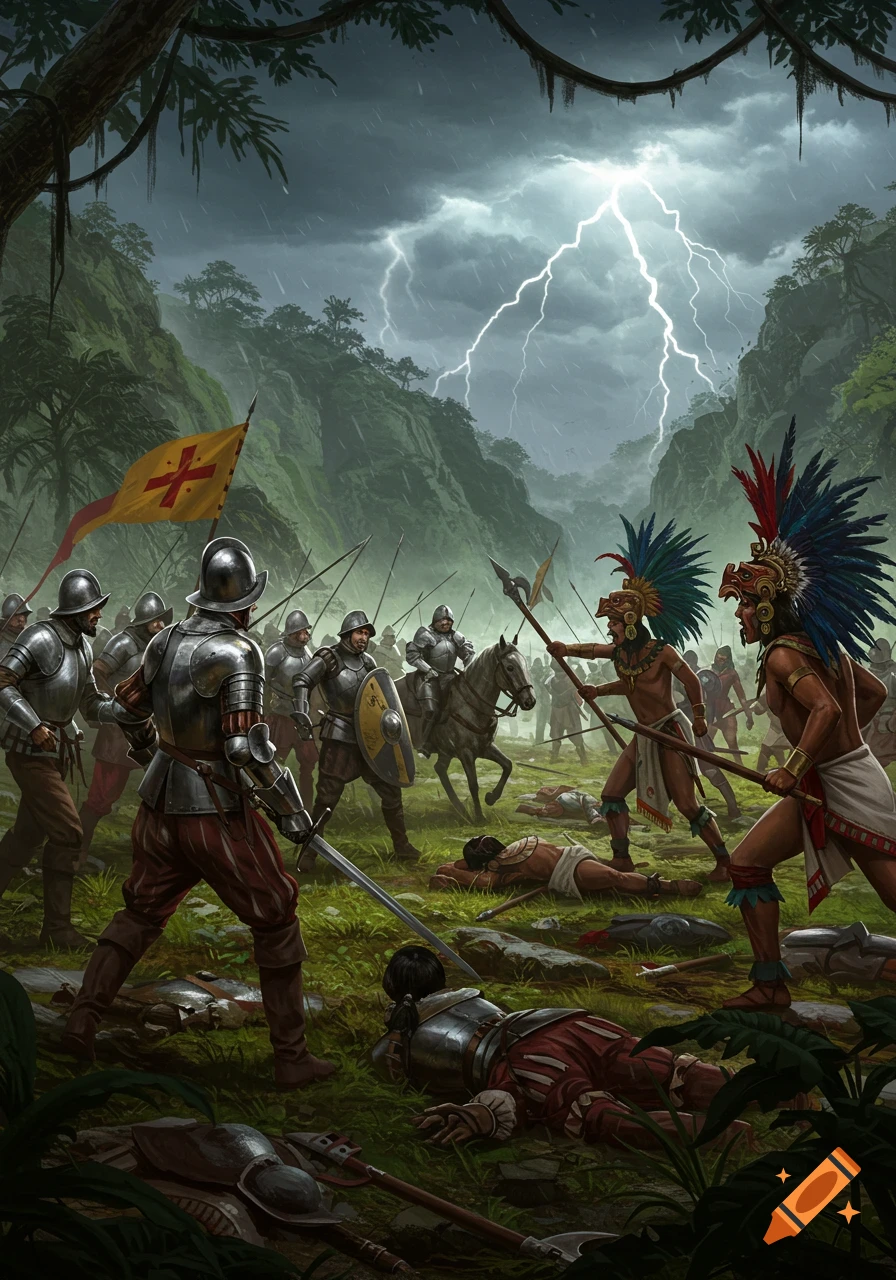
Cubist style allegorical scene of conflict with soldiers, Native Americans, a buffalo, and a river of whiskey under a stormy sky.
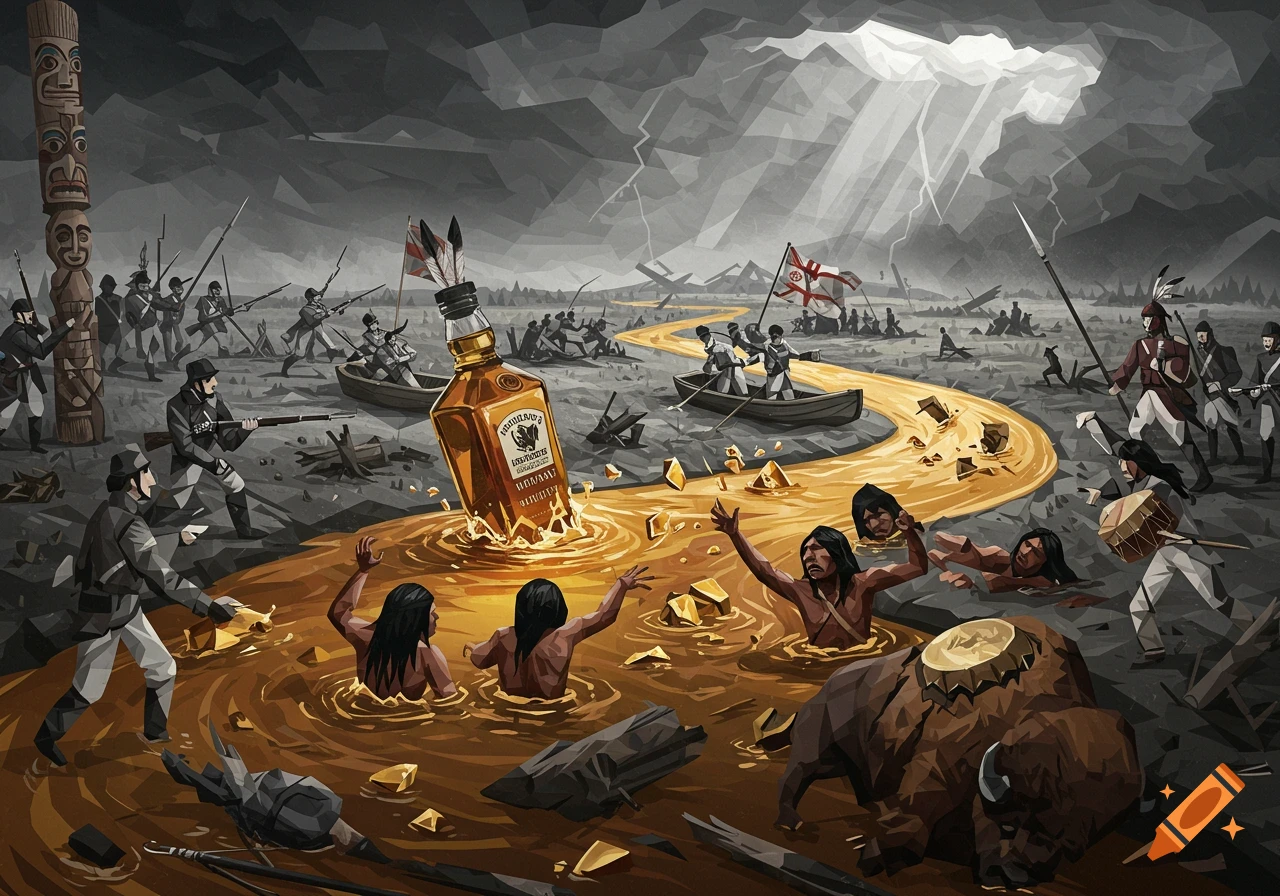
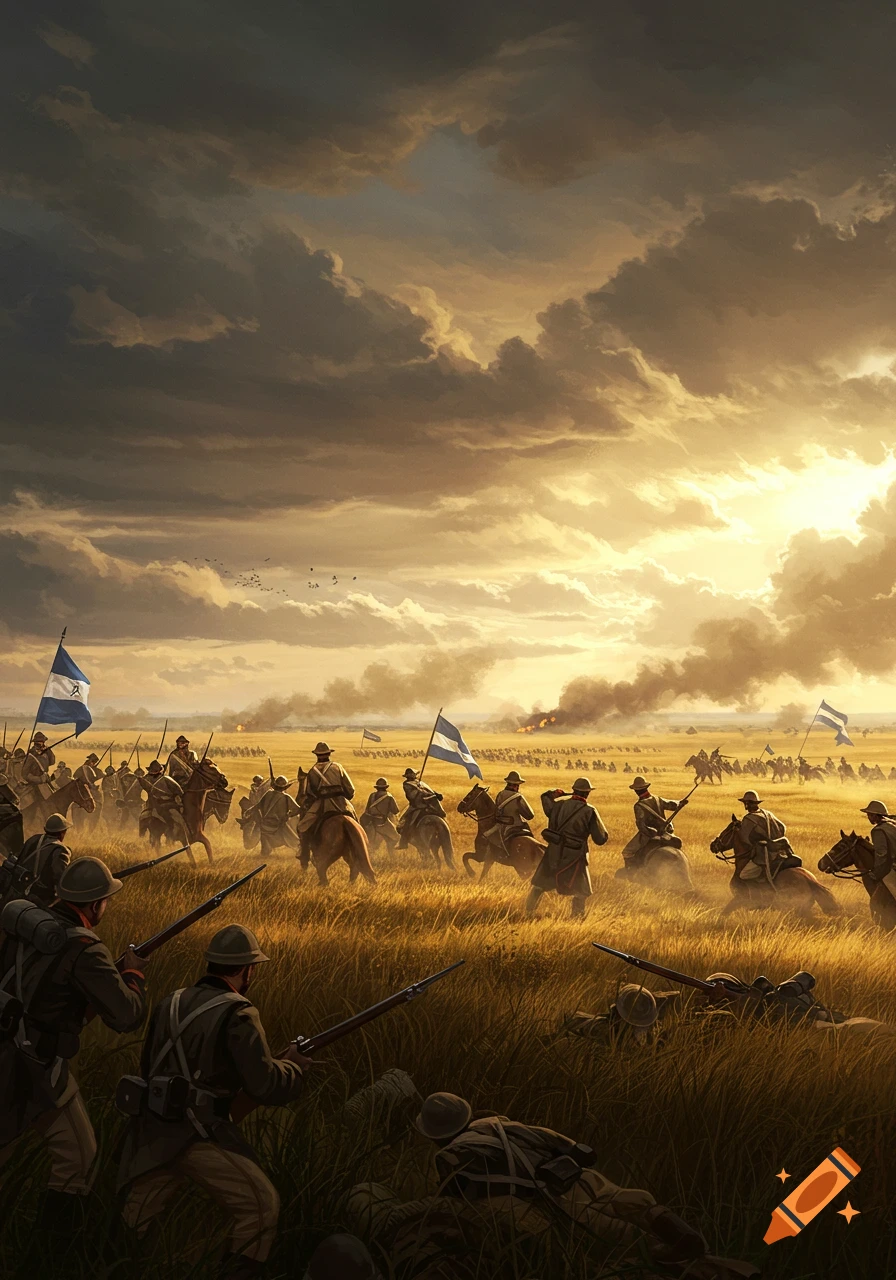
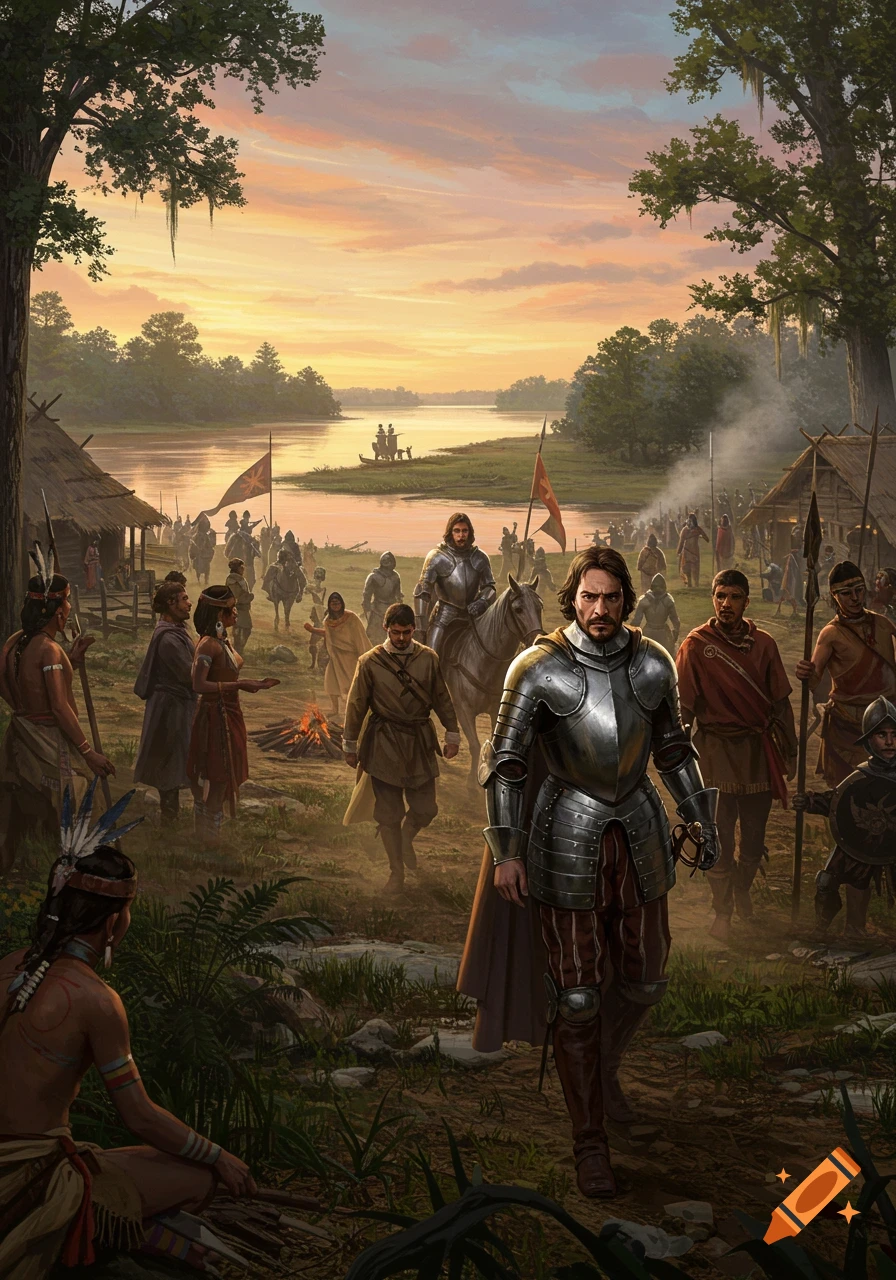
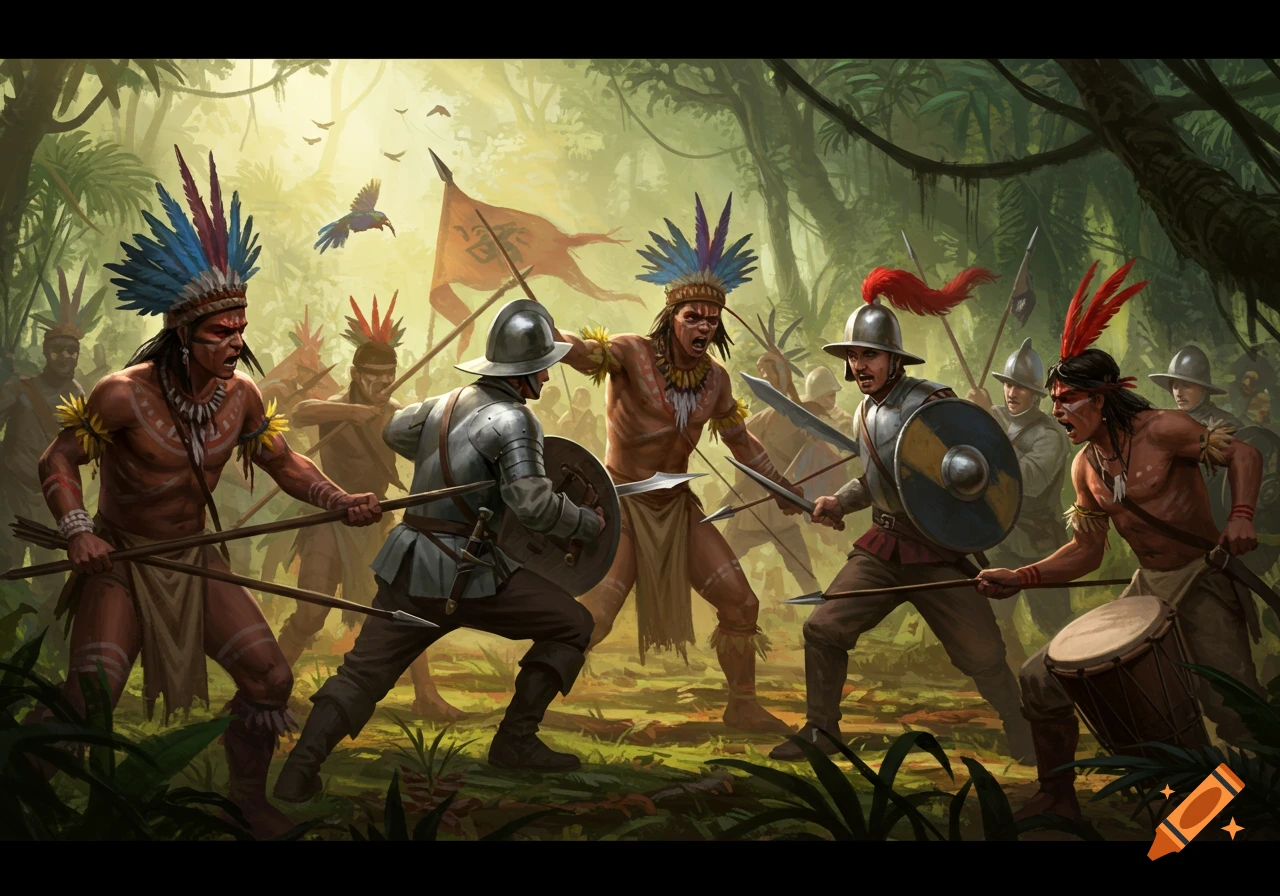
Depict a chaotic, fragmented scene on a vast open plain, inspired by the cubist style of Picasso’s Guernica. Use a monochromatic palette of muted grays, blacks, whites, and stark contrasts with sharp geometric shapes and overlapping fractured forms to convey anguish and turmoil. The composition centers on First Nations warriors, abstracted and distorted, their fierce faces and raised weapons broken into angular shards, showing defiance and pain. White 1800s soldiers, also fractured and shadowy, advance menacingly with rifles and flags. A surreal river of whisky cuts through the scene, depicted with swirling, jagged shapes of amber and gray, symbolizing toxic exploitation. White military men in boats float atop this river, reaching into the liquid to pull out shards of bright gold, stark against the grayscale background. First Nations people are shown immersed in the river, their forms fragmented and blending with the swirling whisky, trapped and struggling. The background is filled with abstract symbols—broken totem poles, shattered drums, and fractured feathers—scattered like shards across the plains, emphasizing cultural destruction. Amid the chaos, a fallen buffalo lies fractured on the ground, symbolizing lost game and broken land. Jagged streaks of light pierce the stormy sky, offering a glimpse of hope and the haunting question: ‘Oh, will we ever be set free?’ The overall mood is intense and haunting, capturing suffering, resistance, and the weight of history through See more