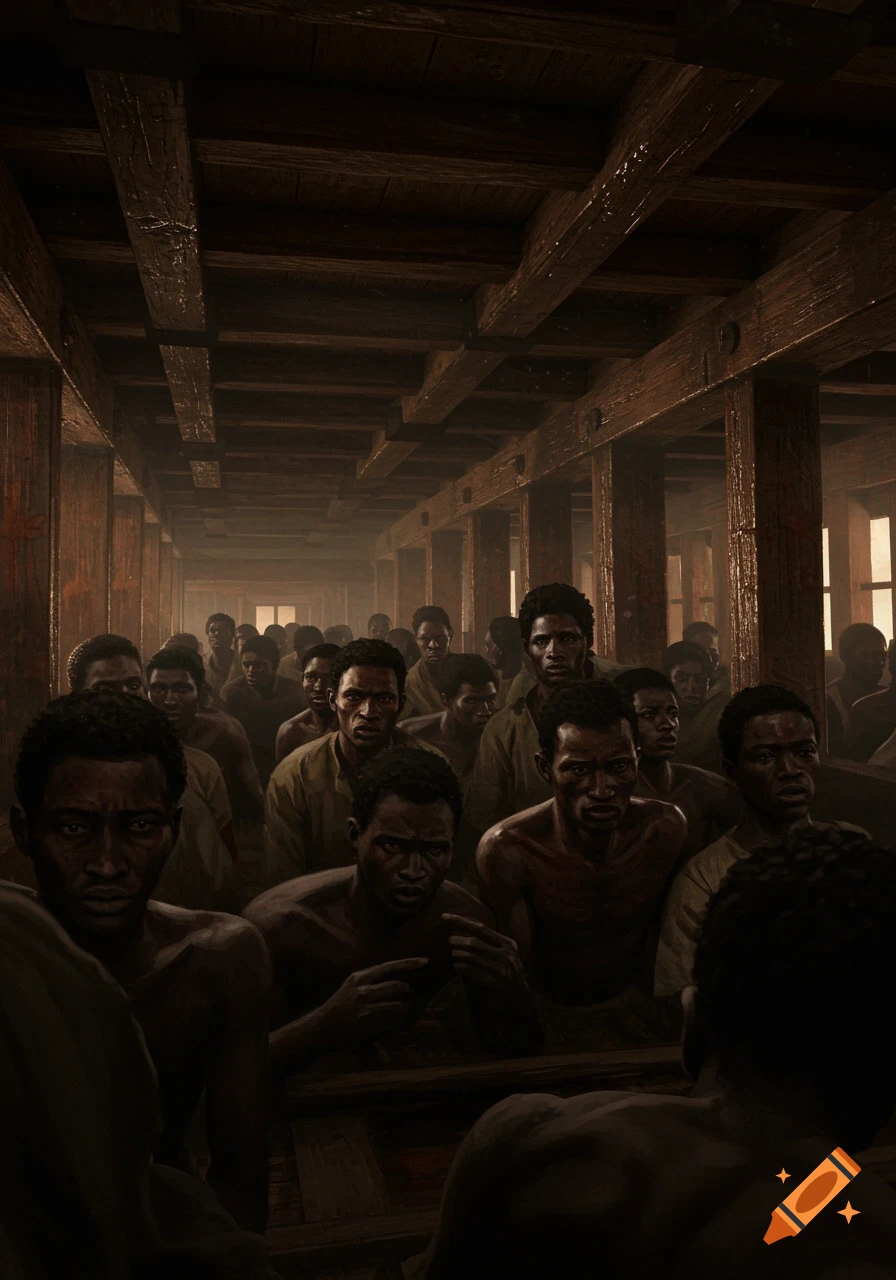
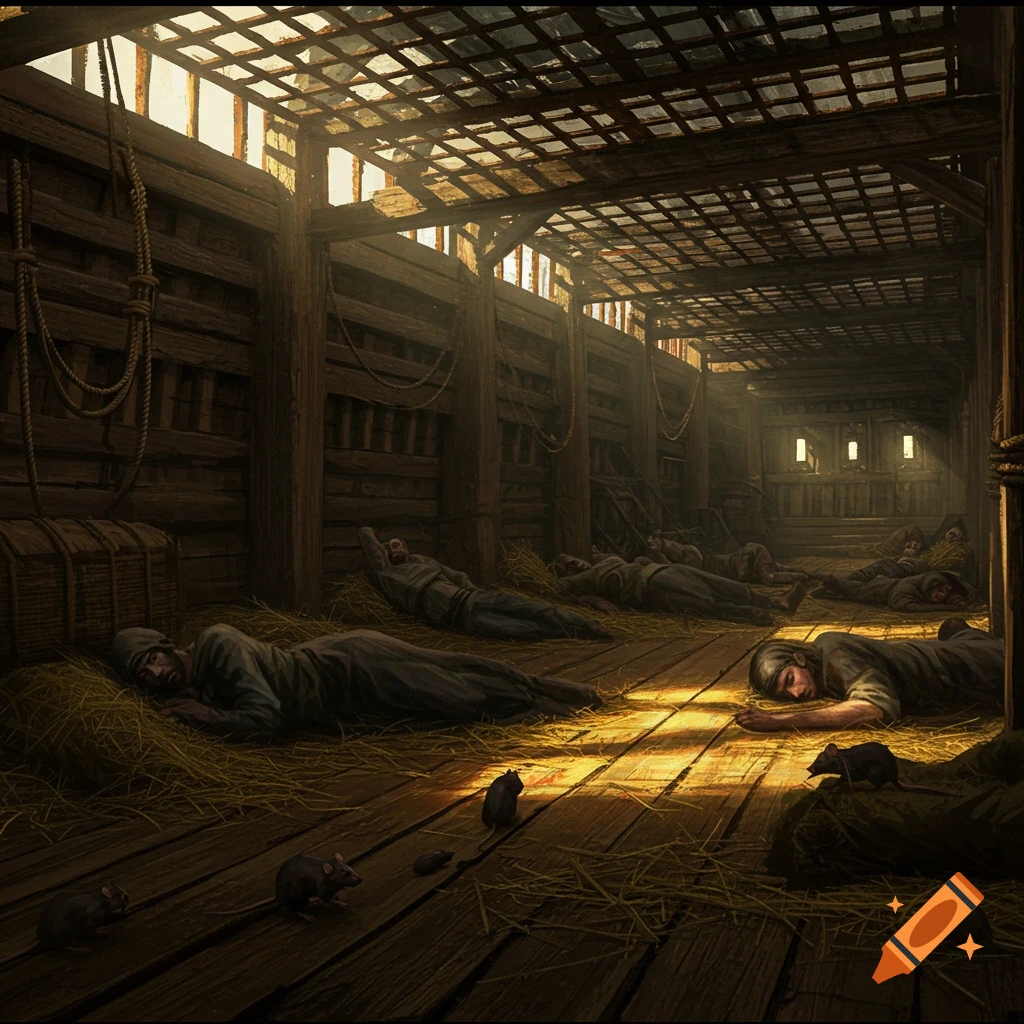
A crowded ship's hold filled with many dark-skinned individuals, most sitting, some chained, with light streaming in from distant windows.
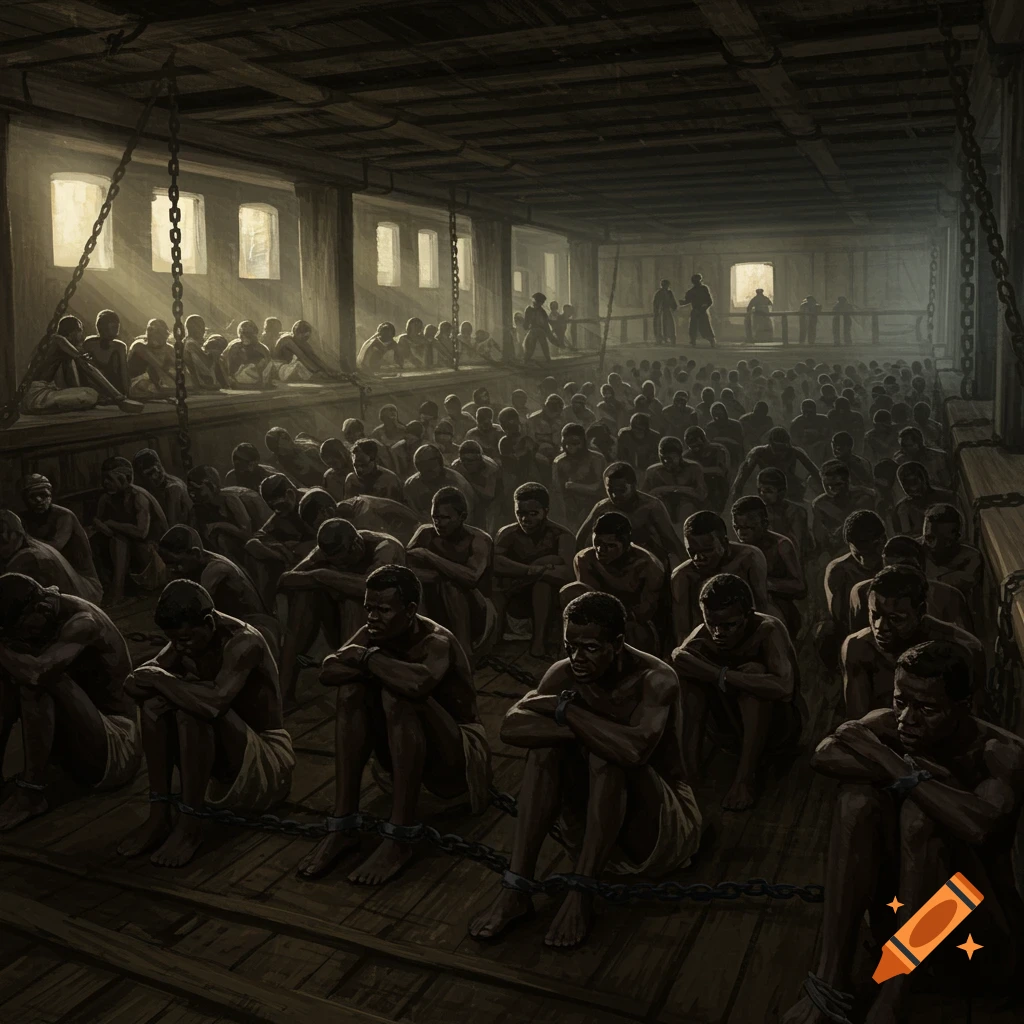
Below is an image of how slaves were arranged on a ship. image.png "The Middle Passage" Harvard College Library This illustration above depicts what one reporter saw on the upper deck of a slave ship — "about four hundred and fifty native Africans, in a sitting or squatting posture, the most of them having their knees elevated so as to form a resting place for their heads and arms." Two by two the men and women were forced beneath deck into the bowels of the slave ship. The "packing" was done as efficiently as possible. The captives lay down on unfinished planking with virtually no room to move or breathe. Elbows and wrists will be scraped to the bone by the motion of the rough seas. Some will die of disease, some of starvation, and some simply of despair. This was the fate of millions of West Africans across three and a half centuries of the slave trade on the voyage known as the "MIDDLE PASSAGE." Two philosophies dominated the loading of a slave ship. "LOOSE PACKING" provided for fewer slaves per ship in the hopes that a greater percentage of the cargo would arrive alive. "TIGHT PACKING" captains believed that more slaves, despite higher casualties, would yield a greater profit at the trading block. Doctors would inspect the slaves before purchase from the African trader to determine which individuals would most likely survive the voyage. In return, the traders would receive guns, gunpowder, rum or other spirits, textiles or trinkets. The "MIDDLE PASSAGE," which brought See more