A stylized illustration of a wise old man in a robe sitting under arches, holding a fan and a scroll, with two disciples, a crane, and a tortoise. Text at the bottom reads 'THE HIEROPHANT'.
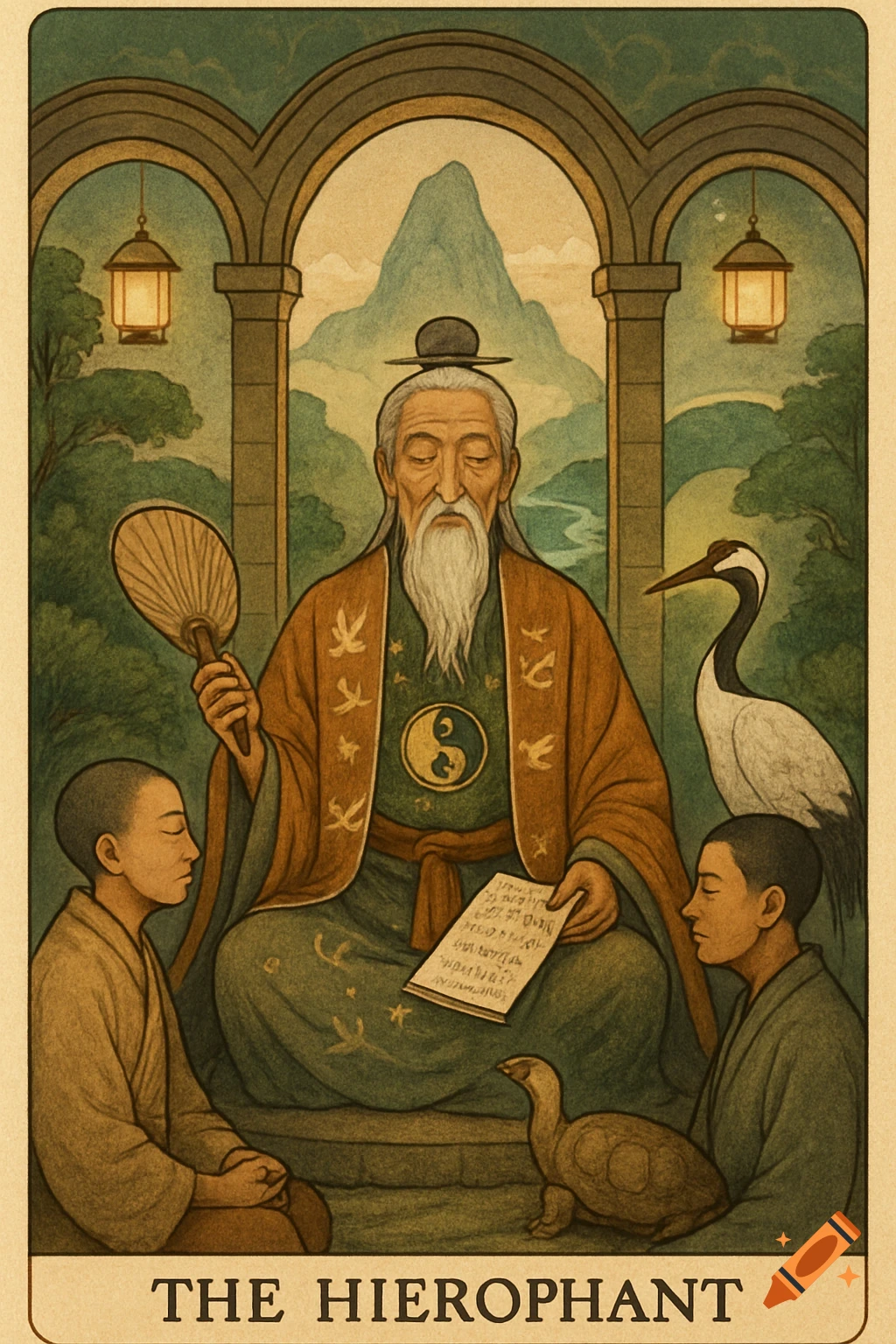
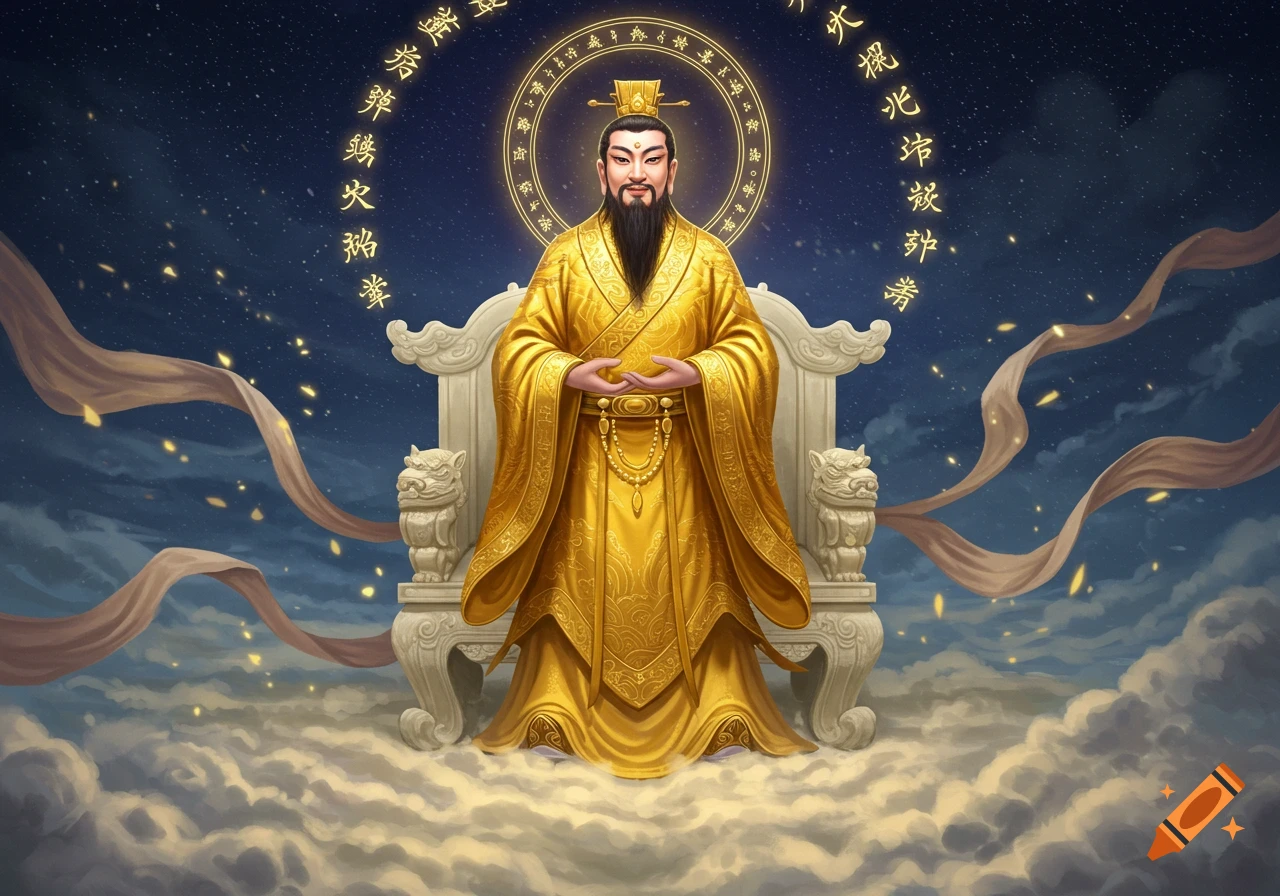
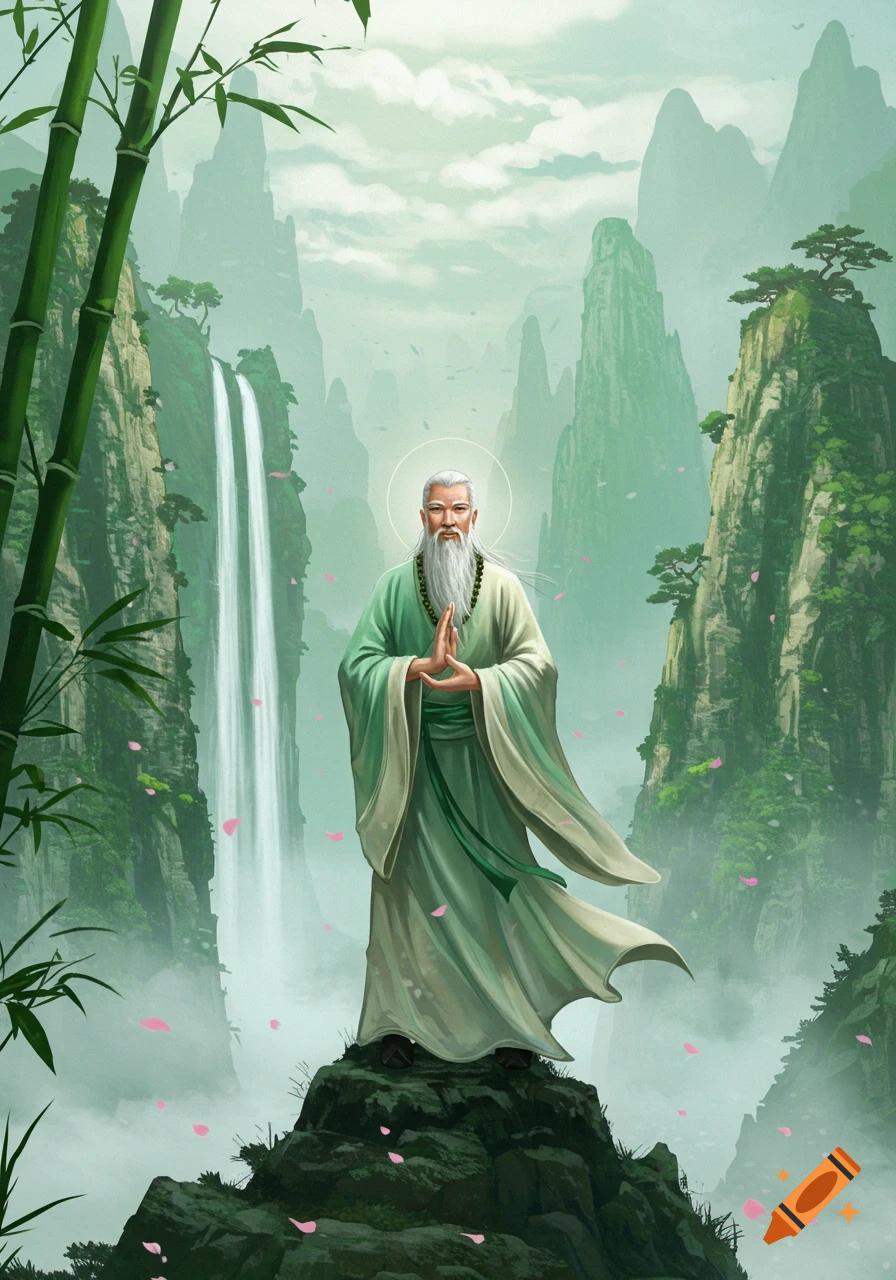
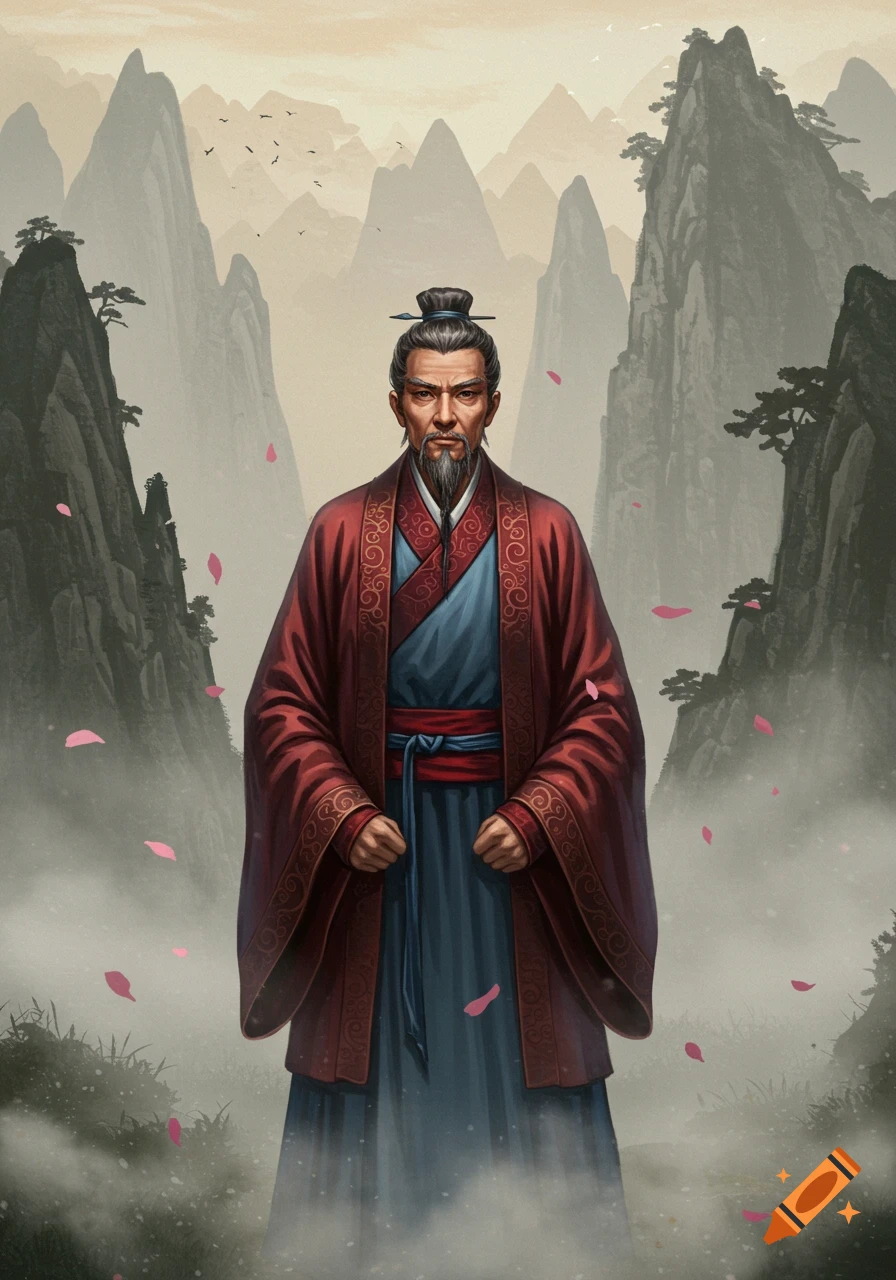
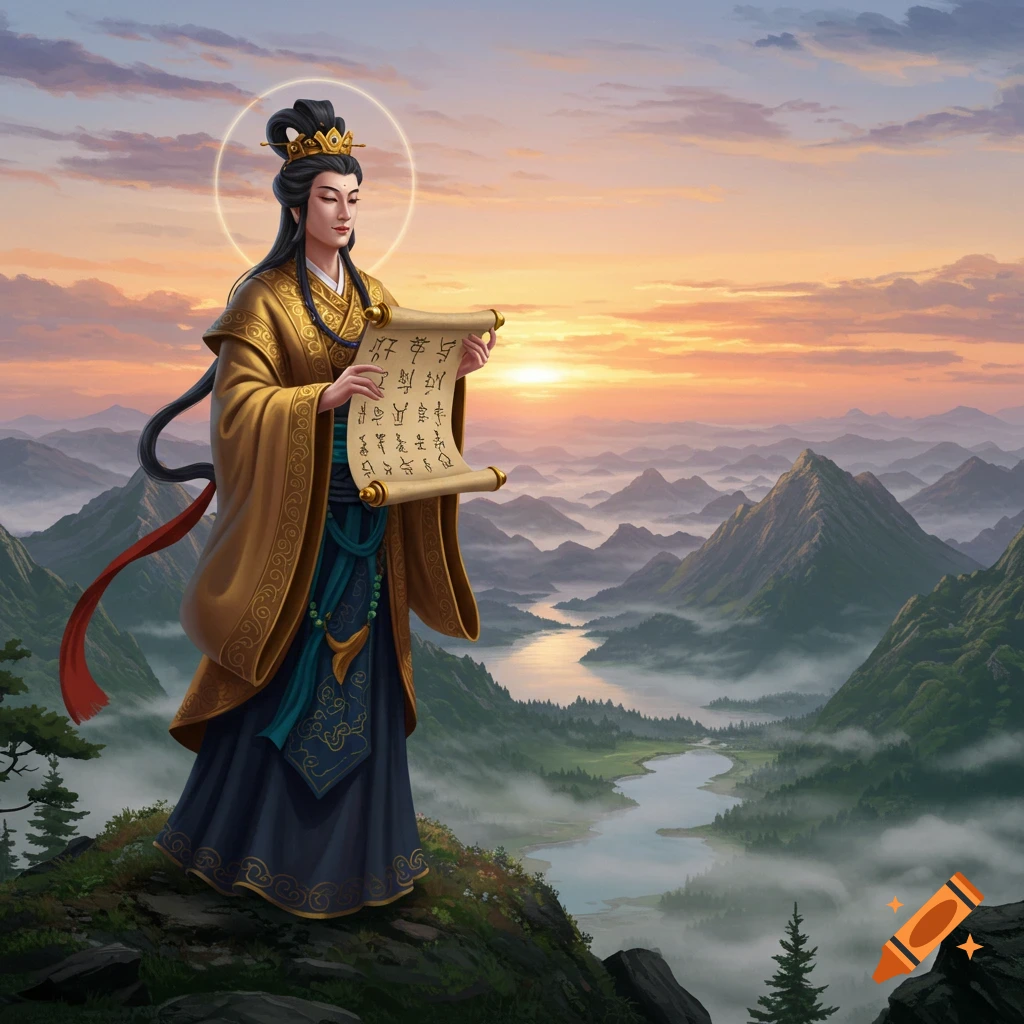
With the thought of Taoist philosophy, concepts and art, create an image for a tarot the heirophant card. Have some original concepts od tarot but focus on Taoism more. consider and include these thoughts.Concept & Symbolism: 1. The Sage as the Hierophant (Embodiment of the Dao) Instead of a pope or priest, the central figure is a Taoist immortal (Xian) or a wise hermit, seated in meditation or holding a scroll (Dao De Jing). Their posture reflects Wu Wei (effortless action), perhaps with one hand in a mudra of wisdom and the other holding a fan (symbol of spiritual breeze/clarity). Their robe could be adorned with celestial symbols (Bagua, stars, or cranes) representing harmony with the cosmos. 2. The Three Teachings in Balance (San Jiao) Taoism often harmonizes with Confucianism and Buddhism in Chinese tradition. Three arches or gates behind the sage could symbolize these paths merging into one truth. Alternatively, three lanterns (heaven, earth, humanity) could illuminate the scene. 3. The Ritual of Nature (Sacred Alignment) The Hierophant doesn’t preach dogma but aligns with natural law. A mountain (immovable wisdom) and flowing river (adaptability) could frame the sage, embodying the balance of Yin and Yang. At their feet, a tortoise (longevity, wisdom) or crane (transcendence) could appear. 4. Disciples of the Dao (Transmission of Wisdom) Instead of acolytes, two disciples (or a dragon and tiger, symbolizing balanced energies) sit at the sage’s side, receiving See more