Four concerned cartoon children stand before a bar graph illustrating vegetable consumption among Australian children.
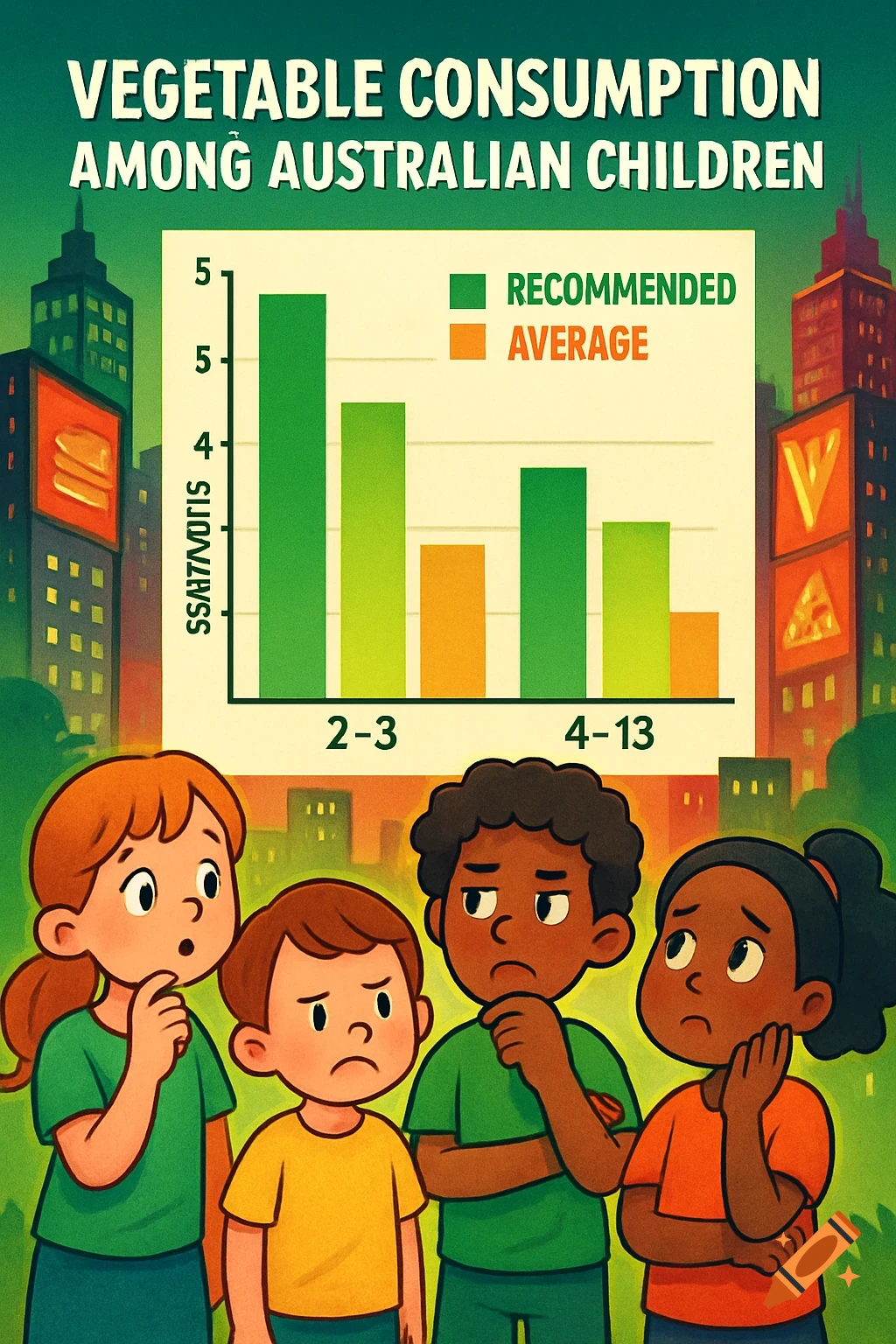
#### 2.1 Overall Consumption Data vs. Recommendations National surveys, such as the Australian Health Survey, reveal a concerning trend: * A vast majority of Australian children do not meet the recommended daily intake of vegetables. For instance, it is often reported that **less than 1 in 20 children (around 5%)** consume the recommended number of vegetable serves per day. * The average intake is often less than half of what is recommended for many age groups. Children might consume 1-2 serves on average, far below the 2.5 to 5.5 serves required. * While fruit intake is generally better, it still doesn't compensate for the lack of vegetables, as they offer different nutrient profiles. This widespread shortfall indicates a significant public health challenge requiring urgent attention. #### 2.2 Socio-demographic Disparities in Vegetable Intake Vegetable consumption is not uniform across the child population; various socio-demographic factors create disparities, highlighting specific groups that experience greater barriers. ##### 2.2.1 Age * **Older children tend to consume fewer vegetables** than younger children. As children transition from early childhood to adolescence, their dietary patterns often shift towards more processed foods and fewer vegetables, influenced by increased autonomy, peer pressure, and access to unhealthy options outside the home. Toddlers and preschoolers might have slightly better intake, but even they often don't meet the full recommendations. See more