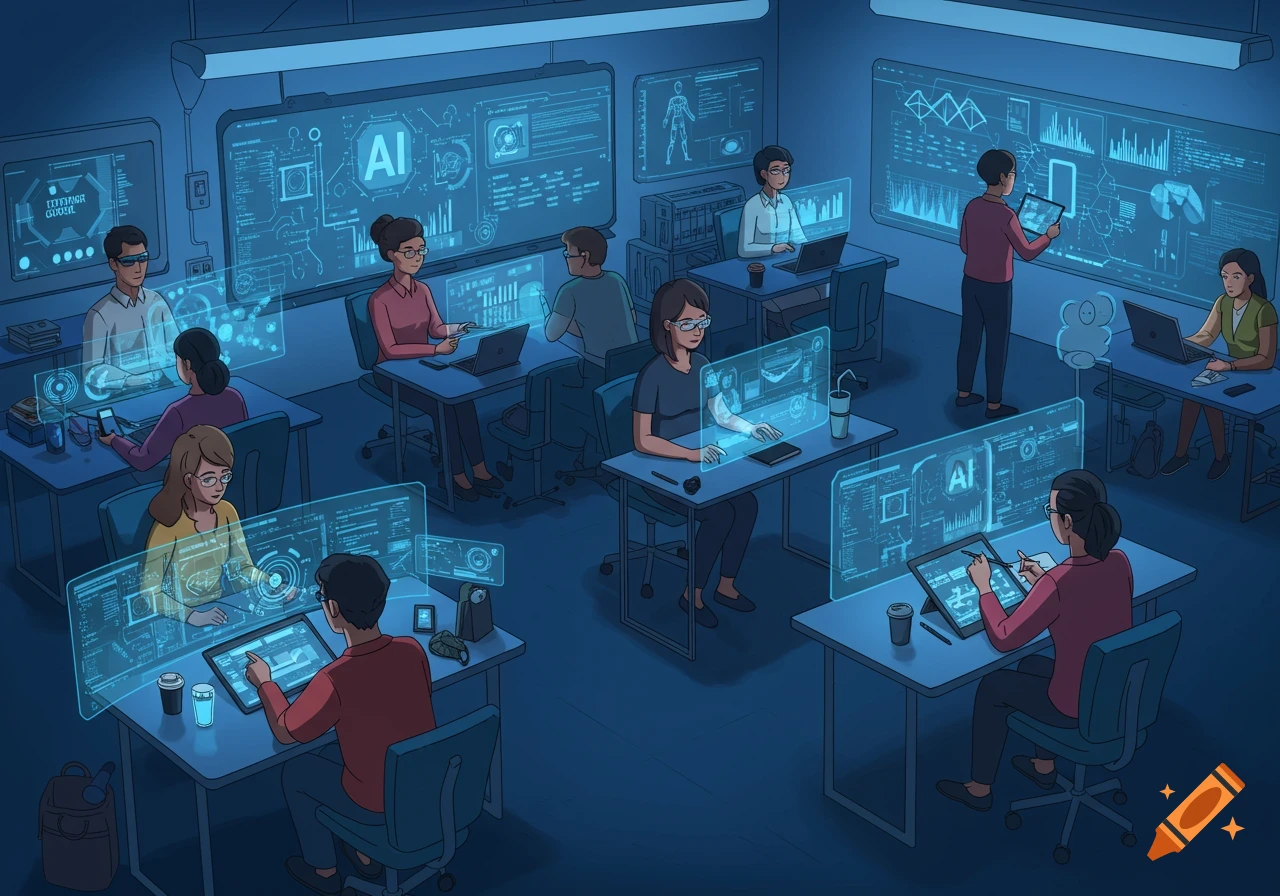
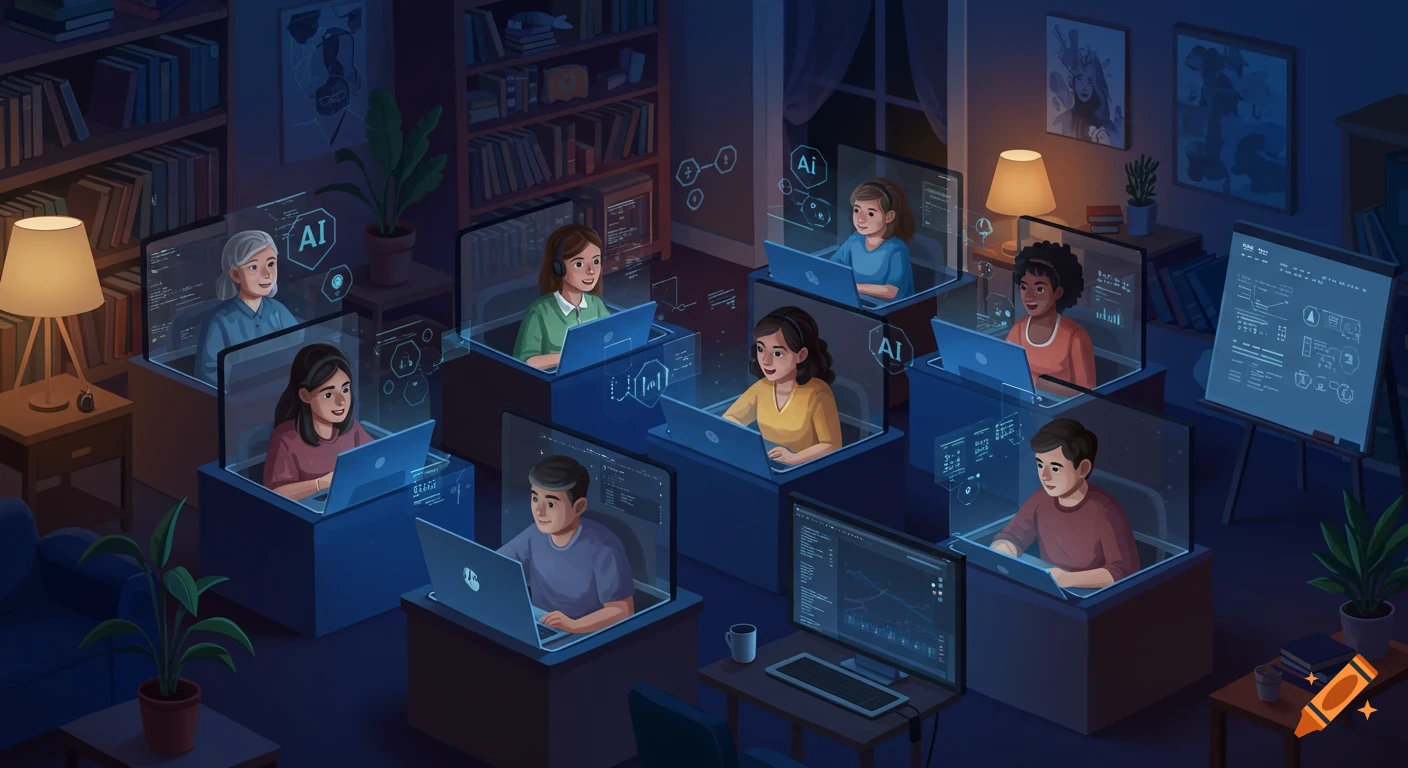
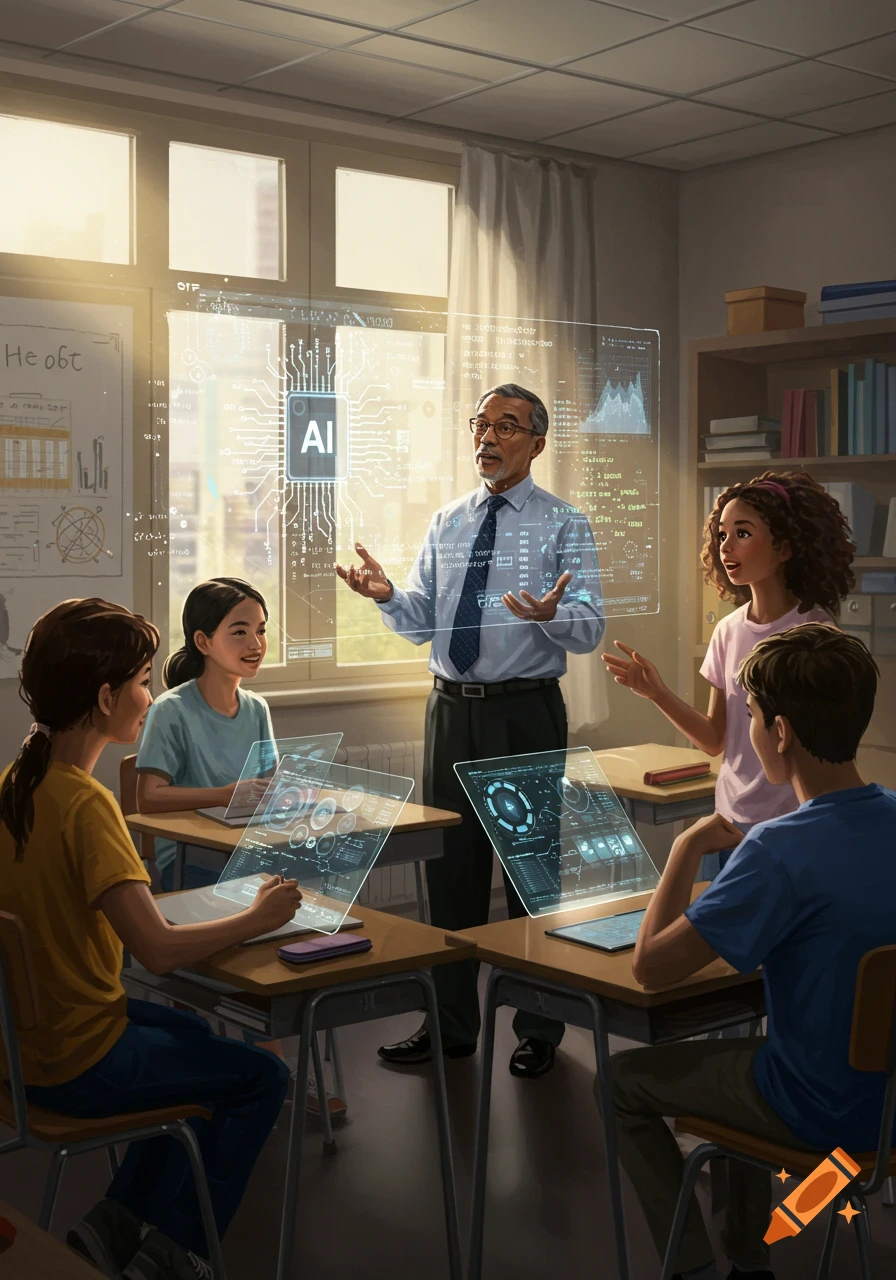
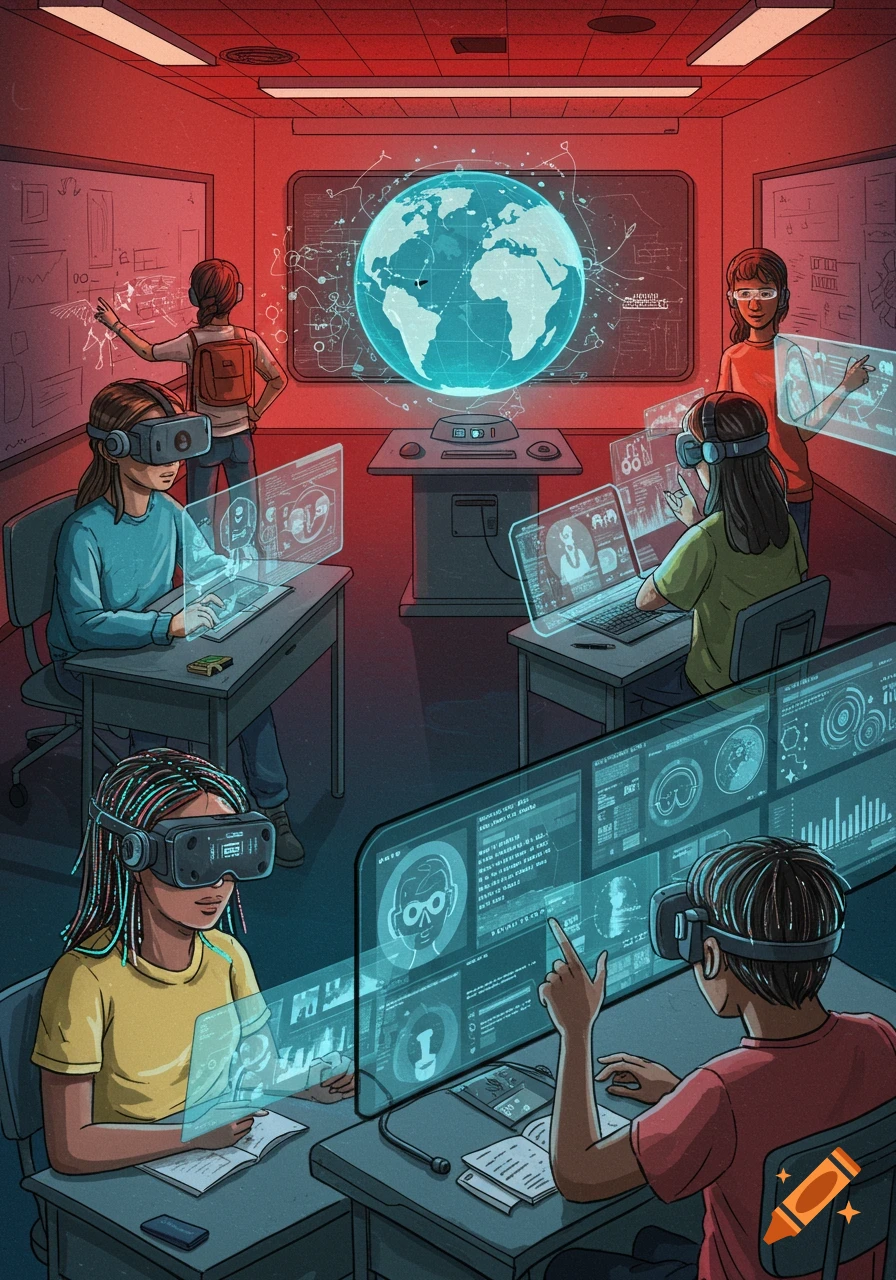
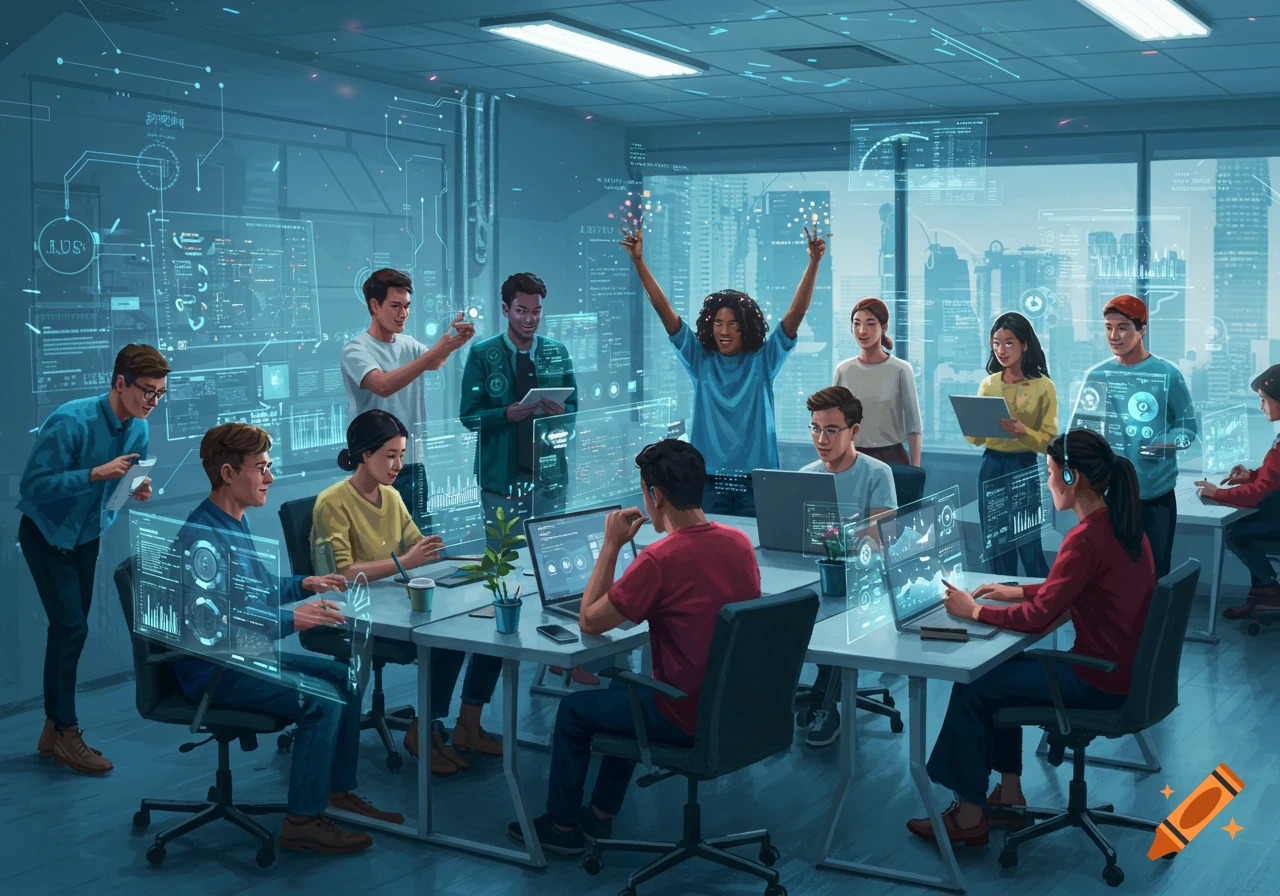
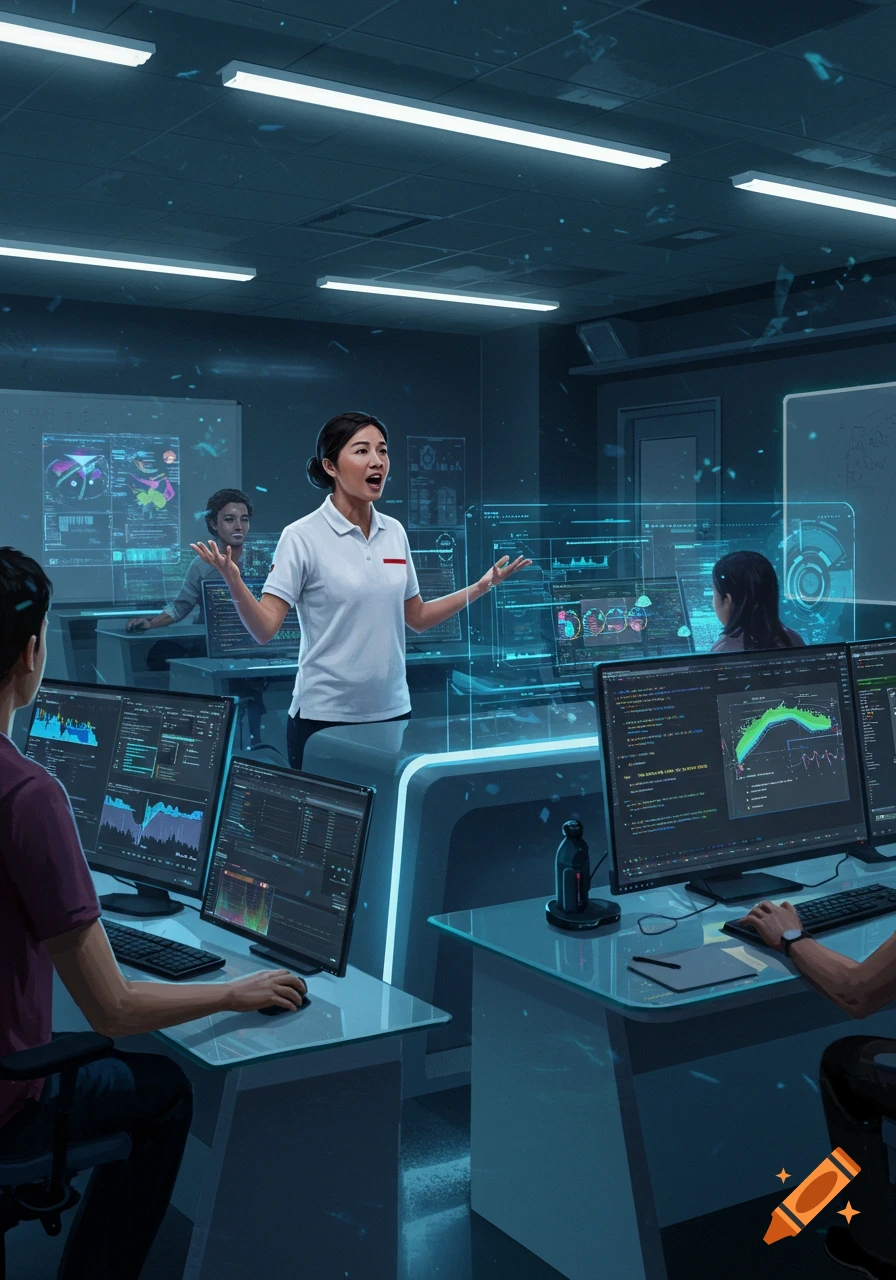
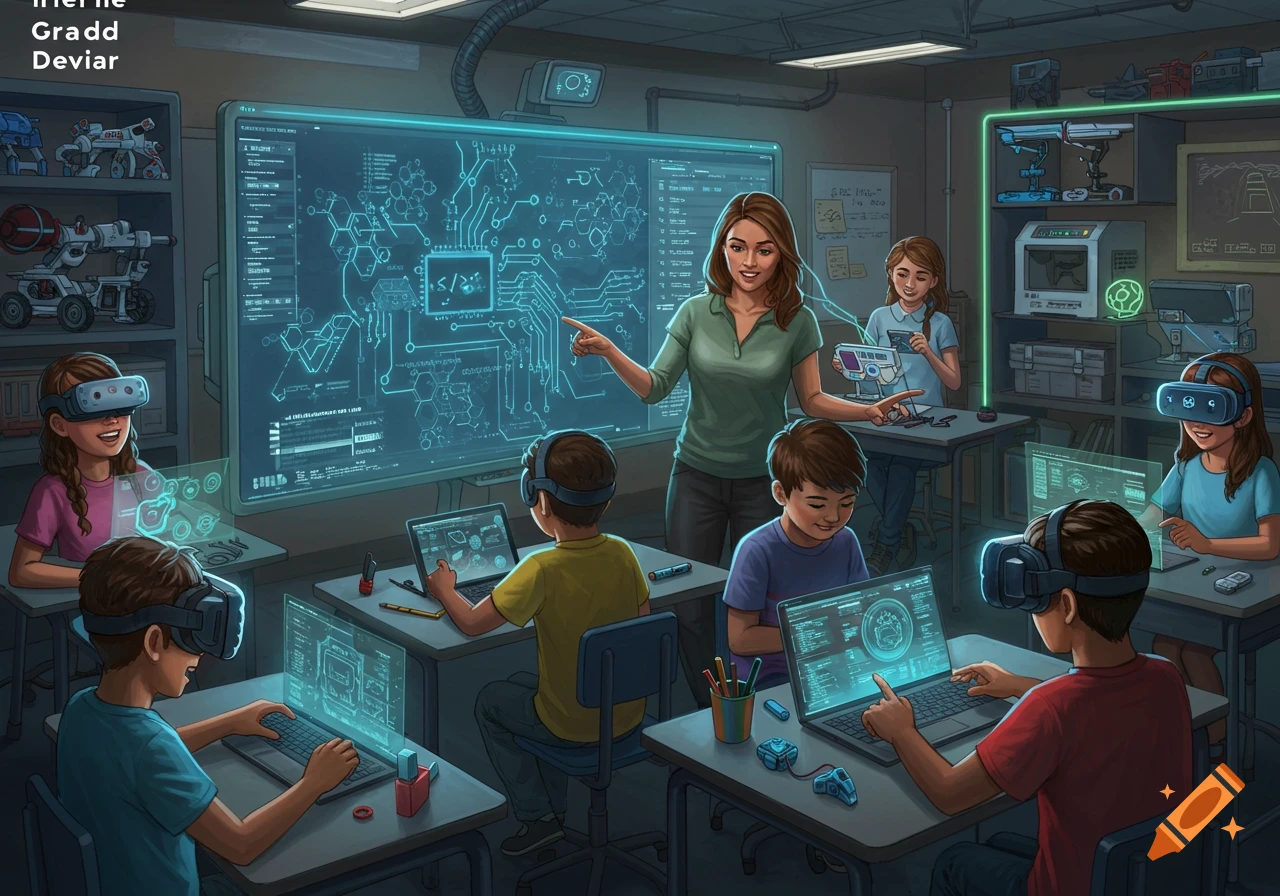
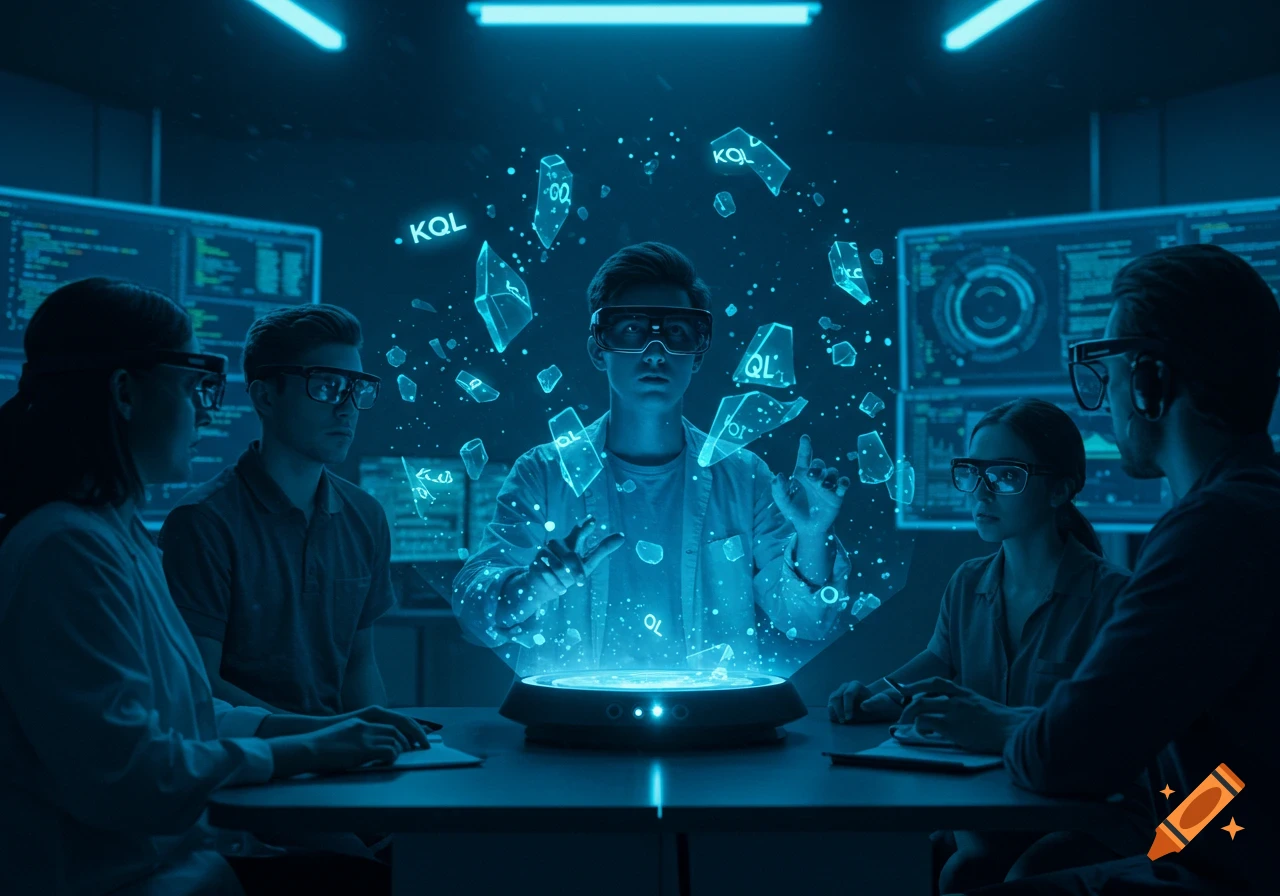
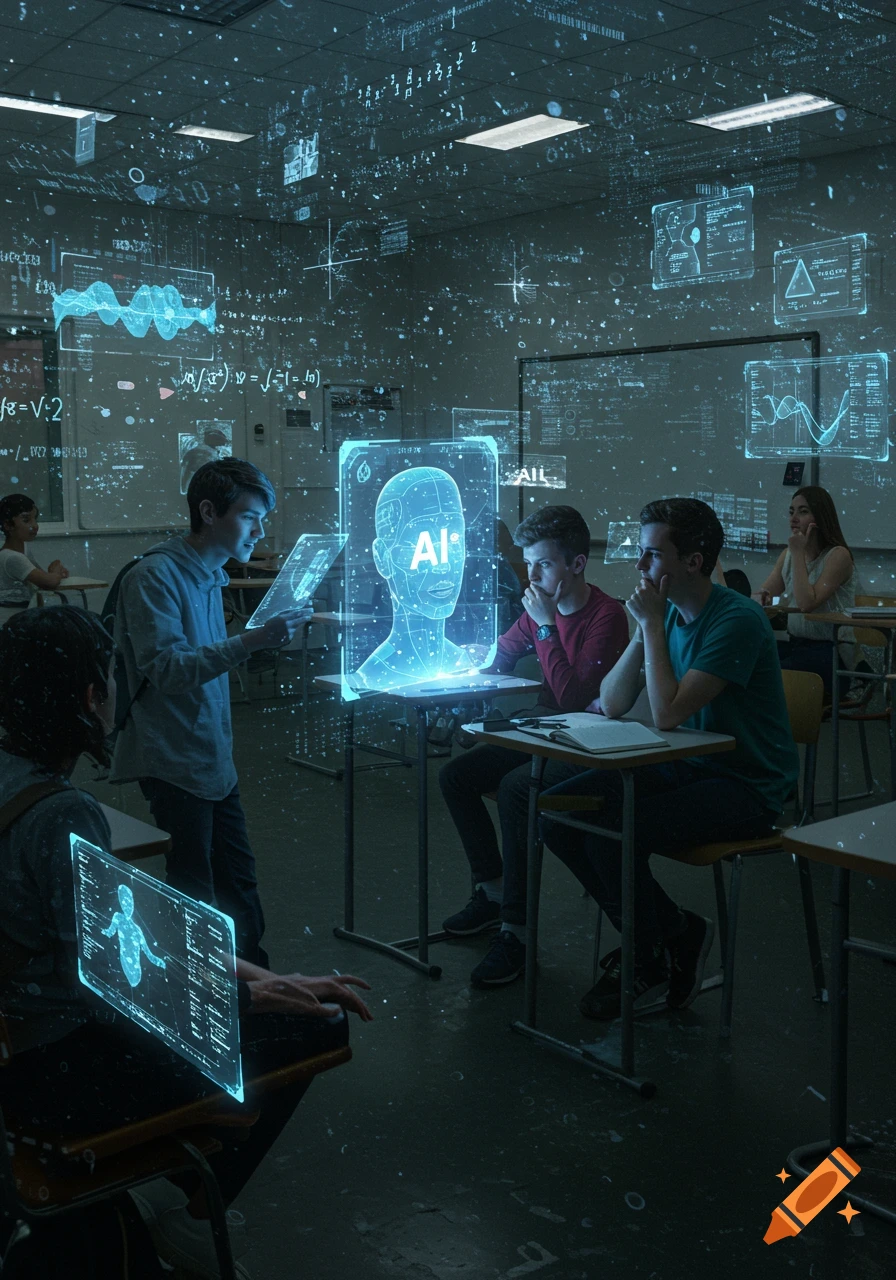
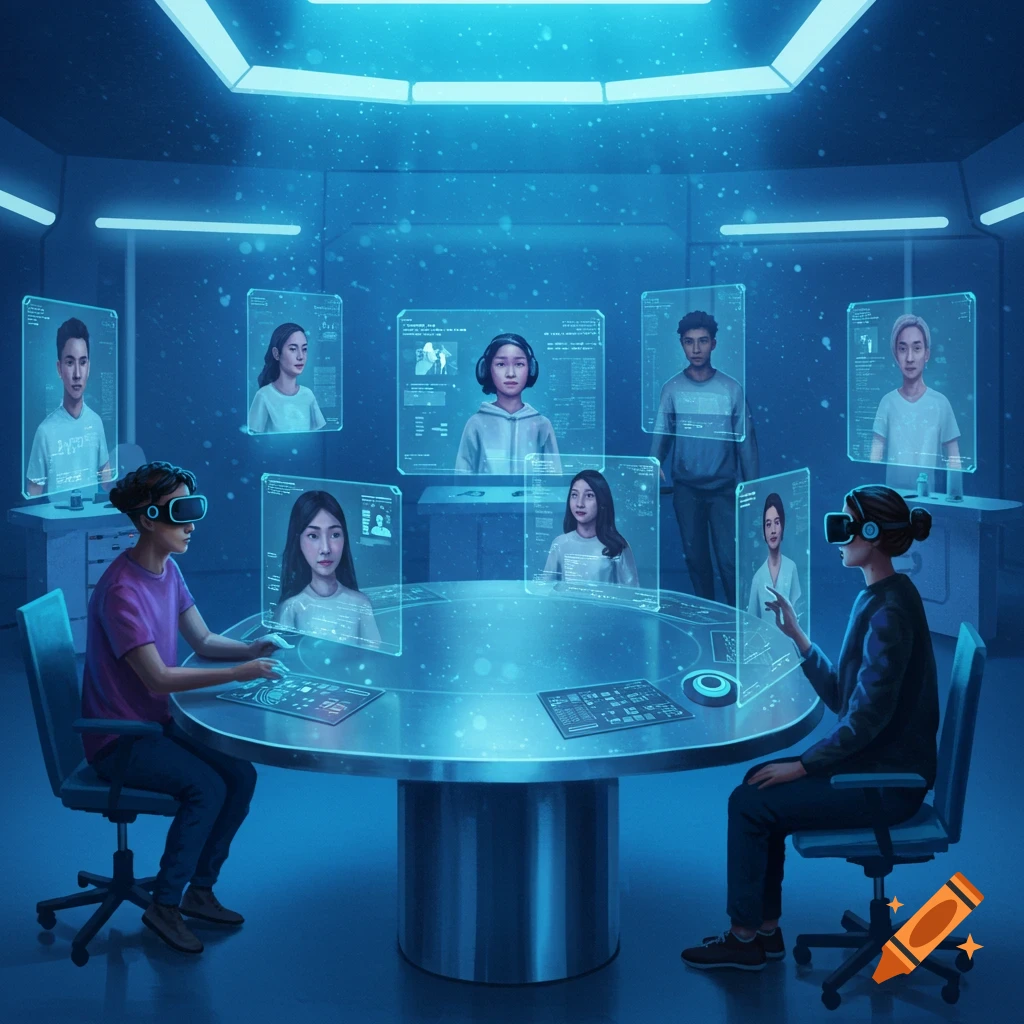
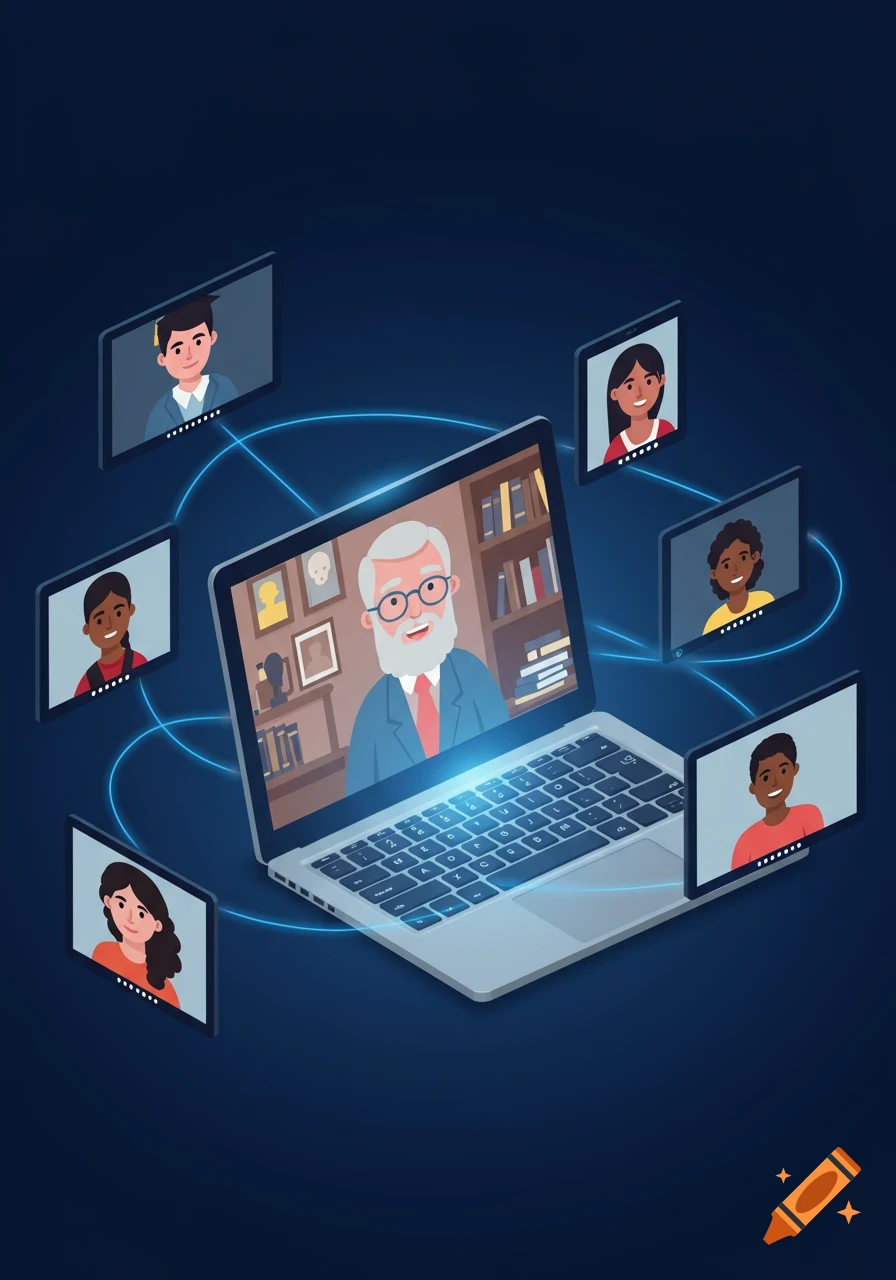
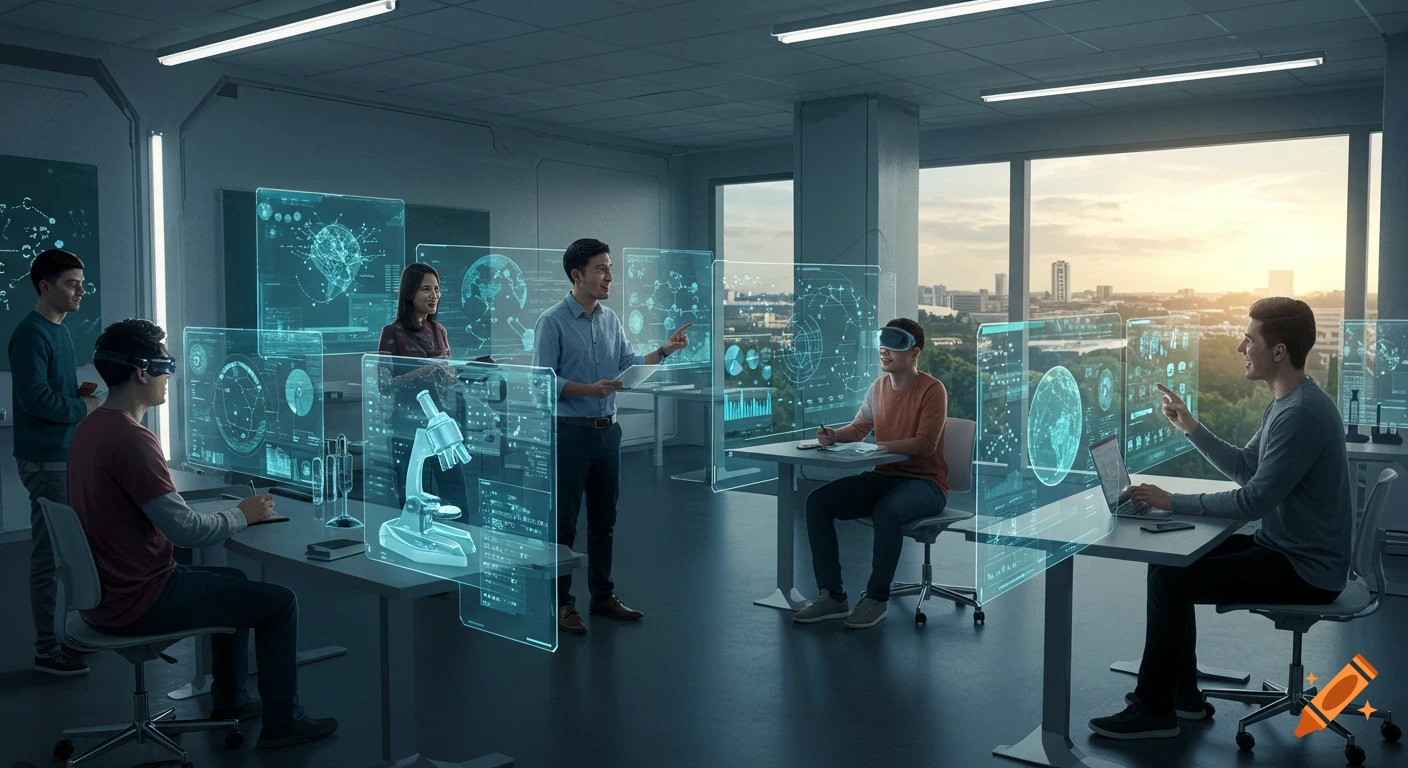
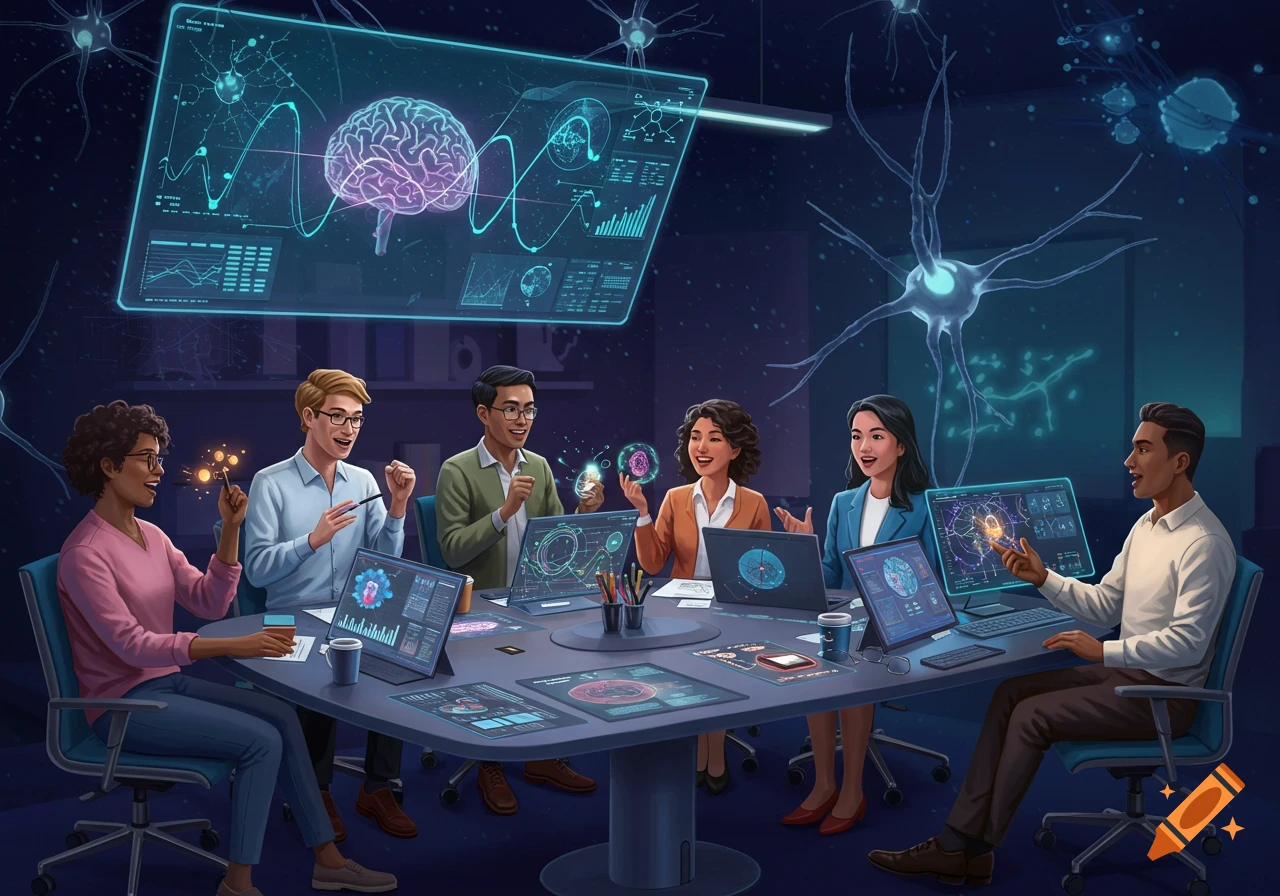
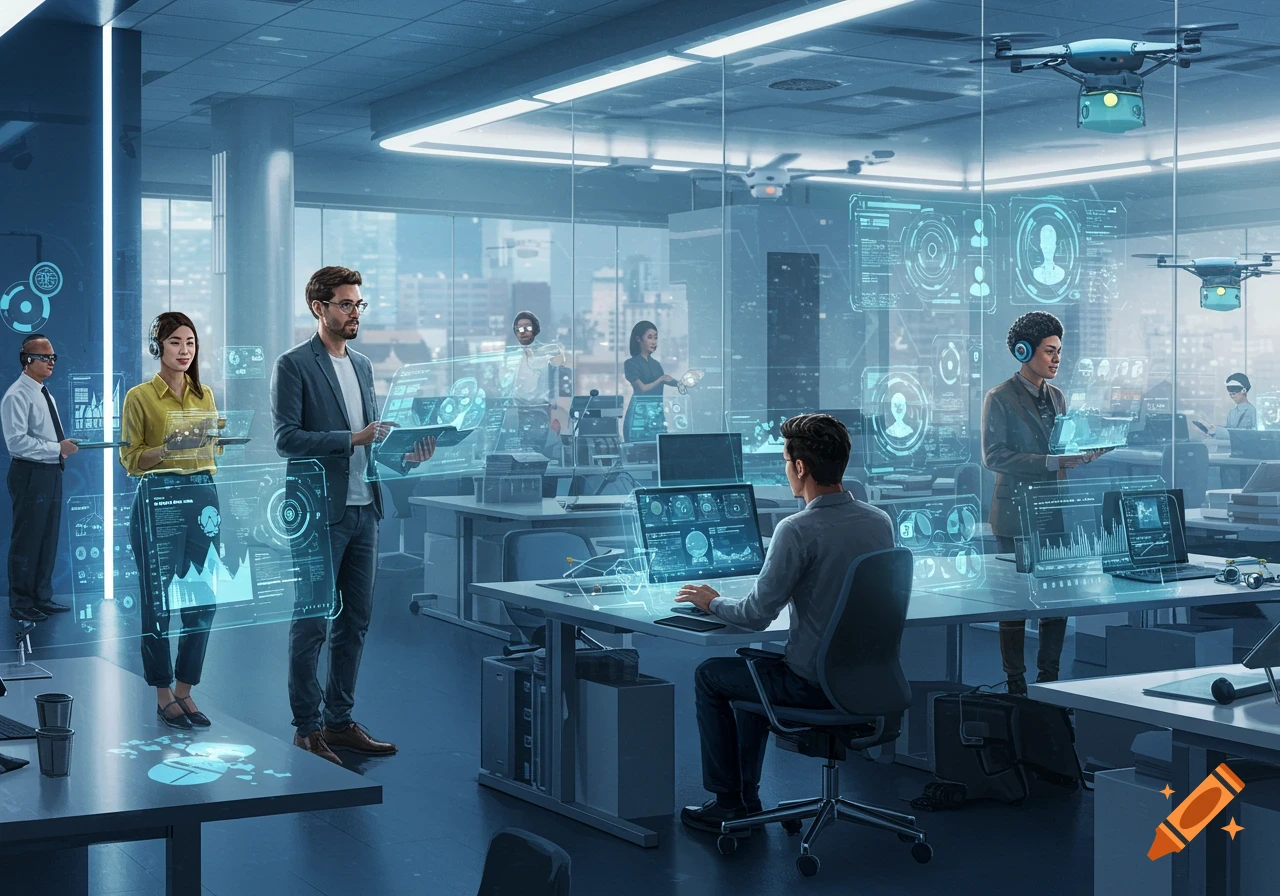
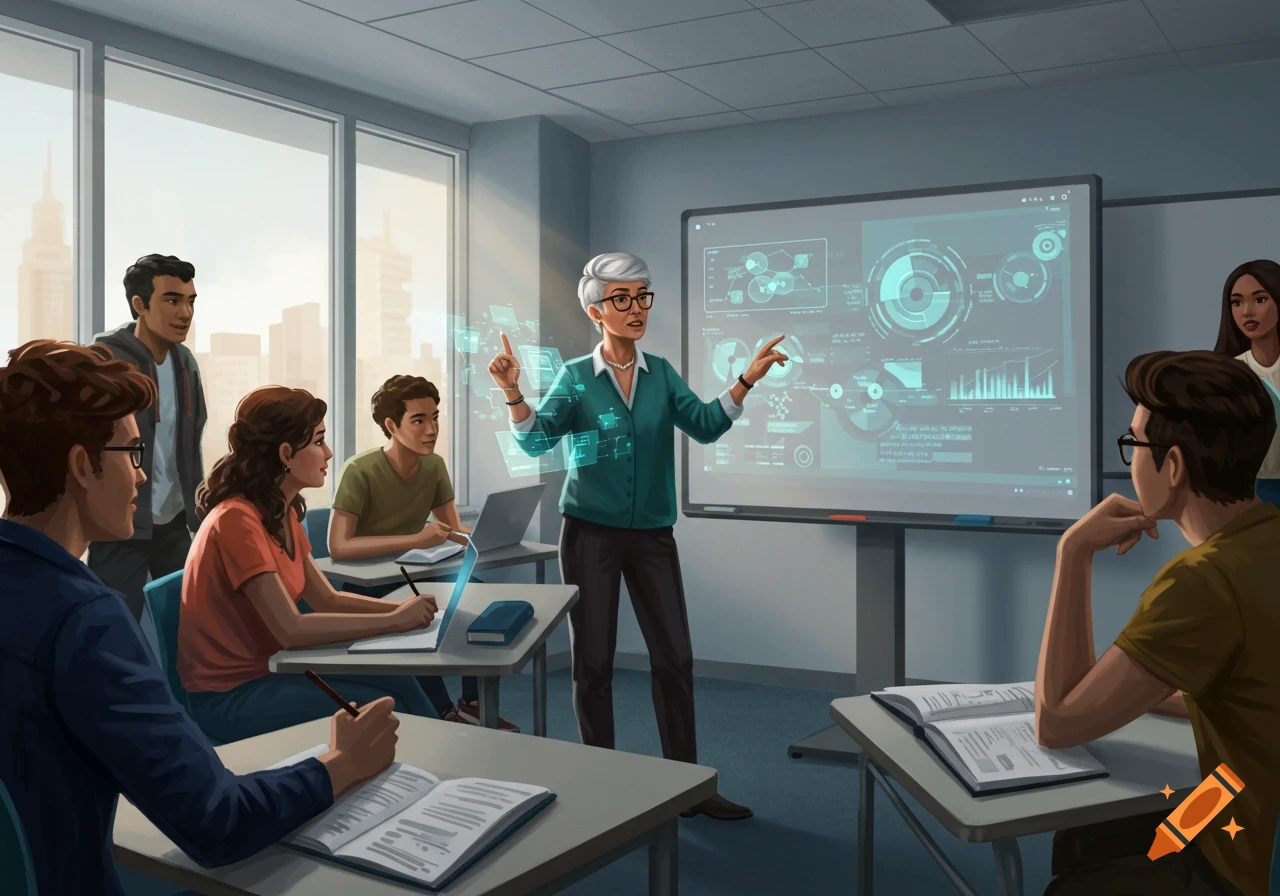
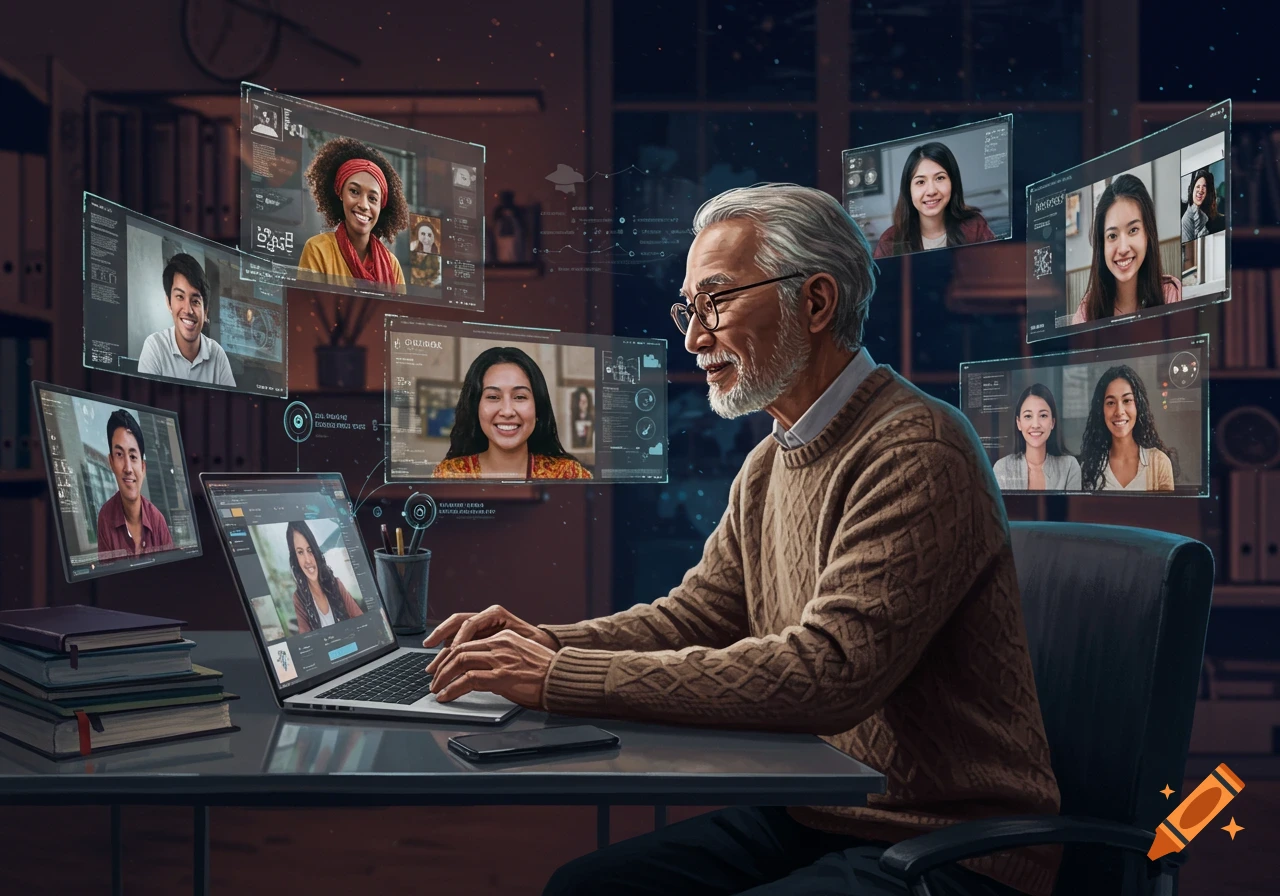
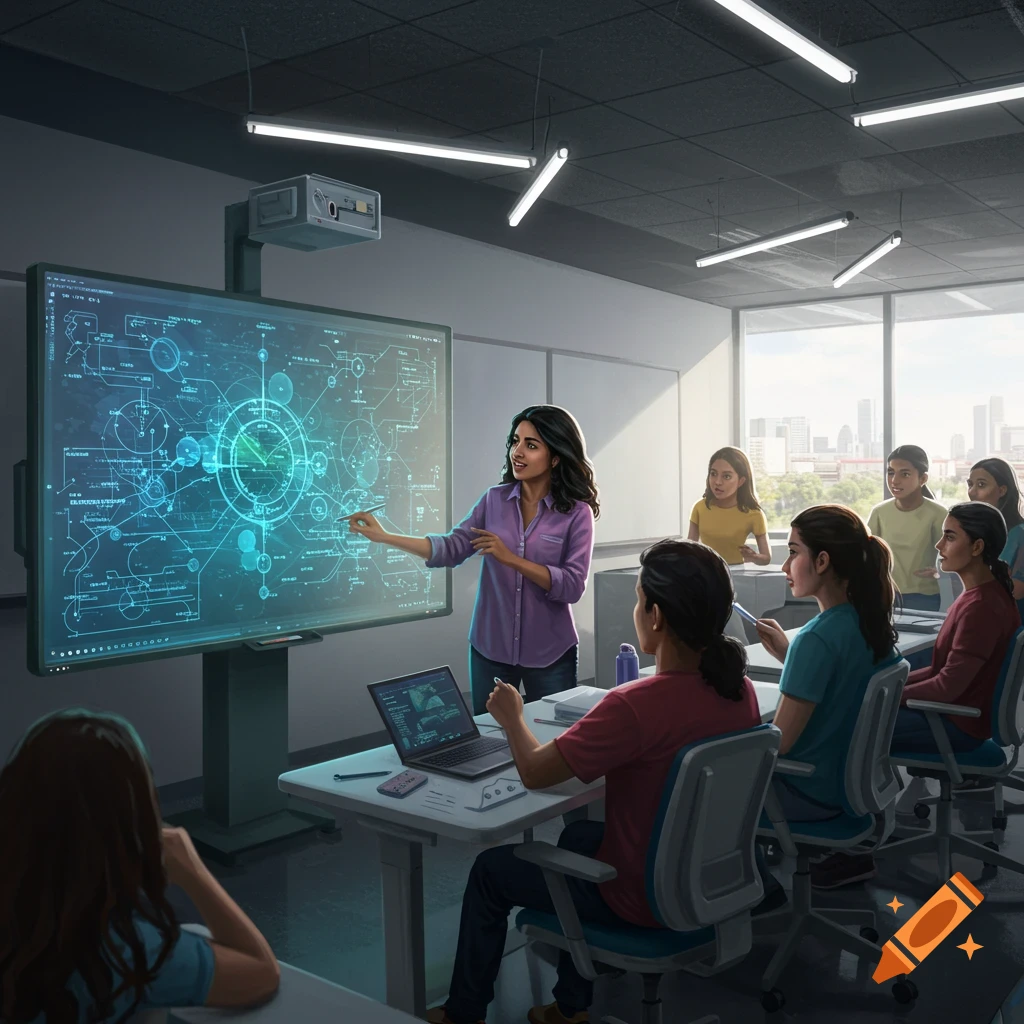
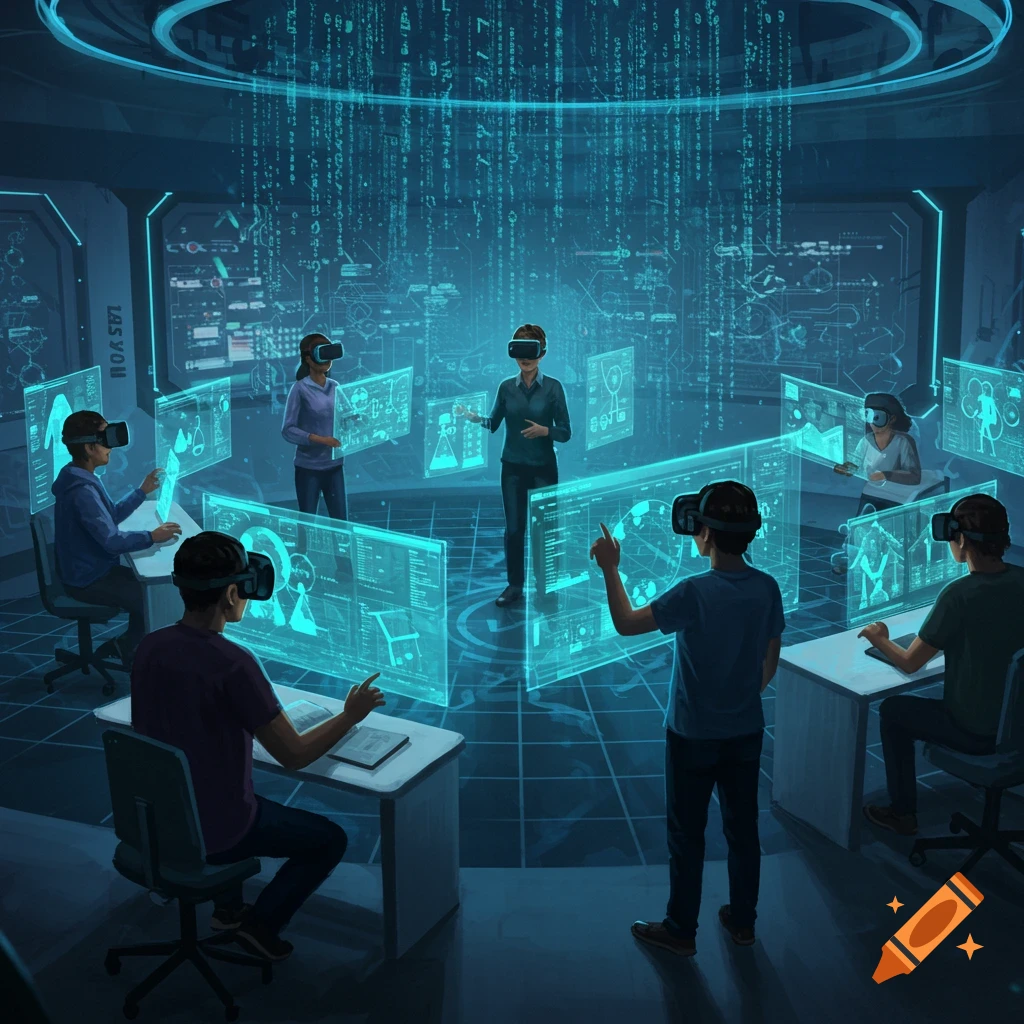
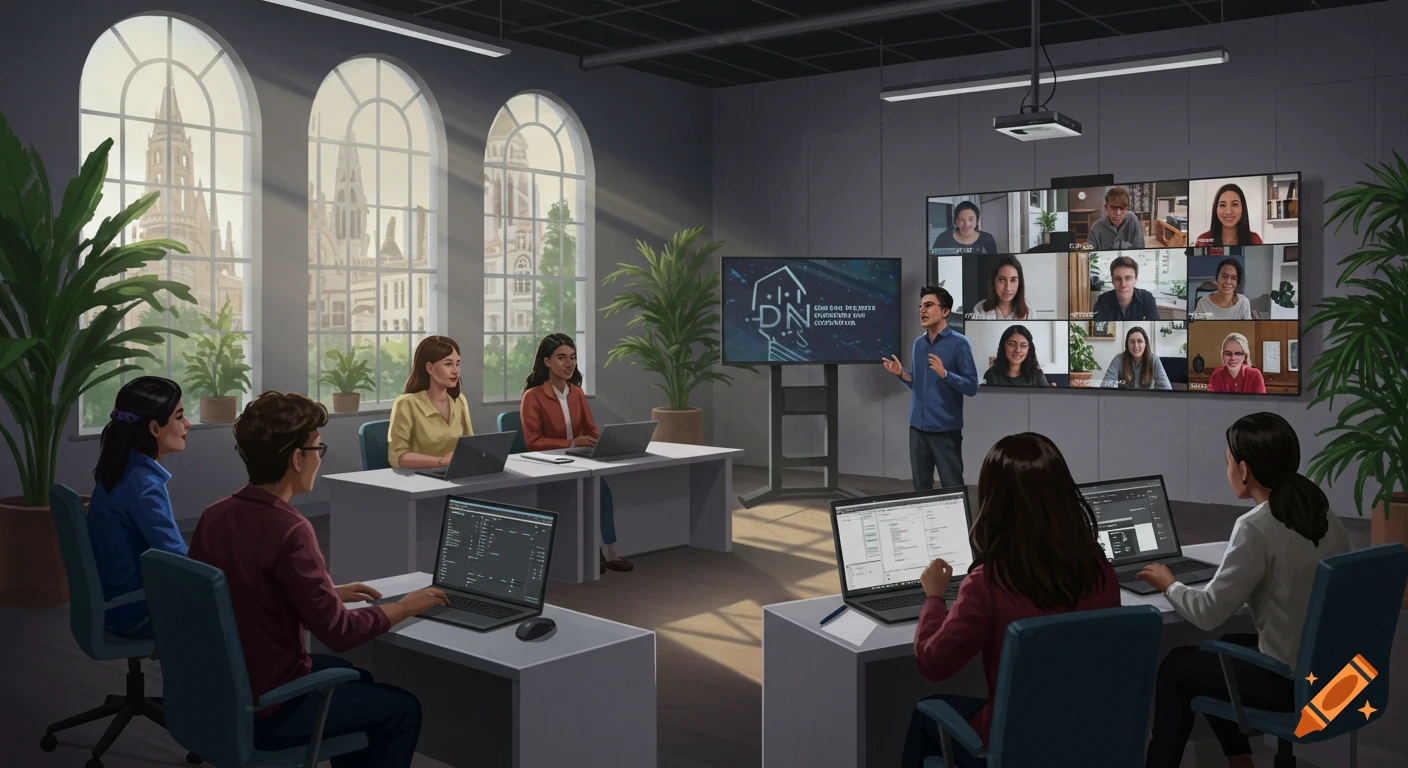
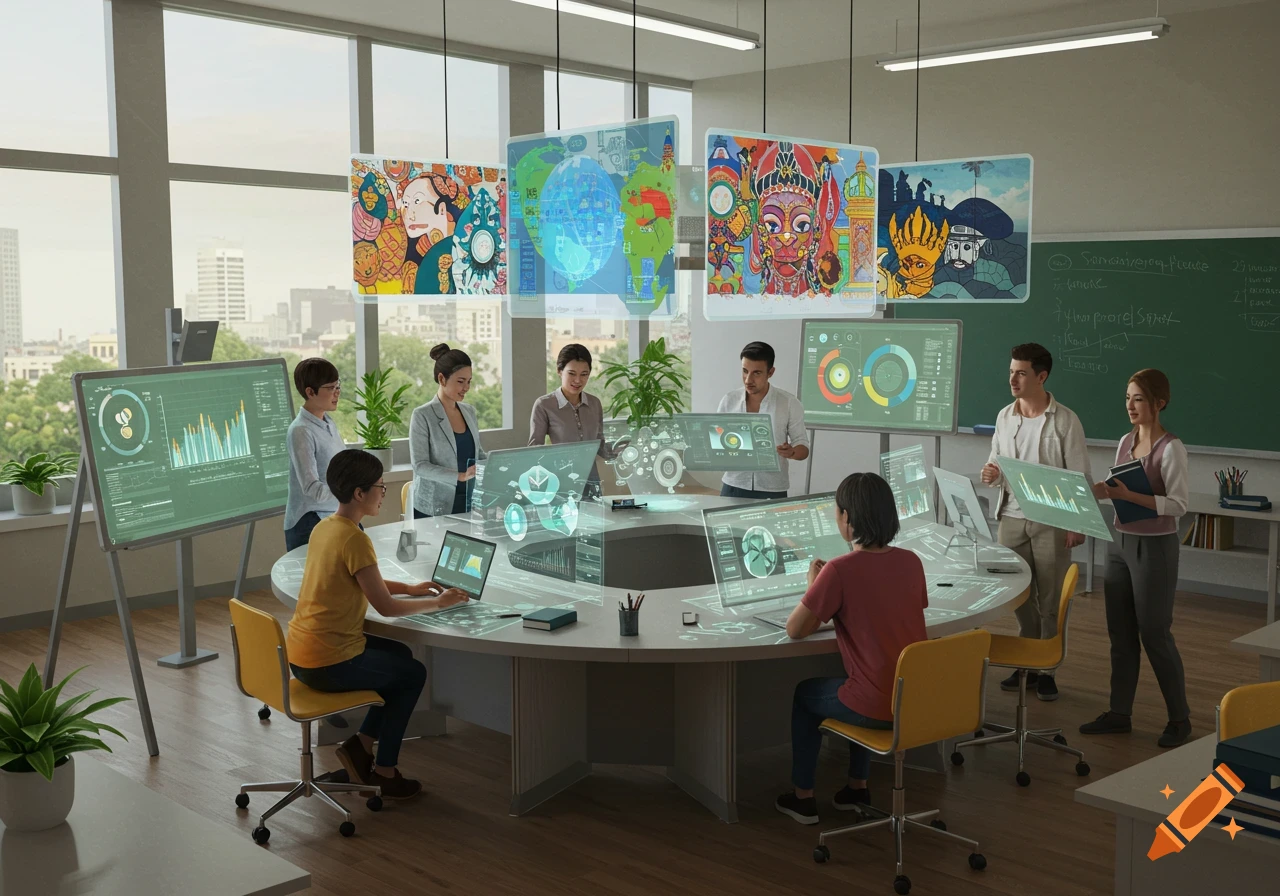
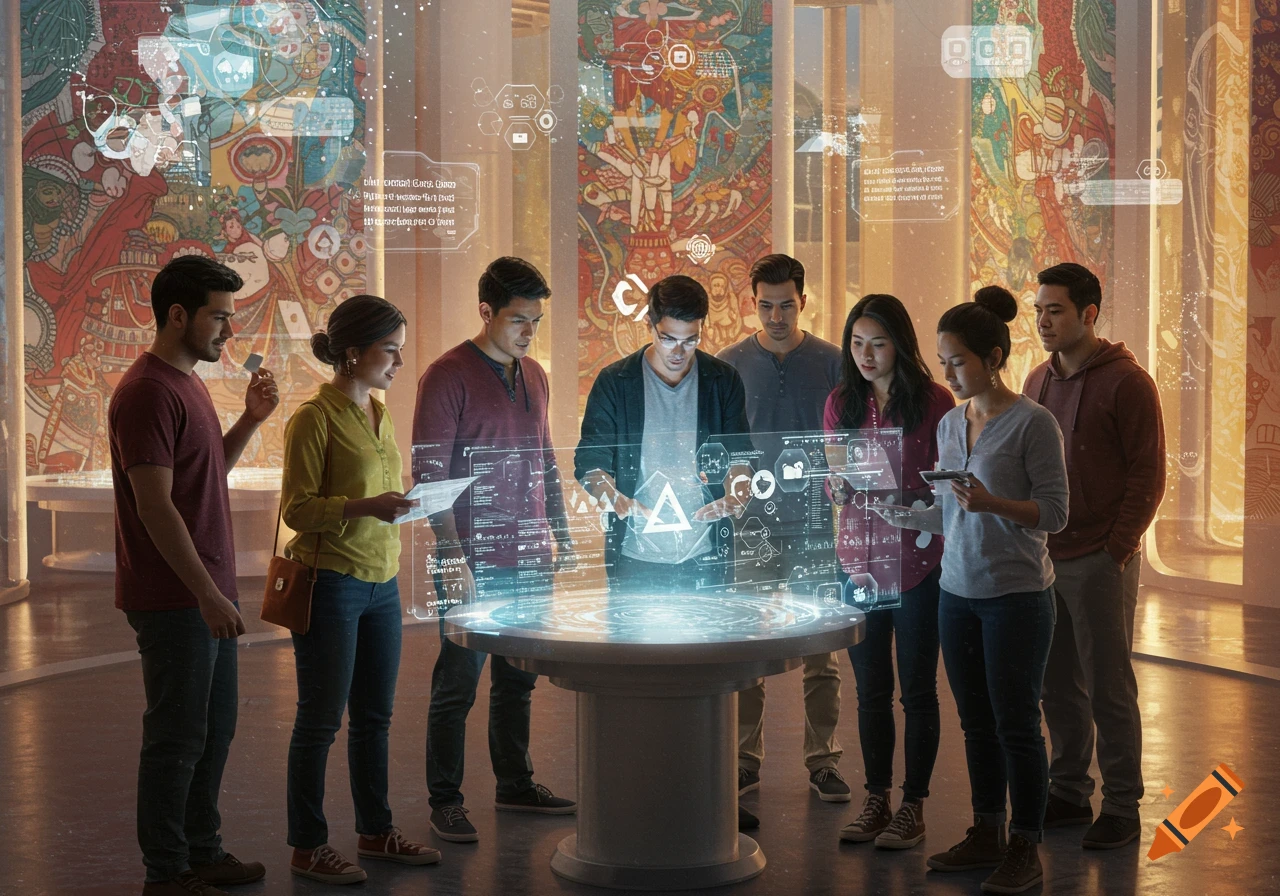
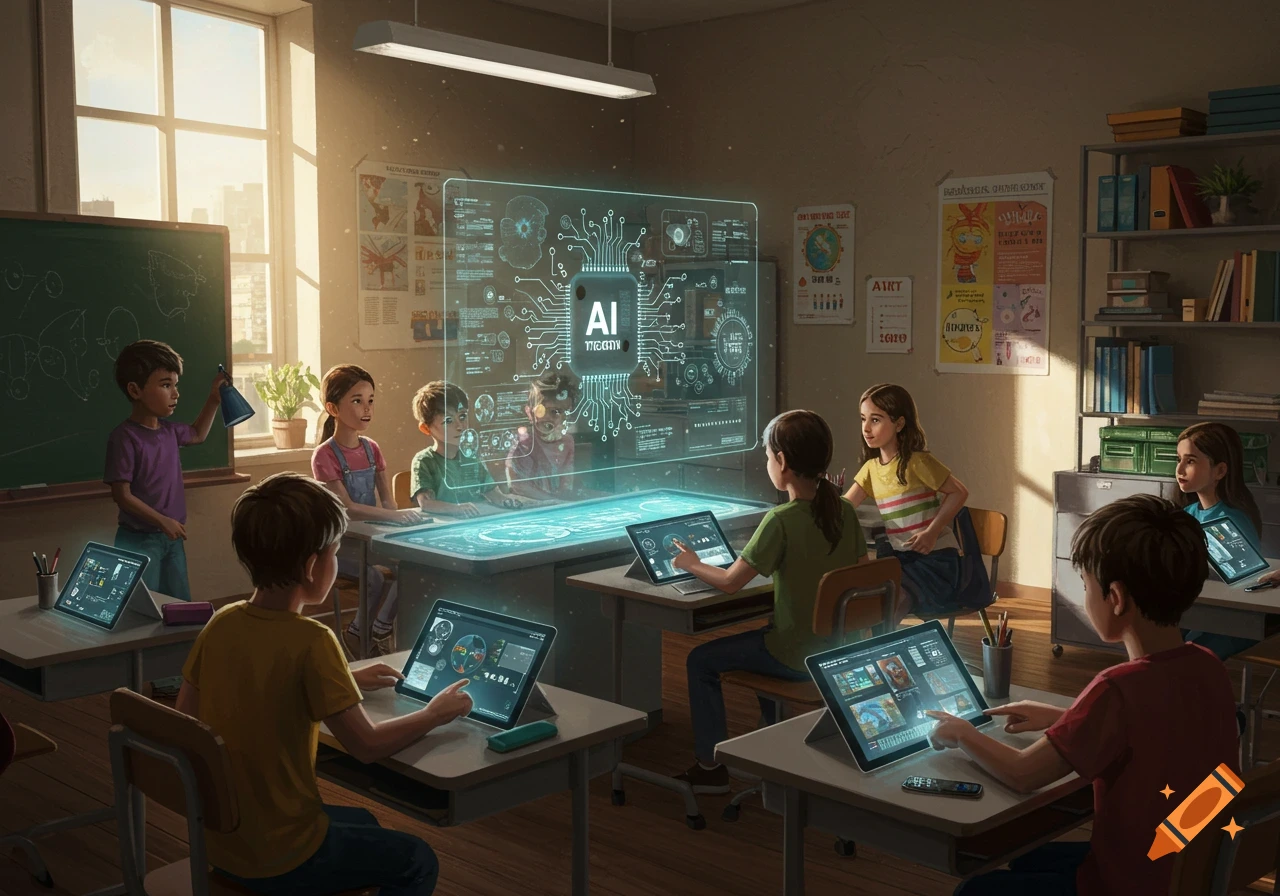
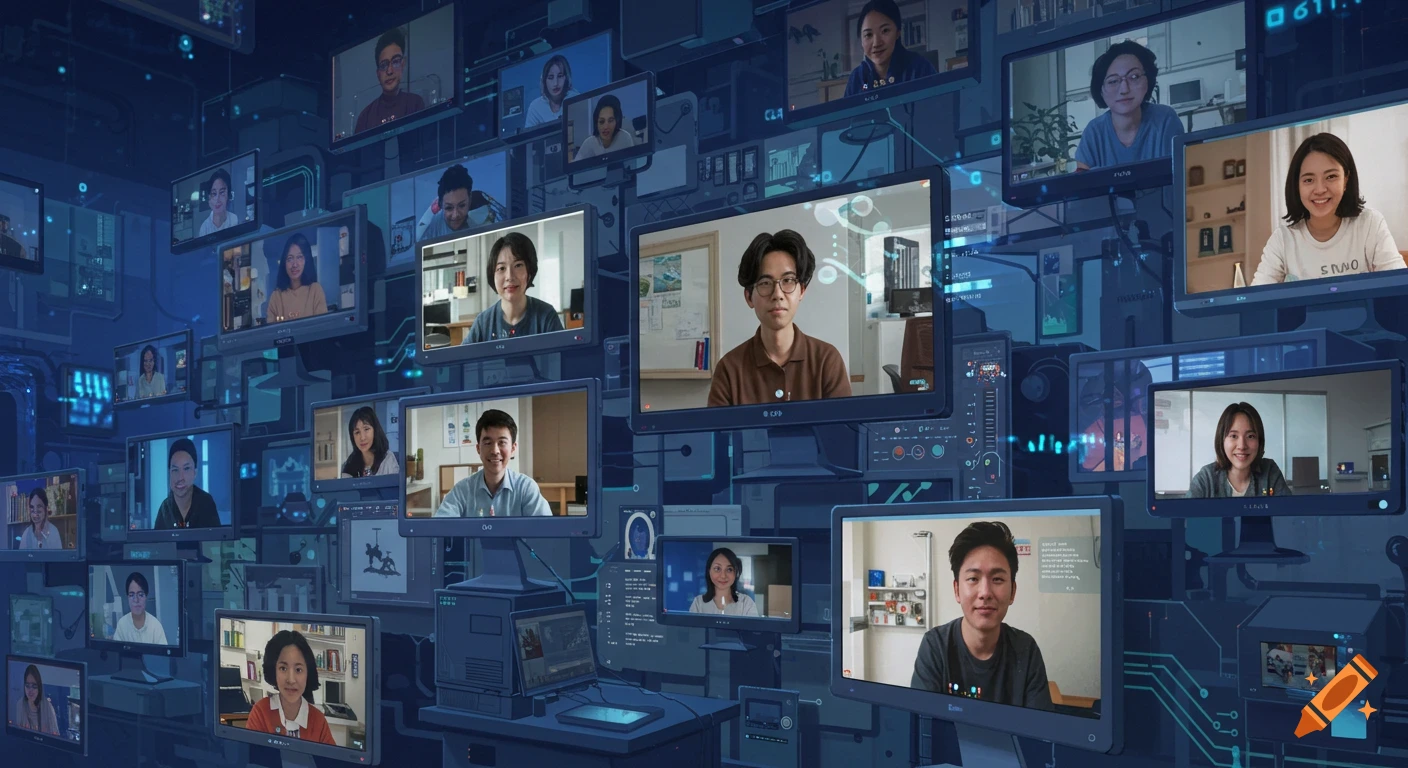
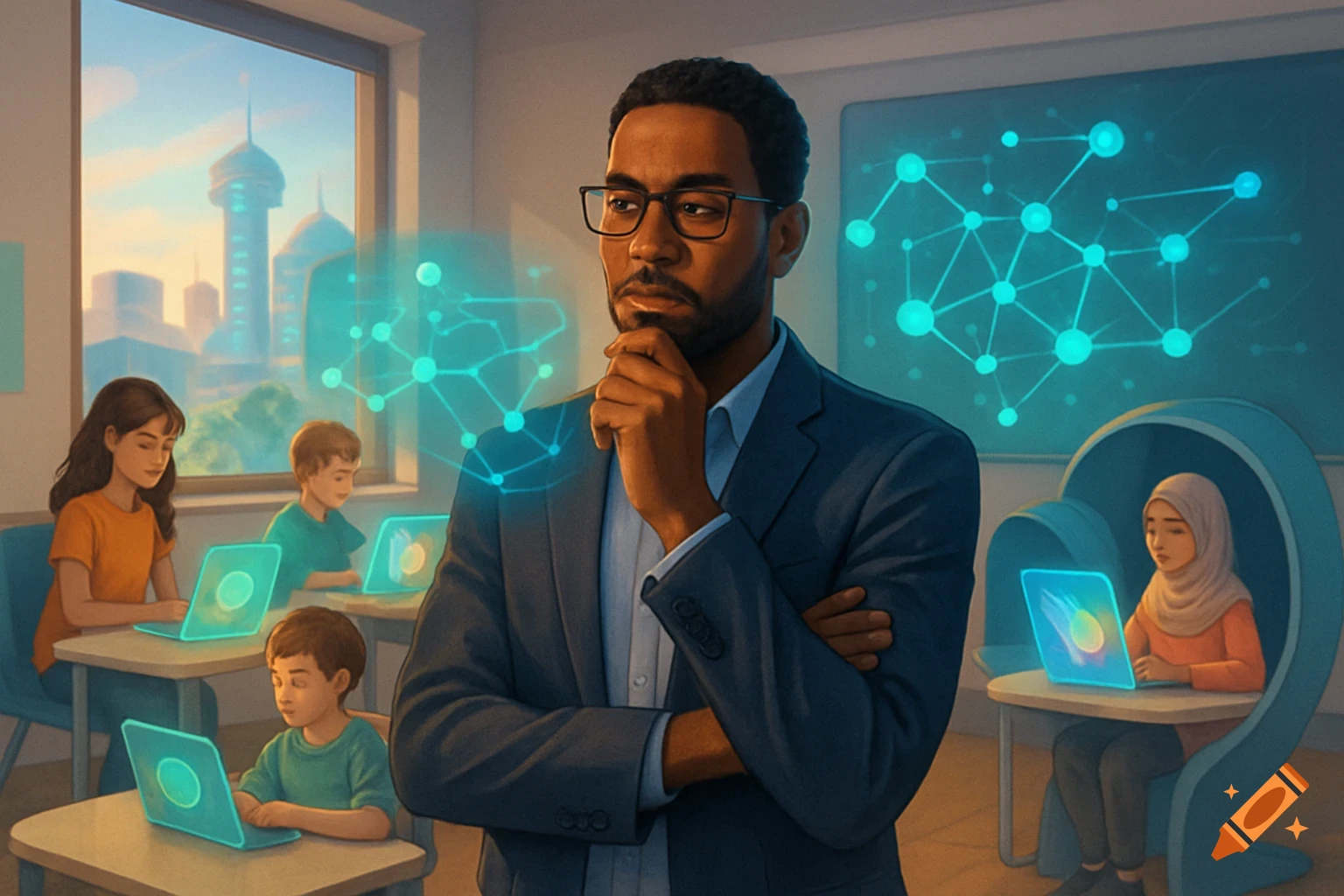
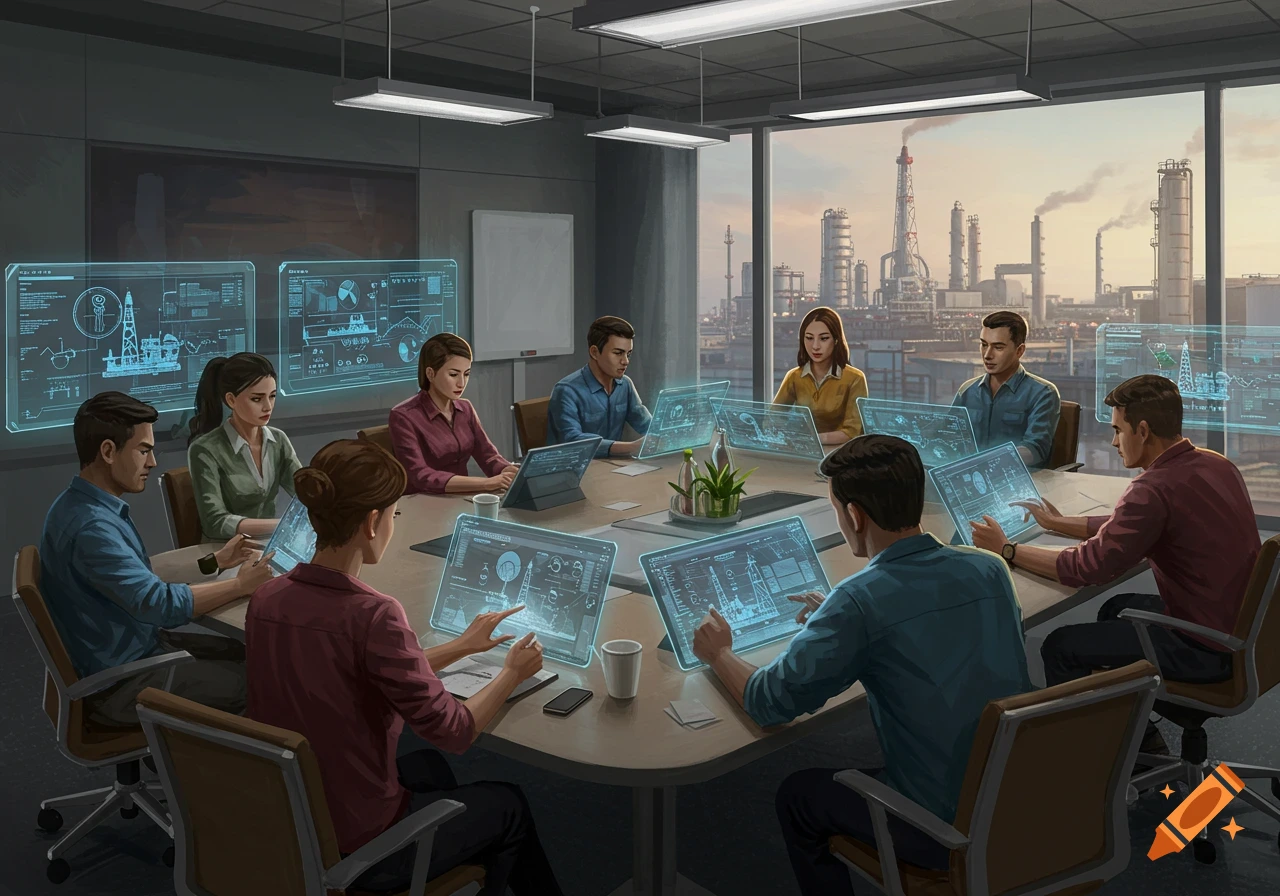
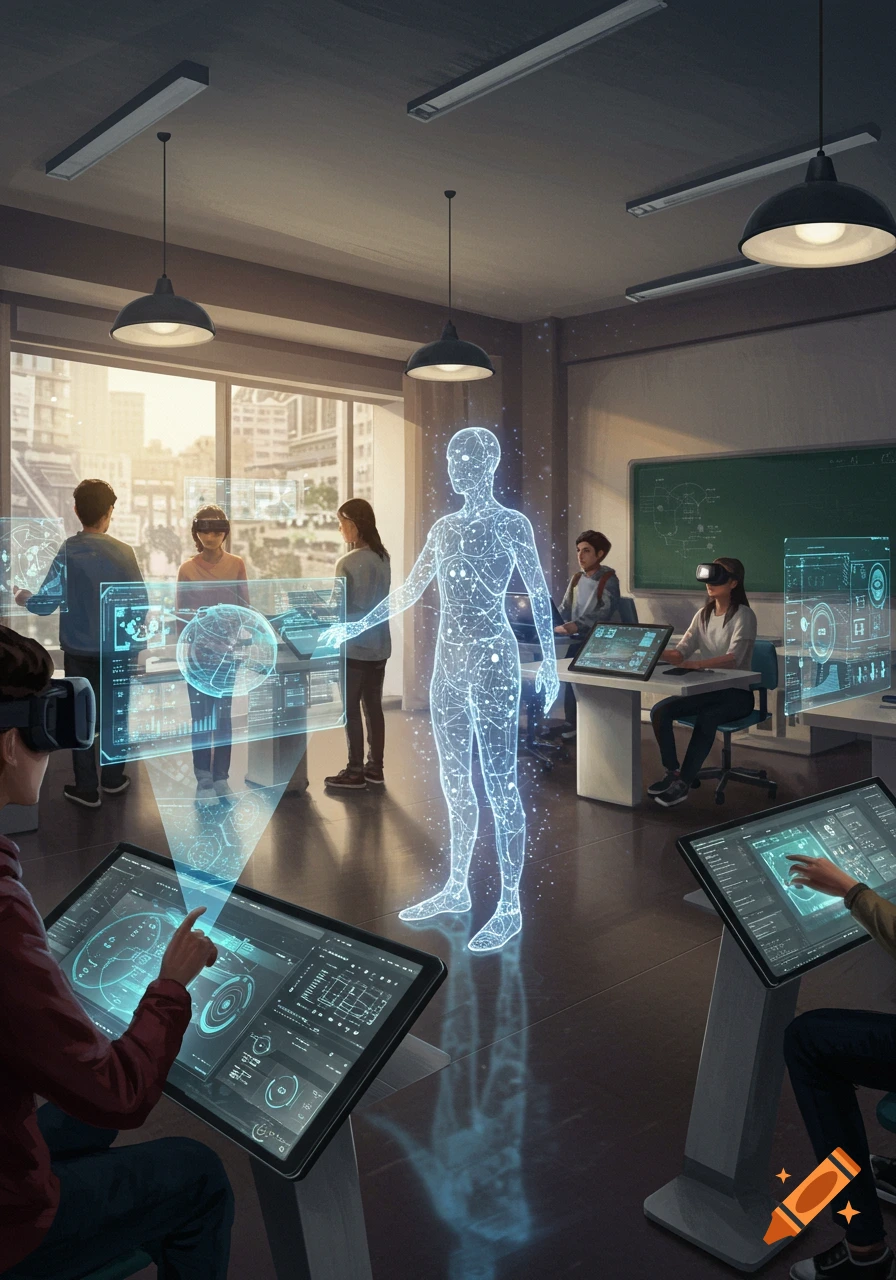
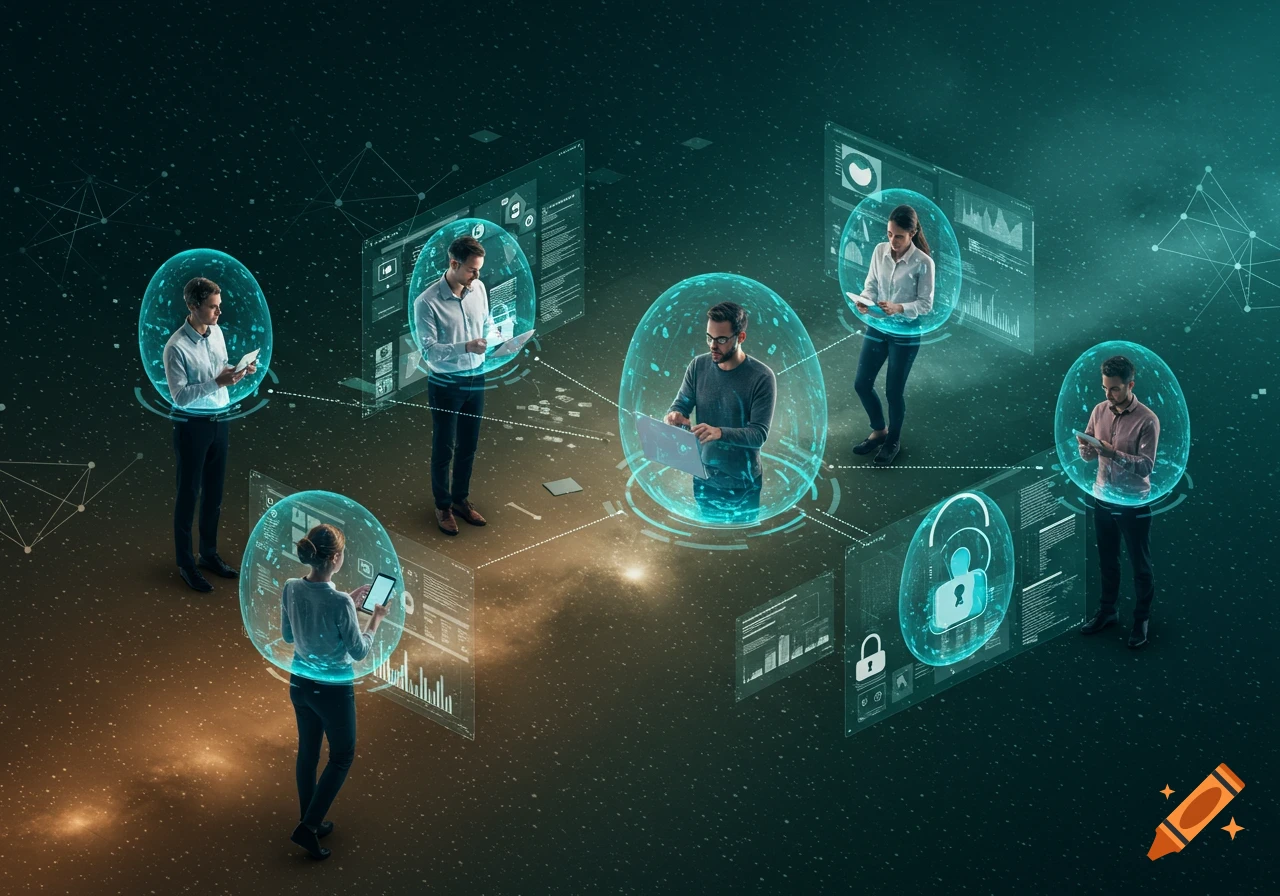
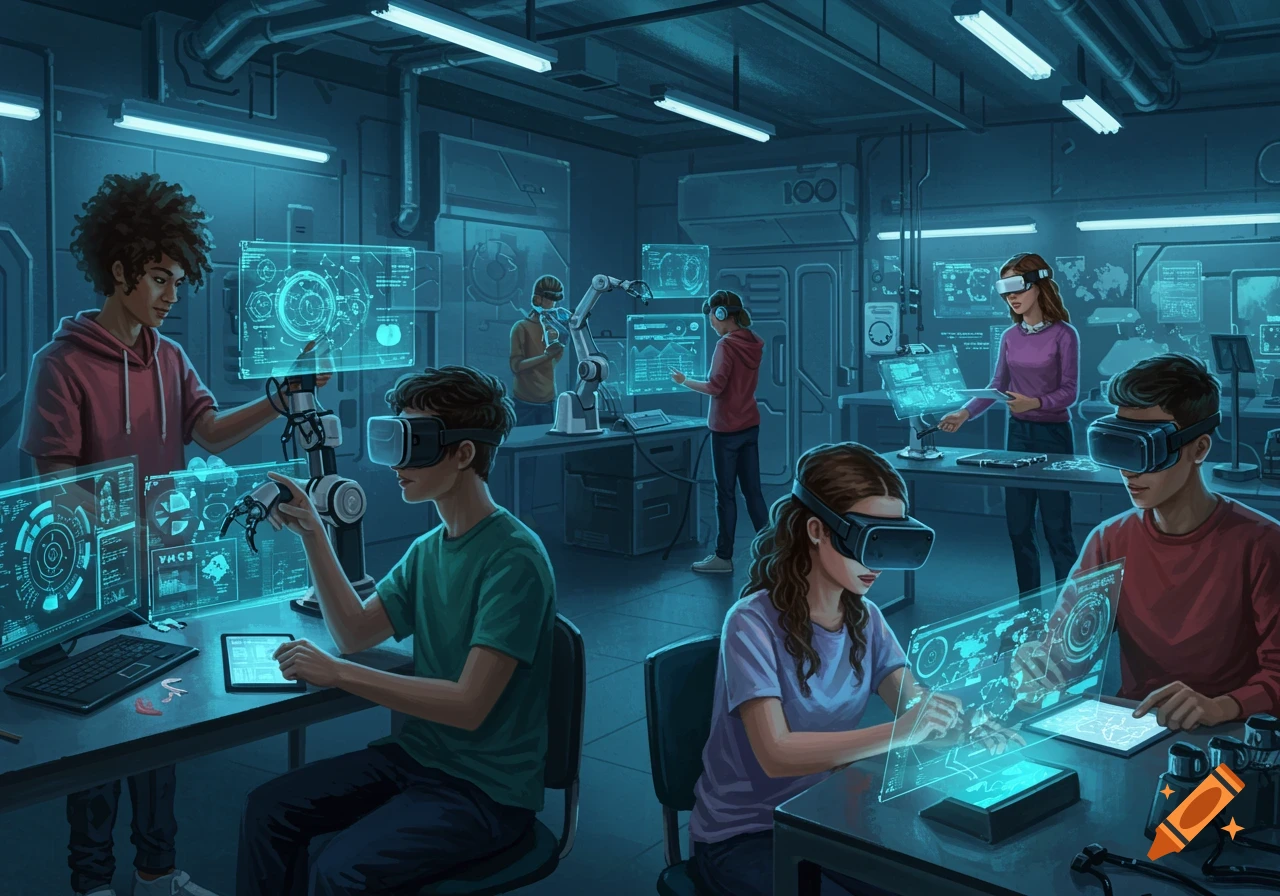
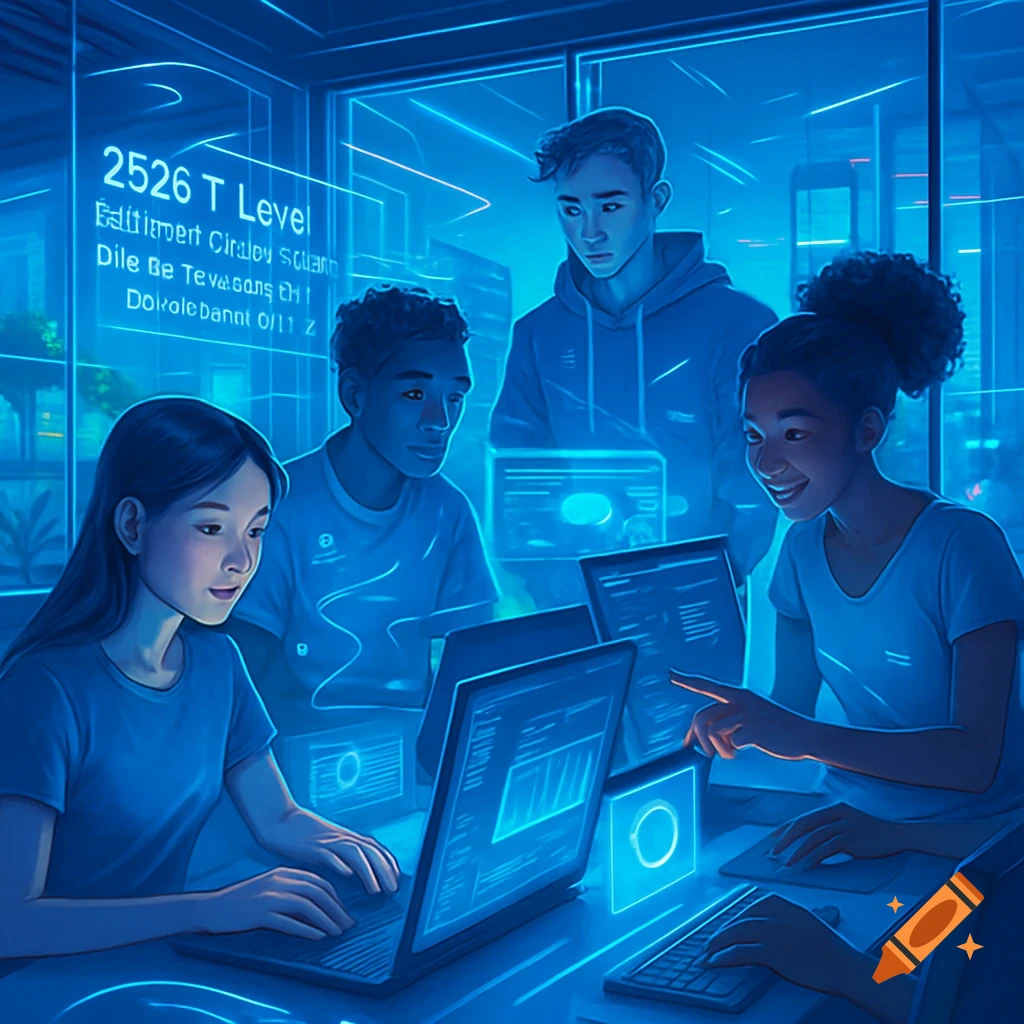
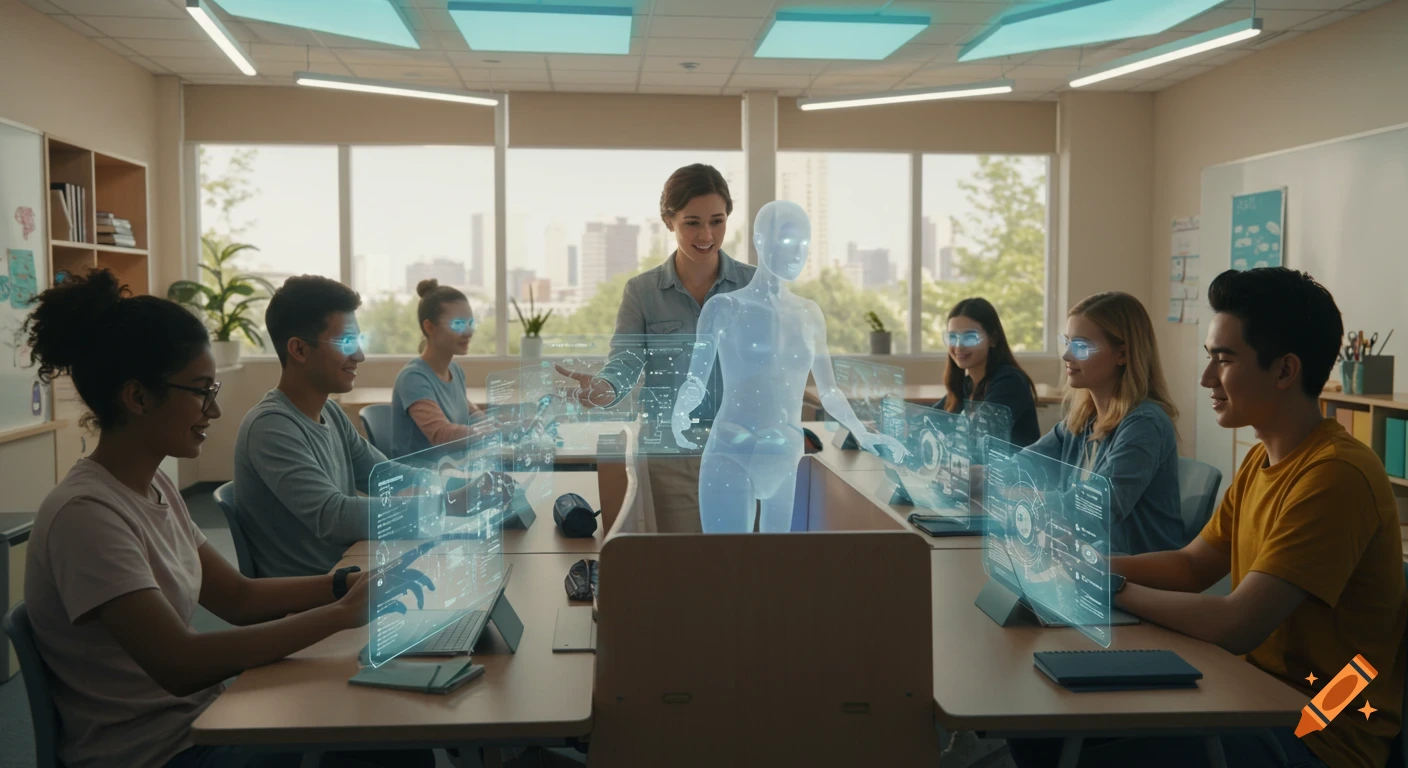
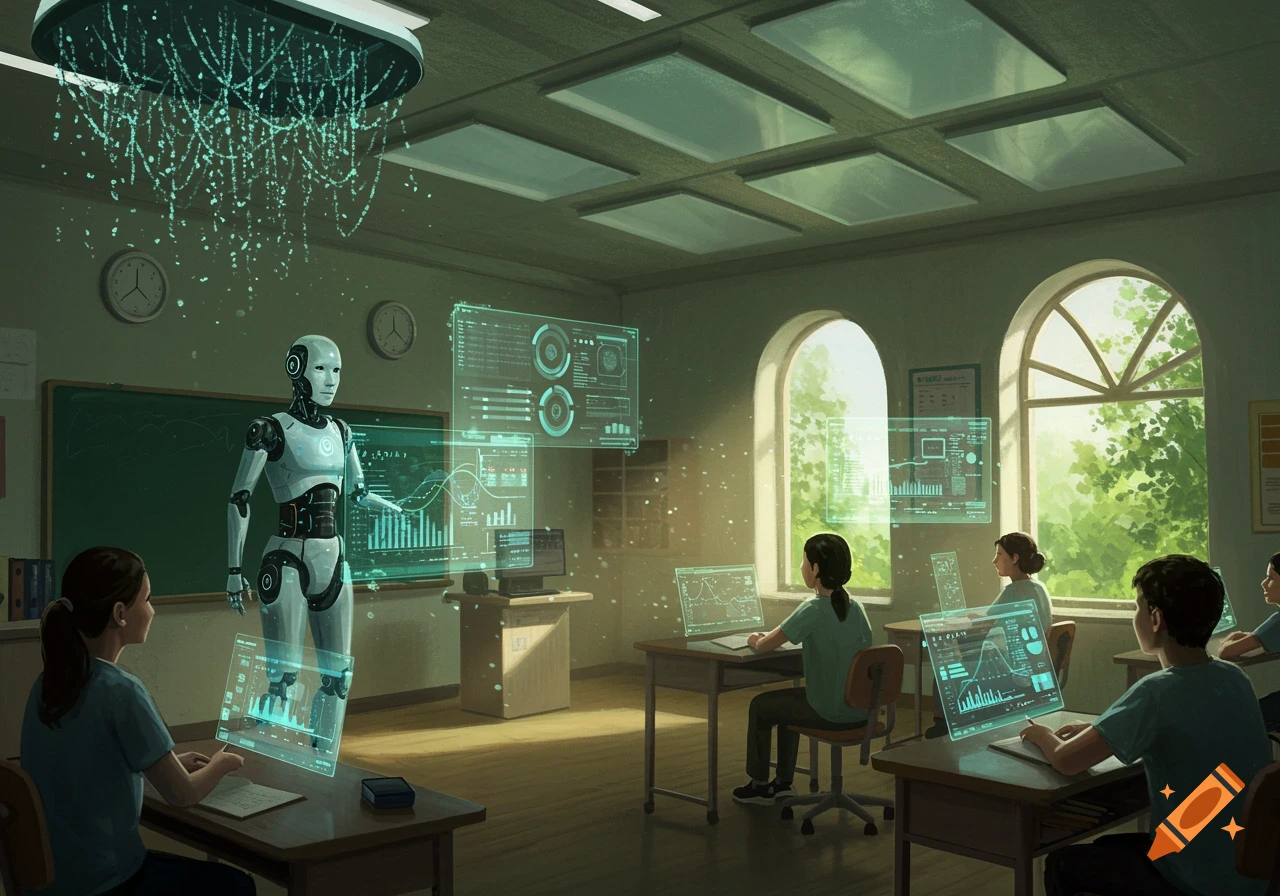
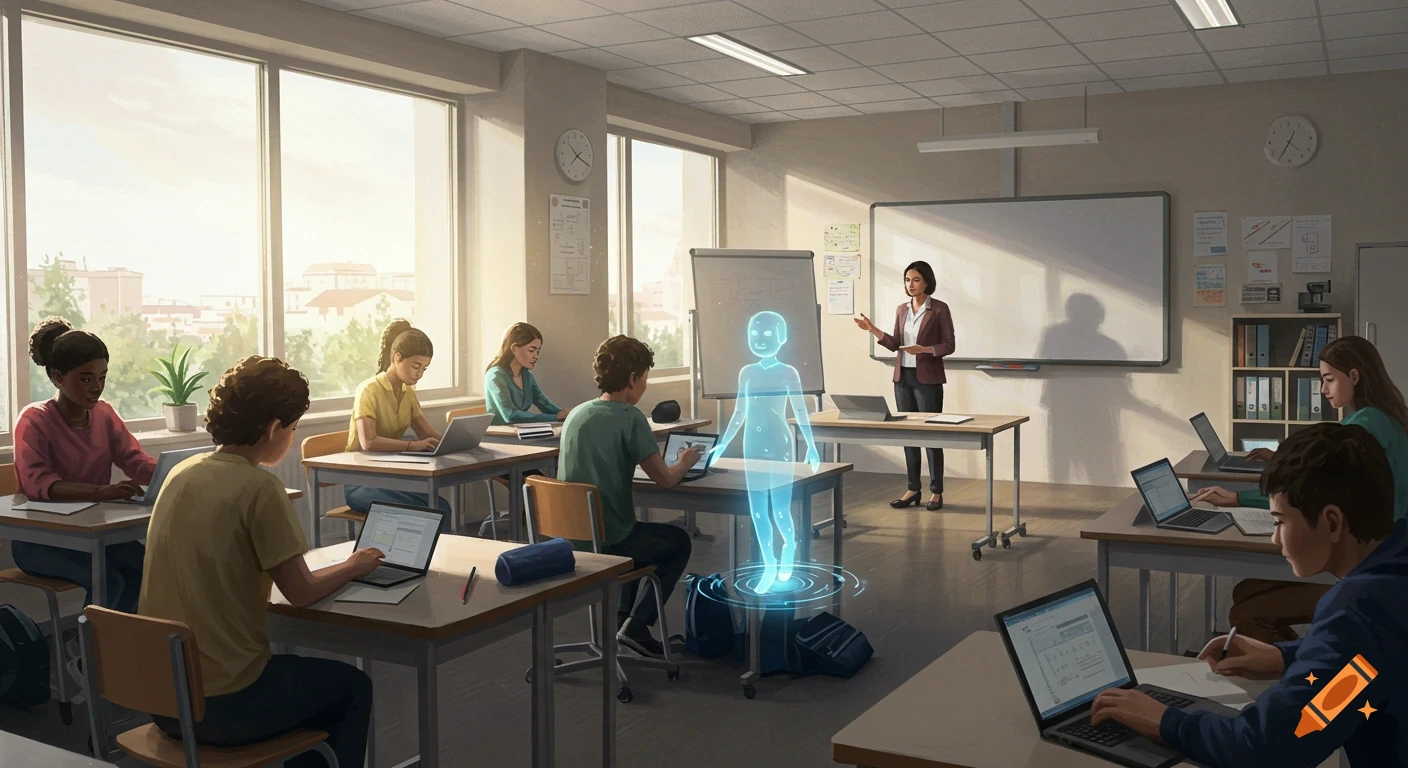
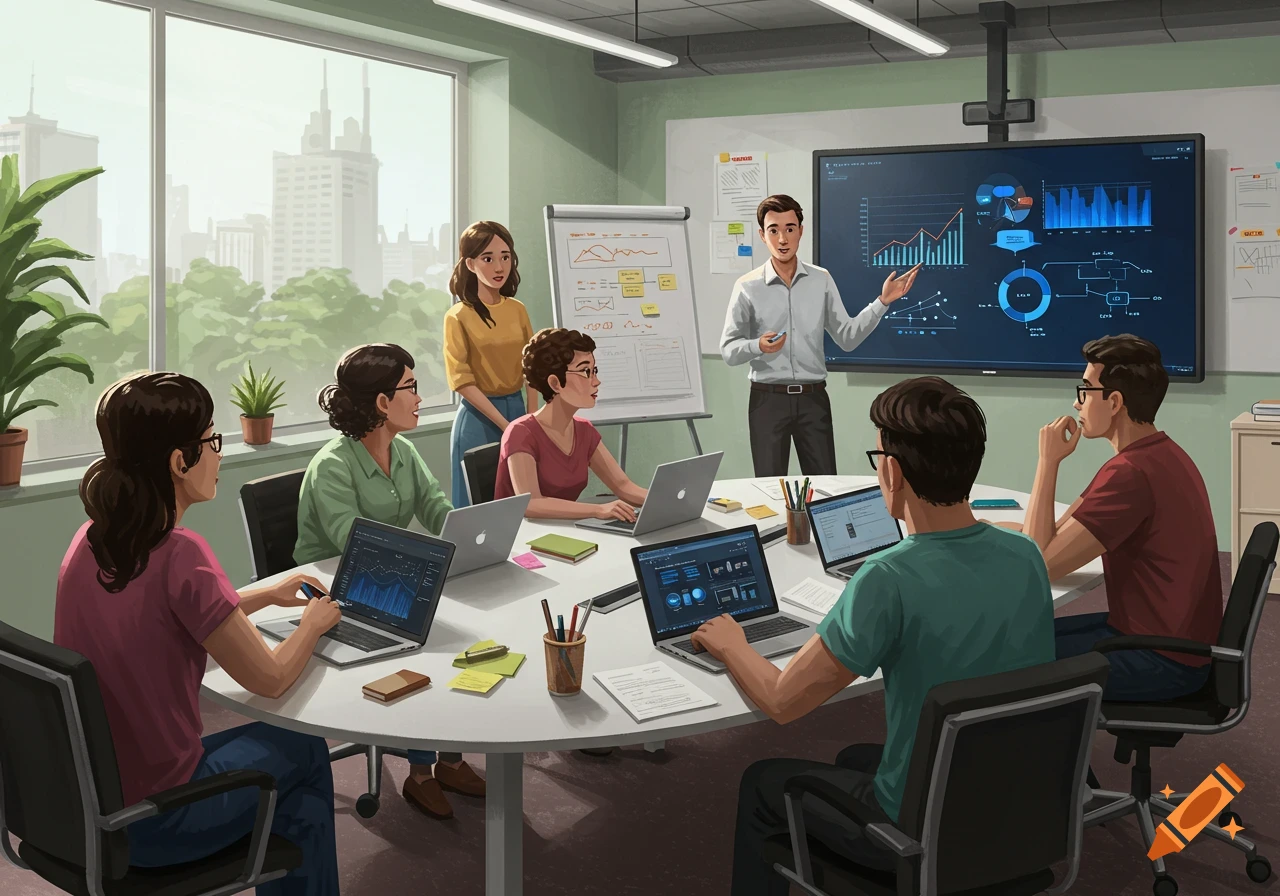
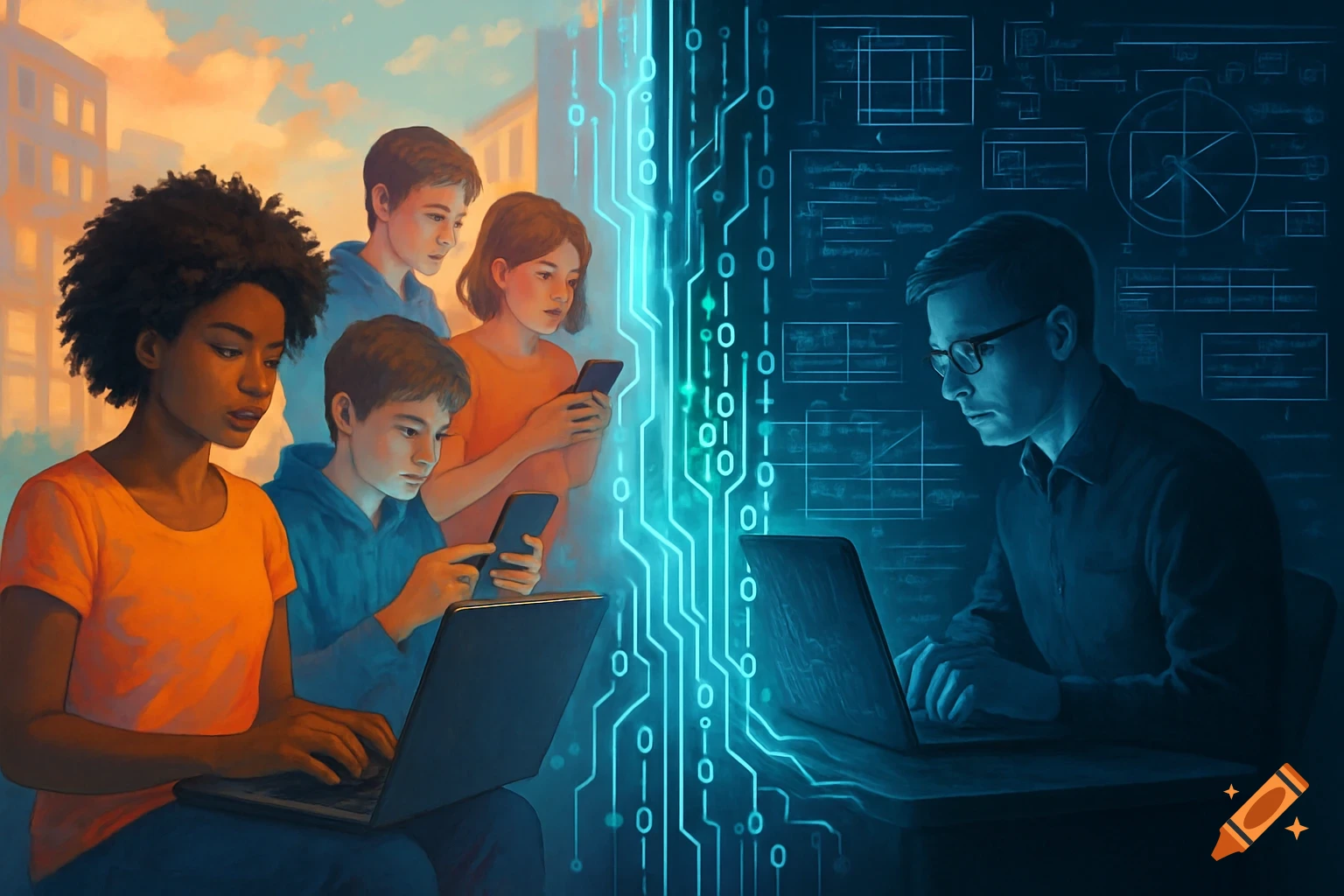
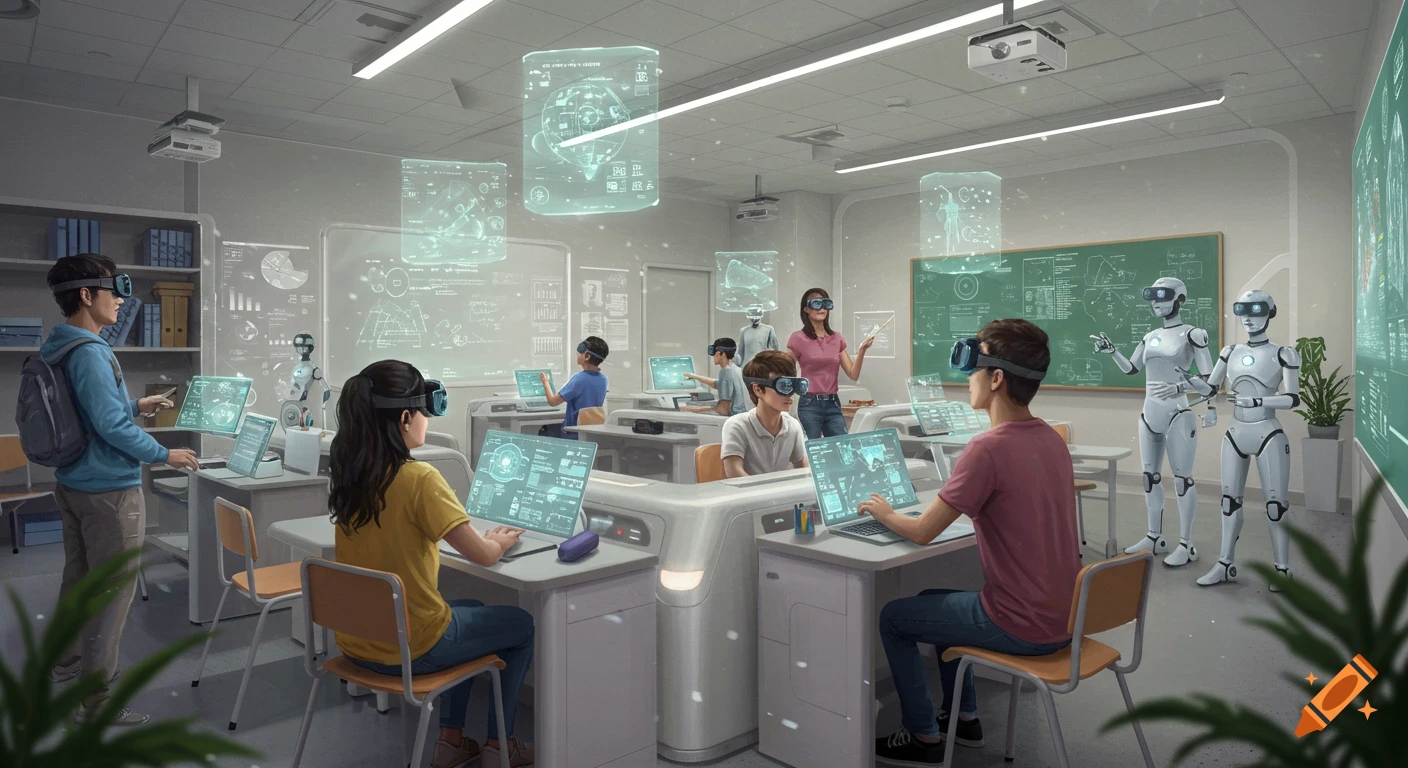
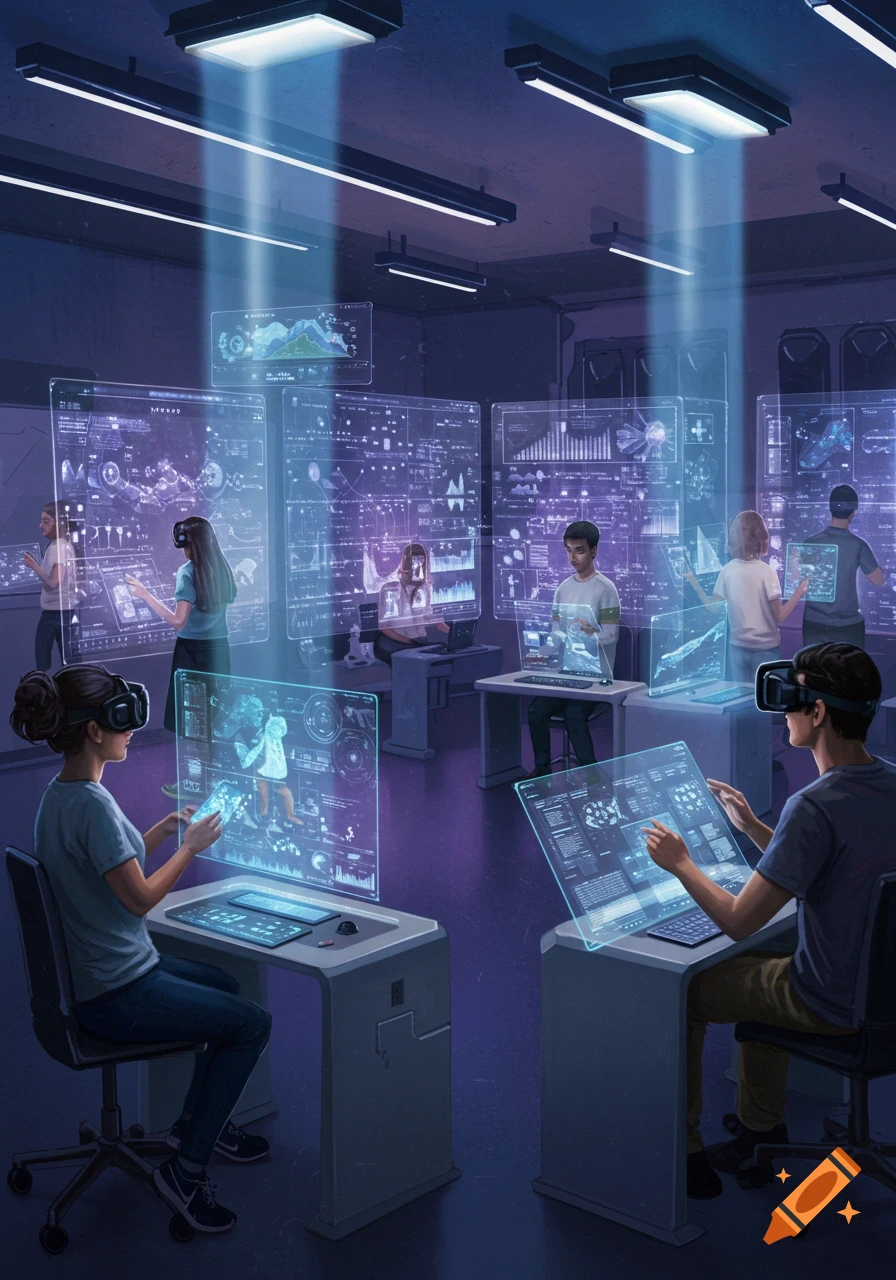
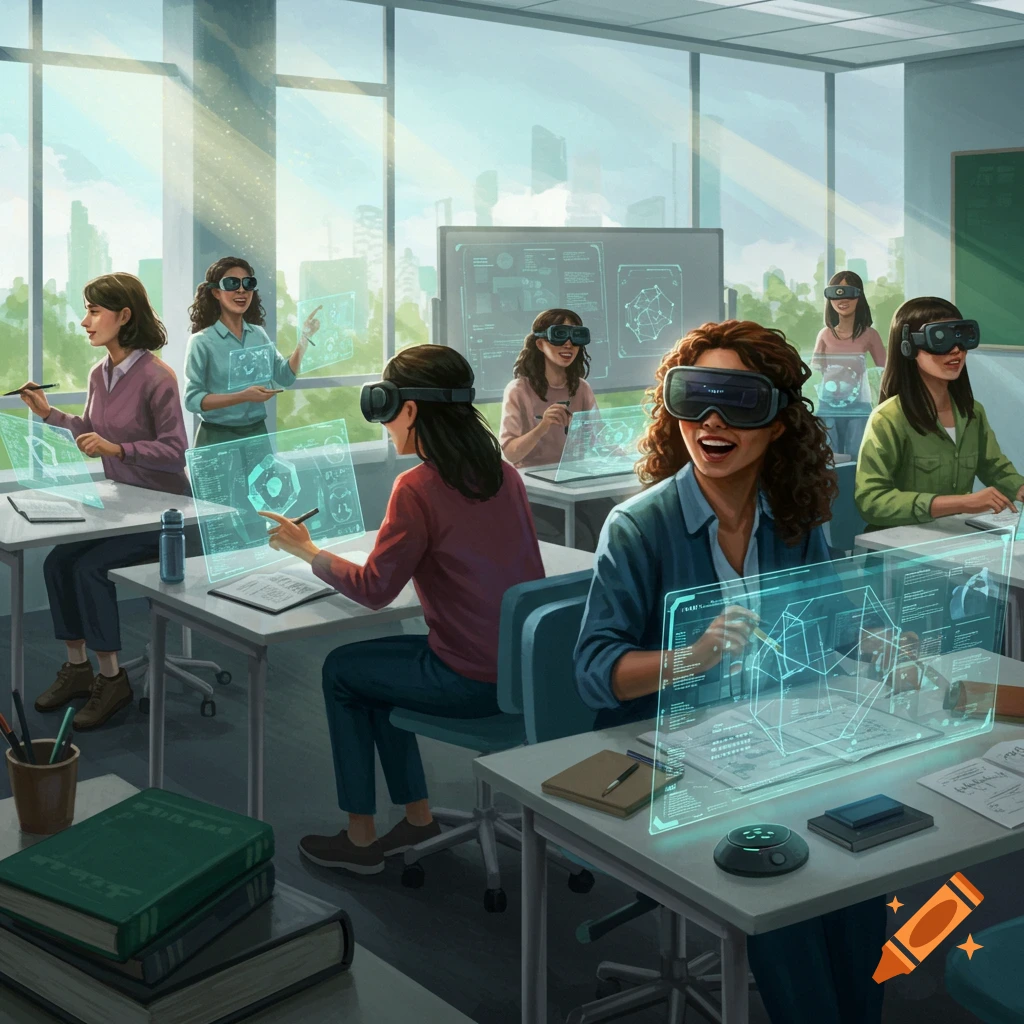
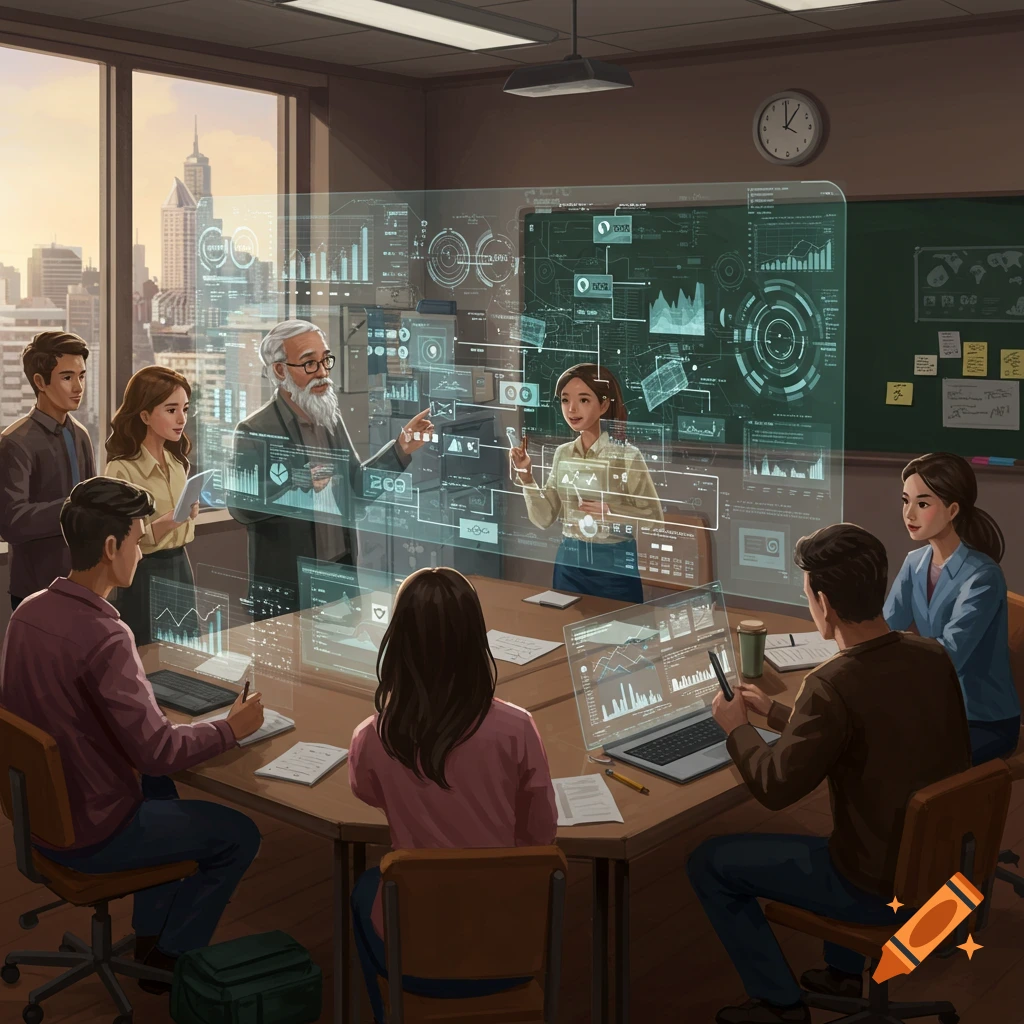
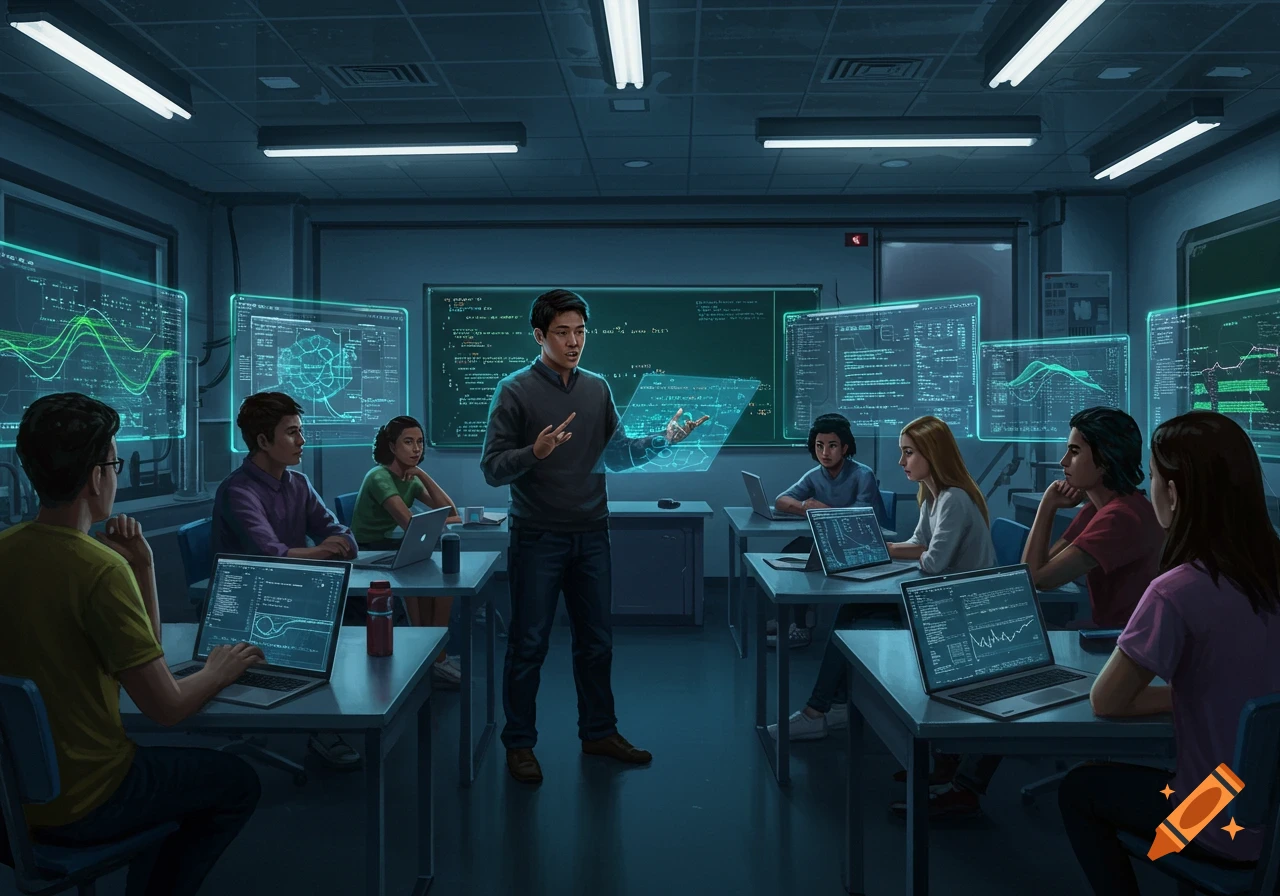
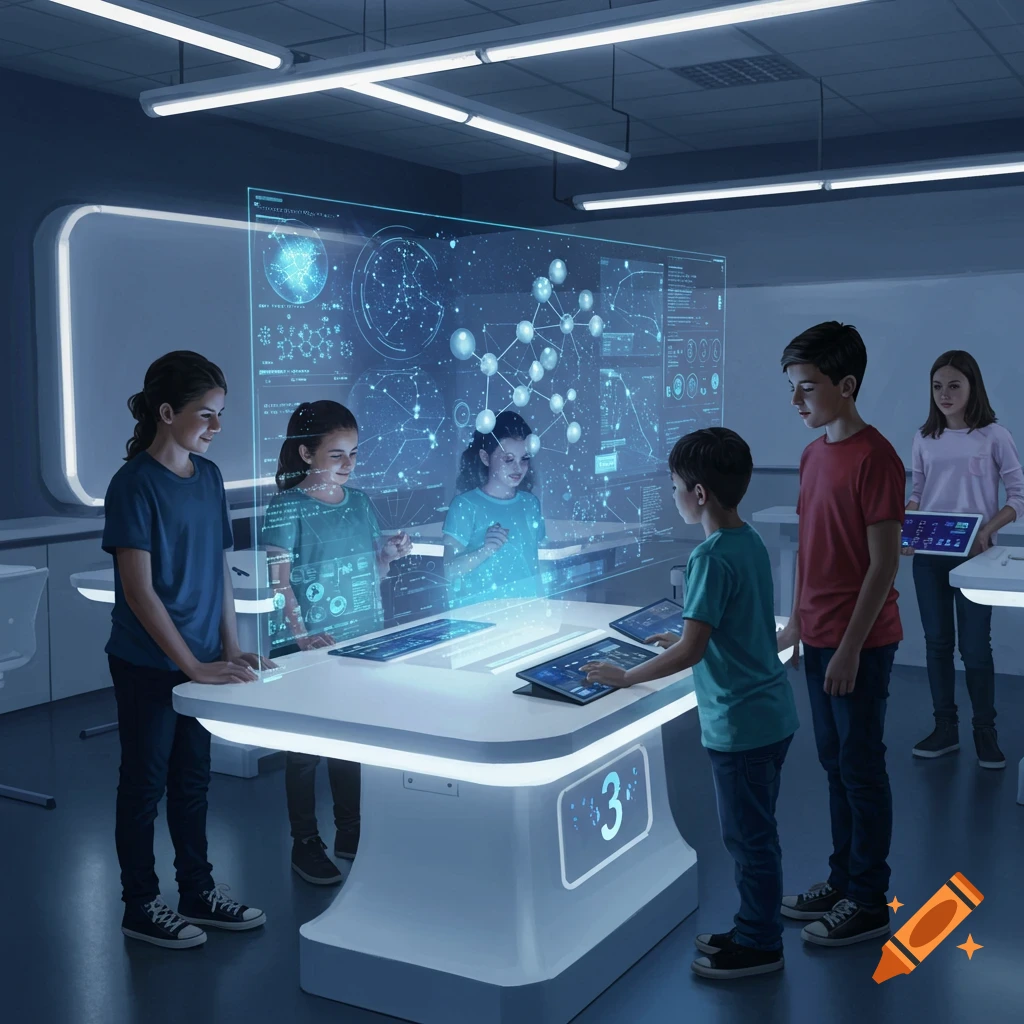
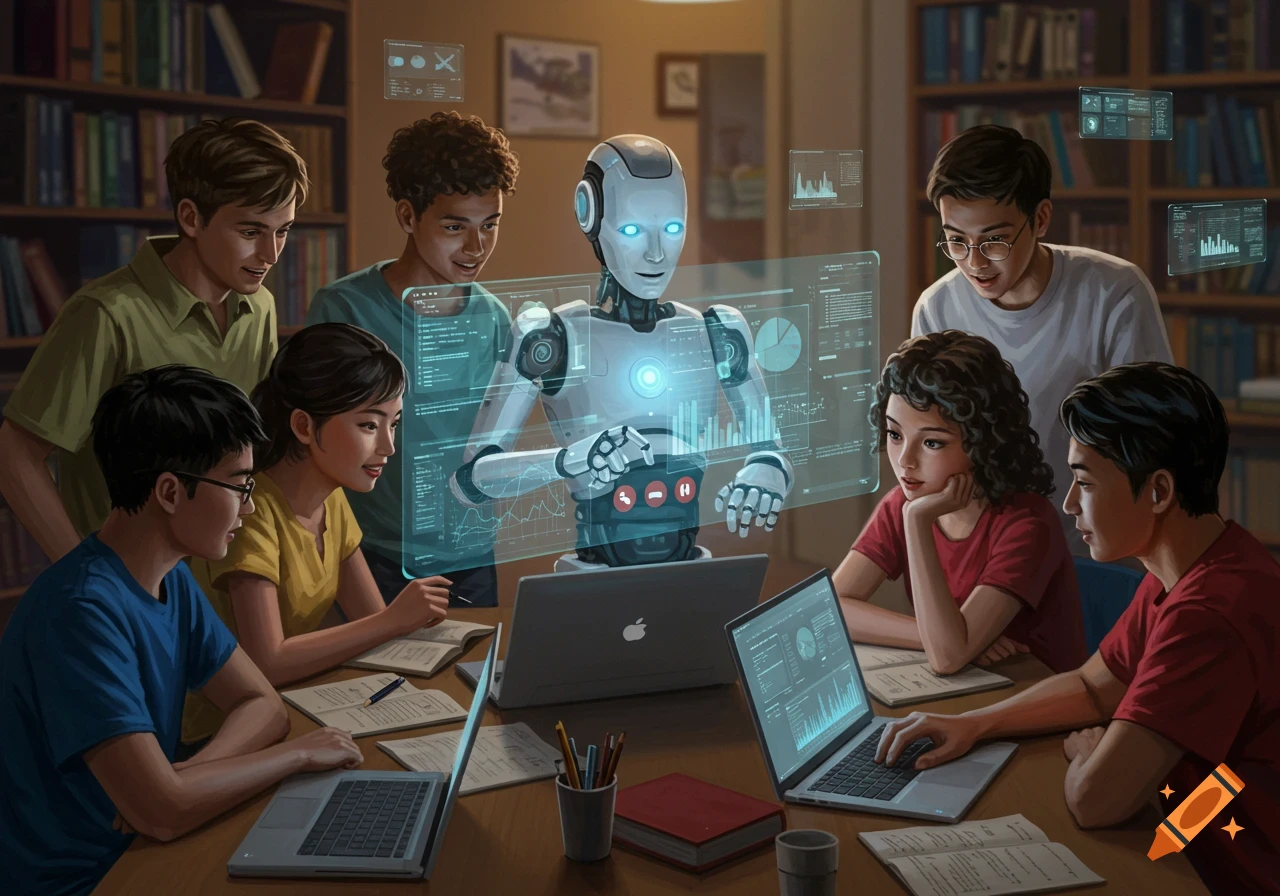
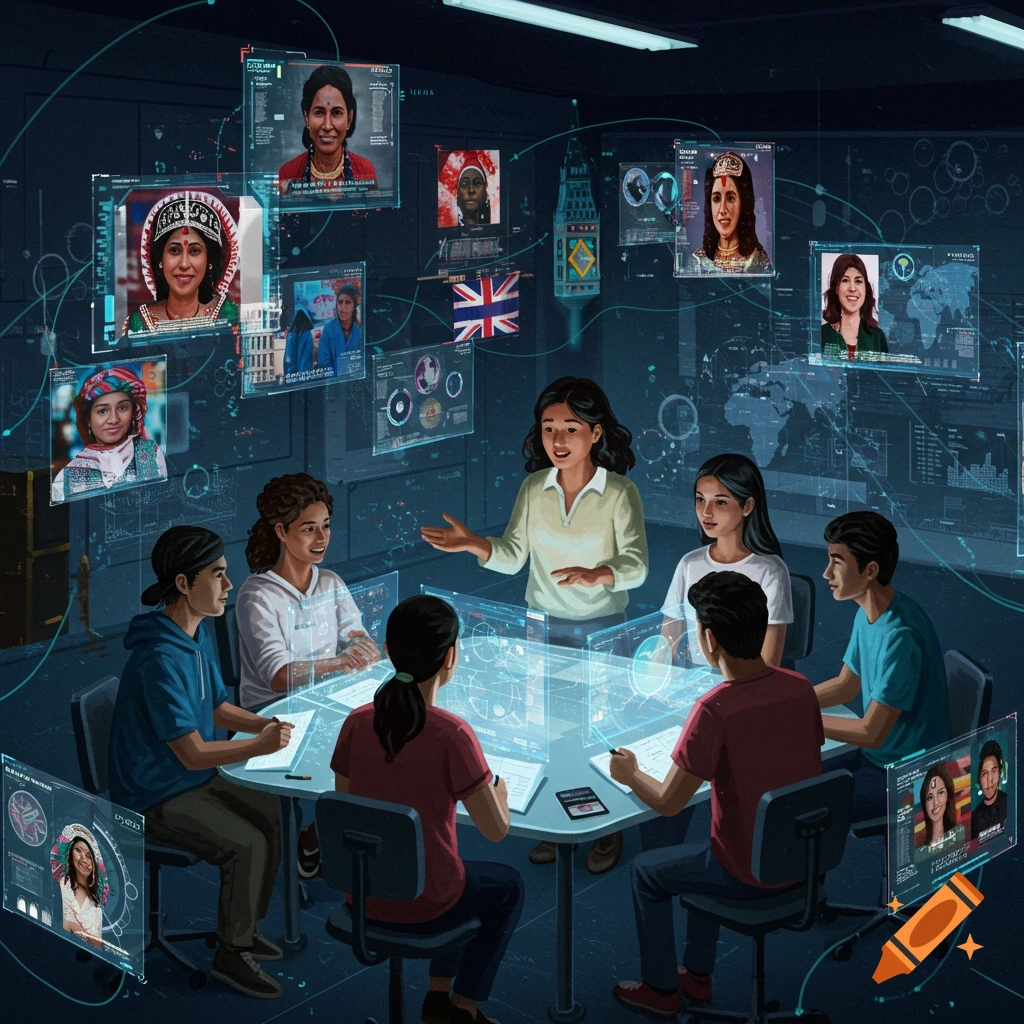
Diverse students and a teacher discuss around a holographic table in a futuristic room, surrounded by floating screens with faces and data.
Teaching across different cultures and varying levels of digital competence presents both practical and interpersonal challenges. Students and teachers come from diverse educational backgrounds, learning traditions, and comfort levels with technology. This diversity can lead to differences in participation styles, communication approaches, and digital readiness. For example, some students may be highly skilled in using online platforms, while others may find even basic digital tools intimidating. Similarly, cultural norms influence how learners interact with teachers, express opinions, or collaborate in groups. These differences aren’t just challenges—they’re chances to grow. Seeing things from different points of view helps us be more creative, flexible, and respectful of each other. It makes our discussions more interesting, helps us understand more, and gets us ready to work together in a connected, global world. Technology helps us link up, letting people from everywhere collaborate in real time. But it’s empathy that really keeps those connections strong. Empathy helps us, as teachers, understand what our students are going through, give them the support they need, and make sure everyone feels included and valued. So, technology might build the bridge, but it’s care and understanding that let us all cross it safely and meaningfully, together. See more