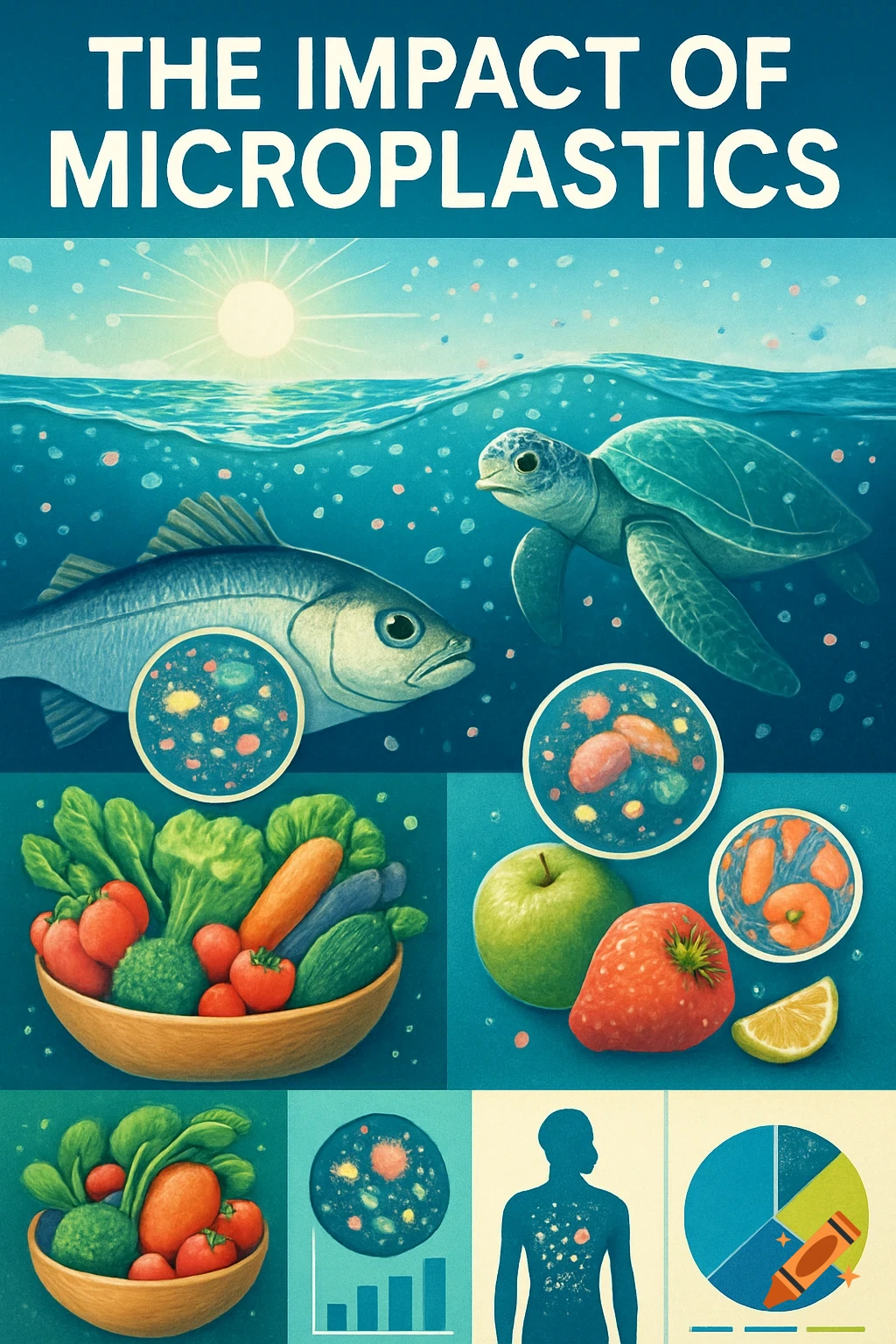
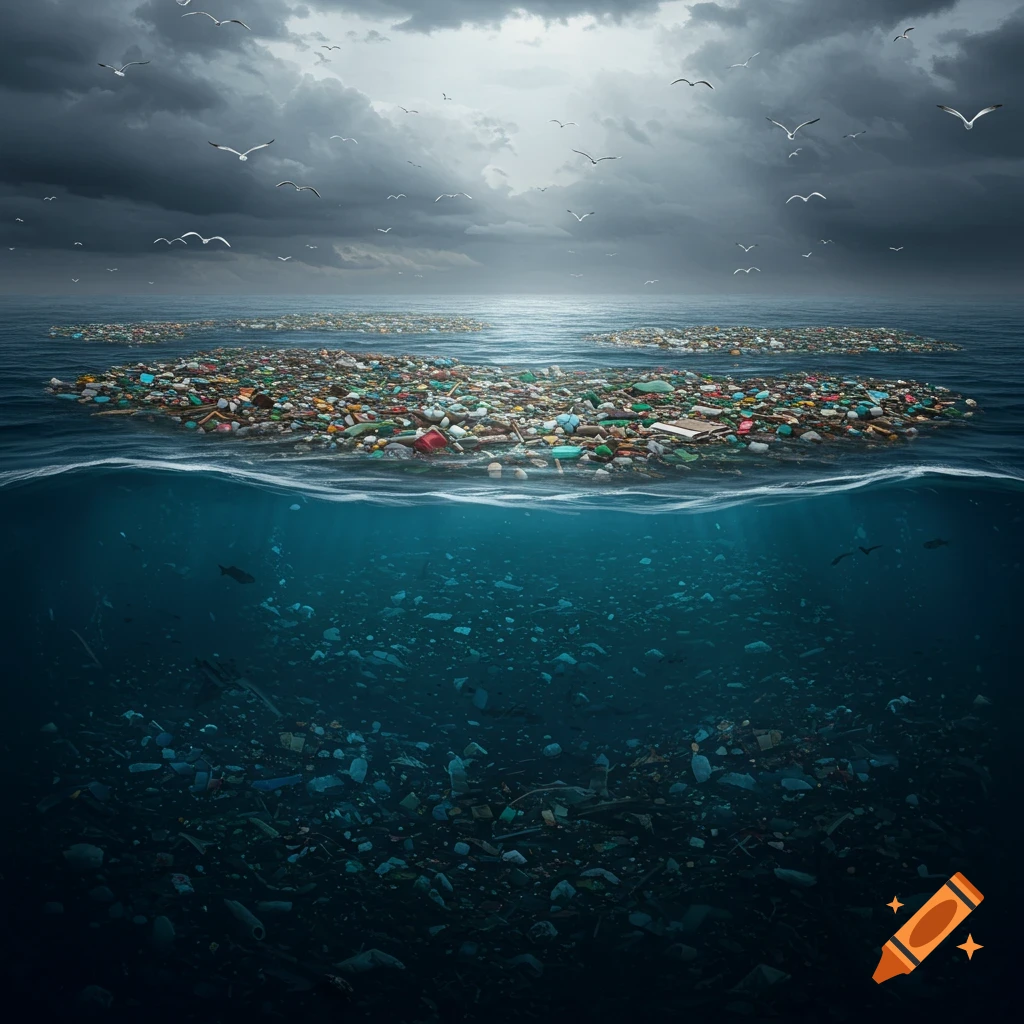
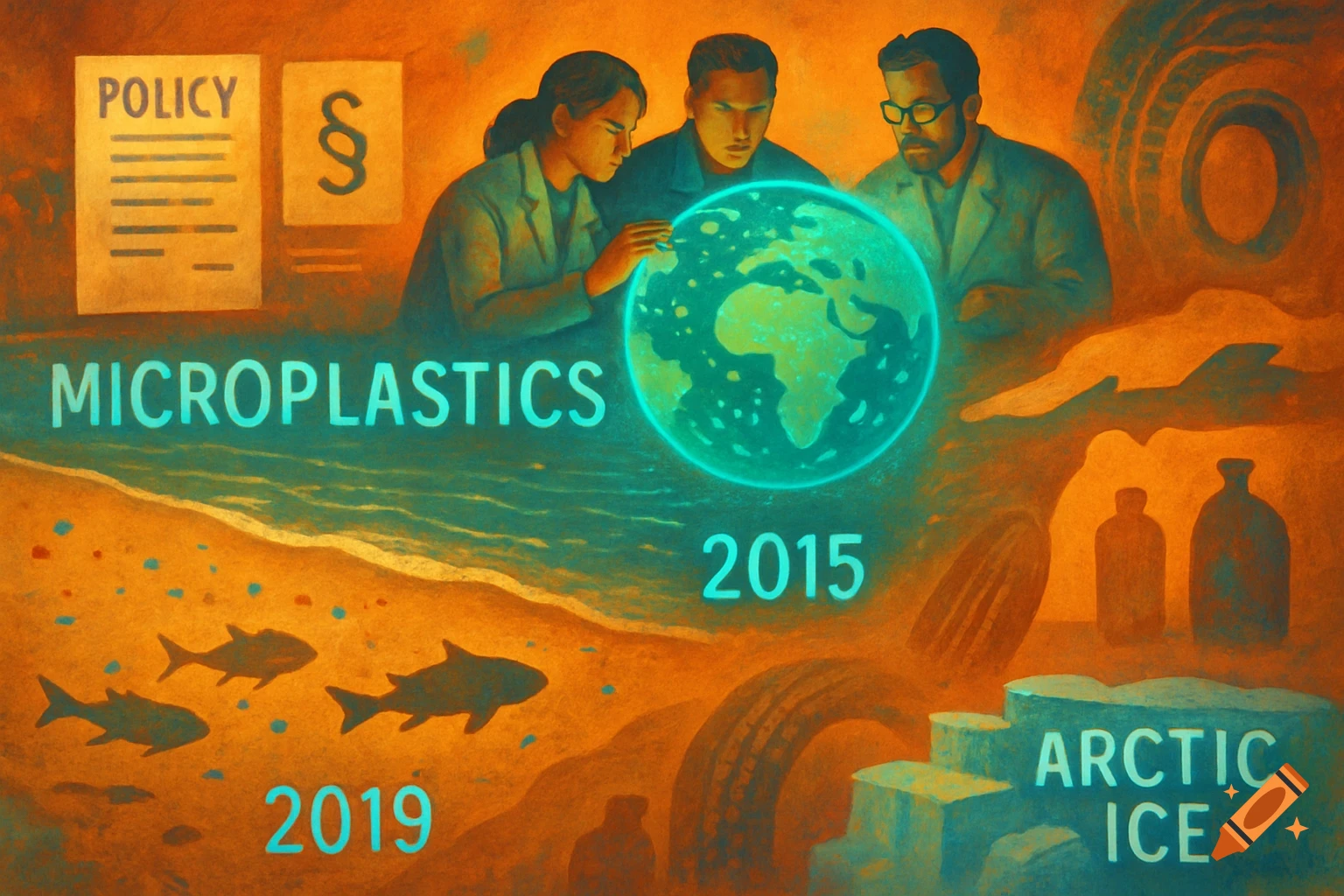
A conceptual illustration about microplastics and environmental policy, featuring three figures looking at a glowing globe, text 'MICROPLASTICS', 'POLICY', 'ARCTIC ICE', and years '2015', '2019'.
2008 (Policy): EU Marine Strategy Framework Directive adds microplastics as a monitored pollutant (policy recognition). 2010 (Research): First international microplastics workshop (GESAMP) highlights microplastics as vectors for toxins in oceans. 2011 (Science): Microplastics on shorelines worldwide documented for the first time (global survey of beach pollution). 2011 (Awareness): UNEP Year Book flags microplastics in the ocean as an “emerging issue” for global environment. 2013 (Science): Microplastics found in commercial seafood and other food products (evidence of contamination in human food chain). 2013 (Science): Microbeads (plastic exfoliants) detected in the Great Lakes, North America (raising freshwater pollution concern). 2014 (Science): Large amounts of microplastics discovered in the deep sea floor and in Arctic sea ice (plastic pollution reaches remote regions). 2014 (Science): First global inventory of microplastics in the ocean published (quantifying small plastic debris worldwide). 2015 (Policy): USA bans microbeads in rinse-off cosmetics (Microbead-Free Waters Act); other countries soon follow with similar bans. 2015 (Policy): UN expert group (GESAMP) publishes reports on sources, fate & effects of microplastics in the marine environment (informing policy and social impacts). 2015 (Science): Analytical study implicates vehicle tires as a major source of microplastic pollution (wear particles from tires identified as significant). 2016 (Science): First See more