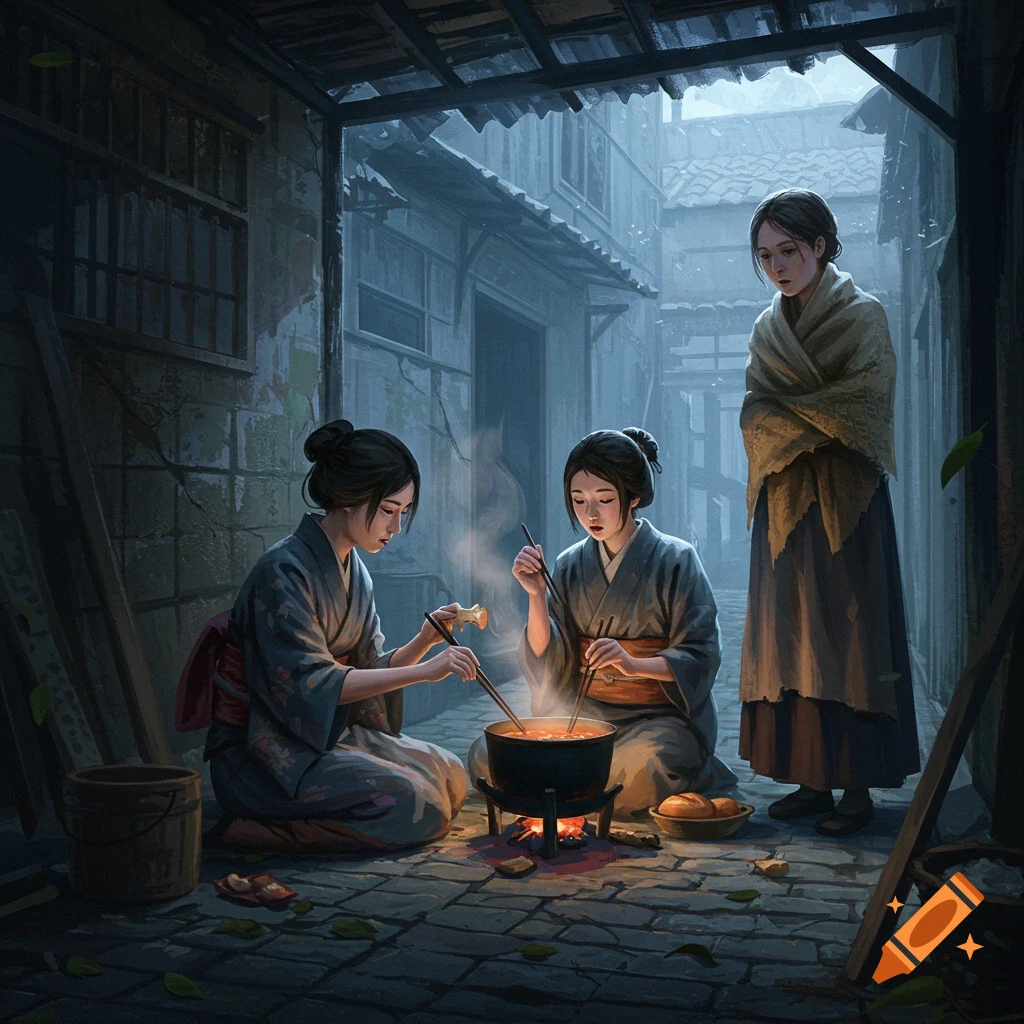
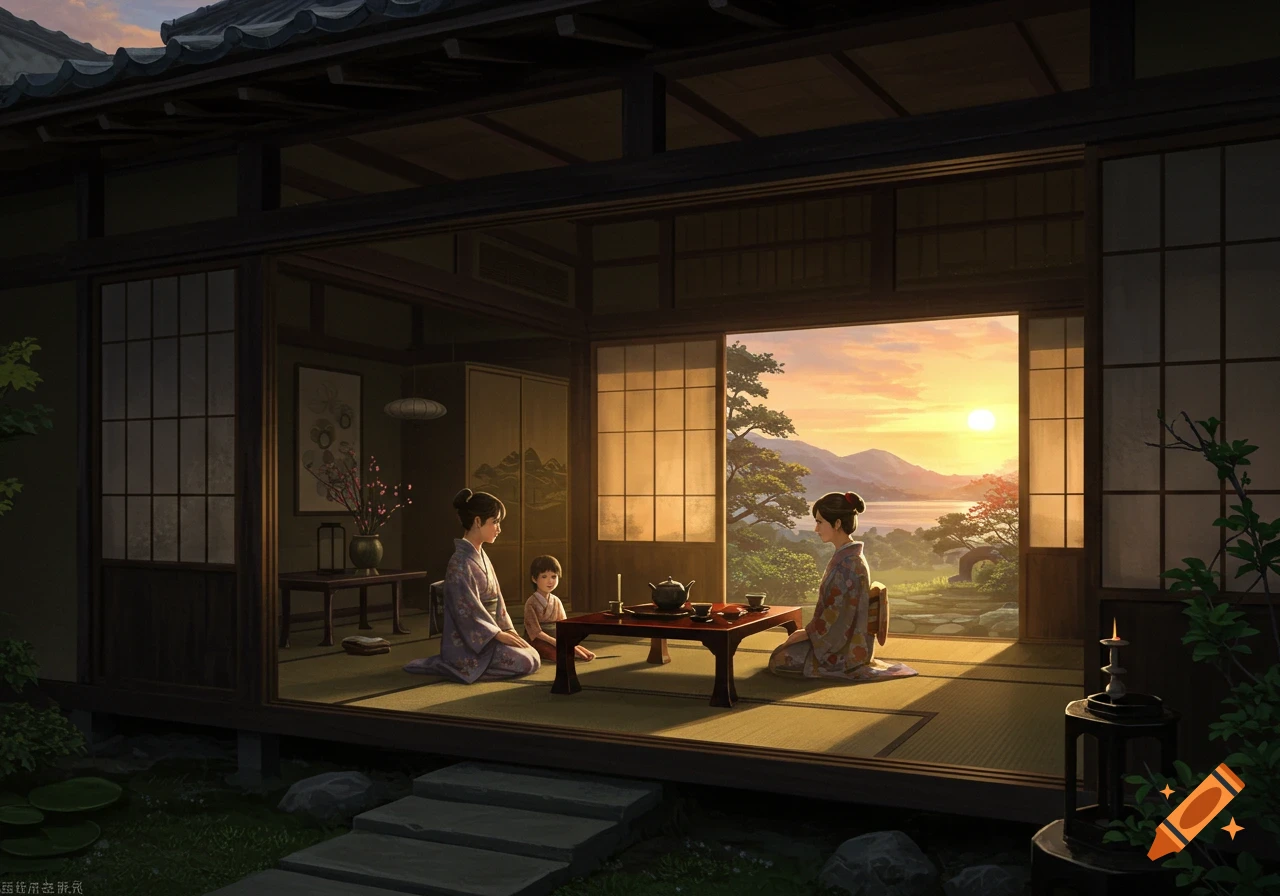
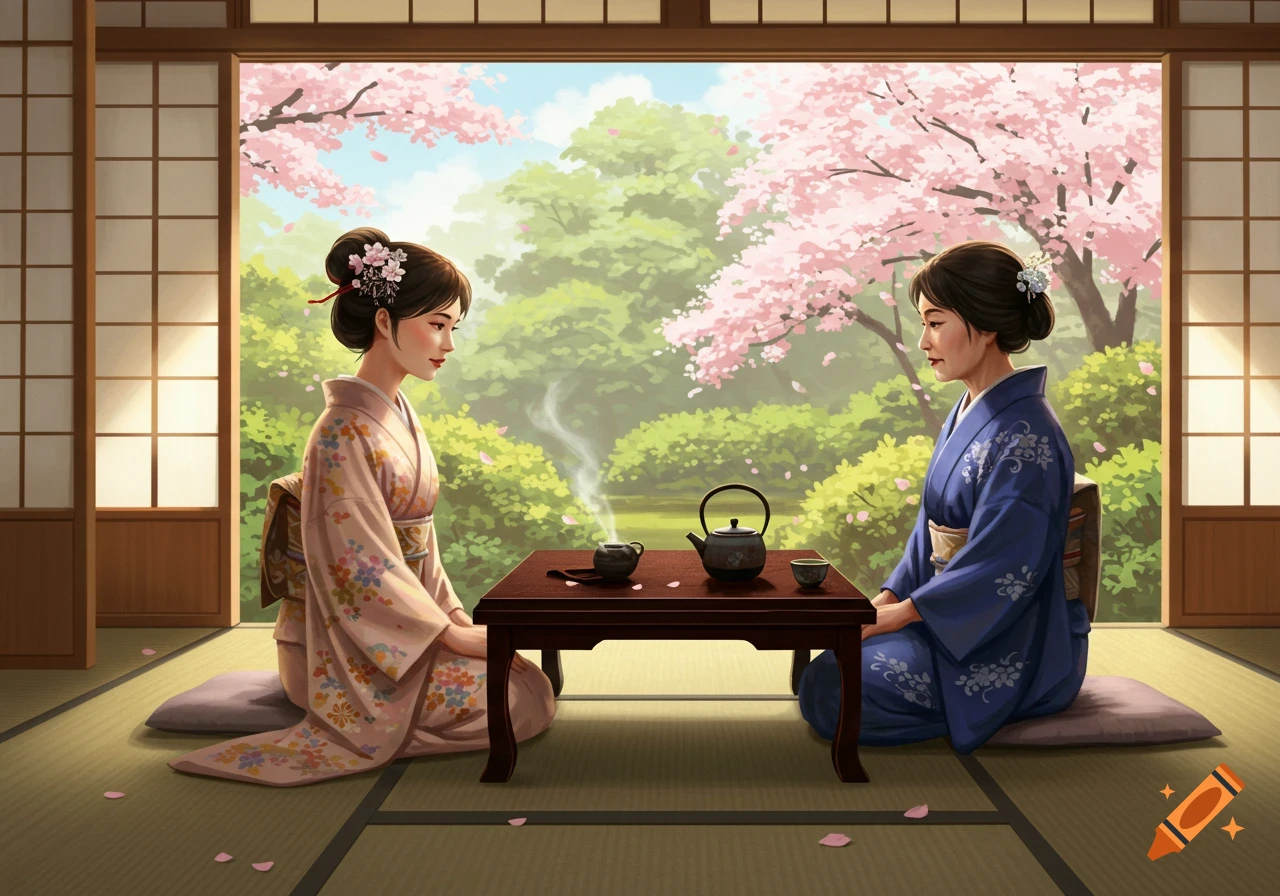
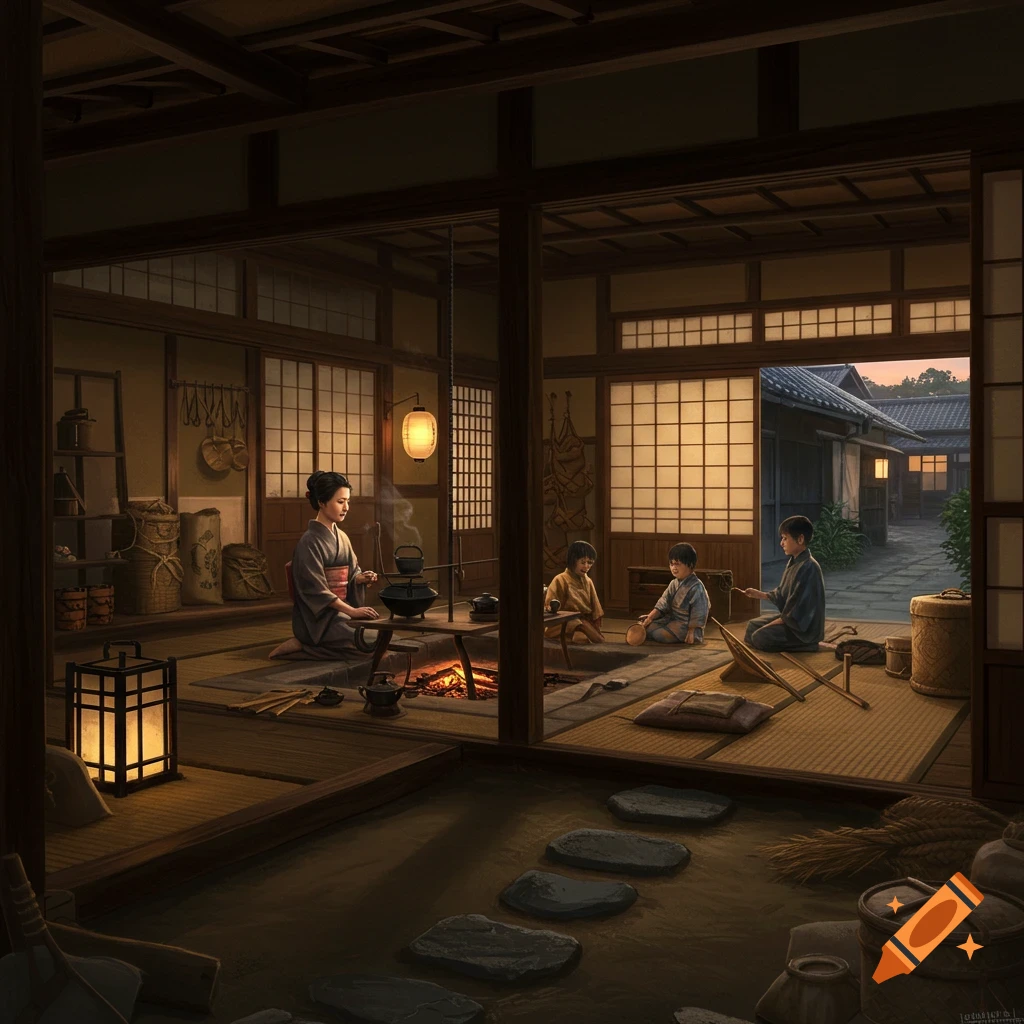
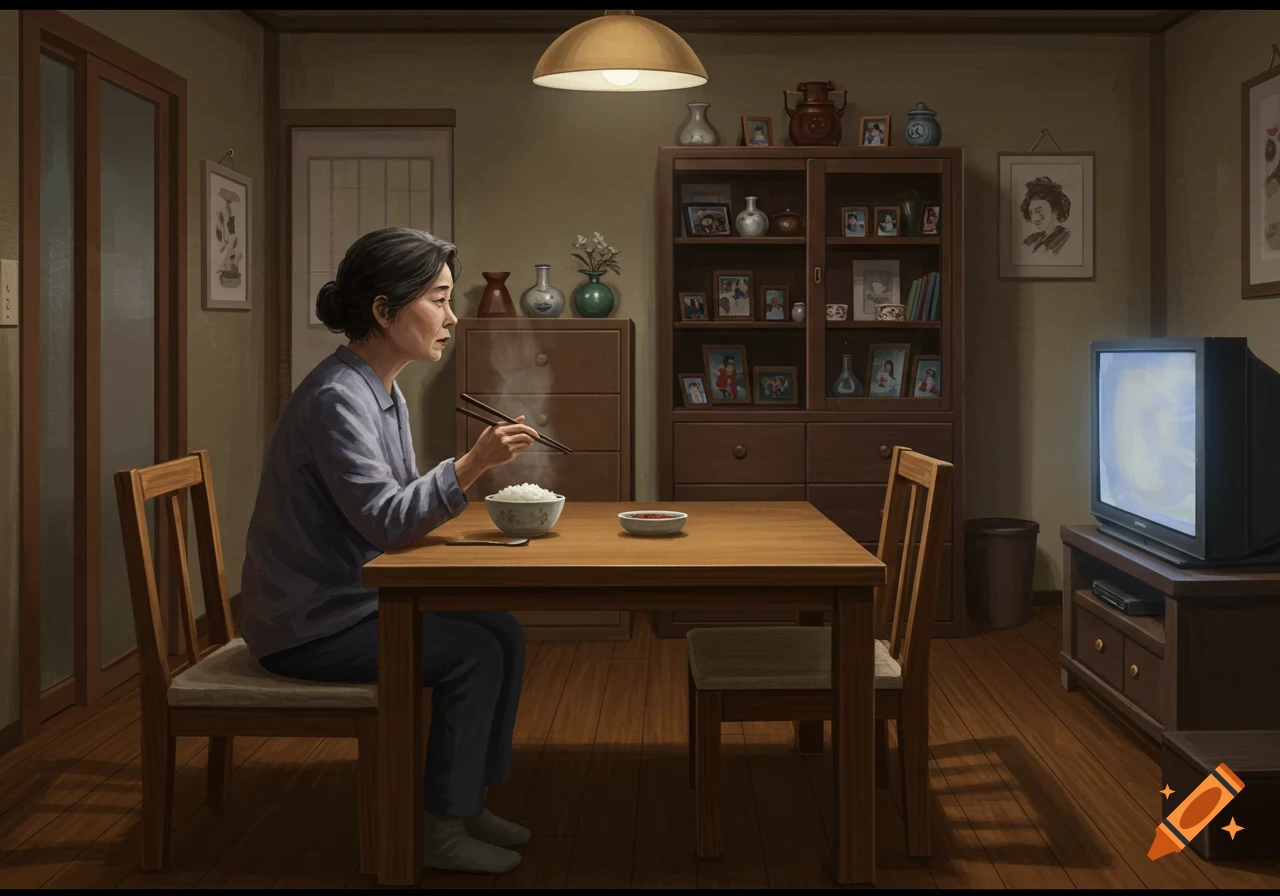
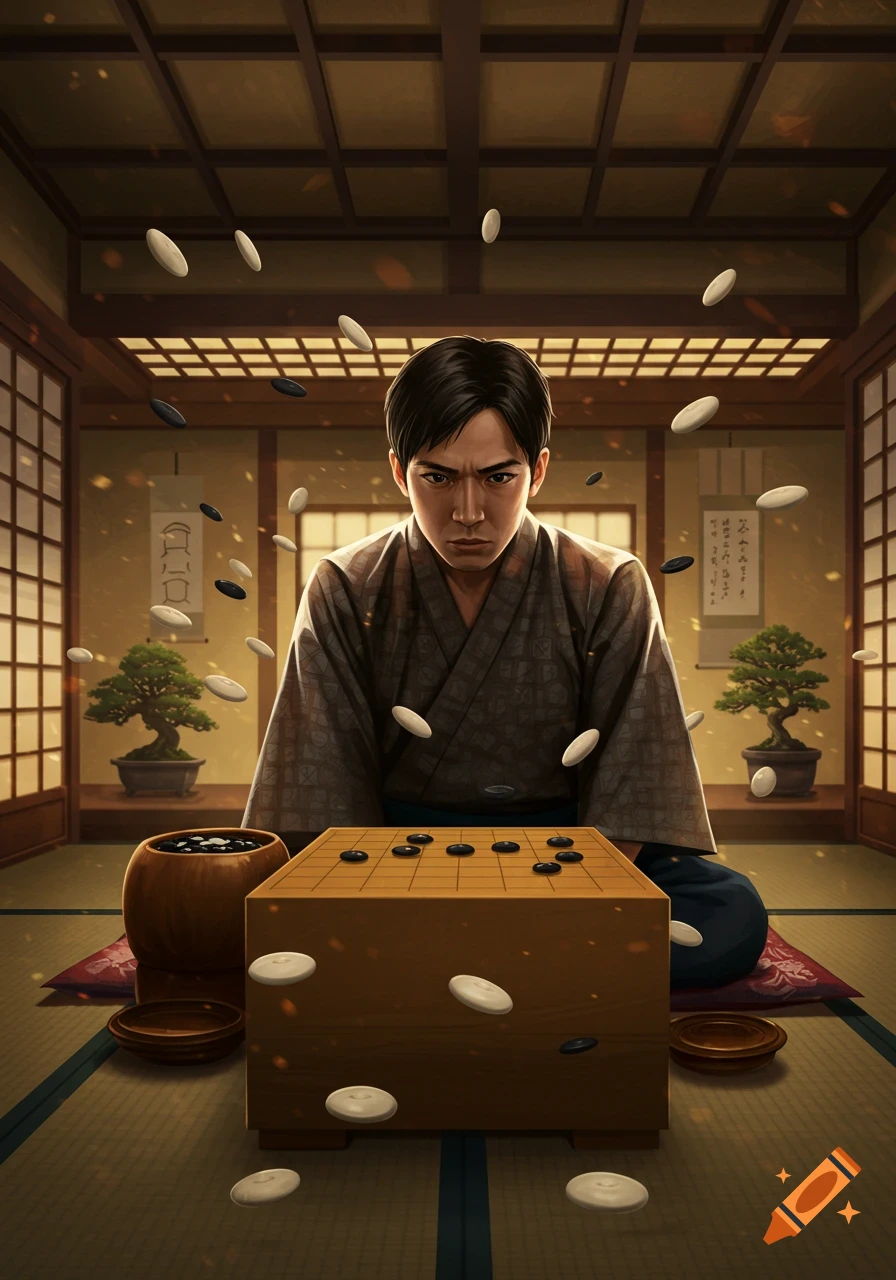
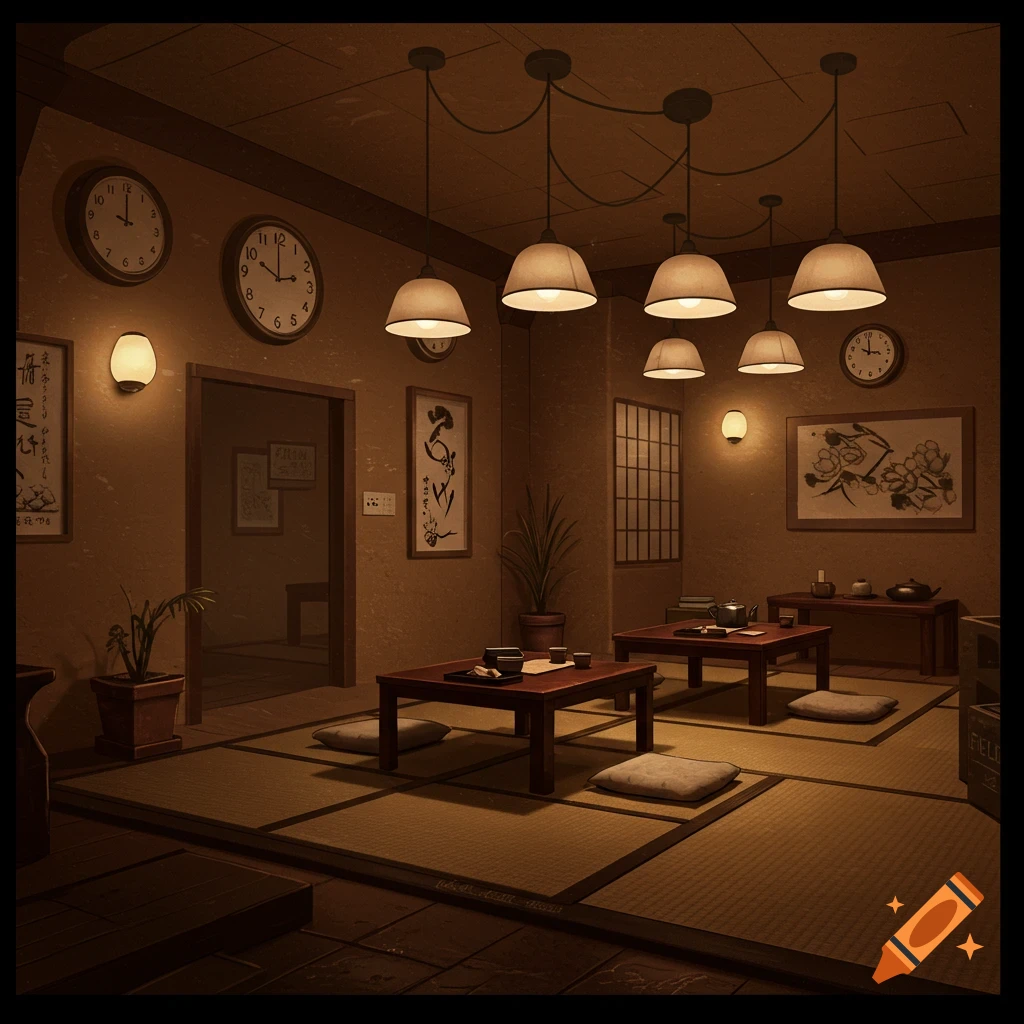
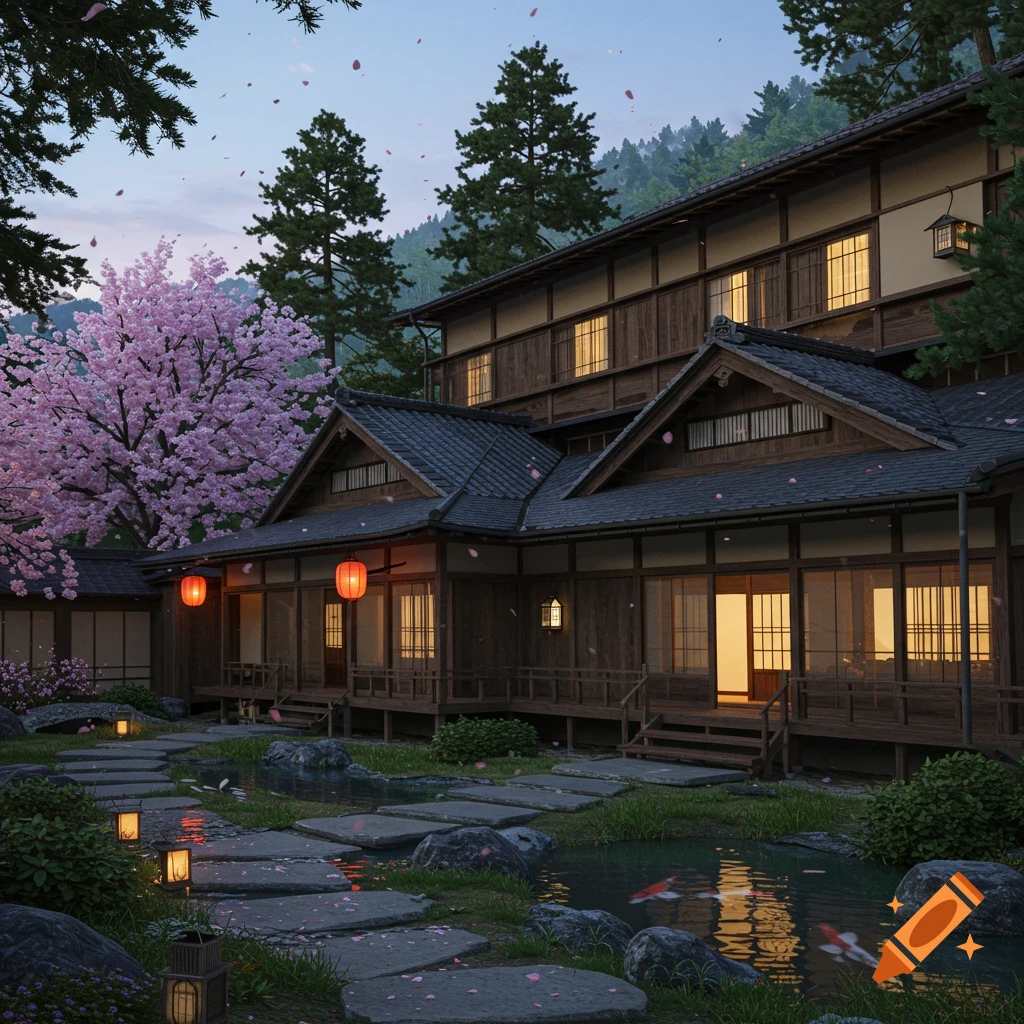
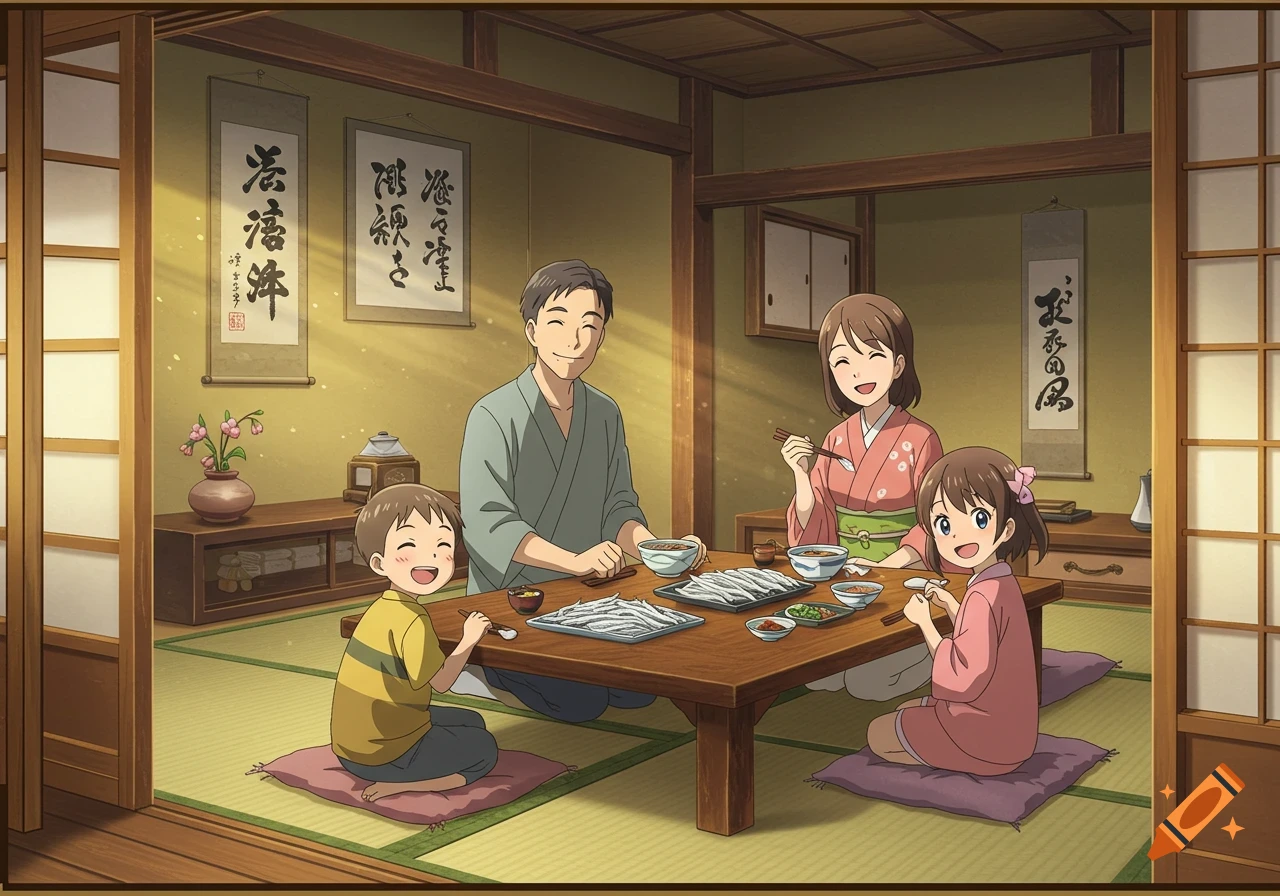
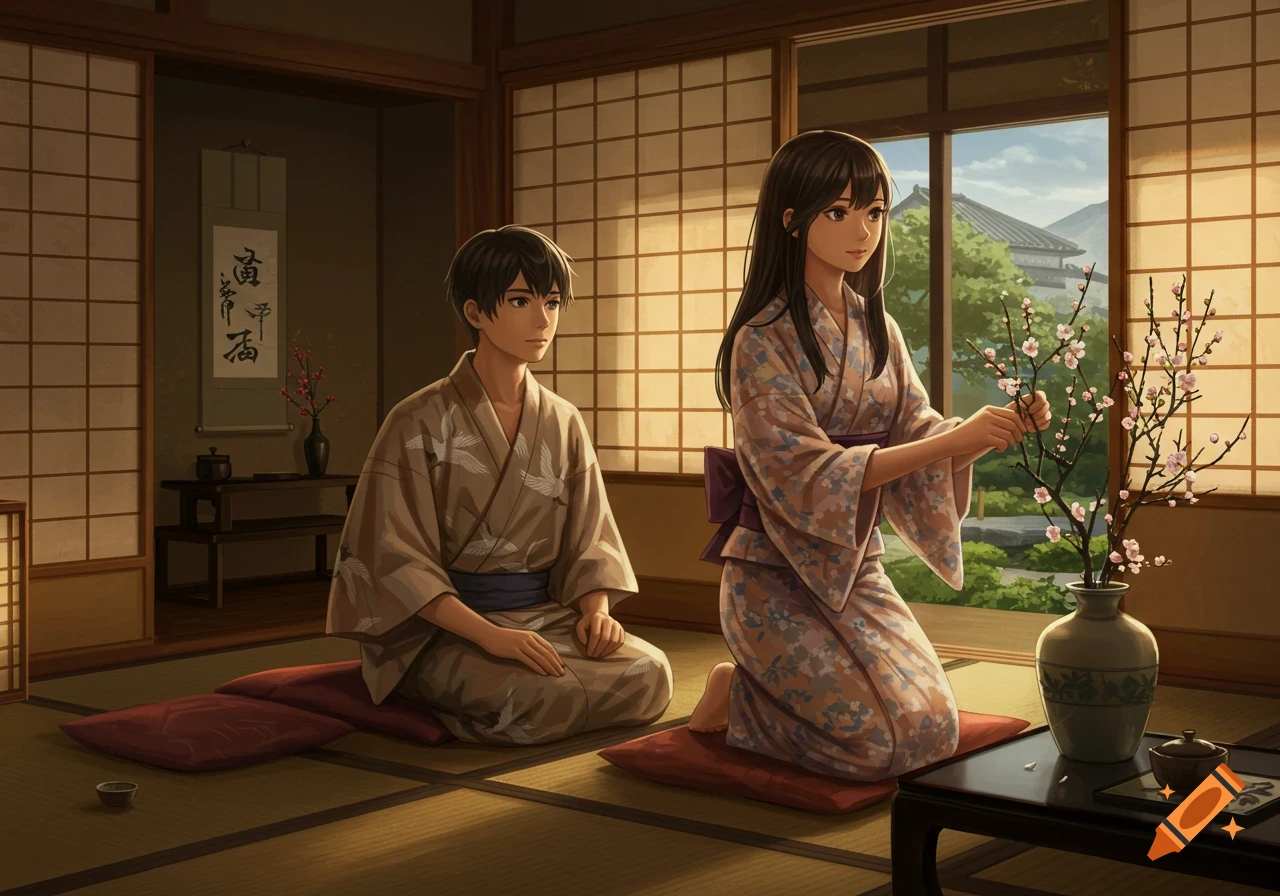
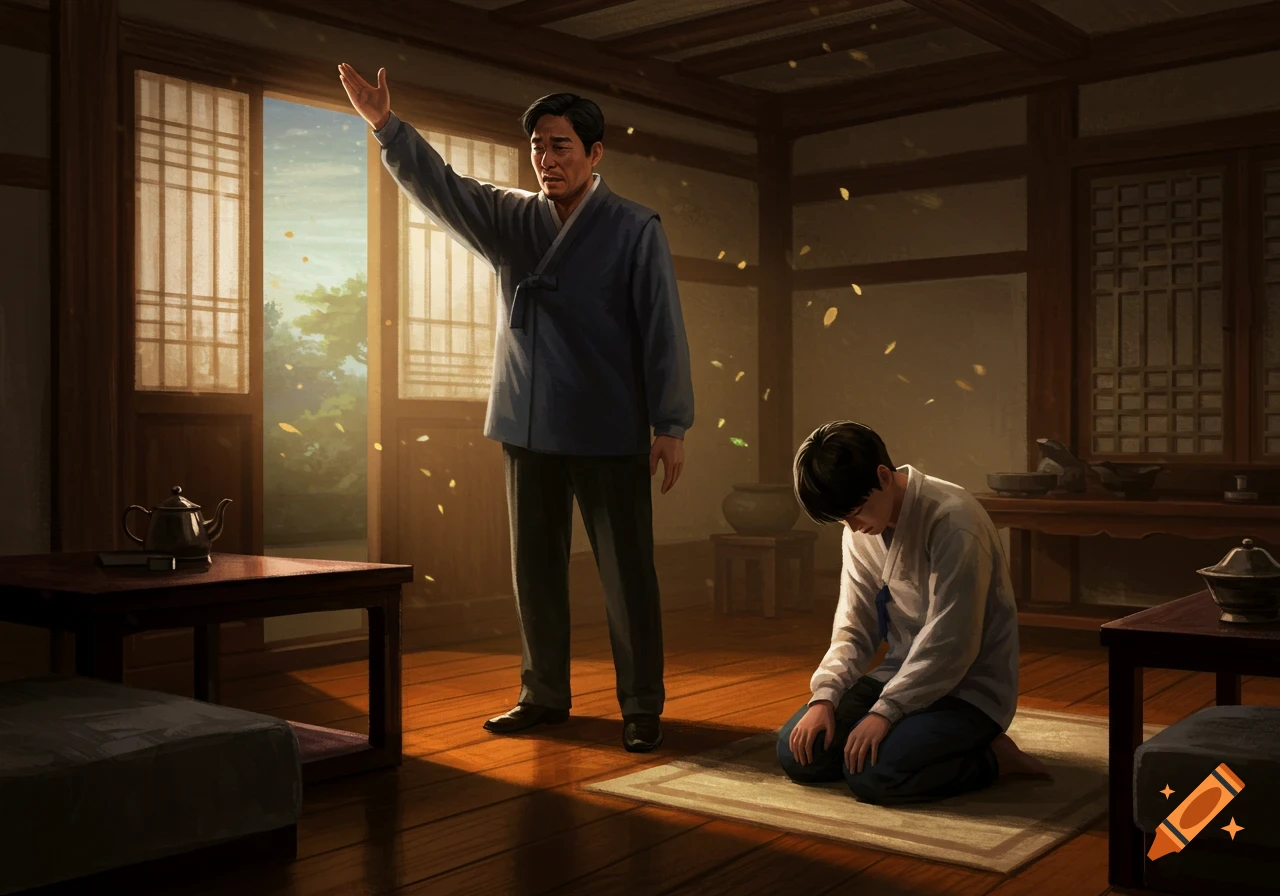
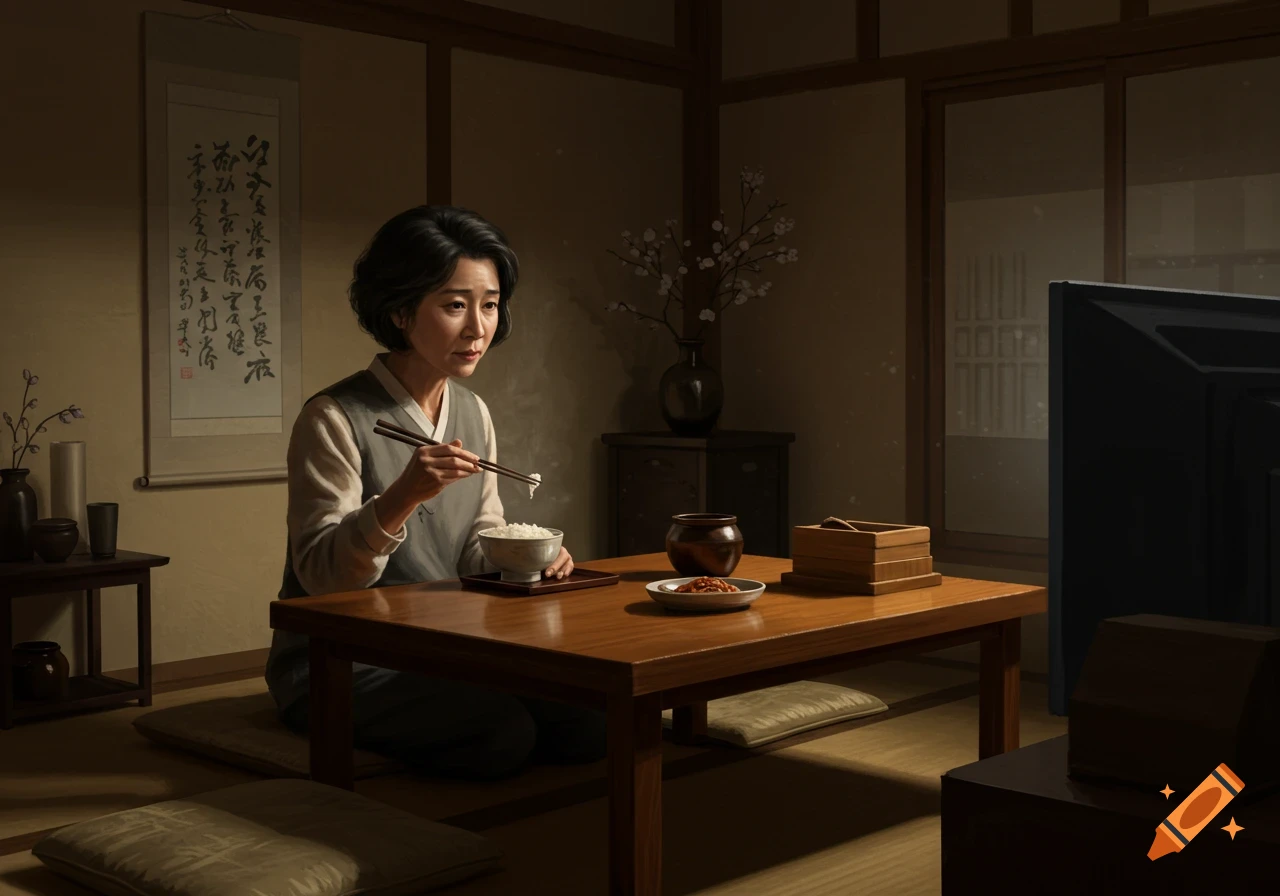
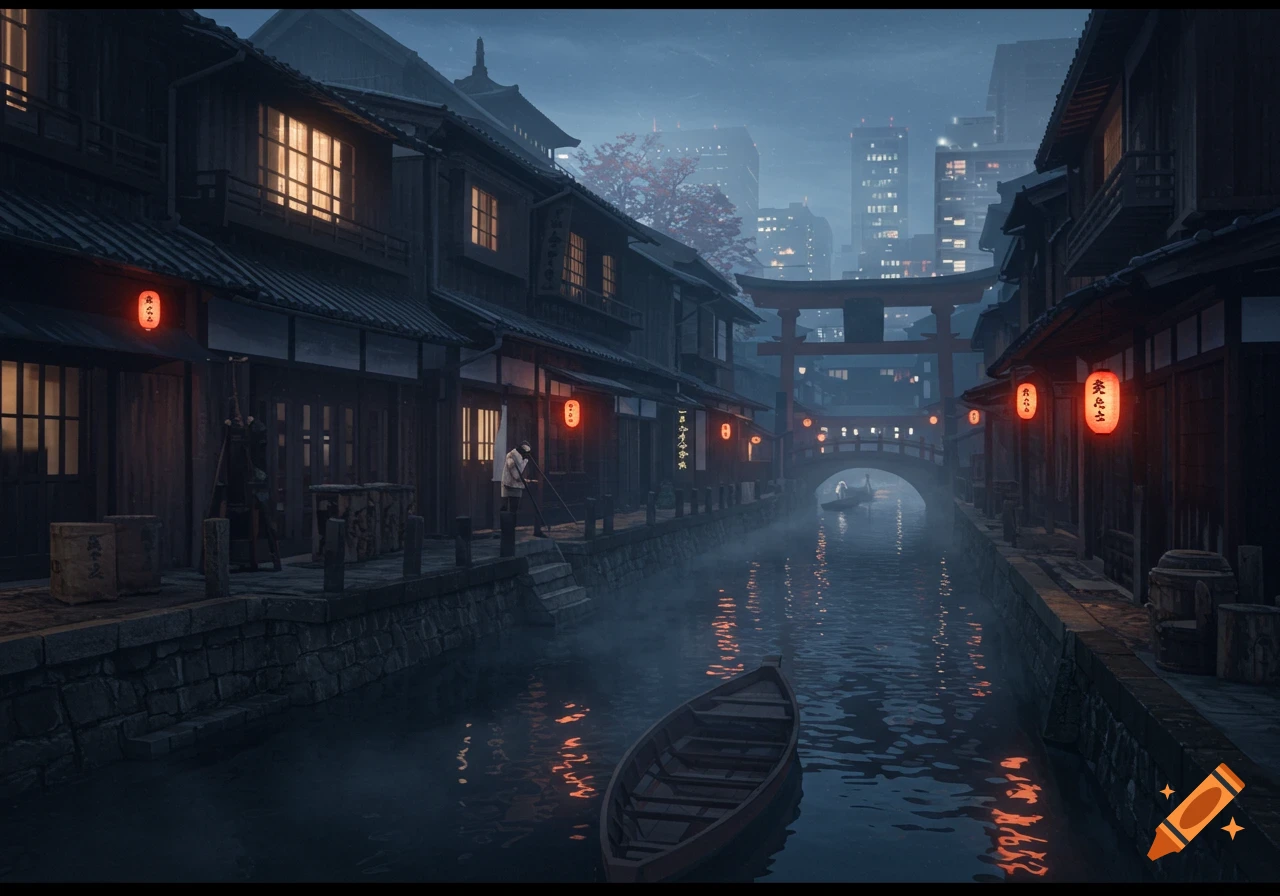
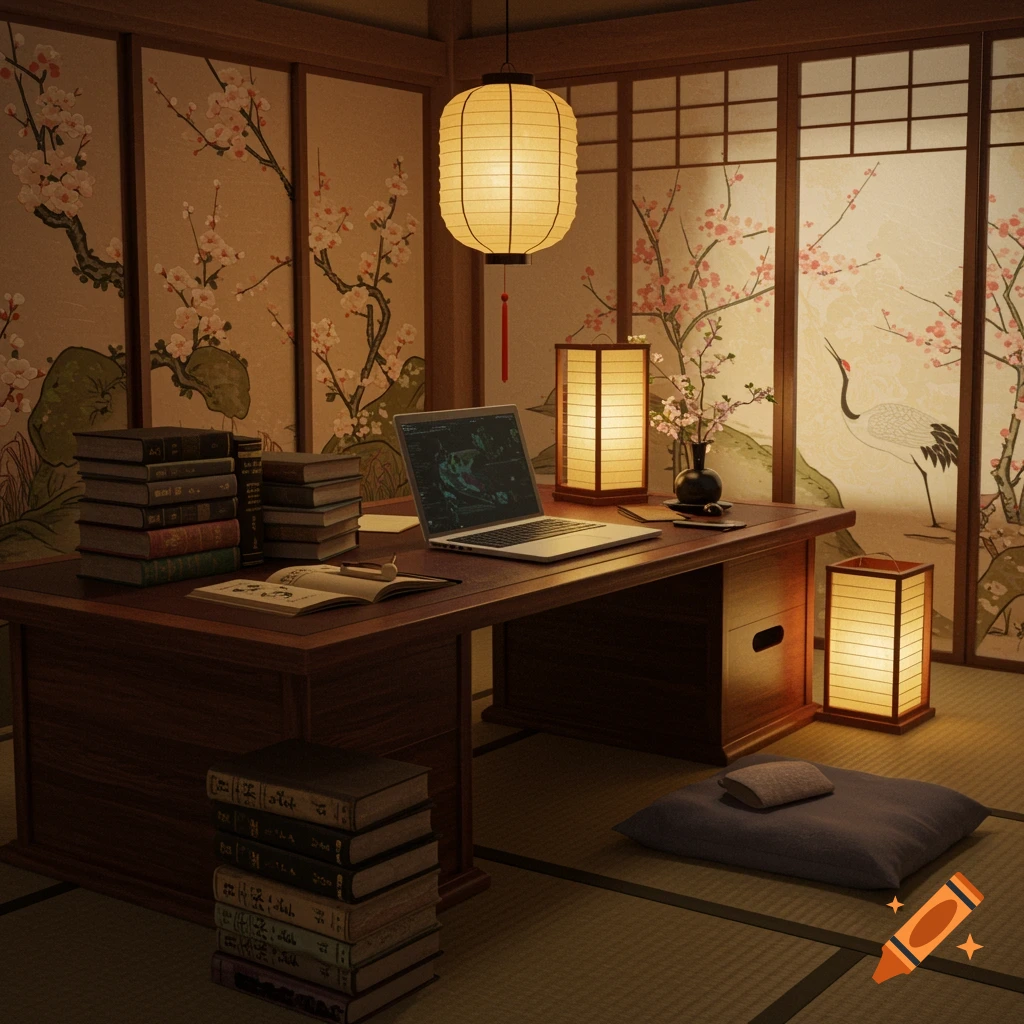
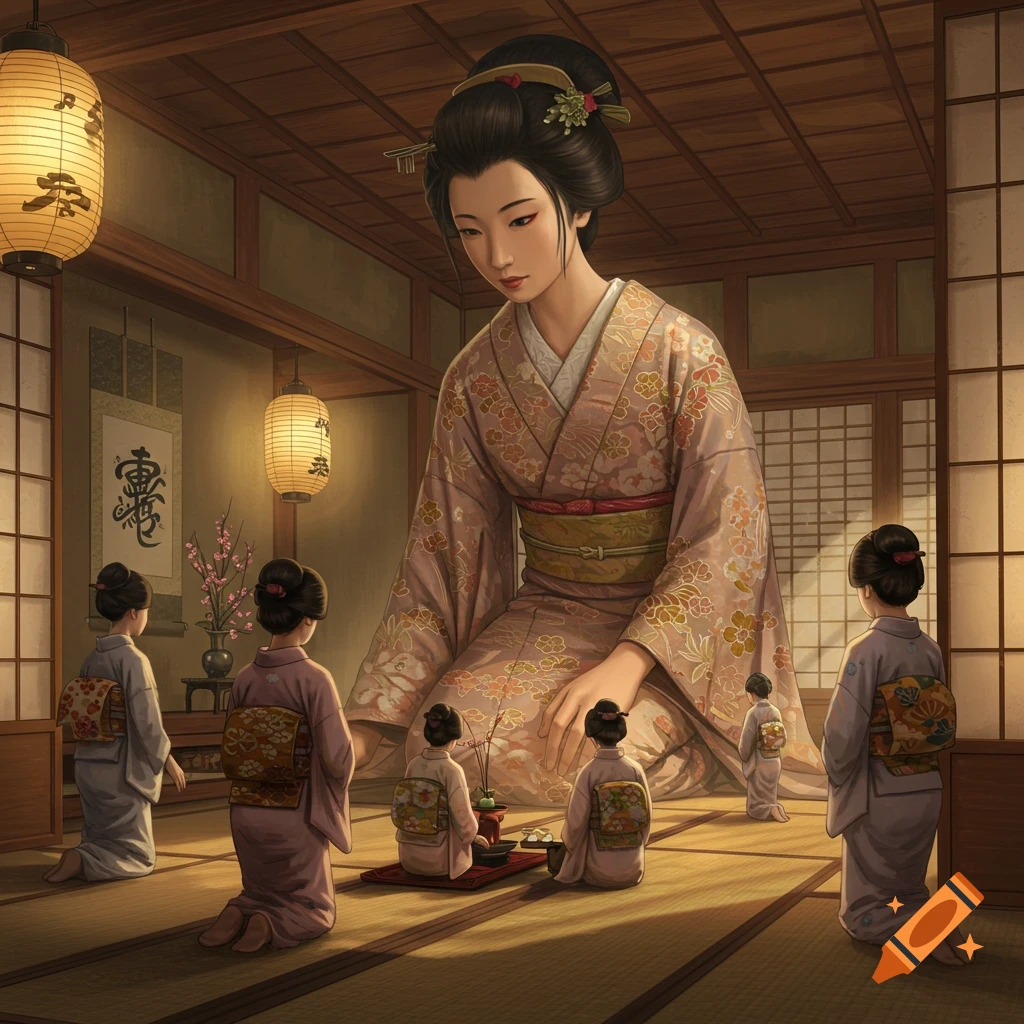
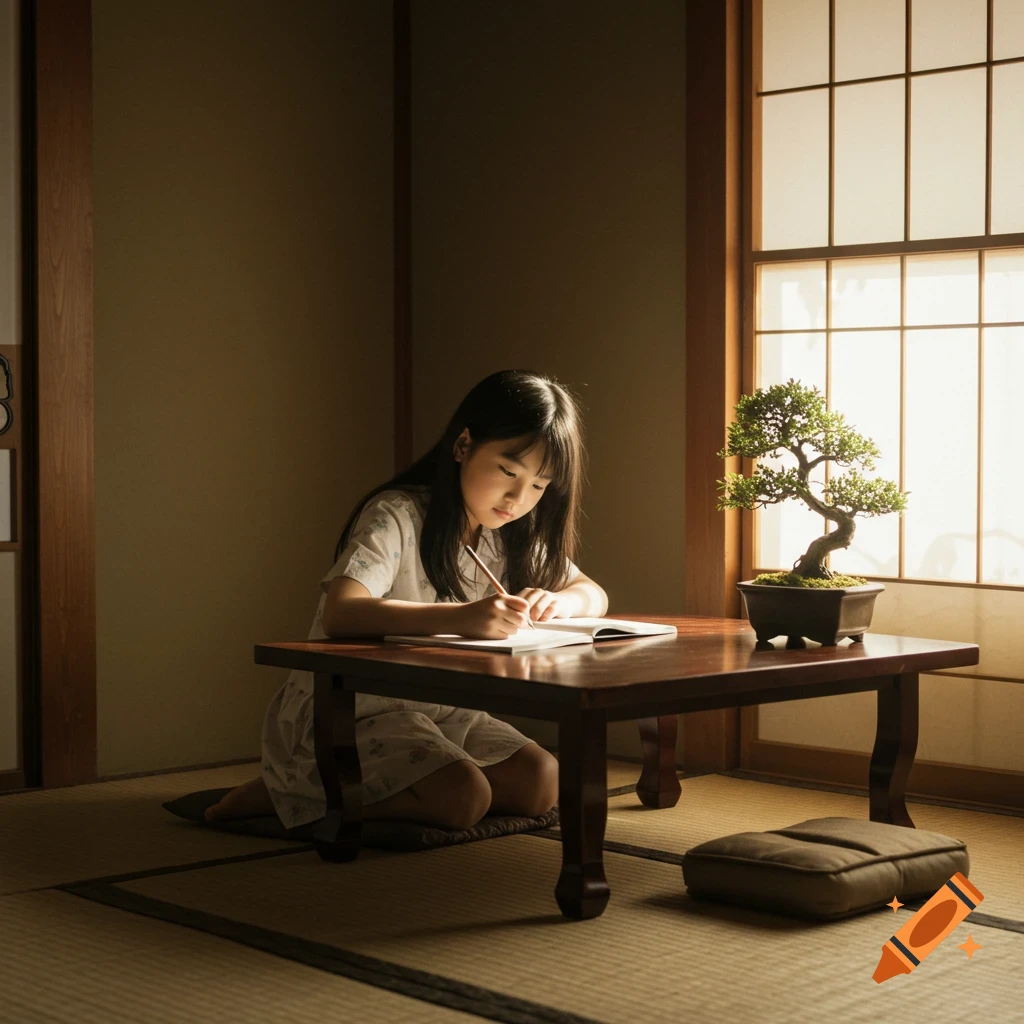
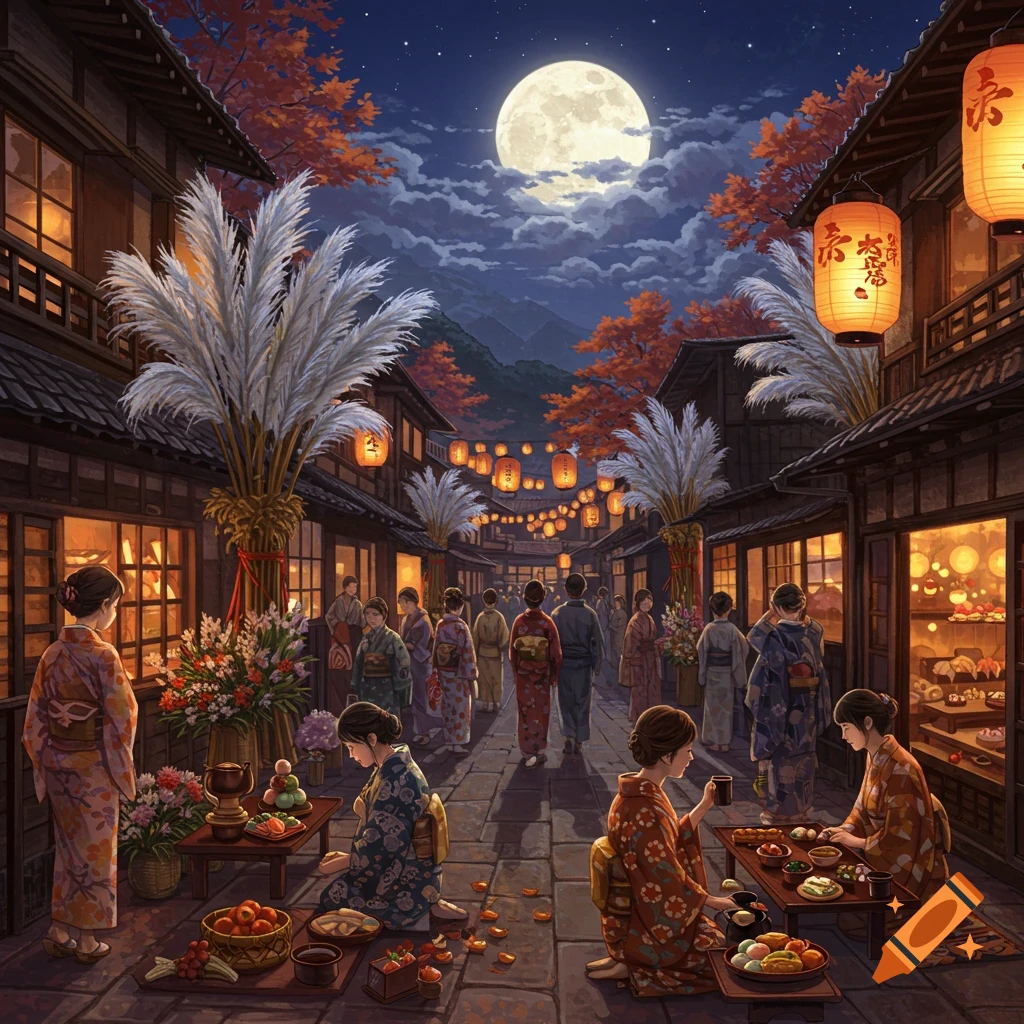
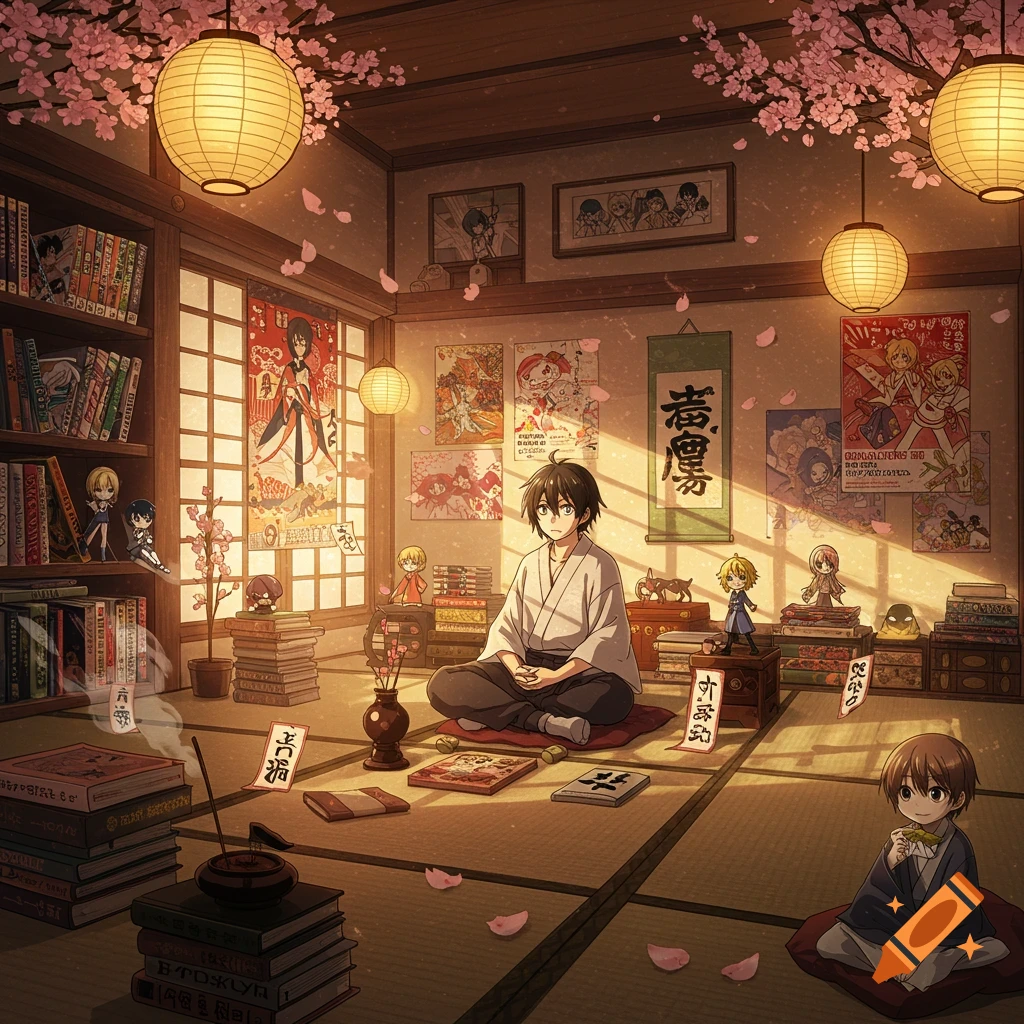
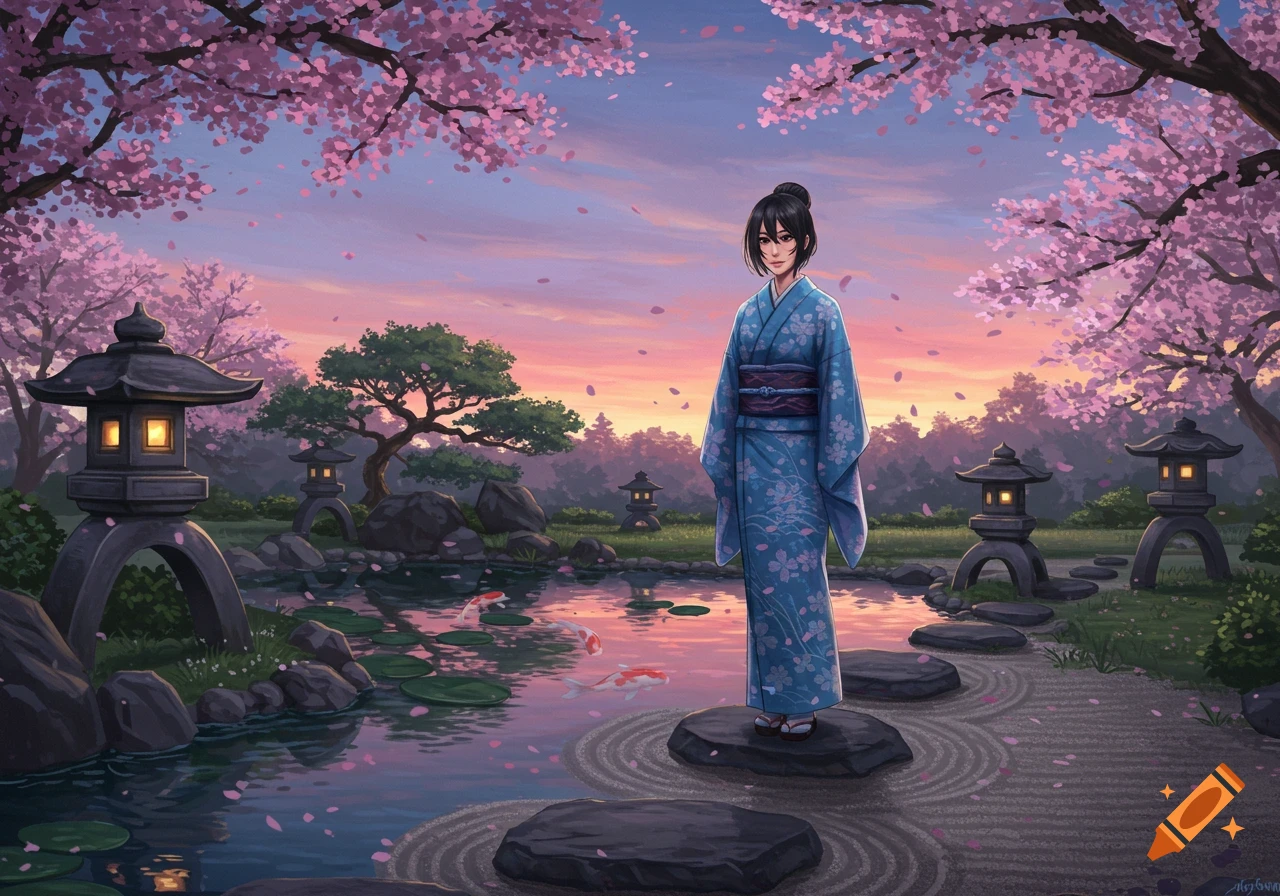
A Japanese mother and children in traditional kimonos gather around a warm irori hearth in a dimly lit Edo-period machiya home. Photorealistic.
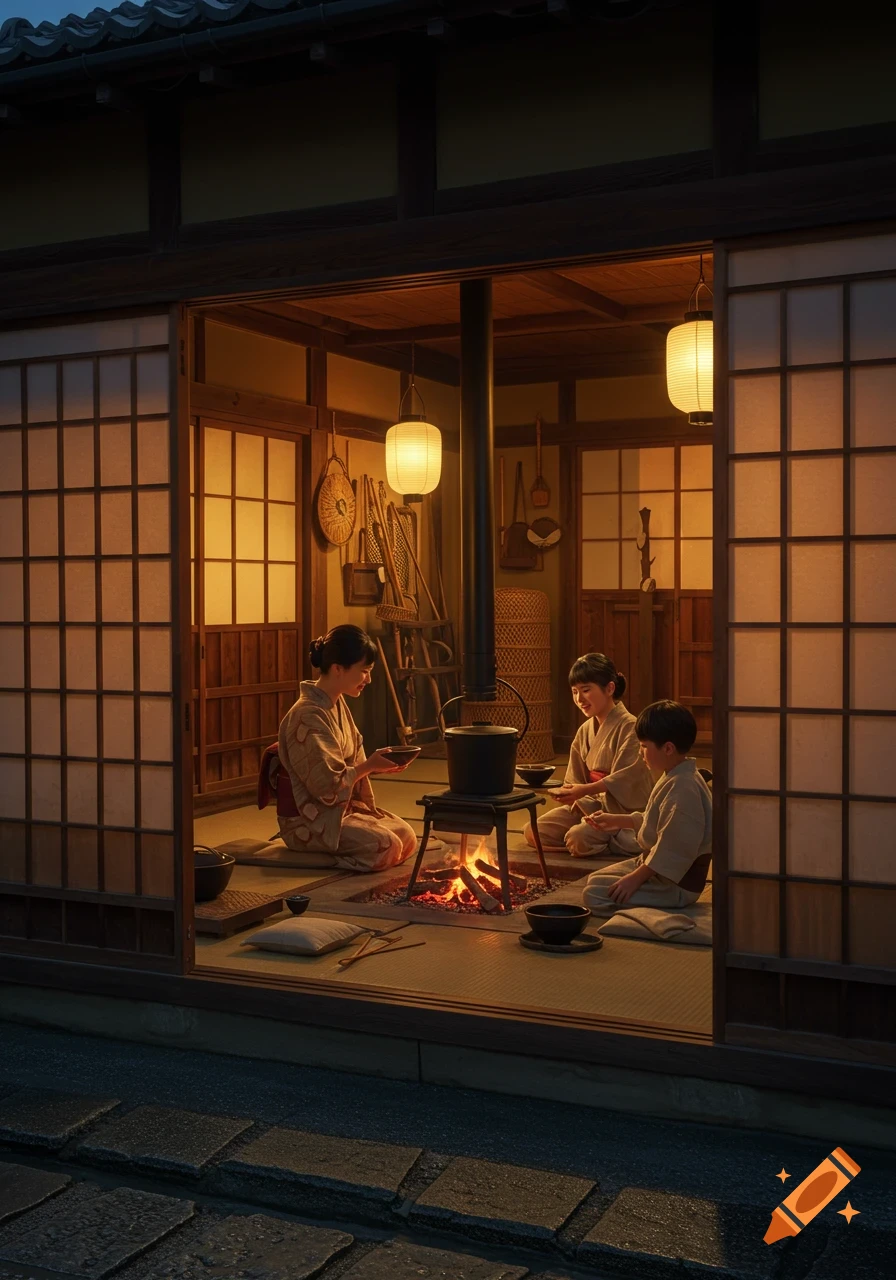
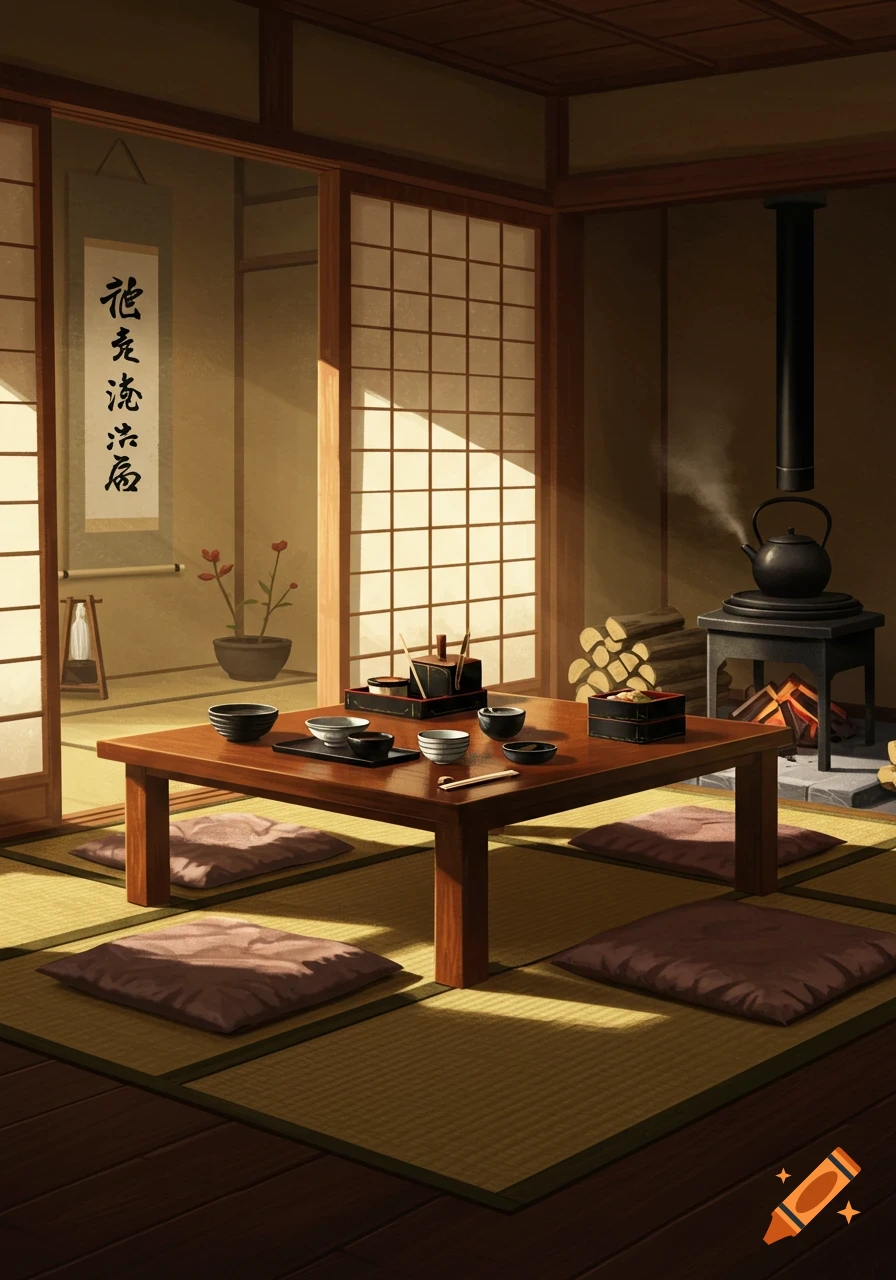
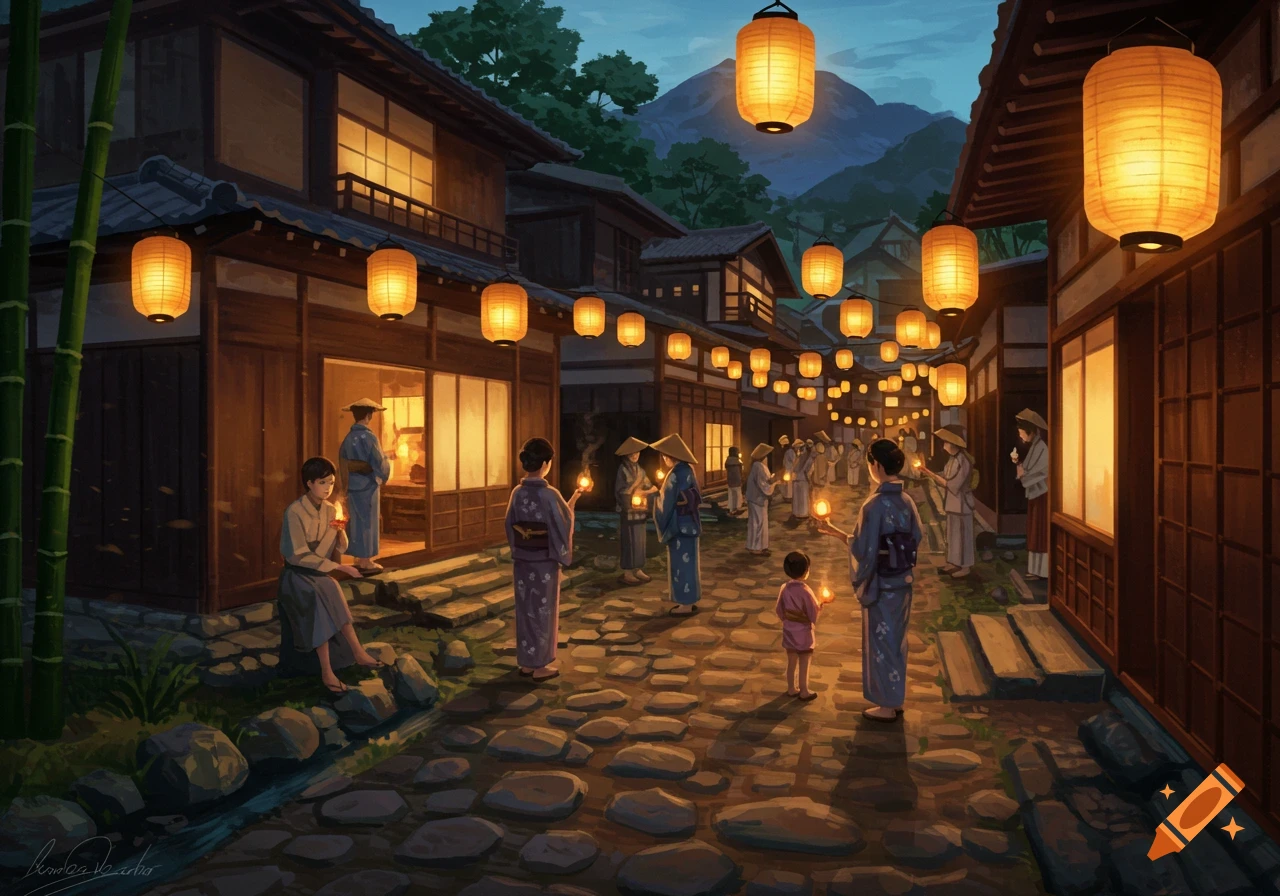
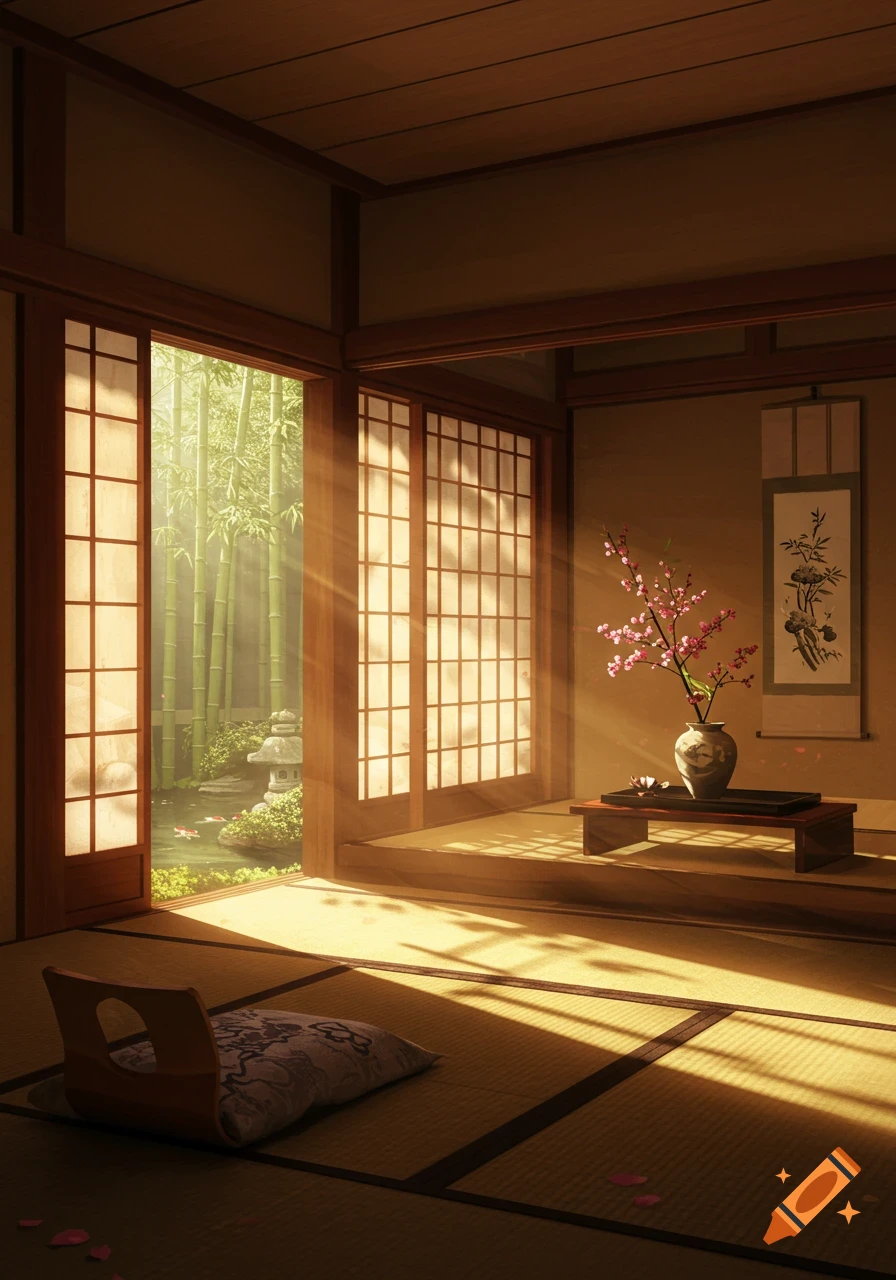
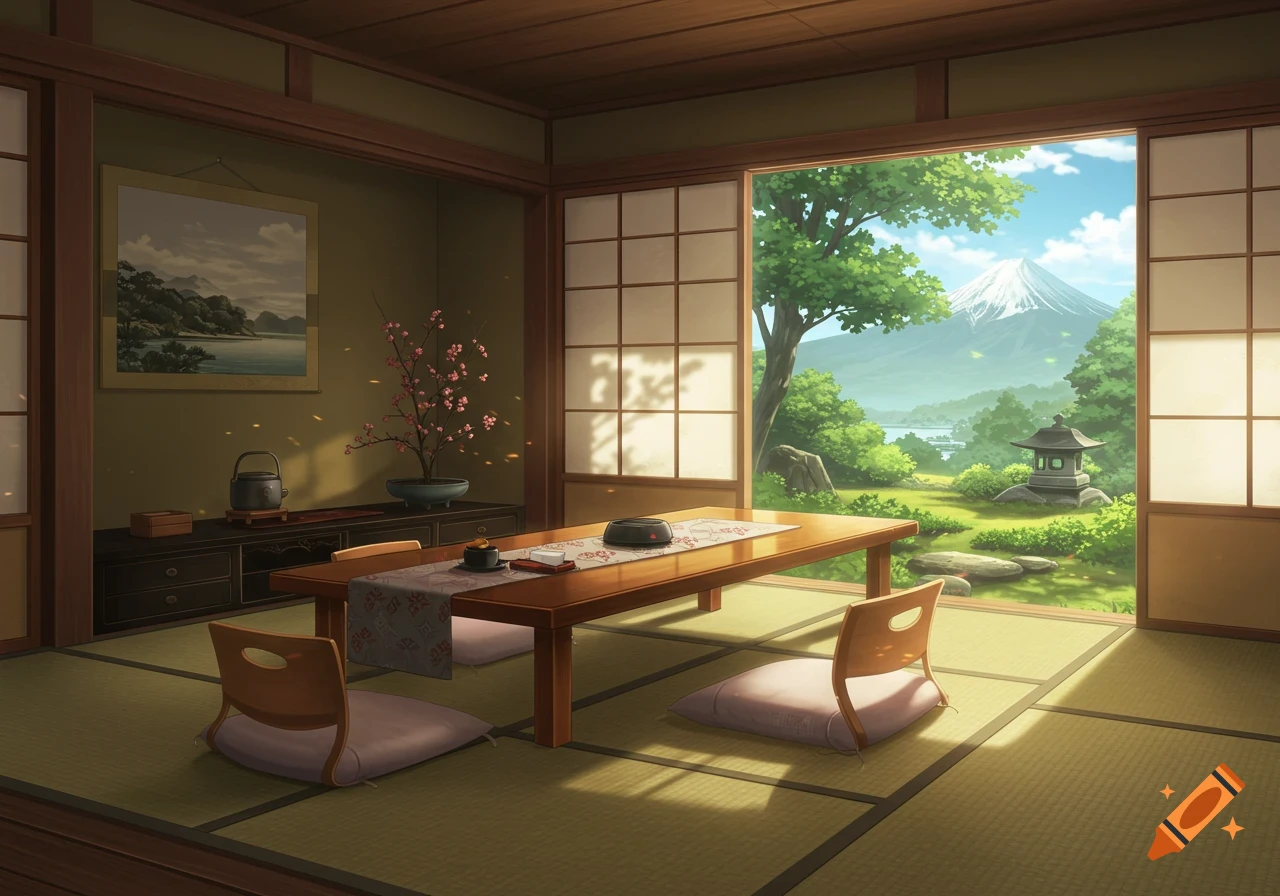
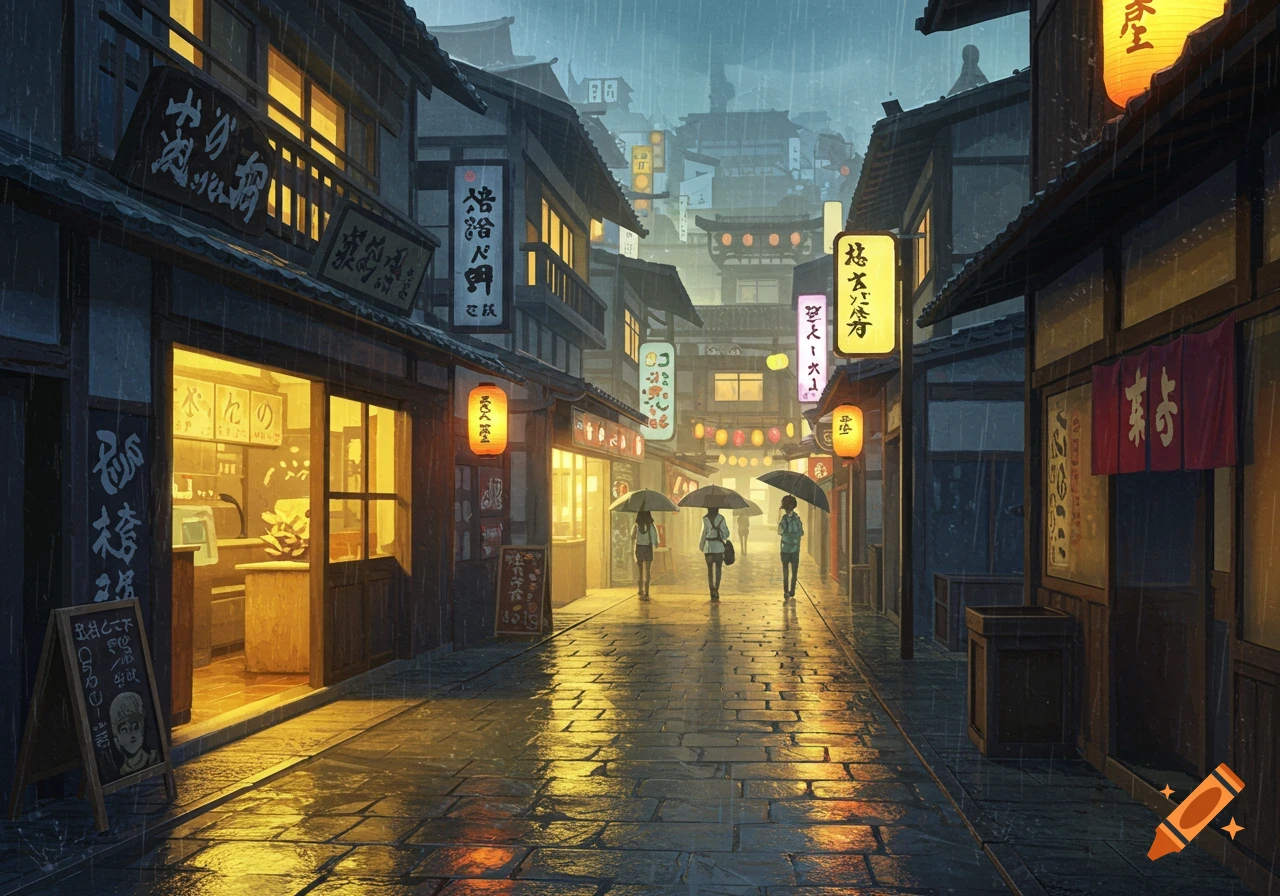
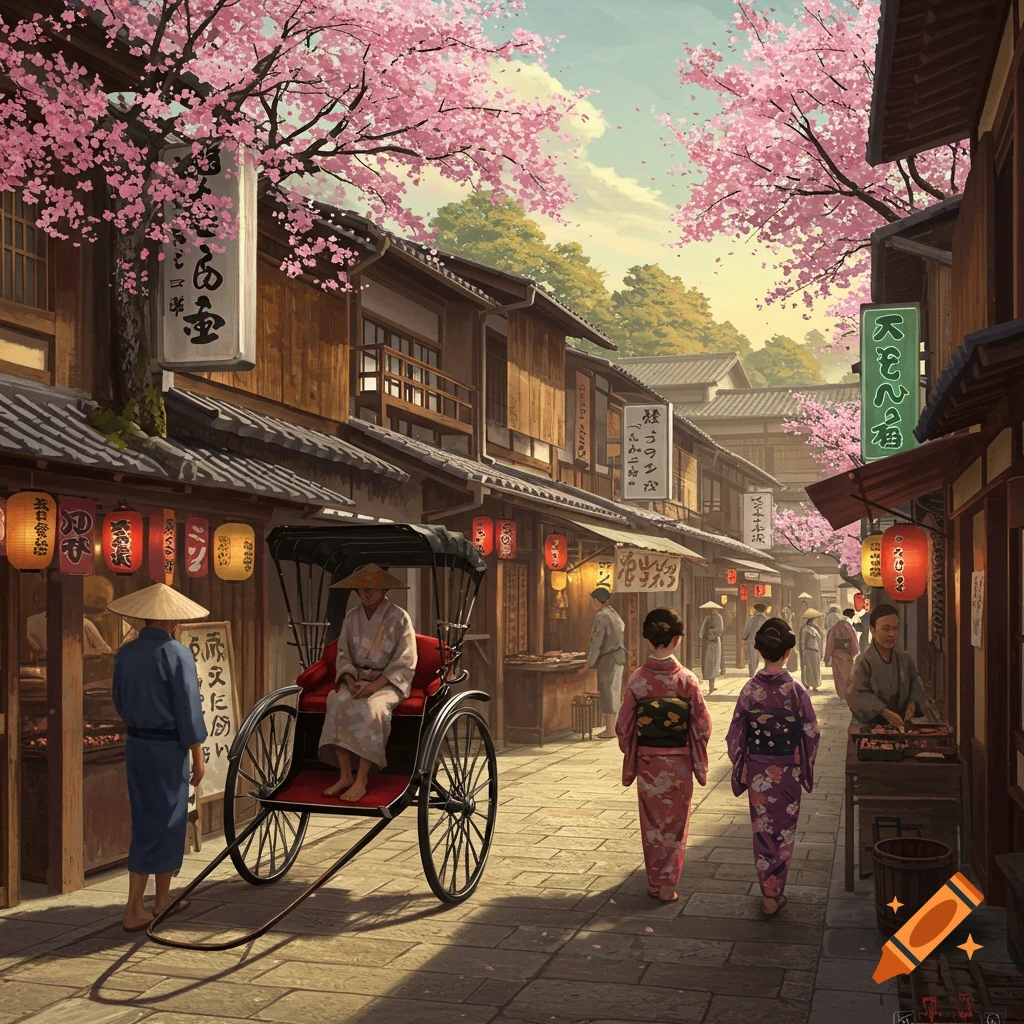
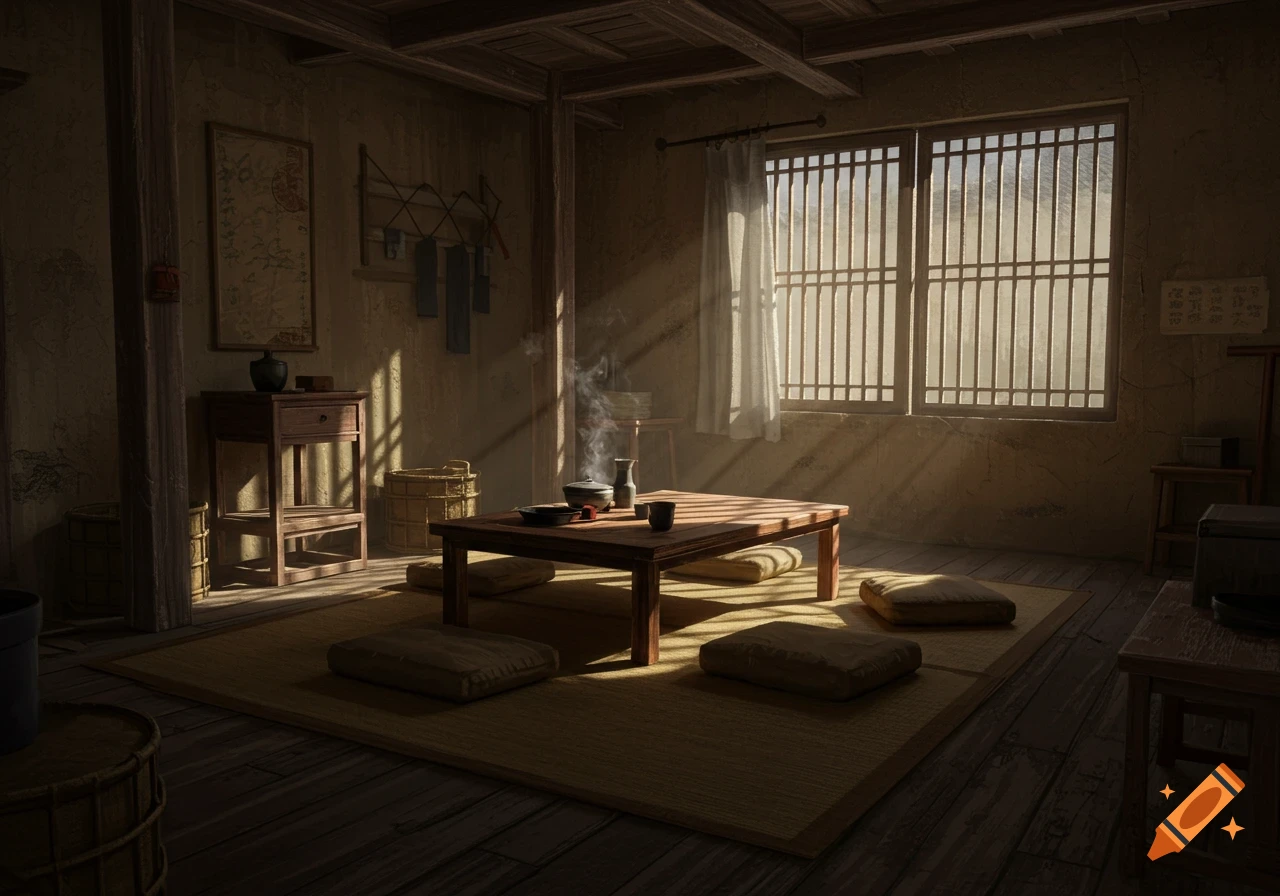
An evening scene inside a commoner's house during the mid-Edo period in Japan. A wooden machiya-style single or two-story home with a tiled roof and lattice windows. At dusk, soft sunset light filters through shoji and lattice doors, while the interior is warmly lit by a sunken hearth (irori) and paper lanterns (andon). The house features a dirt floor (doma) and tatami rooms. The family gathers around the irori; the mother is cooking, while the children play and talk. The father, dressed in a simple kimono, appears to be resting after working on the farm or as a merchant. Walls are adorned with tenugui cloths, Japanese umbrellas, bamboo baskets, and wooden tools. Rice straw bags and pickling barrels are placed in a corner. Outside, narrow alleys and stone pavements are visible, with dim lights from neighboring houses illuminating the area. The overall atmosphere is warm, calm, and richly detailed, conveying the everyday life of Edo-period commoners in a realistic manner.y burning flames of firewood serve as the sole light source, illuminating the entire room with a warm, flickering glow. A faint wisp of smoke rises from the irori, slowly ascending towards the ceiling. Around the irori, the family (father, mother, and young children) are seated on "mushiro" (straw mats) or "komo" (rush mats), eating their evening meal. They are dressed in simple, subdued-colored kimonos made of hemp or cotton. On the table are grains such as millet (awa) and barnyard millet (hie) served in See more