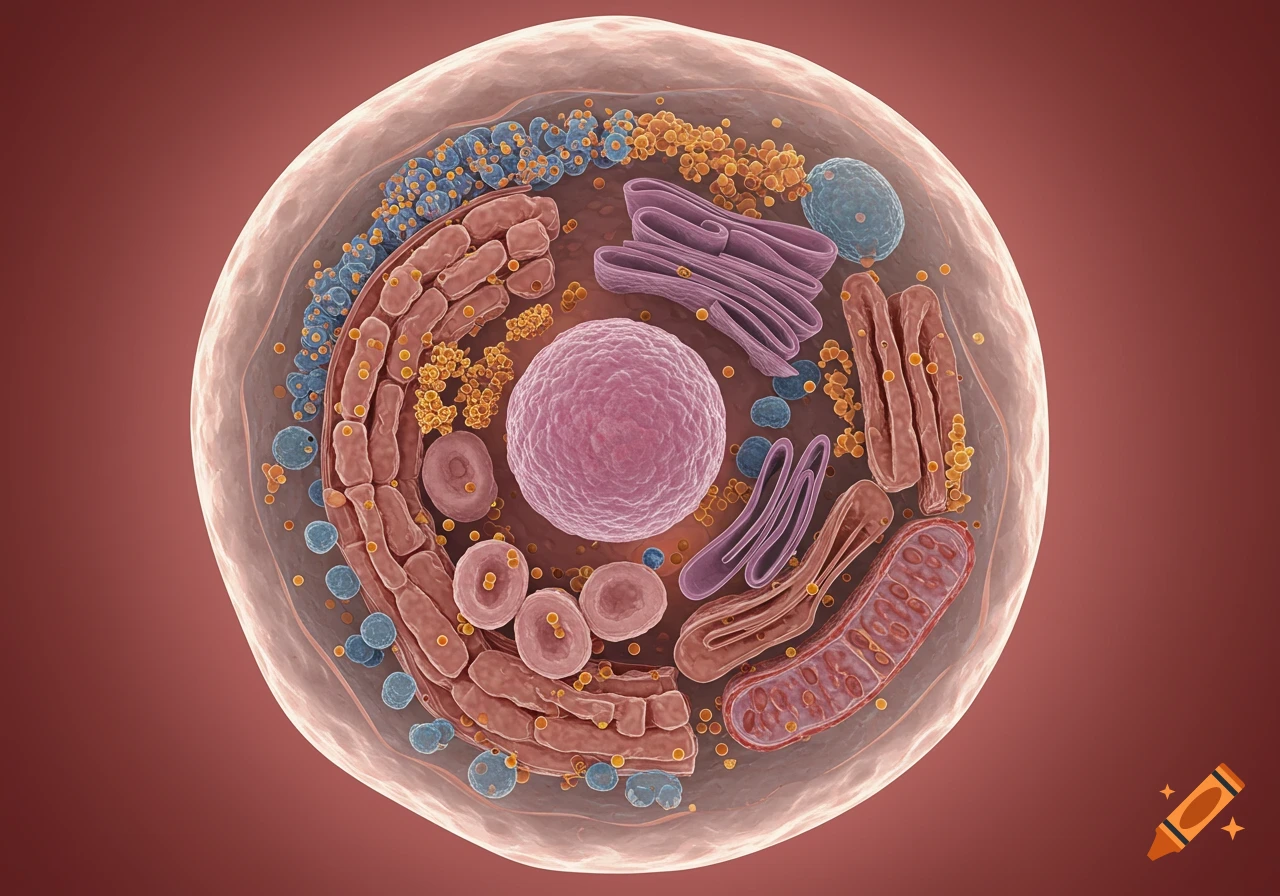
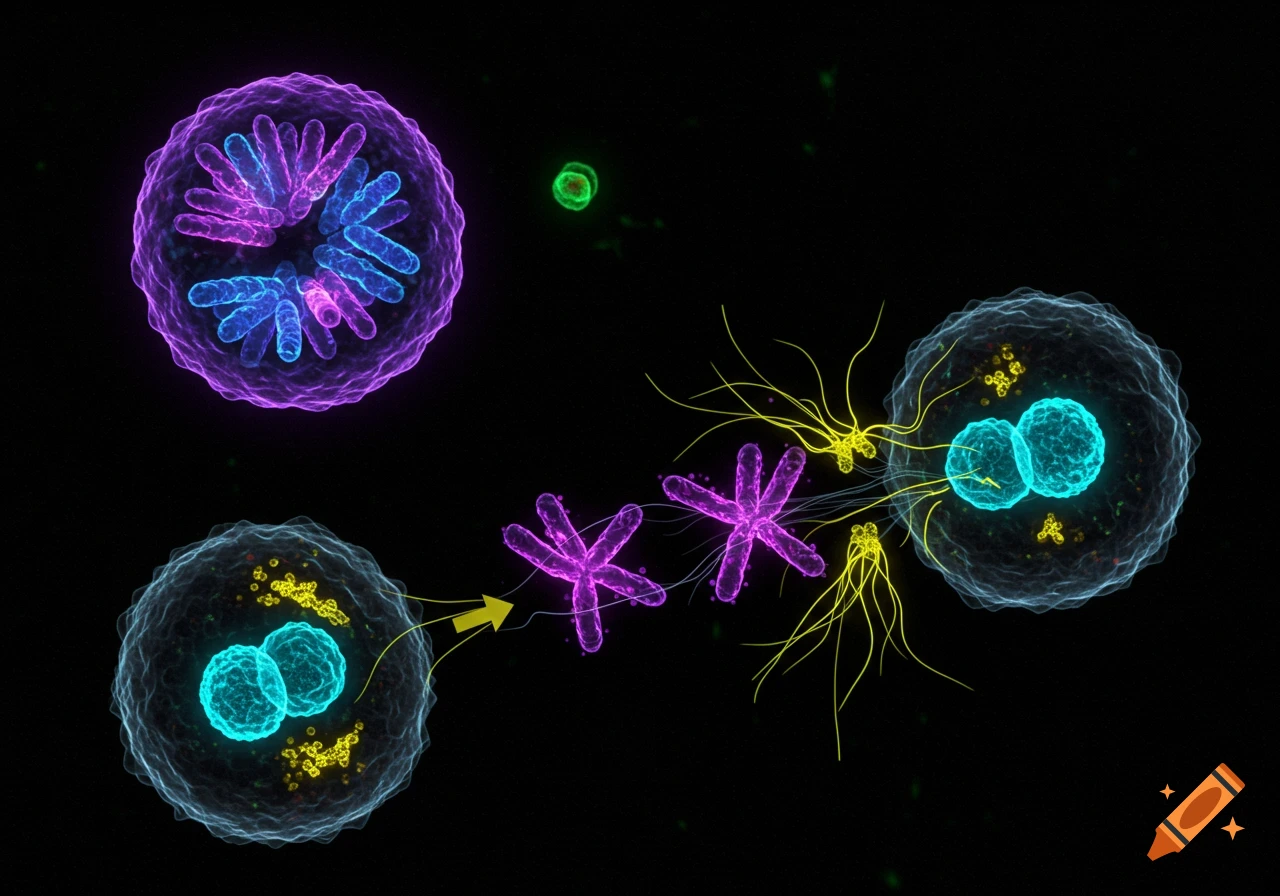
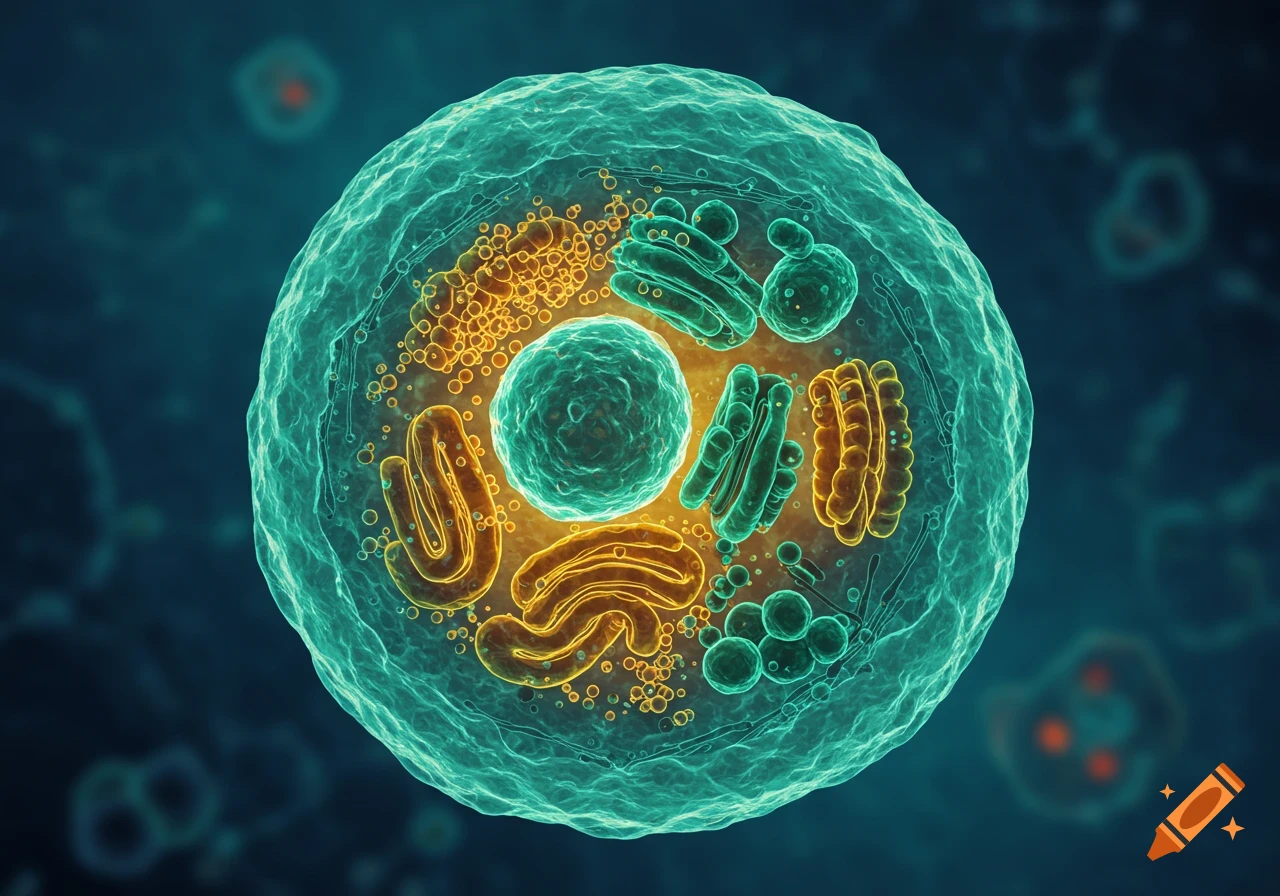
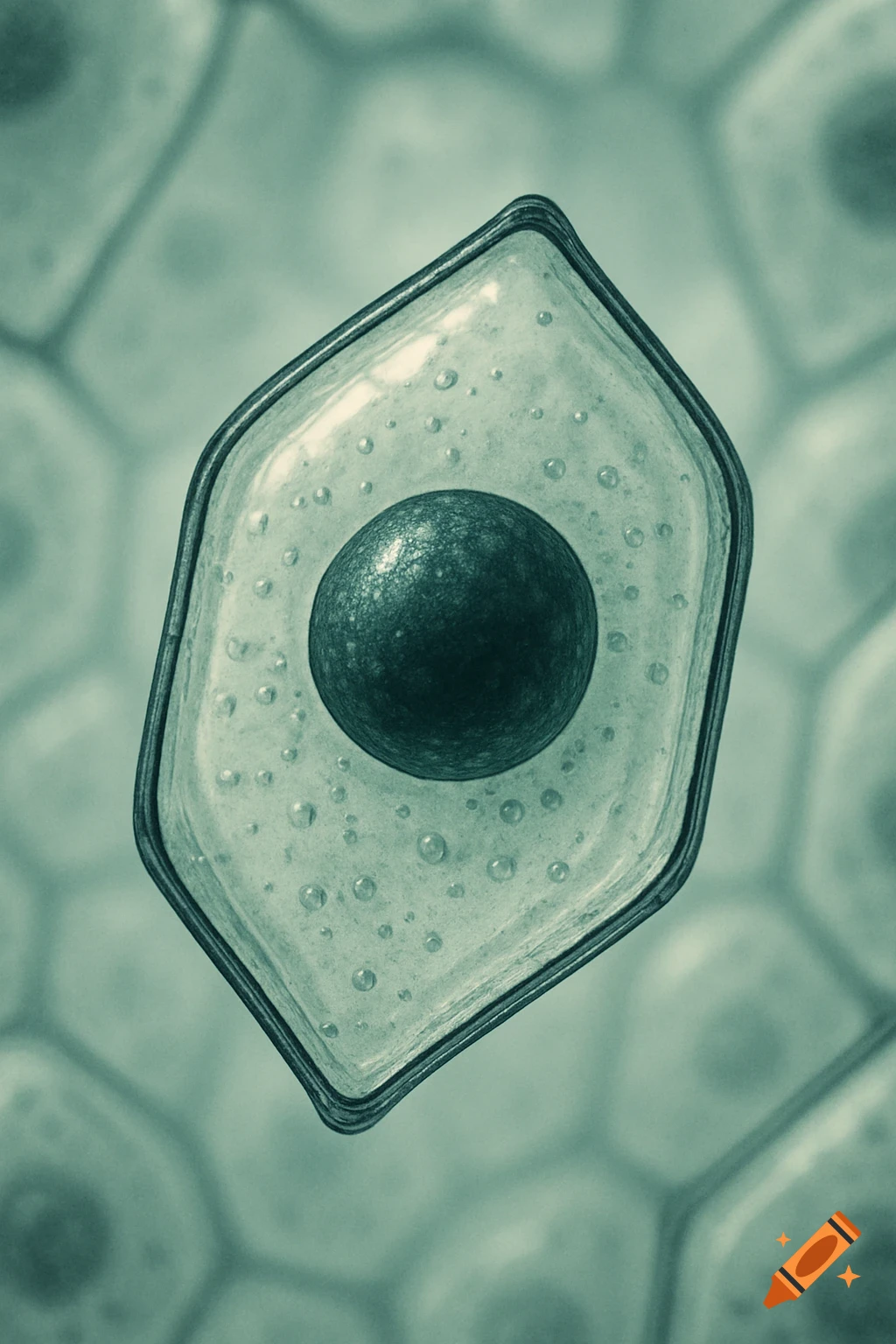
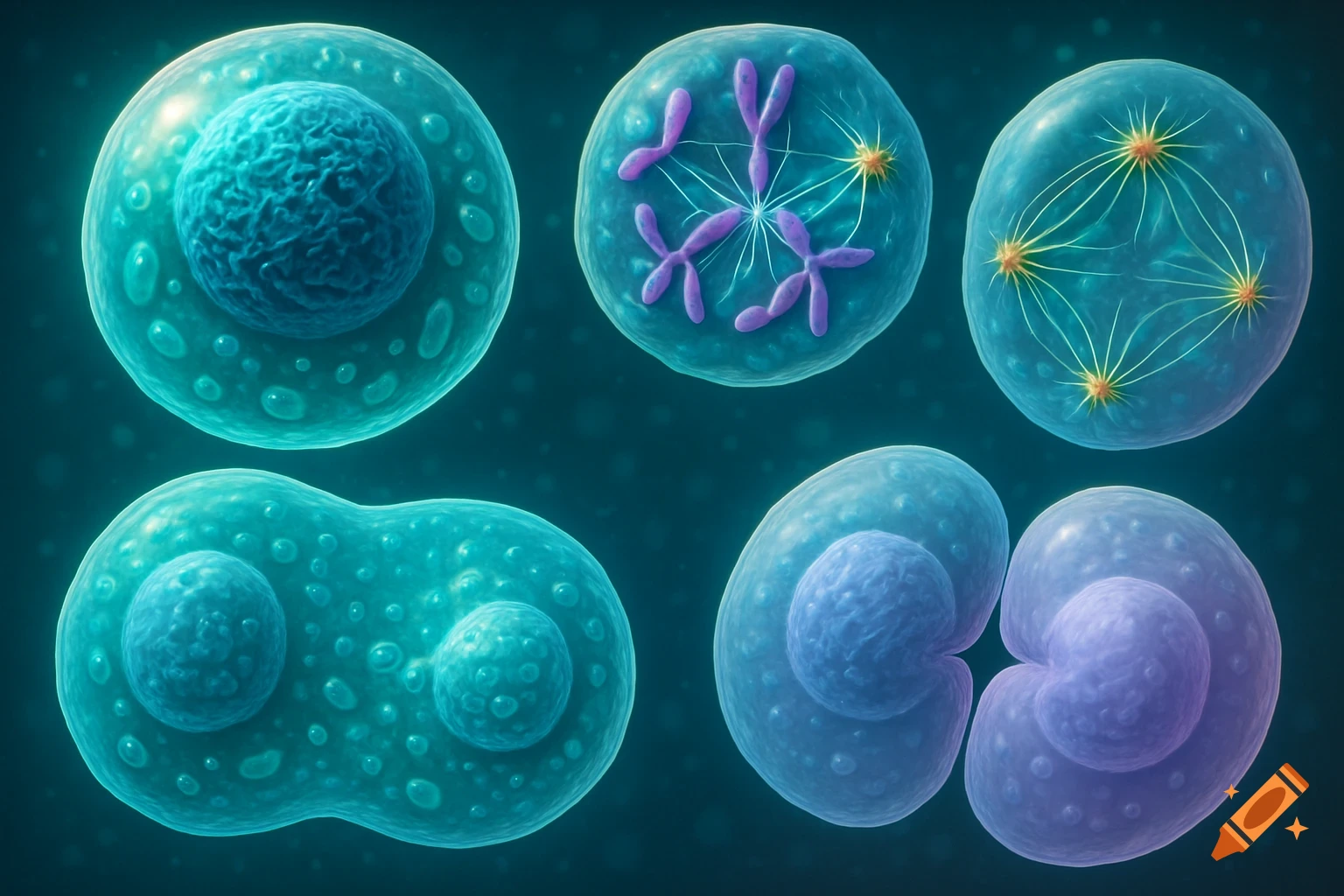
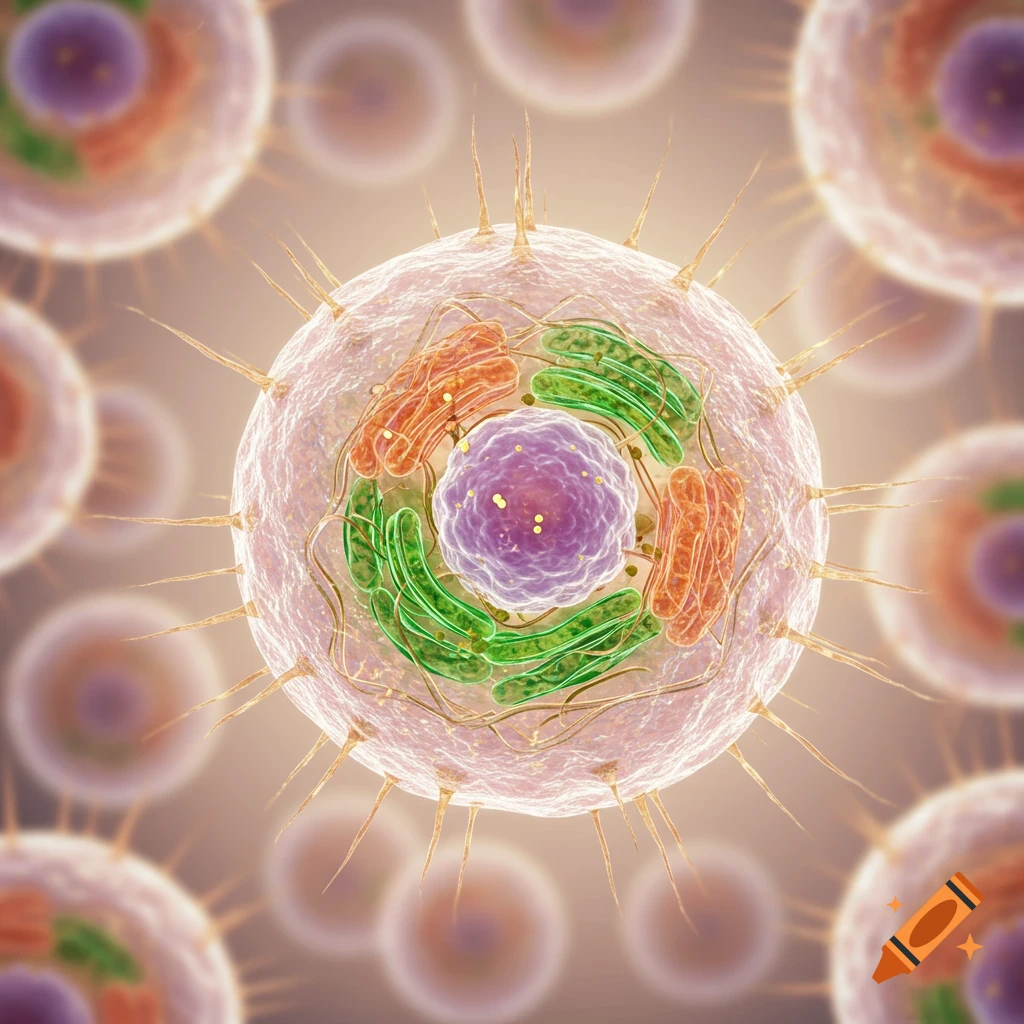
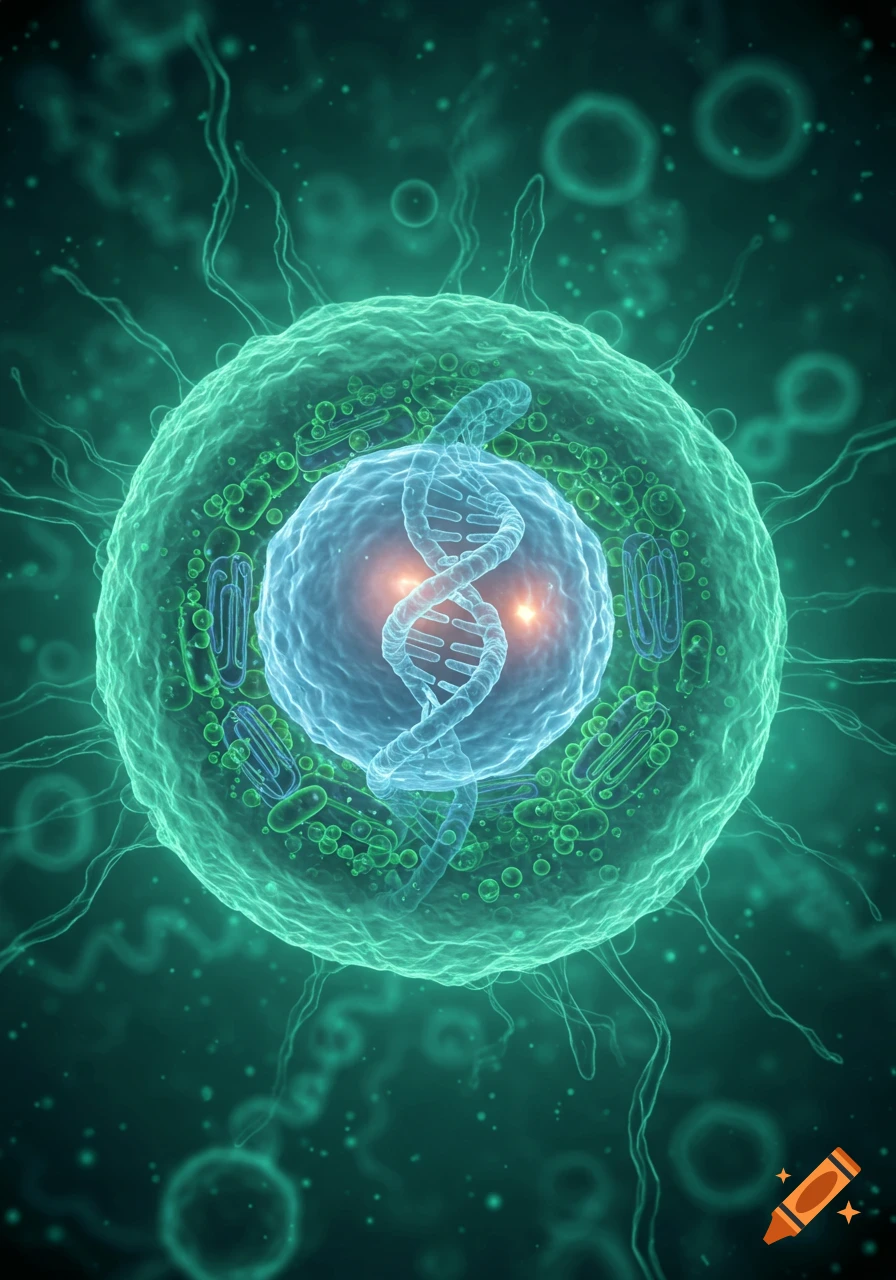
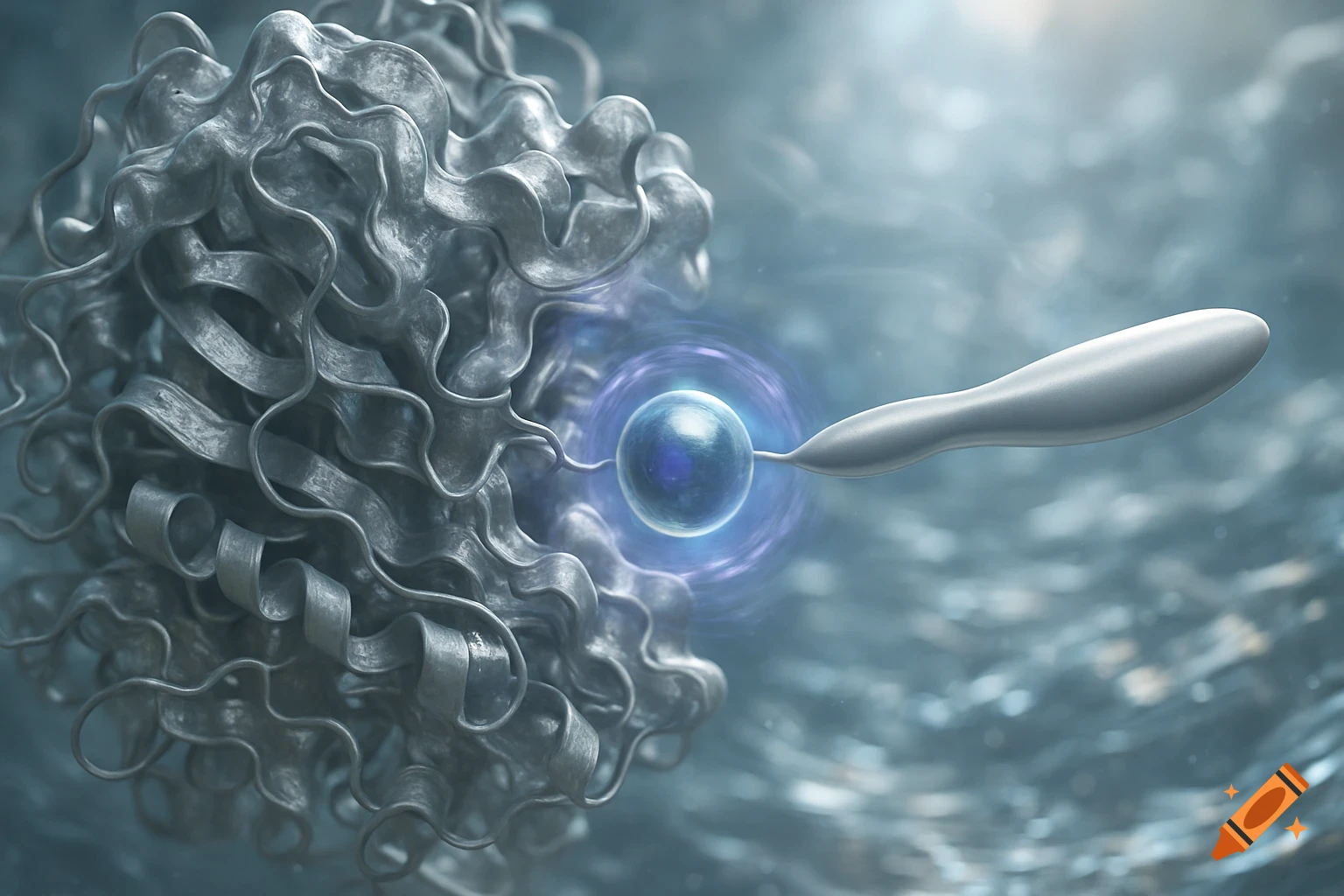
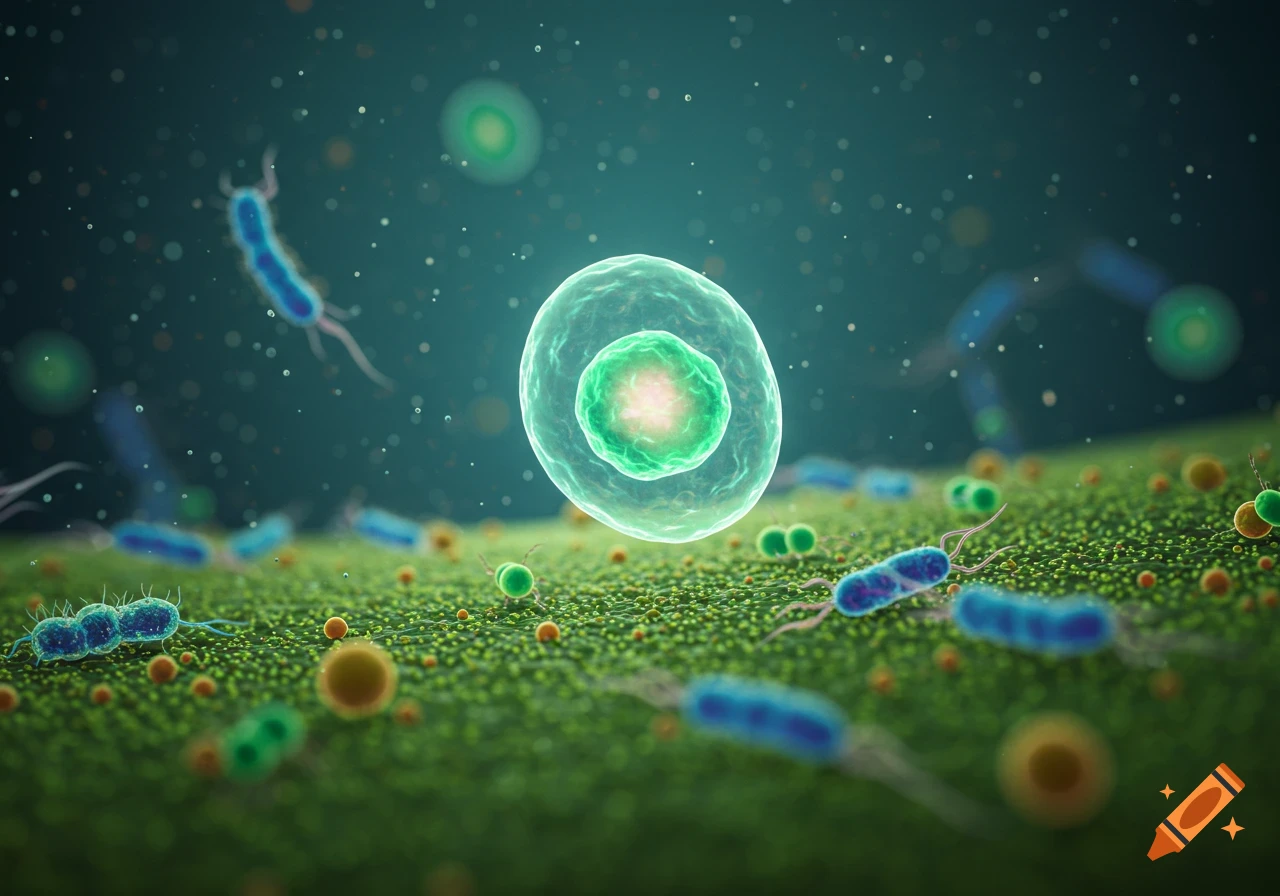
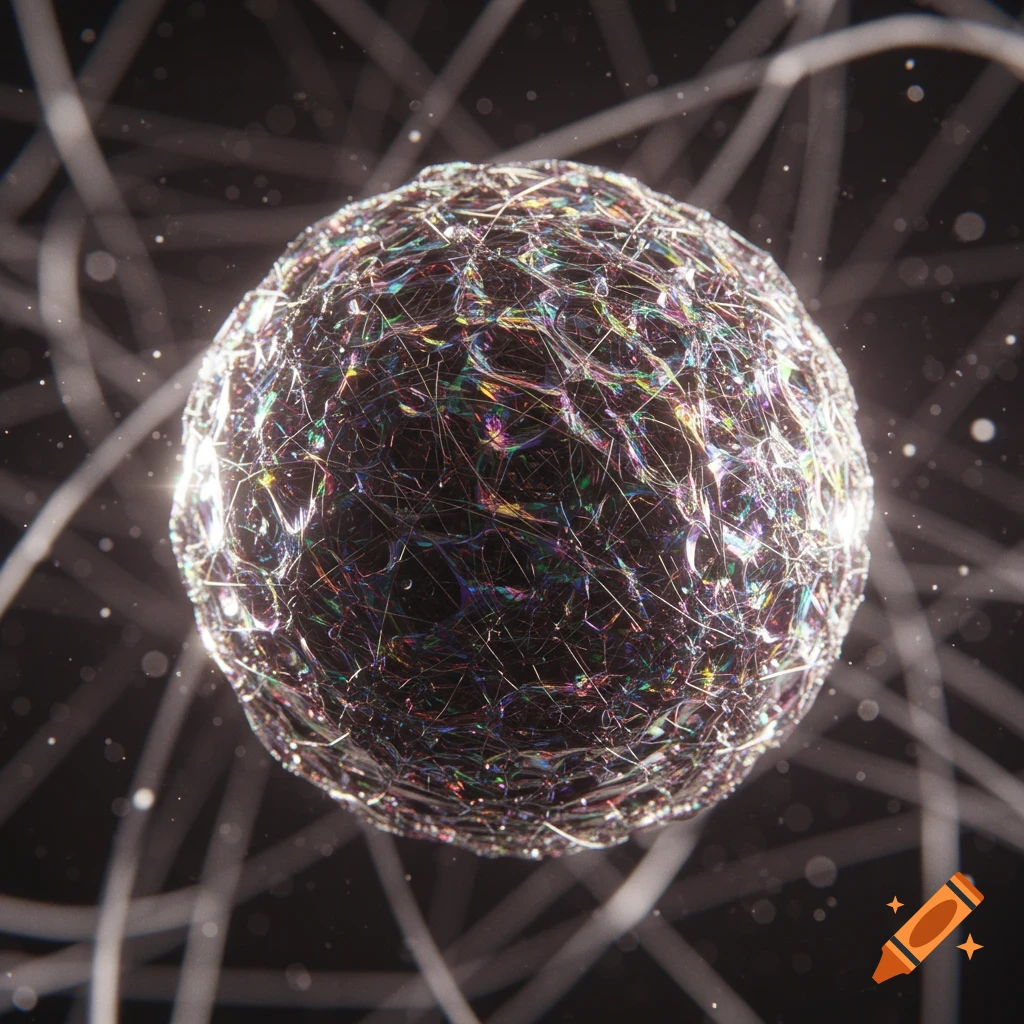
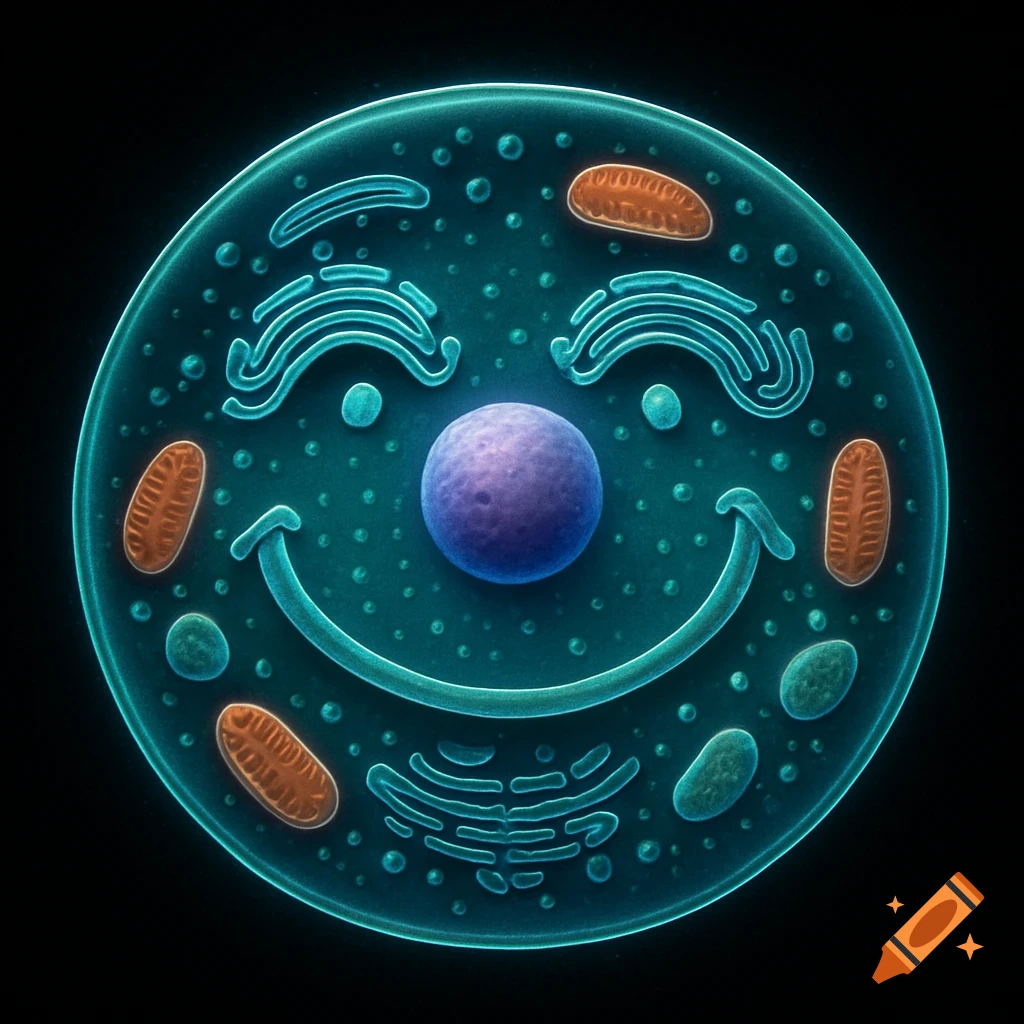
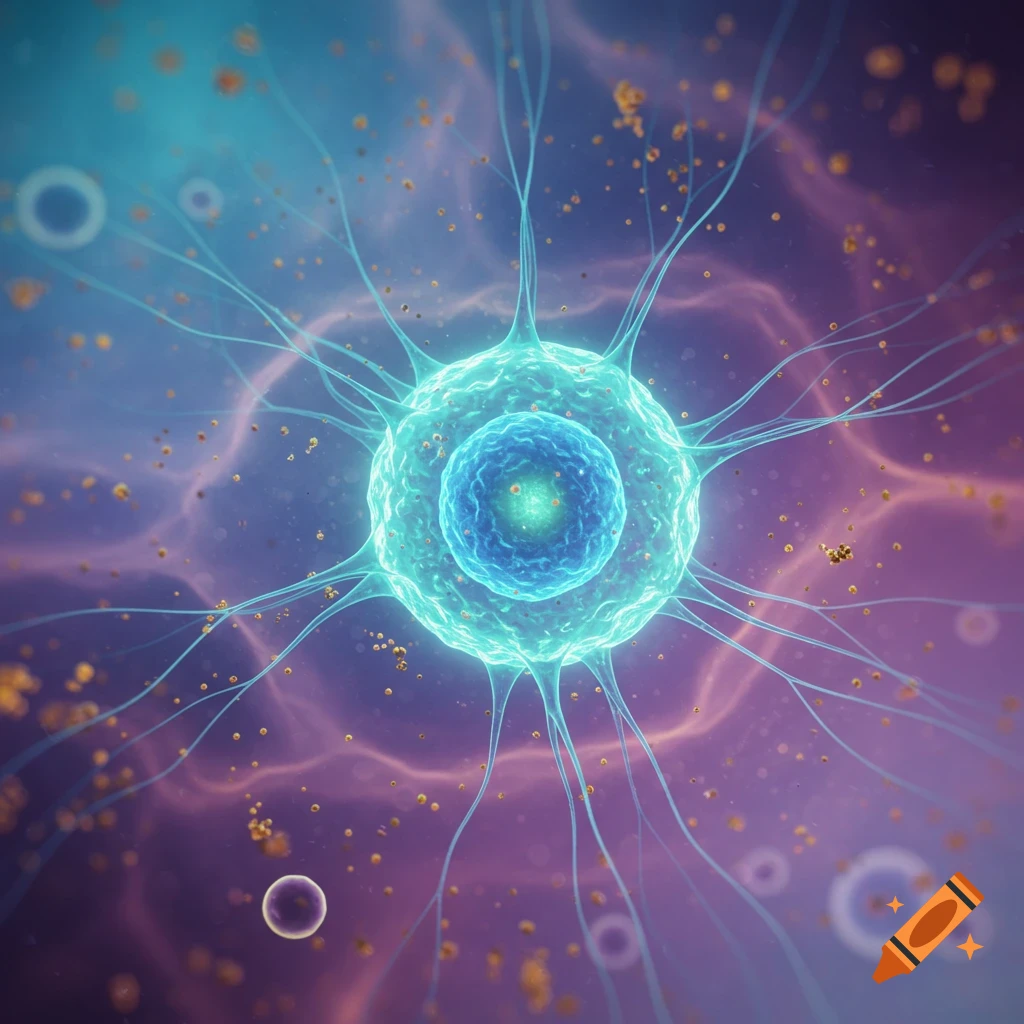
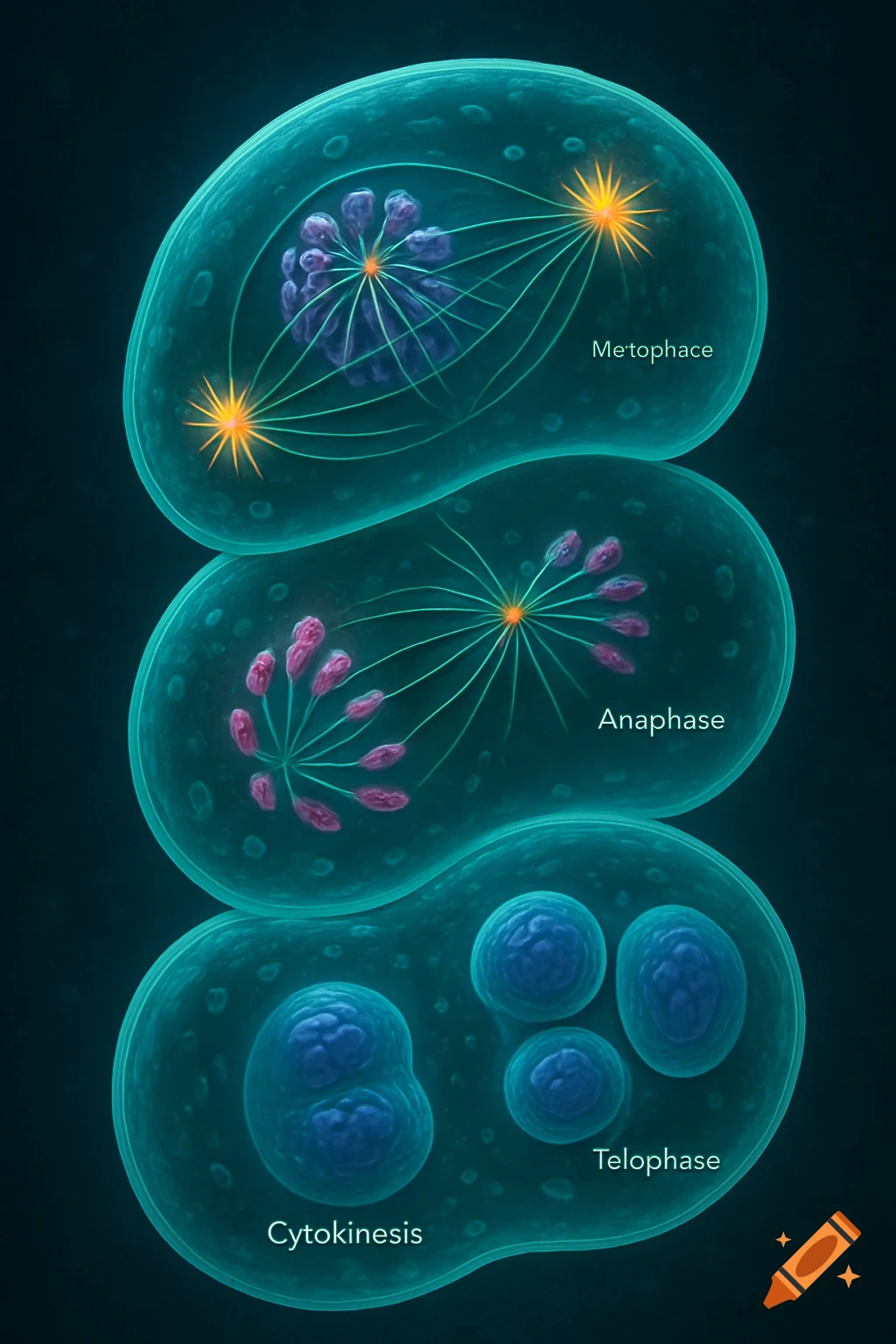
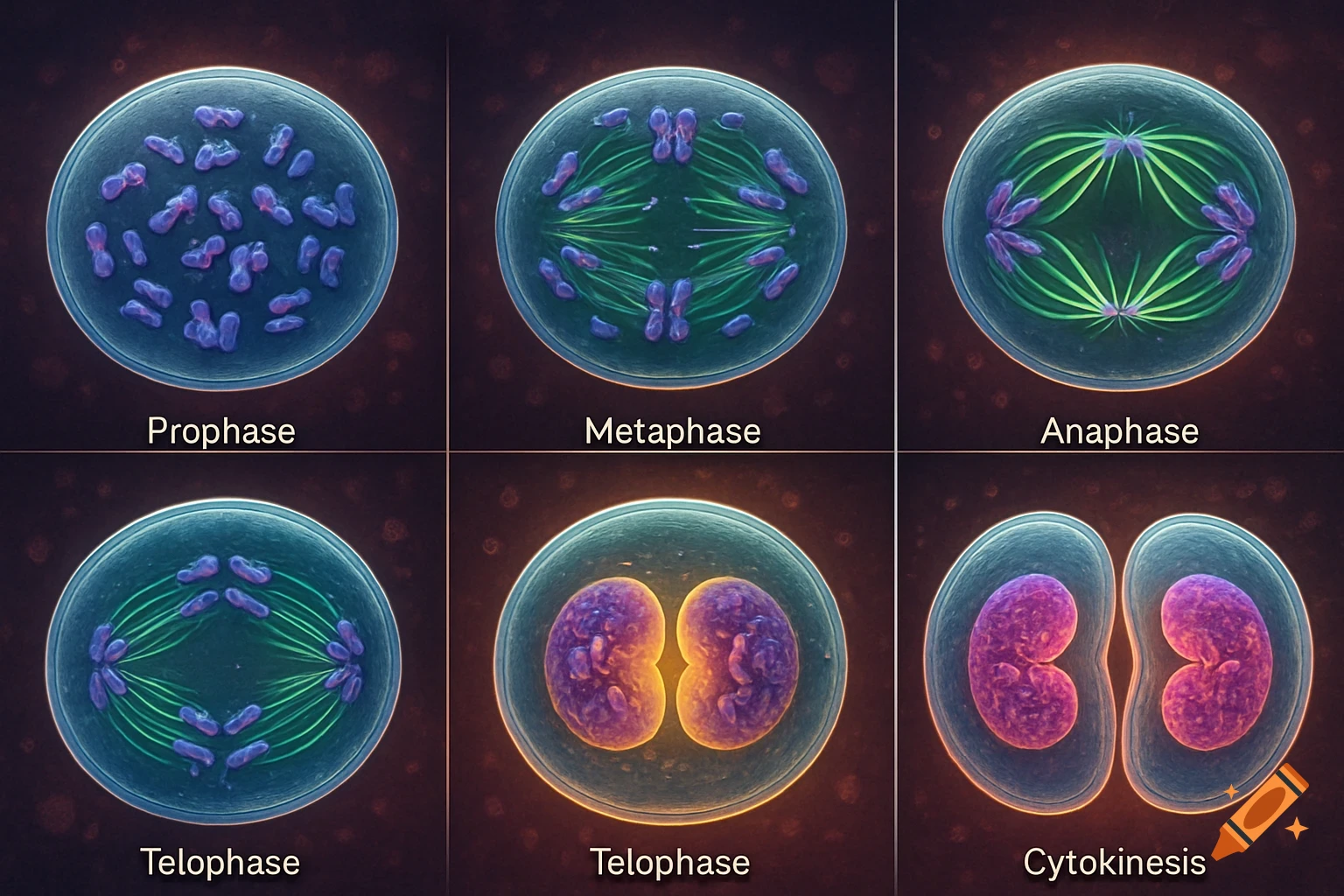
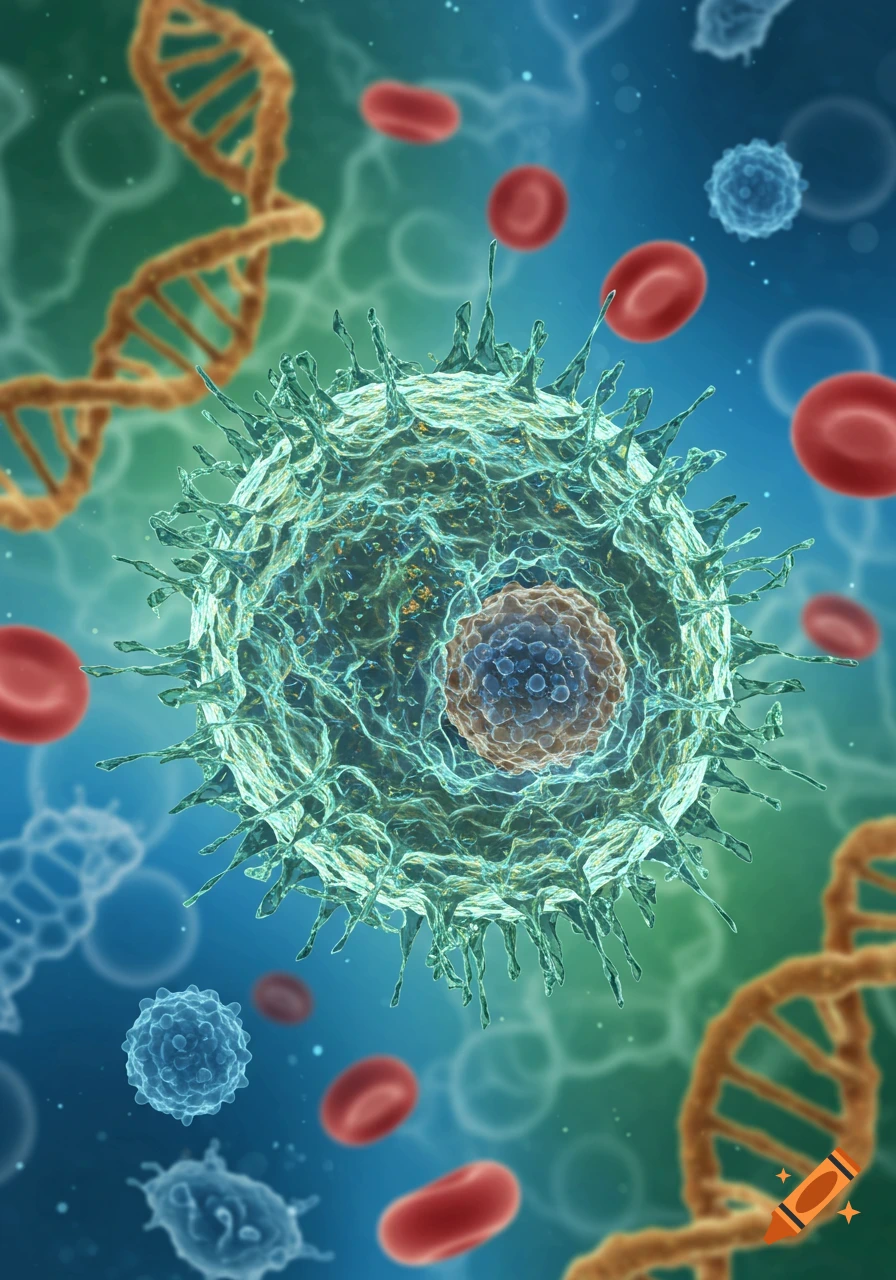
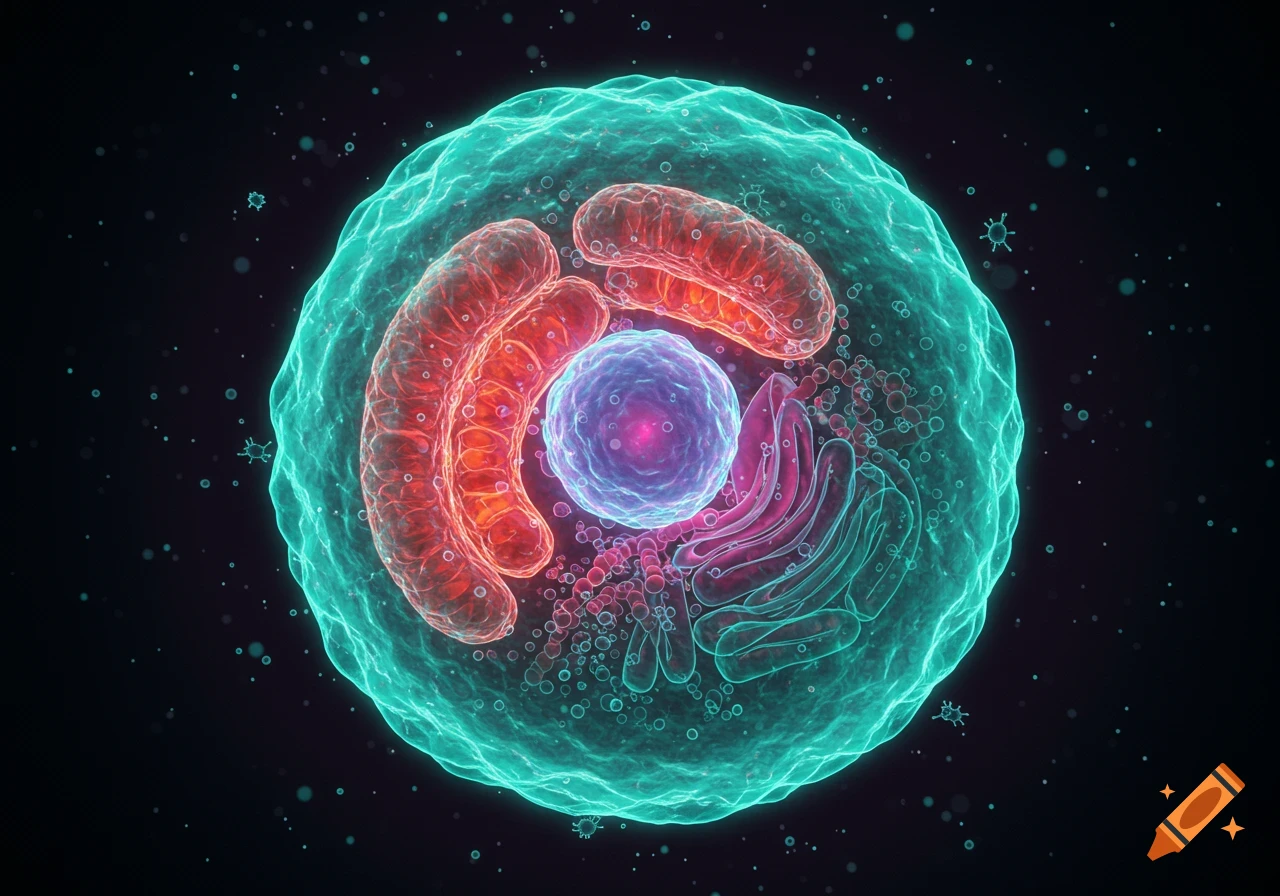
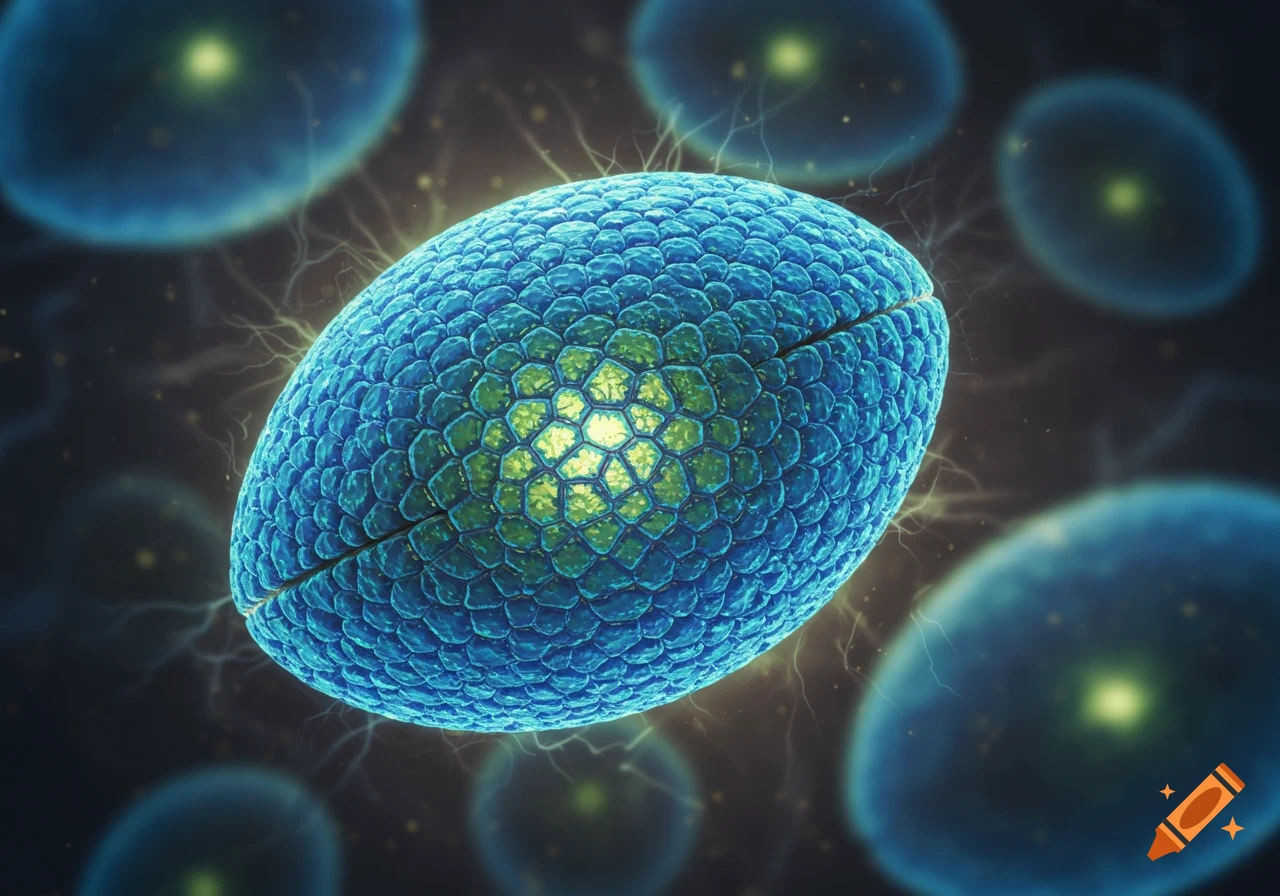
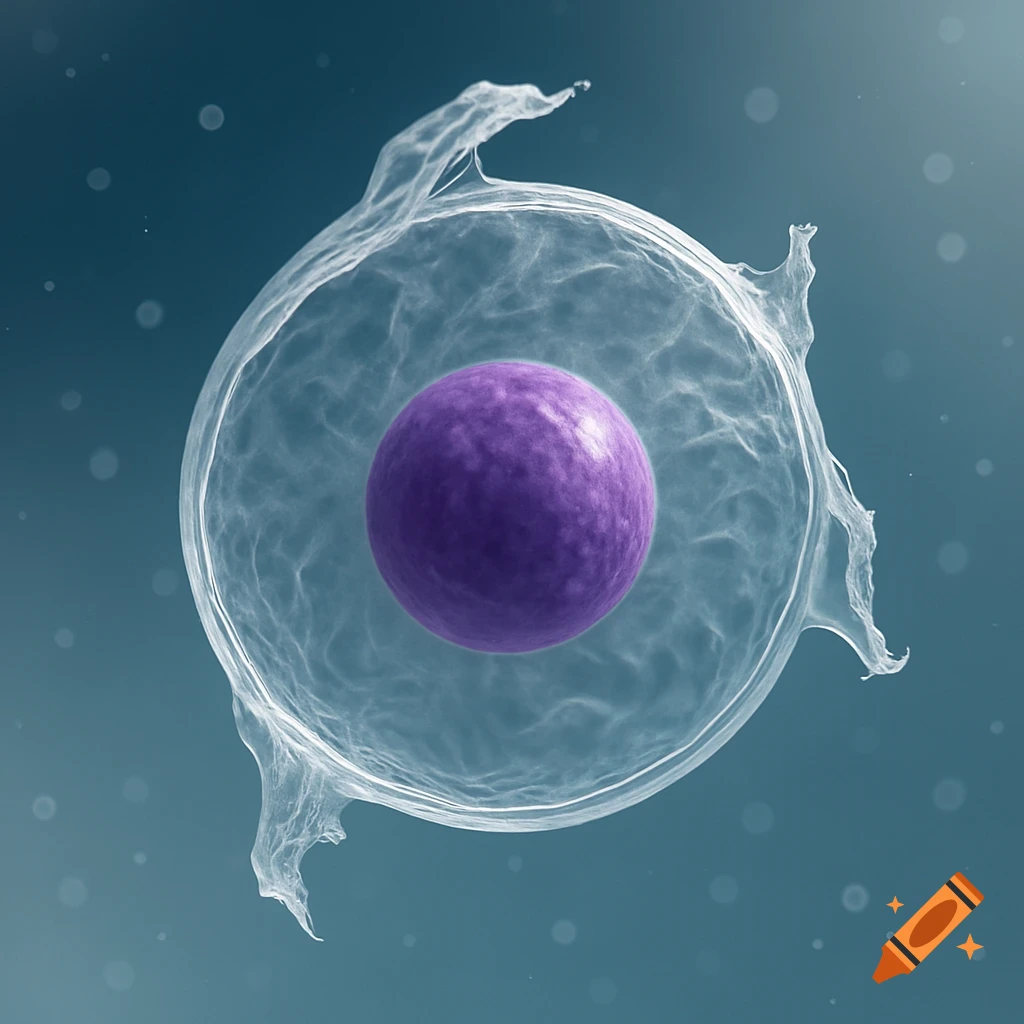
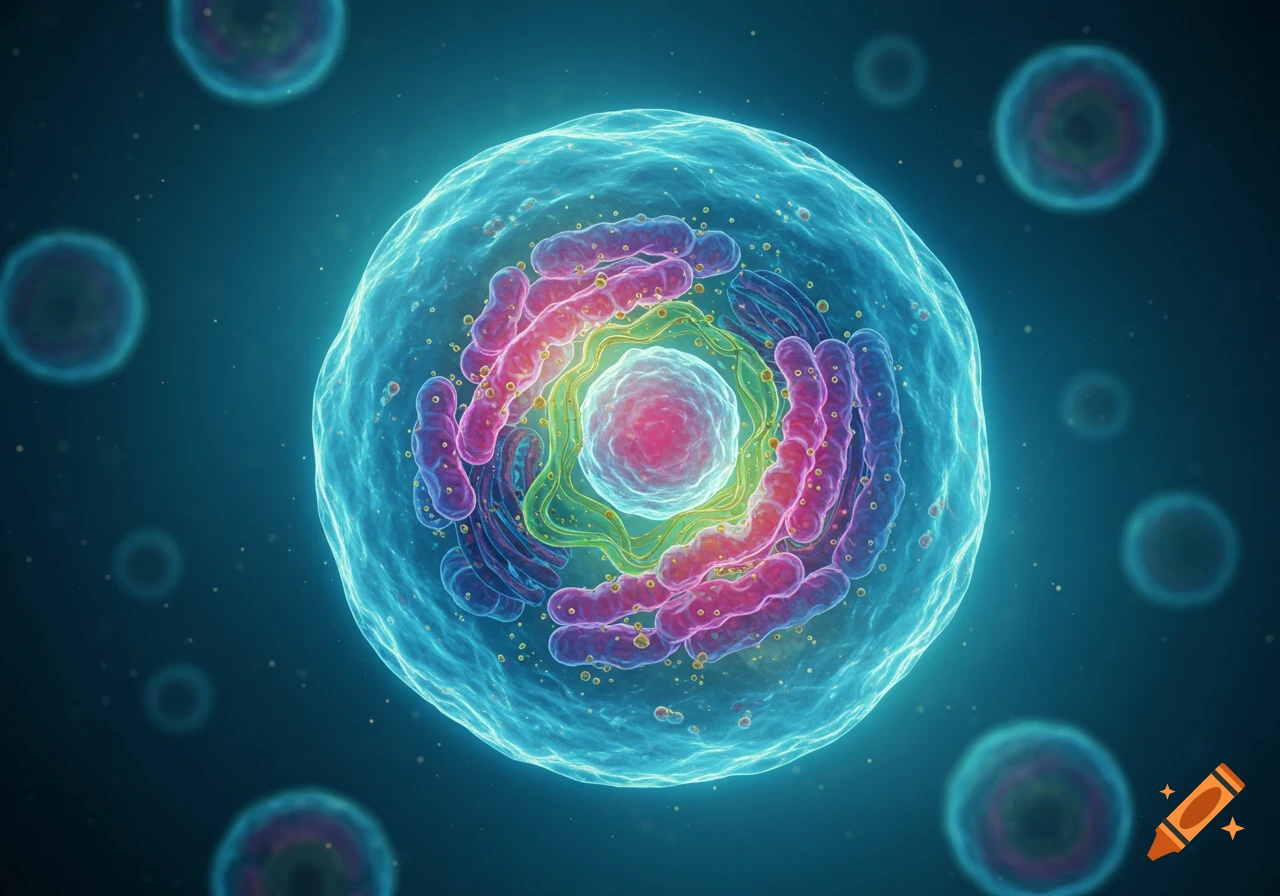
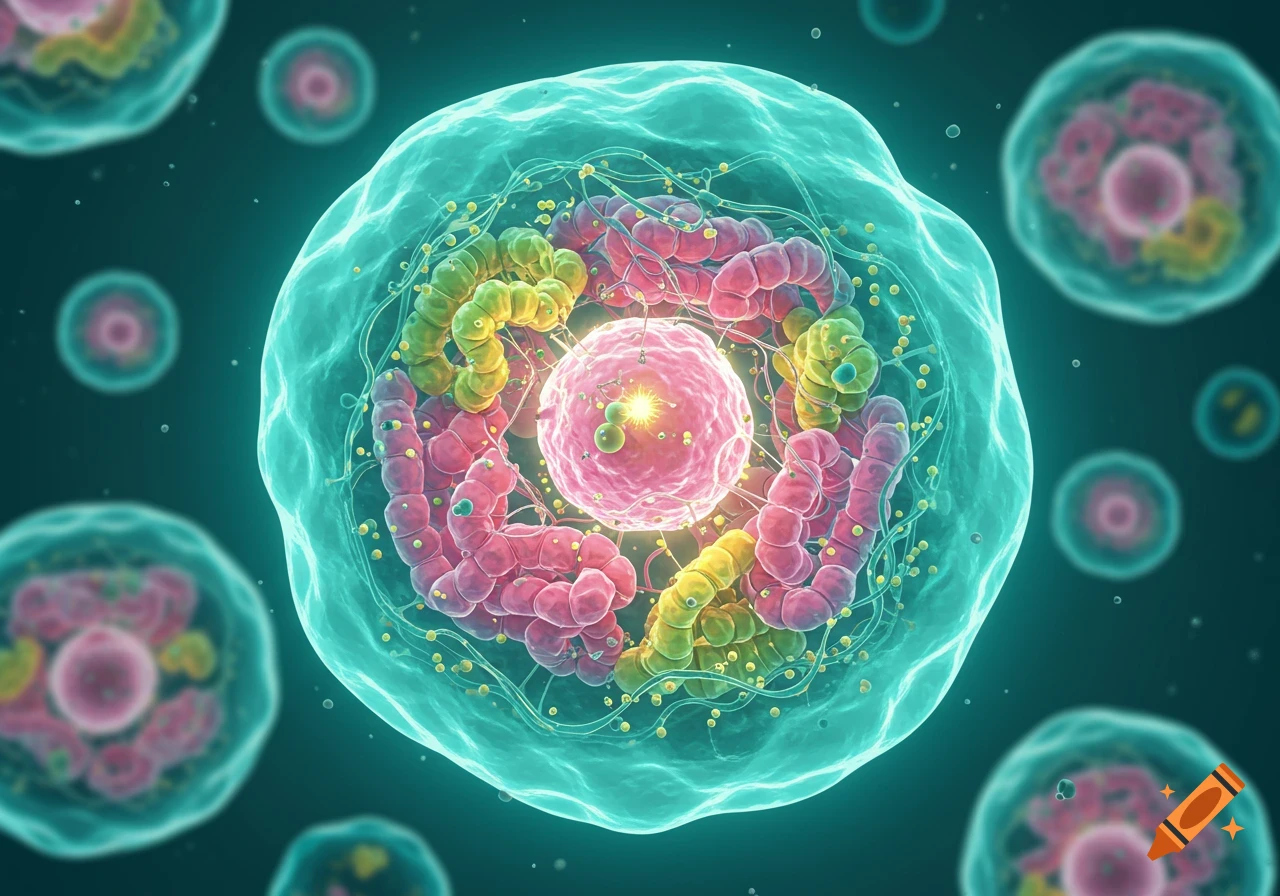
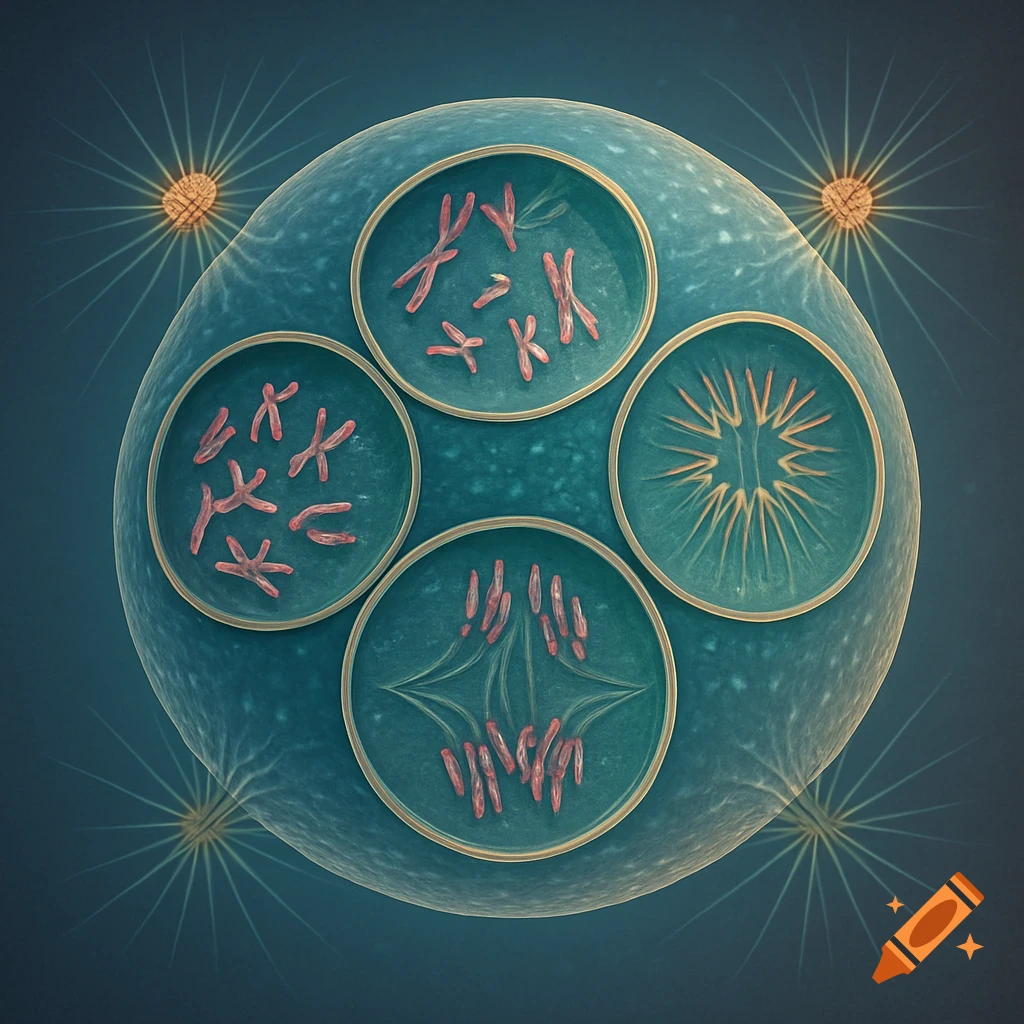
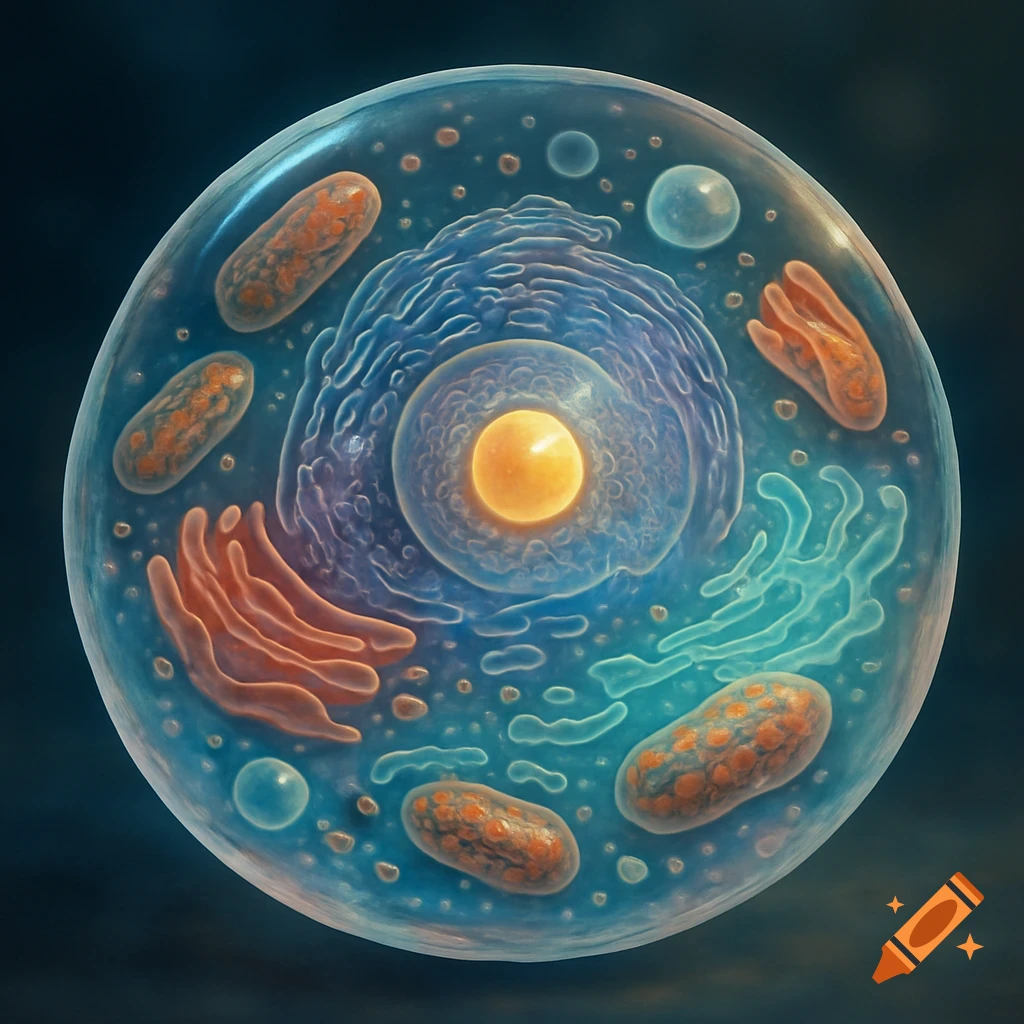
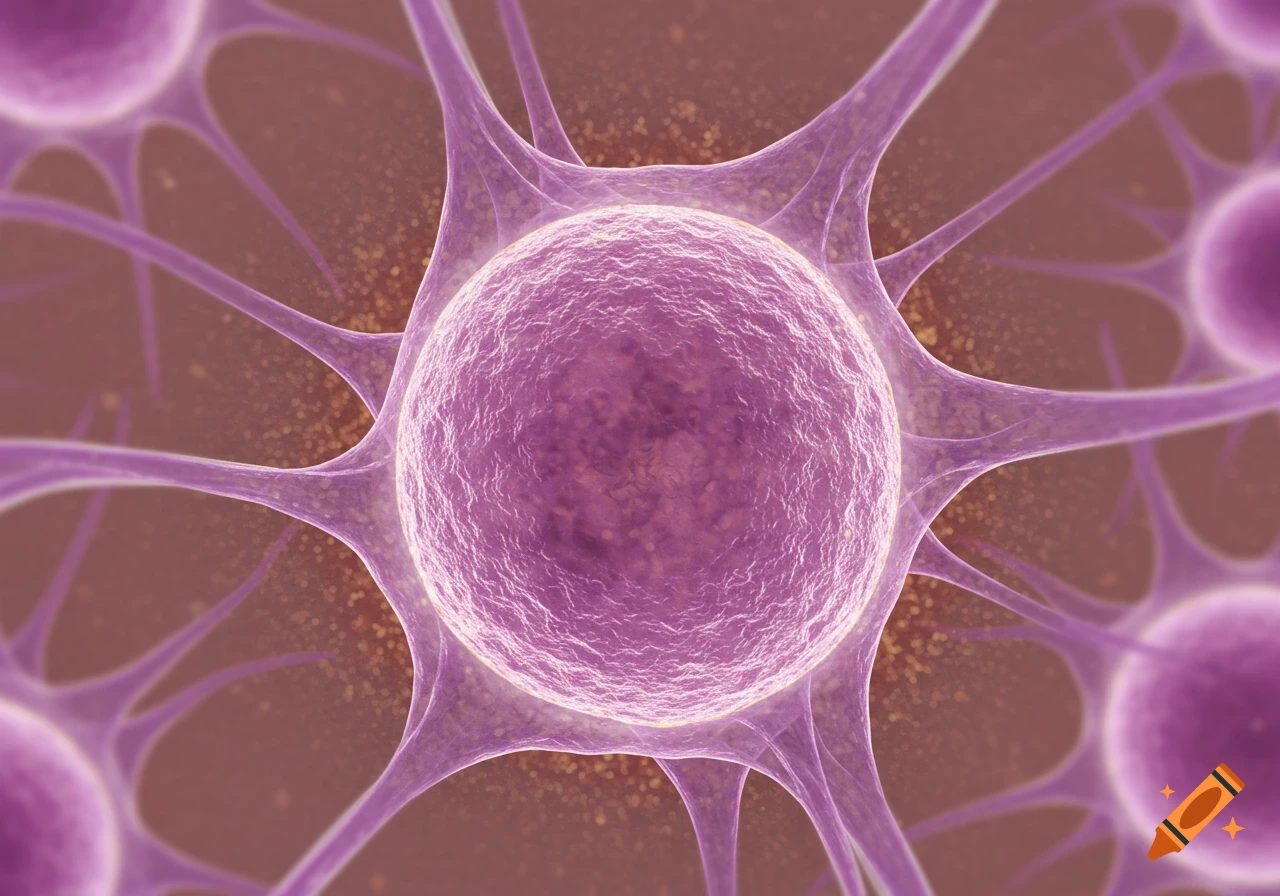
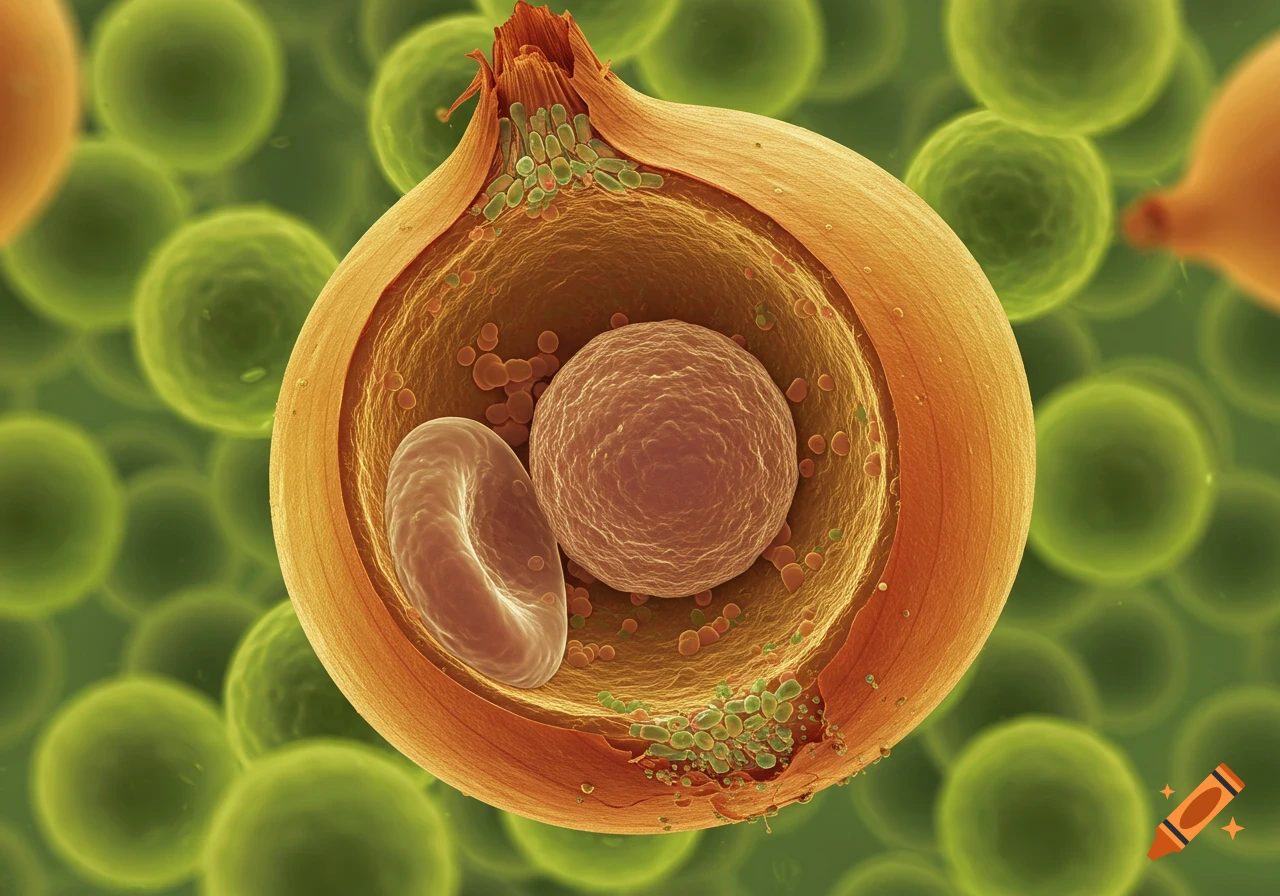
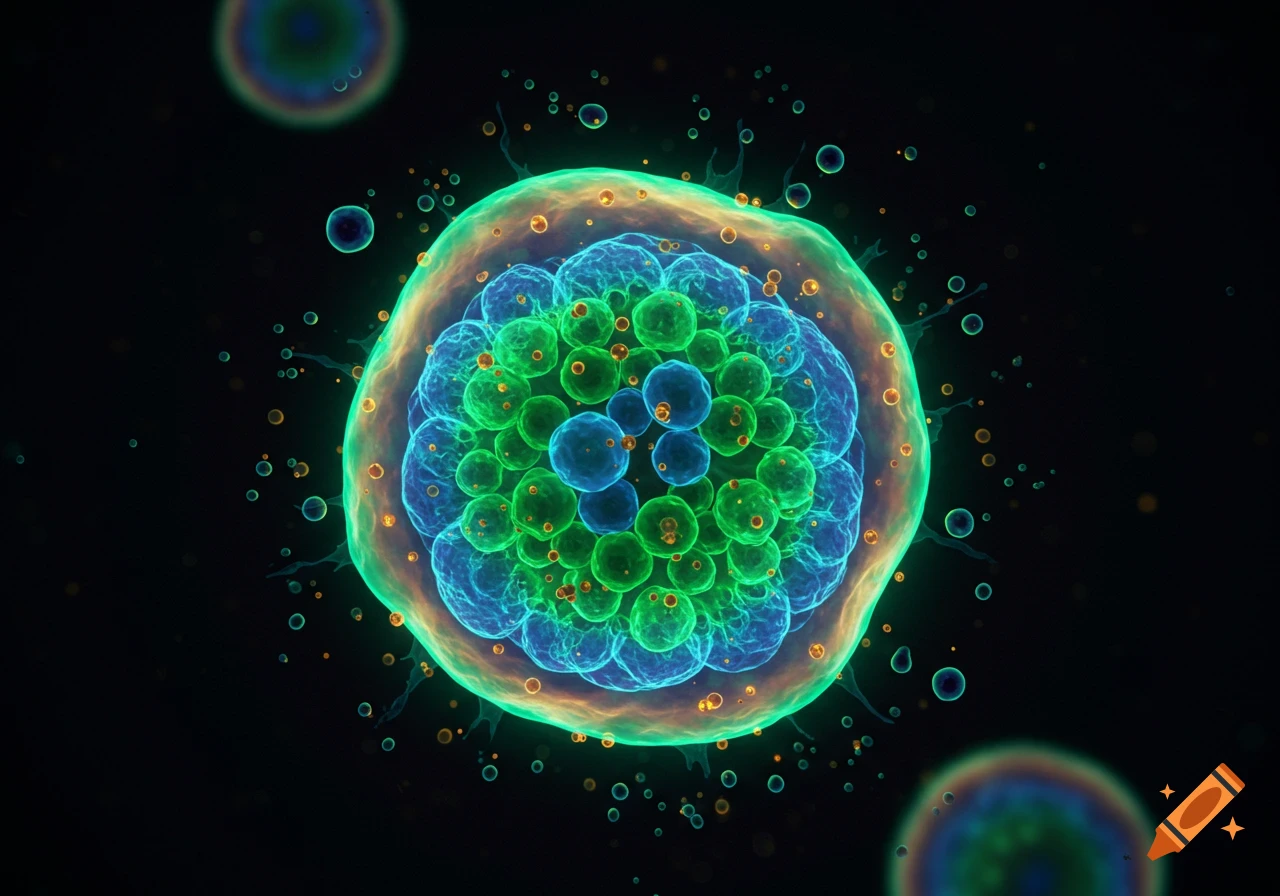
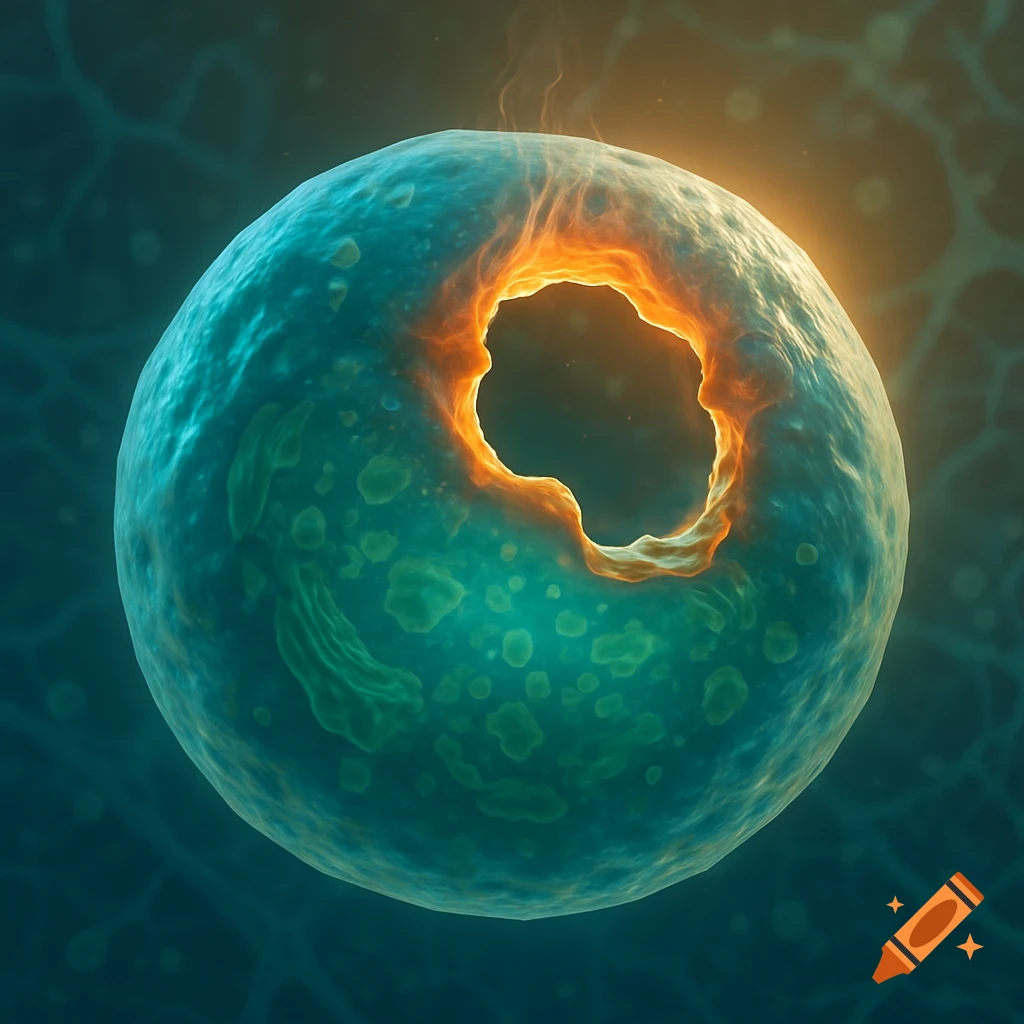
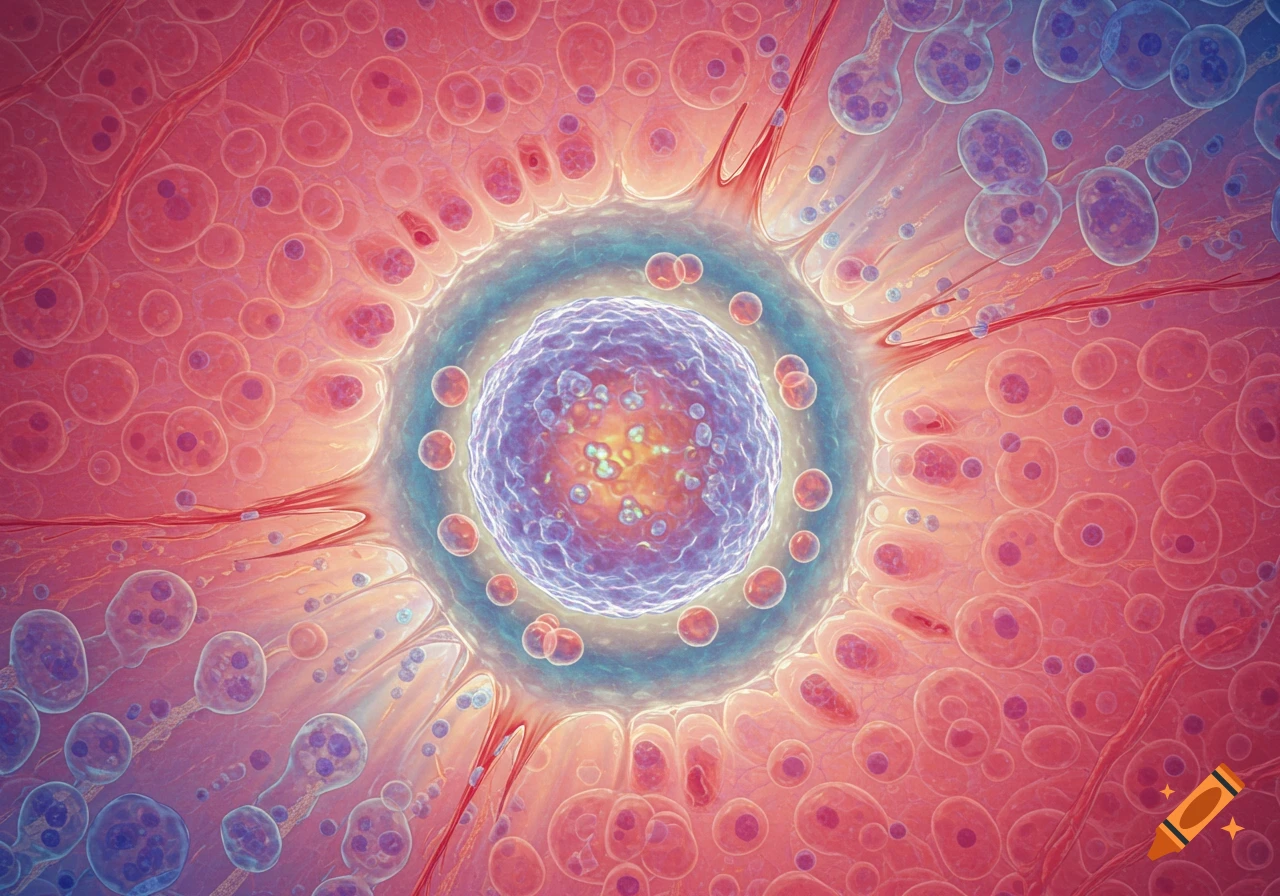
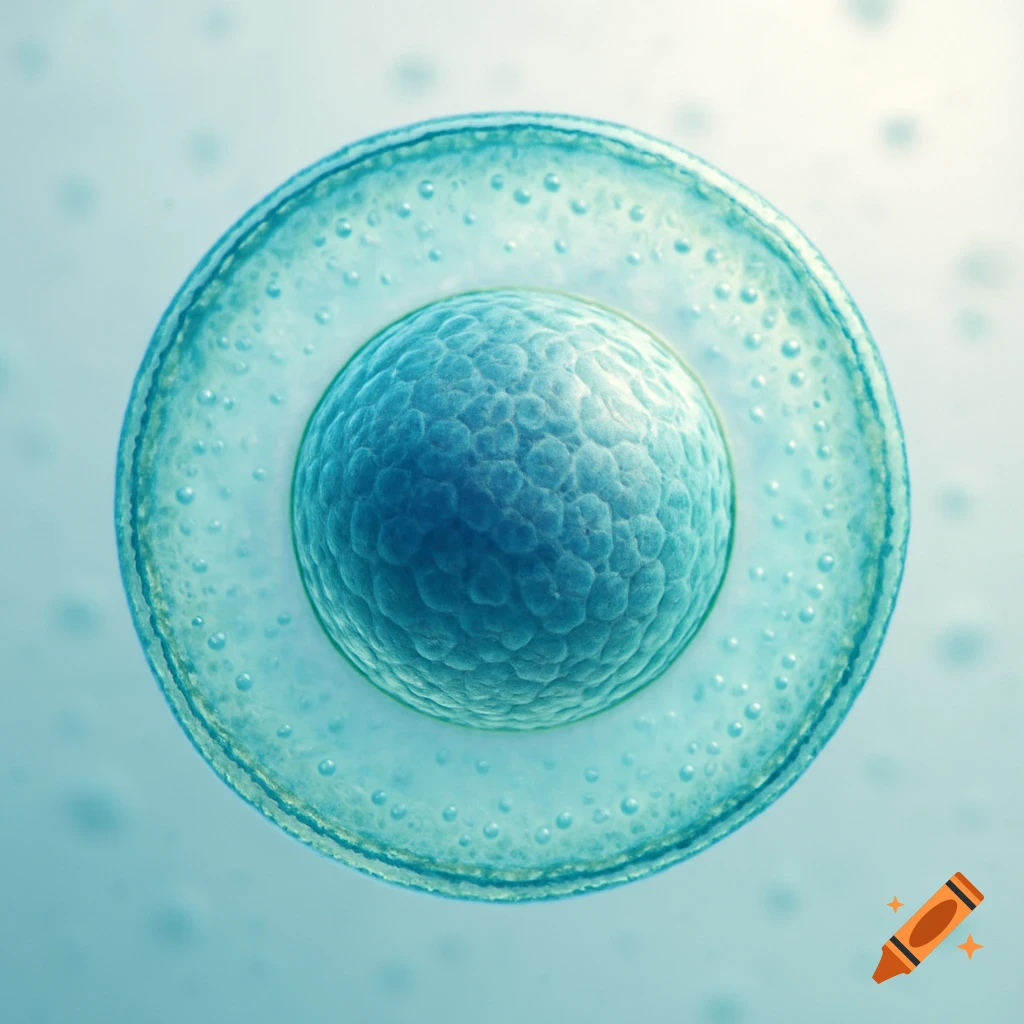
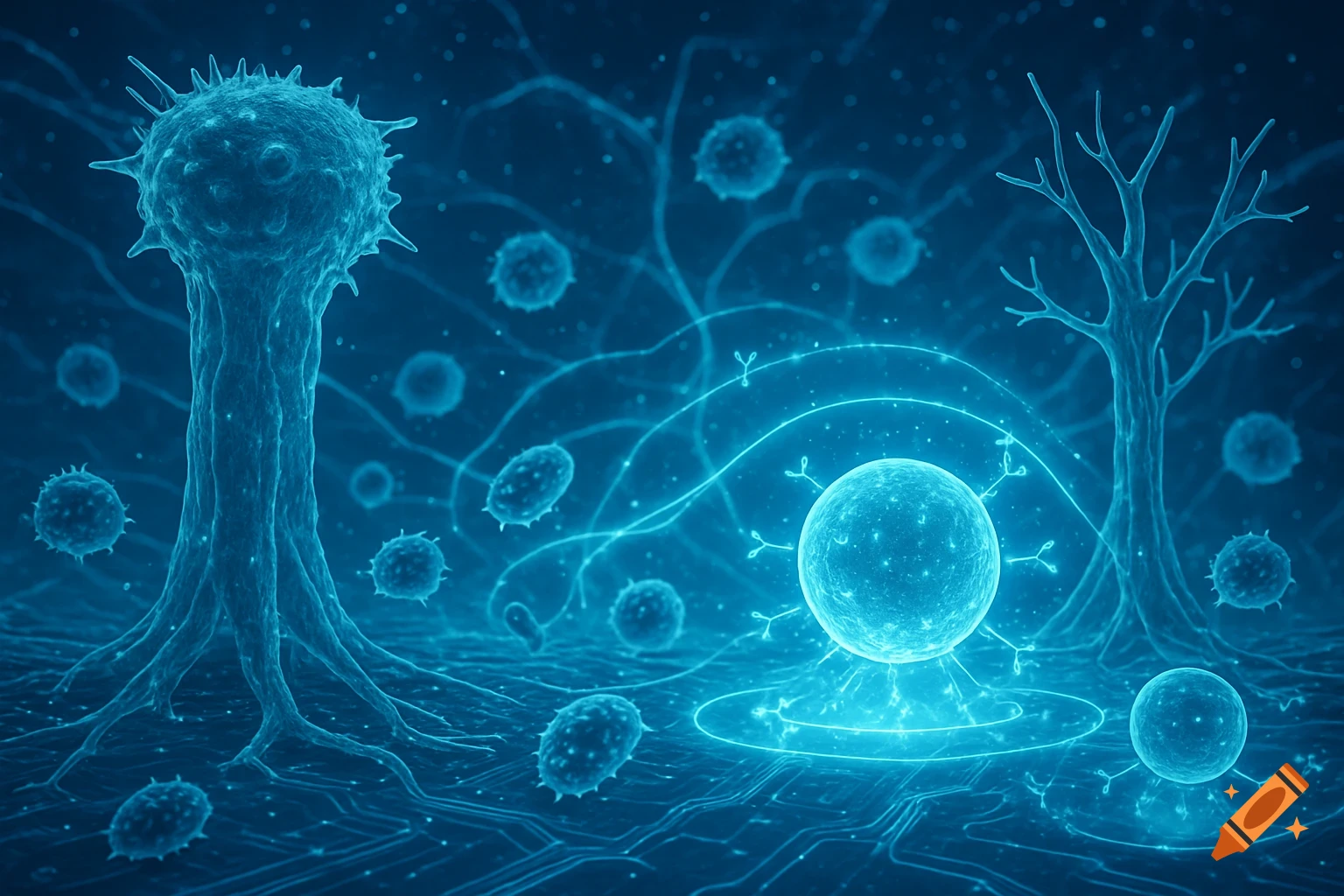
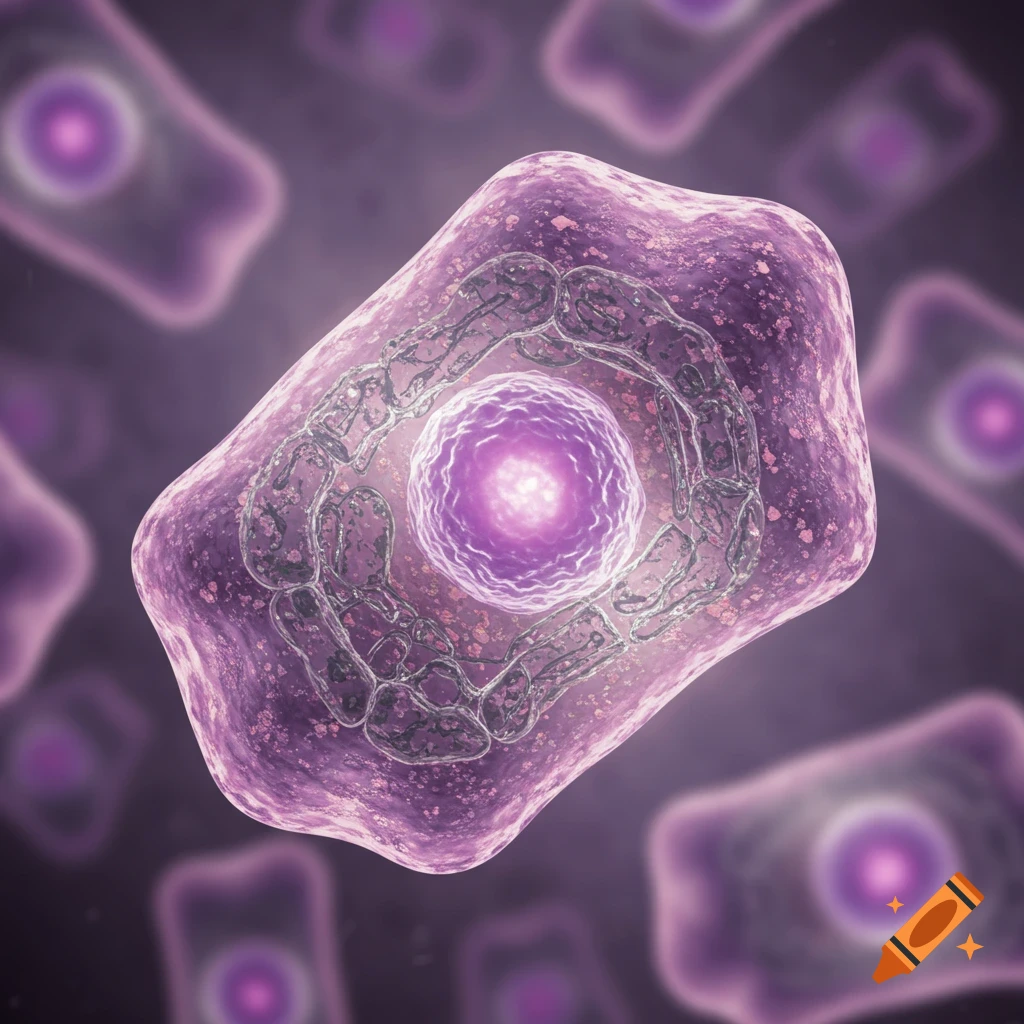
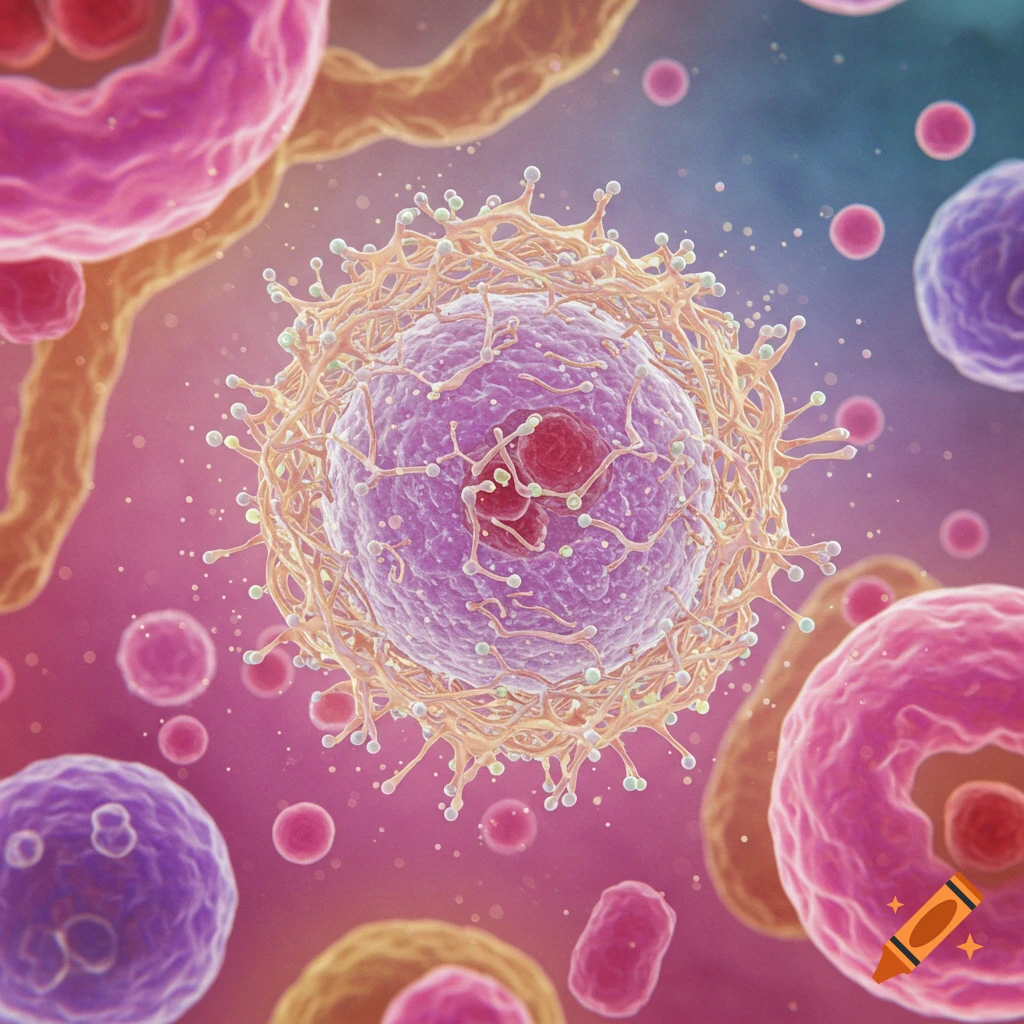
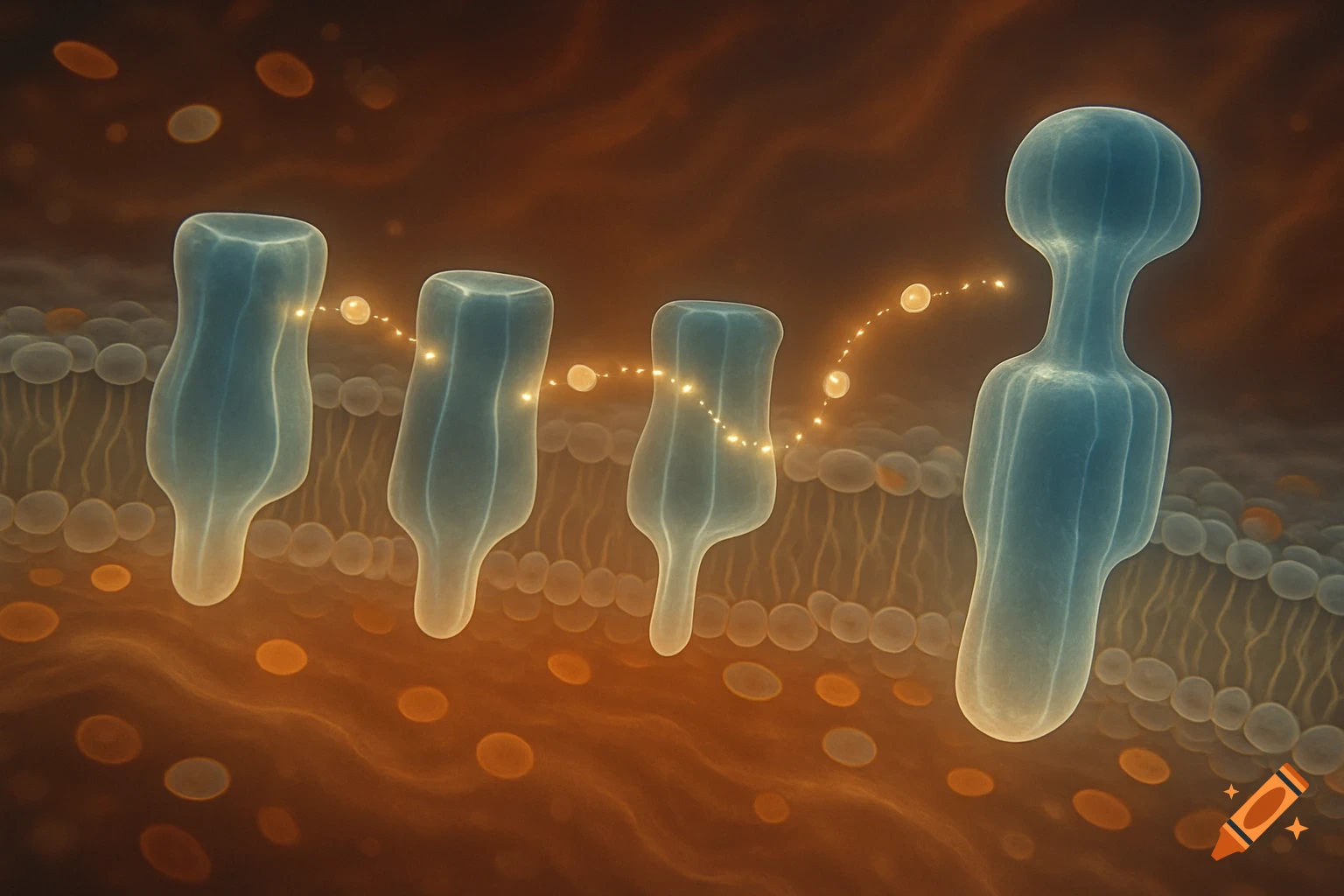
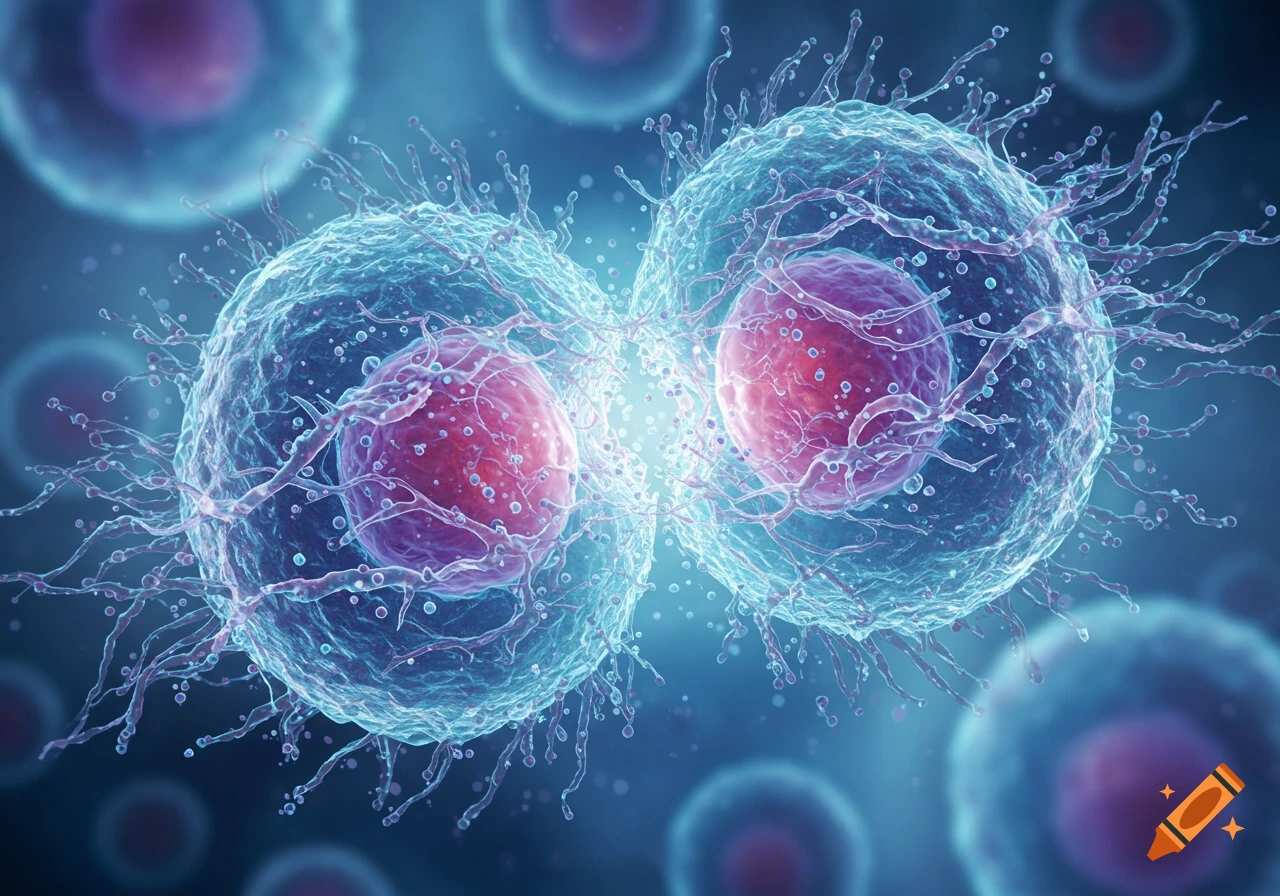
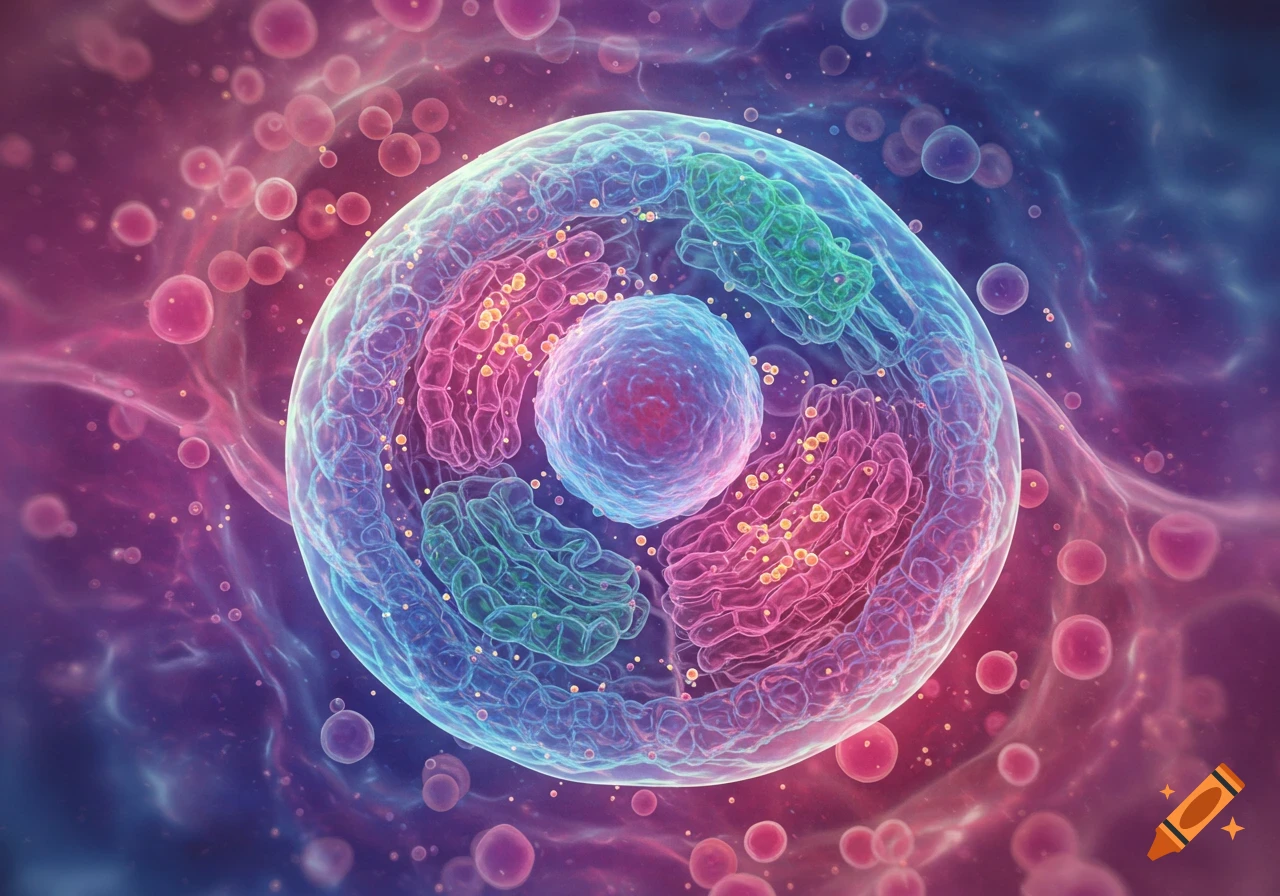
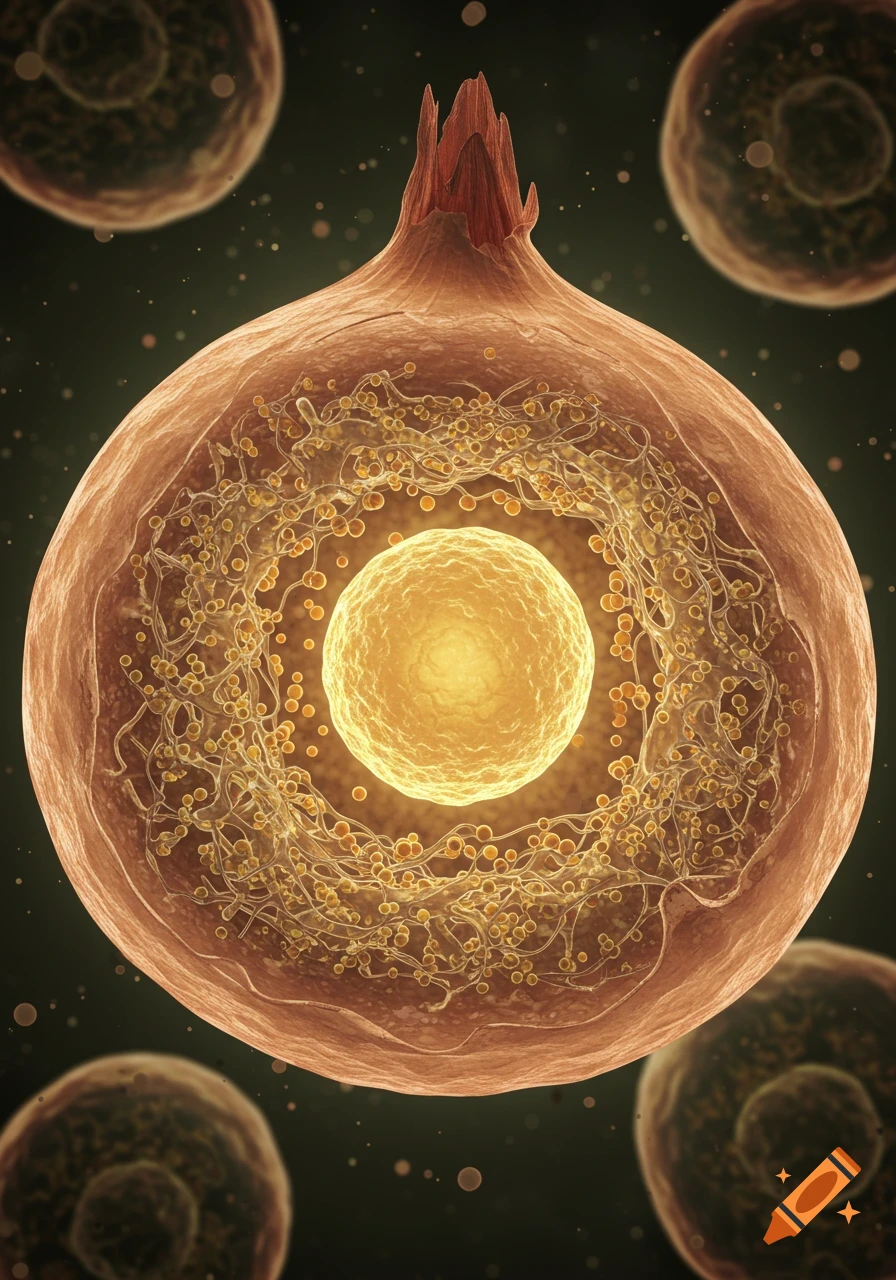
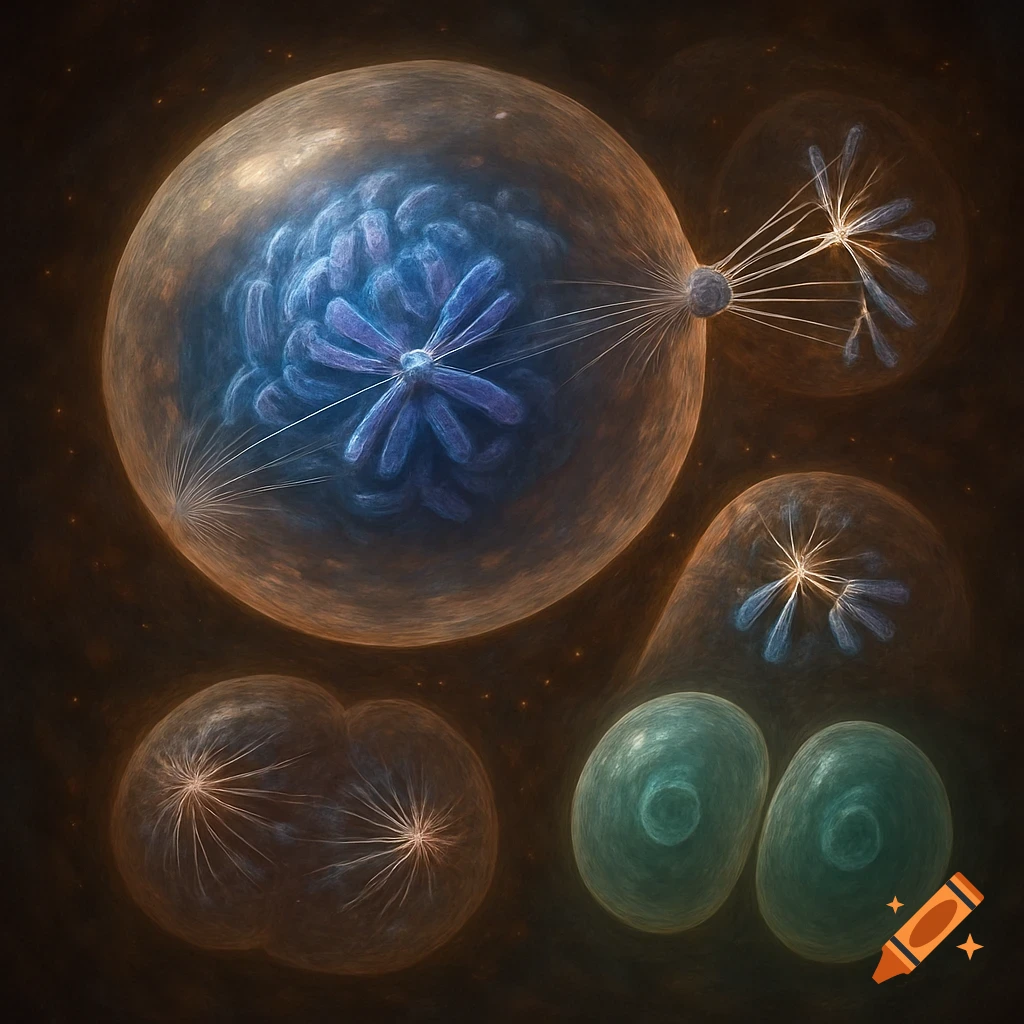
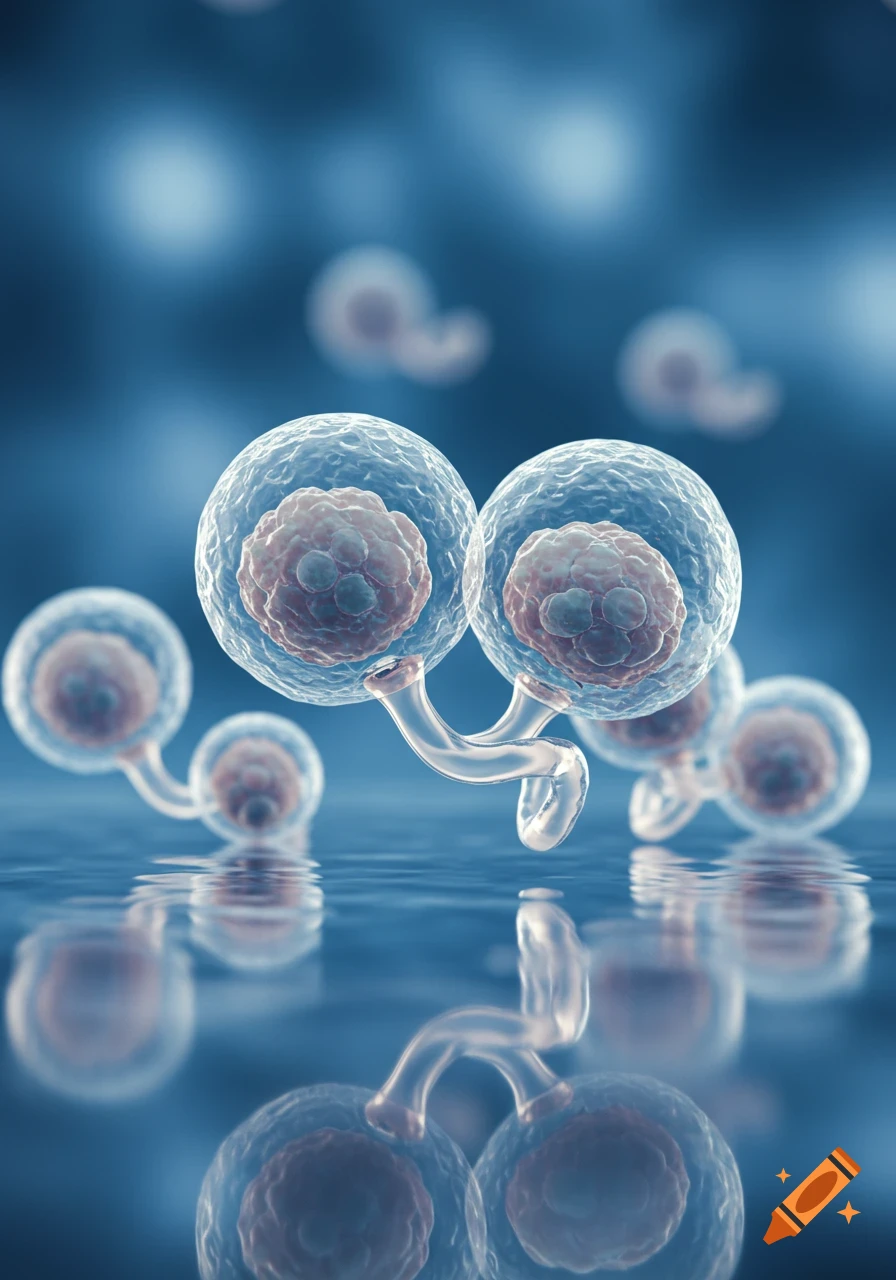
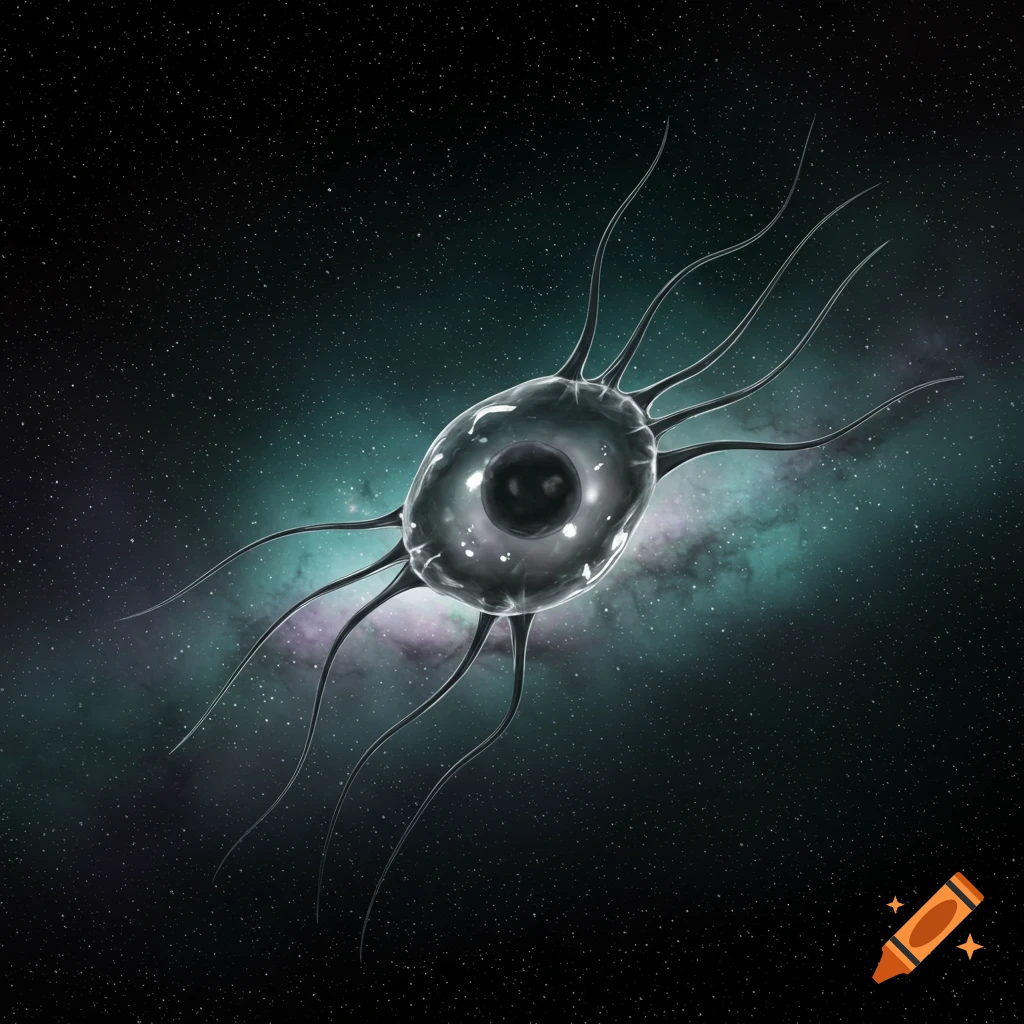
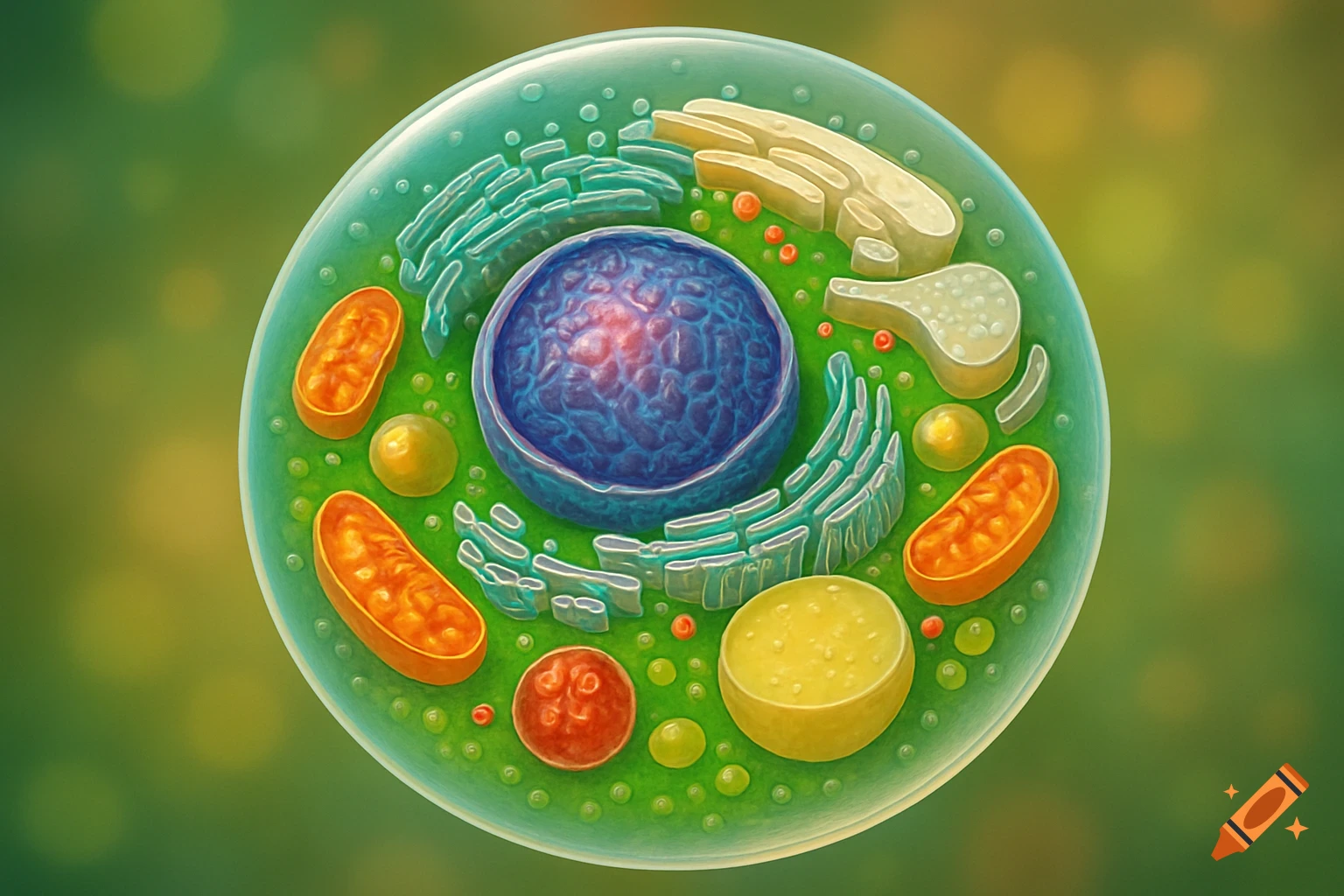
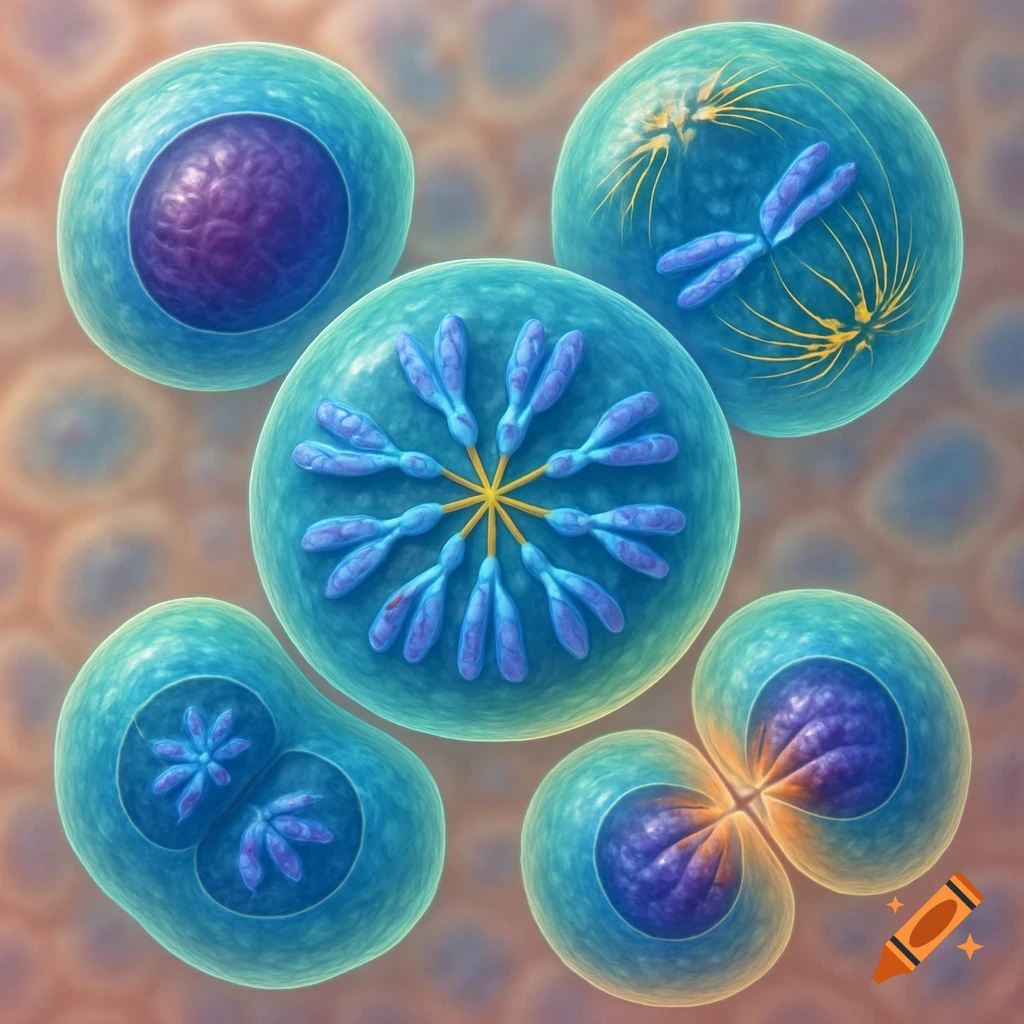
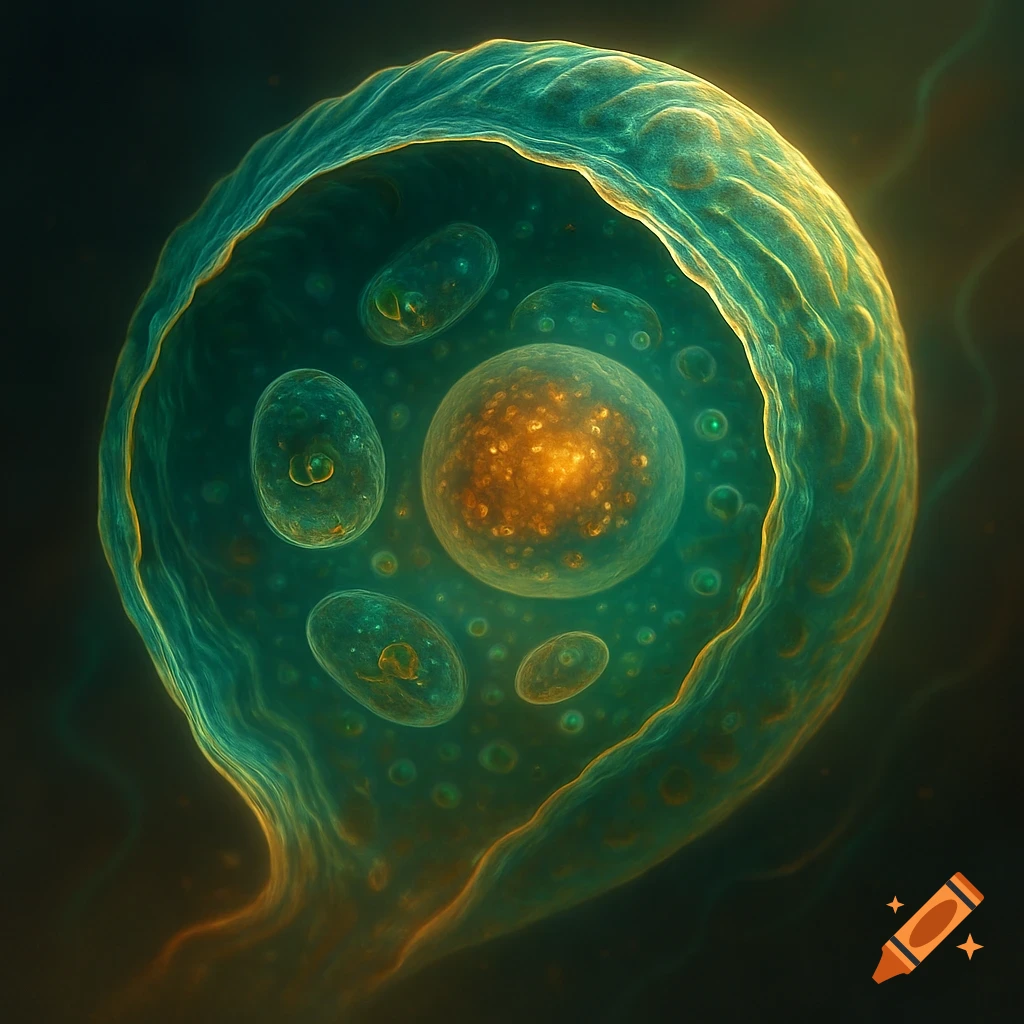
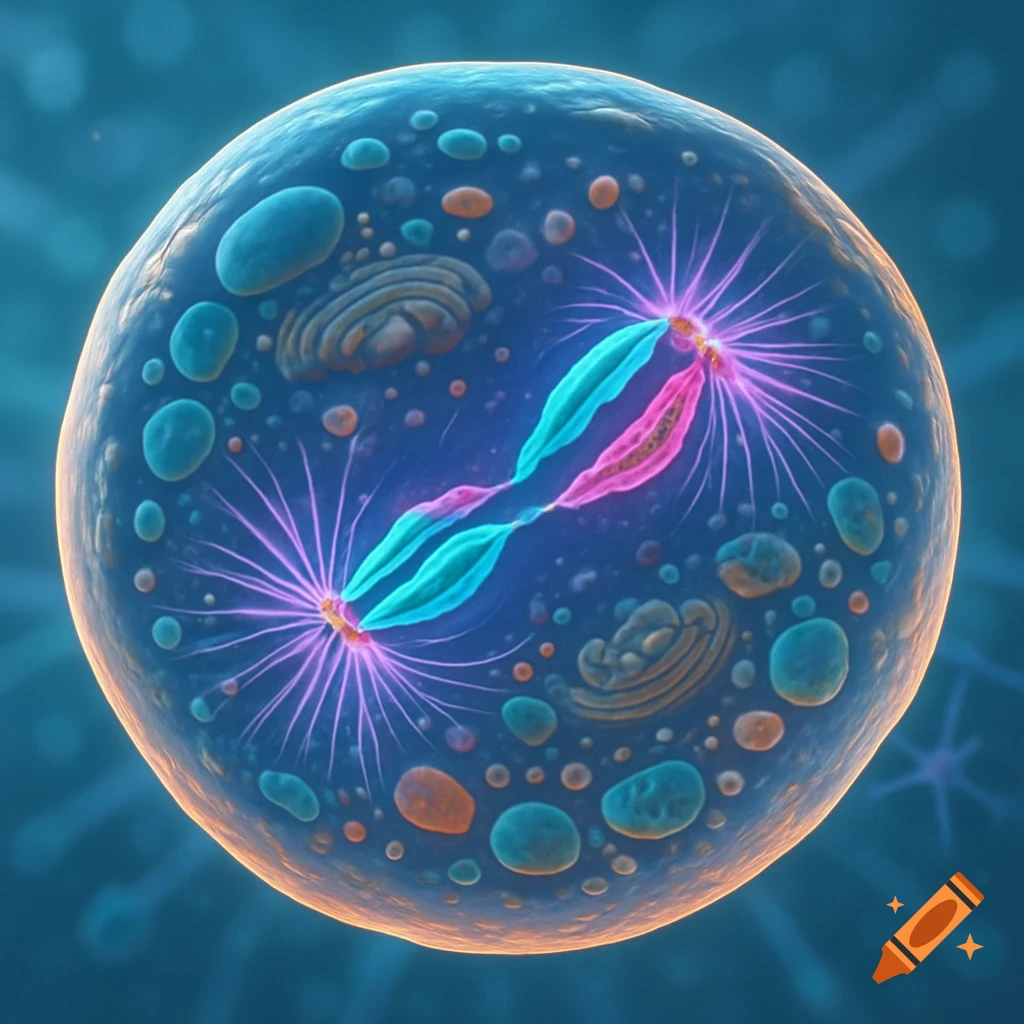
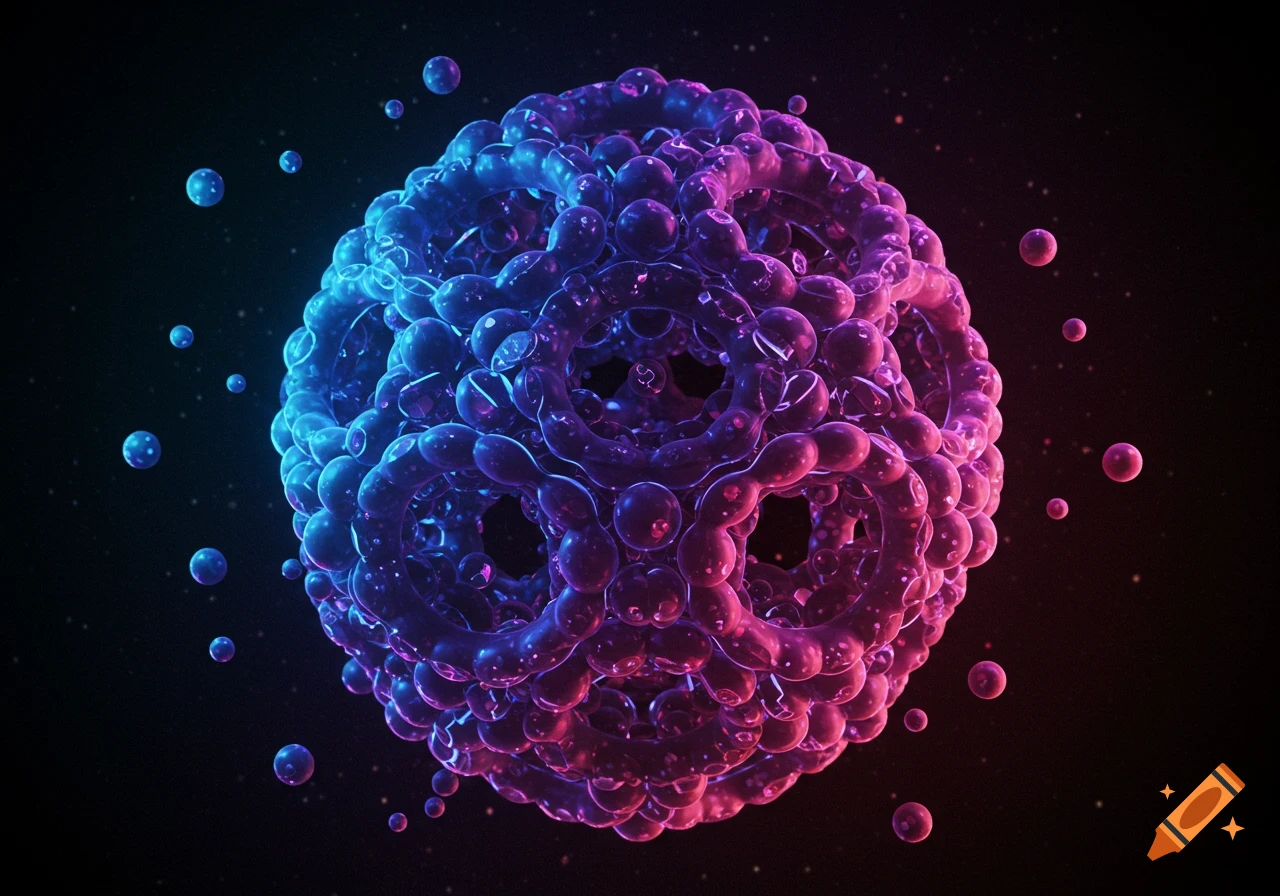
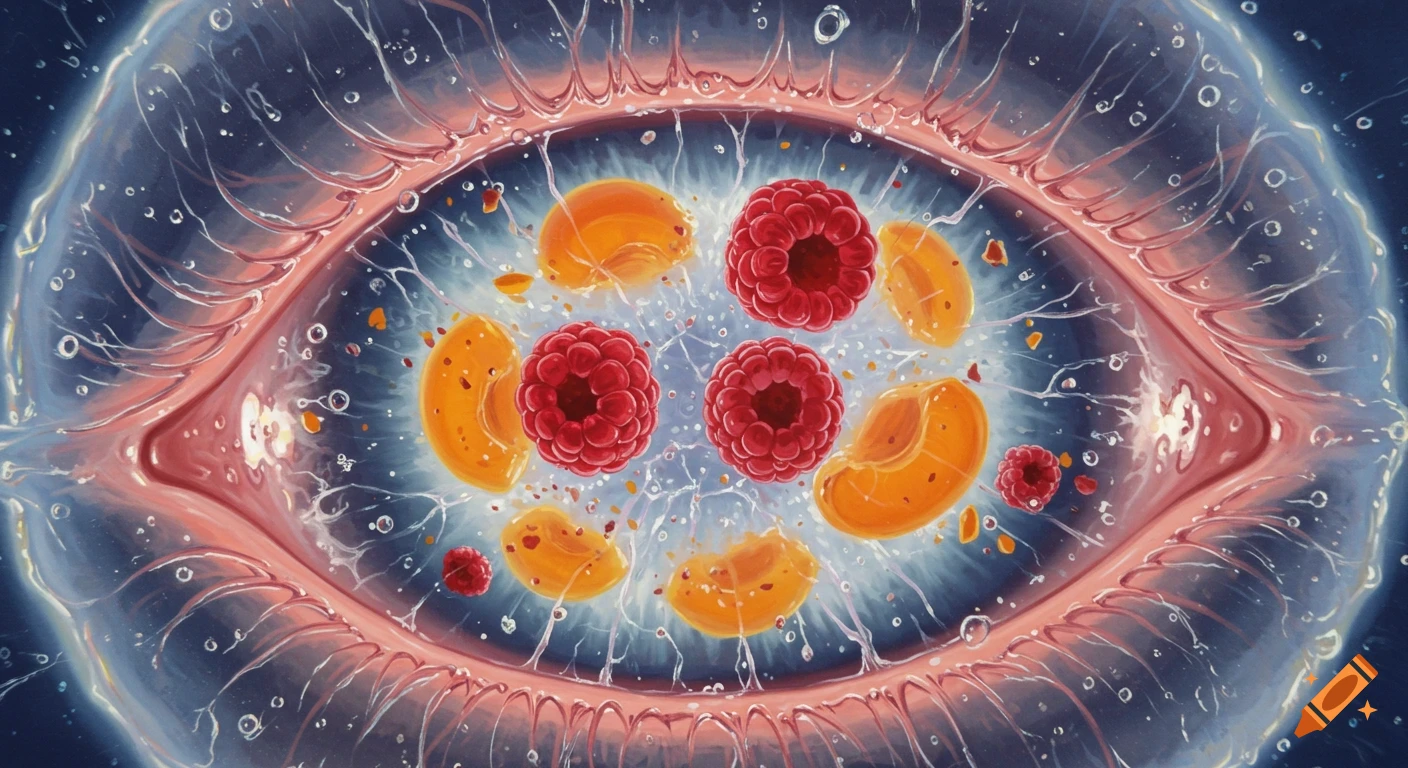
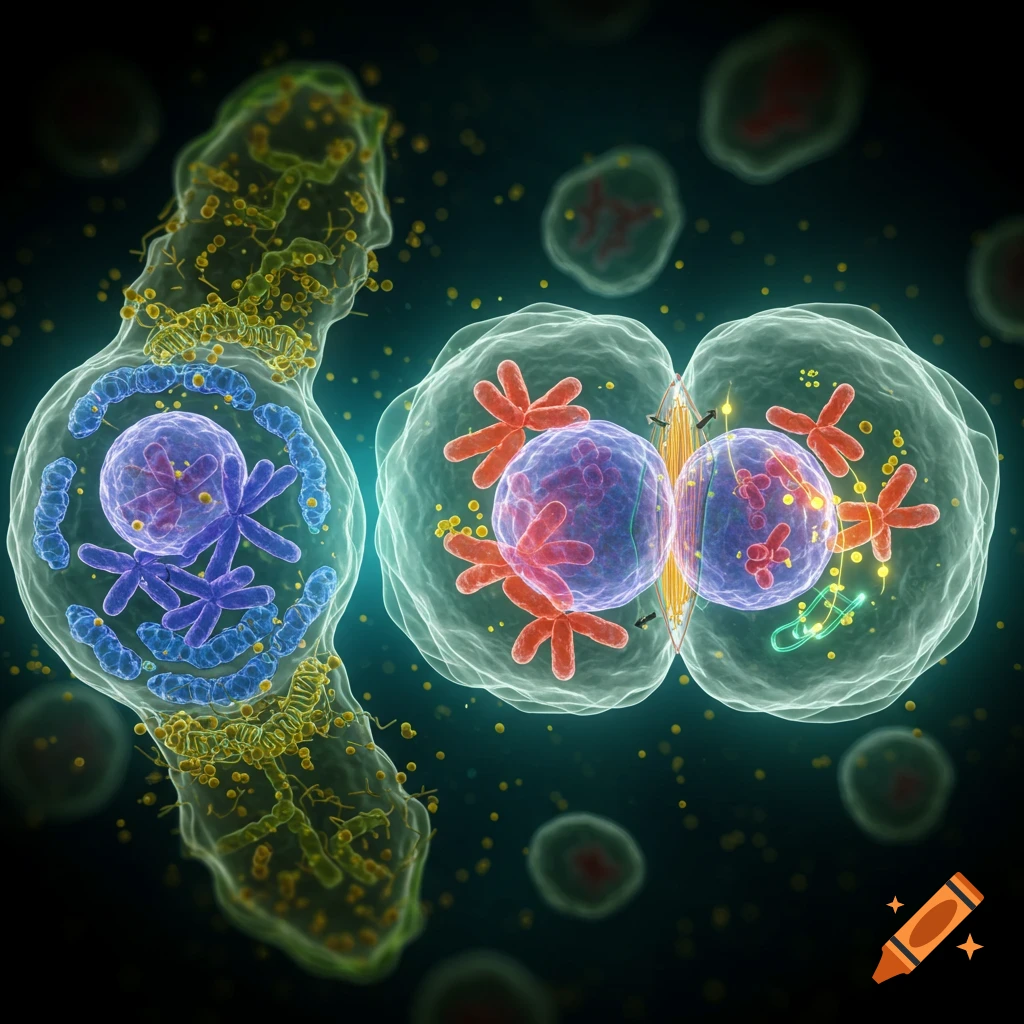
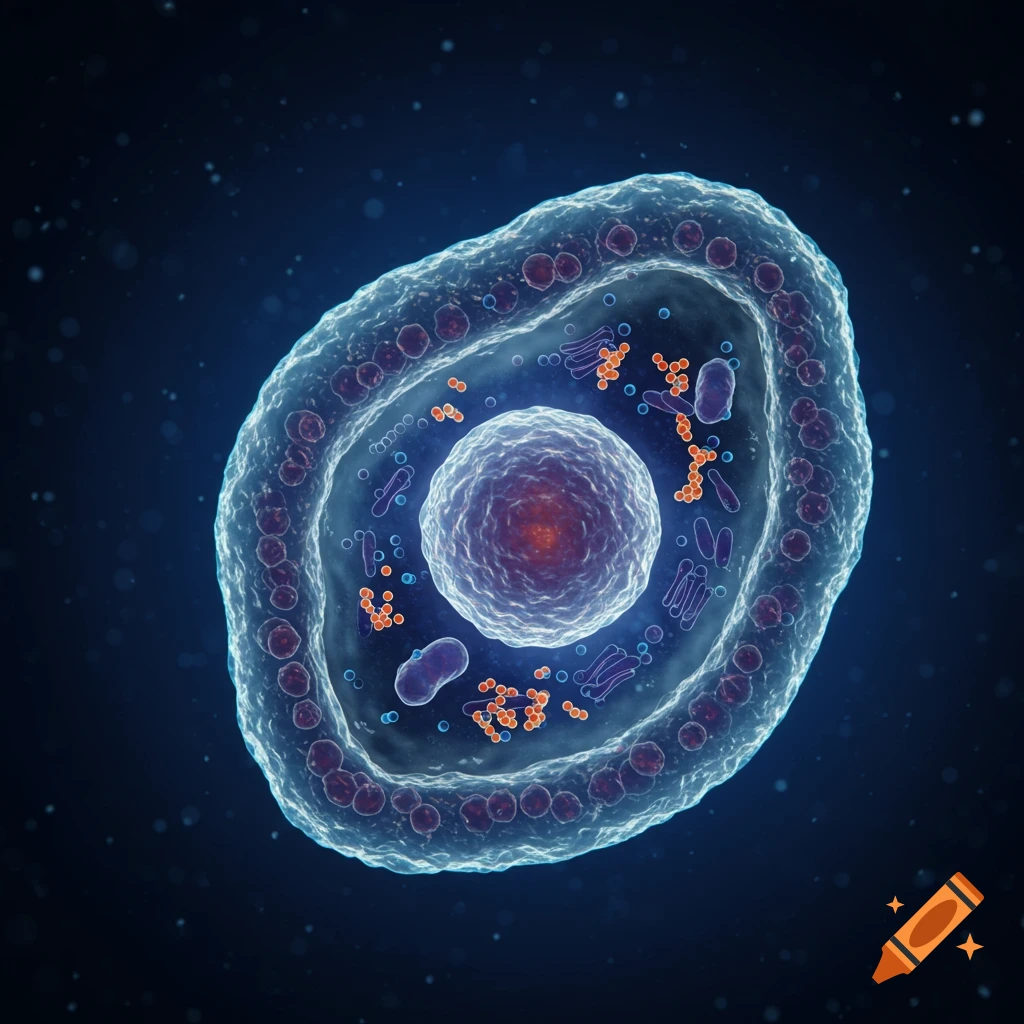
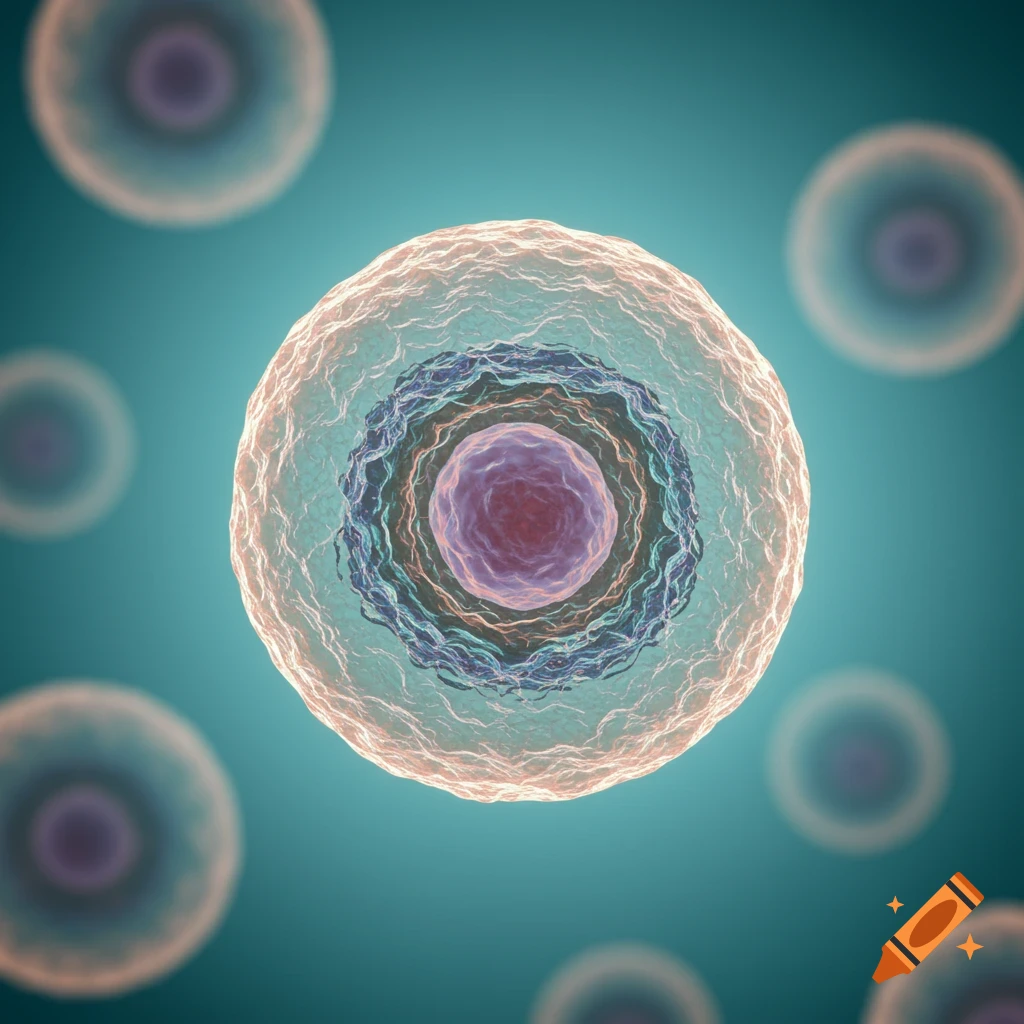
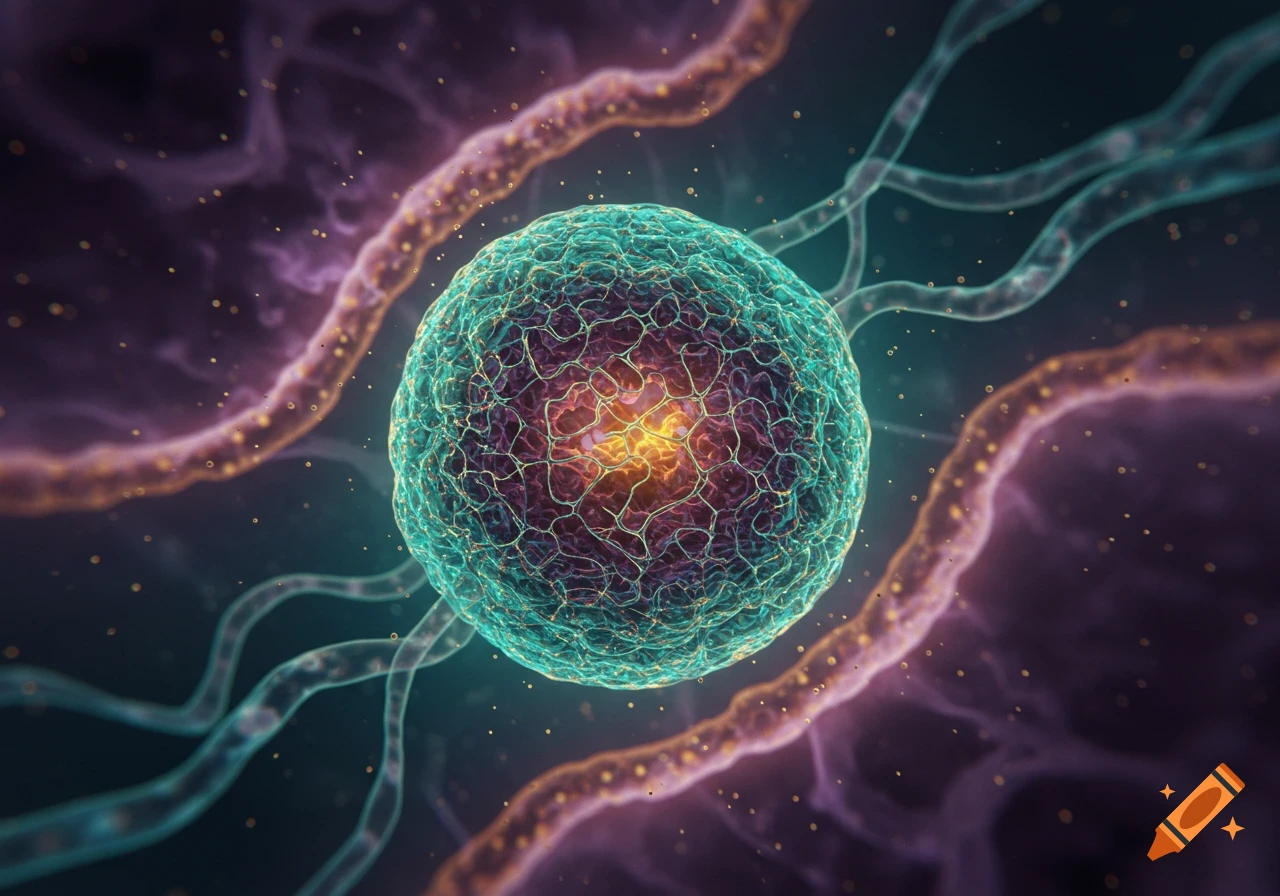
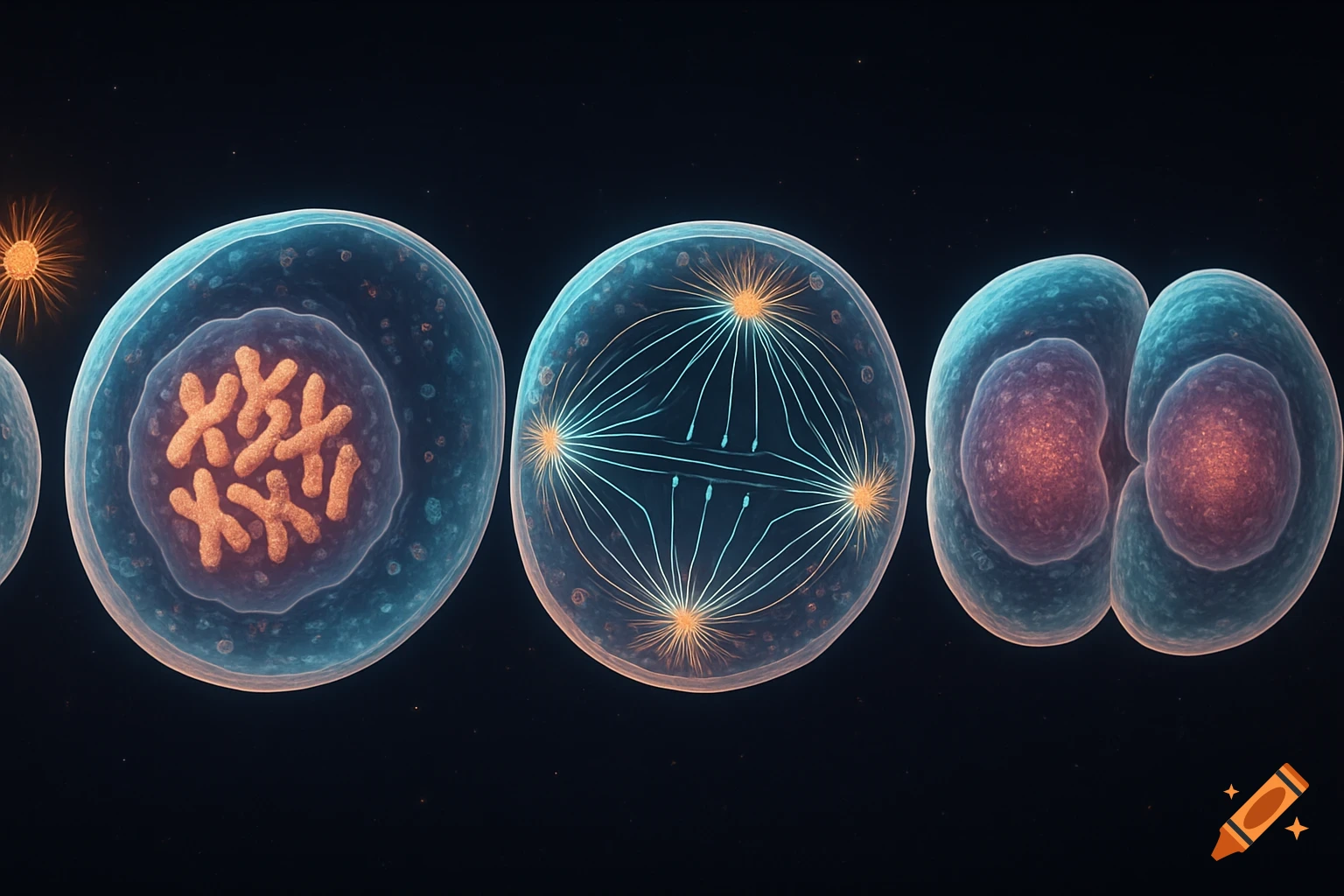
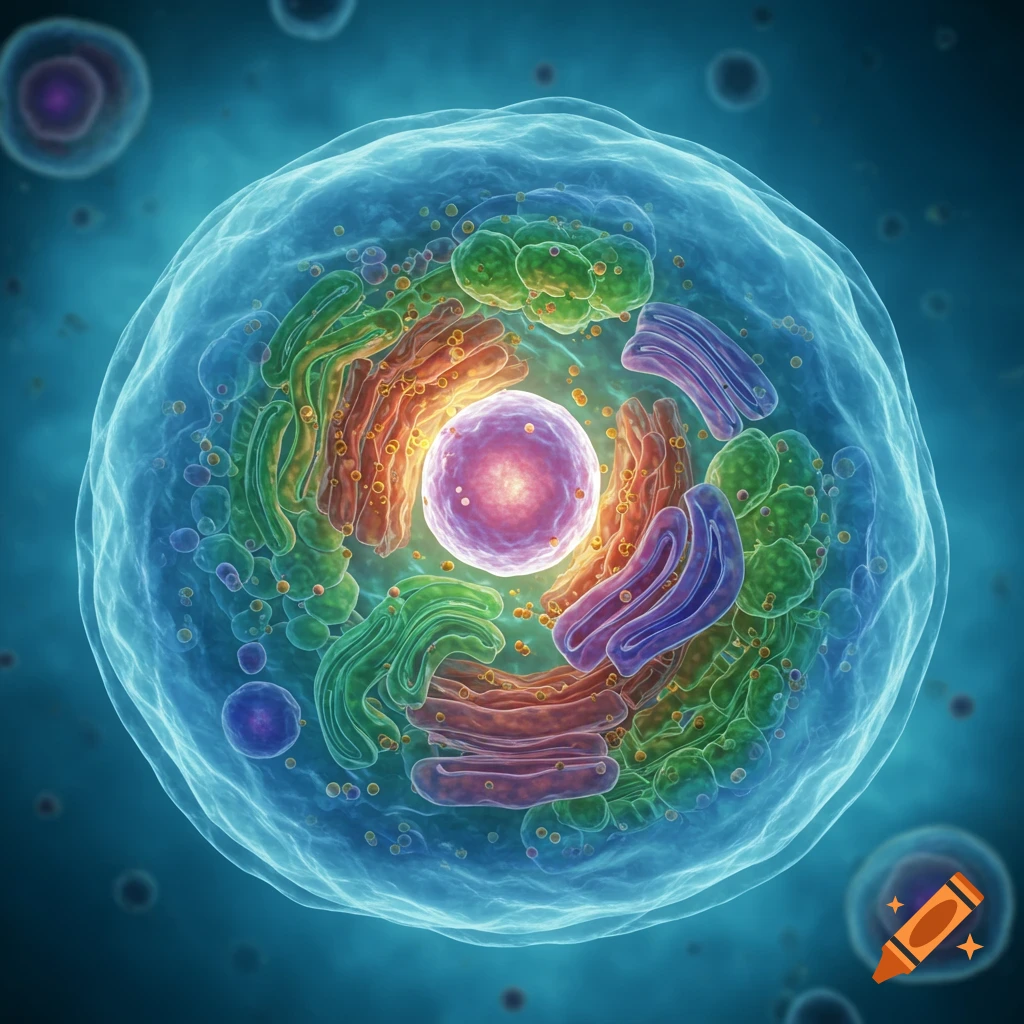
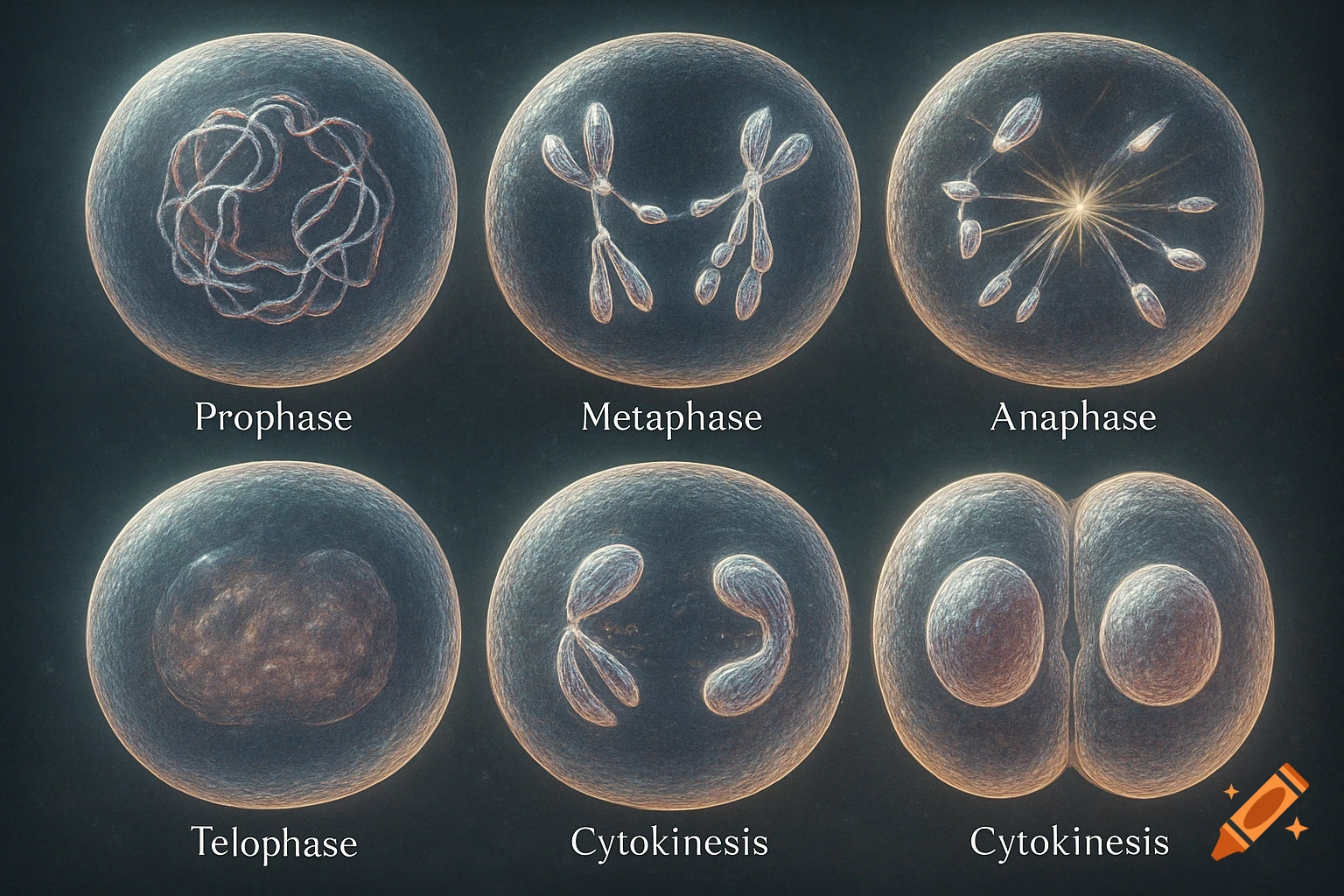
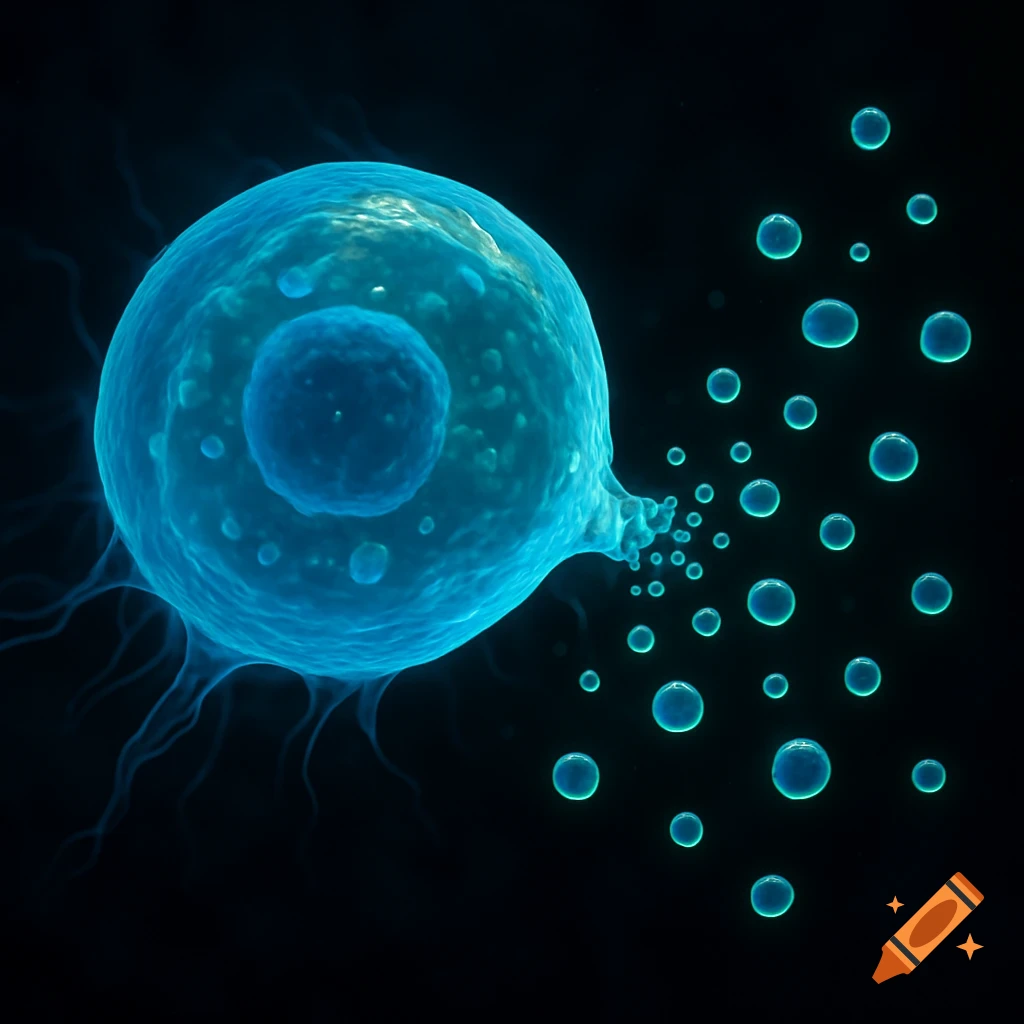
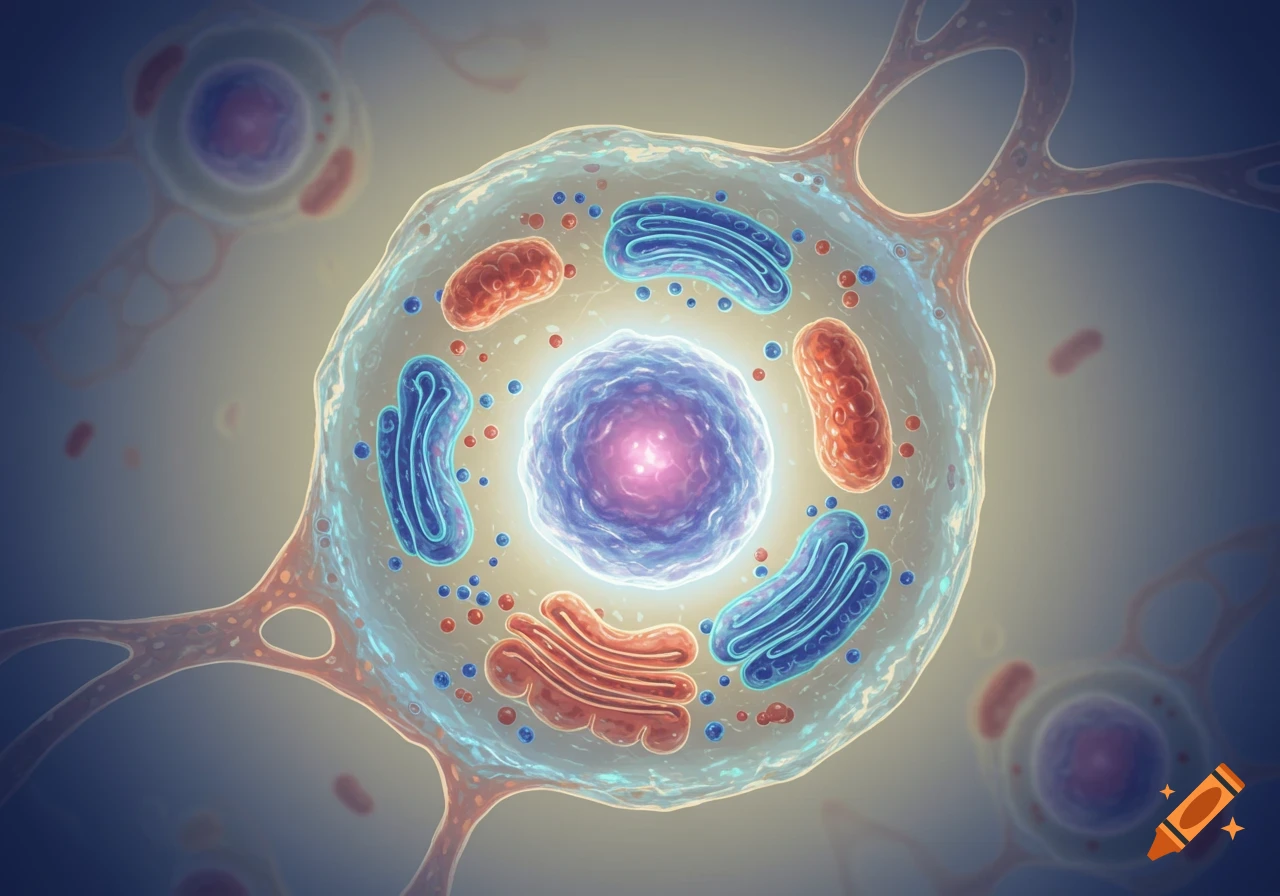
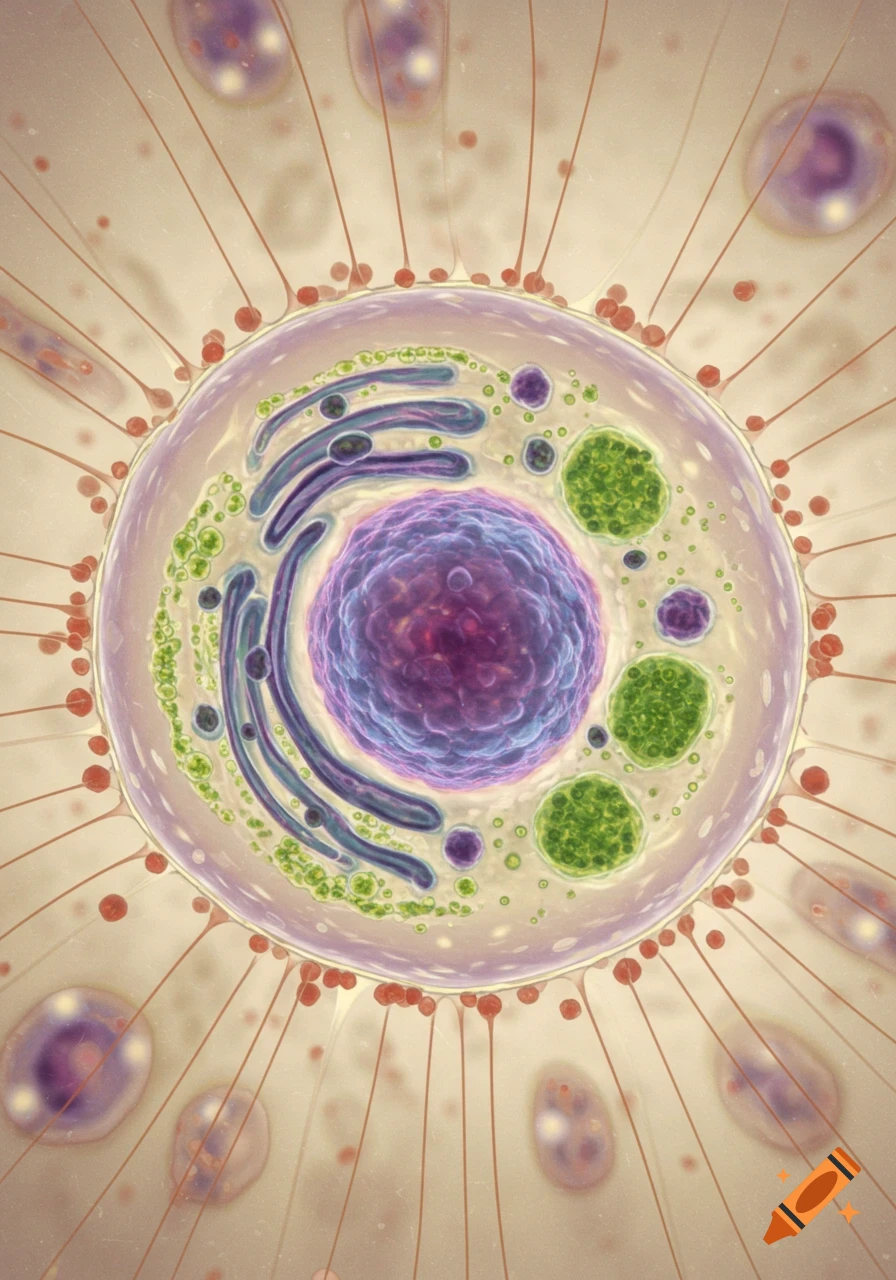
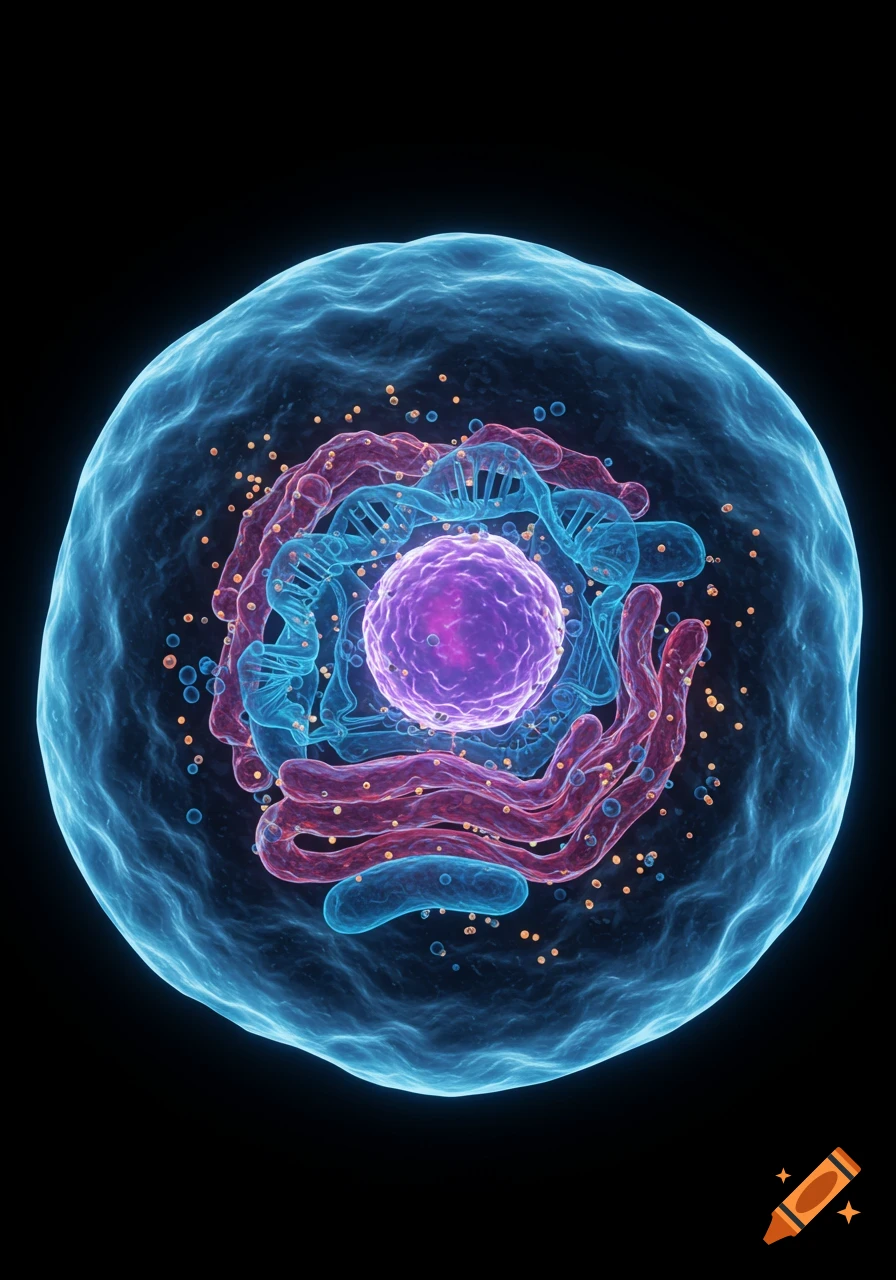
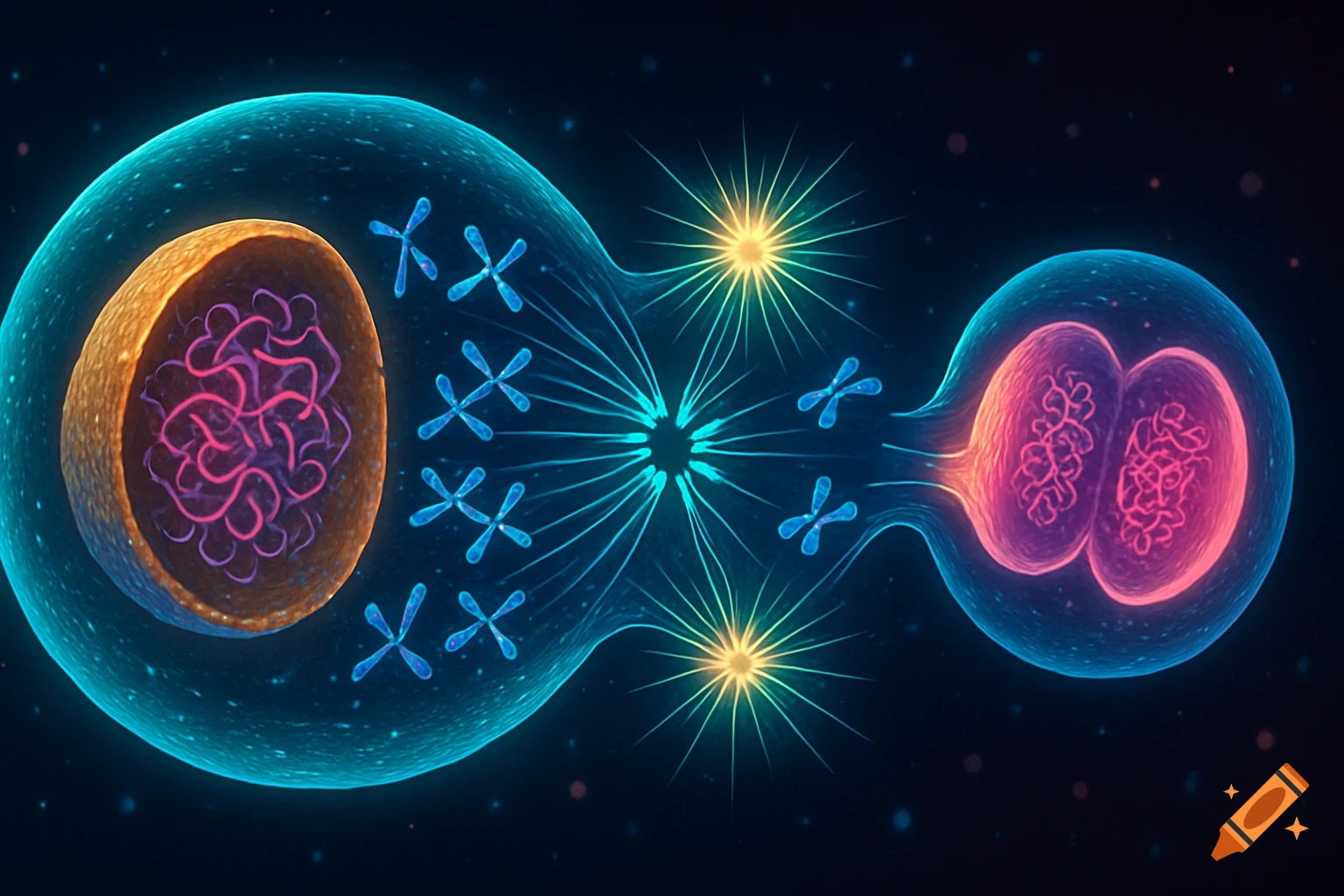
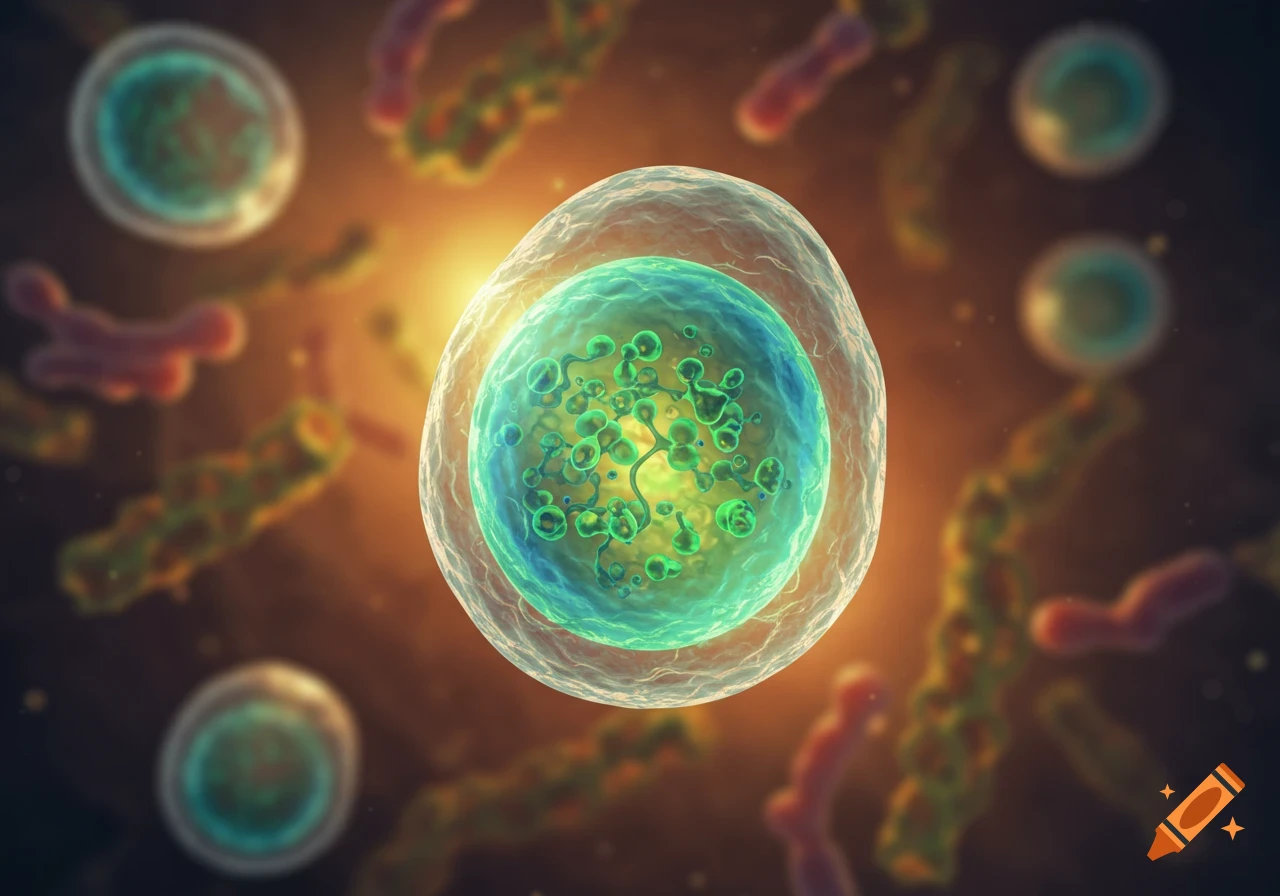
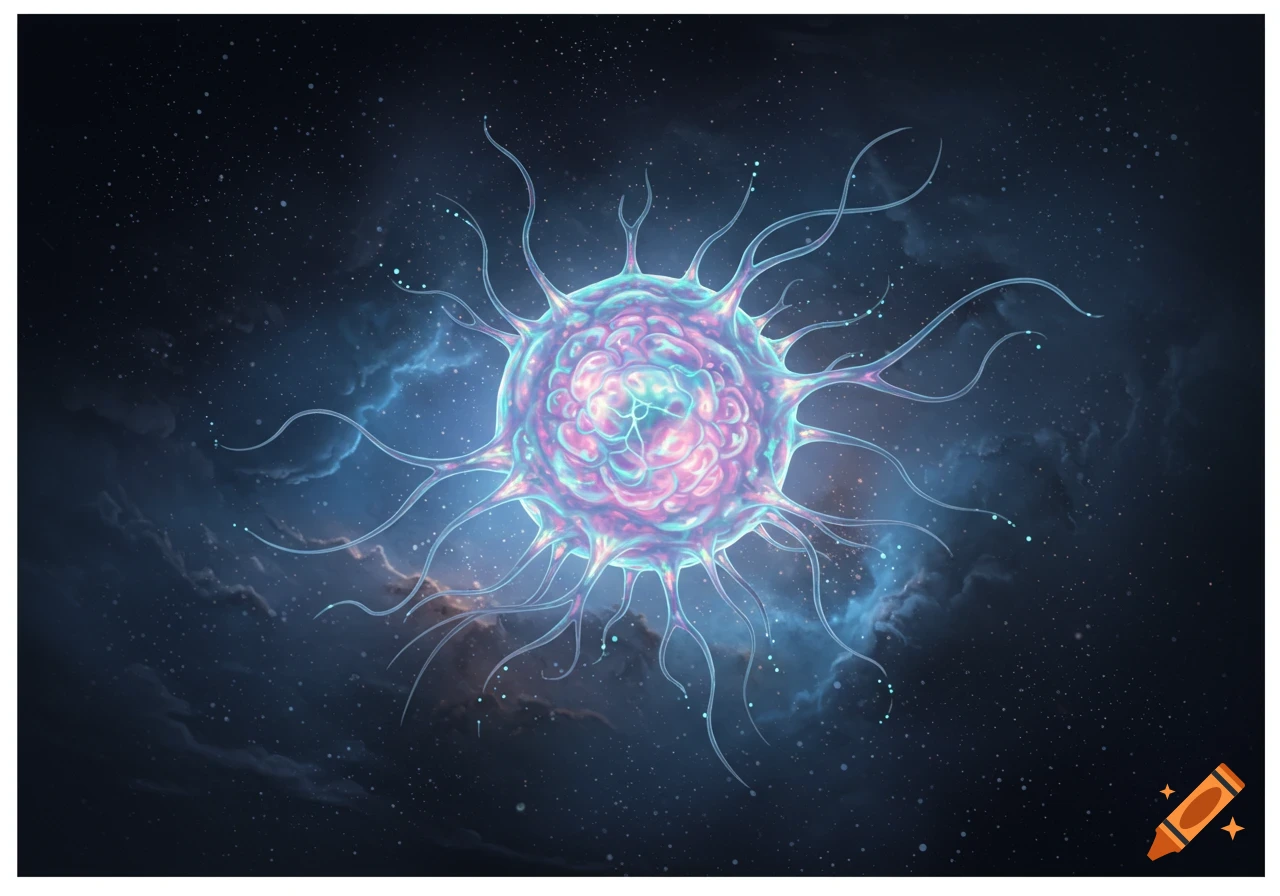
Stylized microscopic view of a complex, translucent cellular structure with internal spheres on a dark background.
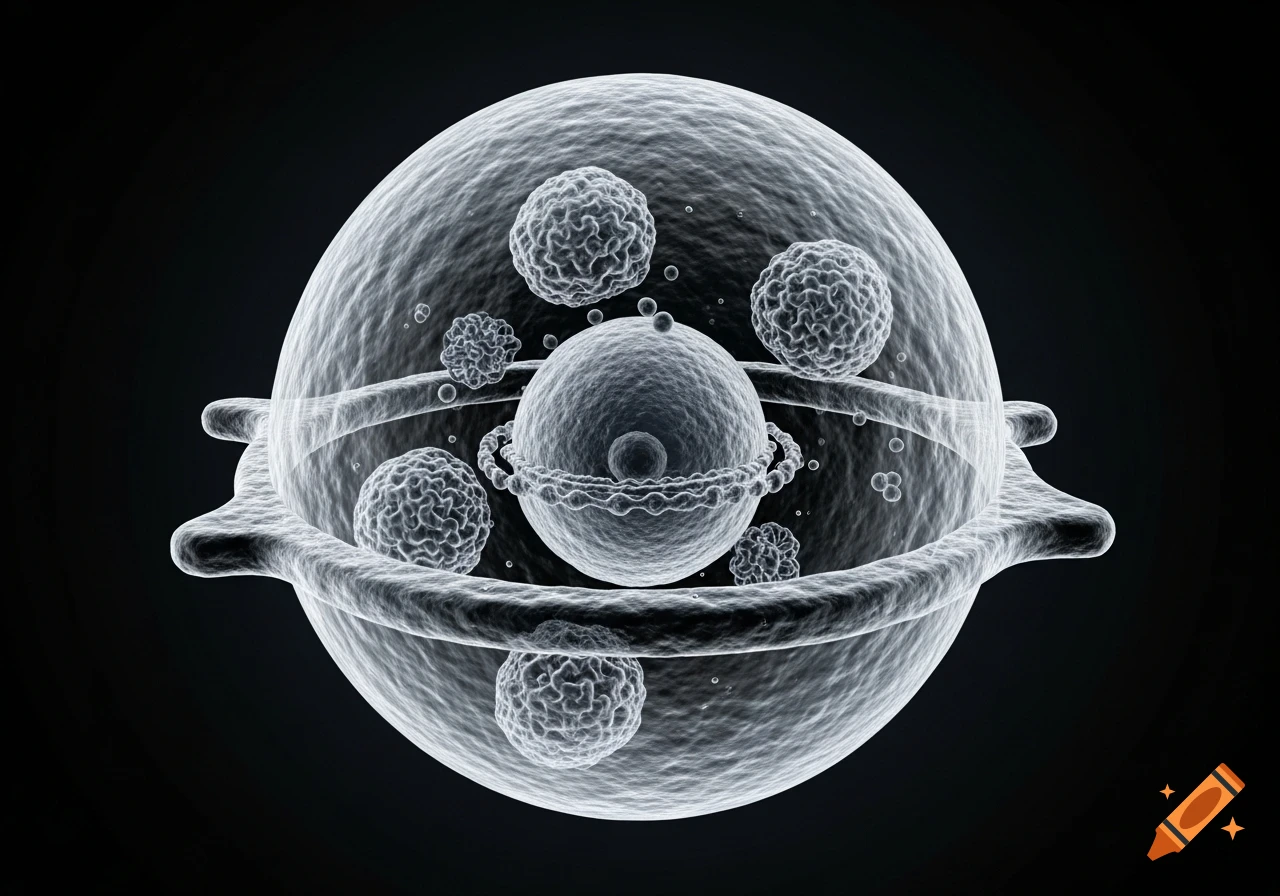
A cell with no nucleus at all, information is not in DNA but in vibrating protein discs Several 'nuclear regions' that move inside the cell and switch roles Instead of a cell membrane, a layered interface that responds to heat, sound, and magnetic fields Energy does not come from chemical reactions, but from environmental pressure and vibration differences Inside the cell flows a slowly rotating structure that functions as both a nervous system and metabolism Opaque but not solid Asymmetrical, constantly changing shape Nothing familiar: no mitochondria, no ribosomes, no bacterial or eukaryotic structure A hint of magic: the structure responds to the environment with visible changes See more