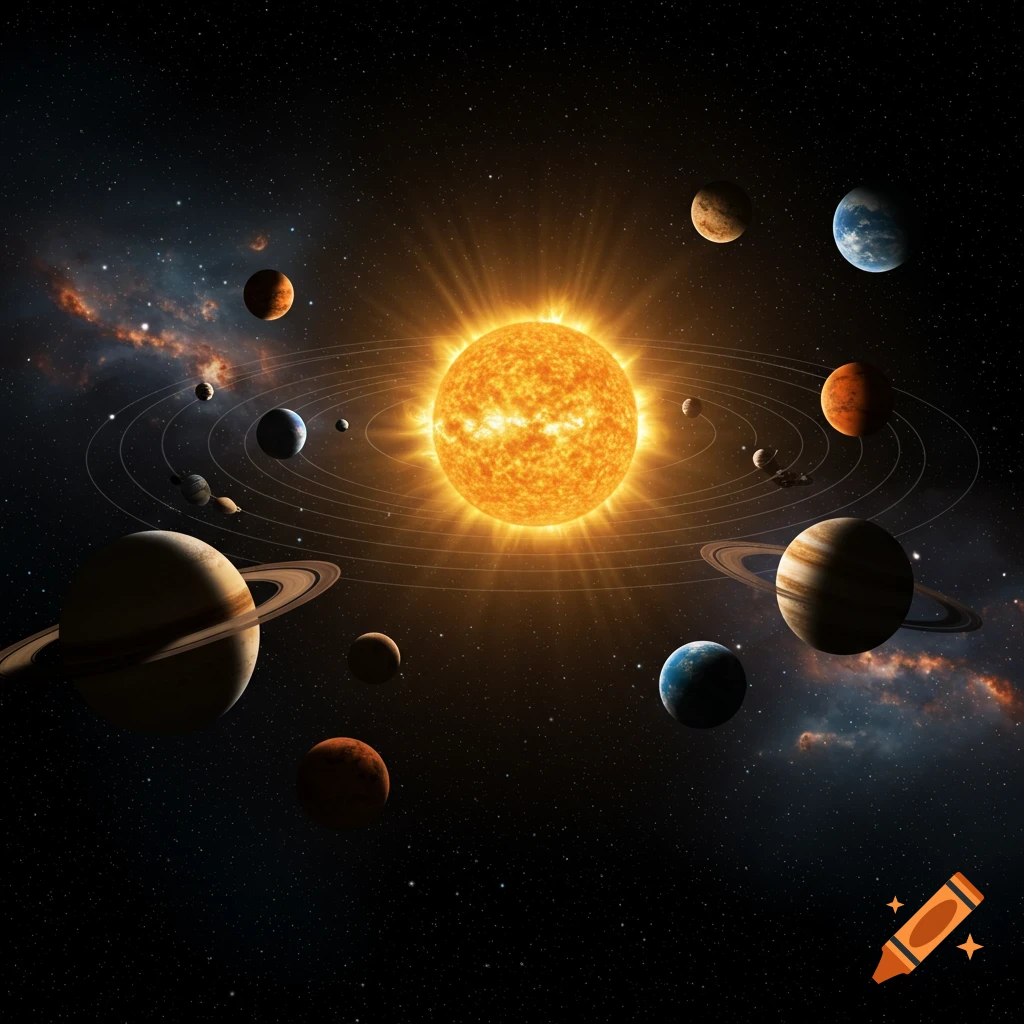
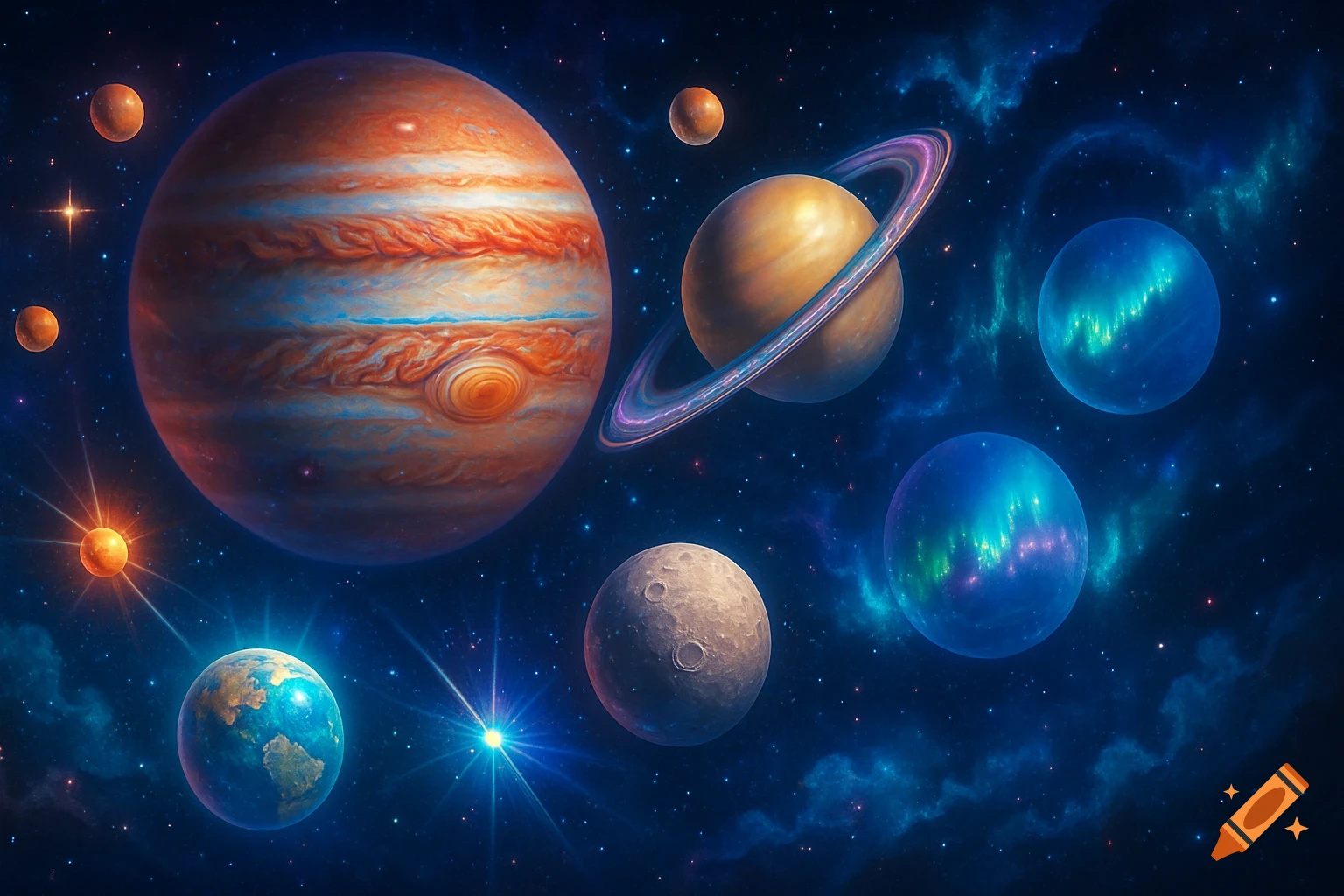
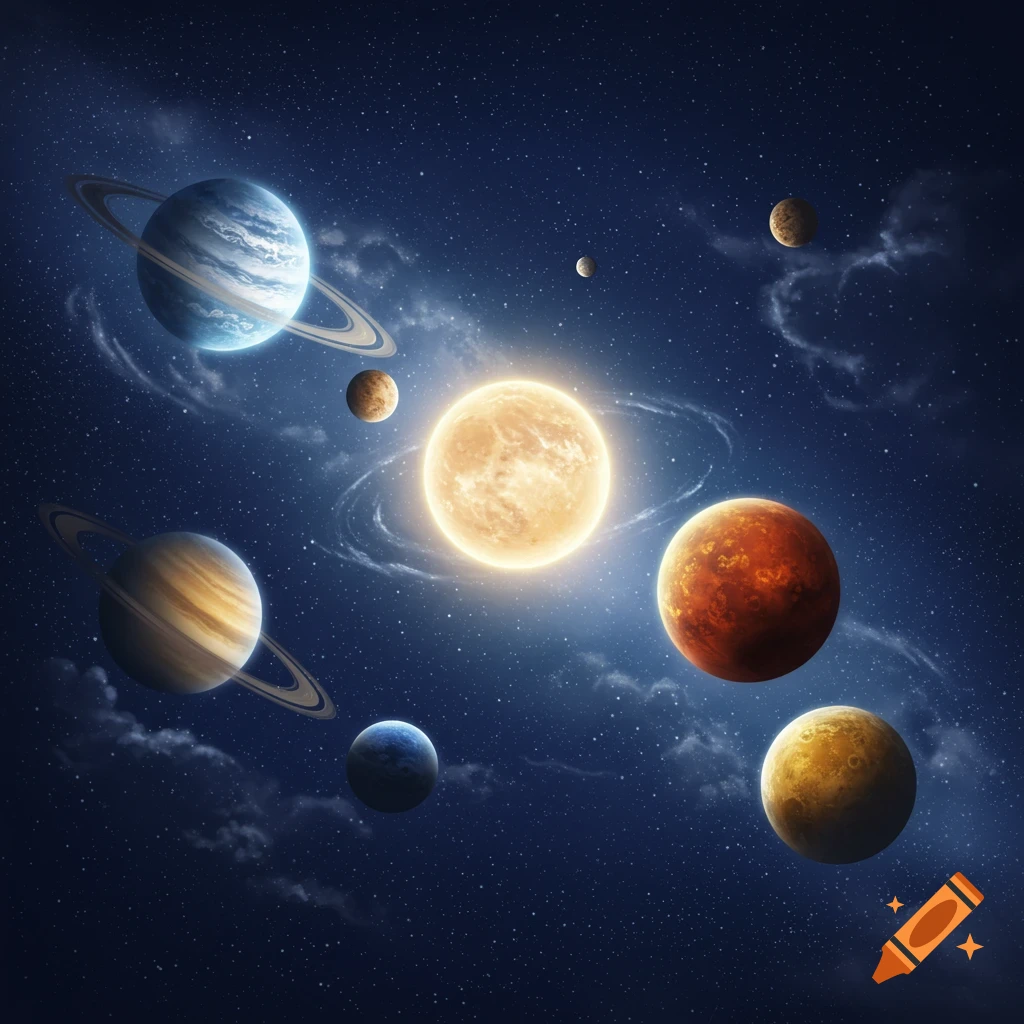
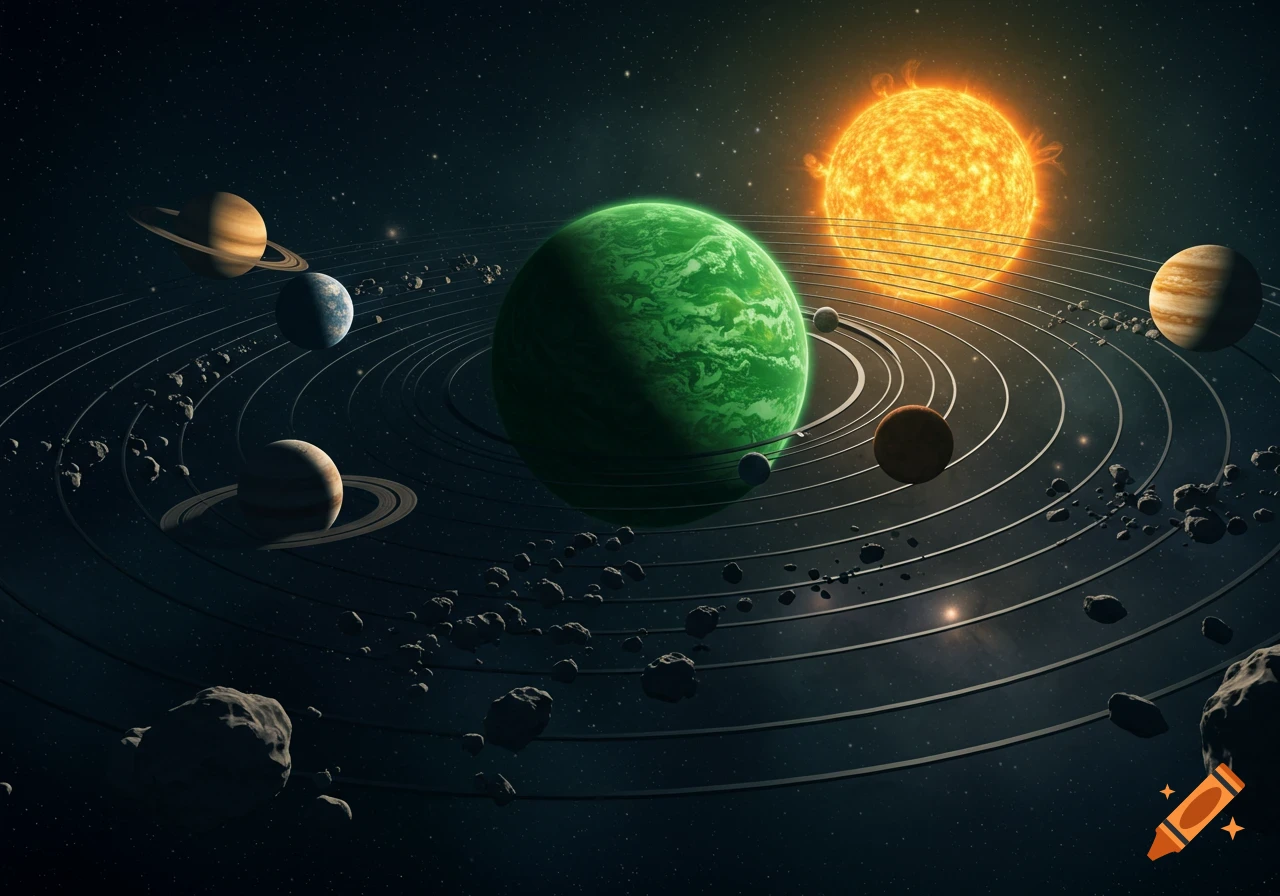
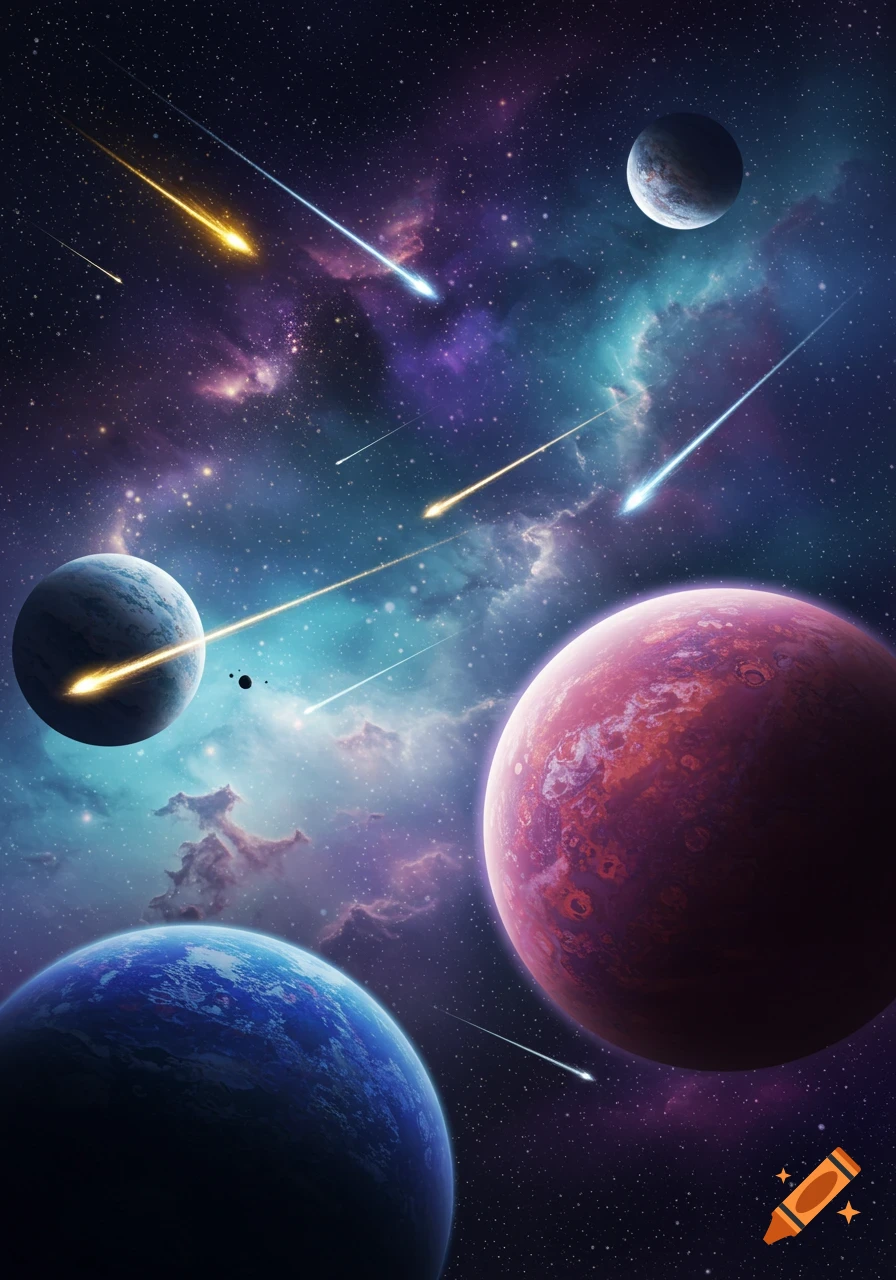
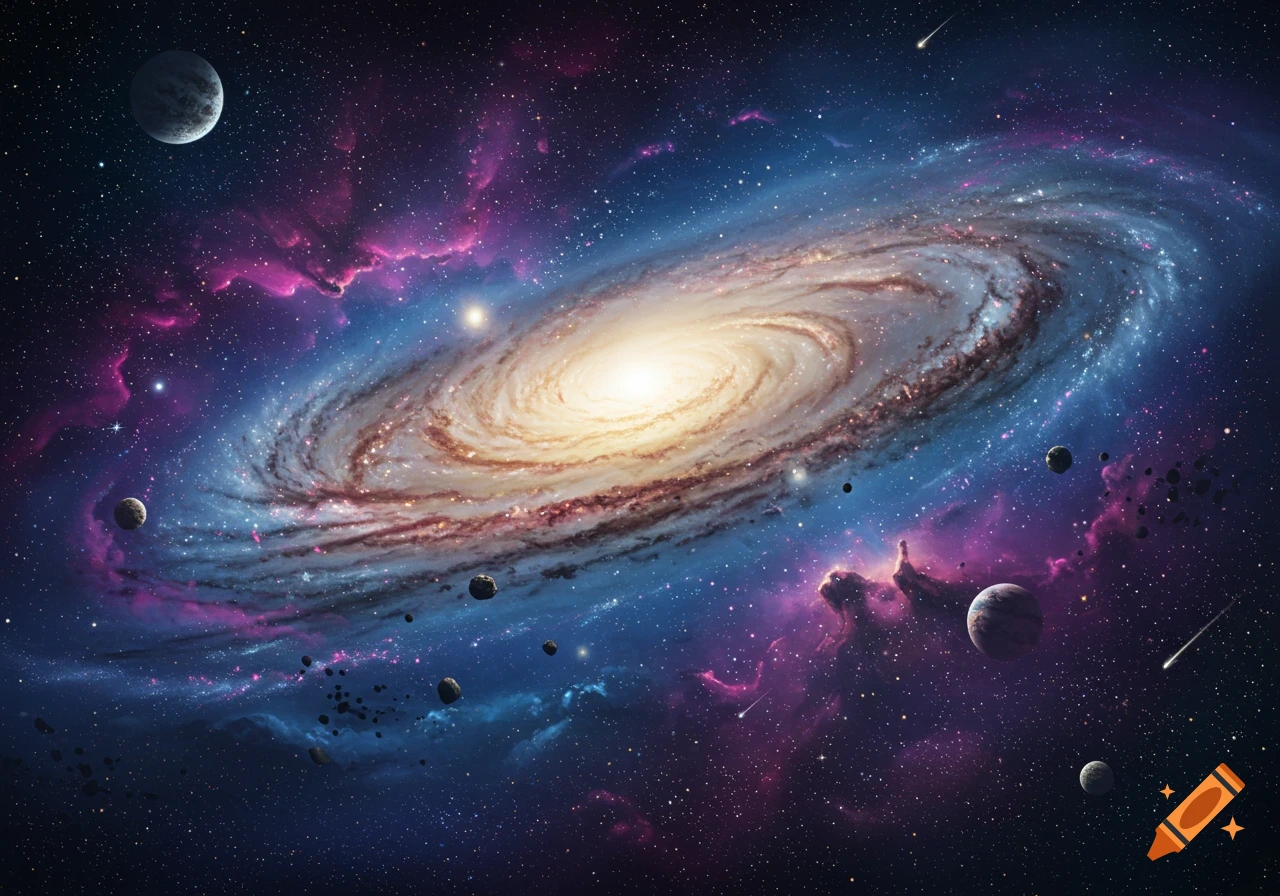
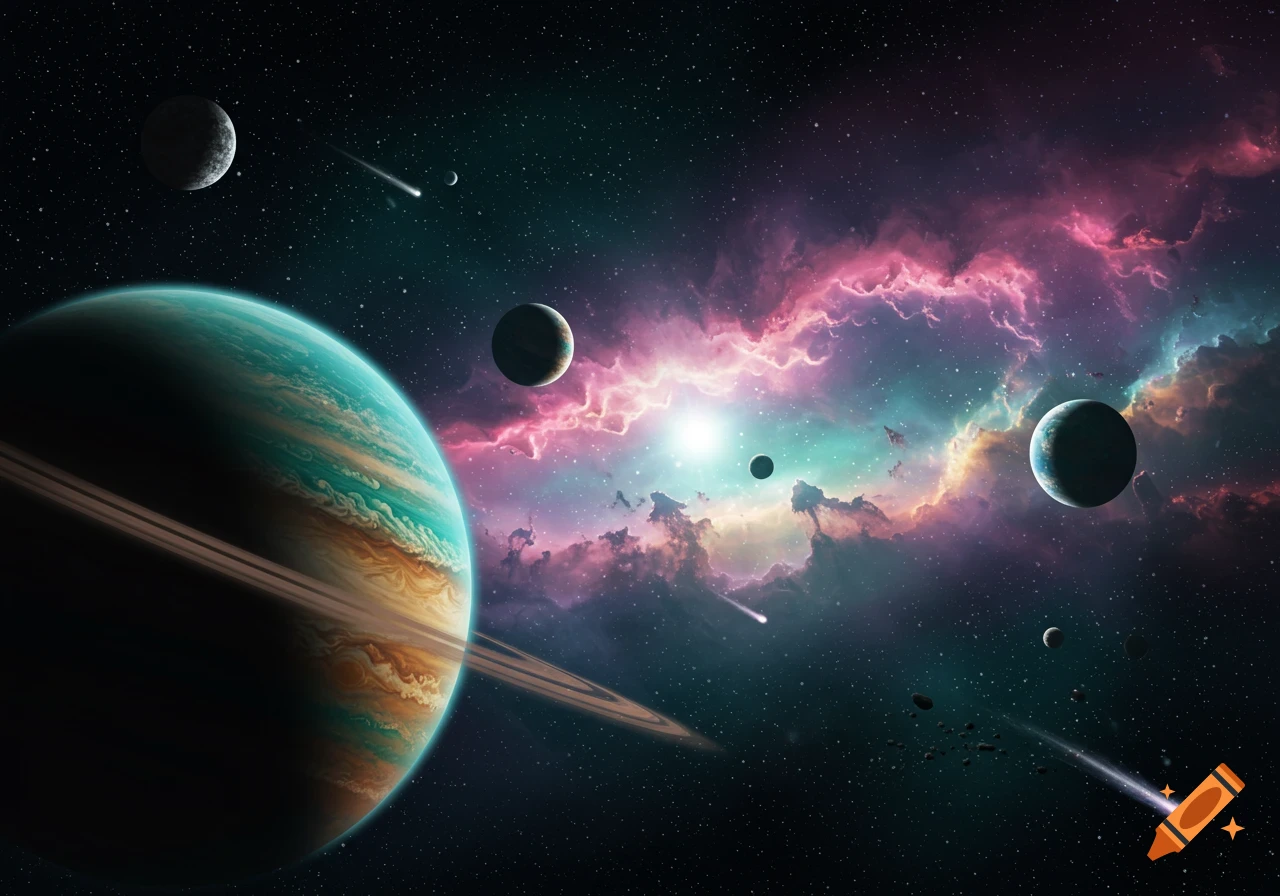
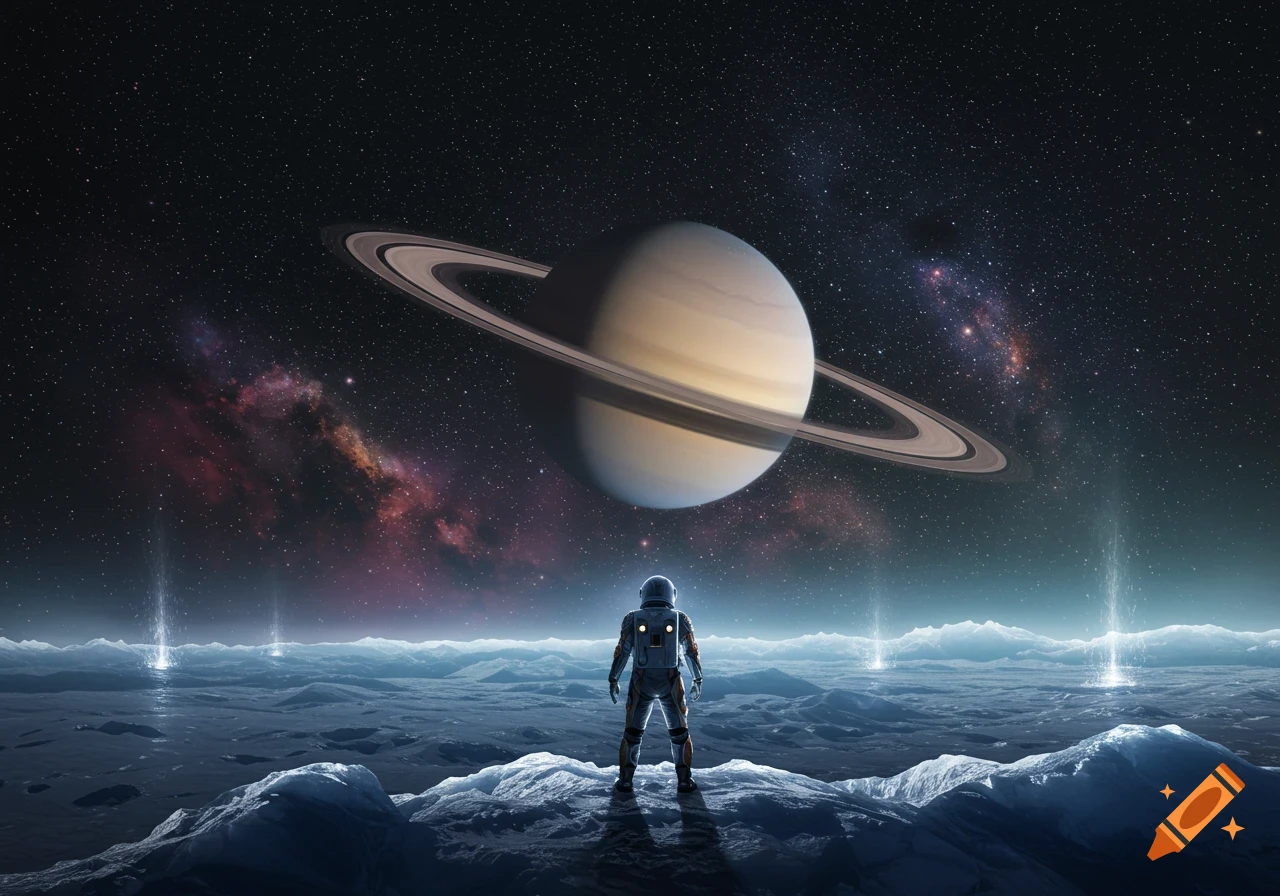
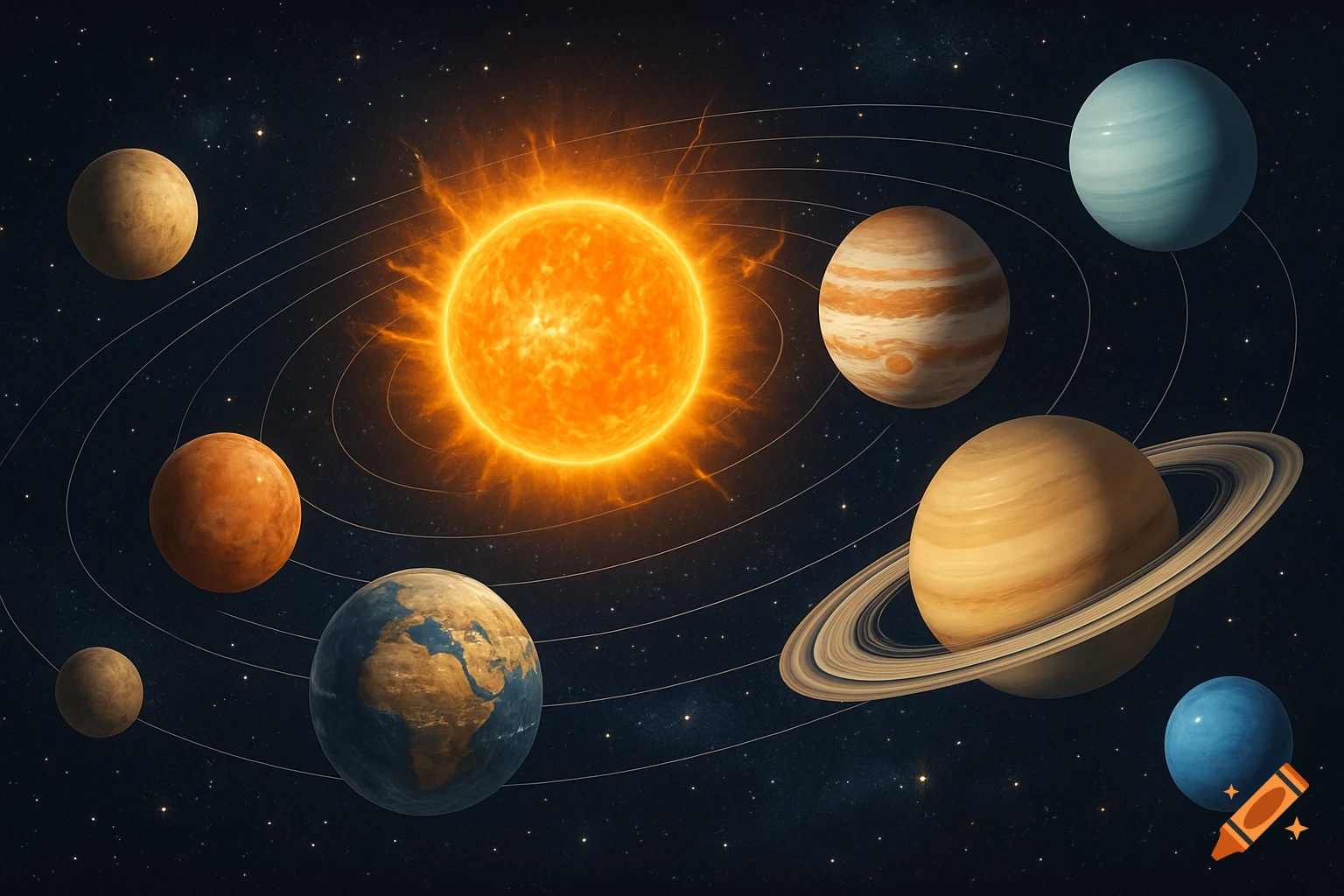
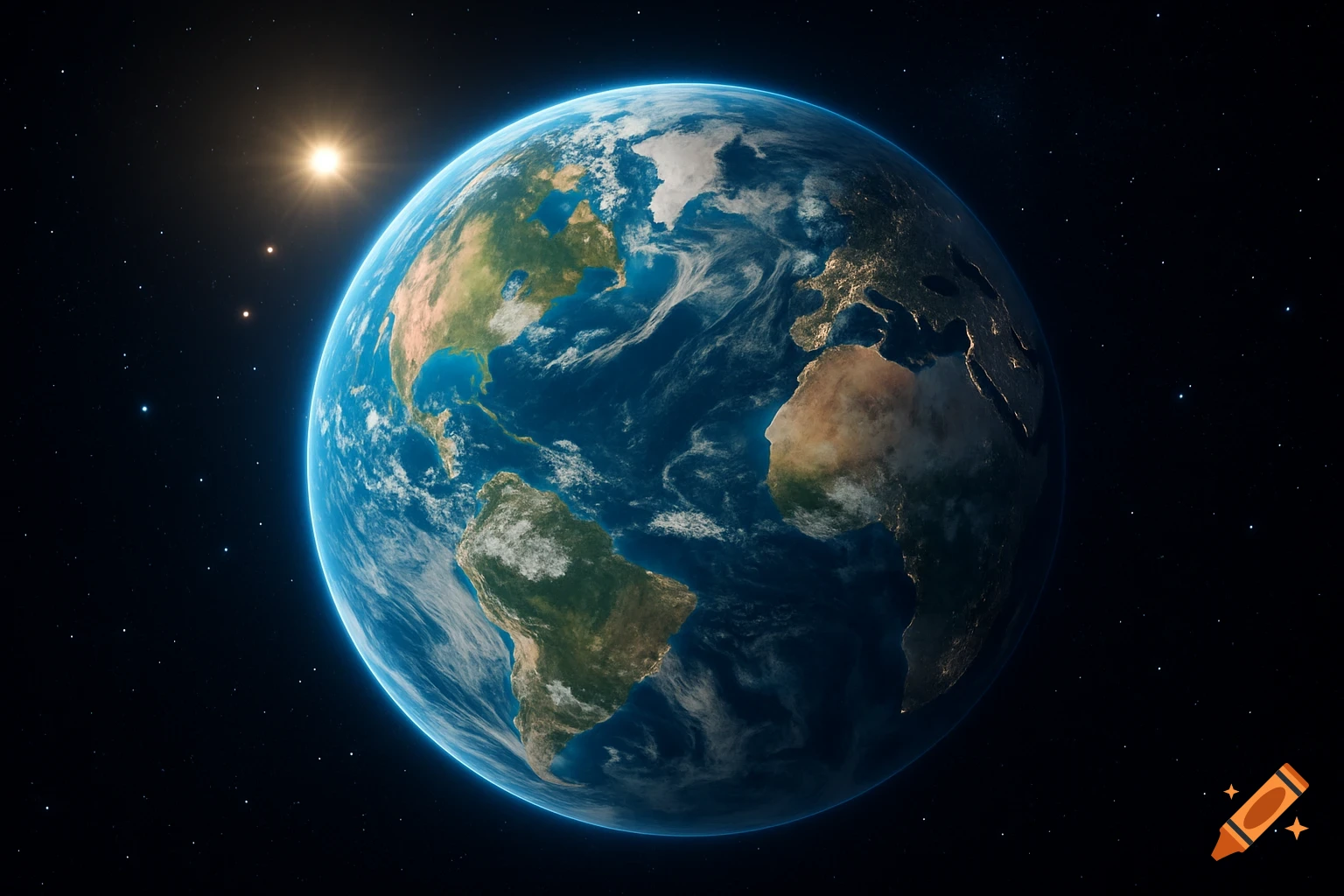
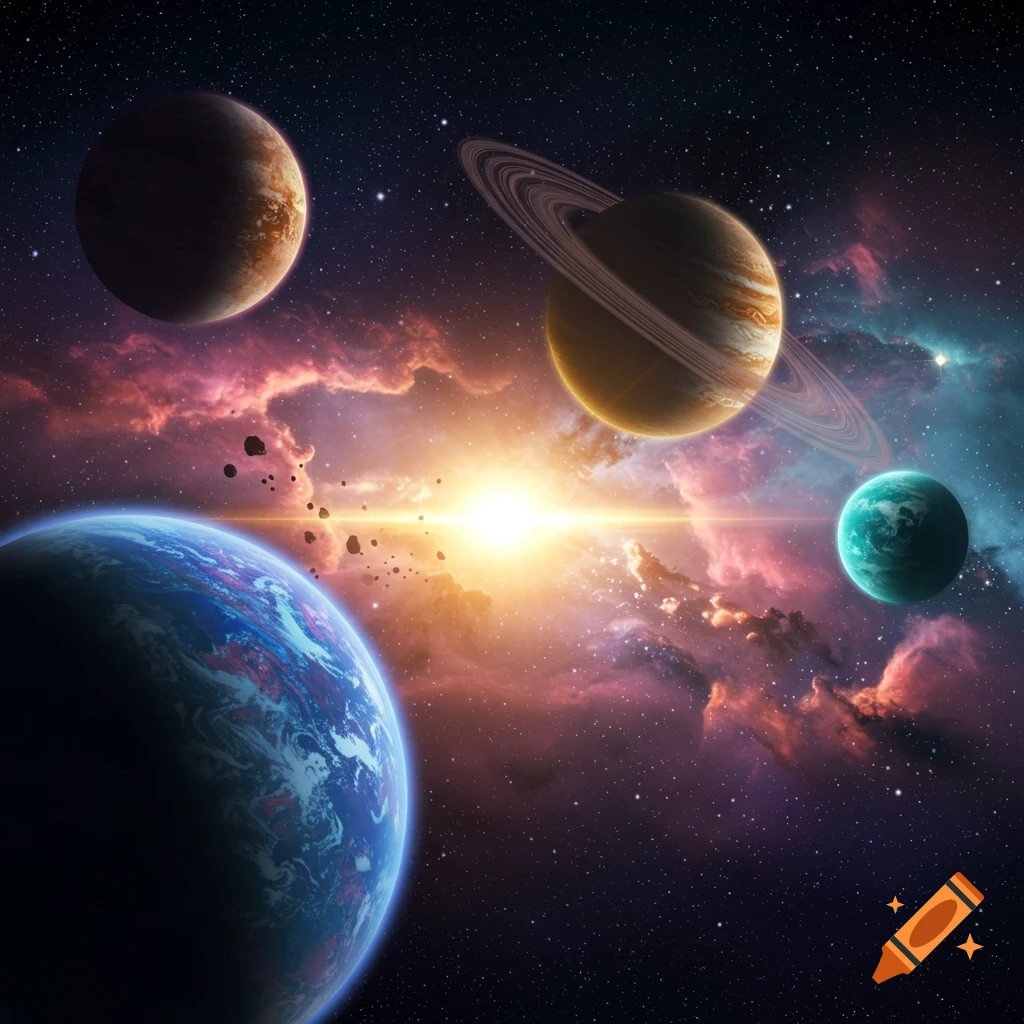
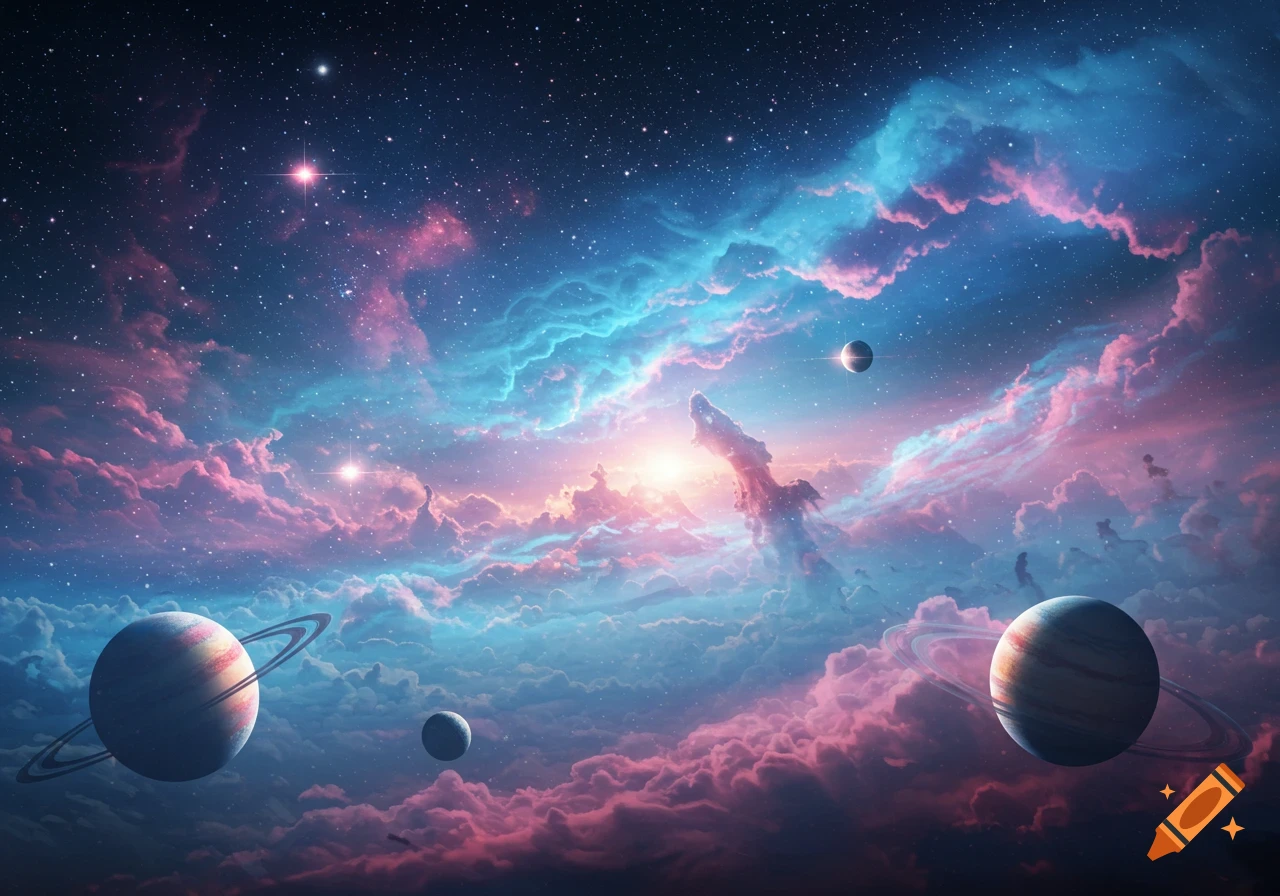
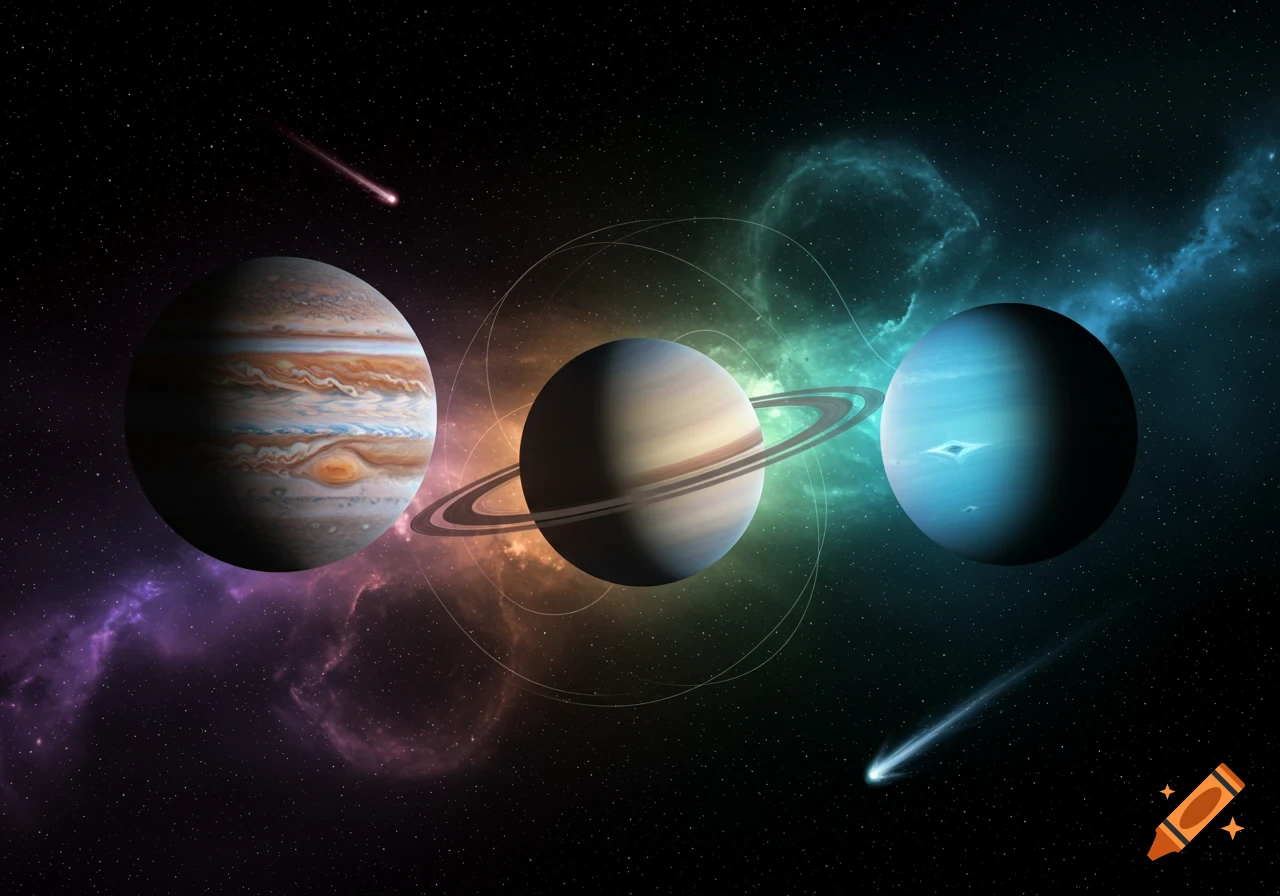
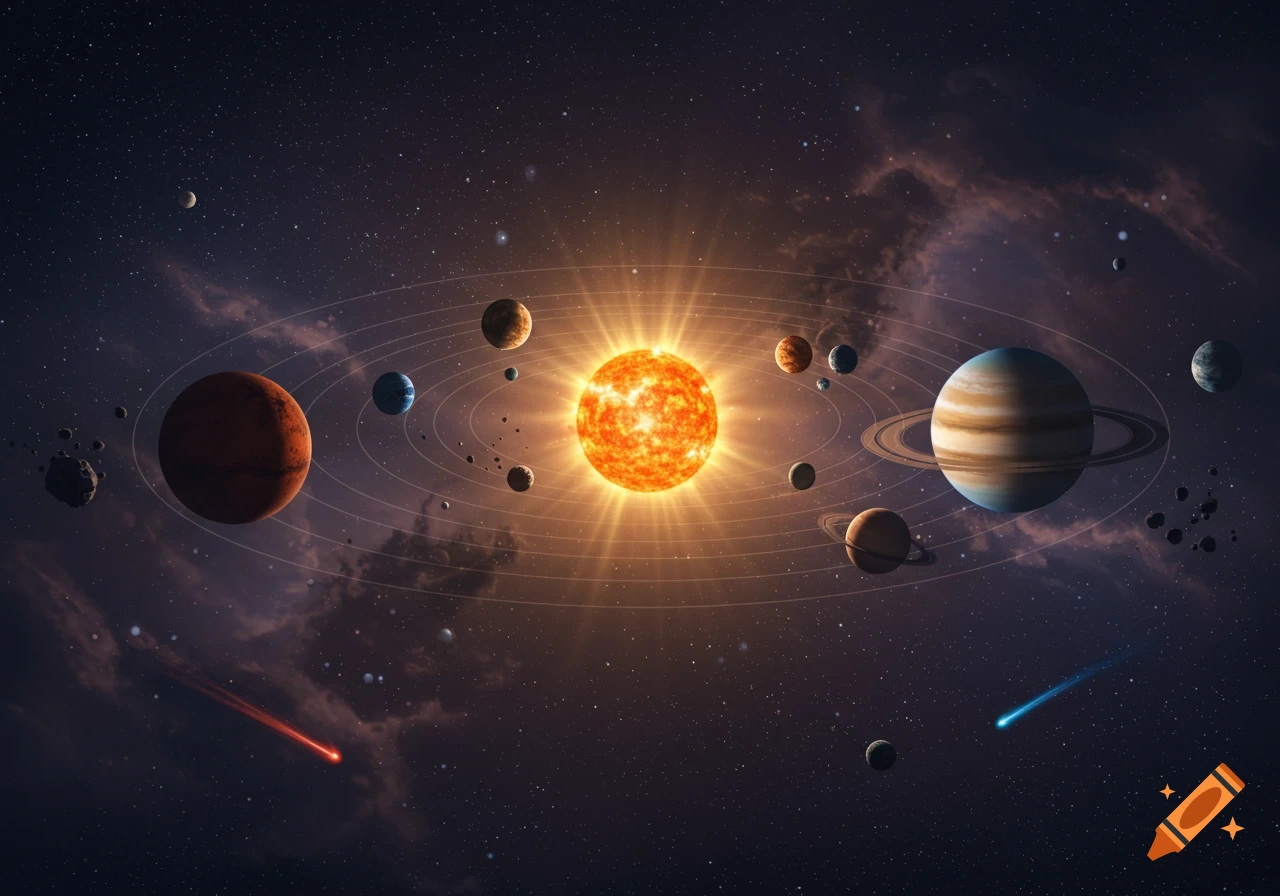
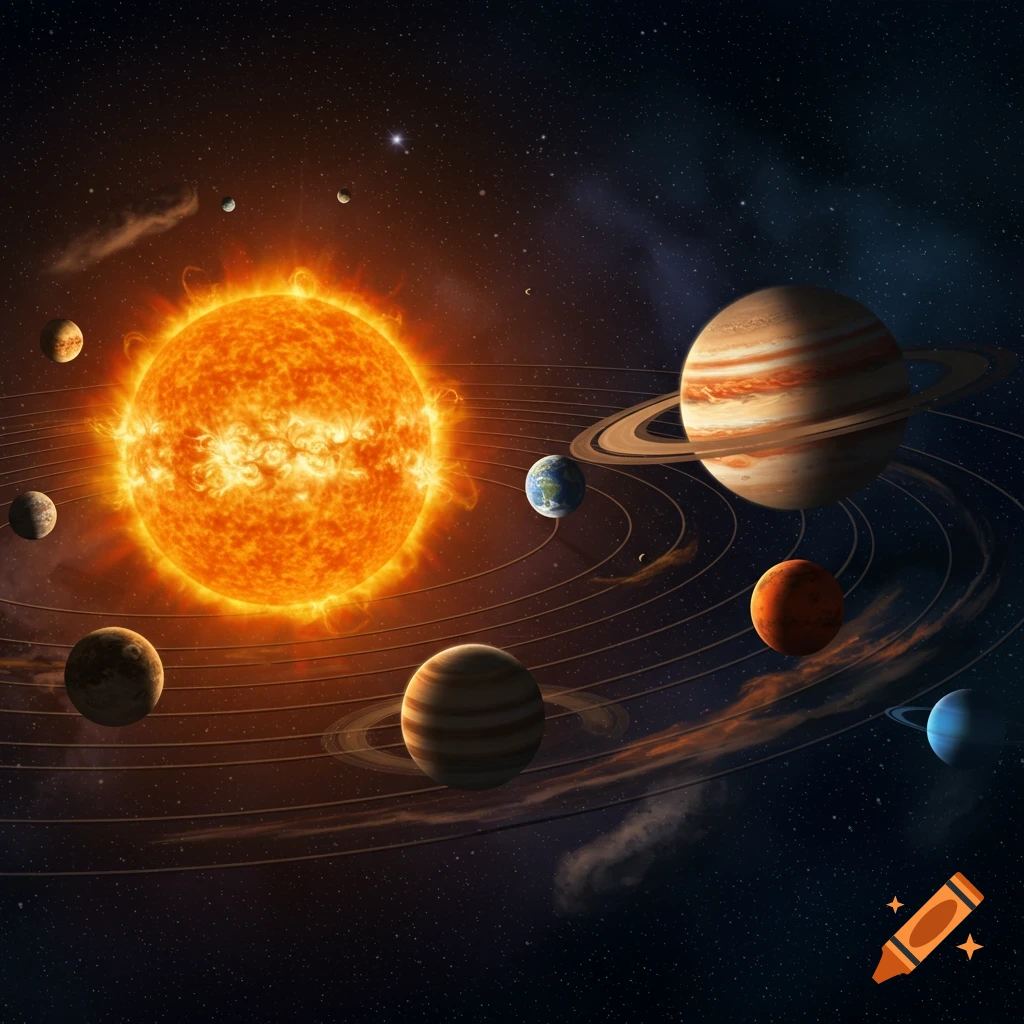
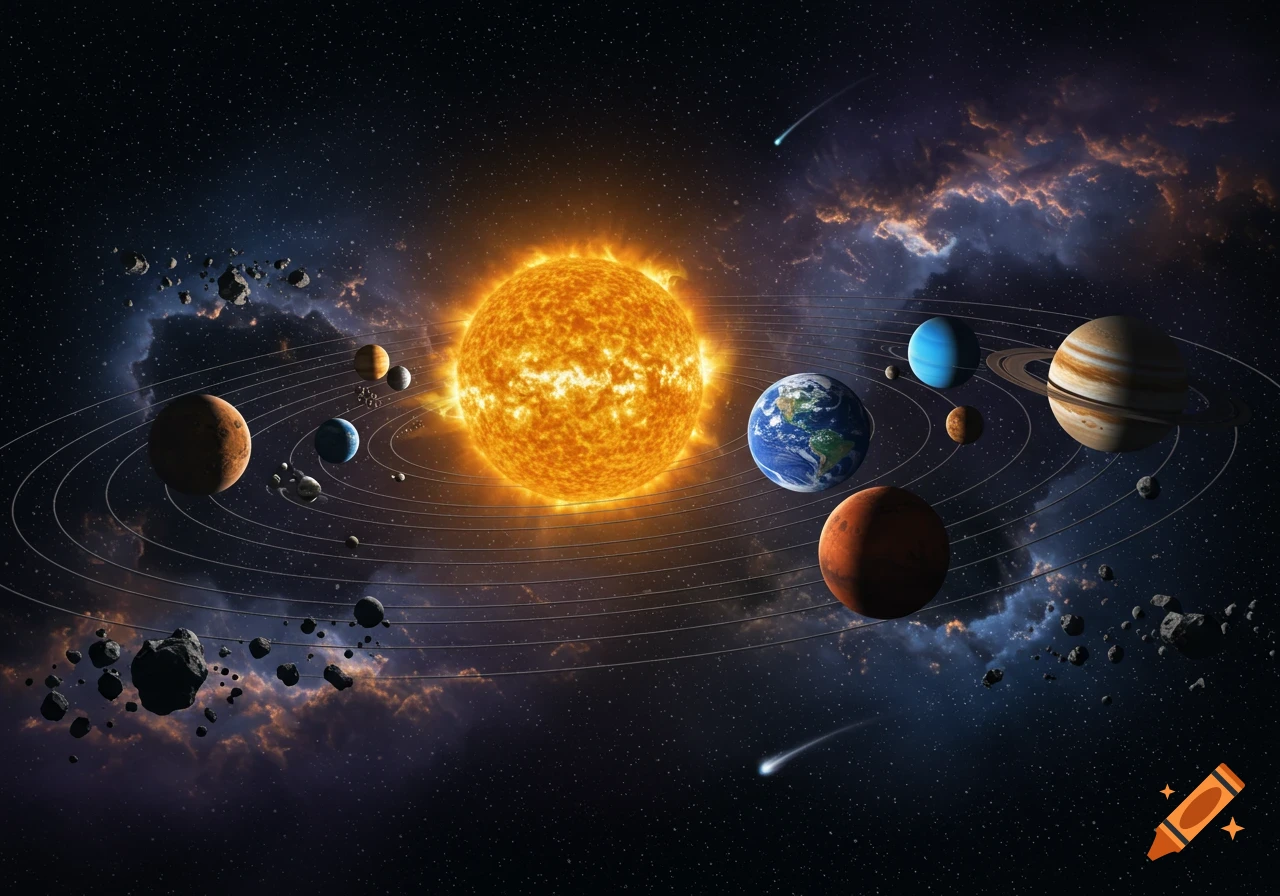
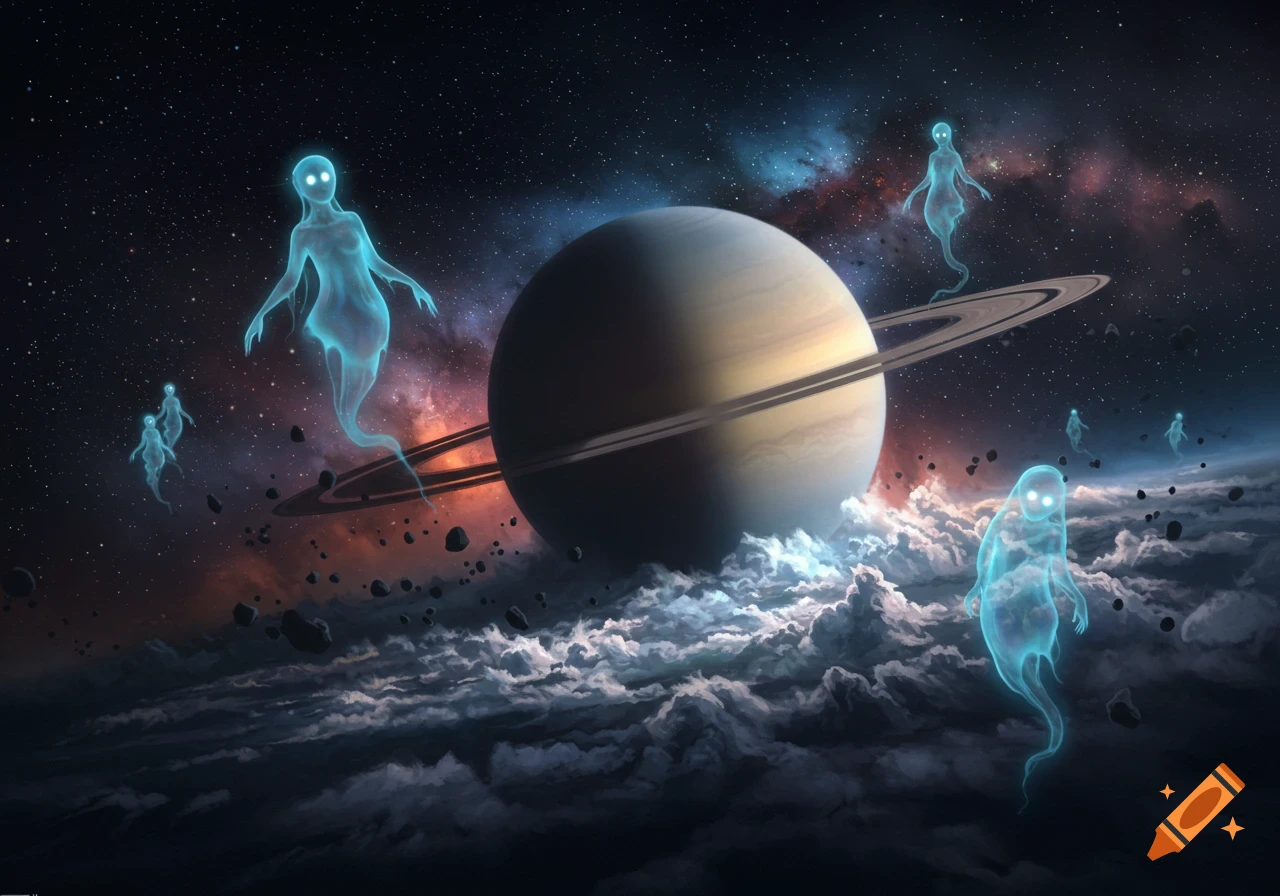
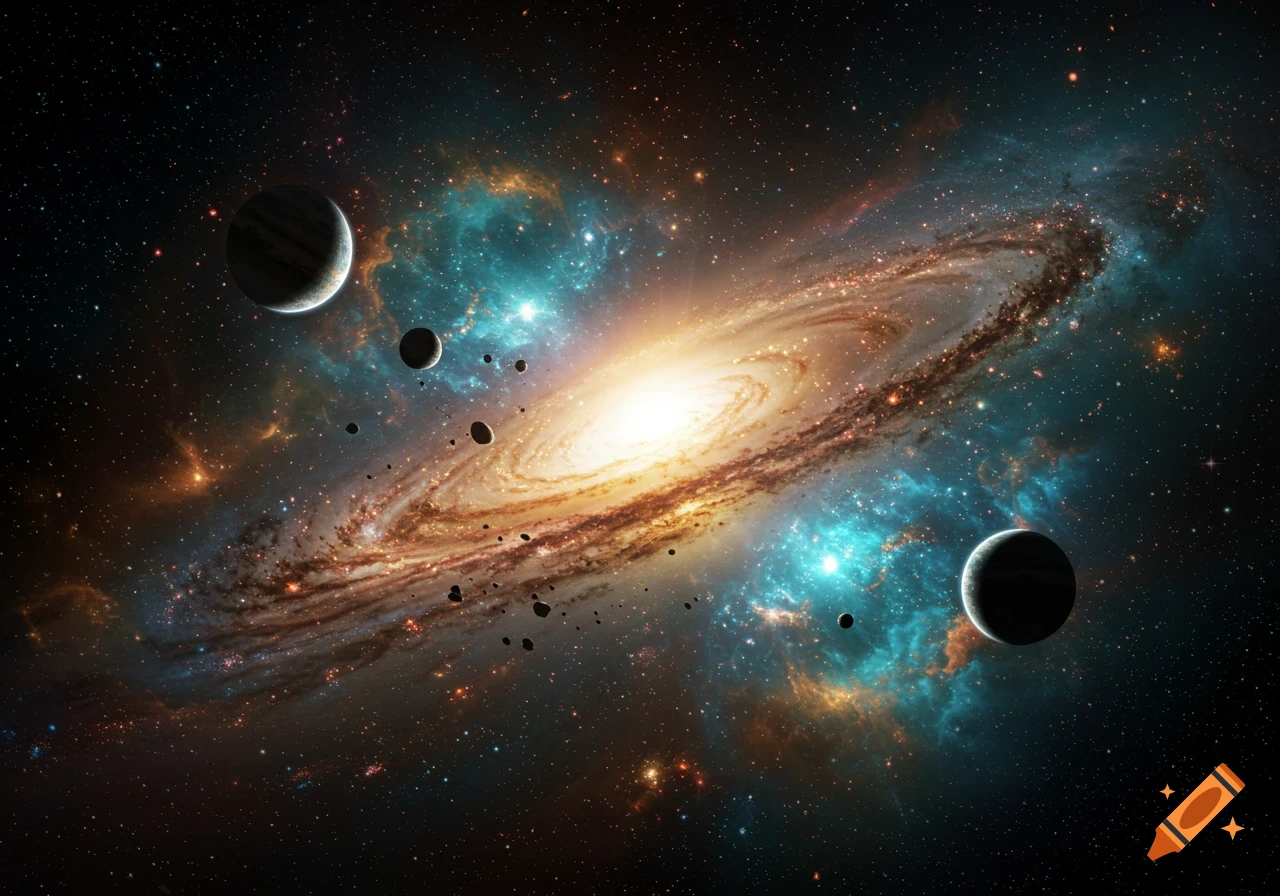
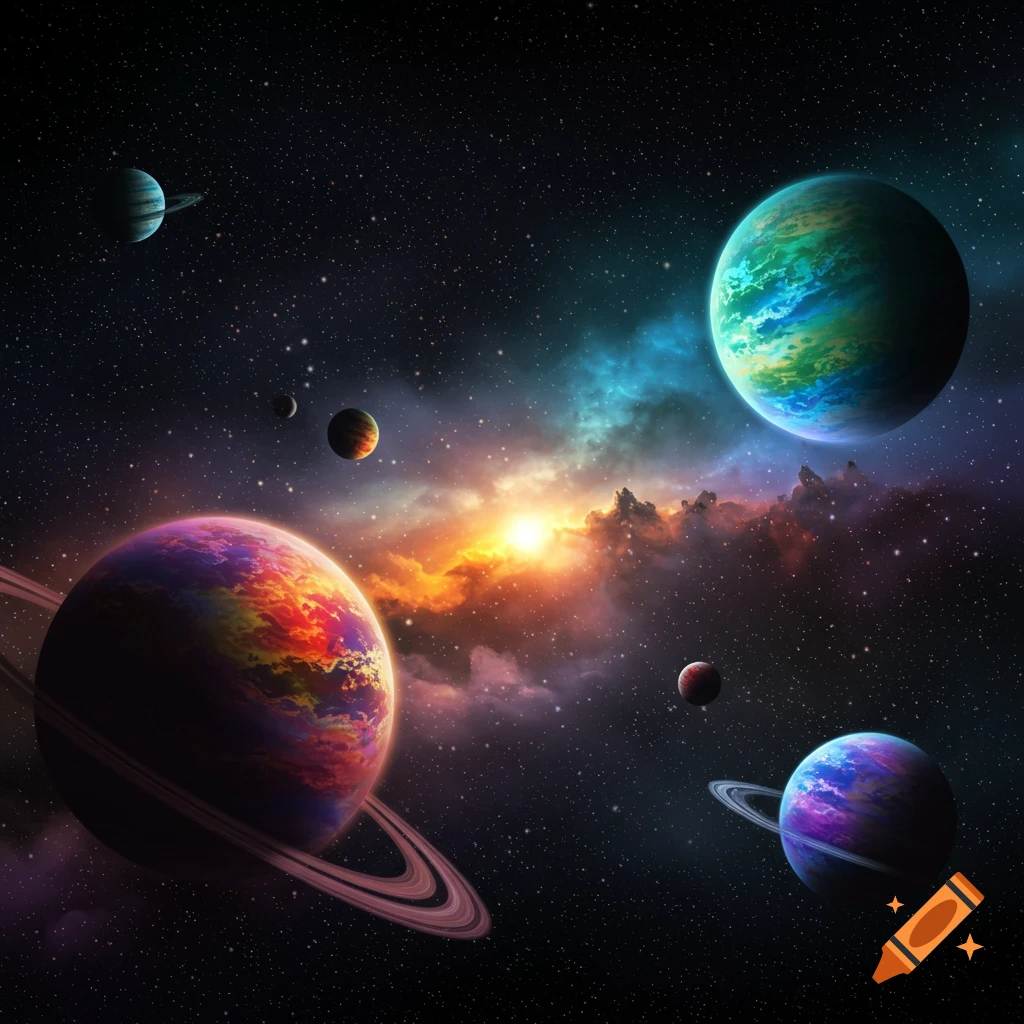
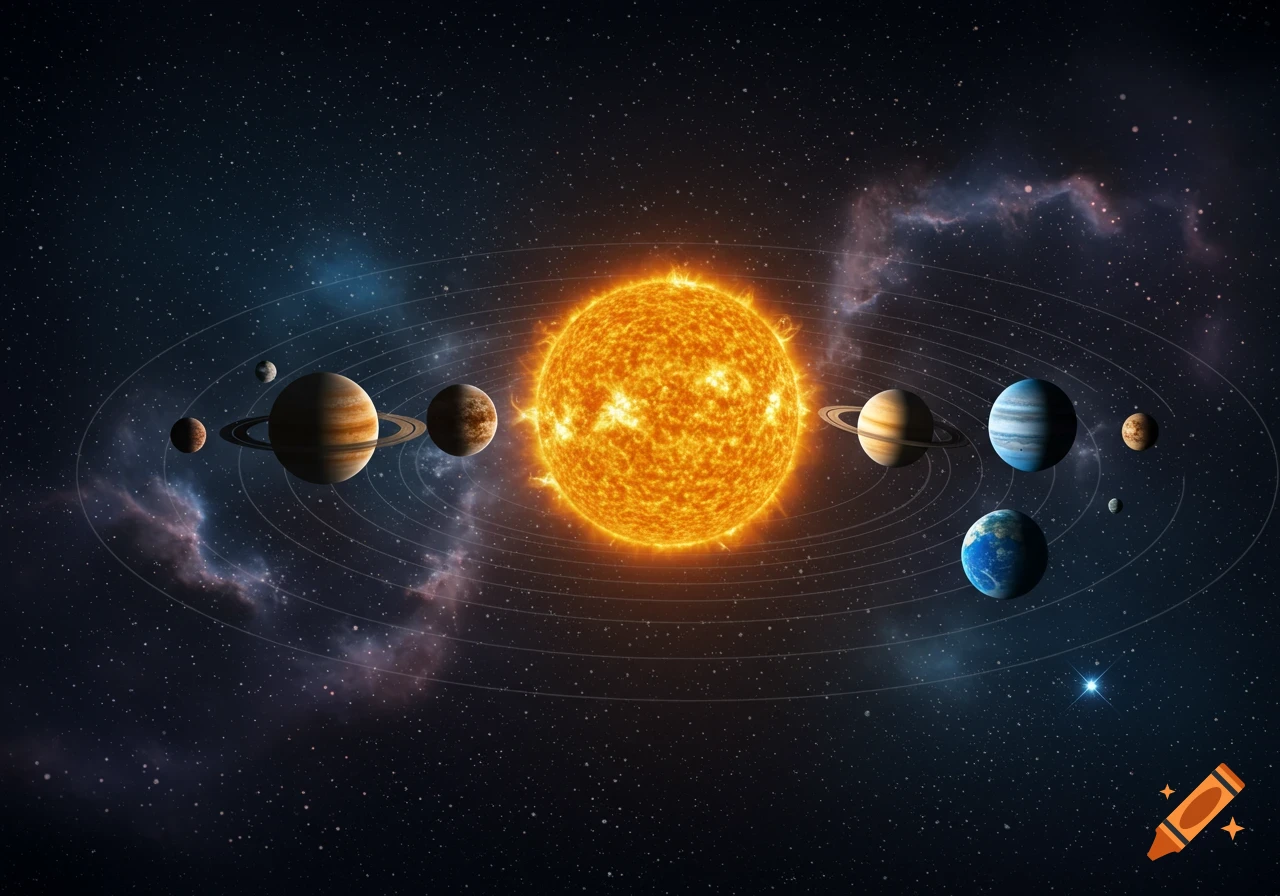
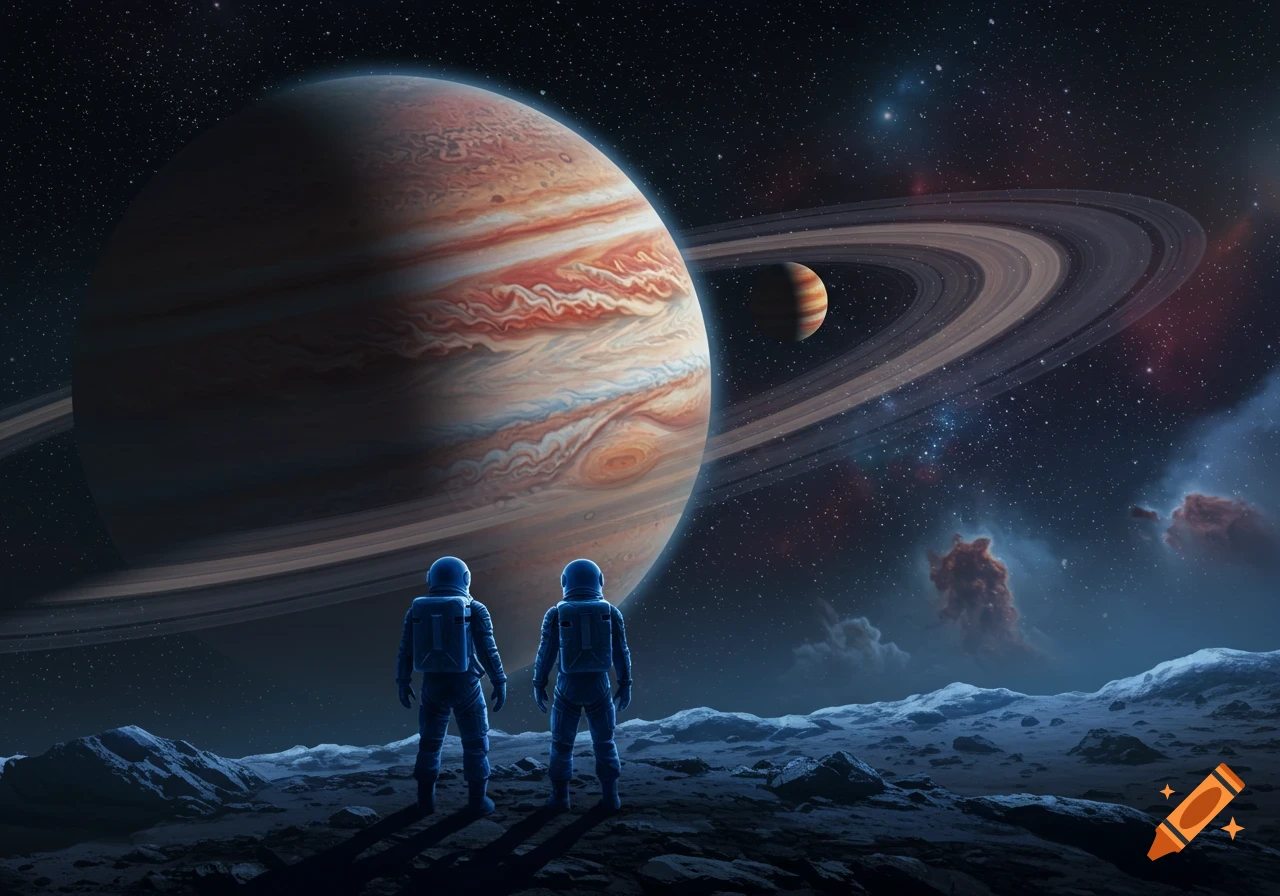
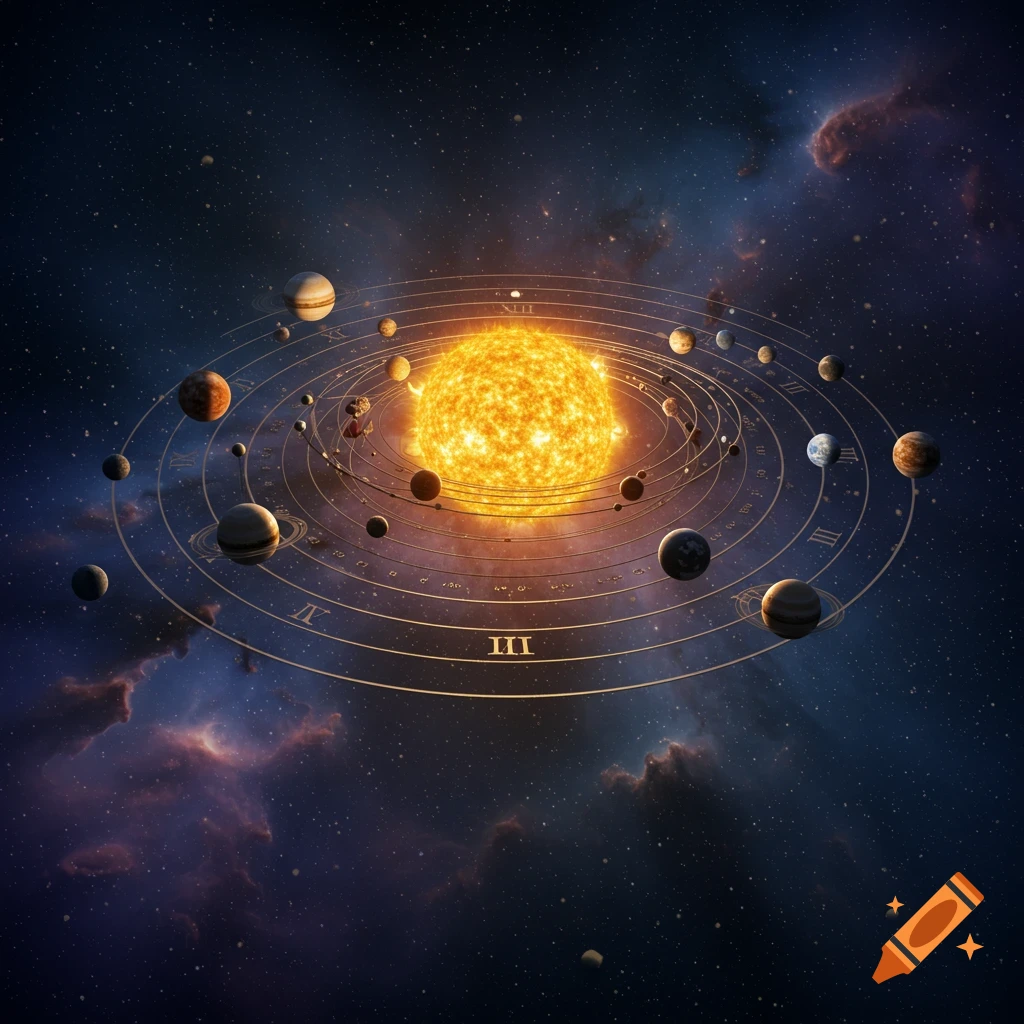
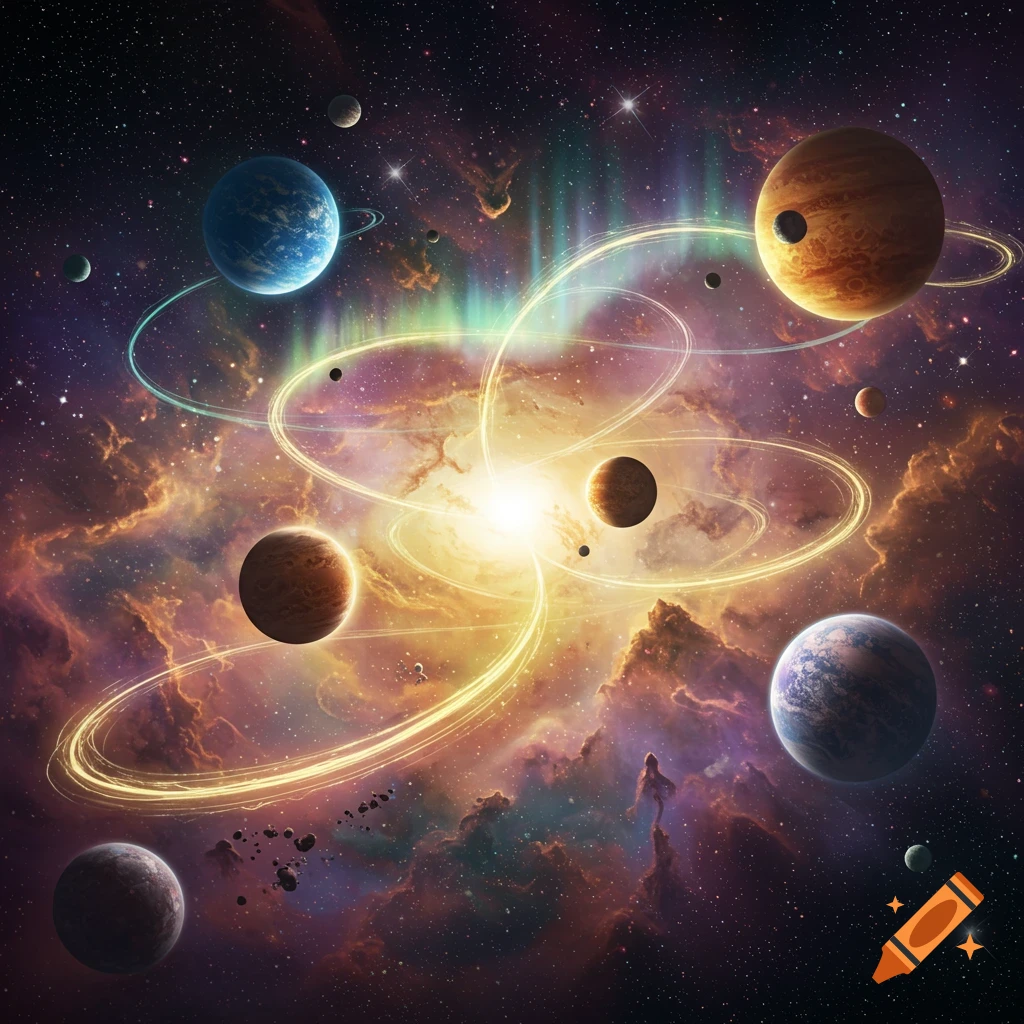
A vibrant illustration of the solar system featuring the sun and multiple planets against a dark, starry backdrop with nebulae.
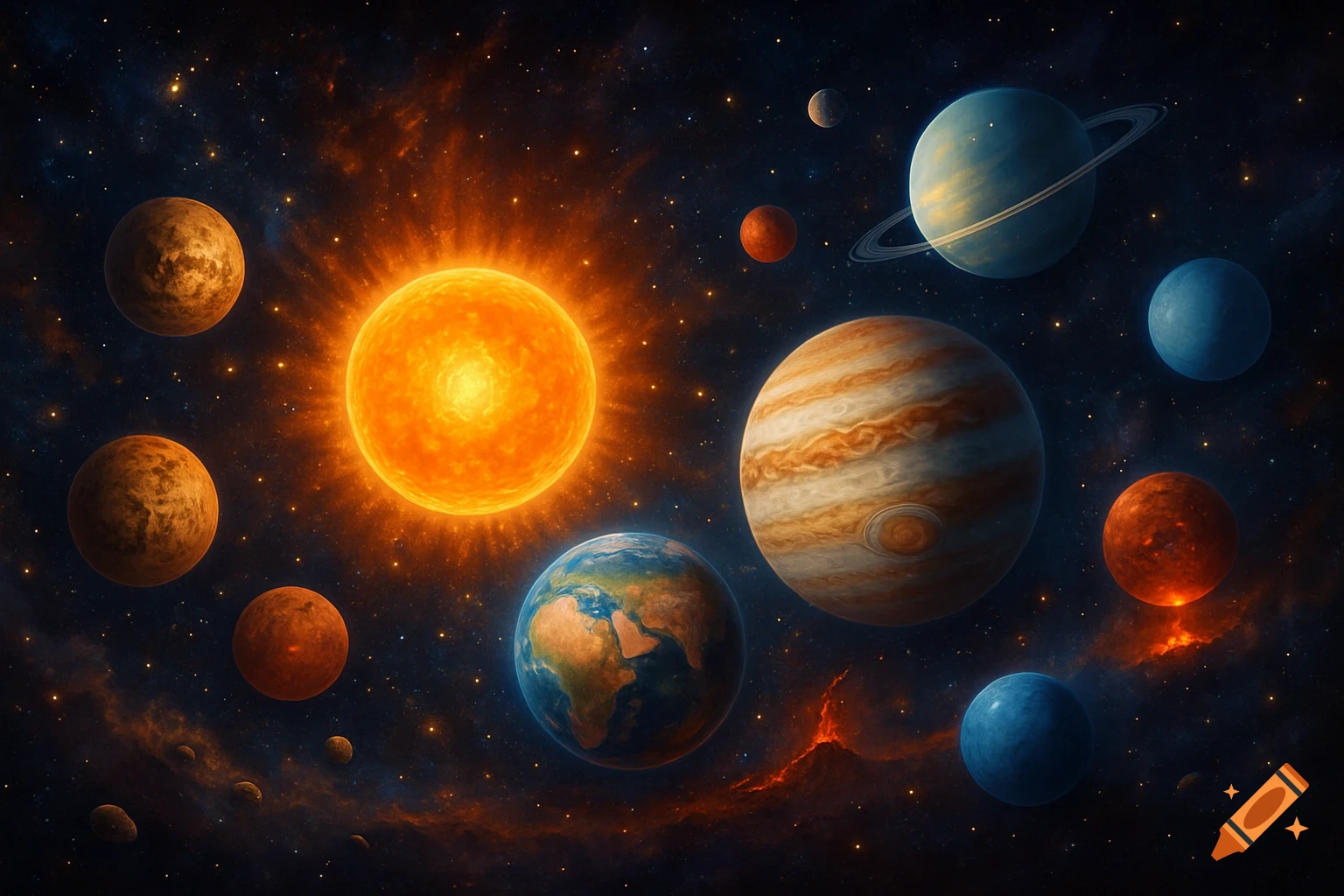
Space and Solar System Space is the vast area beyond Earth’s atmosphere where stars, planets, and galaxies exist. The Solar System is made up of the Sun and everything orbiting it: 8 planets, moons, asteroids, and comets. It formed about 4.6 billion years ago from a cloud of gas and dust called the solar nebula collapsing under gravity. The 8 Planets (Not 9; Pluto is a dwarf planet) Each planet is named mostly after Roman gods and has unique features: Mercury Closest to the Sun Rocky planet, no volcanoes Named after Roman messenger god Venus Thick, hot atmosphere Many volcanoes, some possibly active Named after Roman goddess of love Earth Supports life Has active volcanoes (like Mount St. Helens) Name means "ground" or "soil" Mars Known as the "Red Planet" Has largest volcano, Olympus Mons Named after Roman god of war Jupiter Largest planet, gas giant (hydrogen, helium) Its moon Io has the most active volcanoes in the solar system Named after king of Roman gods Saturn Famous for rings Gas giant Named after Roman god of agriculture Uranus Ice giant, tilted rotation Named after Greek sky god Neptune Coldest and farthest planet Ice giant Named after Roman sea god Volcanoes: Where and How Volcanoes form when heat inside a planet melts rock into magma that rises and erupts as lava. Found on: Earth (many active volcanoes) Venus (many volcanoes, some very large) Mars (Olympus Mons, largest volcano) Io (moon of Jupiter, extremely active volcanoes) Volcanoes show internal heat and See more