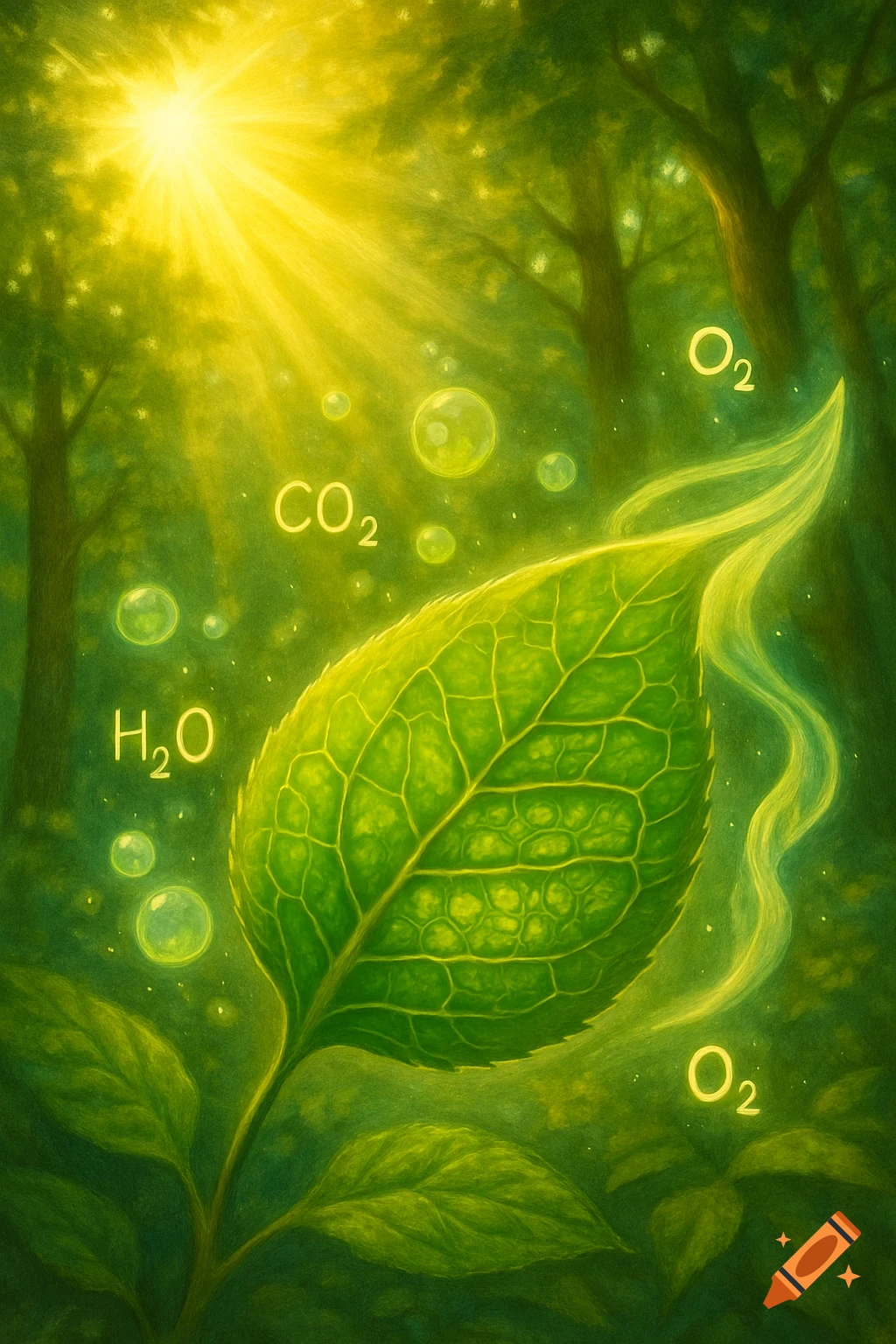
Painterly image contrasting smokestacks emitting dark smoke labeled CO₂ with a solar panel and colorful energy flow towards HjO, with chemical symbols.
The relentless increase in atmospheric carbon dioxide (CO₂) levels, primarily from fossil fuel combustion, poses a profound threat to global climate stability, necessitating strategies not only to reduce emissions but also to actively remove CO₂ [1]. In this context, artificial photosynthesis, the solar-driven conversion of CO₂ and water into value-added, carbon-neutral fuels and chemicals such as carbon monoxide (CO), methane (CH₄), formic acid (HCOOH), and methanol (CH₃OH), emerges as a critical pathway for closing the carbon cycle and establishing a renewable energy economy [2]. However, the large-scale application of this technology is hindered by the inherent limitations of conventional semiconductor photocatalysts like TiO₂ and ZnO, which include a narrow light absorption range (primarily UV), rapid recombination of photogenerated charge carriers, poor CO₂ adsorption capacity, and low product selectivity [3]. These challenges have catalysed the exploration of alternative platforms, leading to the rise of tunable organic polymer-based photocatalysts such as graphitic carbon nitride (g-C₃N₄), covalent organic frameworks (COFs), and conjugated microporous polymers (CMPs), which offer tailored electronic structures and high surface areas [4]. Emerging from this major development, ionenes, a unique type of polymers which have ionic groups merged into its framework instead of as pendant chains, represent a remarkably promising yet underinvestigated class of materials. We See more