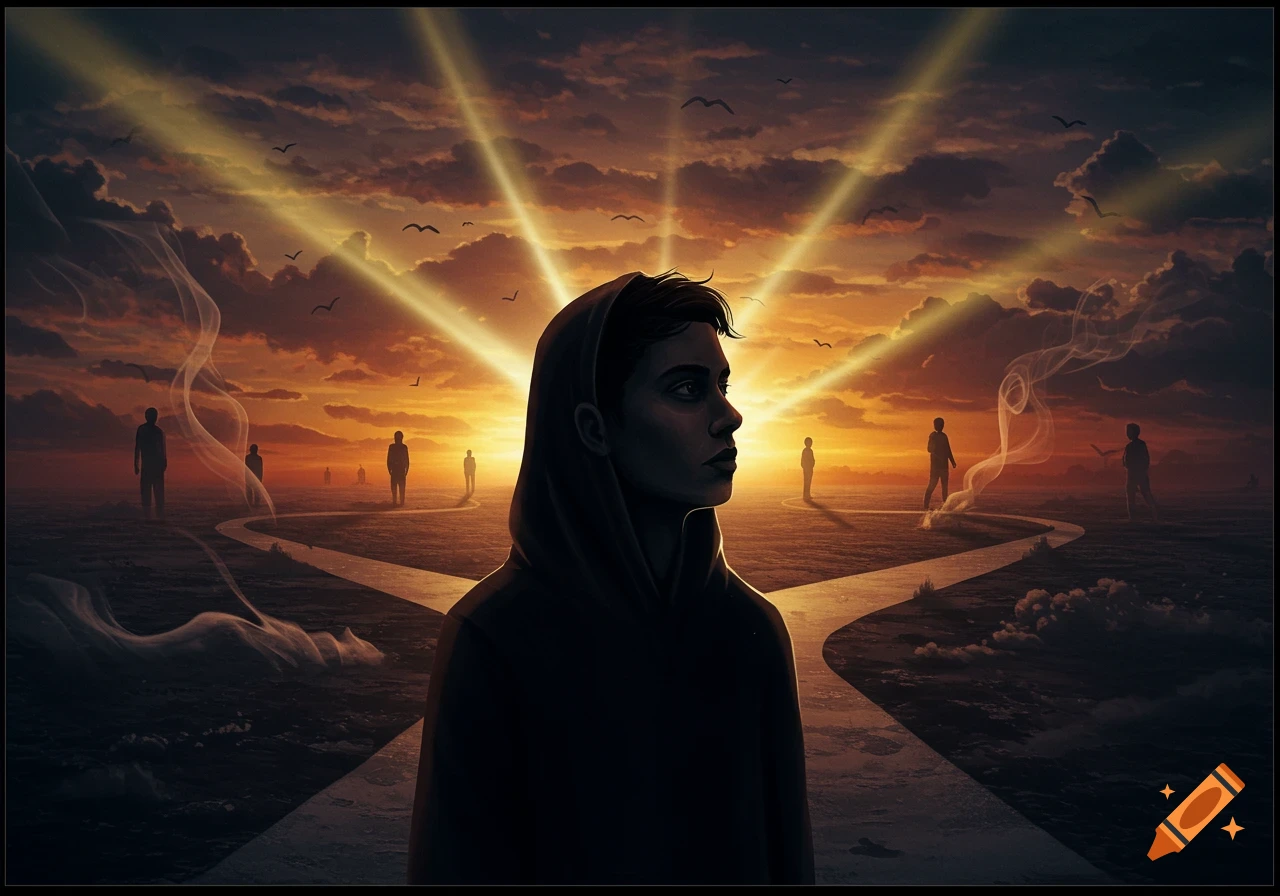
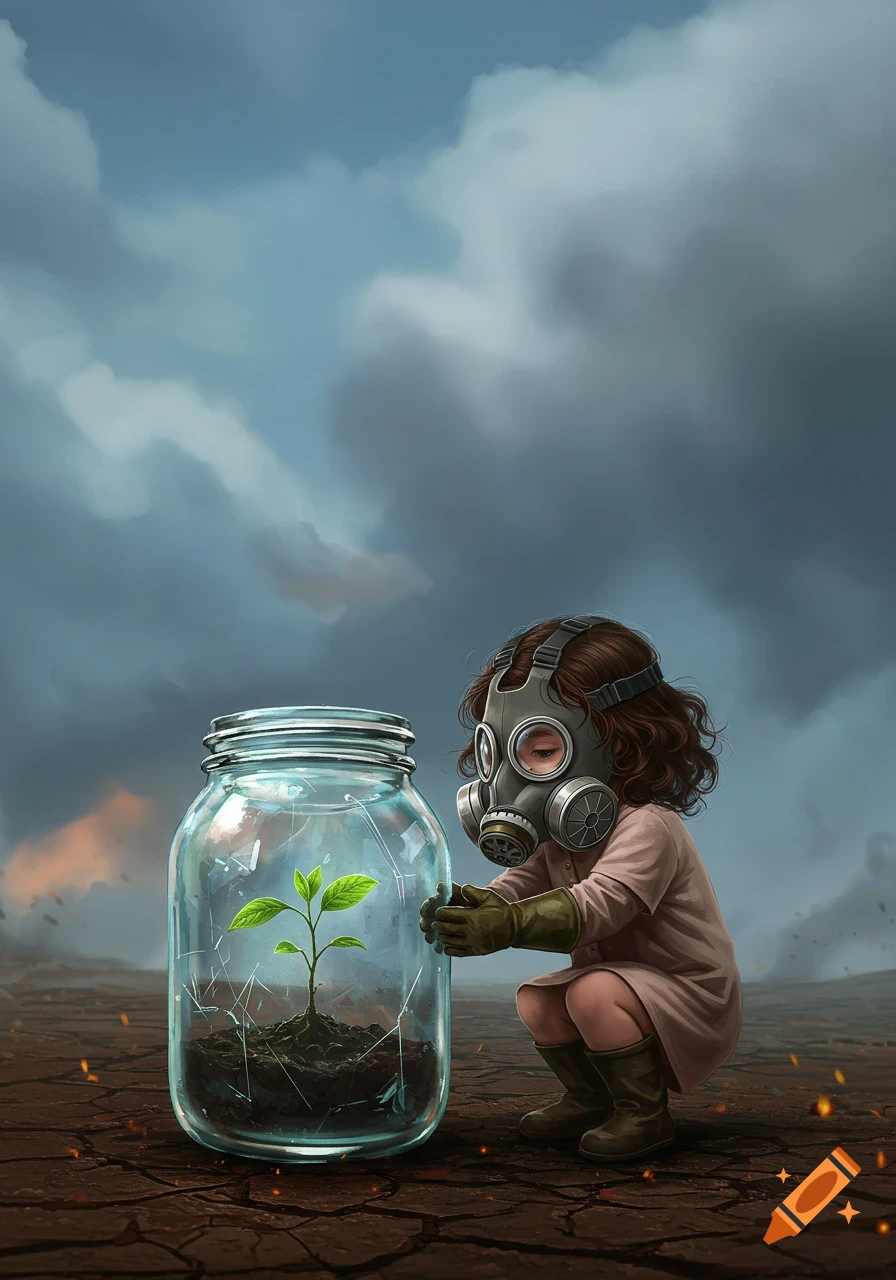
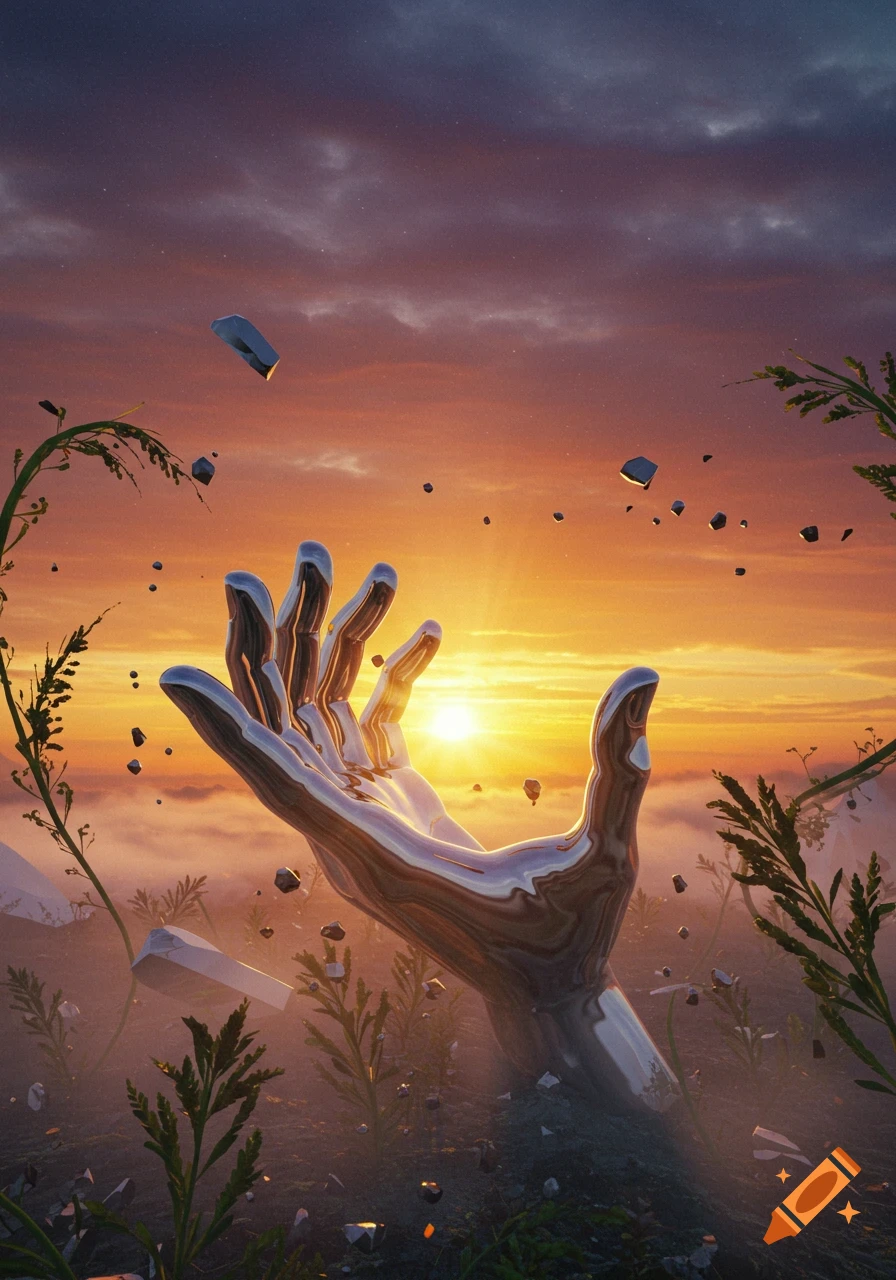
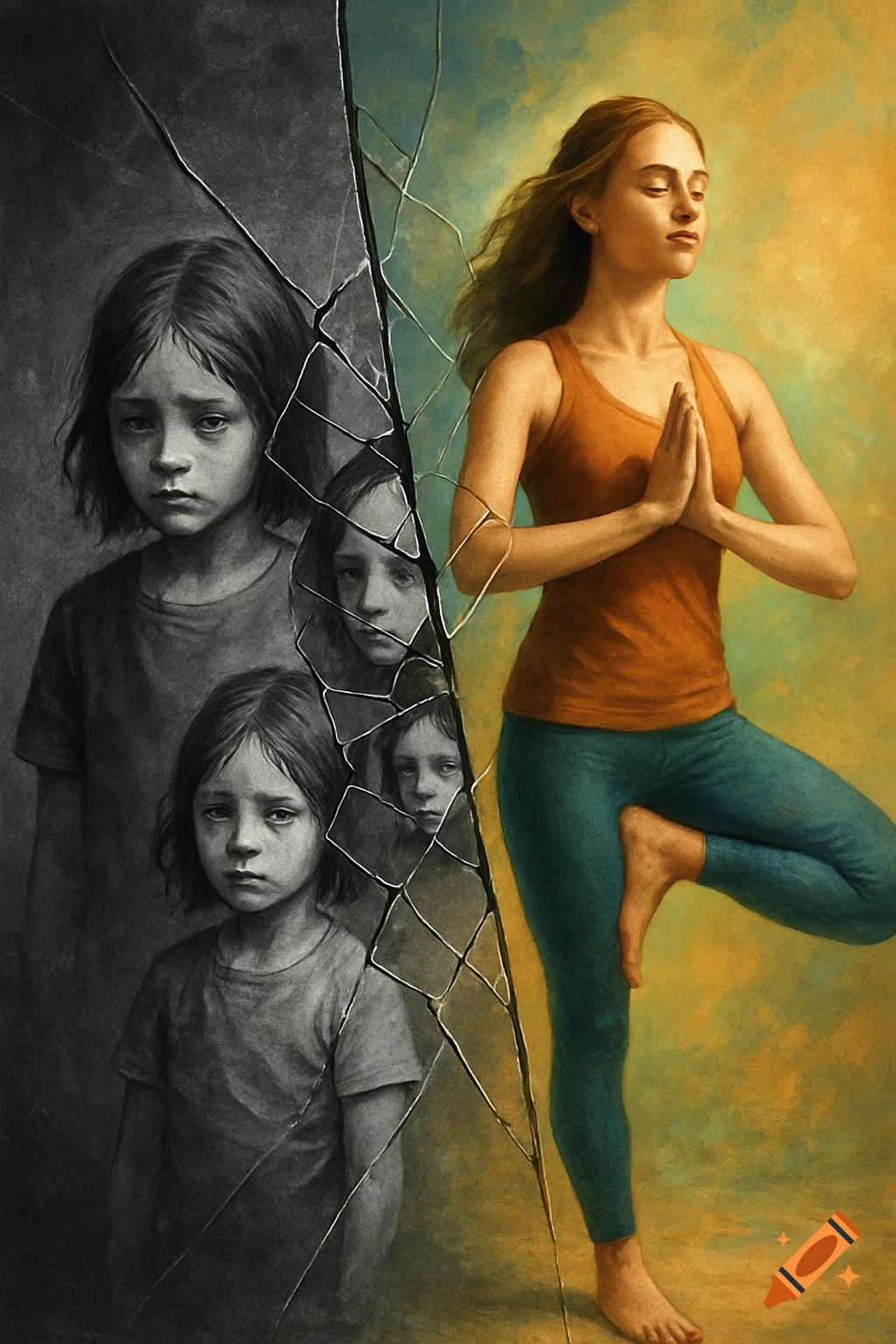
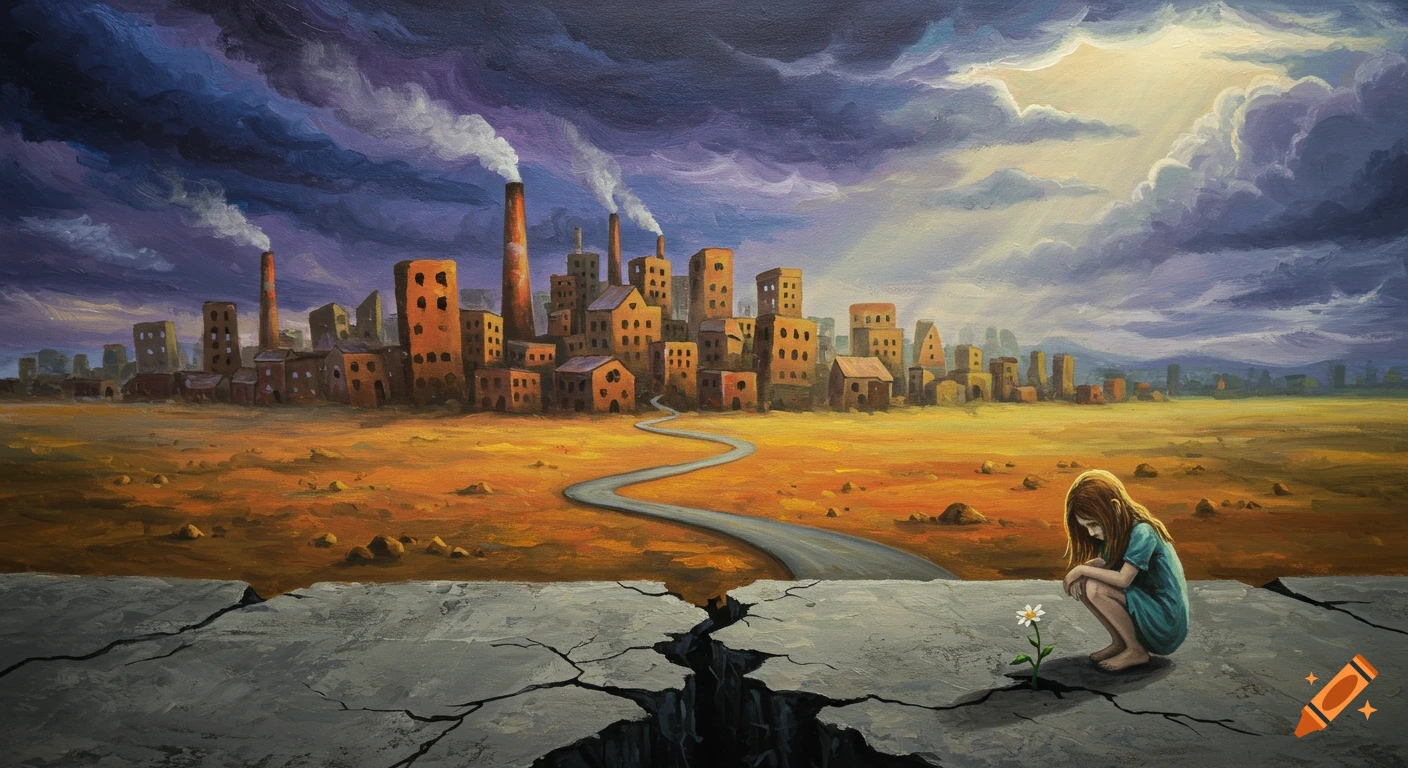
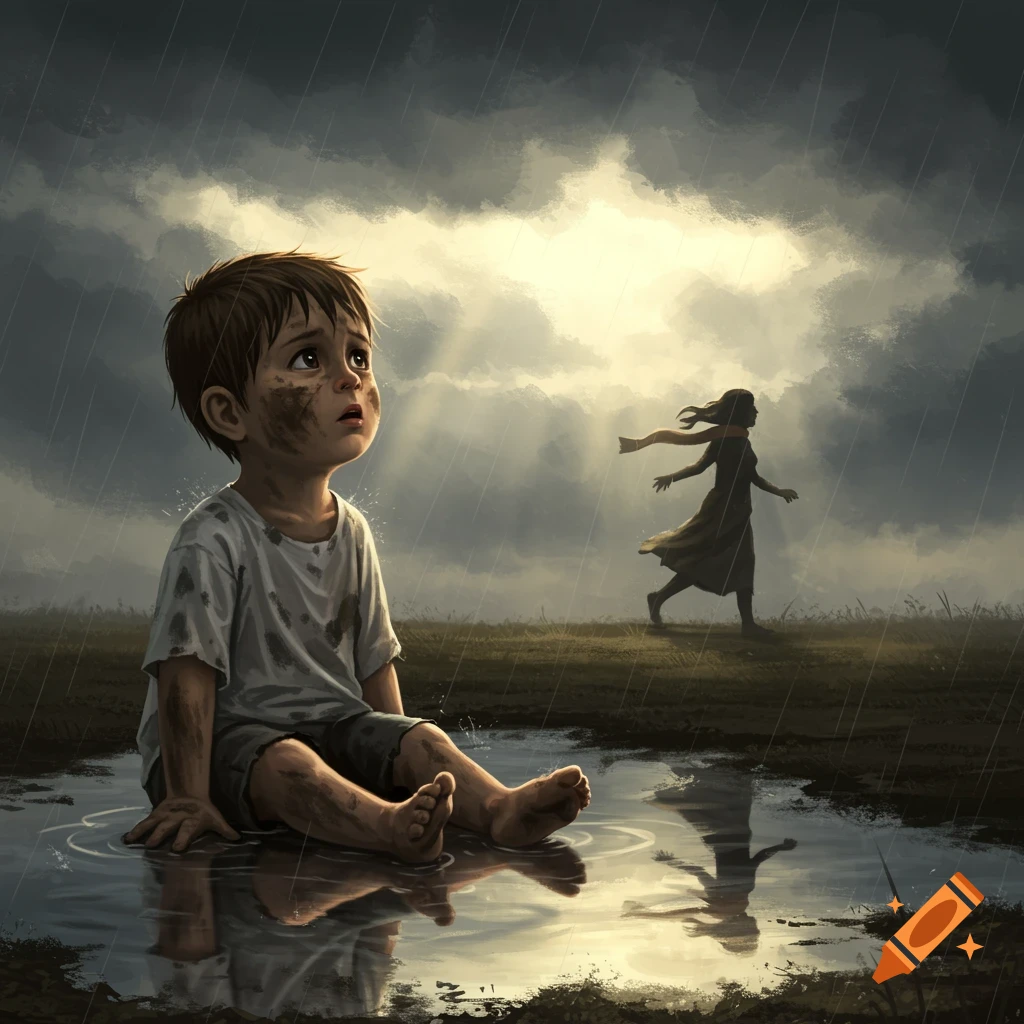
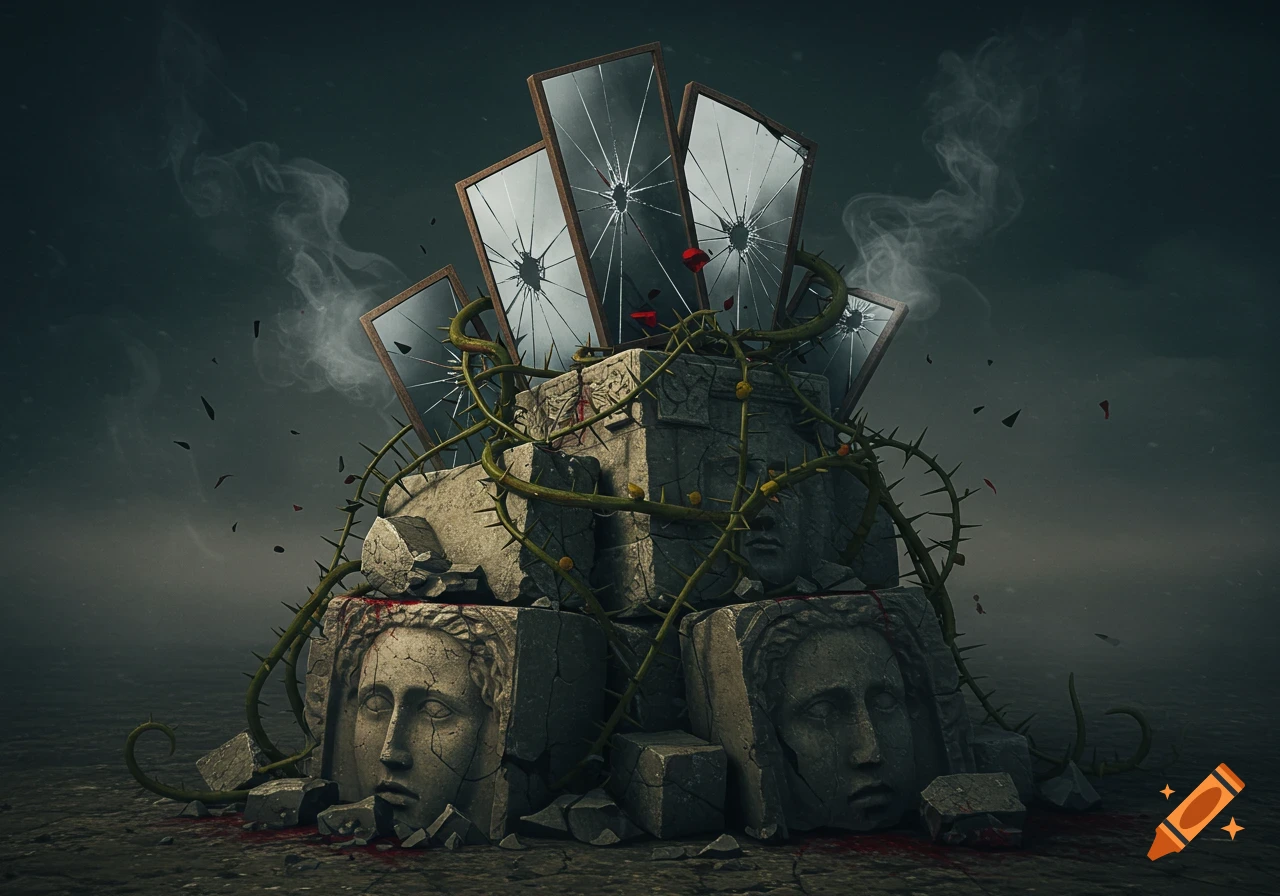
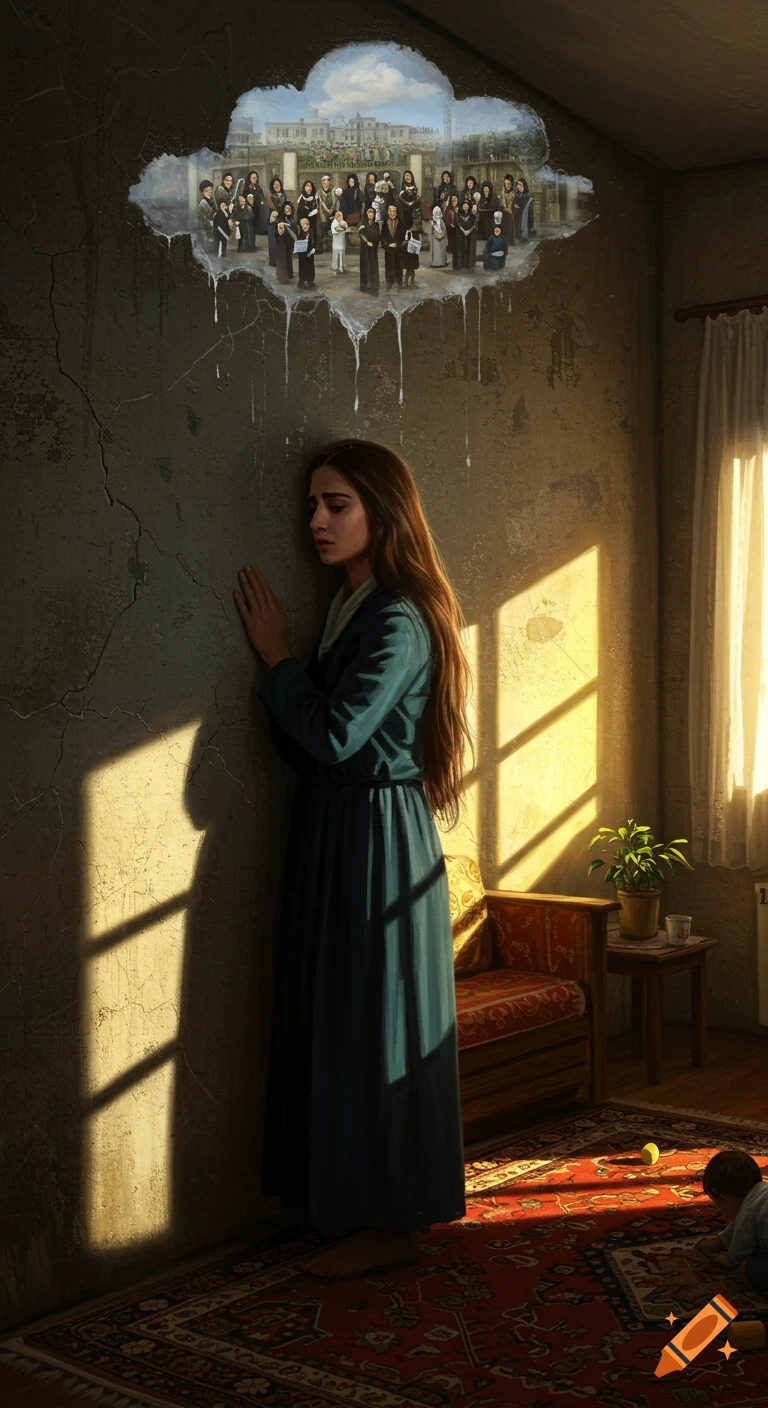
Woman in desolate landscape with shattered mirrors reflecting trauma, golden thread, sunflower. Digital art.
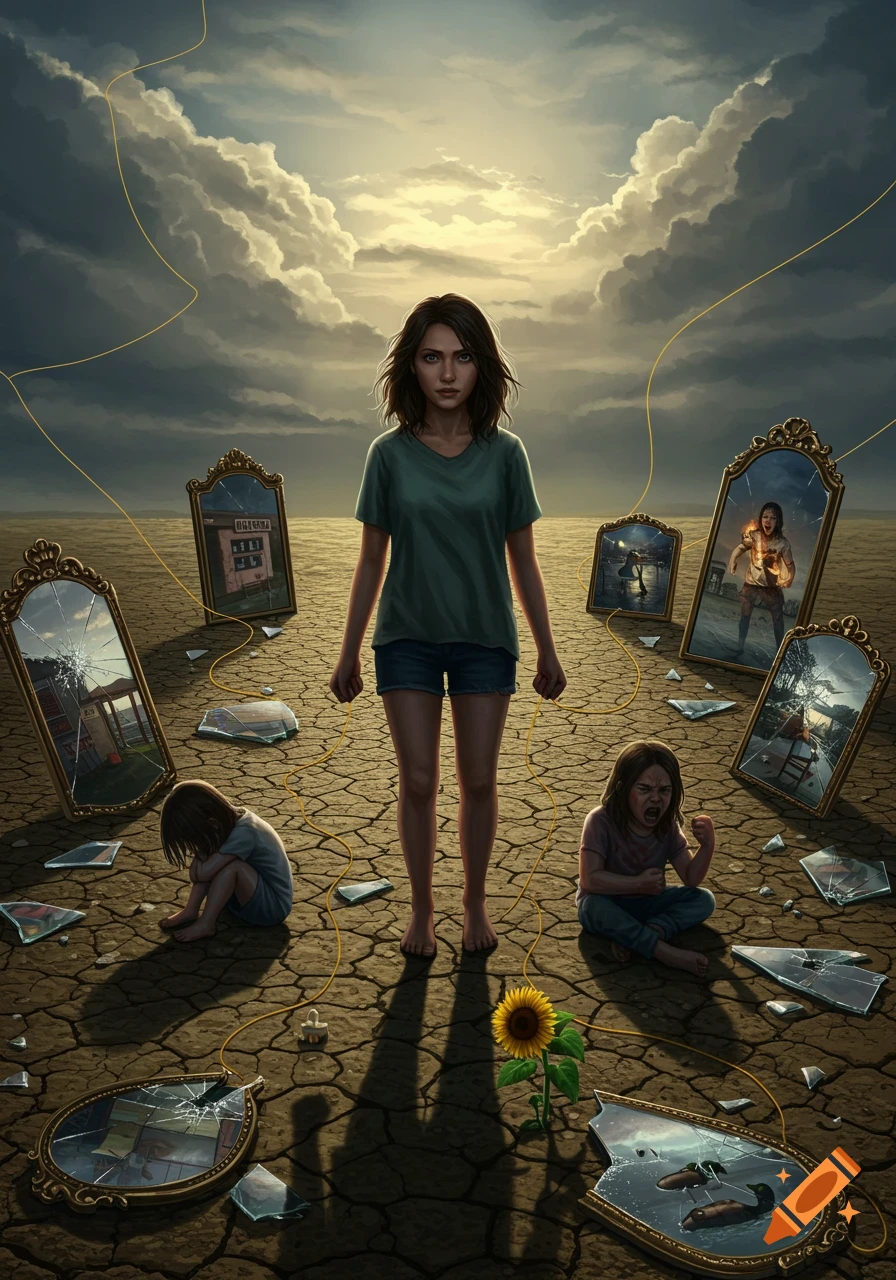
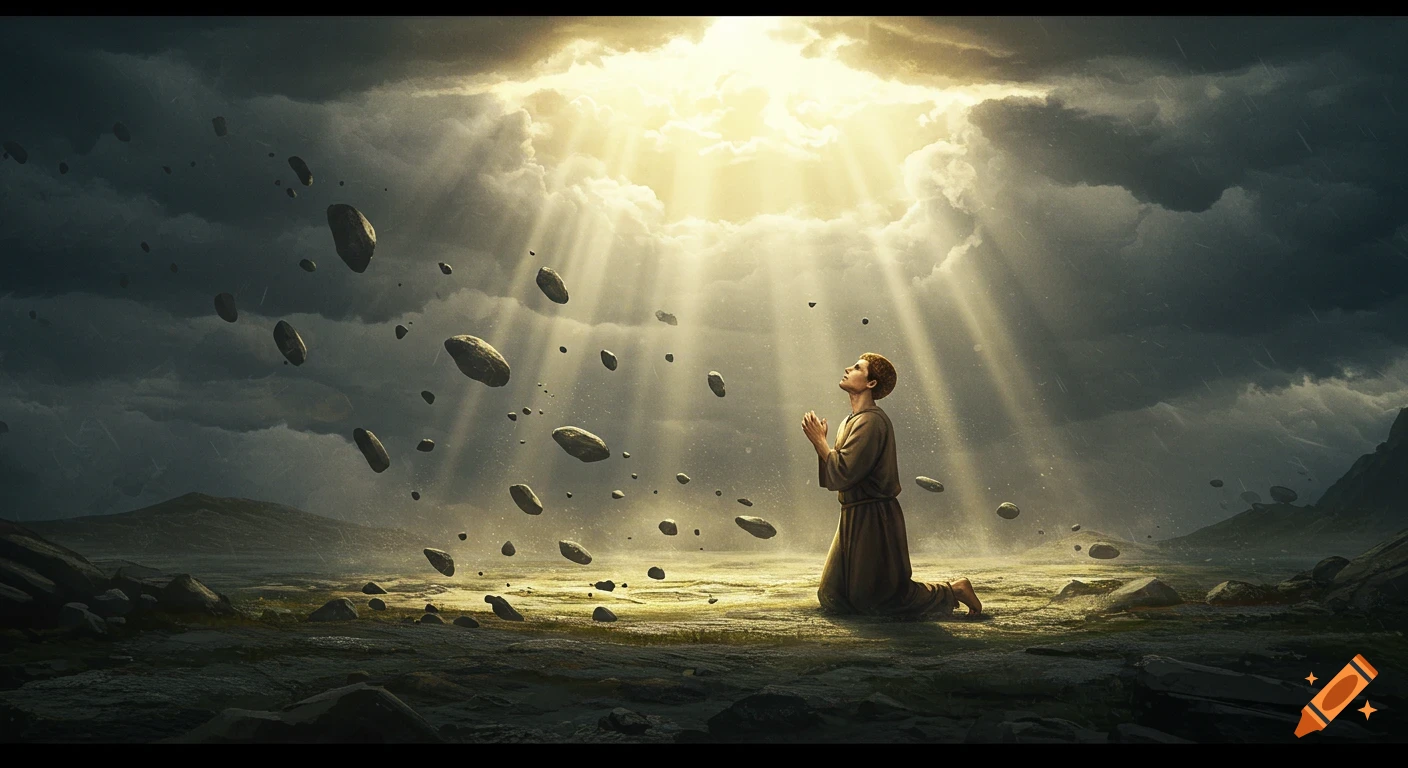
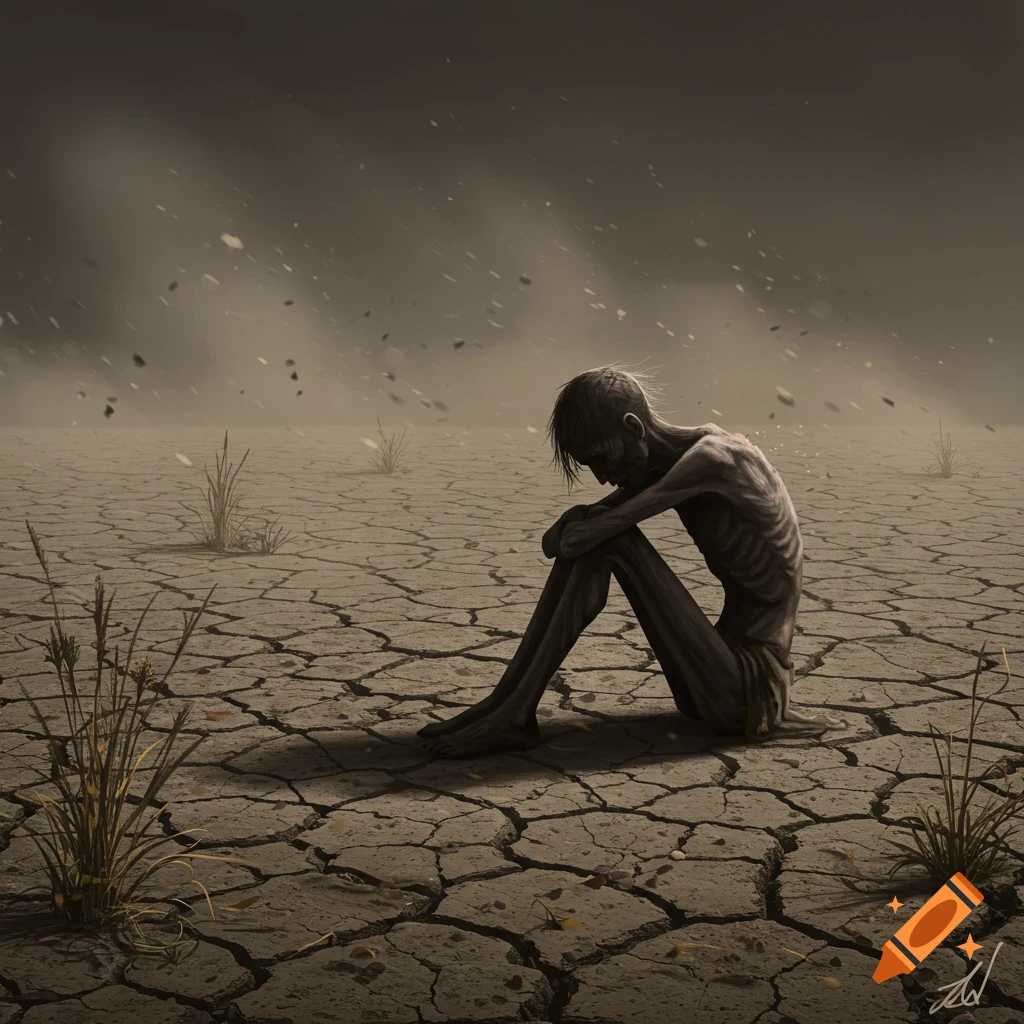
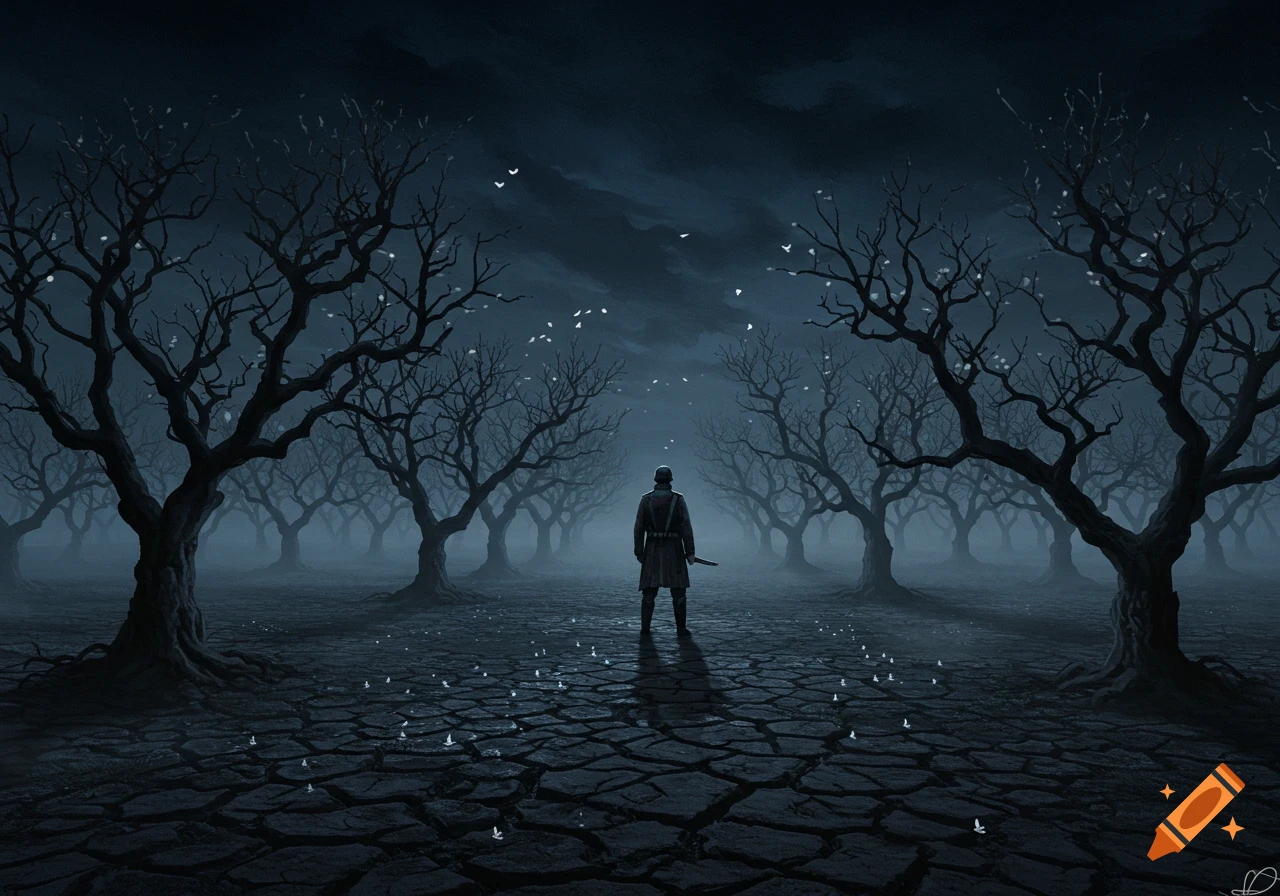
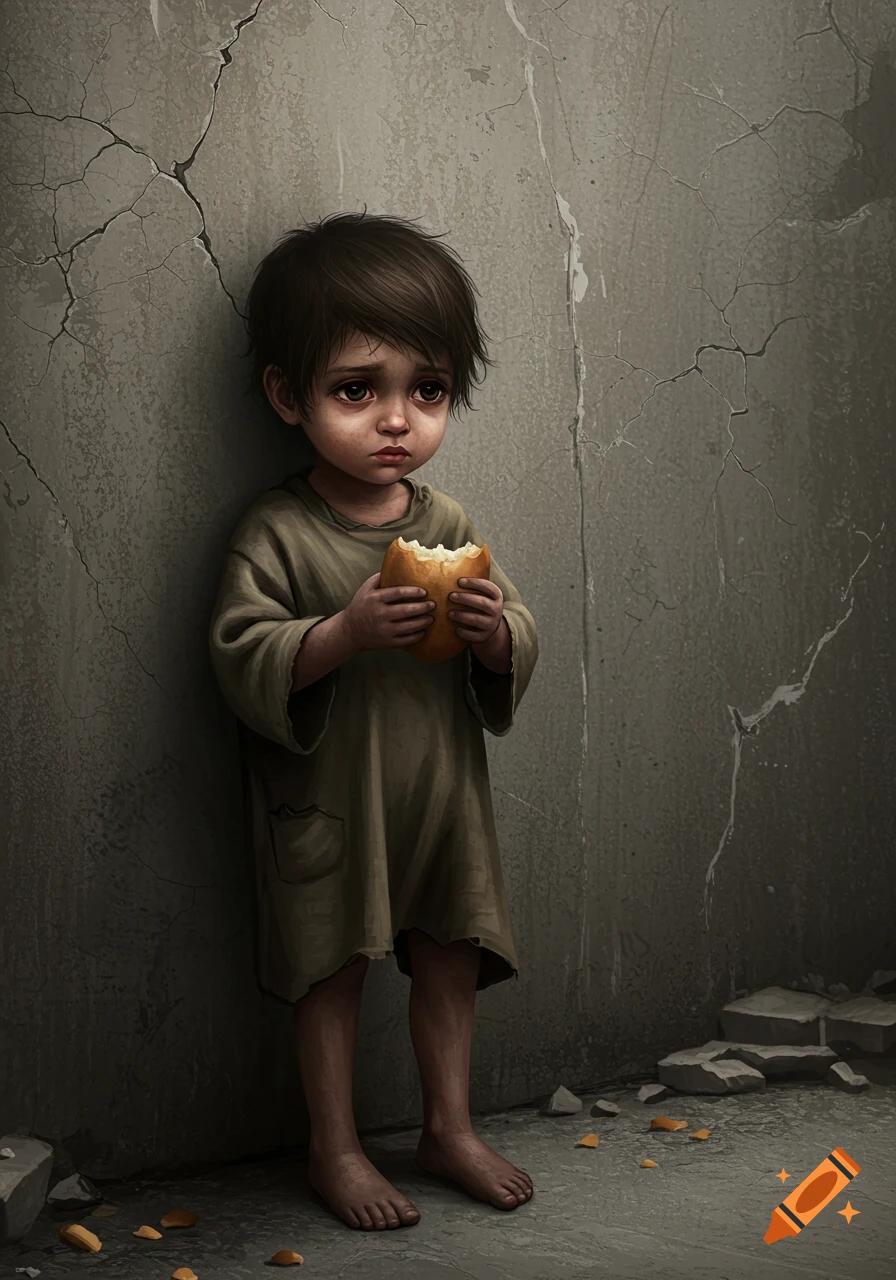
Image Description: “The Survivor’s Landscape” In the center stands a young woman, barefoot on cracked, dry earth, symbolizing a foundation built on hardship and trauma. Her expression is calm, but her posture carries the quiet weight of survival. She is both still and resilient. Behind her, her shadow splits into two distinct forms: On one side, a small child curled tightly in a ball—fragile, afraid, forgotten. On the other, a fierce teenage girl, mid-scream, fists clenched and body arched in defiance. Anger as survival. Surrounding the woman are shattered mirrors, scattered across the ground like broken memories. Each mirror reflects a different symbolic fragment of her life: One shows a dark motel room with boarded-up windows and peeling wallpaper. Another contains the image of a duck pond, but the water is murky, and the sky above it is storm-gray. One flickers with an image of a burning letter, ashes caught in midair. Another shows a child on a chair outside in the night, darkness pressing in. Threaded through the broken glass is a faint golden thread, like embroidery across pain. It stitches the mirrors together—not to erase what happened, but to hold the pieces in place. Above the scene, the sky is heavy with clouds, but there’s a break—a soft, golden light spills through. The golden thread from below rises toward this break, like a tether to something gentler. By her foot, small and brilliant, a sunflower blooms—the only vibrant thing in the landscape. A symbol of See more