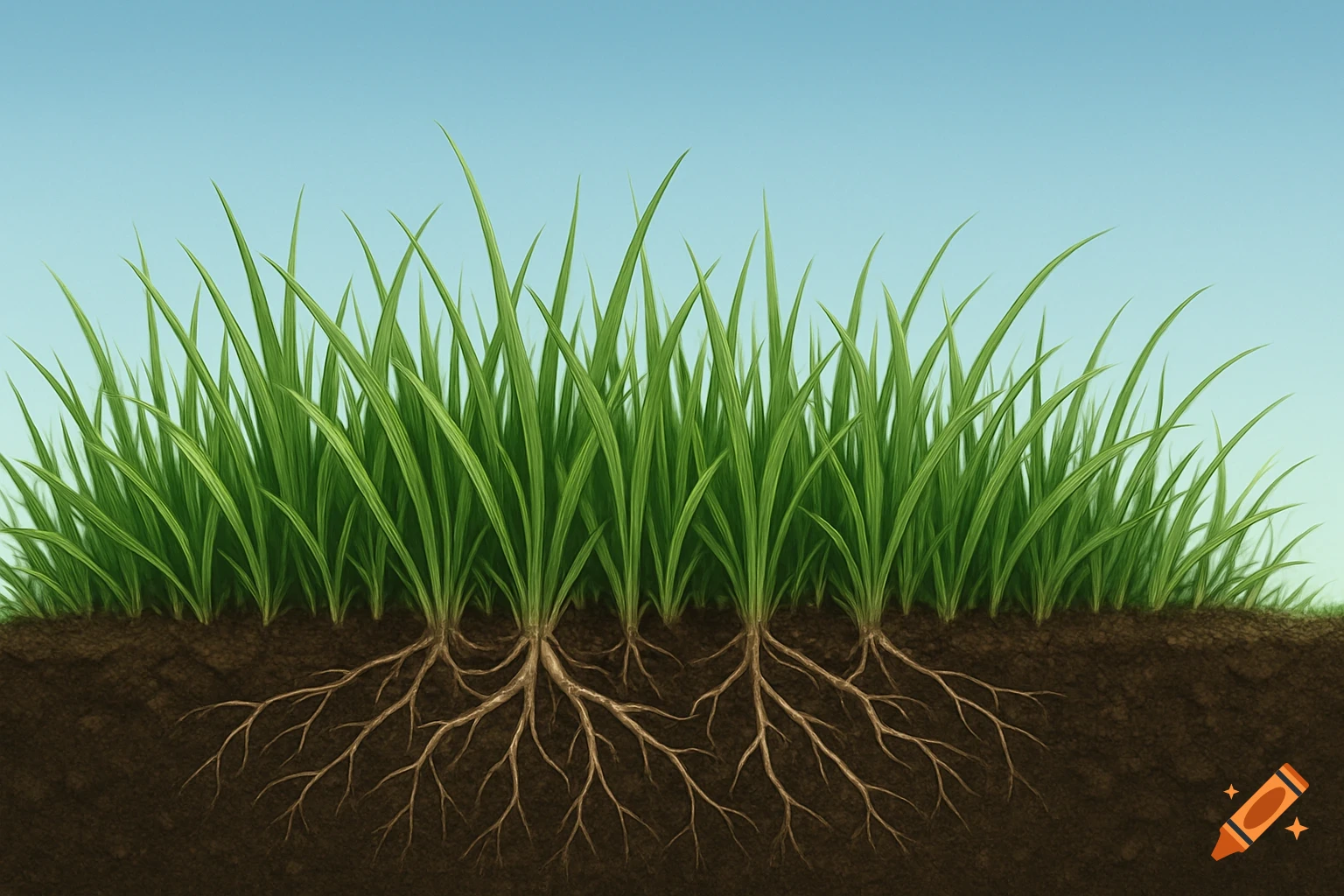
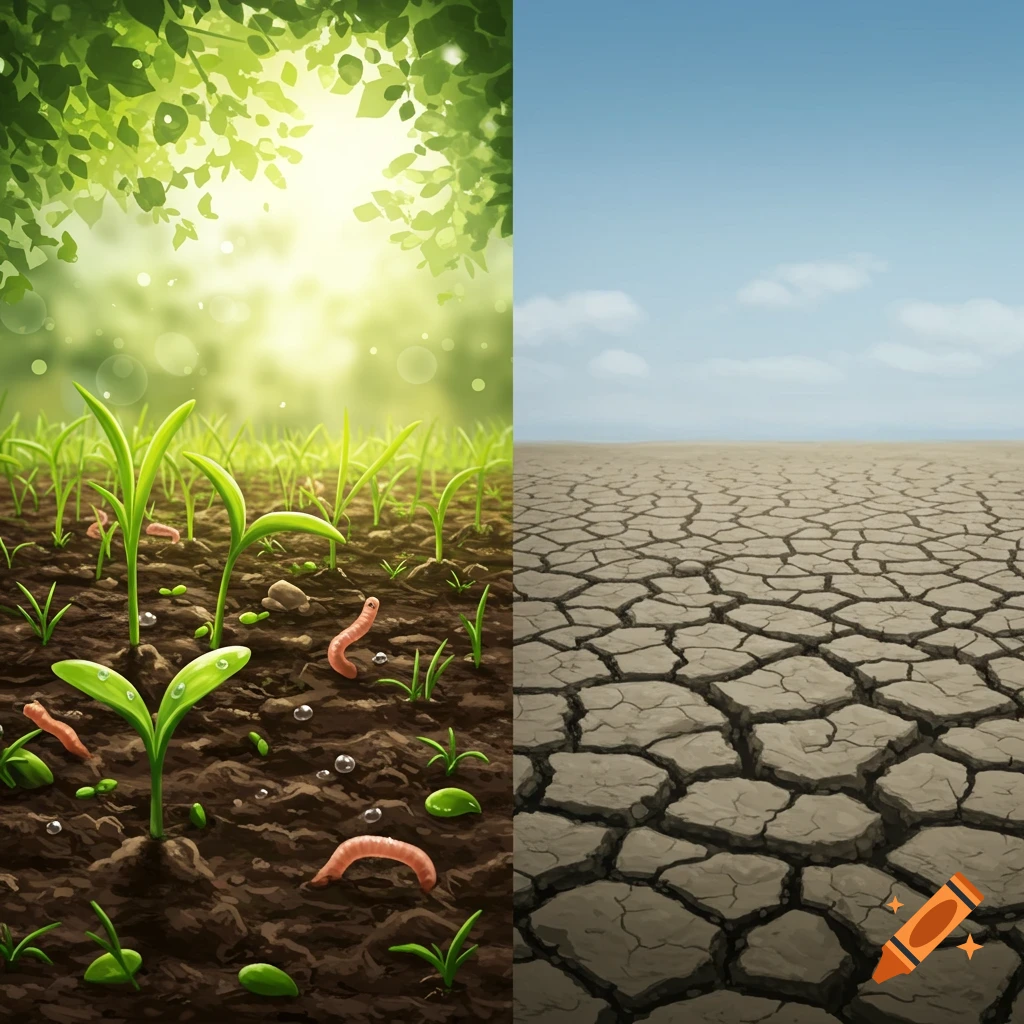
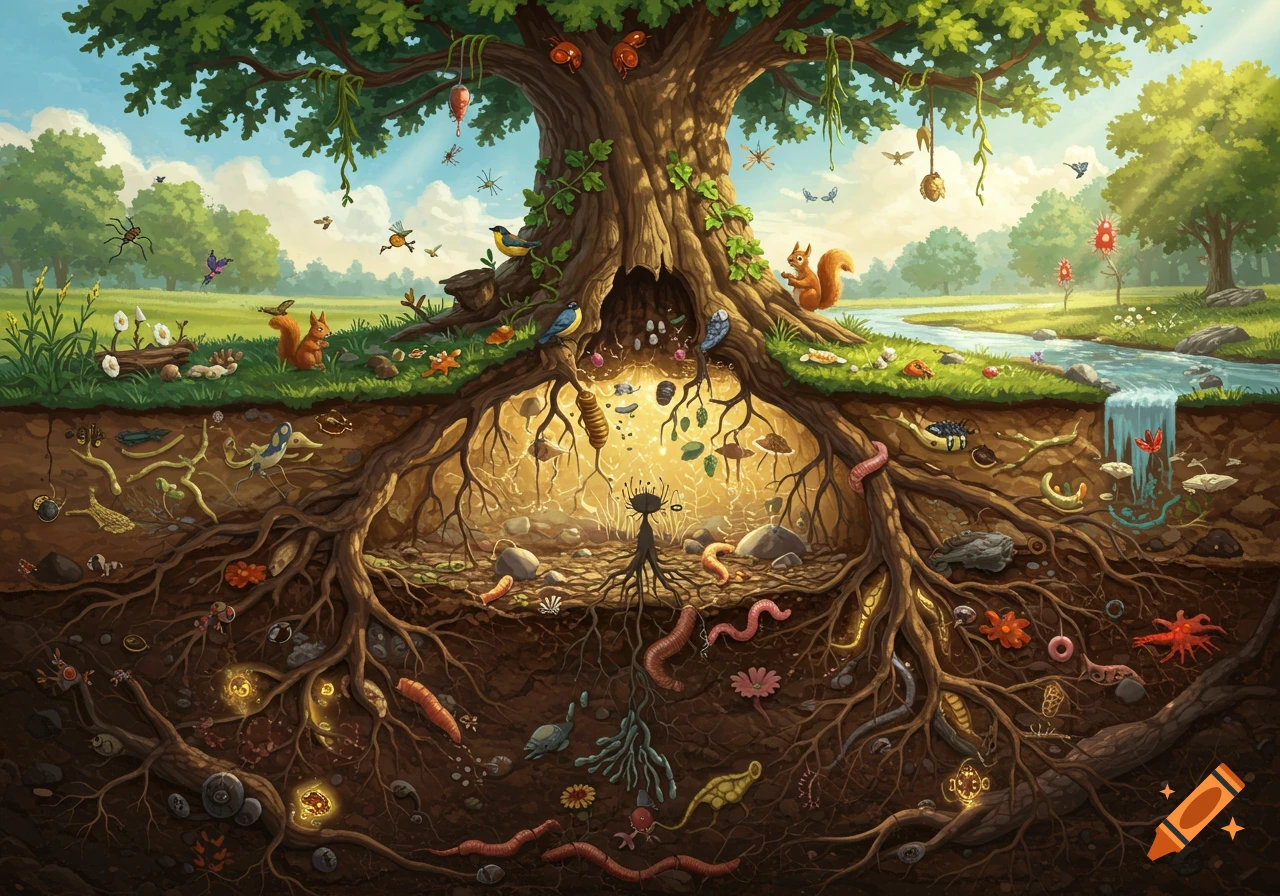
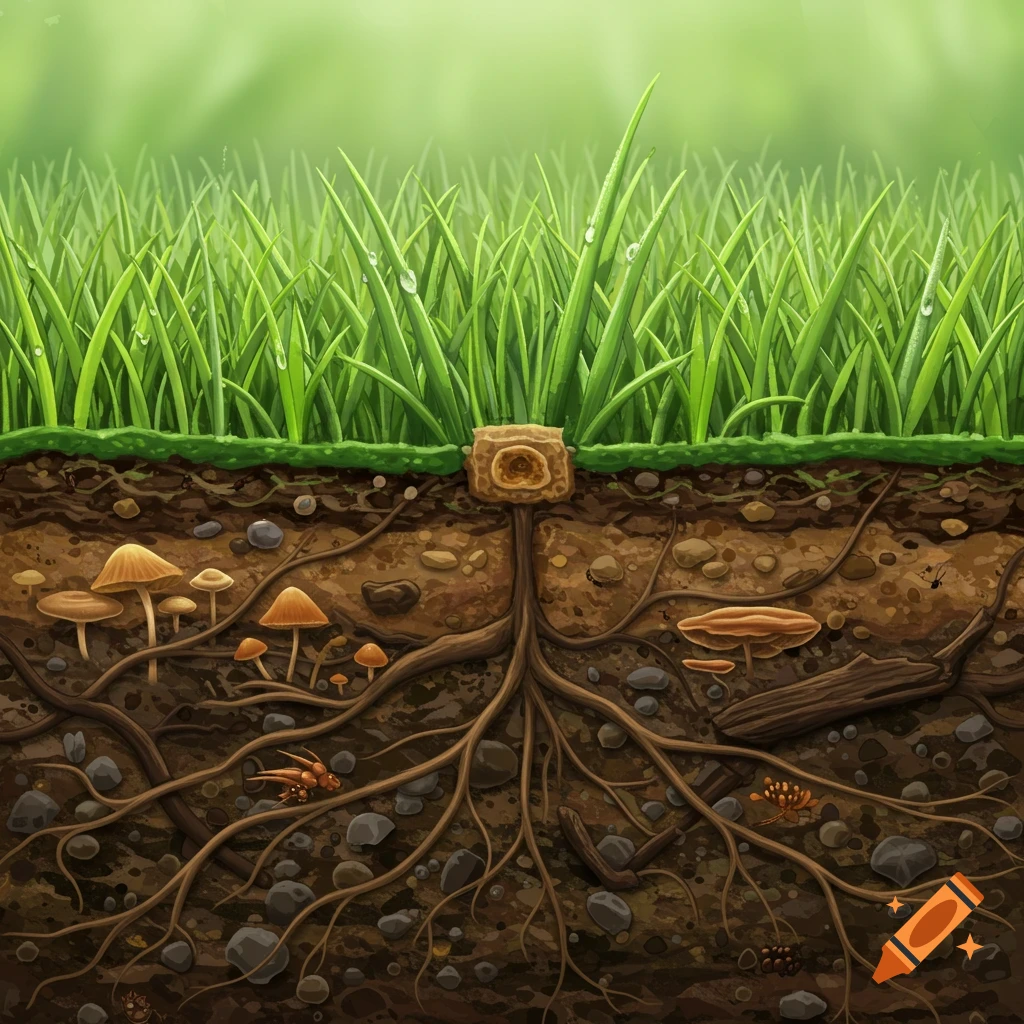
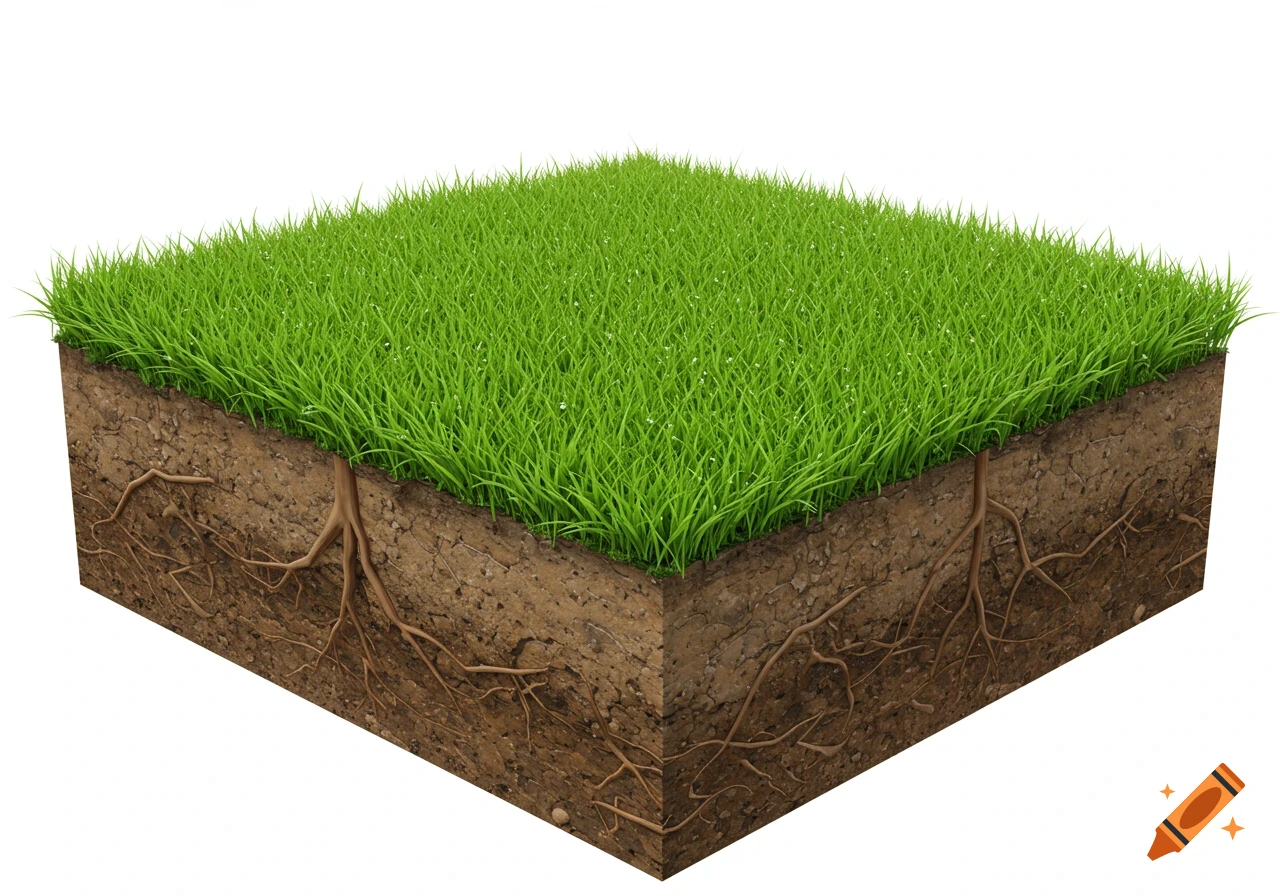
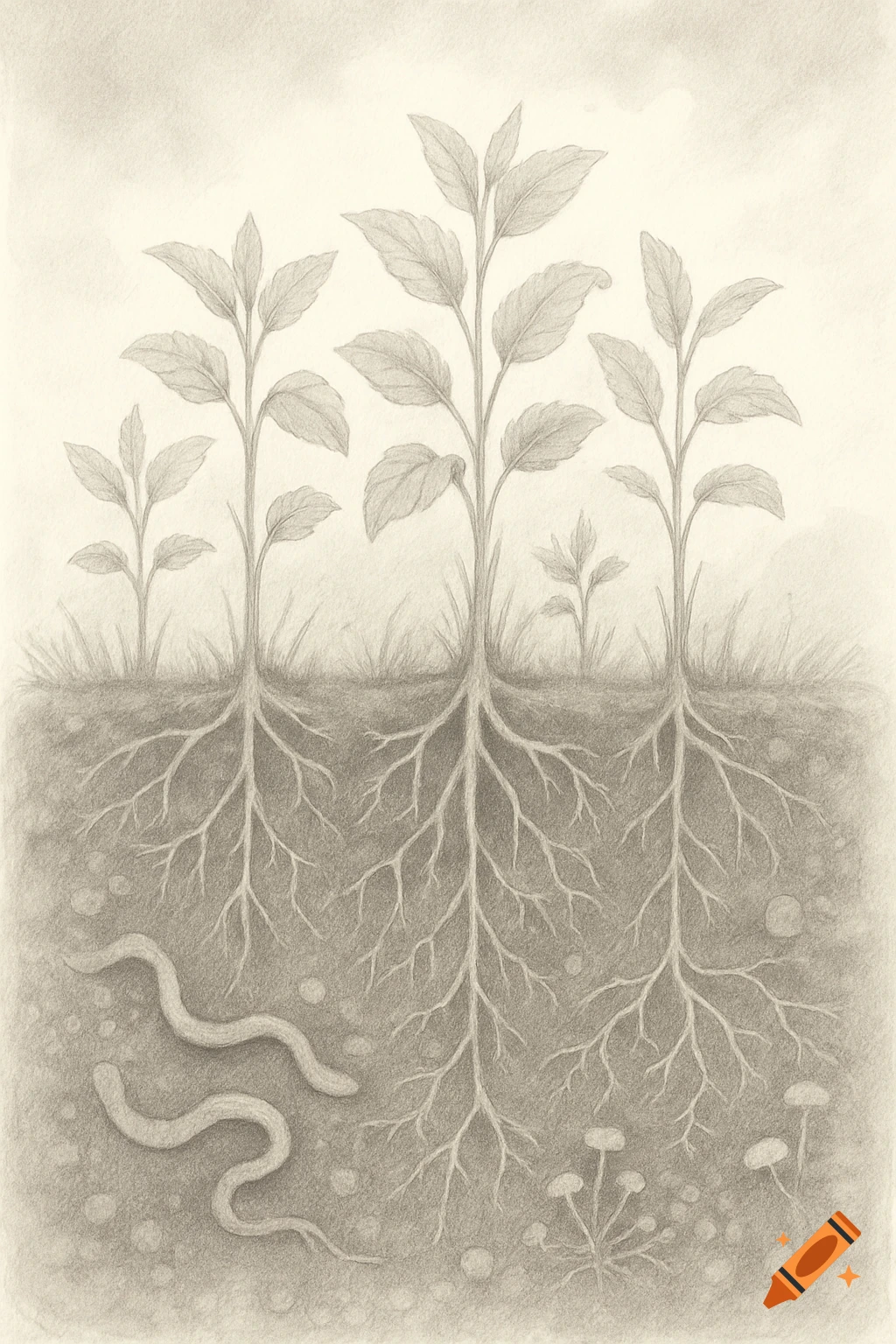
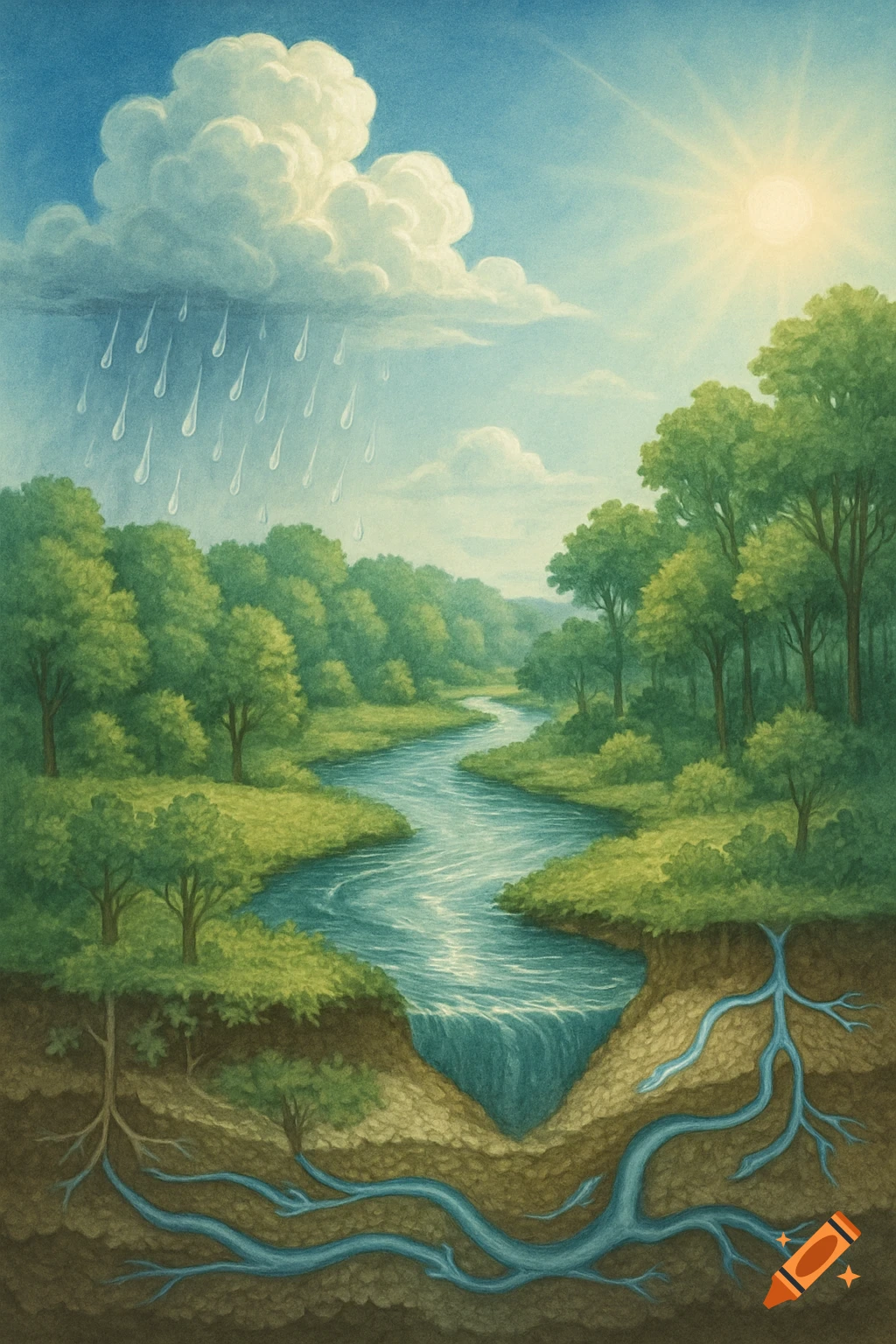
A cross-section of soil shows plant roots and earthworms beneath green crops being watered by a sprinkler, with a tree in the distance, in a painterly style.
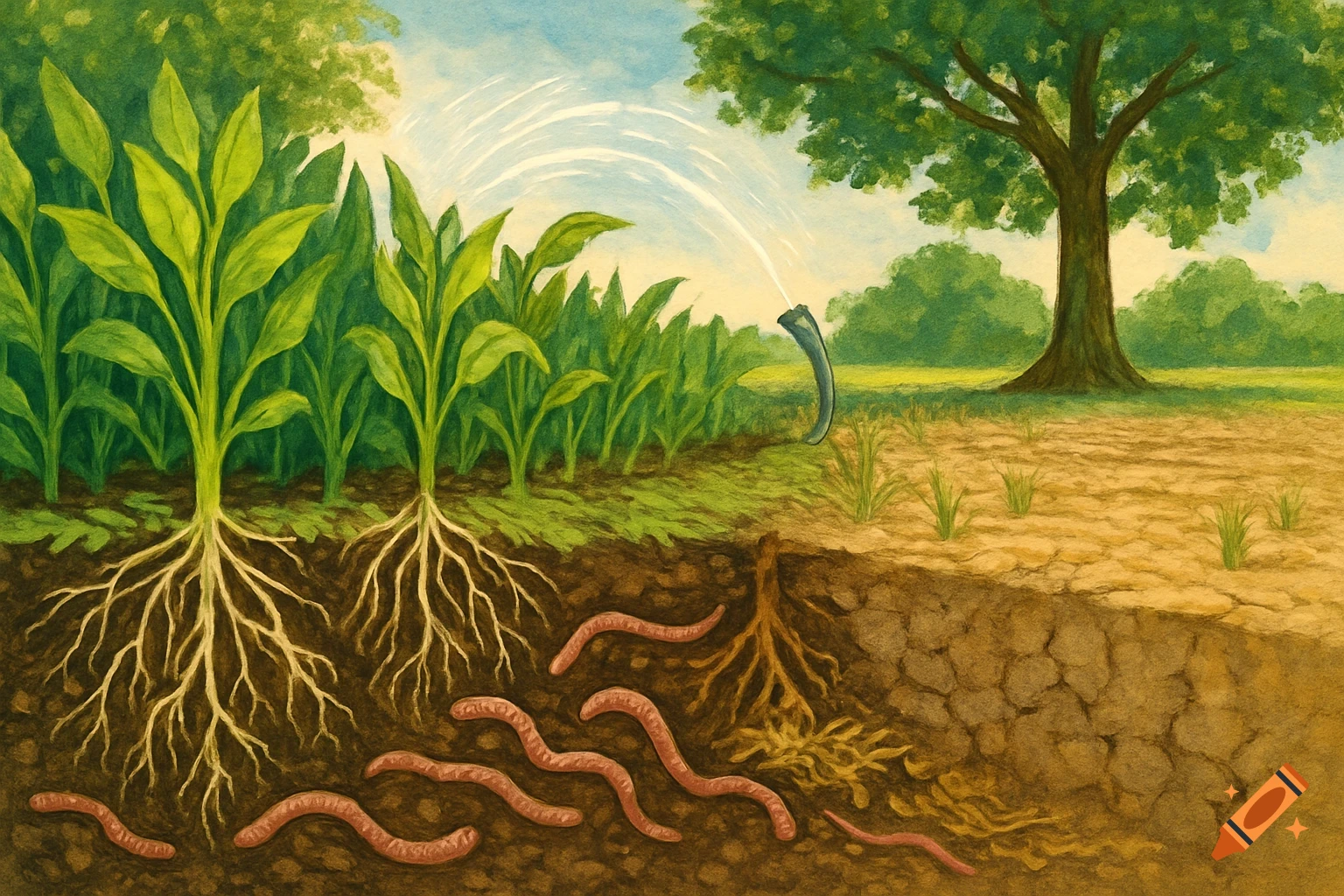
Based on current ecological understanding, we formulated the following hypotheses. First, by alleviating extreme summer desiccation, irrigation increases soil moisture availability, reduces physiological stress for soil fauna and potentially summer mortality, leading to an increase in winter earthworm abundance and biomass in irrigated plots relative to control trajectories (H1 – the direct moisture pathway). Second, irrigated summer crops produce roots and aboveground residues - conversely to what happens in bare soil -, which decompose over autumn and early winter, providing additional organic substrates for earthworms in cropped areas. Hence, positive irrigation effects will be strongest in cropped habitats, where herbaceous biomass directly responds to summer irrigation (H2 – Resource pathway linked to root inputs and crop residues). Third, under trees shading, hydraulic redistribution and continuous litter inputs already buffer summer stress, reducing marginal benefits of irrigation. The corresponding pattern would be a weak or absent effect under tree lines and in the plantation (H3 – Tree-modulated microclimate). Fourth, interannual climatic variability controls the strength of irrigation benefits. Hence, in years with dry autumns, accumulated summer stress may amplify the relative improvement provided by irrigation. Then, irrigation effects should be more pronounced in years with negative autumn precipitation anomalies, and weaker or null in wetter-than-average See more