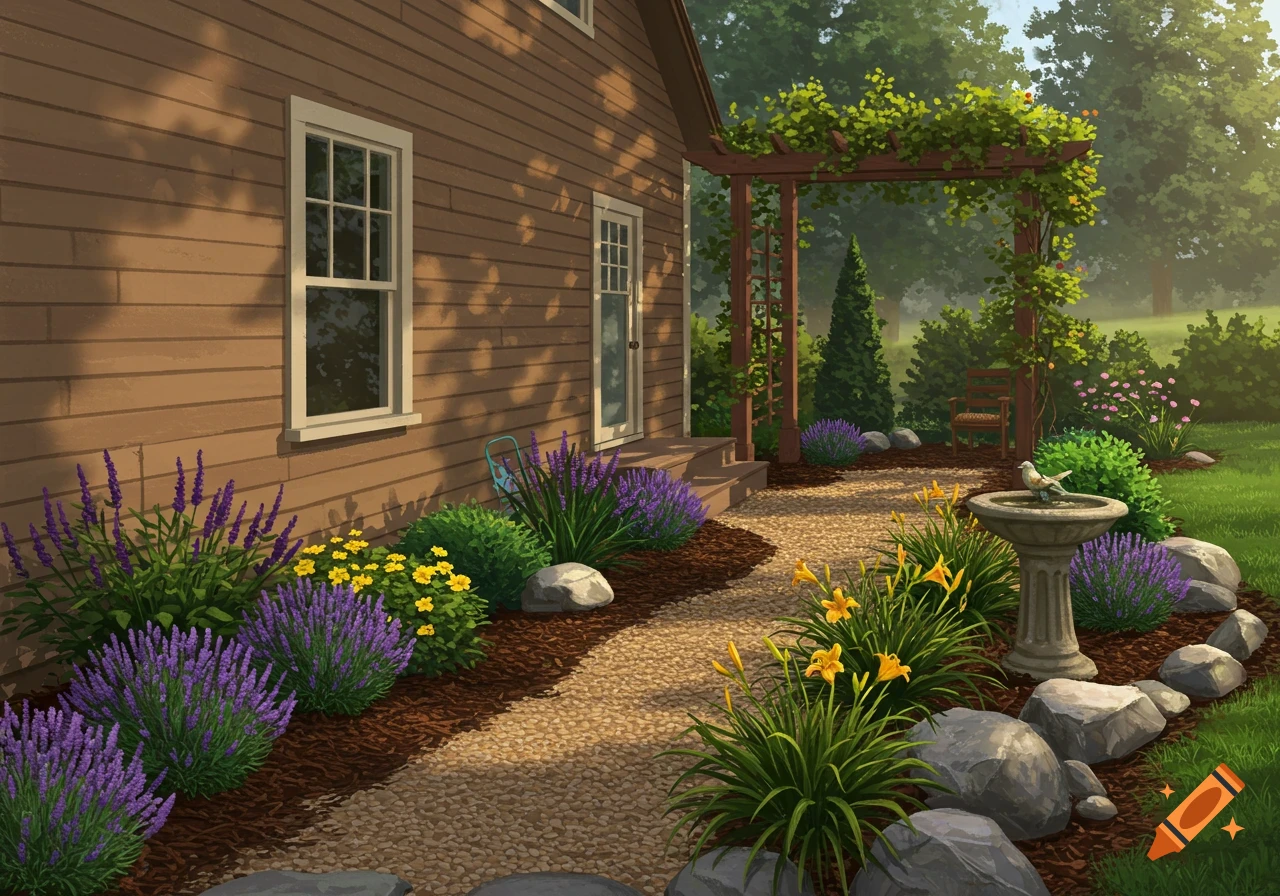
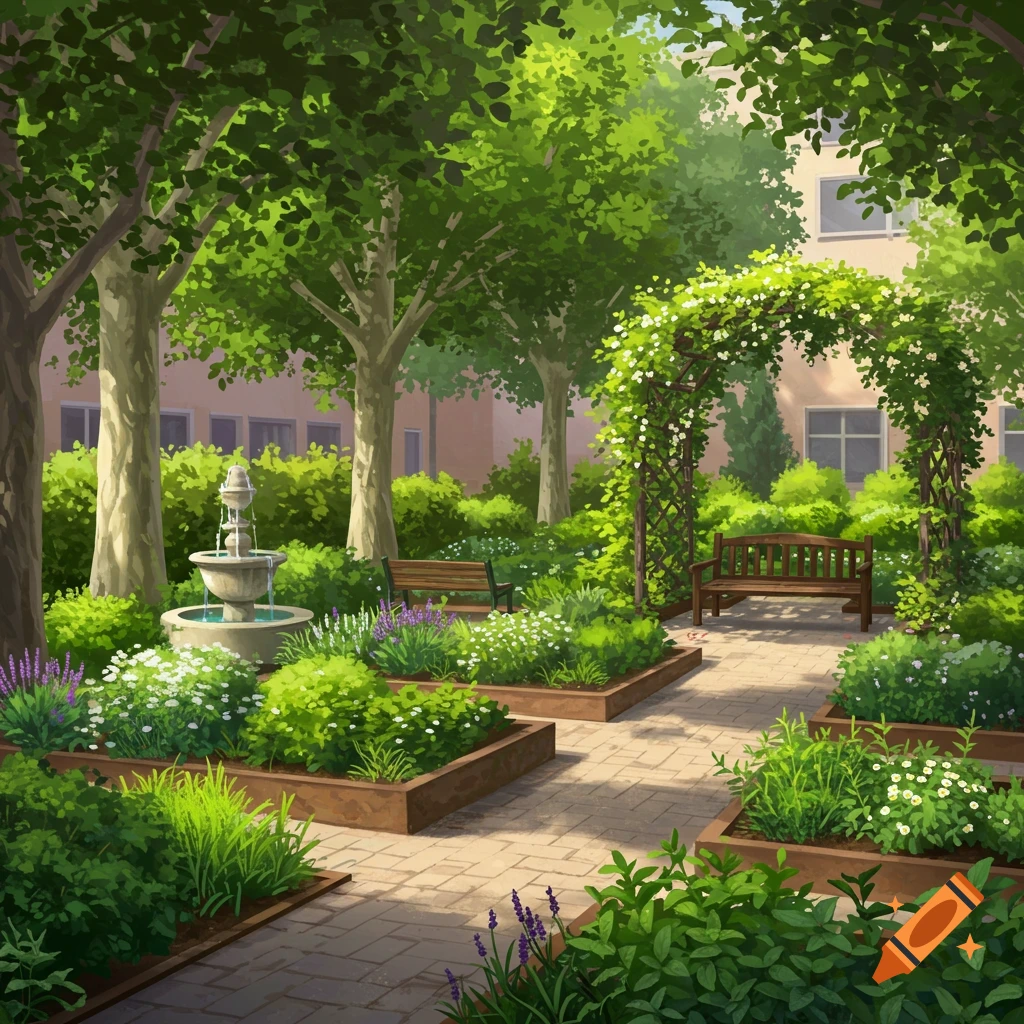
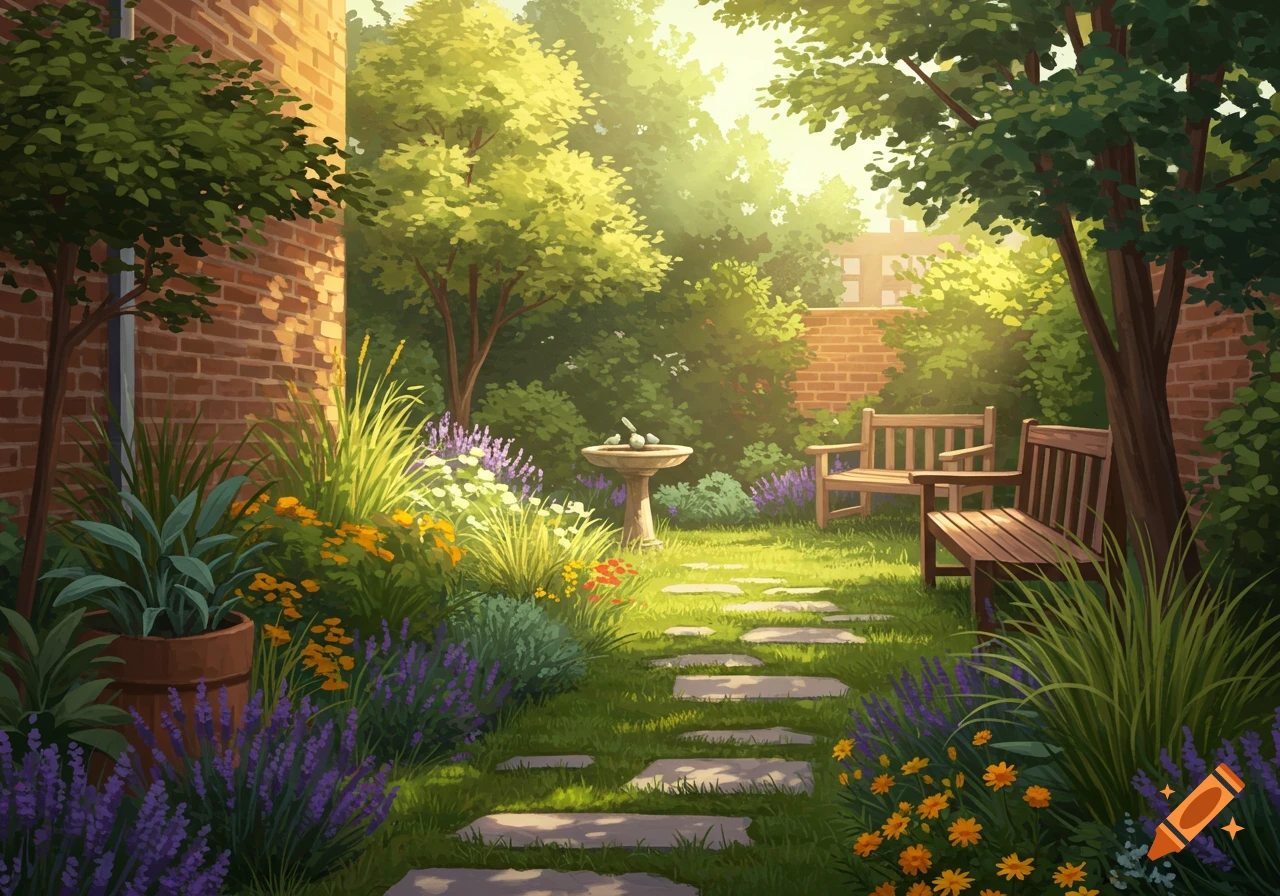
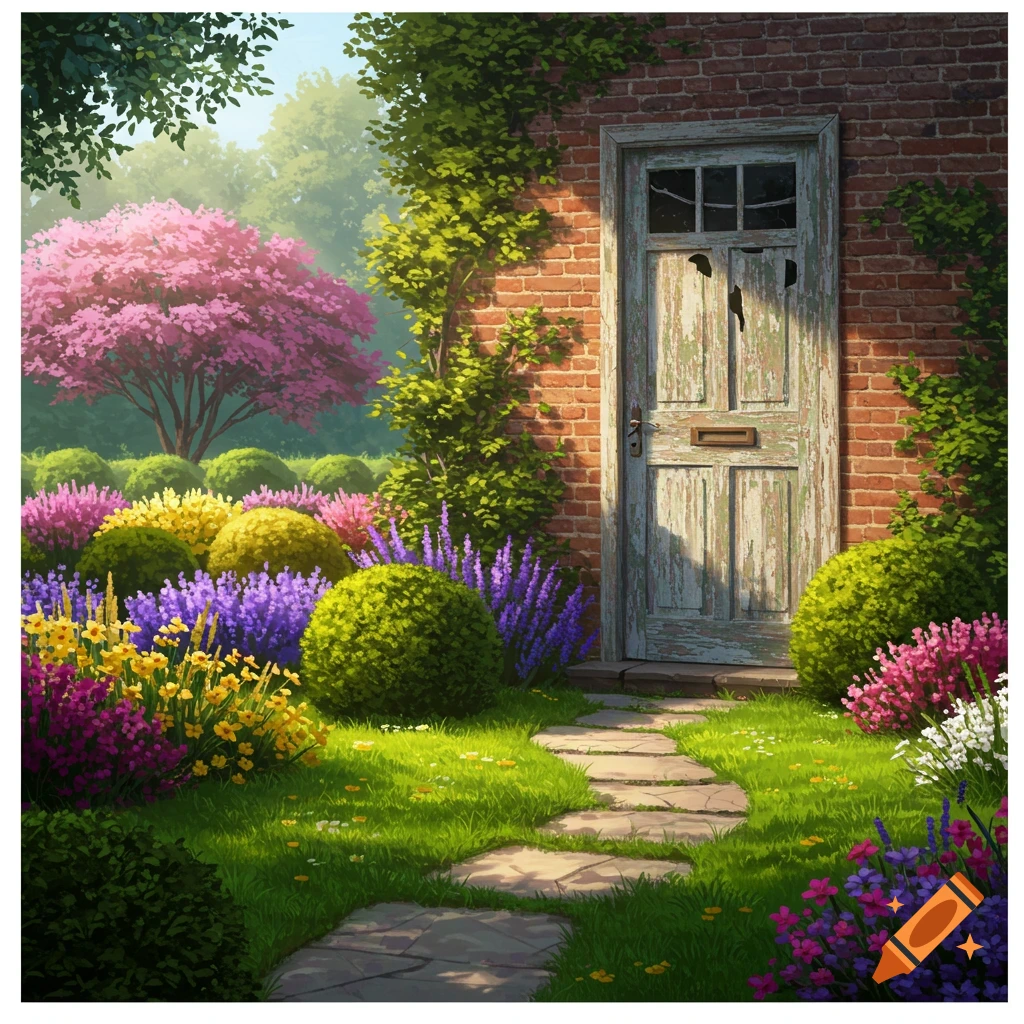
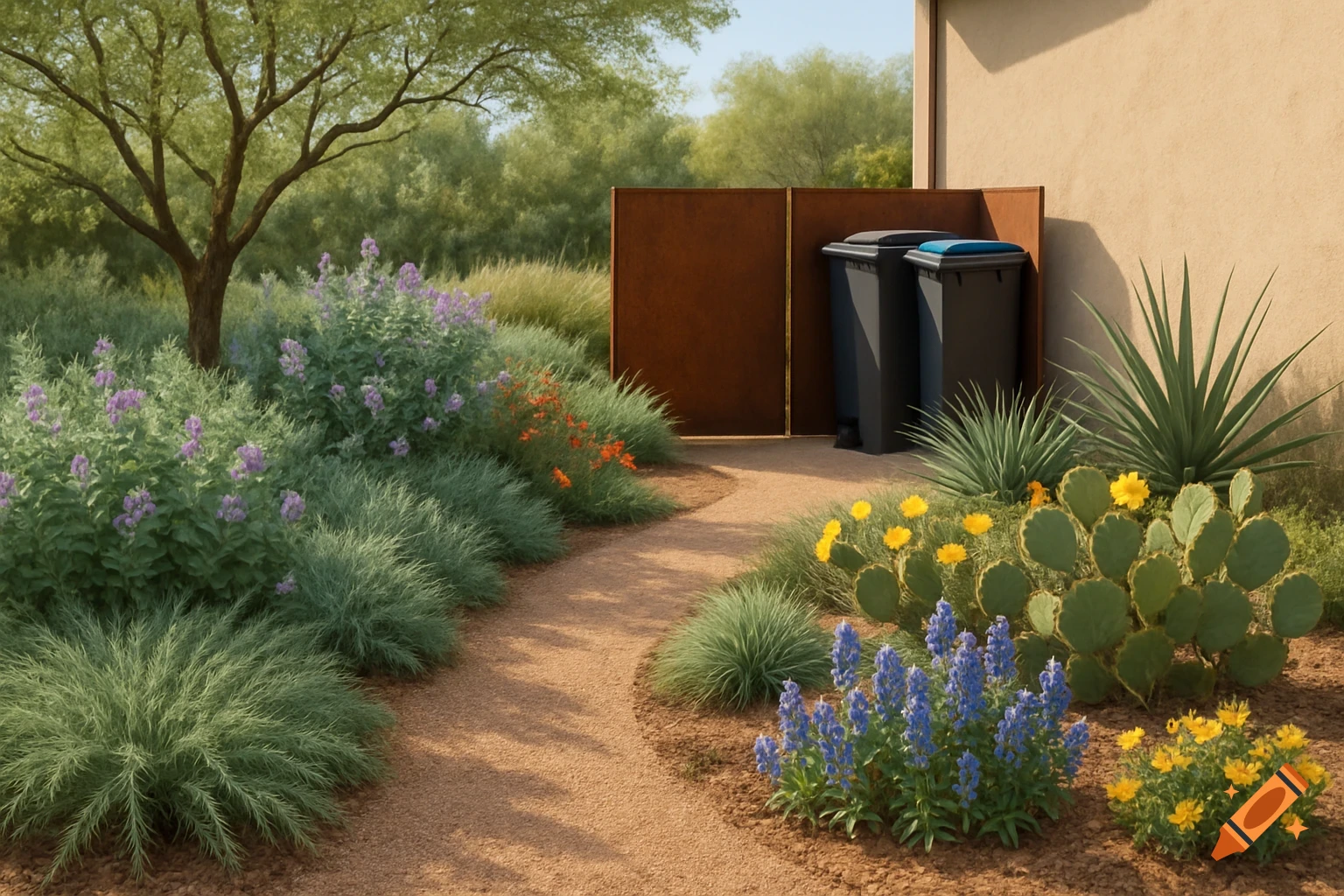
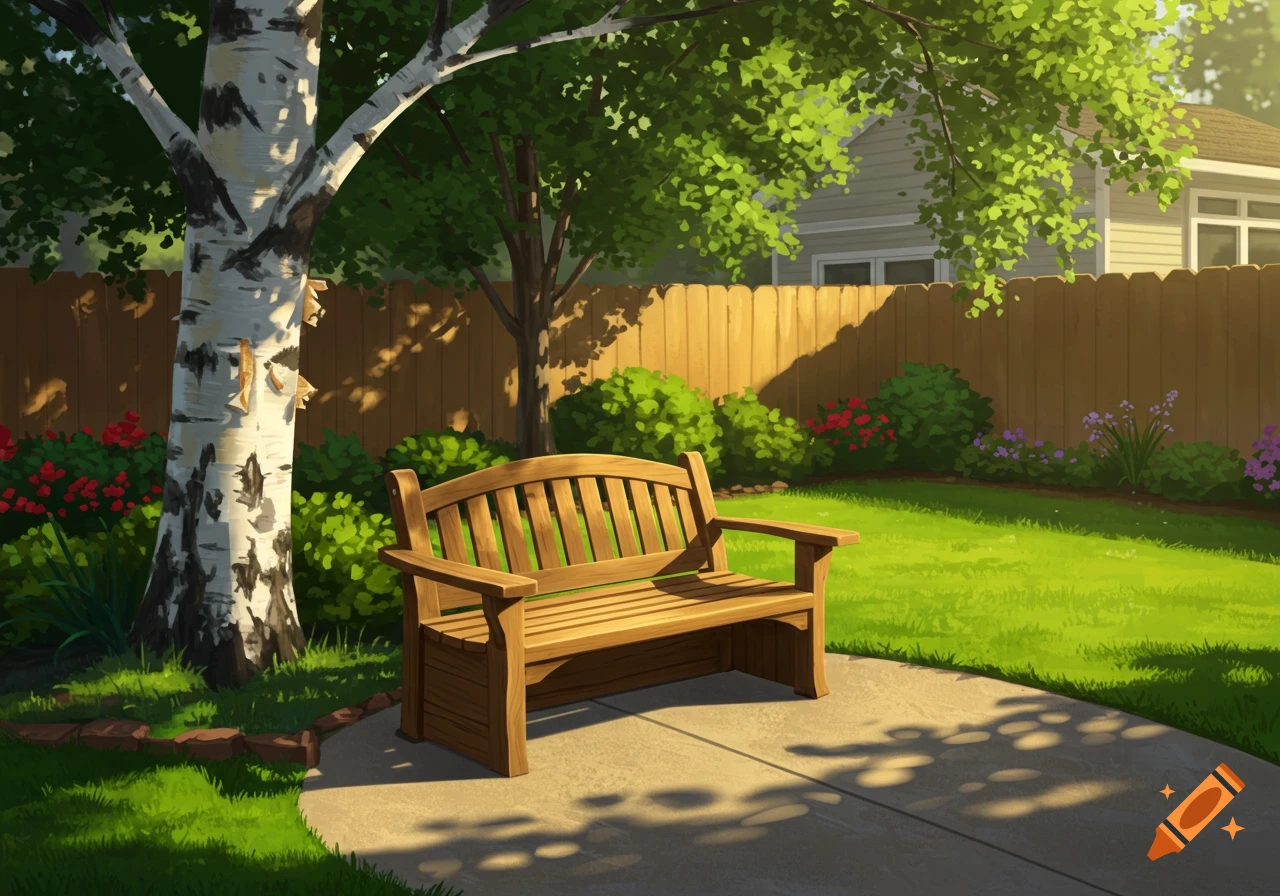
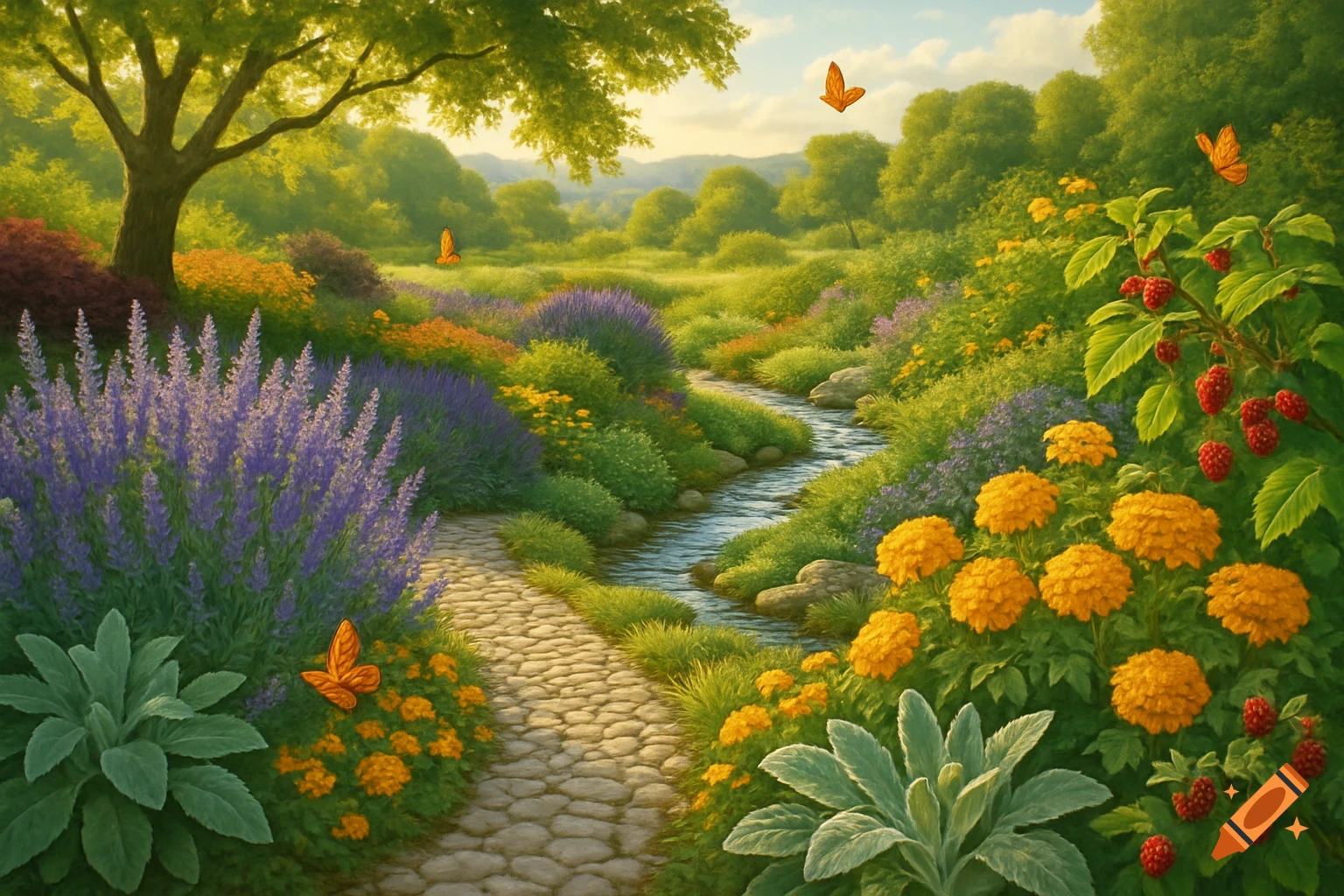
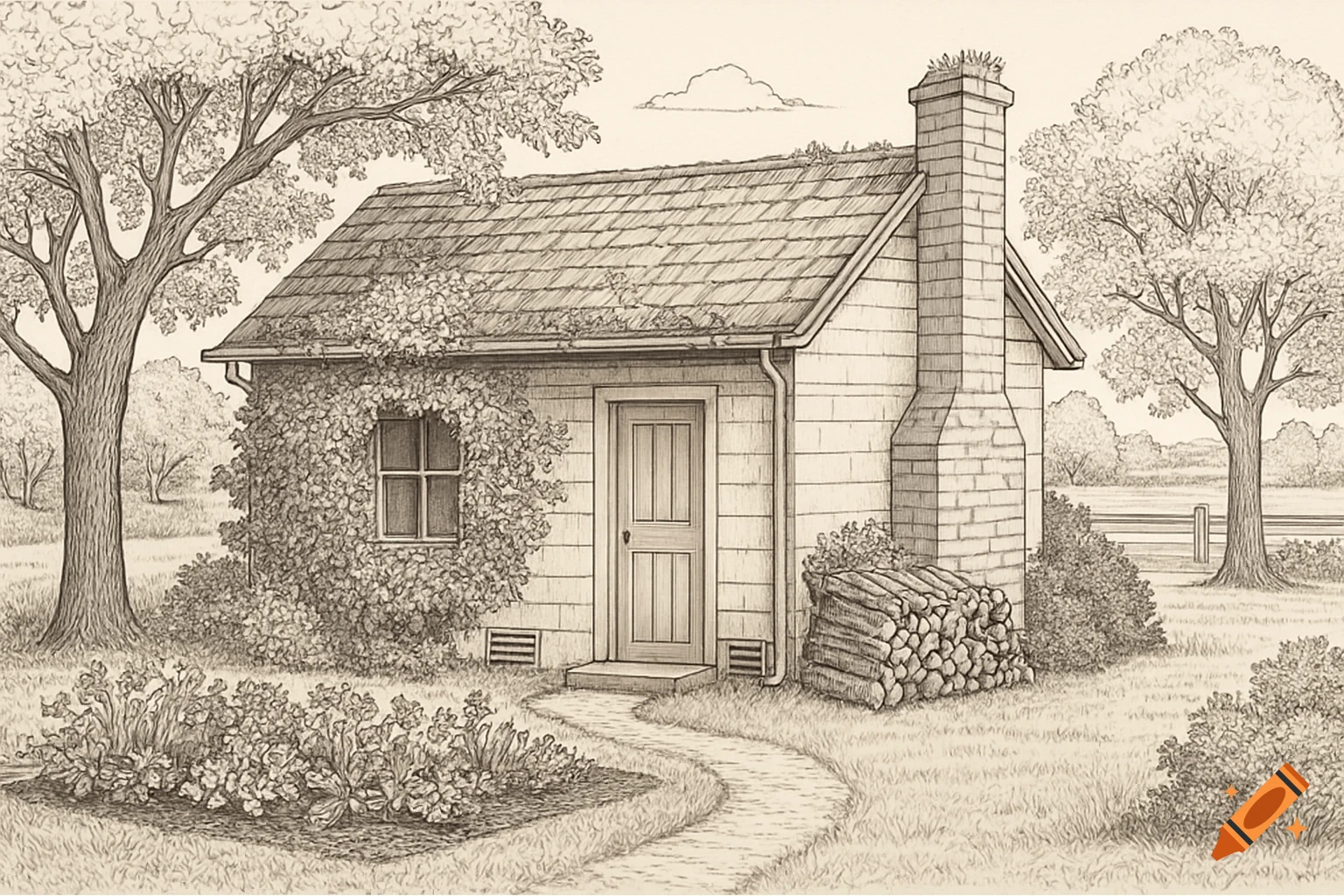
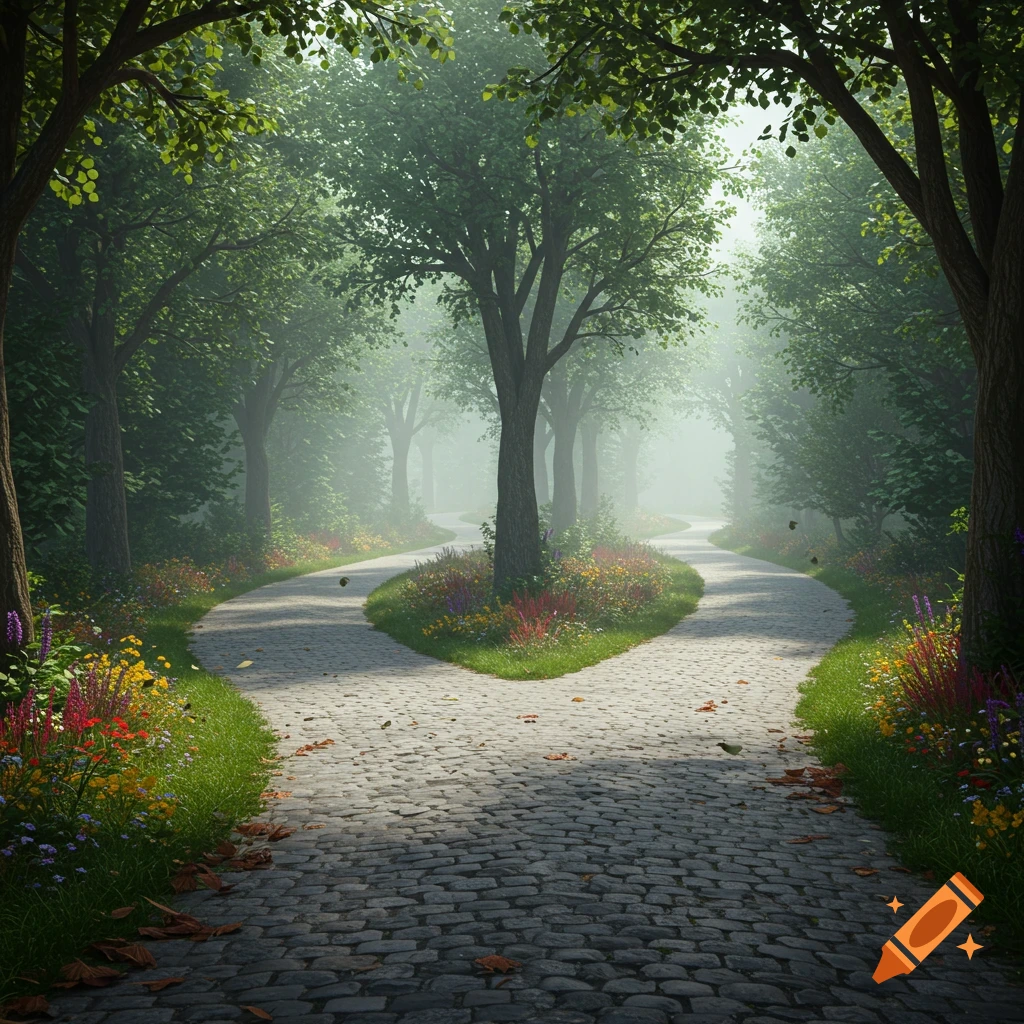
A vibrant garden with purple and yellow flowers in raised beds, a winding path, green grass, trees, and a brick building under a blue sky.
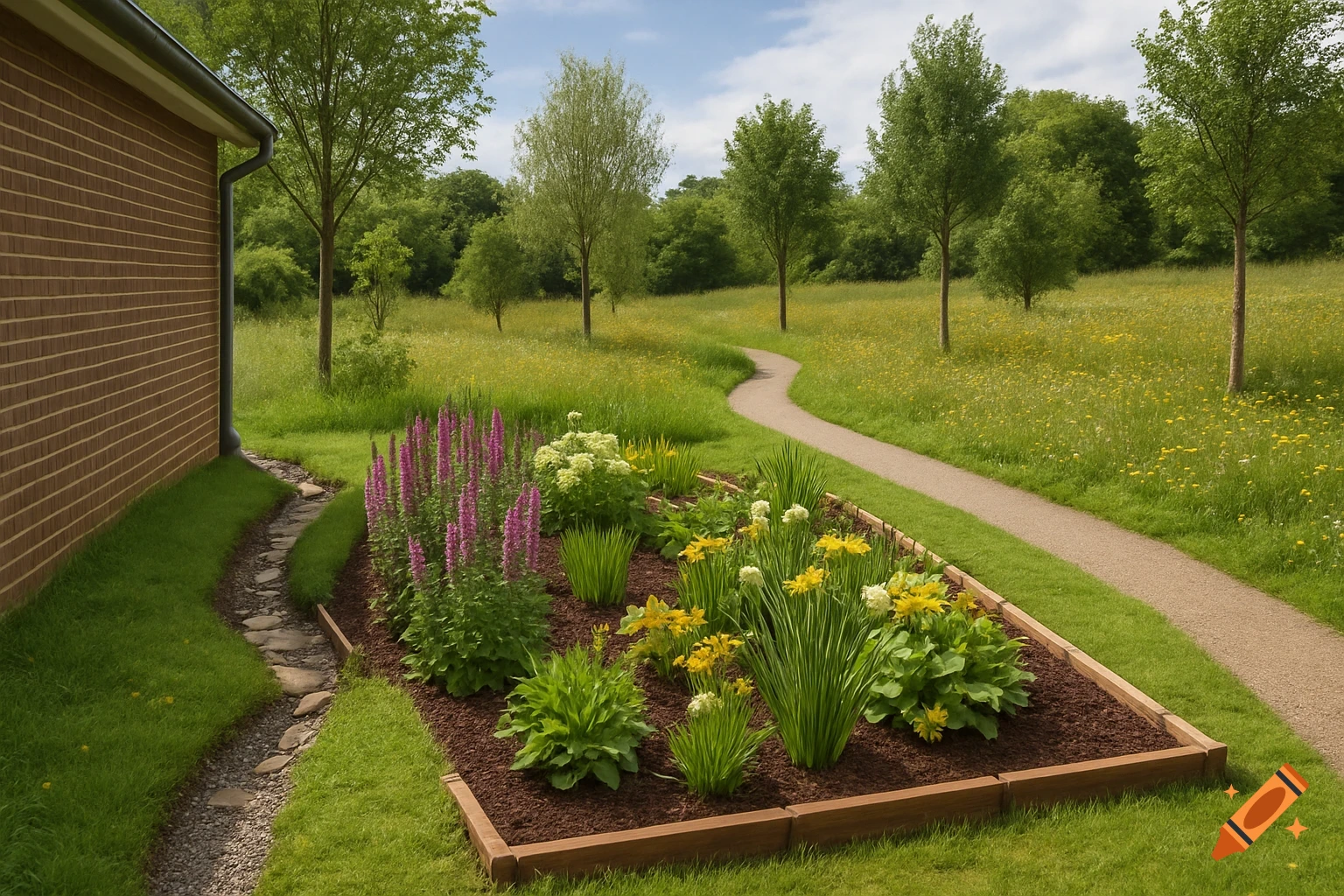
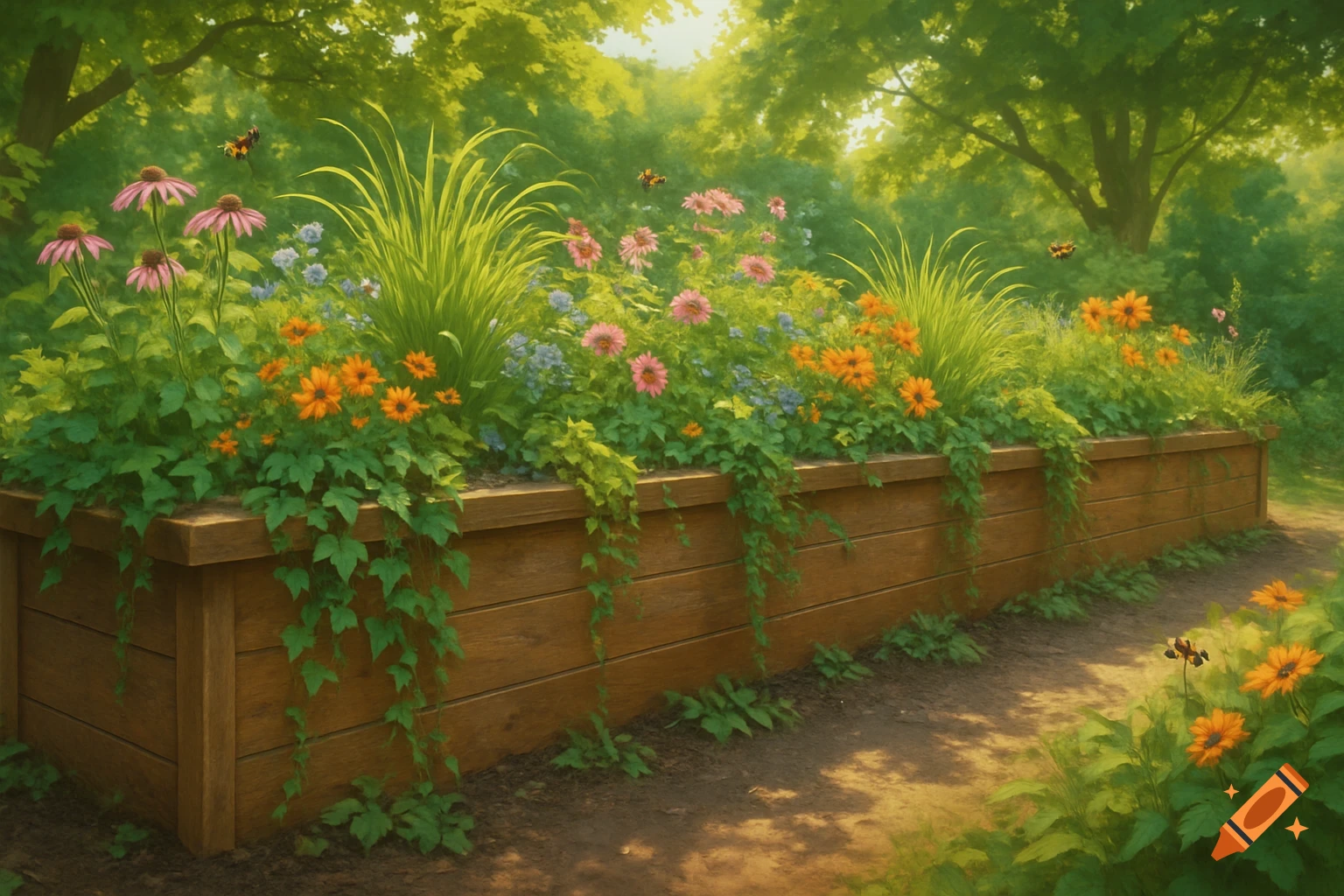
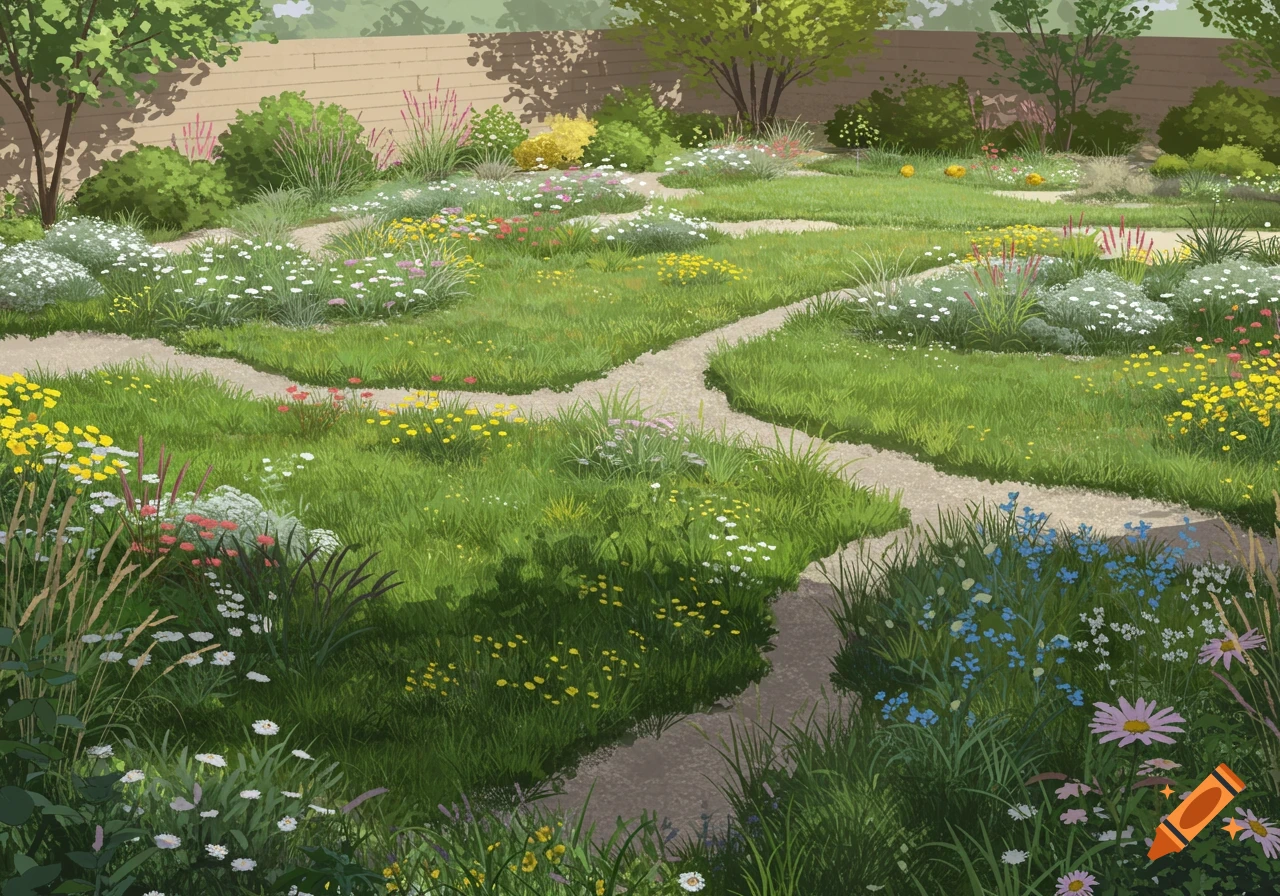
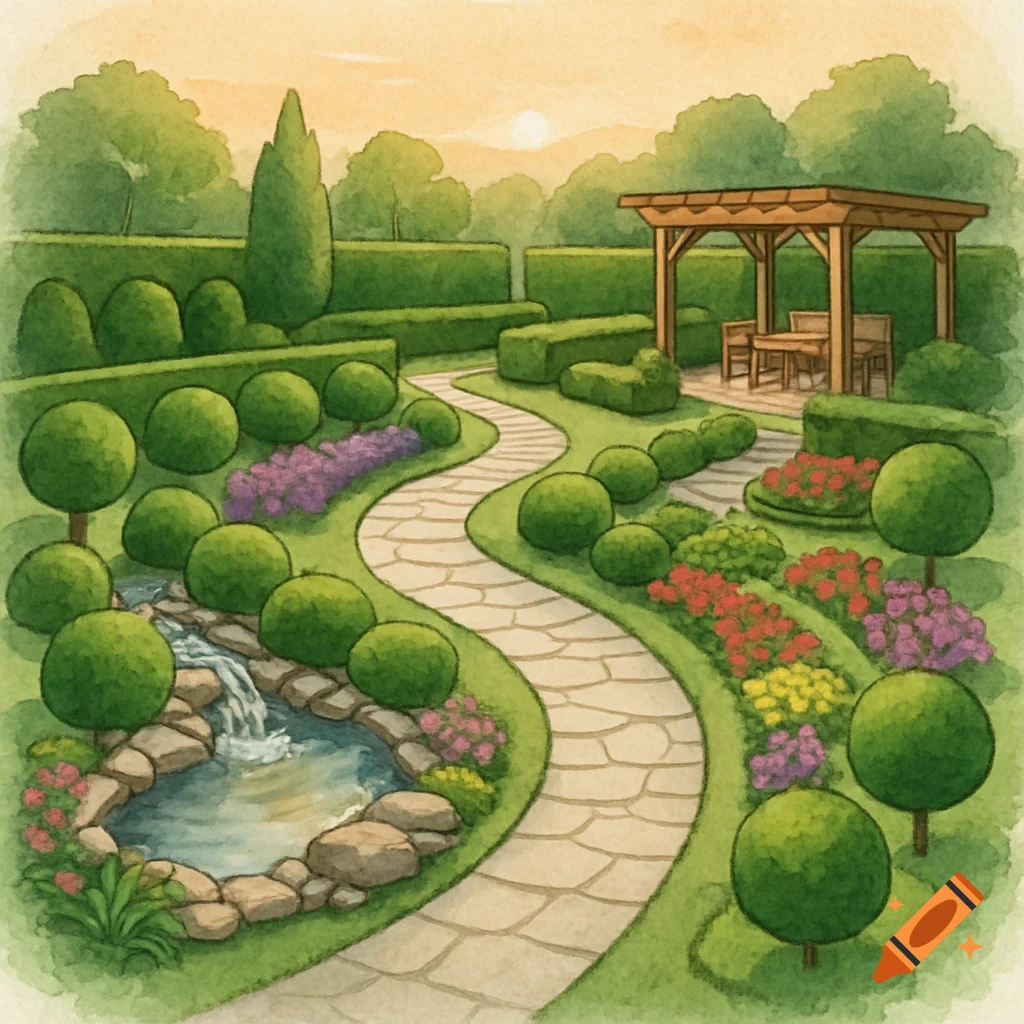
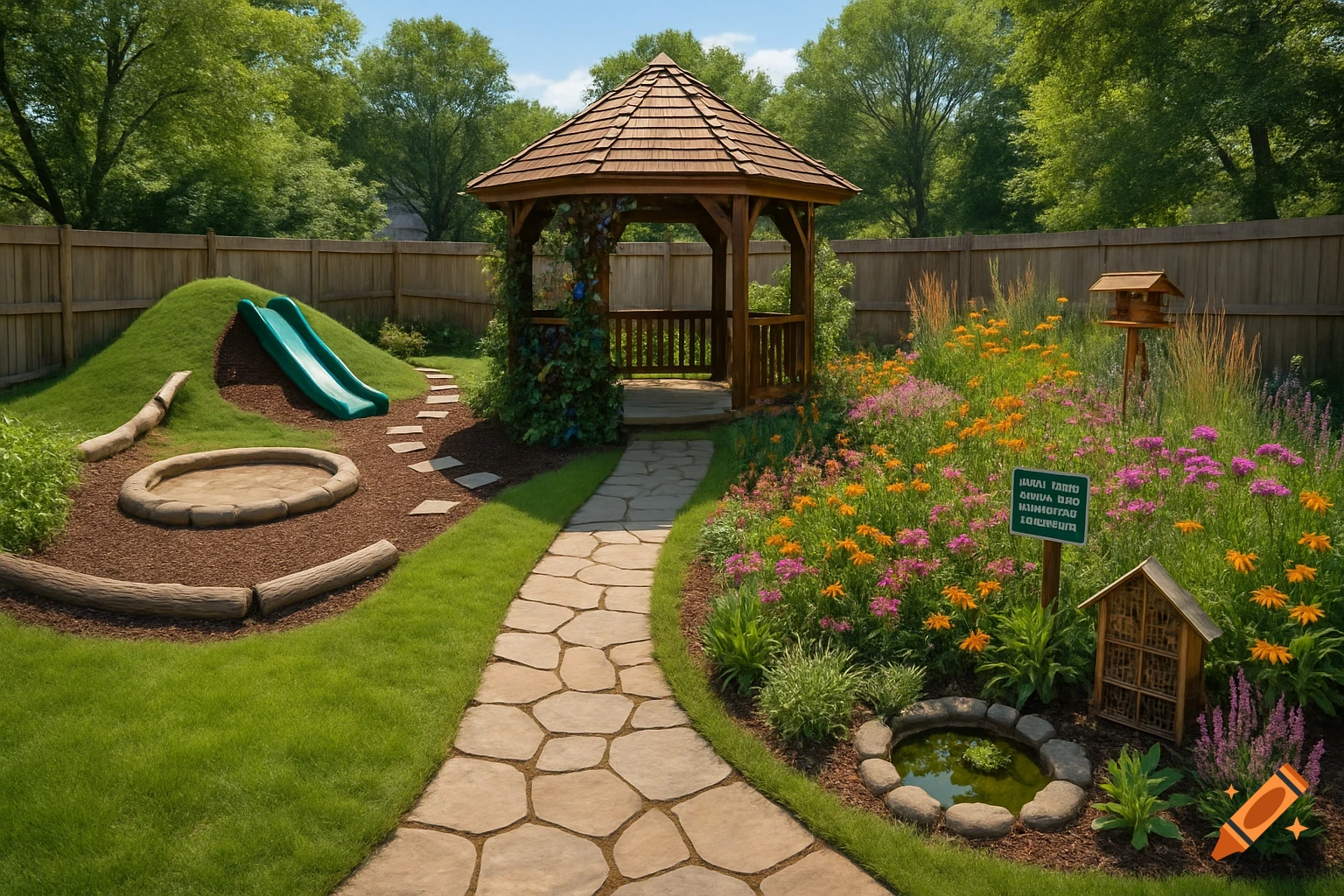
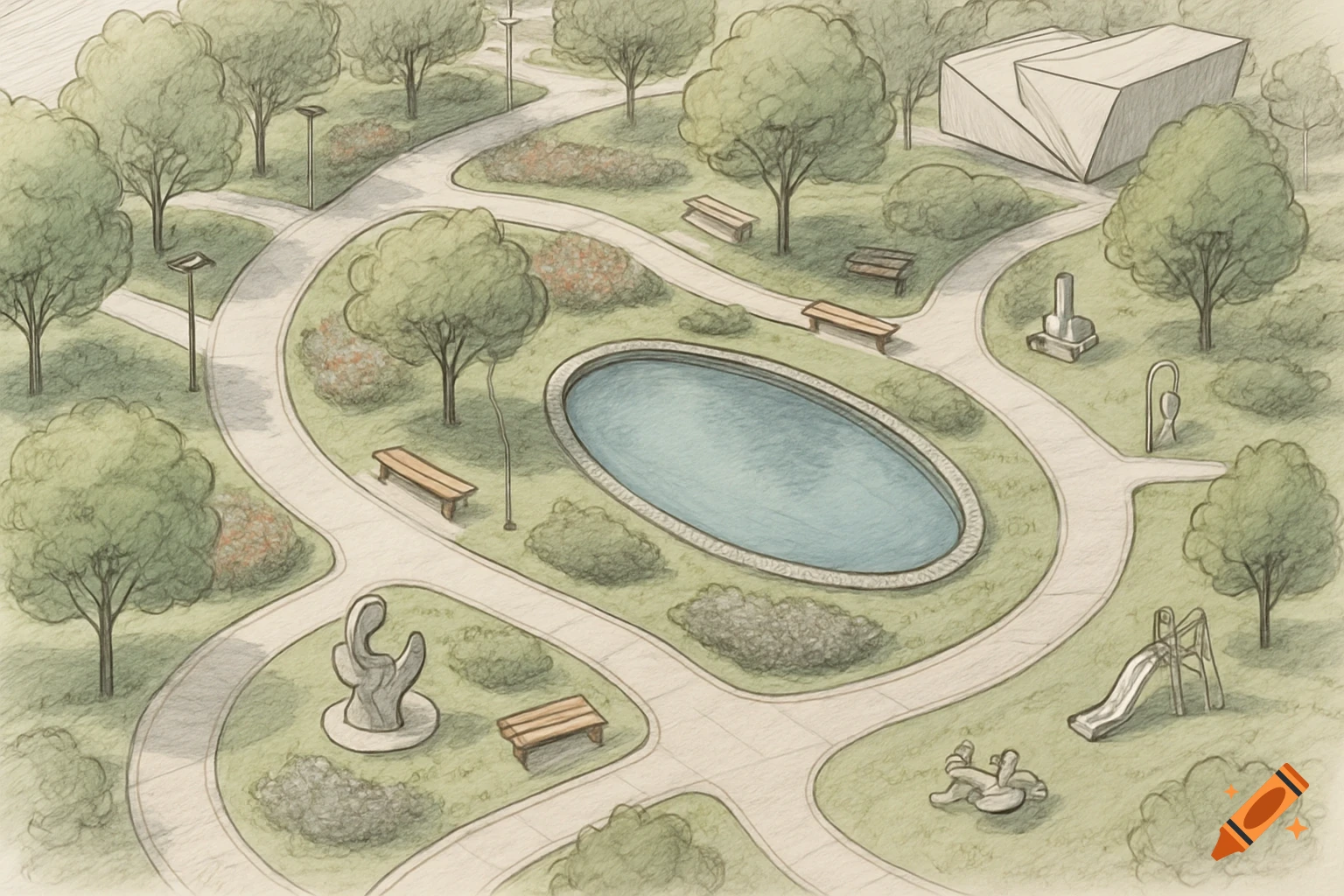
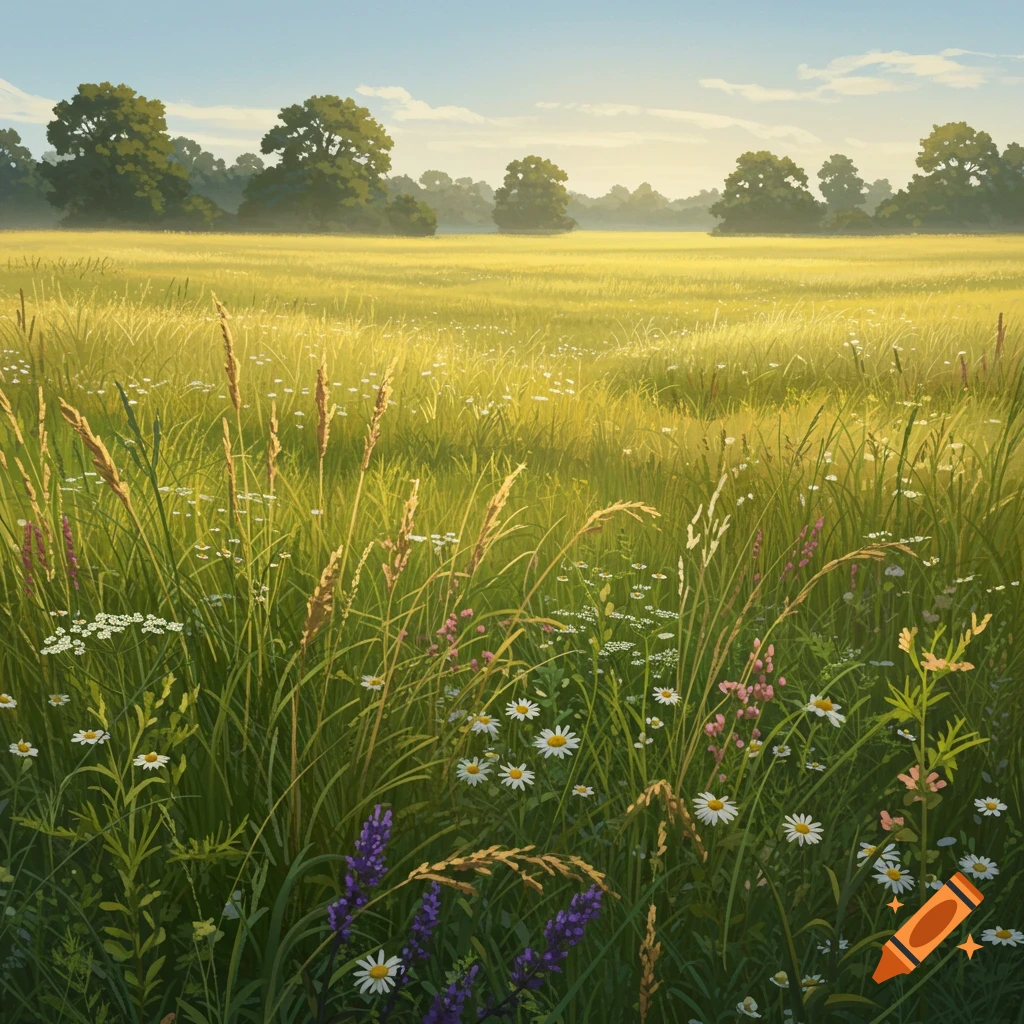
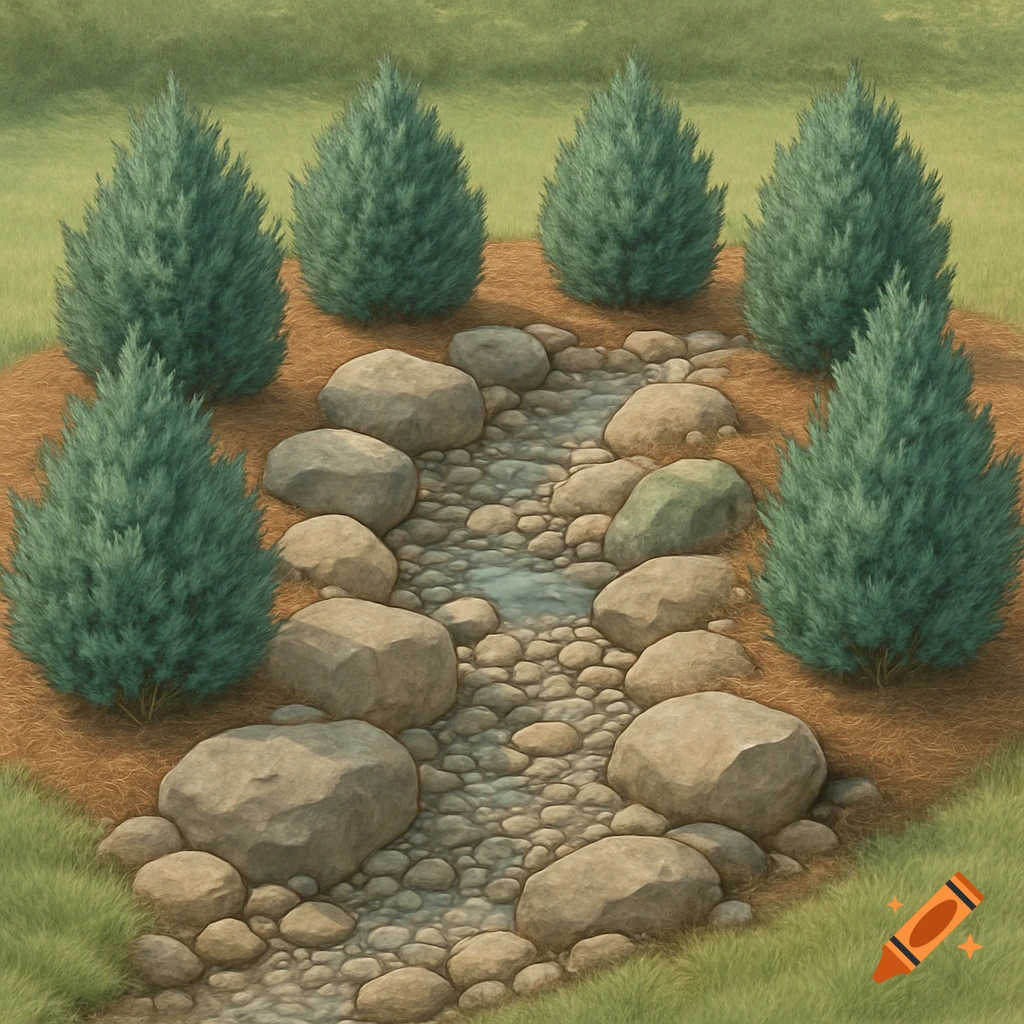
Layout (scaled to those coordinates) Rainwater garden (3 m × 4 m = 12 m²) Place at the lower, accessible corner near A = (0,0) for easy gutter connection. Orient 4 m side parallel to AB; centre roughly at (3.5, 2.0) to leave working room and edging. Inlet swale (shallow) from building downpipe if nearby; 1–2% fall; stone check at inlet; overflow to wildflower area. Perennial wildflower garden (~ 115–120 m² net) Occupies most of the remaining triangle, excluding paths and tree pits. Manage as a perennial pollinator meadow (1 cut/yr after seed set; remove arisings). Keep a 0.5 m maintenance margin inside boundaries. Small native trees (6–8 total, 3–4 m spacing) Dot along an internal arc from near C curving toward B, keeping 2 m from edges and 3 m from the rain garden. Suggested mix (small/medium, school-safe): Rowan (Sorbus aucuparia) ×2, Silver birch (Betula pendula) ×2, Holly (Ilex aquifolium) (female) ×1–2, Spindle (Euonymus europaeus) ×1–2, Hawthorn (Crataegus monogyna) ×1. Use 60 cm feathered whips or 1–1.5 m potted; double-stake & mulch rings (1 m Ø). Paths & access Primary loop path 1.2 m wide from base AB up toward the rain garden and into the meadow (compacted fines / grass path). Small stepping-stone spur to rain garden for class demos. Low timber edge or recycled-plastic edging around the rain garden. Planting & specs (quick lists) Rain garden plants (wet-tolerant, pollinator-friendly): Purple loosestrife, meadowsweet, ragged robin, iris, marsh marigold, sedges See more