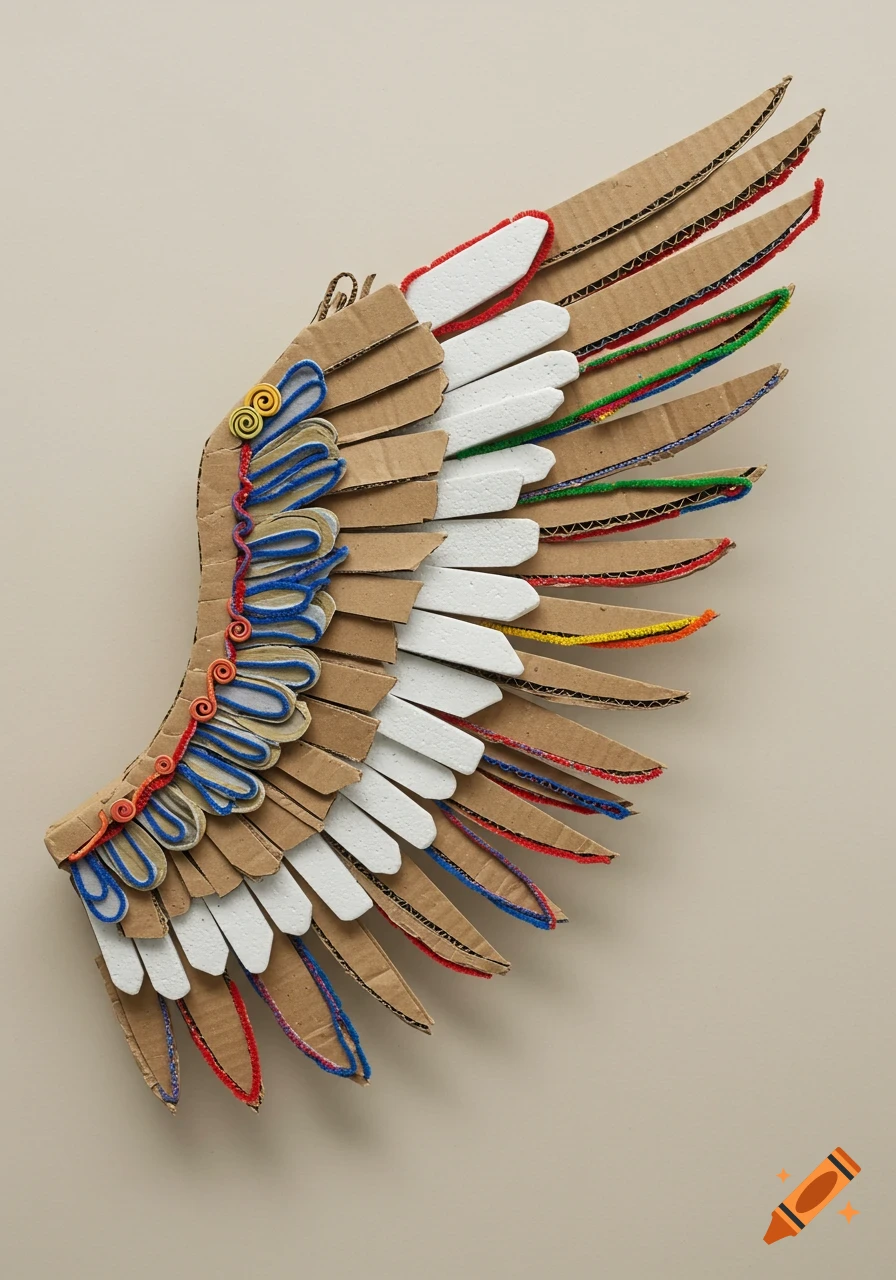
Human arm wearing an intricate, fan-like device made of cardboard with white panels, against a plain background.
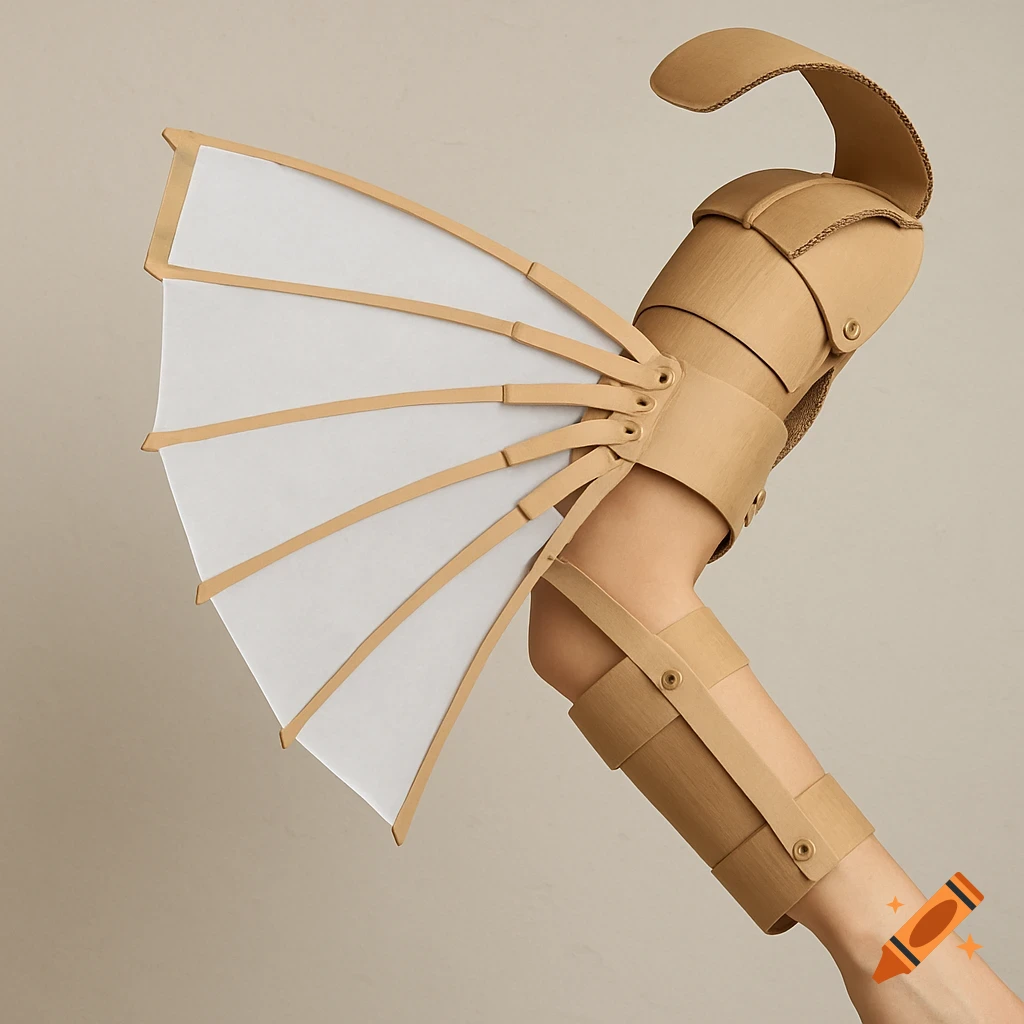
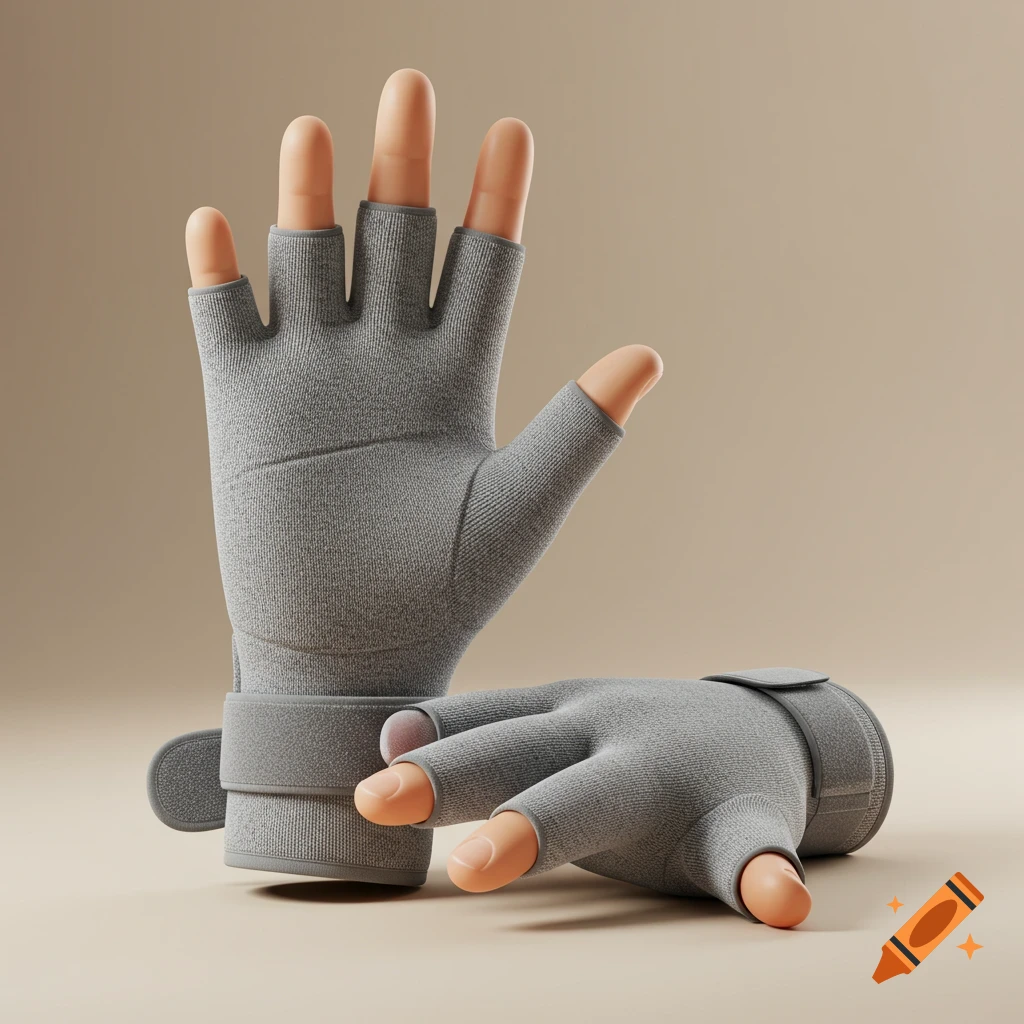
Base (Arm Frame) • A cardboard cuff or splint around your forearm and upper arm (optional shoulder strap for support). • Slotted connections to hold fan ribs. • Use interlocking tabs or folded sleeve joints (like how box flaps slot into each other). 2. Fan Ribs (Structural Elements) • 6–8 rib-like strips of cardboard radiating from the wrist or elbow. • Each rib should have a pivot joint near the base — you can make this by: • Using a paper fastener (brad) or wire loop, or • Creating a pin joint from rolled paper inserted through holes. • Ribs can be double-layered for stiffness. 3. Connecting Membrane (Fan Surface) • Thin paper or cardstock panels connecting each rib. • Attach them by folded tabs or slot joints rather than glue. • When ribs open, the paper membrane unfolds like a handheld fan. 4. Shoulder Extension • A cardboard plate or curved shell extending slightly past the shoulder. • It can connect to the topmost rib — when fully opened, it visually “shelters” the wearer’s upper body. Imagine: • The glove → connected to your forearm cuff. • From the cuff → 6 cardboard ribs radiating upward. • Each rib → connected by thin folded paper panels. • When the elbow bends → the fan opens toward the shoulder. • When the arm straightens → the fan folds flat against the arm. Materials • Thin corrugated cardboard (for structure) • Cardstock or tracing paper (for the “fan” membrane) • Paper fasteners / rolled paper pins • String or paper bands (for wearable connections) it needs See more