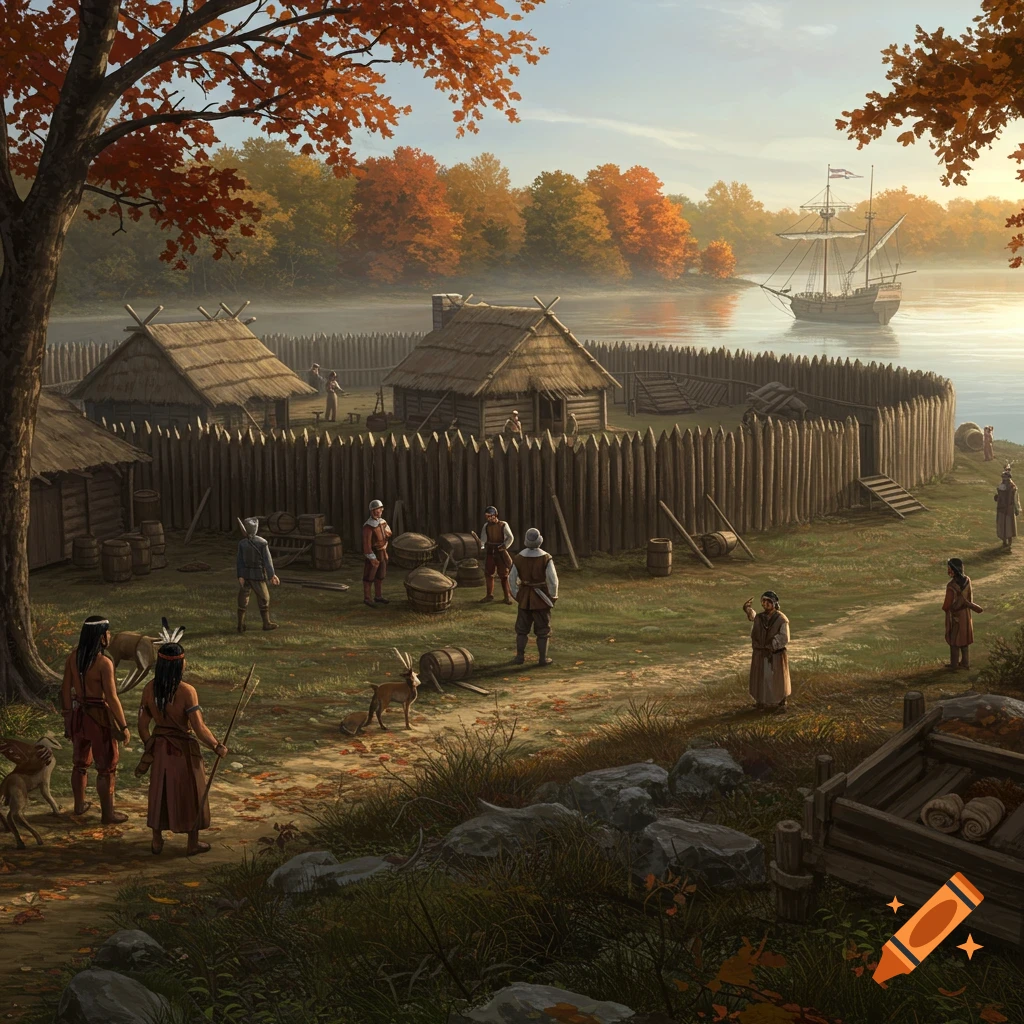
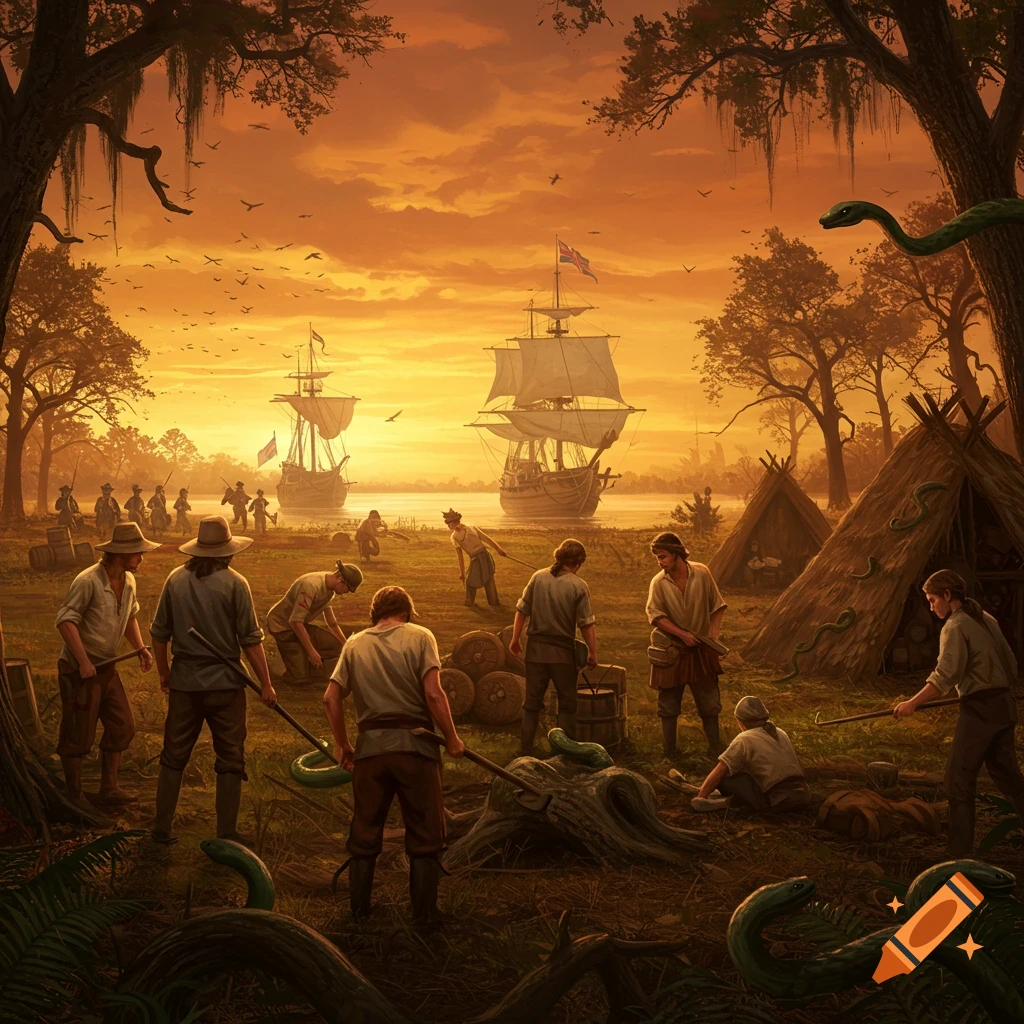
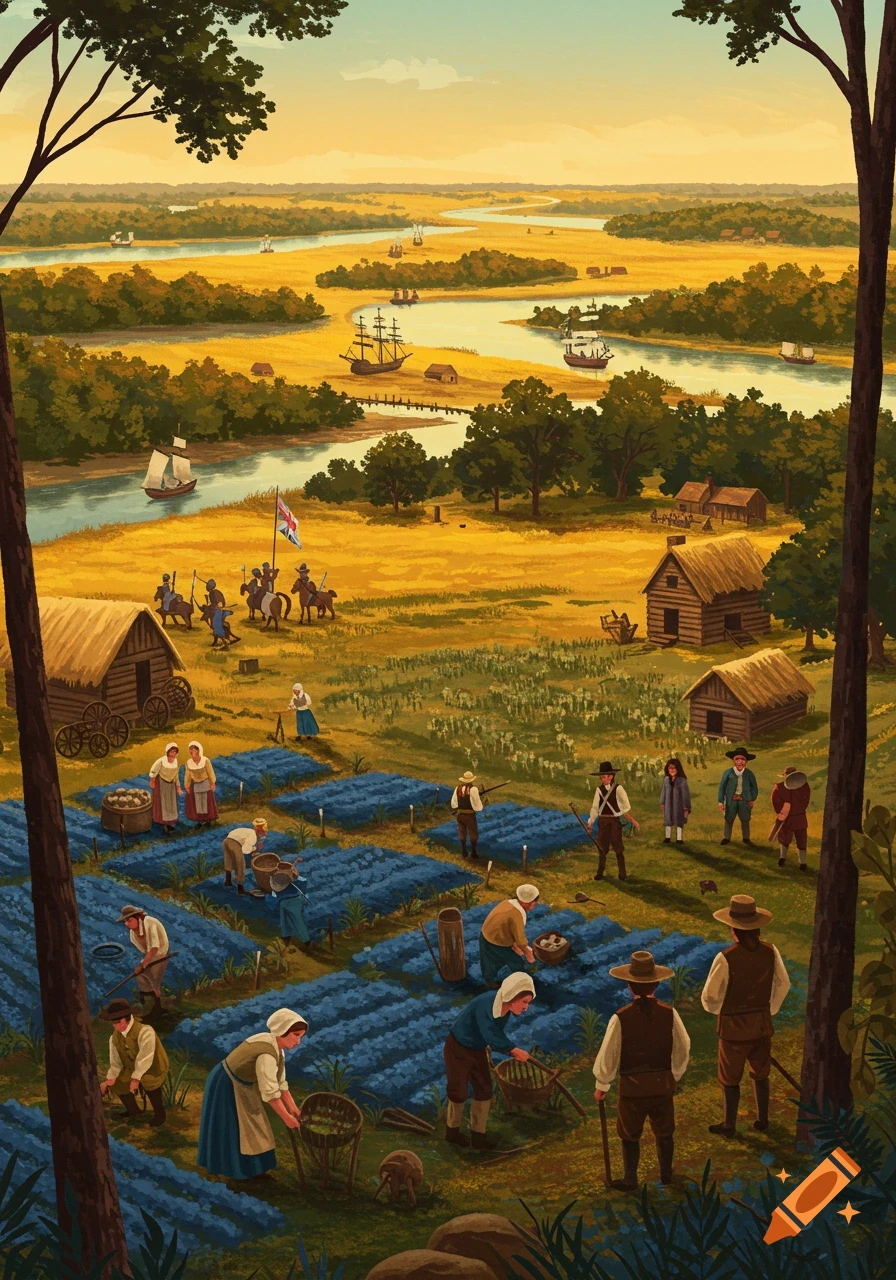
Illustrated colonial settlement with people farming blue crops, log cabins, and ships on a winding river under a golden sky.
In the 1700s, people settled in Georgia mainly for social reform, economic opportunity, and strategic reasons. Founded in 1733 by James Oglethorpe and funded by the British government, Georgia aimed to provide a fresh start for debtors and the poor while acting as a military buffer protecting South Carolina from Spanish Florida and French territories. The colony sought to build a society that avoided the extreme inequalities of other southern colonies by initially banning slavery and rum and limiting land ownership, with the trustees controlling governance and land distribution to maintain order and stability. Living in colonial Georgia was challenging. Settlers faced dangers like deadly diseases (malaria, typhoid), harsh environmental conditions (heat, mosquitoes, predators), threats from Spanish forces and Native American tribes, and strict social restrictions imposed by the trustees. Despite these hardships, Georgia promised new land, government support, religious freedom for some groups, economic opportunities through agriculture and trade, and a controlled but stable community setting. Georgia wanted much from England to succeed. It depended on English financial support for settlers and supplies, military protection against rival powers, trade privileges to export crops like silk and indigo, and strong governance from the Trustees to keep the colony viable and defensible. Over time, colonists pushed back against restrictions, especially bans on slavery and land rights, See more