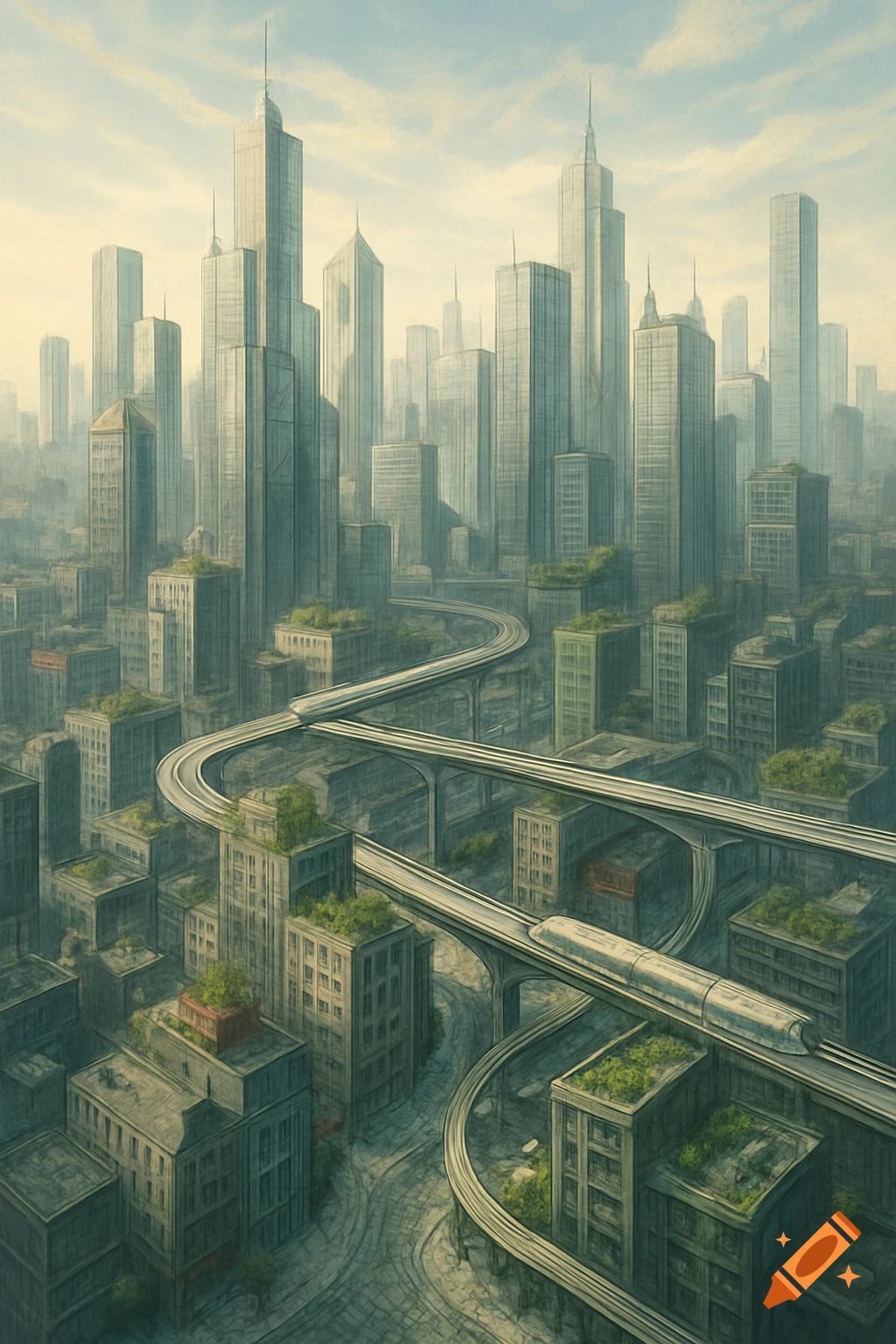
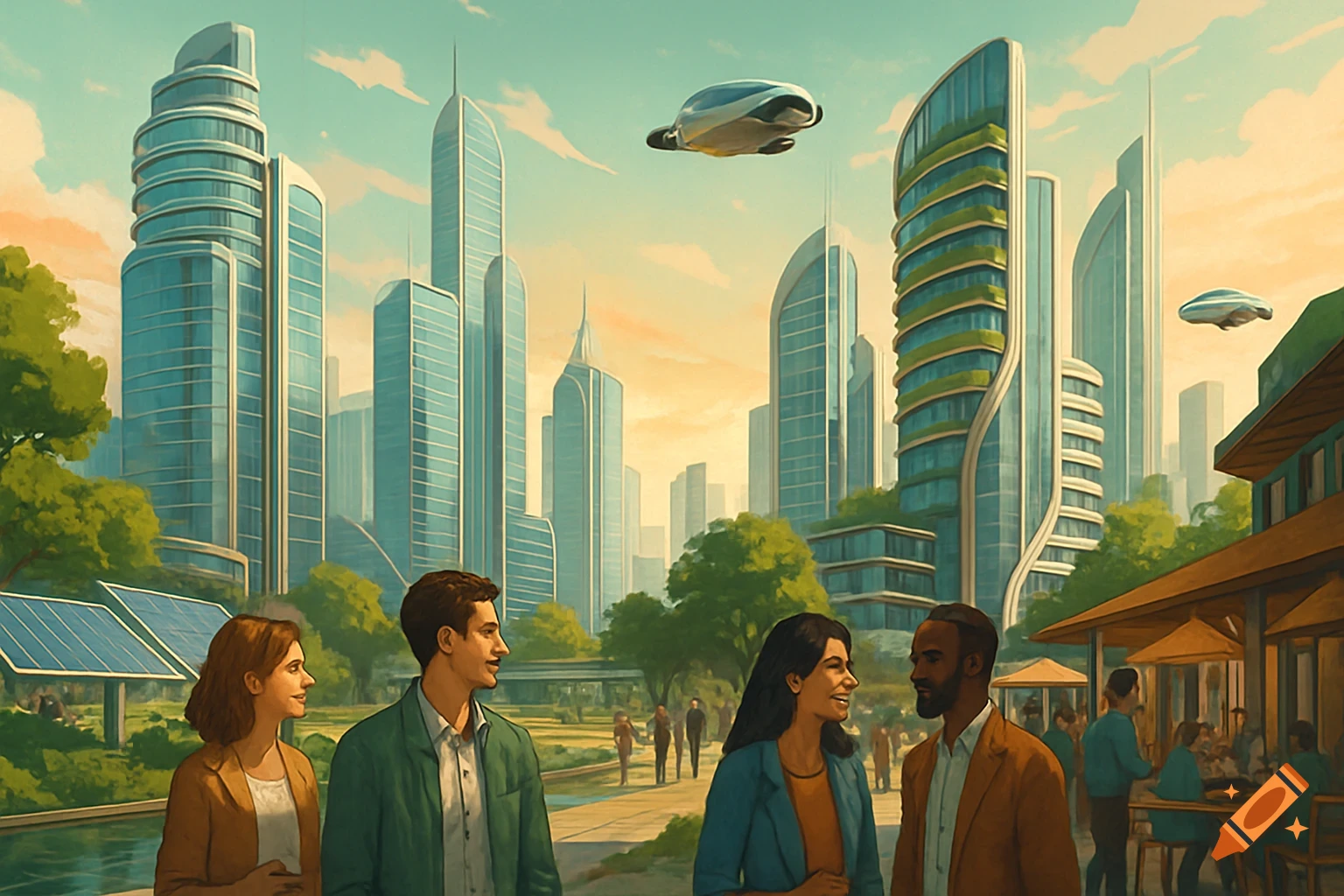
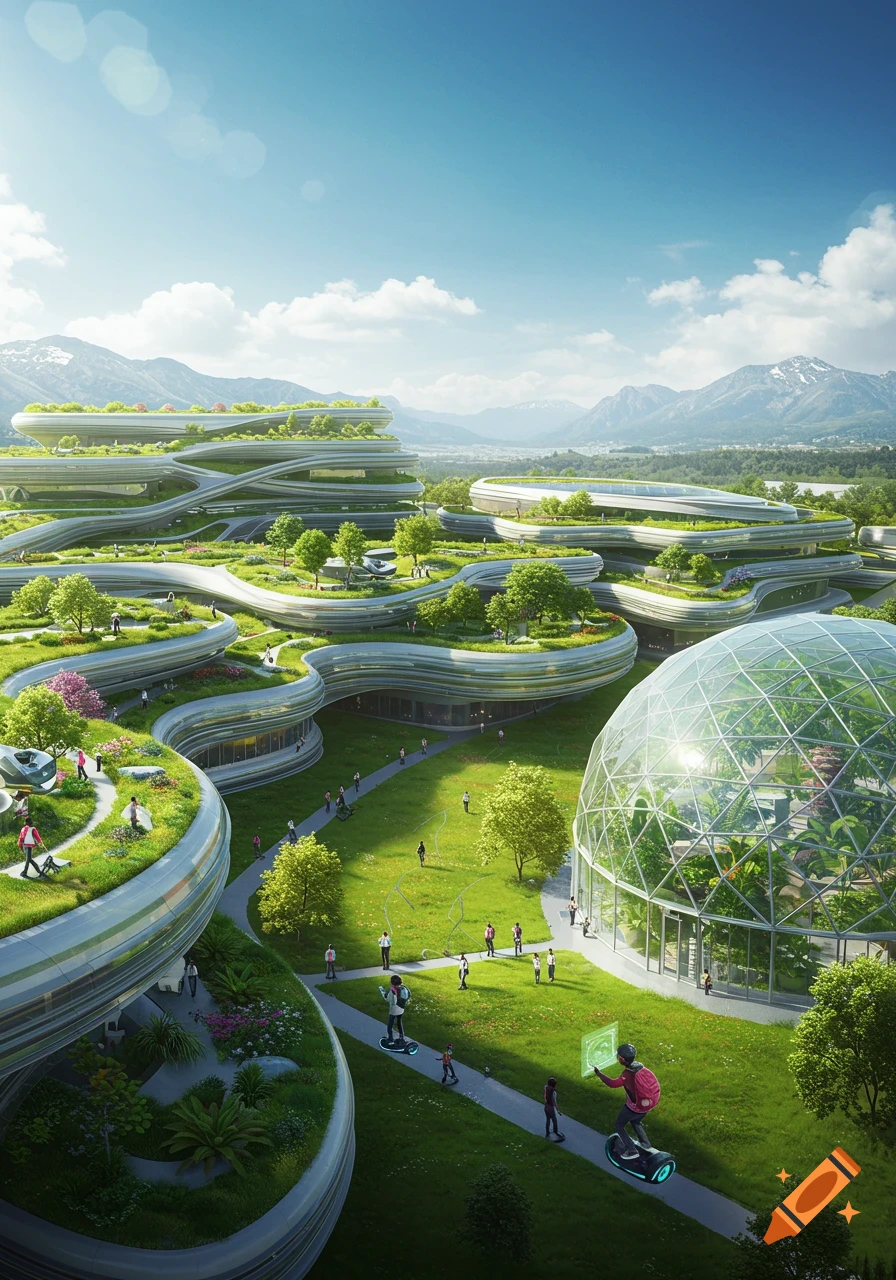
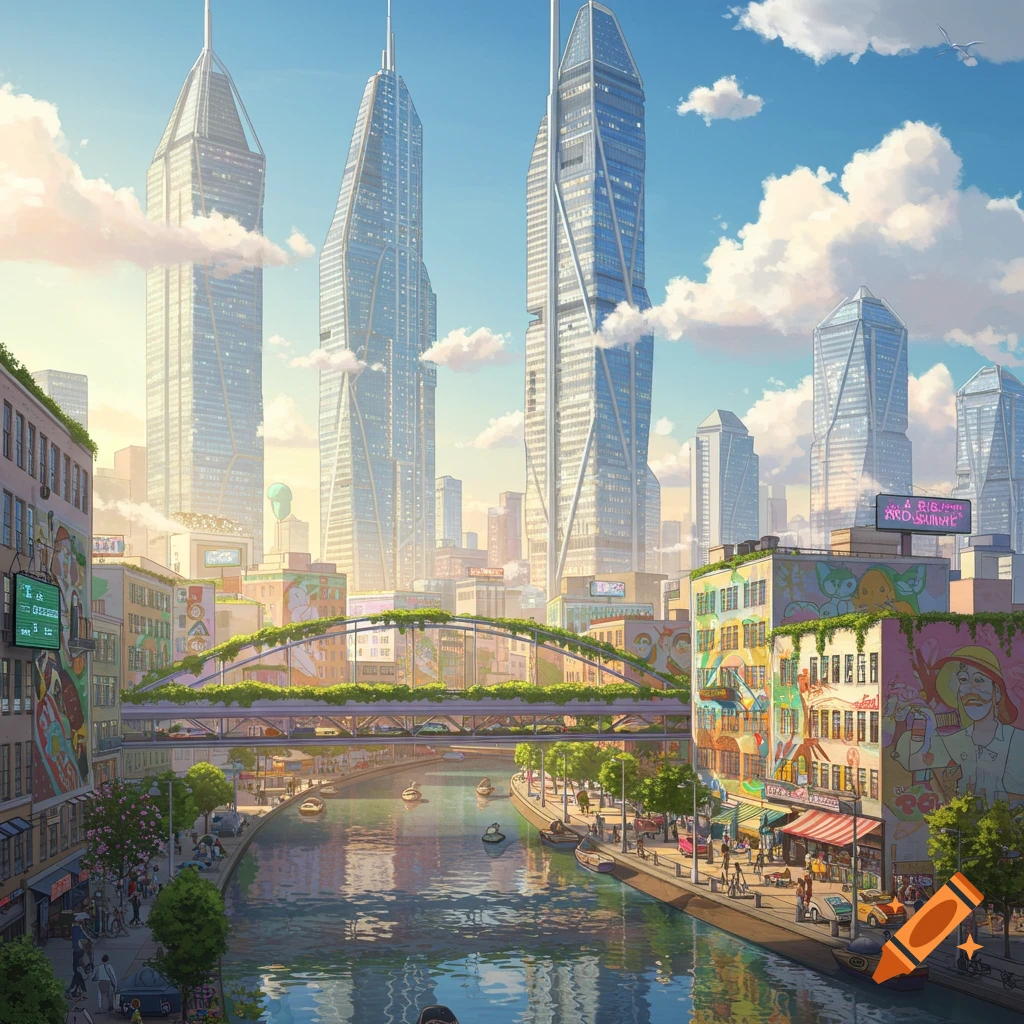
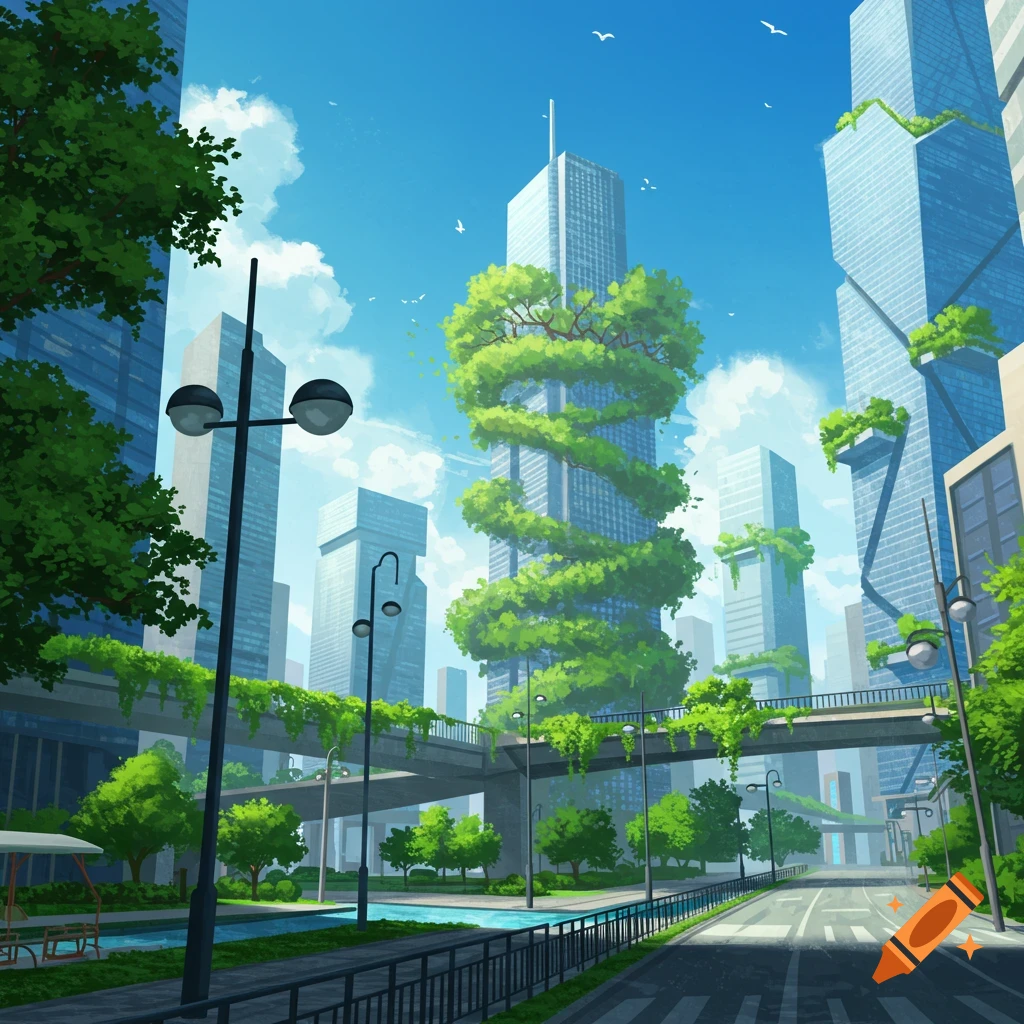
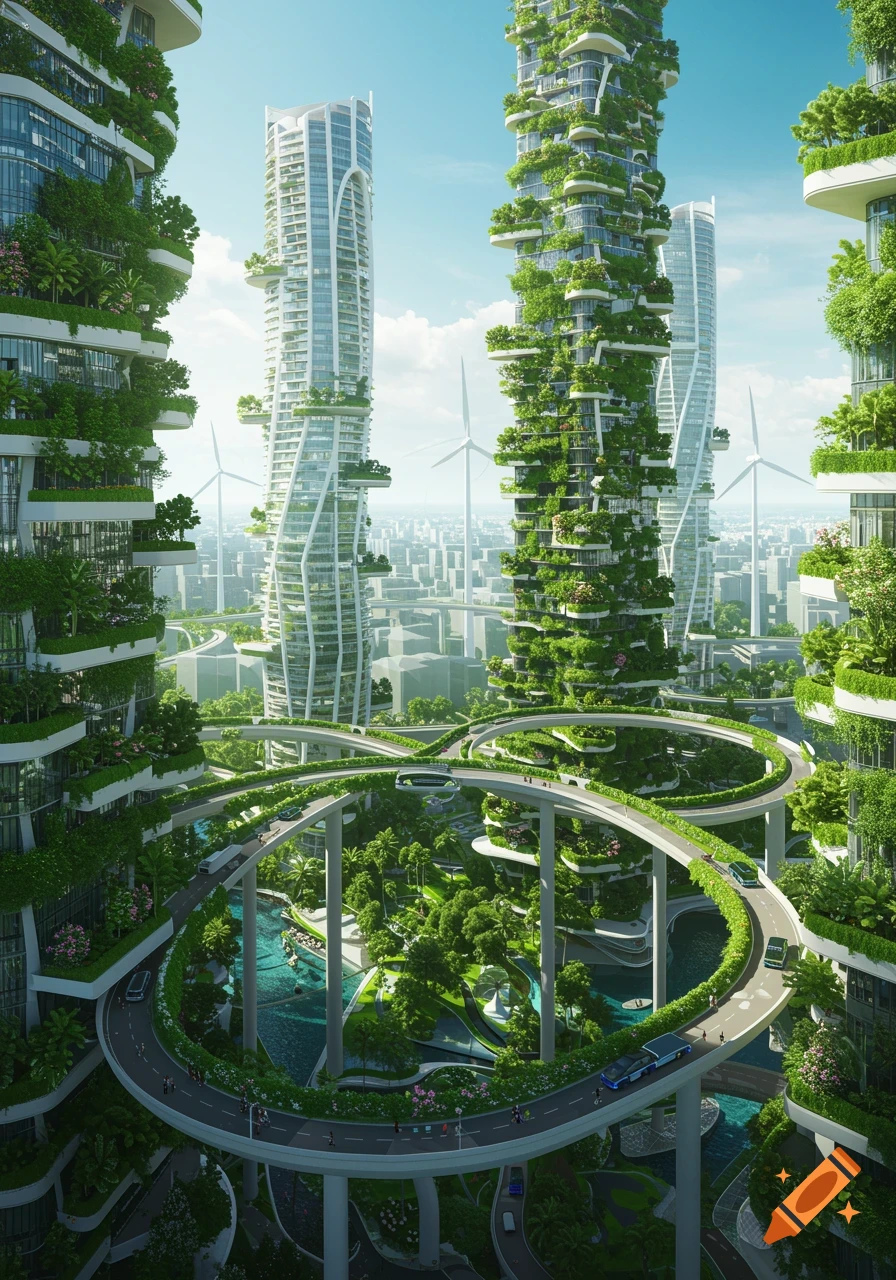
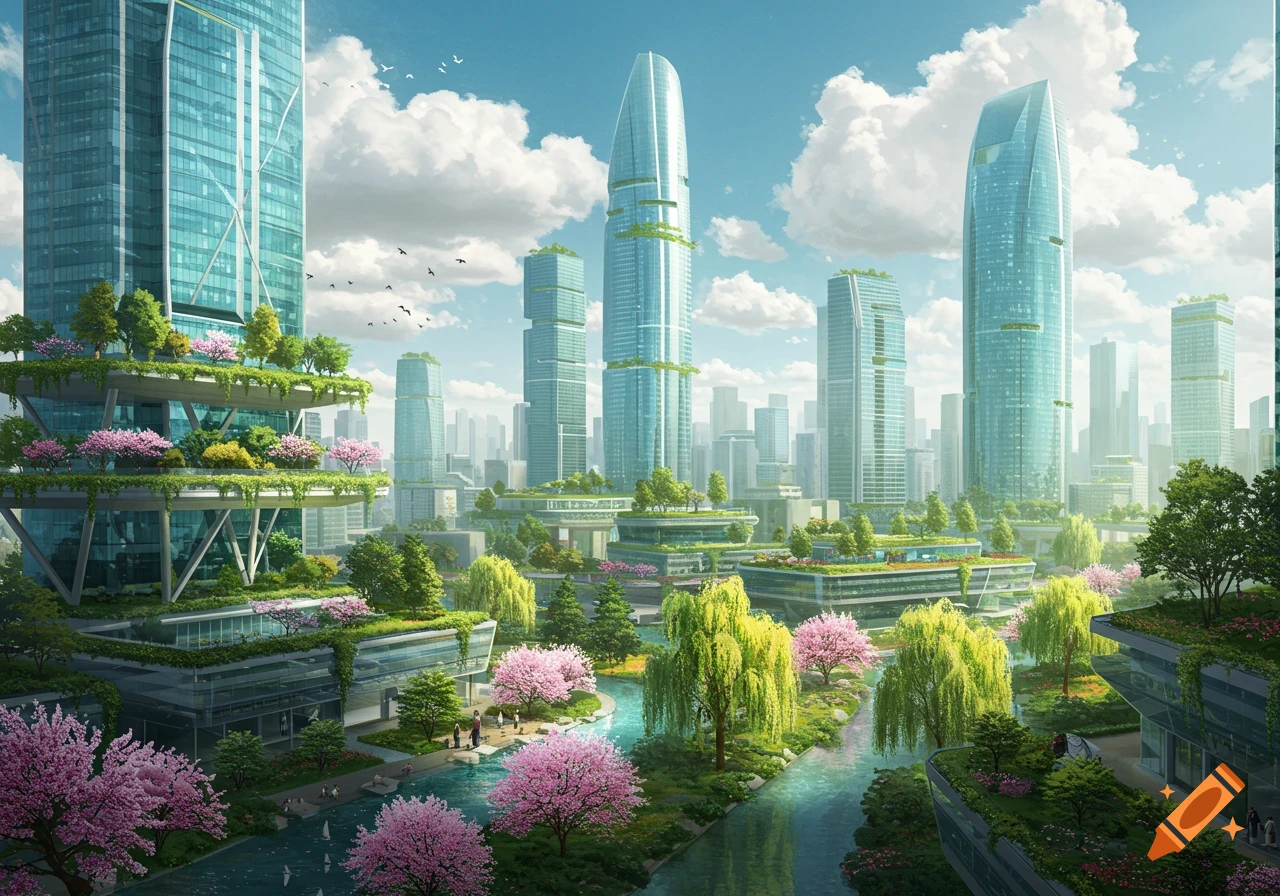
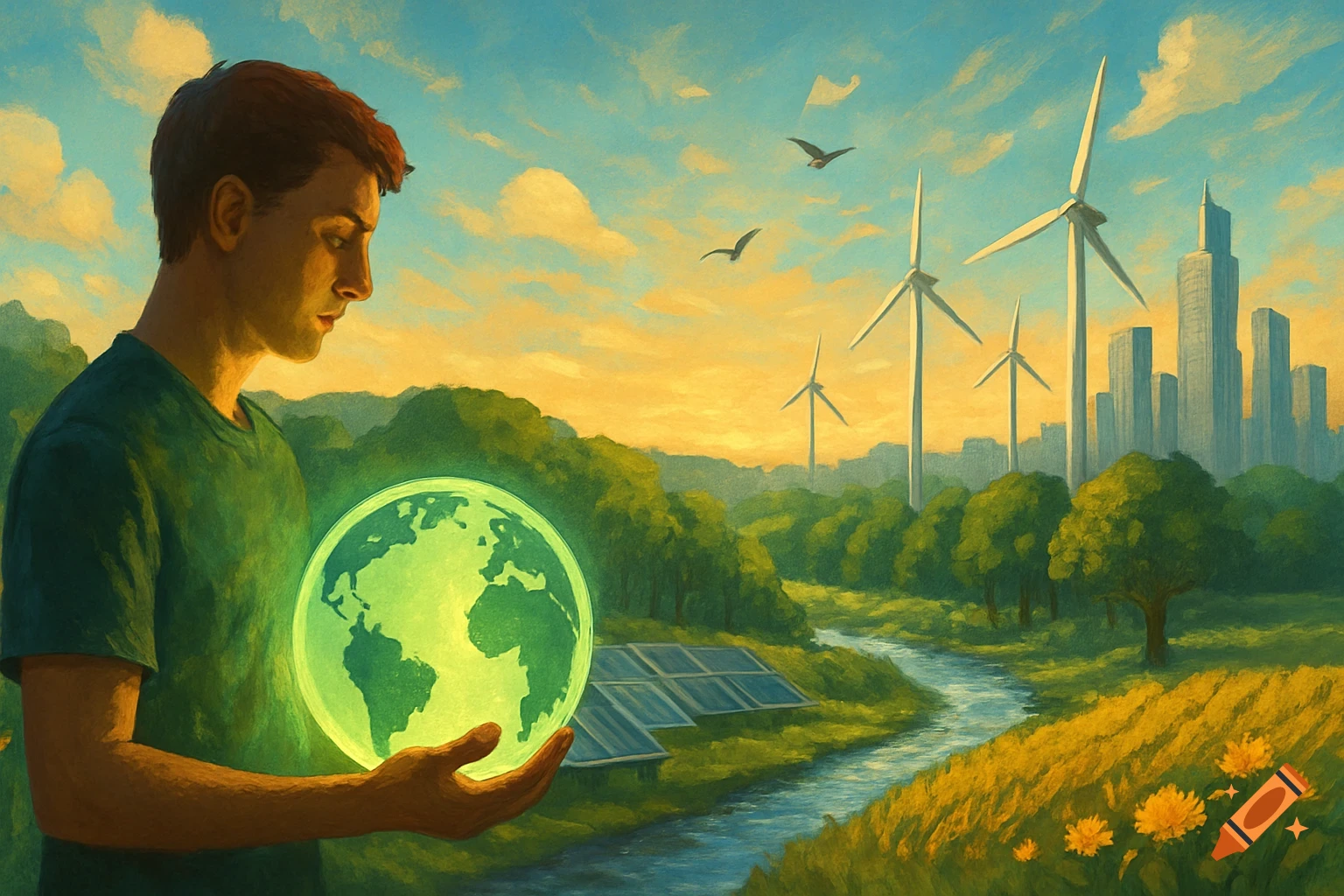
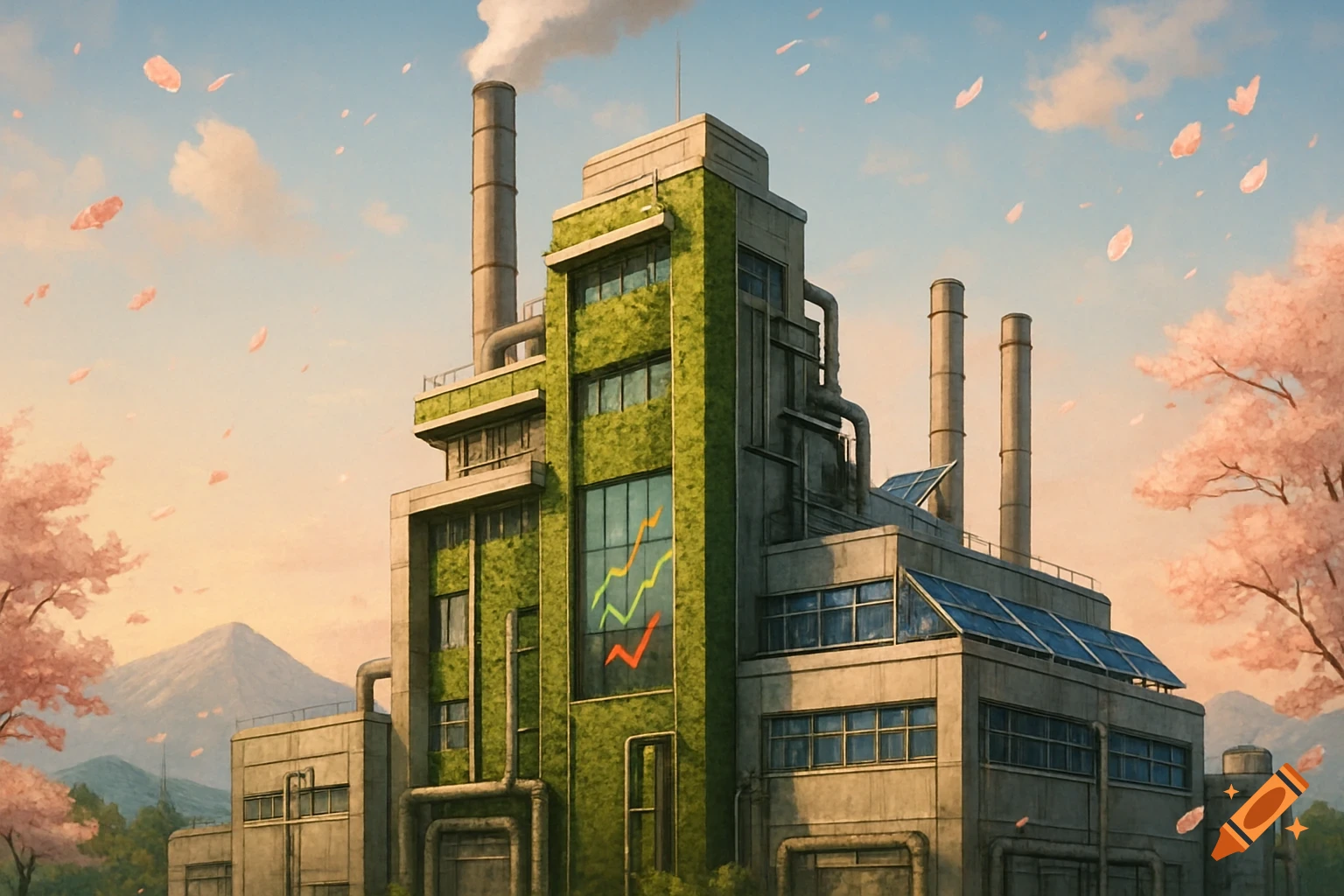
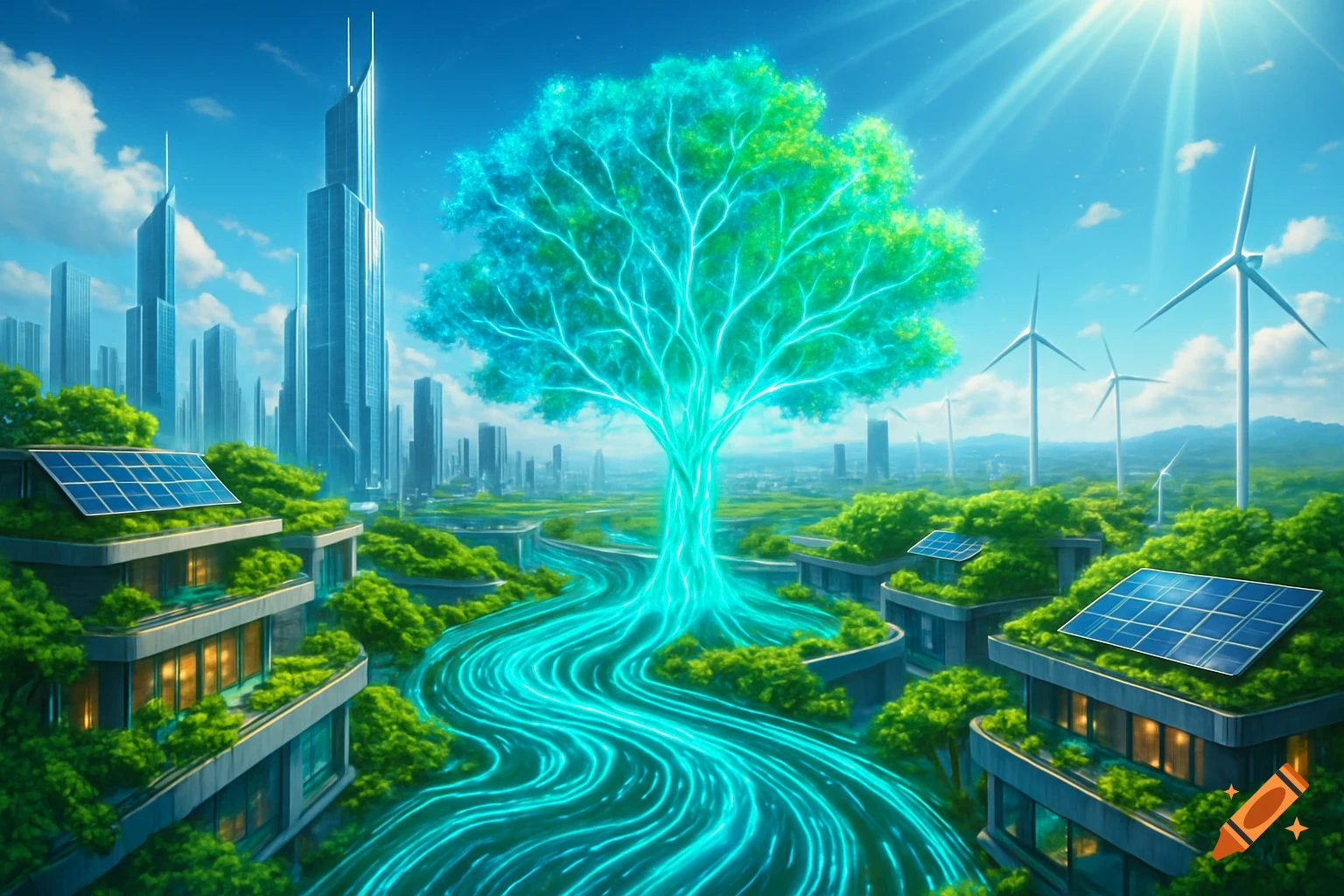
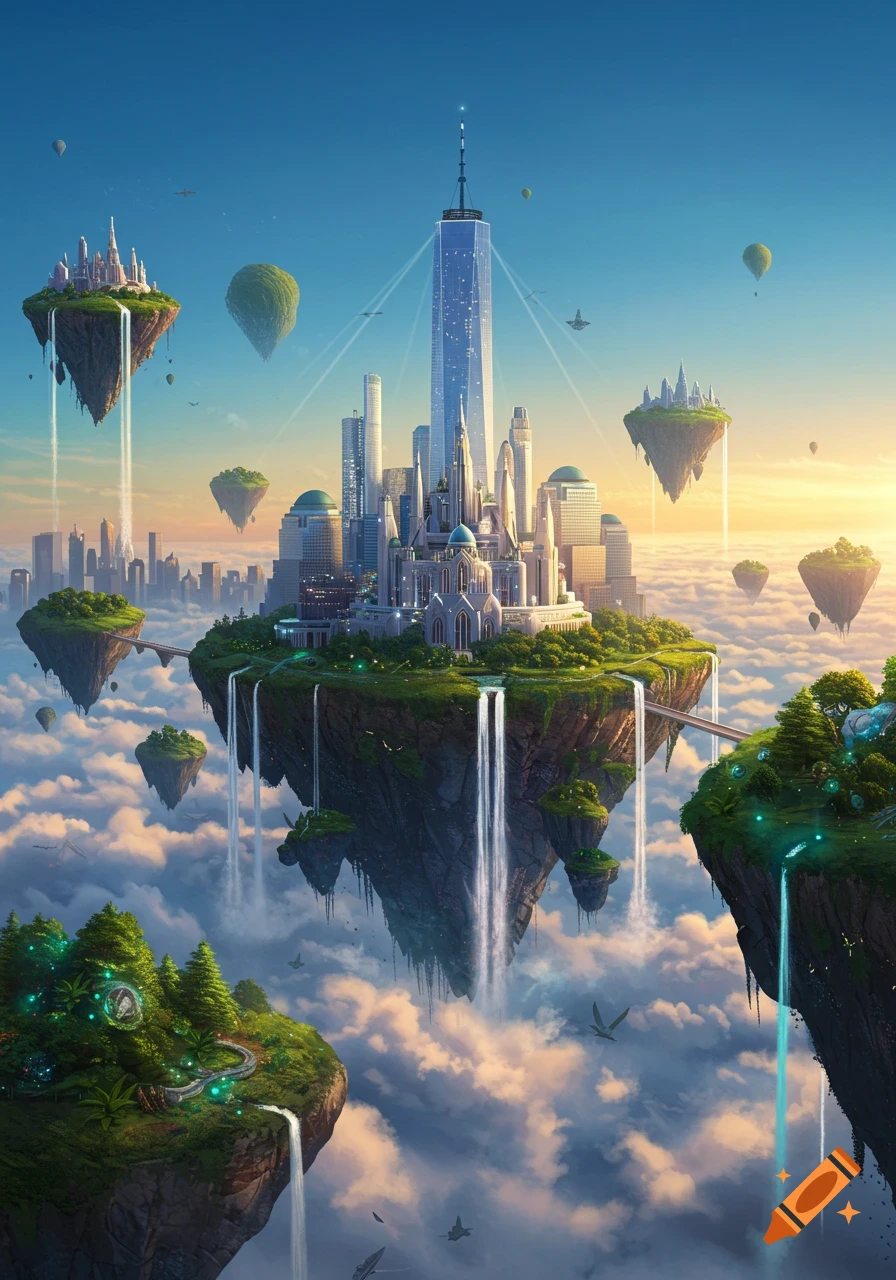
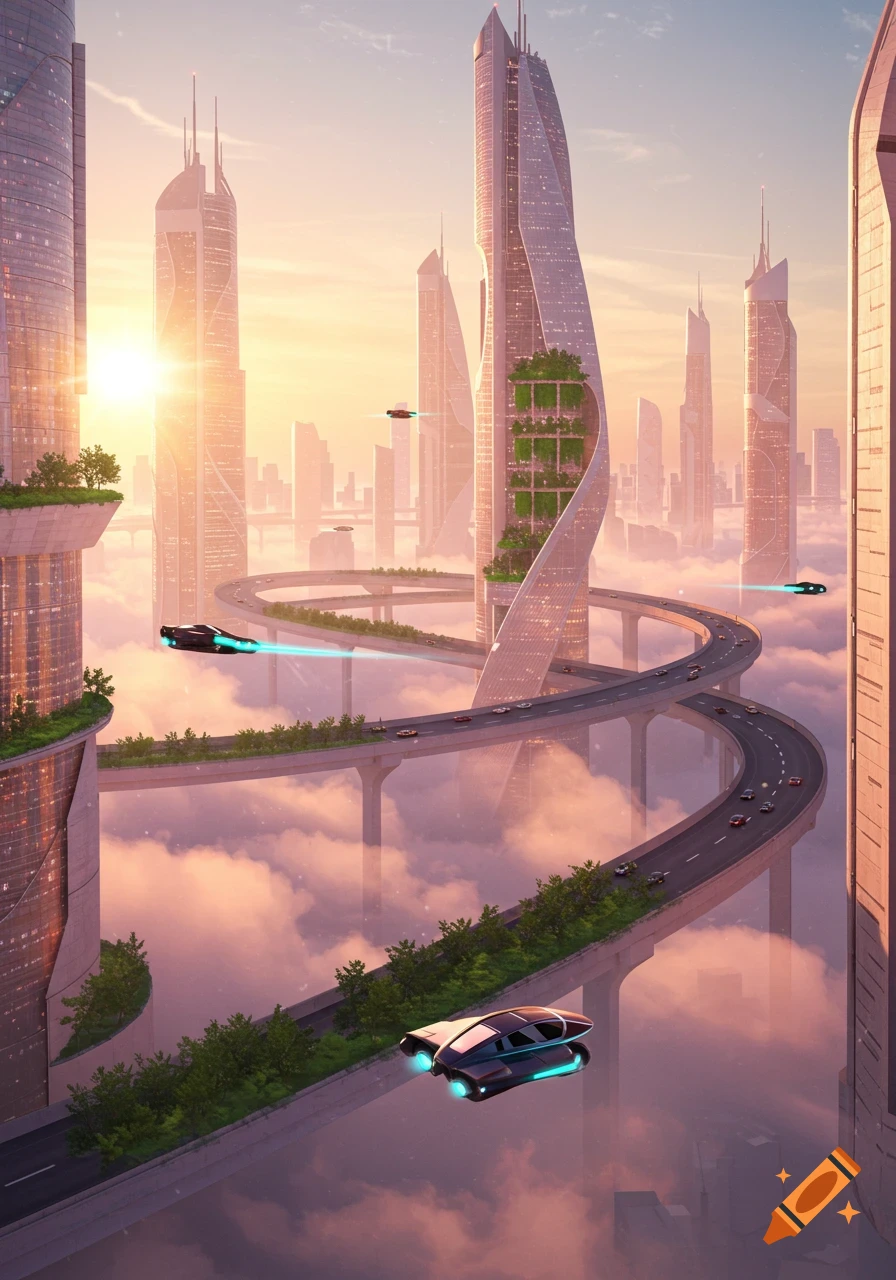
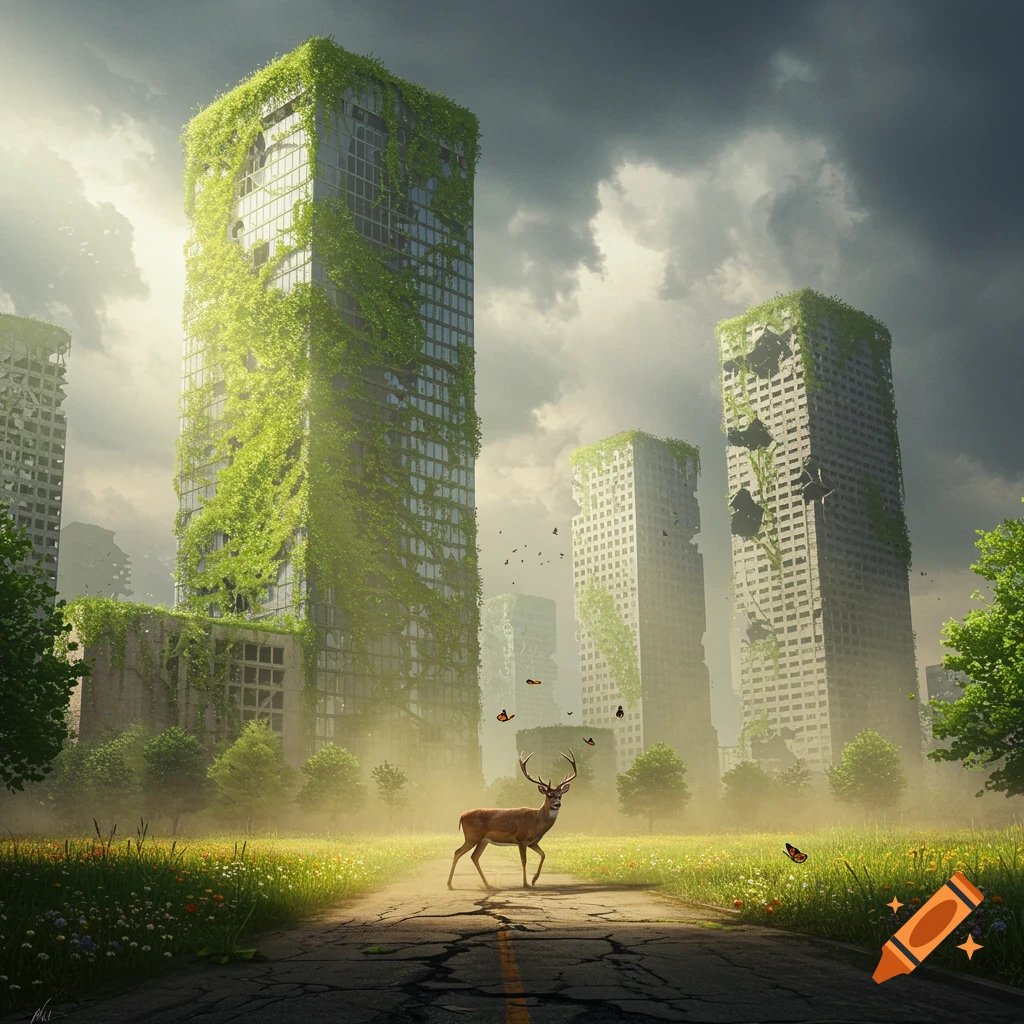
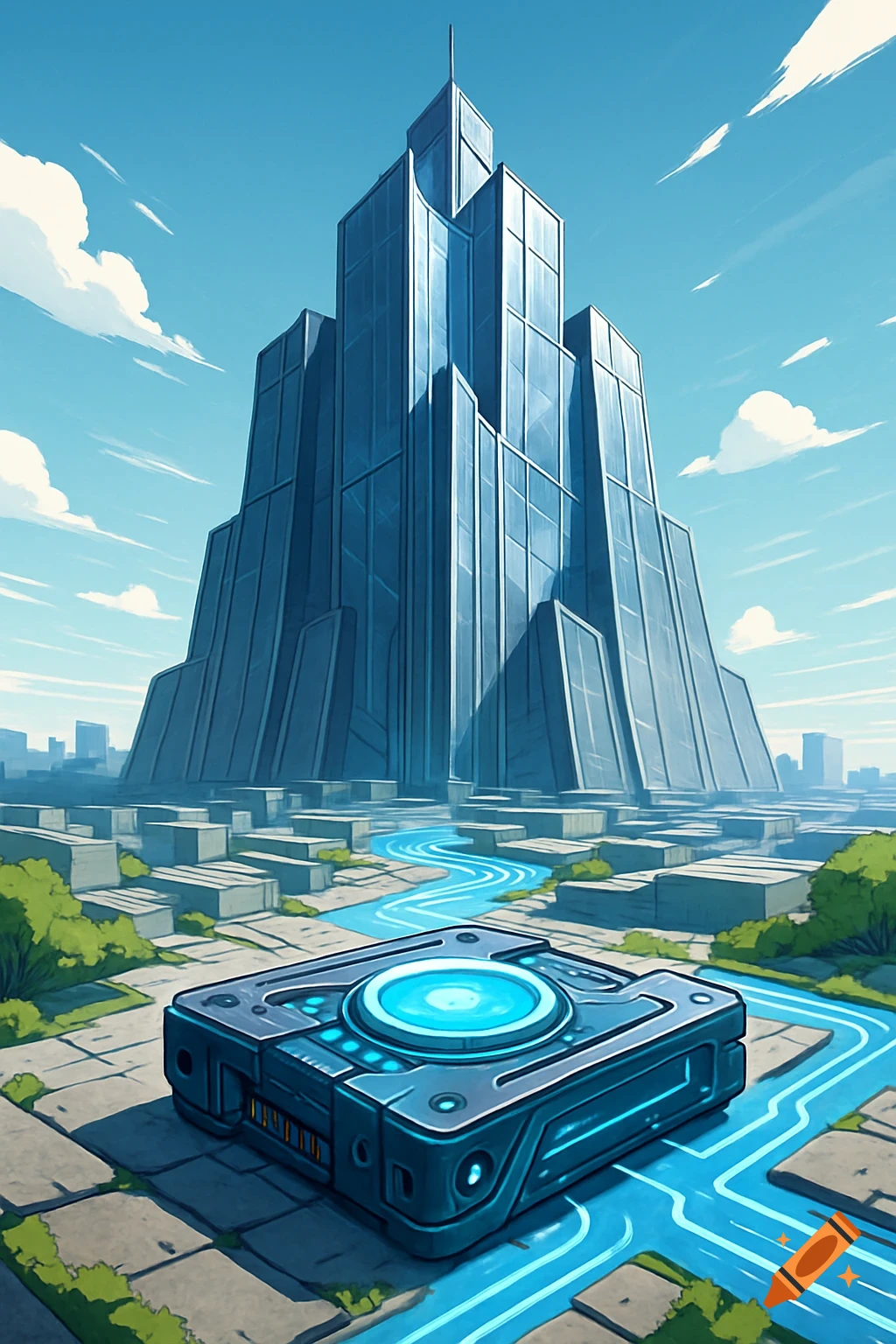
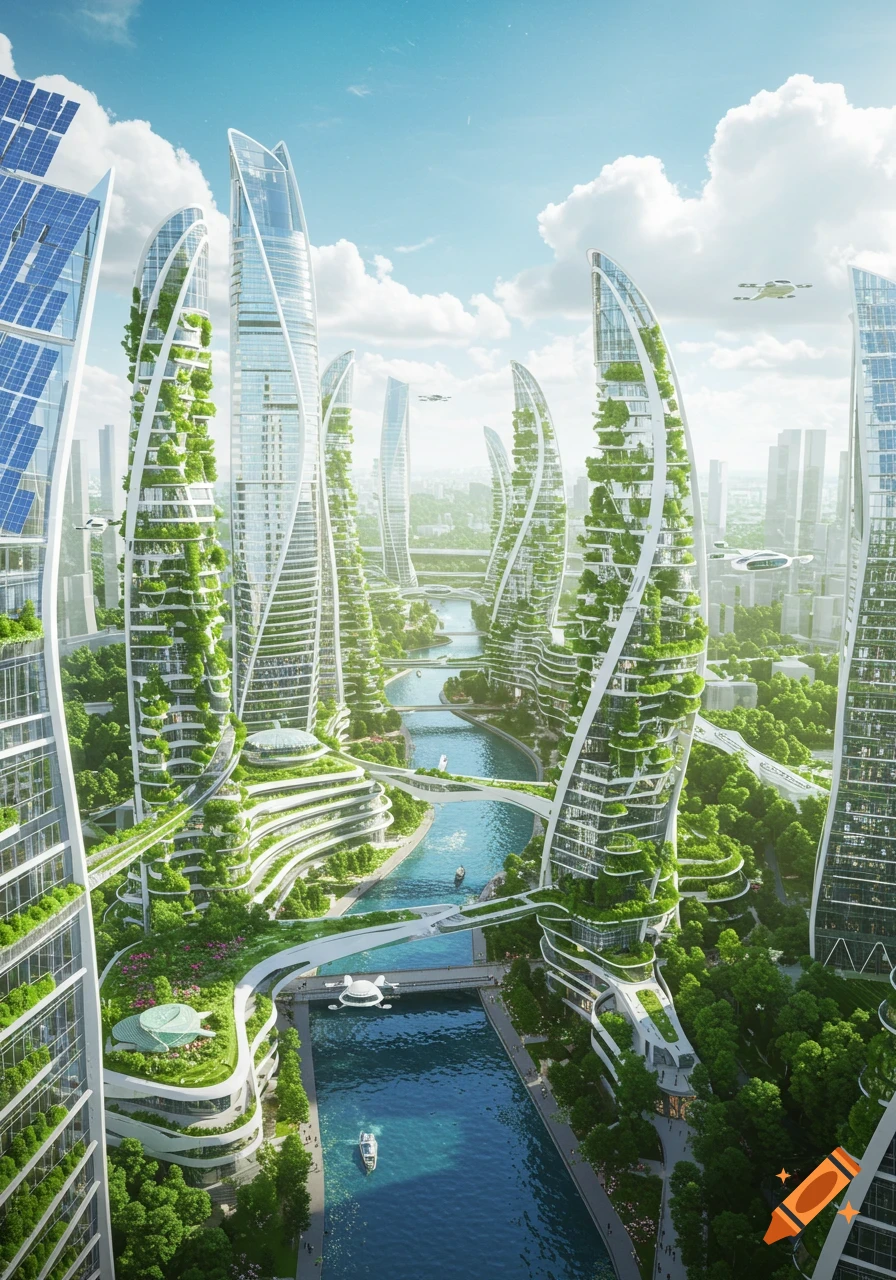
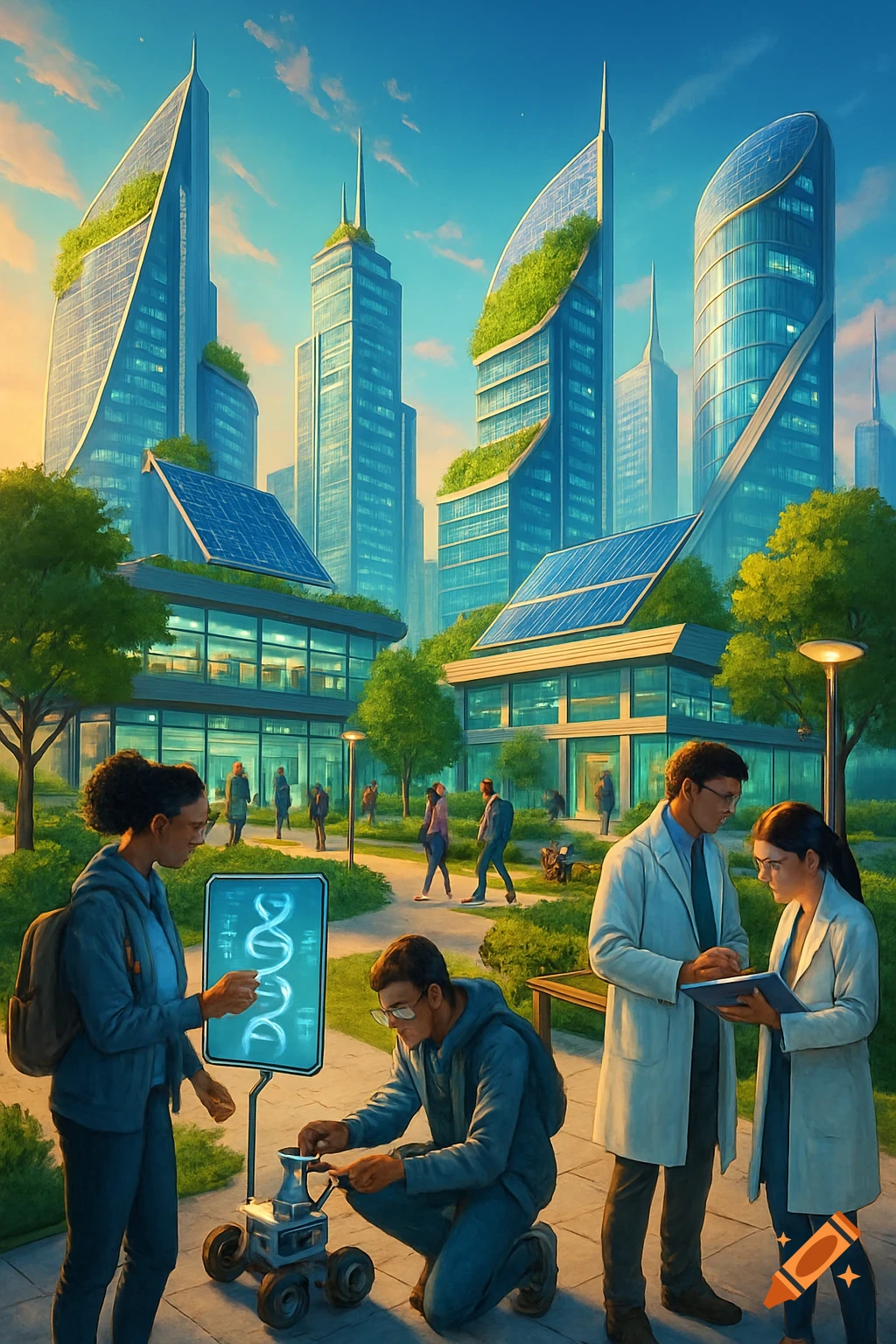
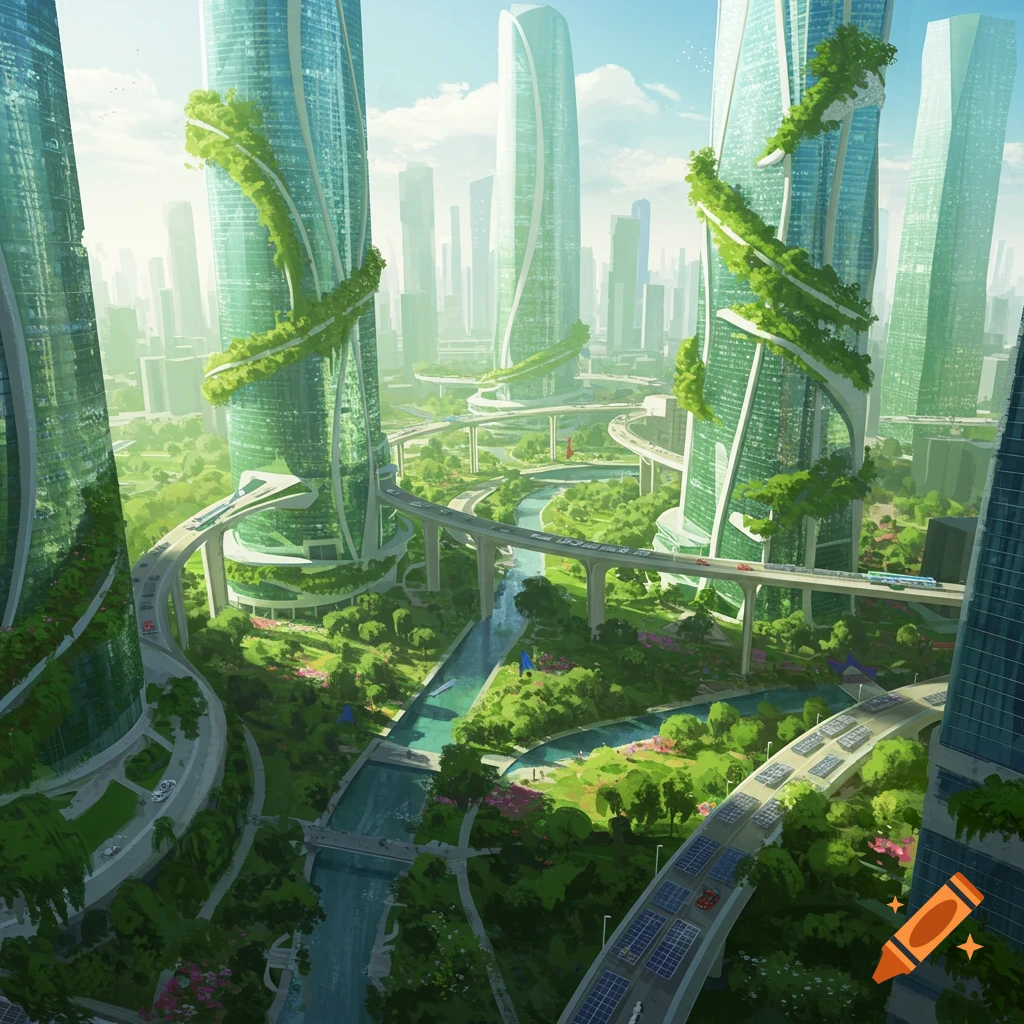
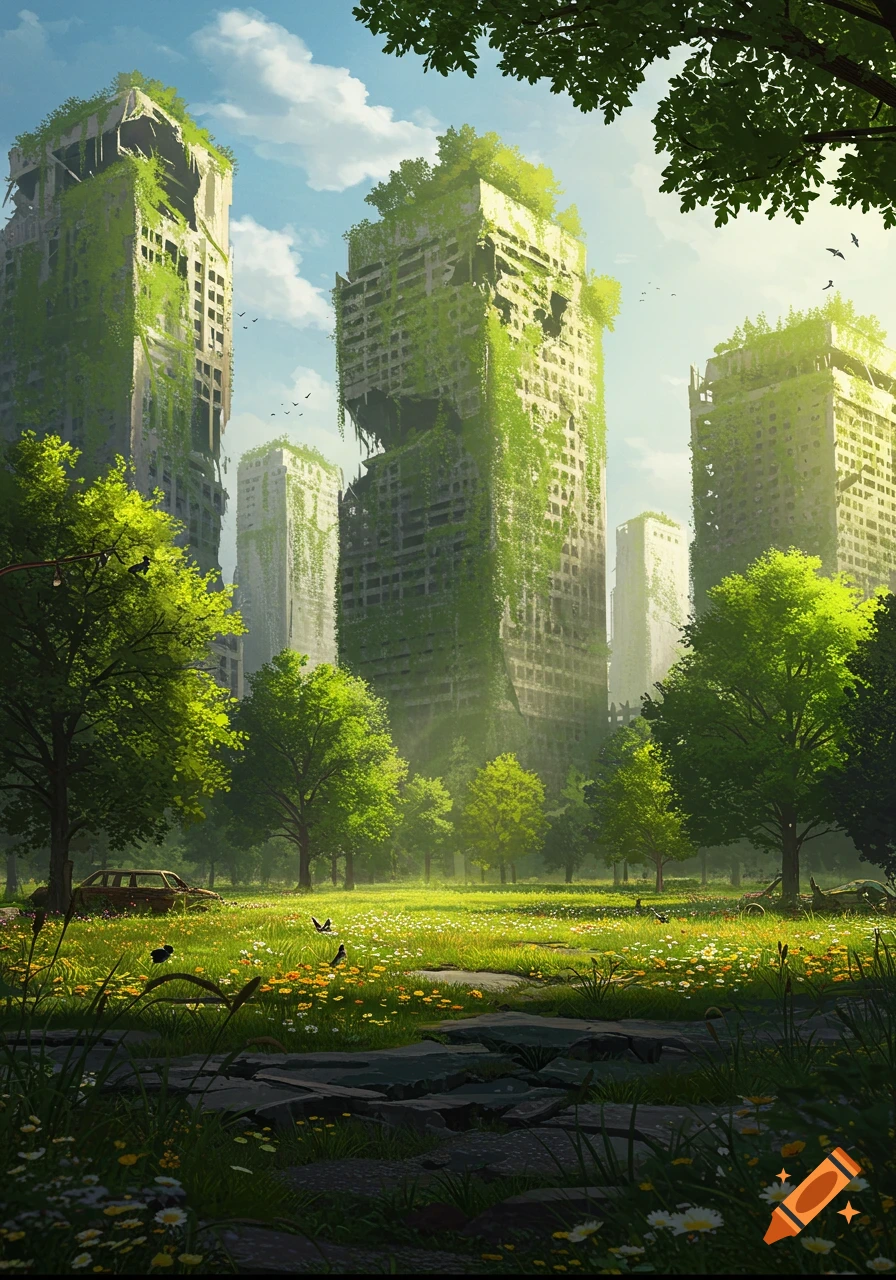
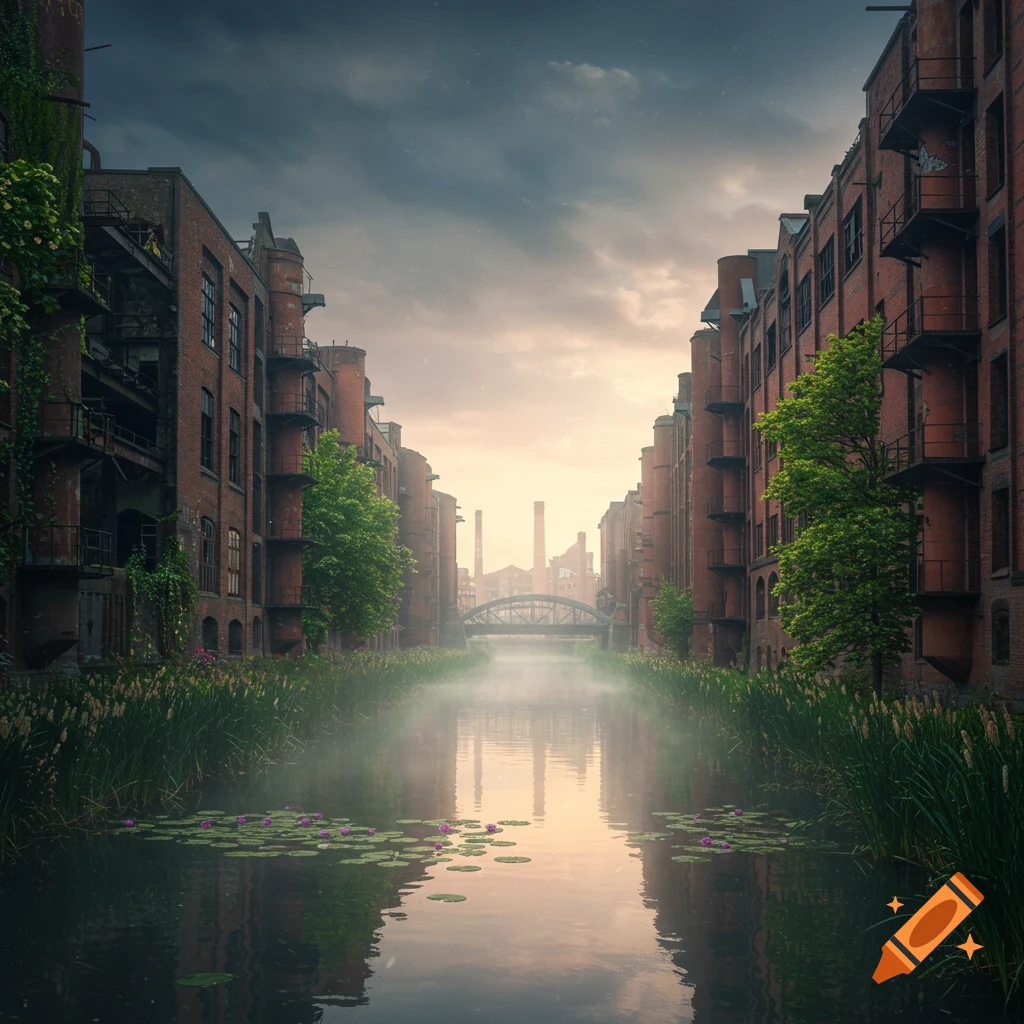
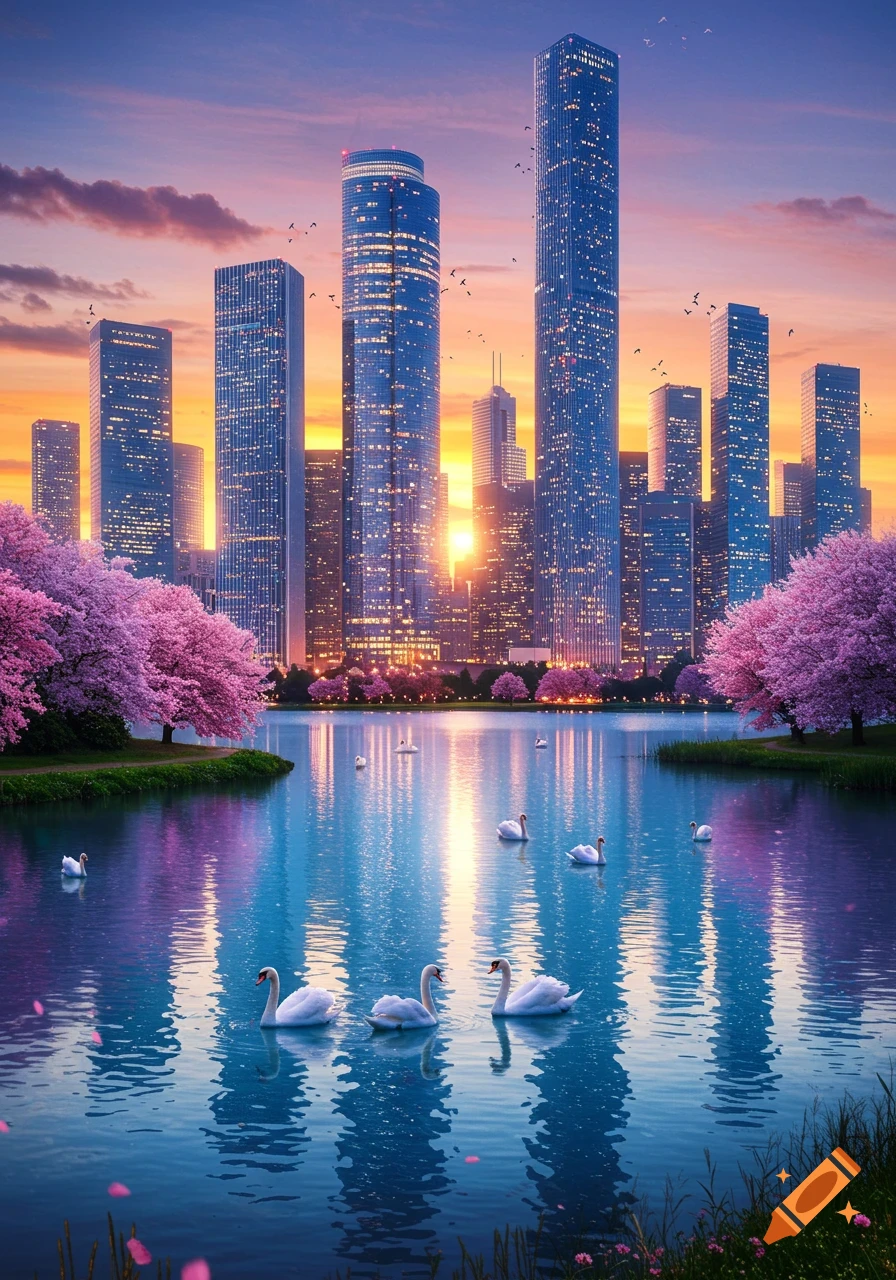
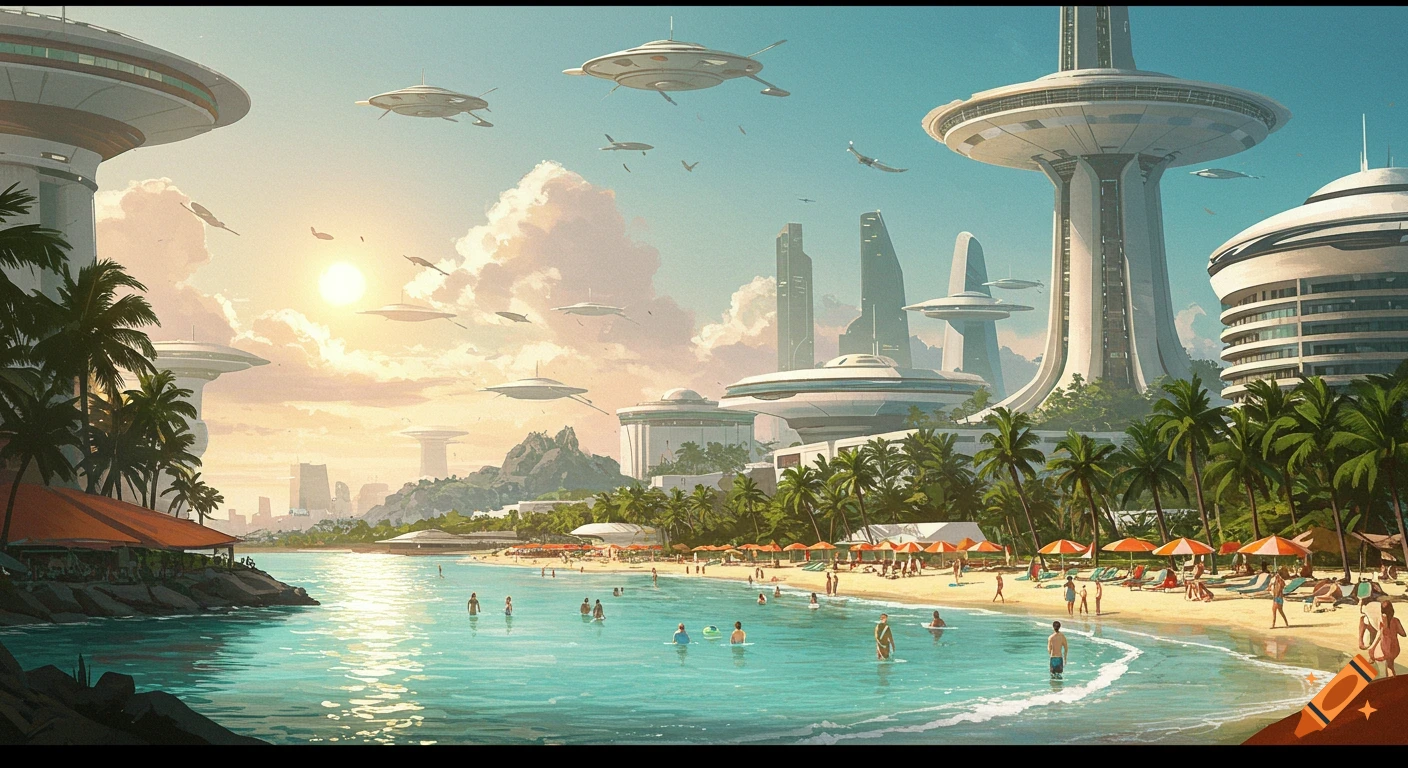
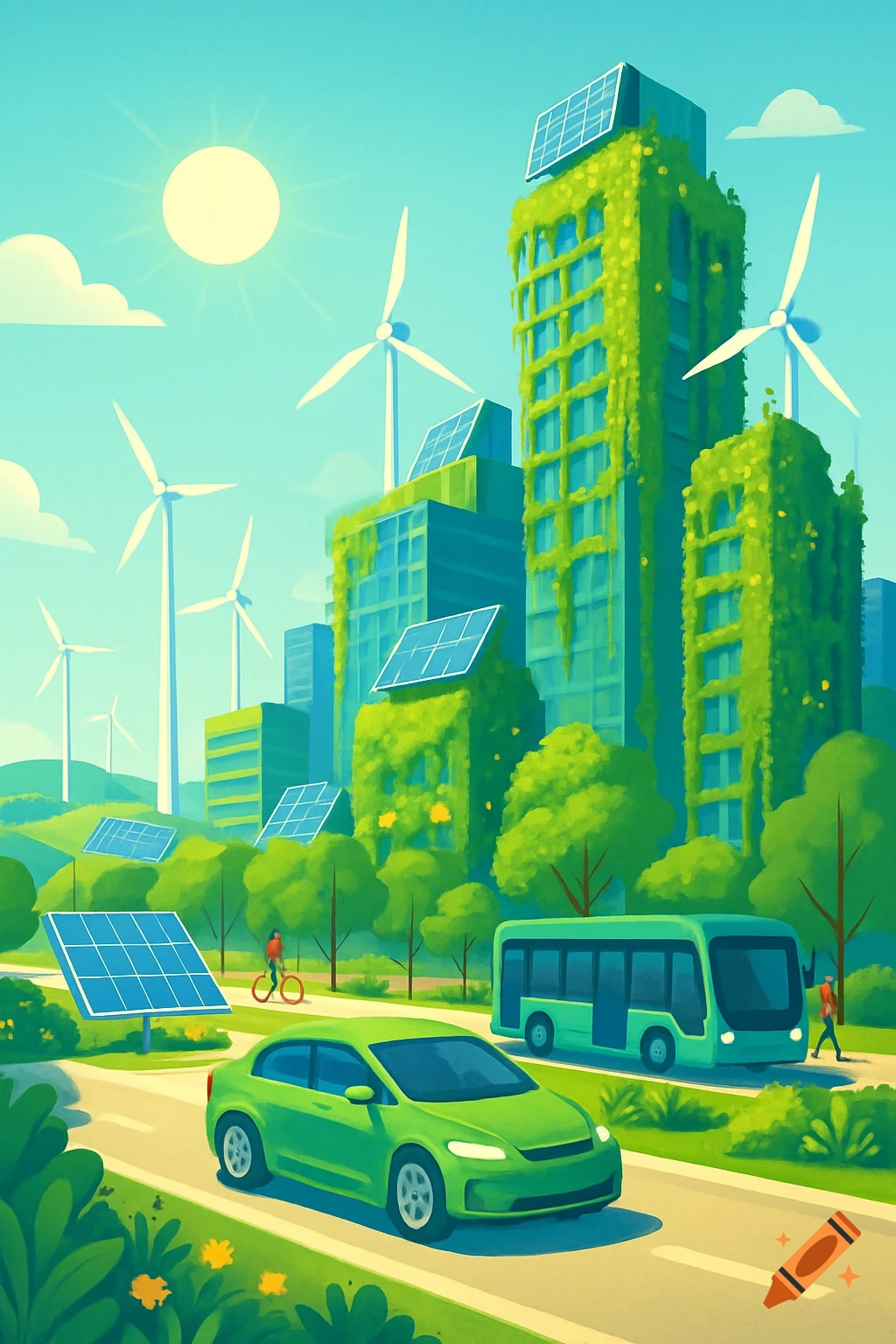
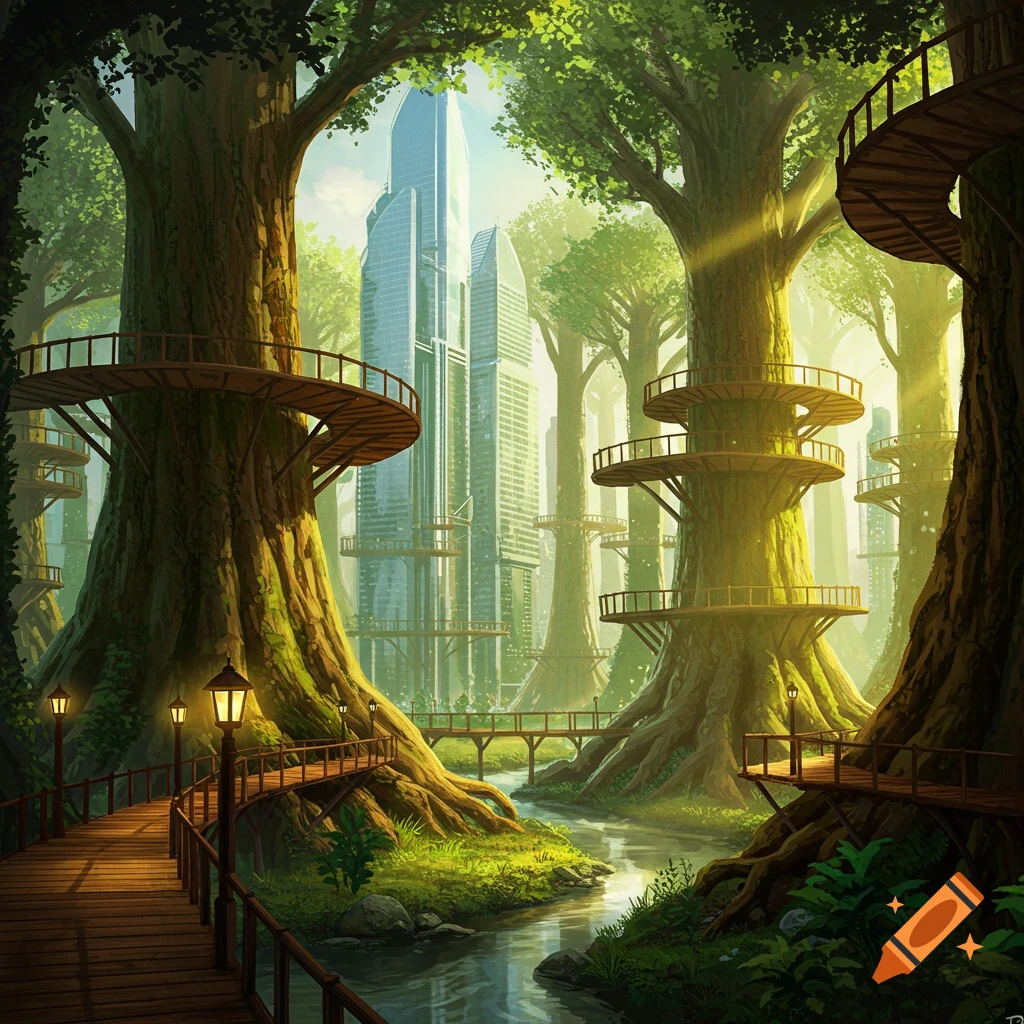
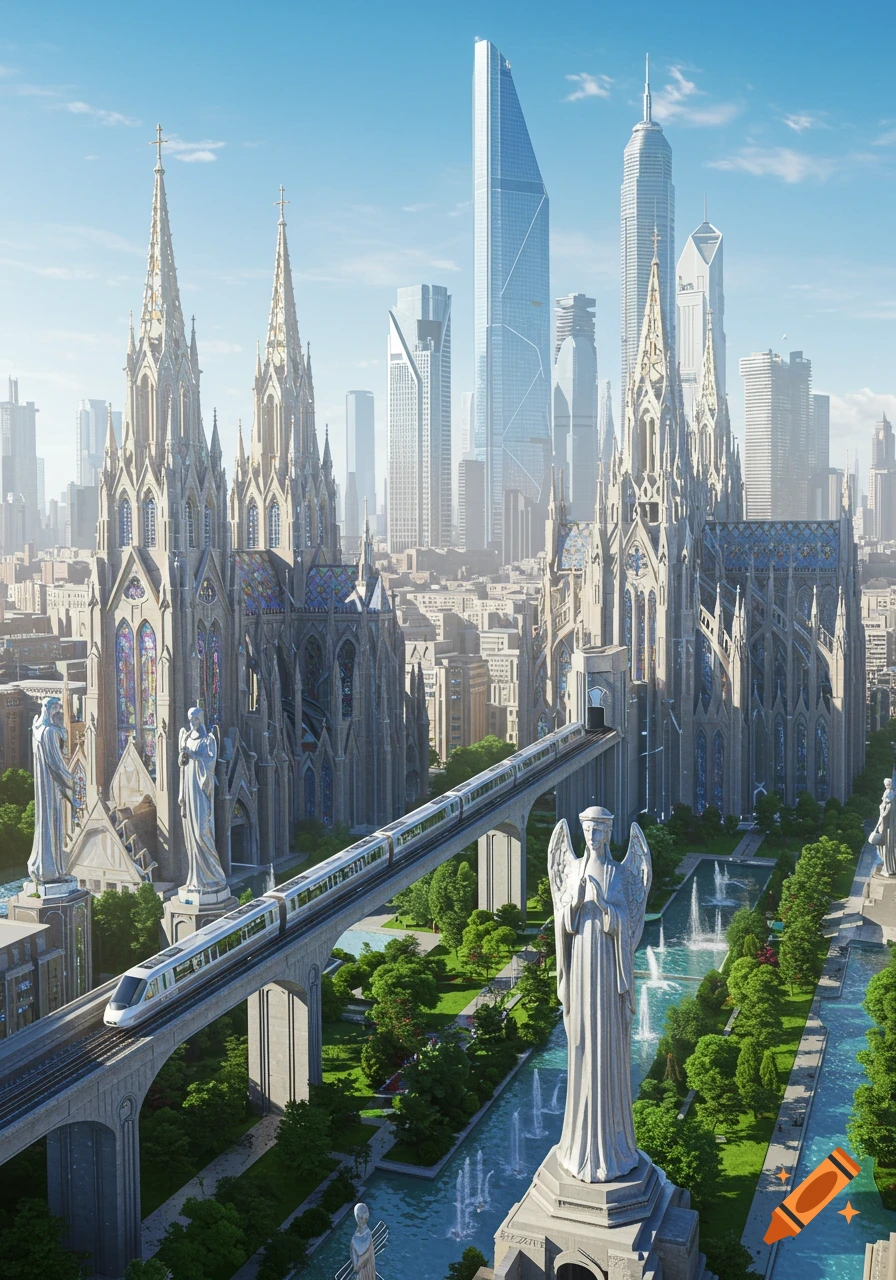
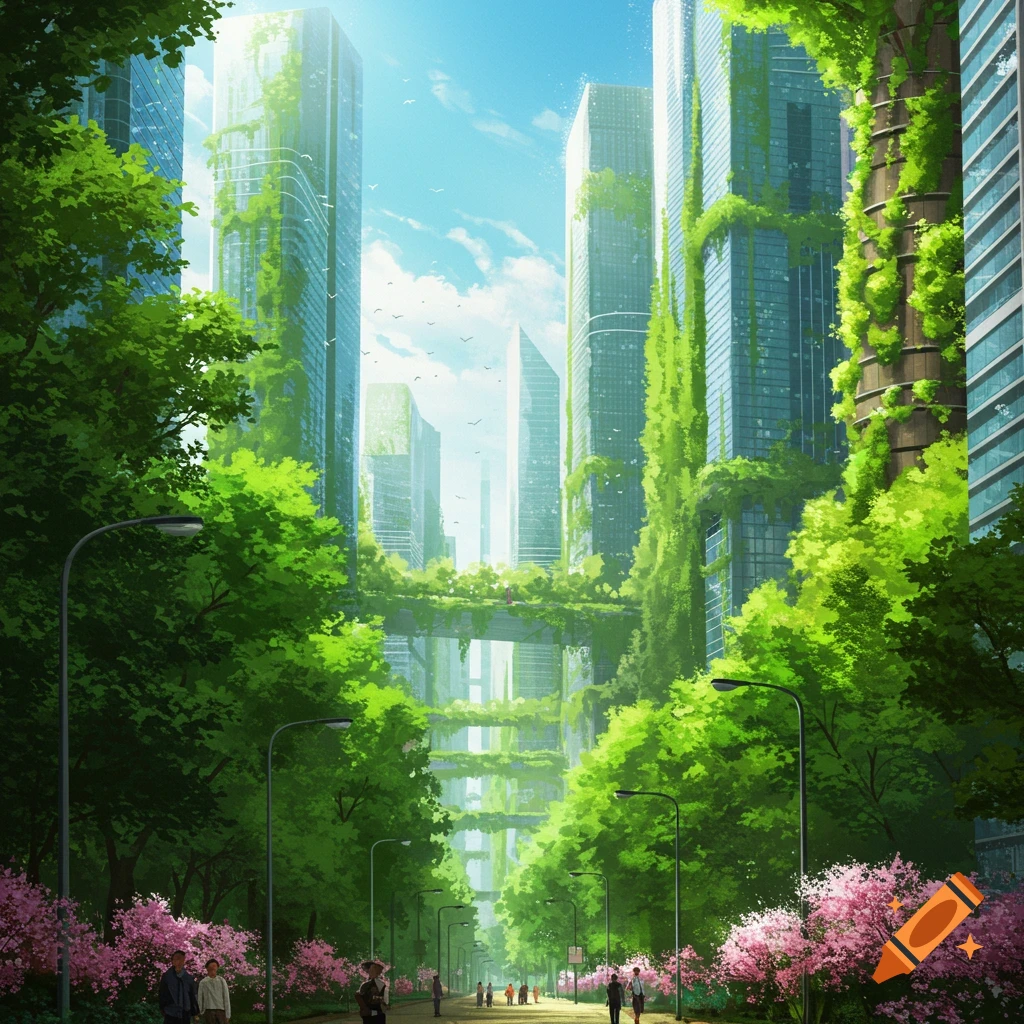
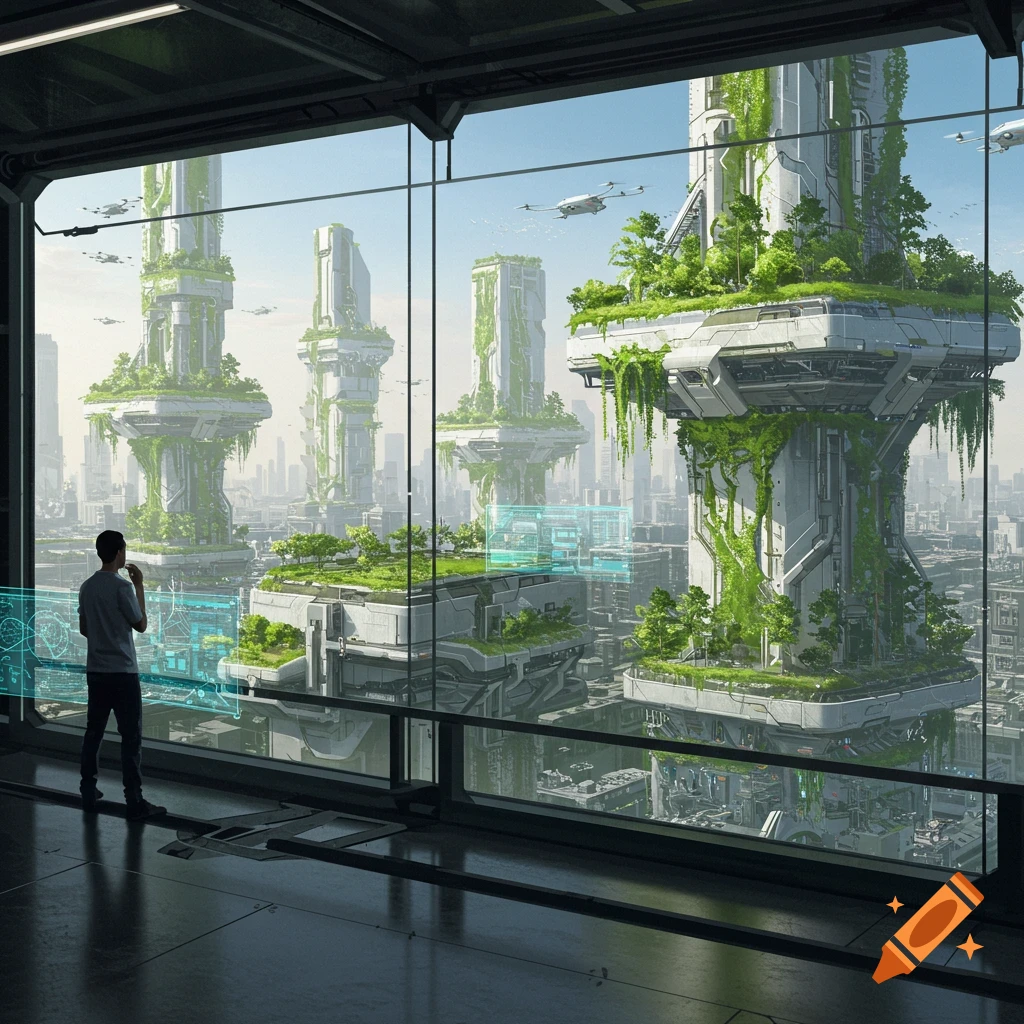
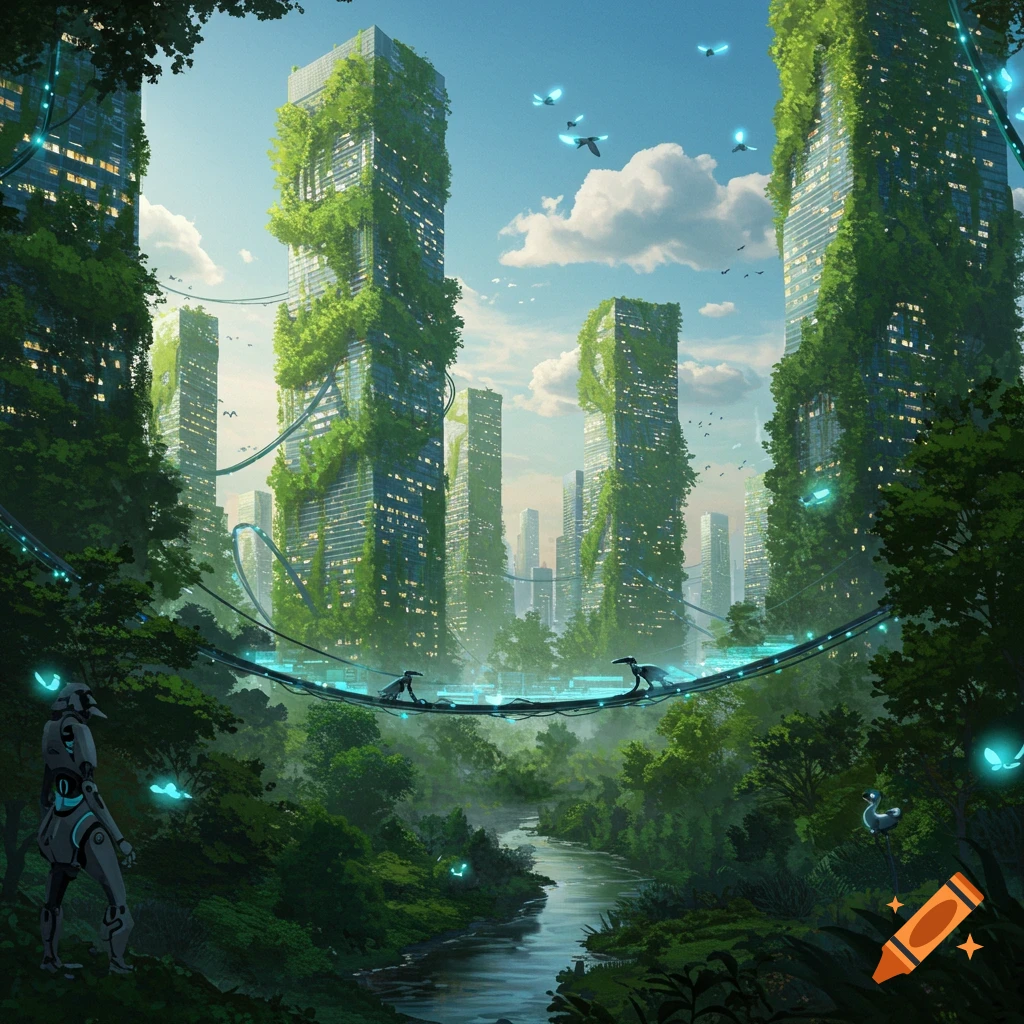
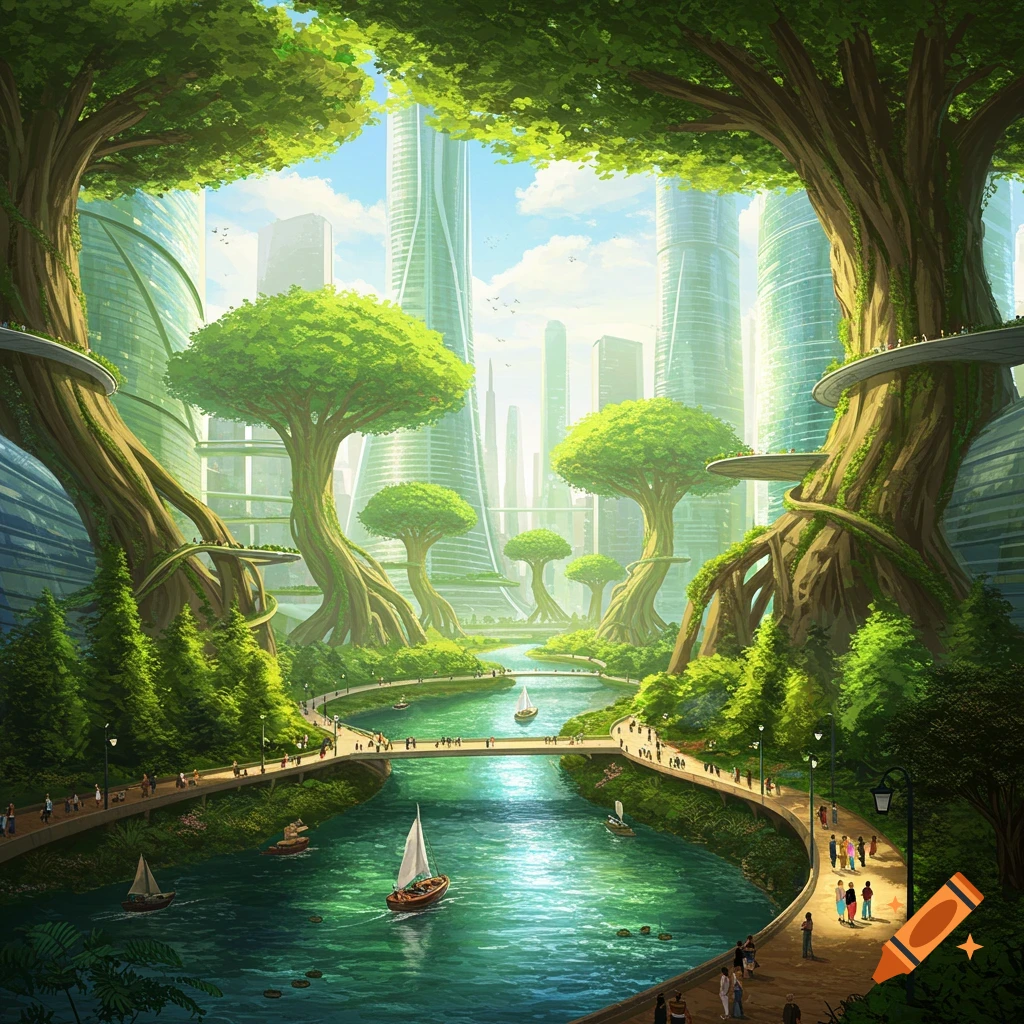
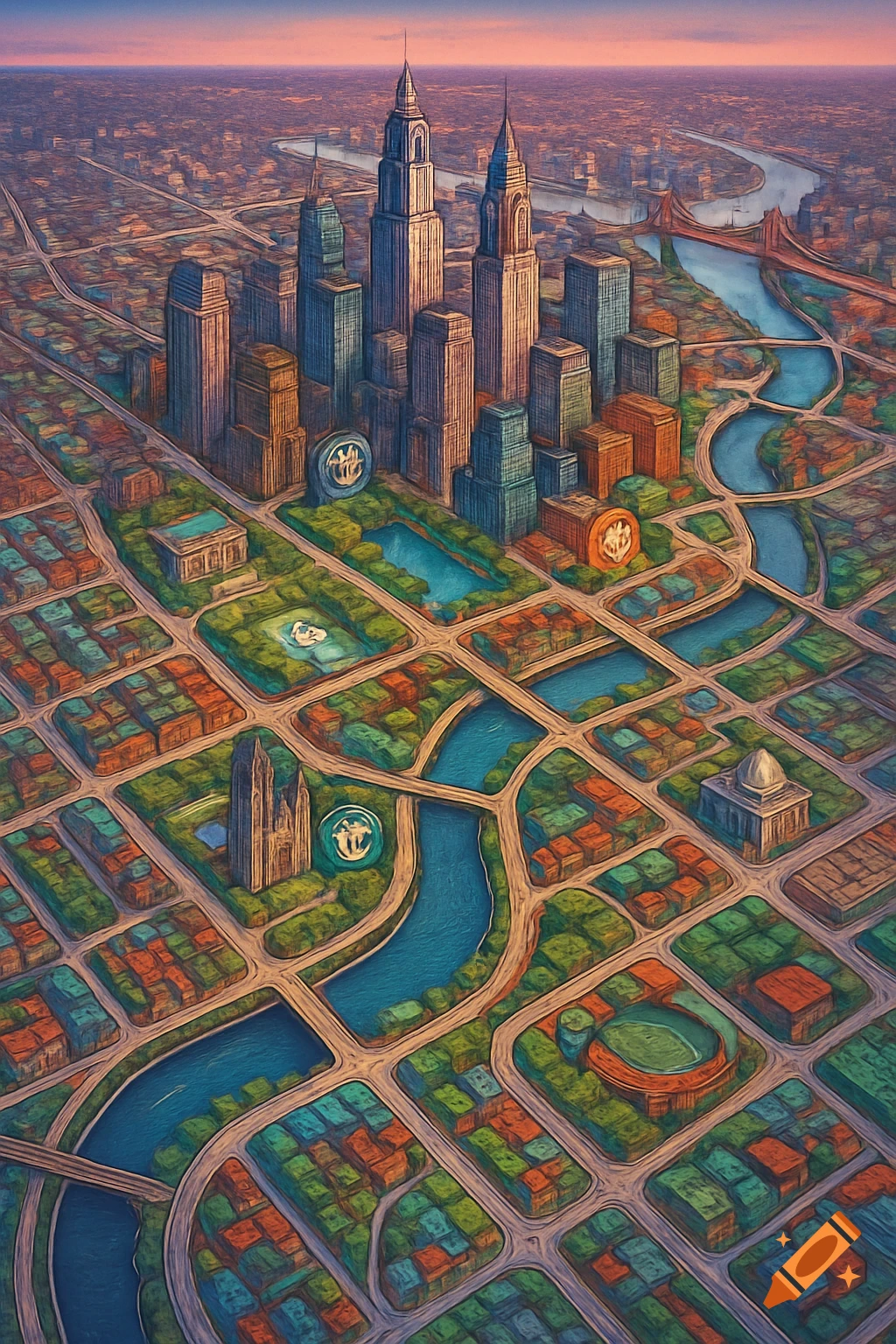
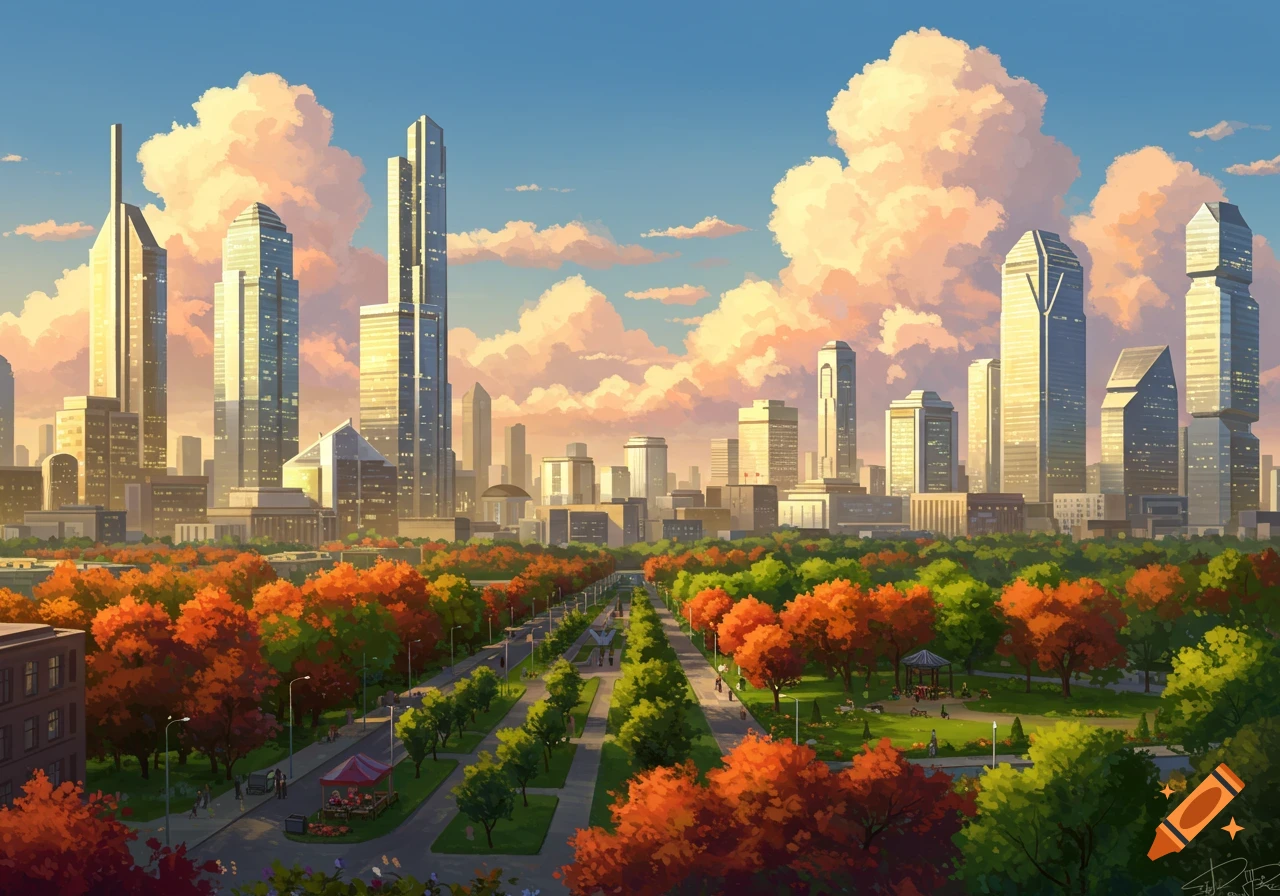
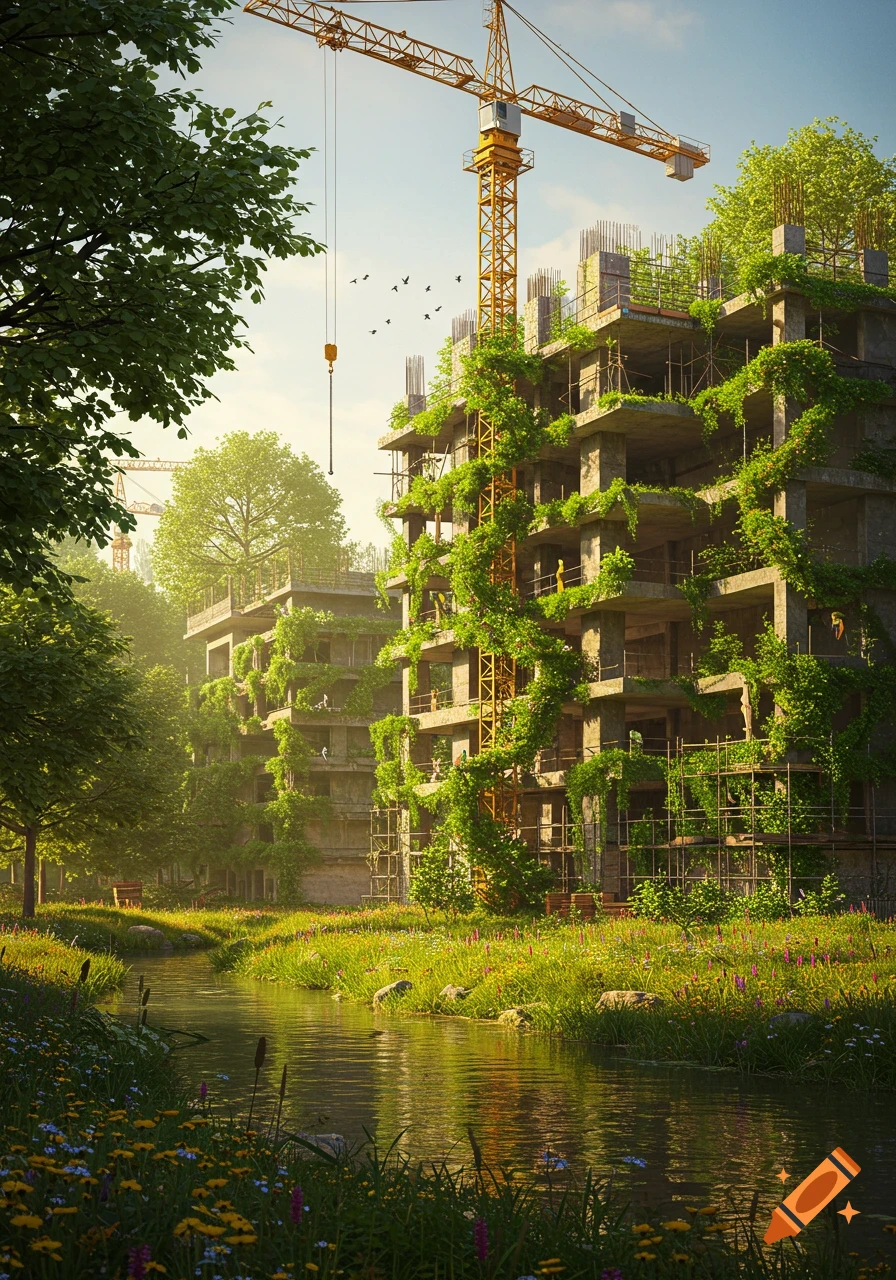
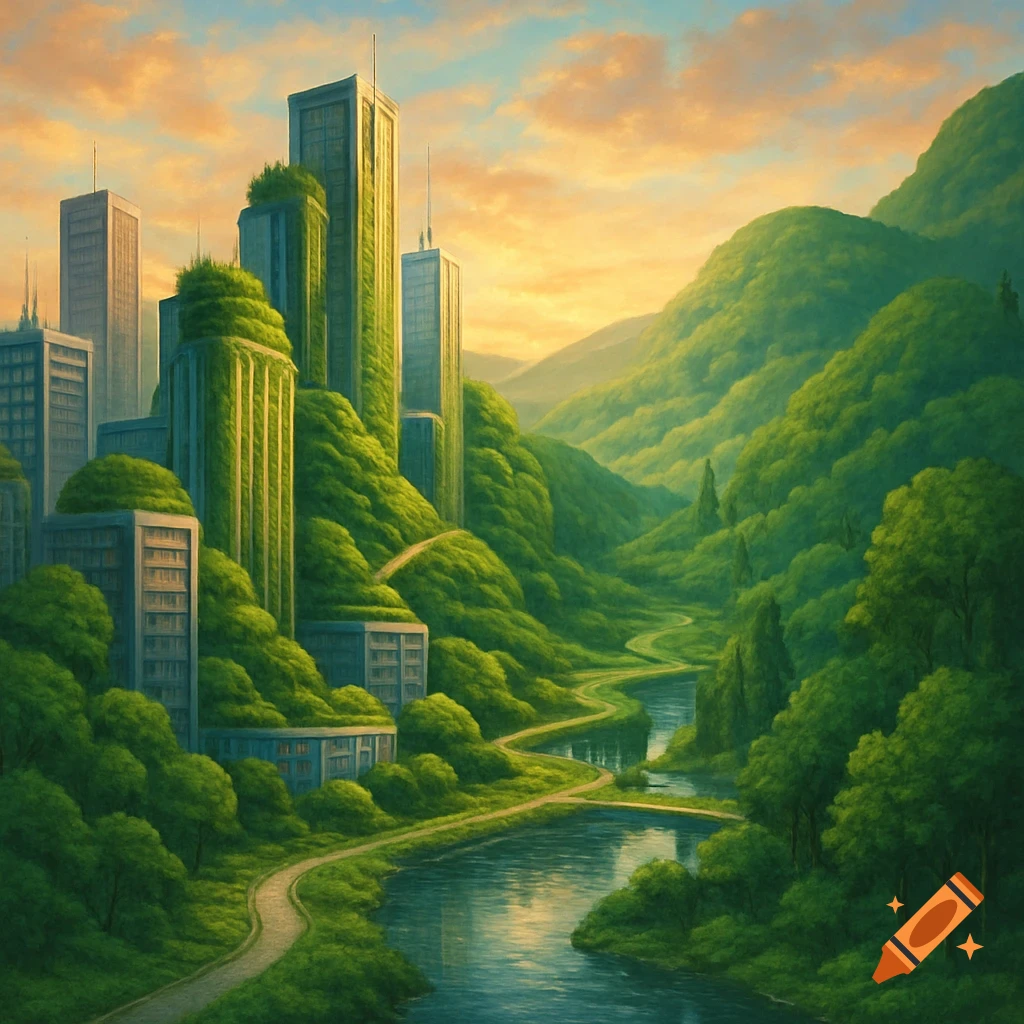
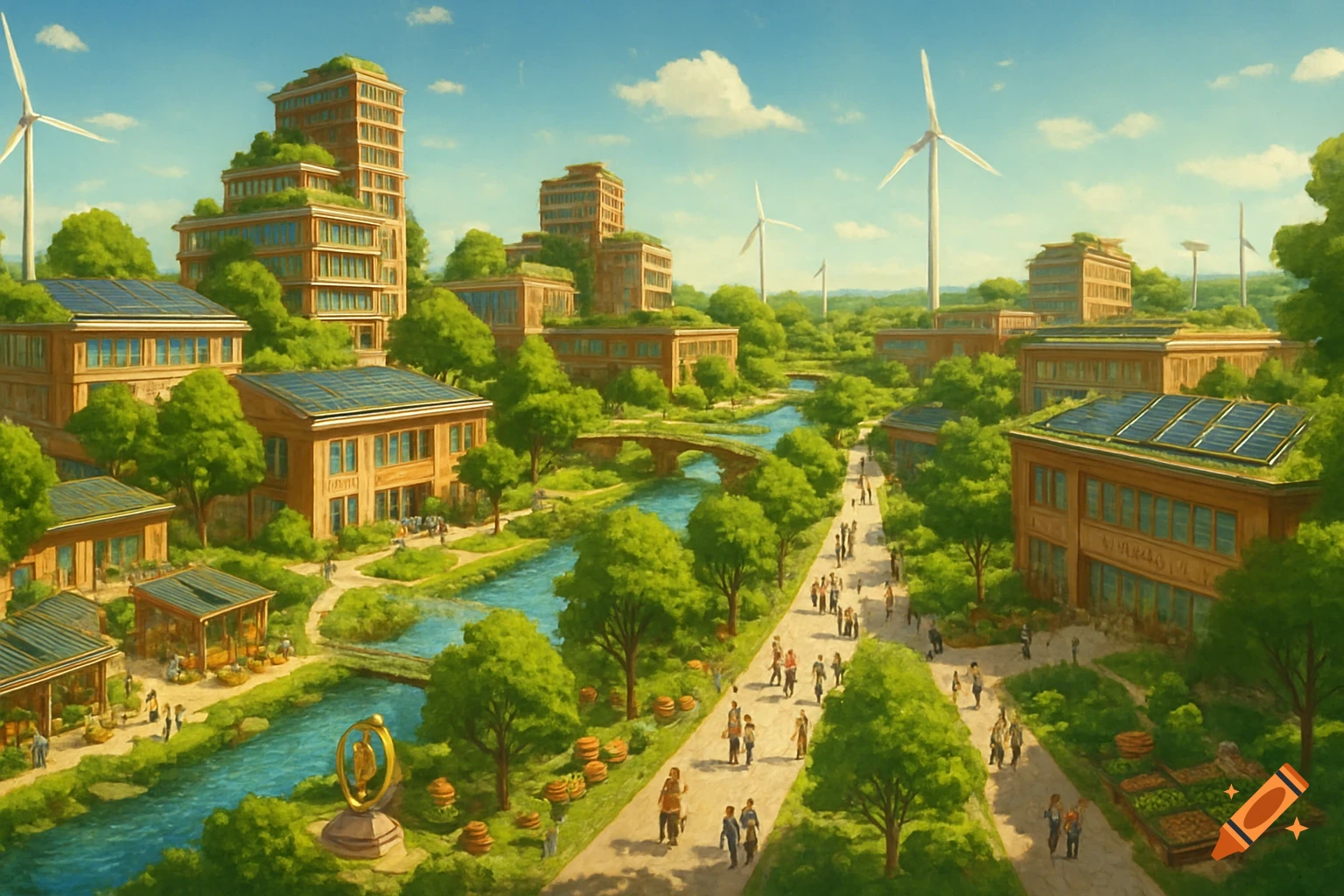
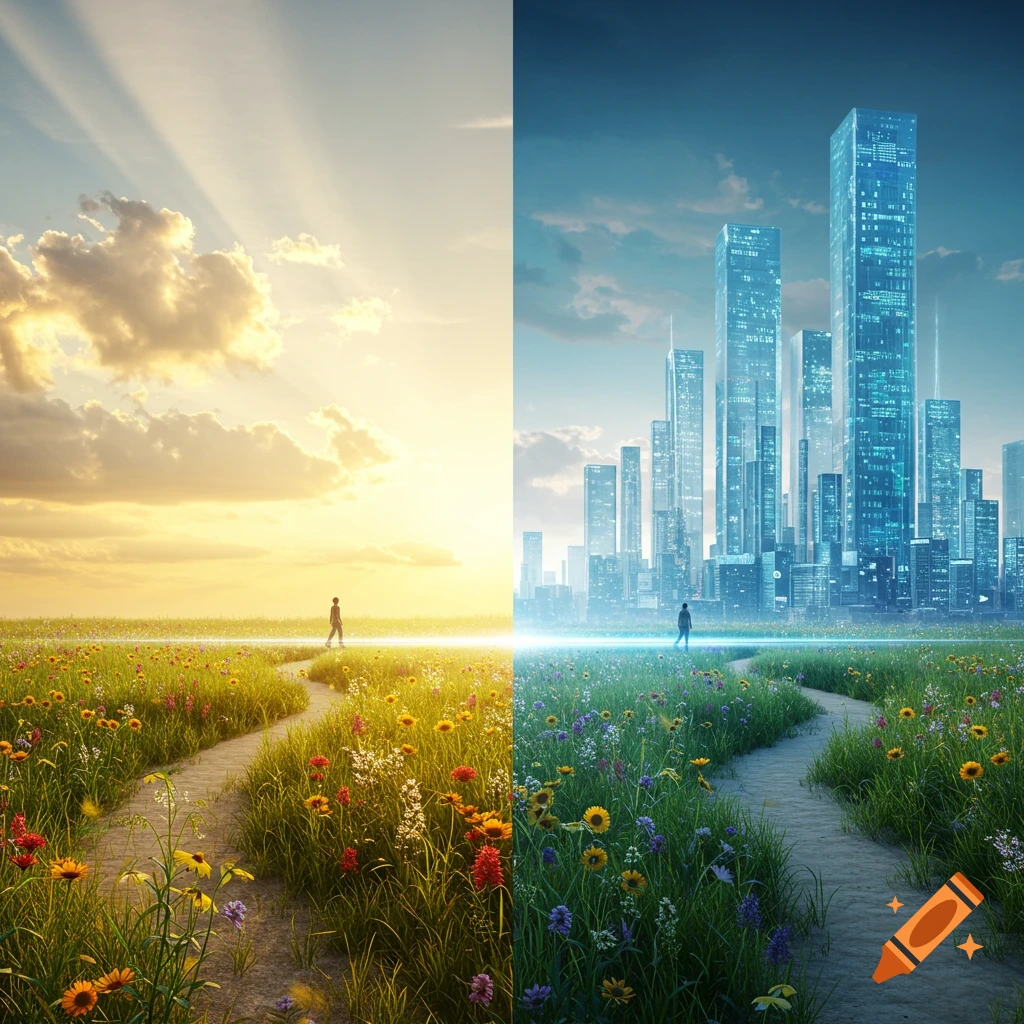
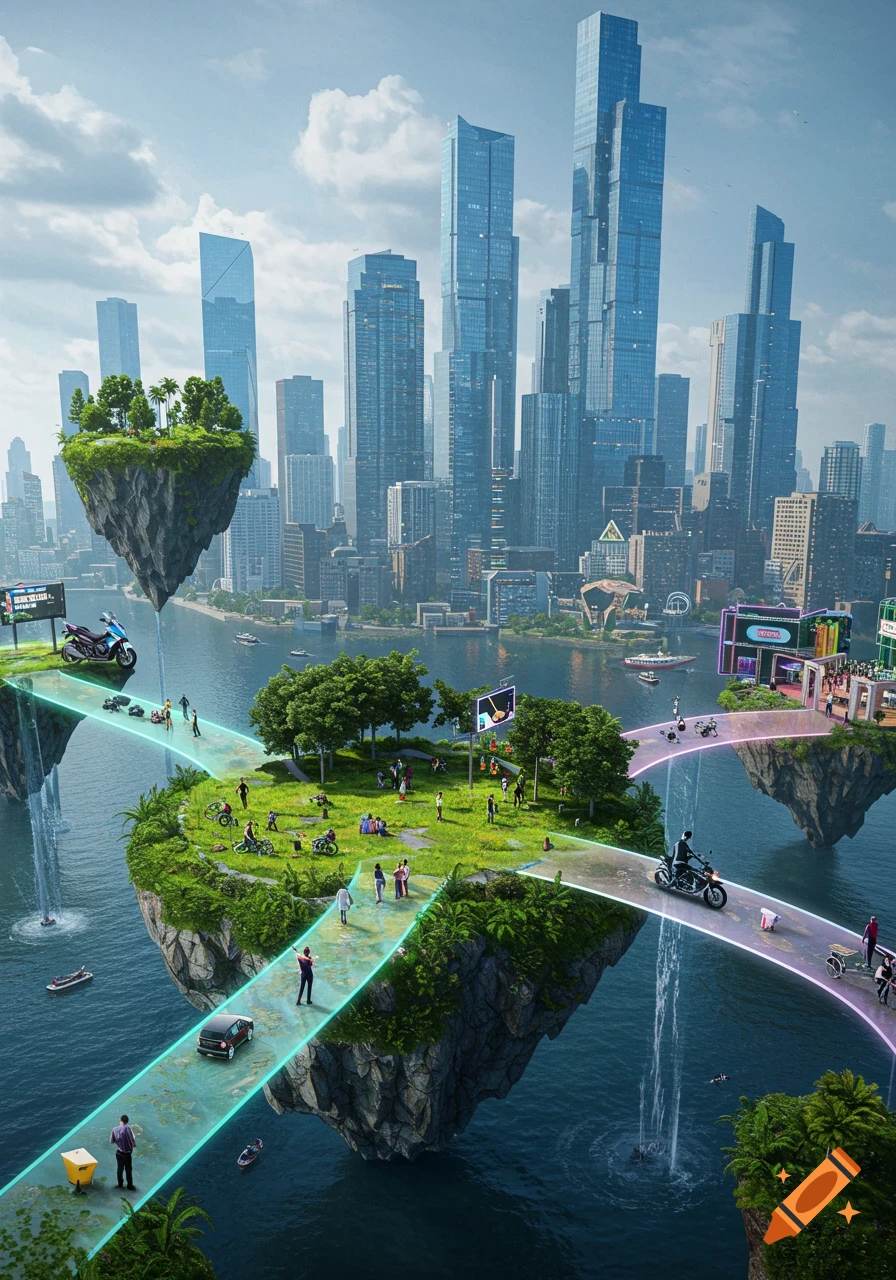
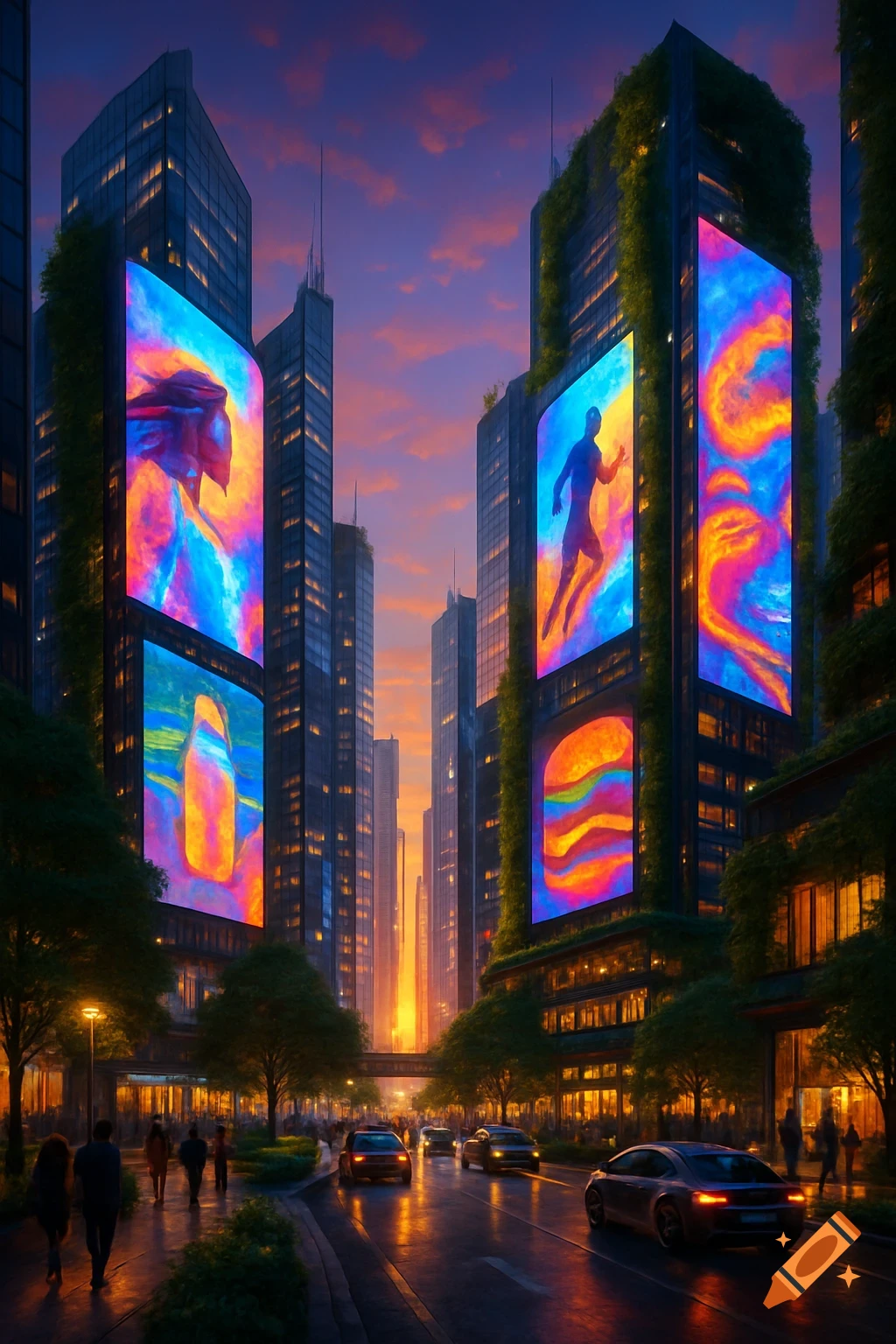
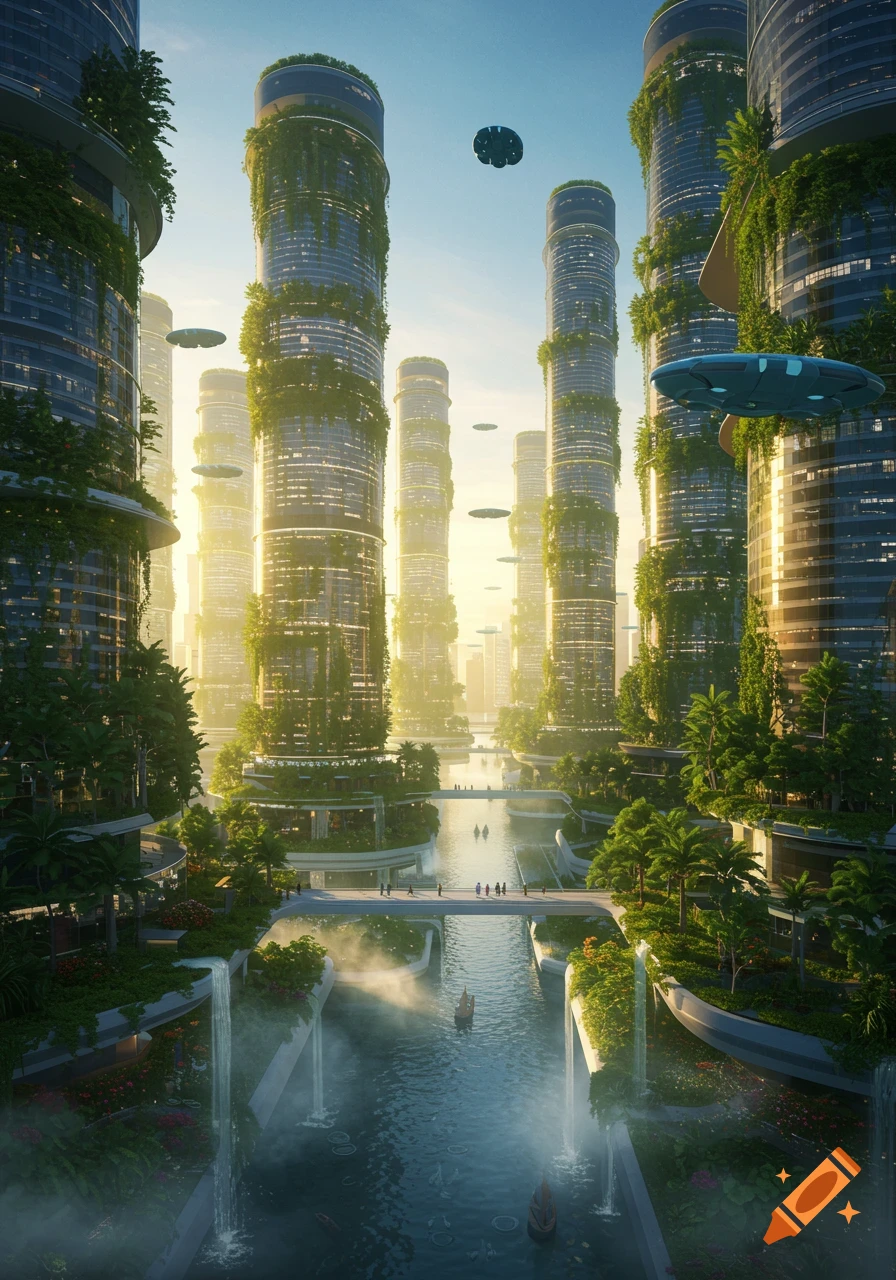
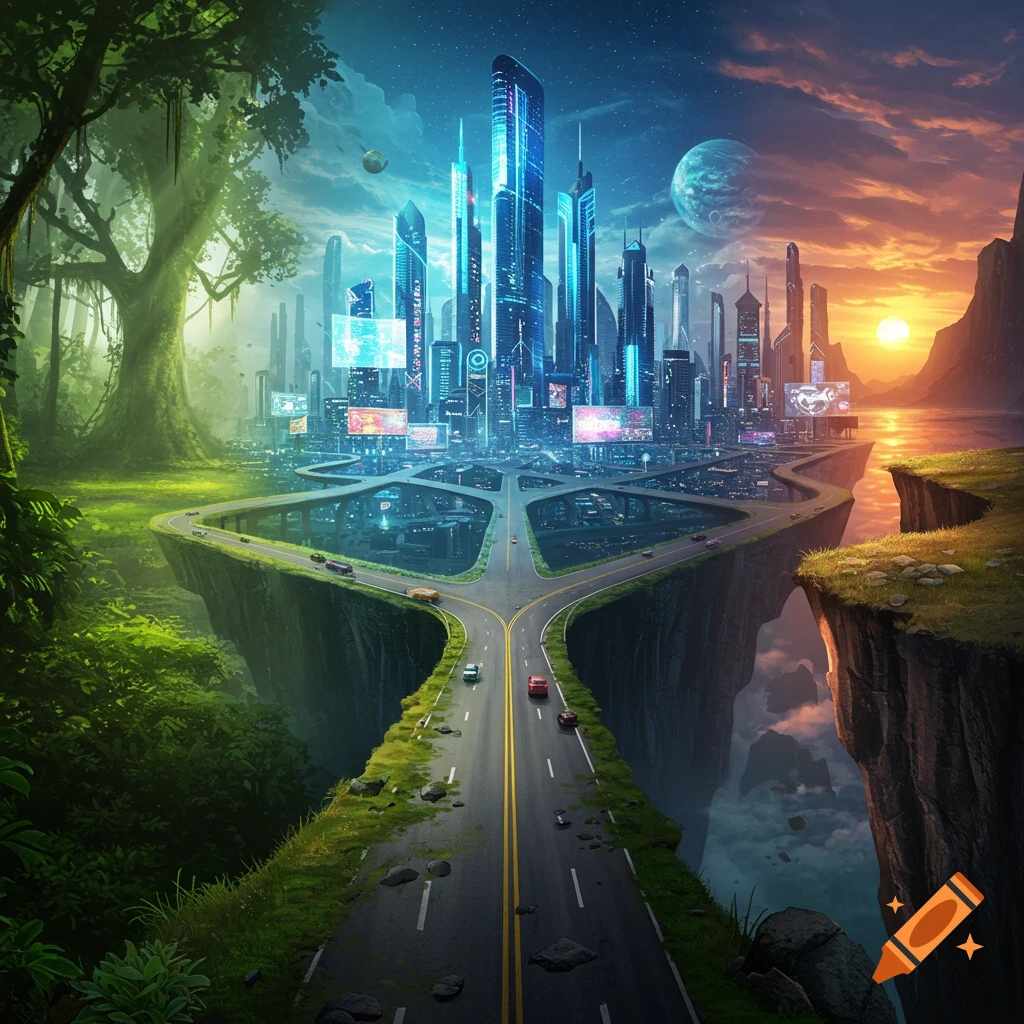
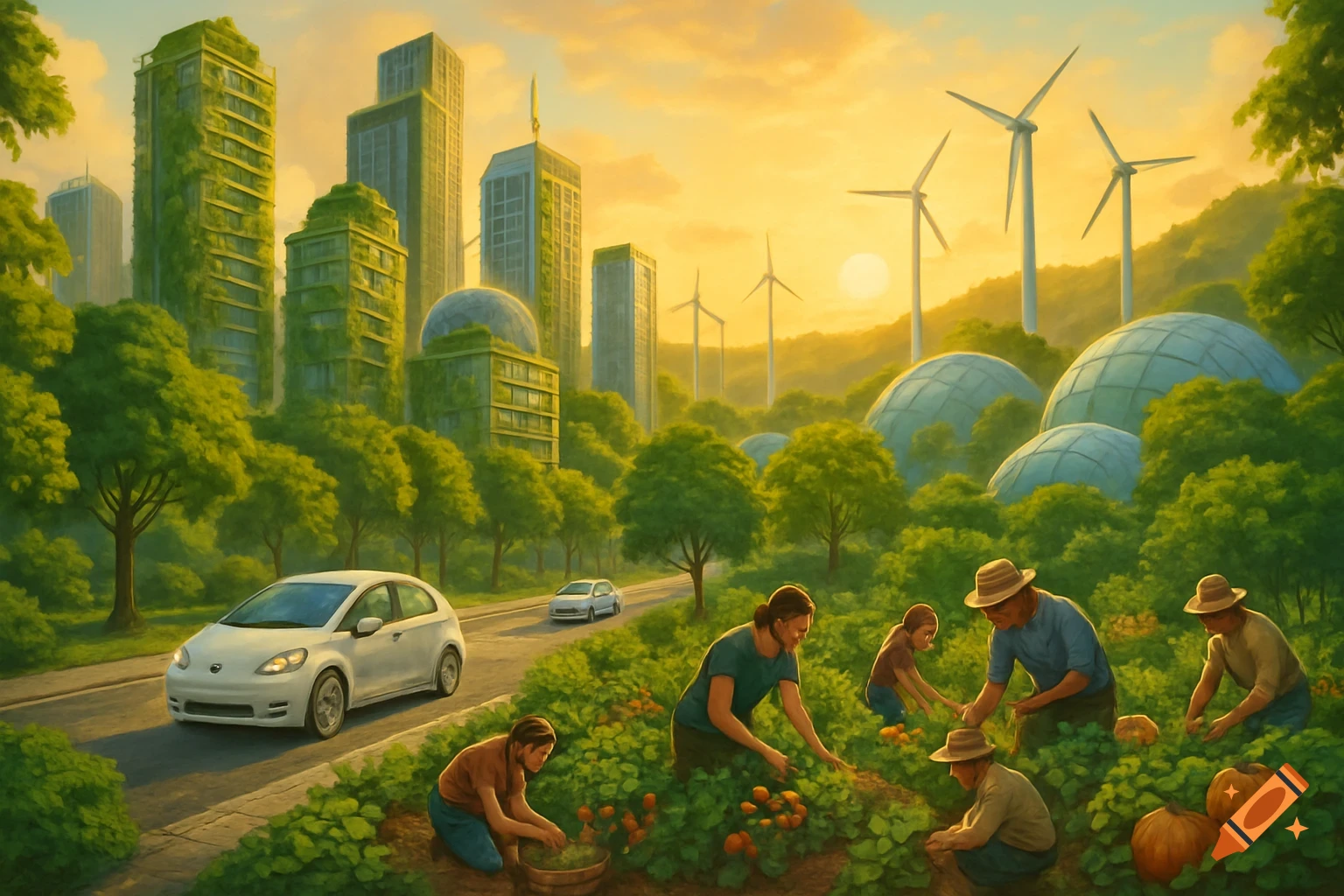
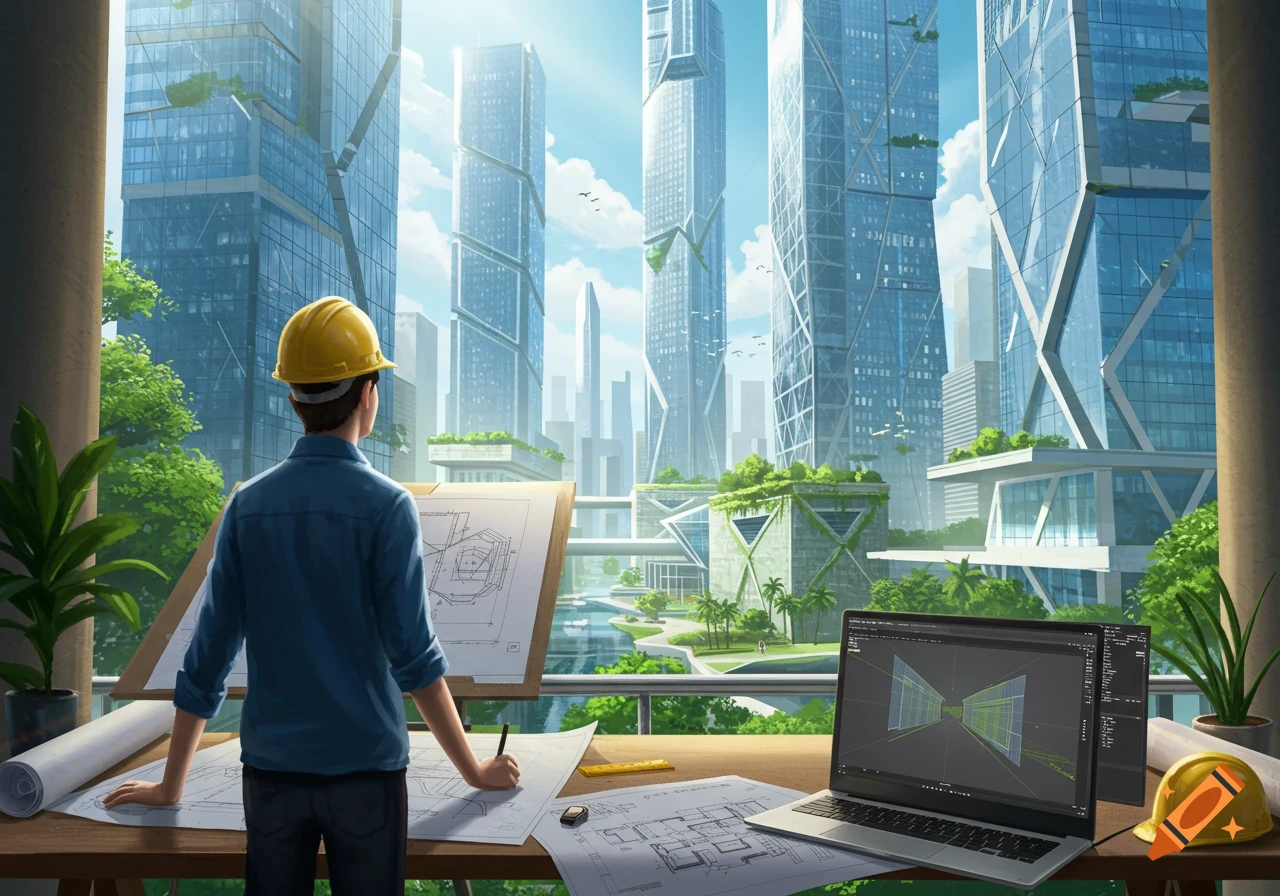
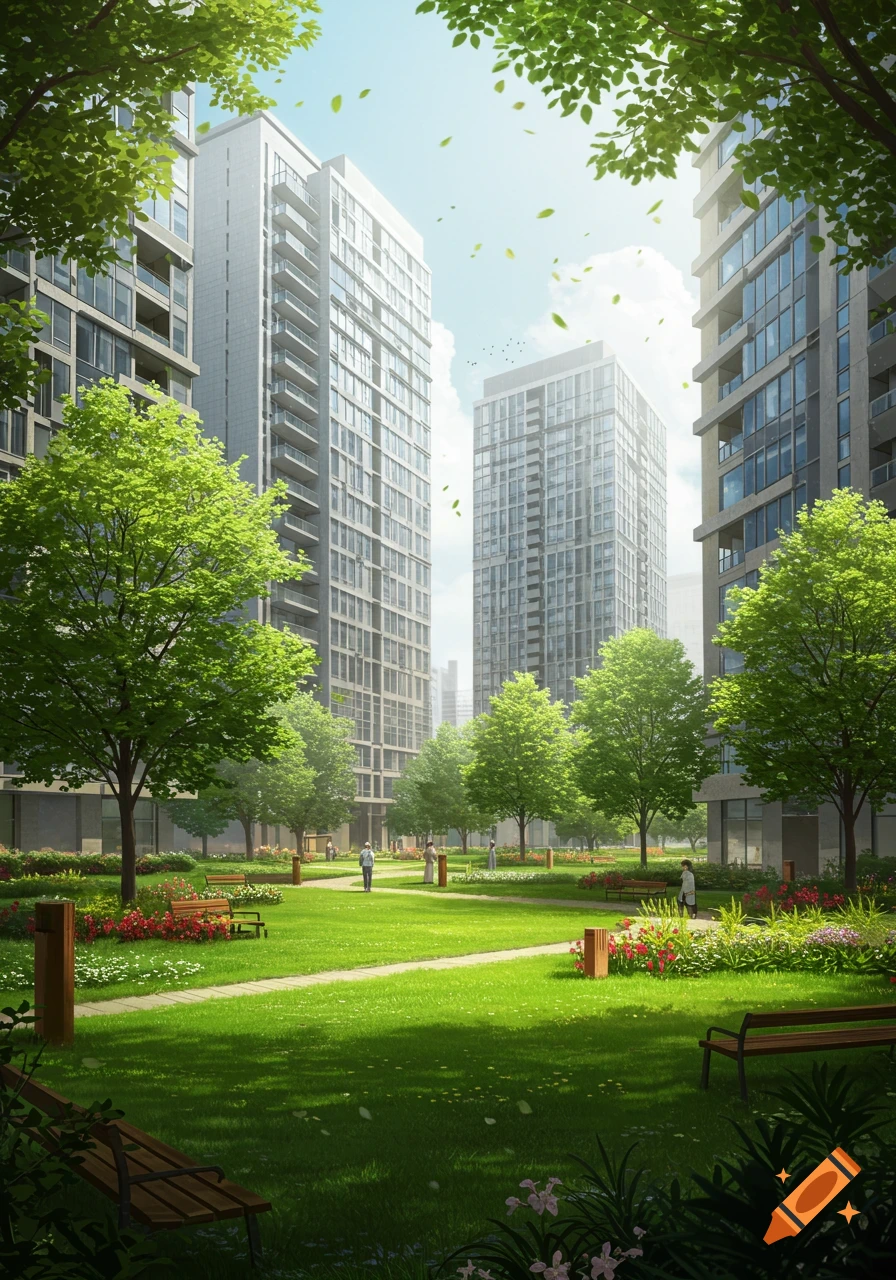
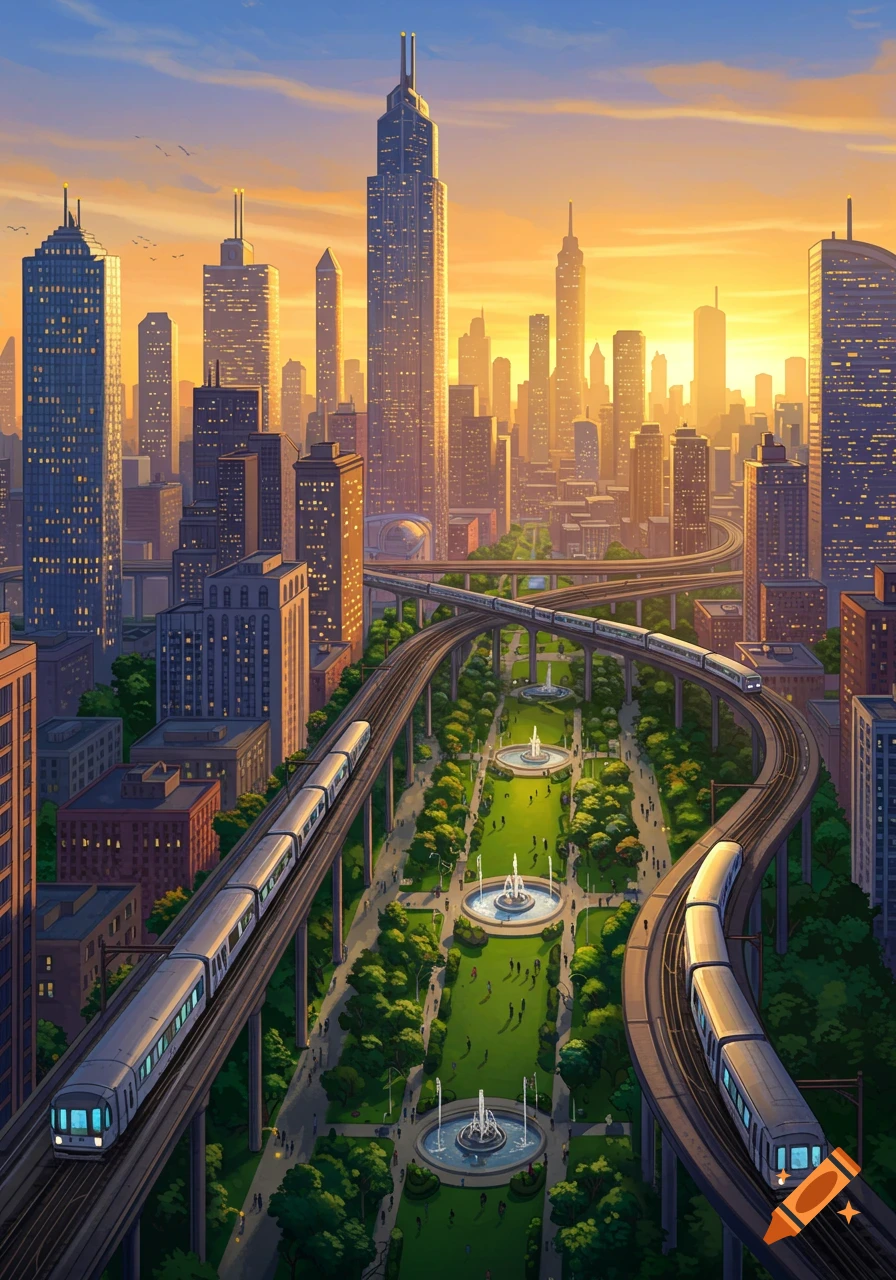
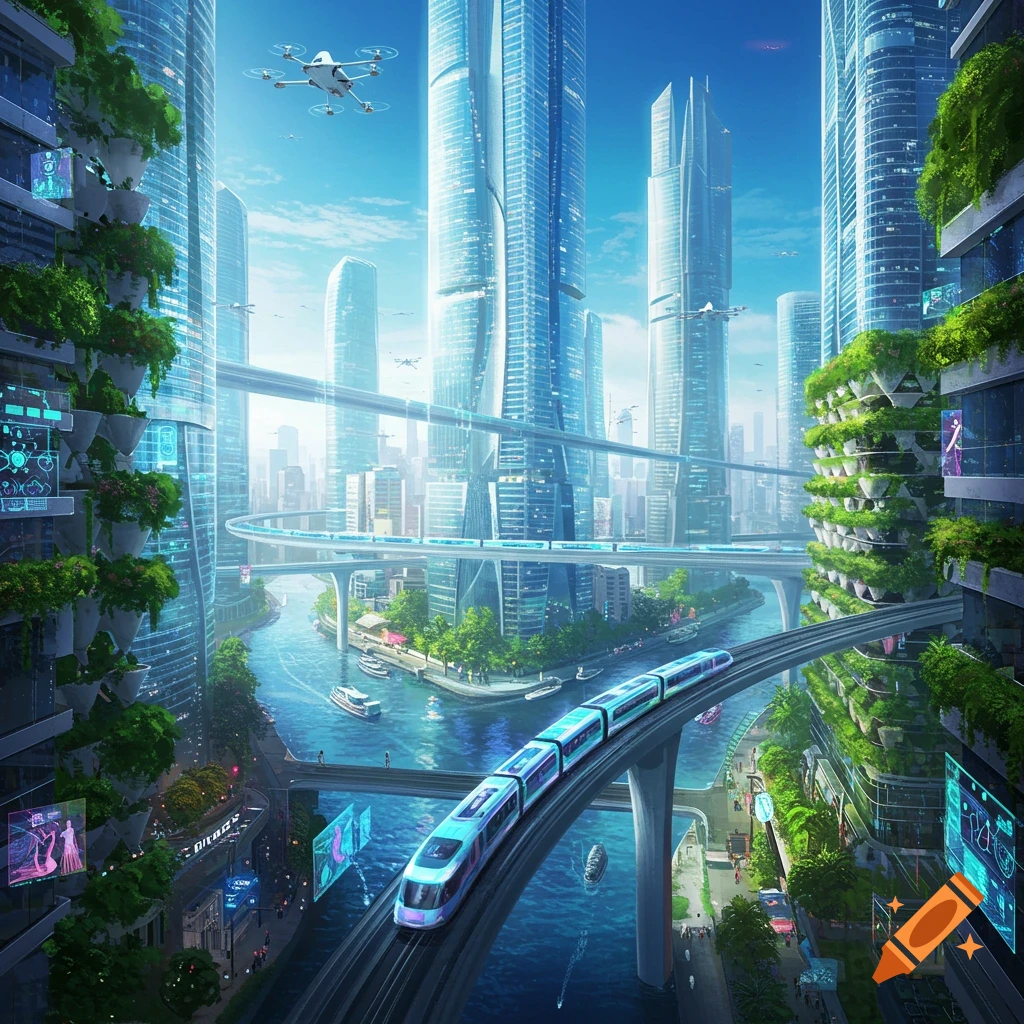
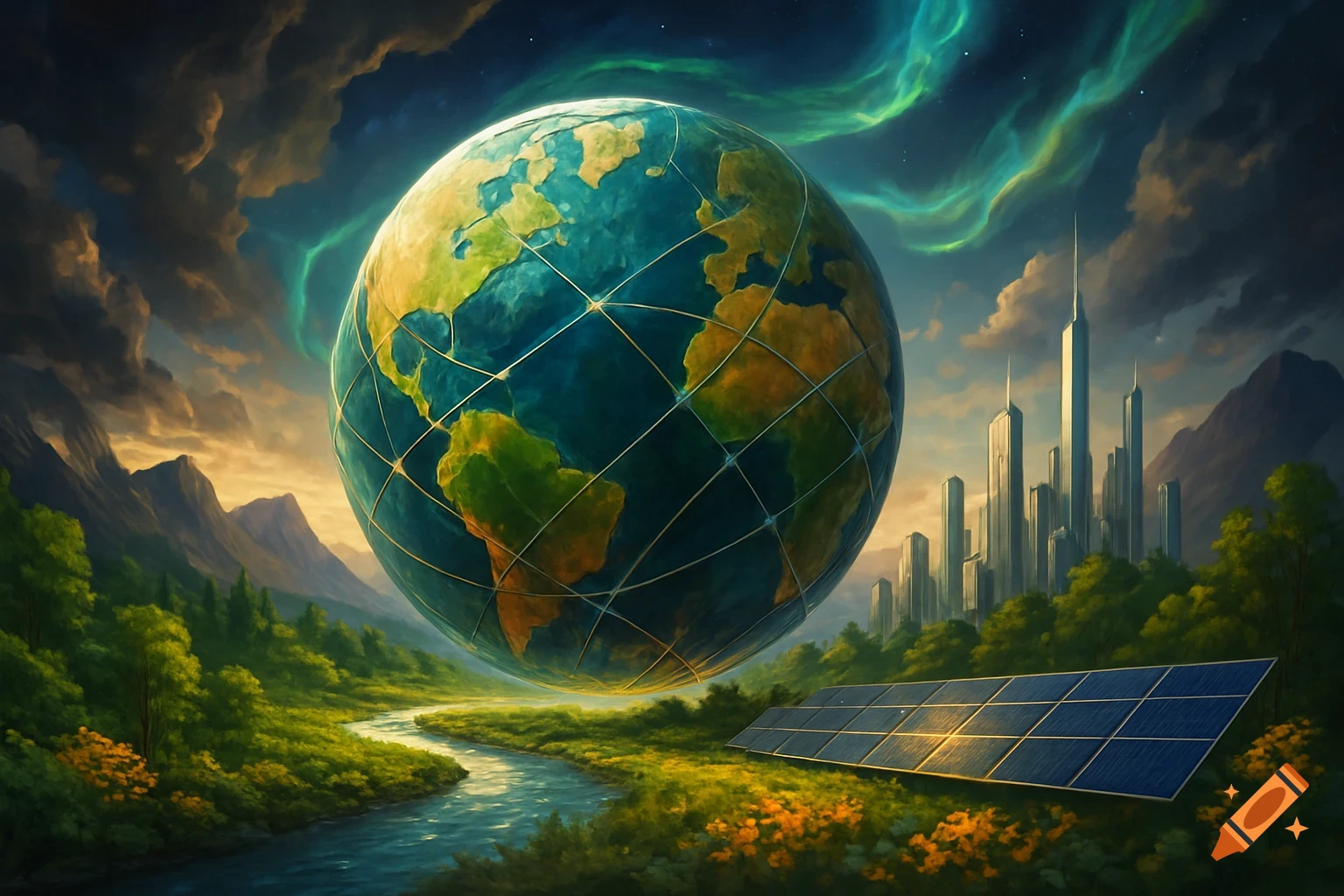
Painterly eco-city at sunset with green buildings, solar panels, a river, bridges, a heron, and a fox-like animal.
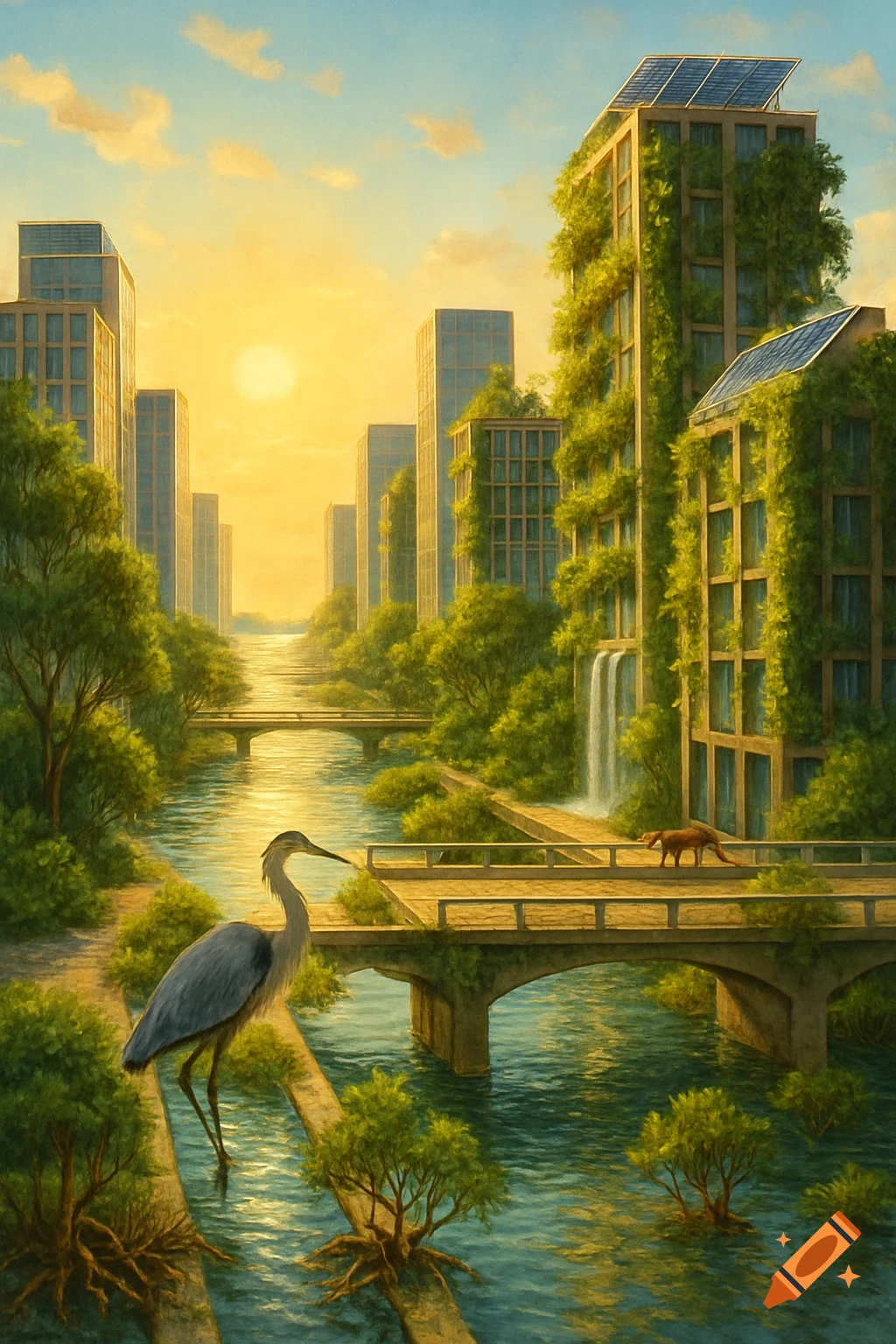
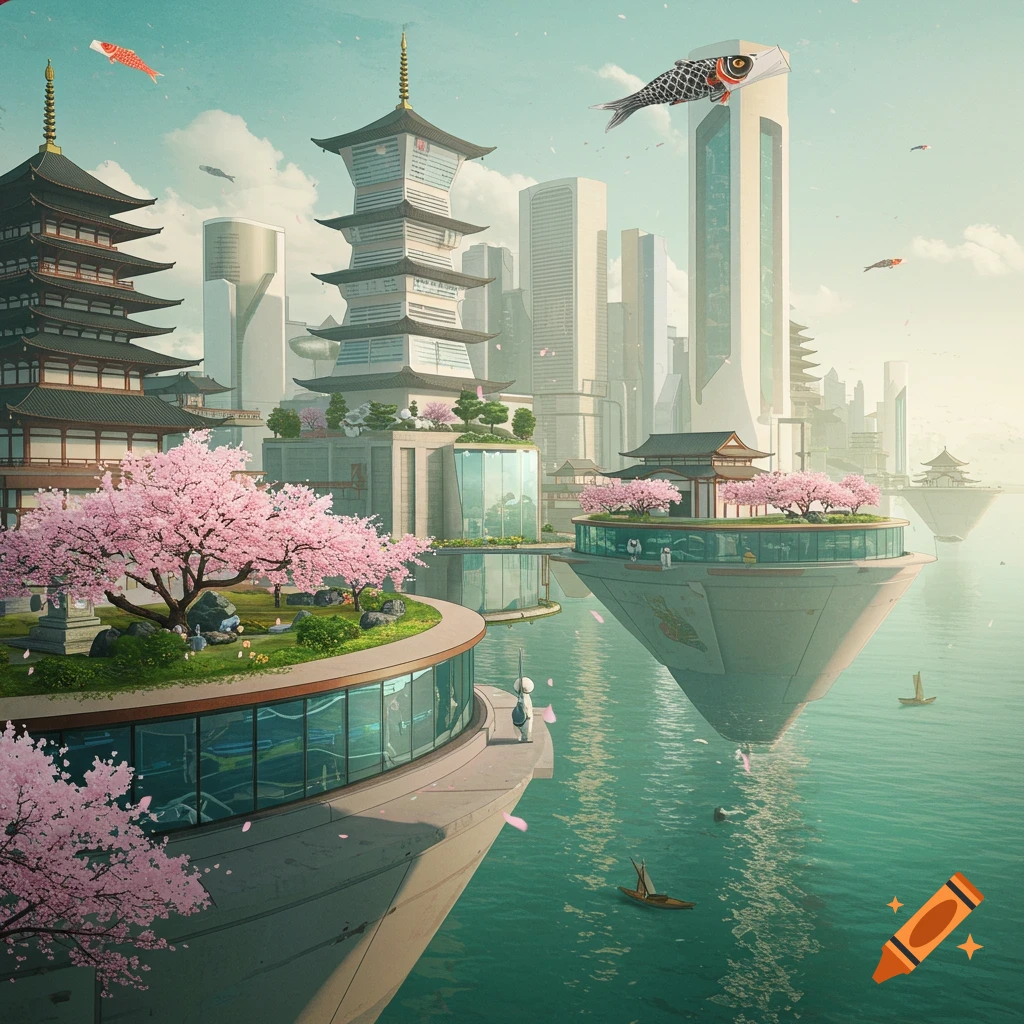
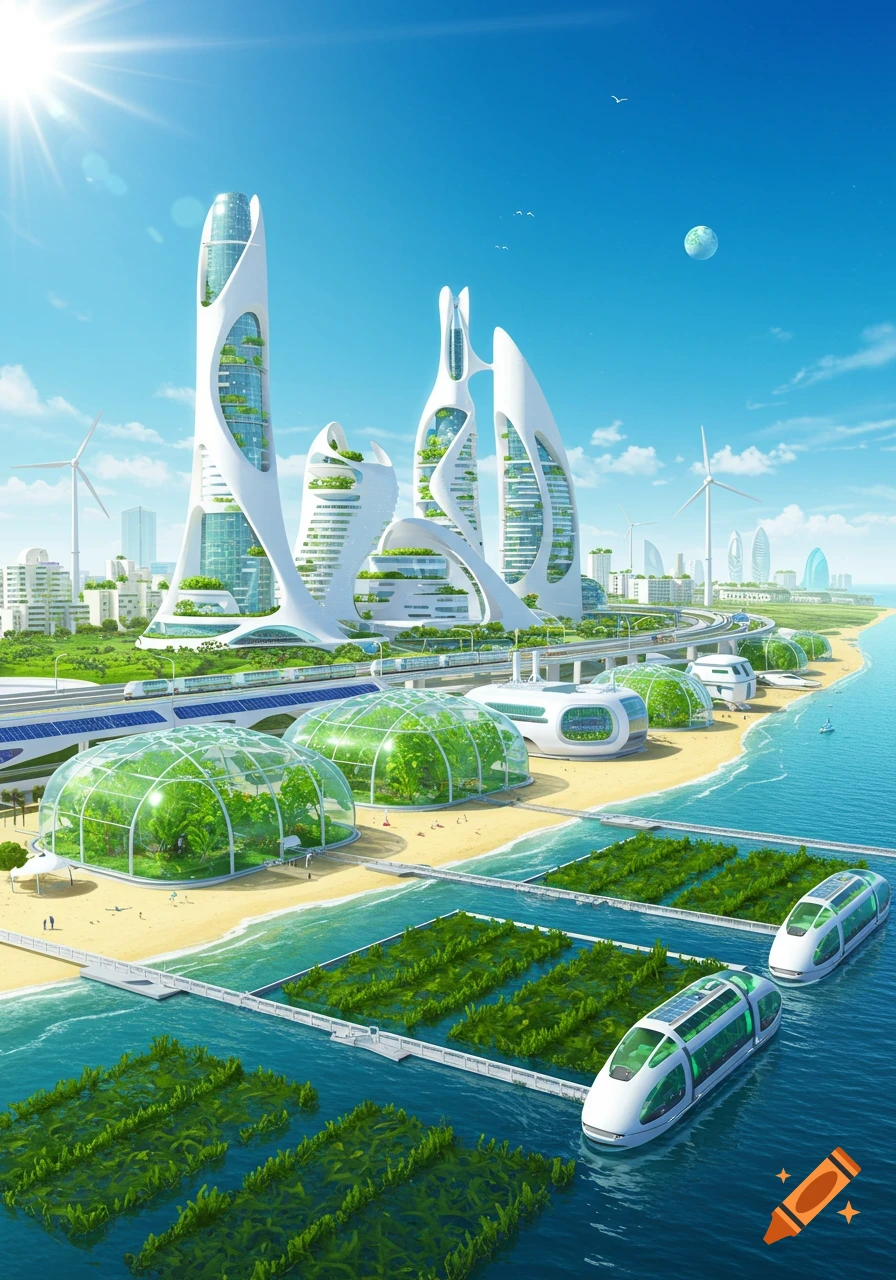
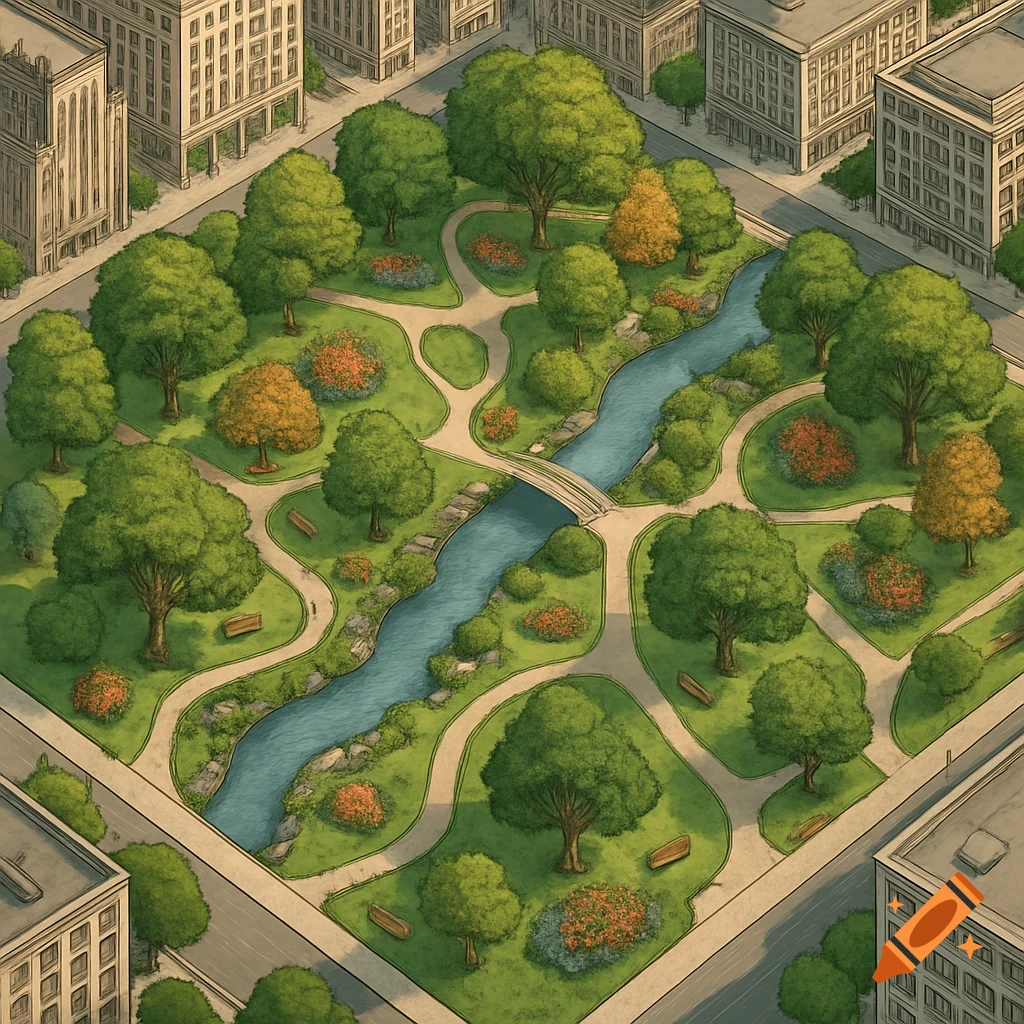
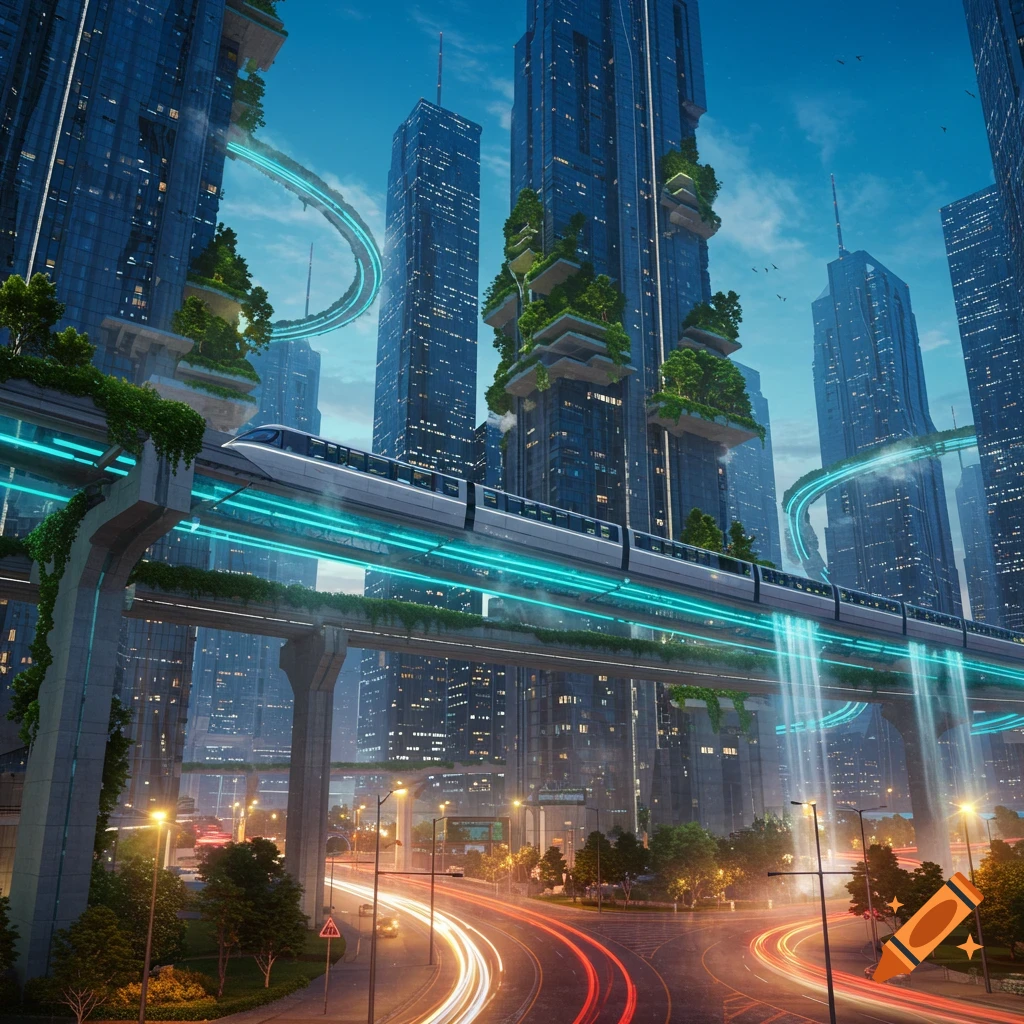
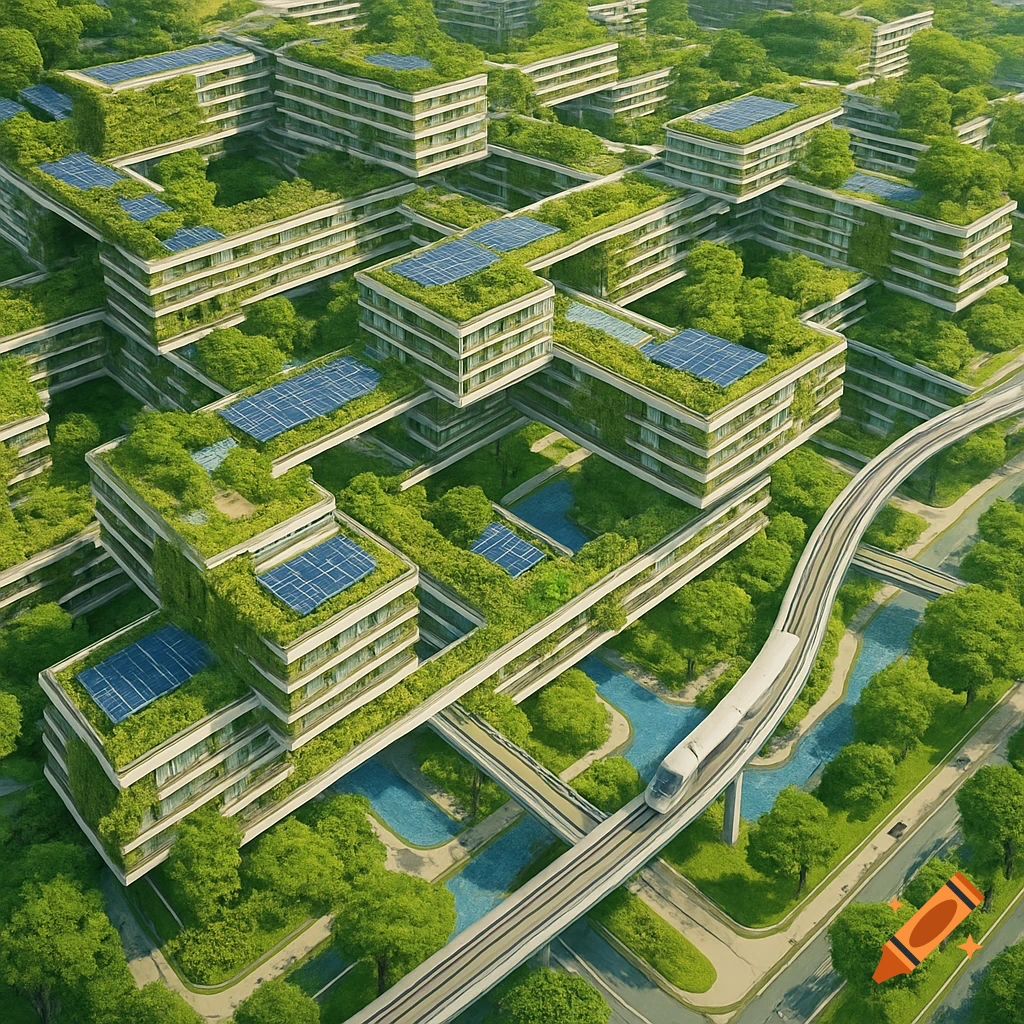
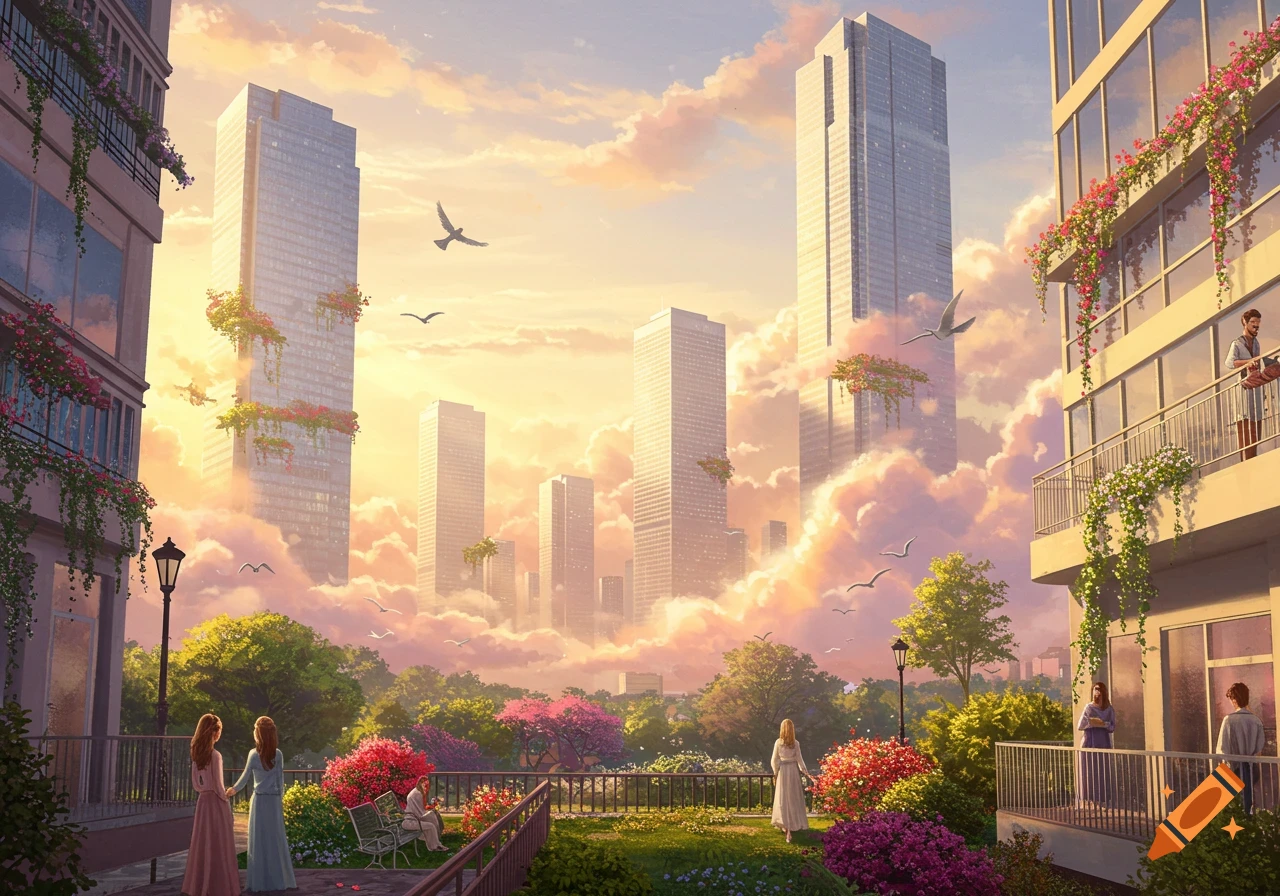
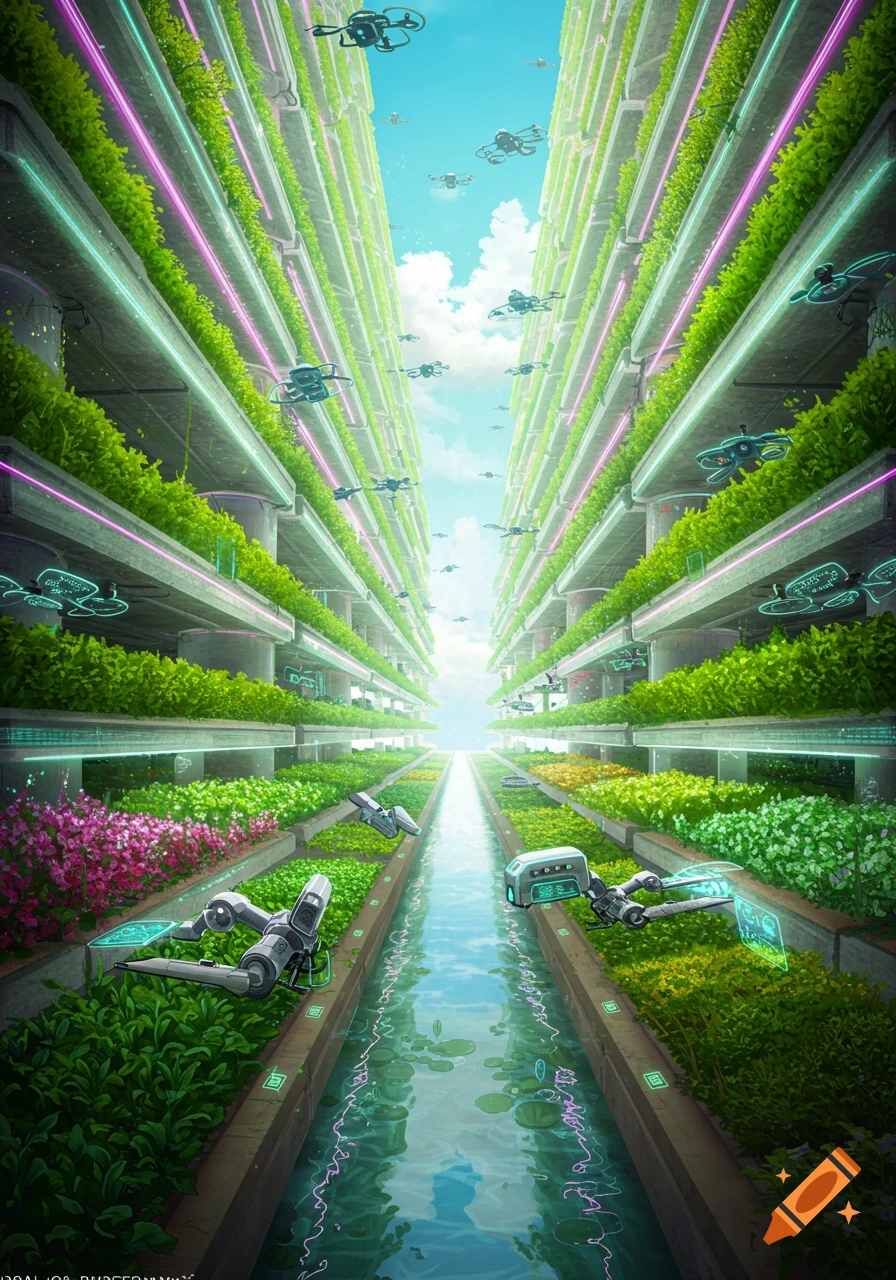
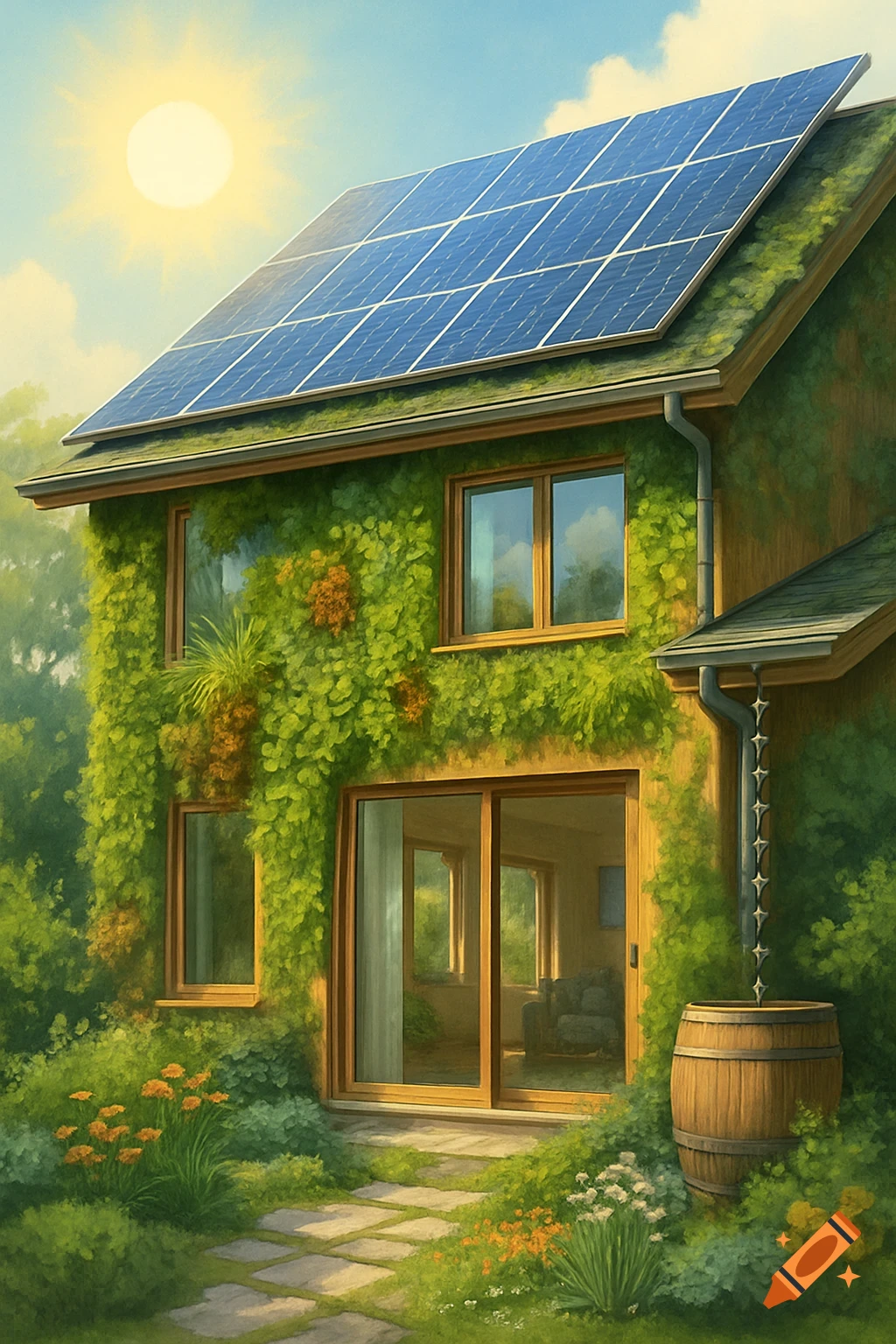
c) The projected temperature increase for the period 2020–2039 ranges from 0.5°C to 1.3°C, regardless of the emissions scenario. This trend is expected to continue through the 21st century d-f) Large amounts of the neighbourhood will be at risk to flooding or underwater under expected sea level increases. This will result in a complete change to daily life for local plants, wildlife and people. Large resettlements will likely need to occur to house the displaced people. However, there will not be any risk of wildfire! Coastal flooding within Elwood would result in property and infrastructure damage, impacting both public spaces and private housing. Value of property within the area will decrease due to the risk of floods Step 3: Visualise People have embraced climate-resilient practices, with solar panels on homes, rainwater collection systems, and energy efficient buildings to cope with the hotter summers and rising sea levels. AC will have become a standard within buildings and homes. Salt resistant plants such as eucalyptus or mangroves would thrive in this environment compared to other plants with lower resistance due to the increase in sea level, causing an increase in eucalyptus present within the area. Rather than gardens on the floor, vertical gardens would become more common in order to prevent the sea water from touching them. Land animals would migrate to higher levels such as the top of buildings or public spaces away from the coast in order to avoid the sea See more