Vintage movie theater marquee illuminated at dusk with the text 'I Don't Want to Set the World on Fire' above movie posters.
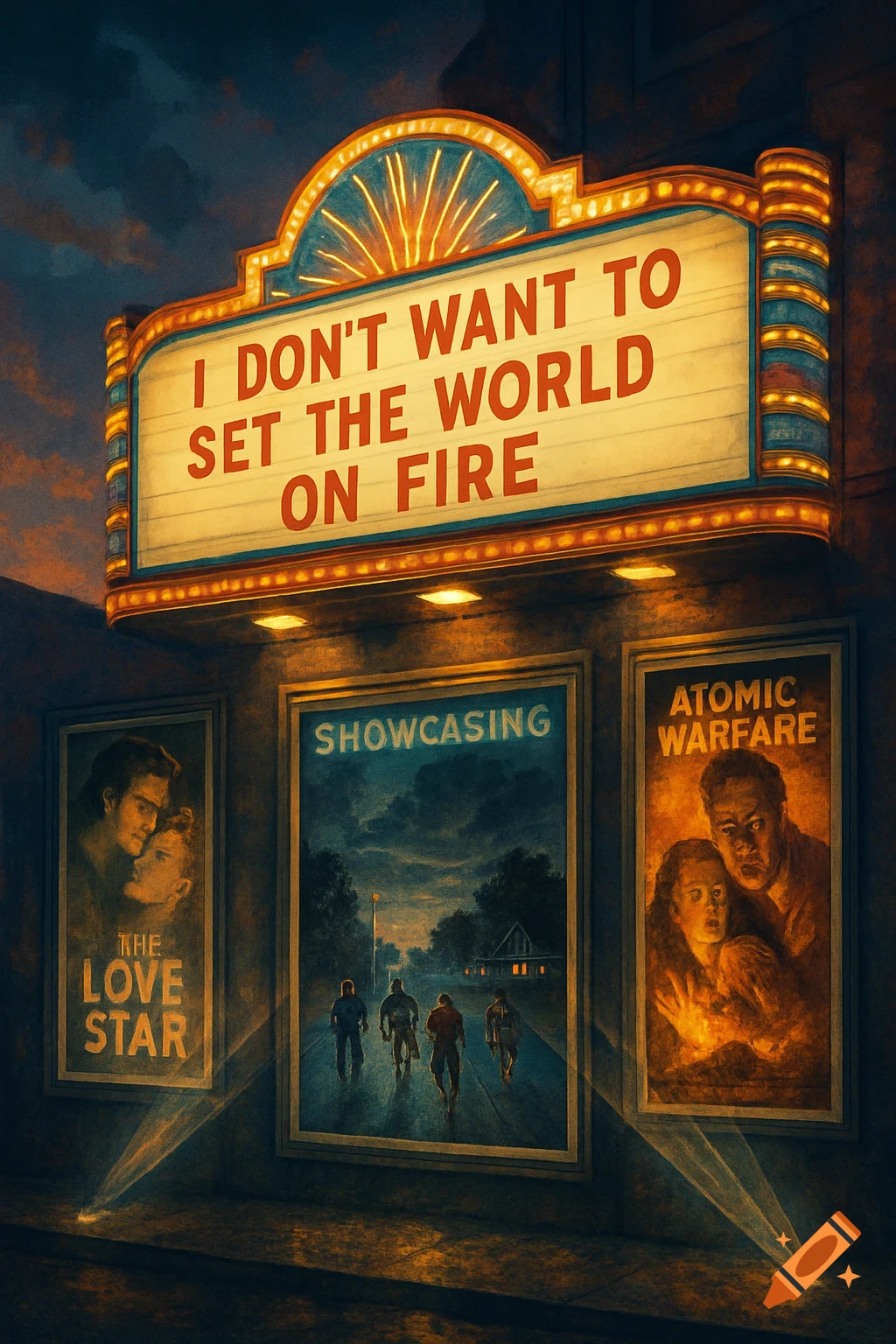
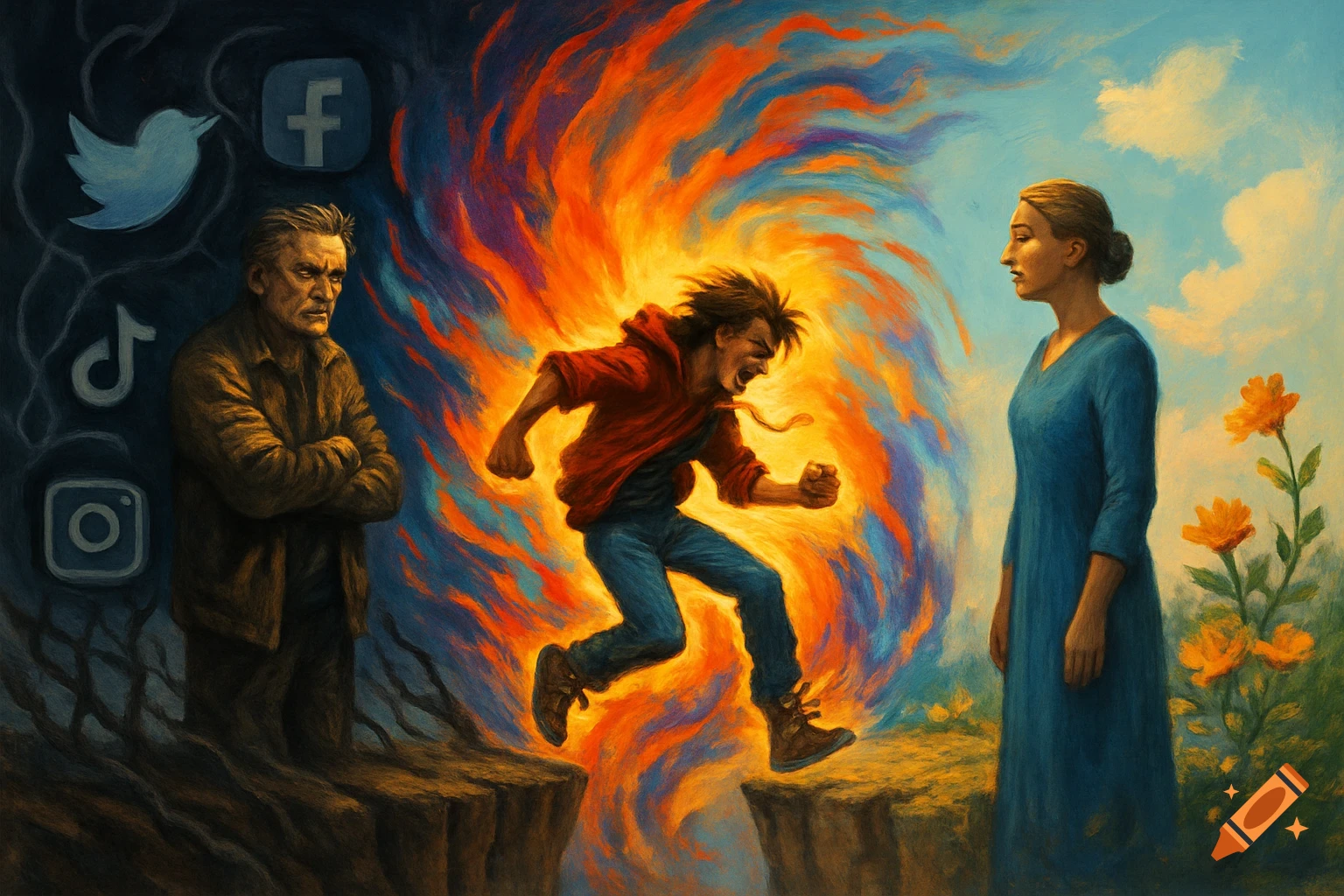
create an image for this prompt 🔥 “I Don’t Want to Set the World on Fire”: The Hidden Politics of Nostalgia in Modern Film Scoring I have been rewatching Stranger Things over the past month with my daughter. As we watched Season 3 Episode 3, “The Case Of the Missing Lifeguard,” the finale has this moment where Billy Hargrove and the newly-Flayed Heather Holloway recruit Heather’s unsuspecting parents. A song plays — it’s “American Pie” by Don McClean. My daughter turned and said: “Isn’t it weird how you always hear some old random song playing as some violent or horrific scene unfolds?” She was referencing an-empathetic music, a scoring technique first defined by film theorist Michel Chion, where the music’s mood — often cheerful or serene — stands in direct contrast to the scene you’re seeing onscreen. Think of Mr. Blonde’s torture dance to Stealers Wheel’s “Stuck in the Middle with You” in Reservoir Dogs, or the use of Chic’s “Good Times” in Jordan Peele’s Us. An-empathetic music has become part of modern film language a kind of shorthand for moral chaos and psychological fracture. 🧐 The Nostalgia Pattern Something I have noticed and this is just me speculating here is the increased use of a specific kind of nostalgic song, especially in American-made films and TV shows. I’m thinking of songs like: Patience and Prudence — “Tonight You Belong to Me” The Ink Spots — “I Don’t Want to Set the World on Fire” Tiny Tim — “Tiptoe Through the Tulips” These songs have a very See more