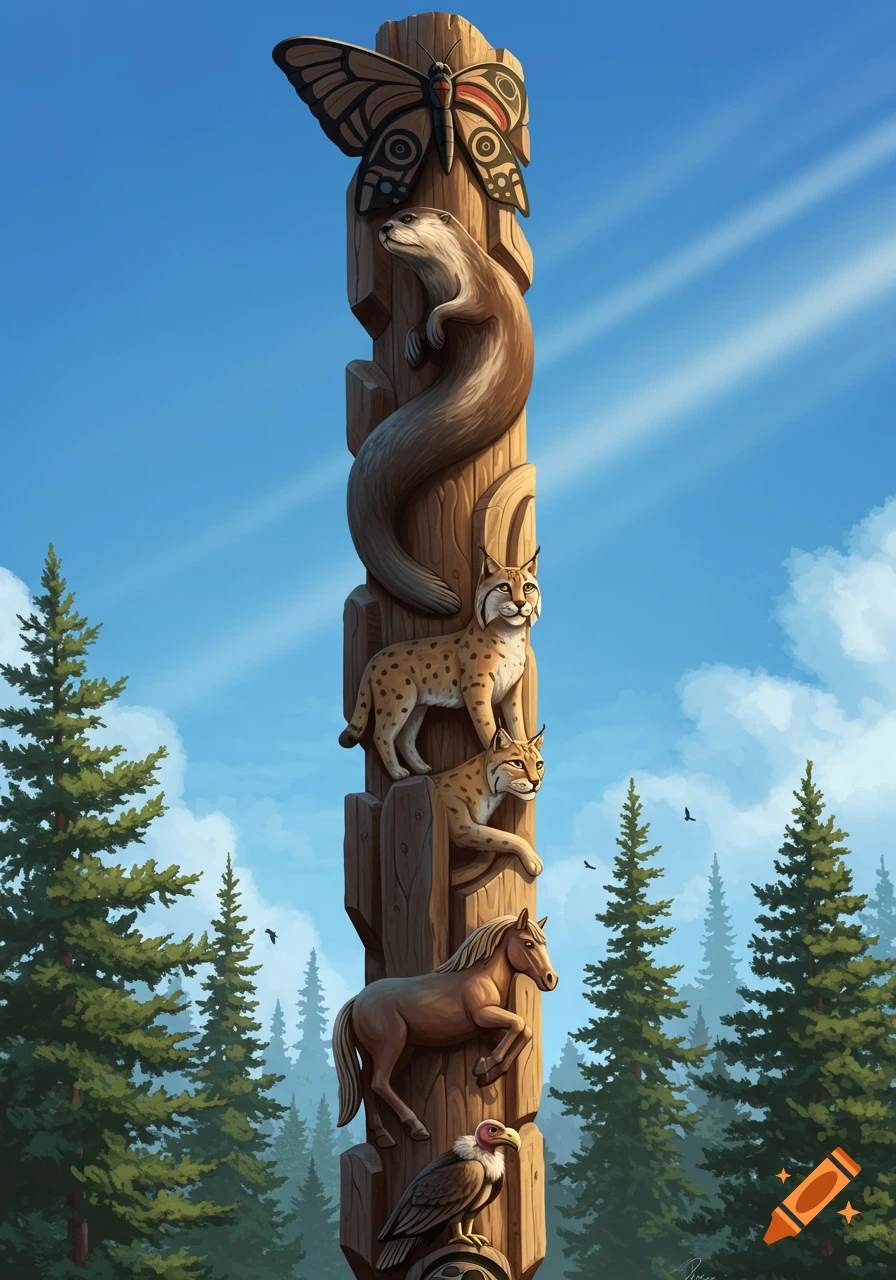
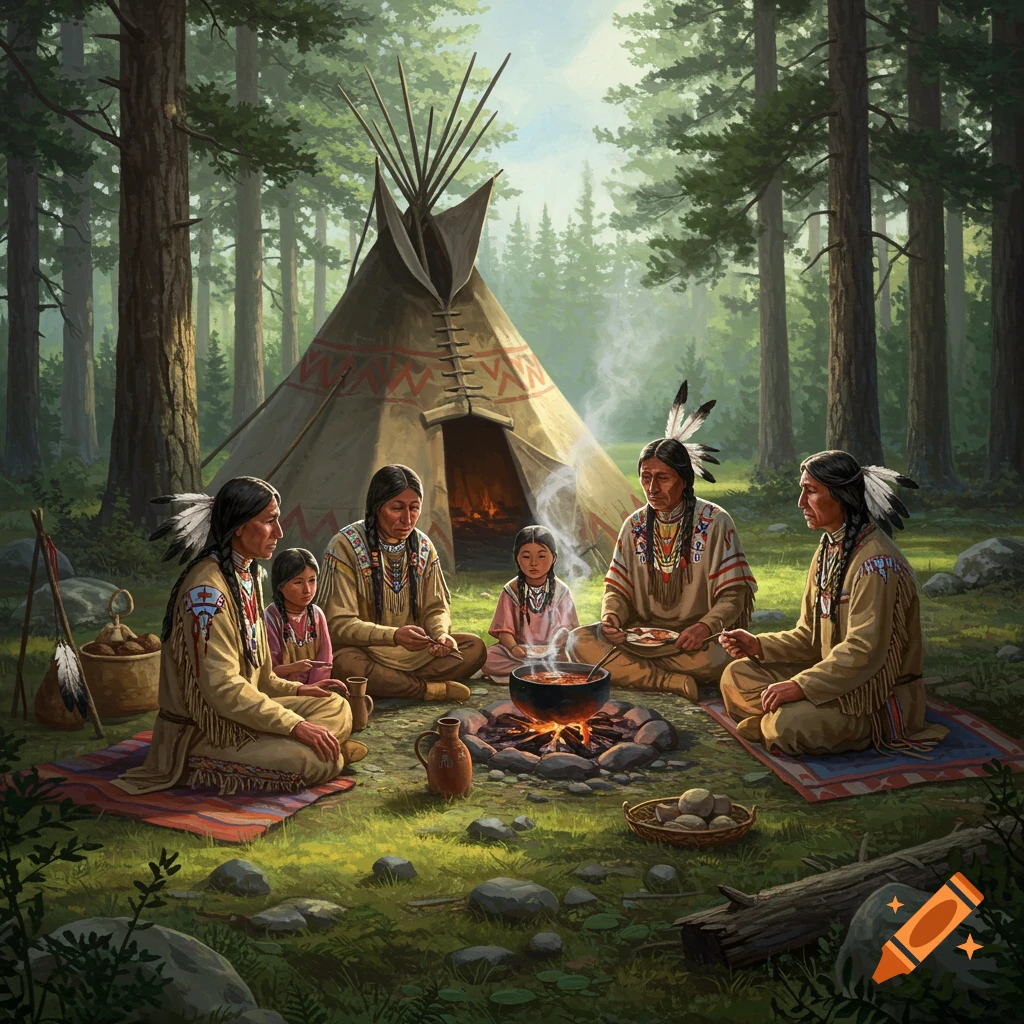
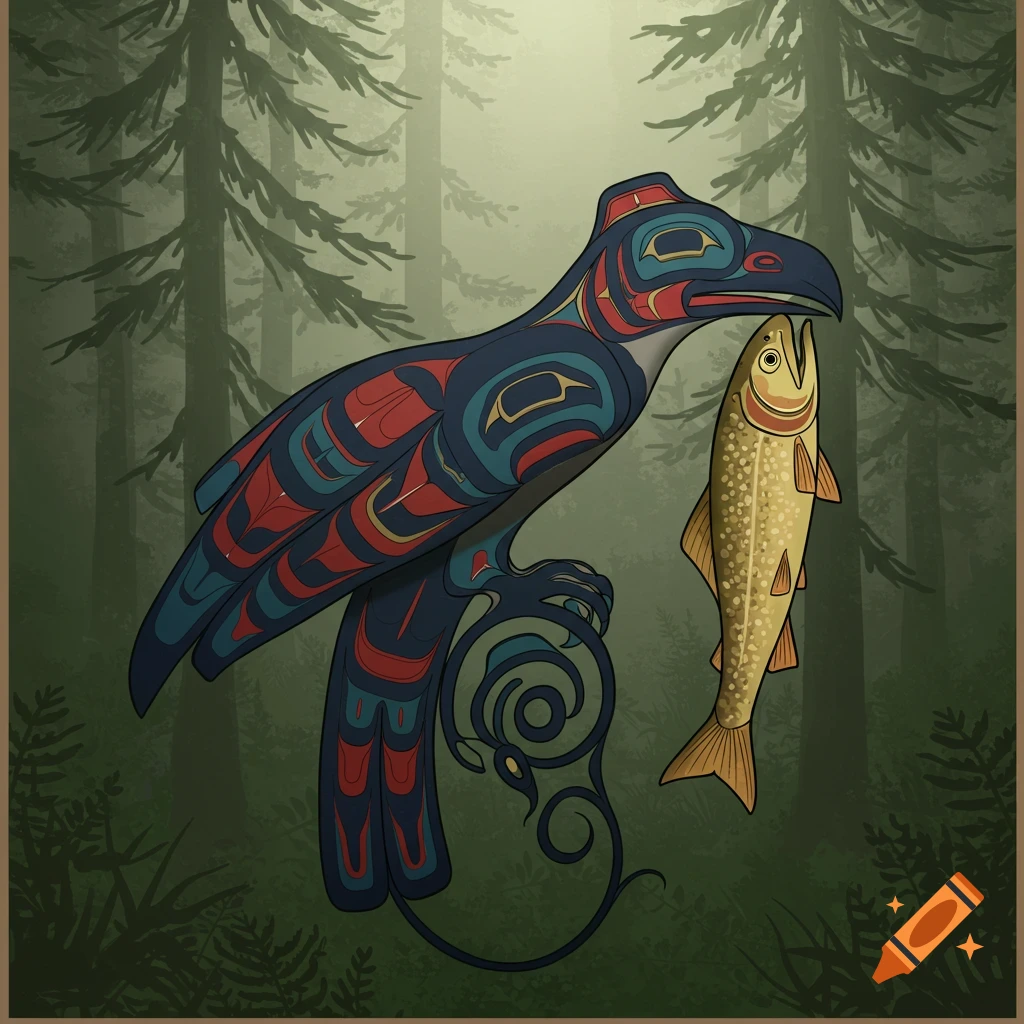
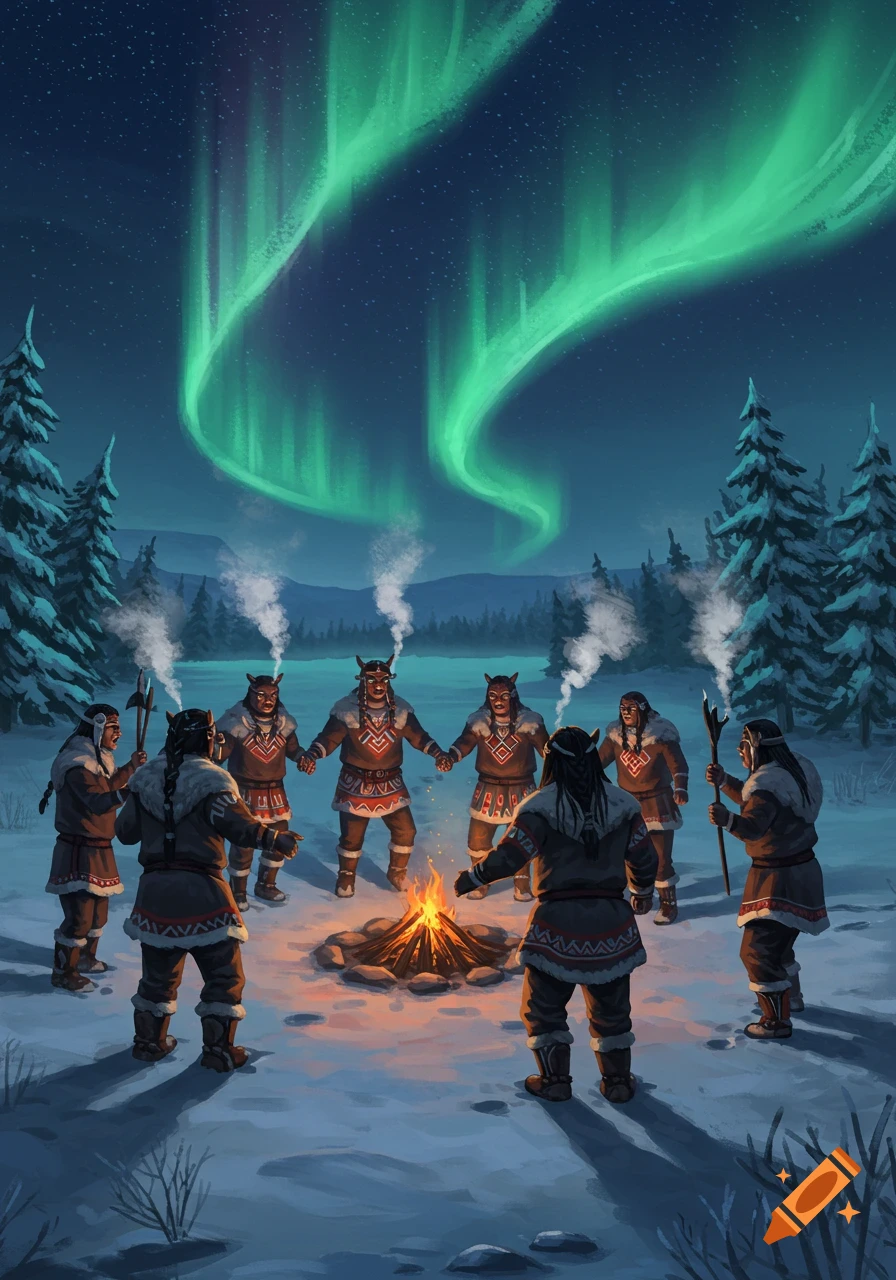
An illustrative collage depicting aurora, indigenous elders, forest, industrial landscapes with ponds and steam vents, caribou, traditional art, and a winding road through nature.
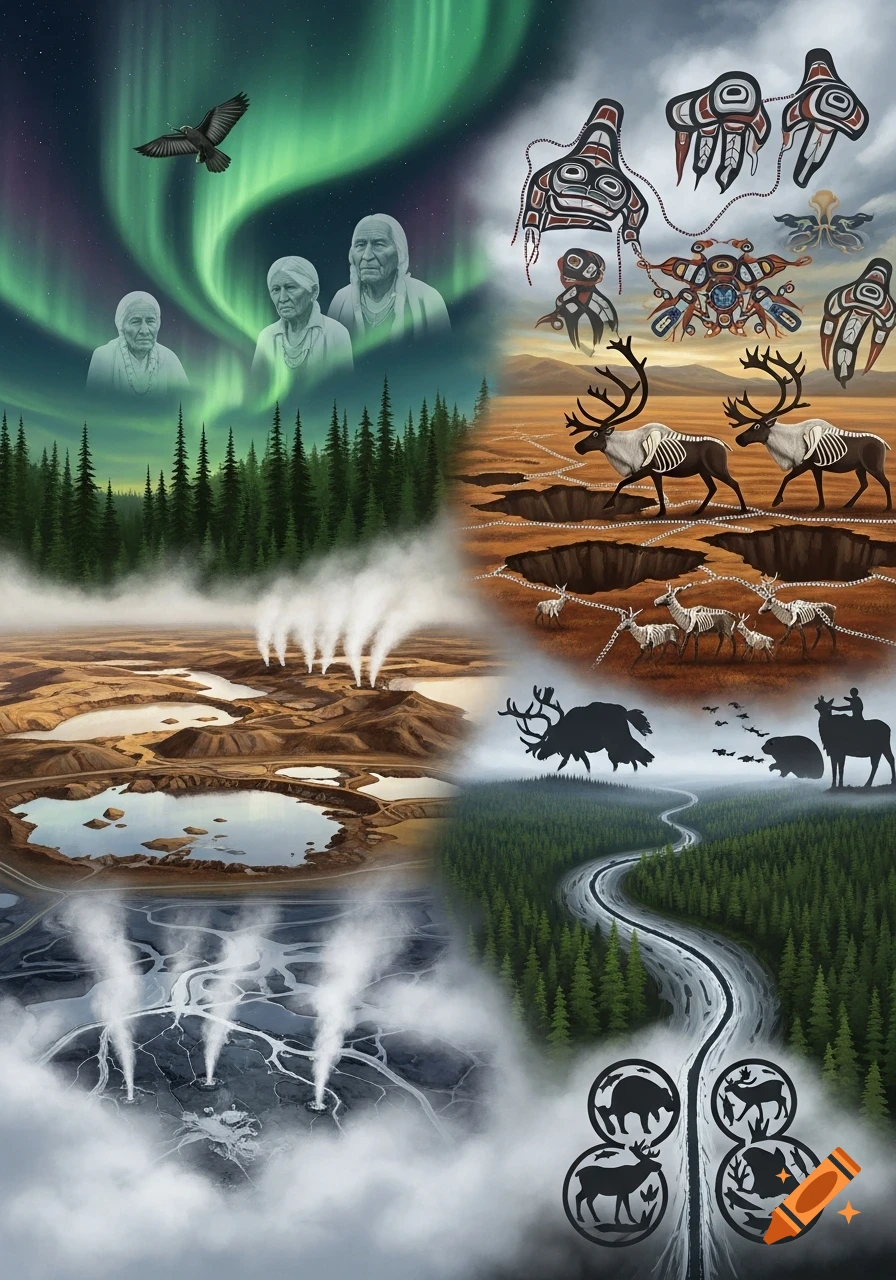
Canada has many natural resources : oil, gas, tar sands, wood, as well as minerals such as gold, uranium and diamonds. These resources are often found in areas where indigenous peoples live. This creates tensions, as the exploitation of these resources sometimes leads to pollution, loss of territories and problems for their traditional way of life. A first example is in Alberta, in the oil sands region near Fort McMurray. Companies build large ponds filled with contaminated water. Sometimes this dirty water ends up in the Athabasca River. The indigenous community of Fort Chipewyan uses this river for drinking and fishing. The members of this community say that there are more cancers and health problems. Animals such as fish, beavers or caribou are disappearing, making hunting and fishing more difficult. In the Northwest Territories, diamond mines such as Ekati and Diavik are also problematic. These mines strongly modify the landscape by creating new roads and immense holes in the ground. Because of these changes, caribou are changing their migration paths. The caribou are essential to the Dene people: they provide food, clothing, but they are also part of their culture. When the caribou move away, a whole way of life is threatened. In British Columbia, another dispute has erupted over the Coastal GasLink pipeline, which crosses the lands of the Wet'suwet'en people. The latter claim to have never given their agreement to the project and denounce a lack of respect for their See more