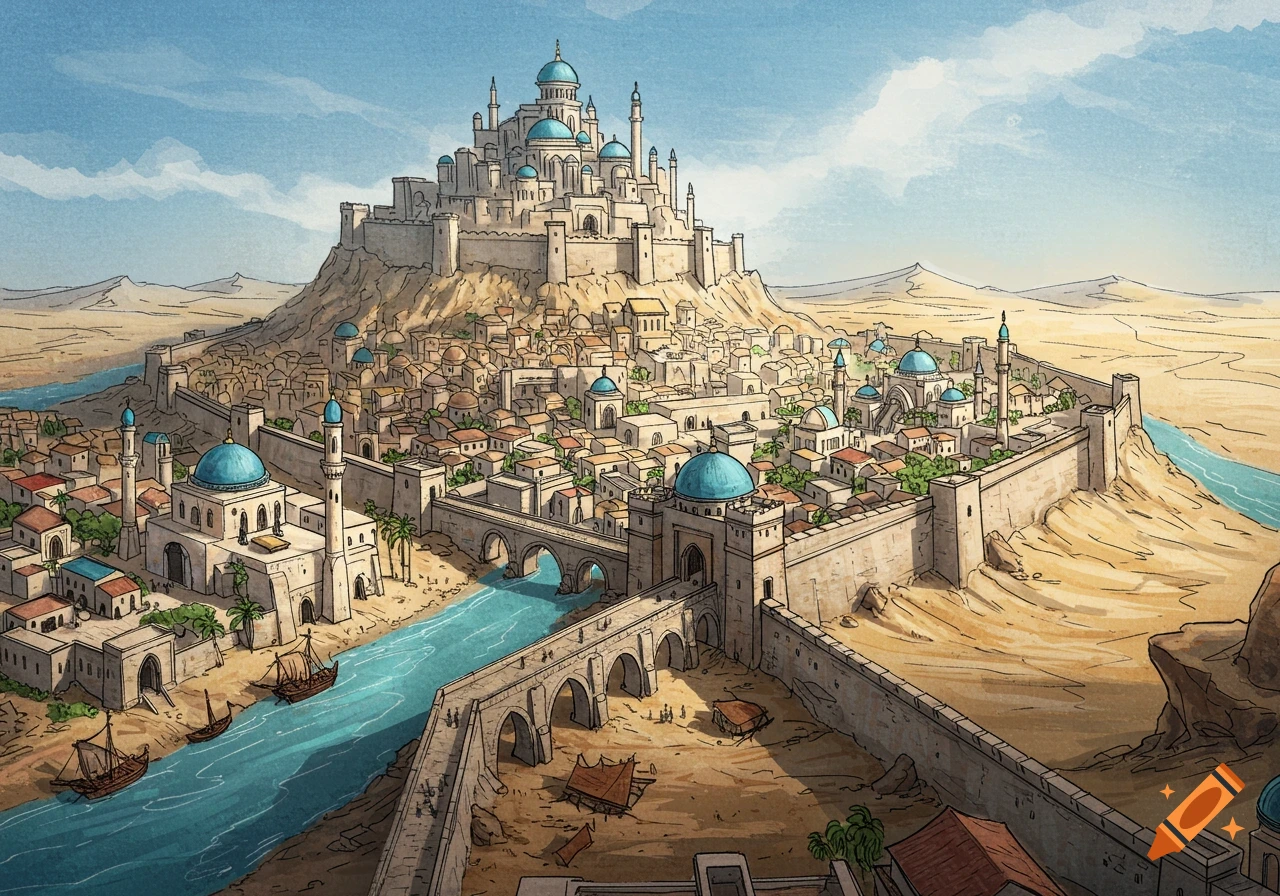
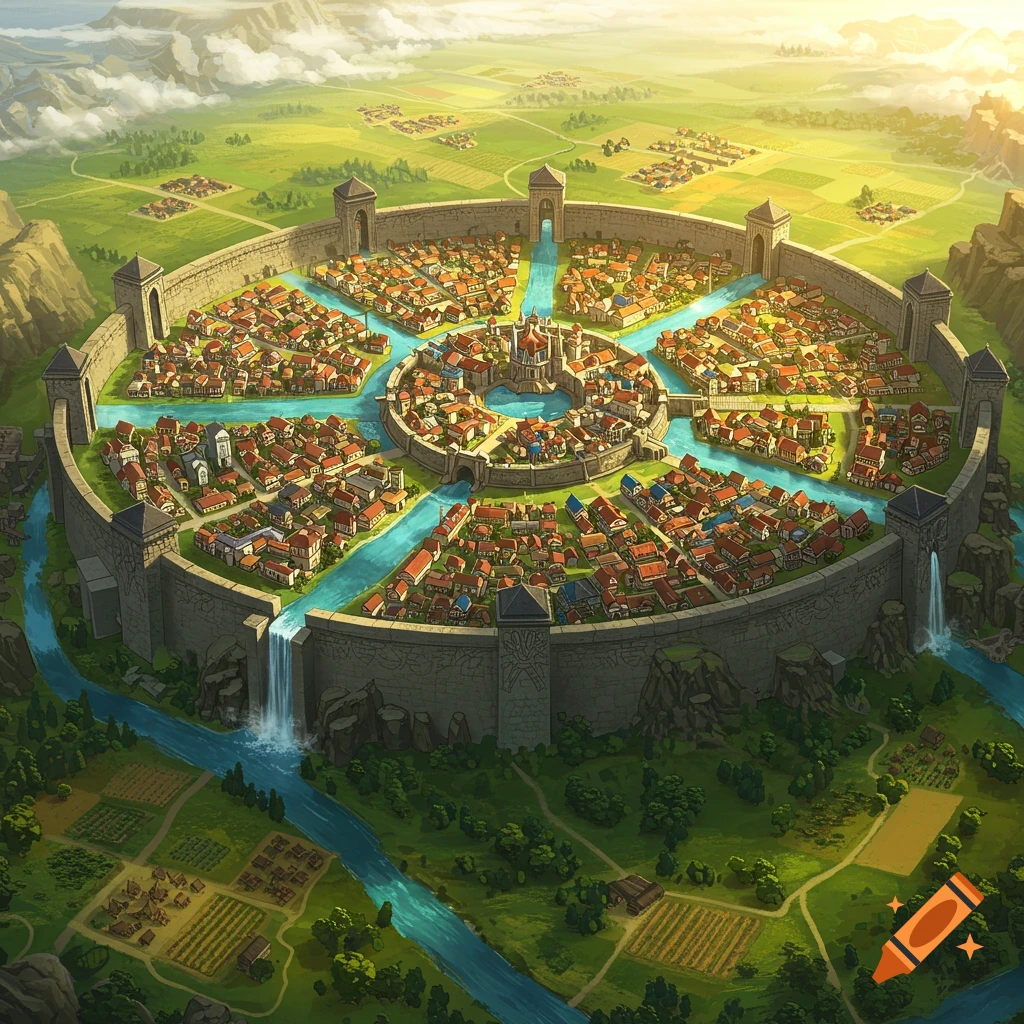
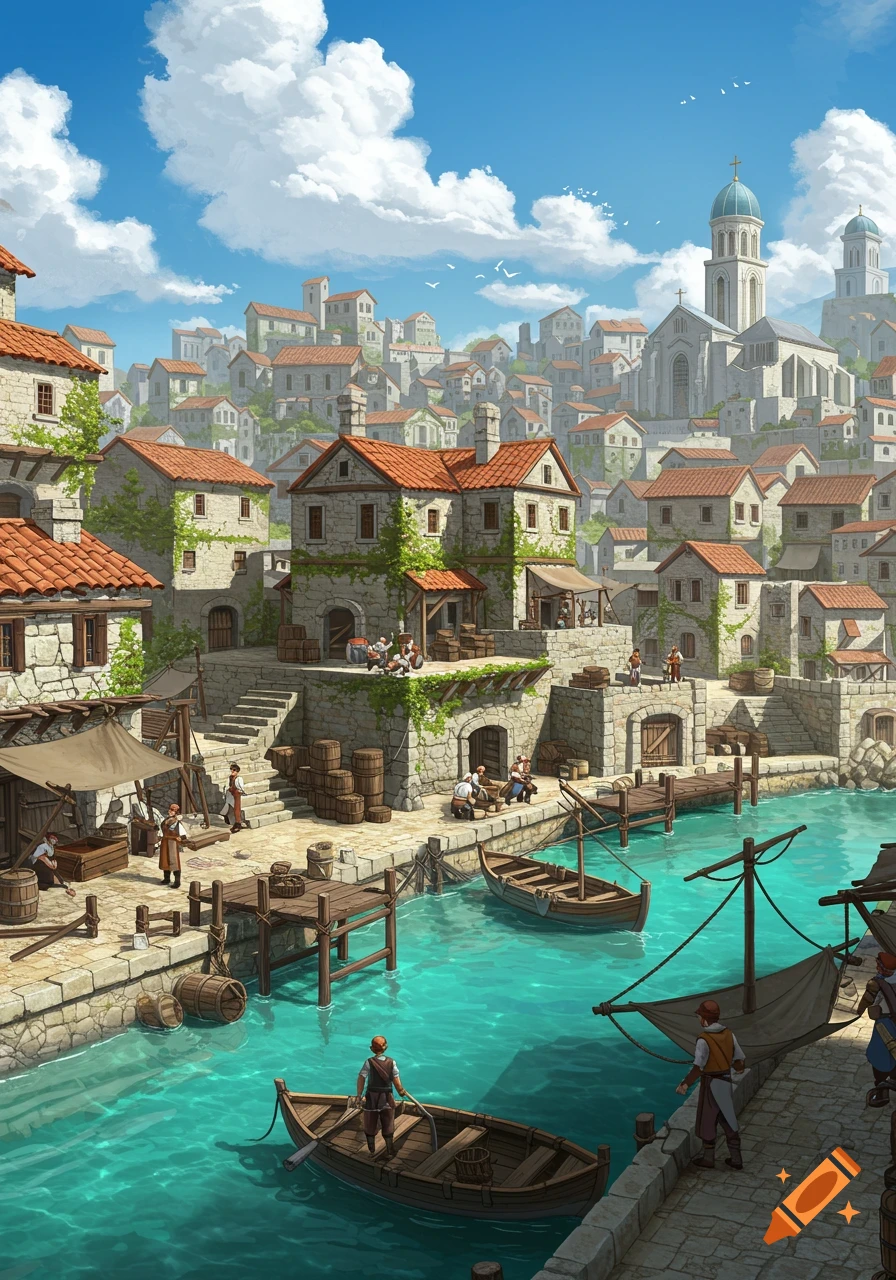
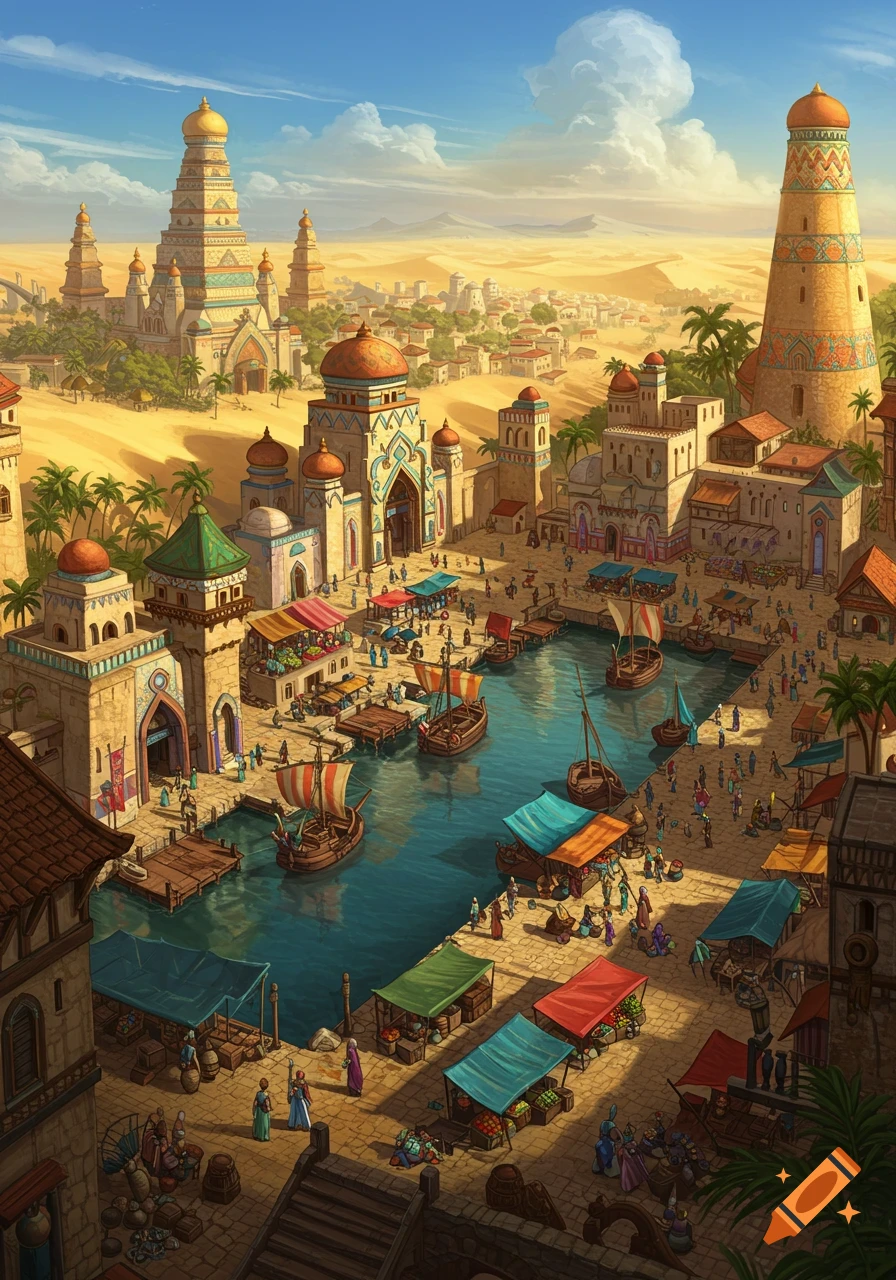
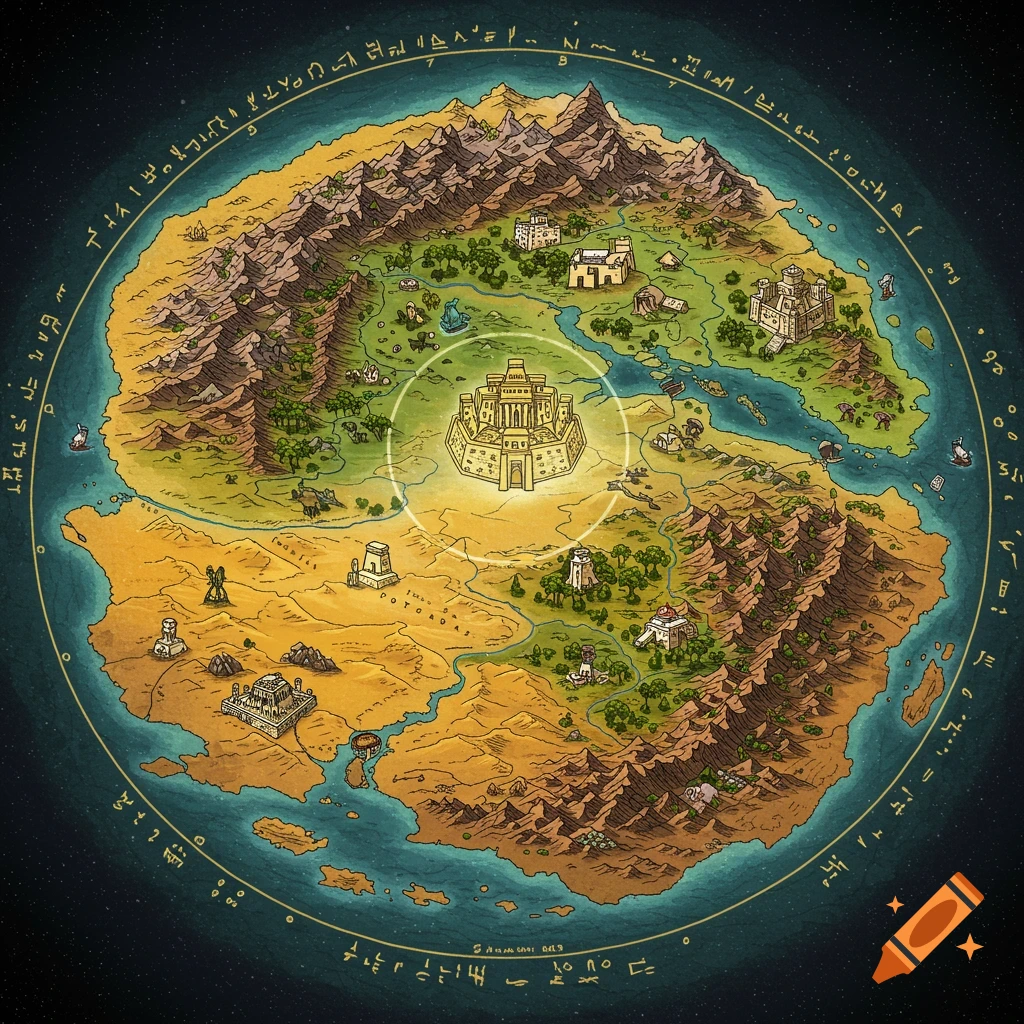
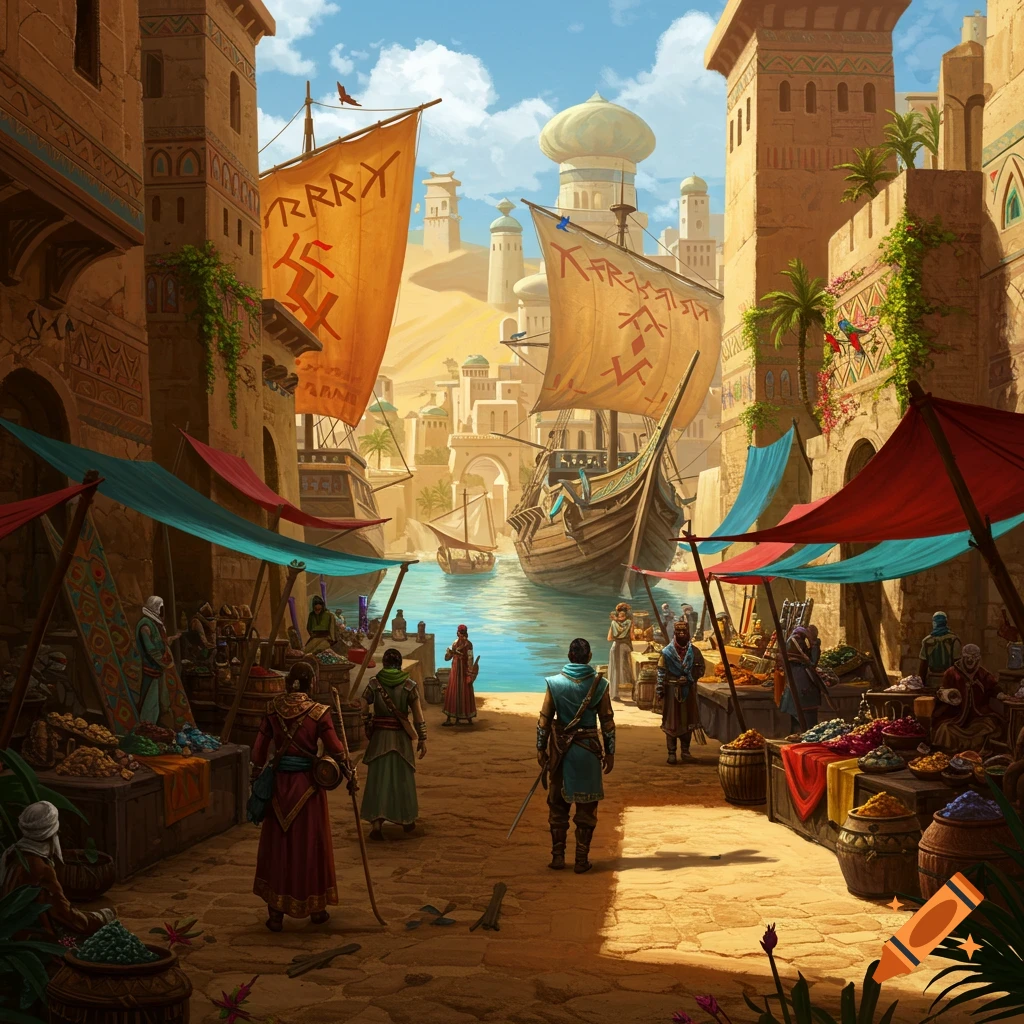
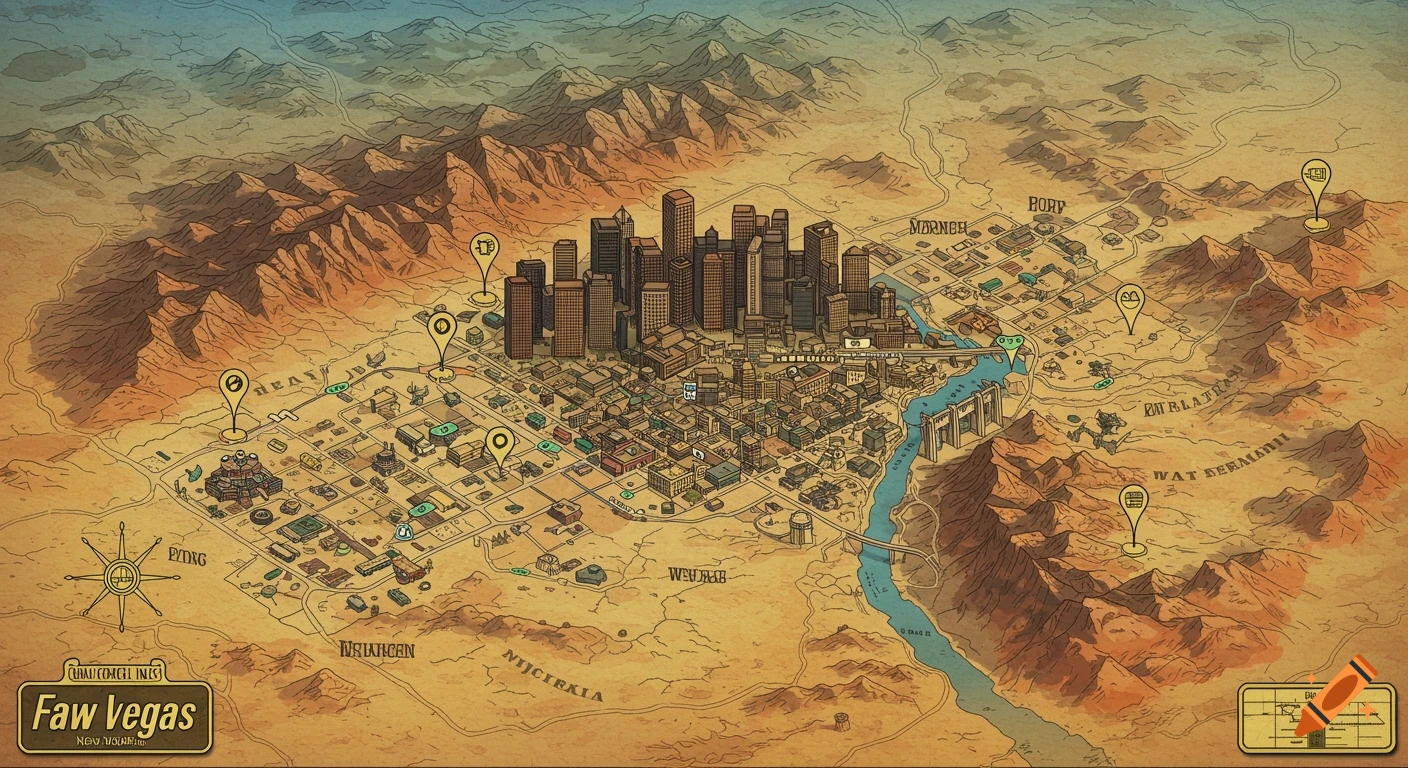
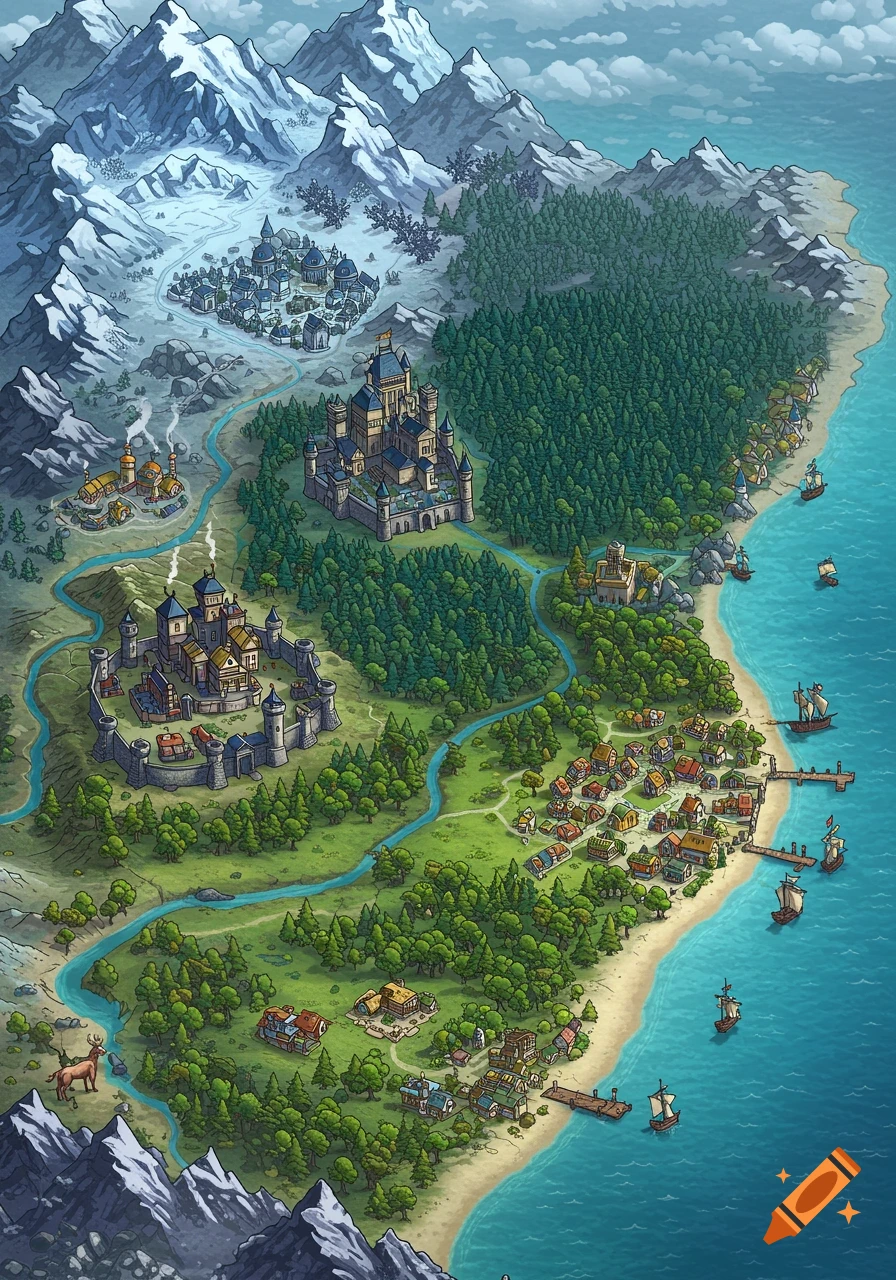
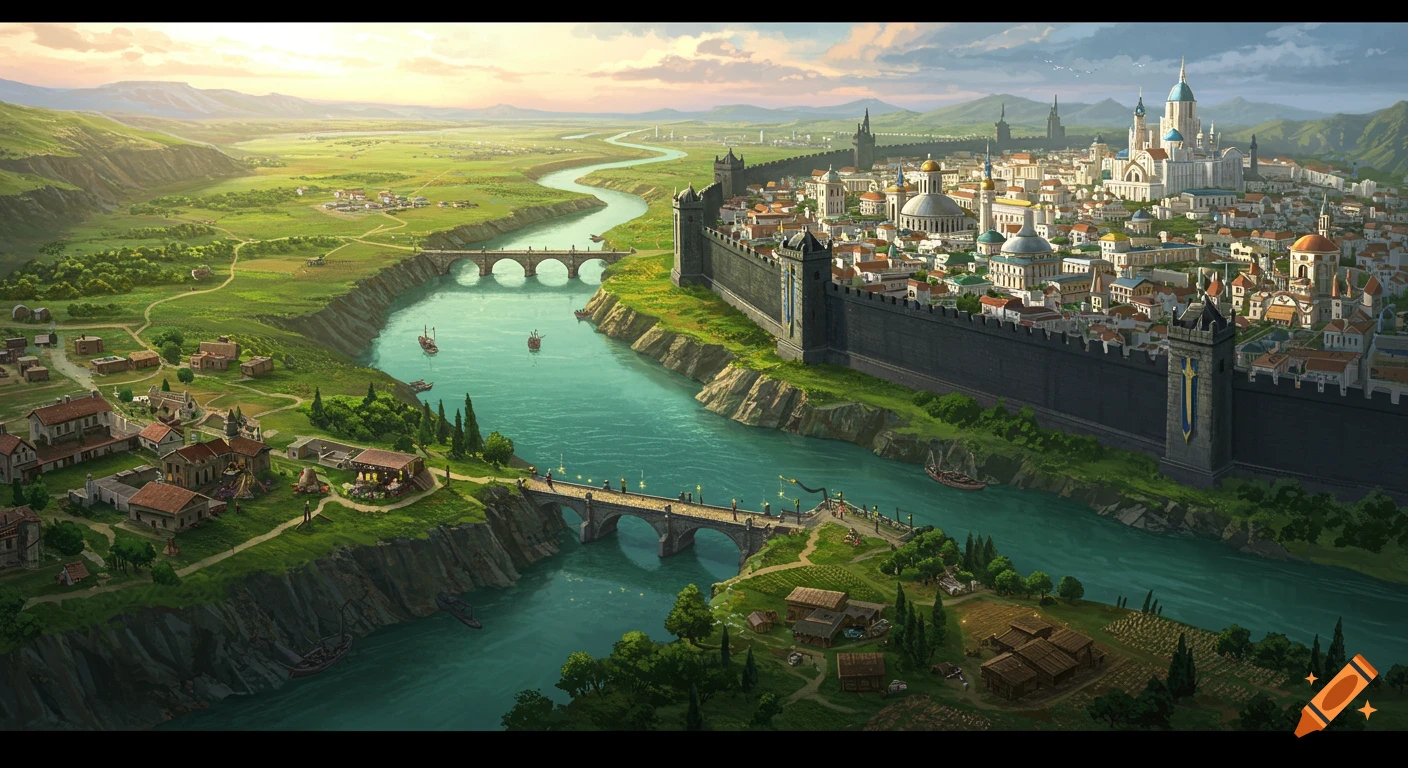
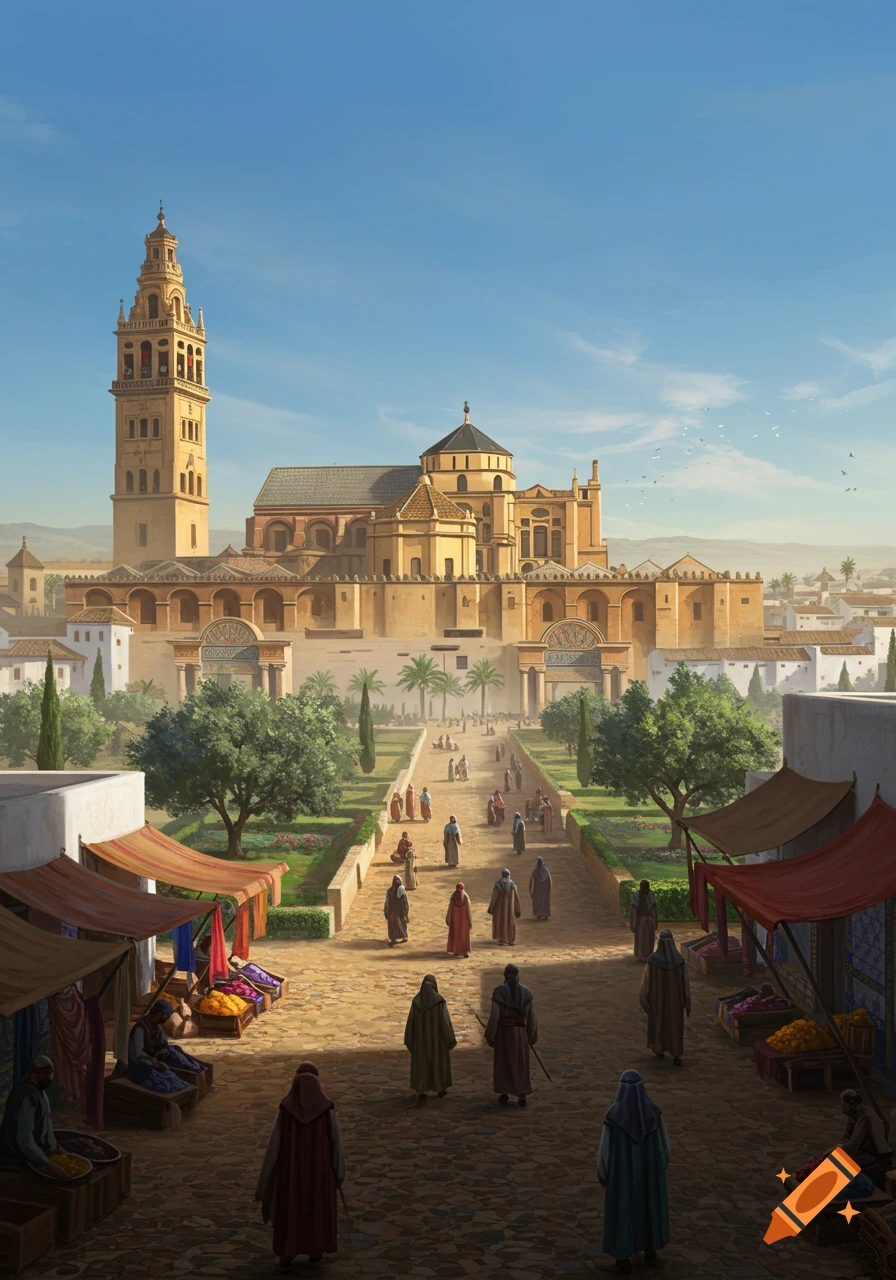
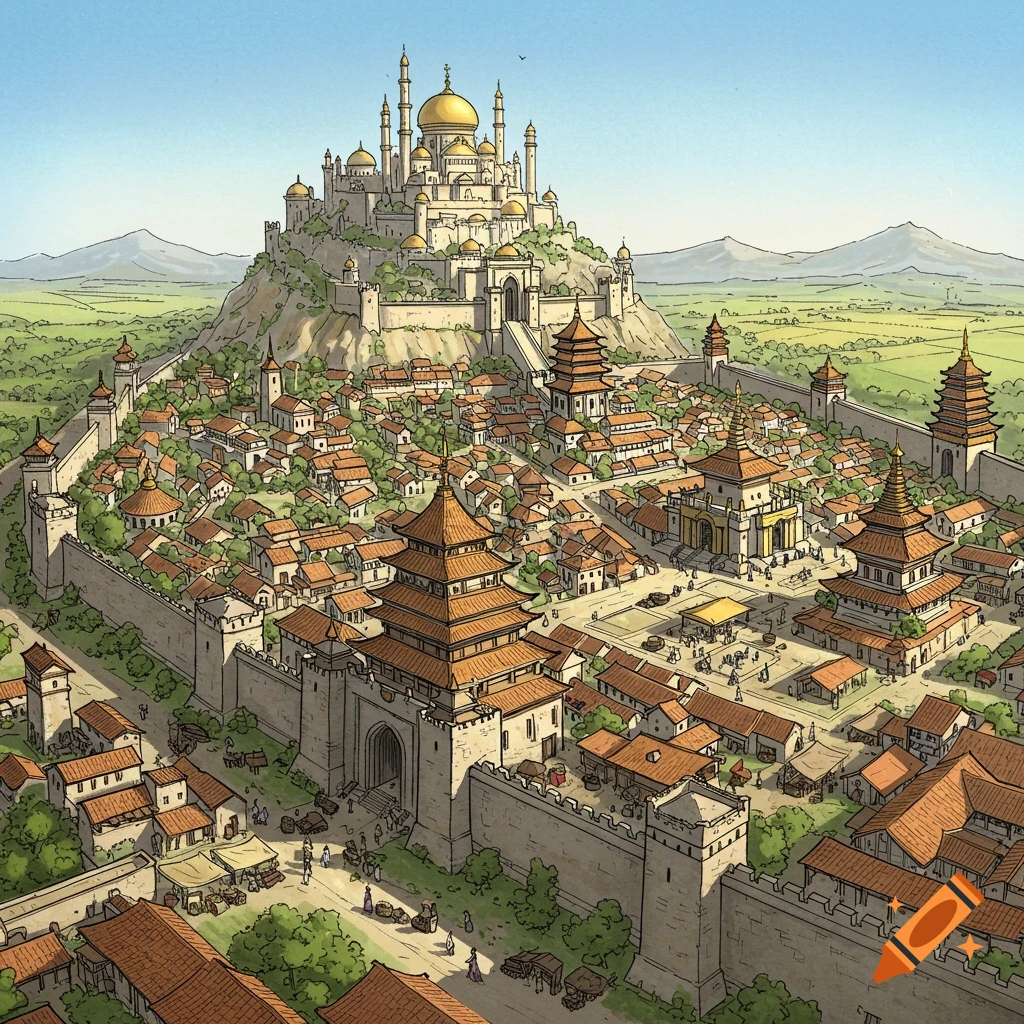
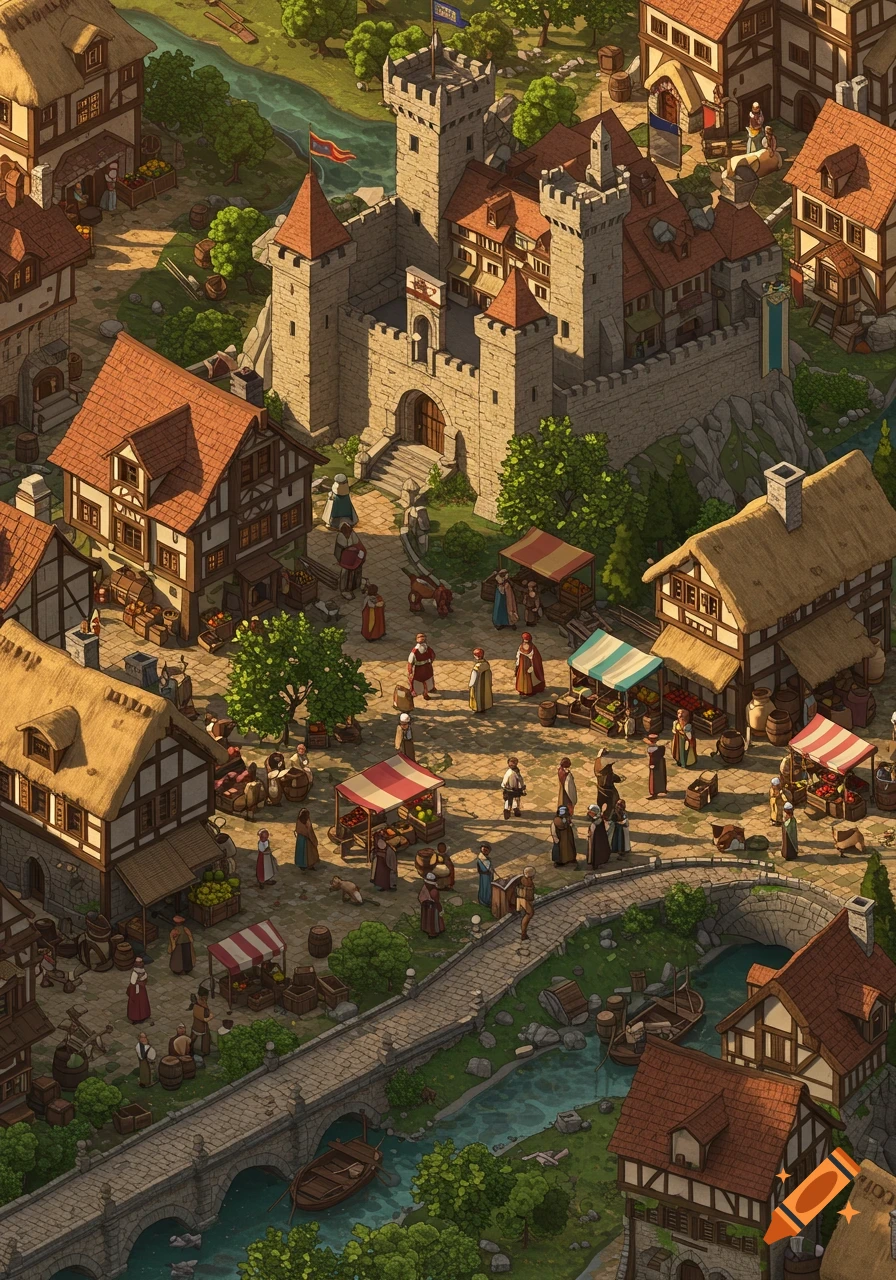
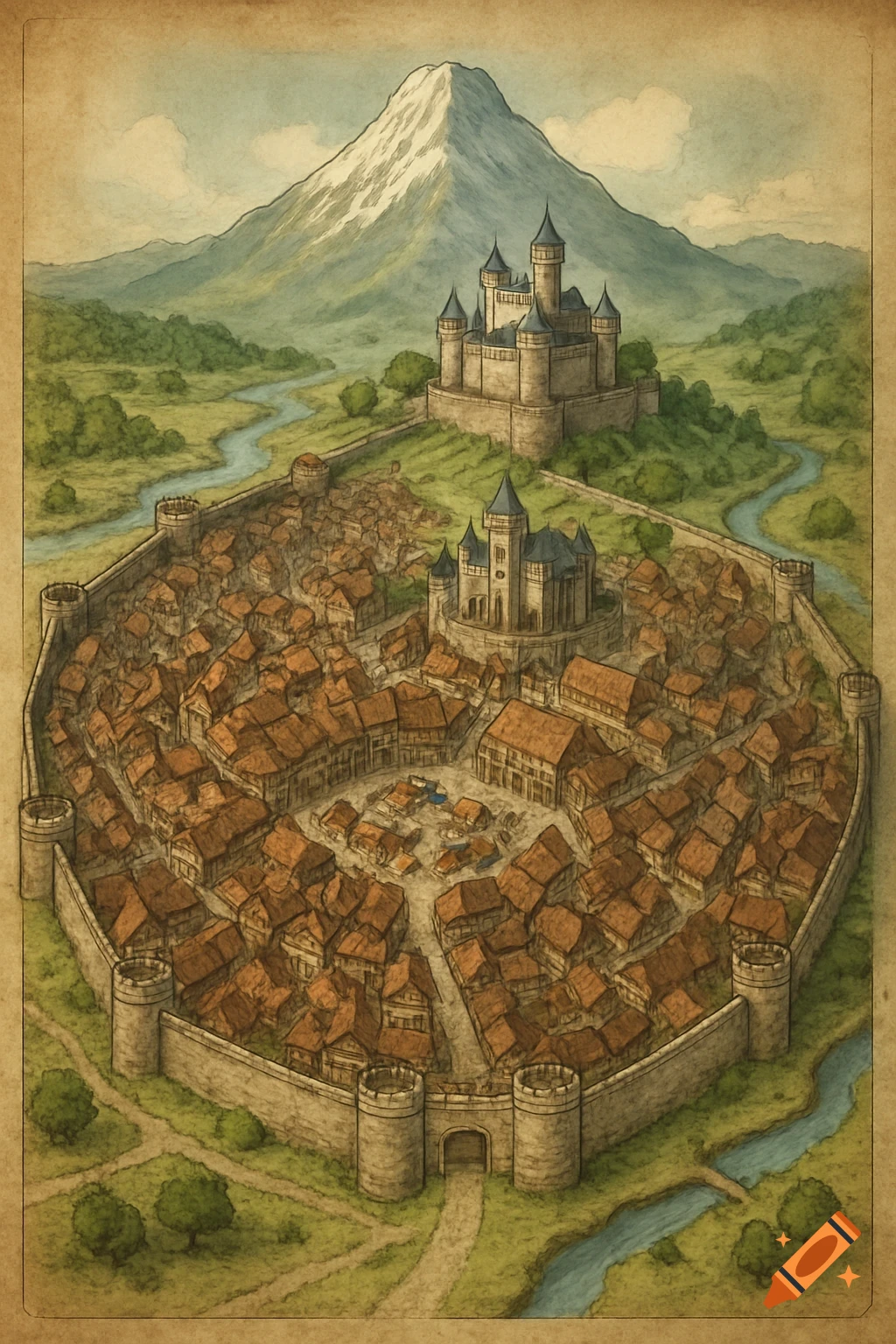
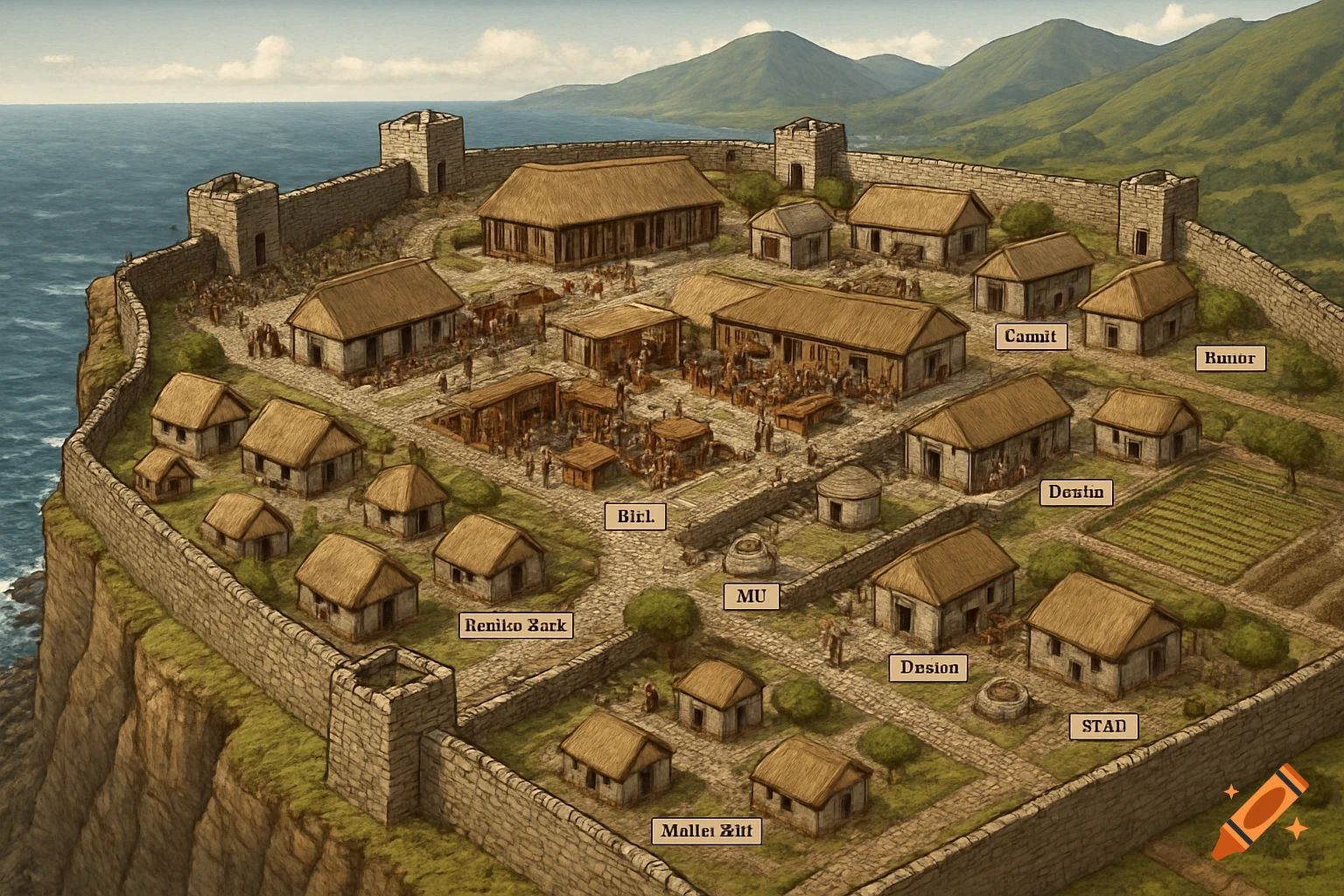
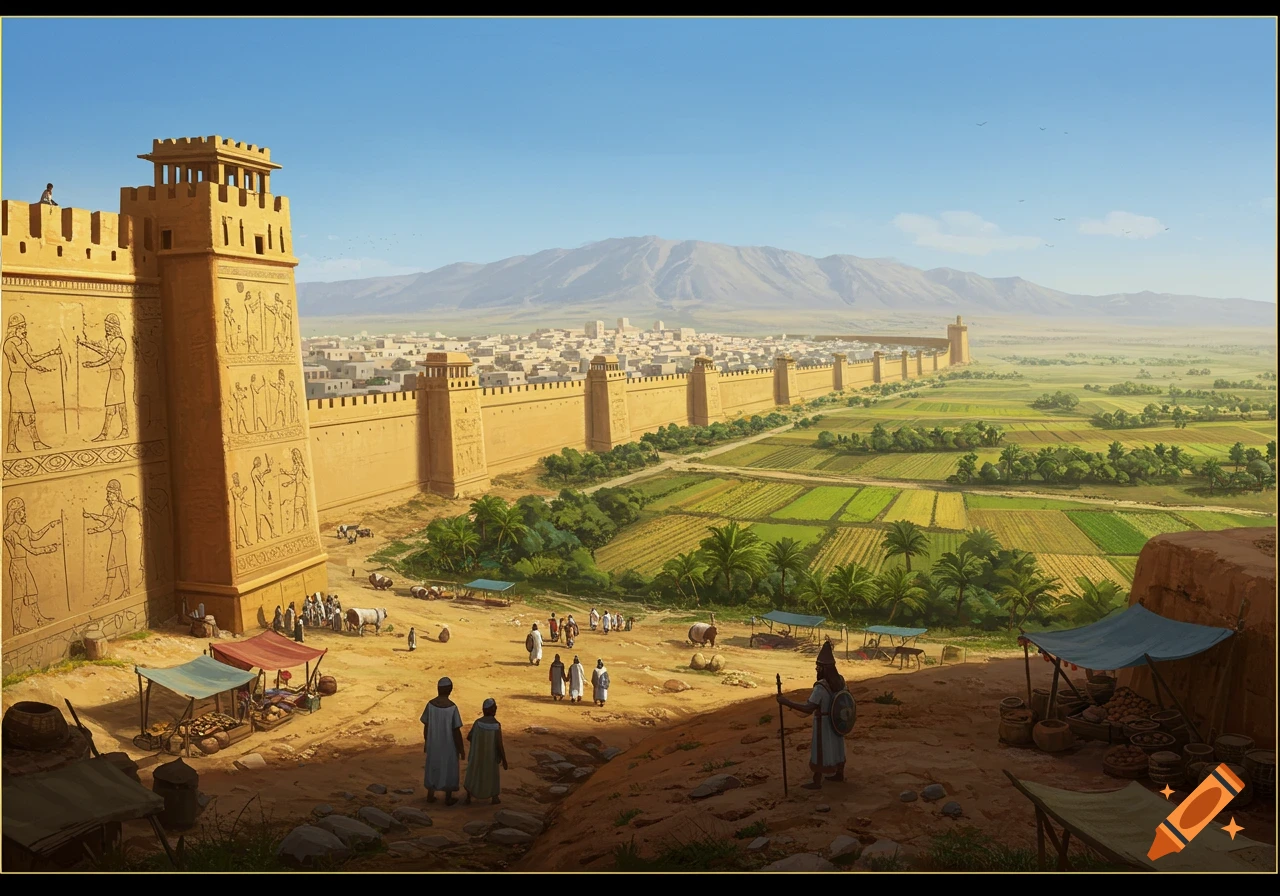
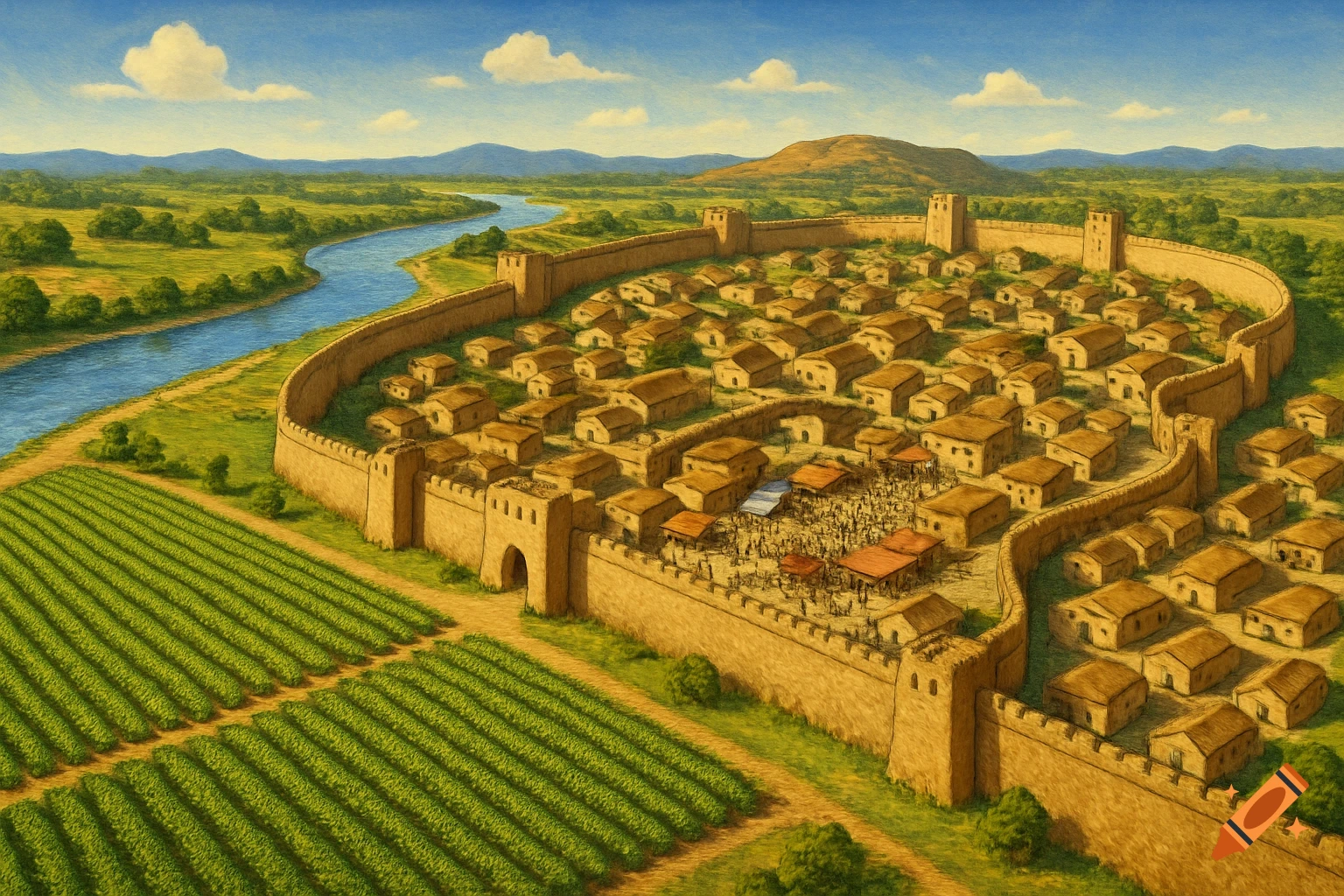
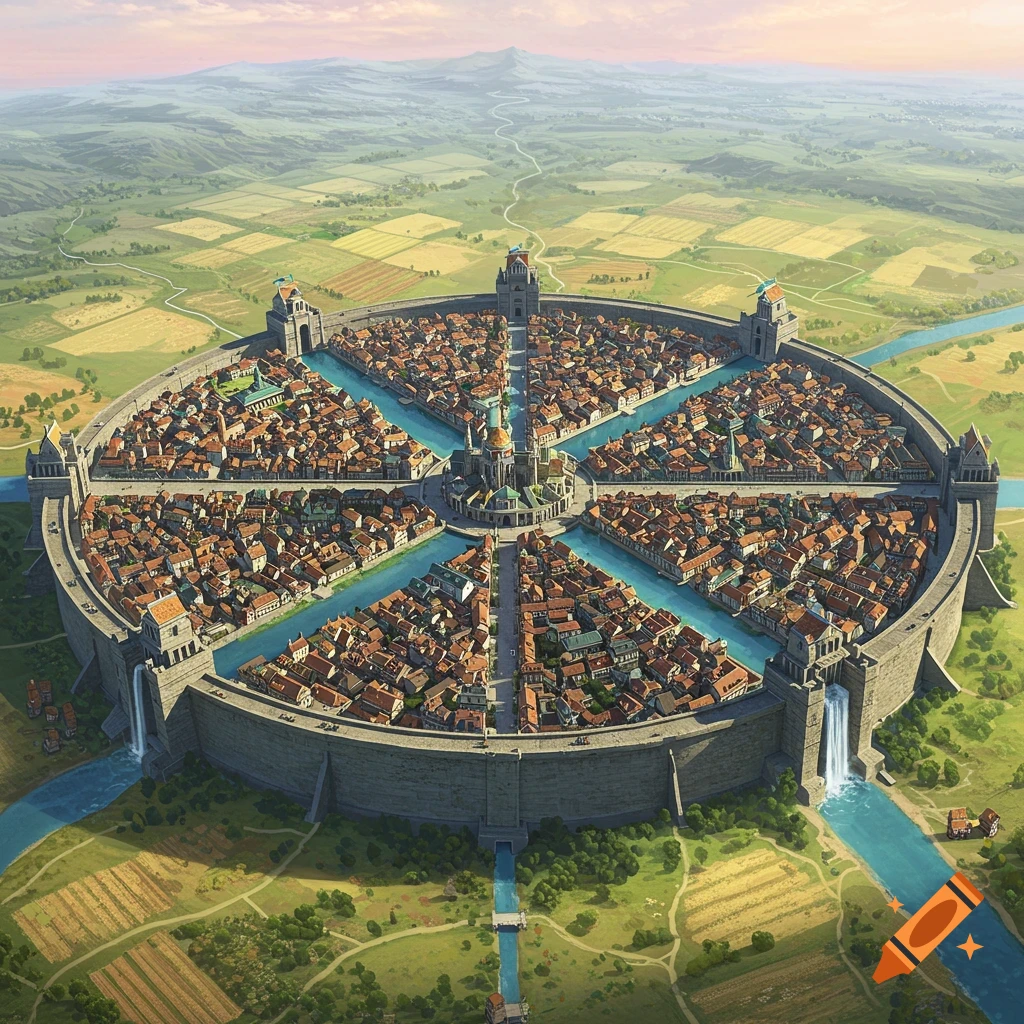
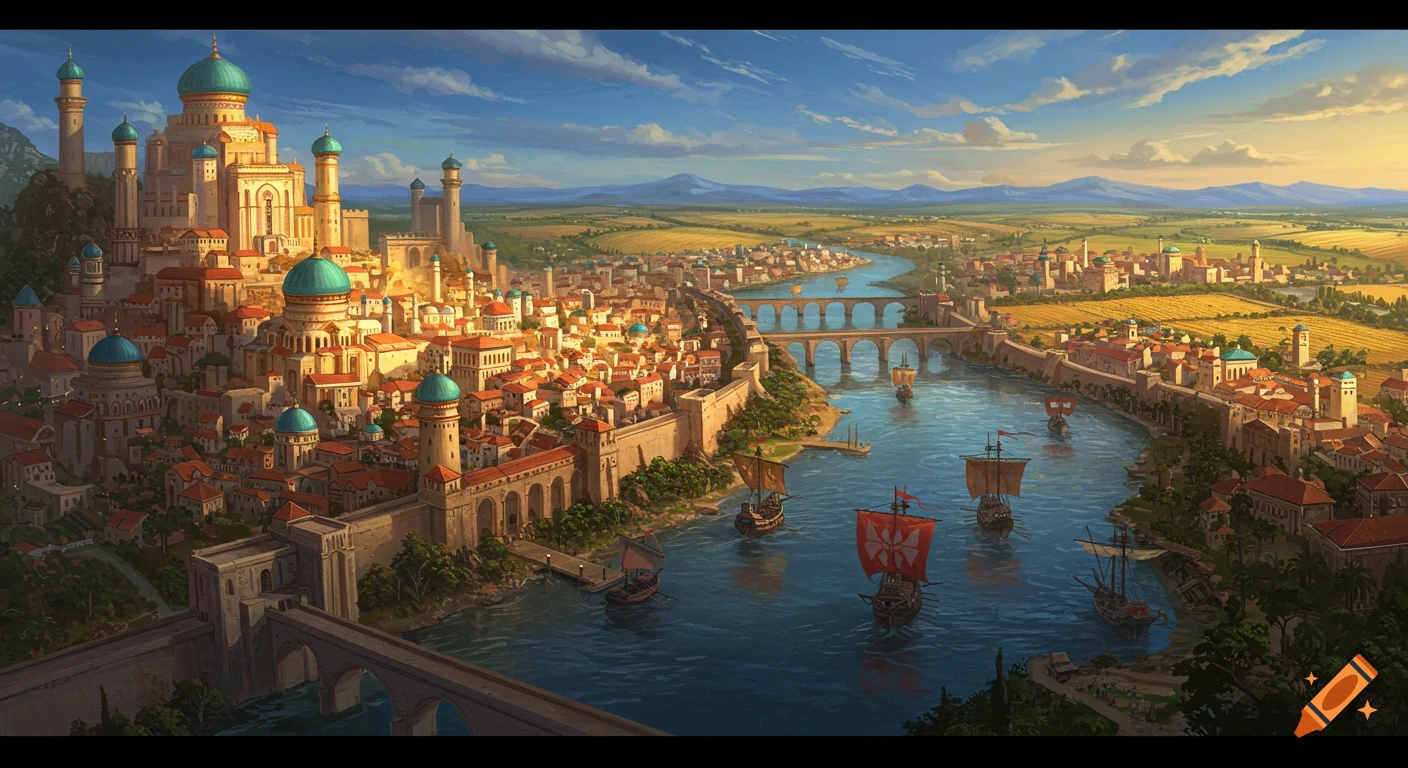
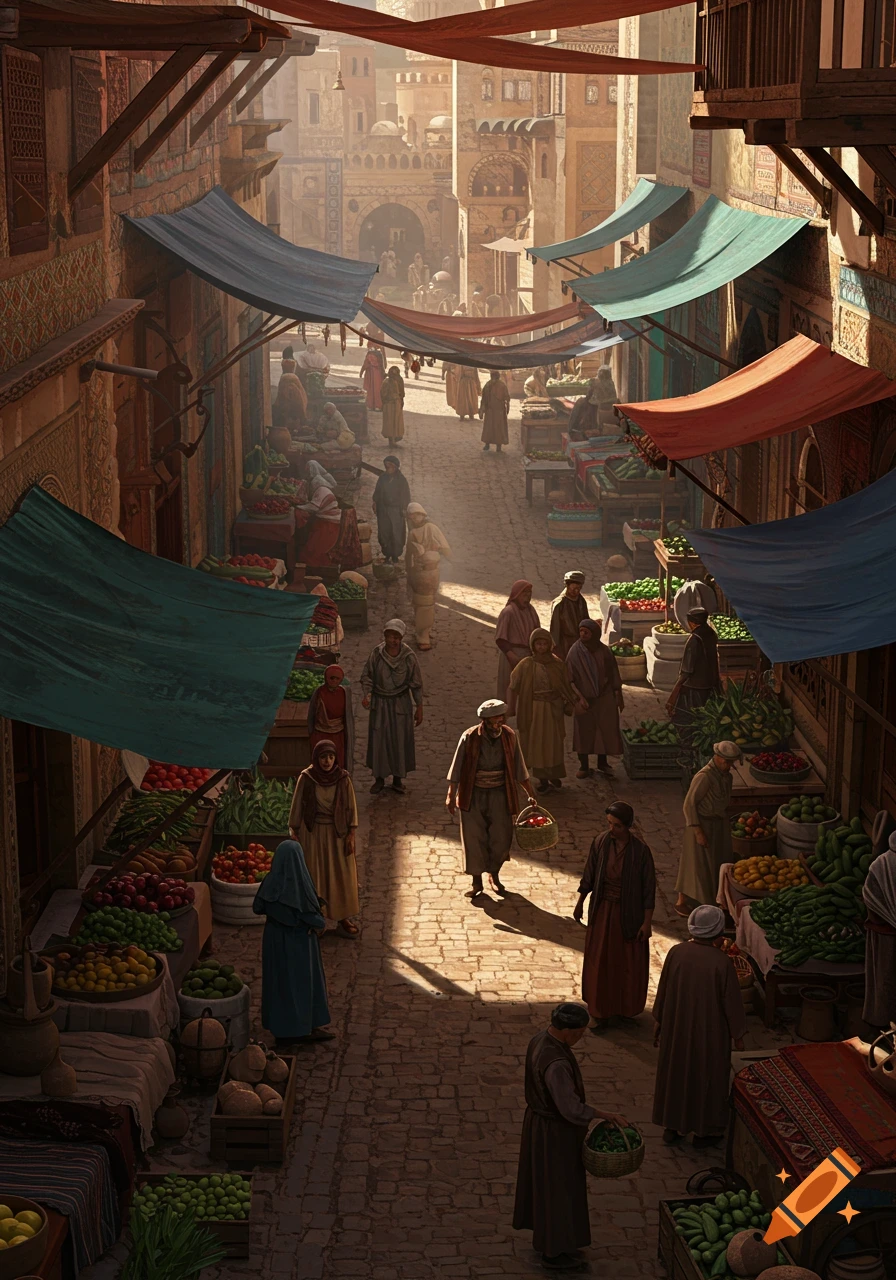
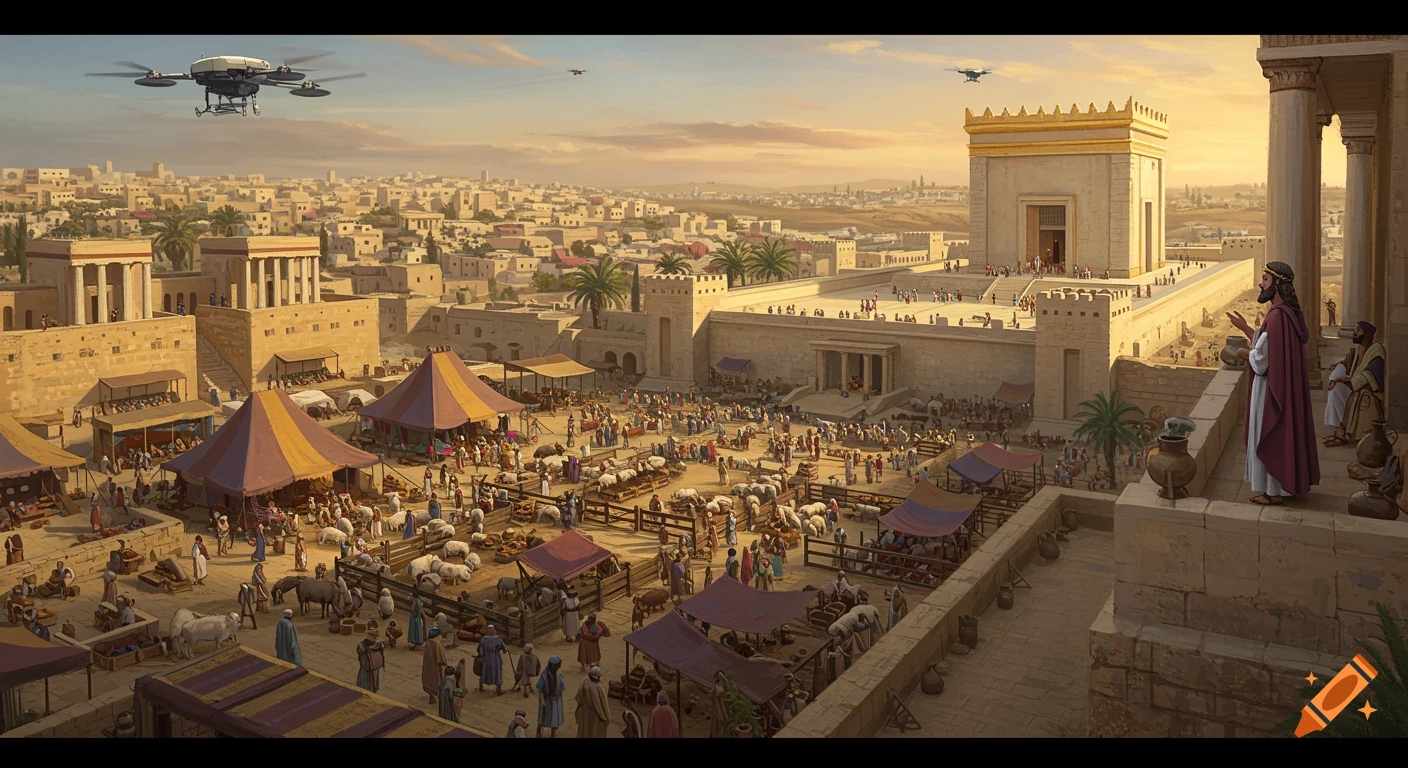
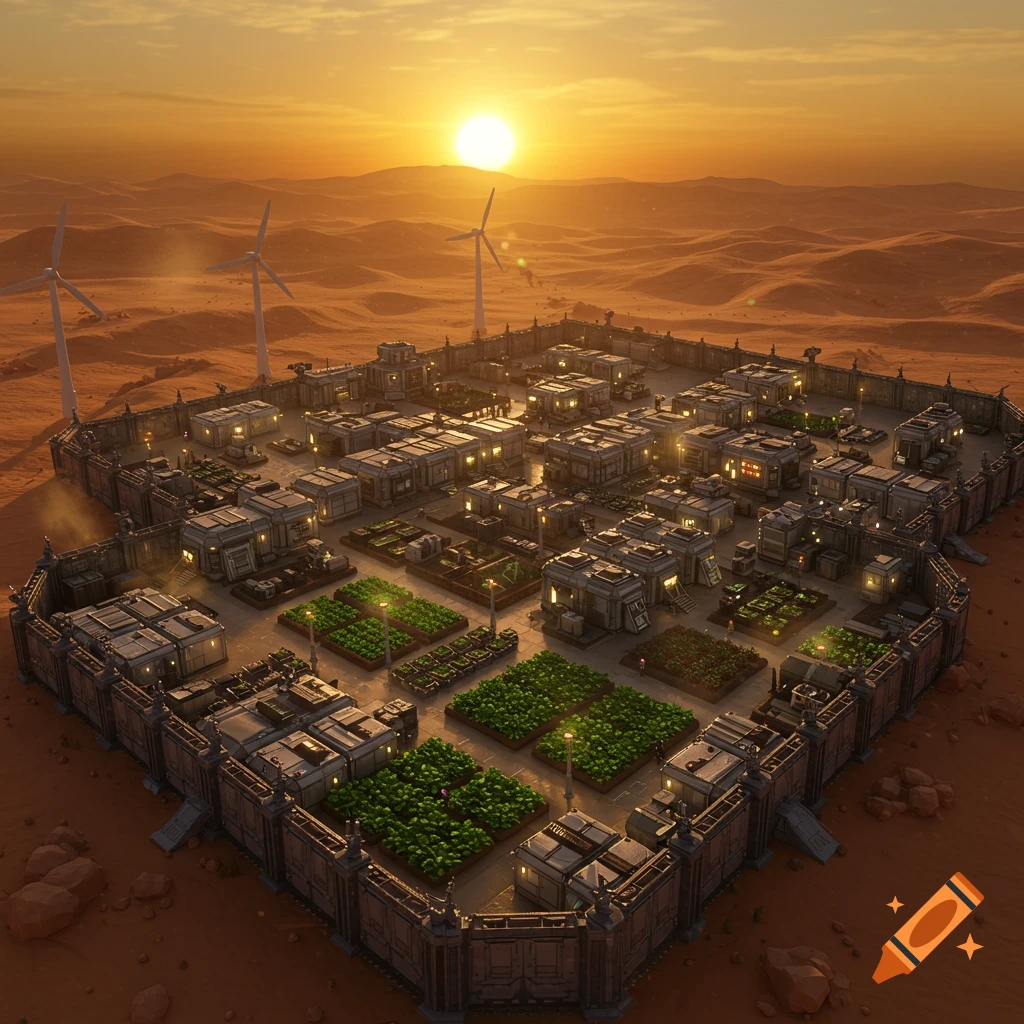
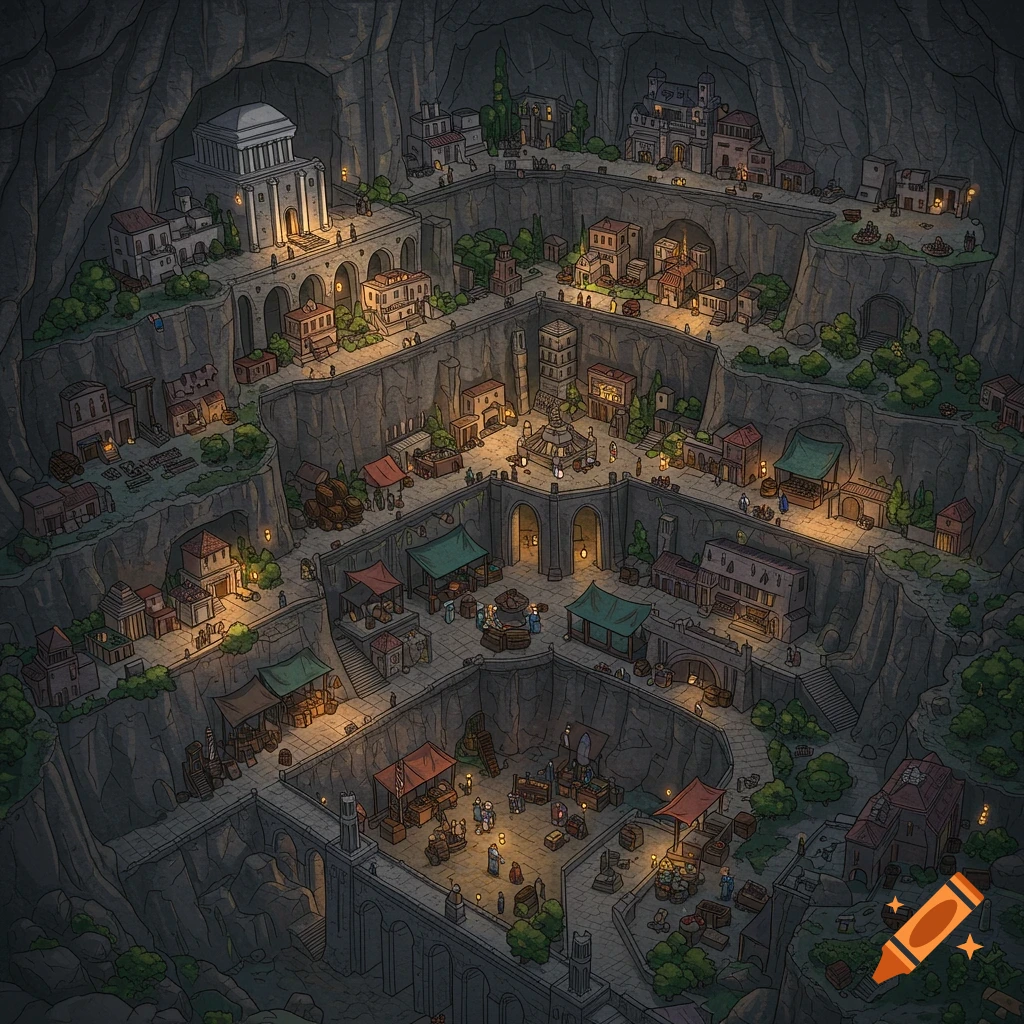
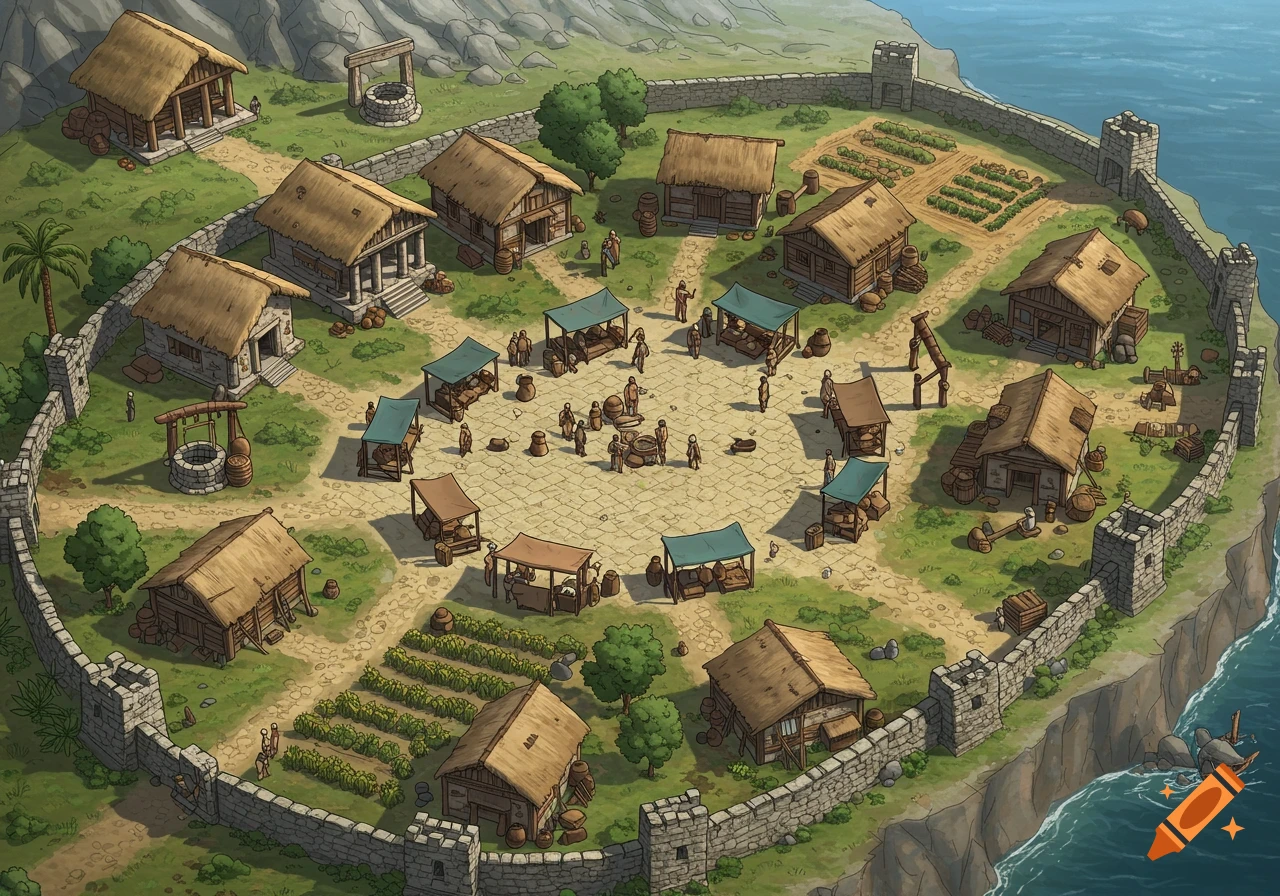
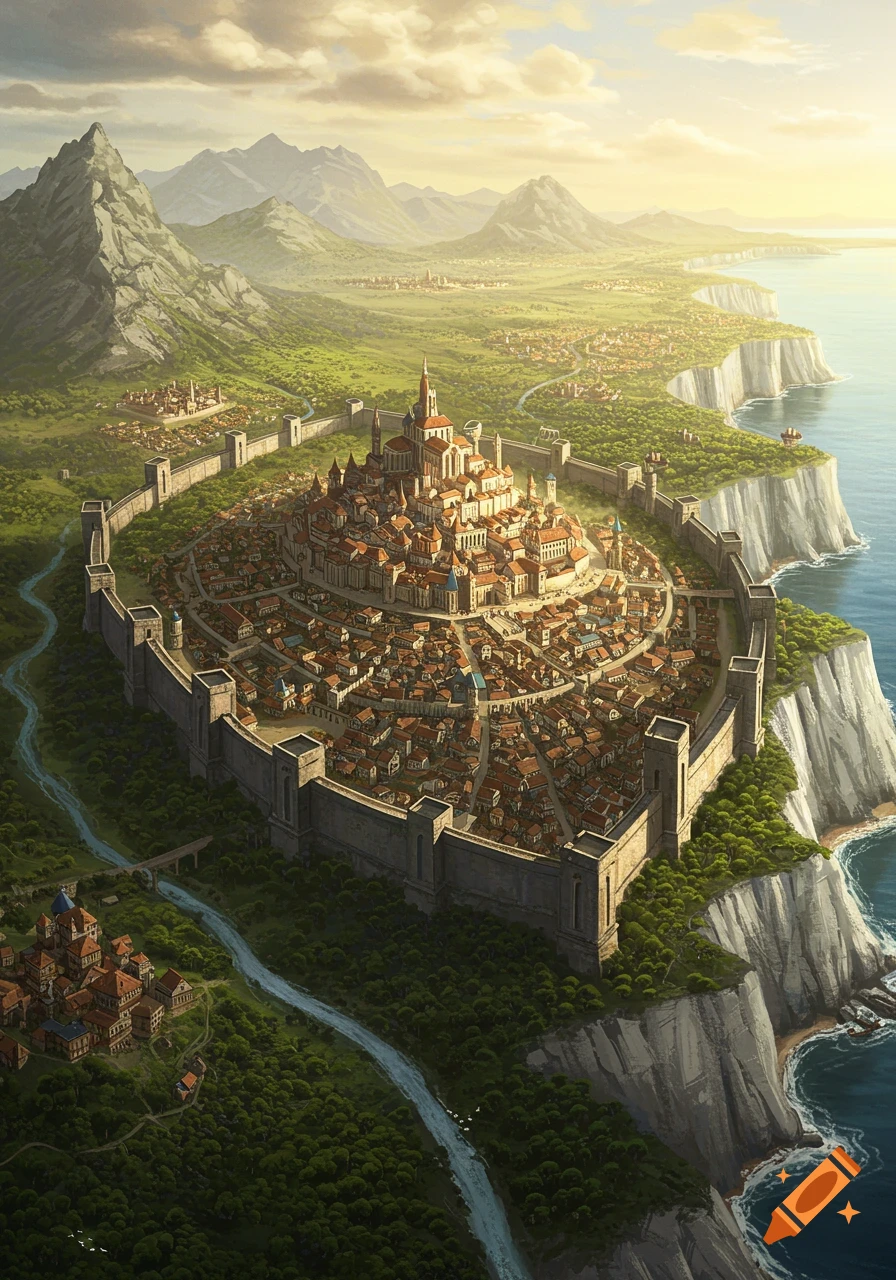
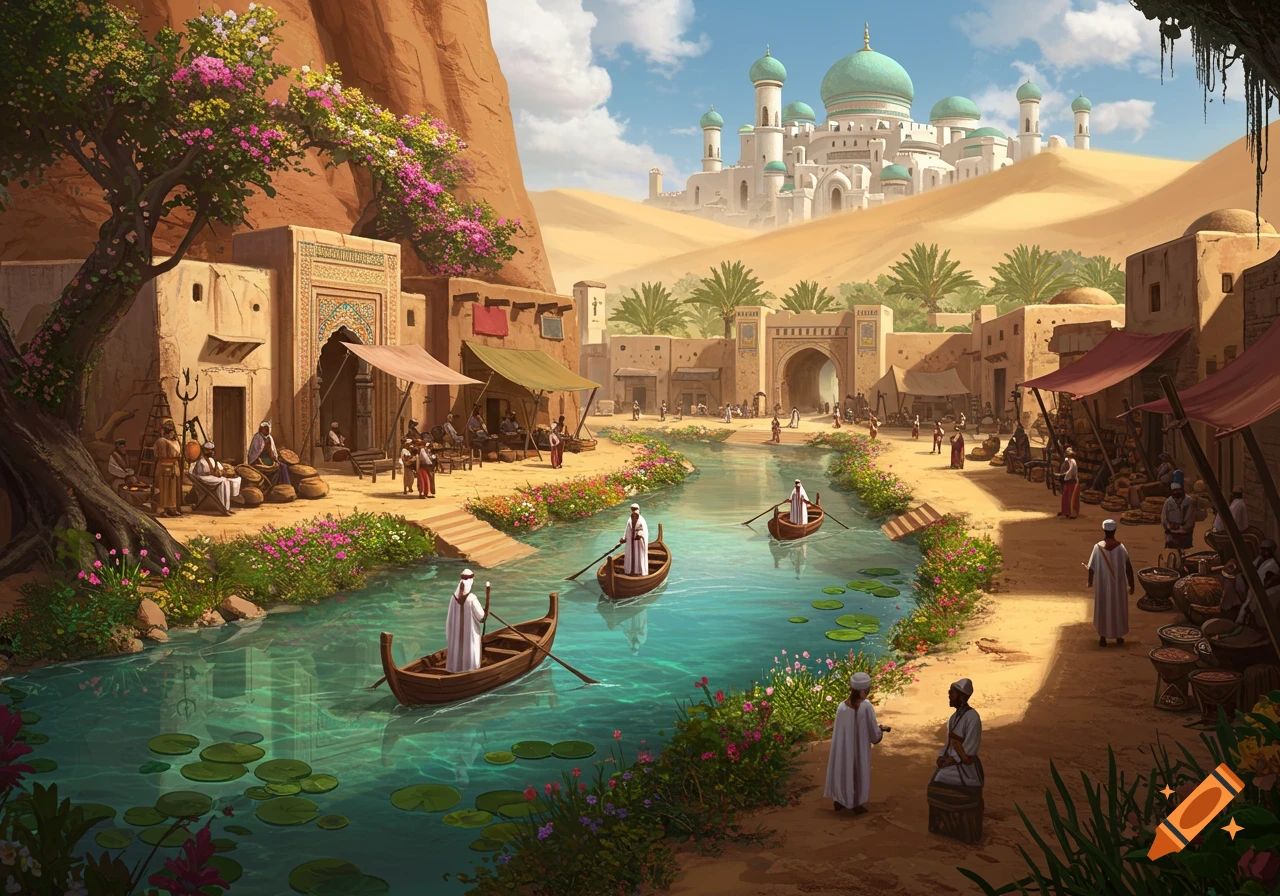
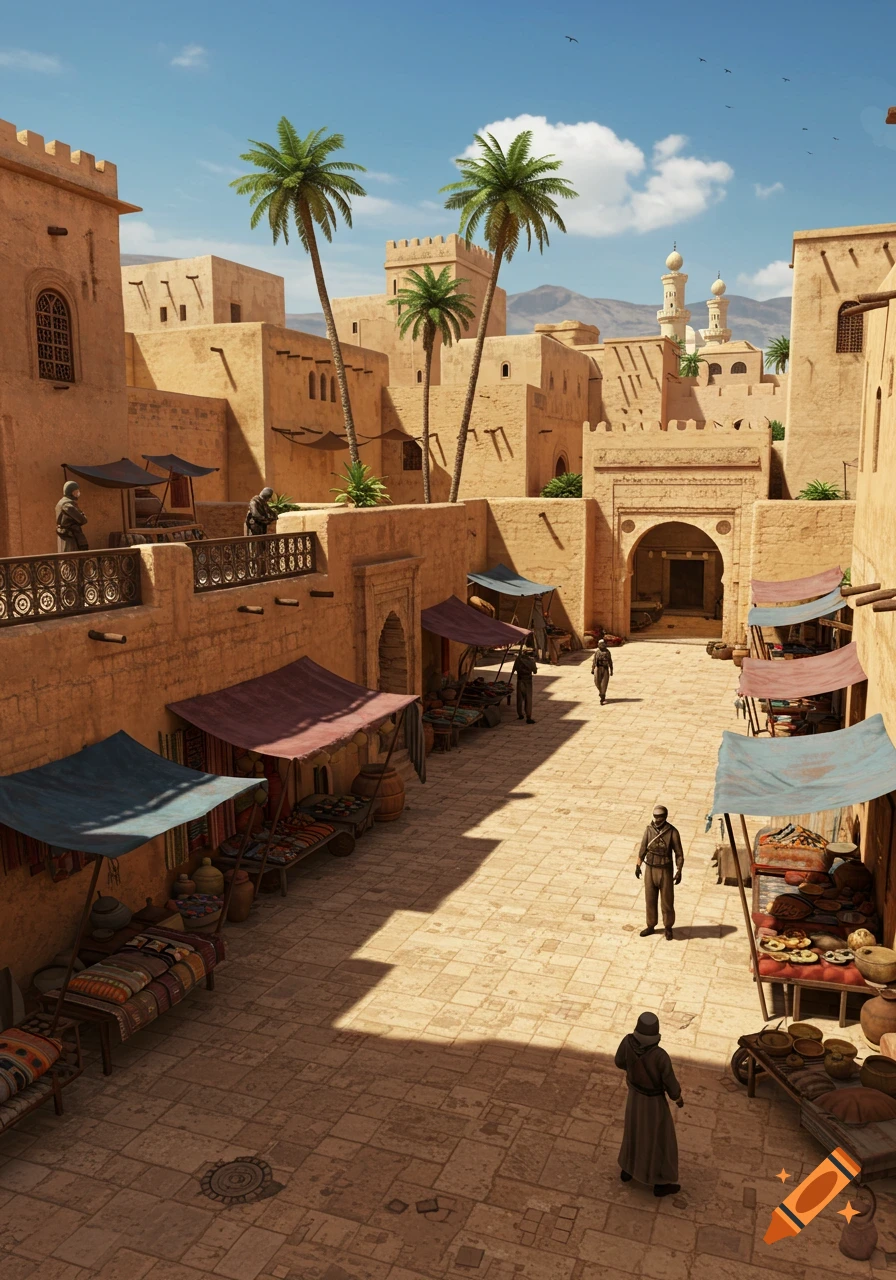
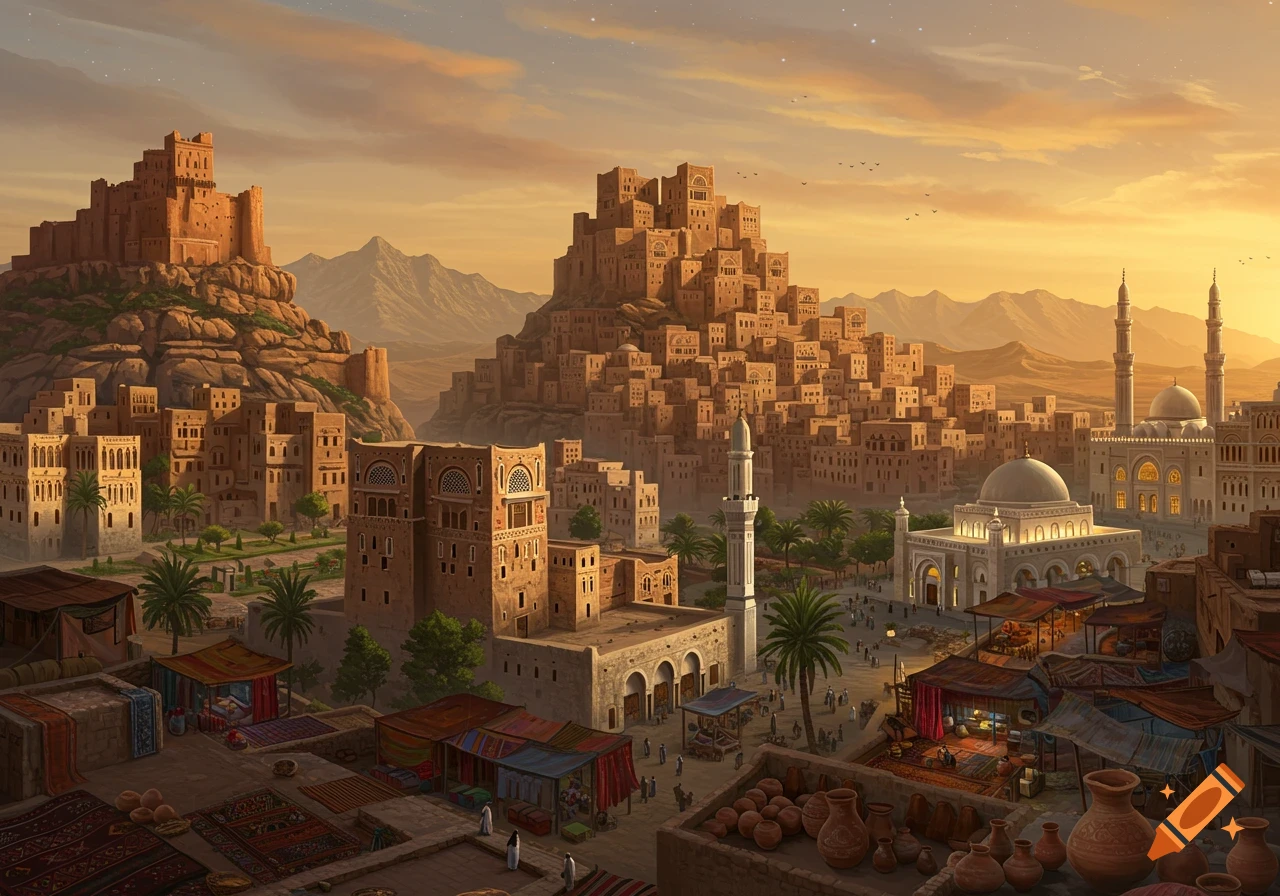
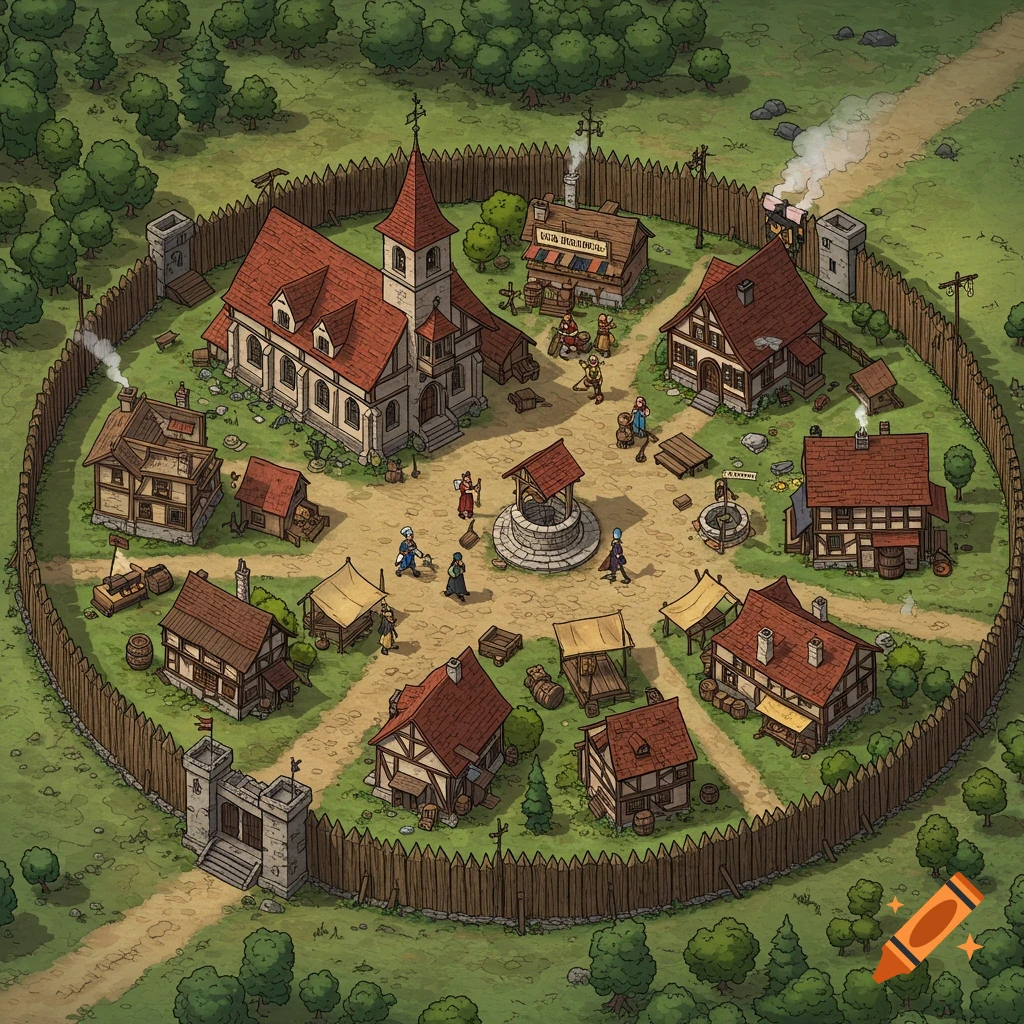
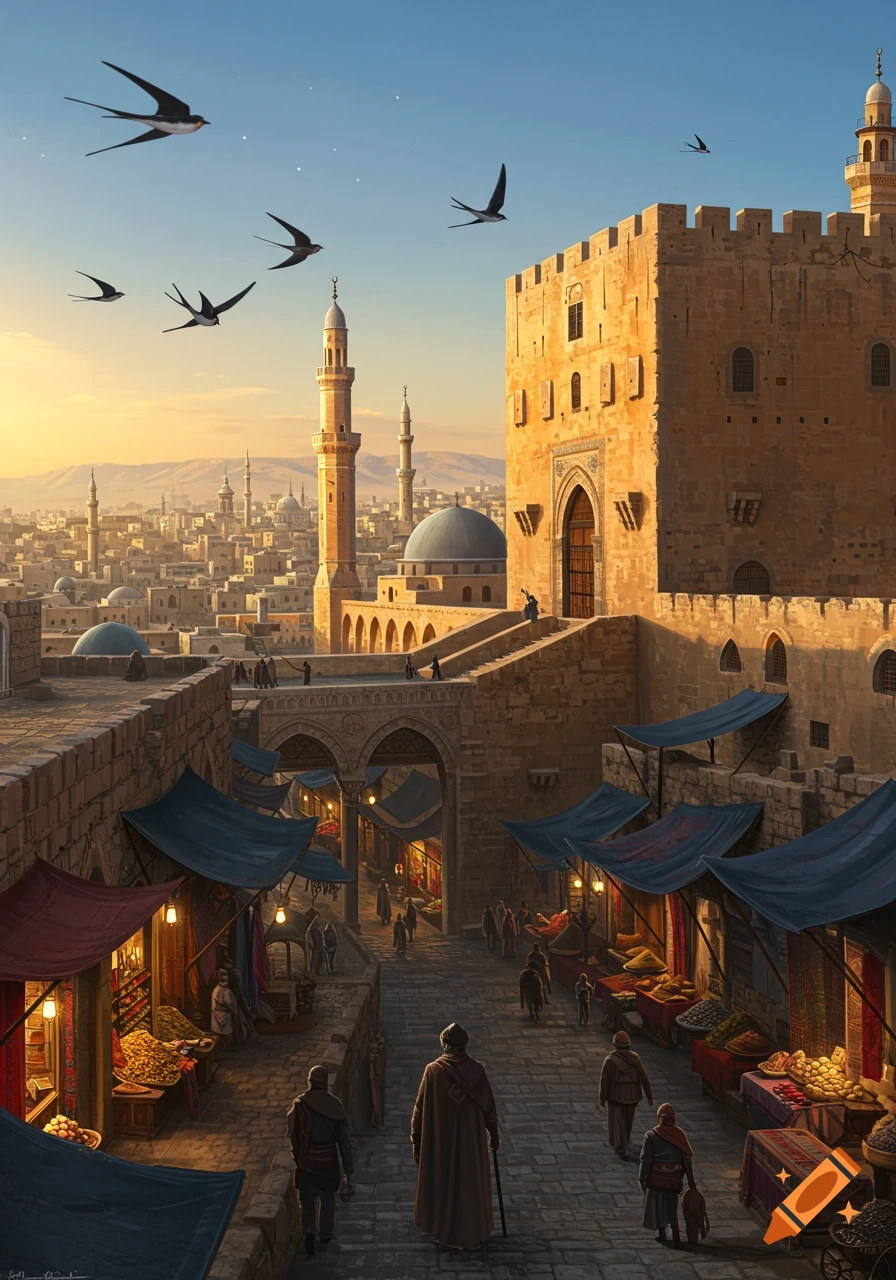
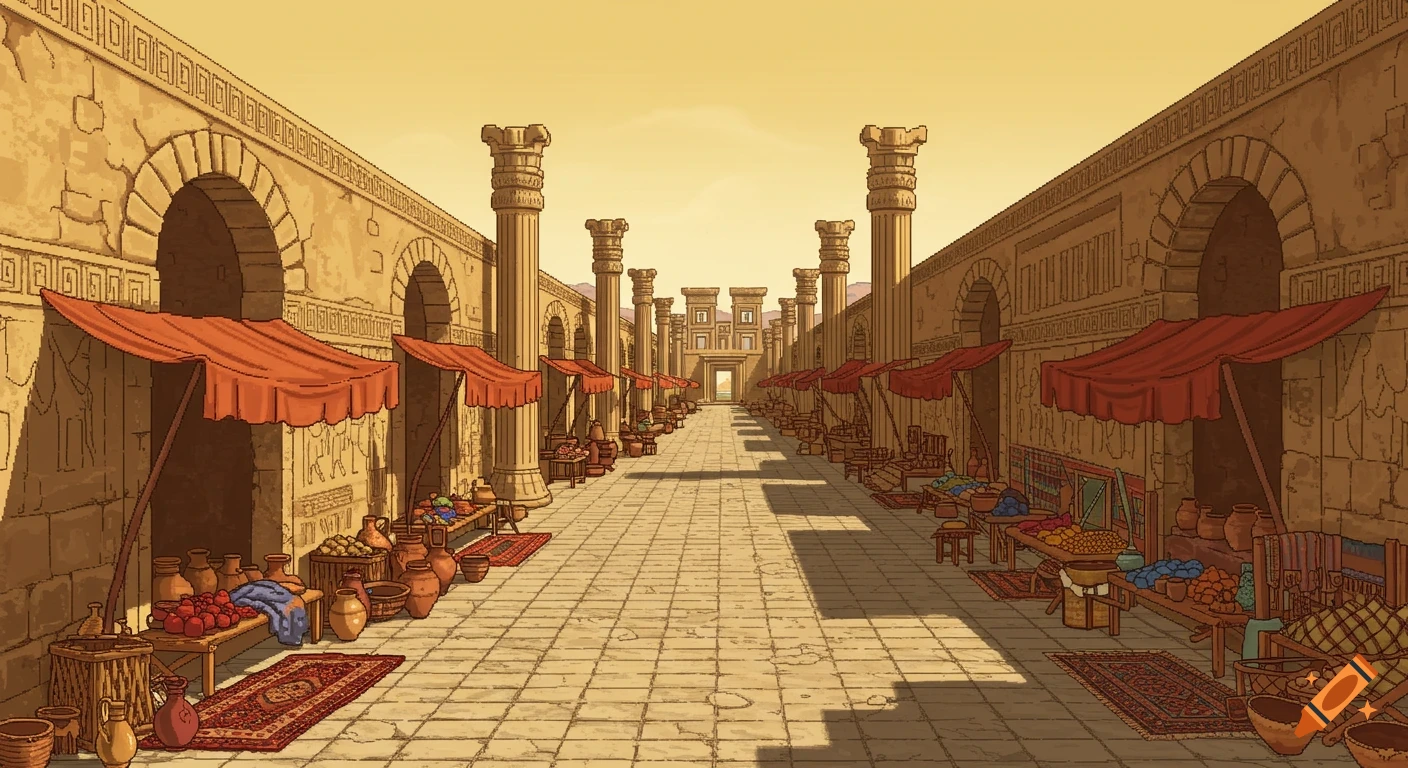
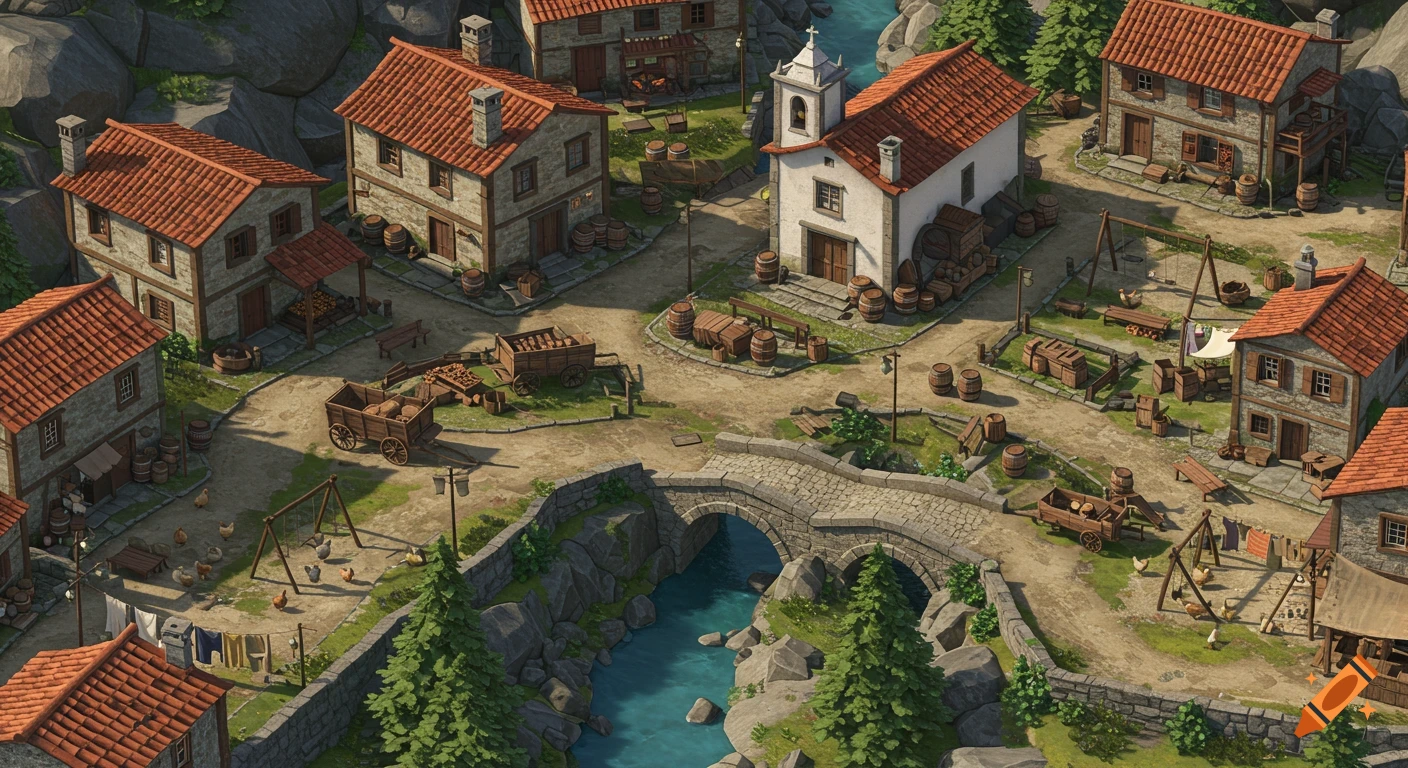
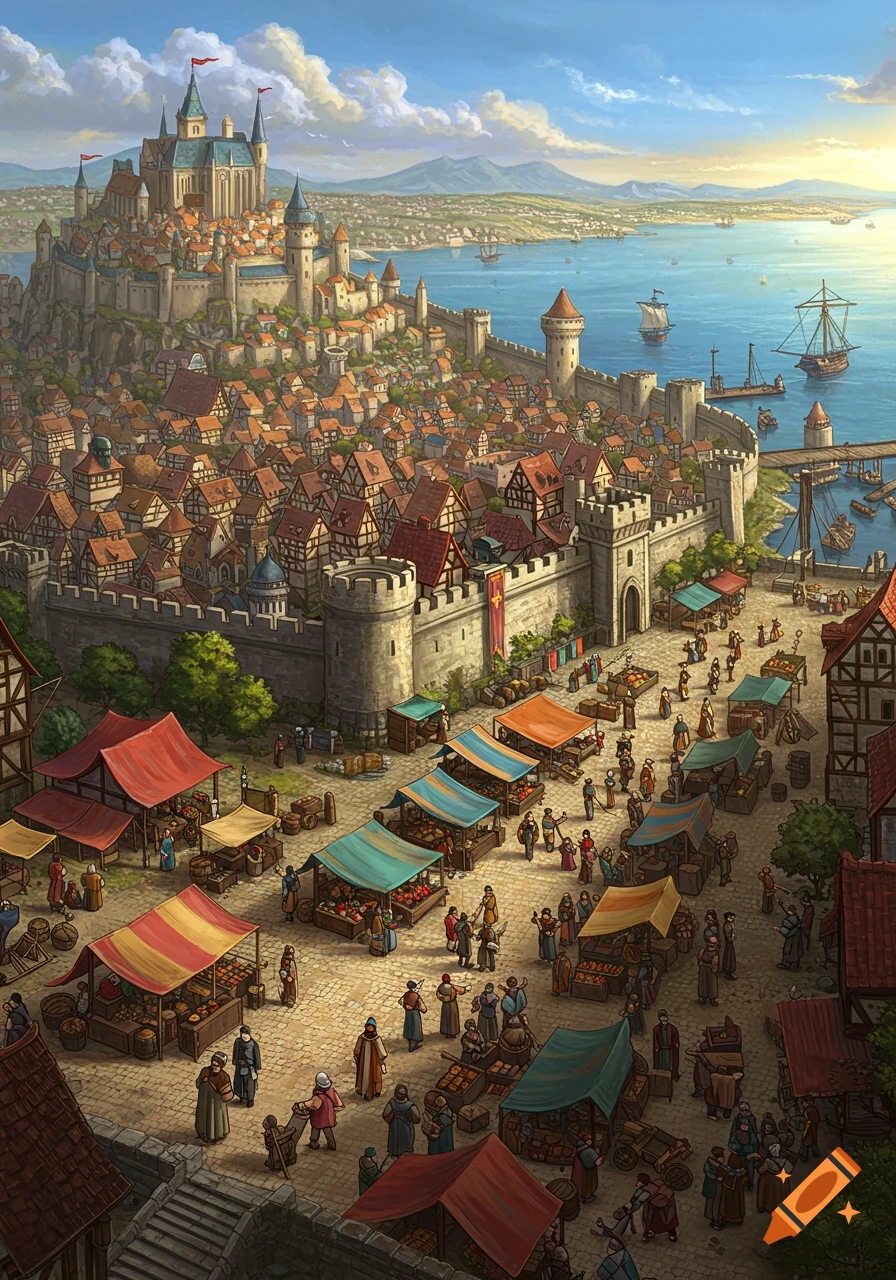
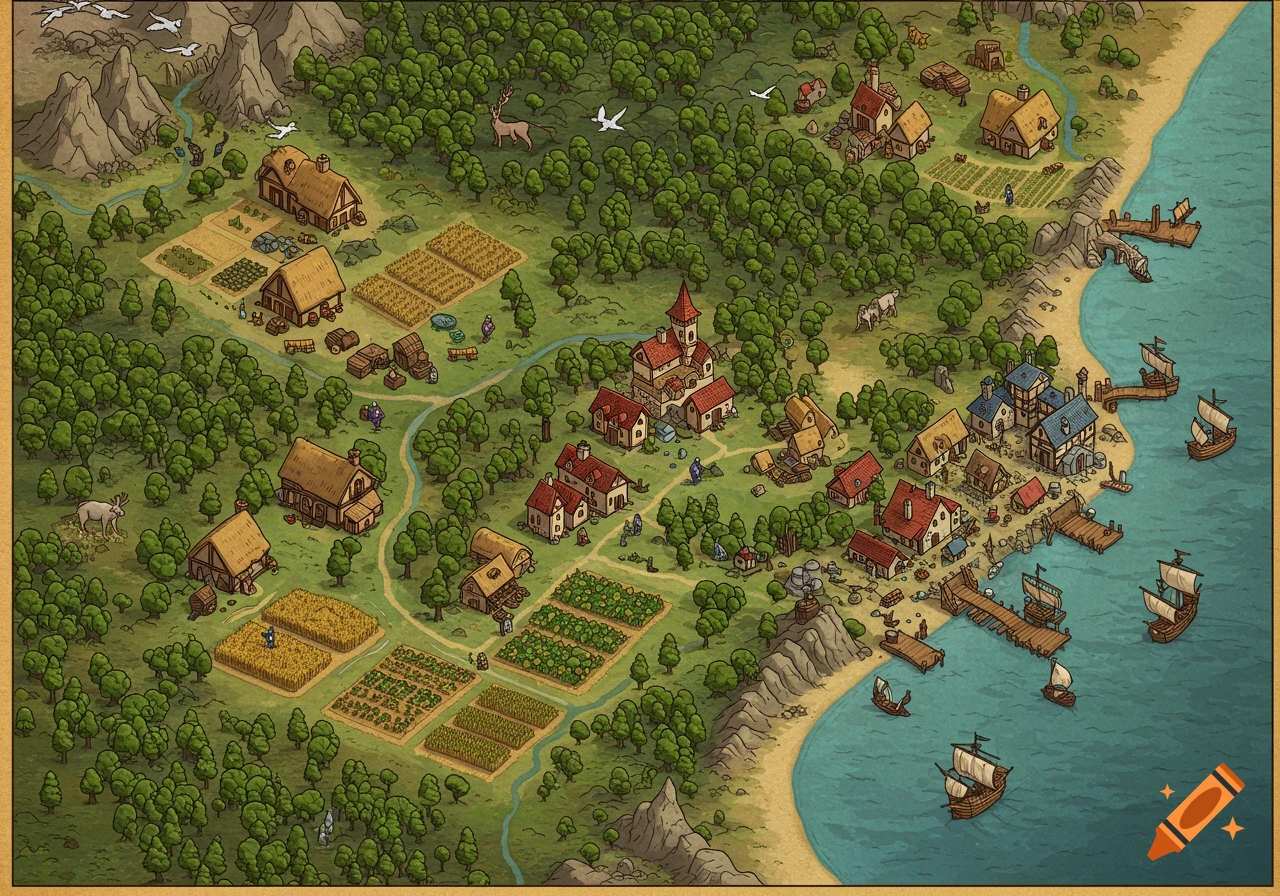
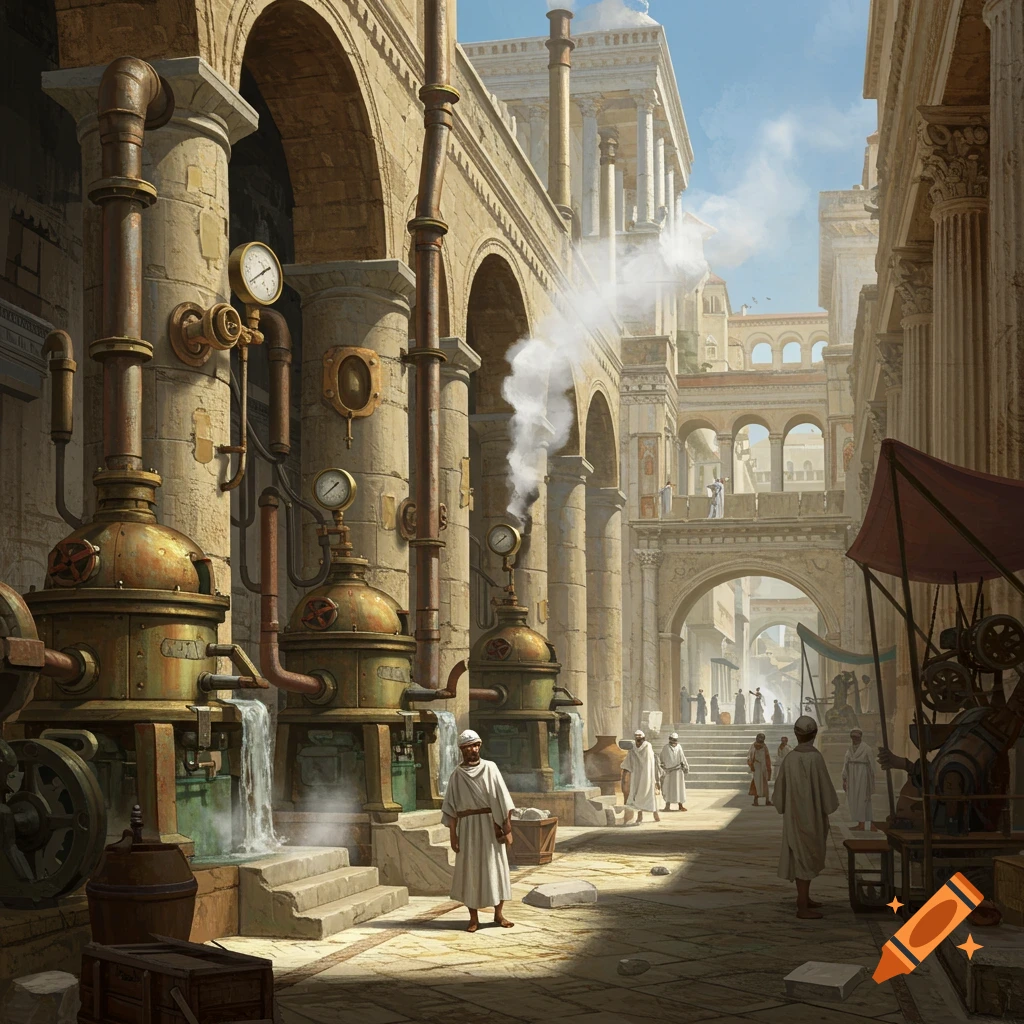
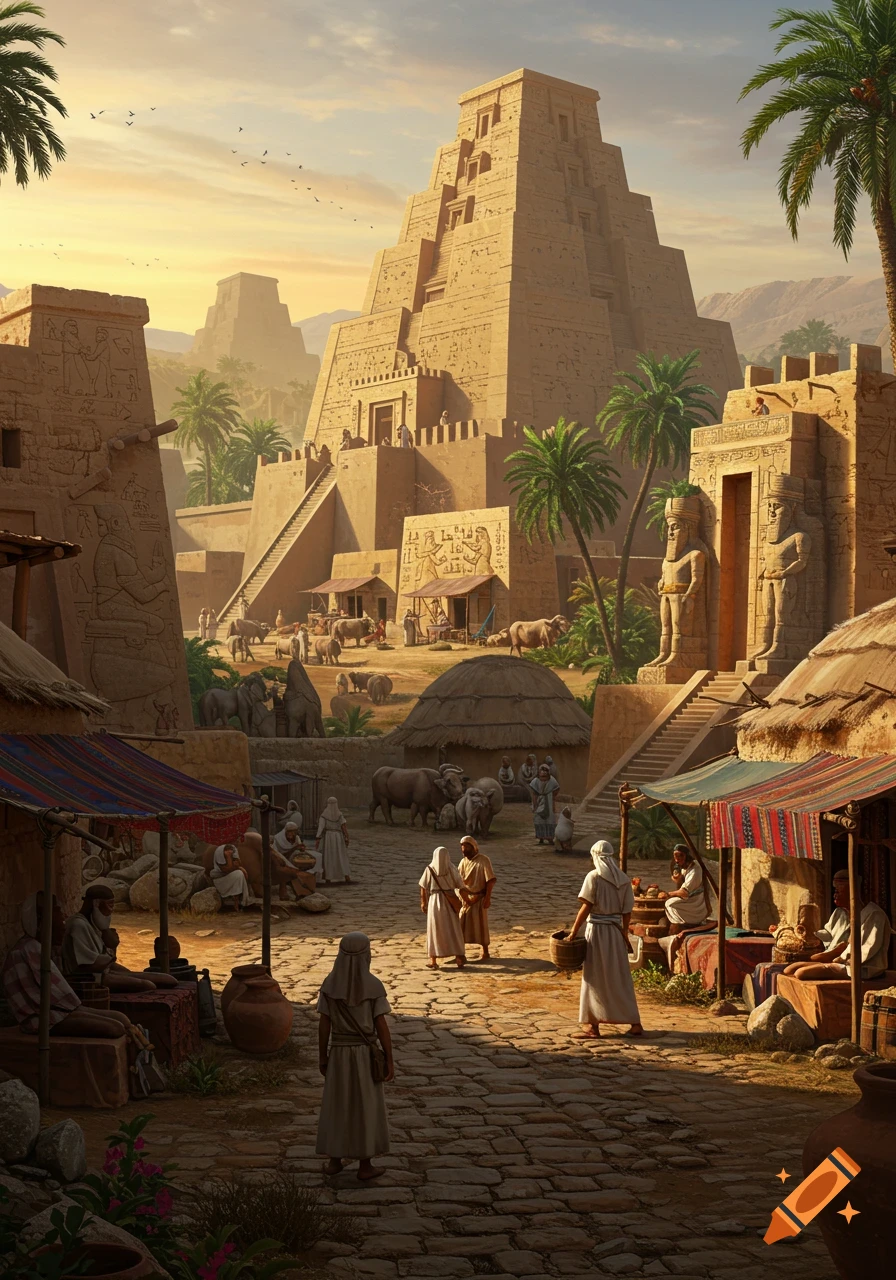
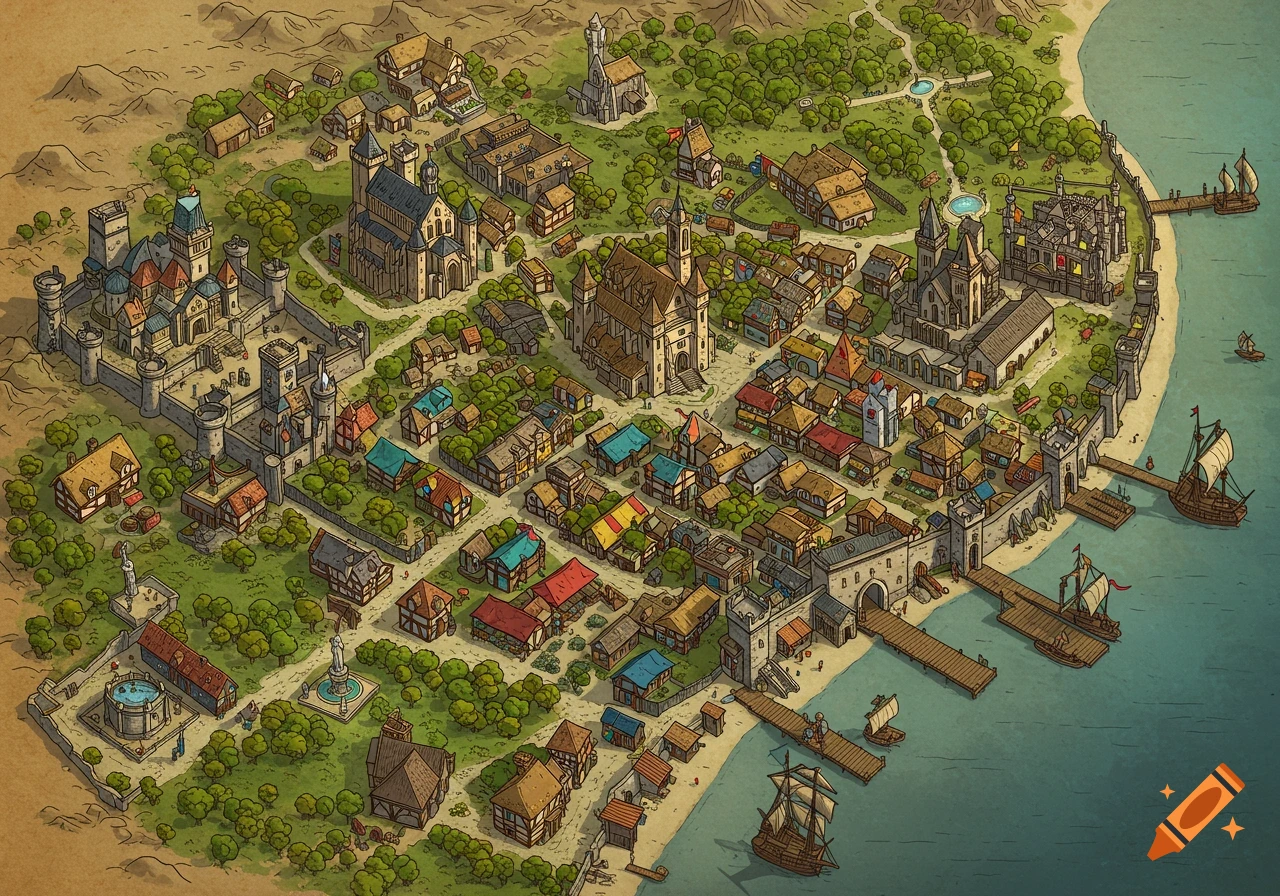
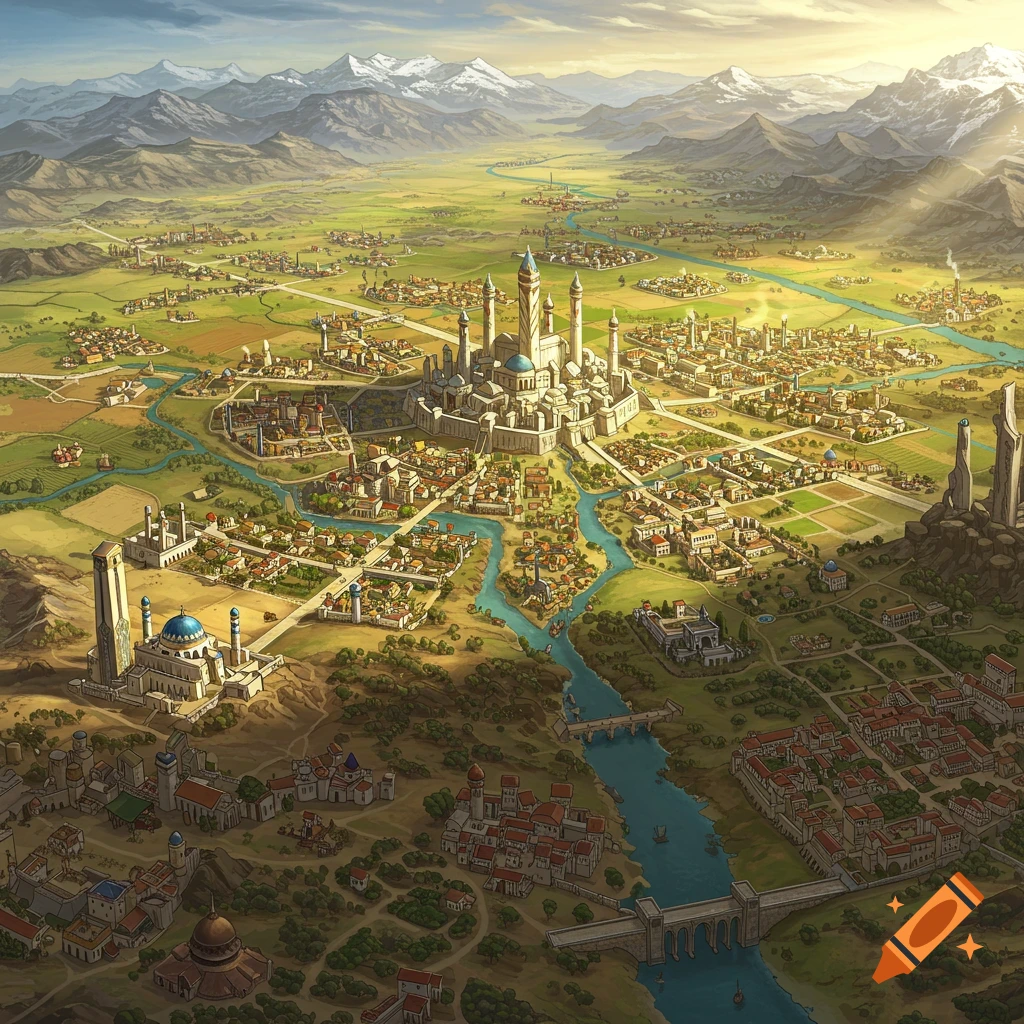
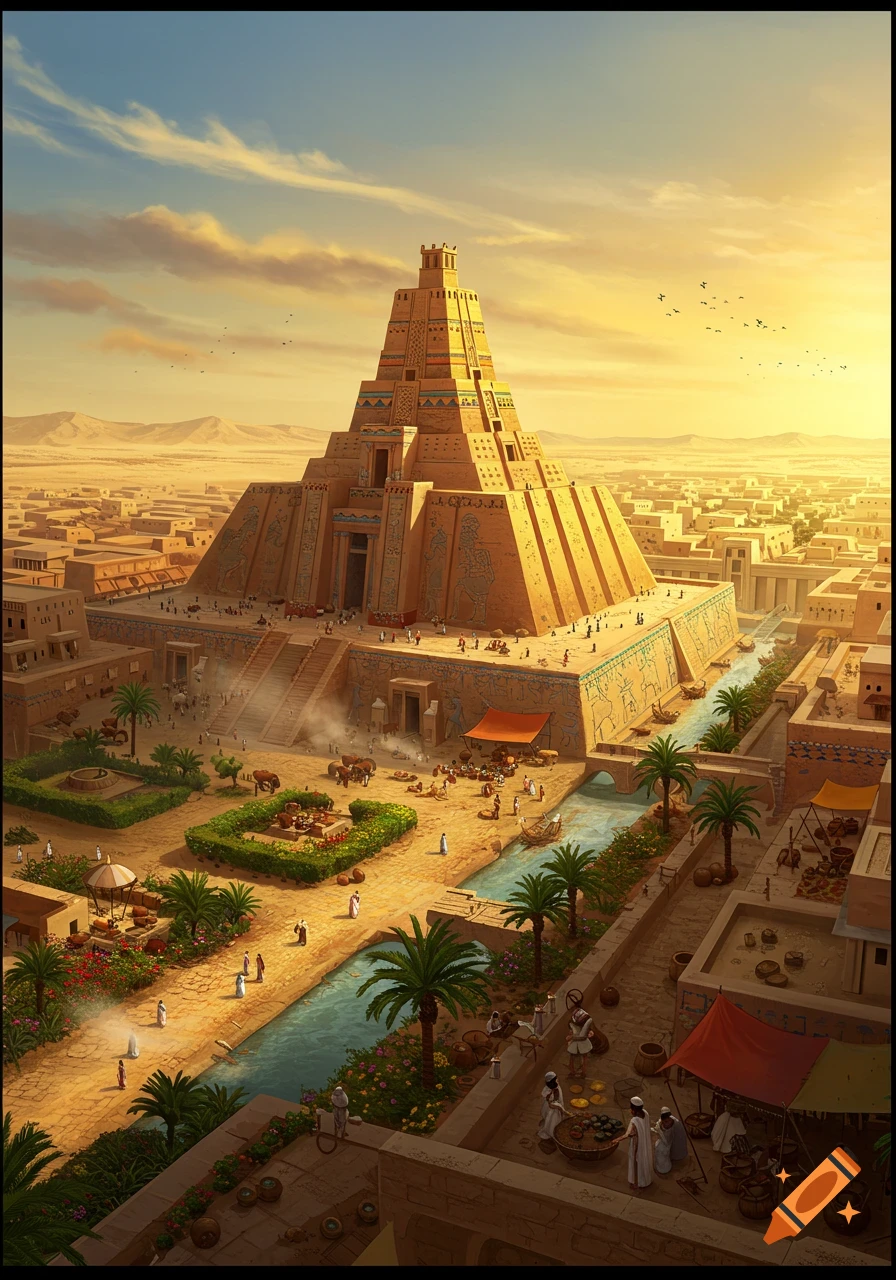
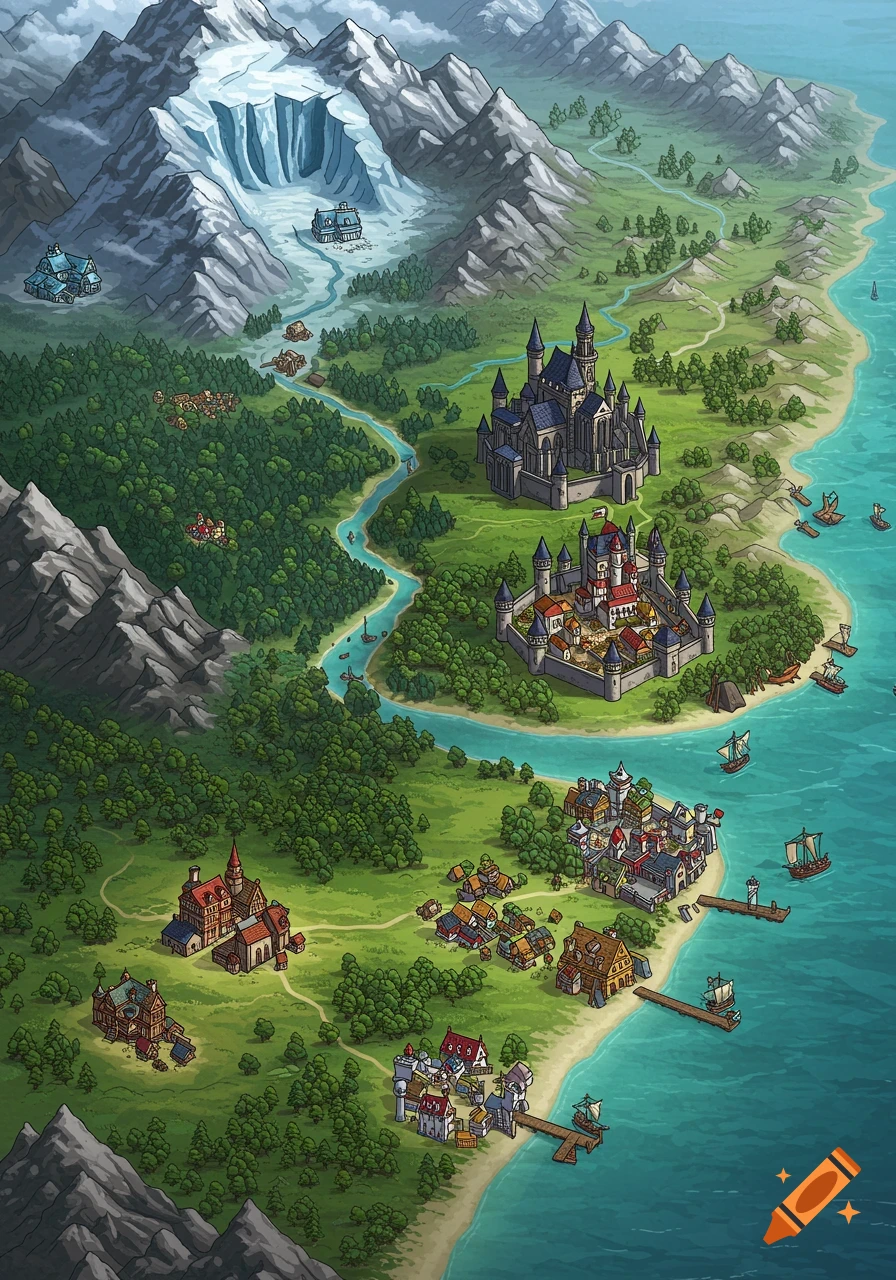
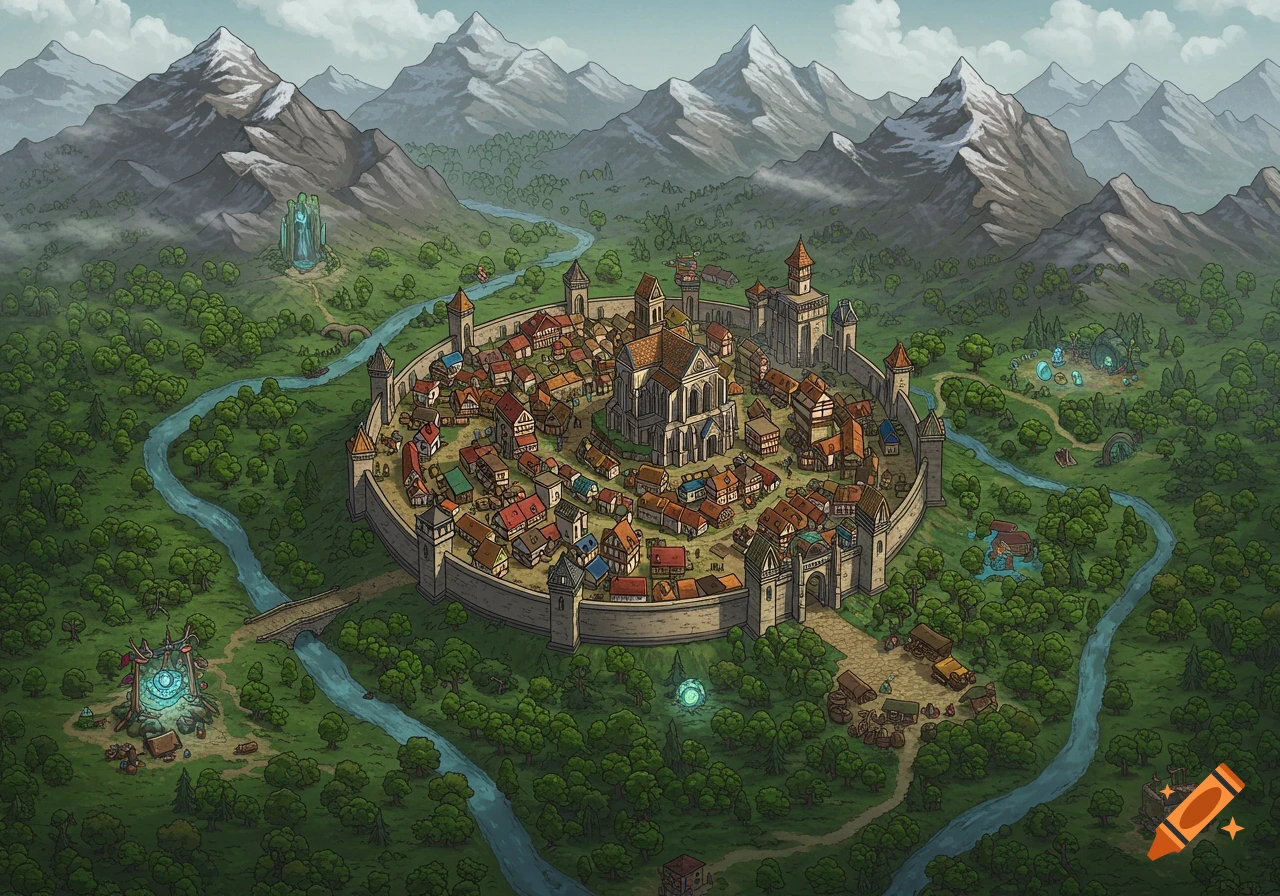
An aerial illustration of a walled ancient city nestled beside a winding river, with houses, a marketplace, and large green farm fields.
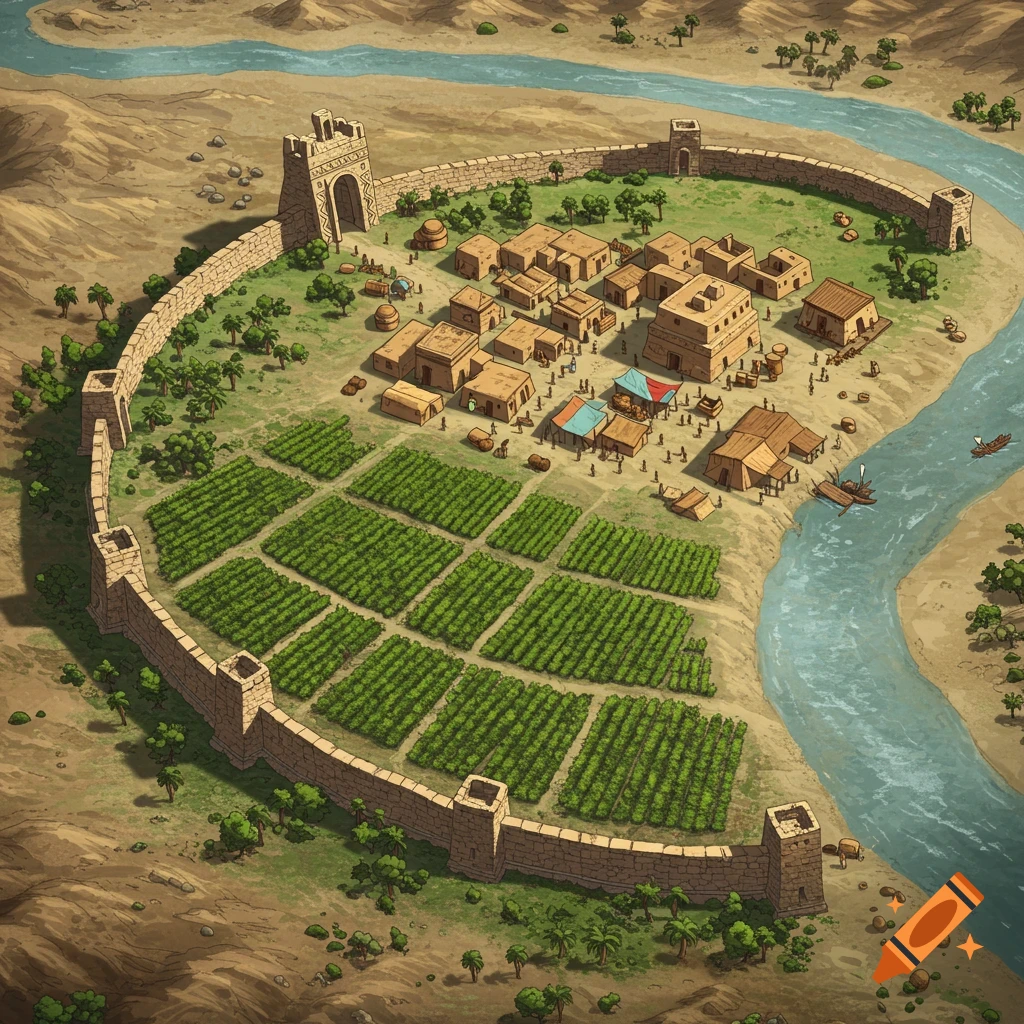
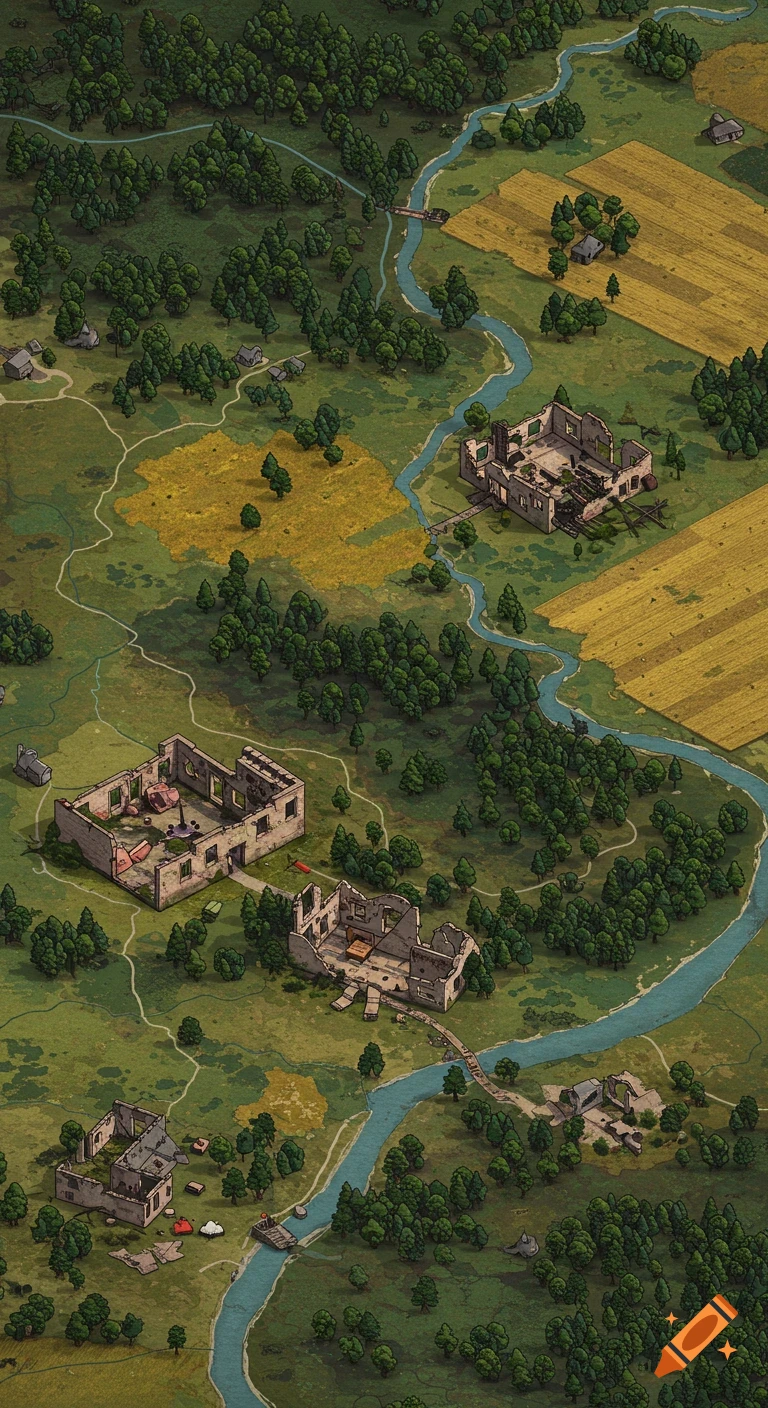
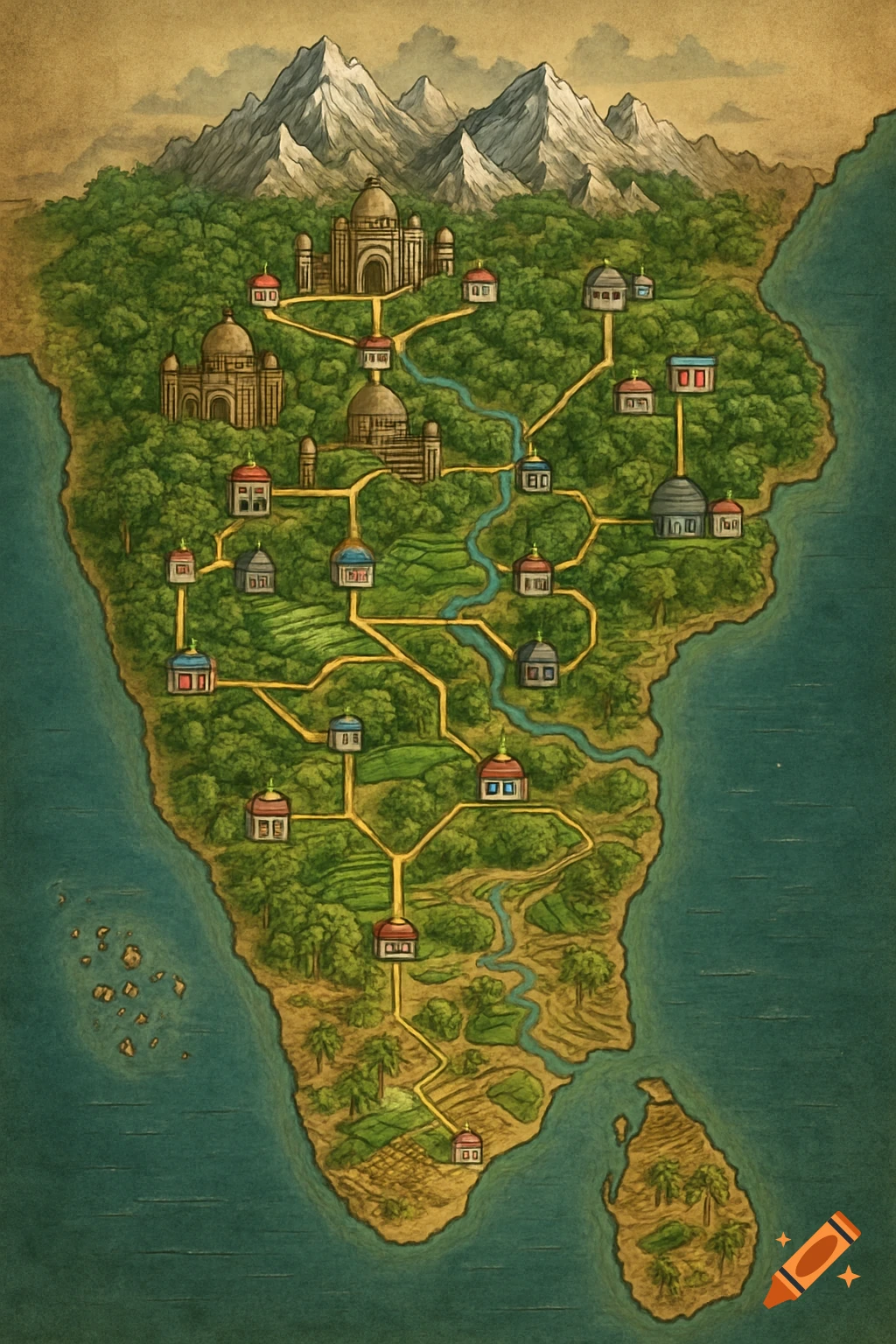
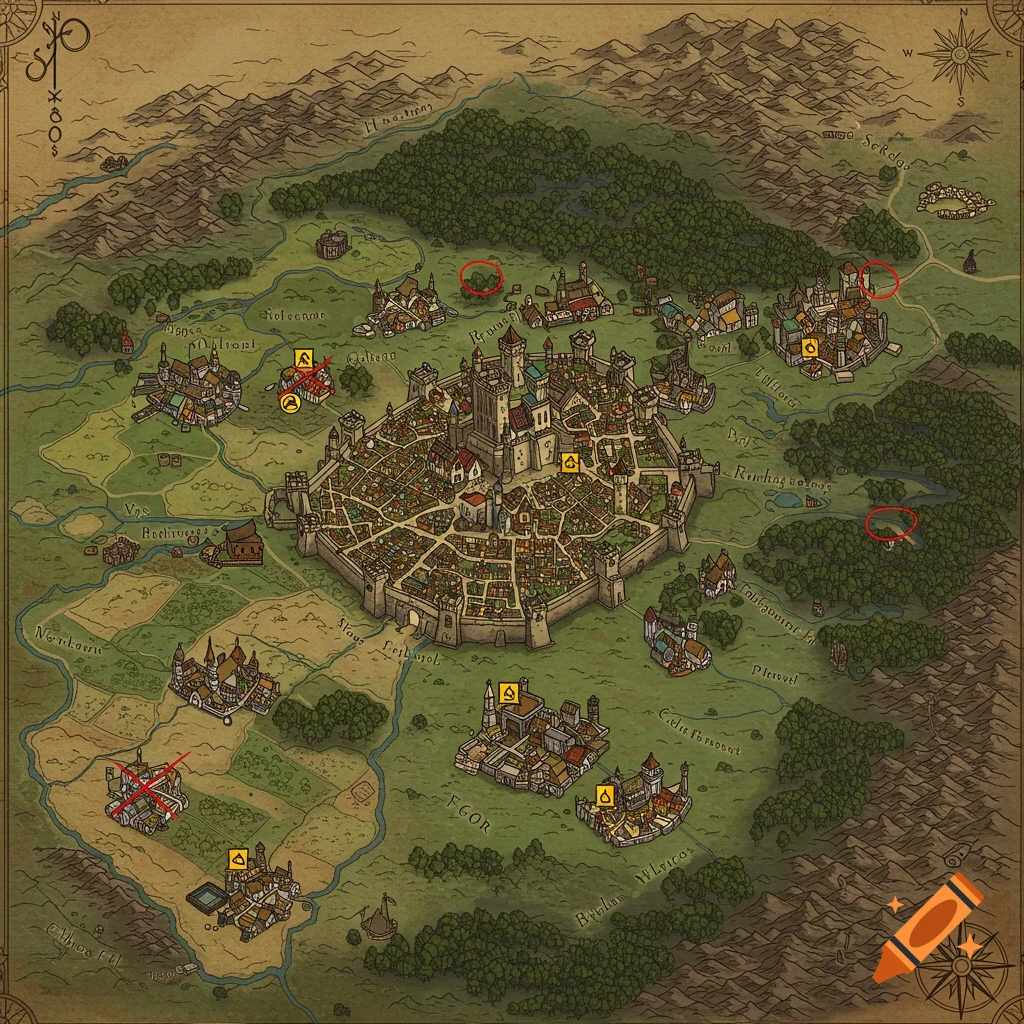
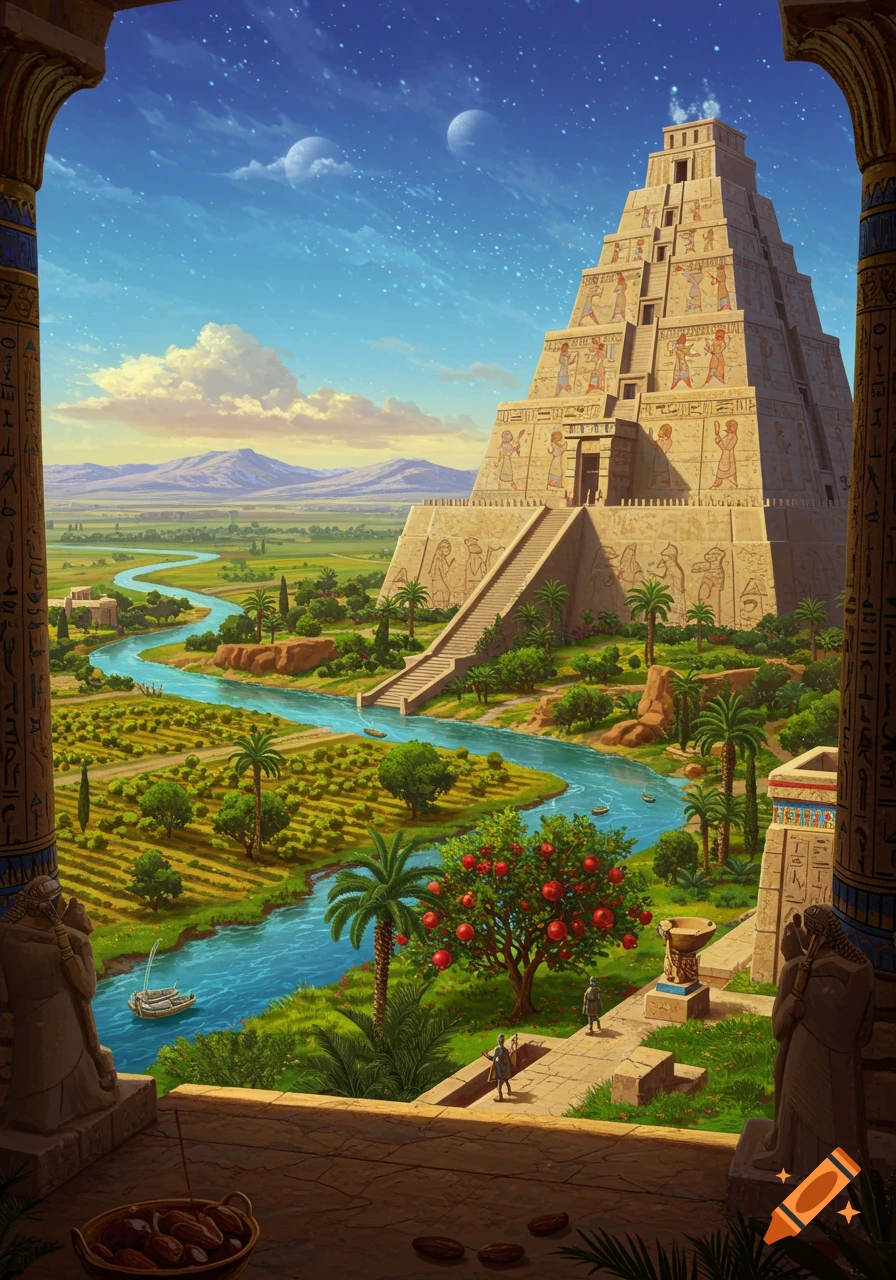
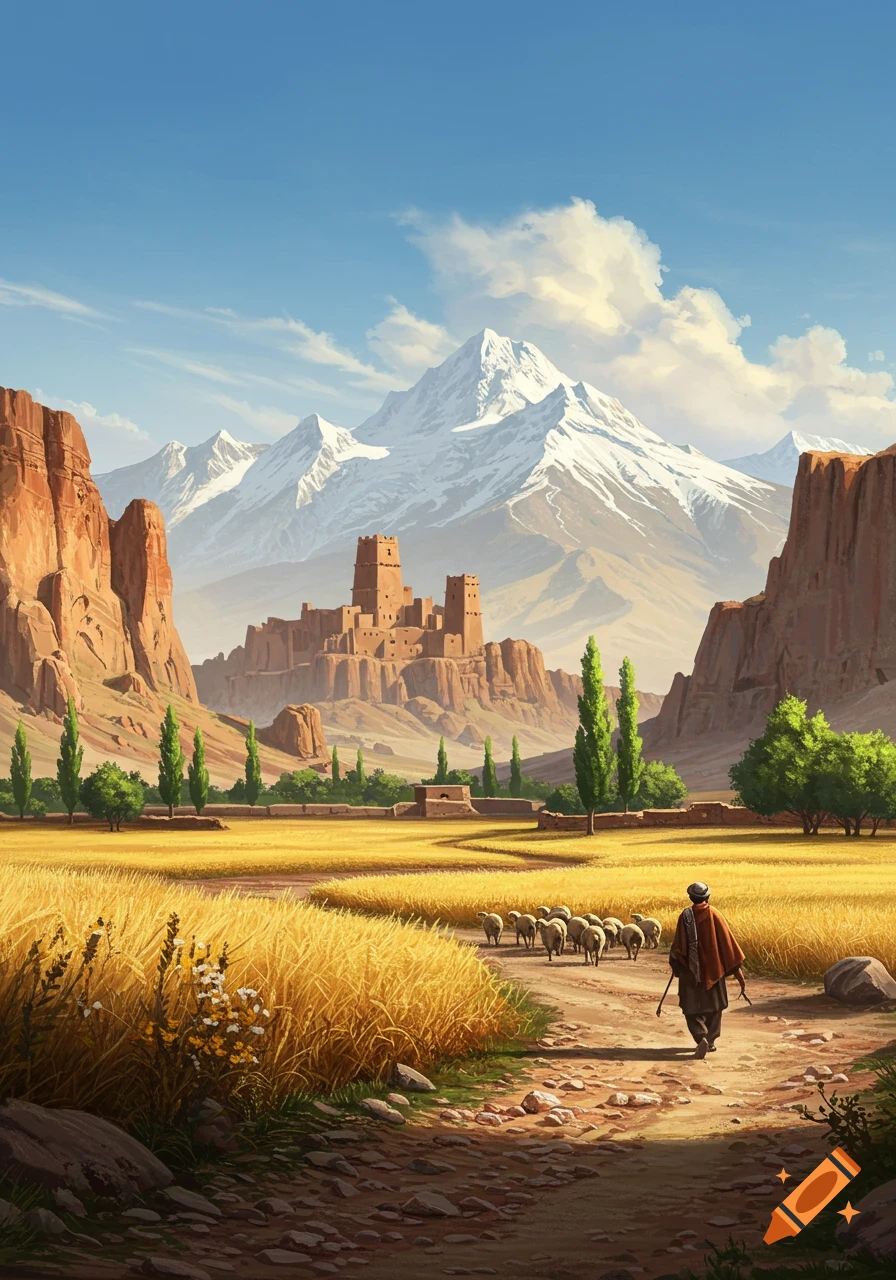
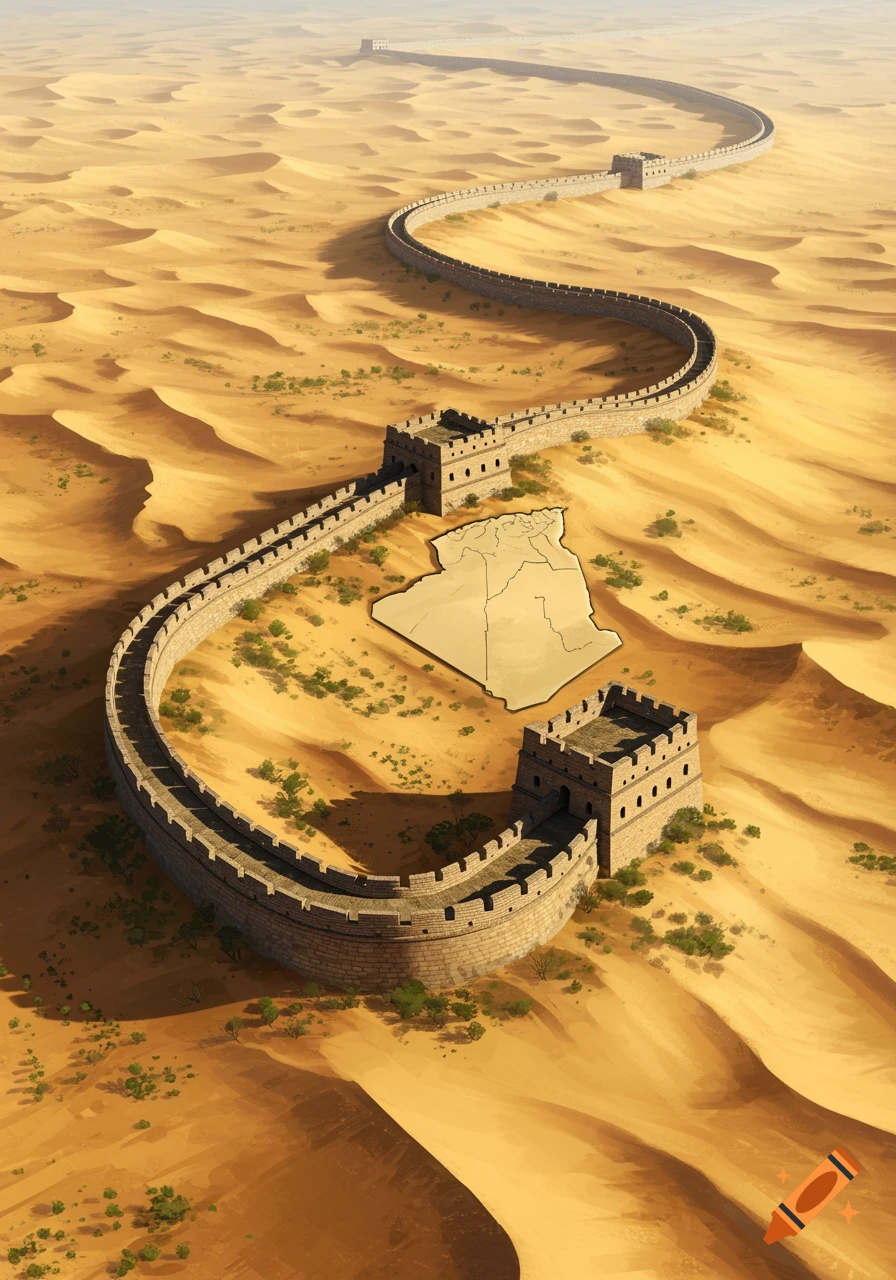
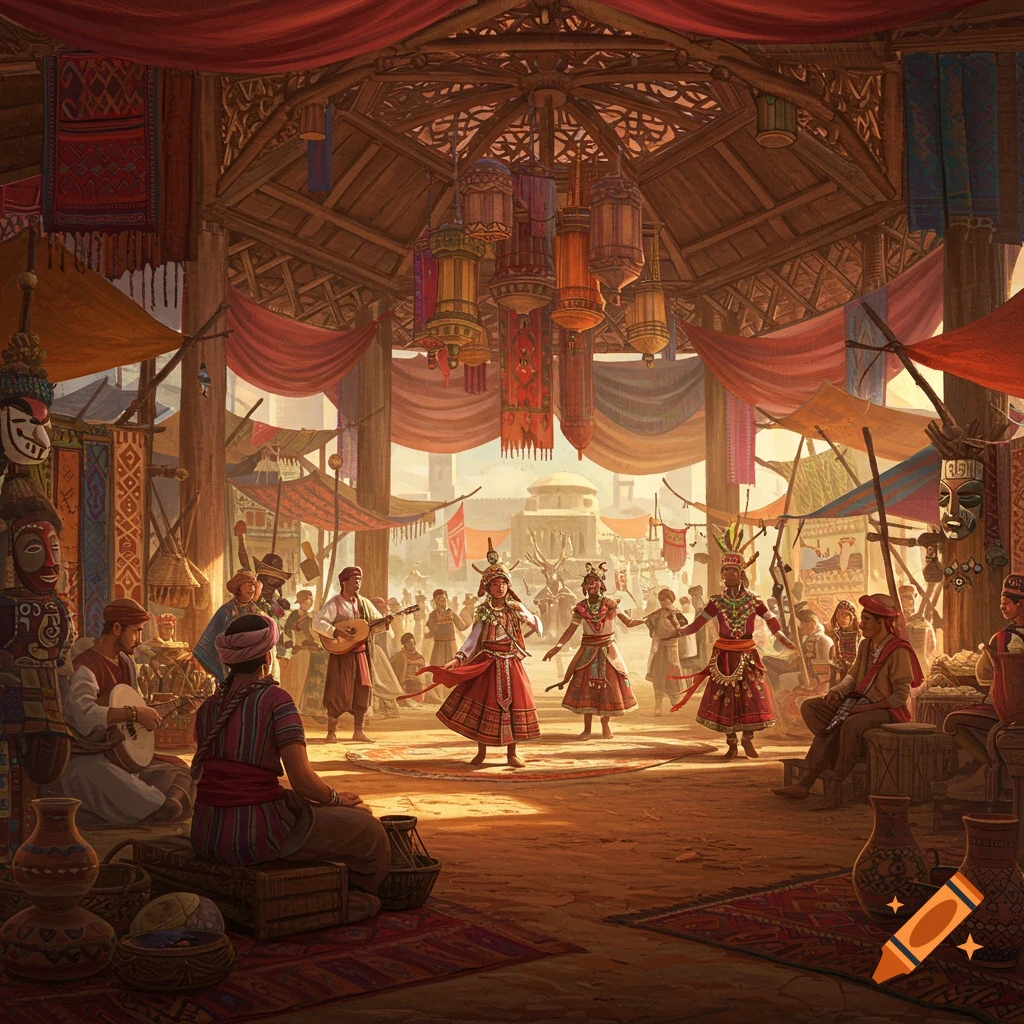
1. Area to Grow Food The most crucial element of any civilization is a stable food supply. Early civilizations were built near water sources, like rivers, because they provided fertile soil for agriculture and a source of fresh water for drinking and irrigation. On your map, designate a large area for farming. Draw rows of crops, and don't forget to include a river flowing nearby. This area, often referred to as the fertile crescent in ancient civilizations, is where your people will grow the food needed to survive and grow. 🌾 <hr> 2. Protection As your civilization grows, you'll need a way to protect your people and resources from threats. This is where city walls come in. Draw a sturdy wall around the main part of your city. It doesn't have to be a perfect circle; it can follow the contours of the land. Include gates for people to enter and exit. Your people's safety is a top priority! 🛡️ <hr> 3. Houses or Villages People need places to live. Designate an area within your walls for houses or villages. You can draw a cluster of small squares or rectangles to represent houses. Make them look like they're arranged in a way that makes sense, maybe along streets or around a central area. This is where your people will sleep, raise families, and find shelter from the elements. 🏘️ <hr> 4. Shared Community Area A community needs a place to come together. The marketplace is the heart of a civilization's economy. On your map, create an open area where people can gather. Draw See more