Several types of mushrooms growing in transparent soil columns on a lab bench in a scientific laboratory setting.
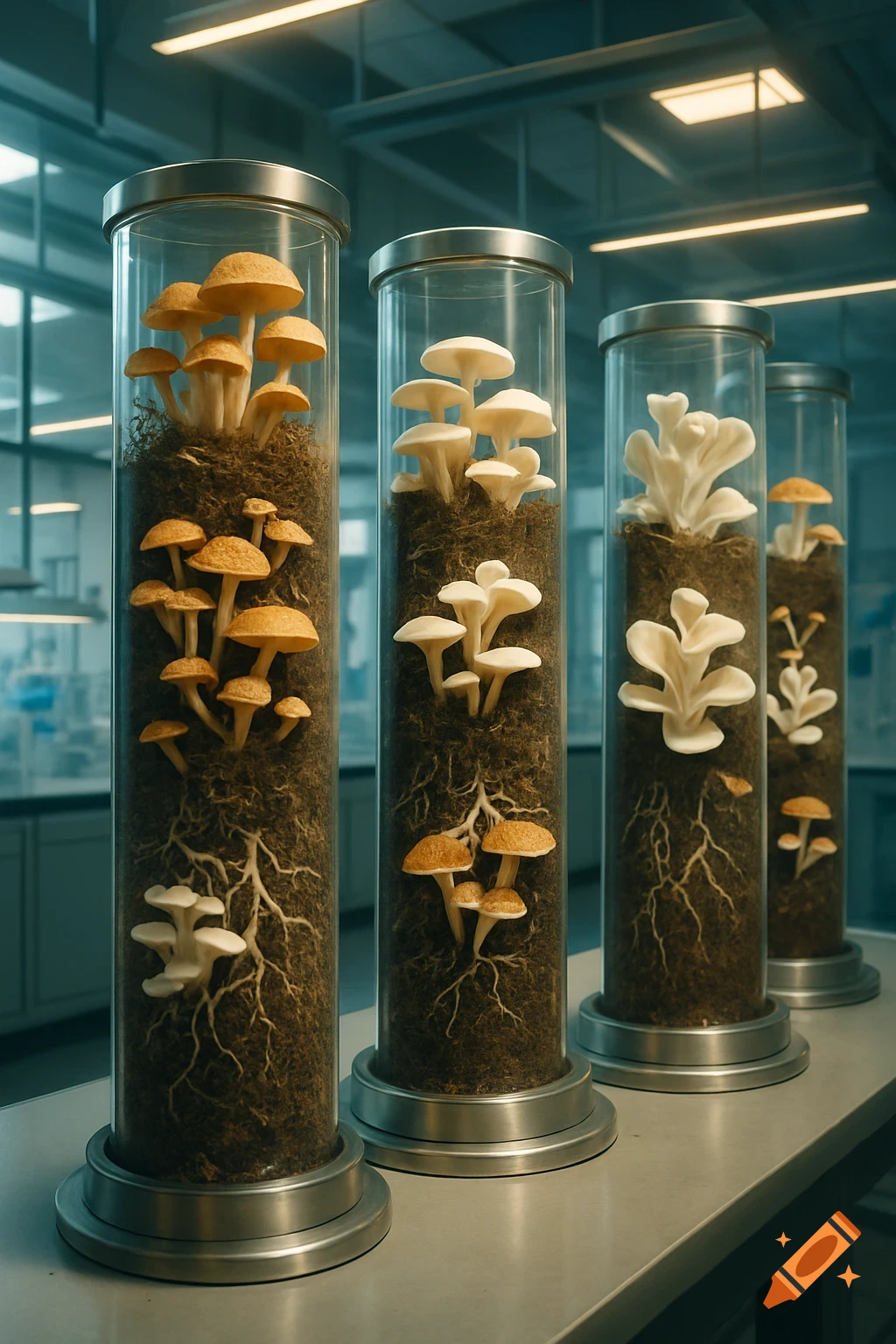
The occurrence of contaminants like pharmaceuticals and hydrocarbons in terrestrial environments poses growing ecological and health concerns due to their persistence, toxicity, and recalcitrance to conventional remediation techniques. This study addresses this challenge by separately investigating the bioremediation of two model pollutants: ibuprofen and naphthalene. It evaluates bioremediation of ibuprofen (a representative pharmaceutical) and naphthalene (a model polycyclic aromatic hydrocarbon) in separate soil column systems using synergistic fungal–bacterial consortia under controlled conditions. A total of nine soil columns (1 m height) for each contaminant were prepared in three distinct treatment batches: Bacterial/Fungal Consortium (B/F), B/F supplemented with Armillaria mellea (Honey Mushroom), and B/F supplemented with Pleurotus ostreatus (Oyster Mushroom). Each batch comprised three replicate columns. The bioaugmented and biostimulated systems achieved >93% degradation of ibuprofen and >98% degradation of naphthalene, confirming the robustness of the fungal–bacterial consortium across distinct contaminant classes. Near-natural soil conditions supported optimal enzymatic activity, promoting both oxidative (fungal) and co-metabolic (bacterial) degradation pathways. The results were compared with literature studies on natural bioremediation efficiency. In addition, differences between columns with diverse treatment conditions were assessed. See more