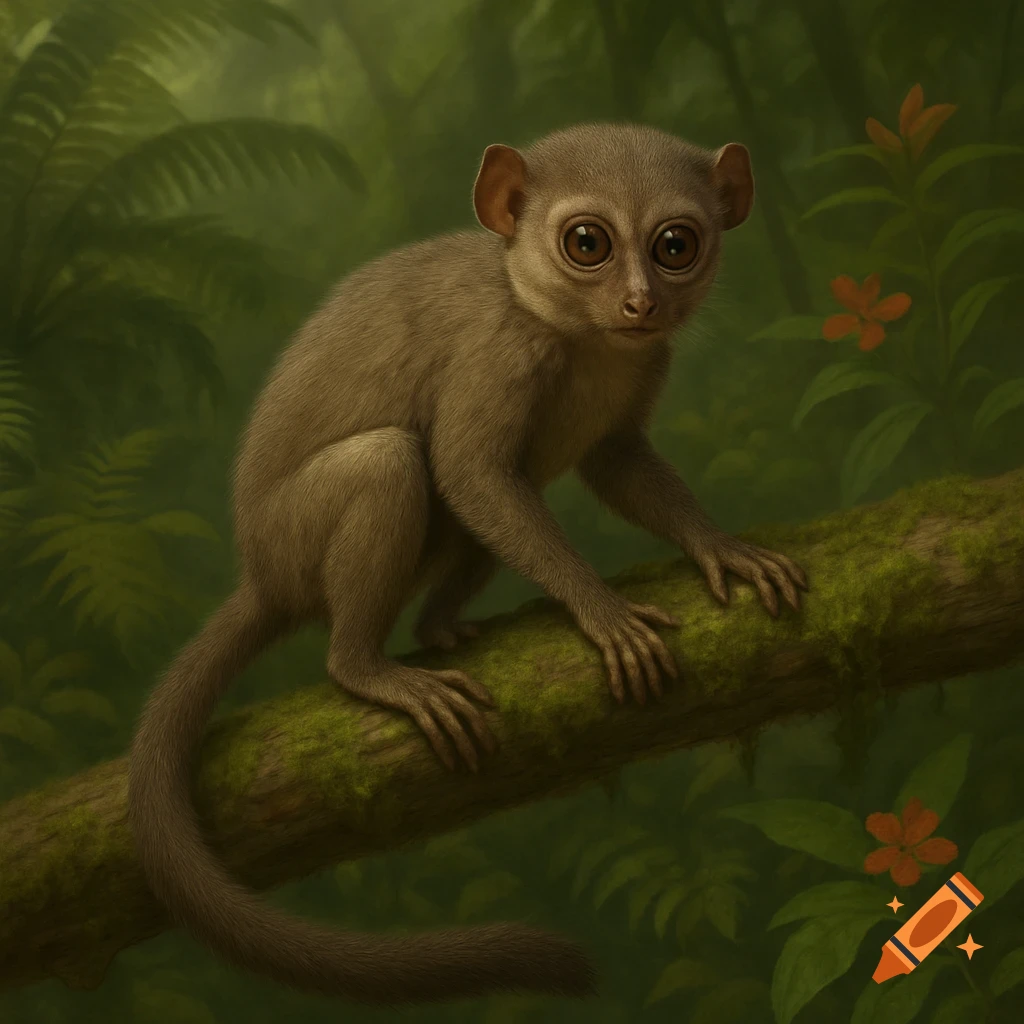
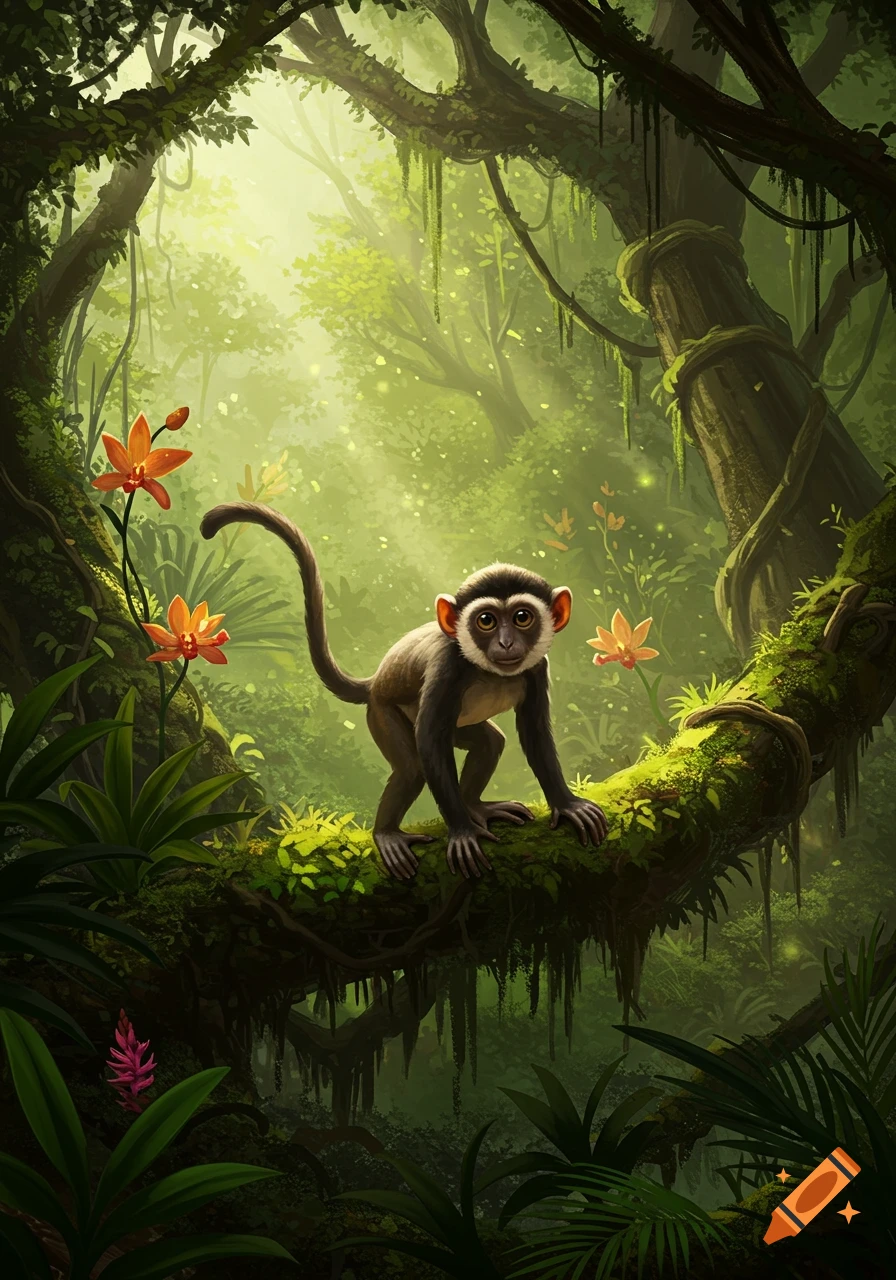
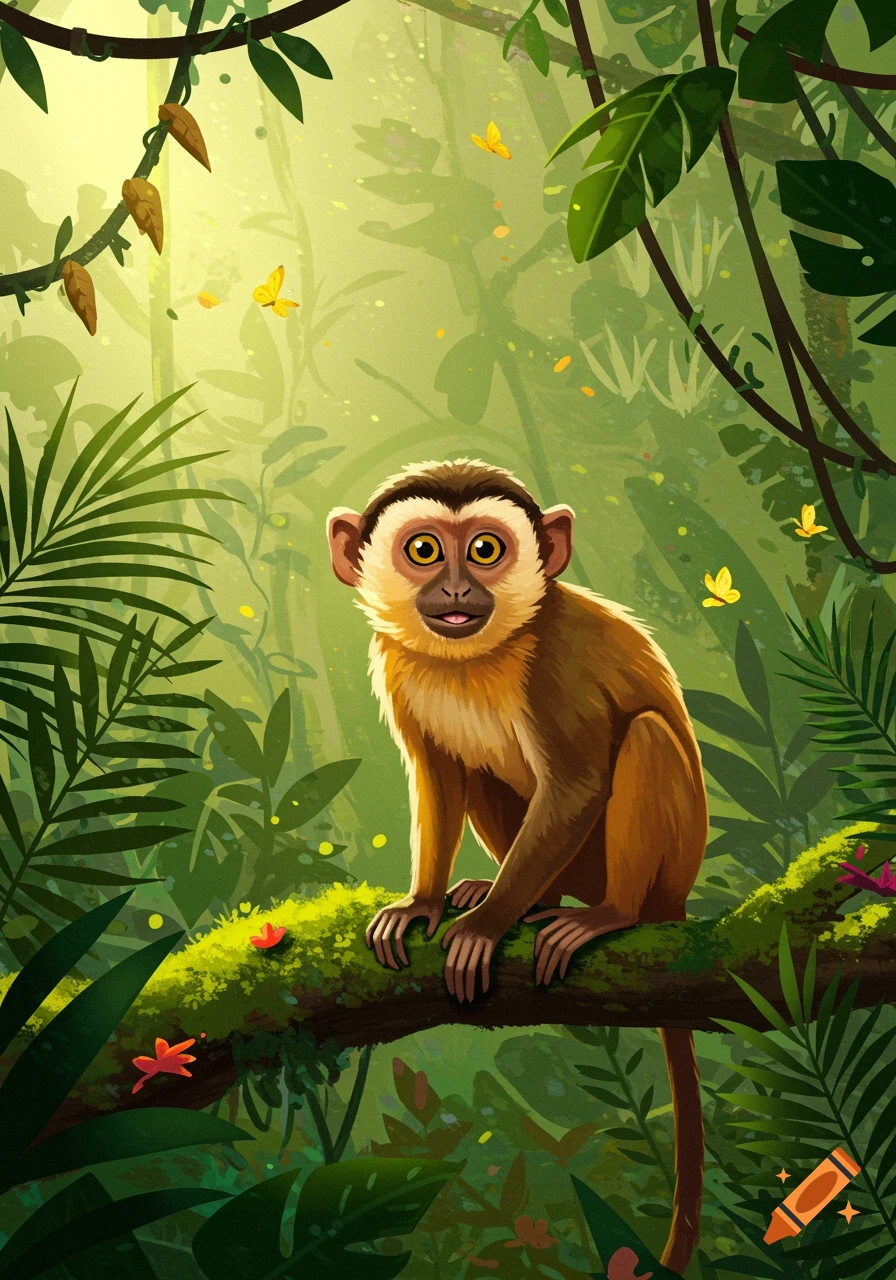
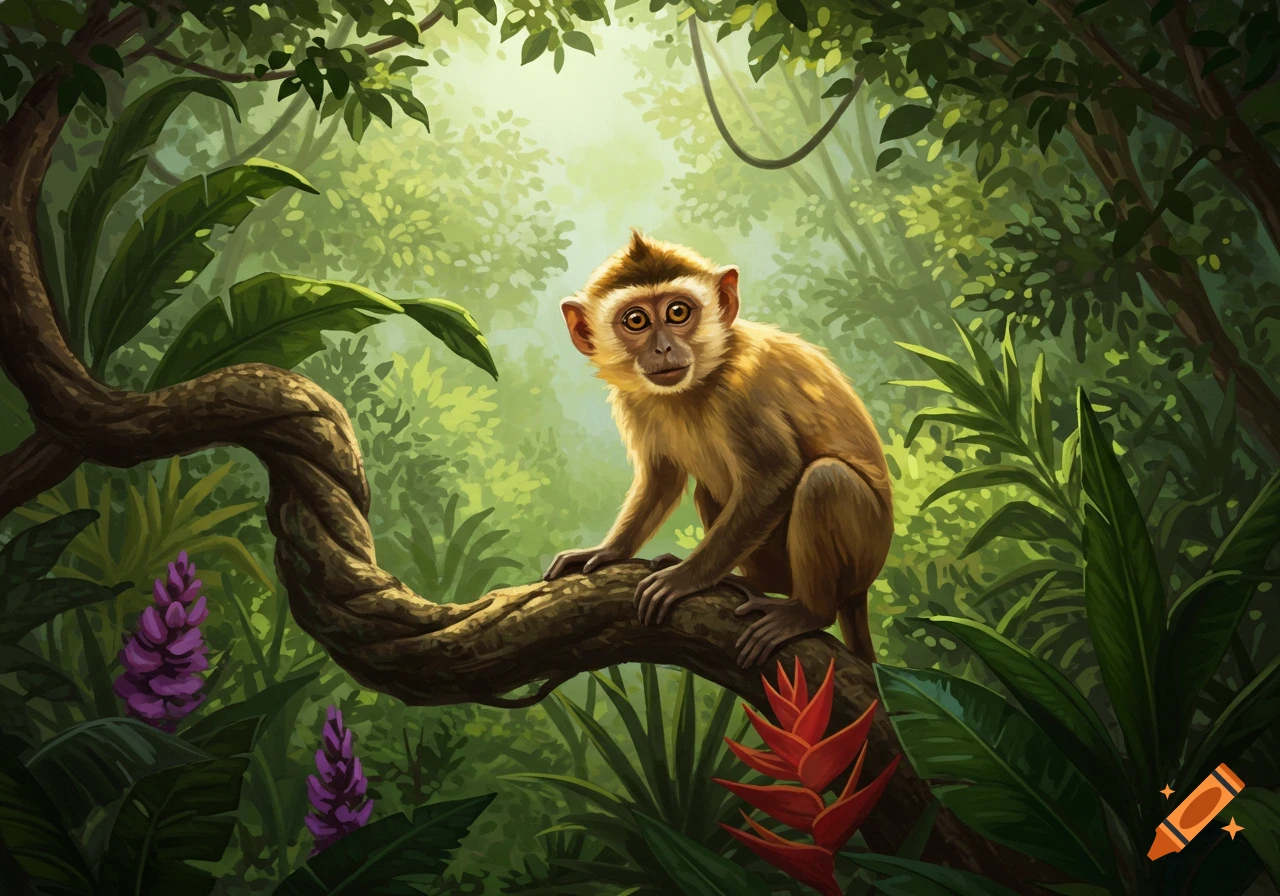
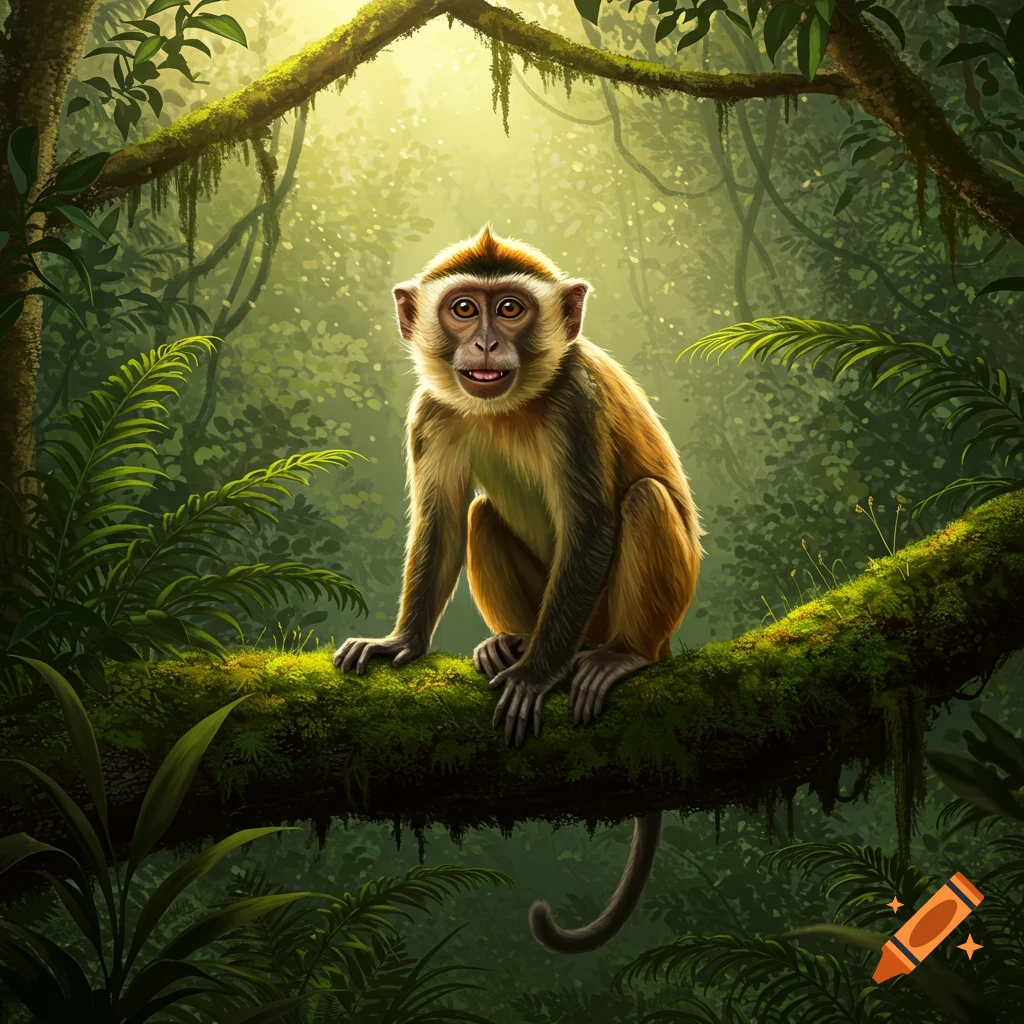
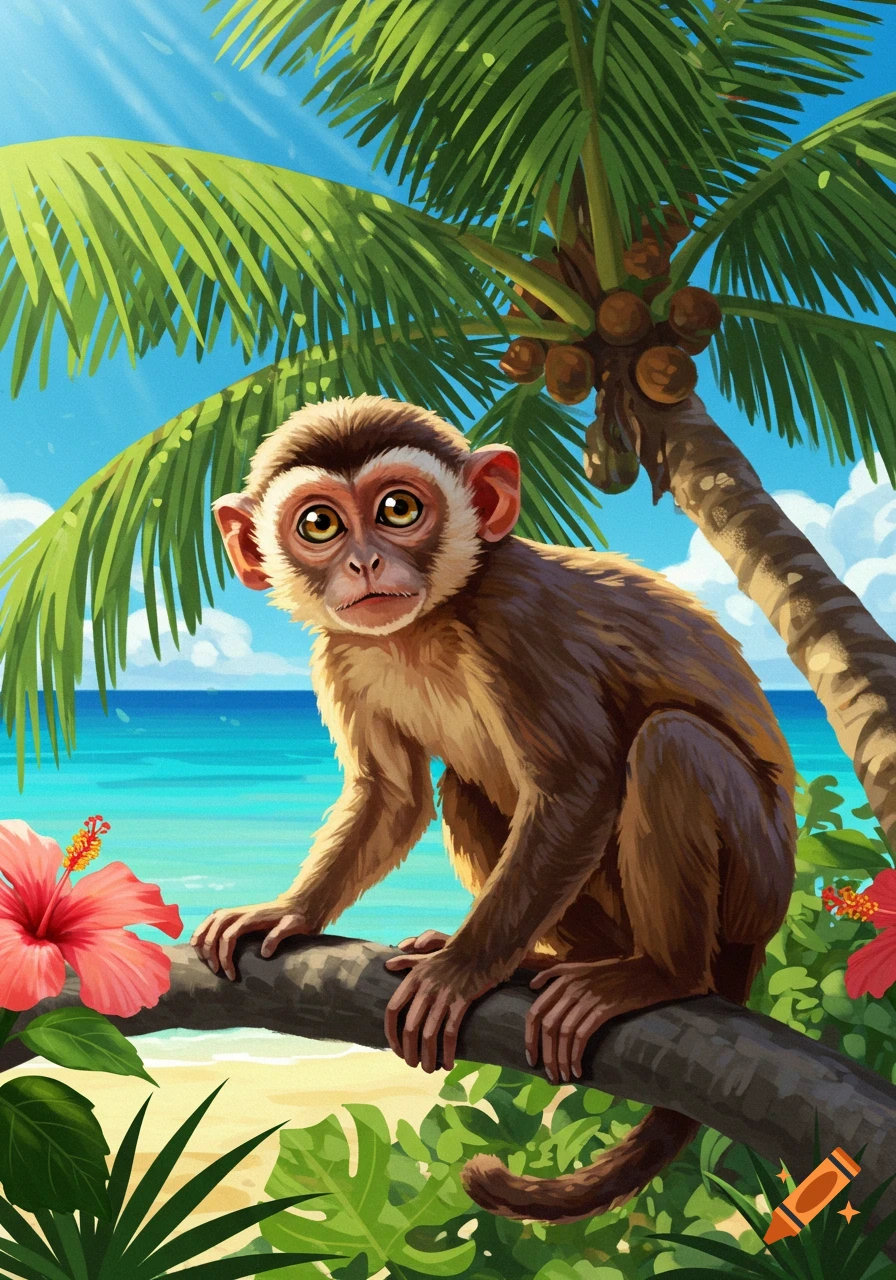
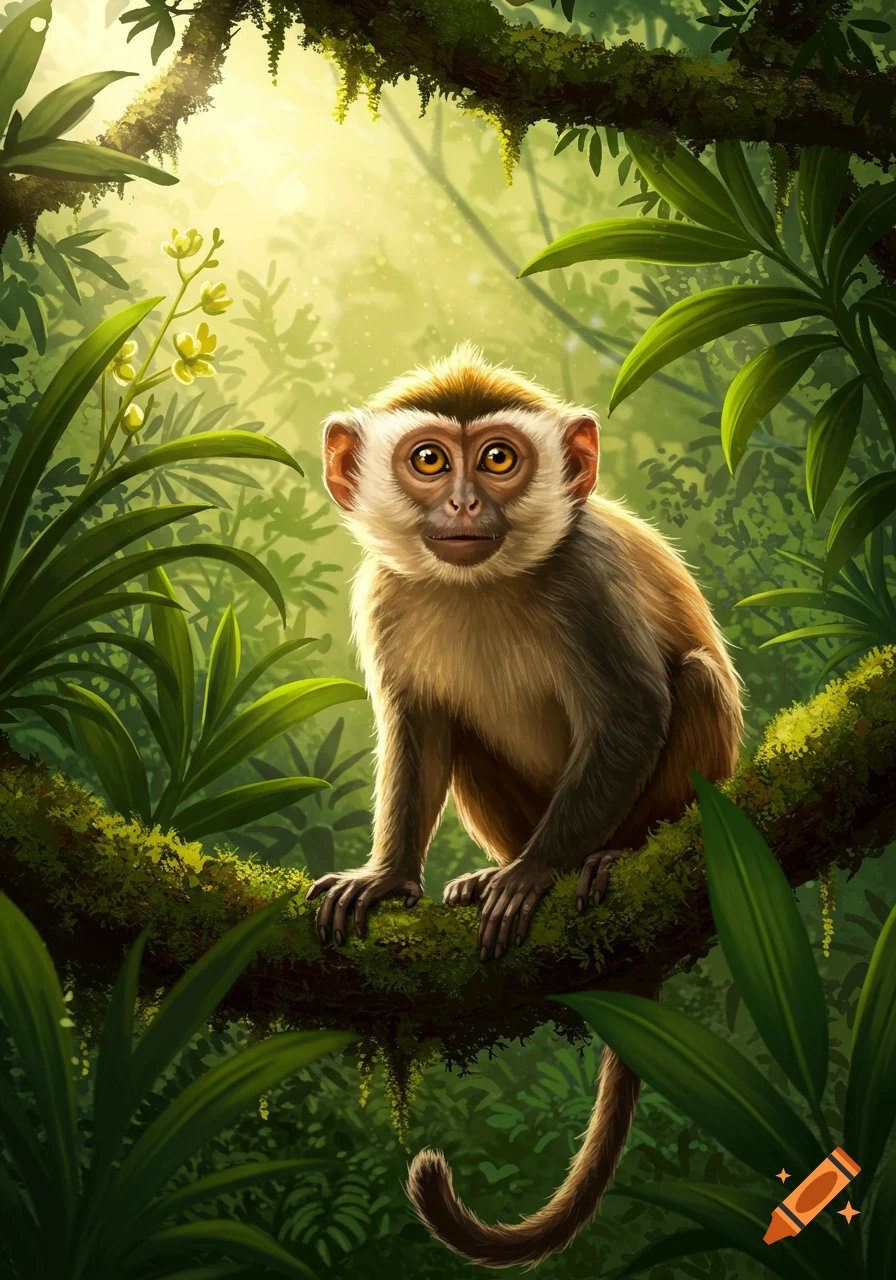
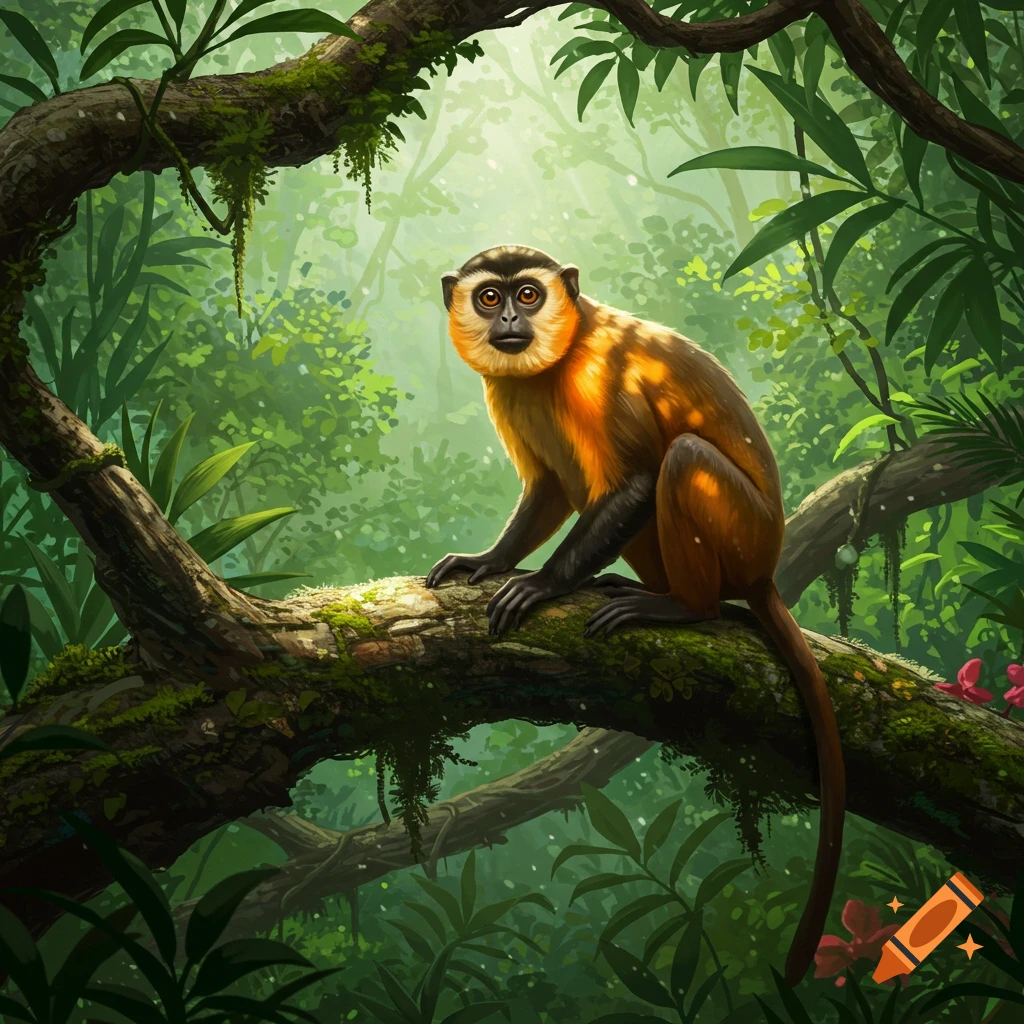
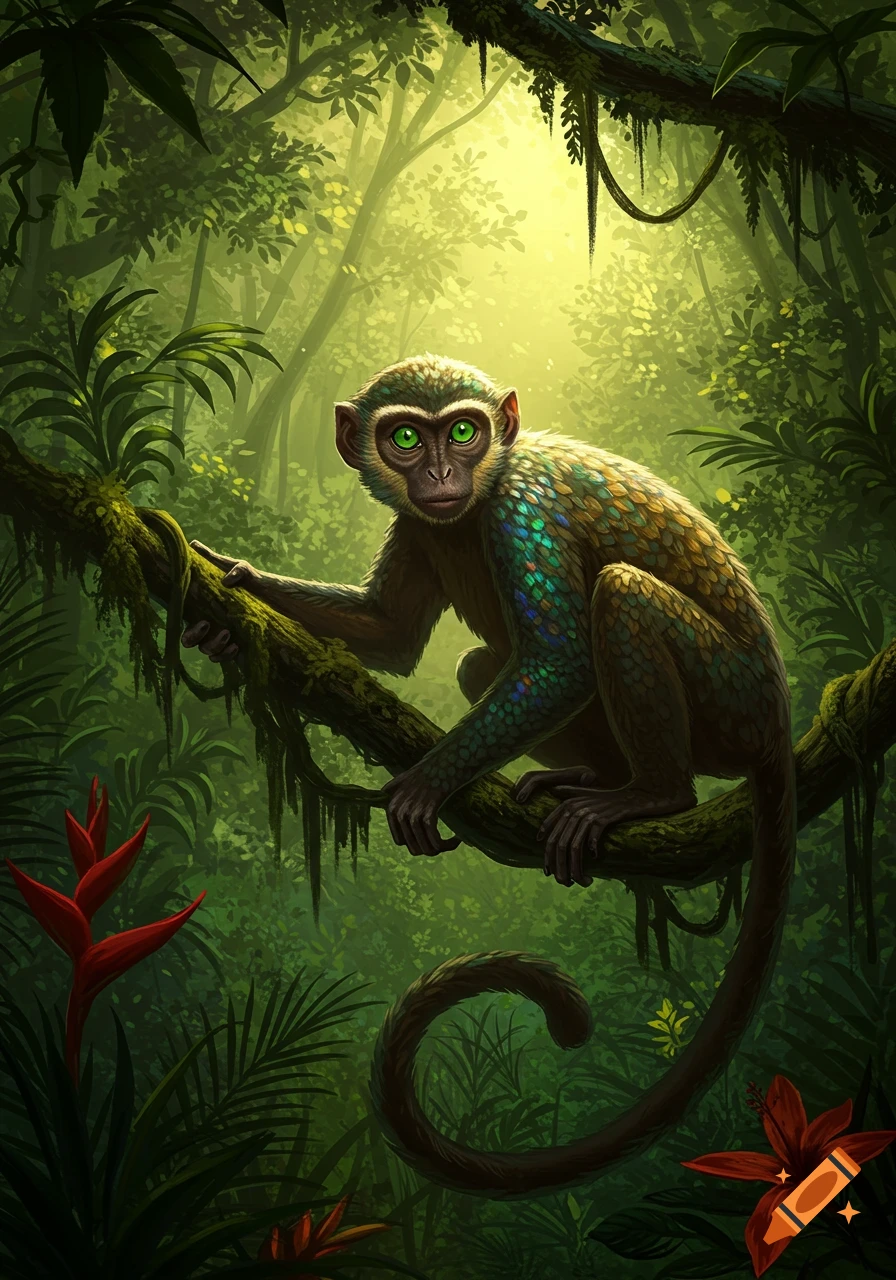
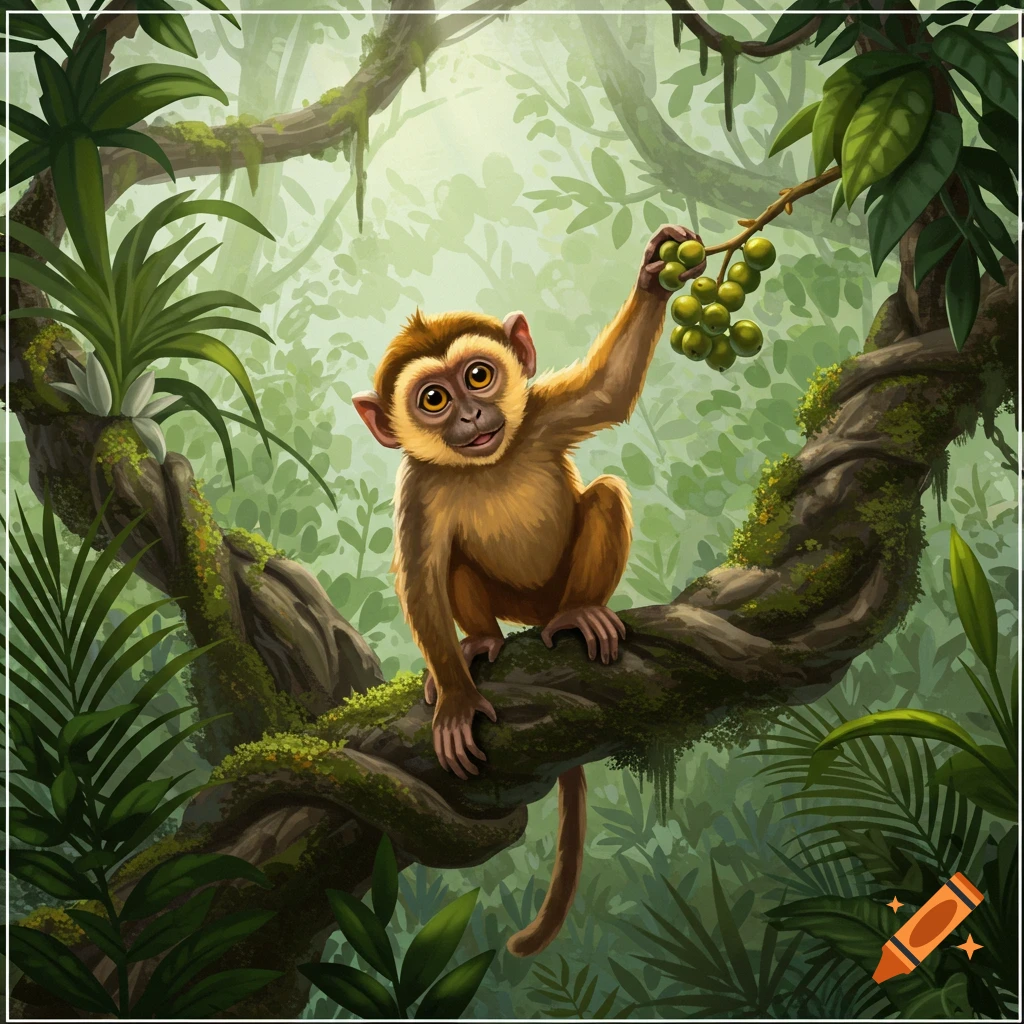
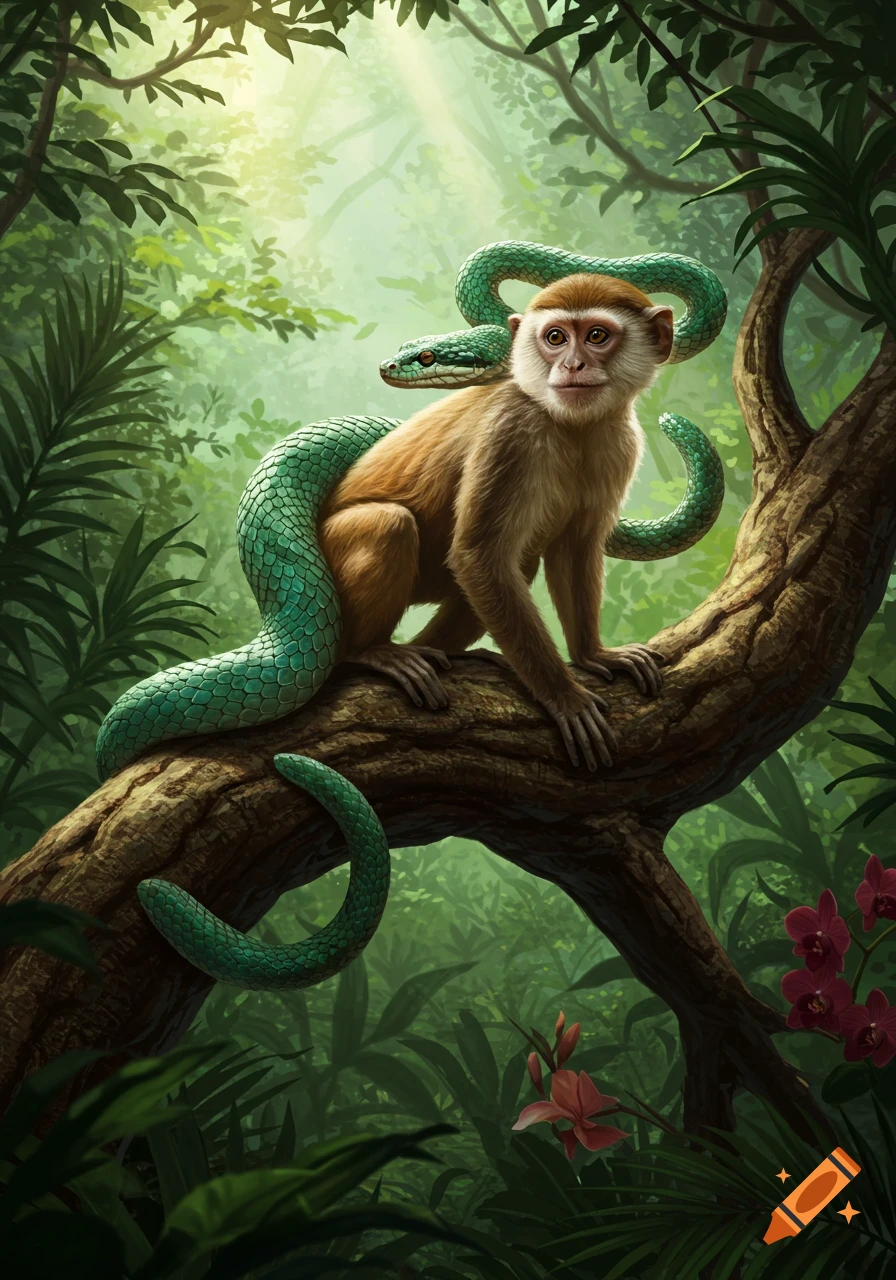
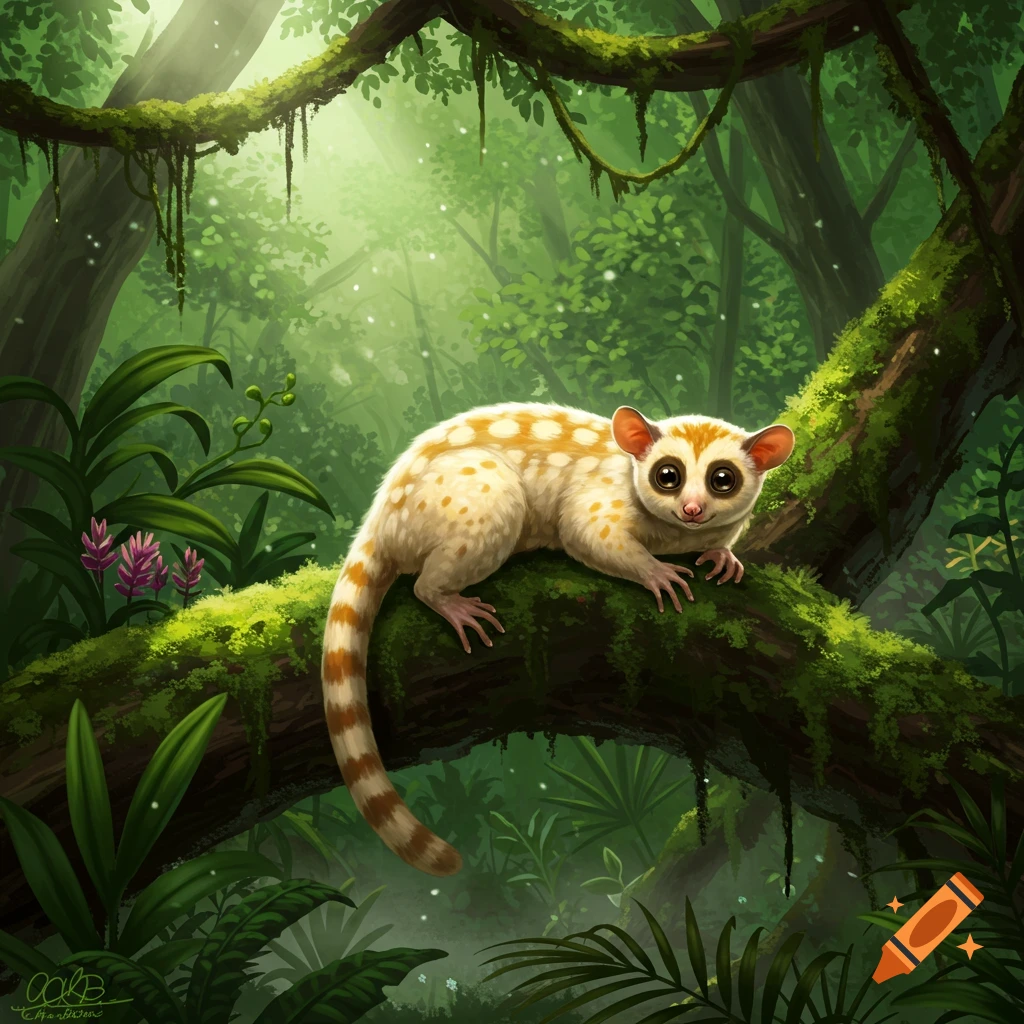
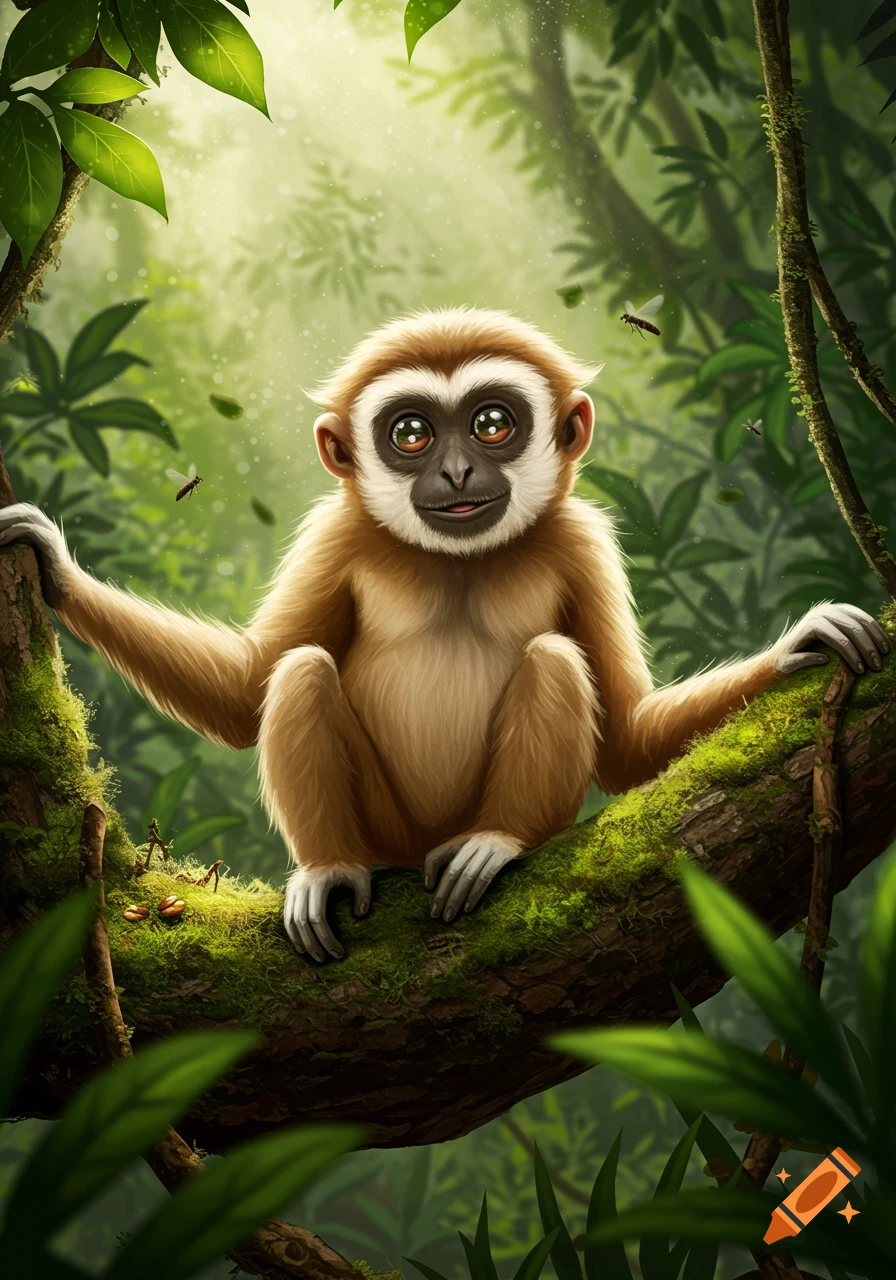
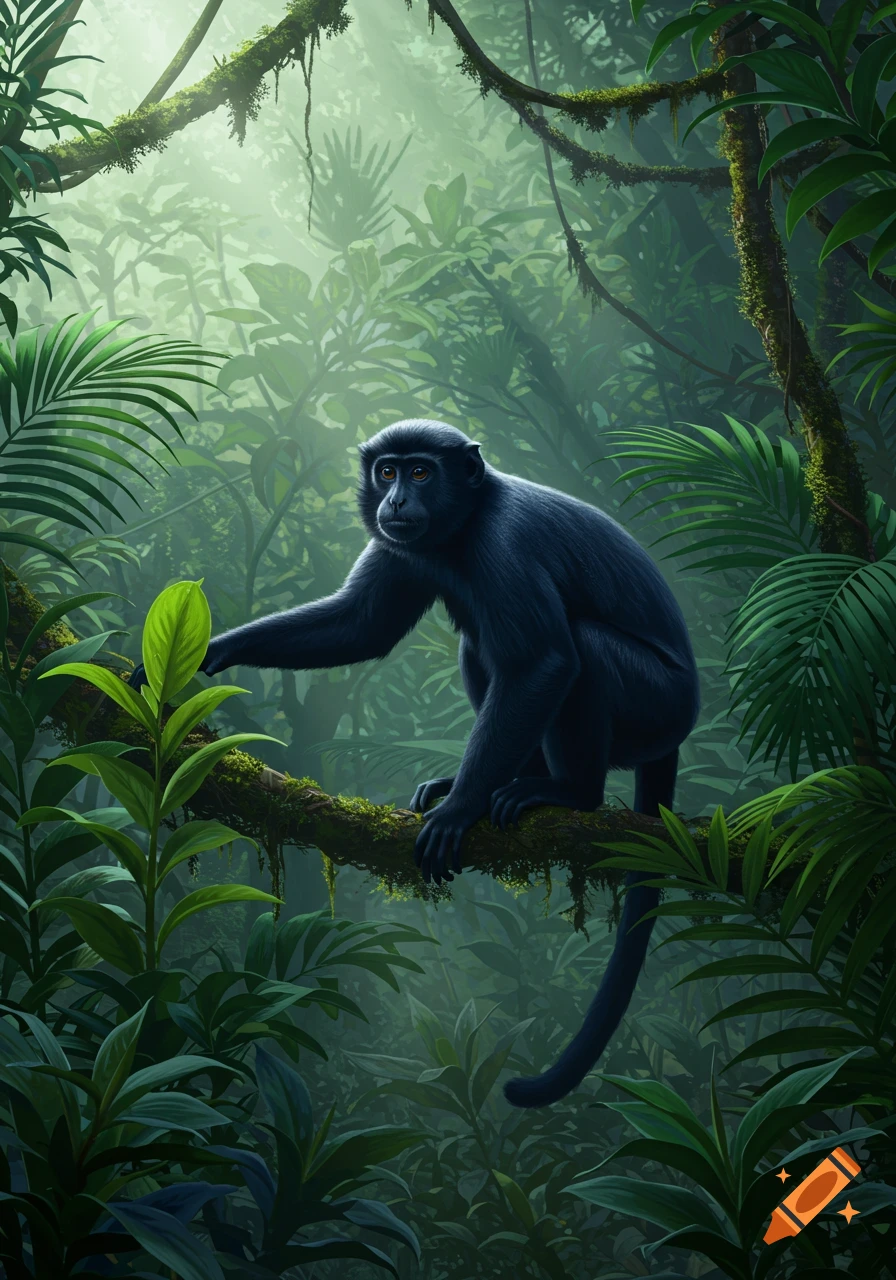
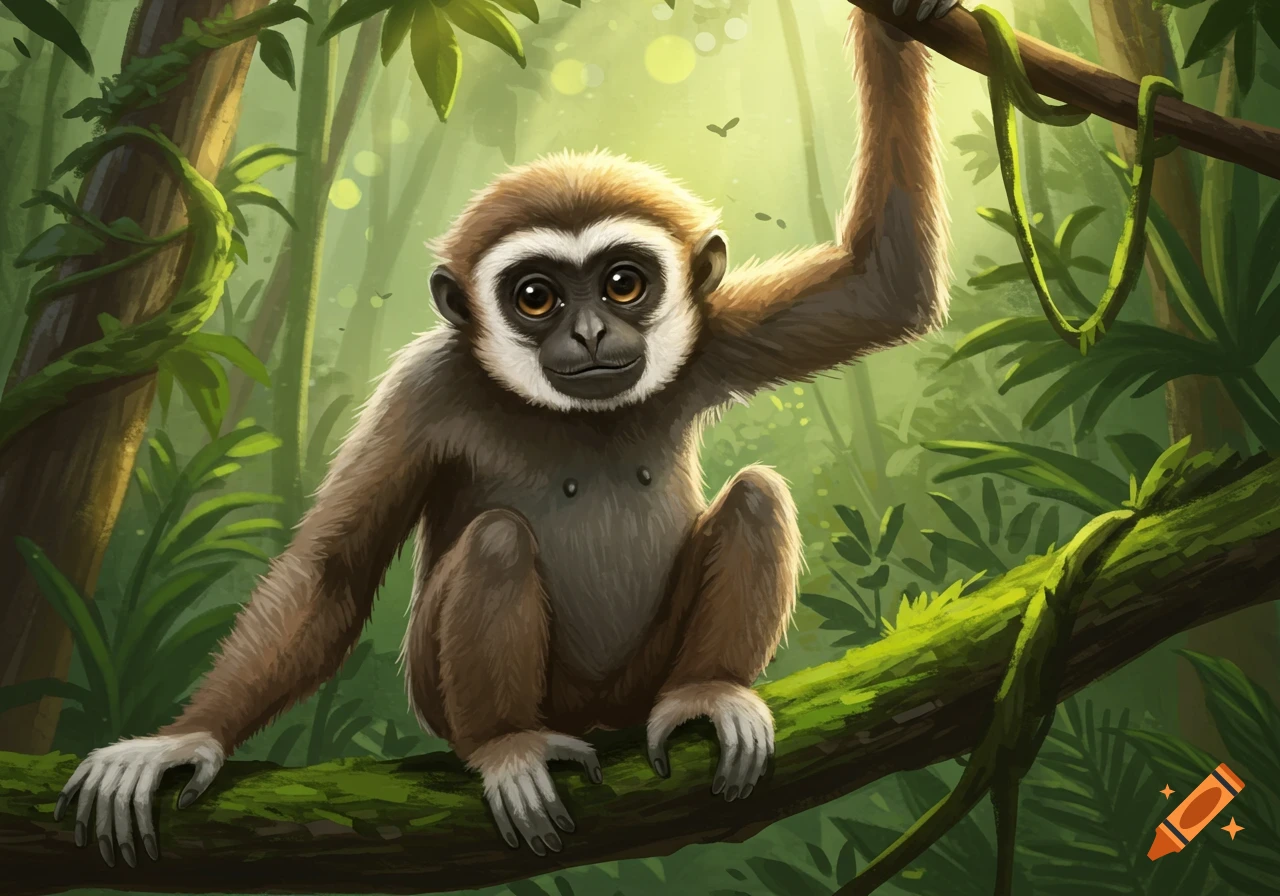
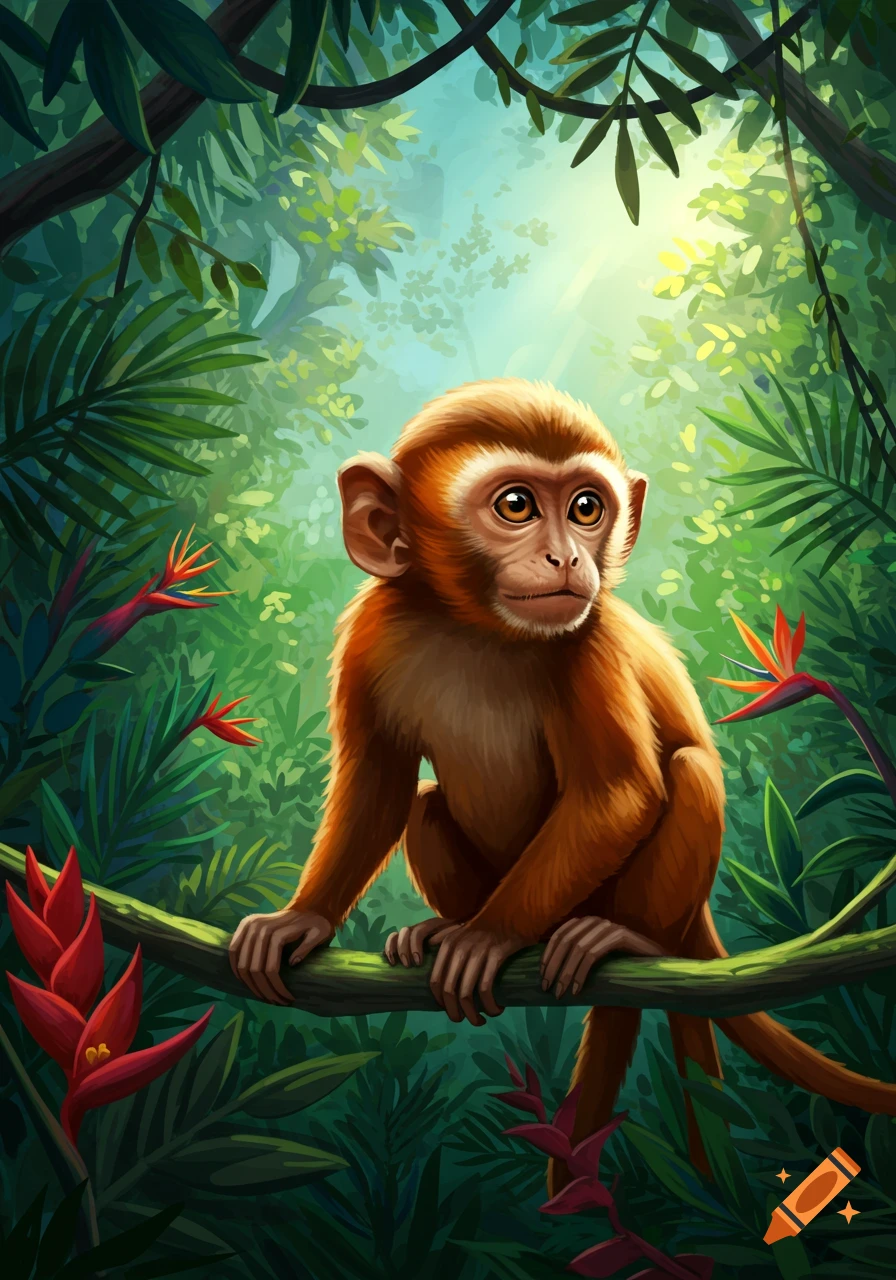
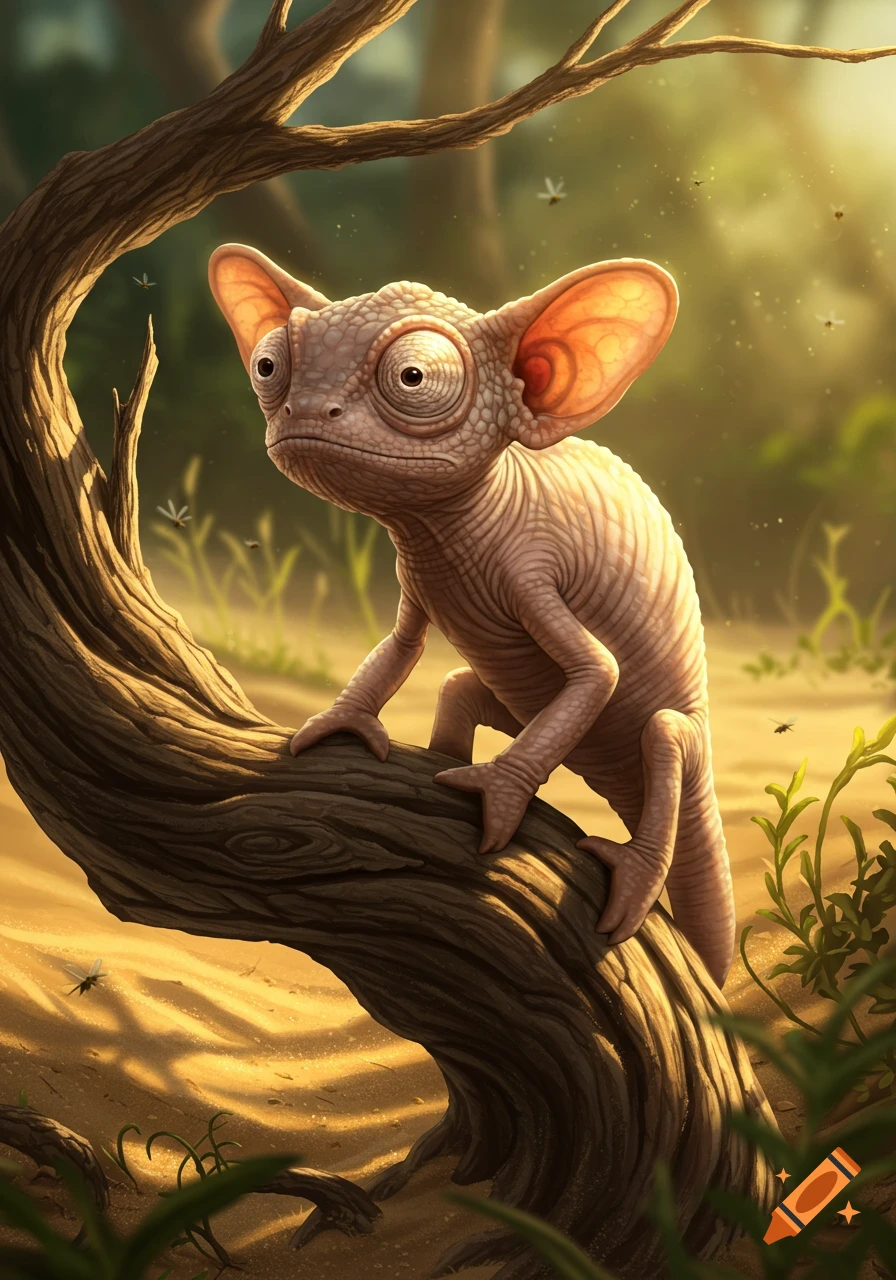
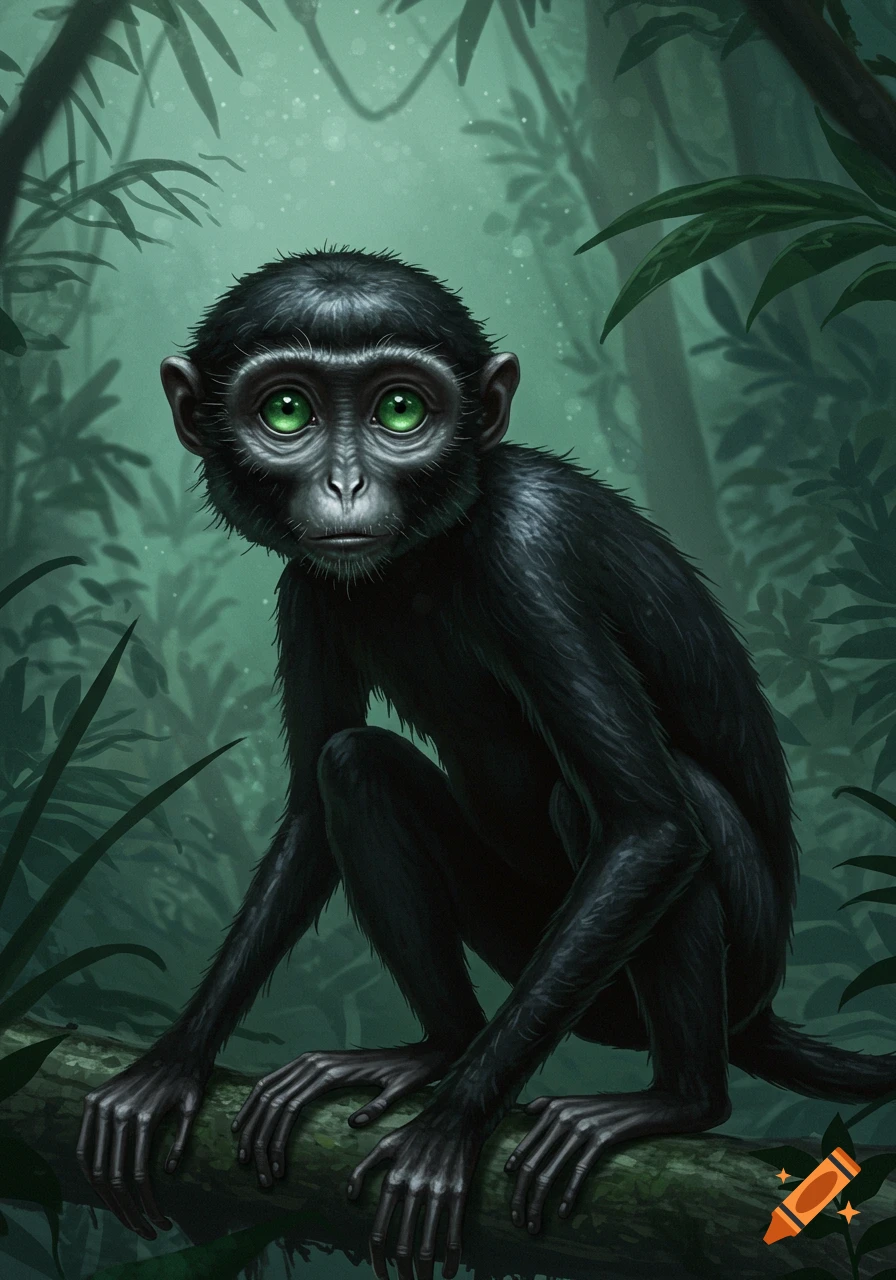
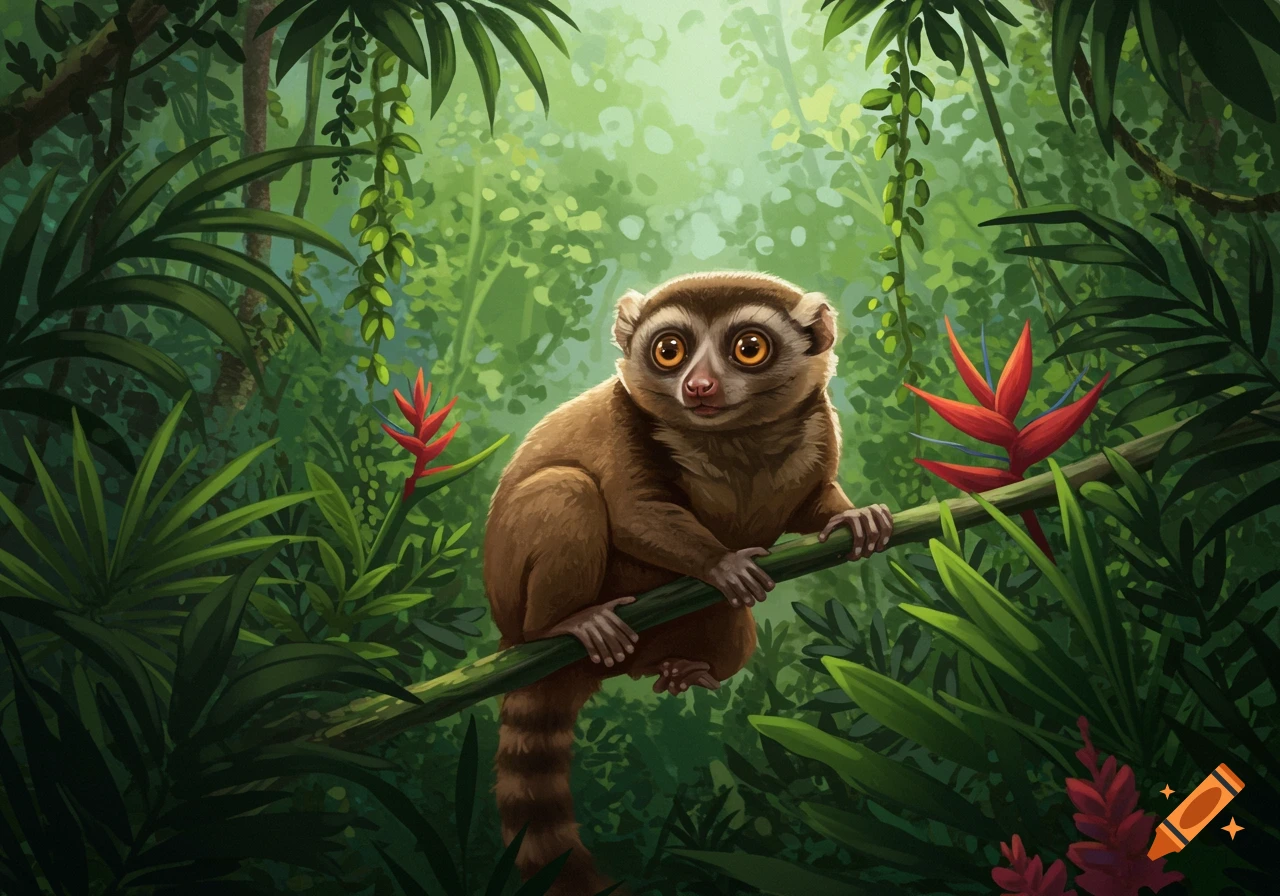
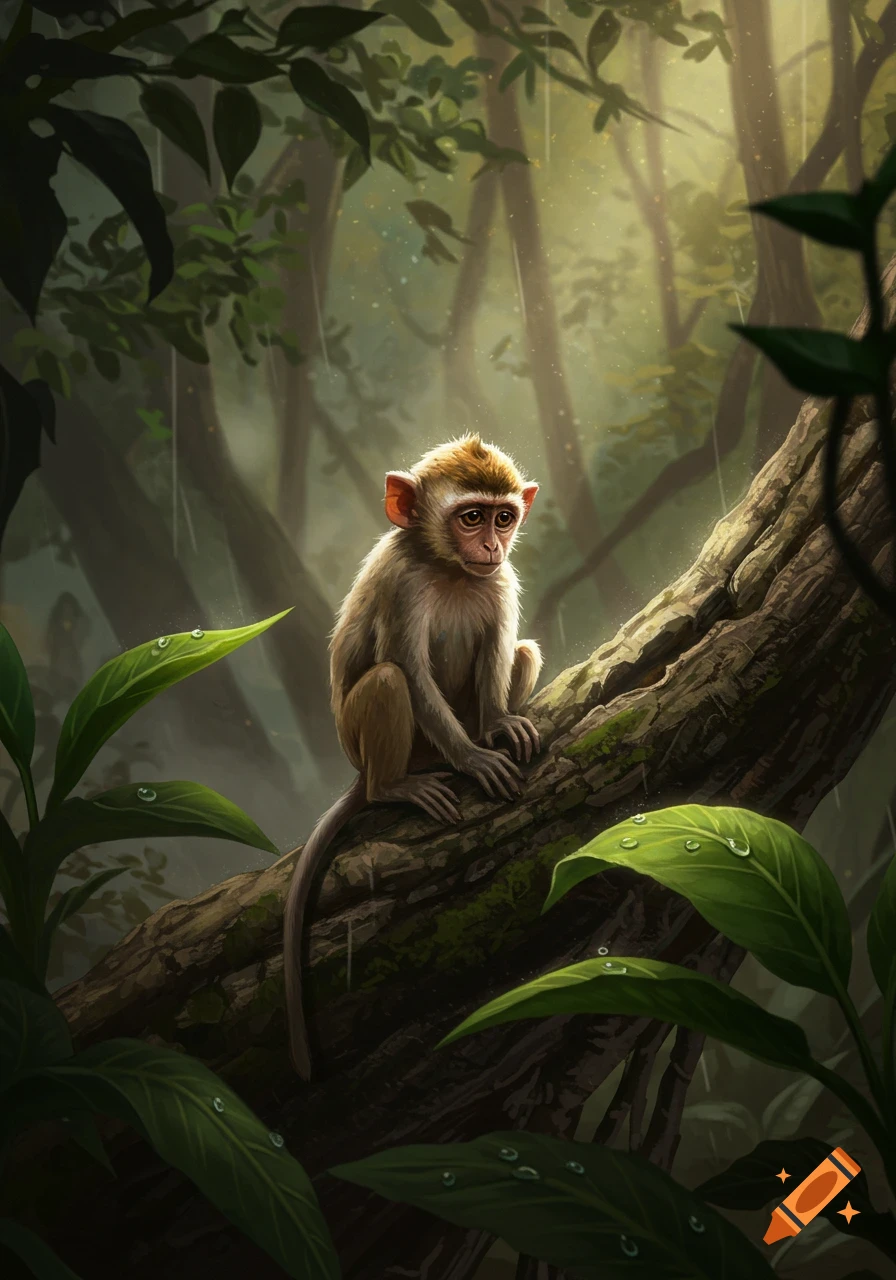
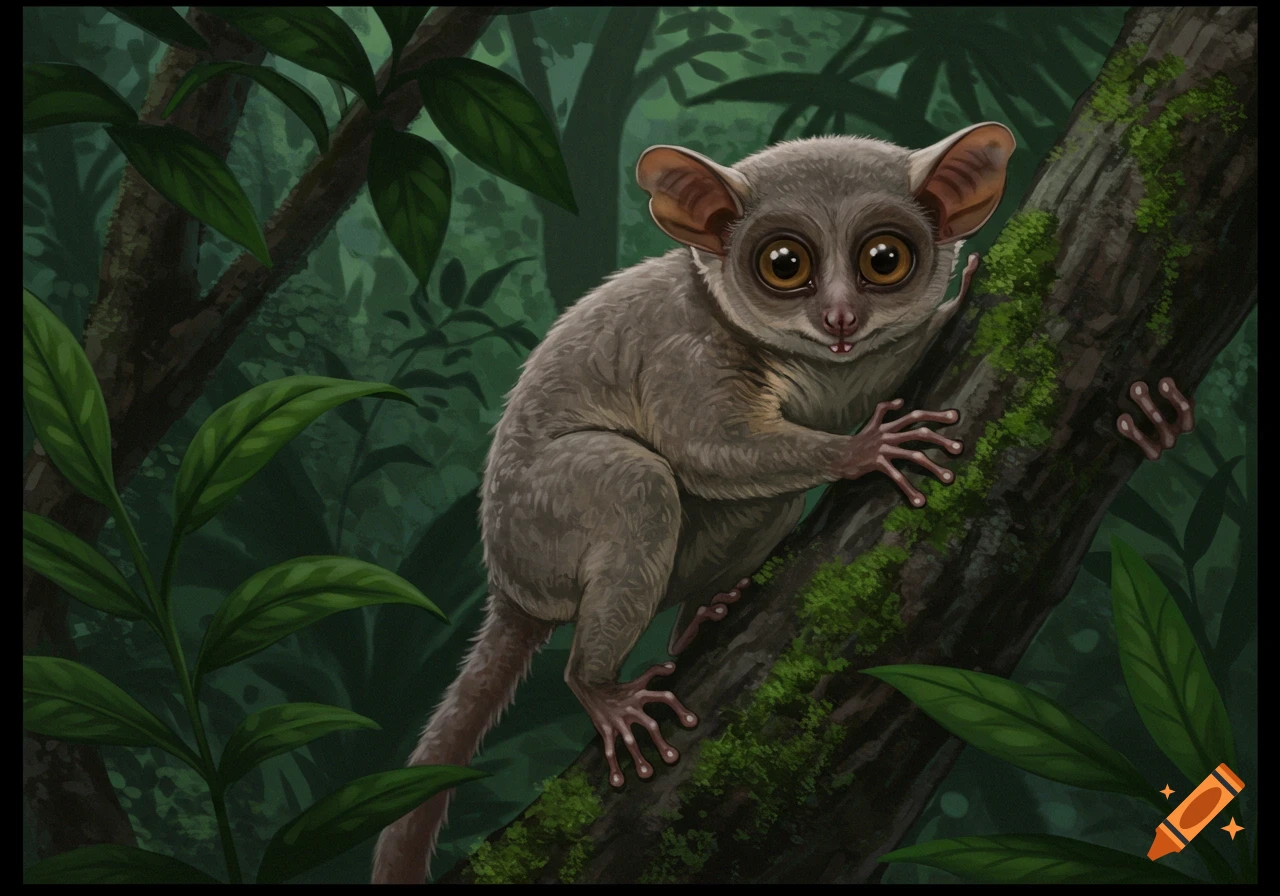
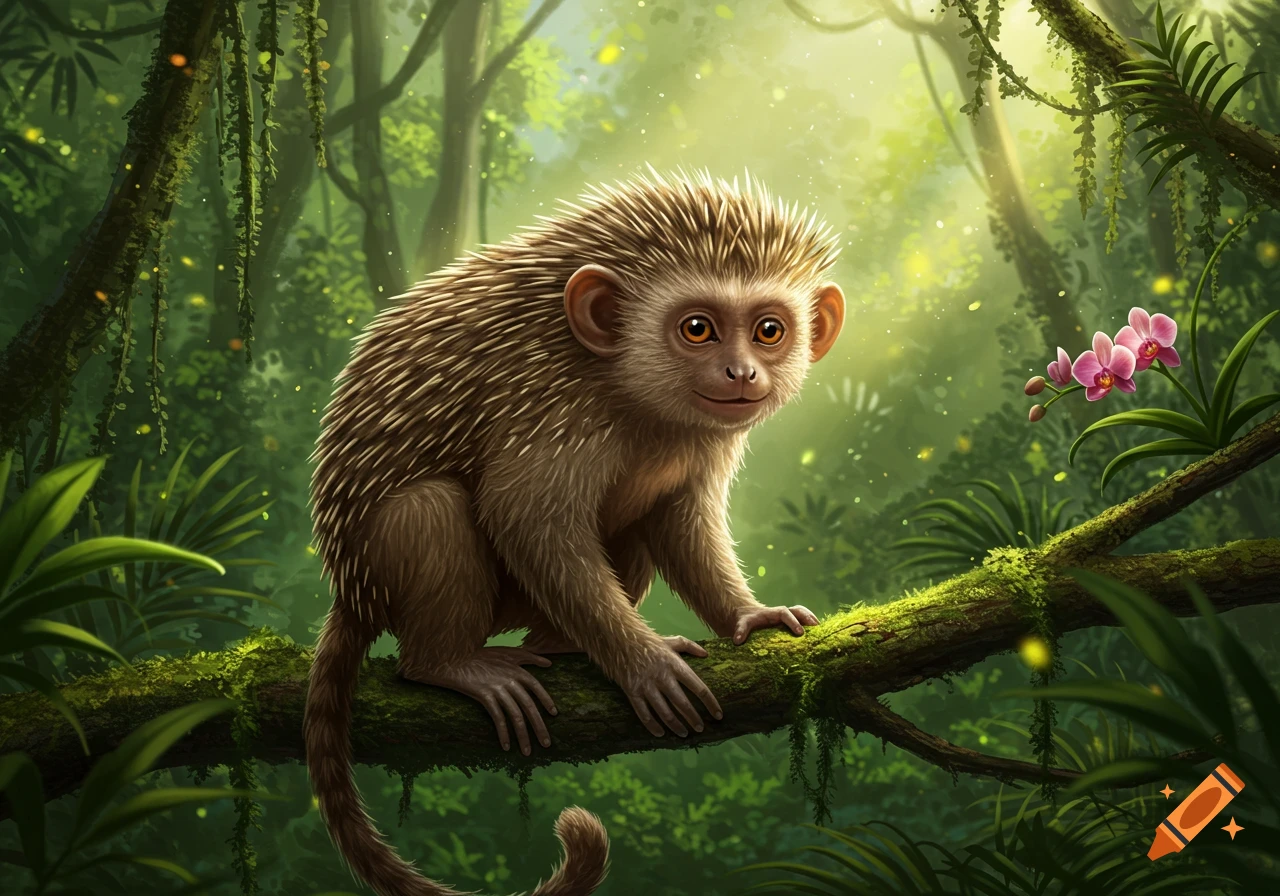
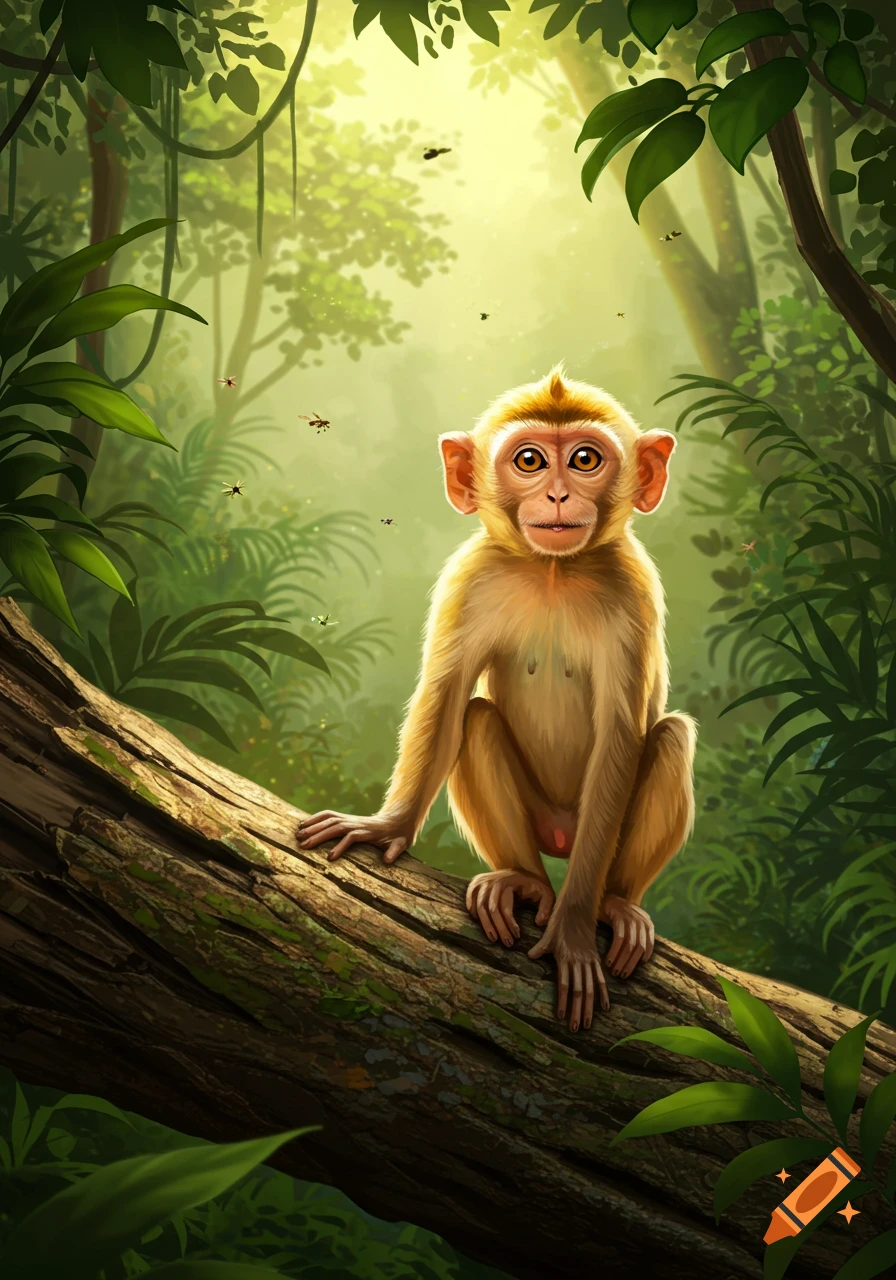
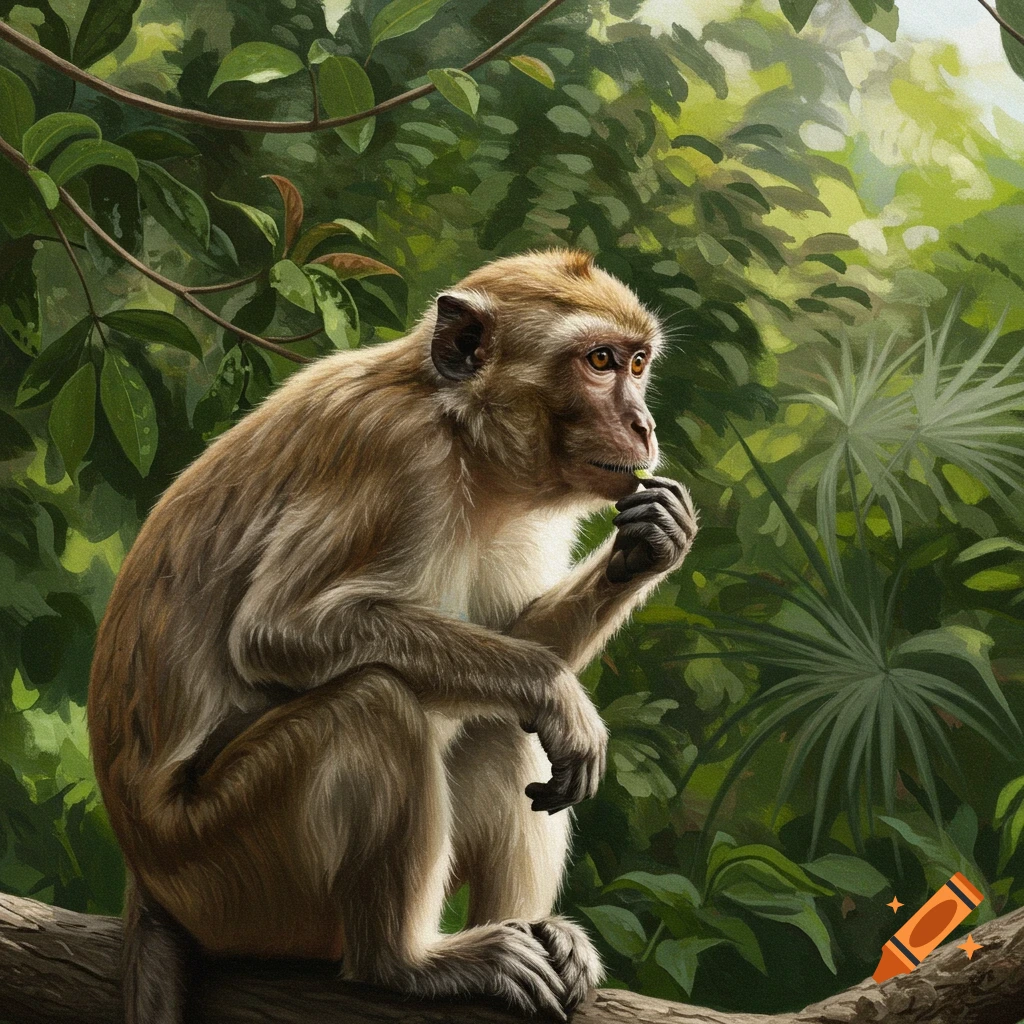
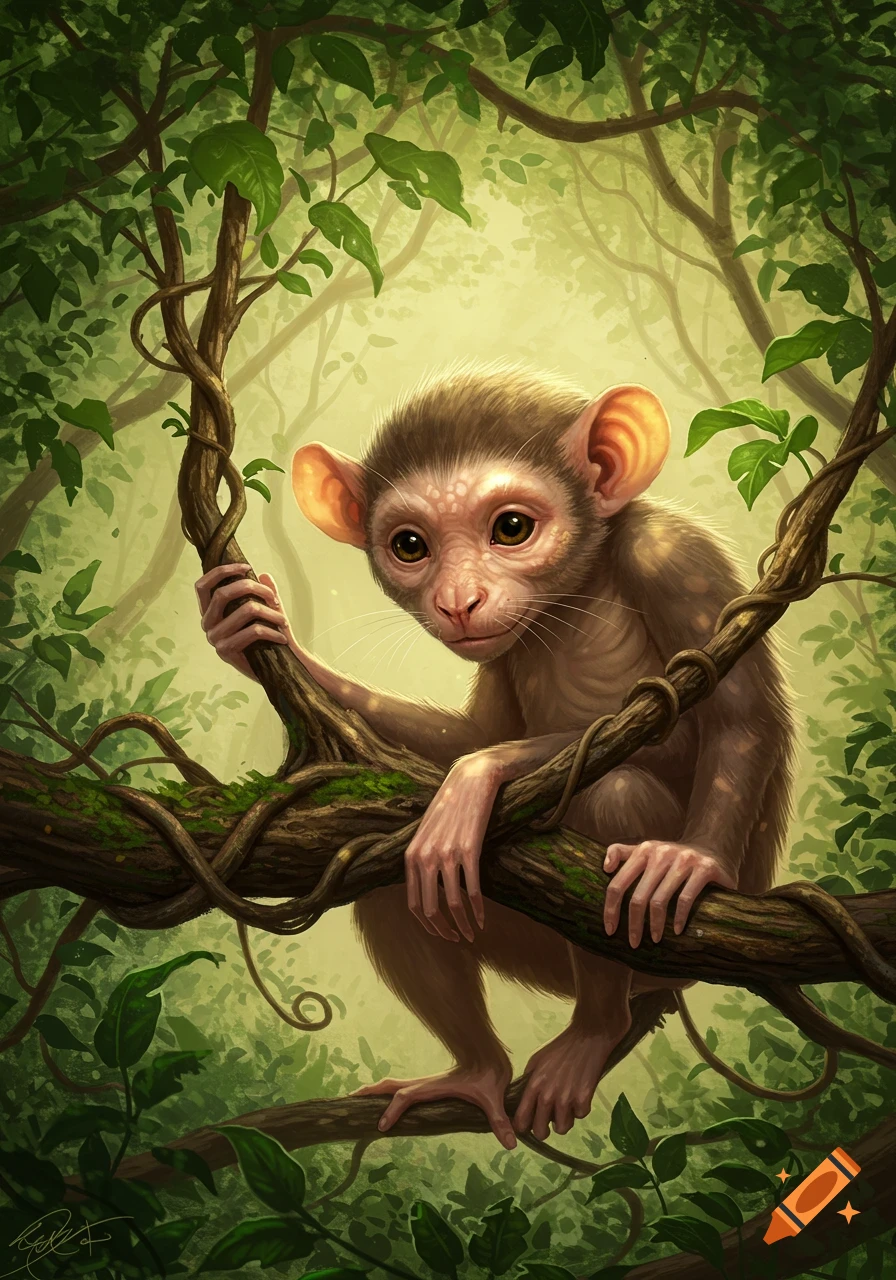
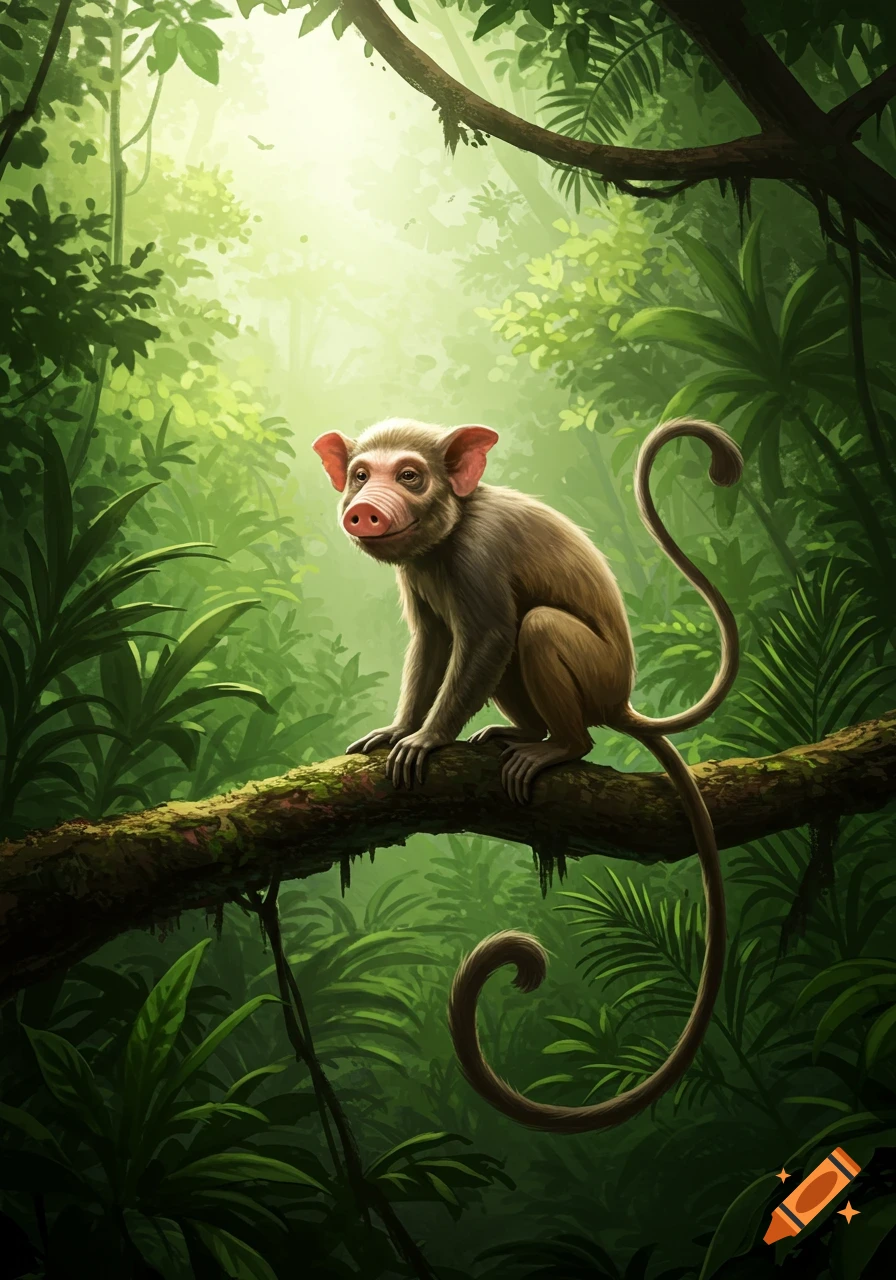
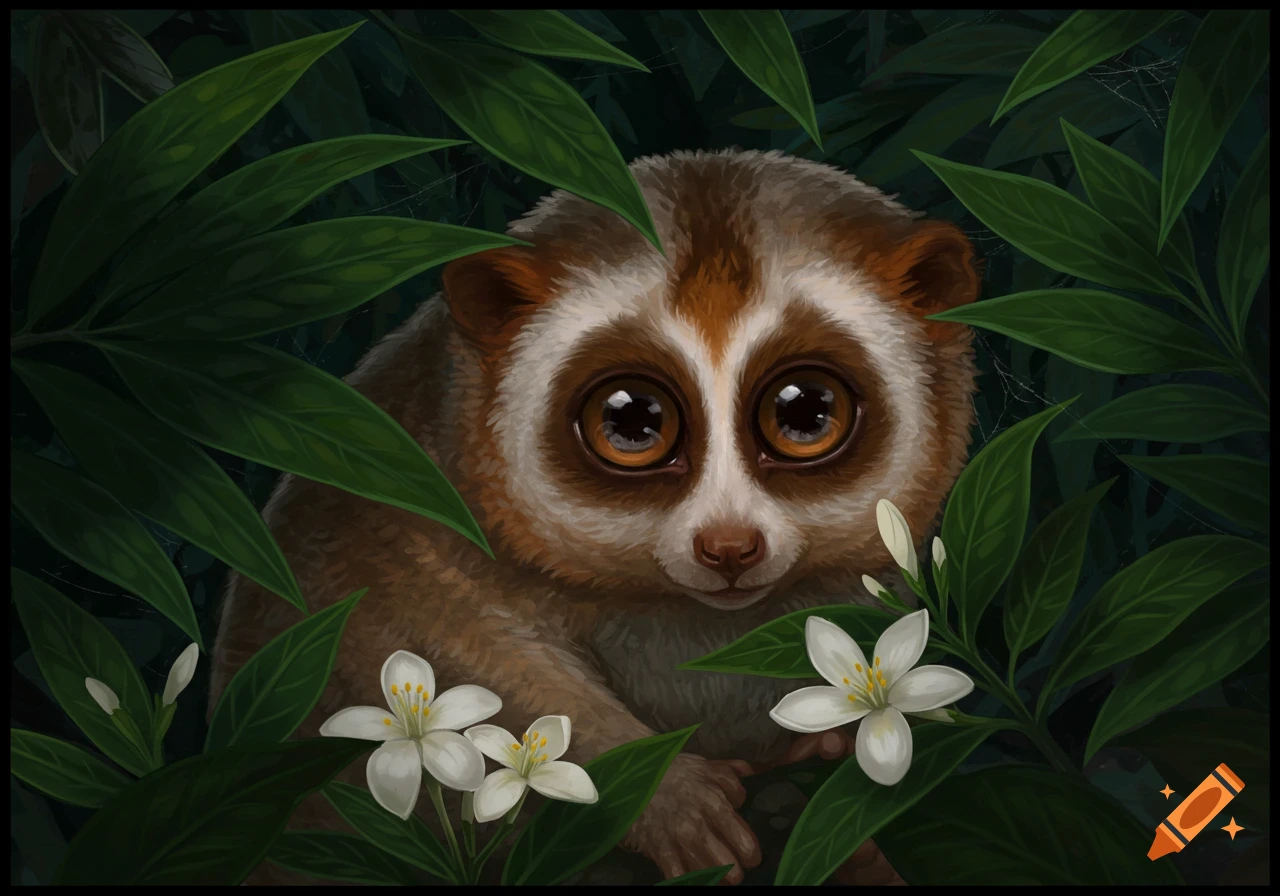
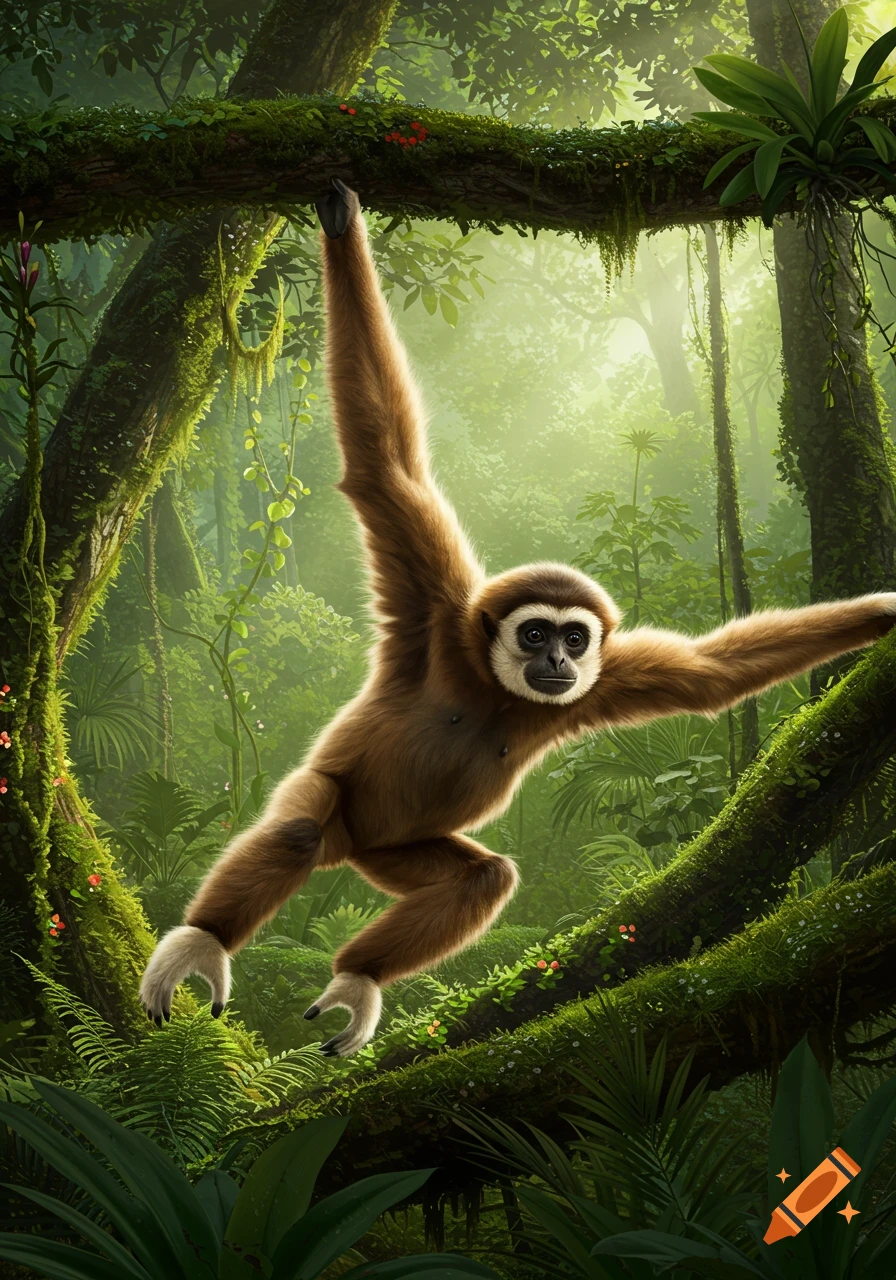
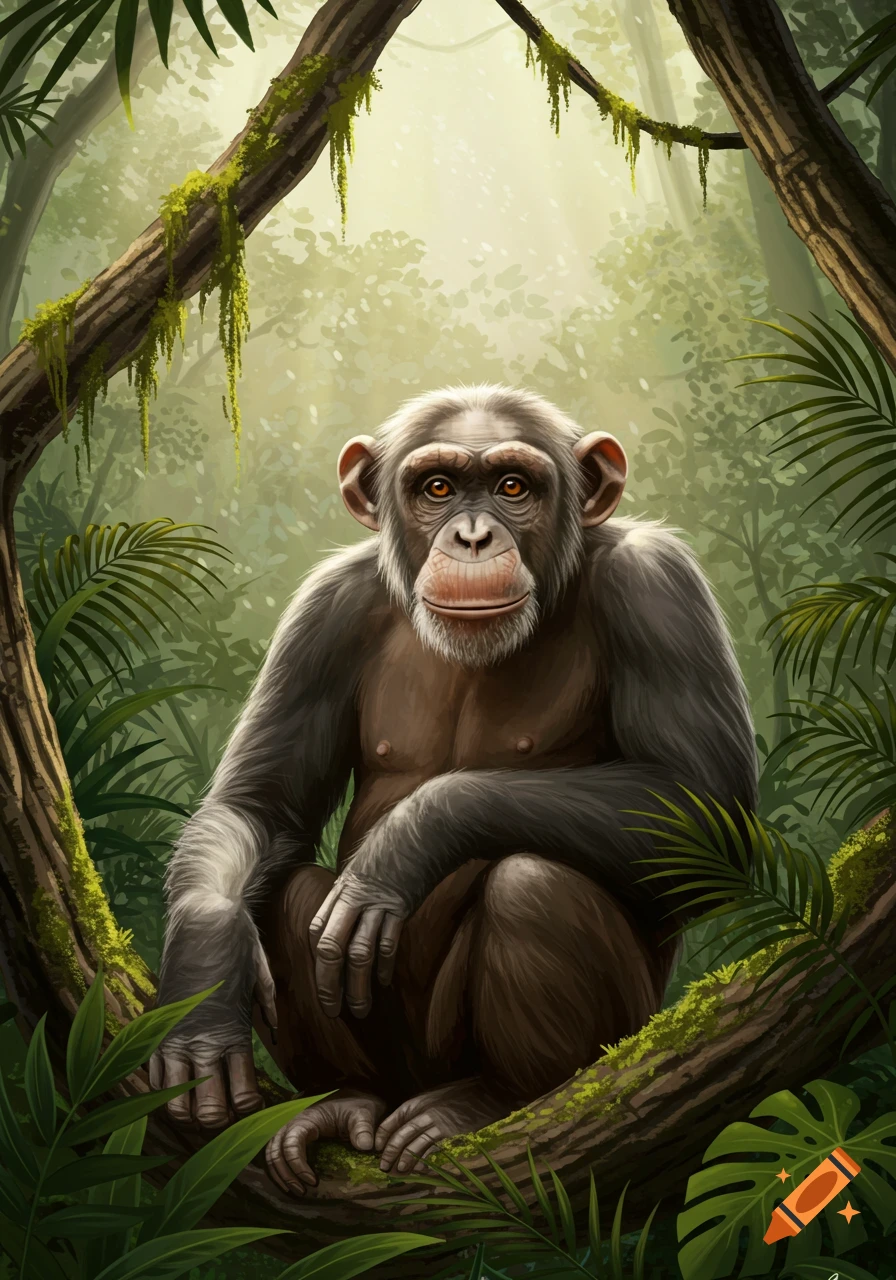
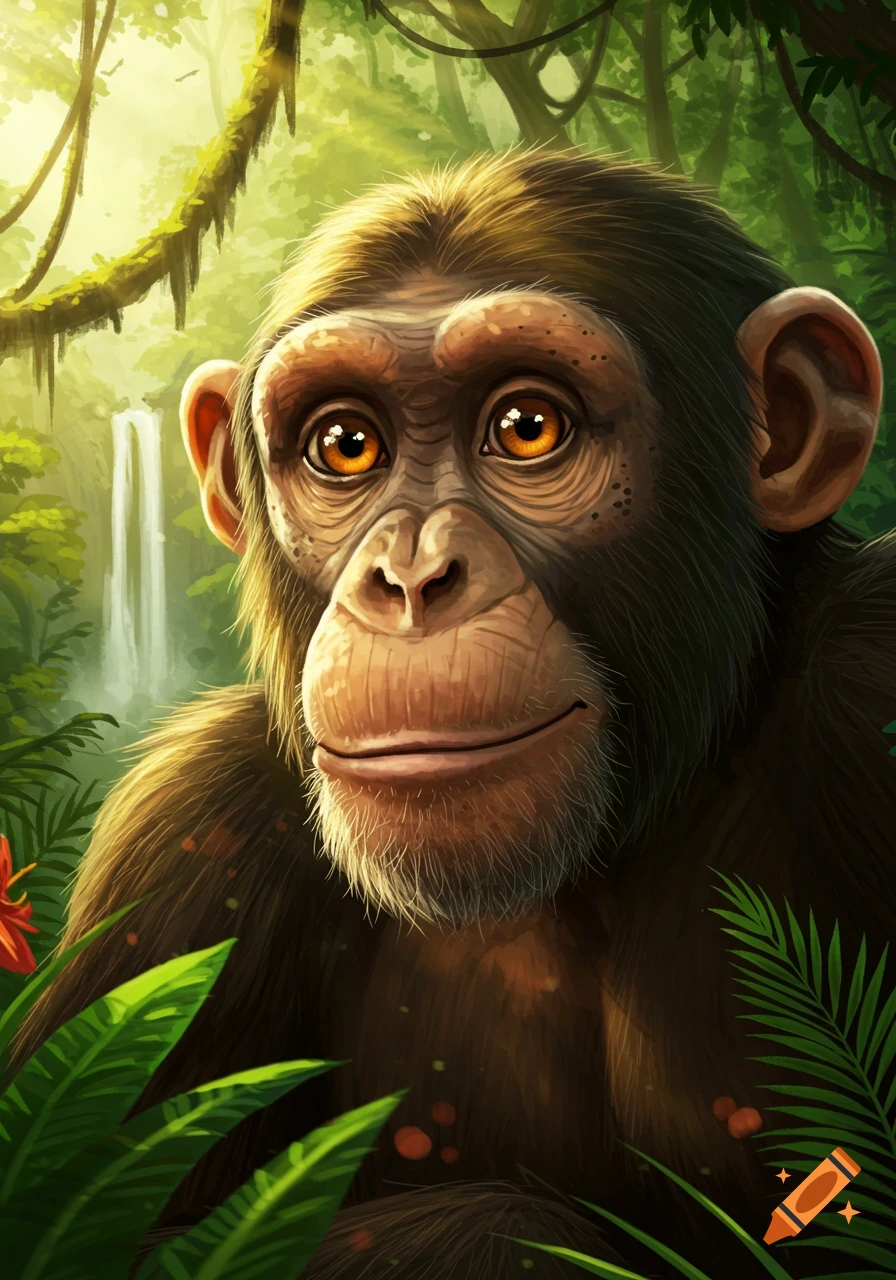
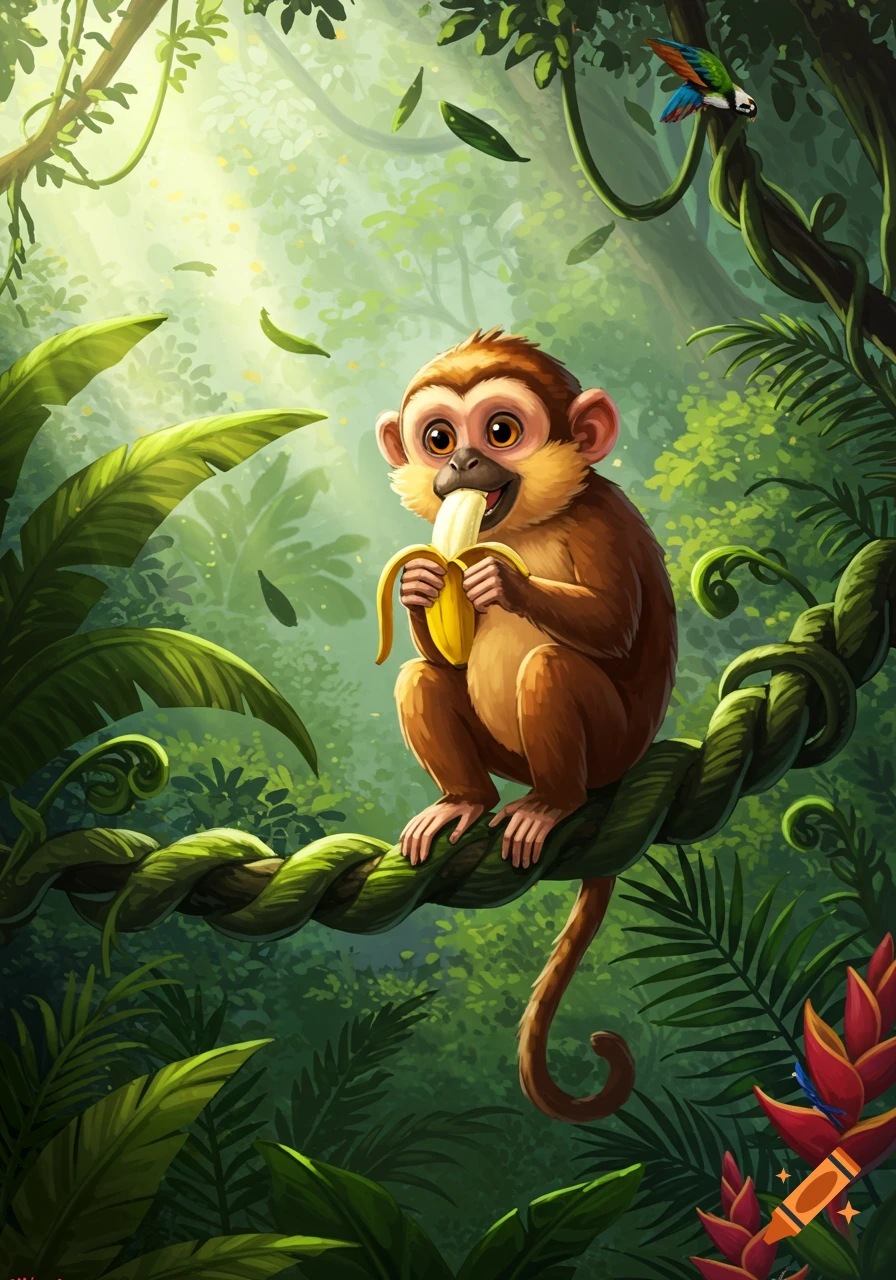
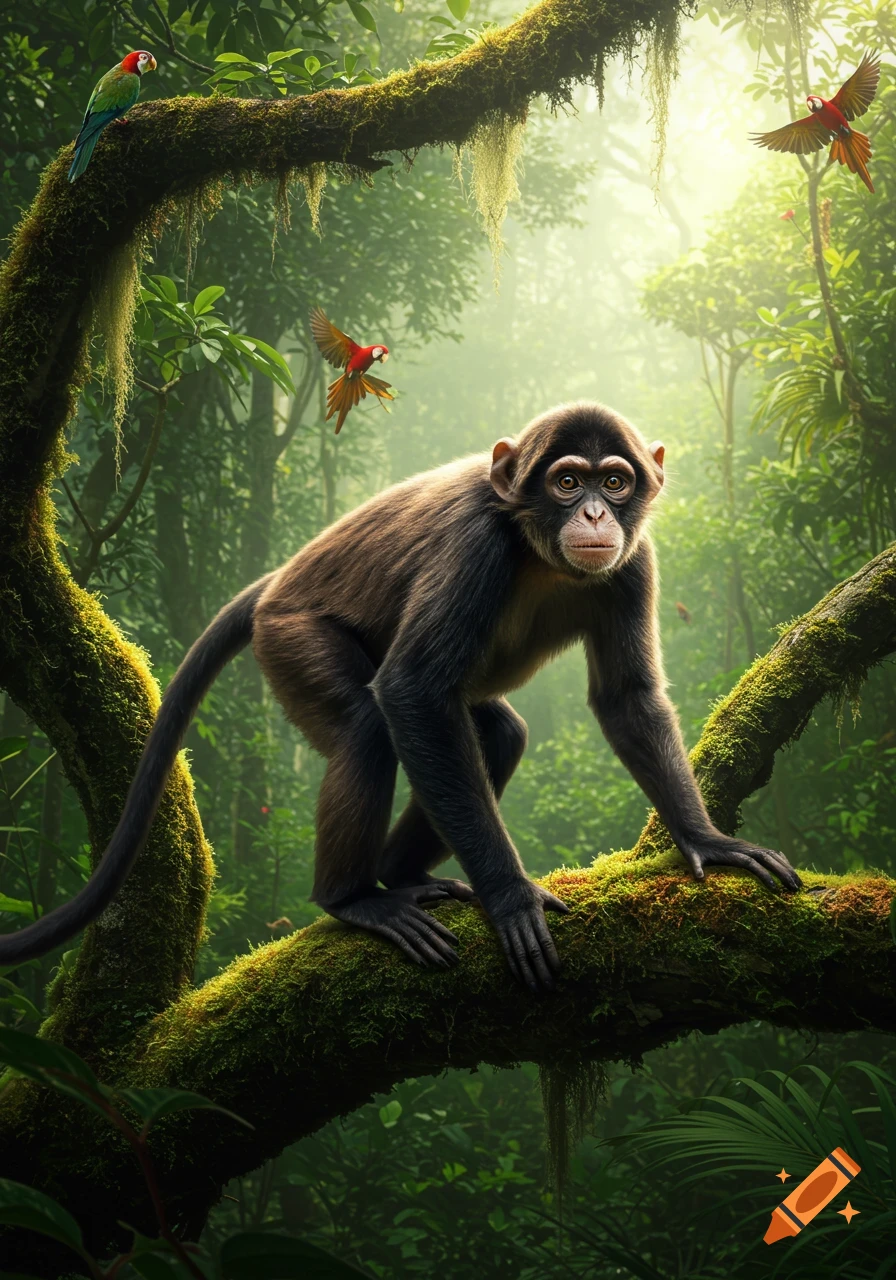
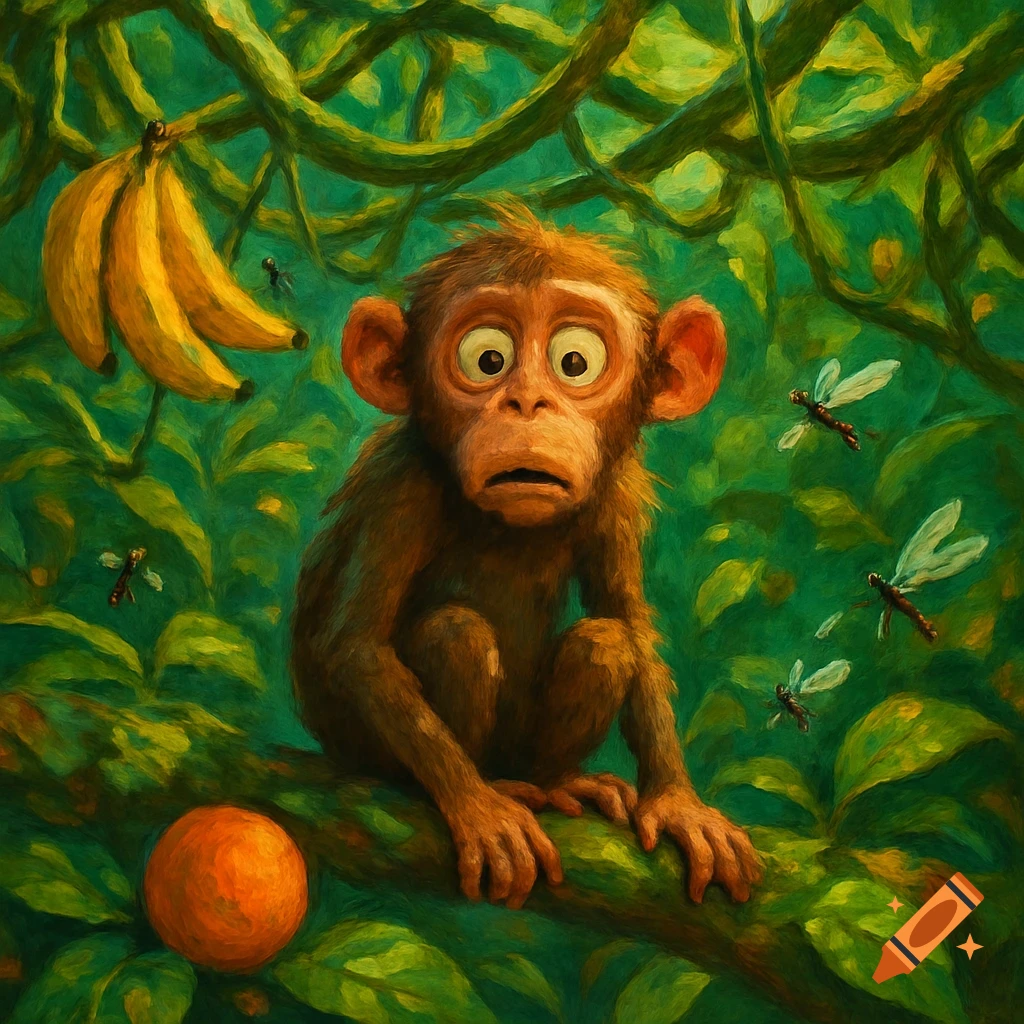
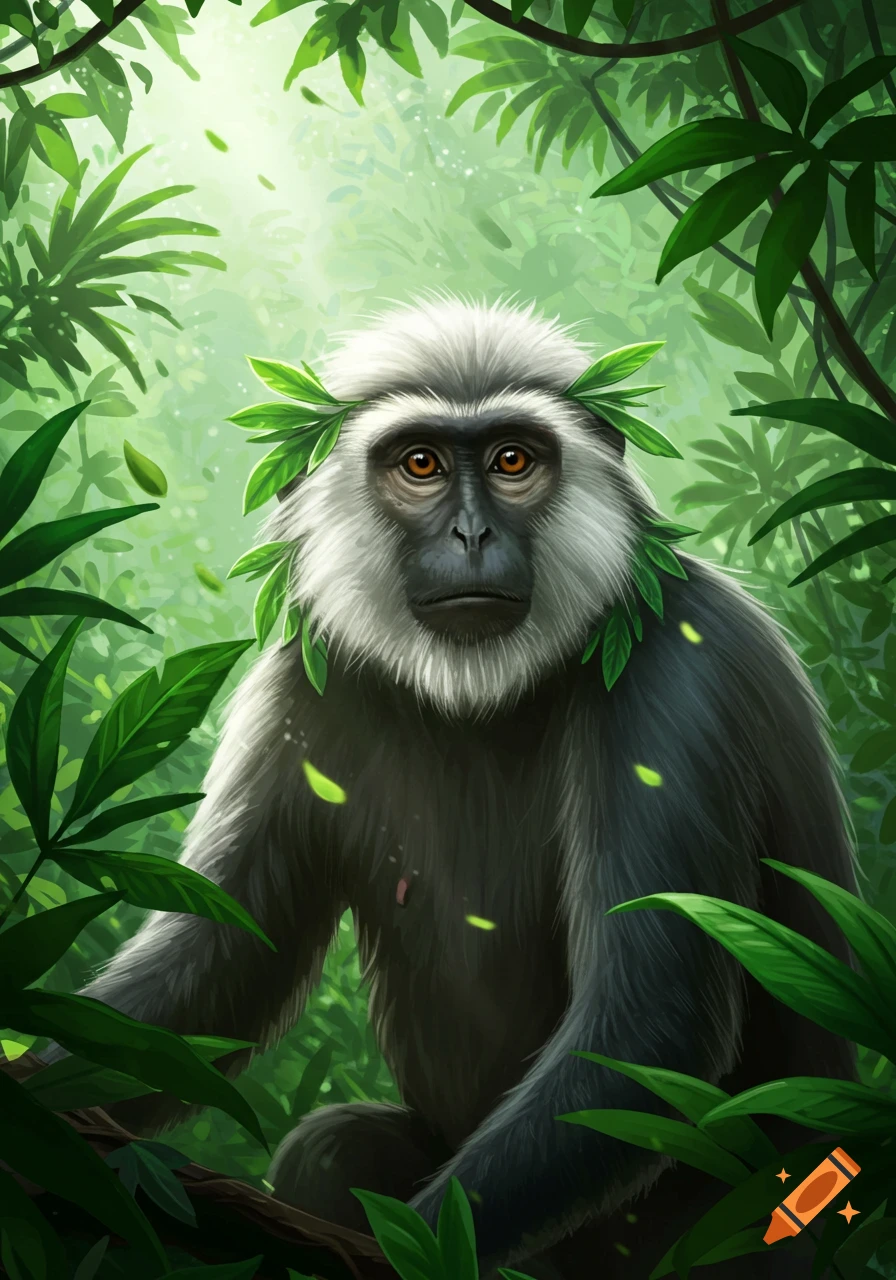
A small brown primate with large eyes clings to a mossy branch in a green jungle, in a painterly style.
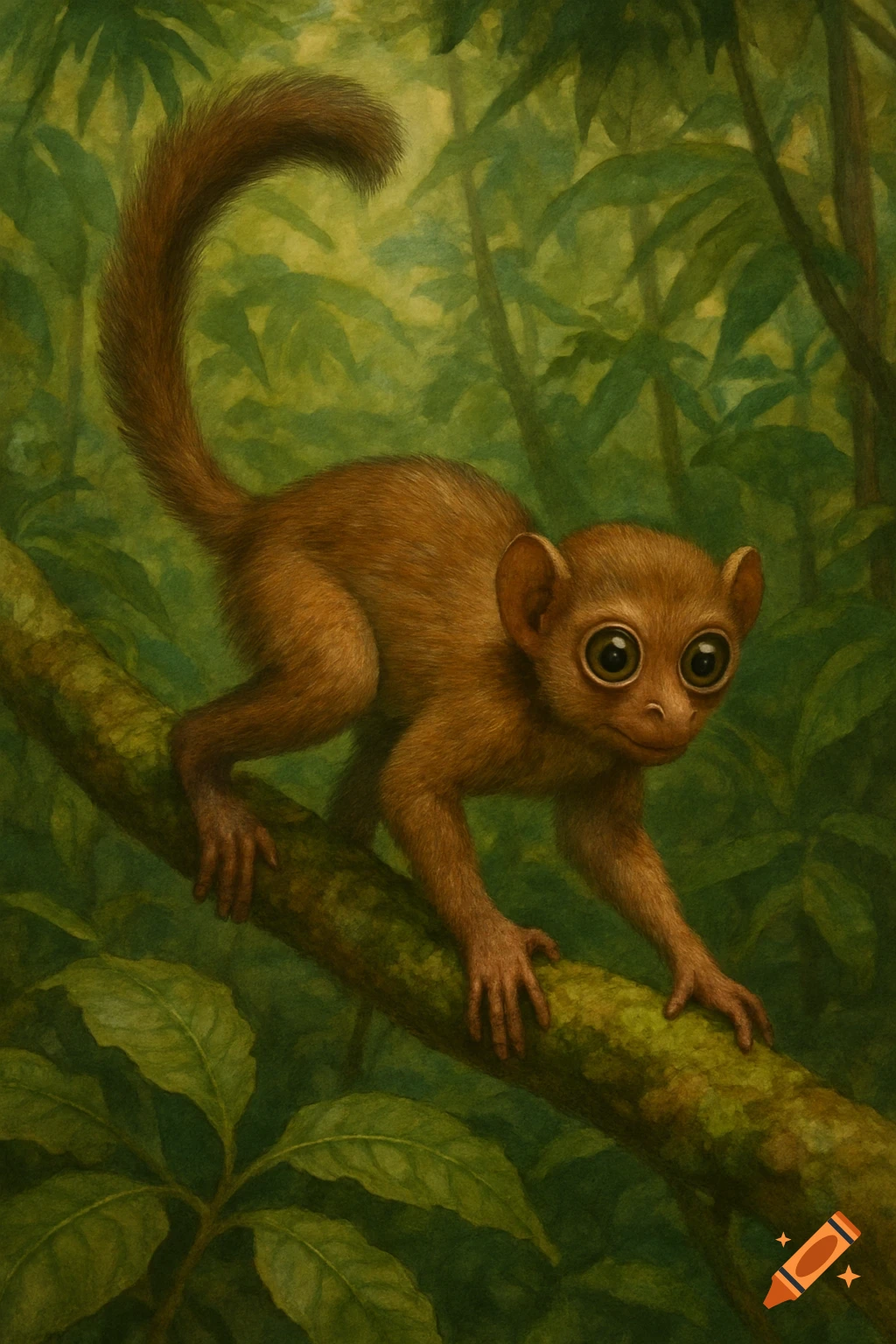
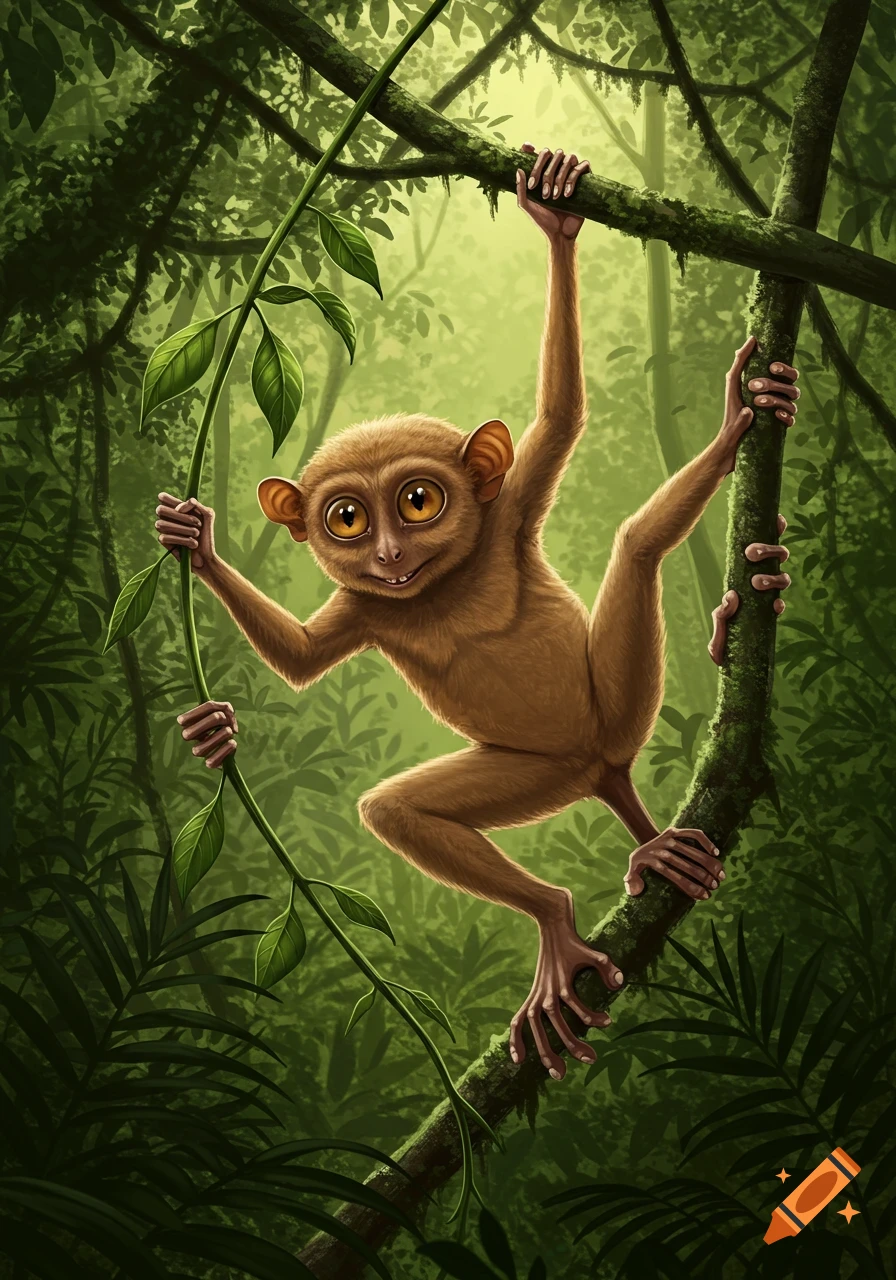
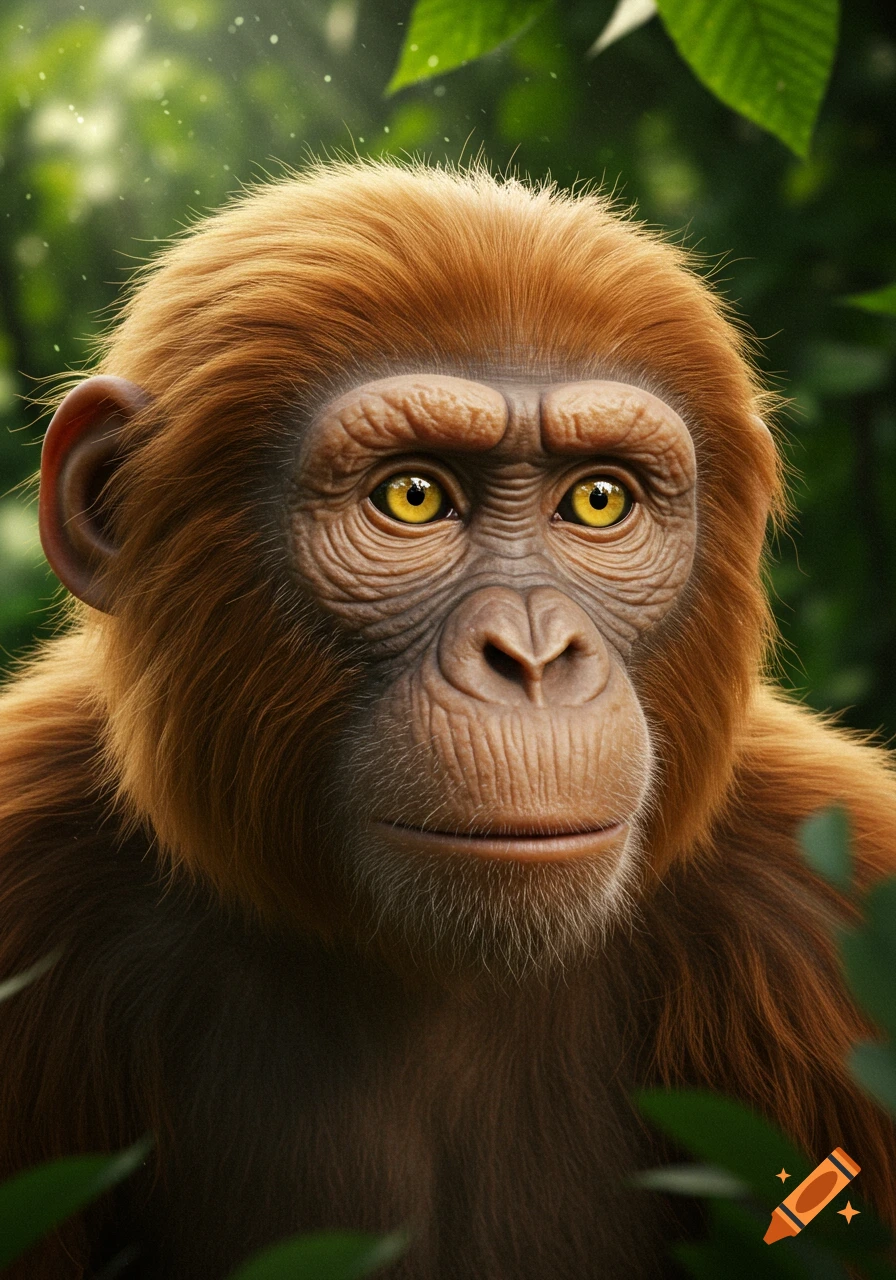
🐒 Size and Body Structure Size: Small, likely between 10 to 20 cm (4 to 8 inches) long (excluding tail), weighing 30 to 100 grams—about the size of a tree shrew or a modern-day mouse lemur. Body: Slender and agile with a flexible spine and limbs adapted for arboreal (tree-dwelling) life. Tail: Long and possibly bushy, used for balance in trees. Hands and Feet: Grasping hands and feet with opposable thumbs or big toes; digits likely had flattened nails rather than claws (at least in later early primates). 👀 Head and Sensory Features Eyes: Large, forward-facing eyes providing binocular vision—a key trait for depth perception while moving through trees. Snout: Shorter than that of typical mammals at the time, indicating a reduction in reliance on smell and increasing emphasis on vision. Brain: Larger relative to body size than in most other mammals of its time, suggesting early cognitive development and better motor control. 🦷 Teeth Dental Formula: Likely included low-crowned molars adapted for an omnivorous/insectivorous diet—eating insects, fruit, and possibly nectar. Tooth structure: Indicative of a generalized diet, which may have helped early primates adapt to a variety of ecological niches. 🌳 Habitat and Behavior Habitat: Dense, tropical forests, likely in what is now North America or Asia, regions where early primate fossils have been found. Behavior: Nocturnal or crepuscular (active at dawn/dusk), based on large eye sockets in some fossil species. Locomotion: Likely See more