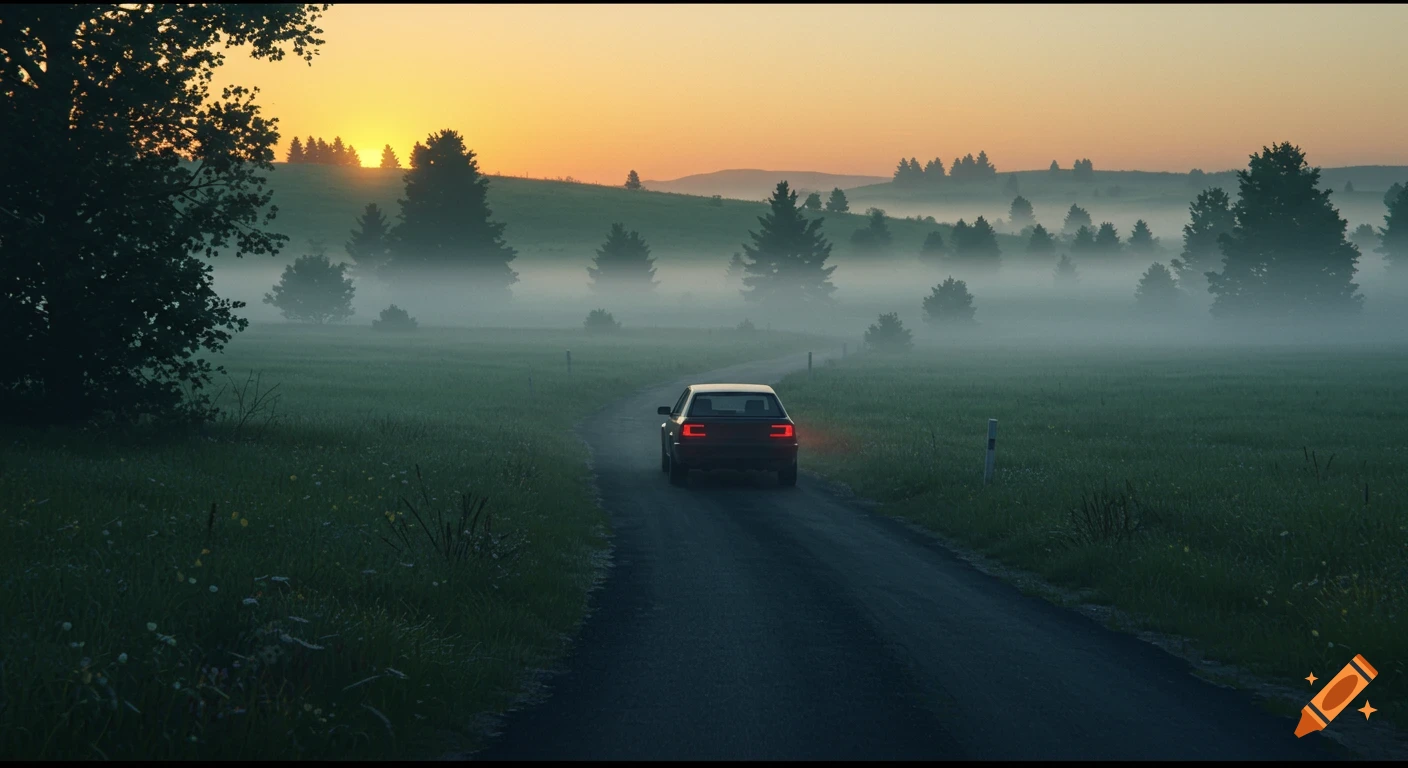
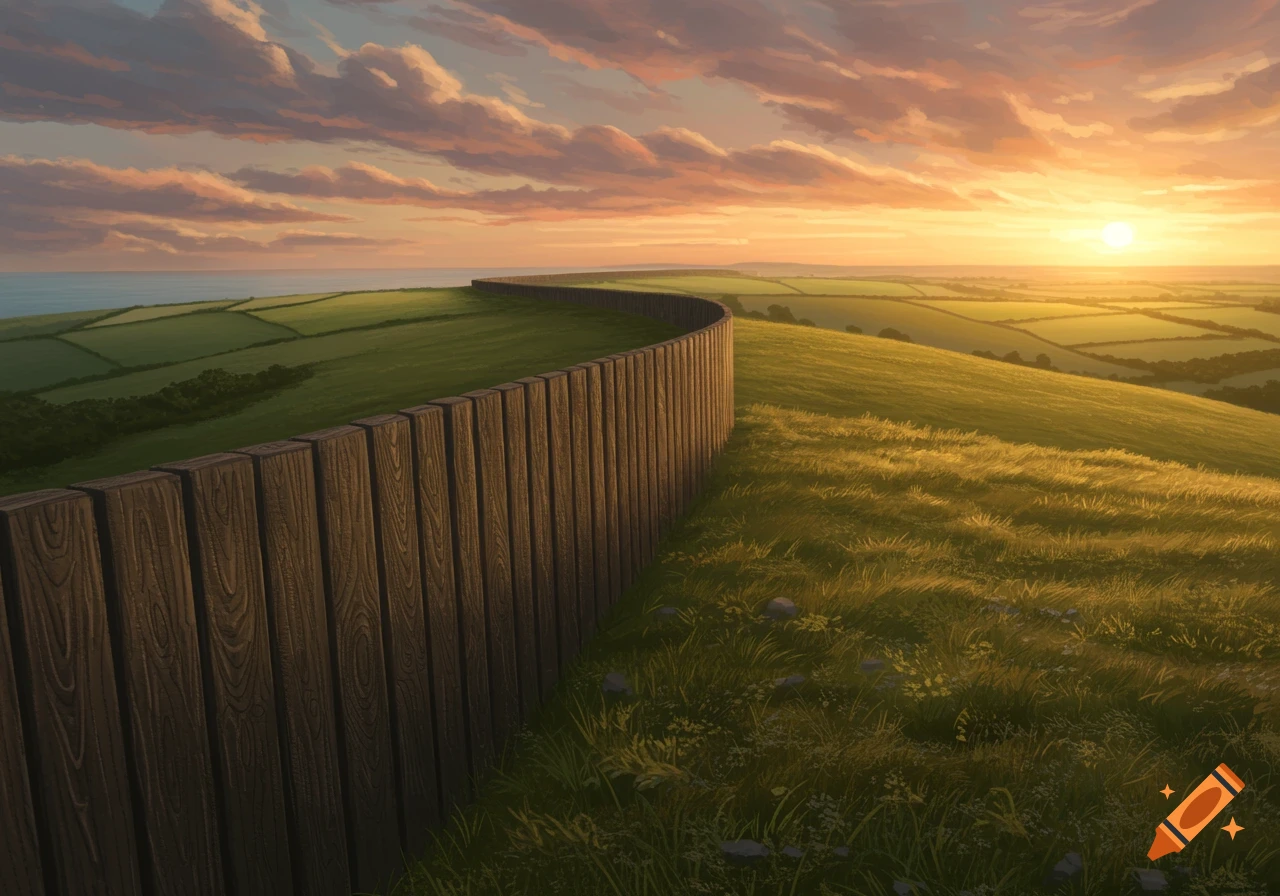
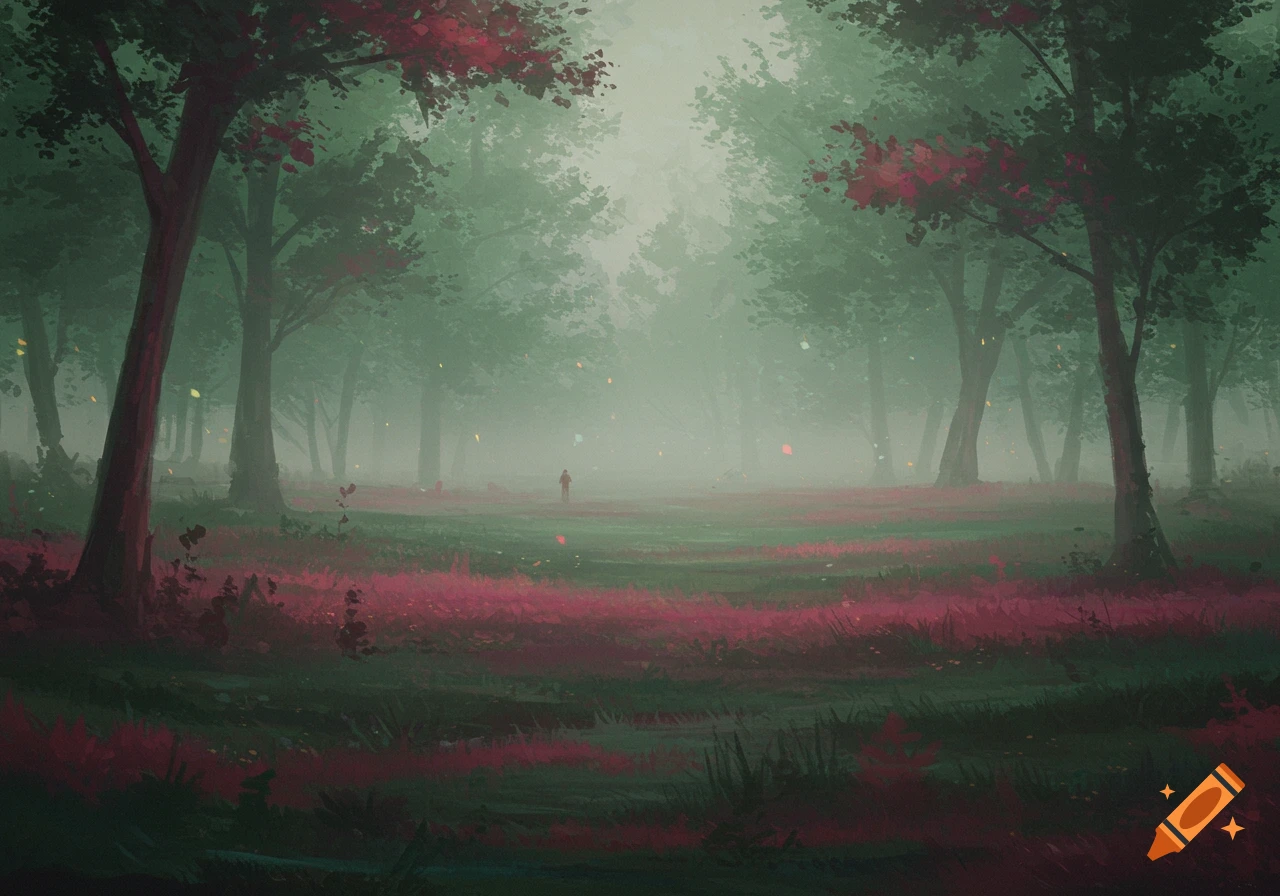
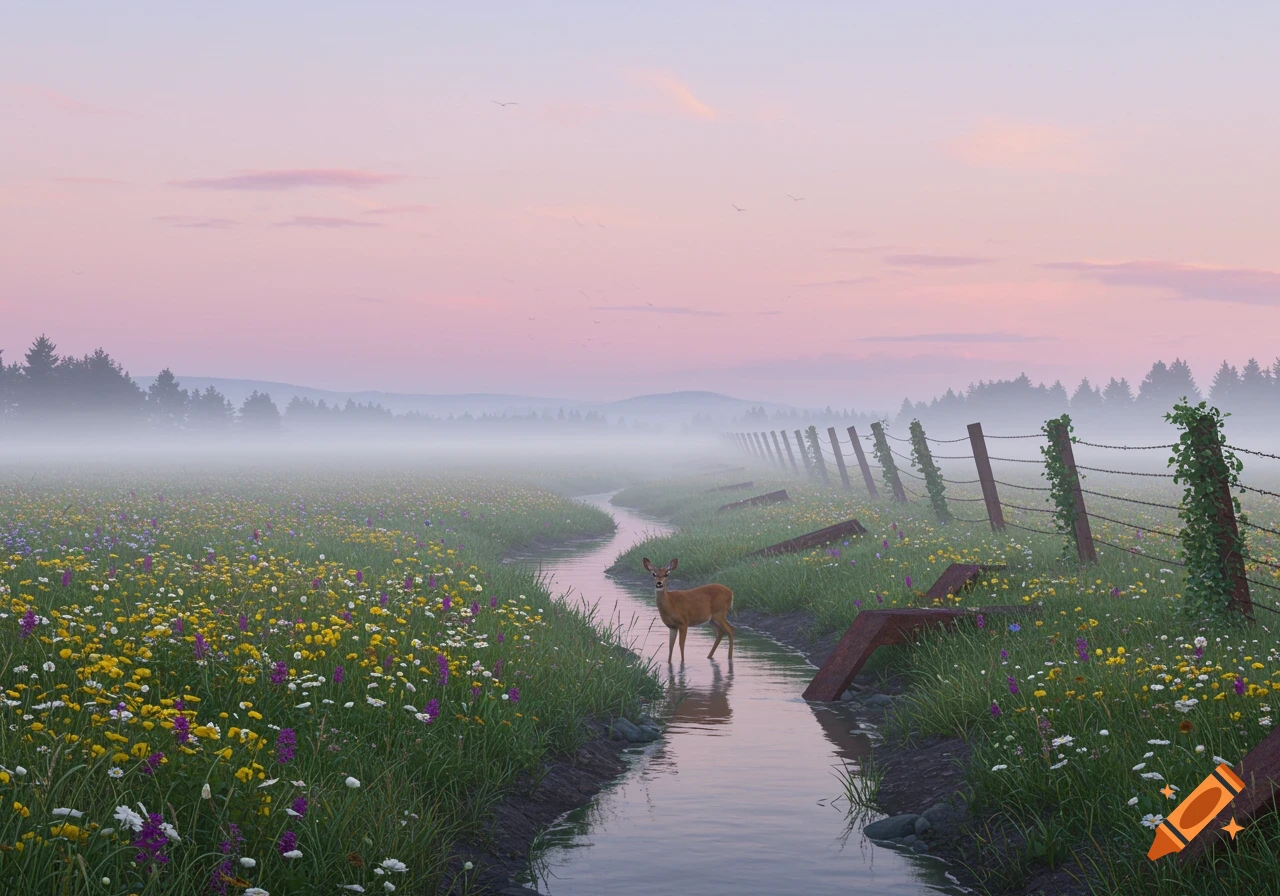
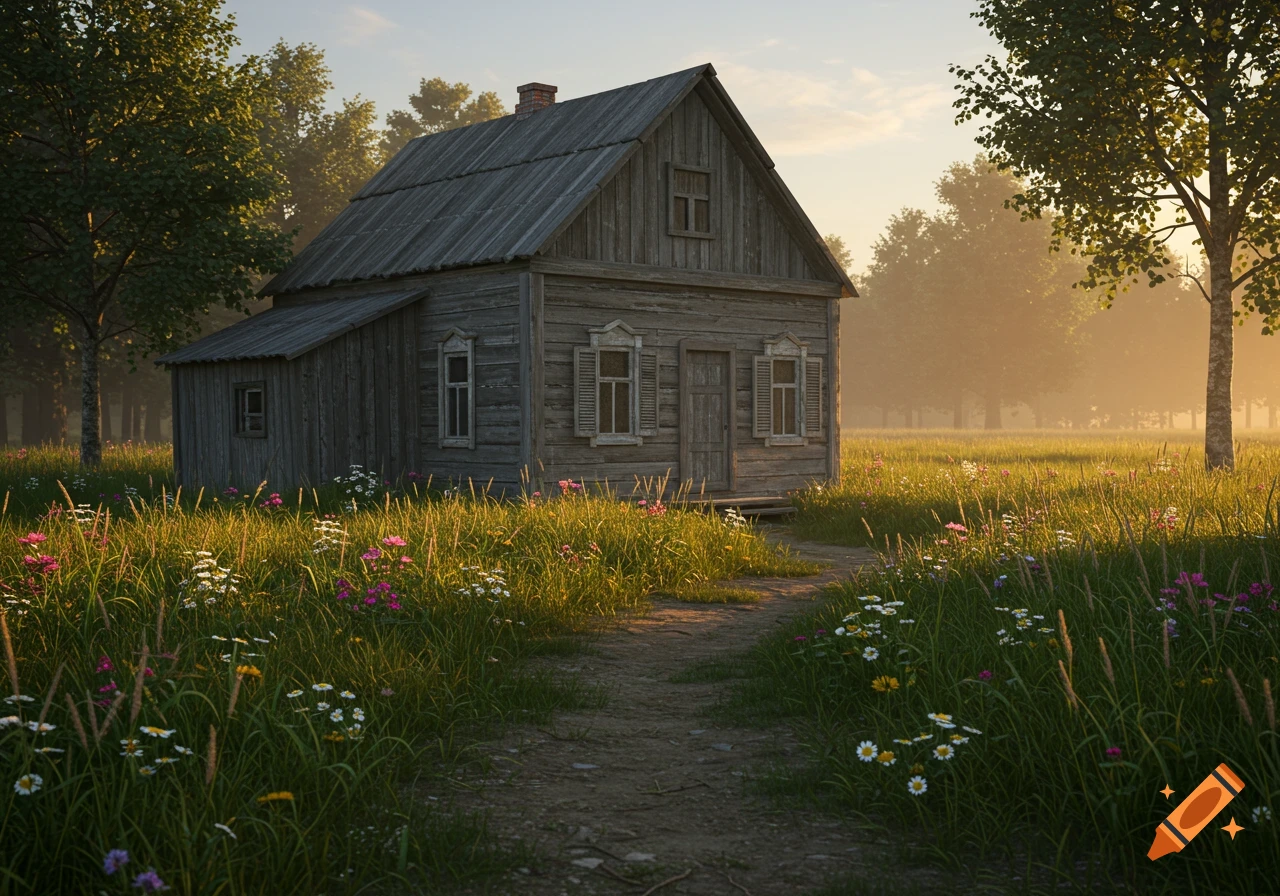
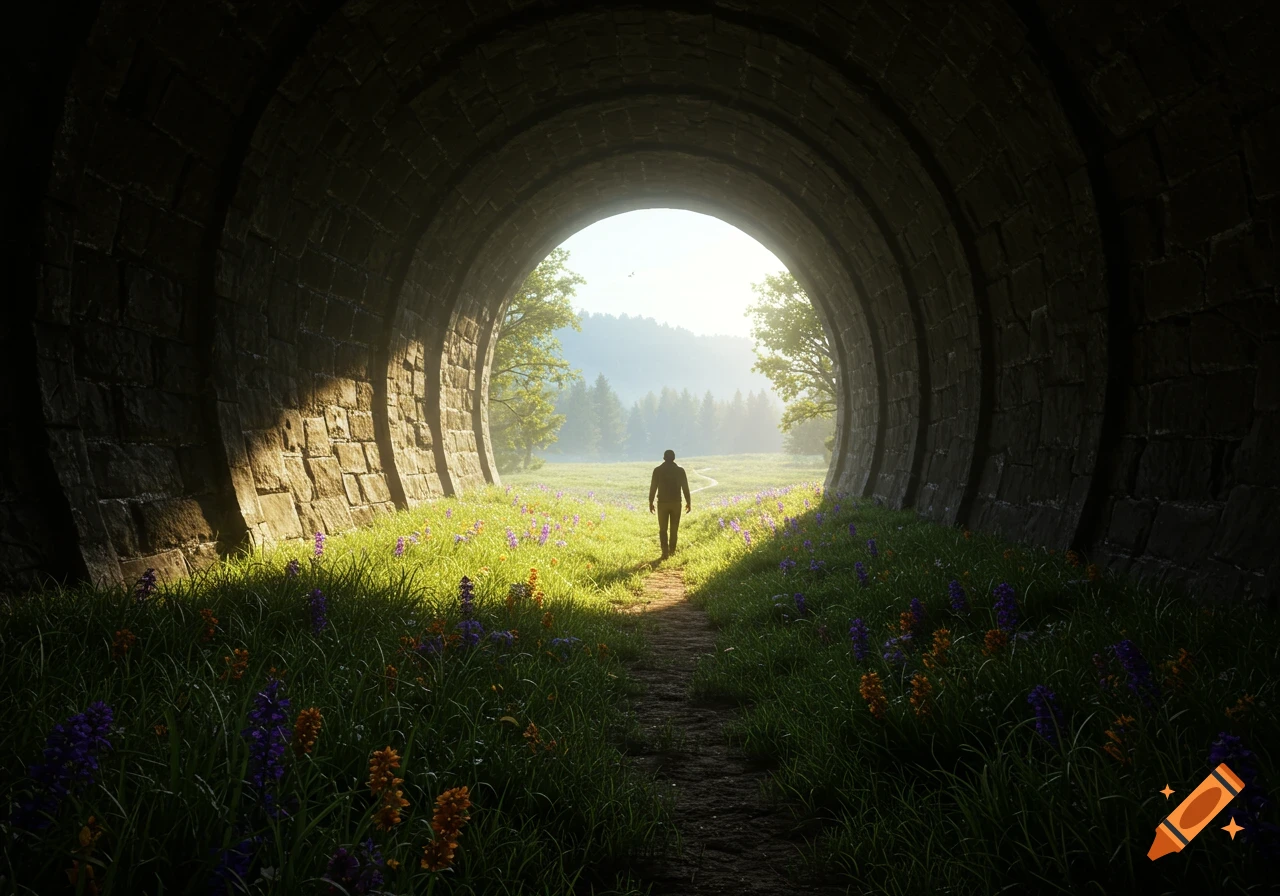
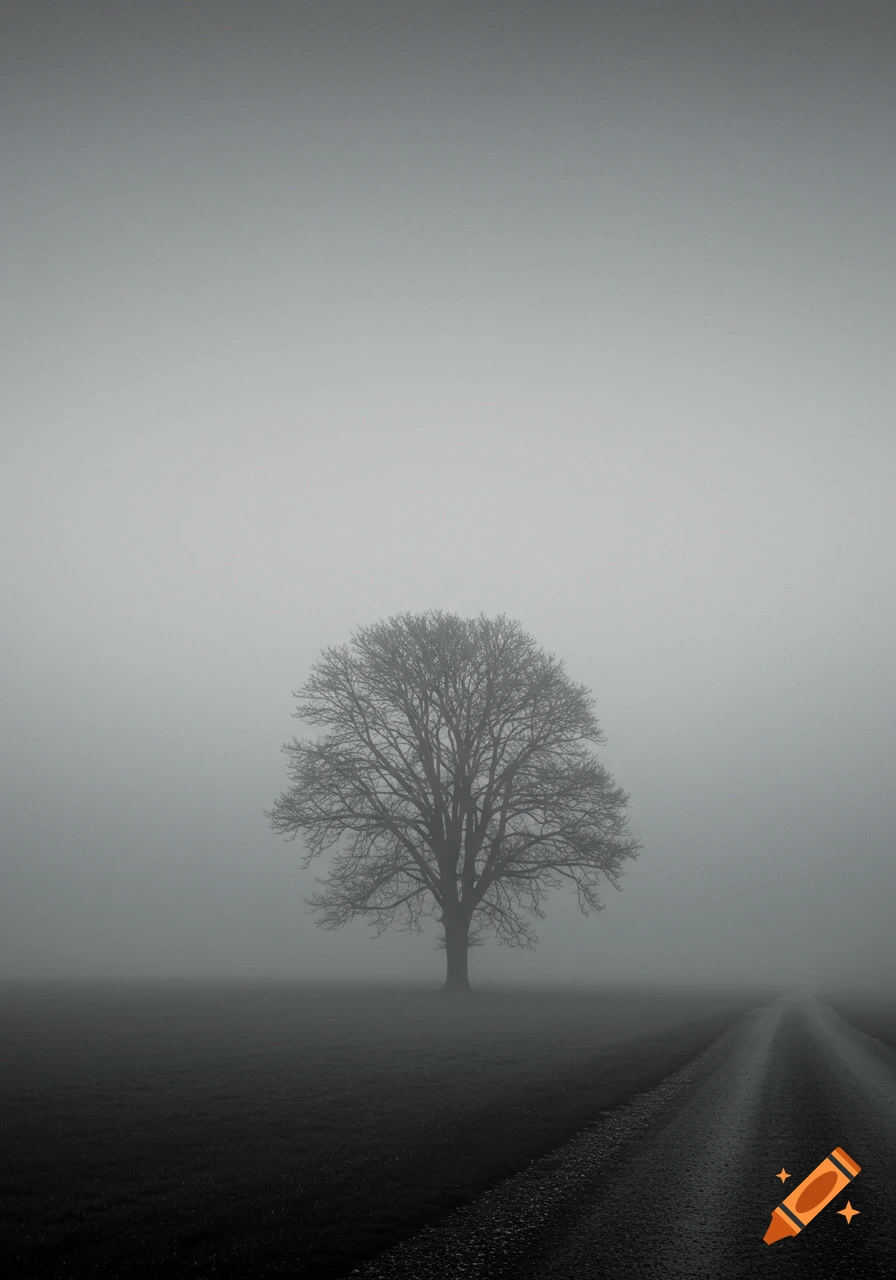
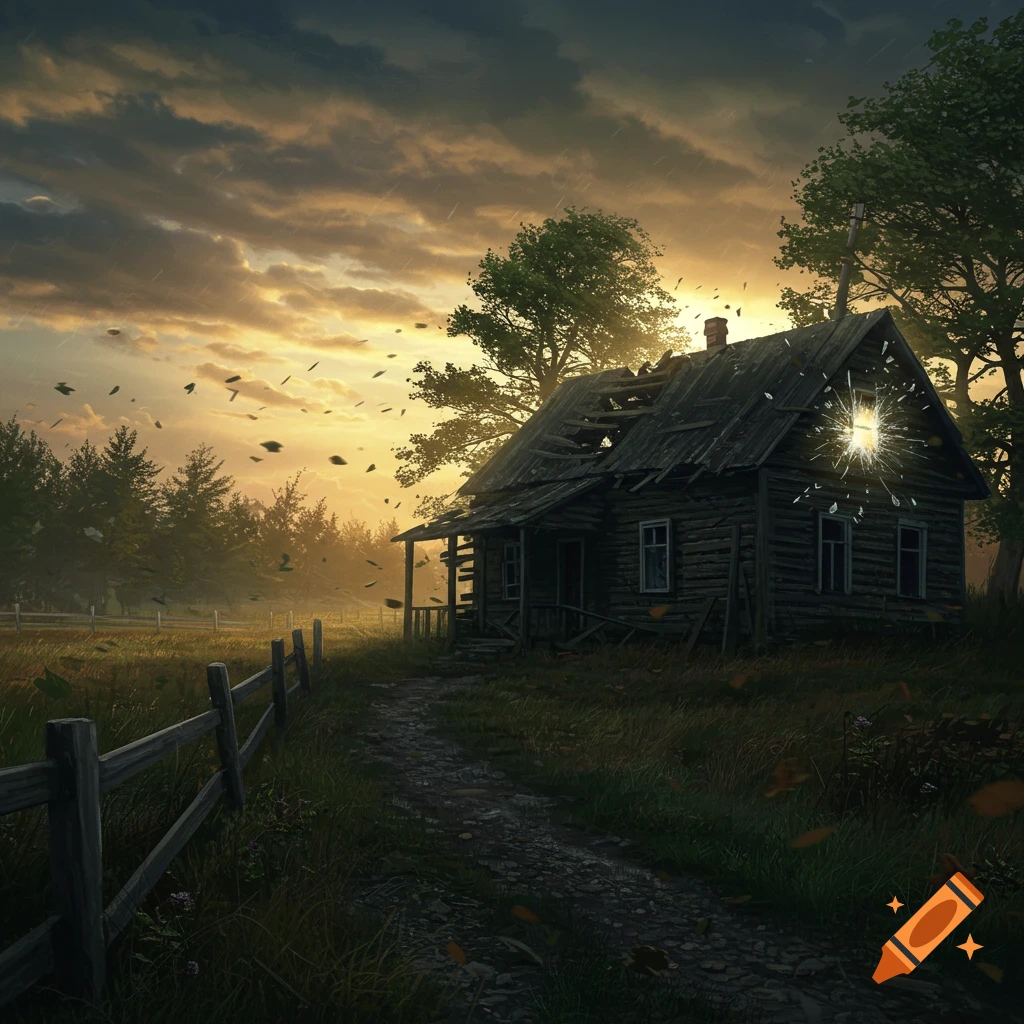
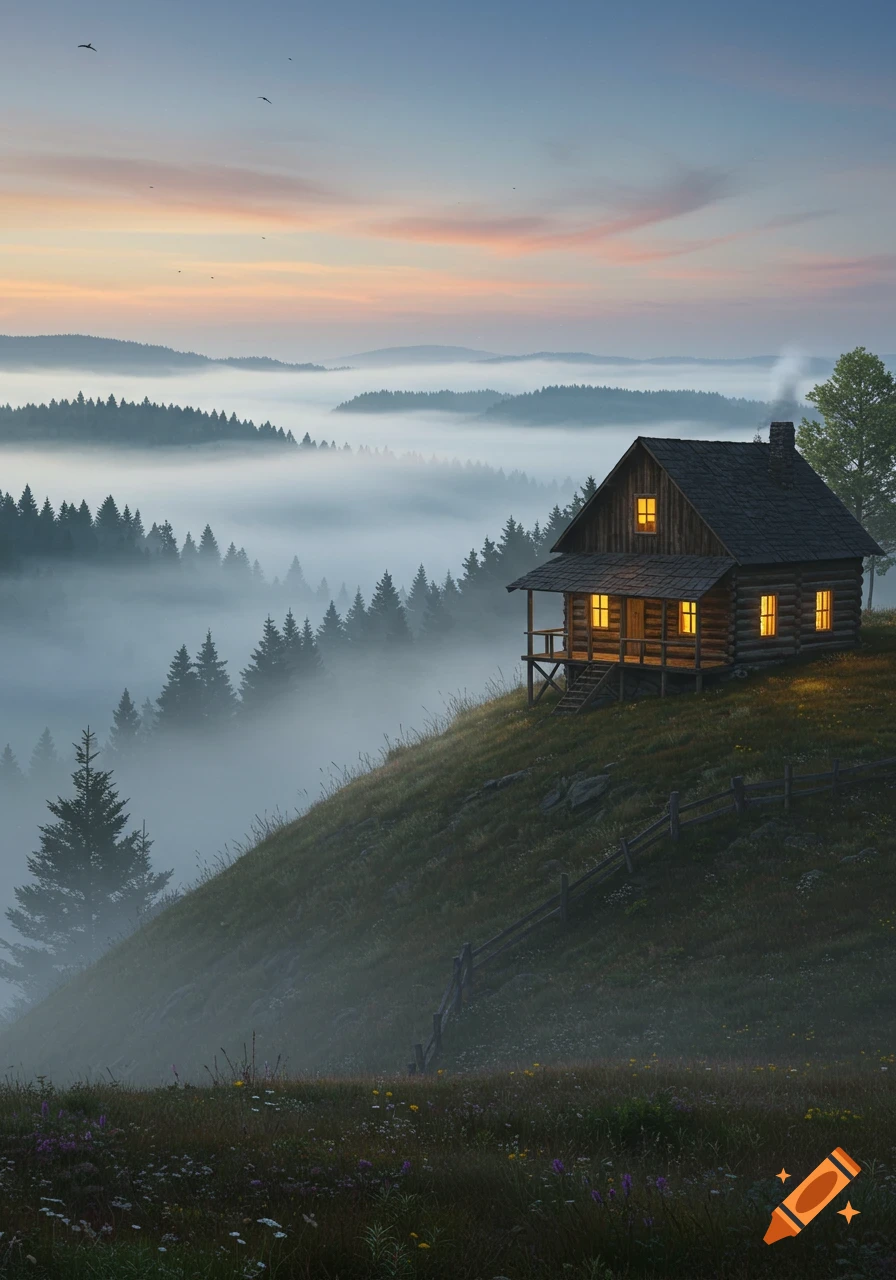
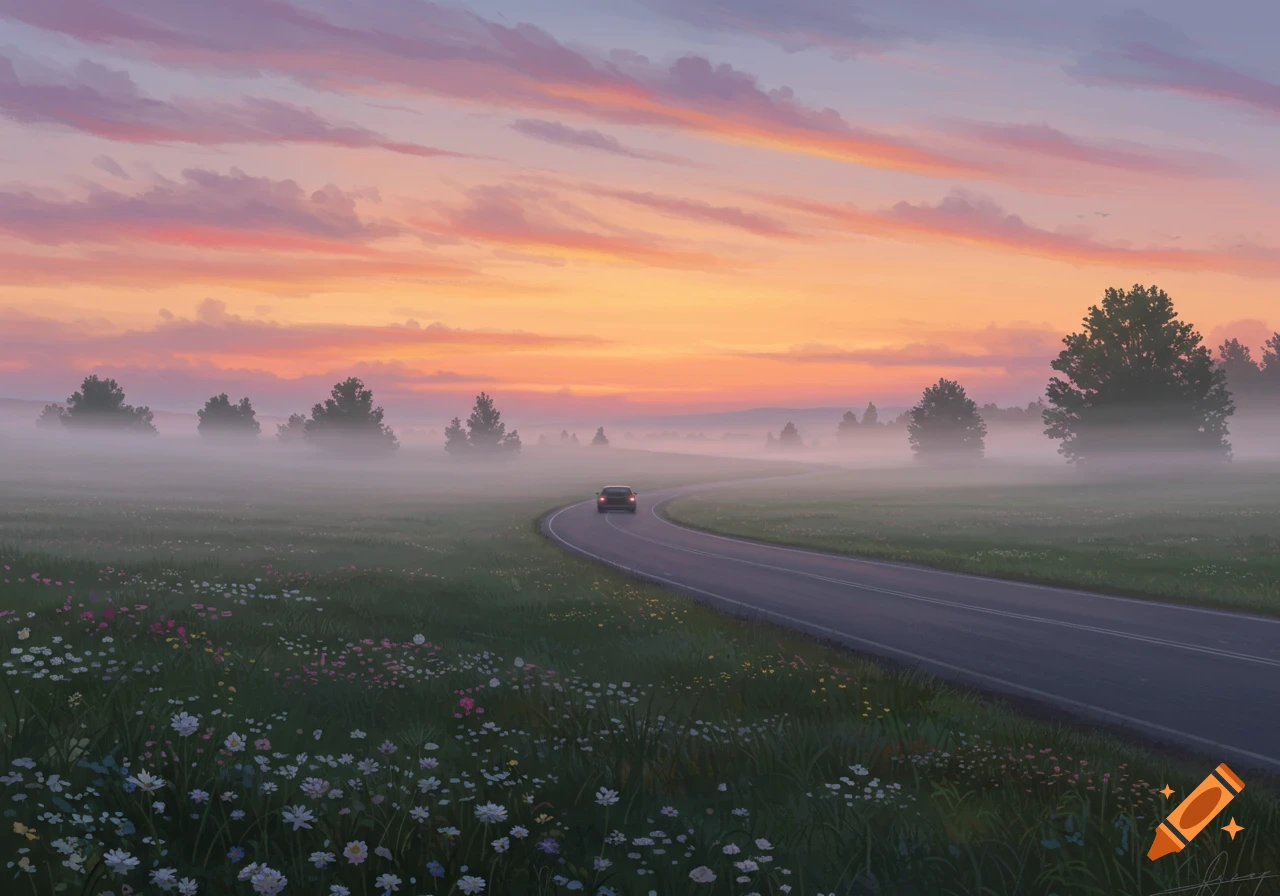
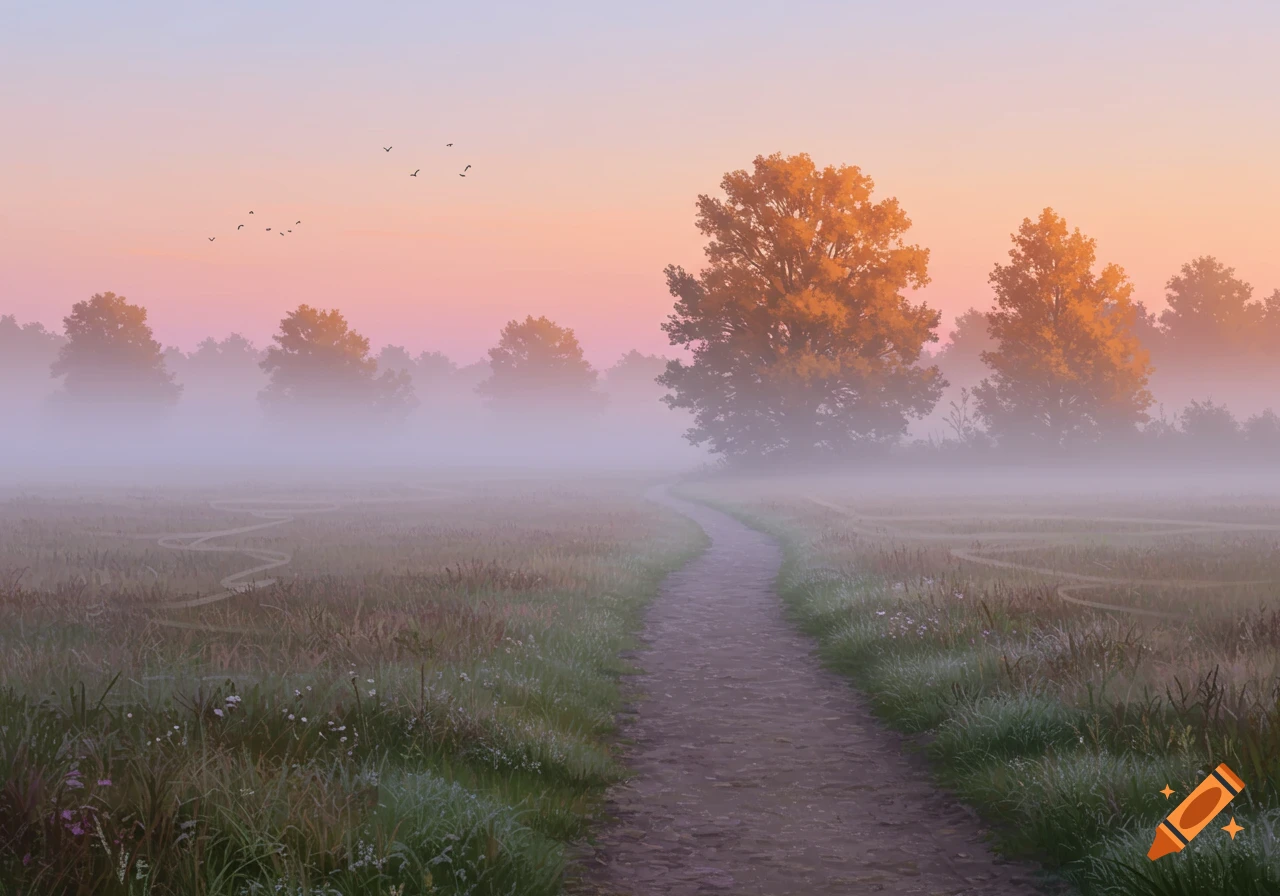
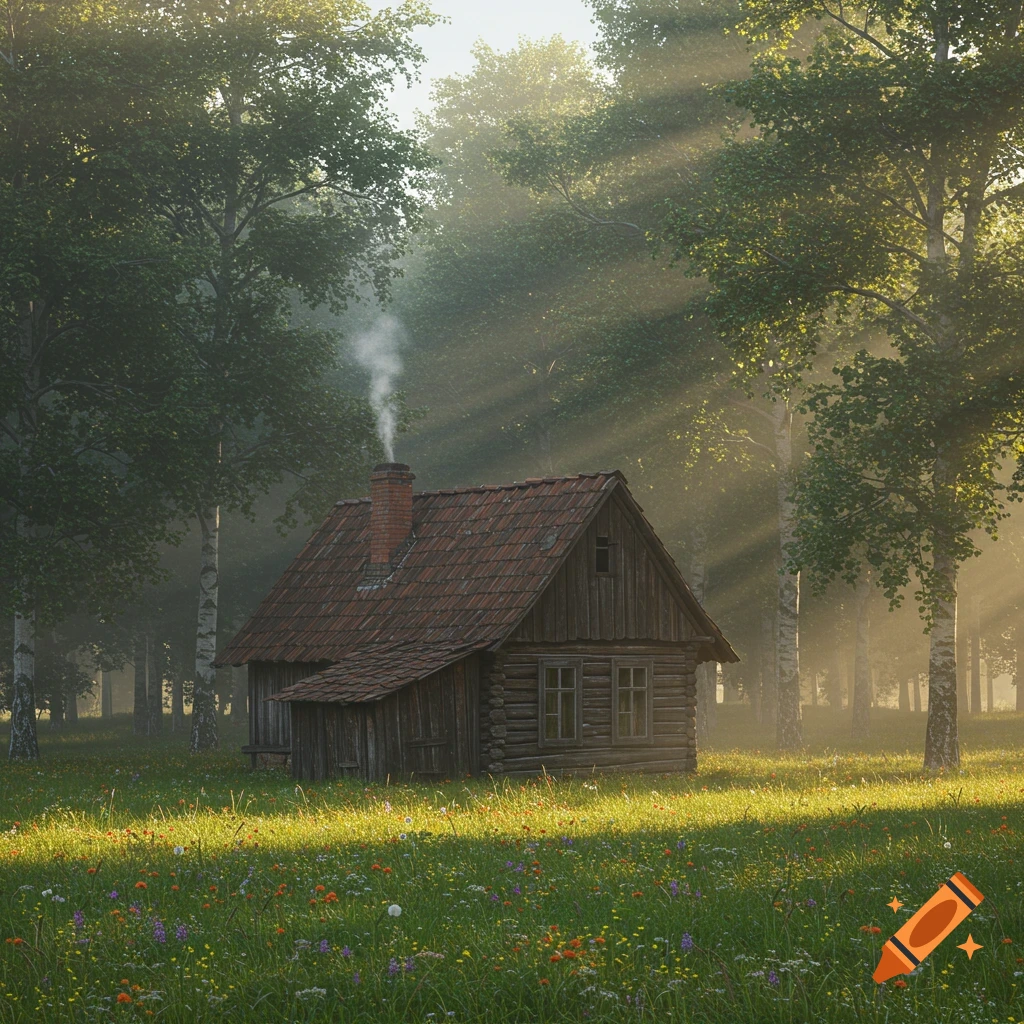
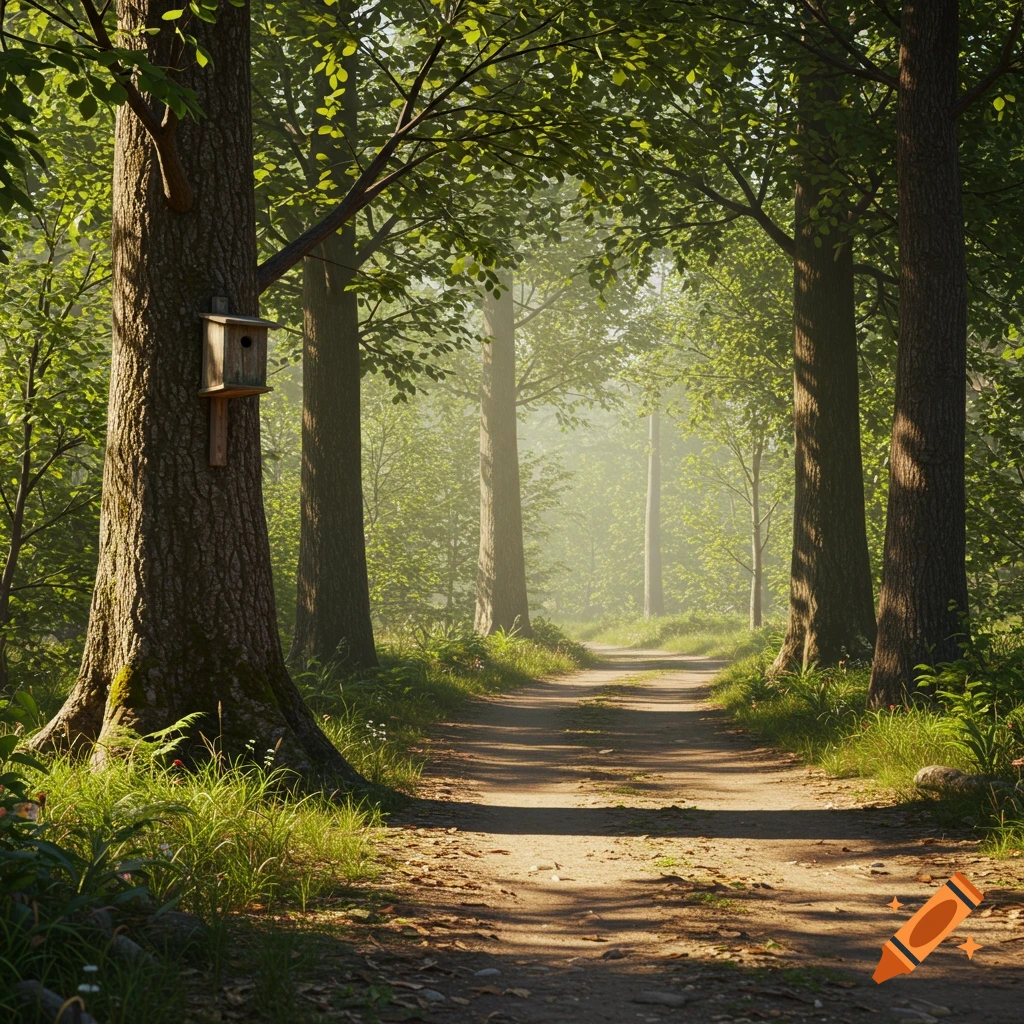
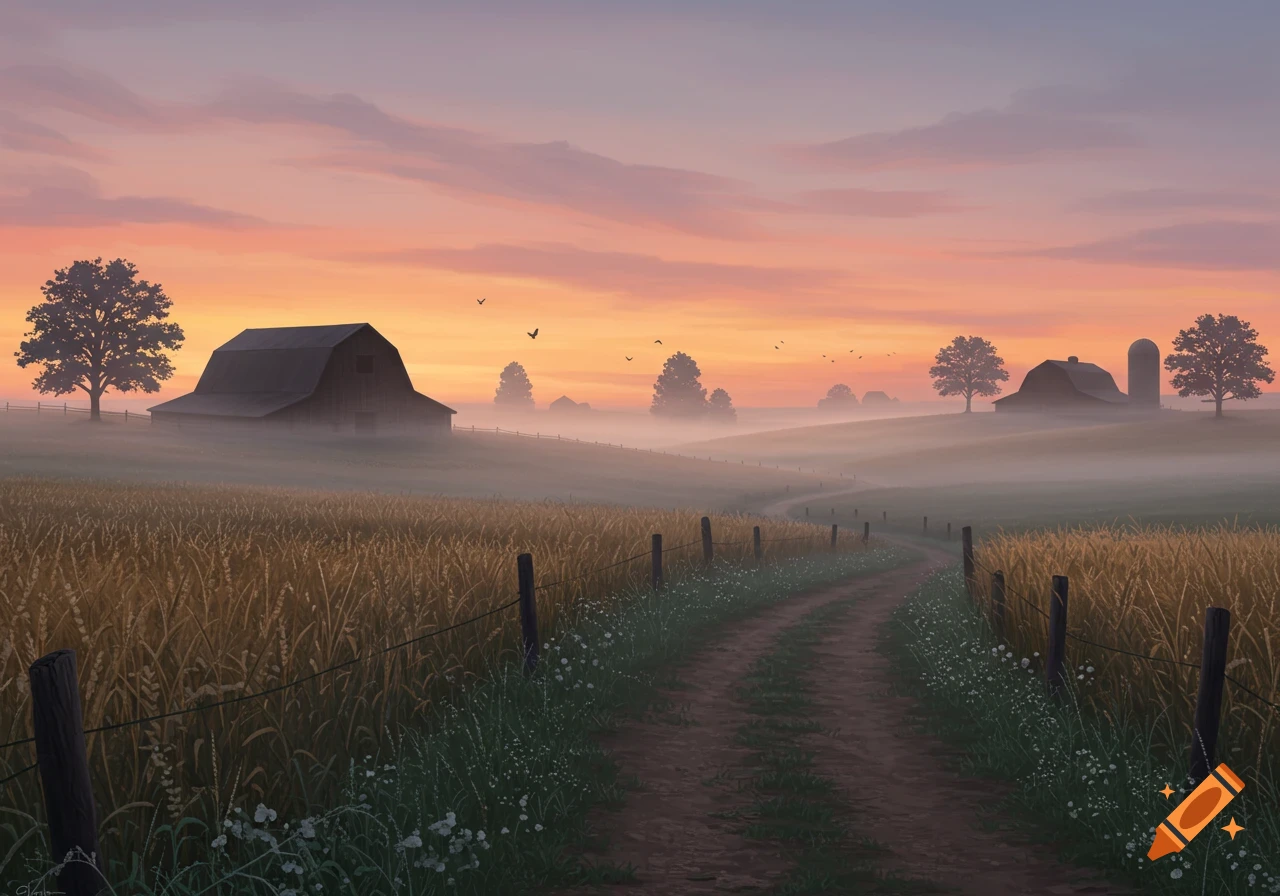
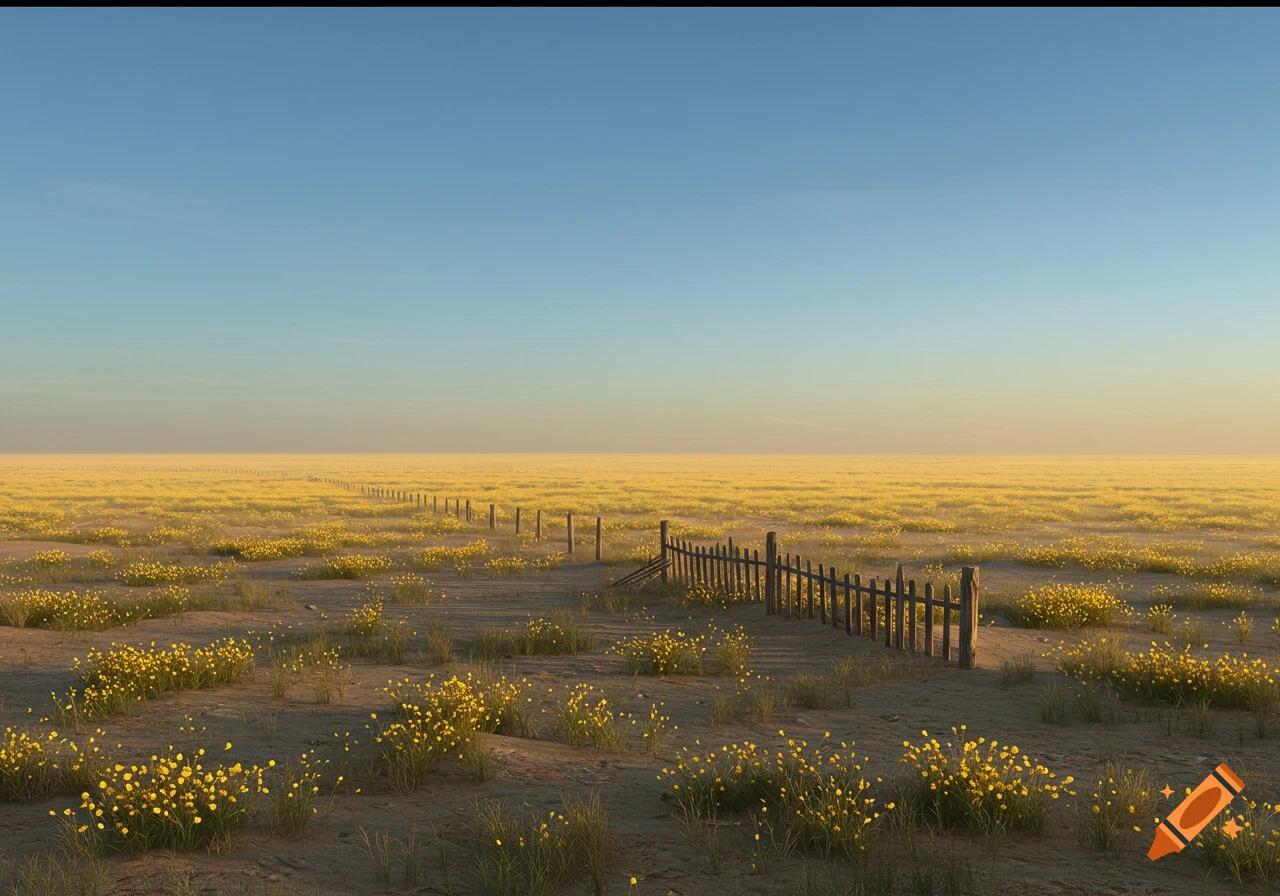
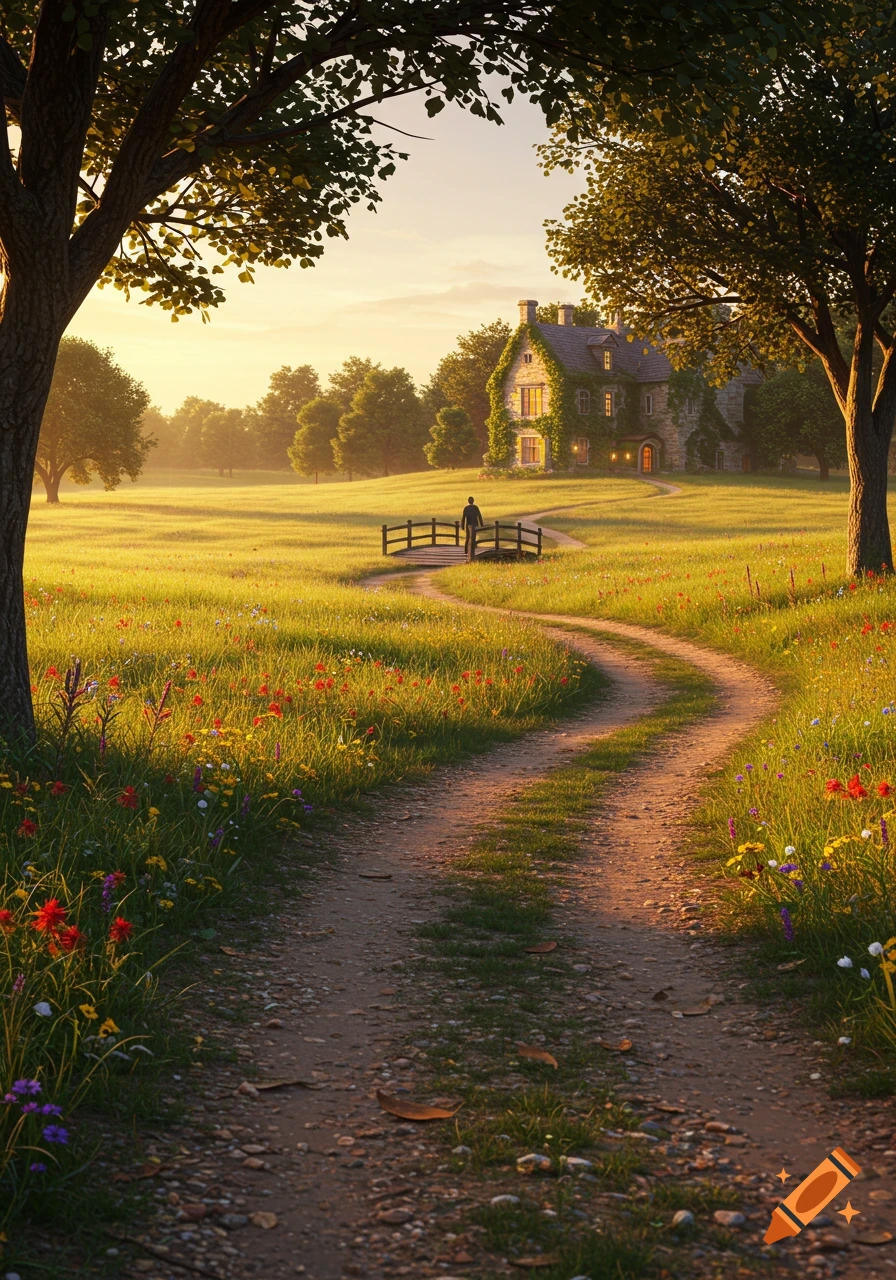
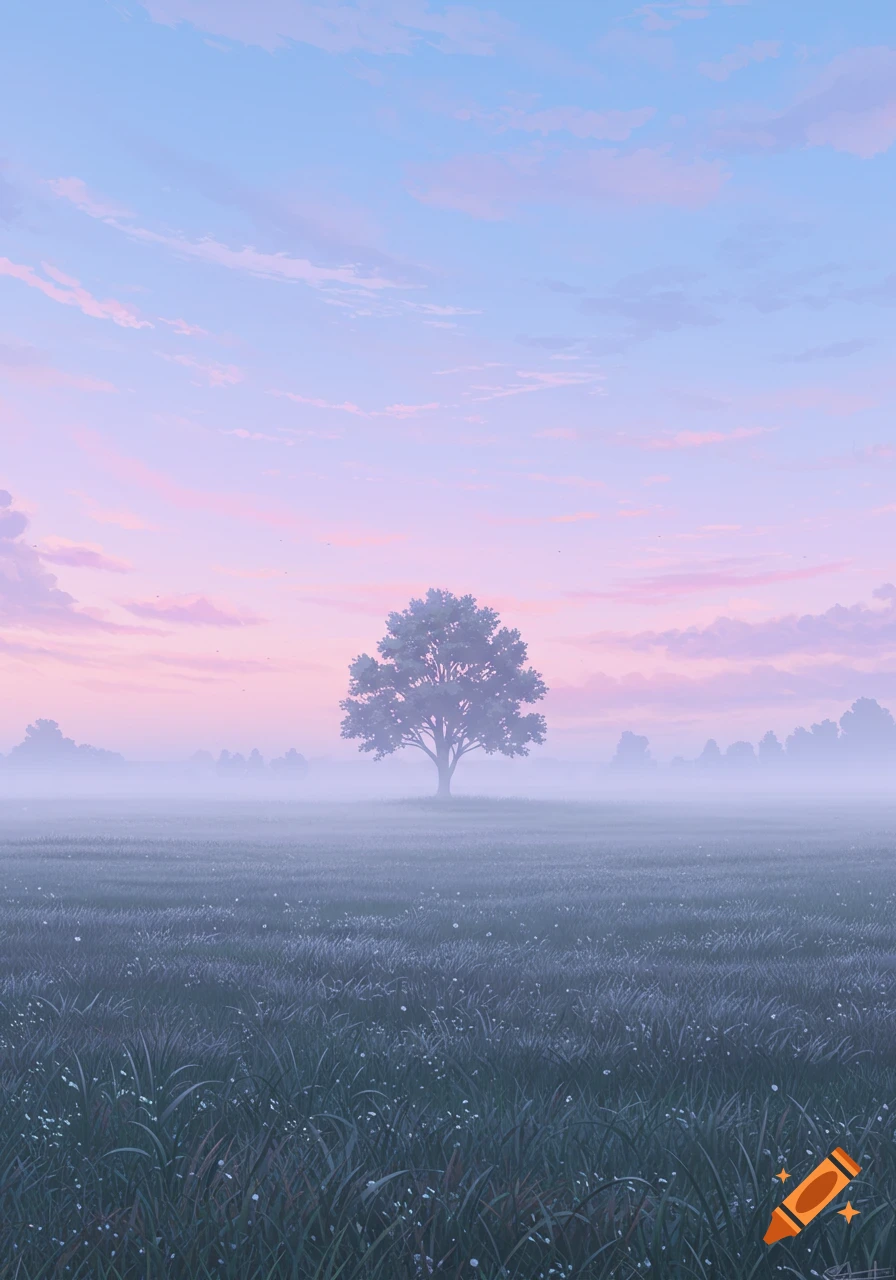
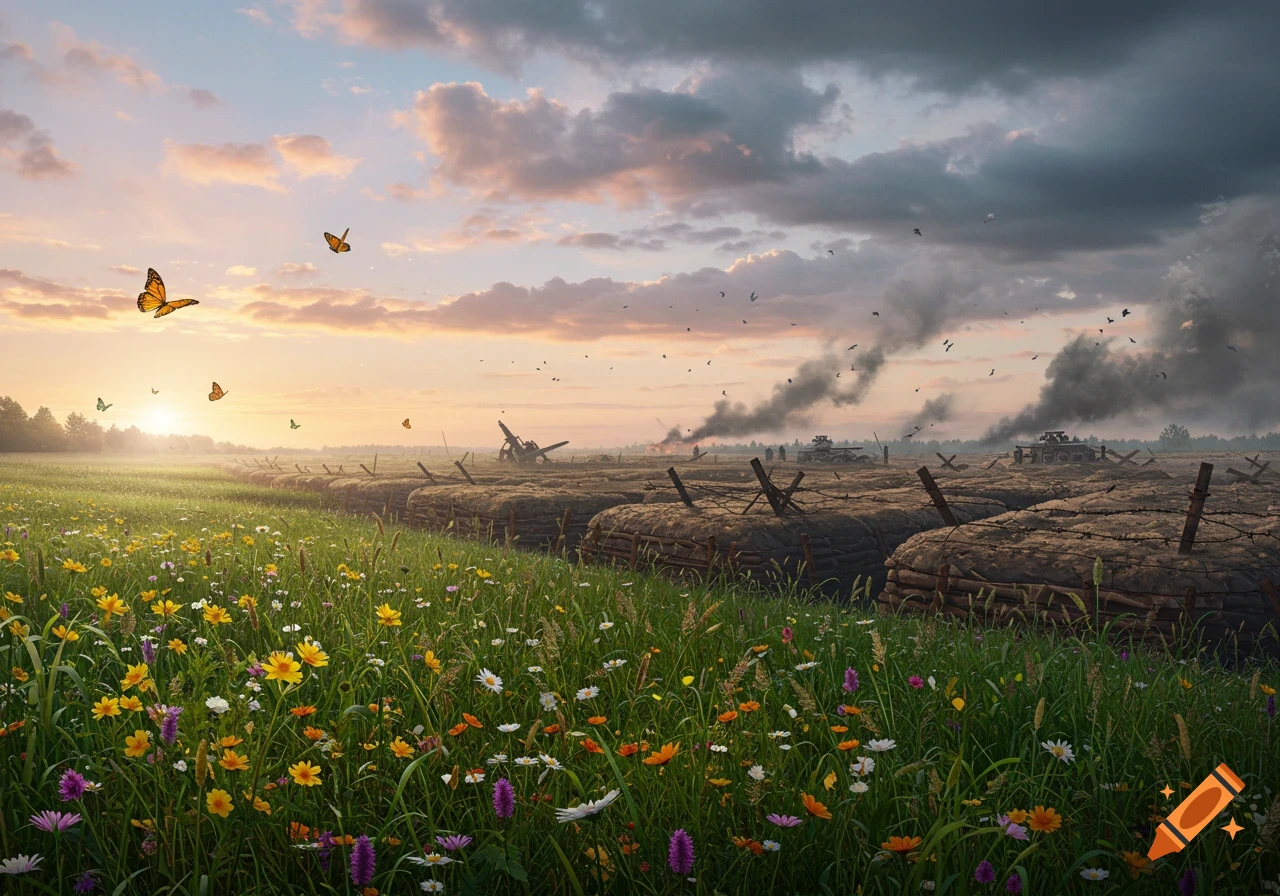
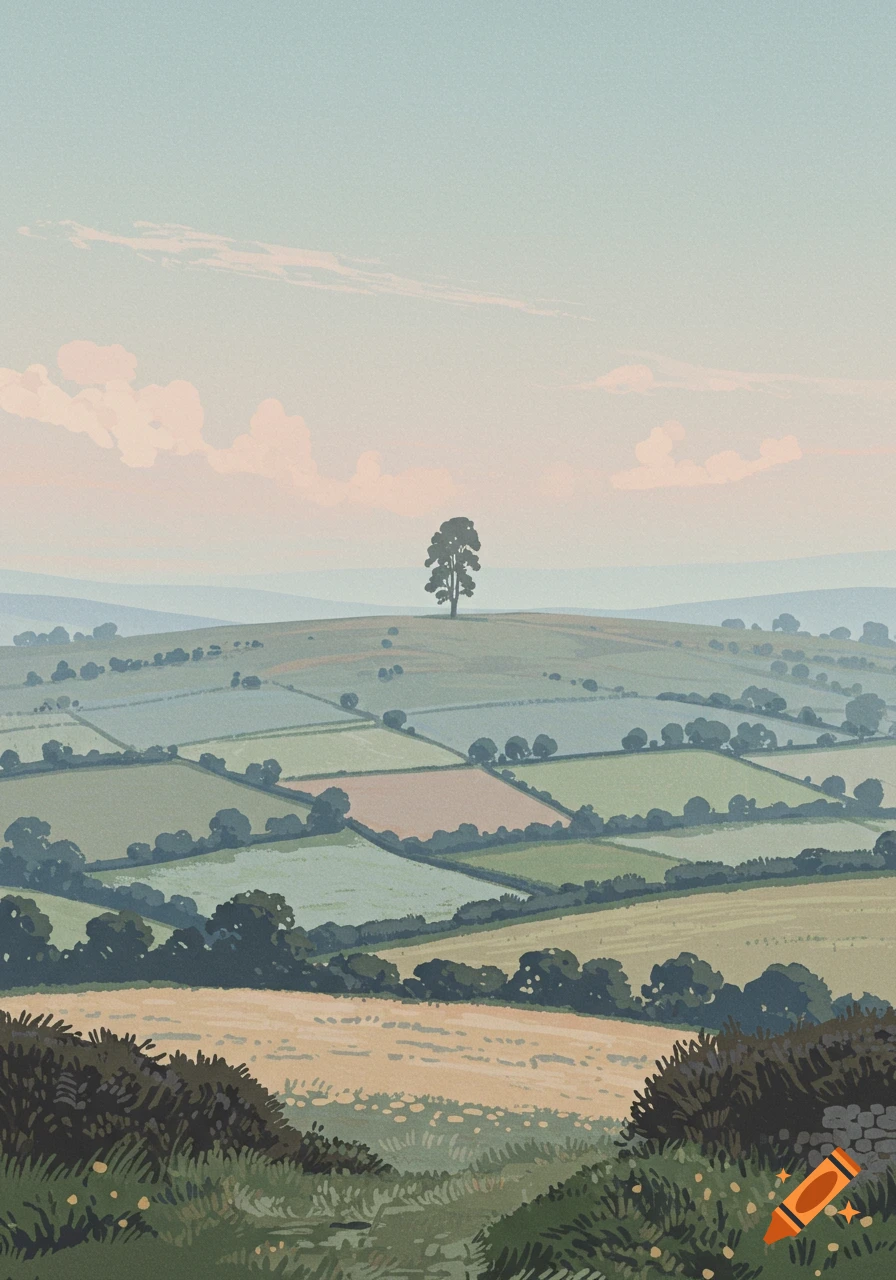
A quiet rural road at sunset, leading past a large tree, a wicker fence, and a smoking burial mound in a misty field.
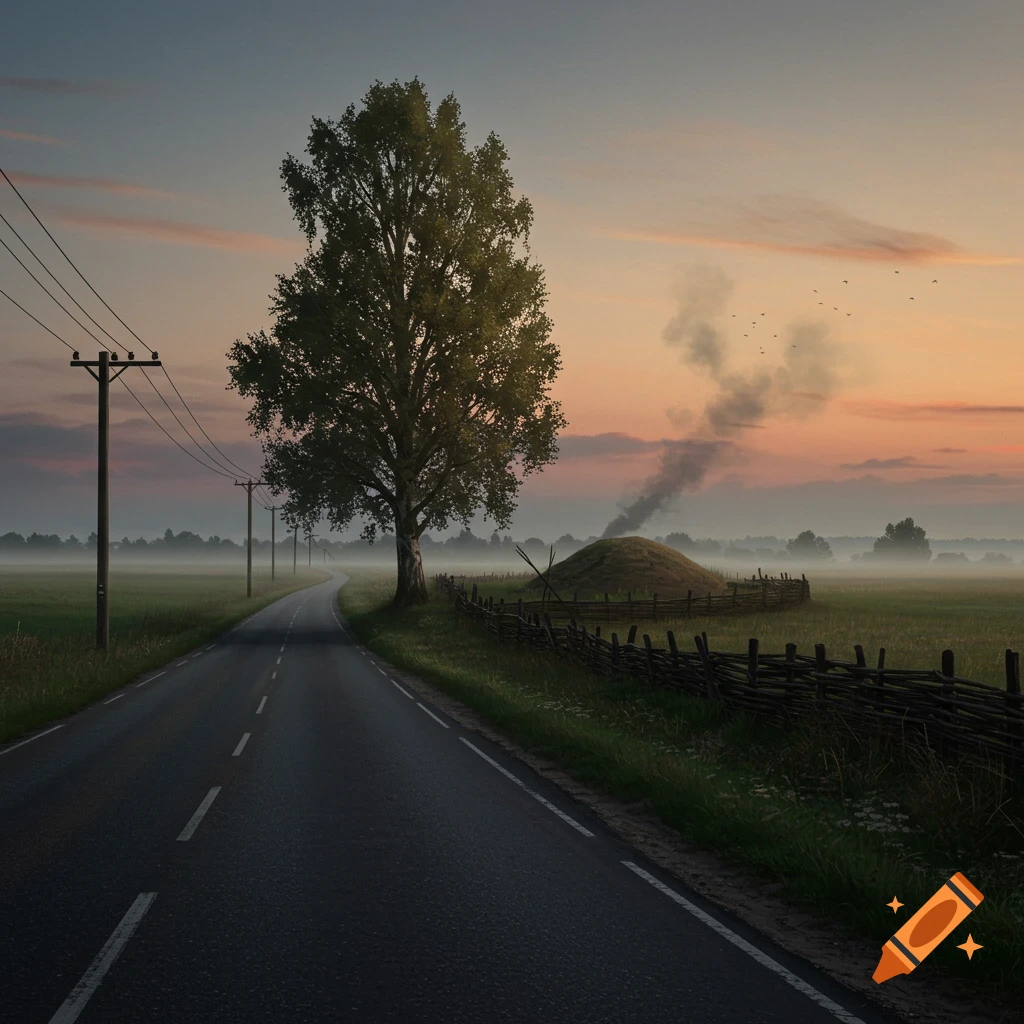
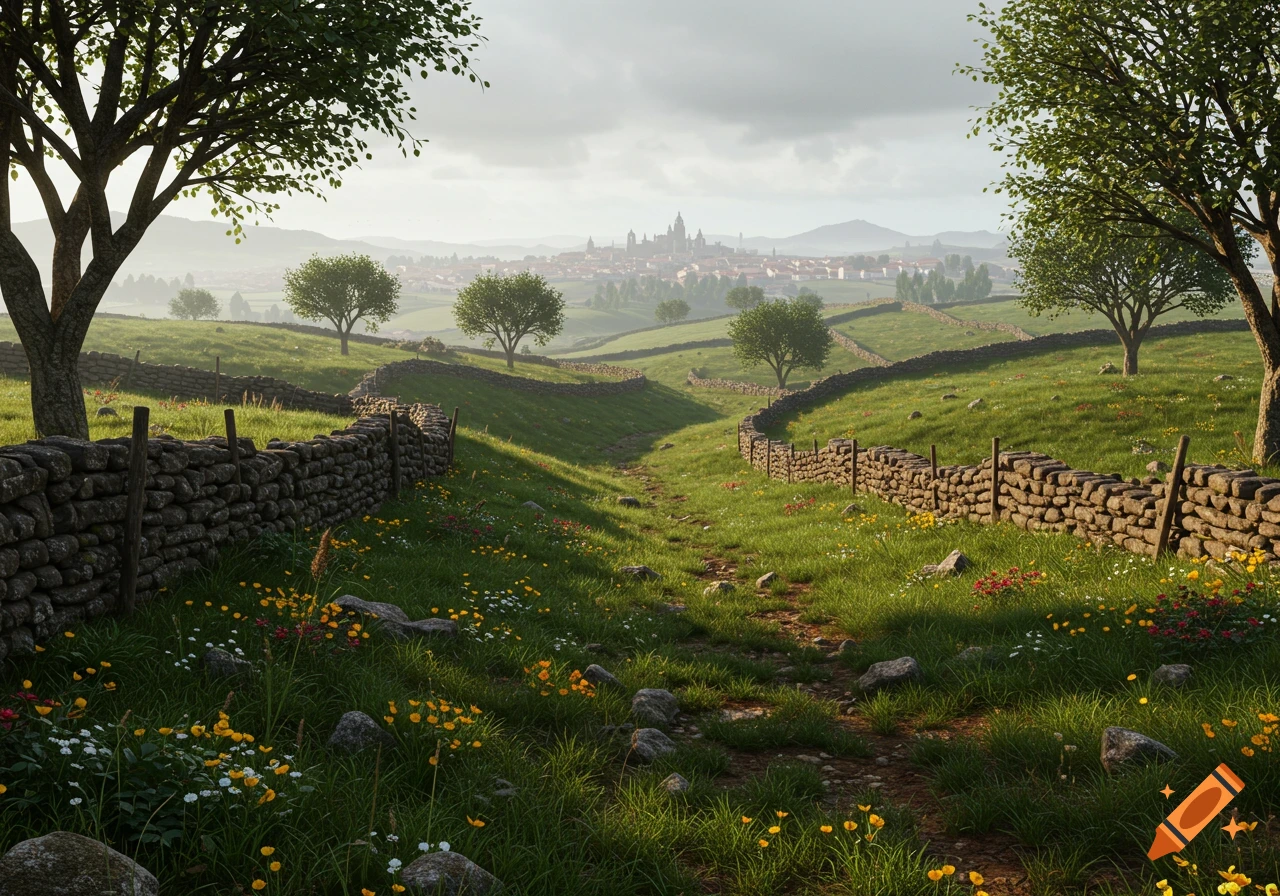
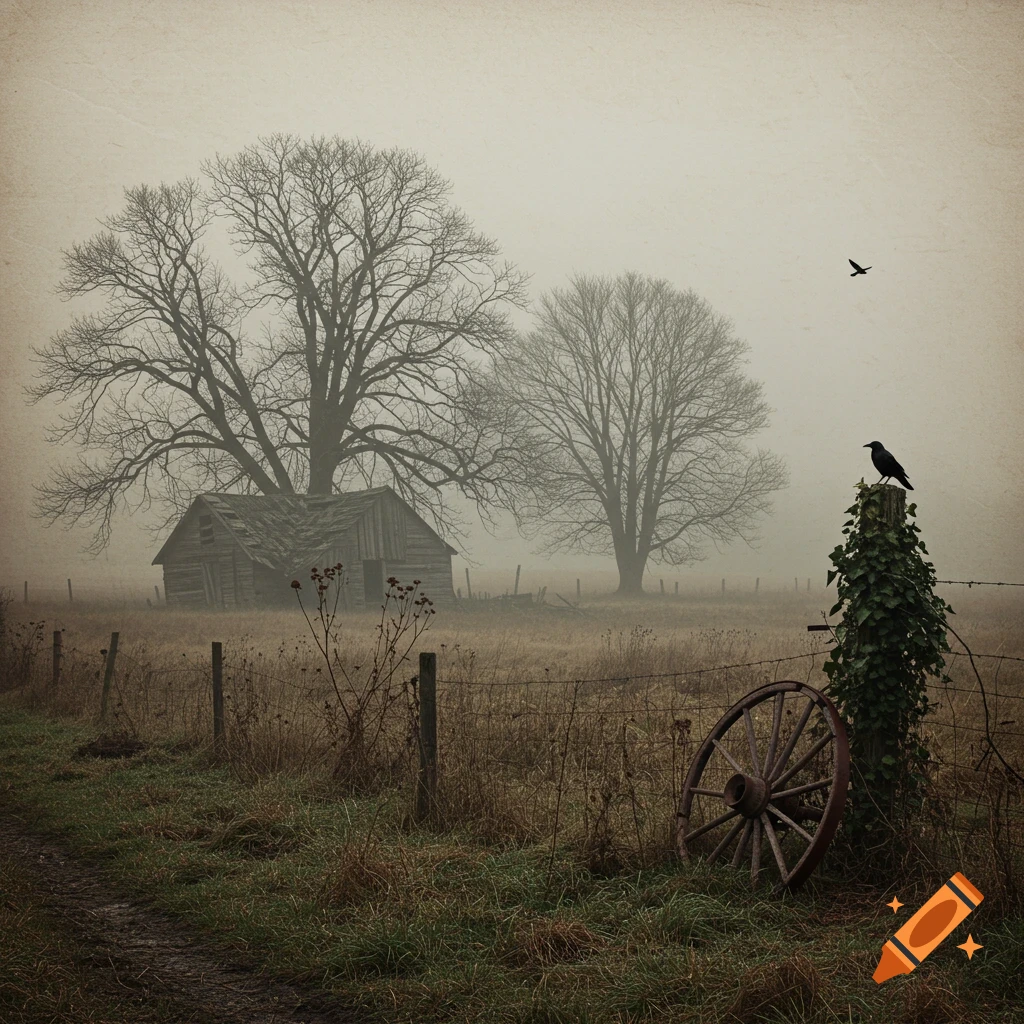
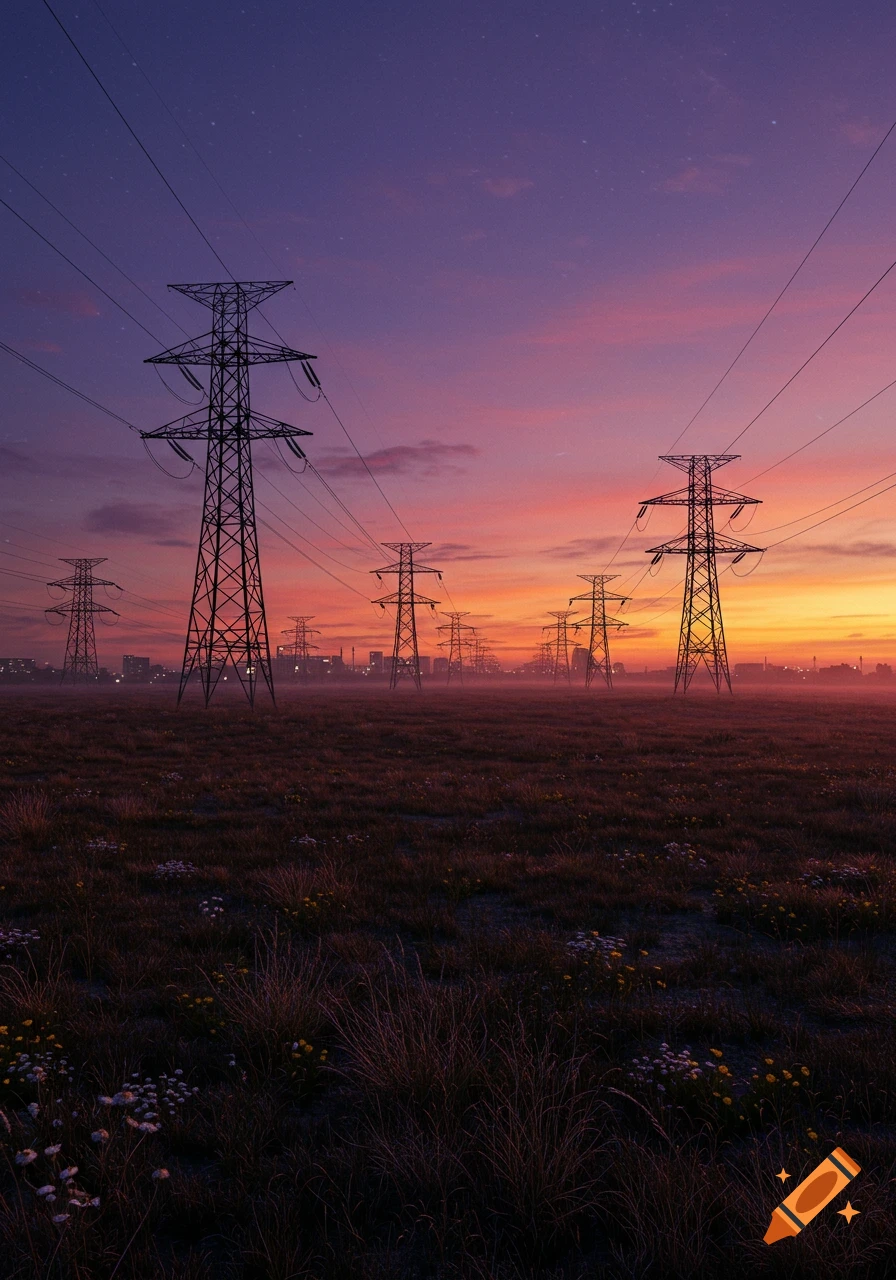
This poem, titled "The Road Home," captures the emotional and physical journey from a bustling, alienating city back to the serene and deeply personal landscape of one's native region. **Themes and Imagery:** 1. **Contrast between Worlds:** The poem opens with a farewell to the "foreign, bustling city," immediately establishing a contrast. The native land is portrayed as a place of "peace" and "silence," a stark opposite to the implied noise and stress of urban life. 2. **The Kinetic Sensation of Travel:** The journey itself is described through motion and sound: "the familiar road calls into the distance," "wires hum," "fields run by." This creates a dynamic feeling of movement, pulling the reader along with the narrator. 3. **Sensory Awakening:** As the traveler gets closer, the senses become more engaged. The "bitter taste" of bonfire smoke and the sight of a "half-eroded burial mound from childhood" are powerful, sensory triggers of memory and belonging. These are not just visual cues but deeply ingrained experiences. 4. **The Heart's Guidance:** The physical journey mirrors an internal, emotional one. The line "the heart hurries to slow its beat" suggests an anticipation of calm. The final realization is not just visual but auditory: the narrator *hears* the "silence of the homeland," which is a profound, internal sound of peace and arrival. 5. **Symbols of Home:** The poem uses classic, timeless symbols of a Russian rural home—the "wicker fence," the "old poplar tree" See more