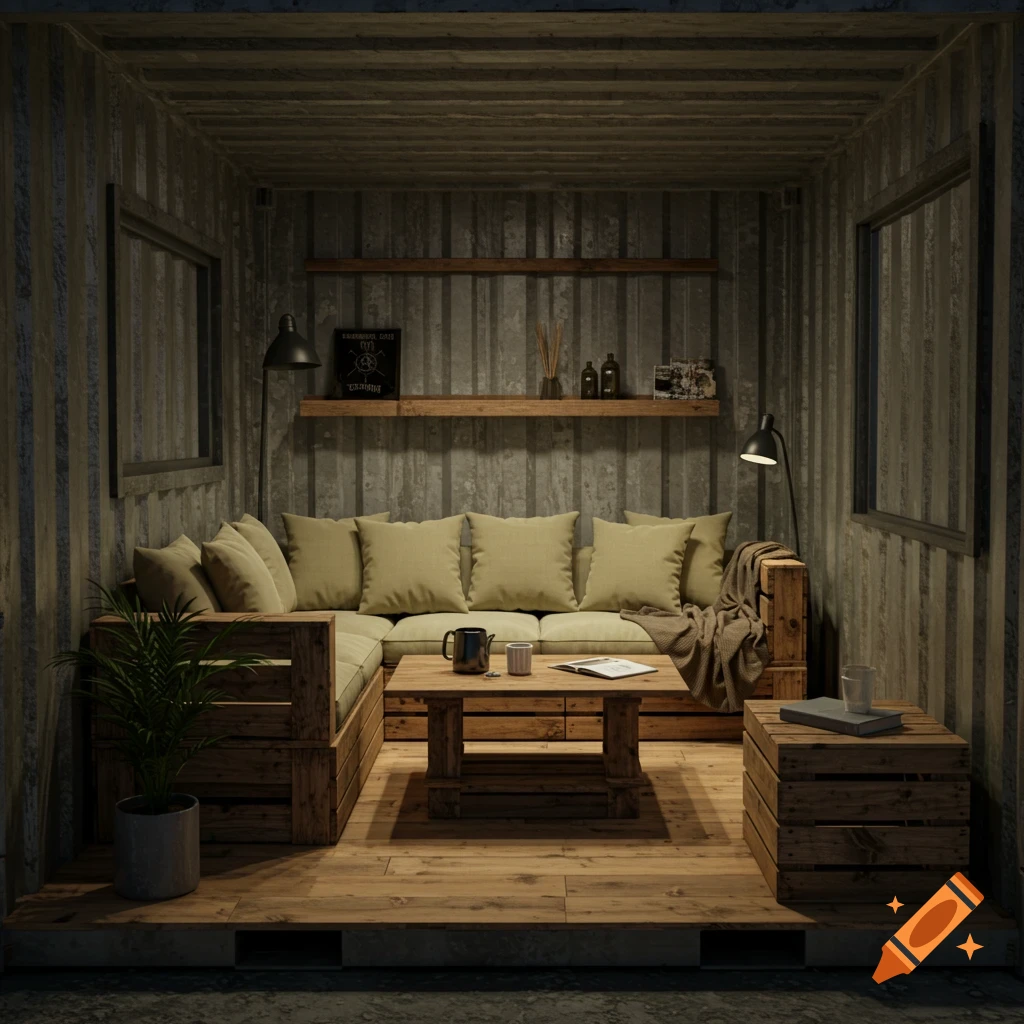
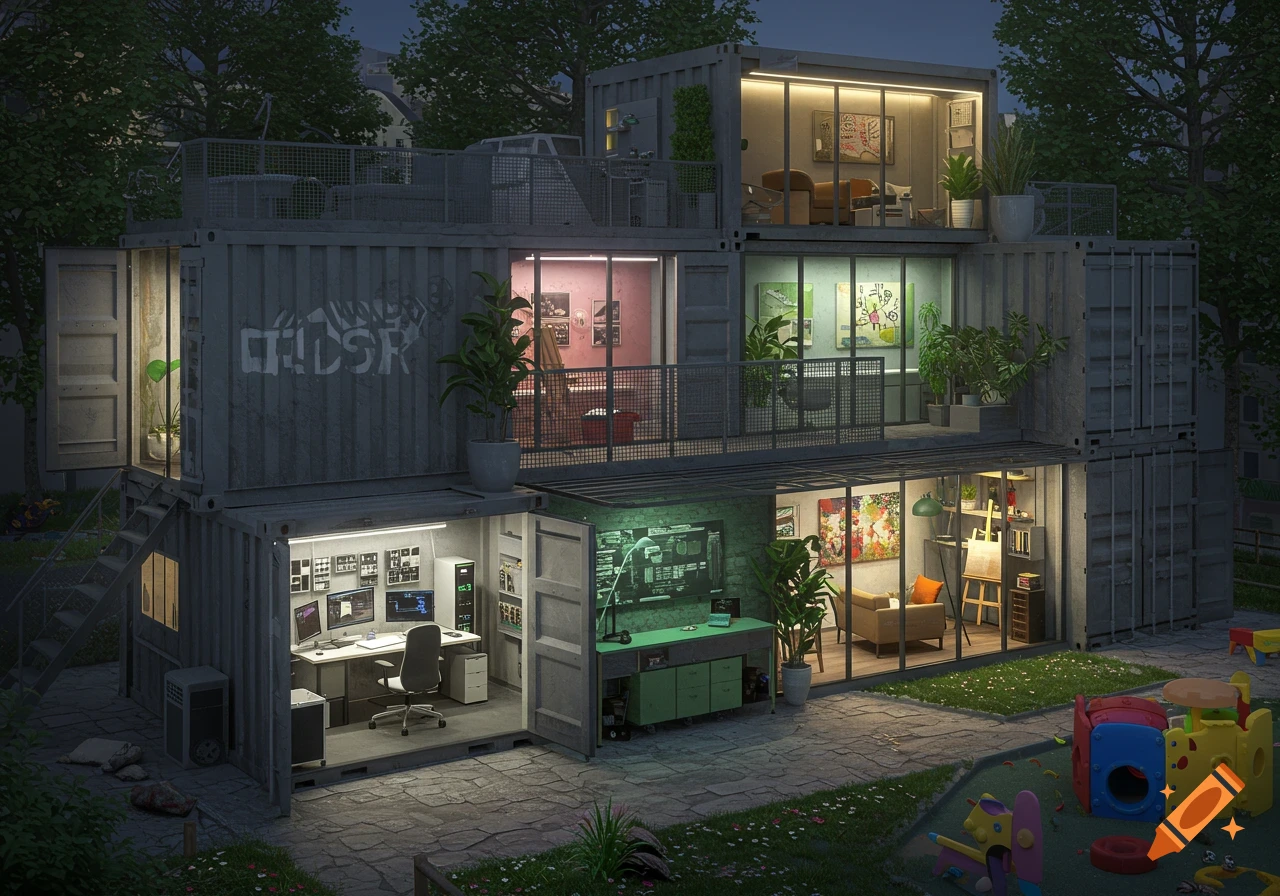
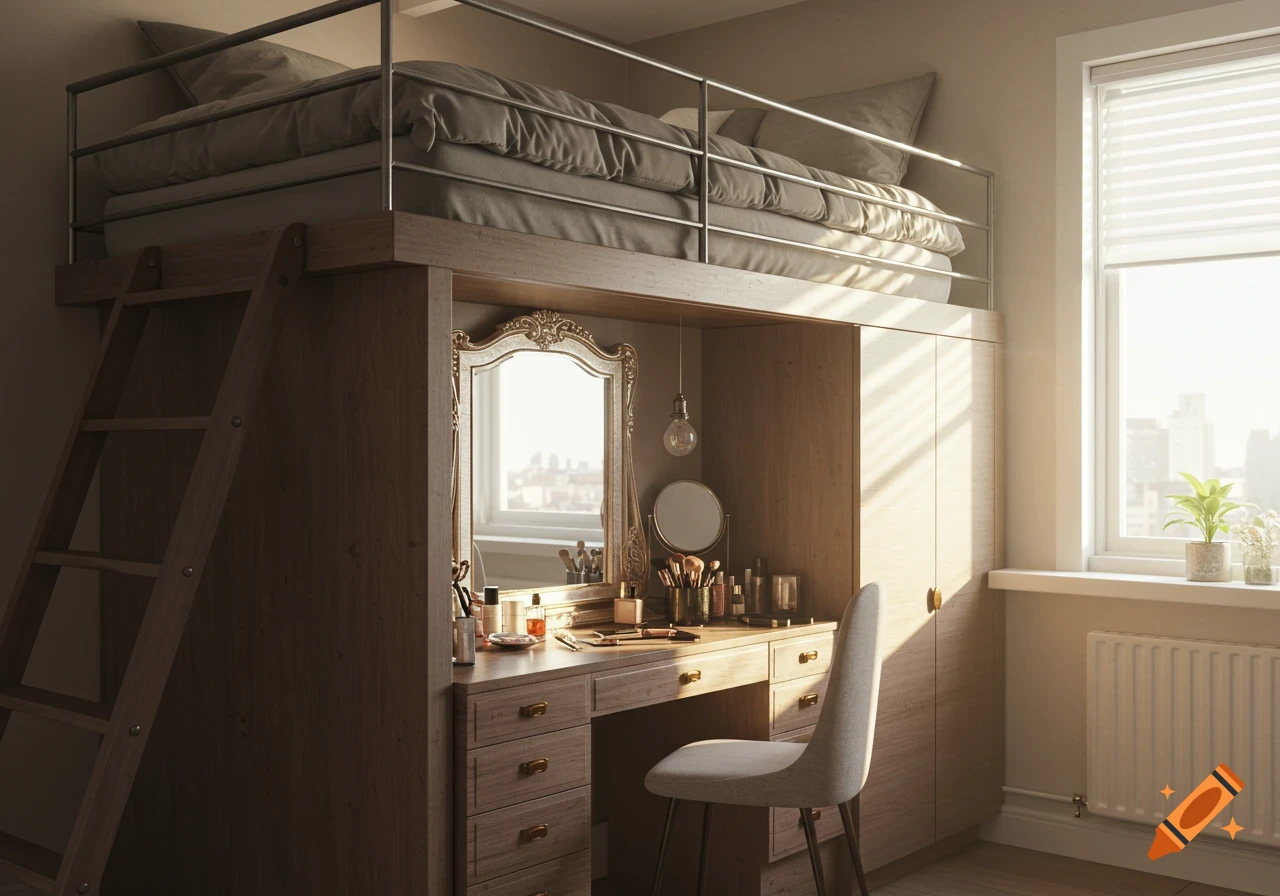
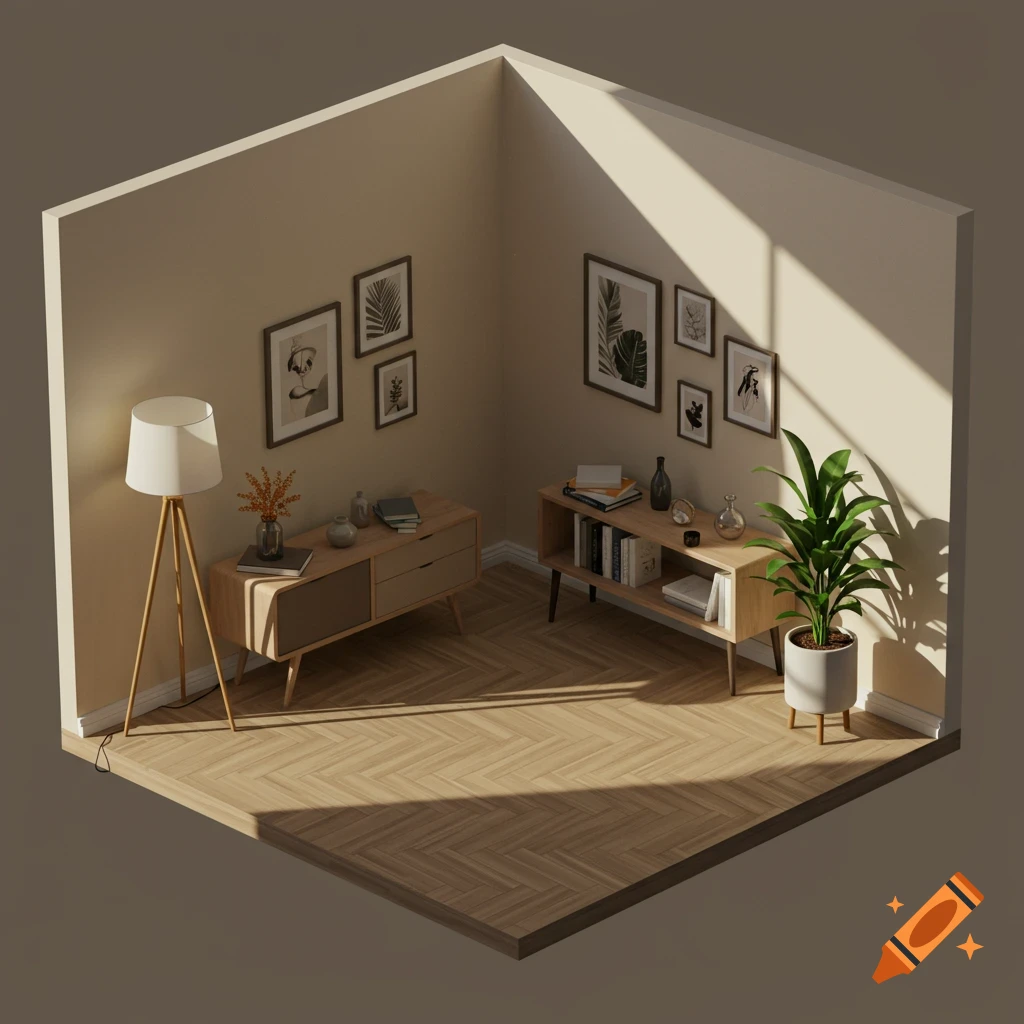
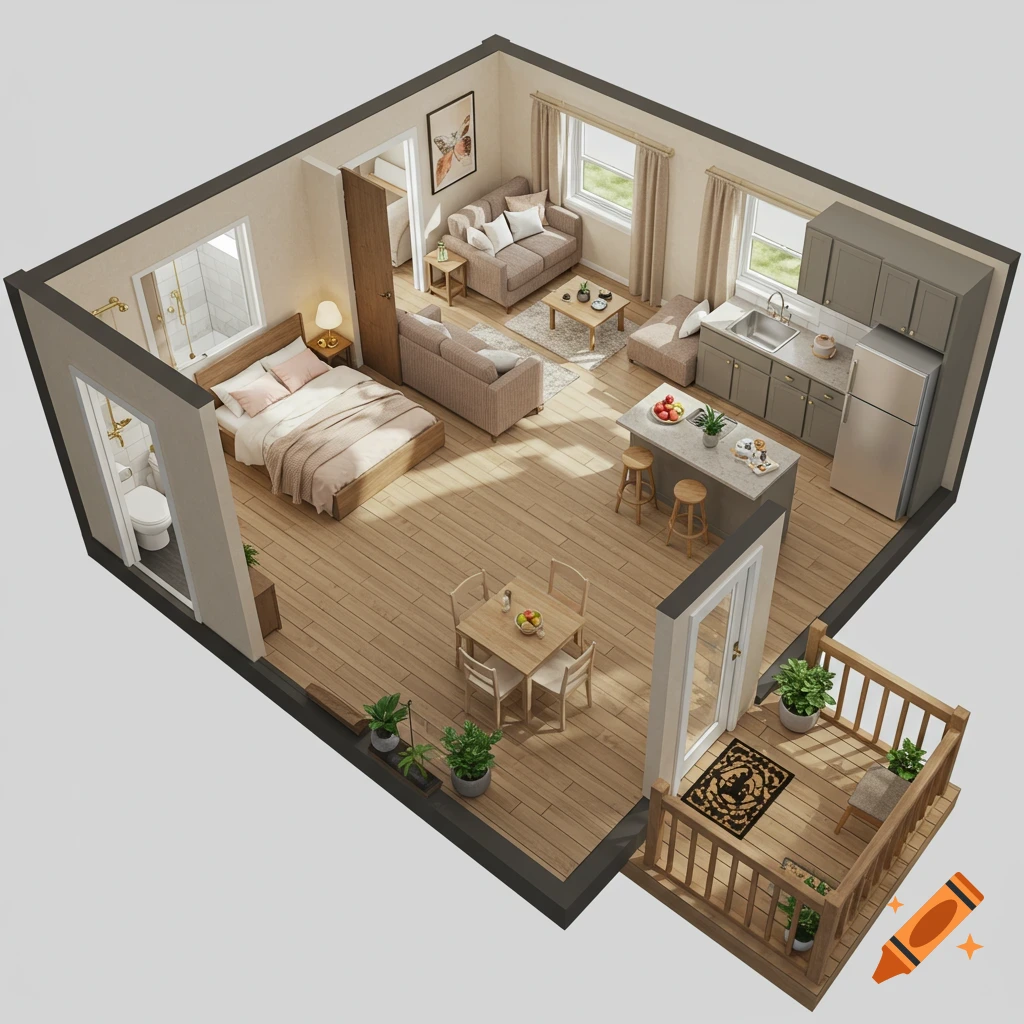
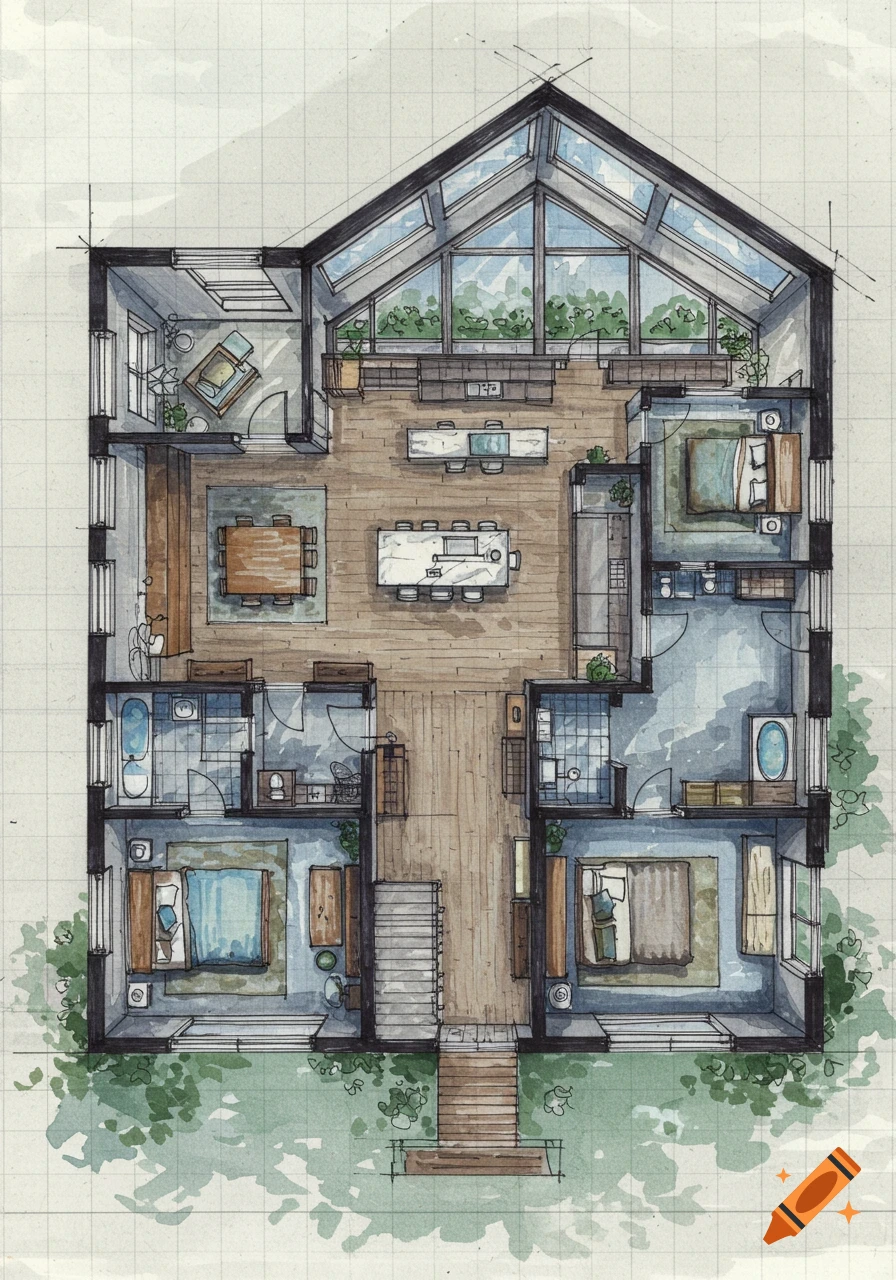
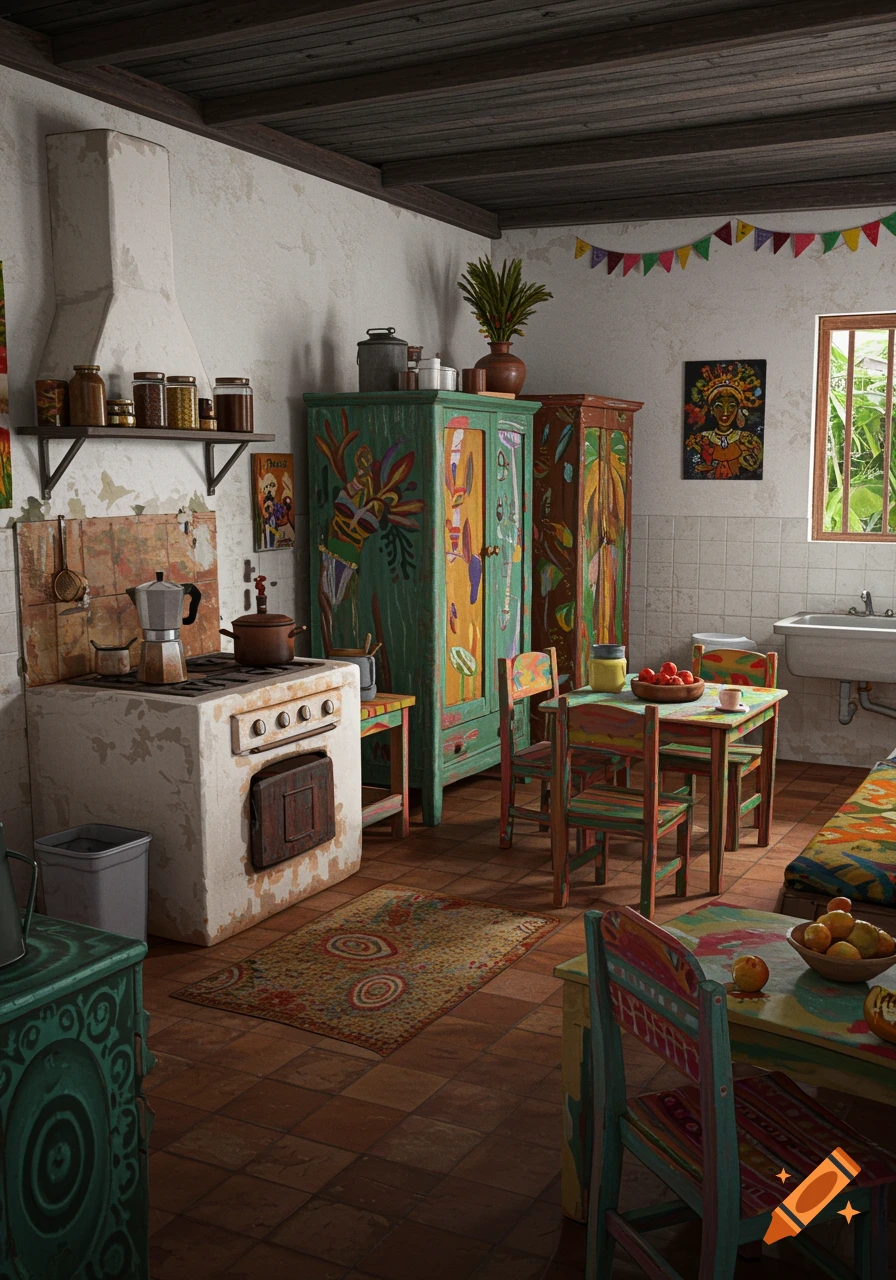
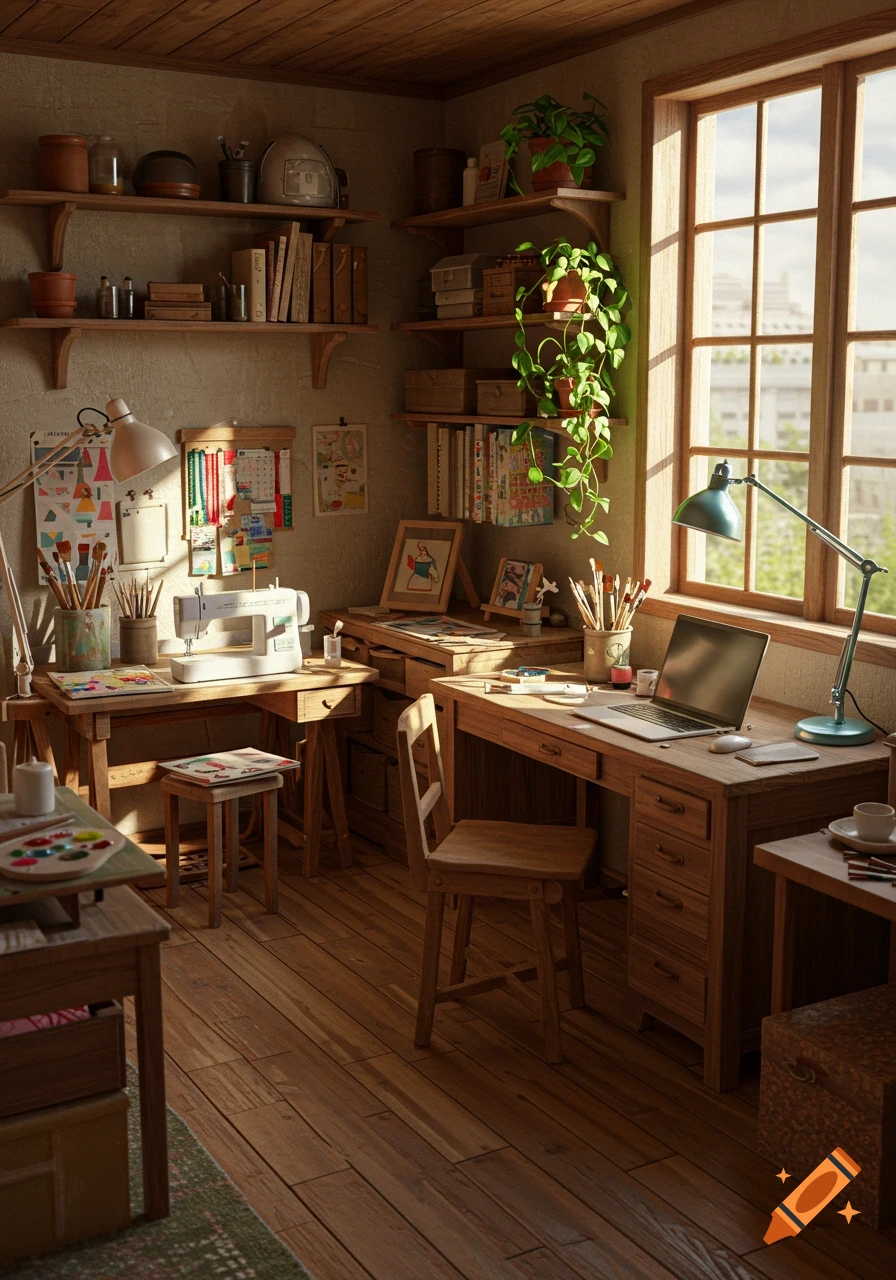
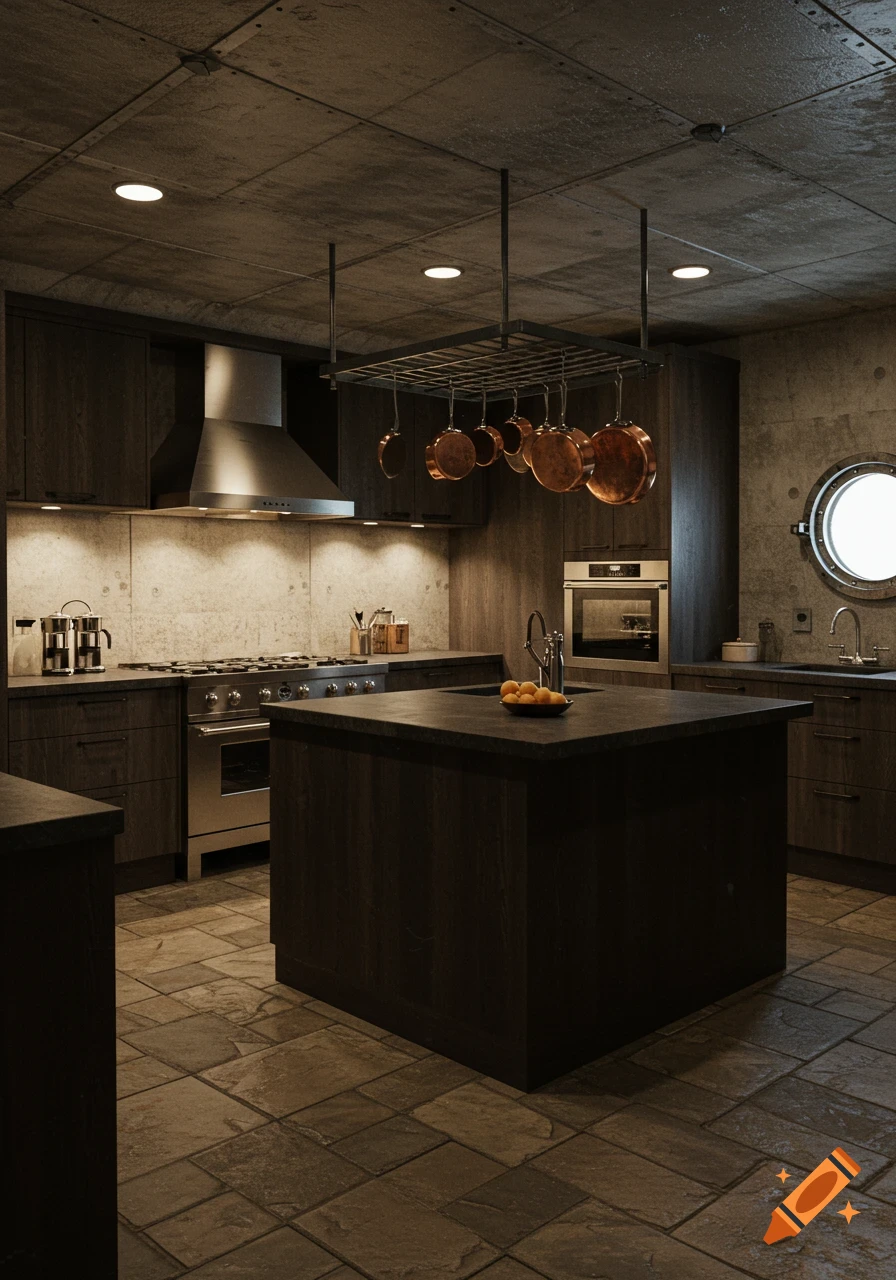
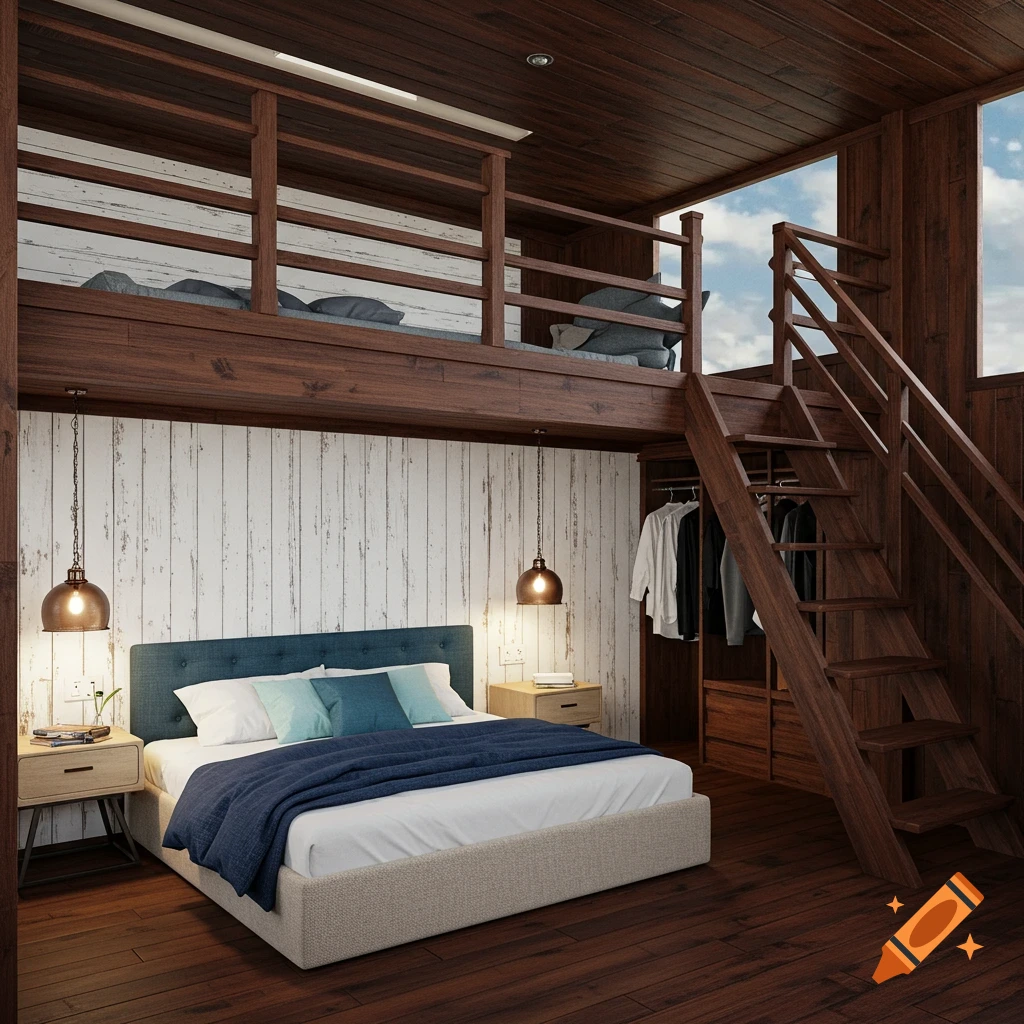
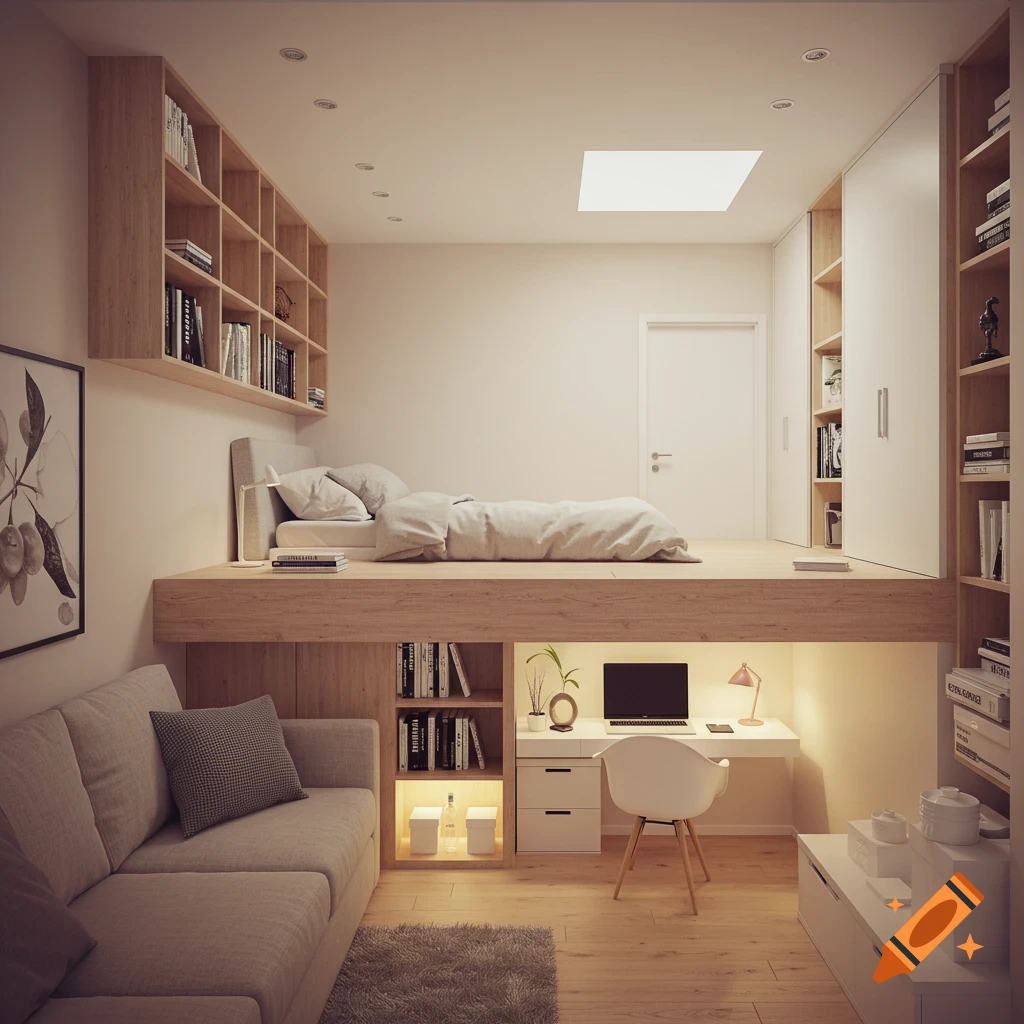
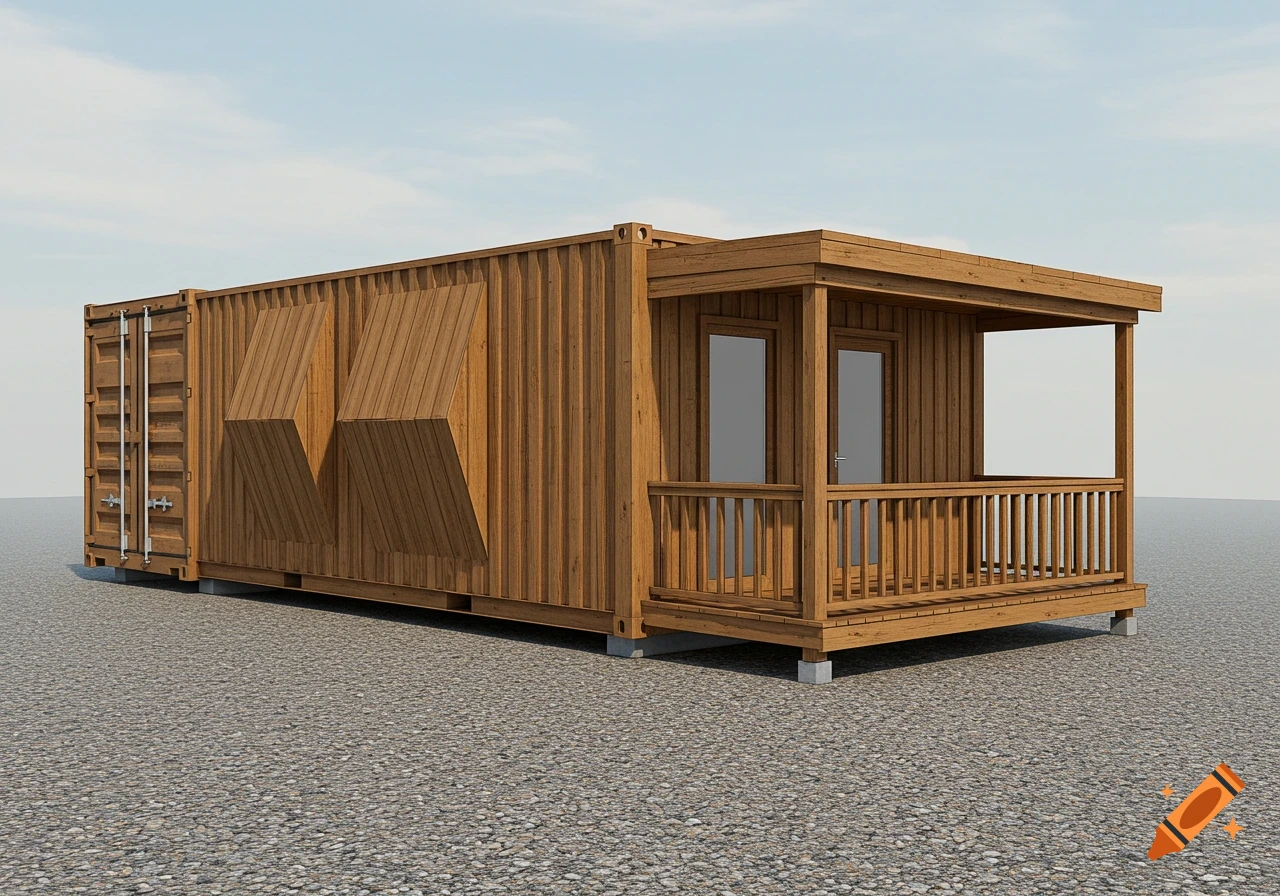
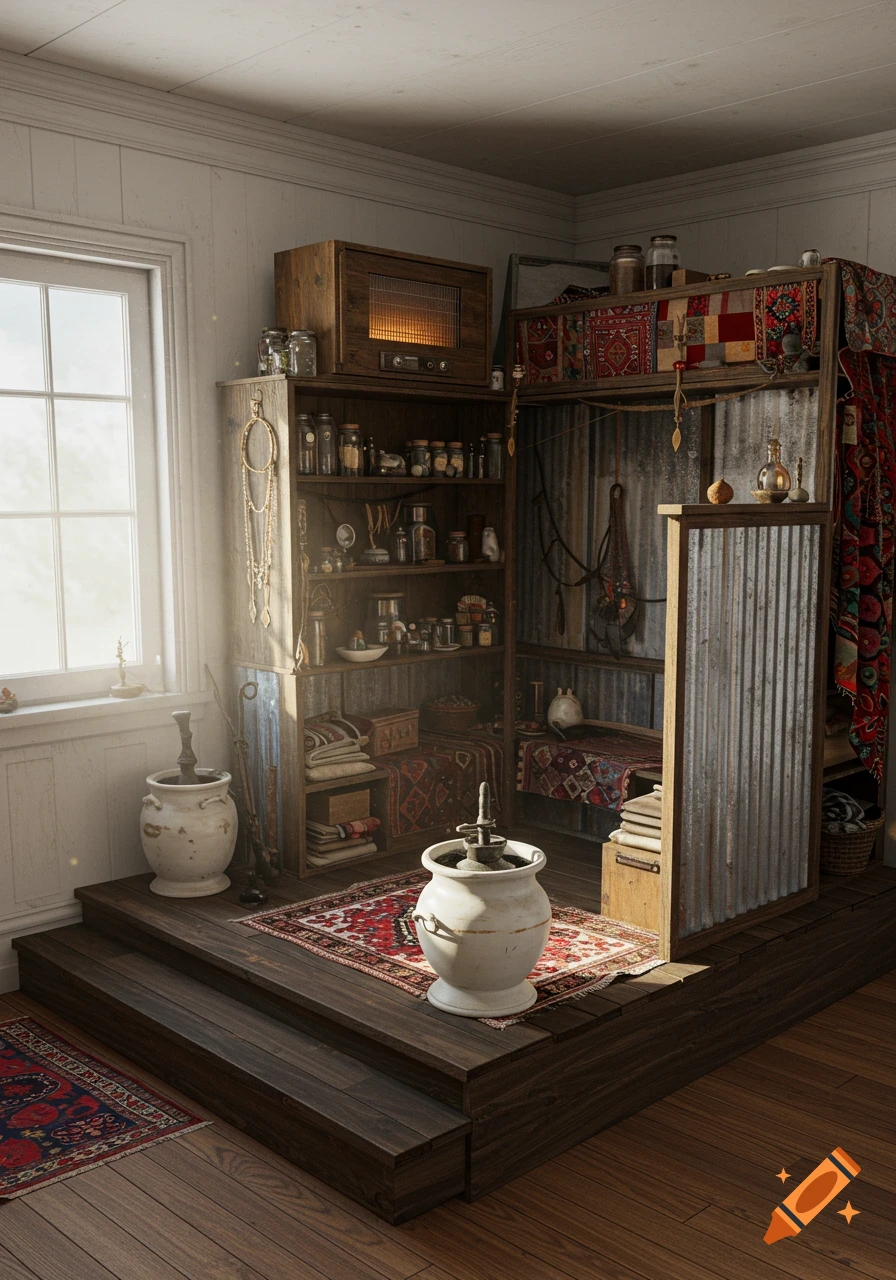
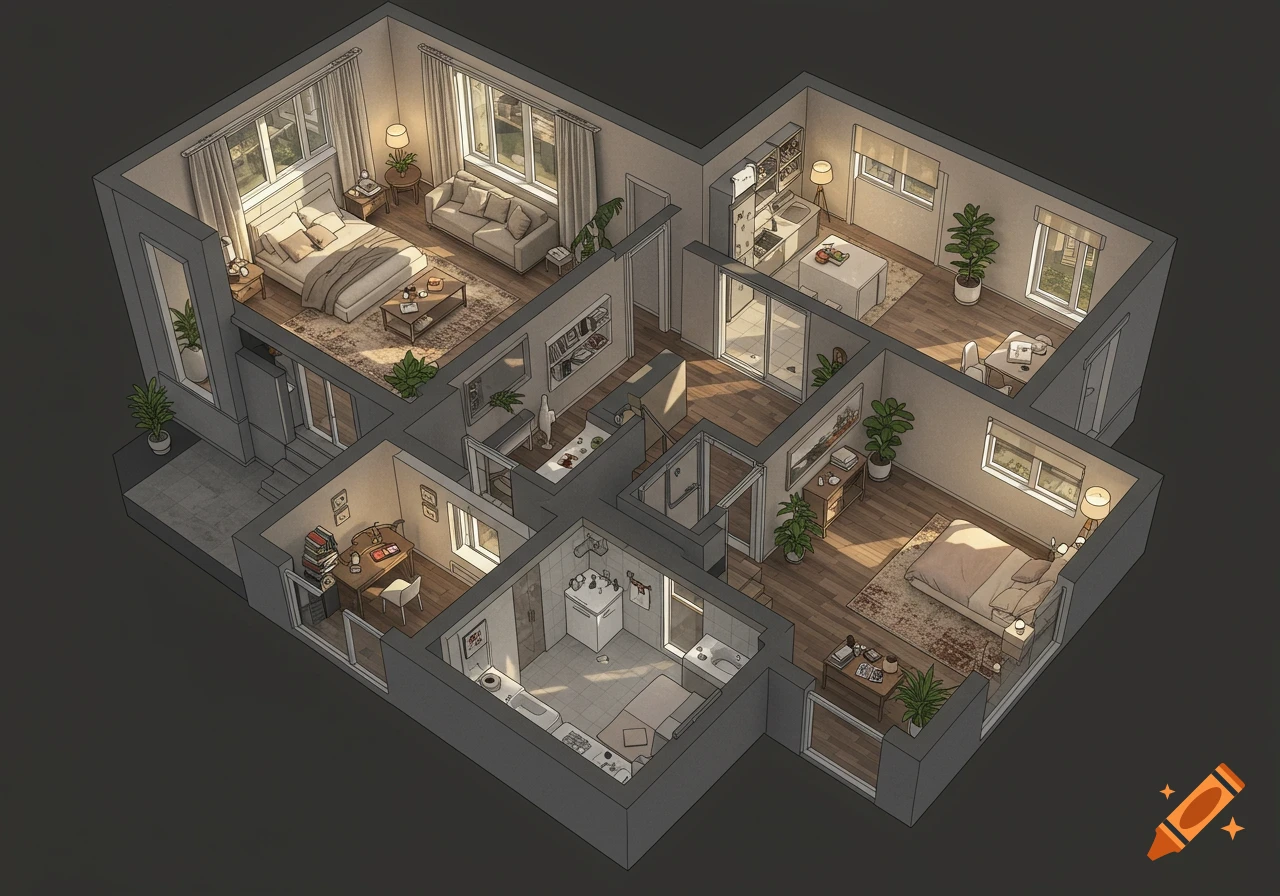
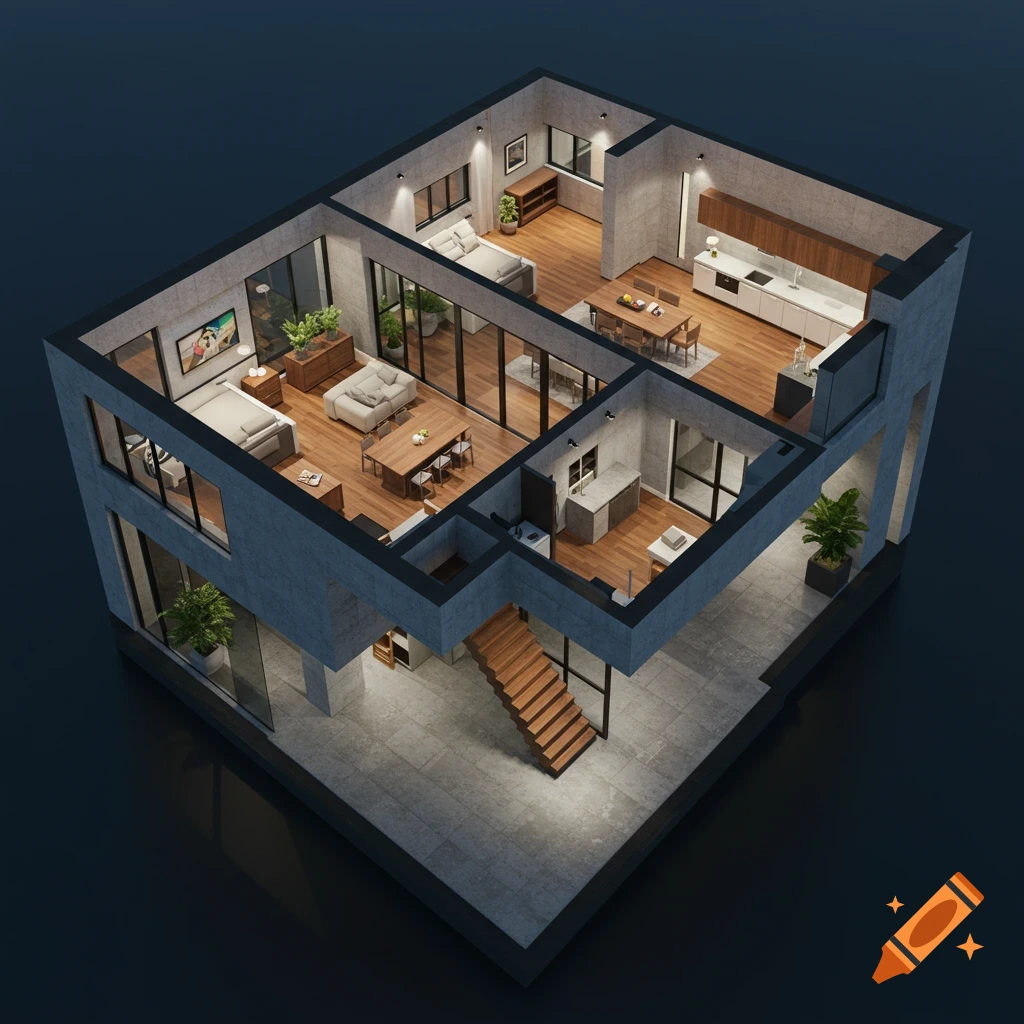
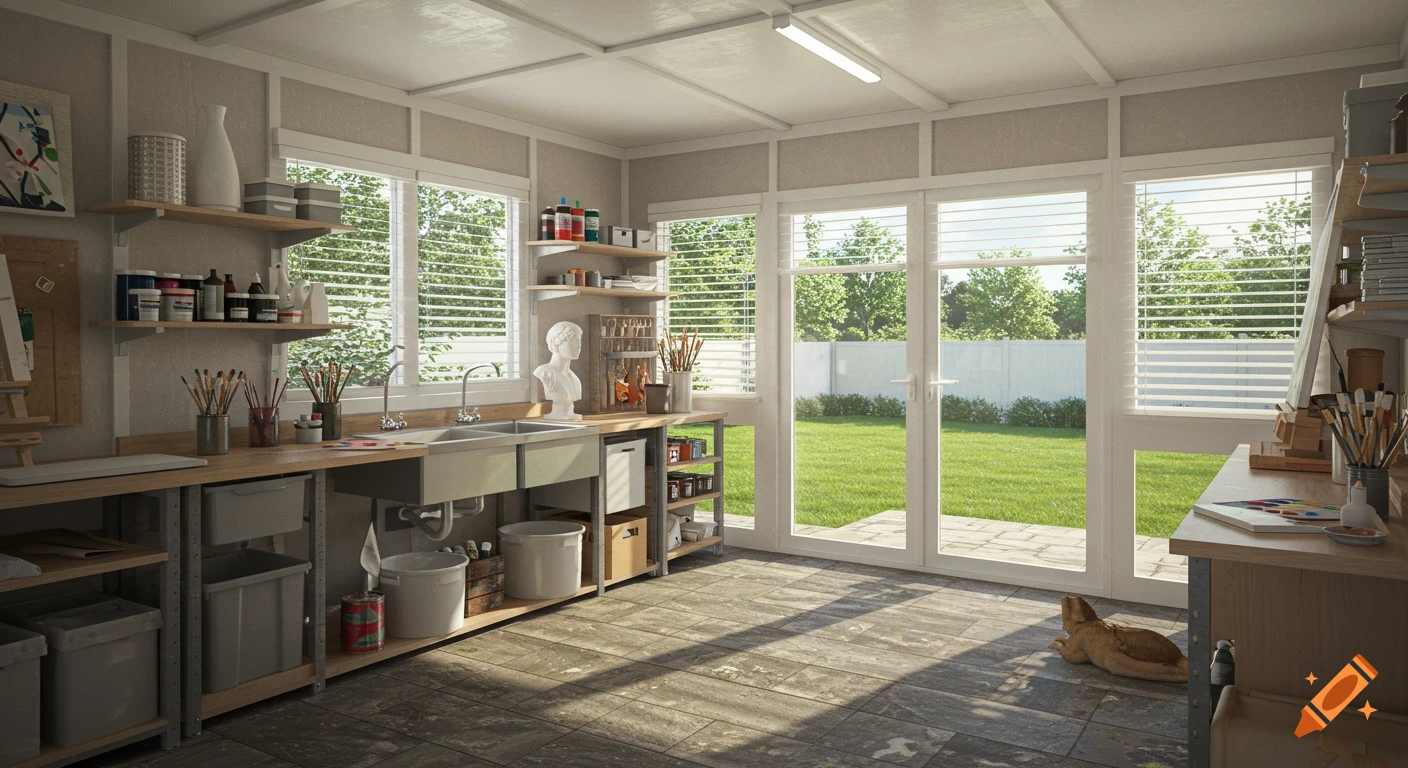
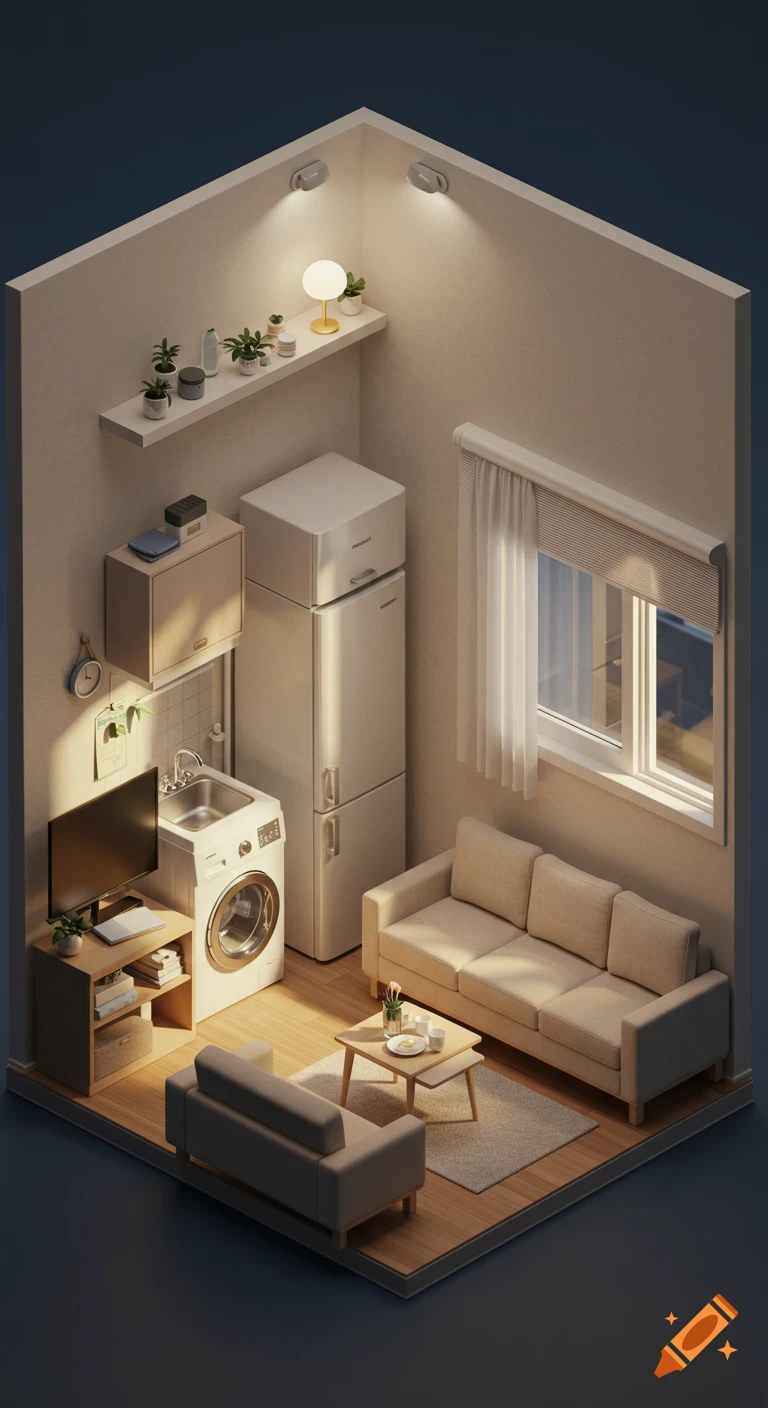
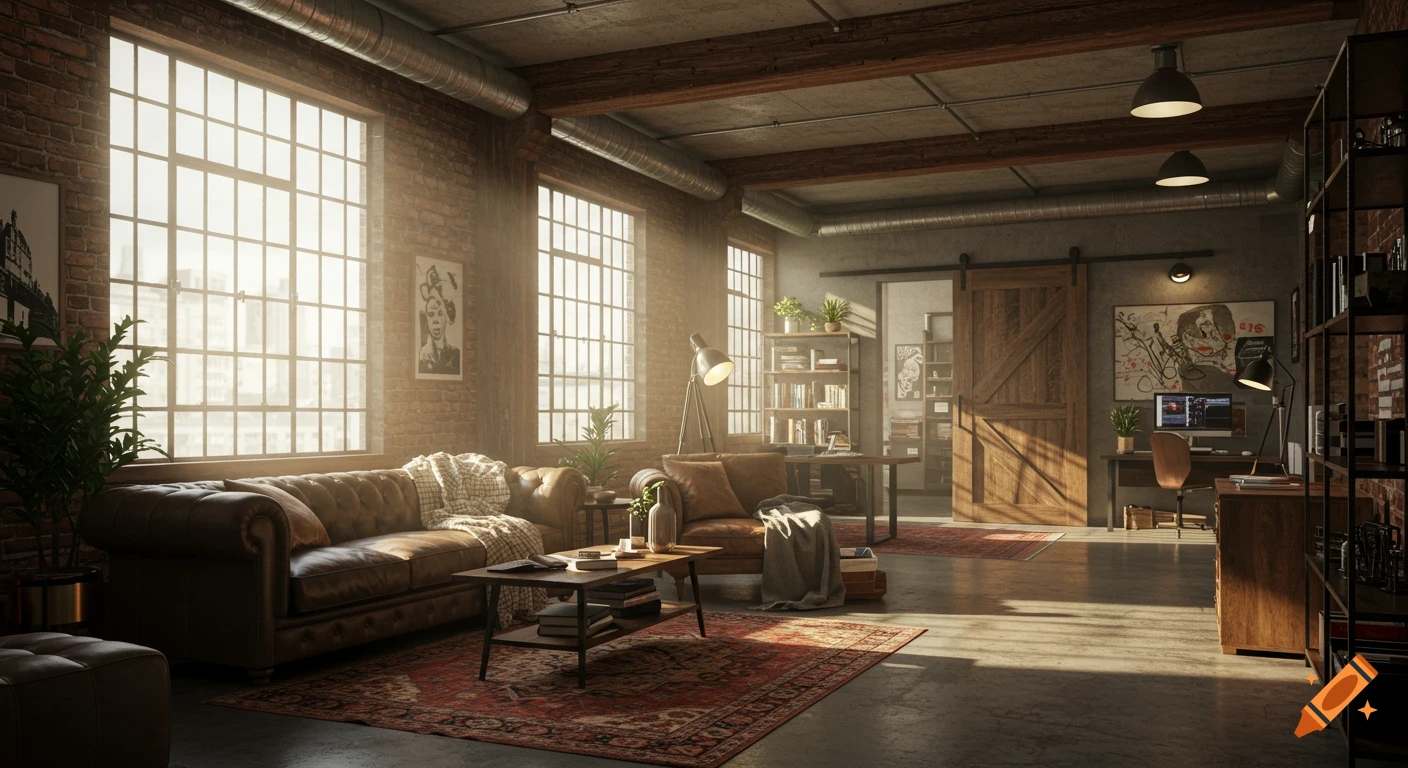
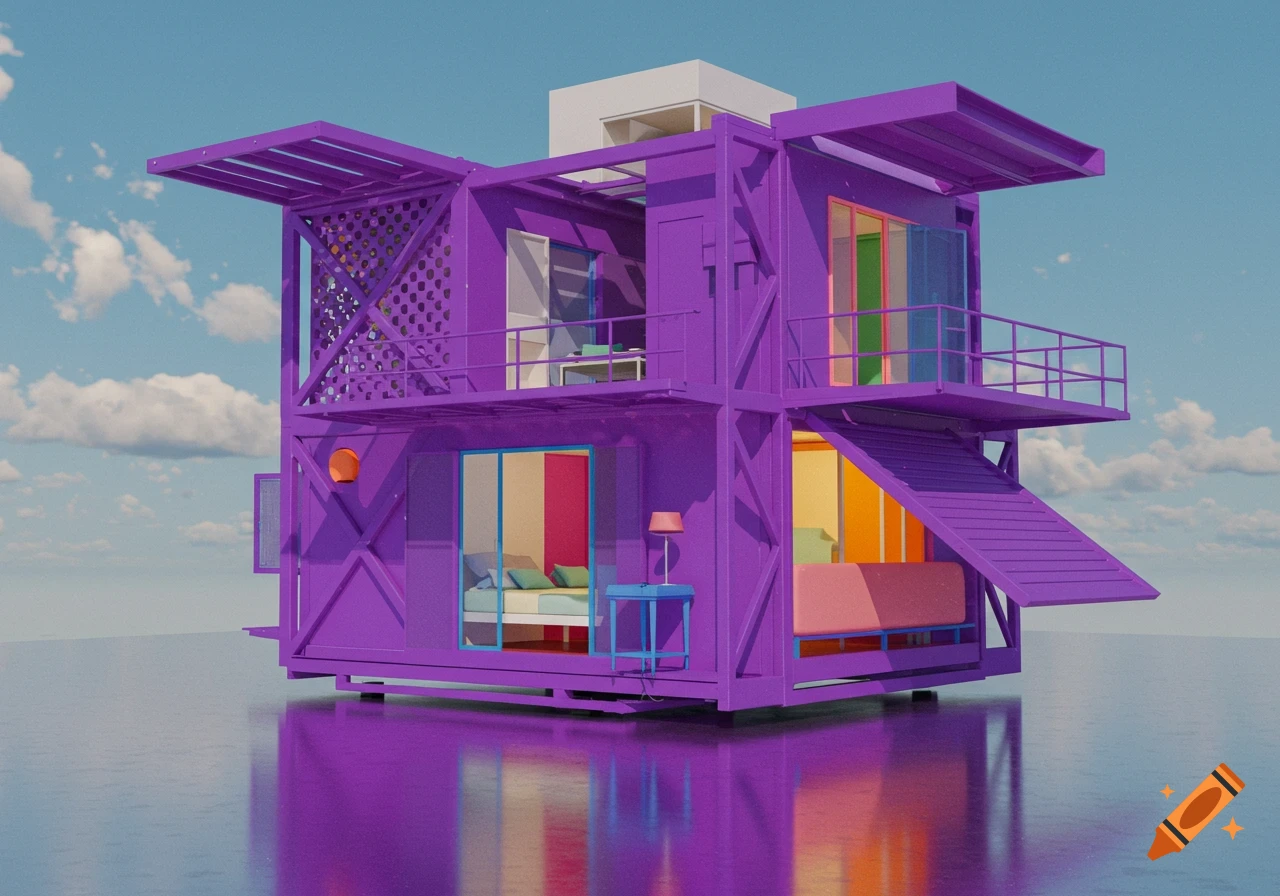
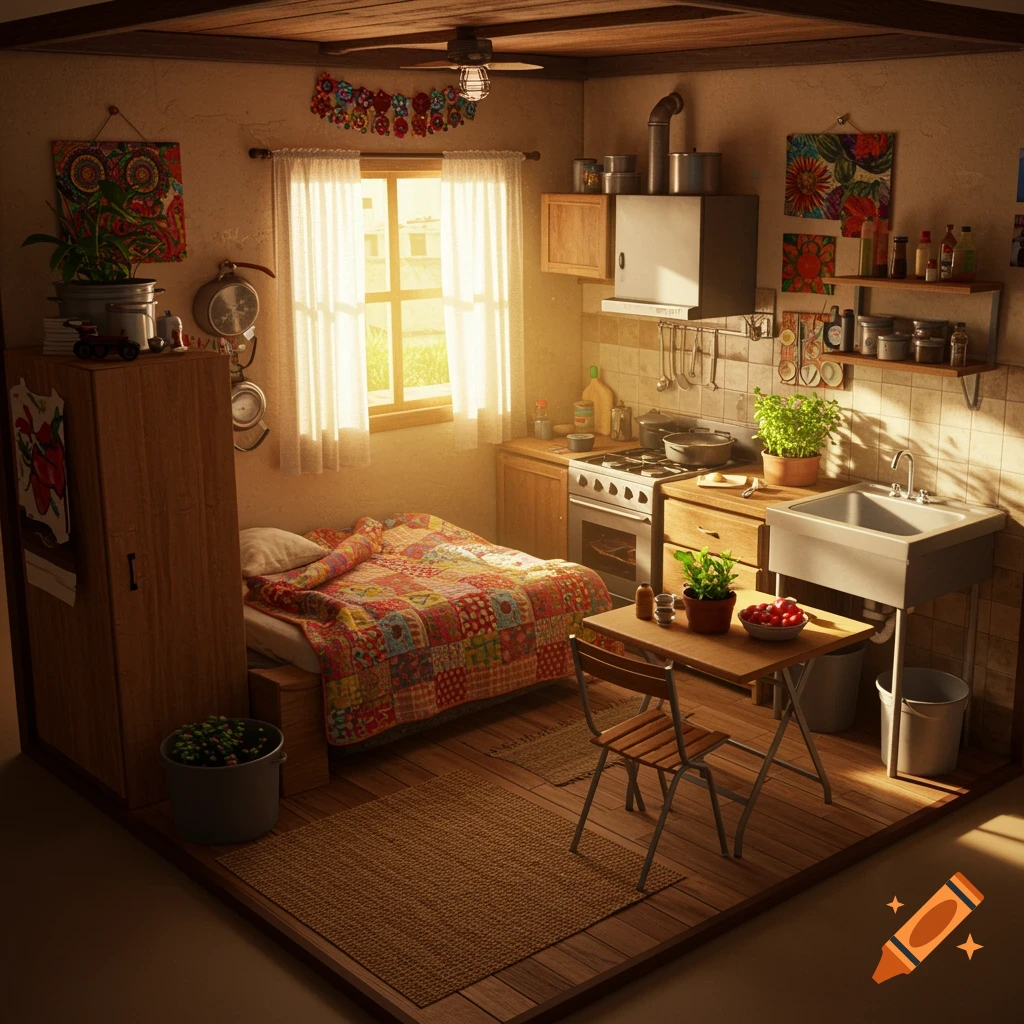
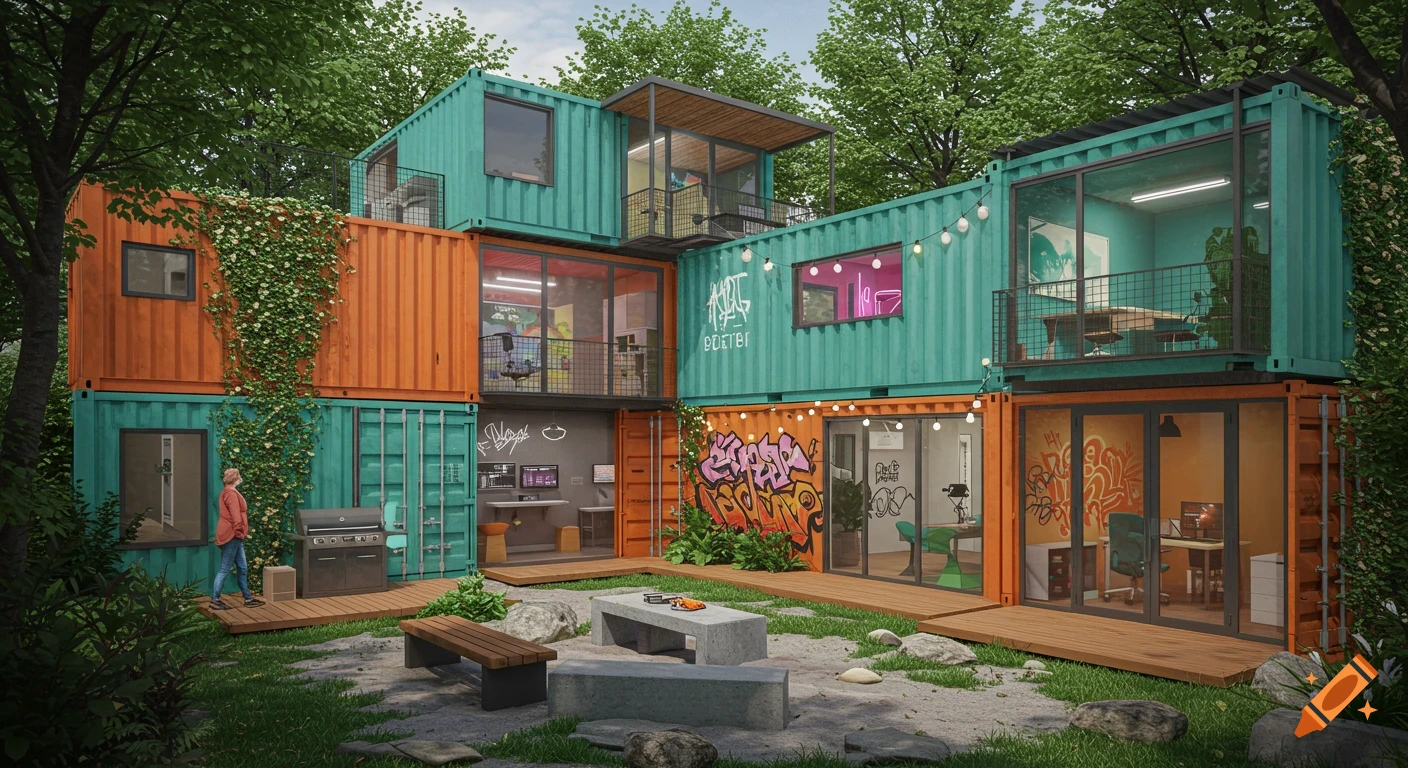
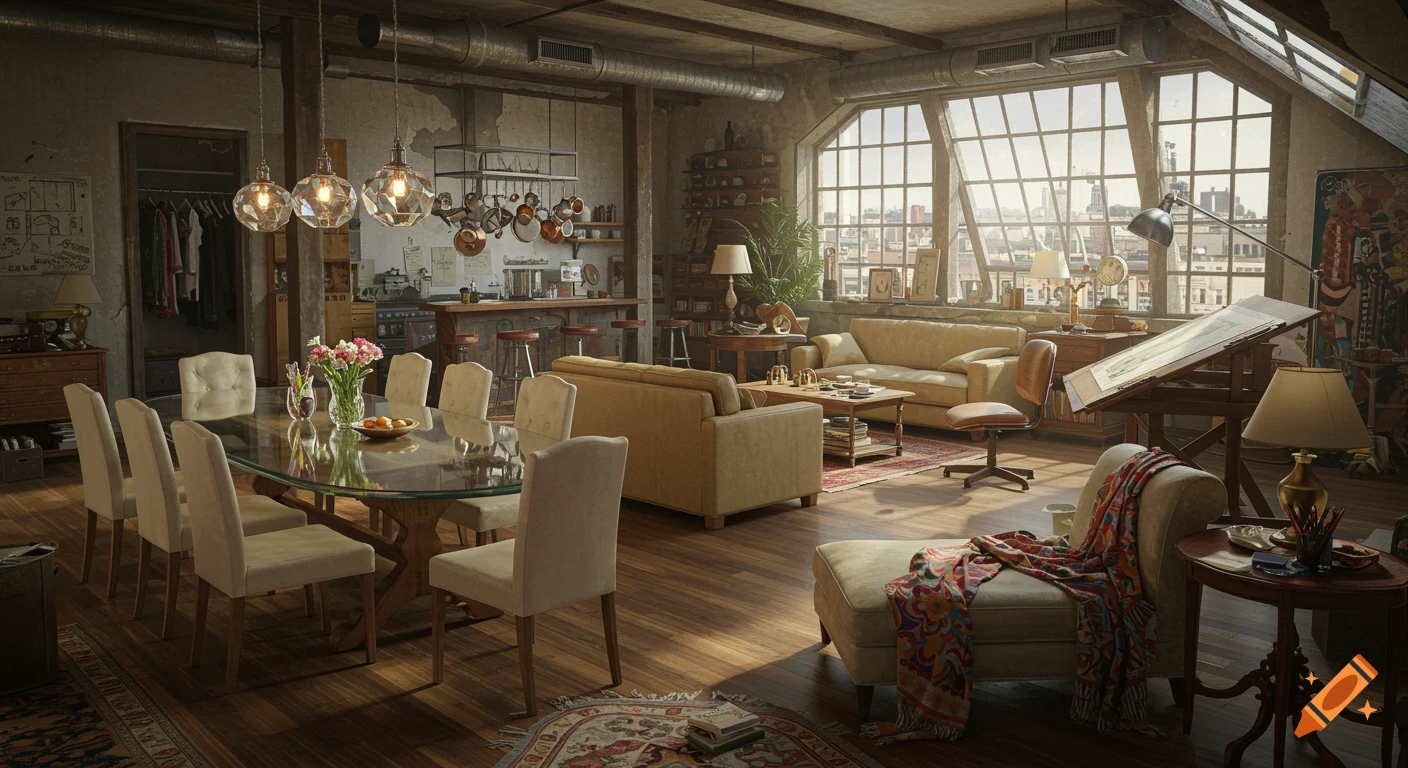
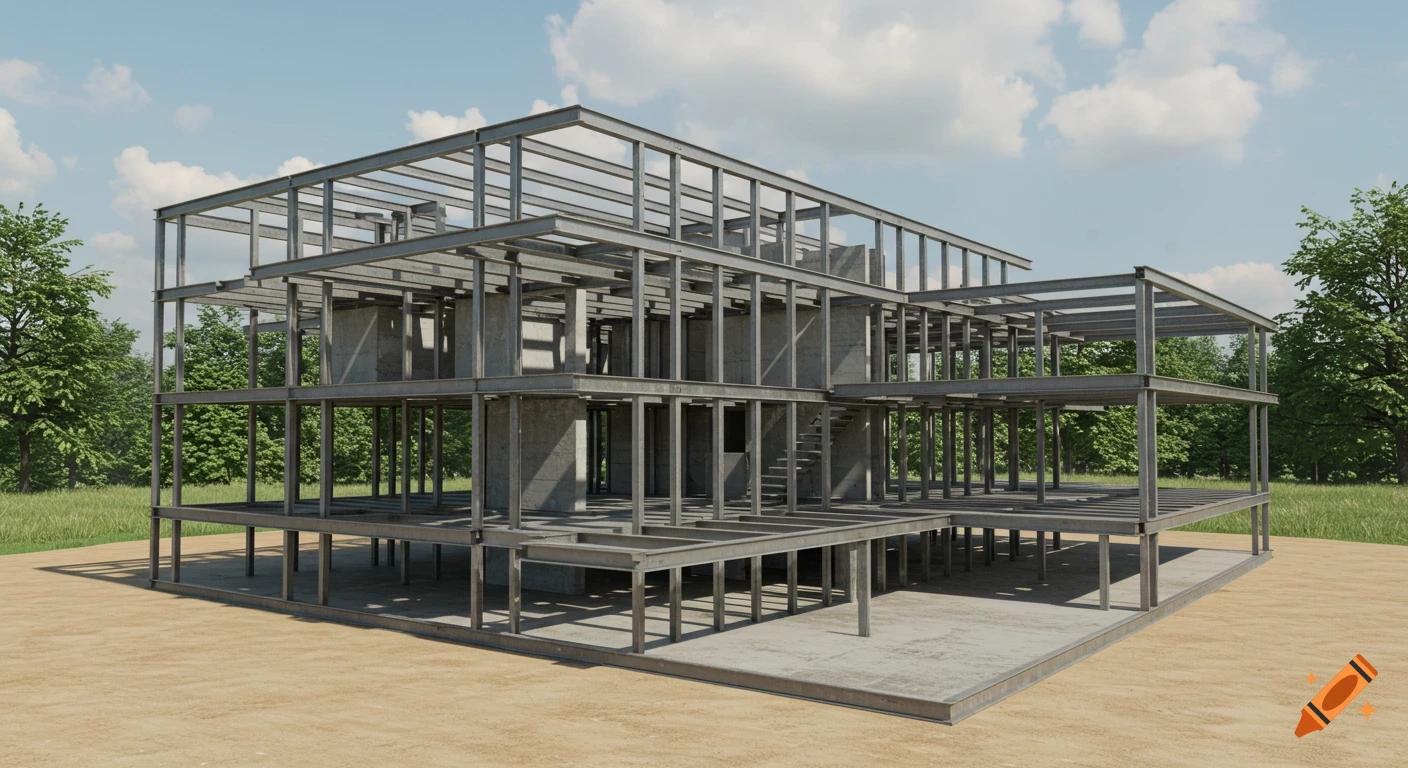
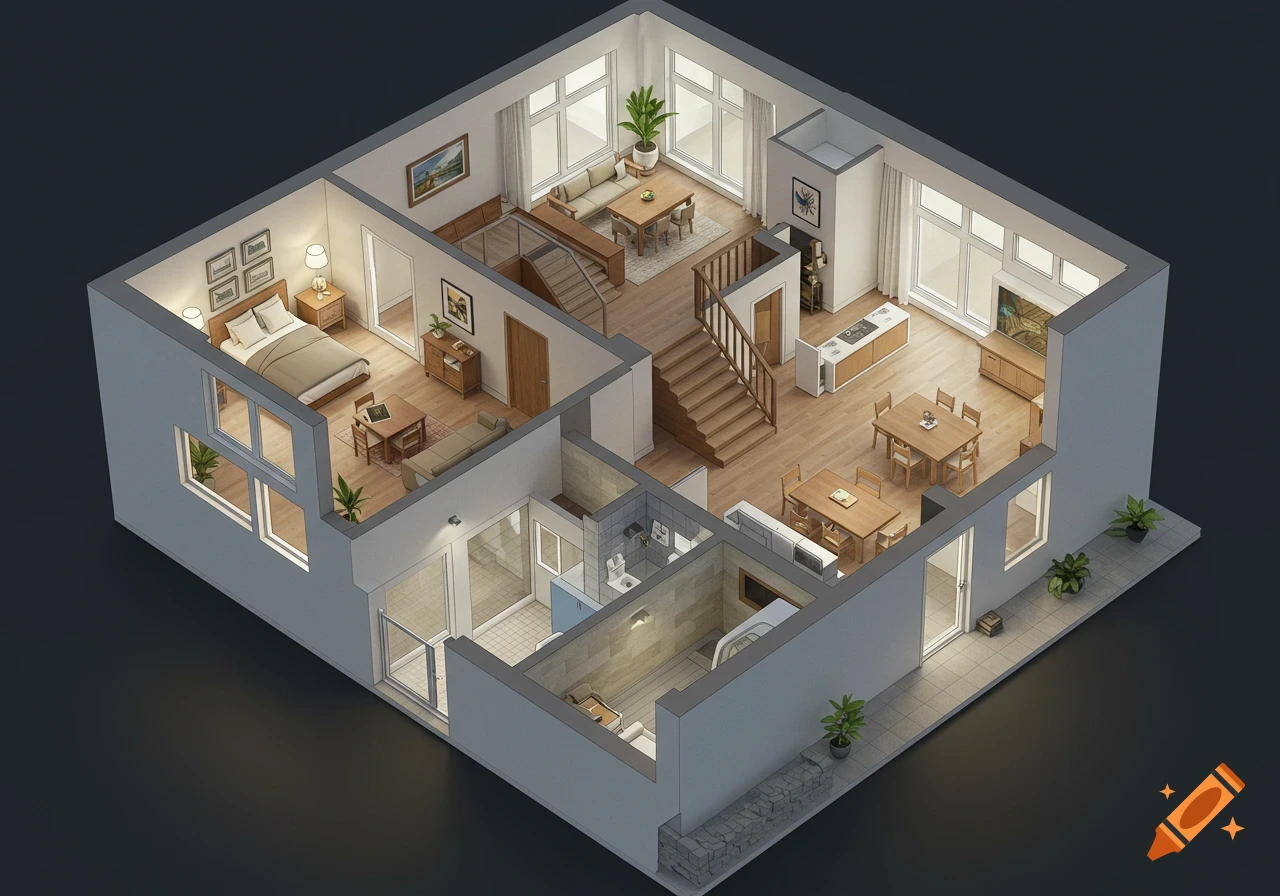
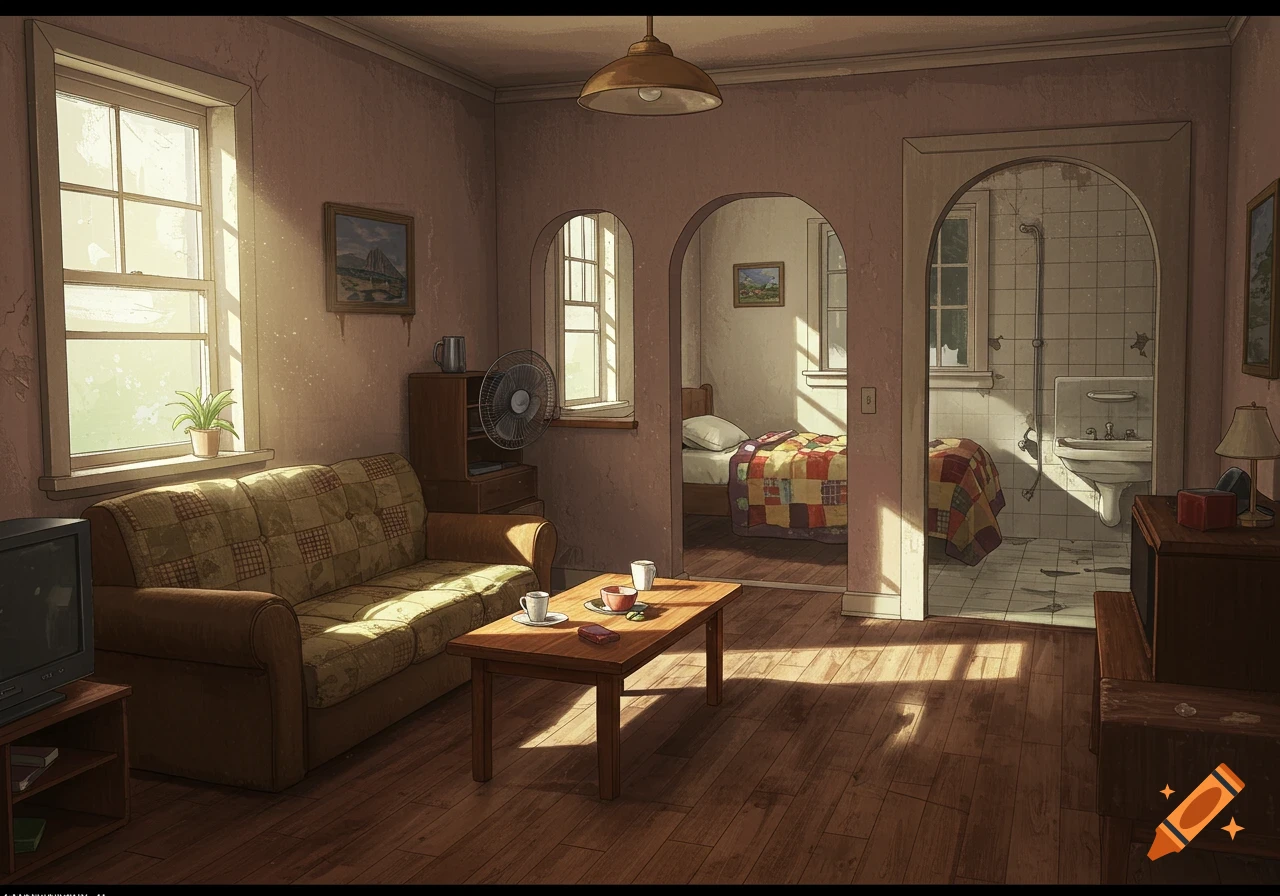
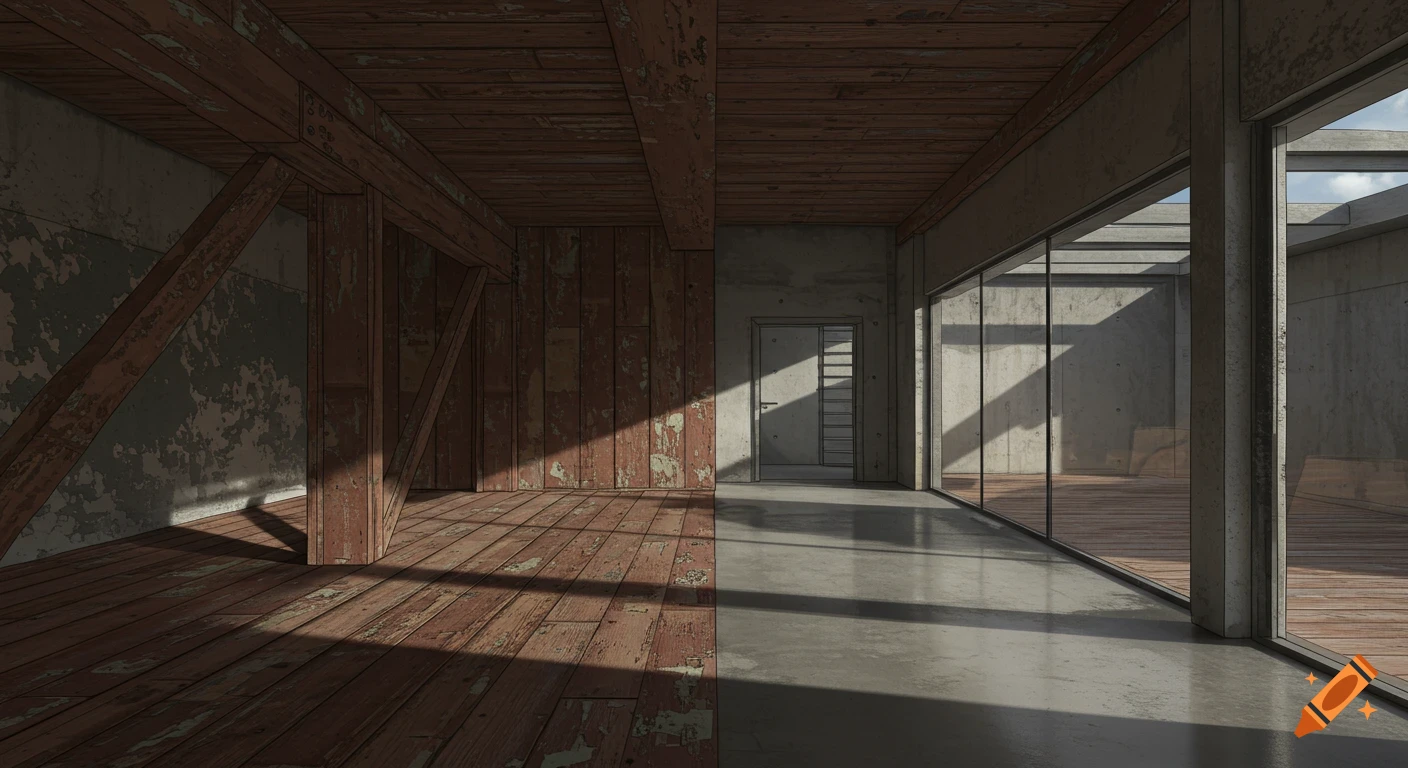
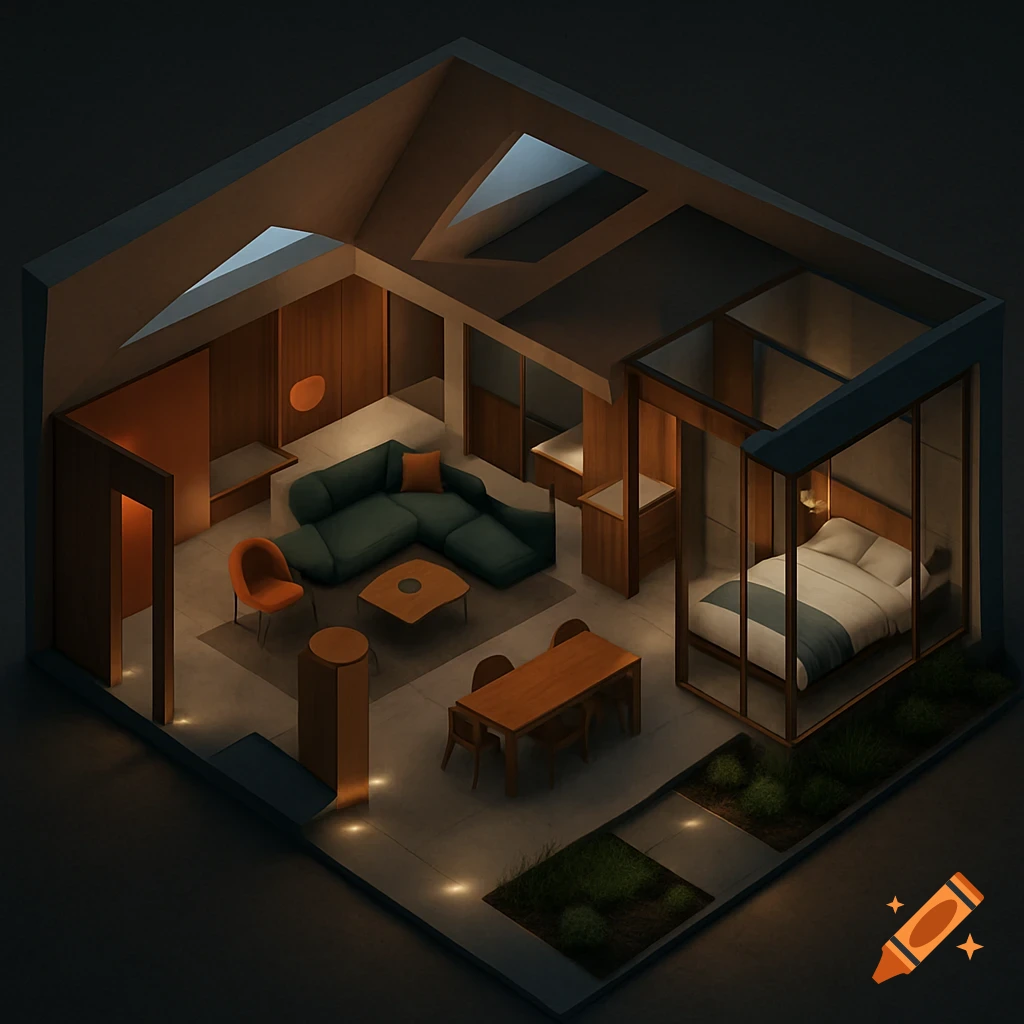
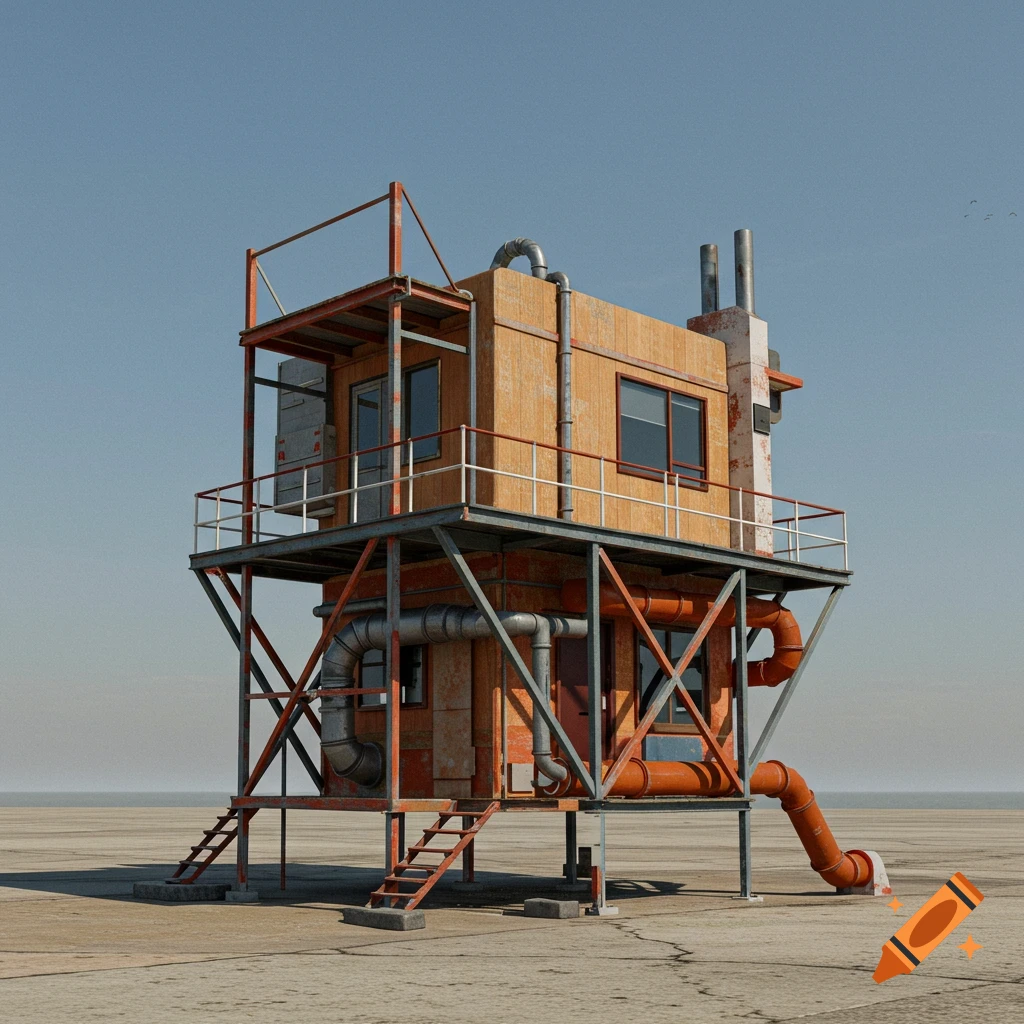
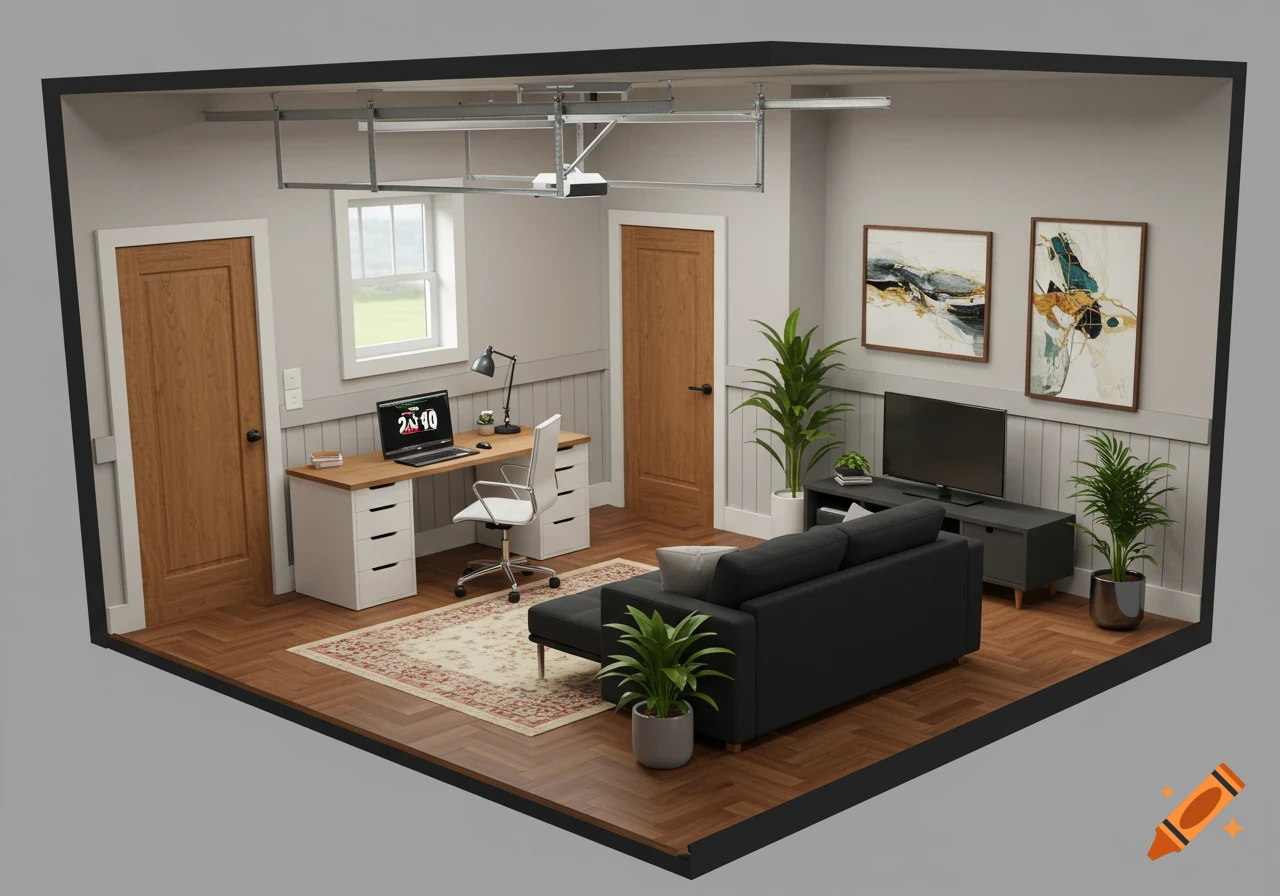
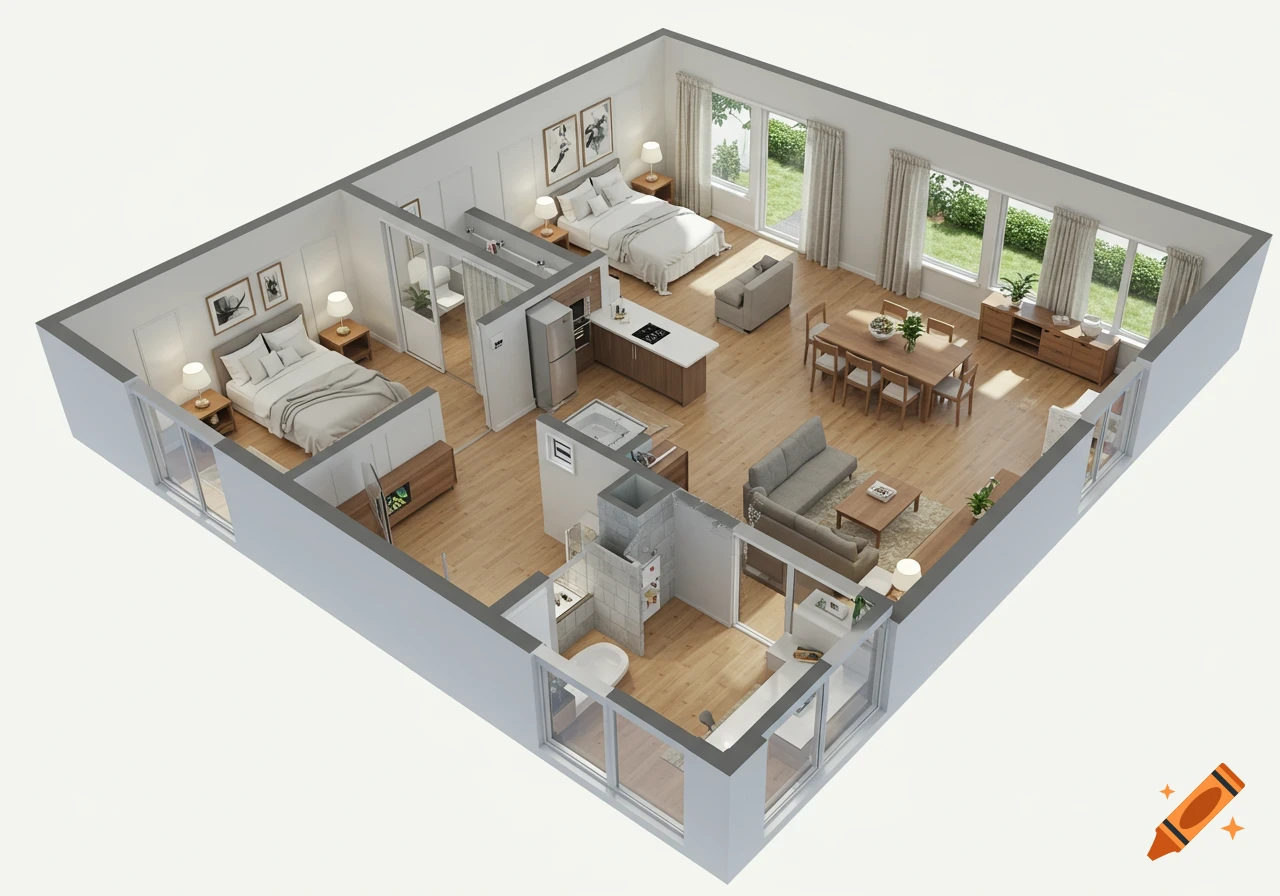
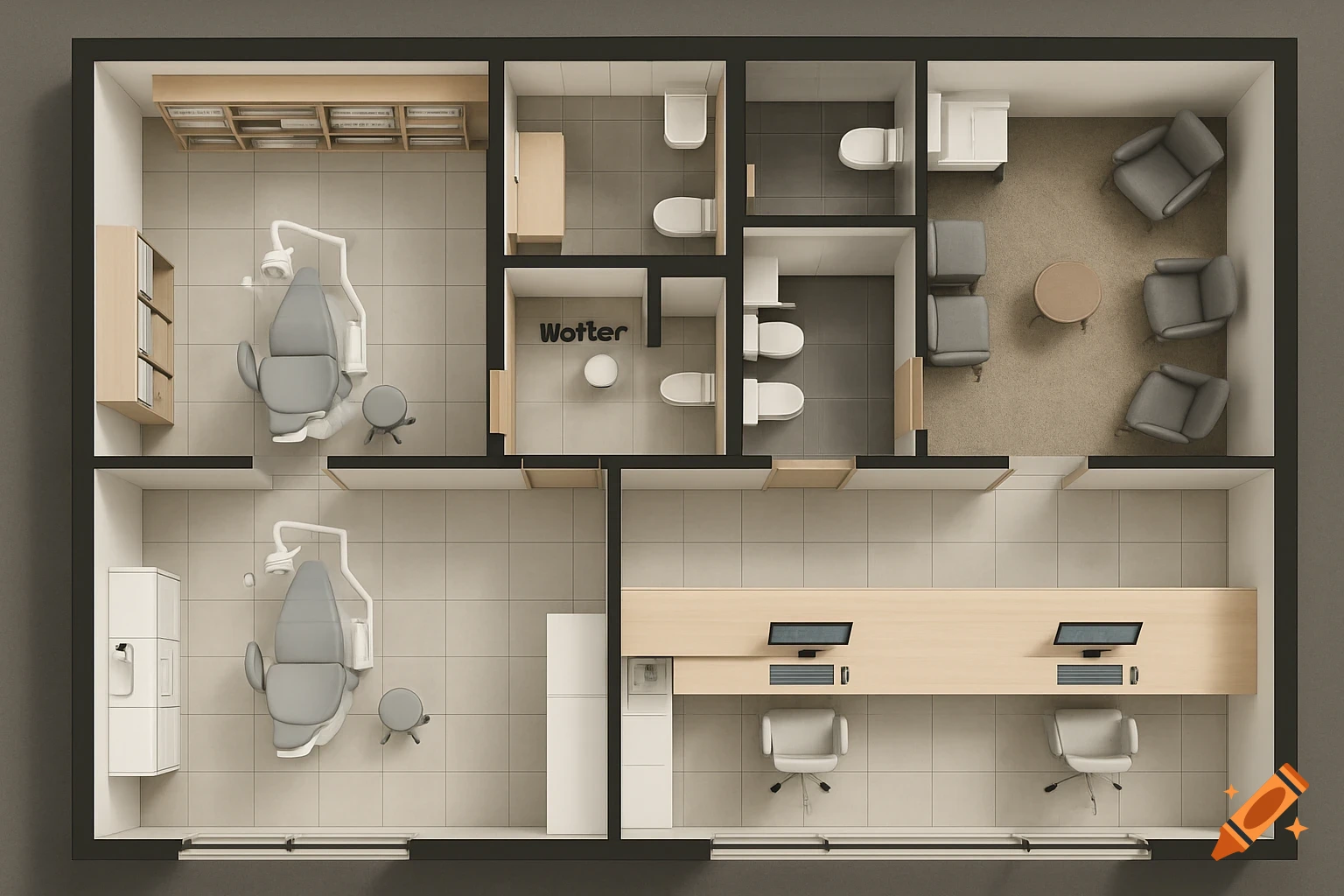
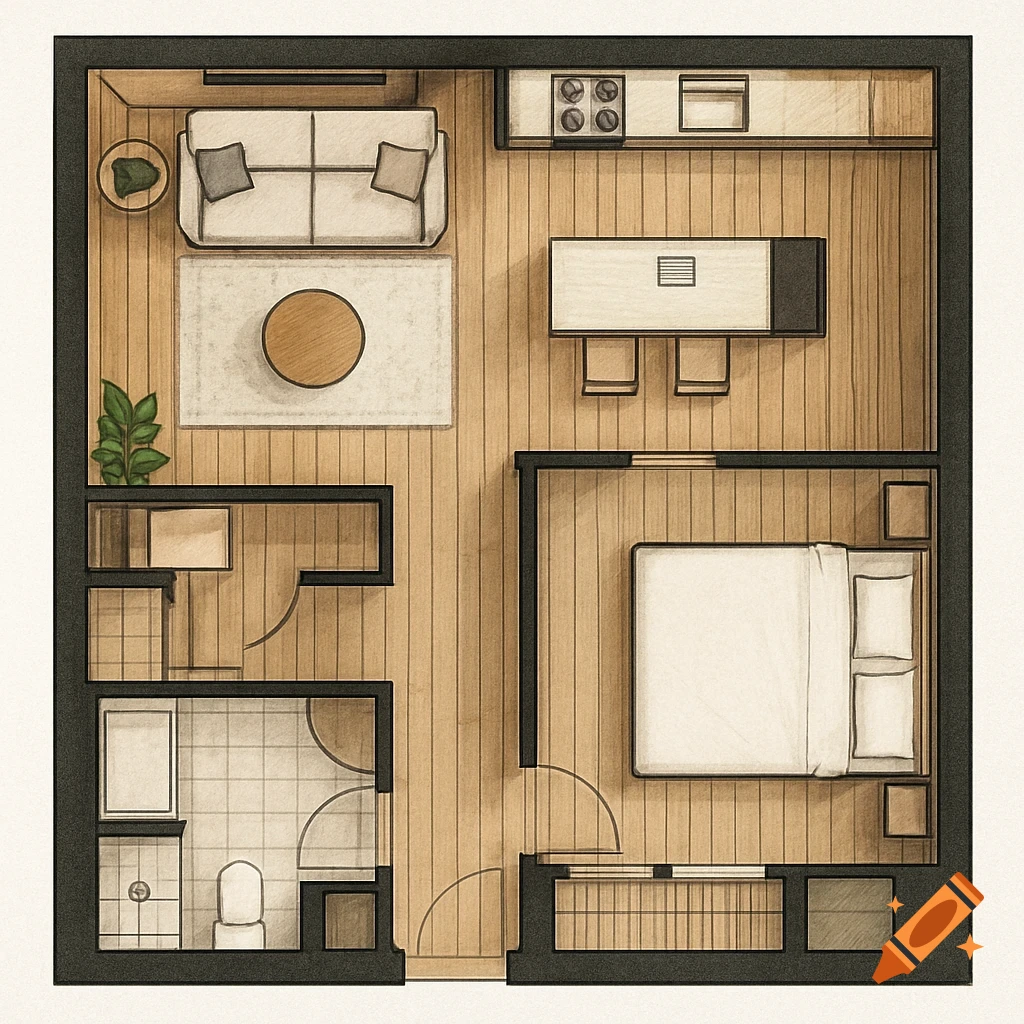
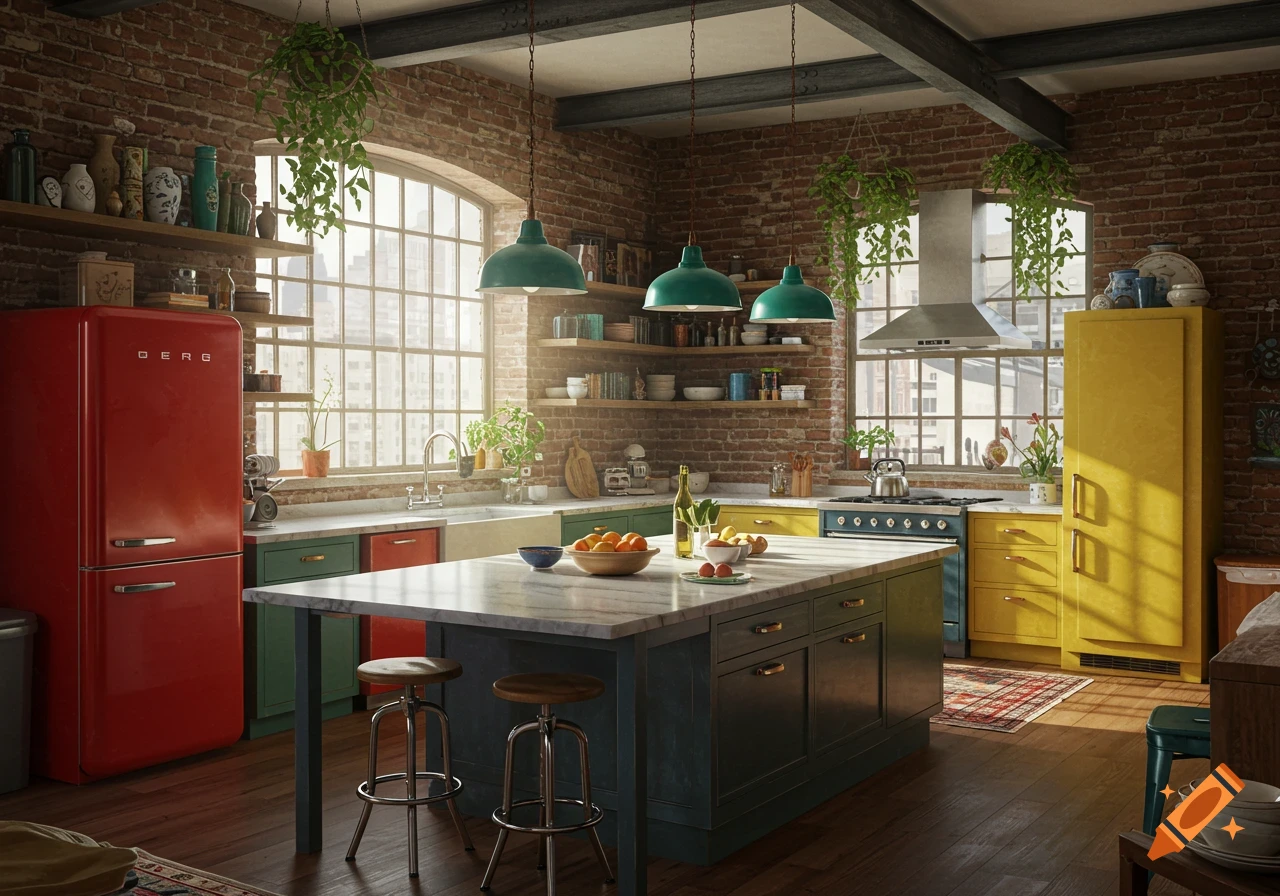
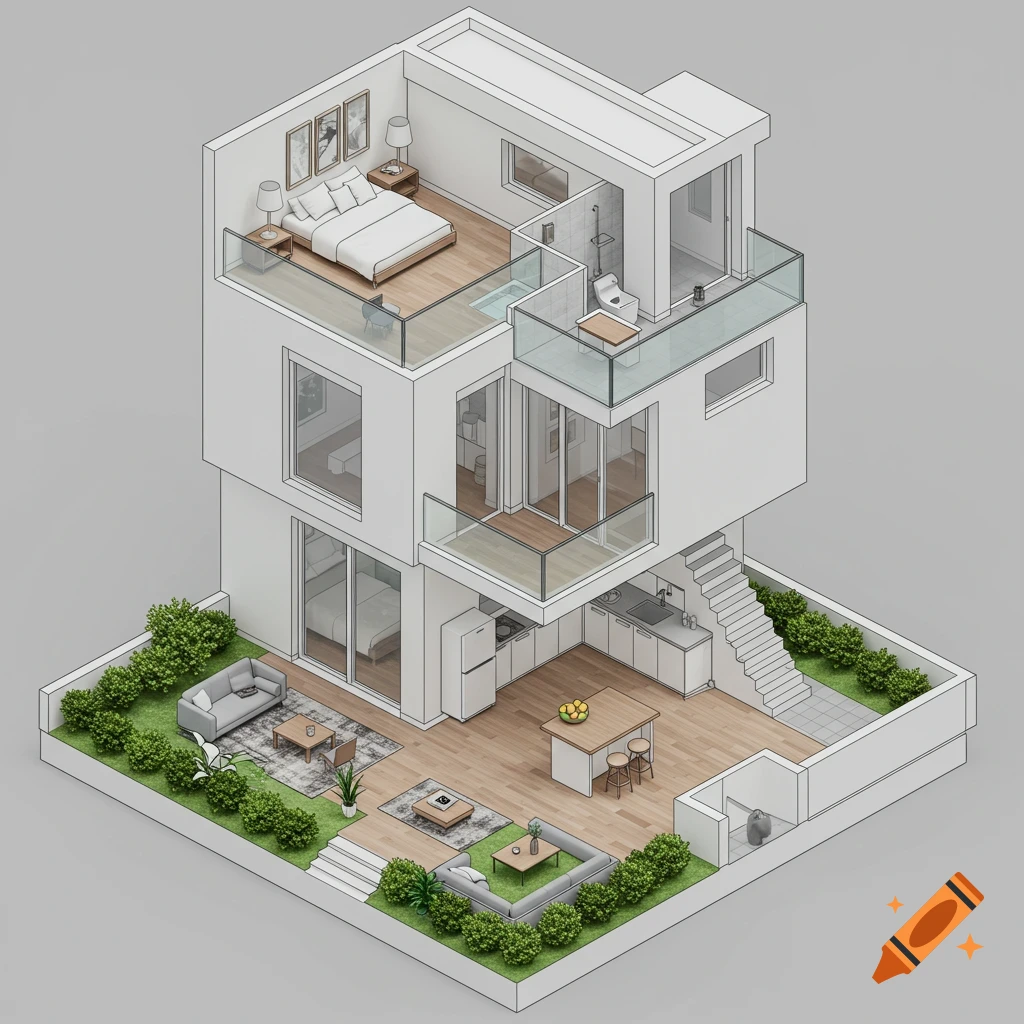
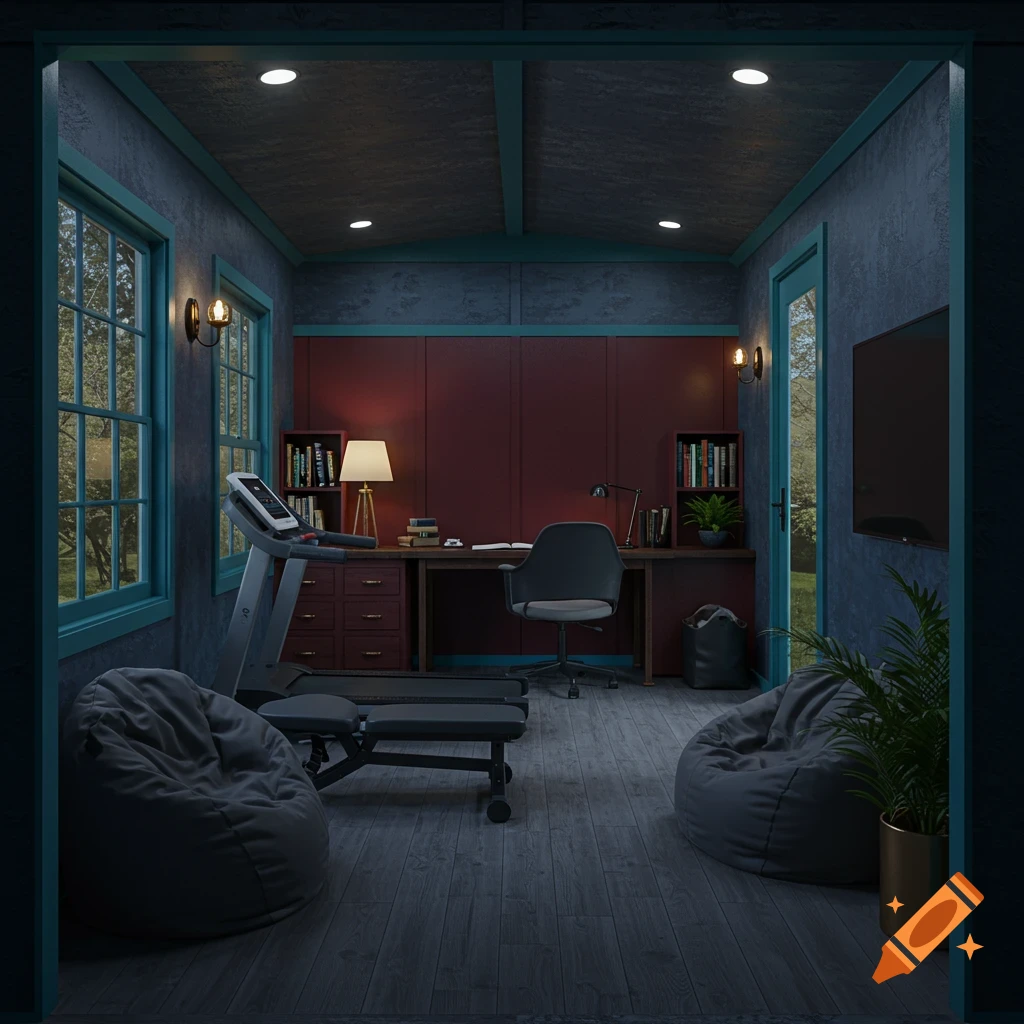
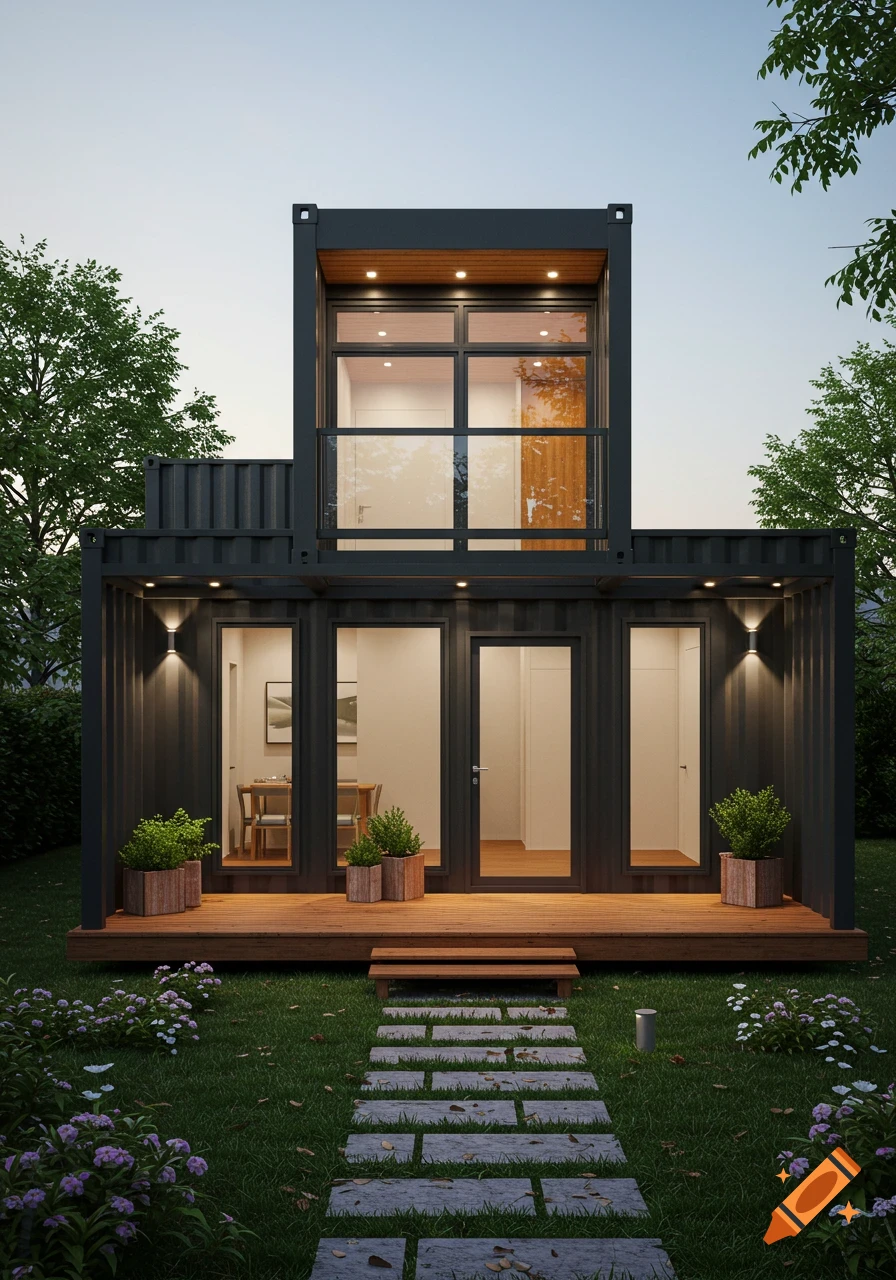
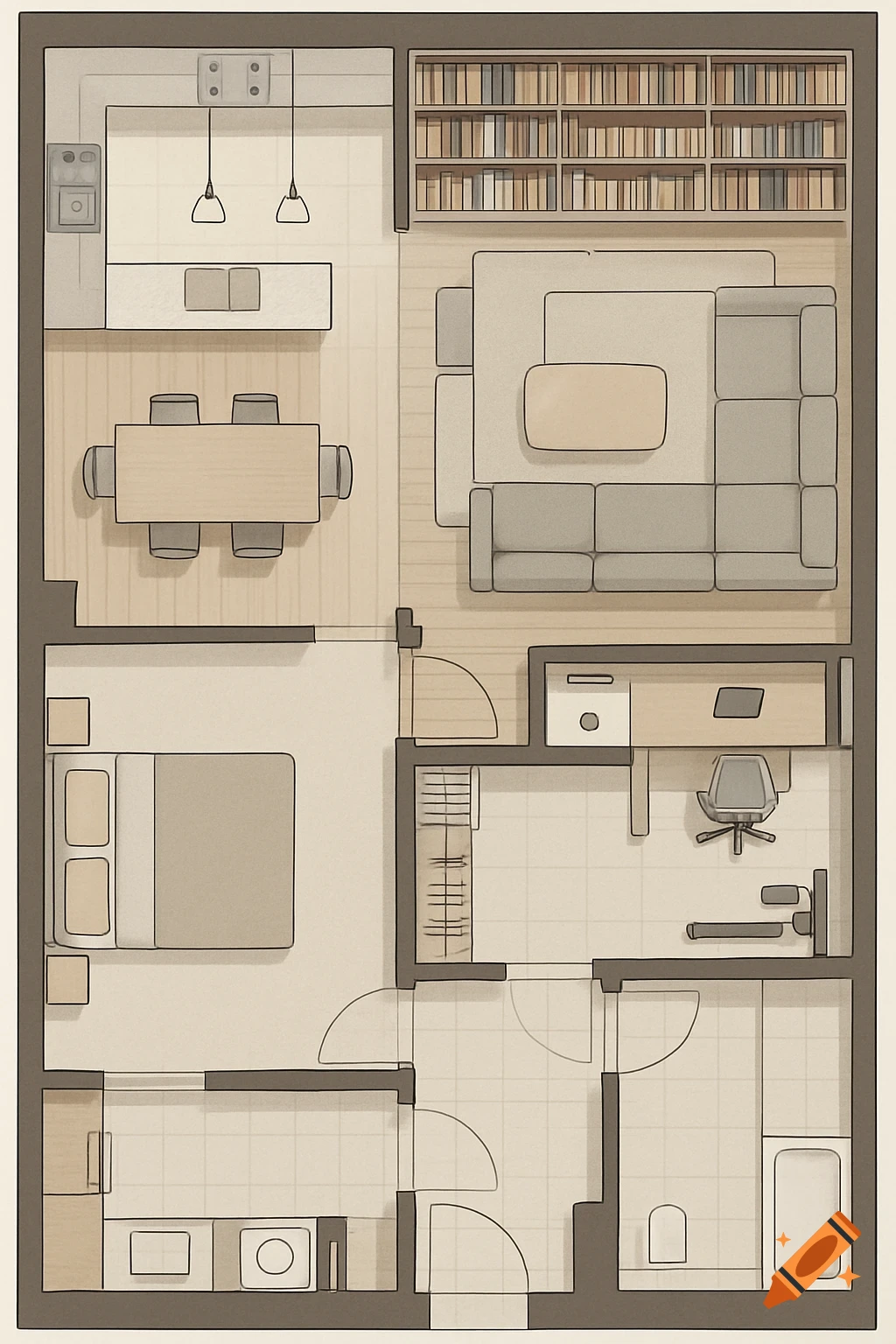
An art installation resembling a multi-level makeshift dwelling made of wood panels and corrugated metal, featuring second-hand appliances and speakers in a white-cube space.
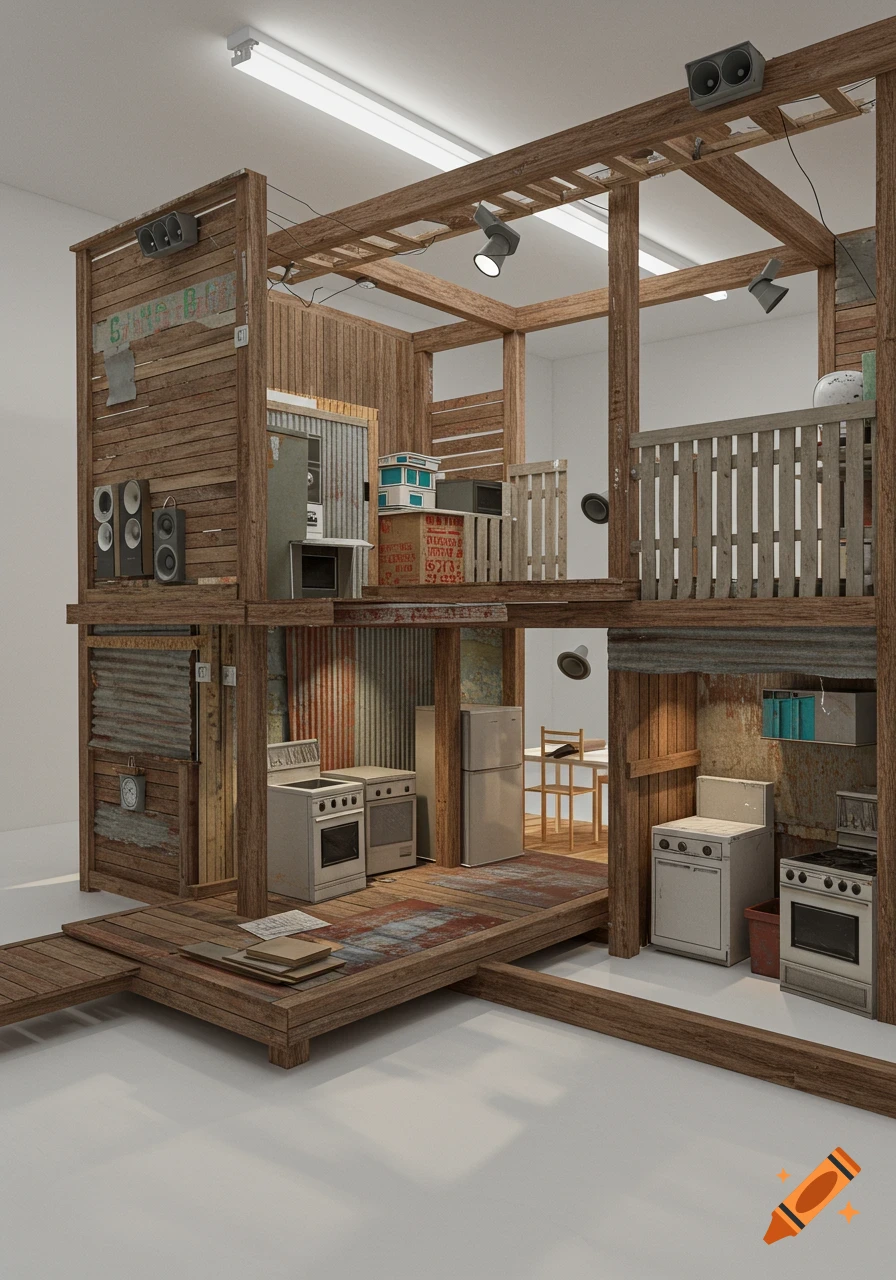
The installation is situated in a white-cube space that retains subtle traces of domestic life. Its structure draws from the makeshift logic of informal dwellings, composed of wood panels, metal sheets, concrete dividers, and embedded second-hand household appliances. The scale is deliberately modest to avoid overwhelming the viewer, allowing for spatial gaps and movement paths. Upon entering, visitors encounter a dim environment—illumination is sparse, with only faint light sources seeping through parts of the structure. Small speakers, each less than 10 centimeters in diameter, are discreetly integrated into the architectural elements, nearly invisible to the eye. These speakers emit directional sounds that guide the audience through auditory cues rather than visual landmarks. Listening becomes the primary mode of orientation. The built forms do not function as visual exhibits but as mediating surfaces for acoustic phenomena. This installation proposes a threshold space where sound interacts intimately with architectural materiality, resisting spectacle in favor of subtle spatial entanglement. See more