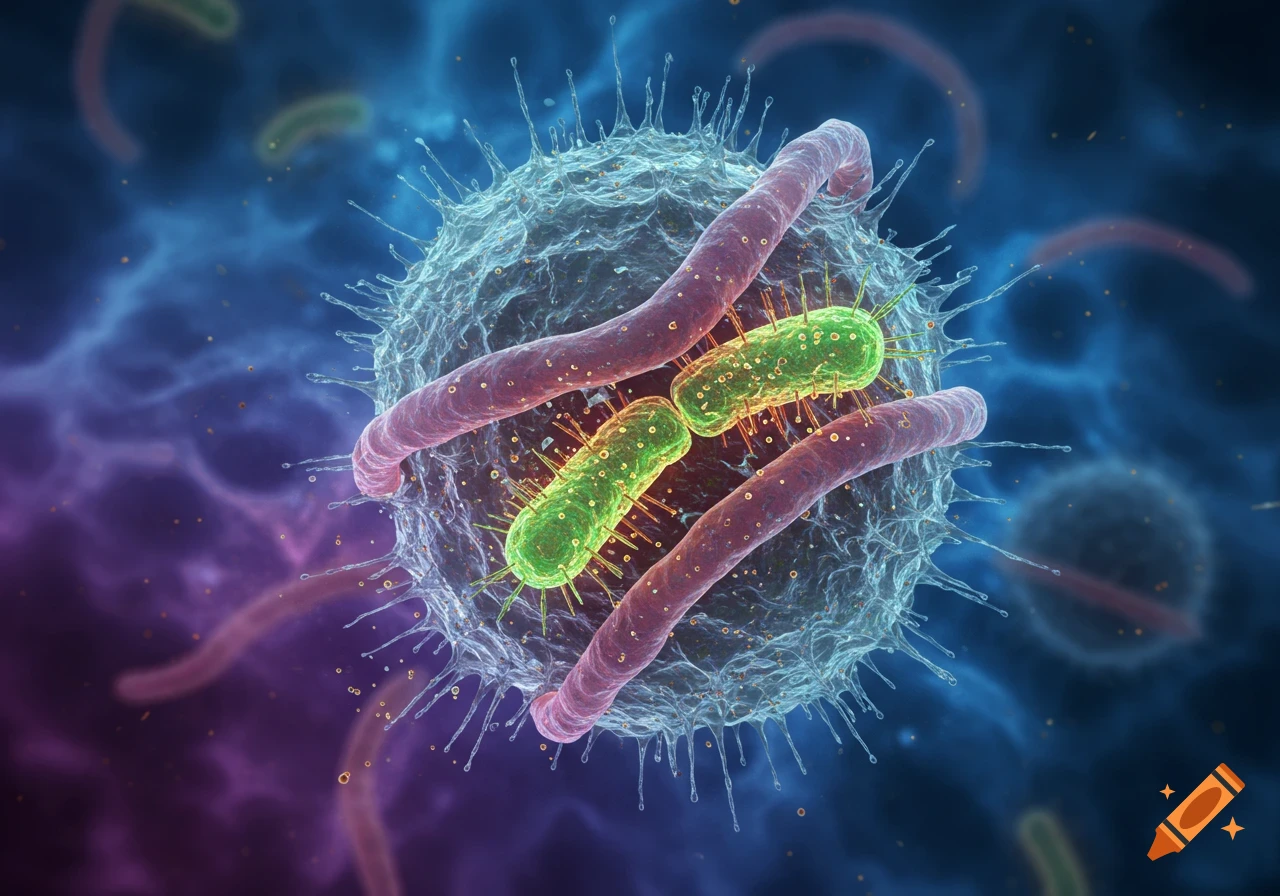
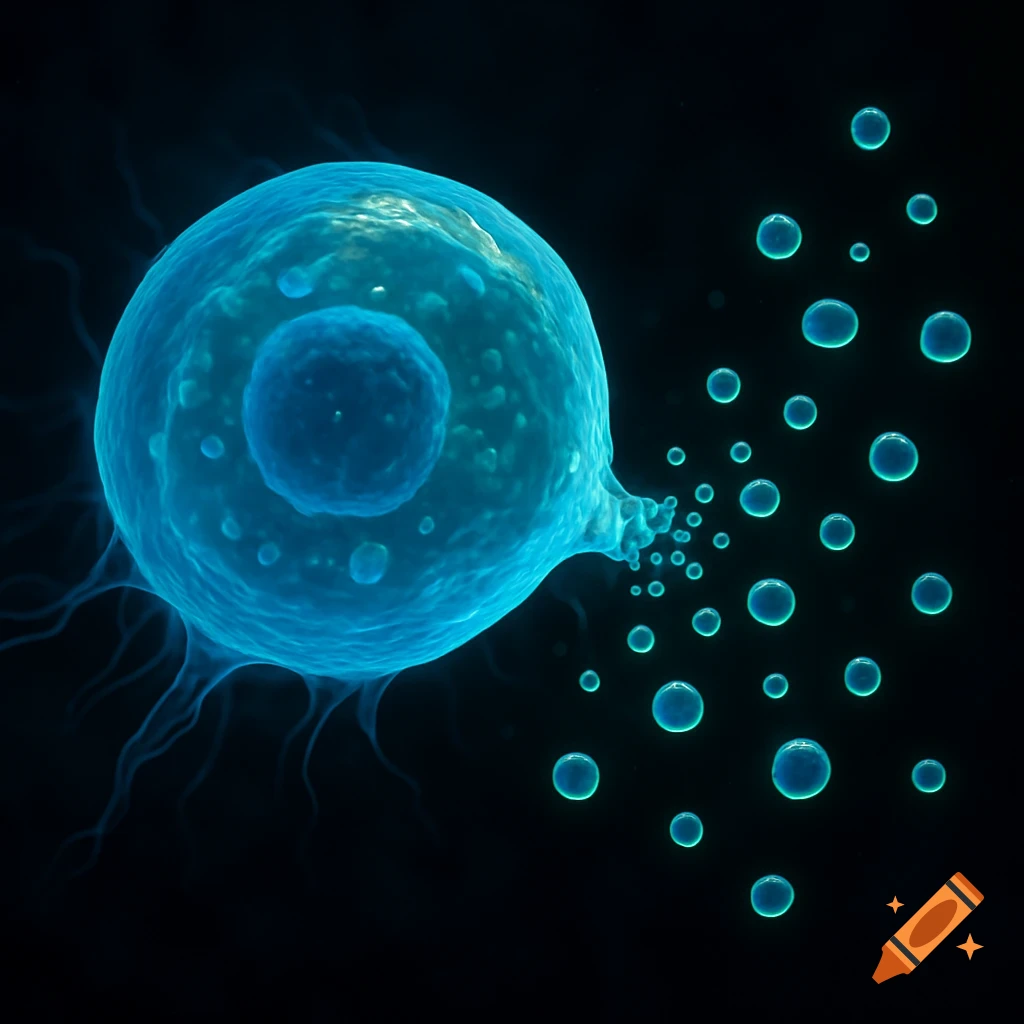
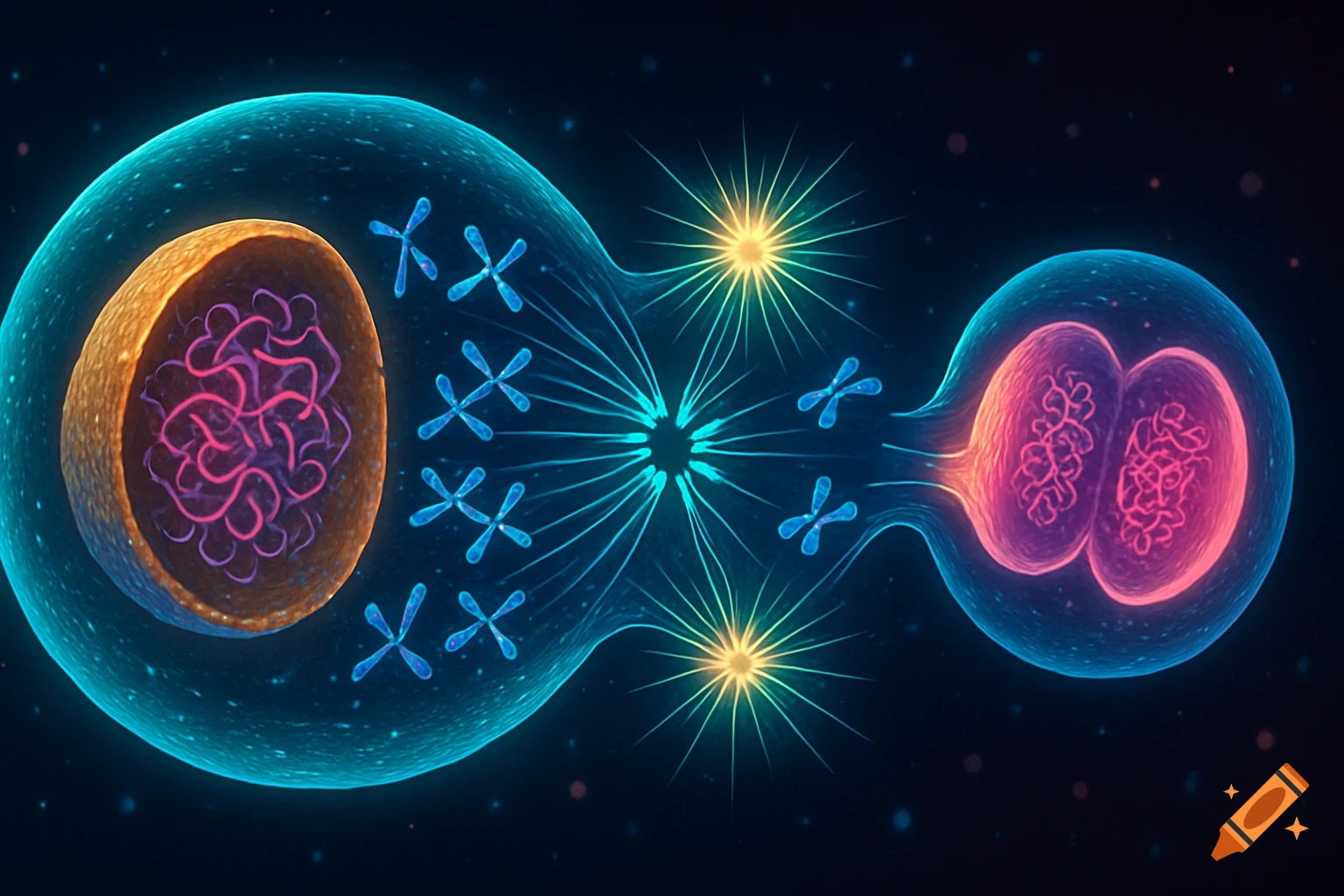
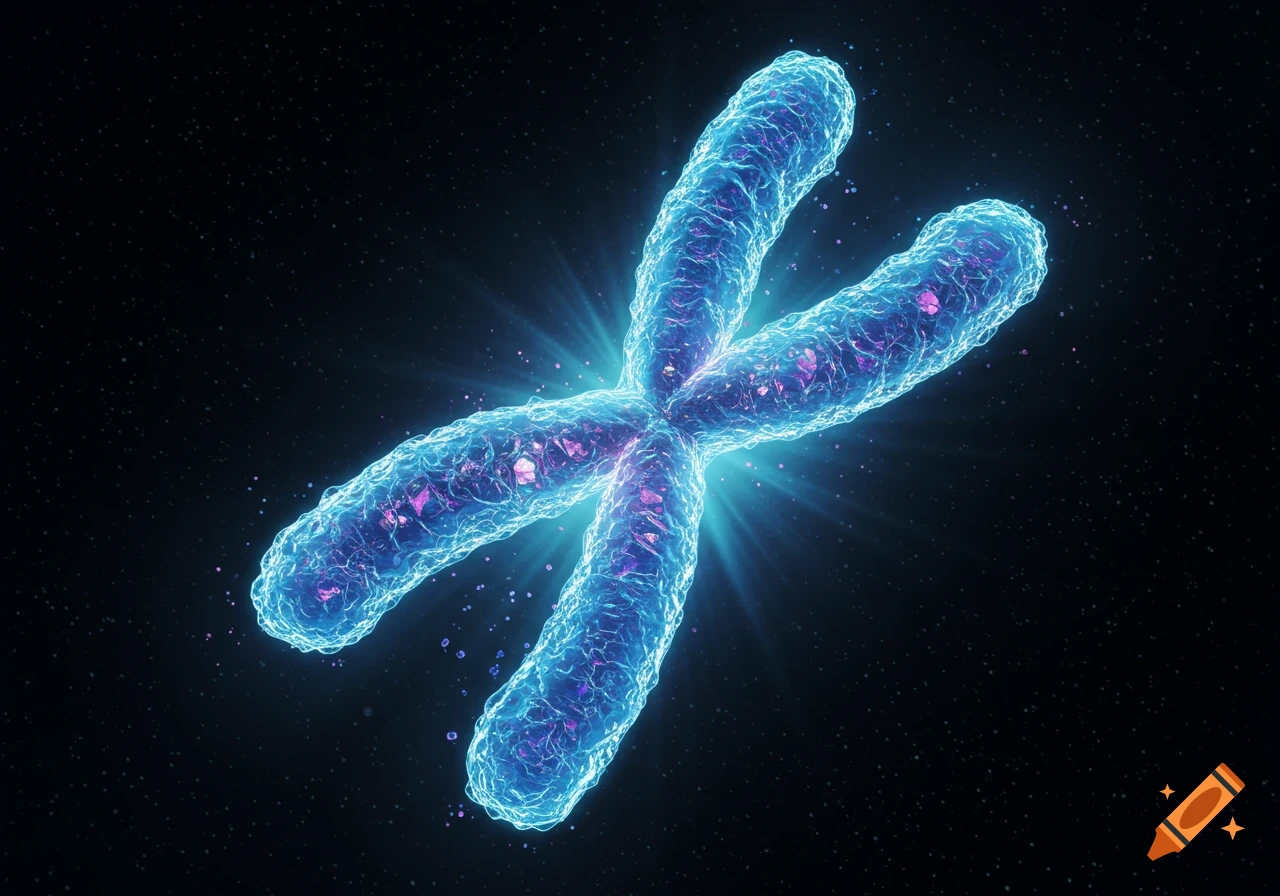
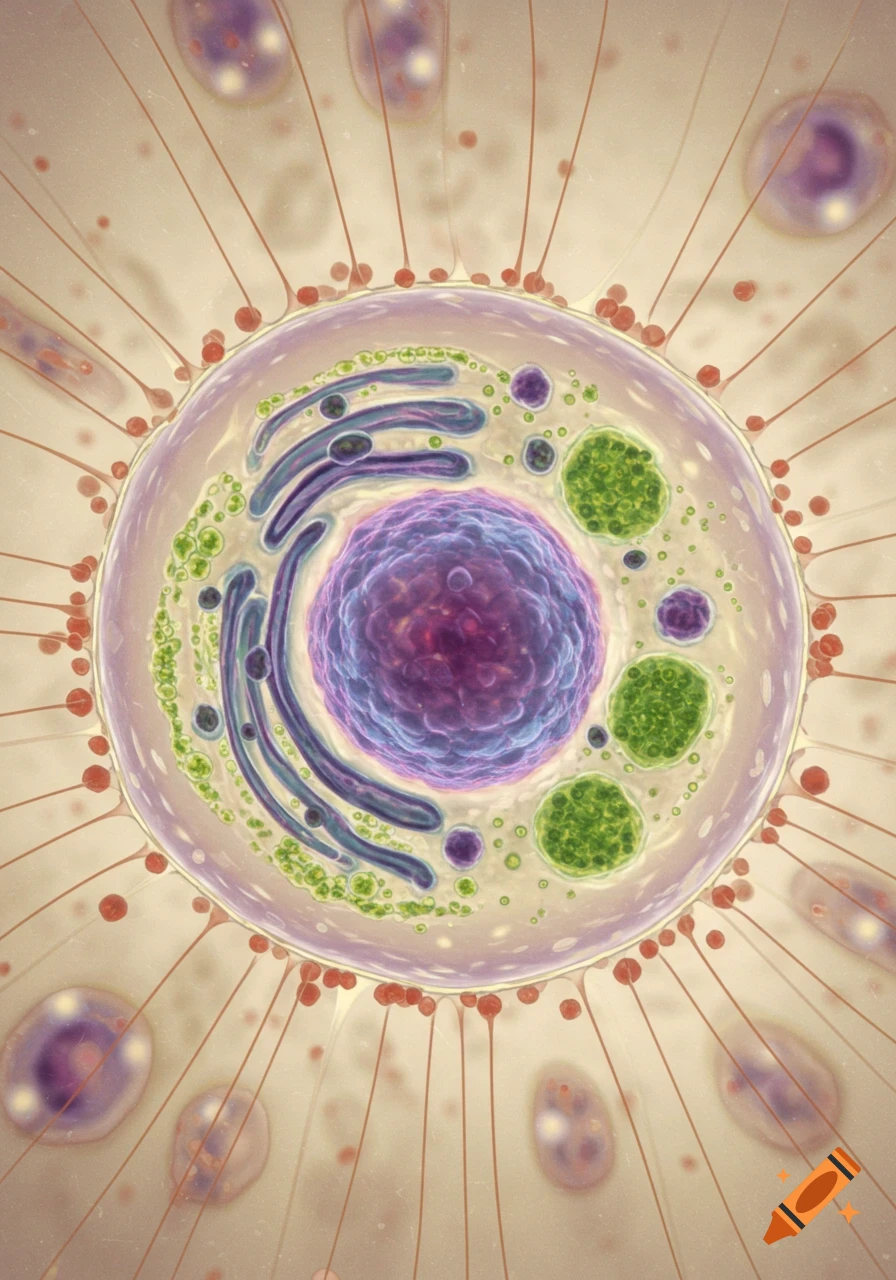
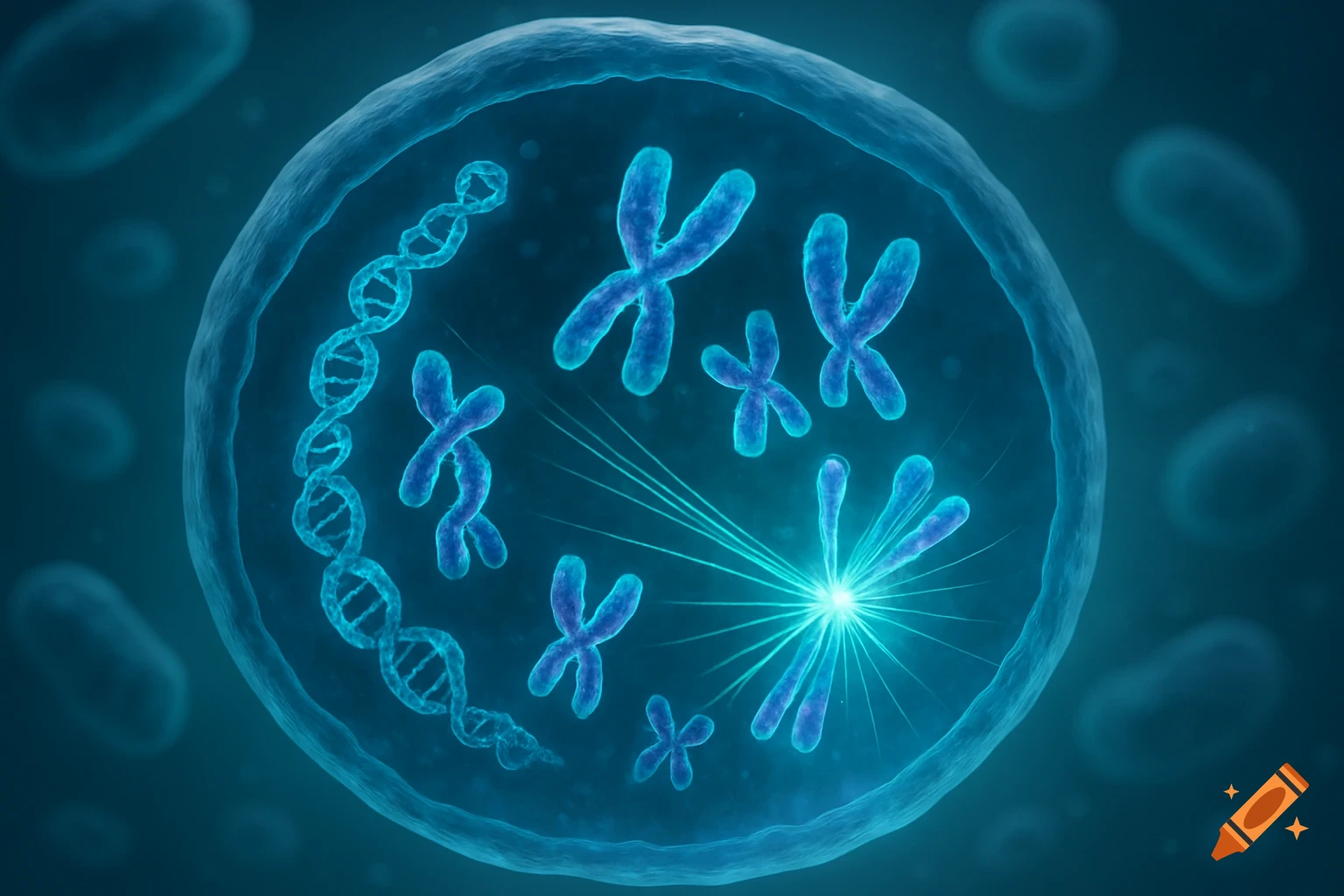
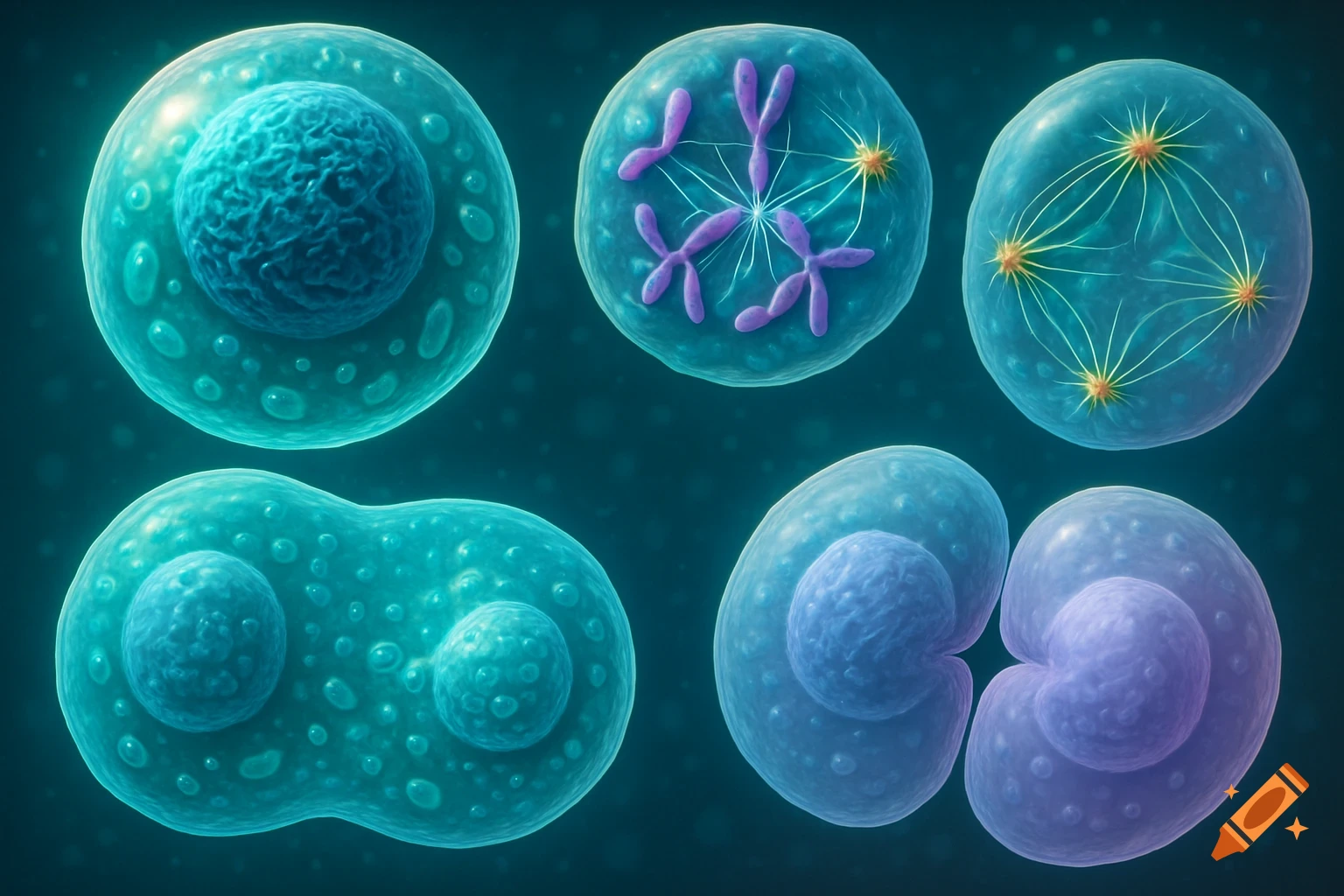
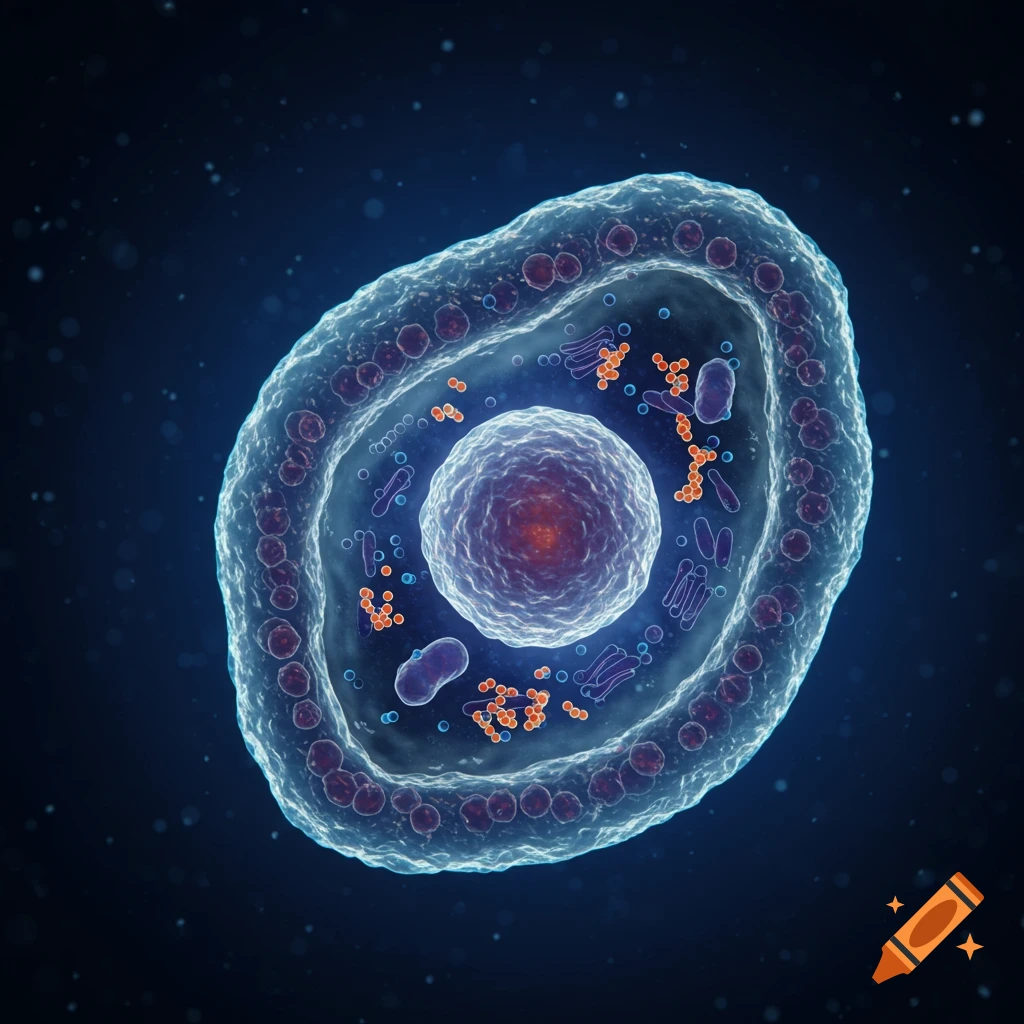
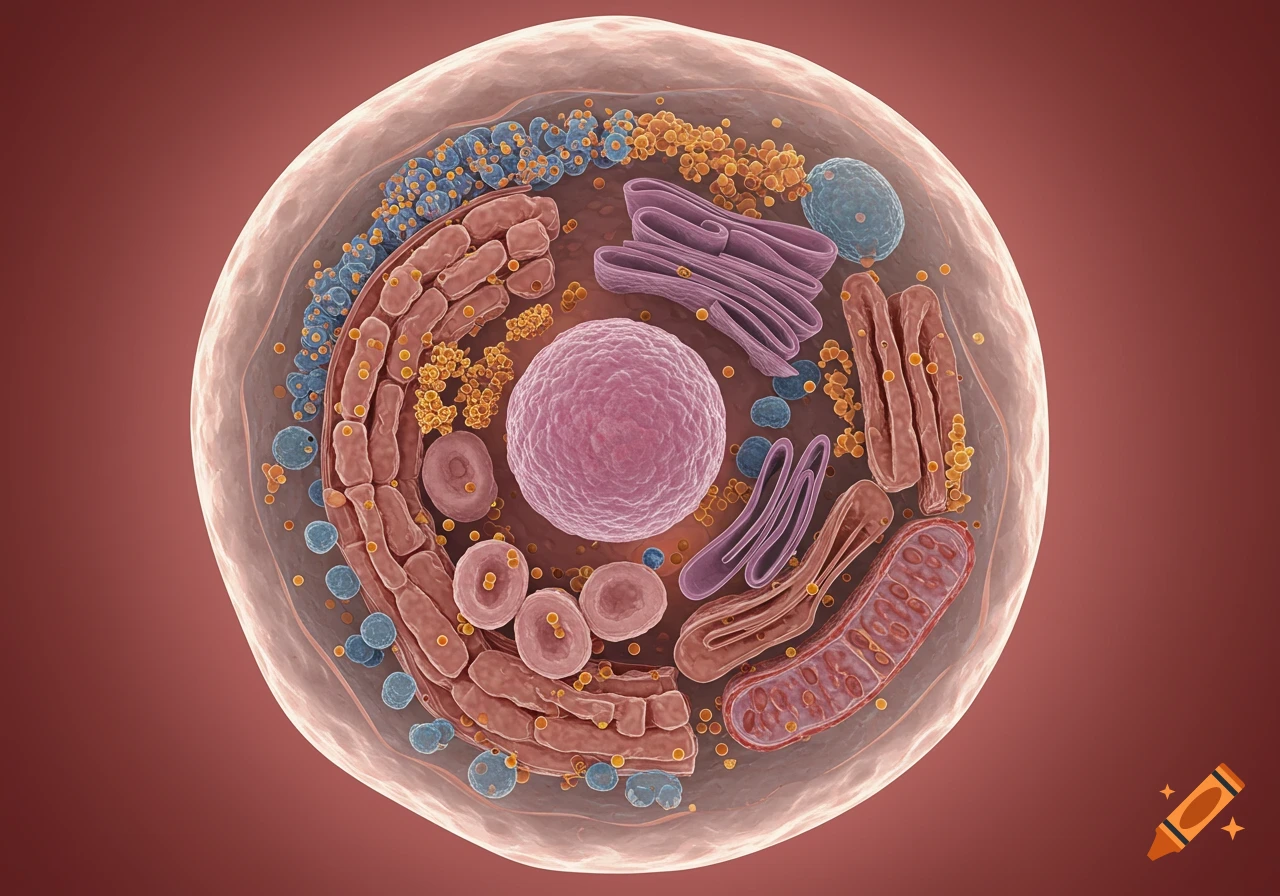
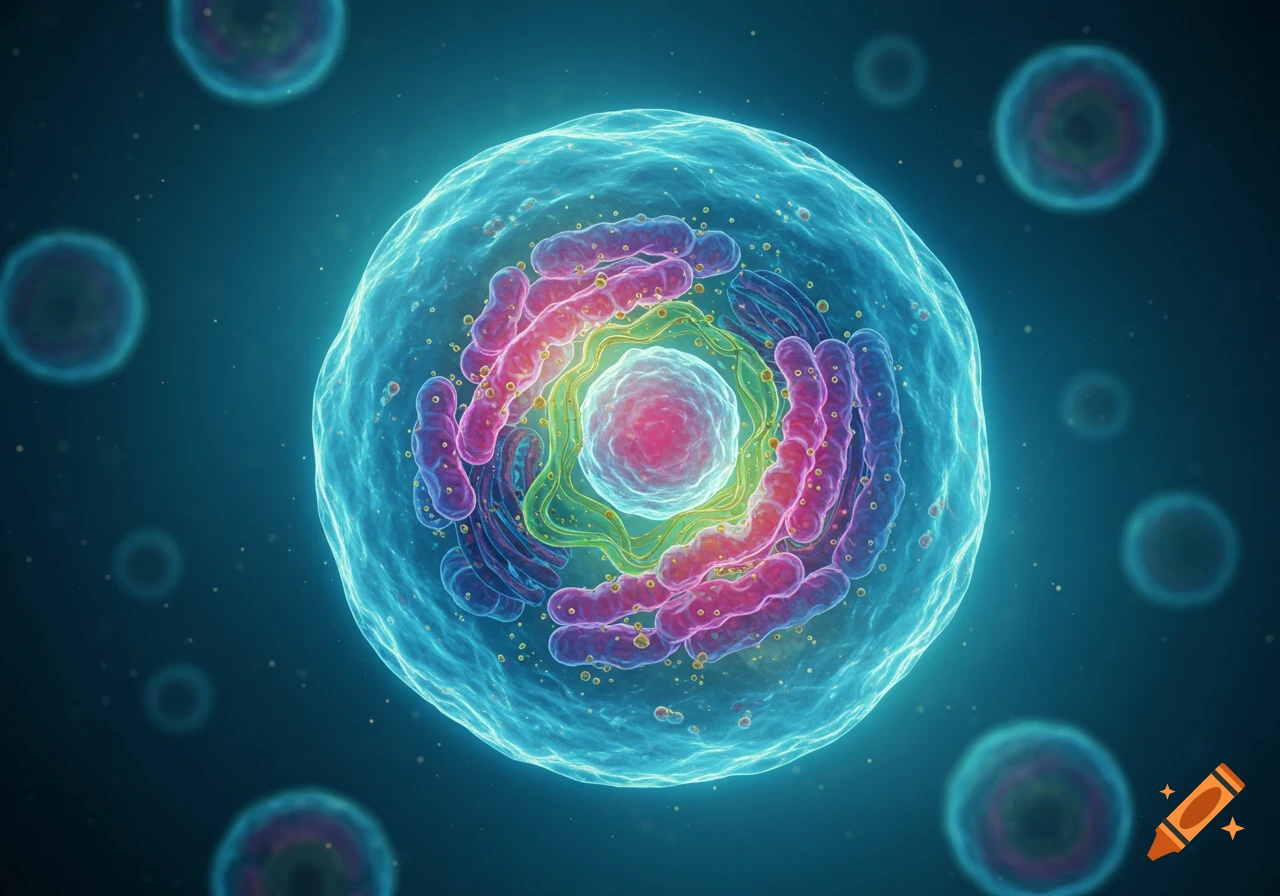
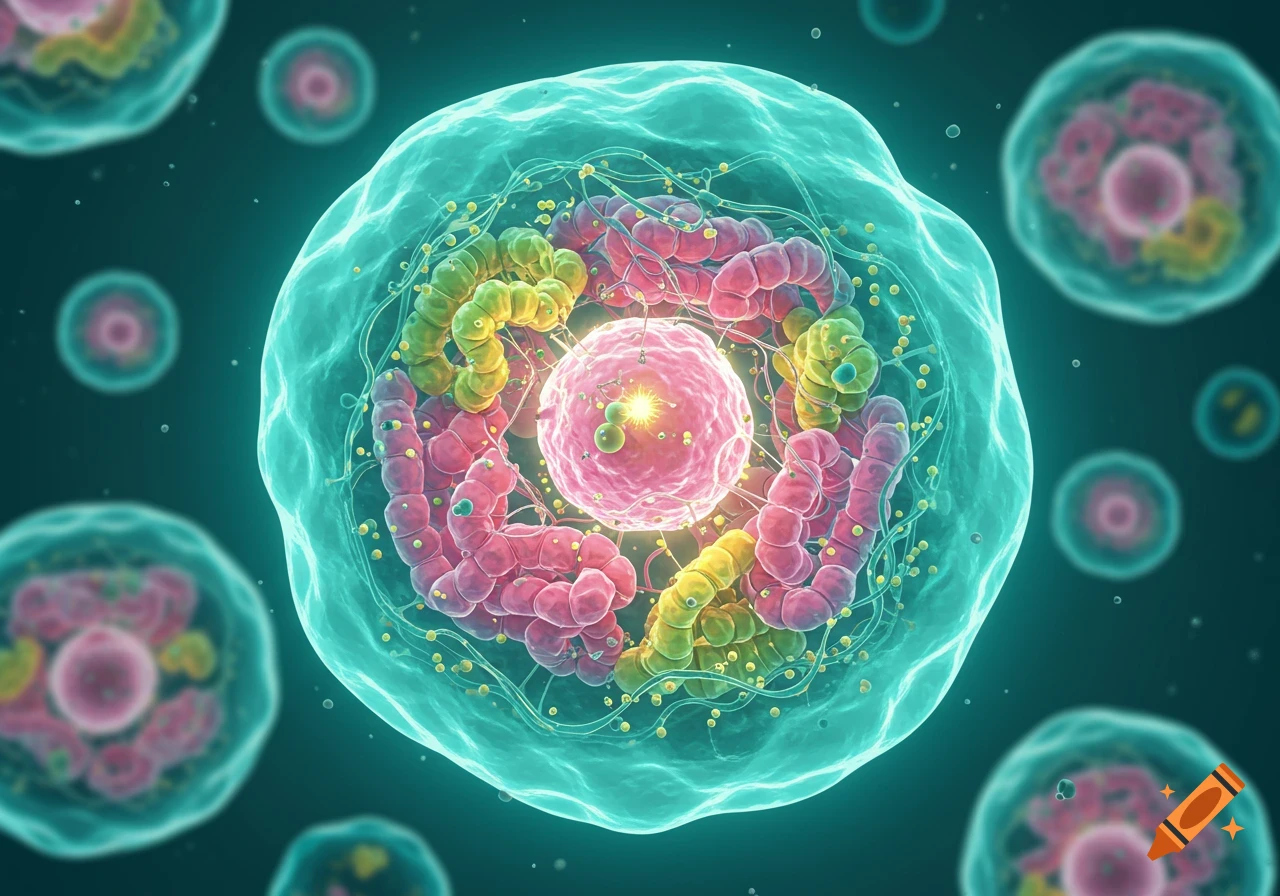
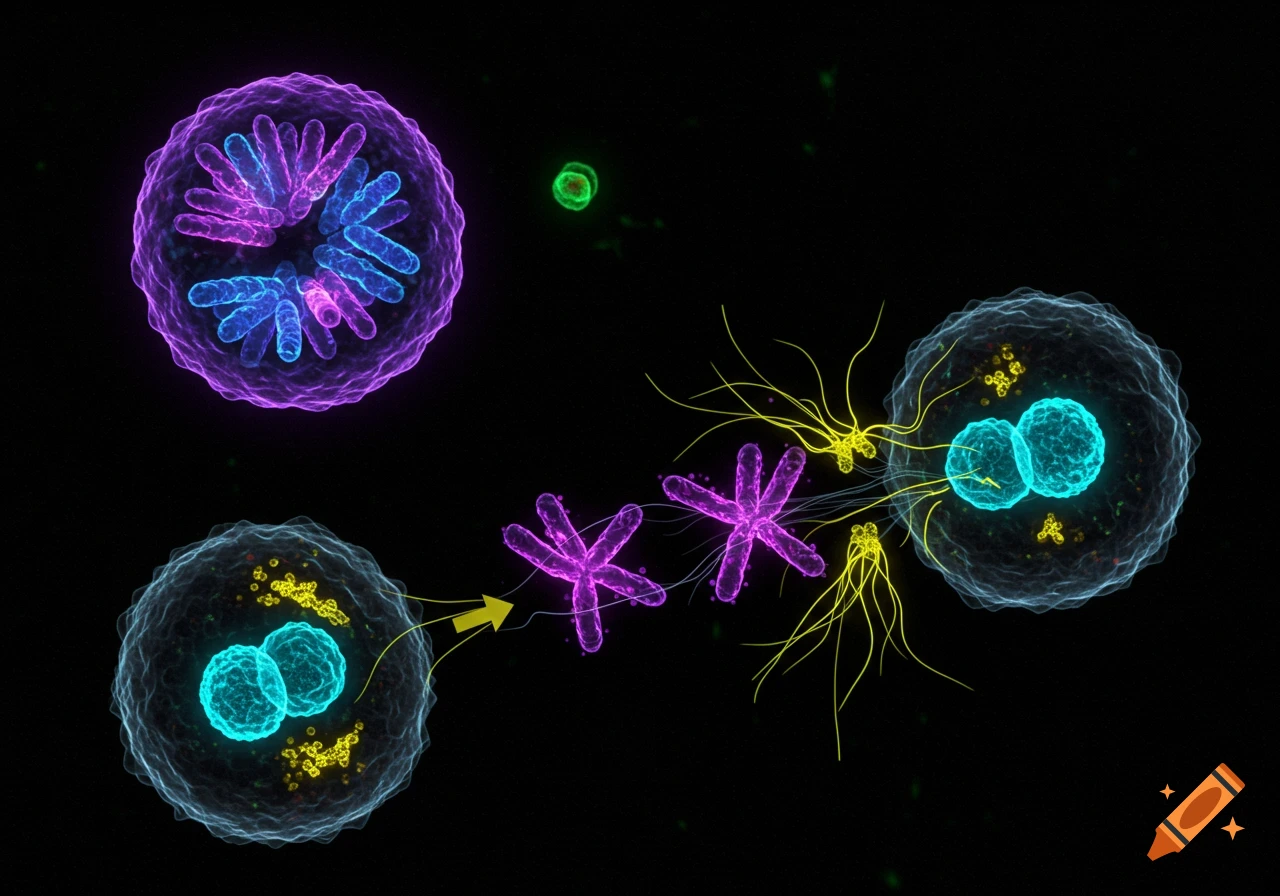
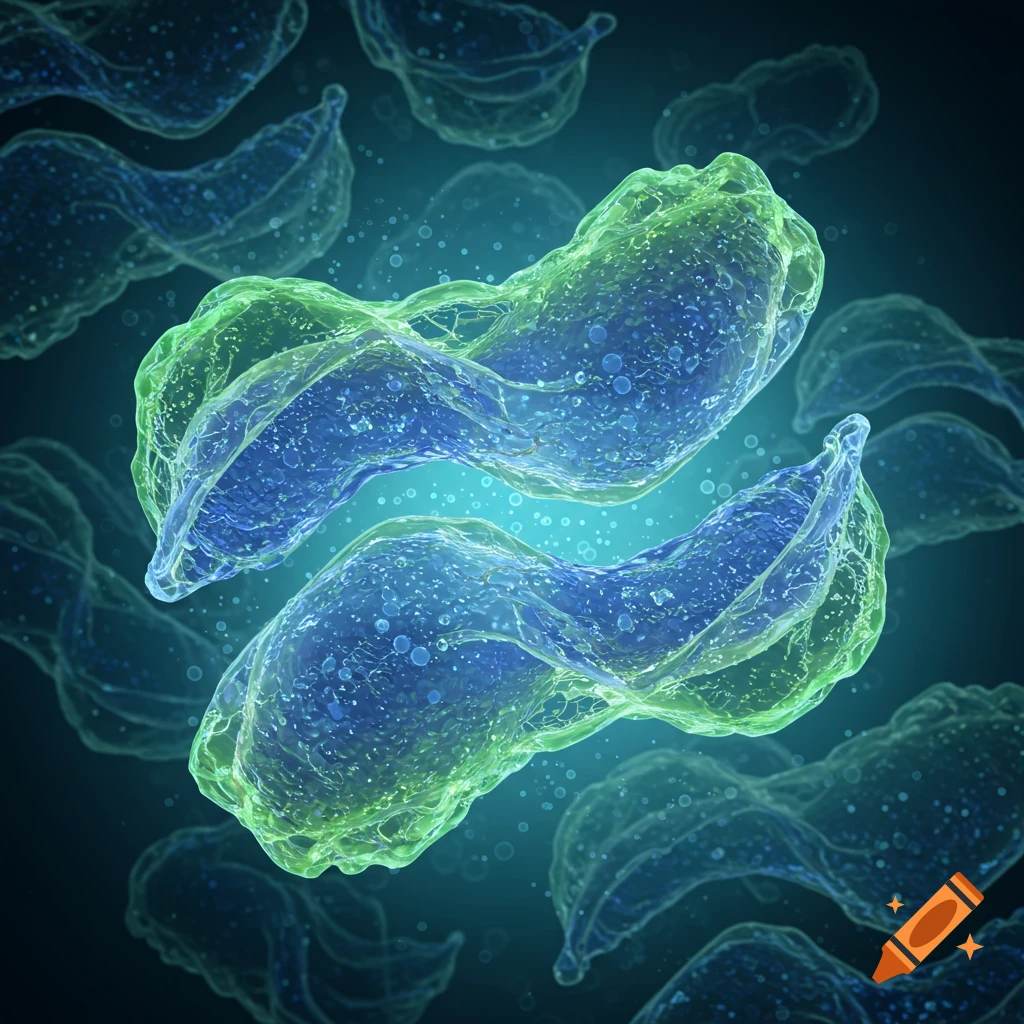
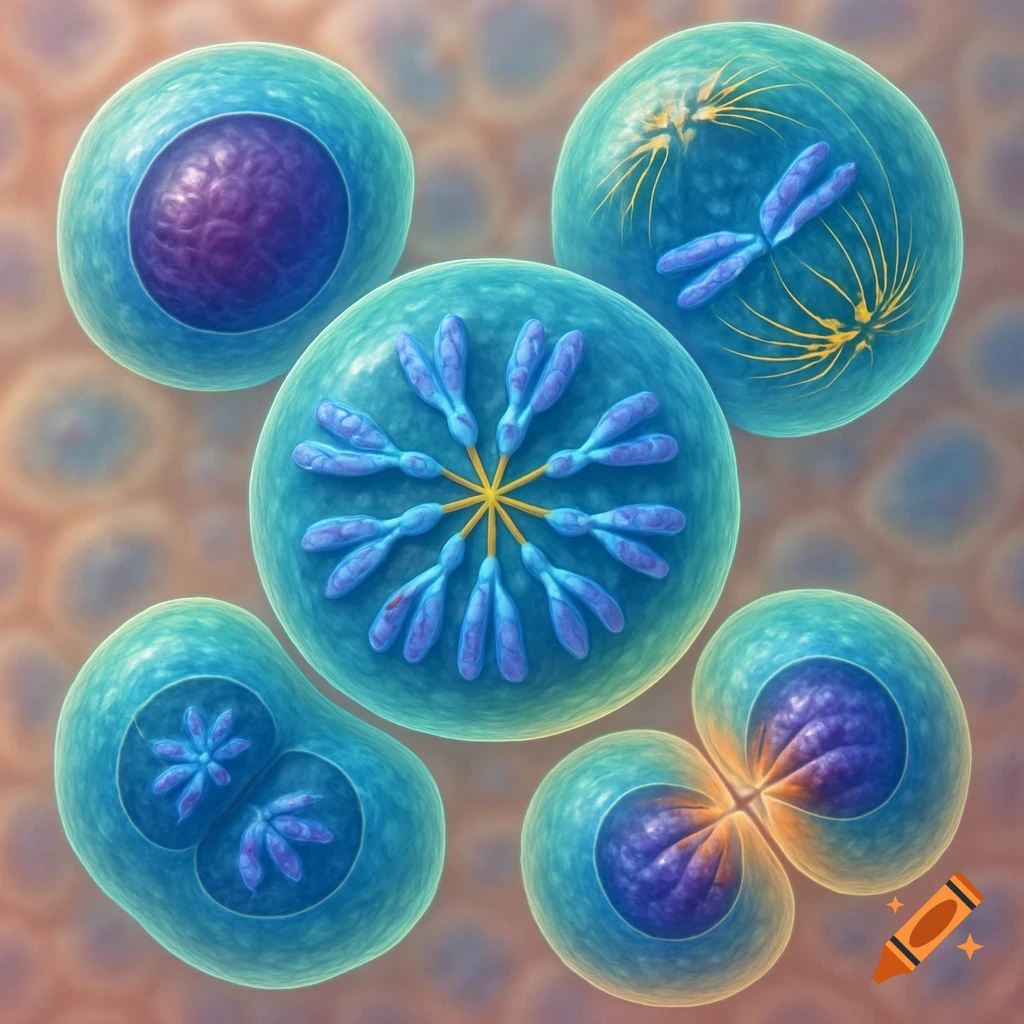
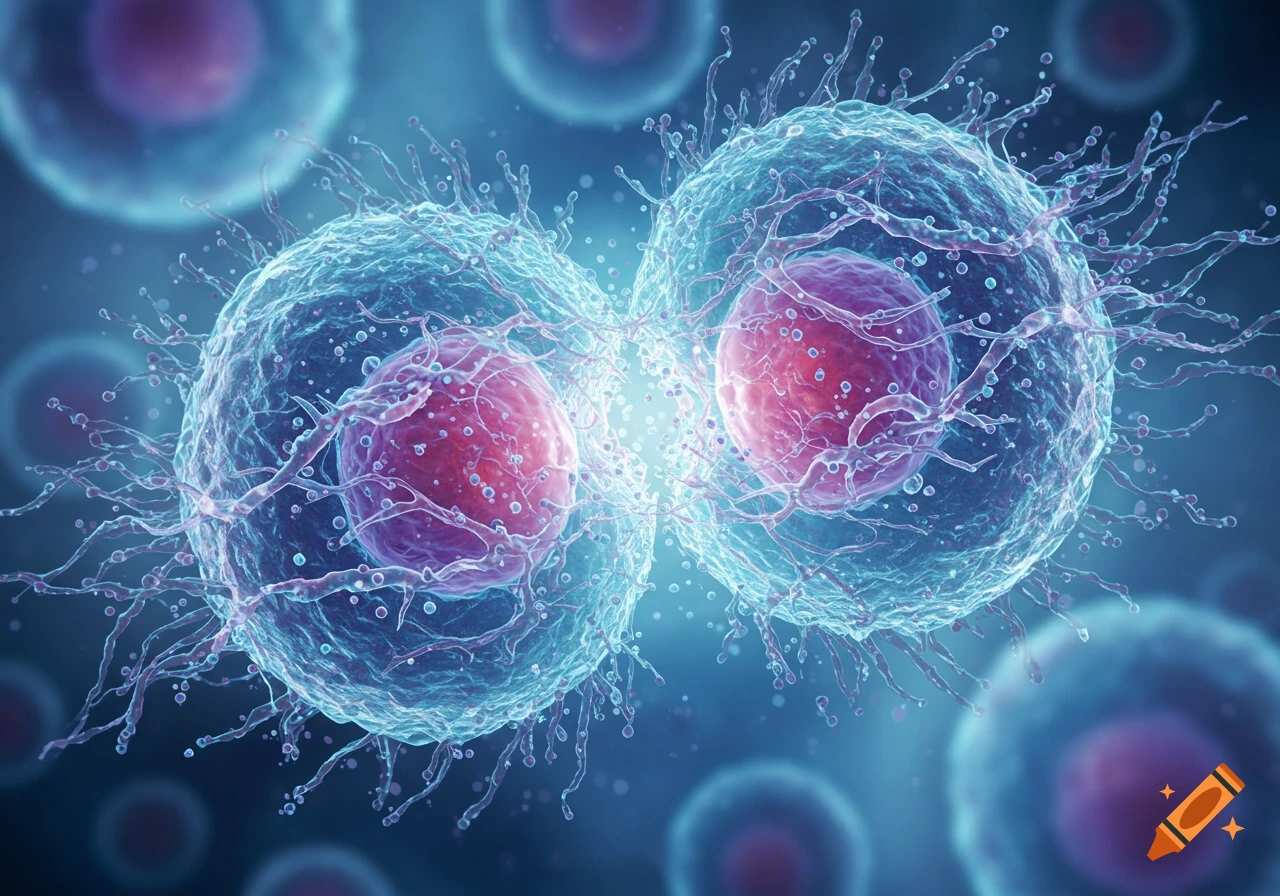
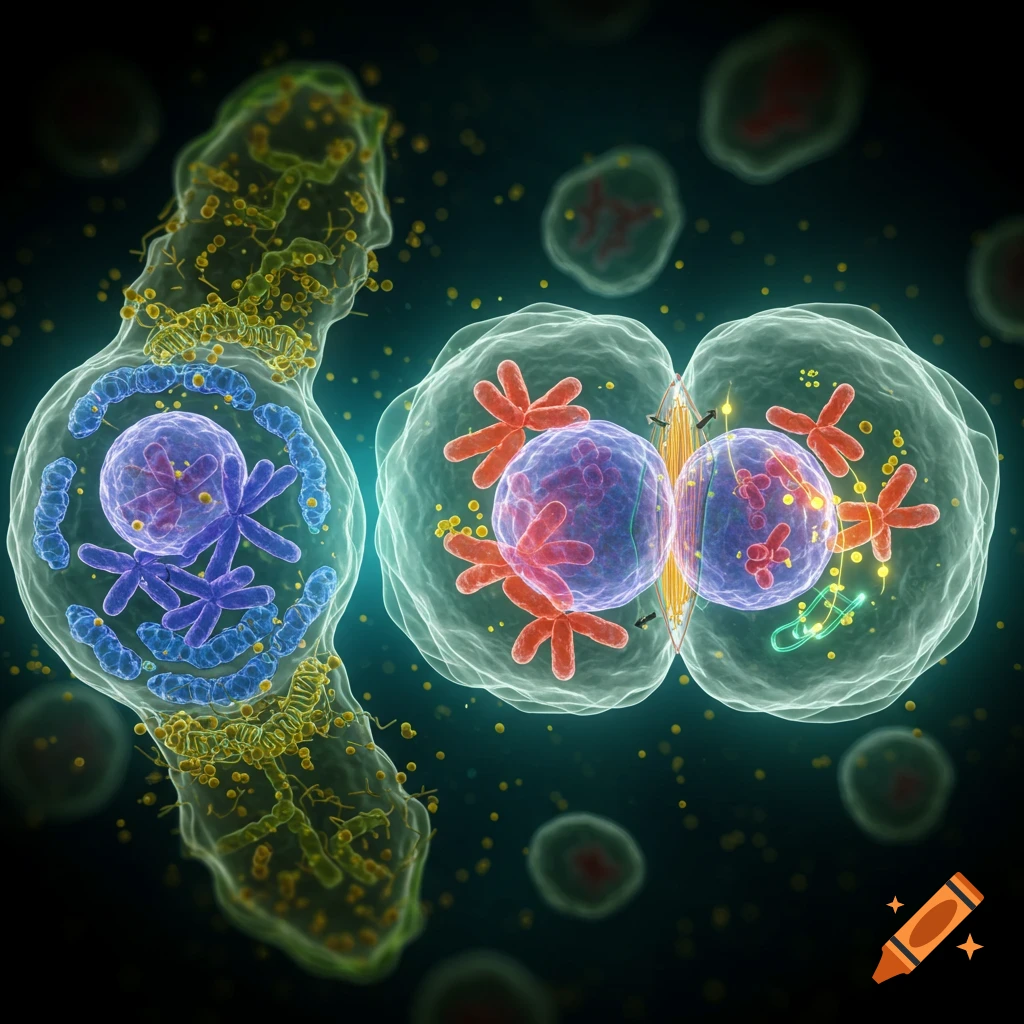
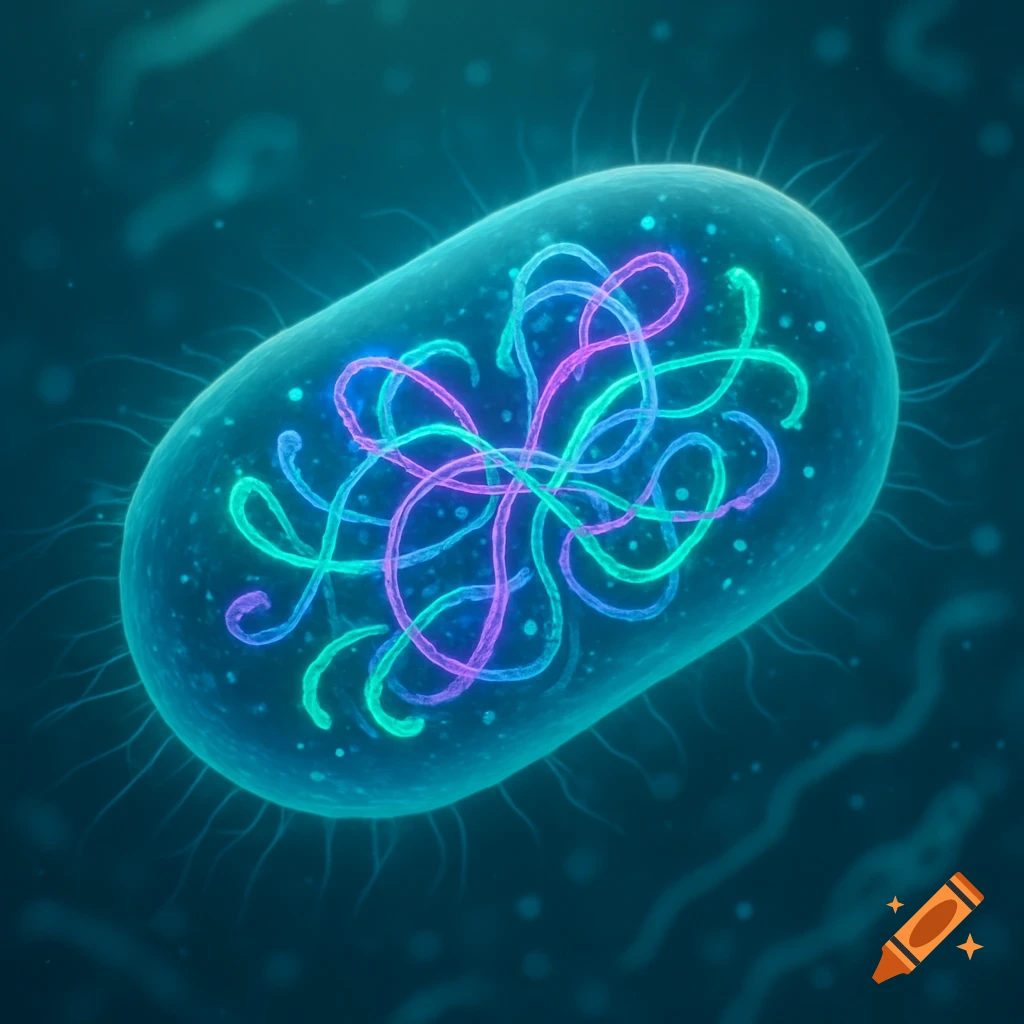
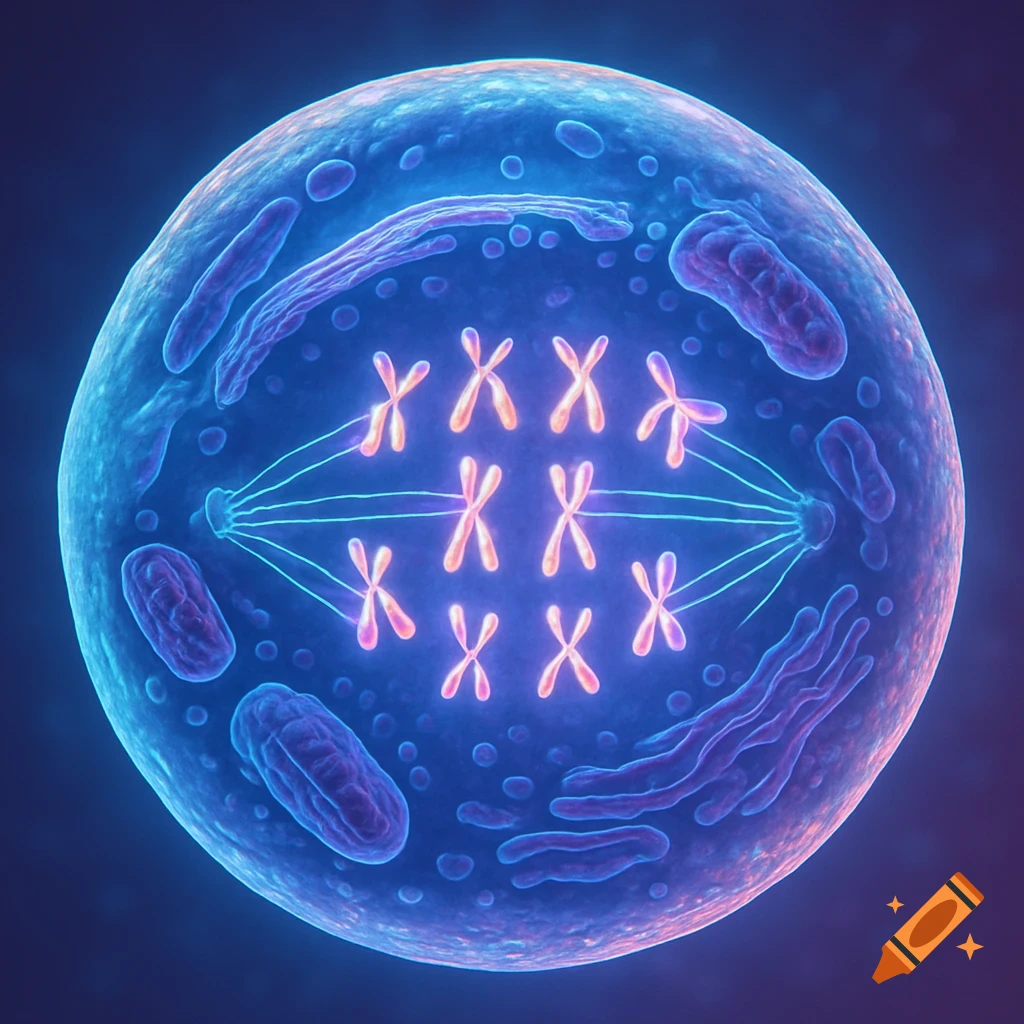
A vibrant blue and purple microscopic illustration of a cell undergoing mitosis, with chromosomes and spindle fibers clearly visible.
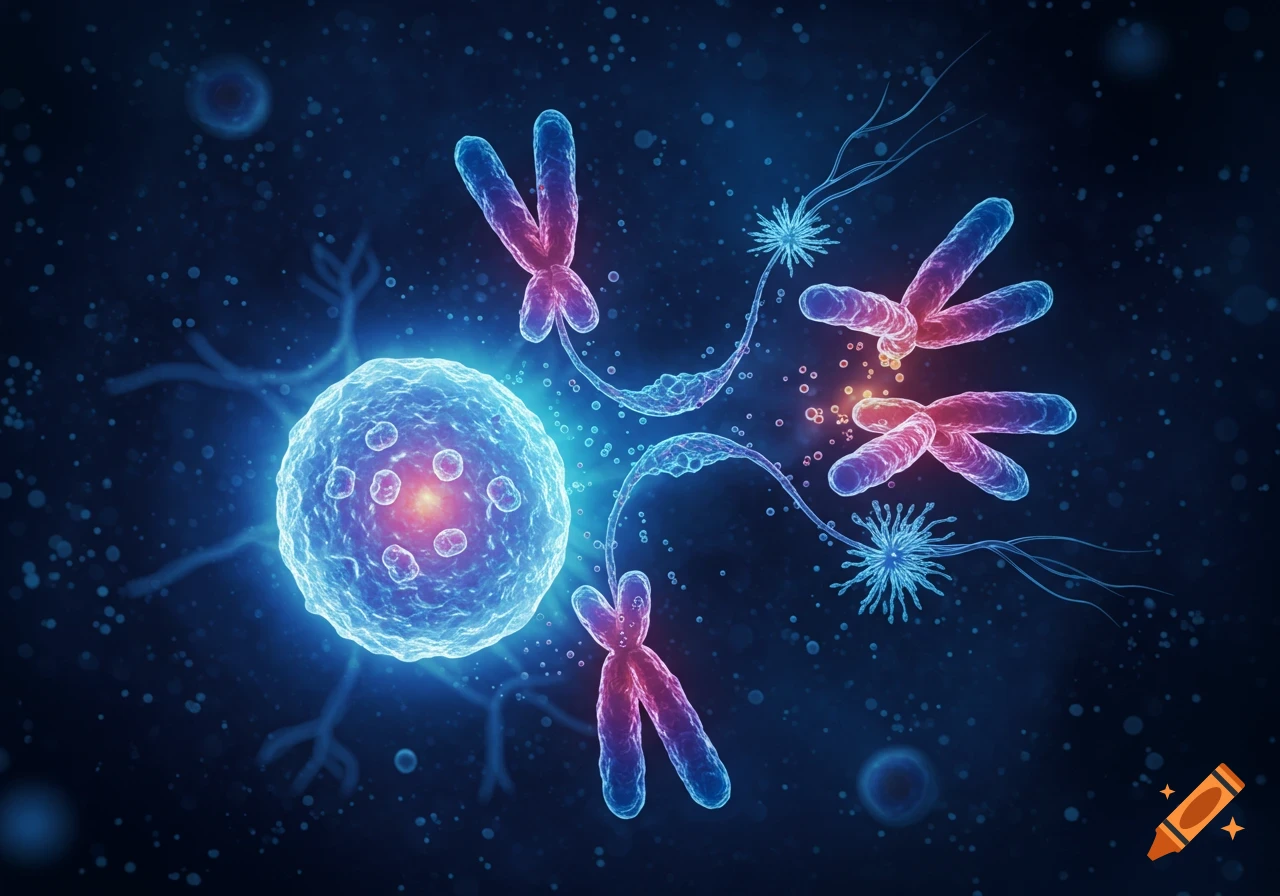
Mitosis is the process in which the chromosomes of the dividing cell are prepared for sorting into two equal portions. By taking a "snapshot" of this process at several points, we can better understand the mechanism of cell division. The snapshot phases of mitosis are called prophase, metaphase, anaphase, and telophase. However, in actuality, cell division is a continuous process. Prophase At the beginning of this first stage of mitosis, the chromosomes coil more tightly and become visible as distinct structures. There are no changes to your model yet because it already has clearly defined chromosomes. In animal cells, two small barrel-shaped bodies called centrioles have replicated during interphase, and each now begins to move toward the opposite end or pole of the cell as the chromosomes become visible. By the end of prophase, the nuclear envelope disintegrates, enabling the chromosomes to be caught by protein fibers that have grown out of the centrioles. Together these protein fibers—microtubules--form the spindle, an apparatus that will eventually allow the sister chromatids to separate from each other. Most plant cells don't have centrioles, but spindle fibers still form and serve a similar purpose. Sketch the cell at the end of prophase. Cell at end of prophase. (2 marks) See more