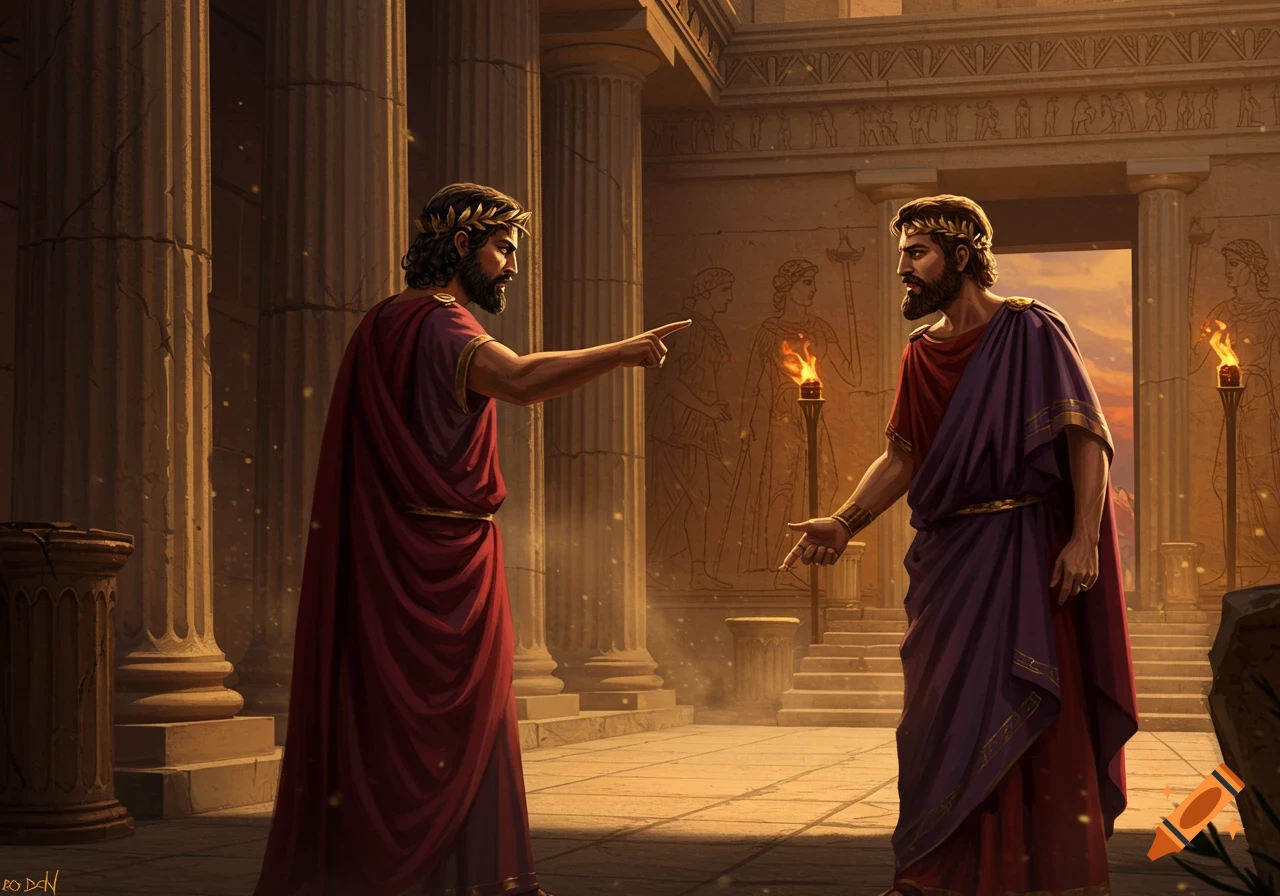
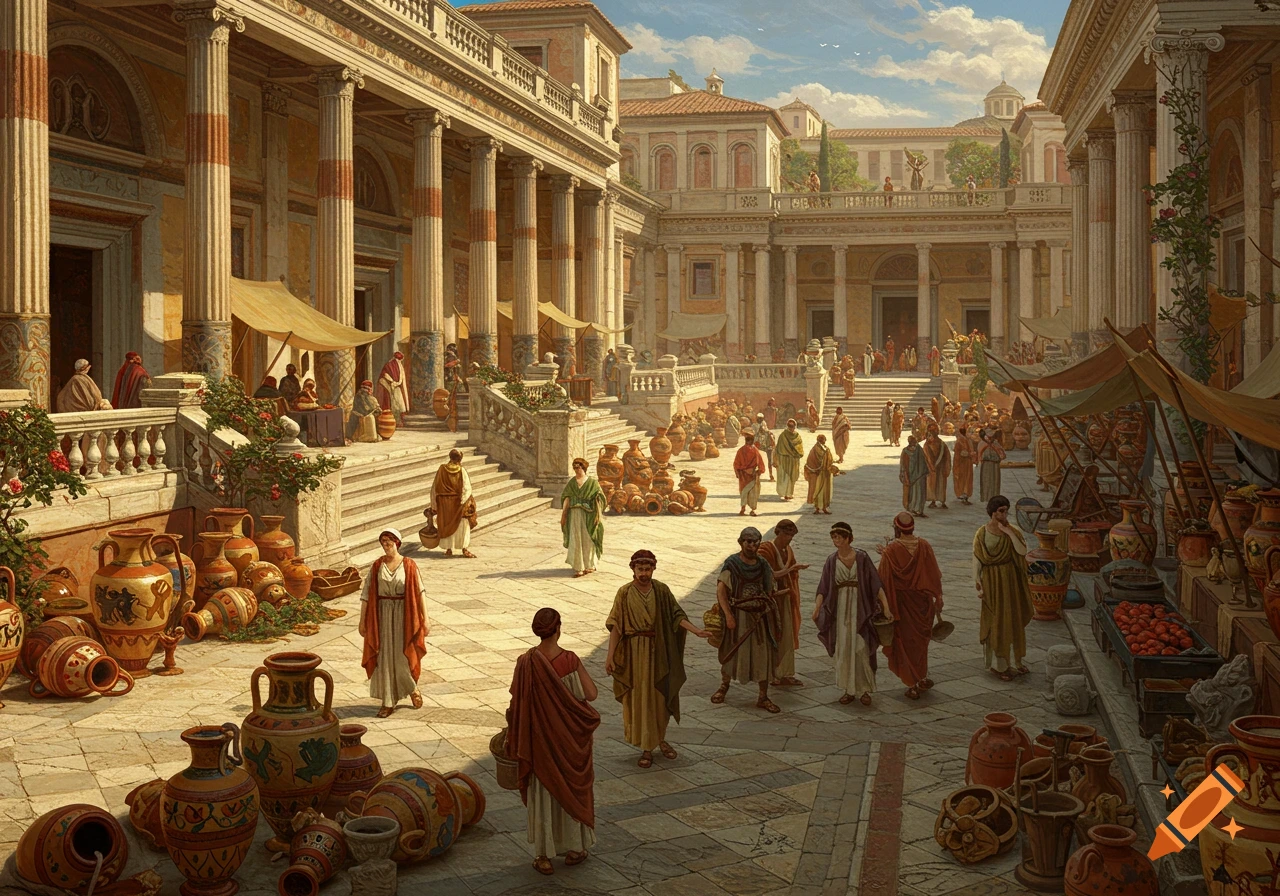
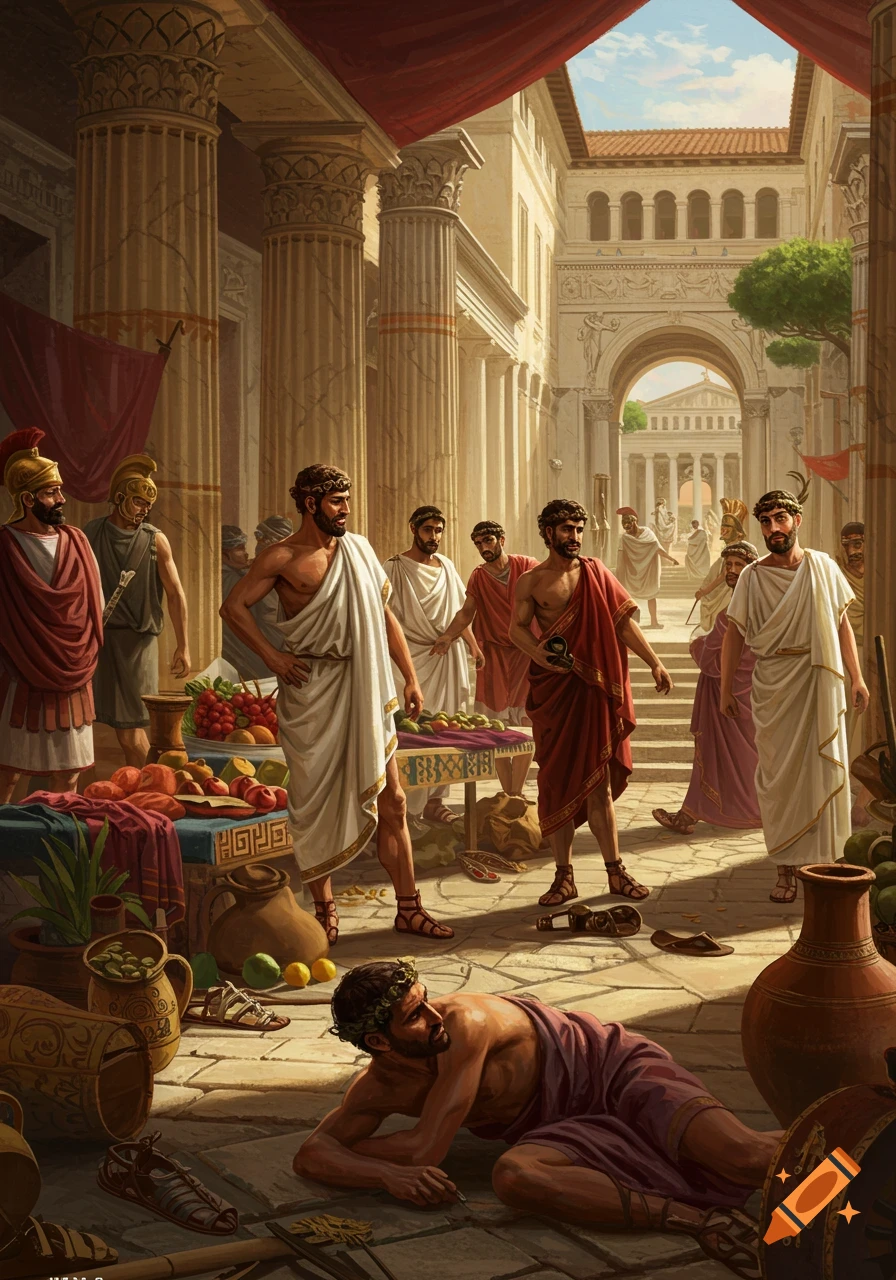
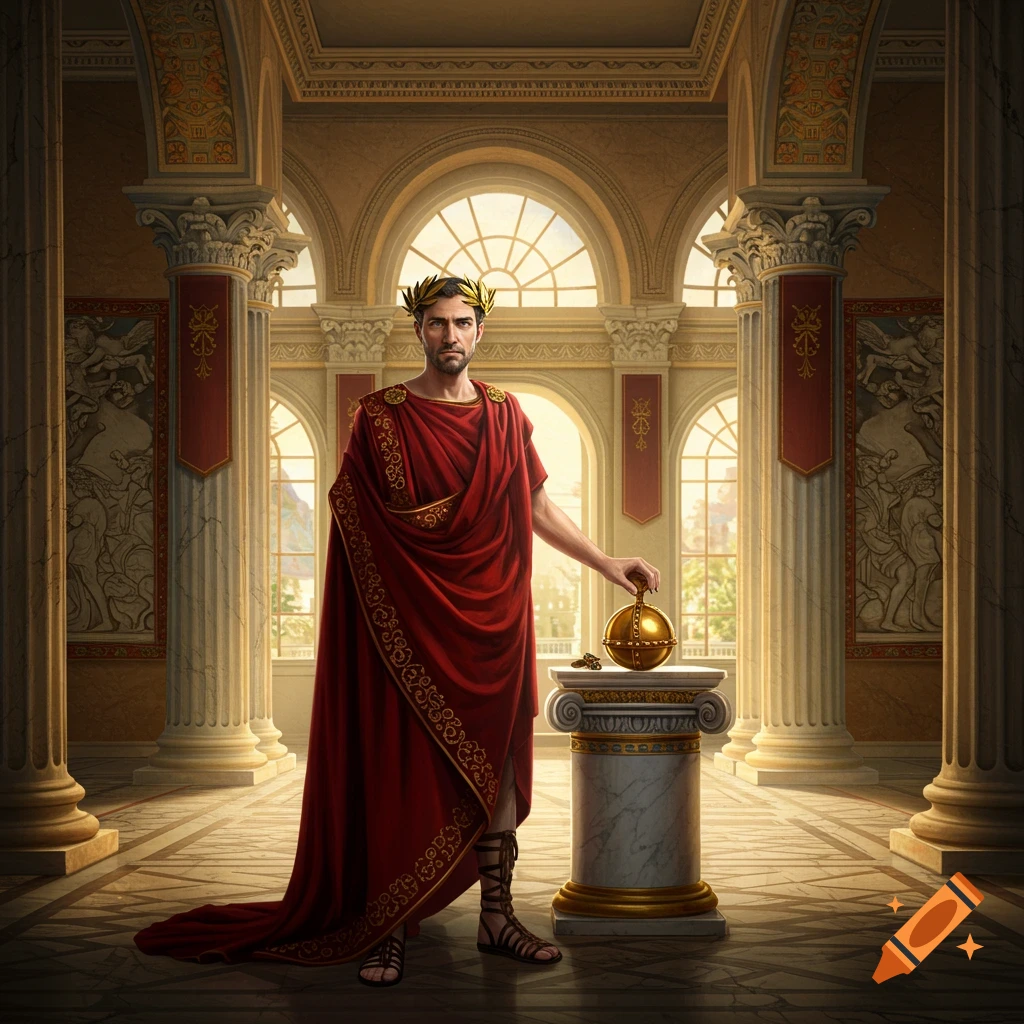
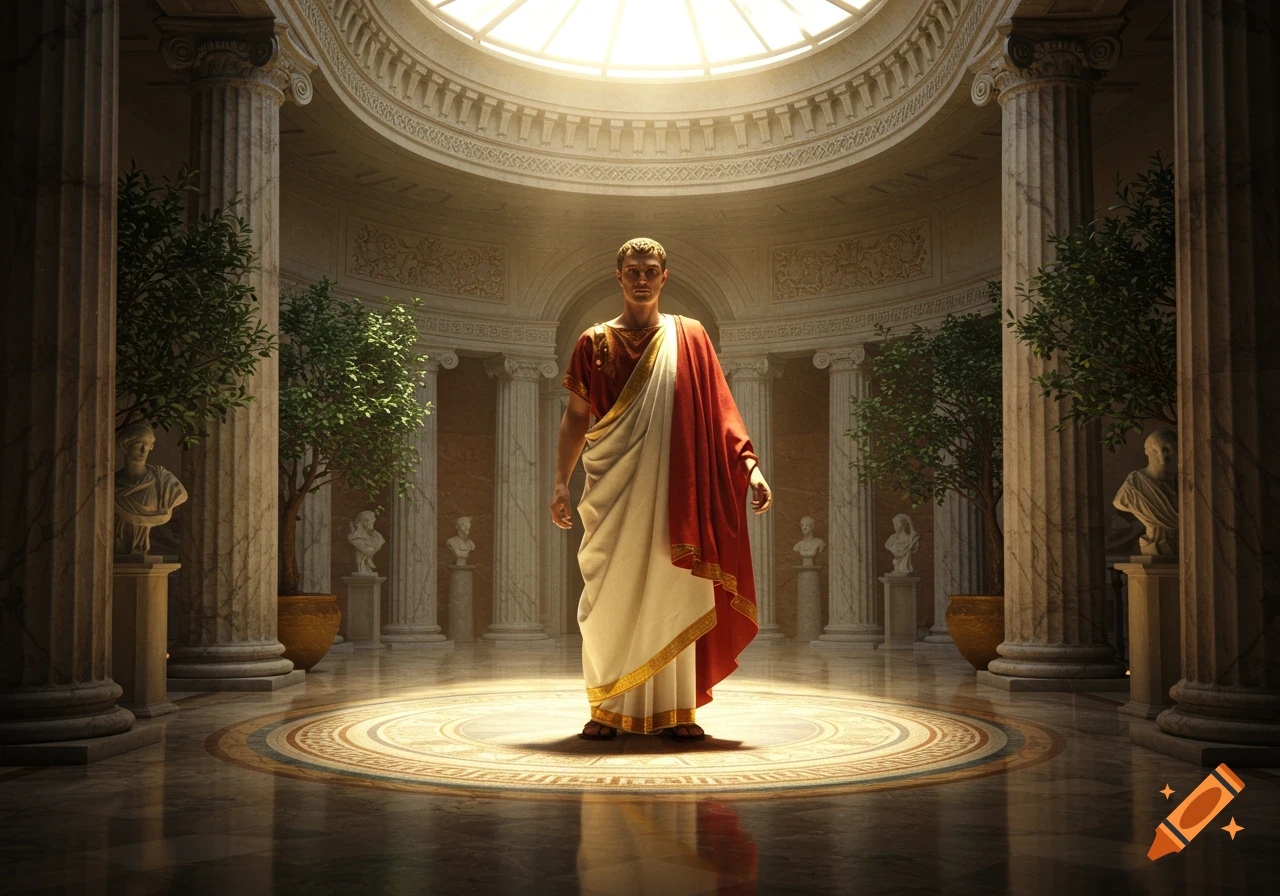
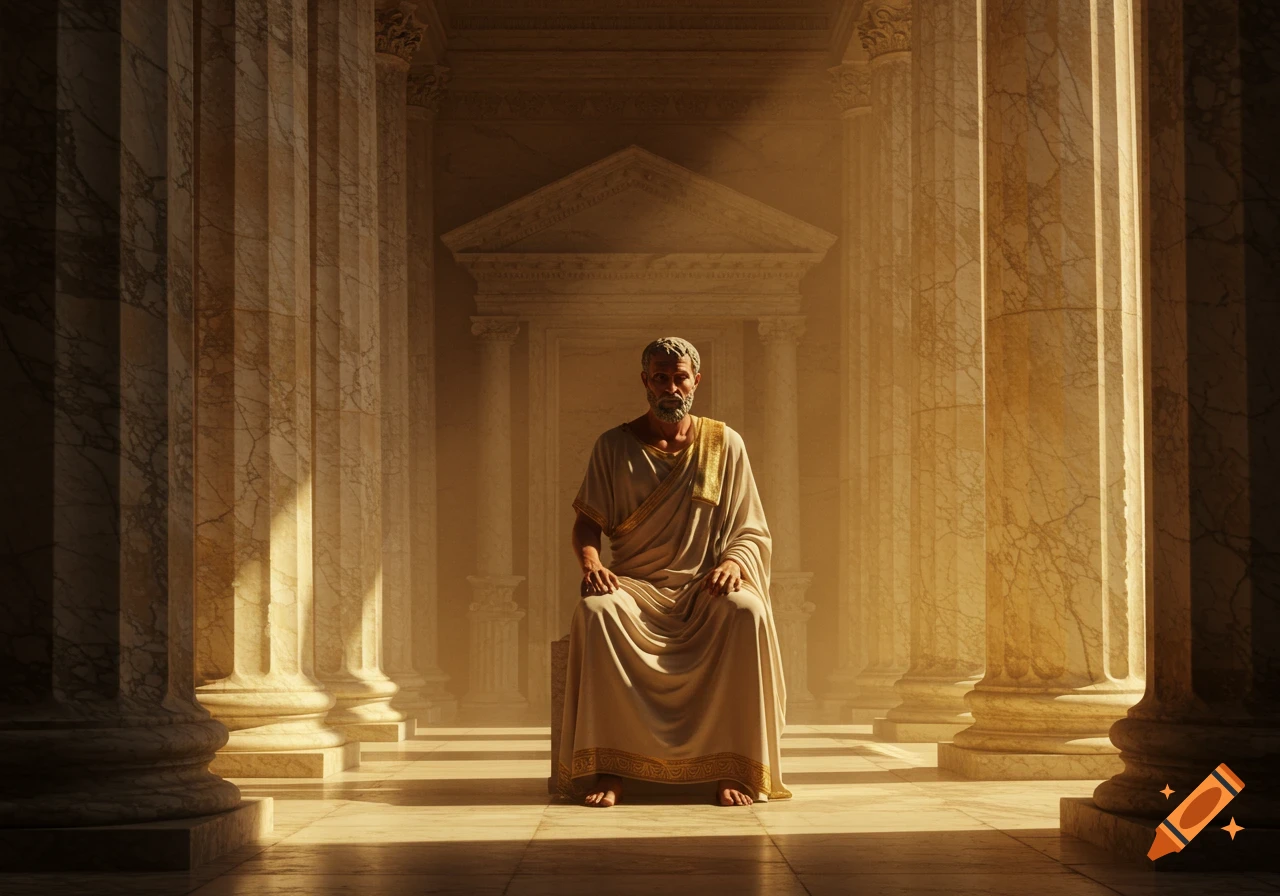
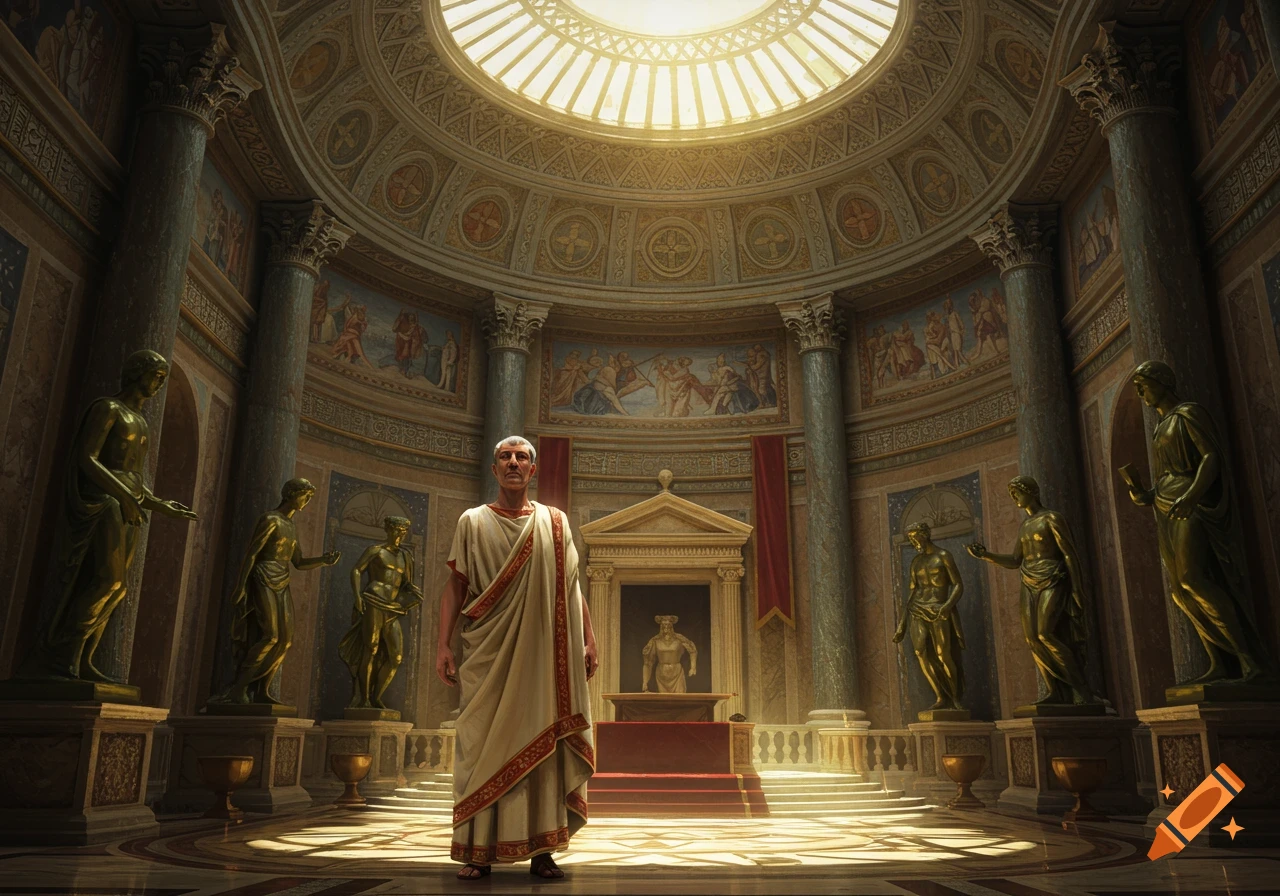
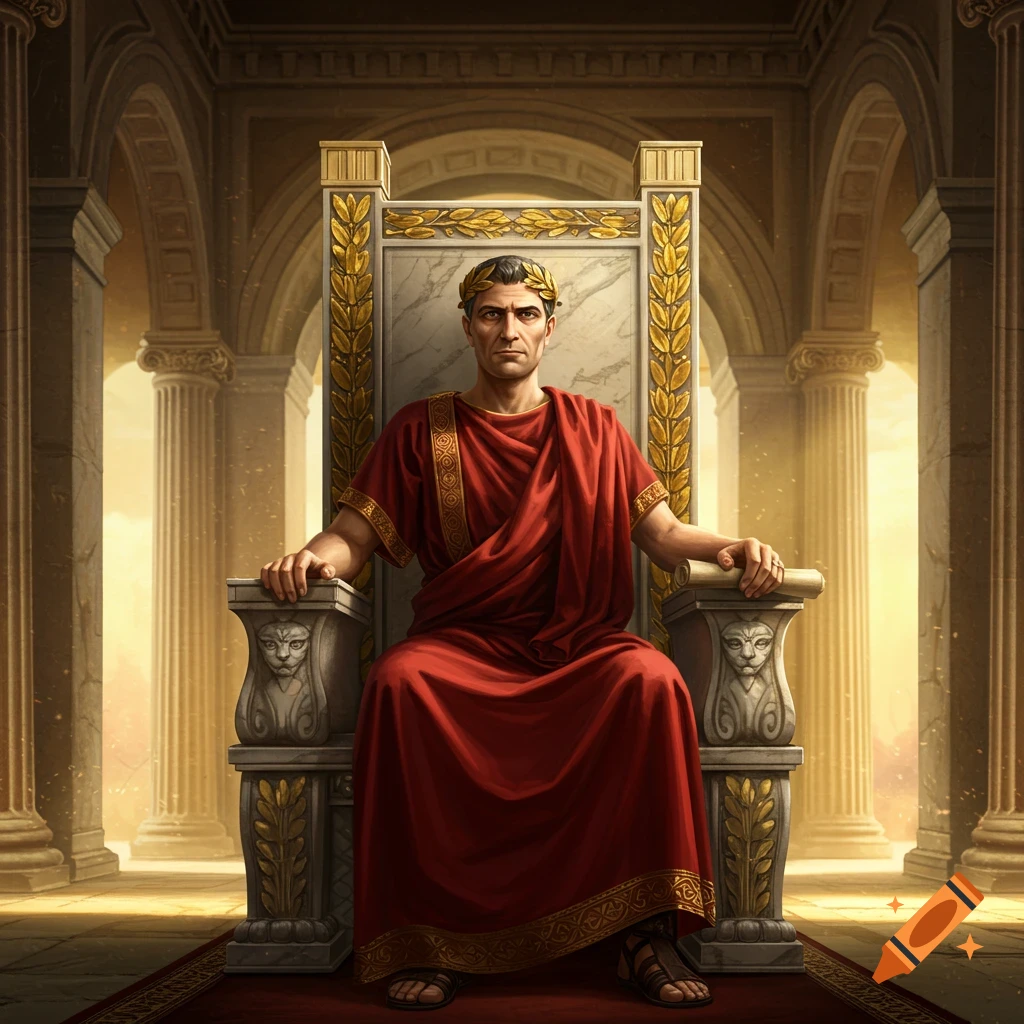
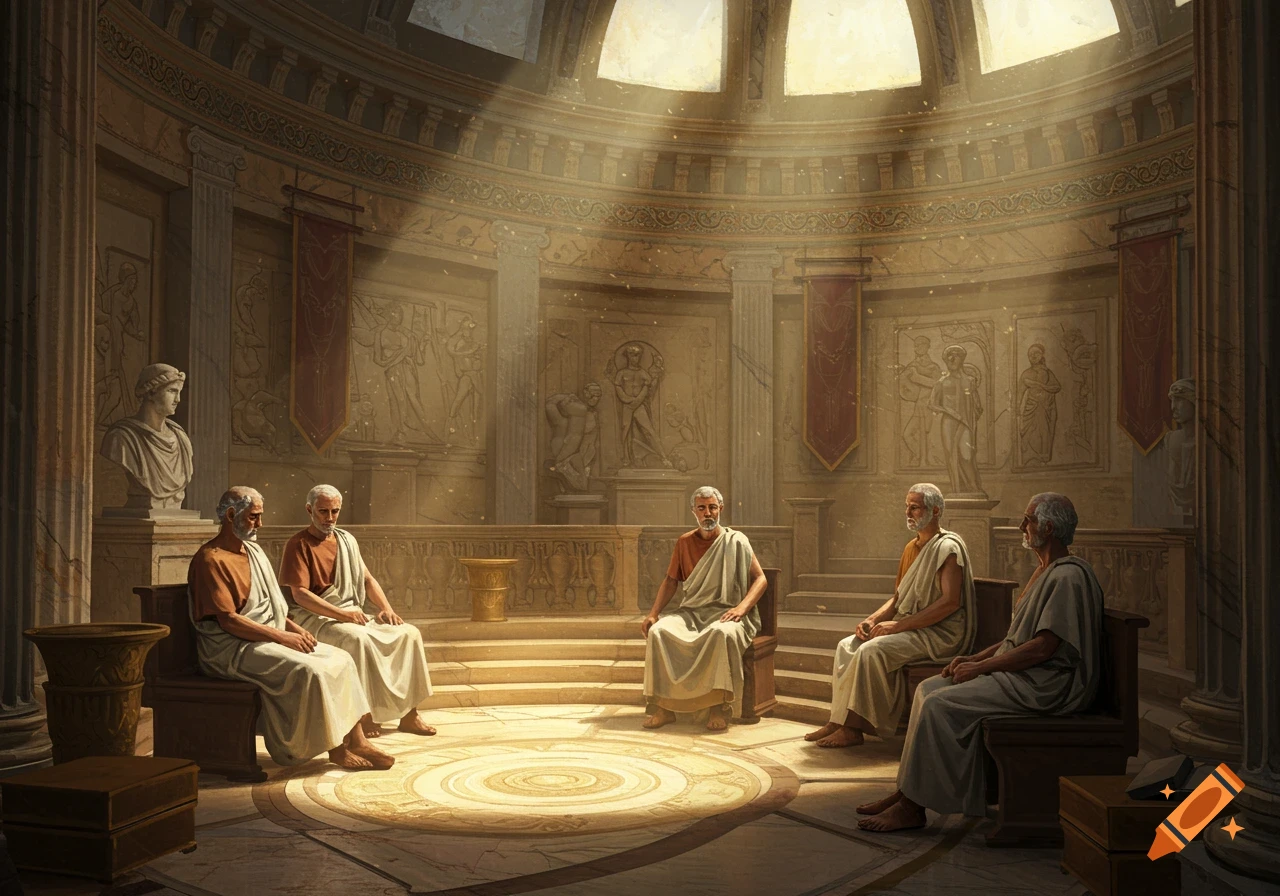
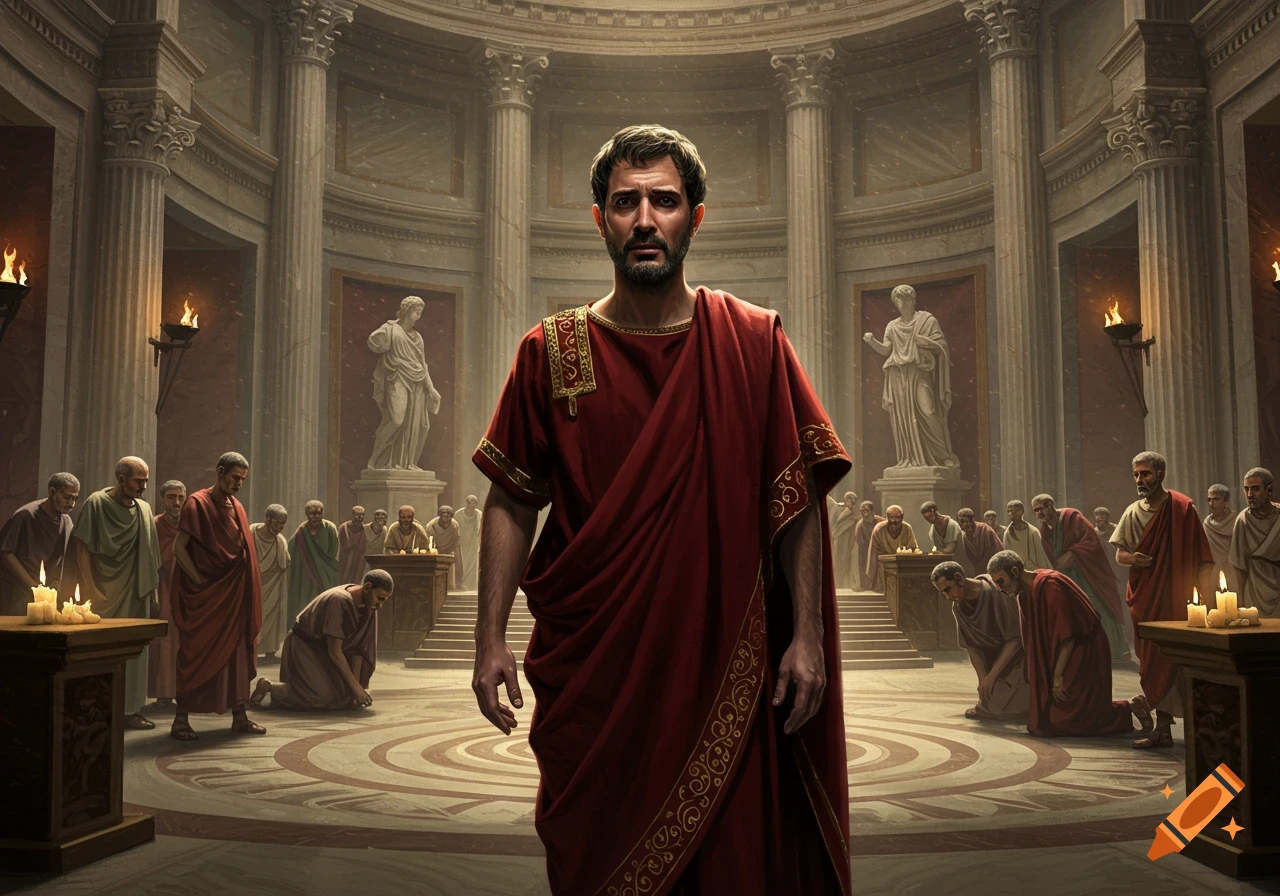
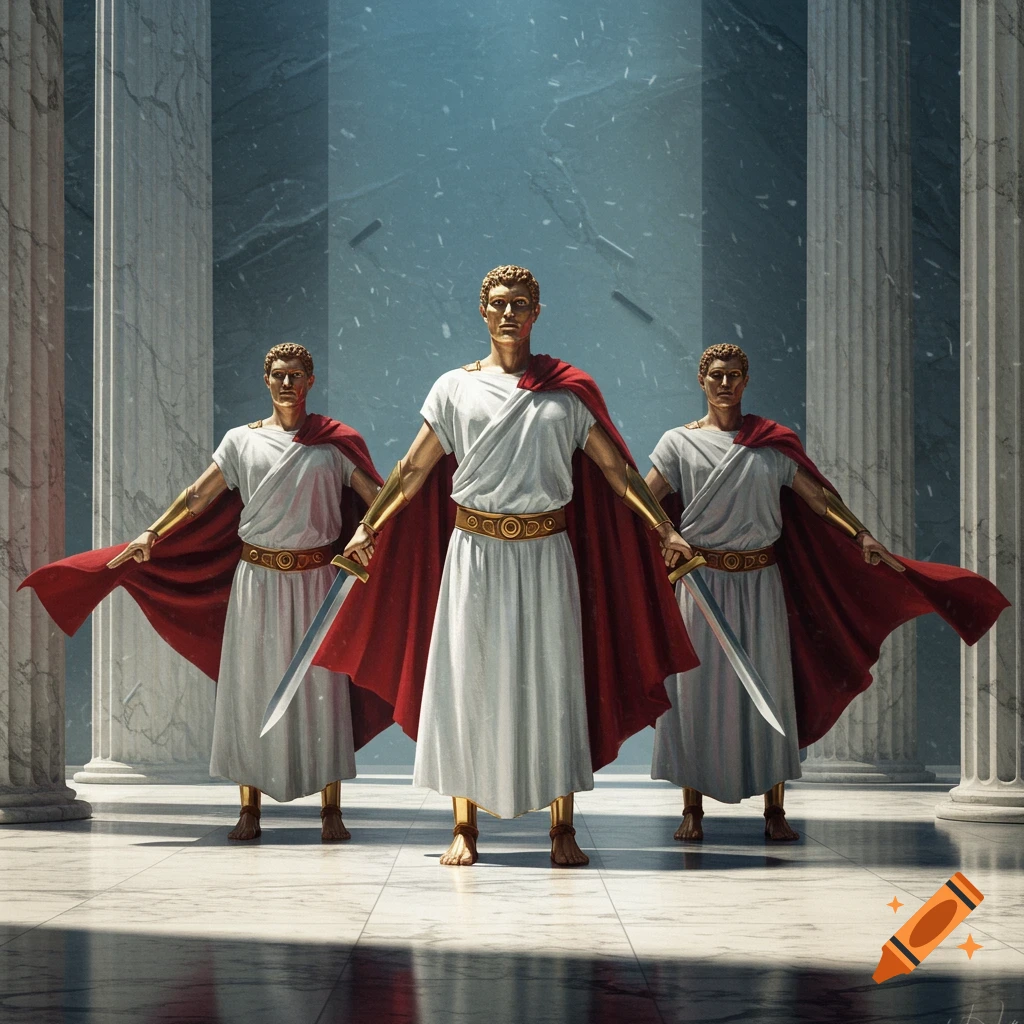
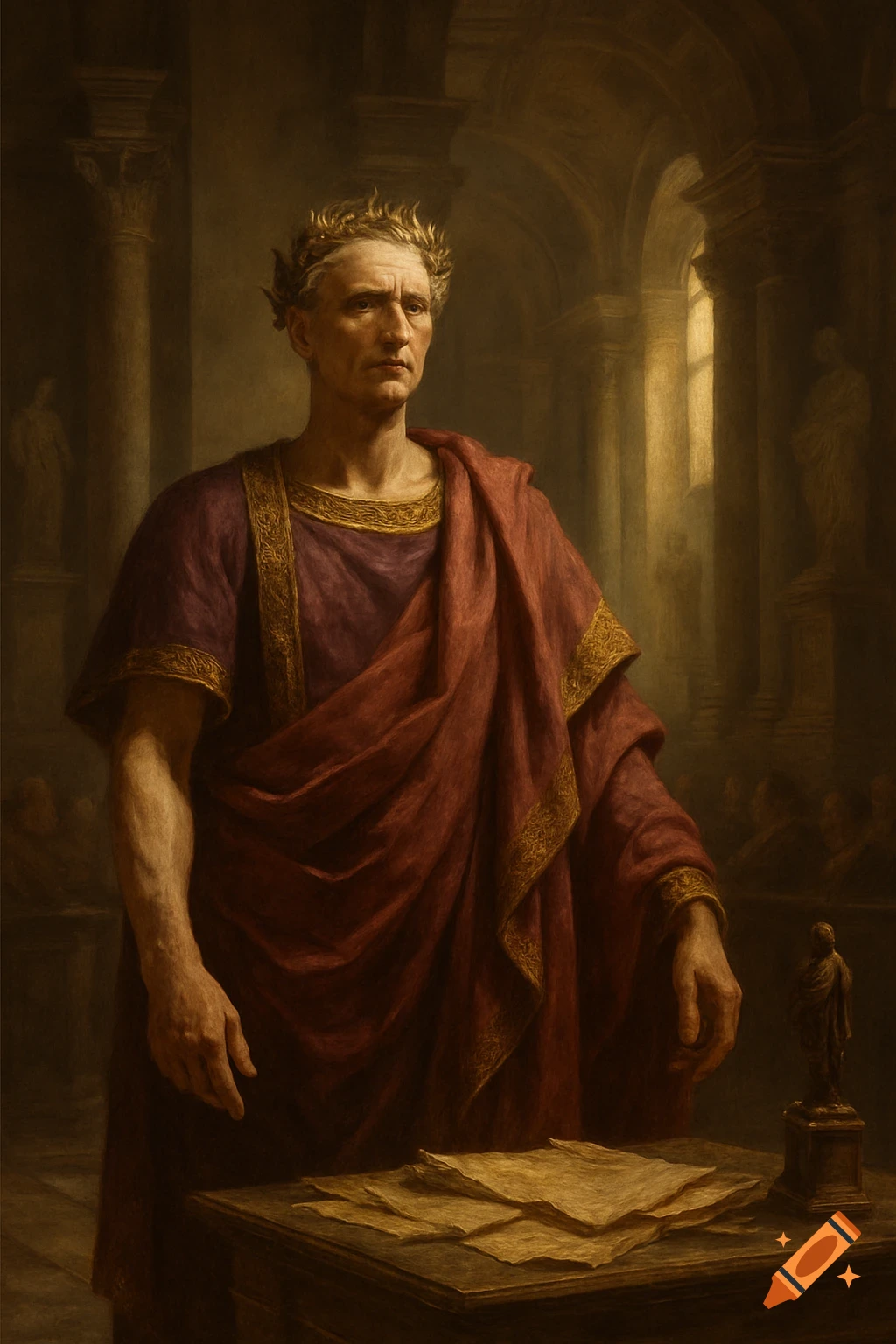
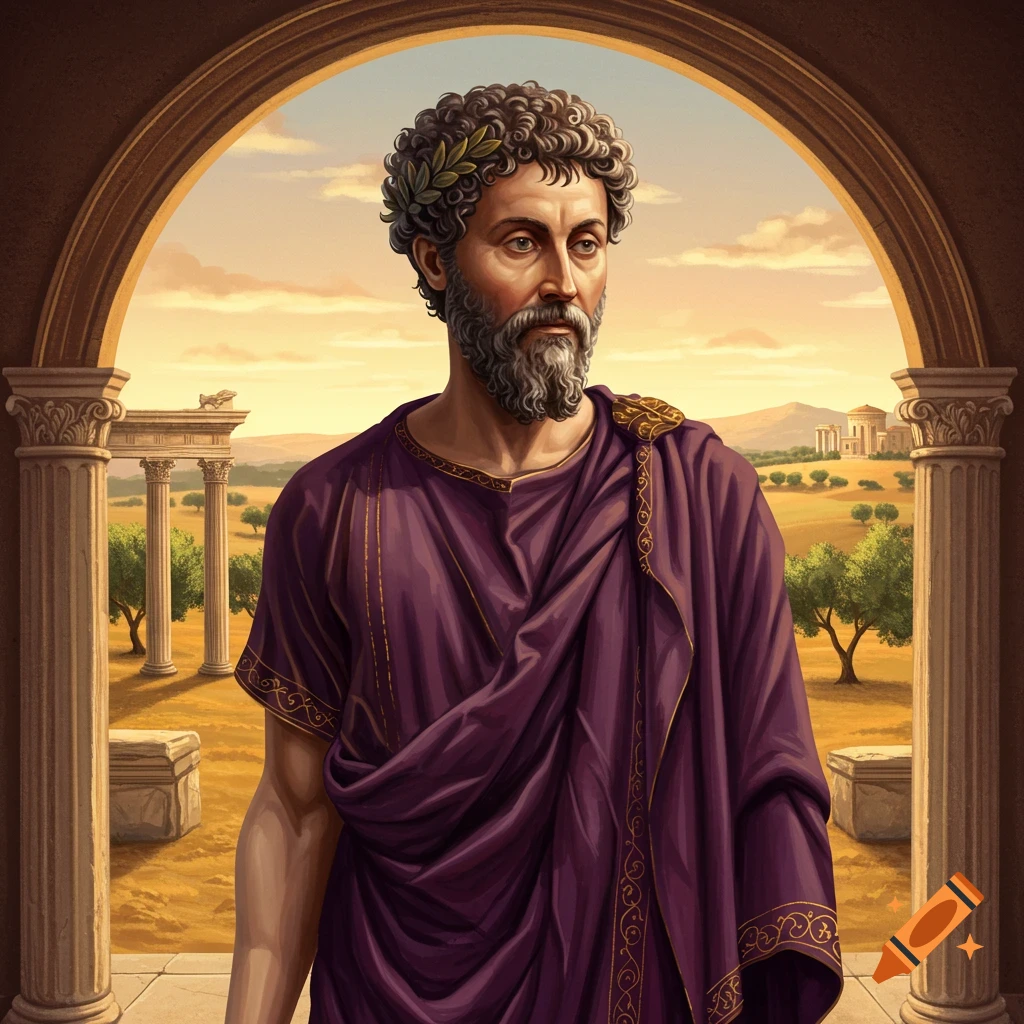
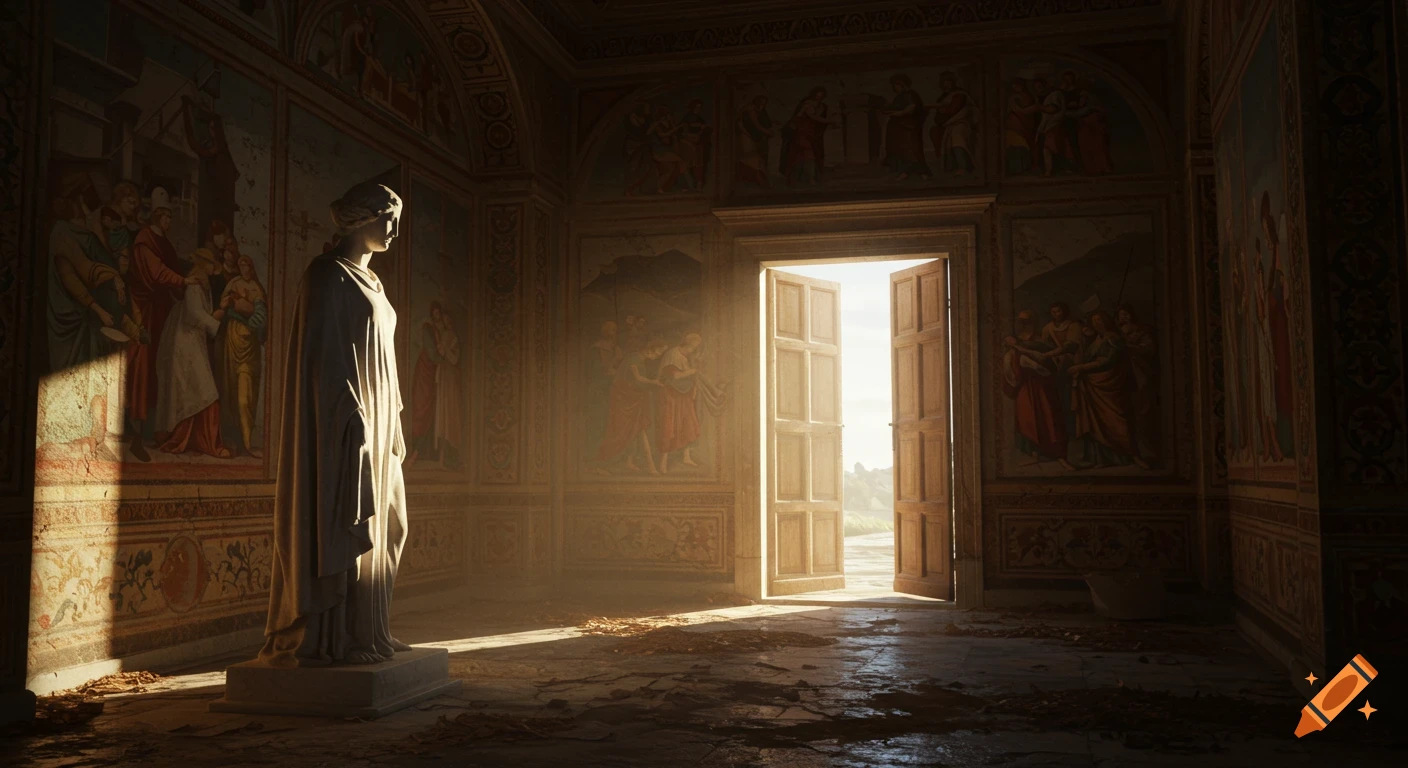
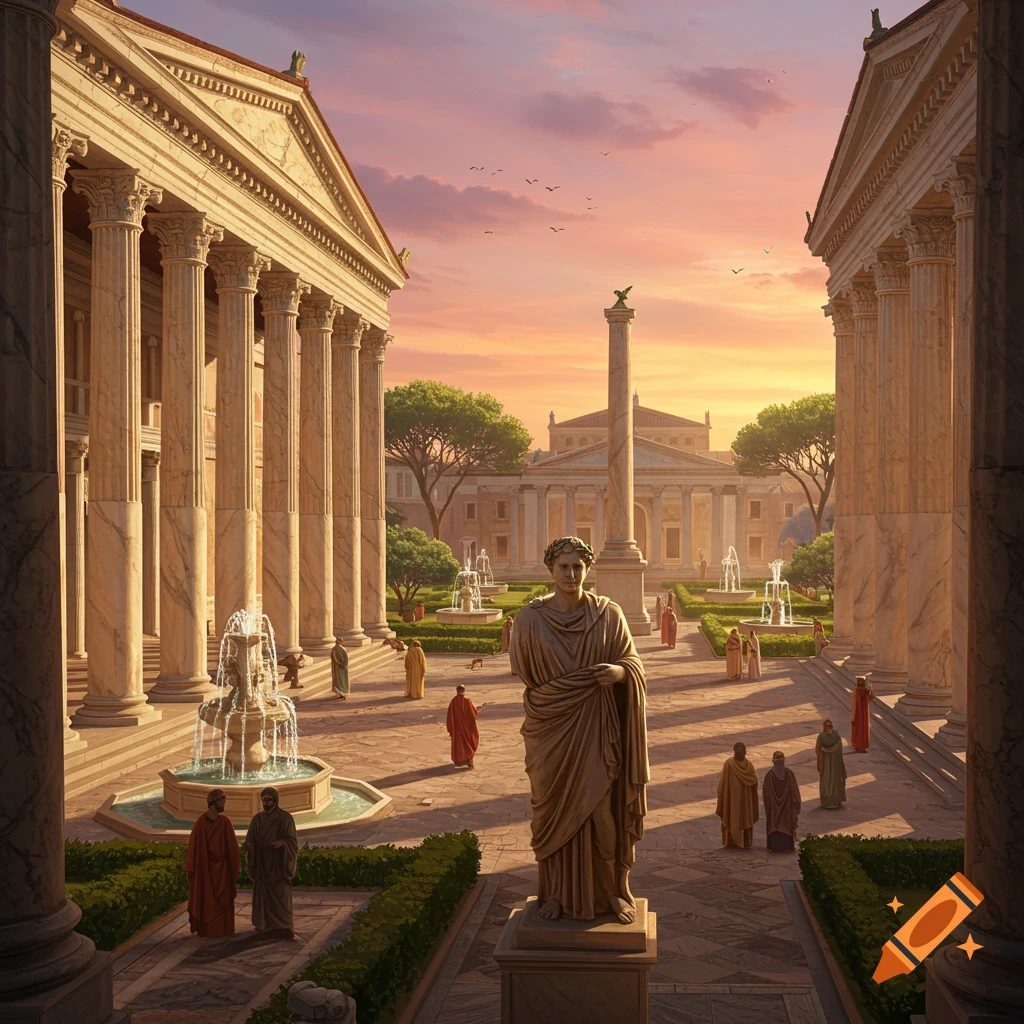
Roman figures in togas in a large temple, with blood on the floor.
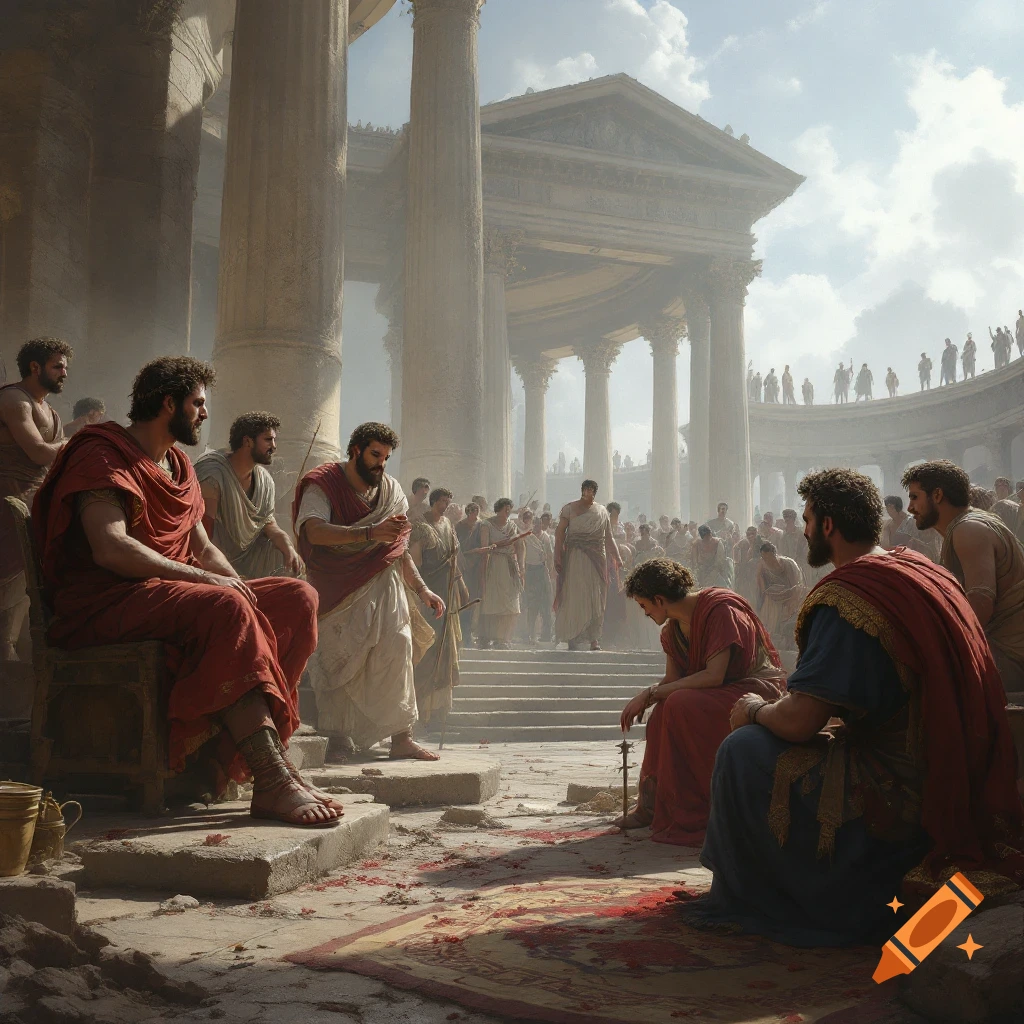
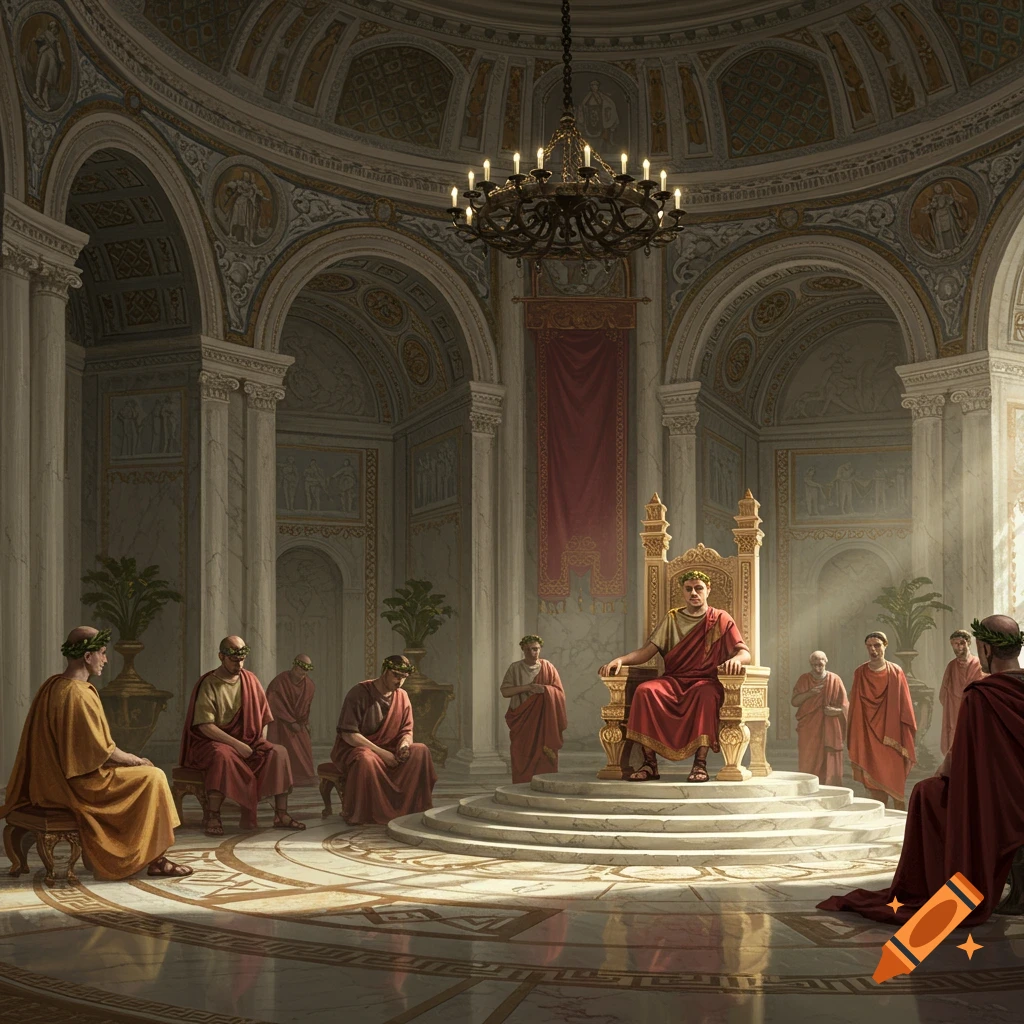
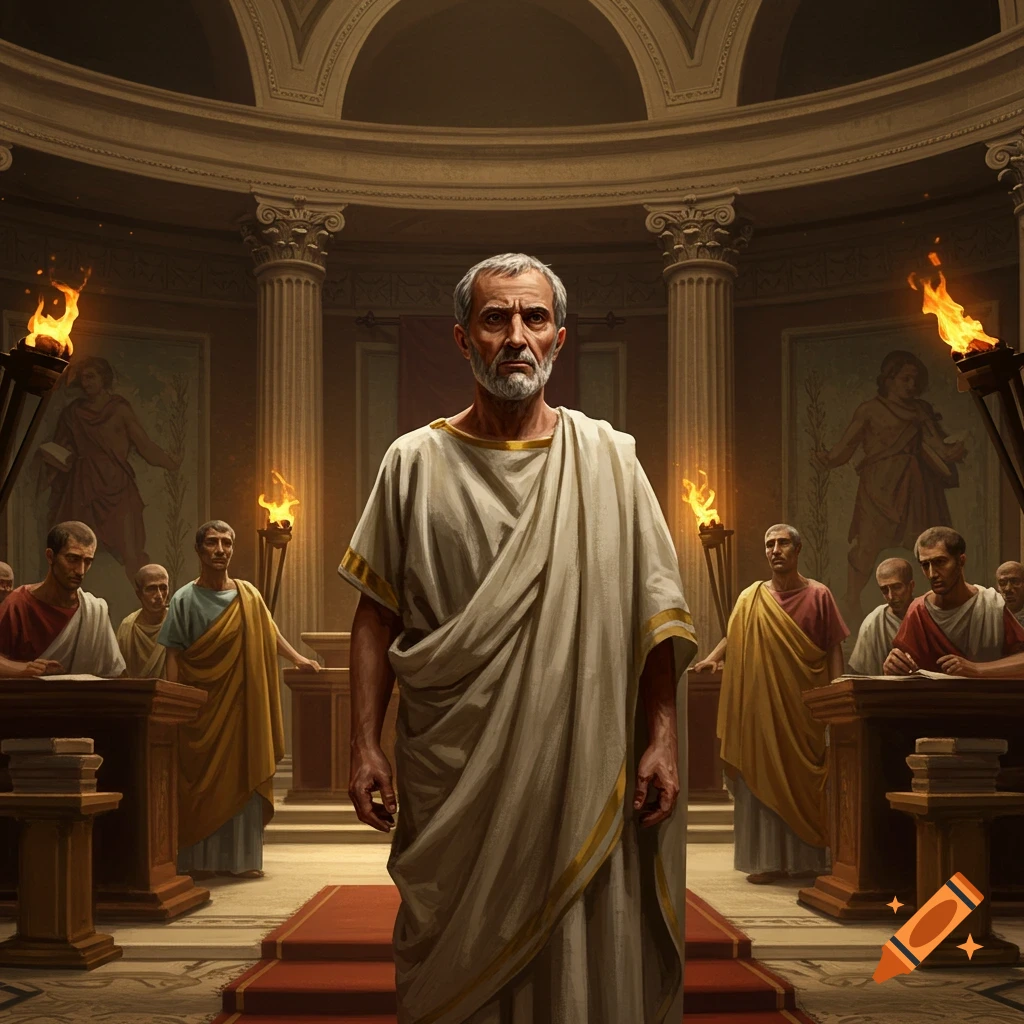
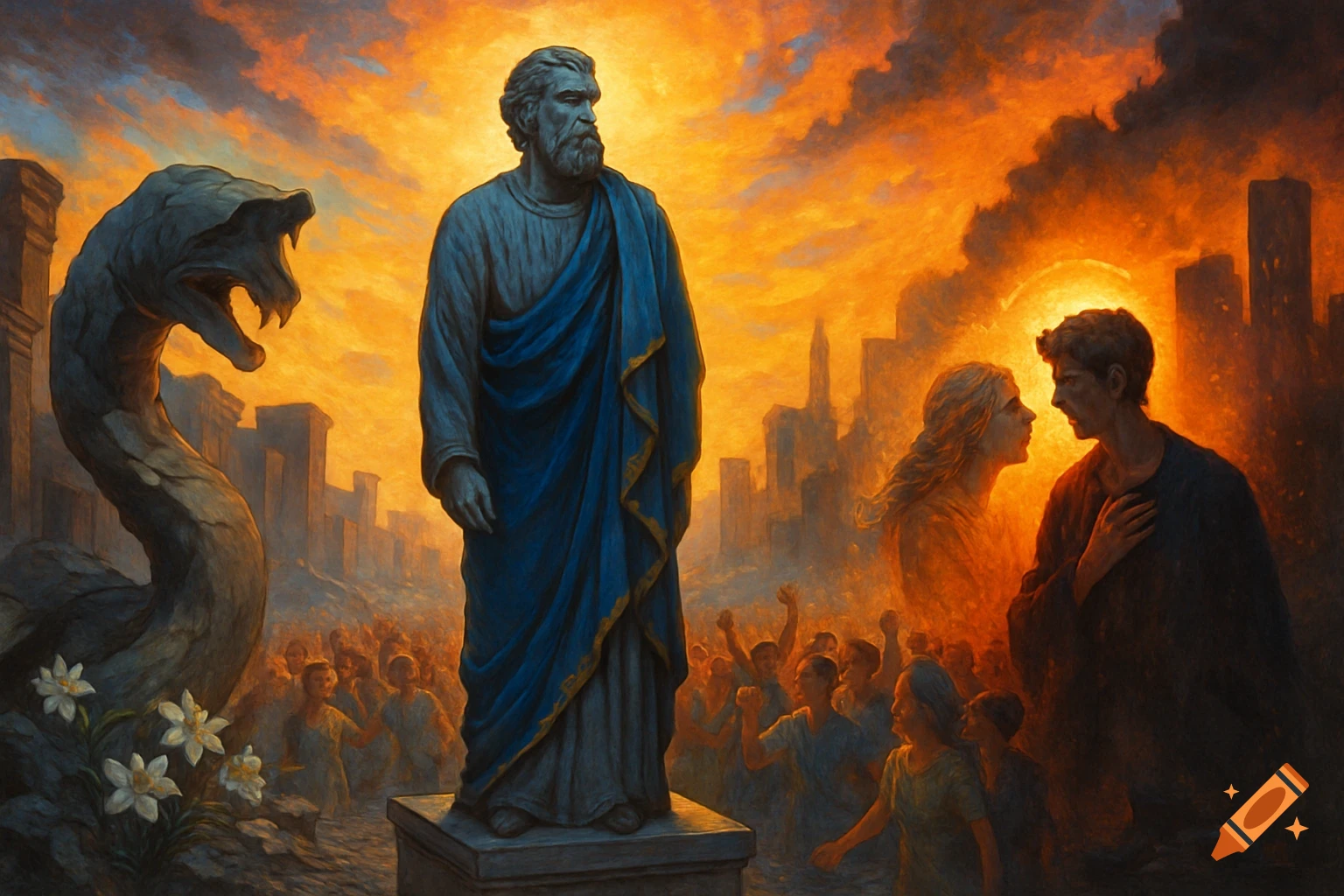
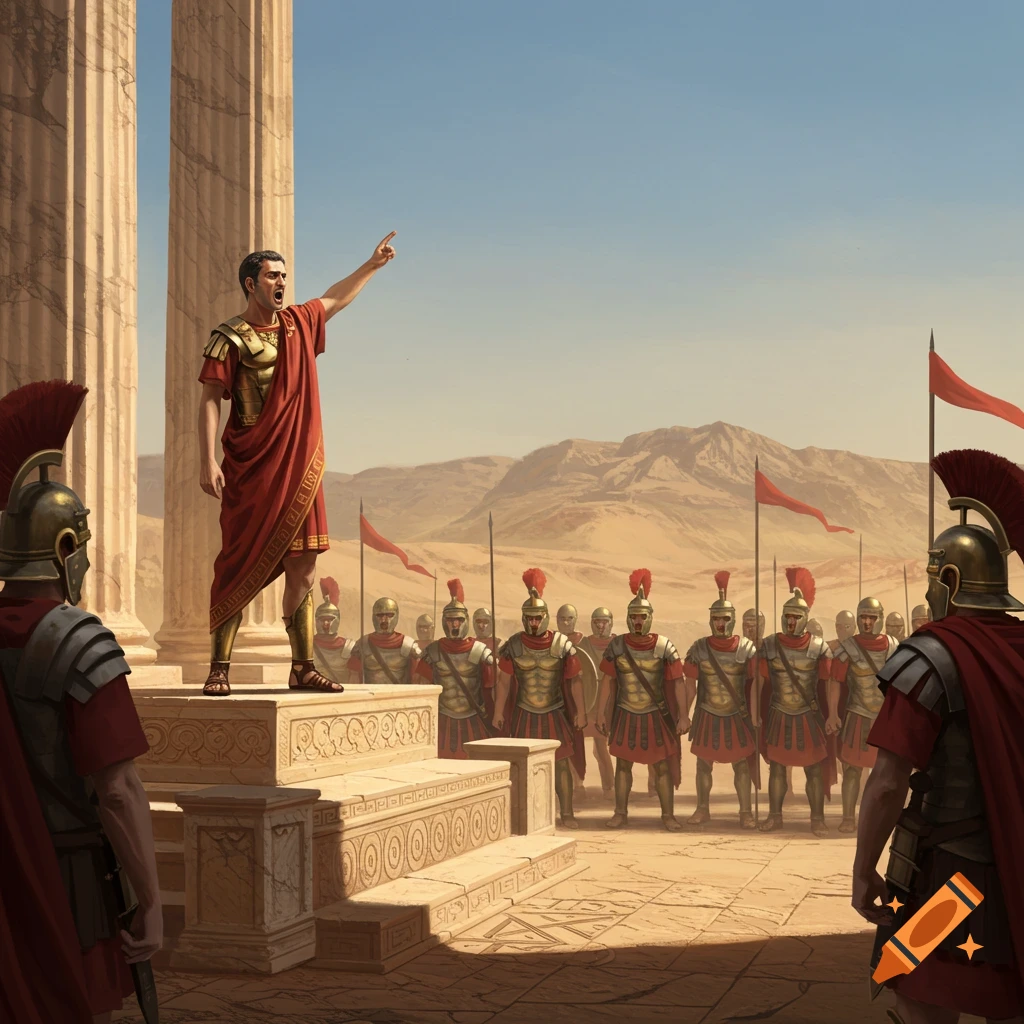
The Triumvirs’ Power Struggles: Octavius, Mark Antony, and Lepidus form the ruling Triumvirate after Caesar's death. They begin by discussing who should be killed in order to secure their power. Over 100 senators, including political rivals, are put to death. Mark Antony dismisses Lepidus as a weak, puppet-like figure, showing his lack of respect for him. Brutus and Cassius' Conflict: Brutus and Cassius are not getting along. Brutus accuses Cassius of being corrupt and of accepting bribes, especially in the case of Lucius Pella. Cassius, upset by the accusations, defends his actions, but Brutus remains angry. Eventually, Brutus forgives Cassius, and they reconcile. However, their friendship is strained. Brutus Learns of Portia’s Death: Brutus is informed that his wife, Portia, has died. Her death deeply affects him and contributes to his inner turmoil. Portia's death symbolizes the personal costs Brutus is suffering as a result of his political choices. The Triumvirs’ Purge: The Triumvirs have been executing their enemies, including a significant number of senators. This shows how ruthless their rule is becoming. The political landscape in Rome is shifting, and the conspirators' hopes for restoring the Republic seem increasingly distant. Caesar’s Ghost: Brutus is visited by the ghost of Caesar, who tells him that they will meet again at the Battle of Philippi. This supernatural encounter highlights Brutus' guilt and foreshadows the doom awaiting him and his army. See more