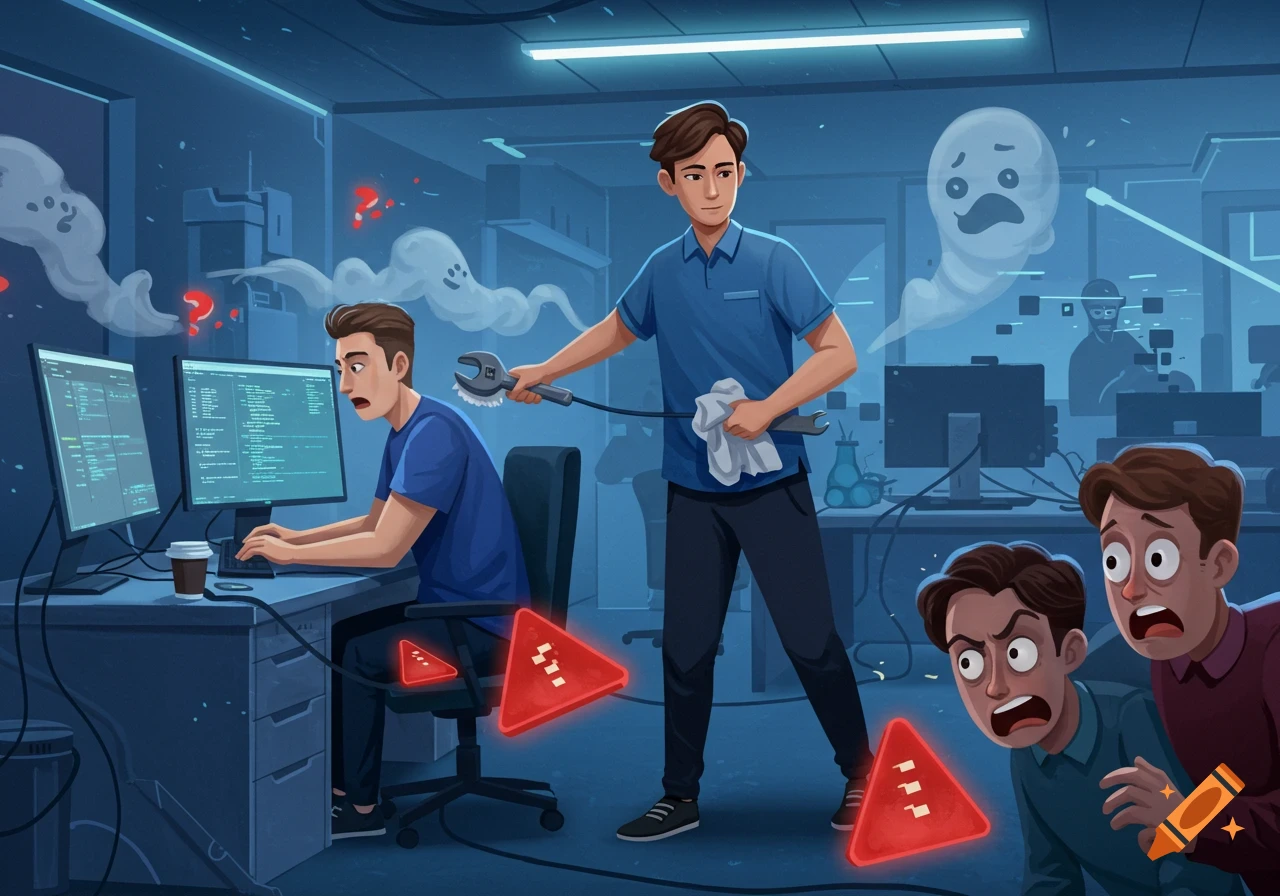
A cartoon illustration of a young person in blue armor and glasses, surrounded by symbols of cyber threats like phishing emails and warning signs, against a blue, tech-themed background with shadowy figures.
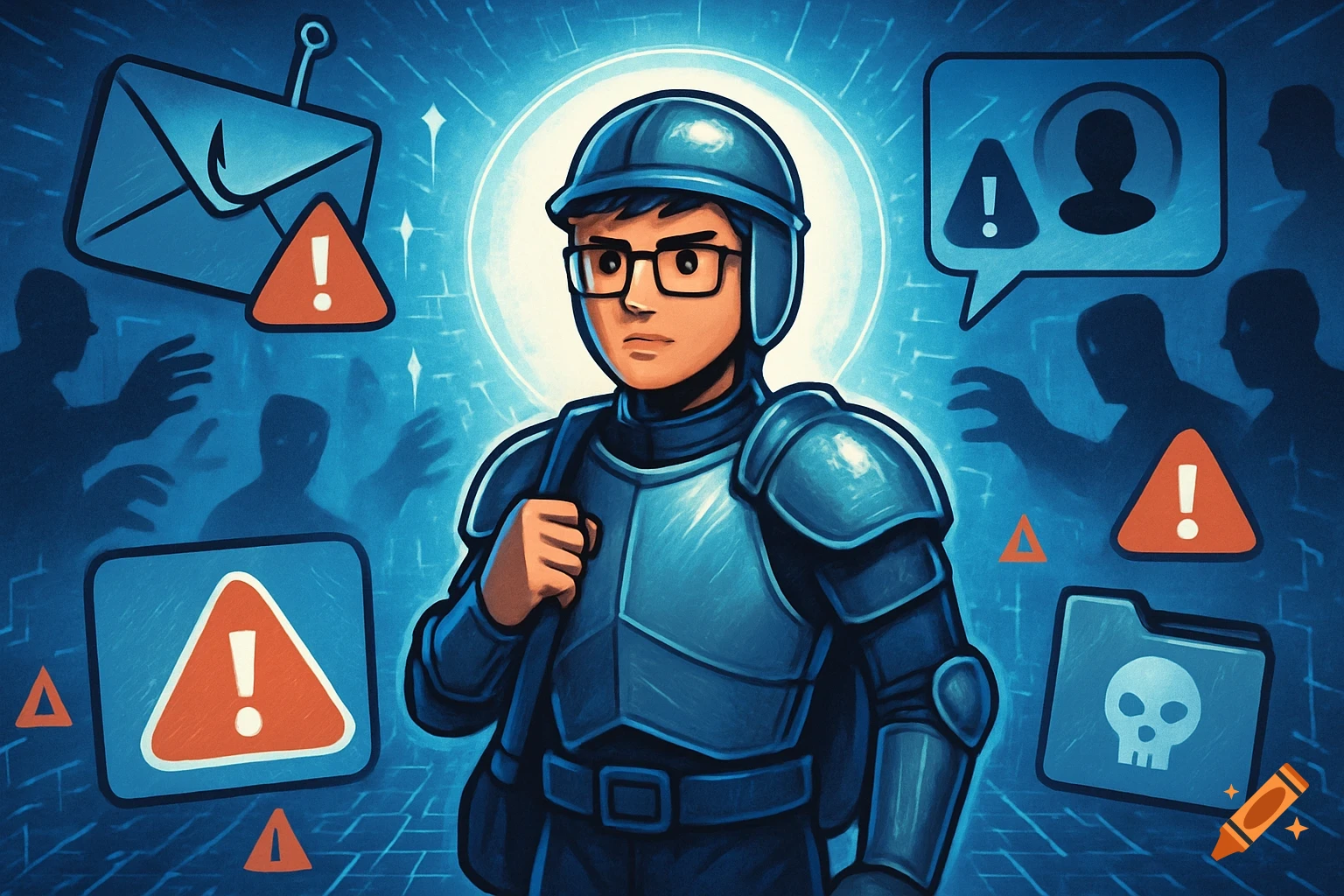
Dear Student's, I hope this email finds you well! As we continue to navigate the digital world, it's important to stay vigilant against the ever-evolving threats to our online security. One of the most common and dangerous types of cyberattacks that target students like yourself is social engineering. Social engineering is a tactic used by cybercriminals to manipulate individuals into divulging confidential information, clicking on malicious links, or taking harmful actions. These attacks often come in the form of phishing emails, fake phone calls, or deceptive messages on social media platforms. While technology offers great security tools, social engineering relies on human error, making awareness and caution your best defence. Here are some simple but effective tips to protect yourself: 1. Be Sceptical of Unsolicited Requests: Whether it’s an email, a phone call, or a message on social media, always question the legitimacy of unexpected communications. If someone is asking for personal information or urging you to take immediate action, verify the request through trusted channels before responding. 2. Verify Suspicious Messages: If you receive an email or text that seems suspicious—especially one that asks for sensitive details or includes links—don’t click on anything. Instead, check the sender’s address and cross-check any information provided. If in doubt, contact the sender directly (using official contact details) to confirm the message’s authenticity. 3. Use Strong, See more