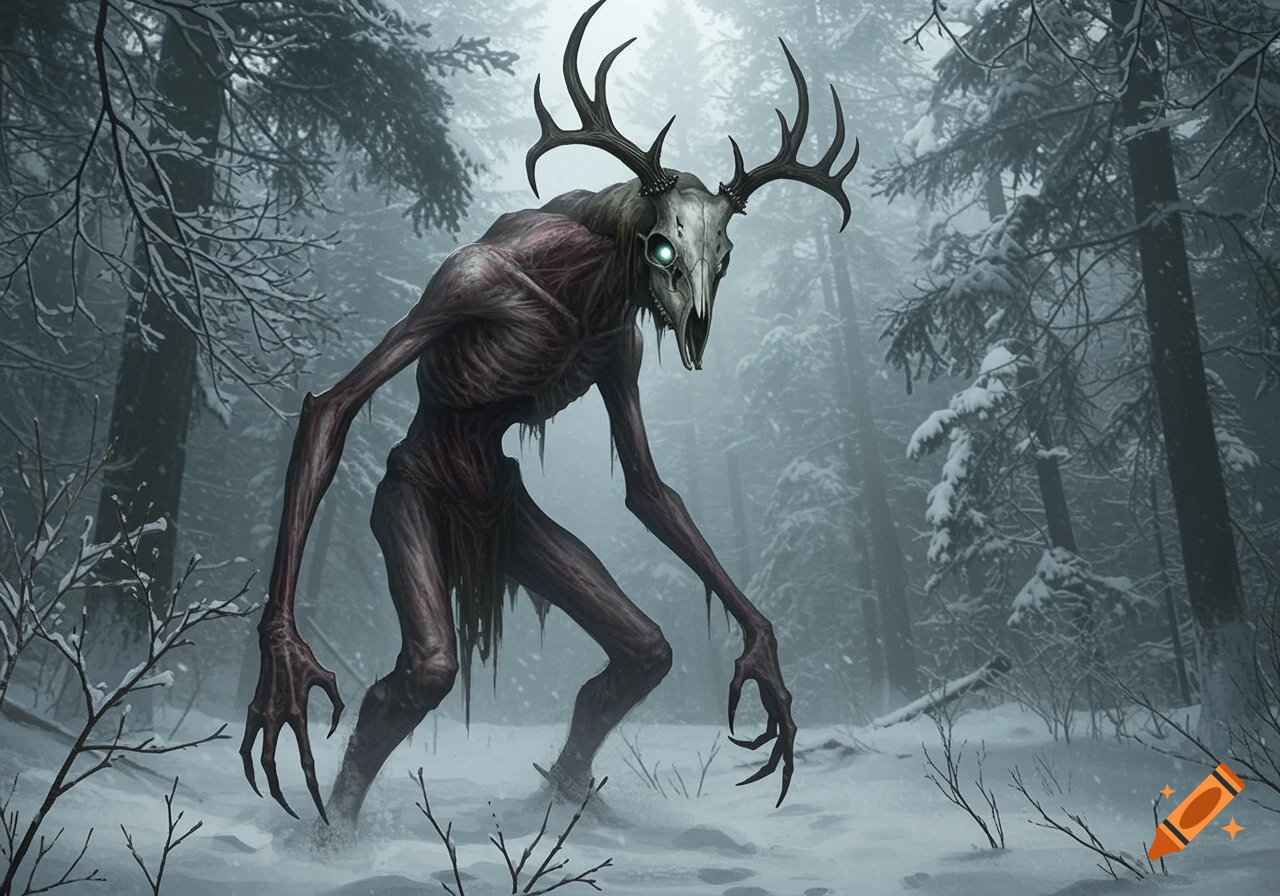
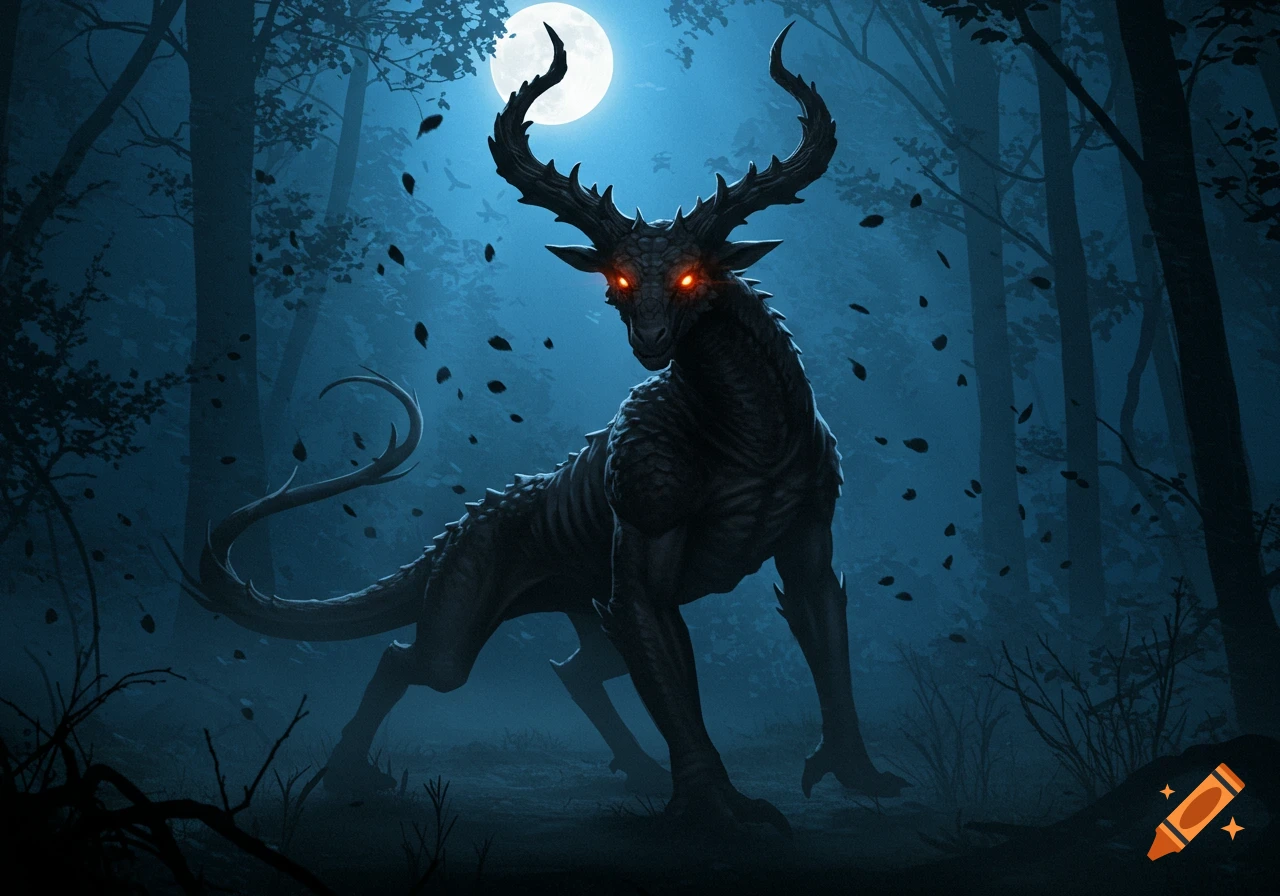
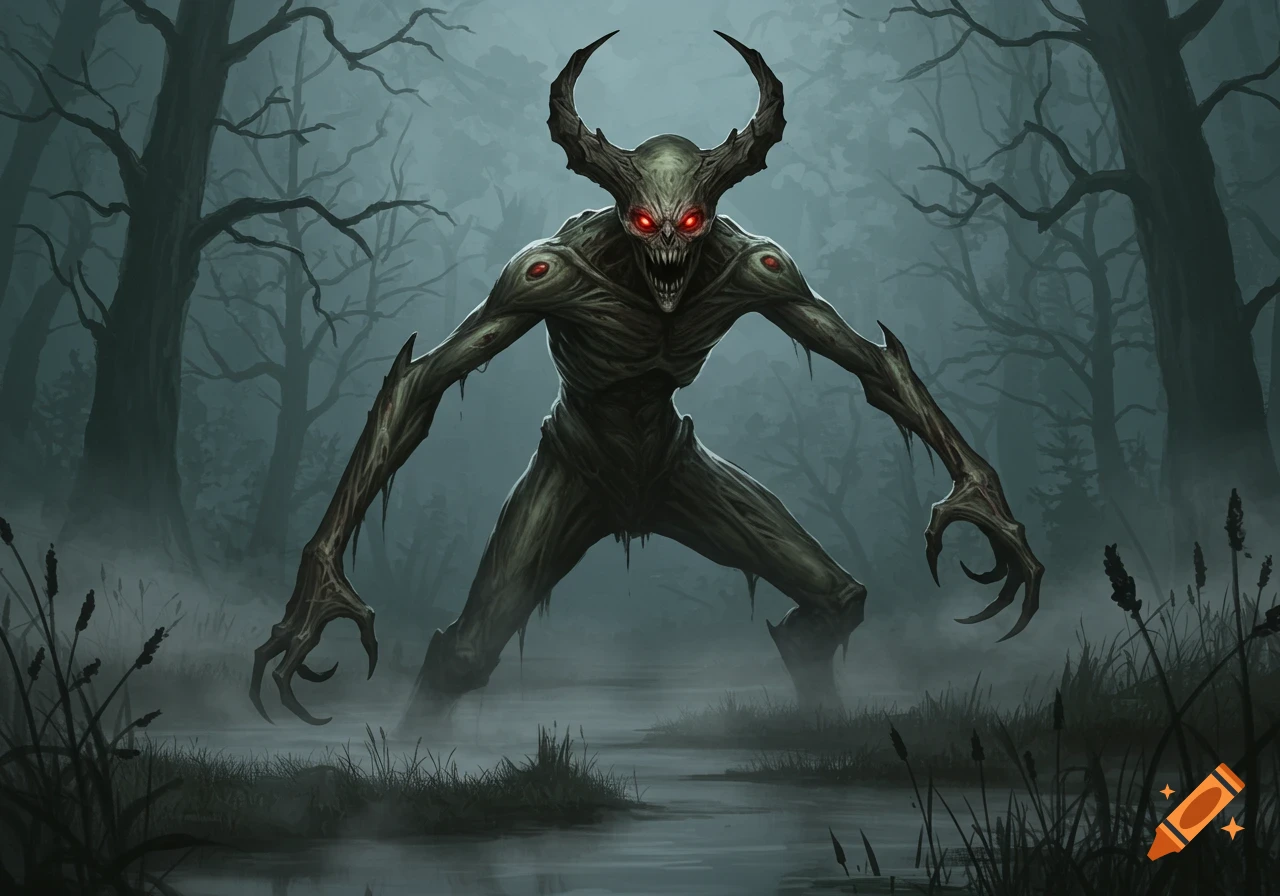
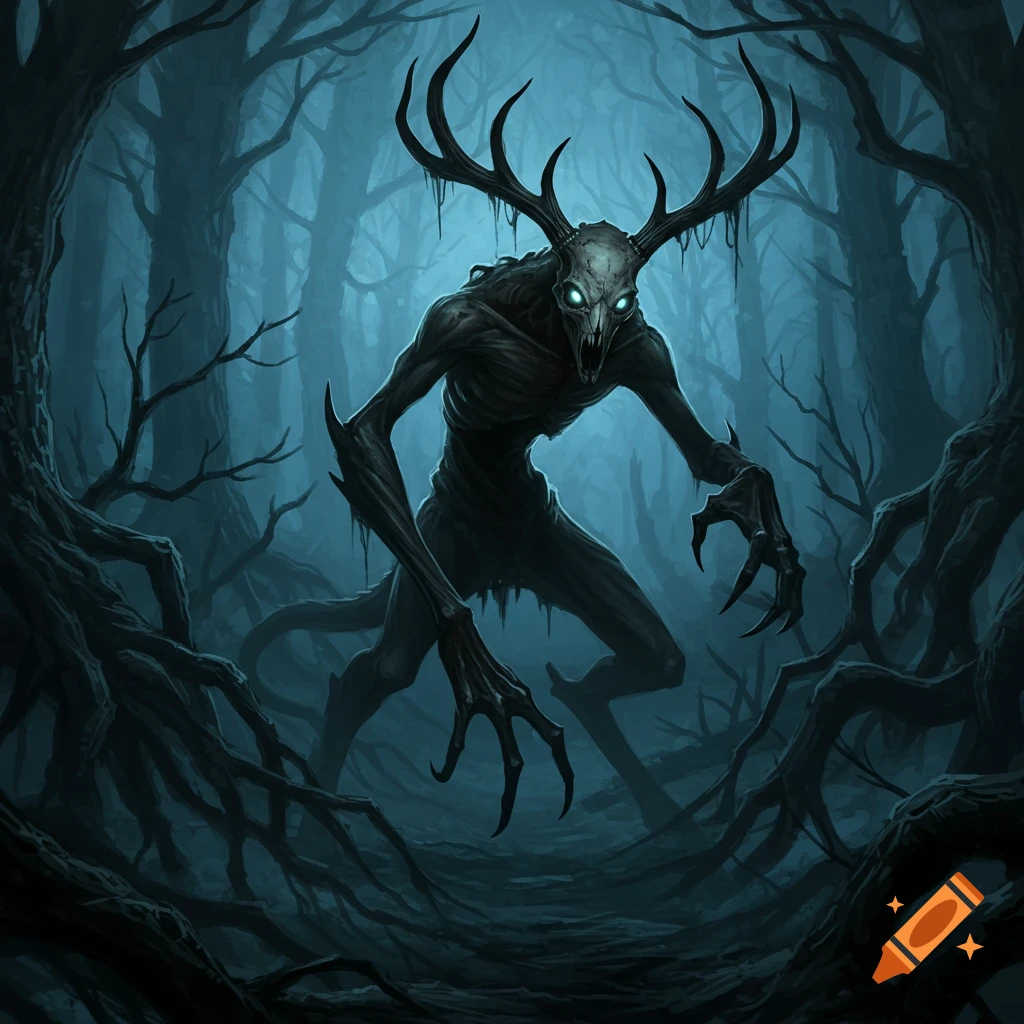
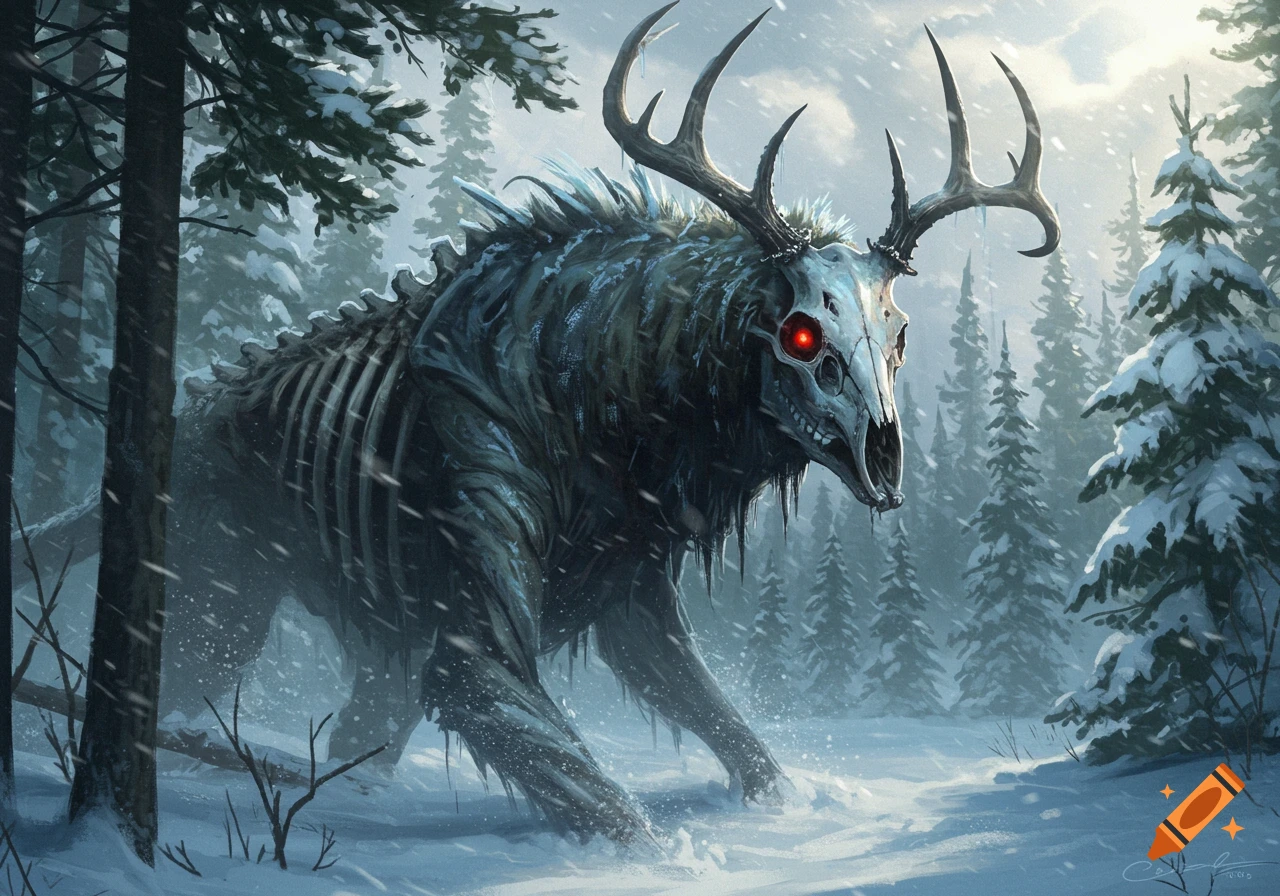
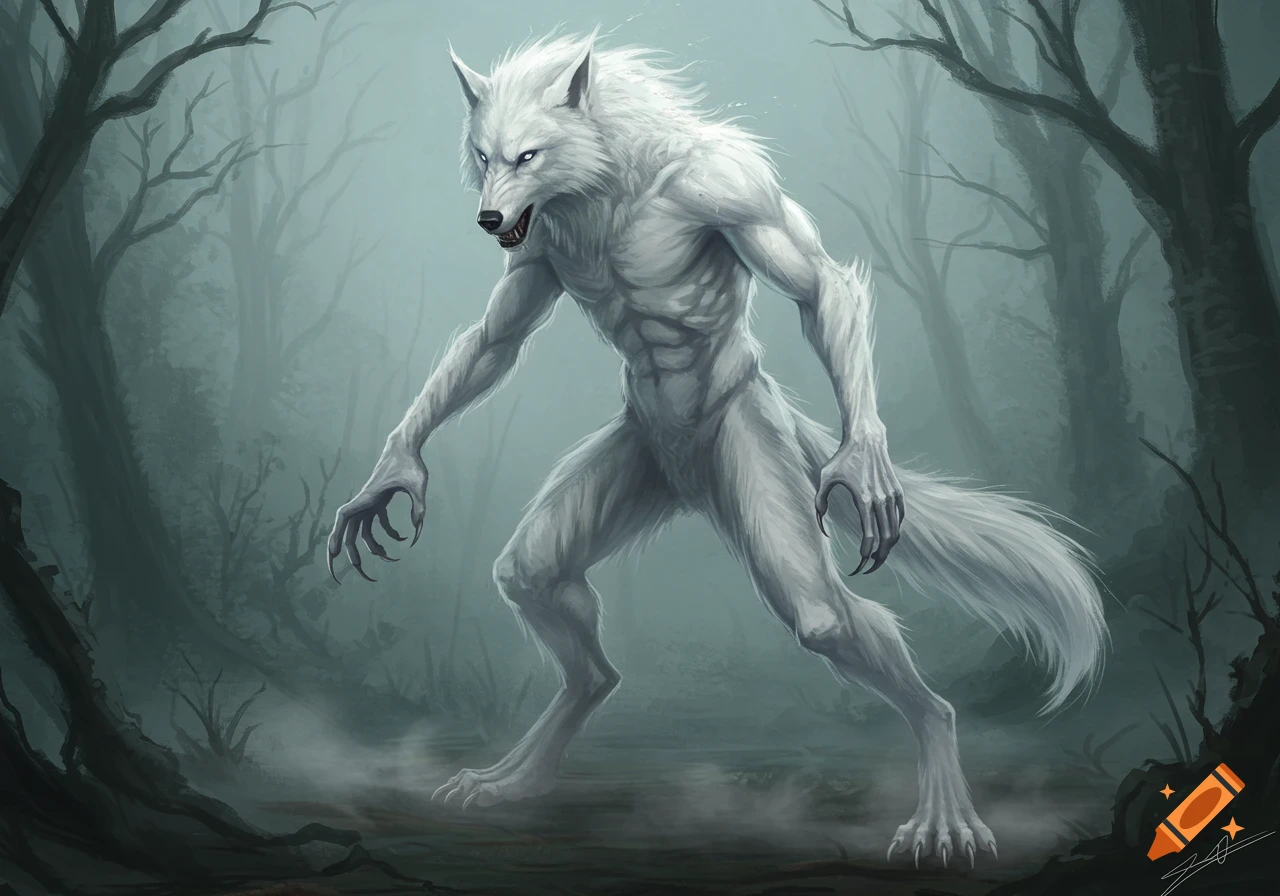
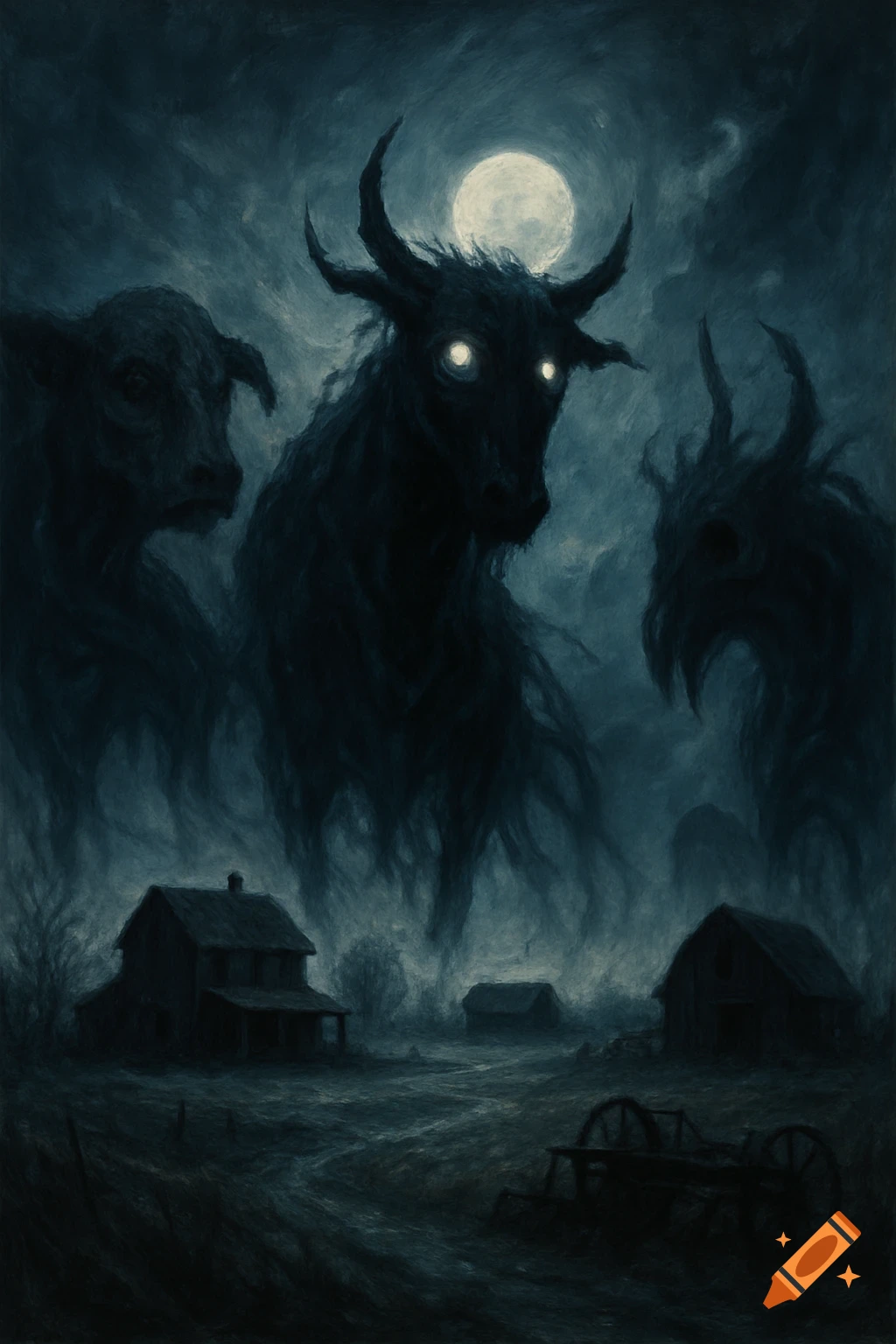
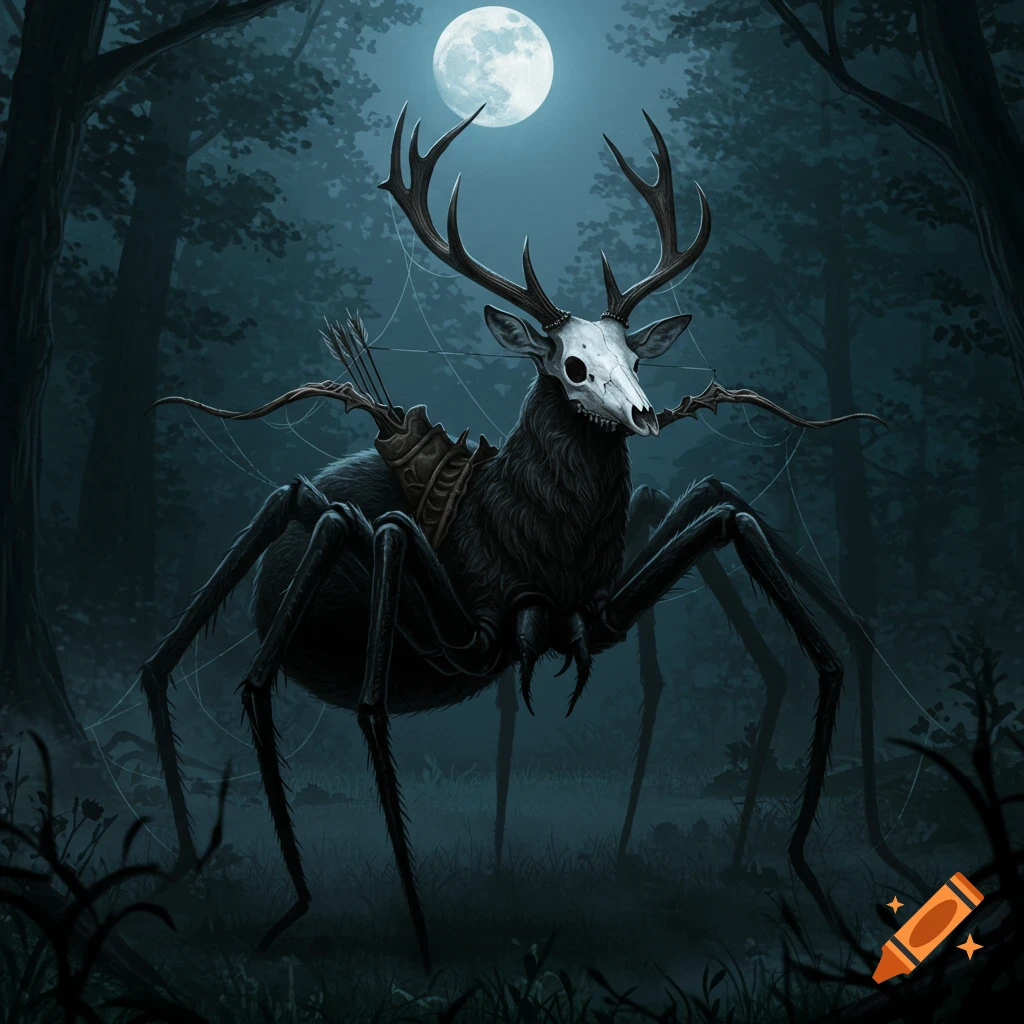
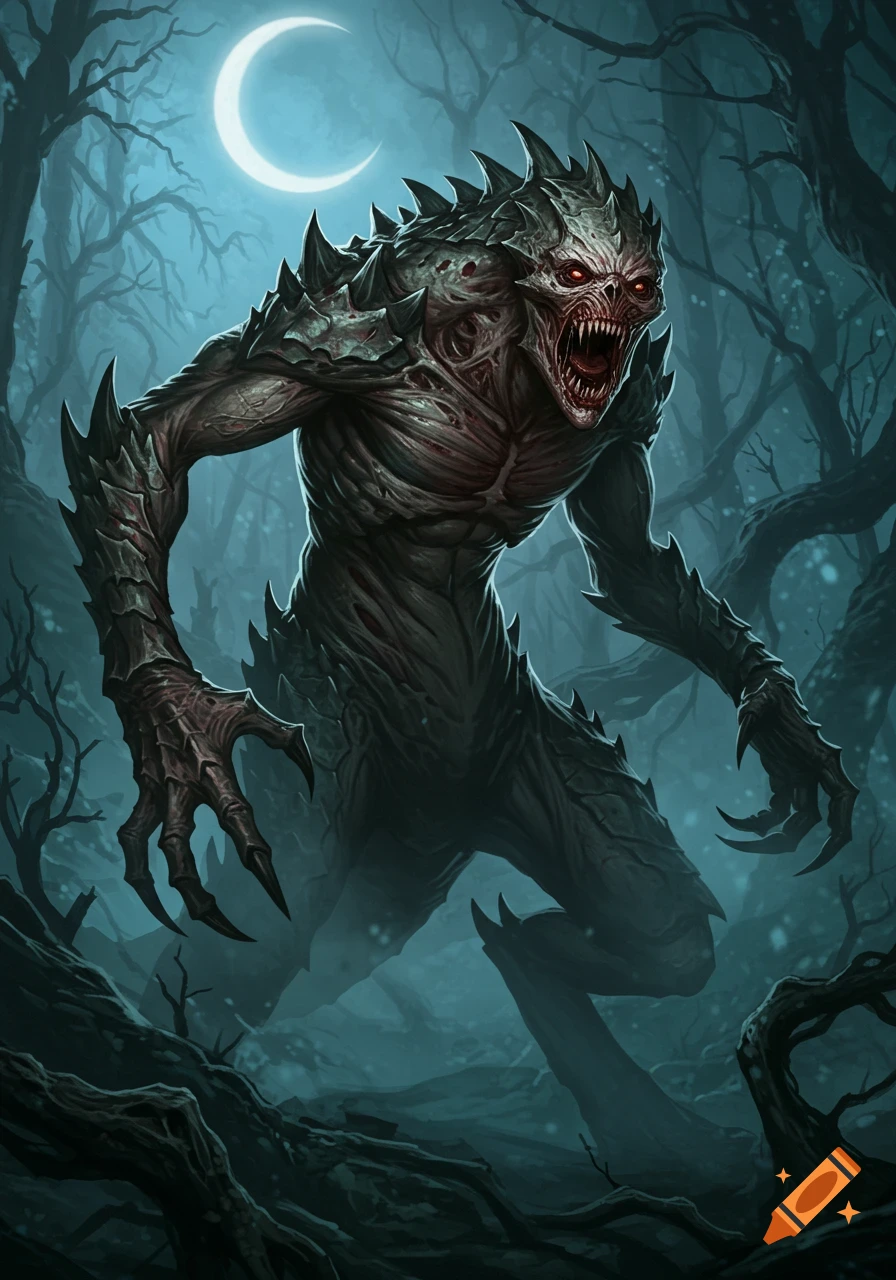
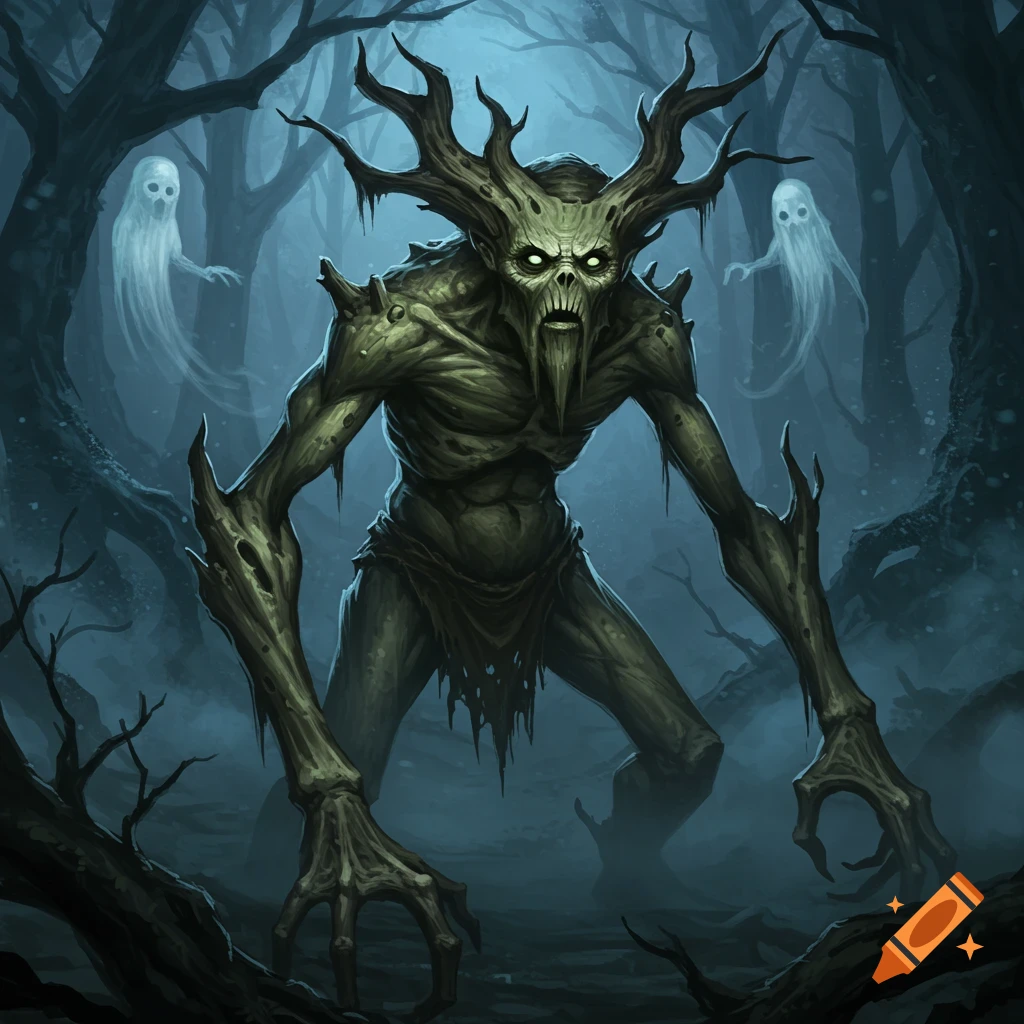
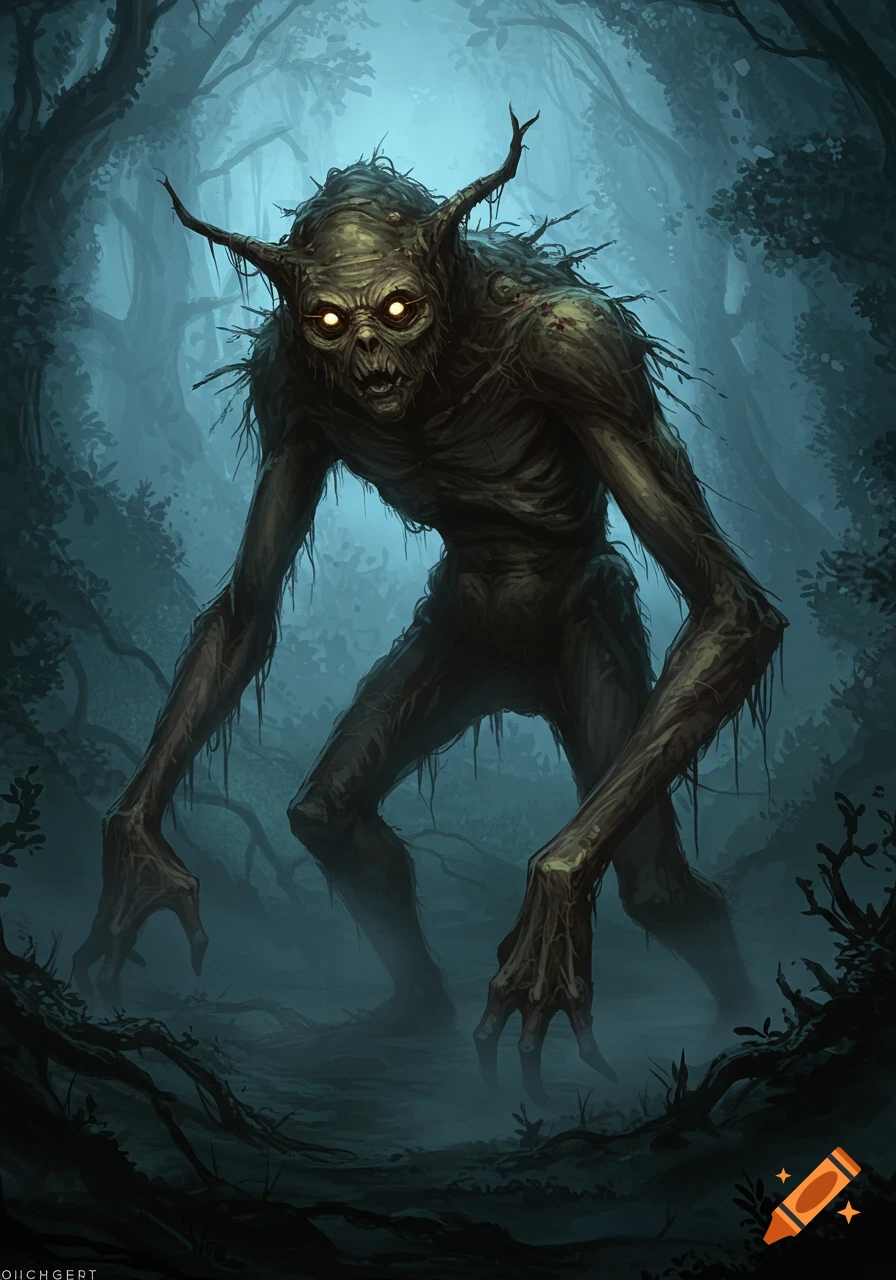
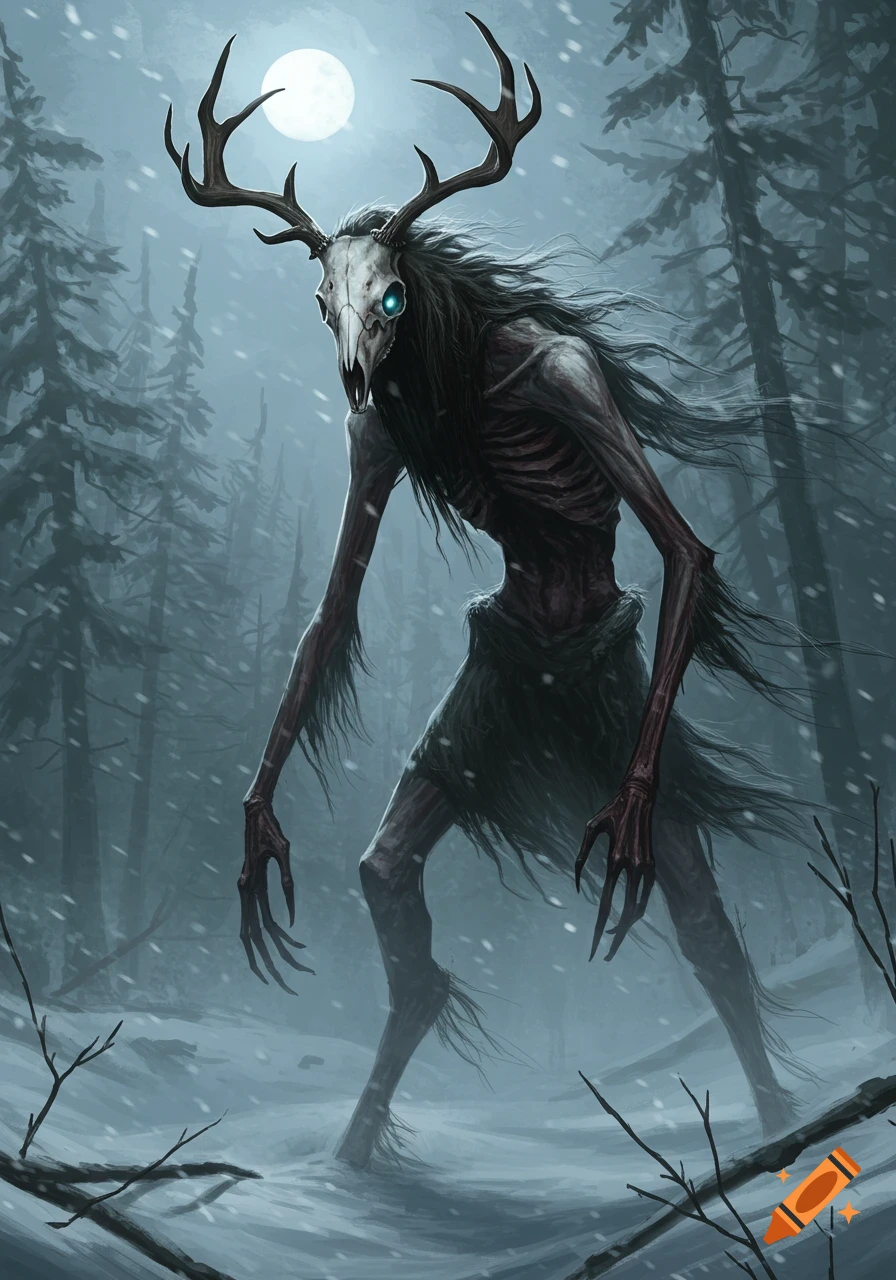
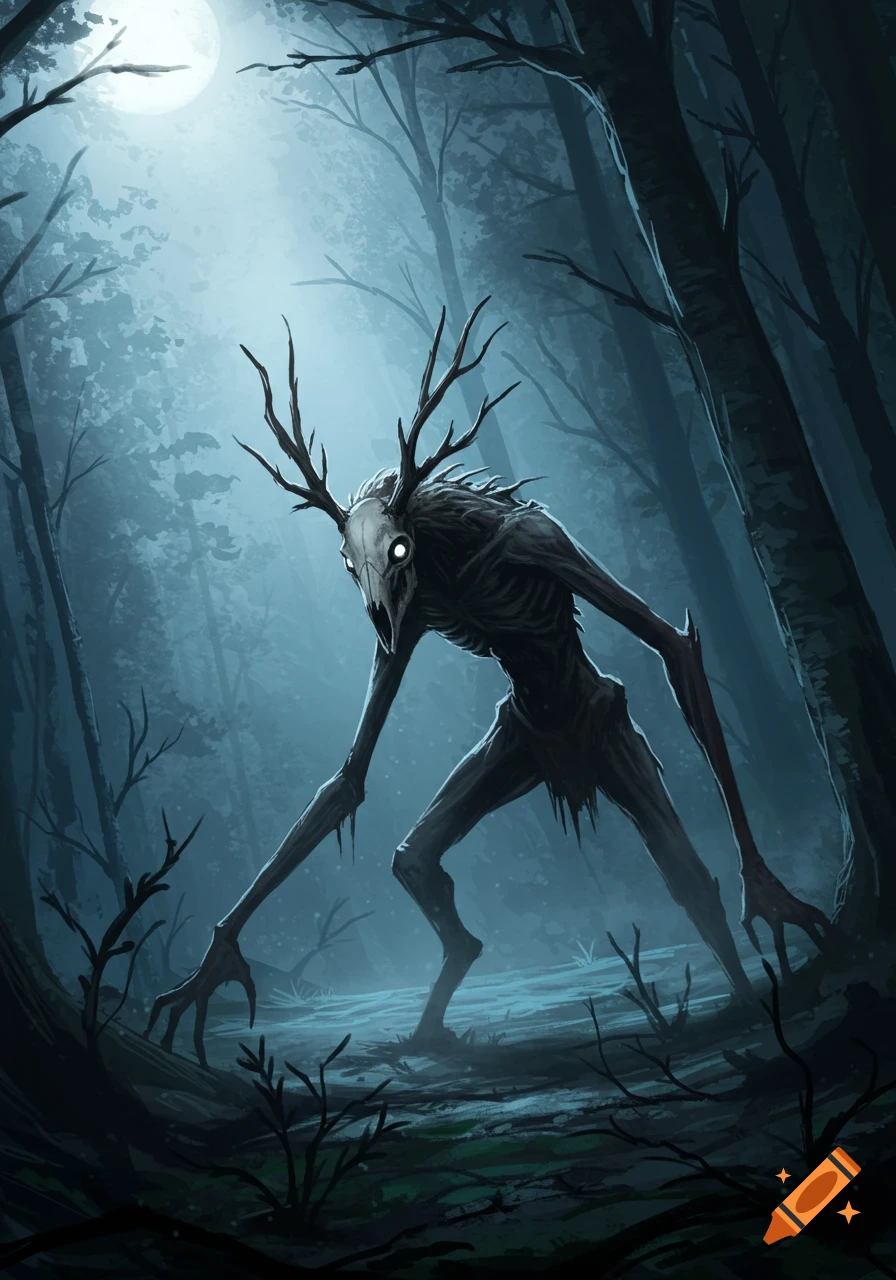
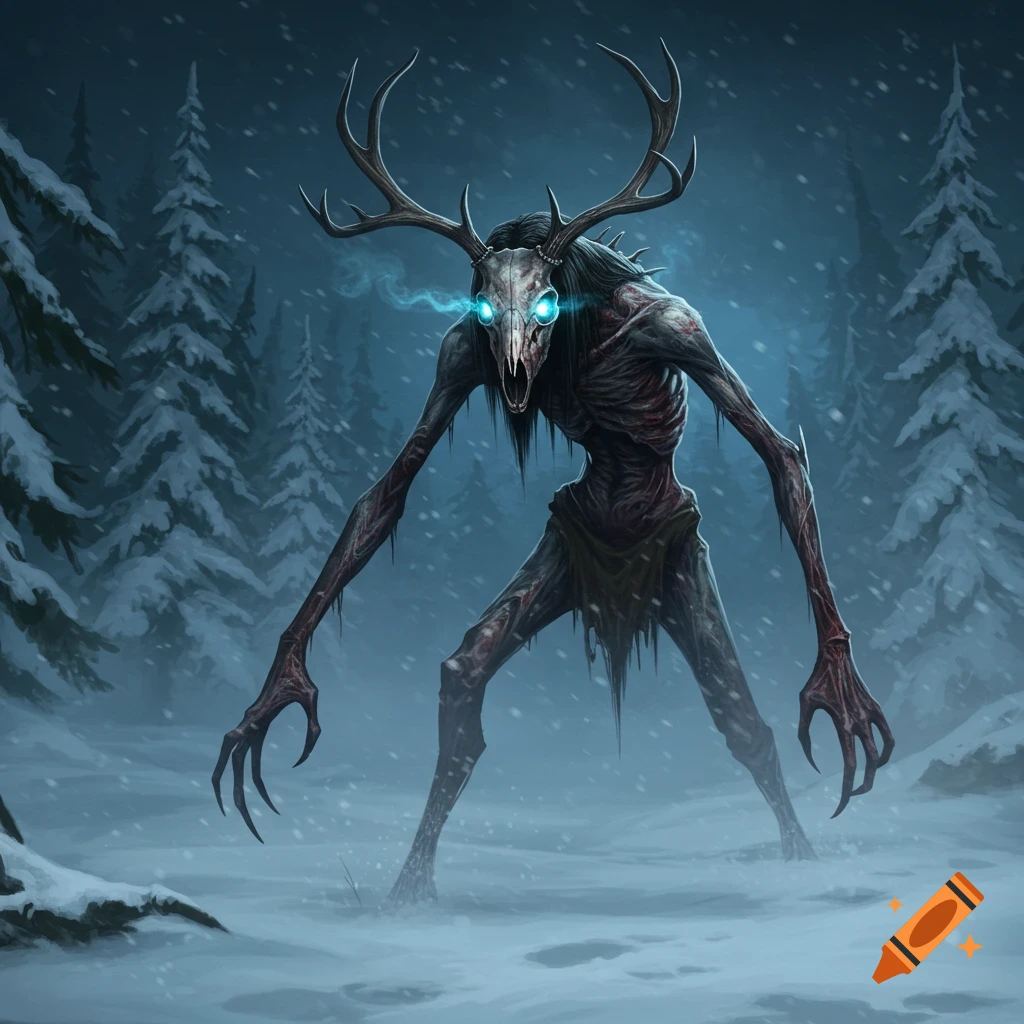
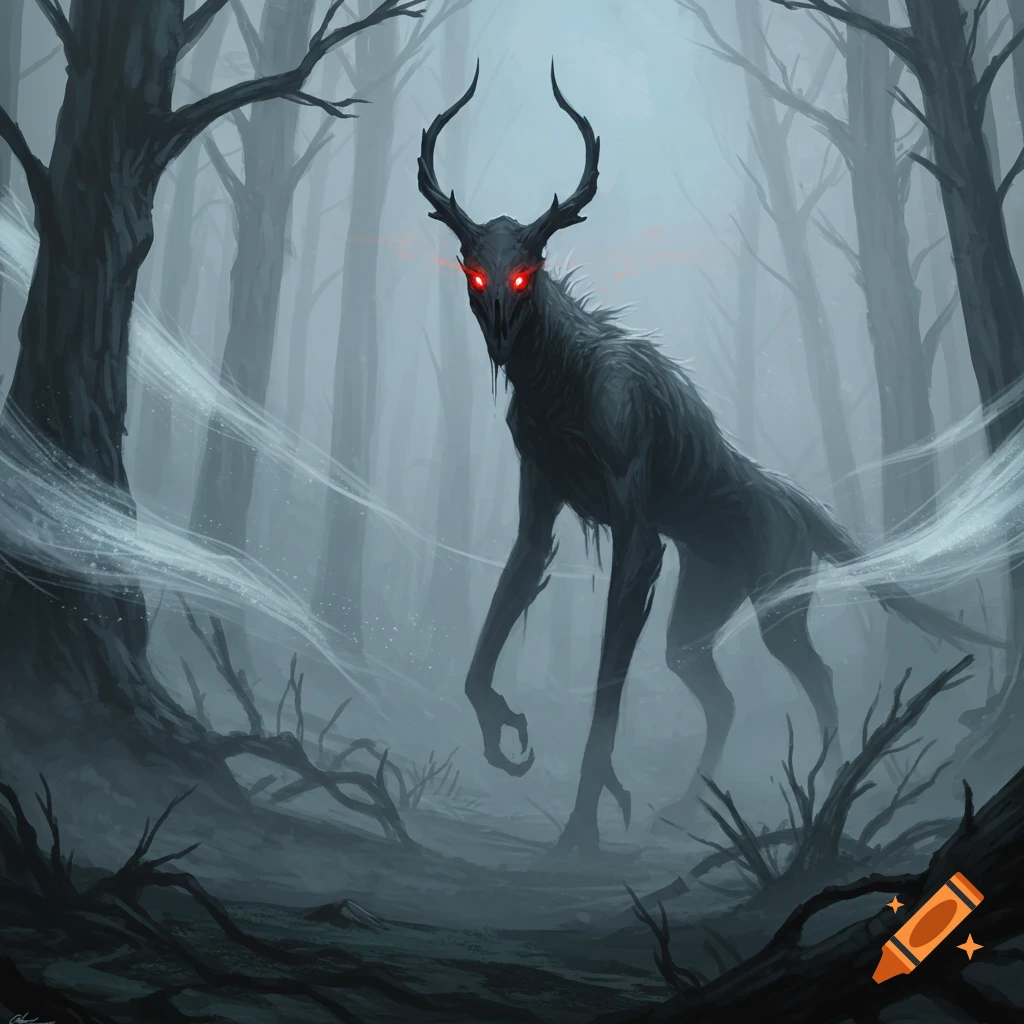
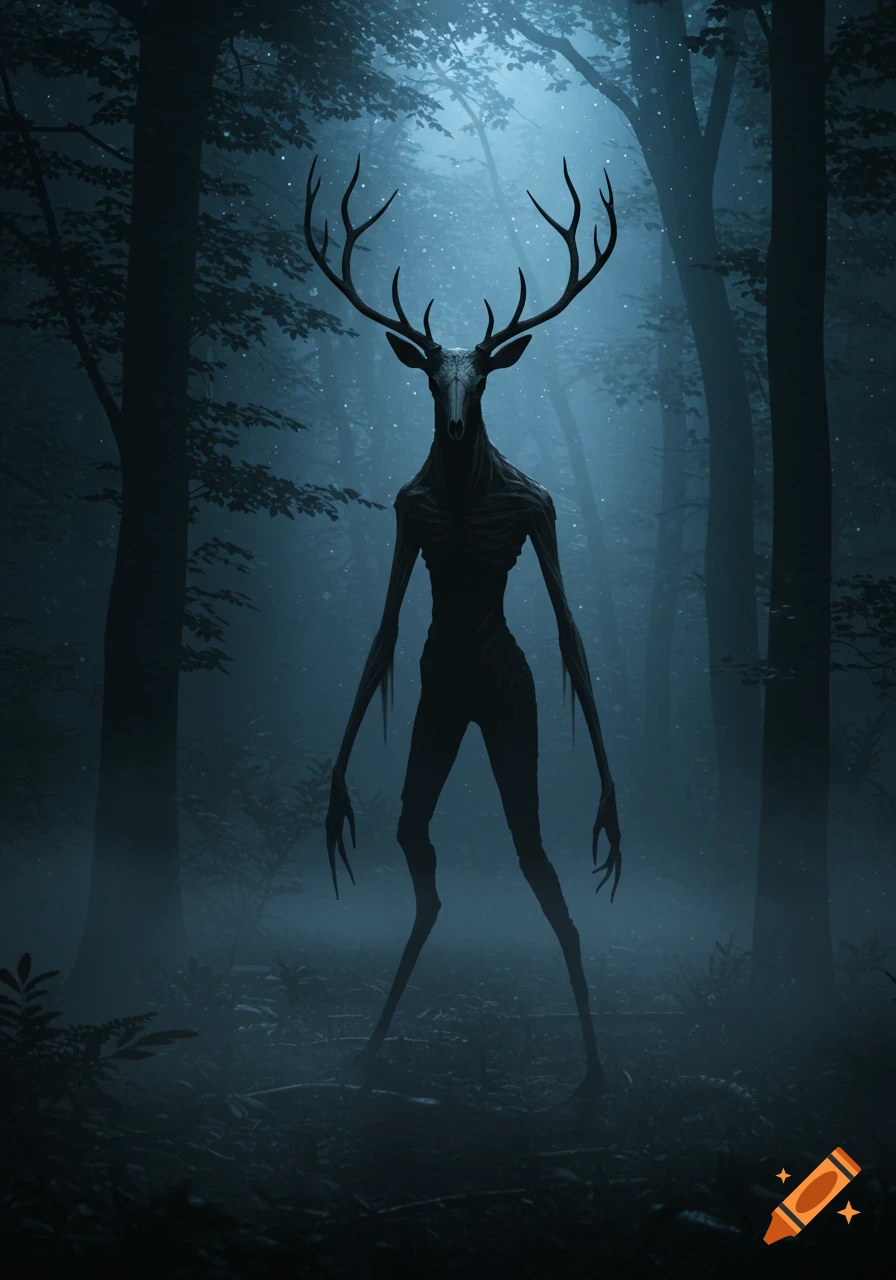
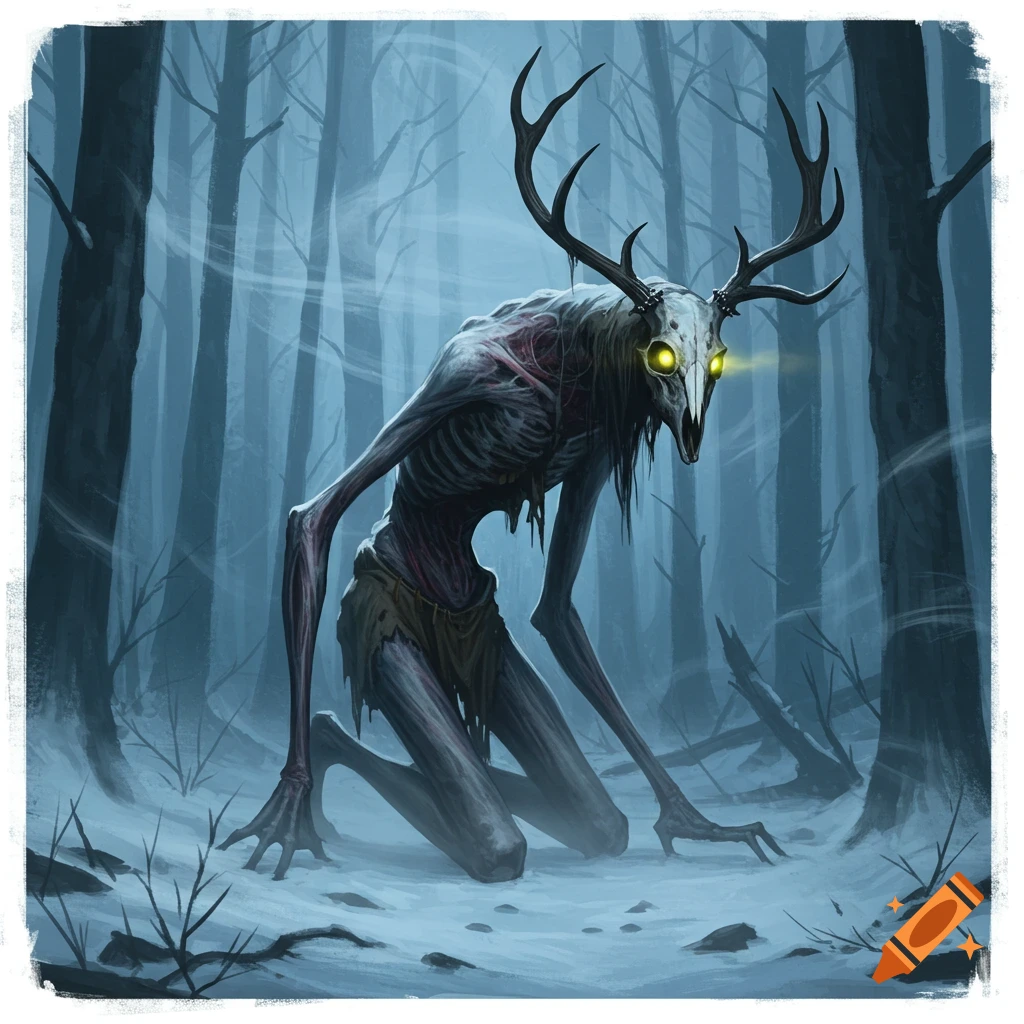
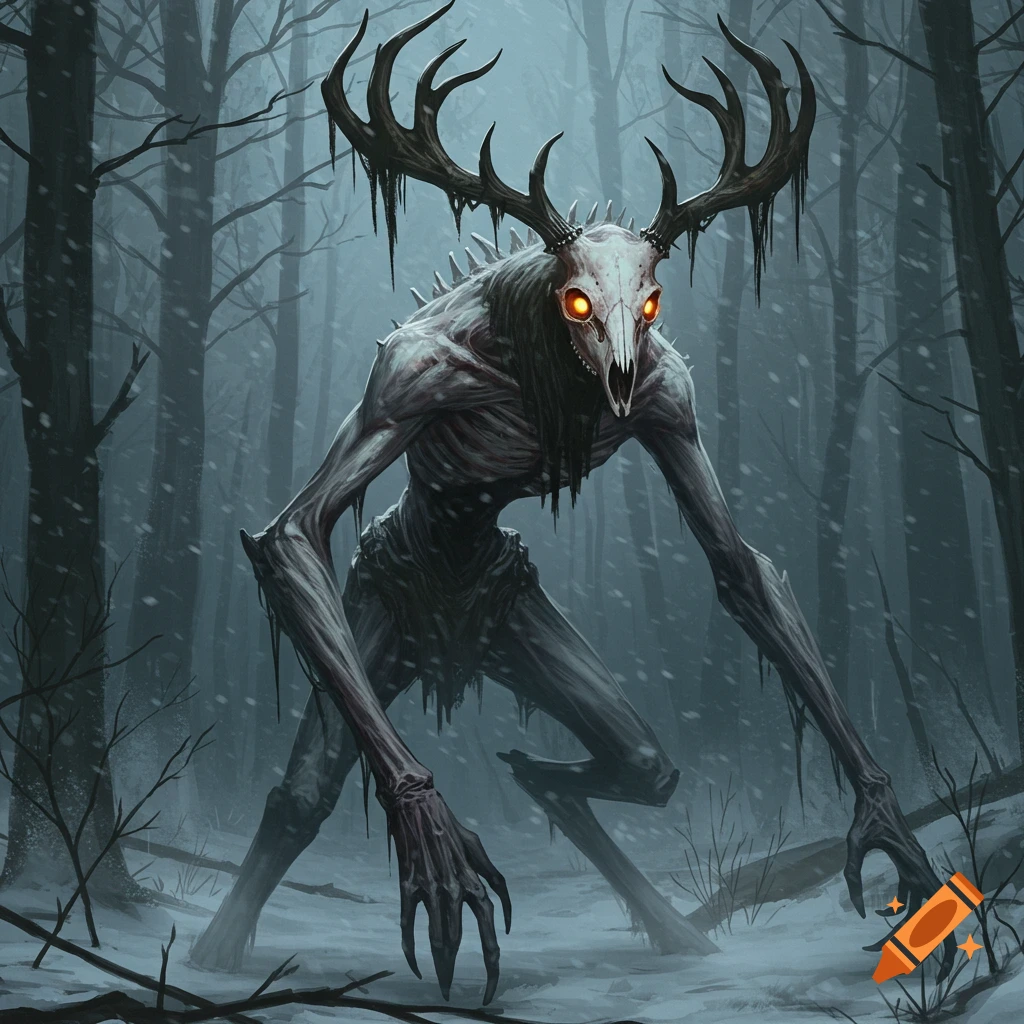
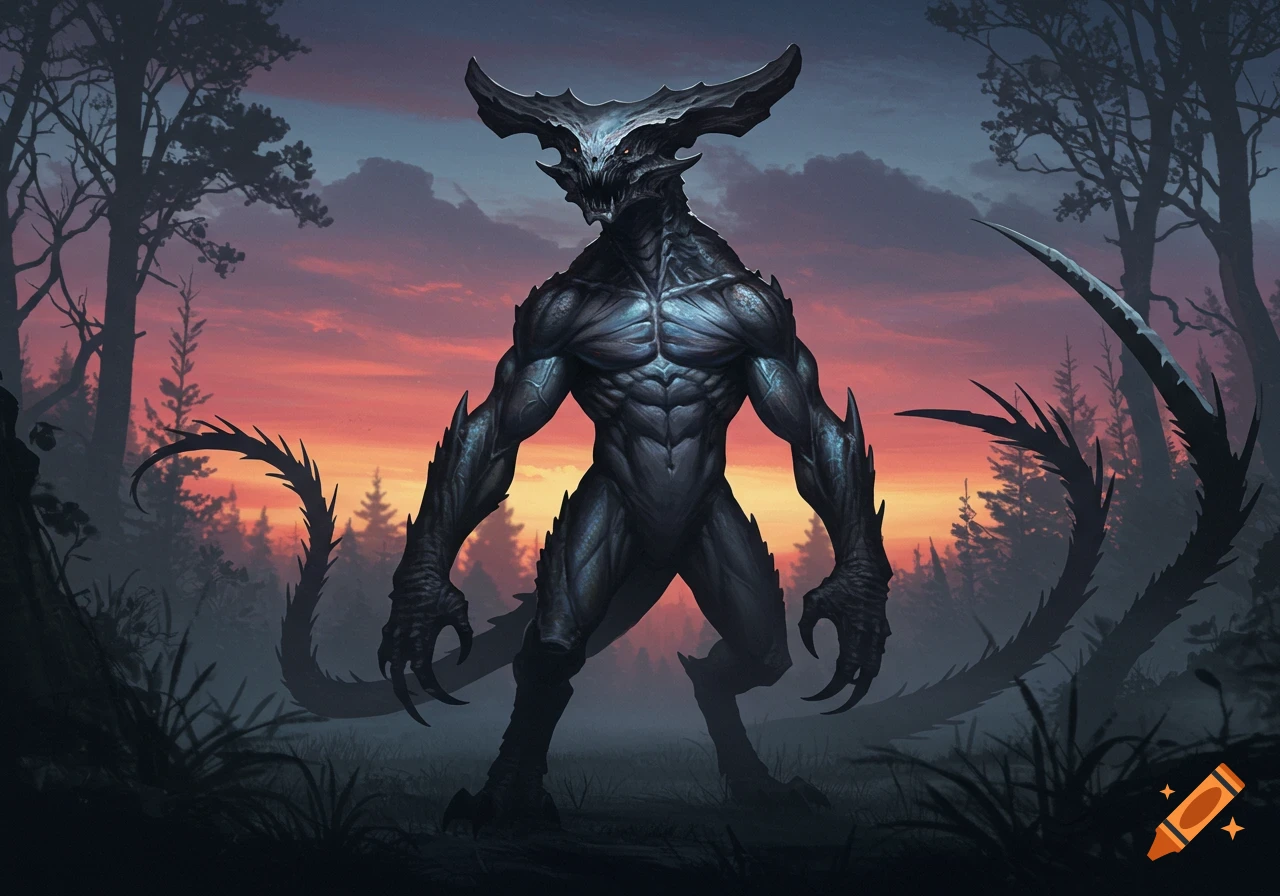
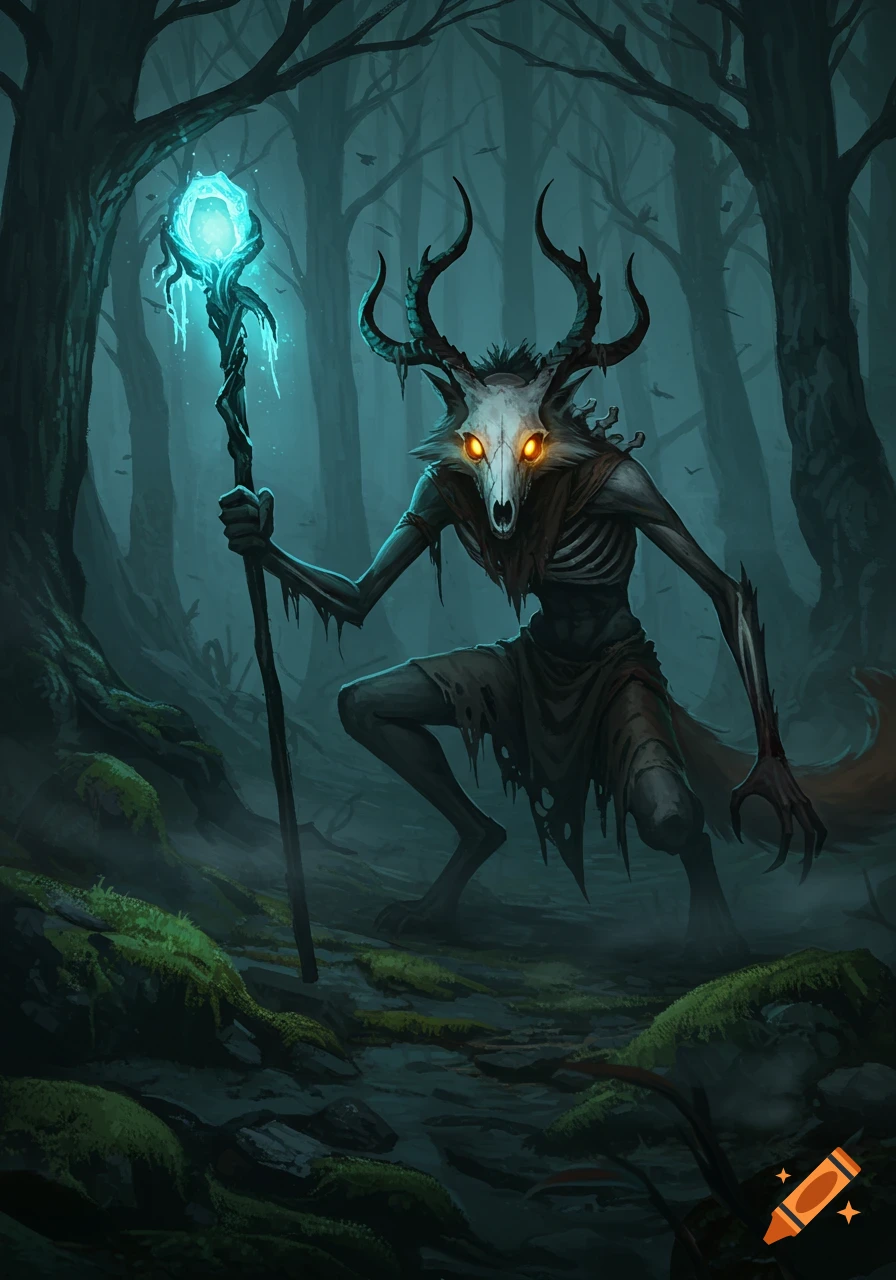
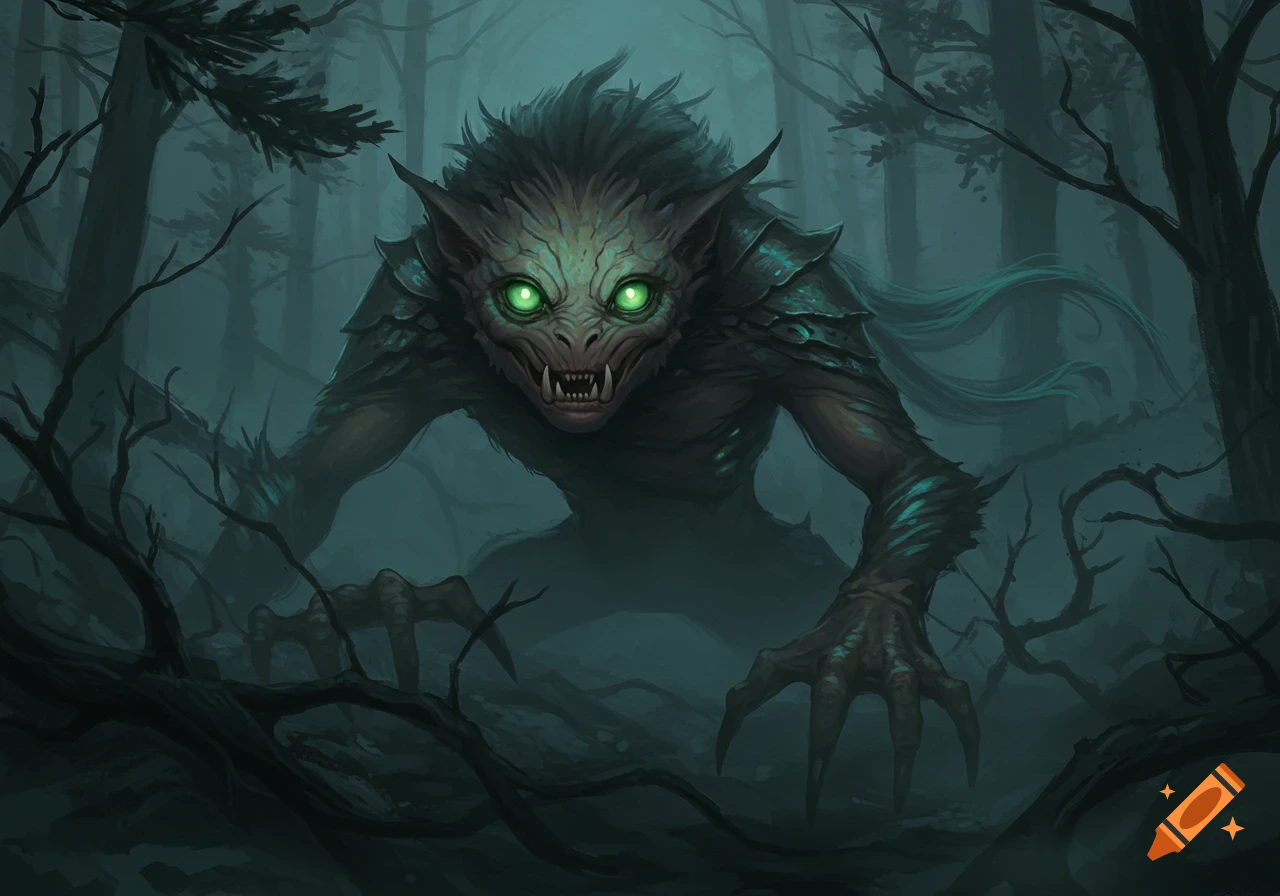
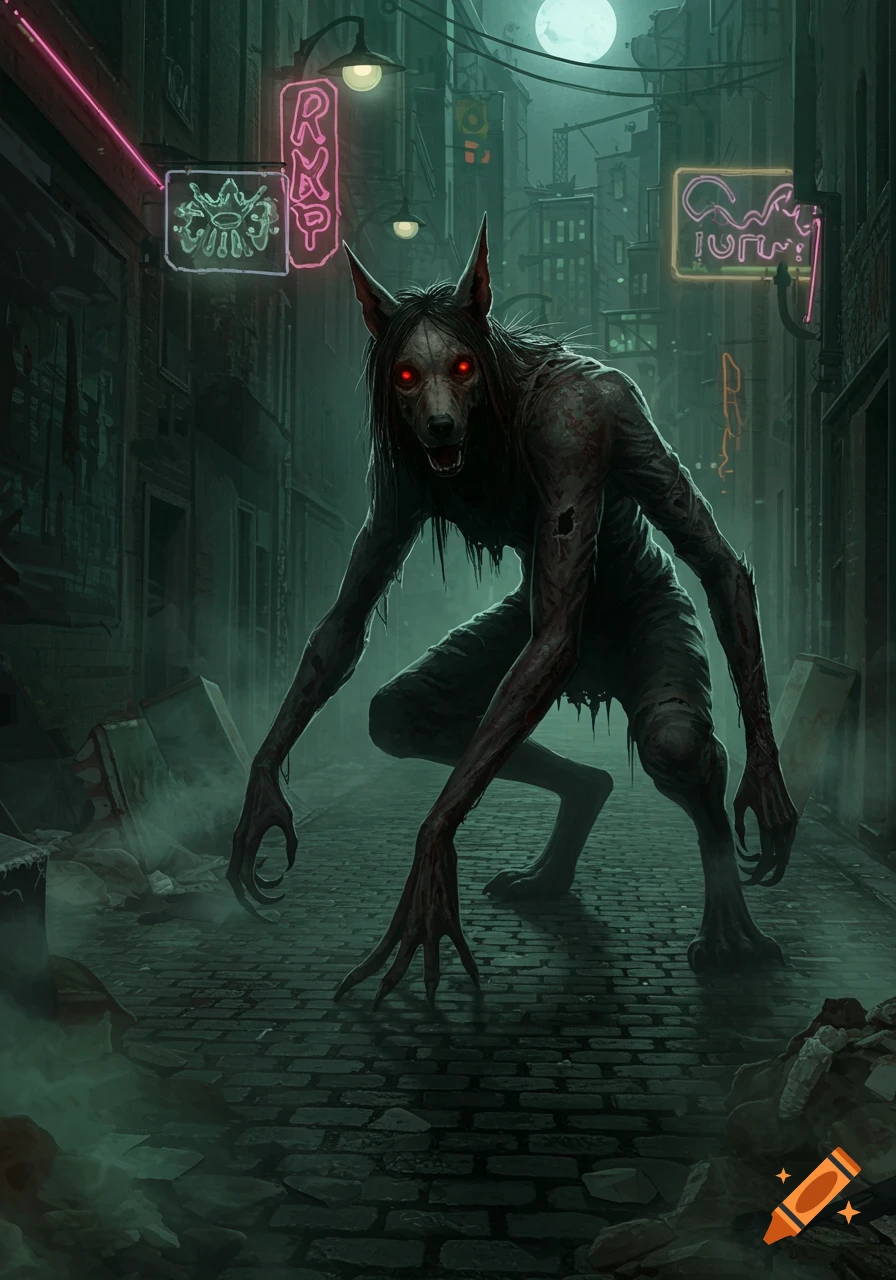
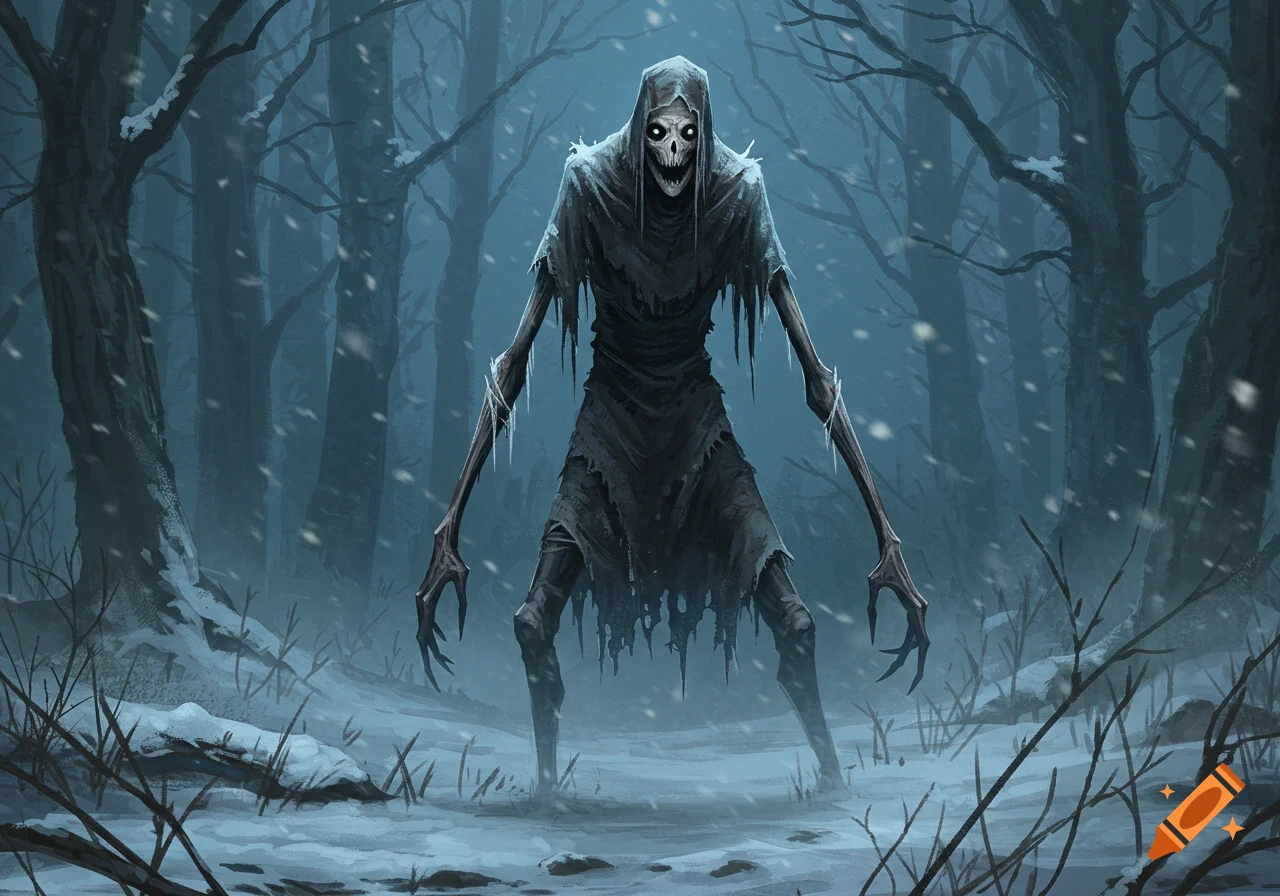
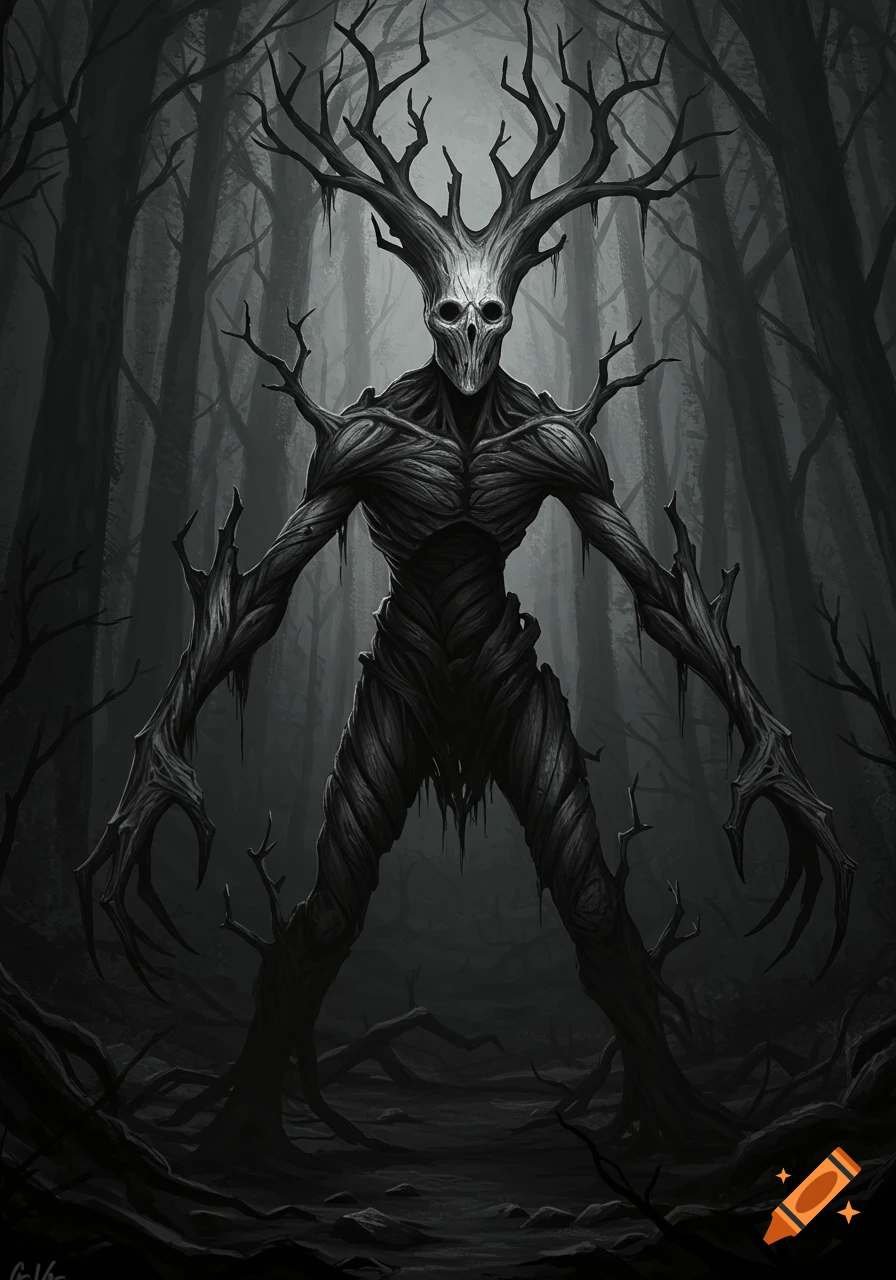
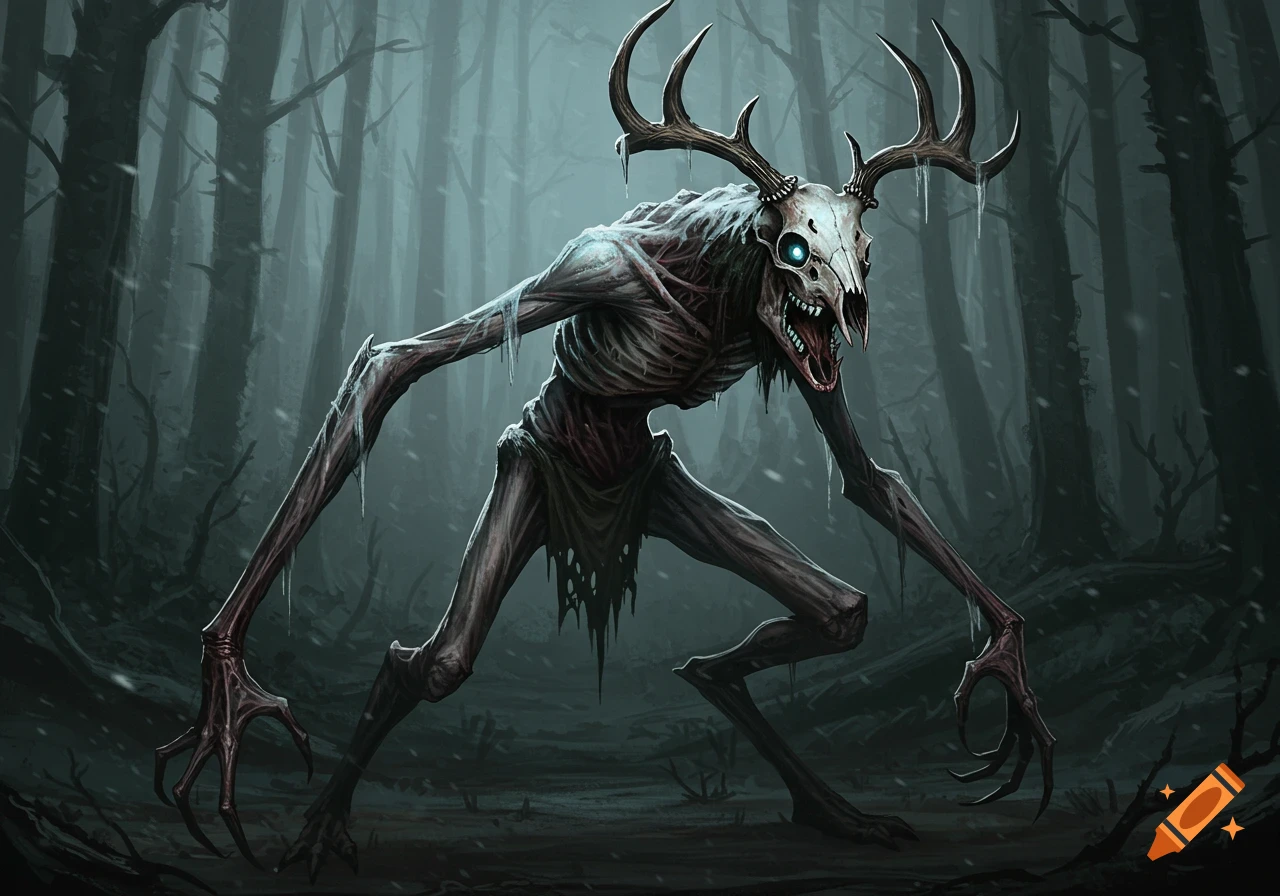
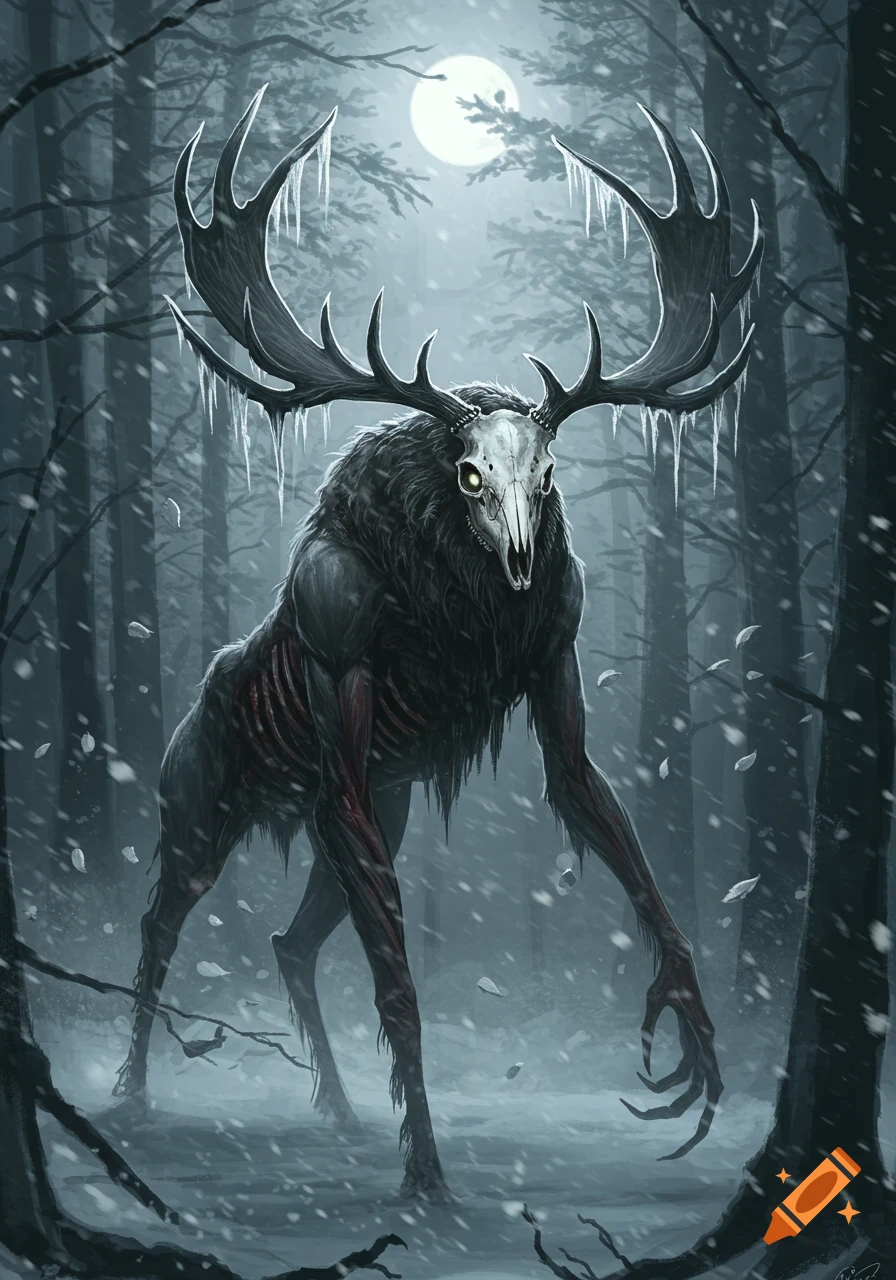
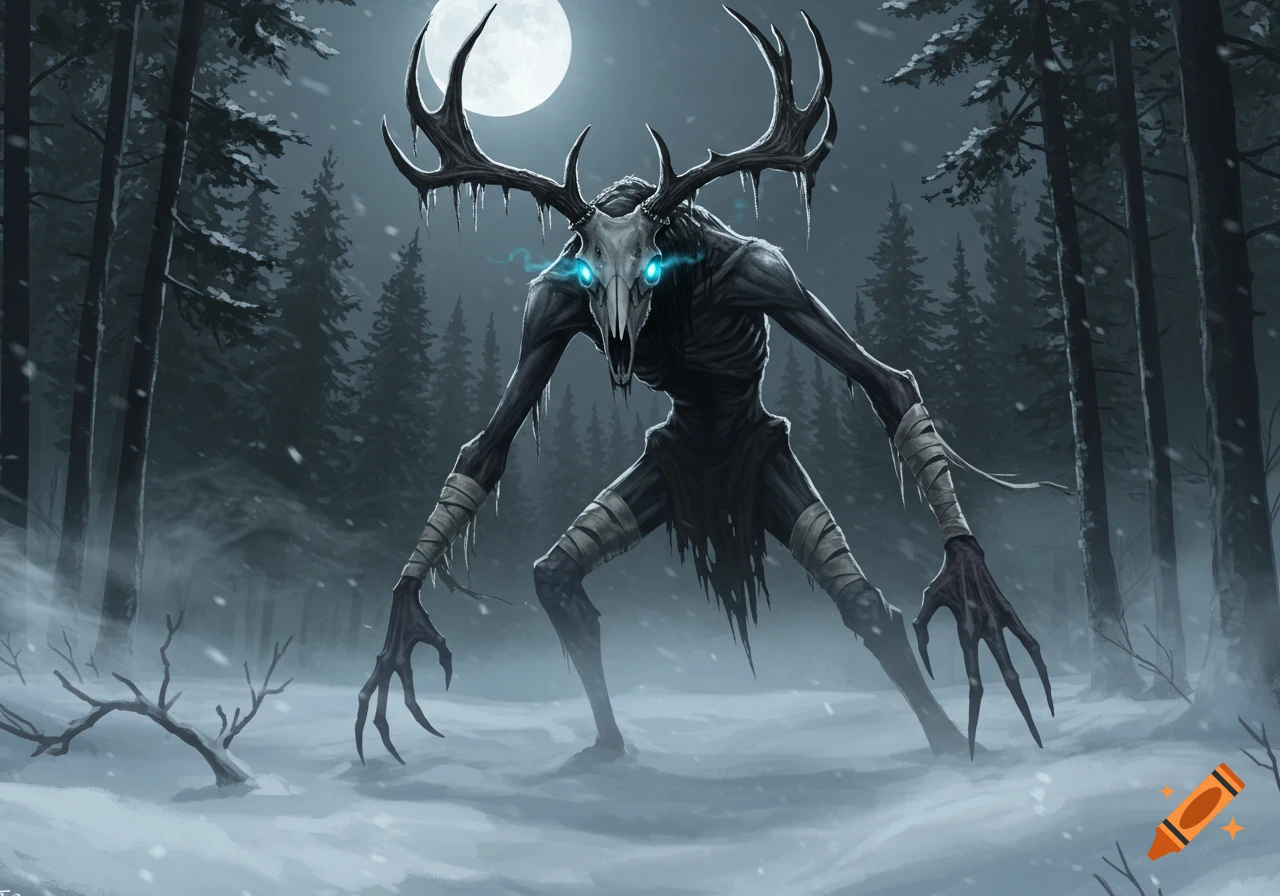
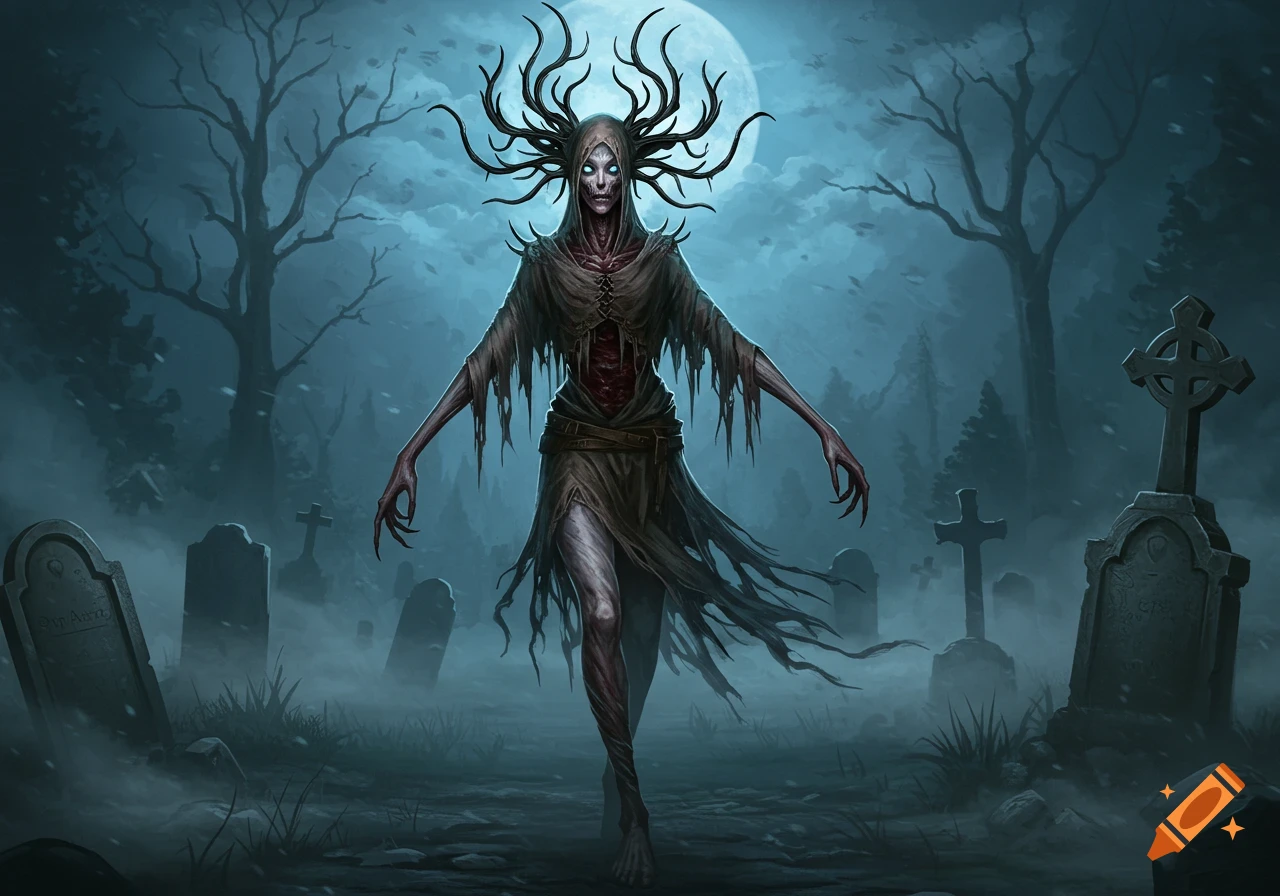
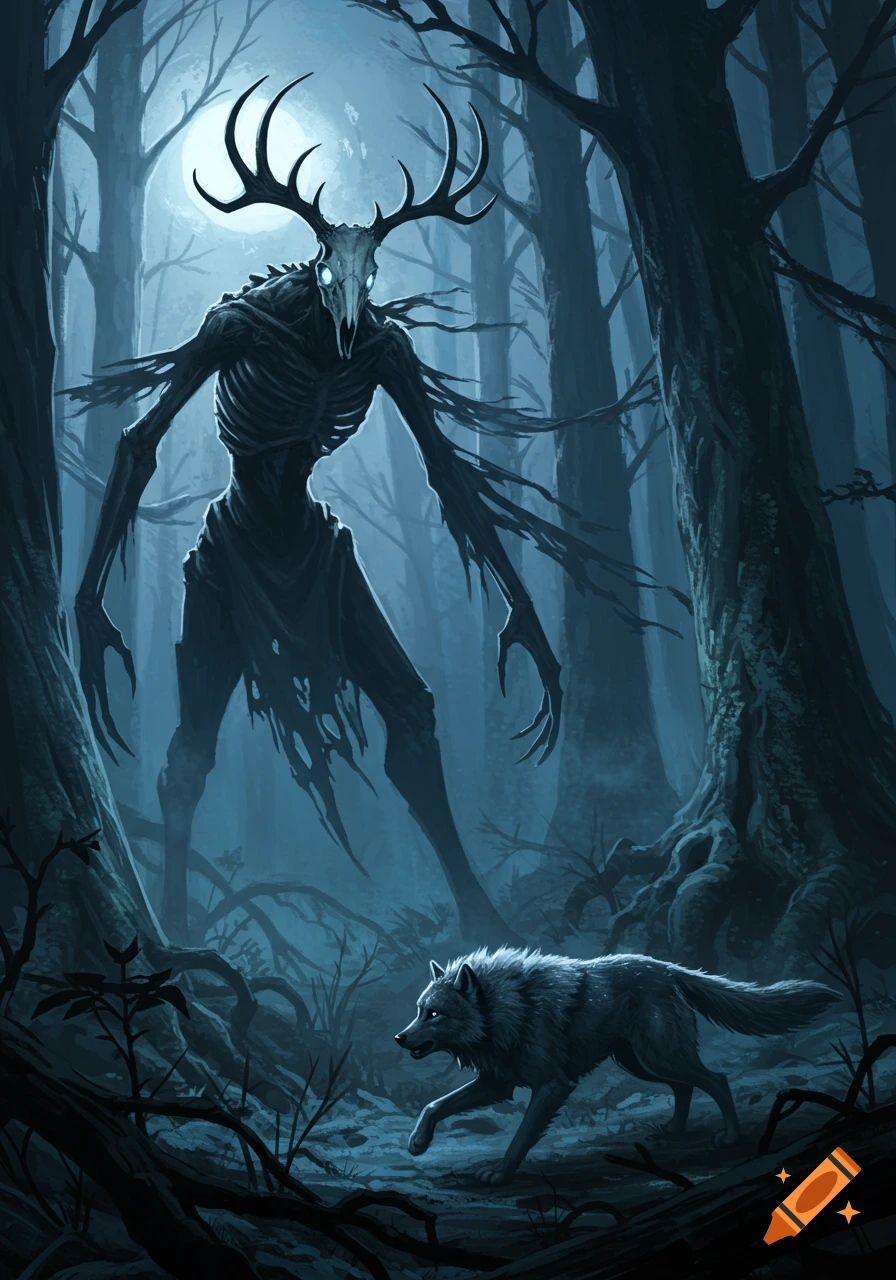
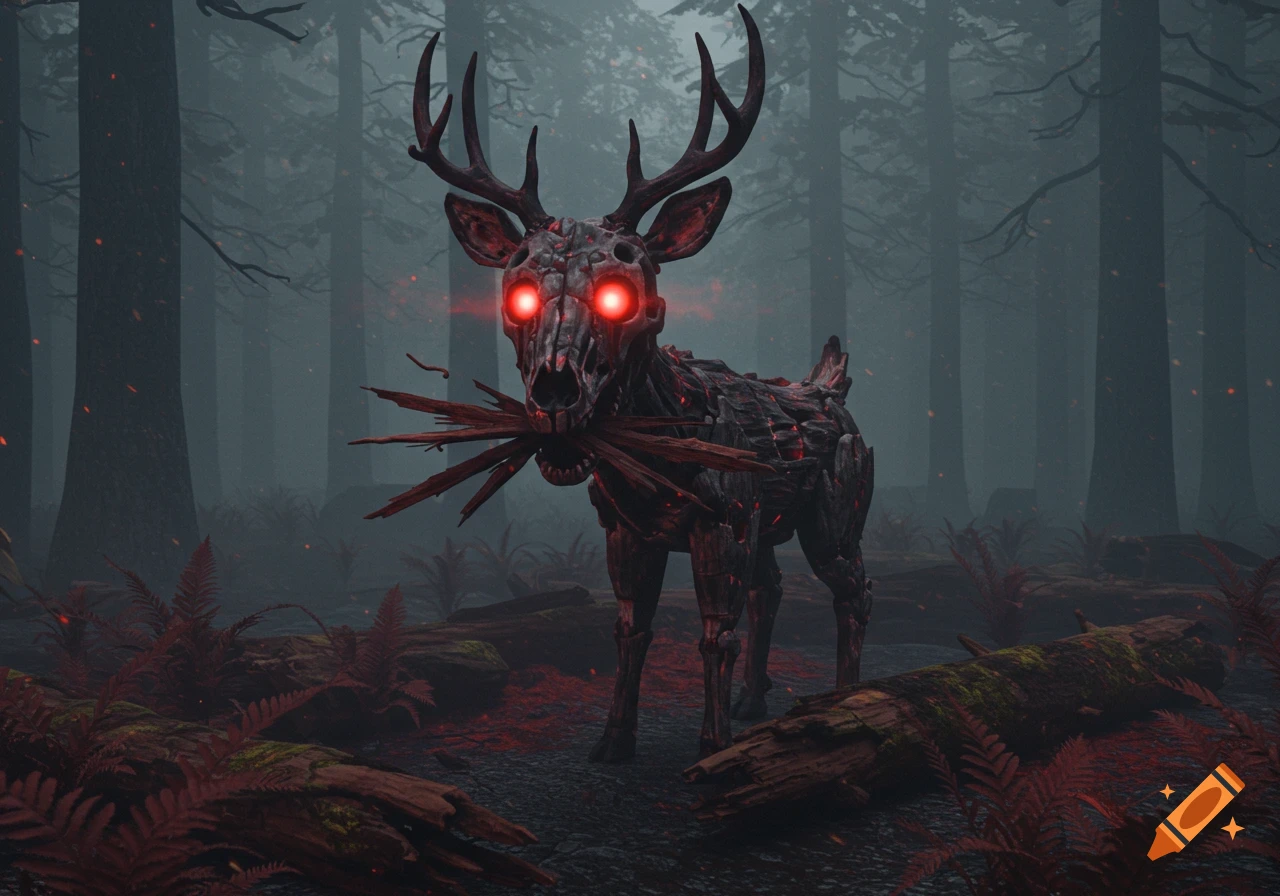
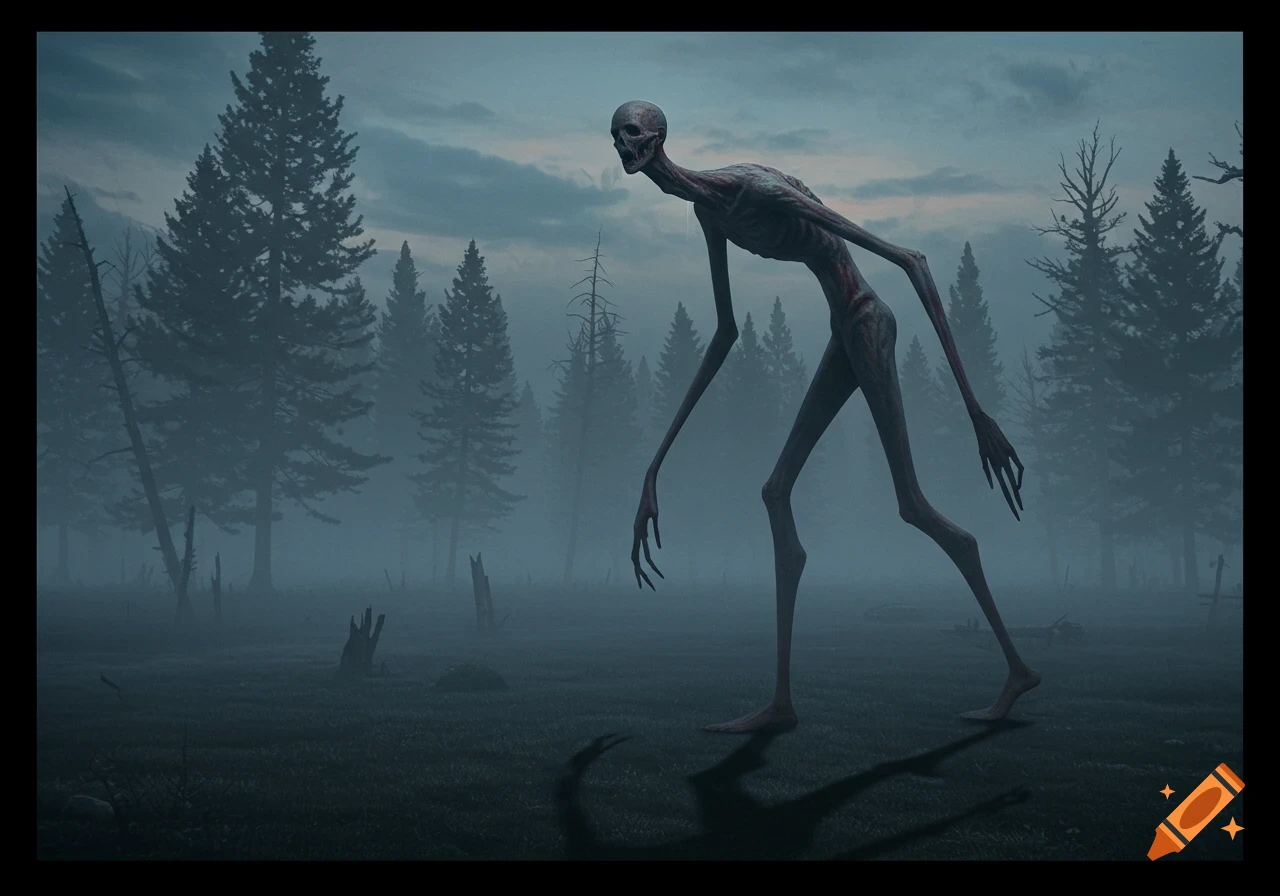
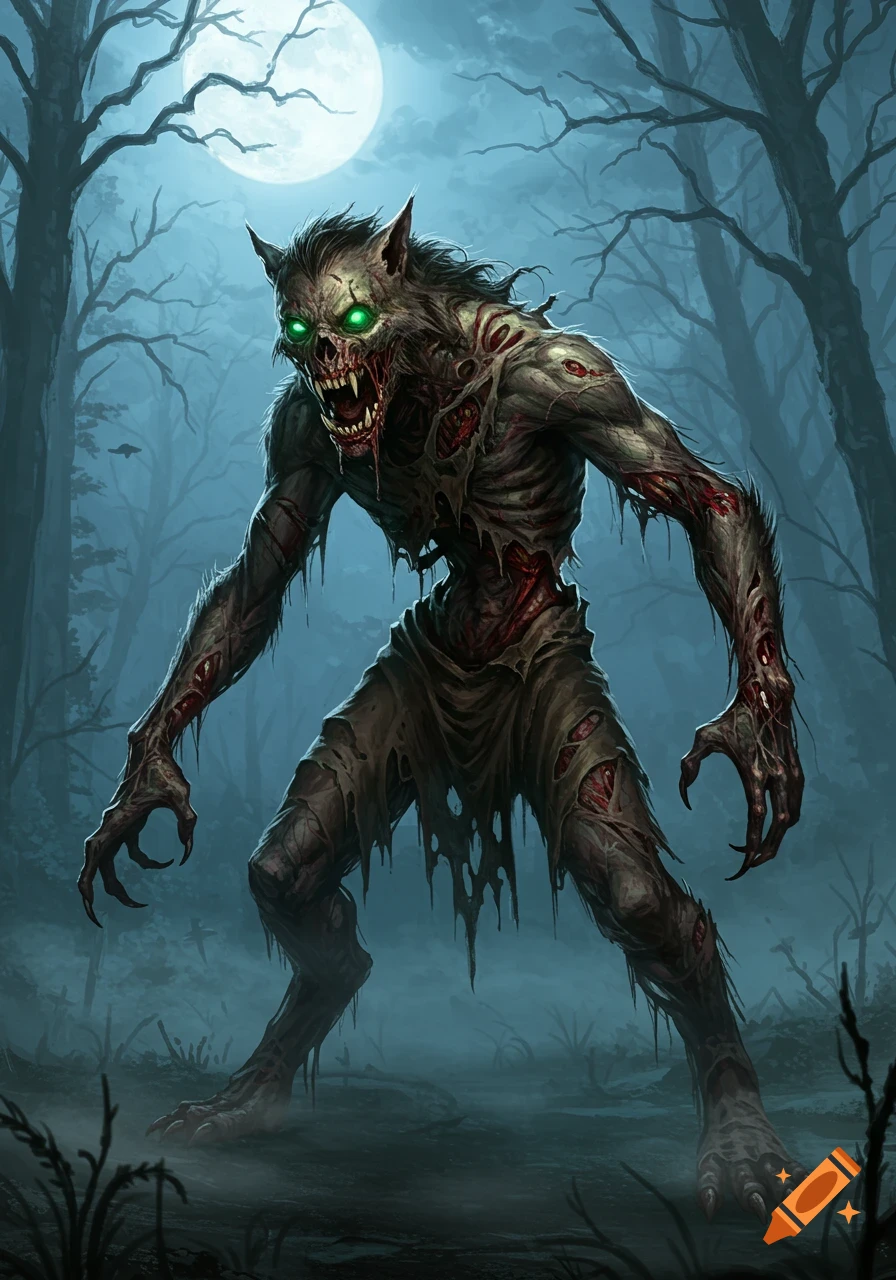
A gaunt, skeletal Wendigo monster with a deer skull head, antlers, glowing eye, bloody mouth, and sharp claws stands in a snowy forest at night under a full moon, with smoke rising from its mouth, in a digital painting.
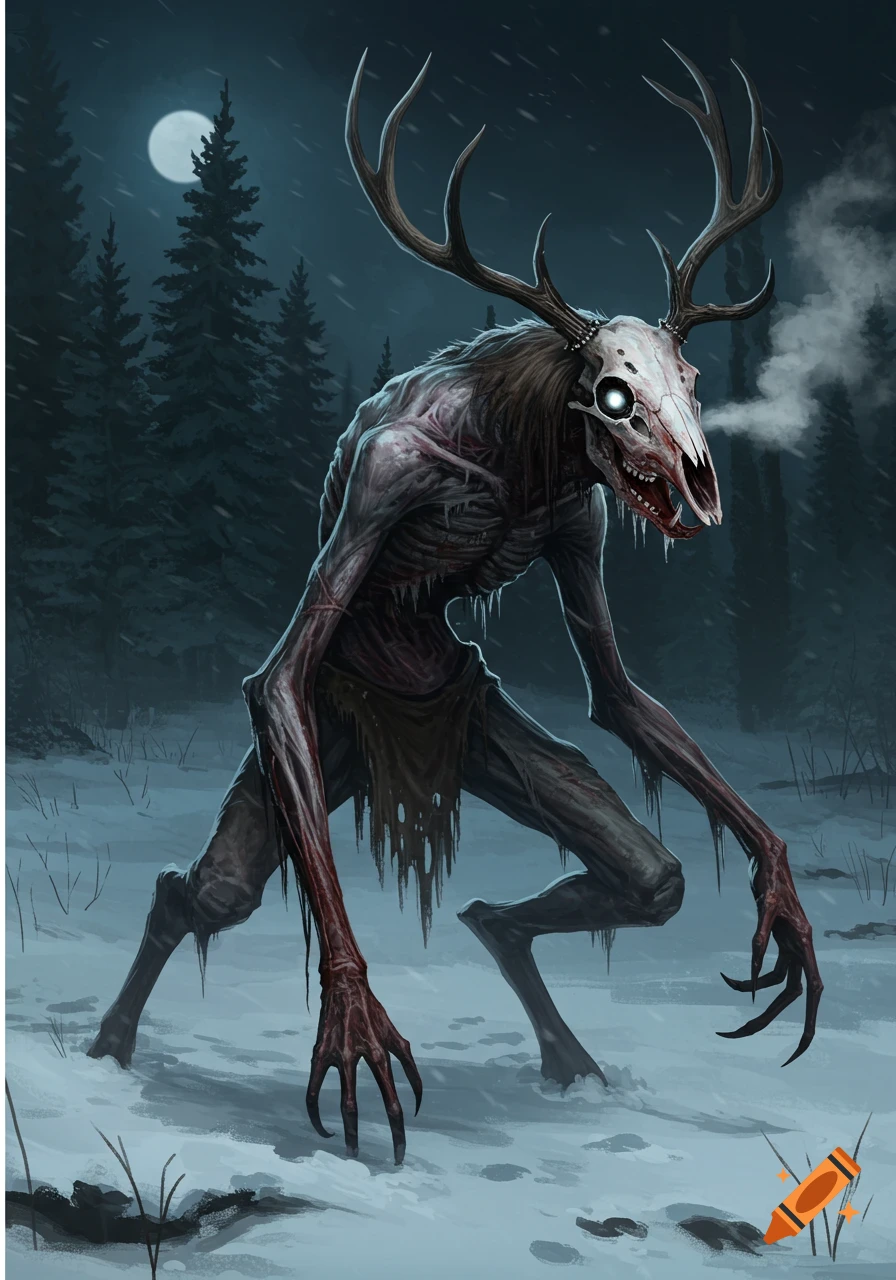
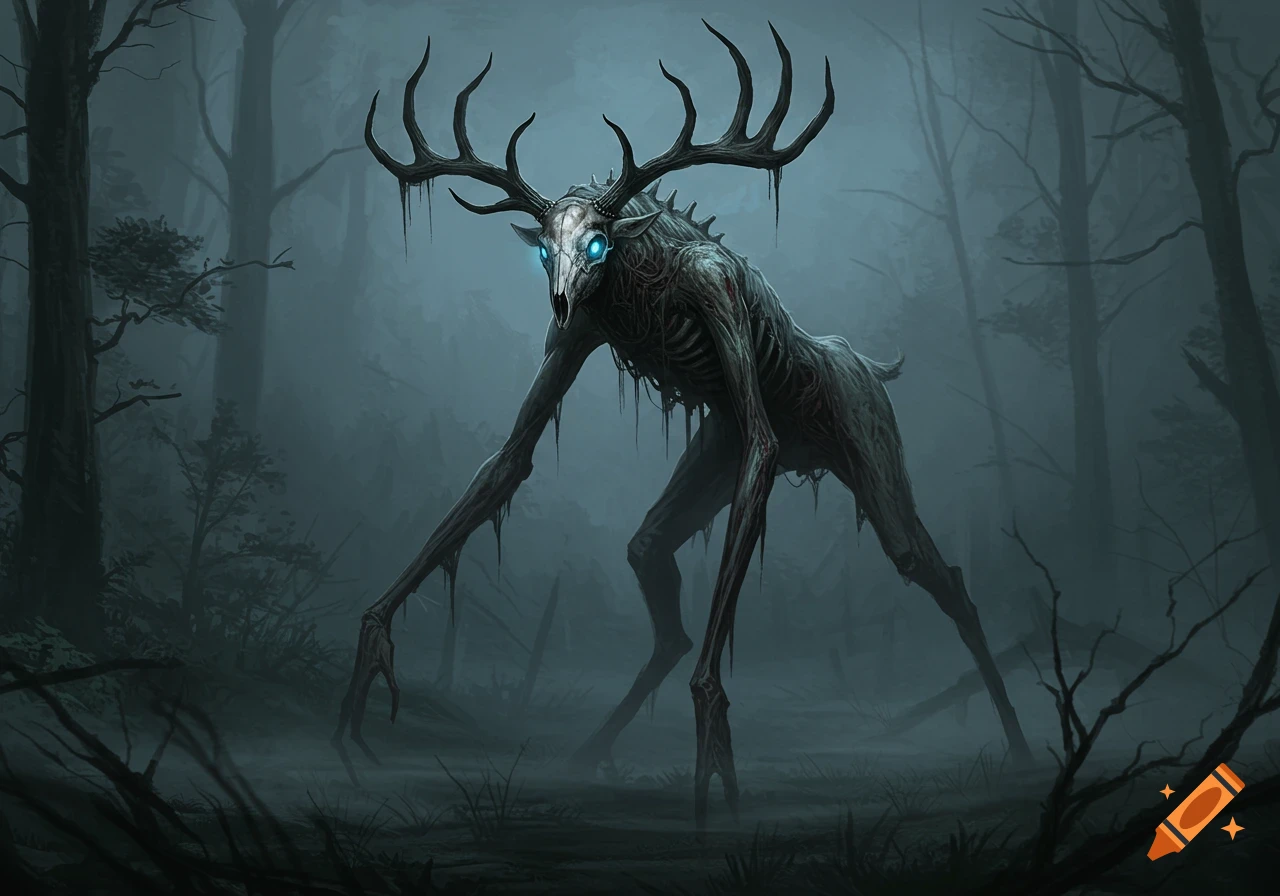
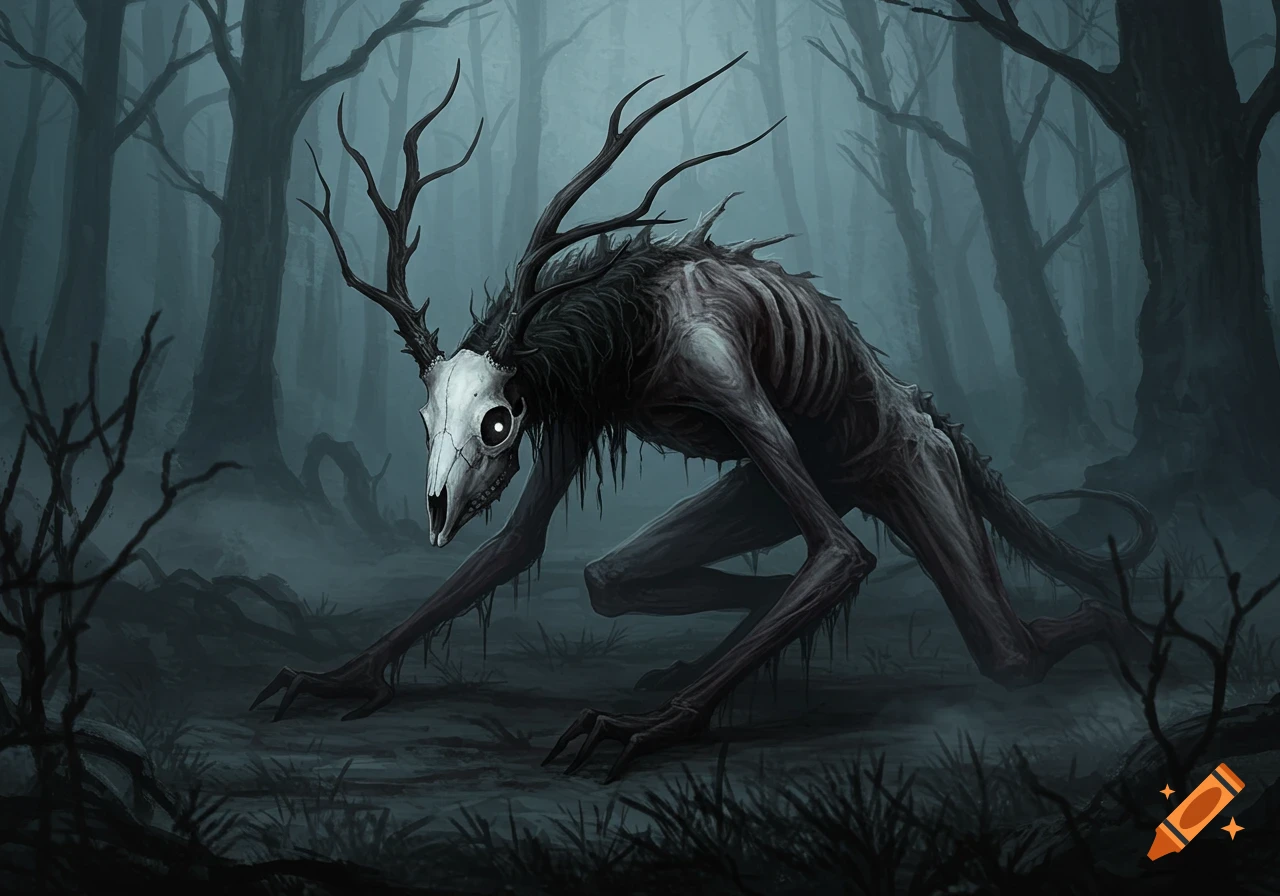
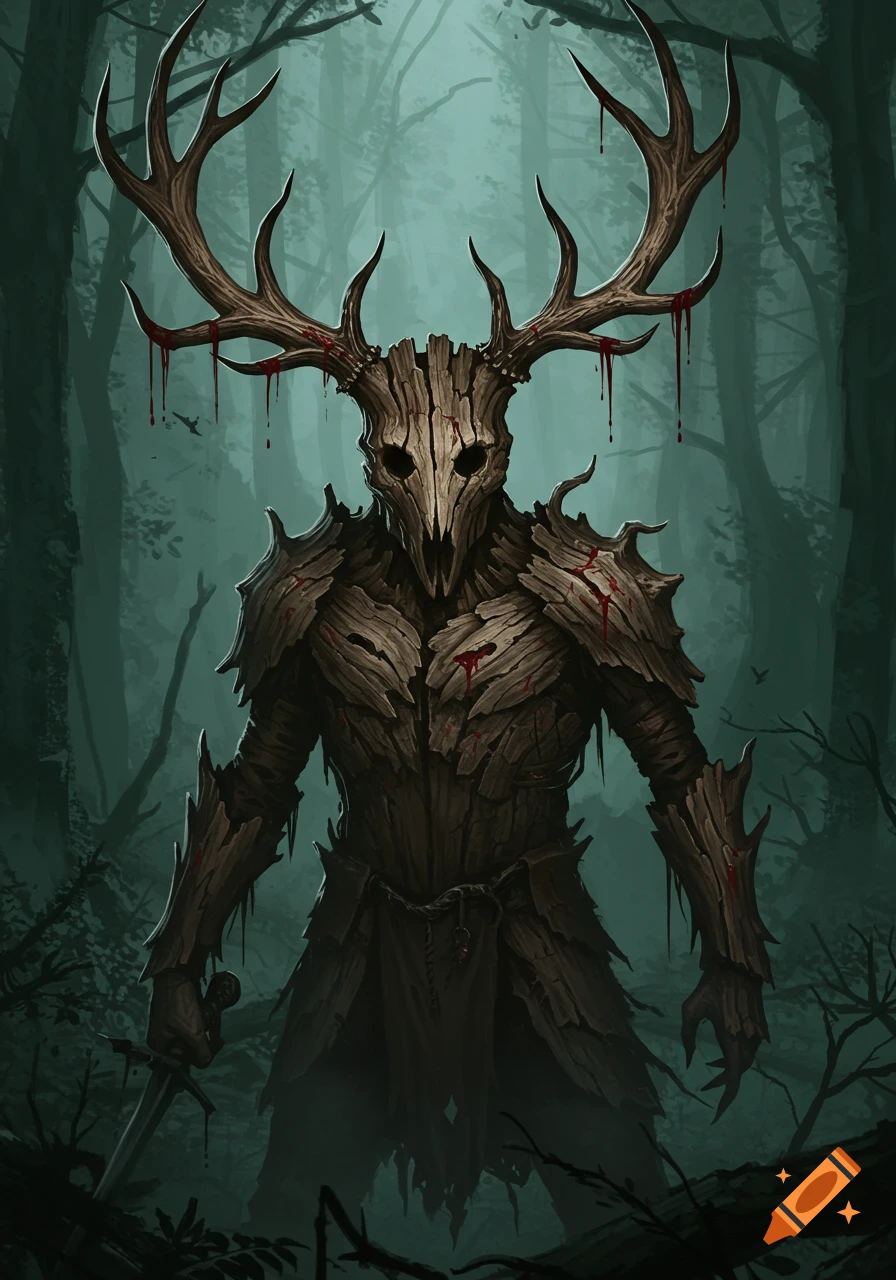
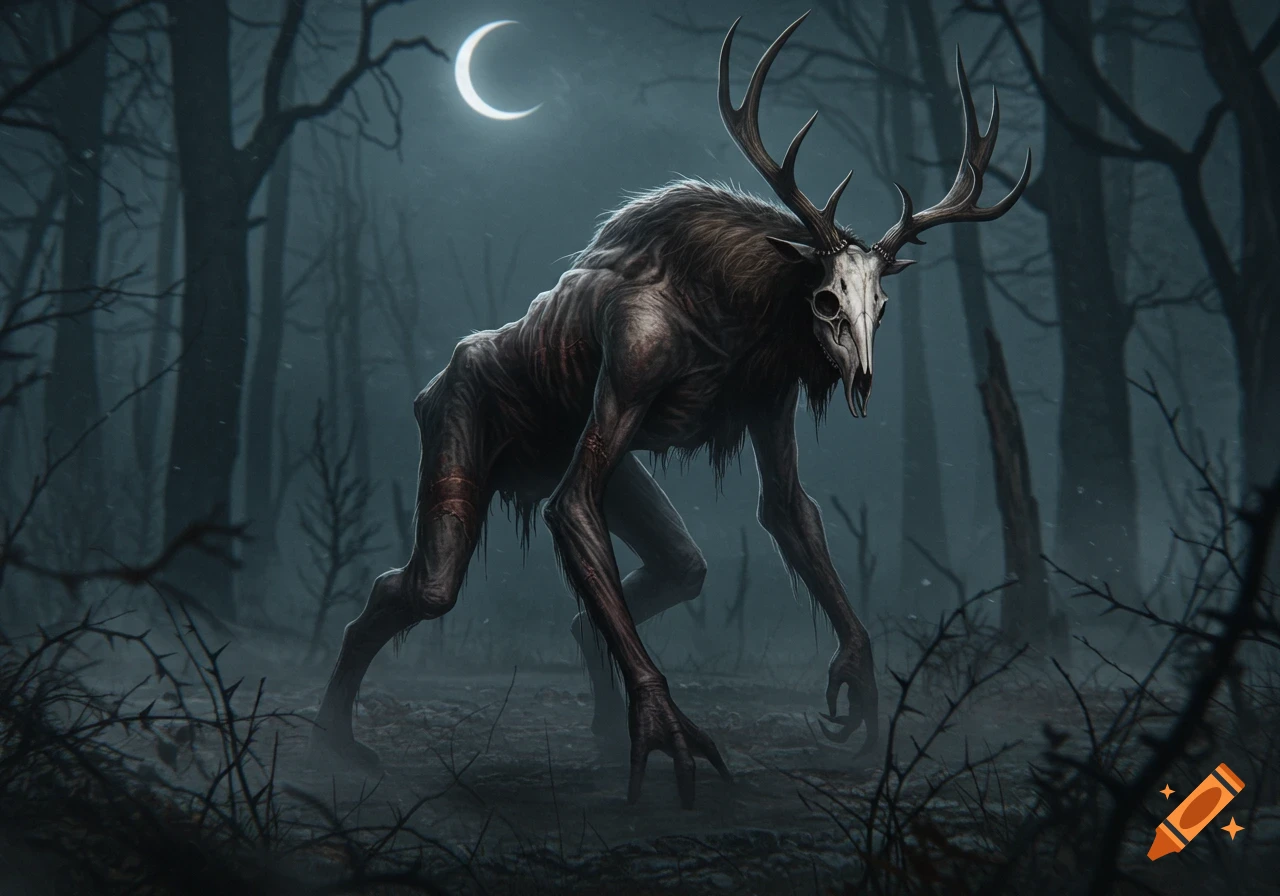
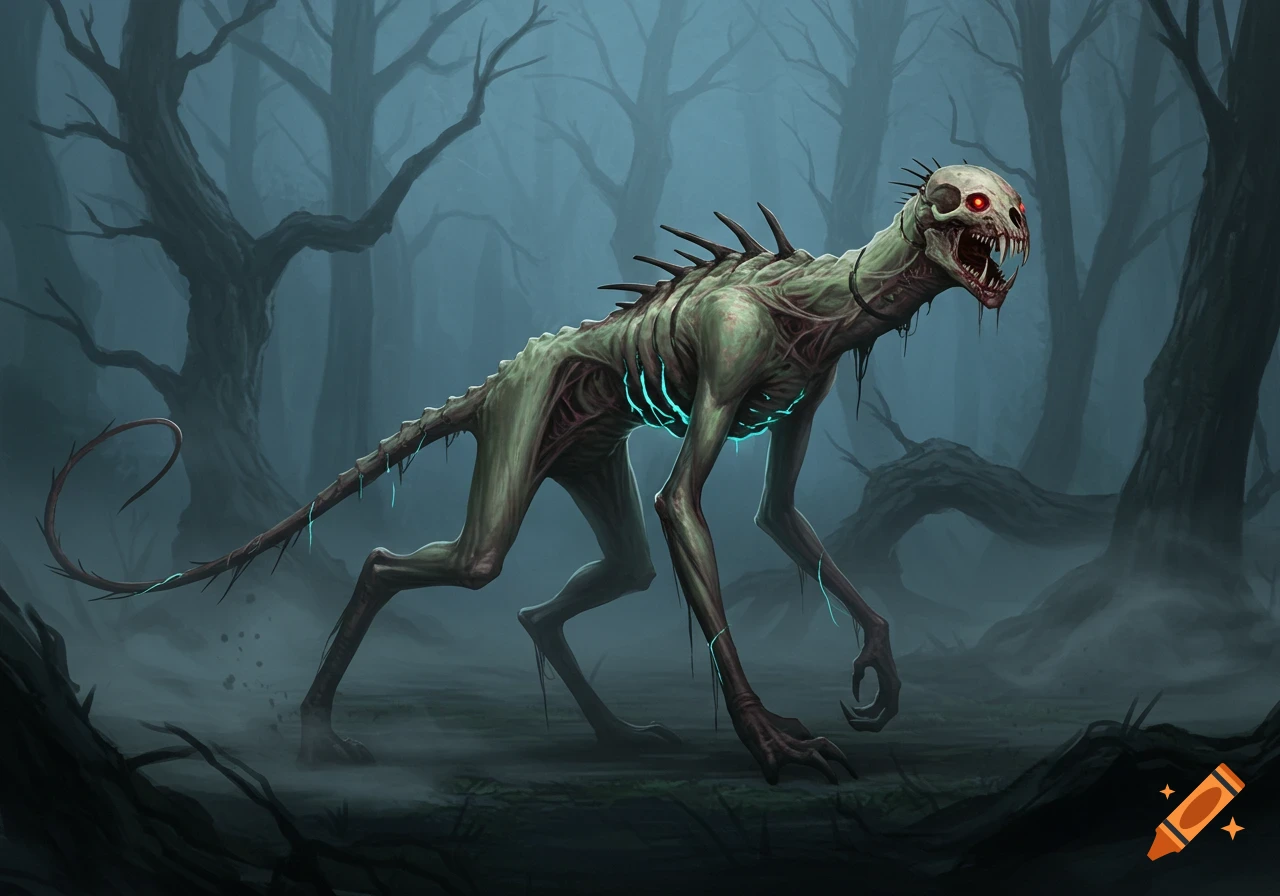
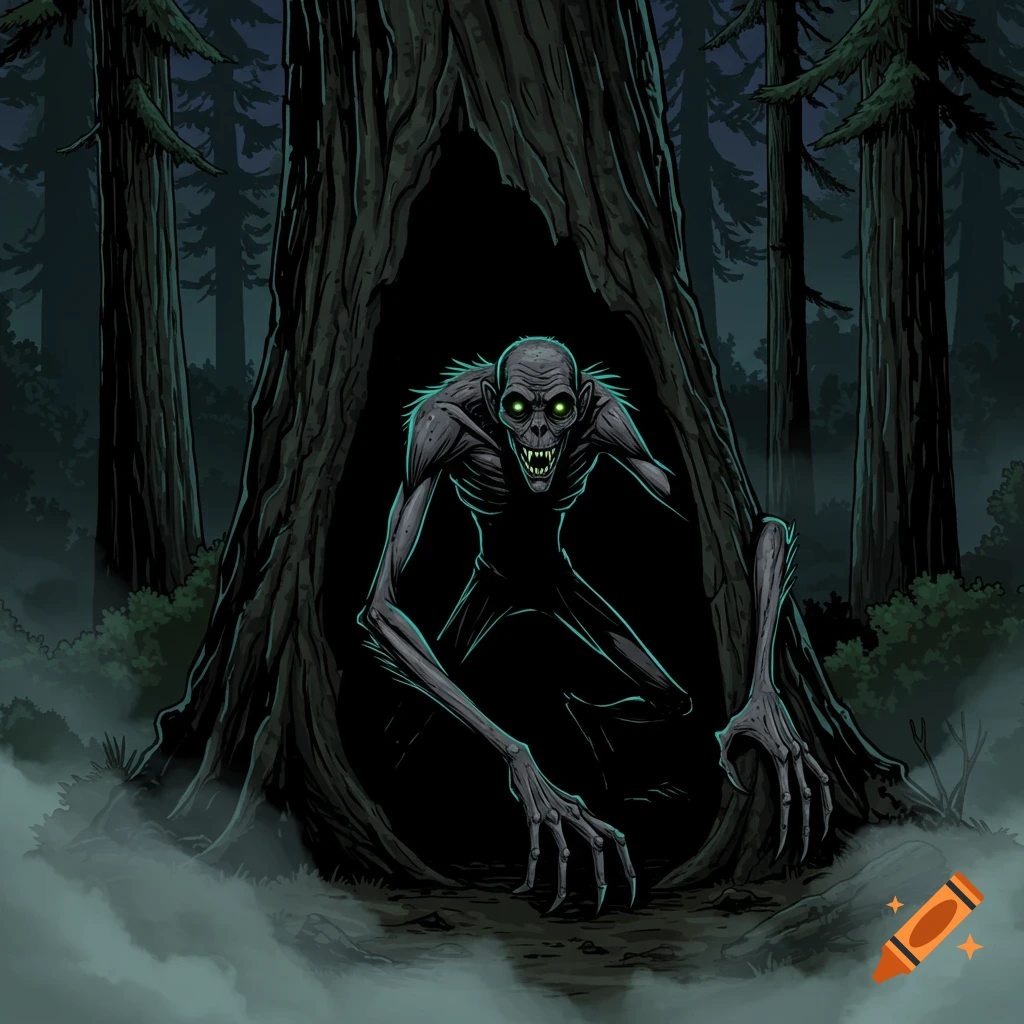
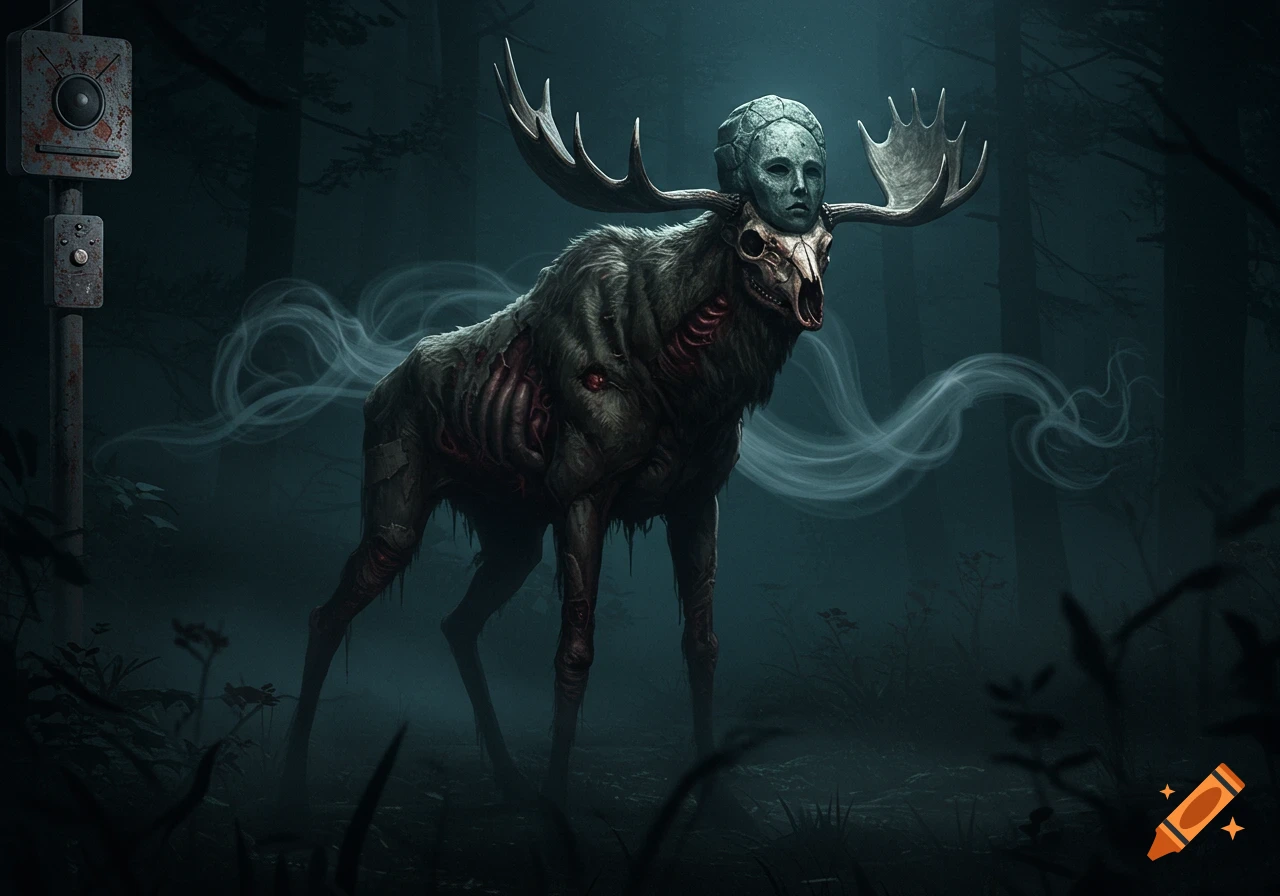
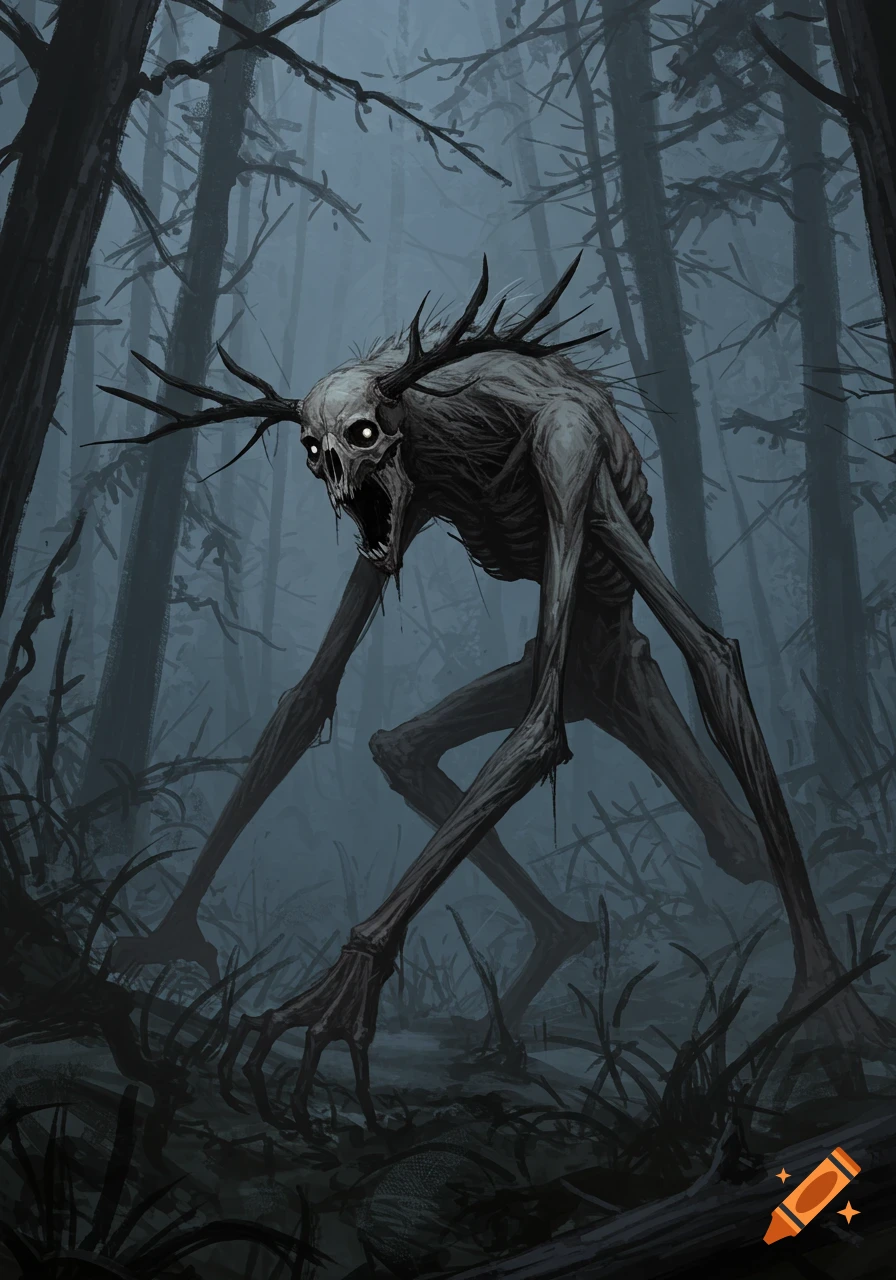
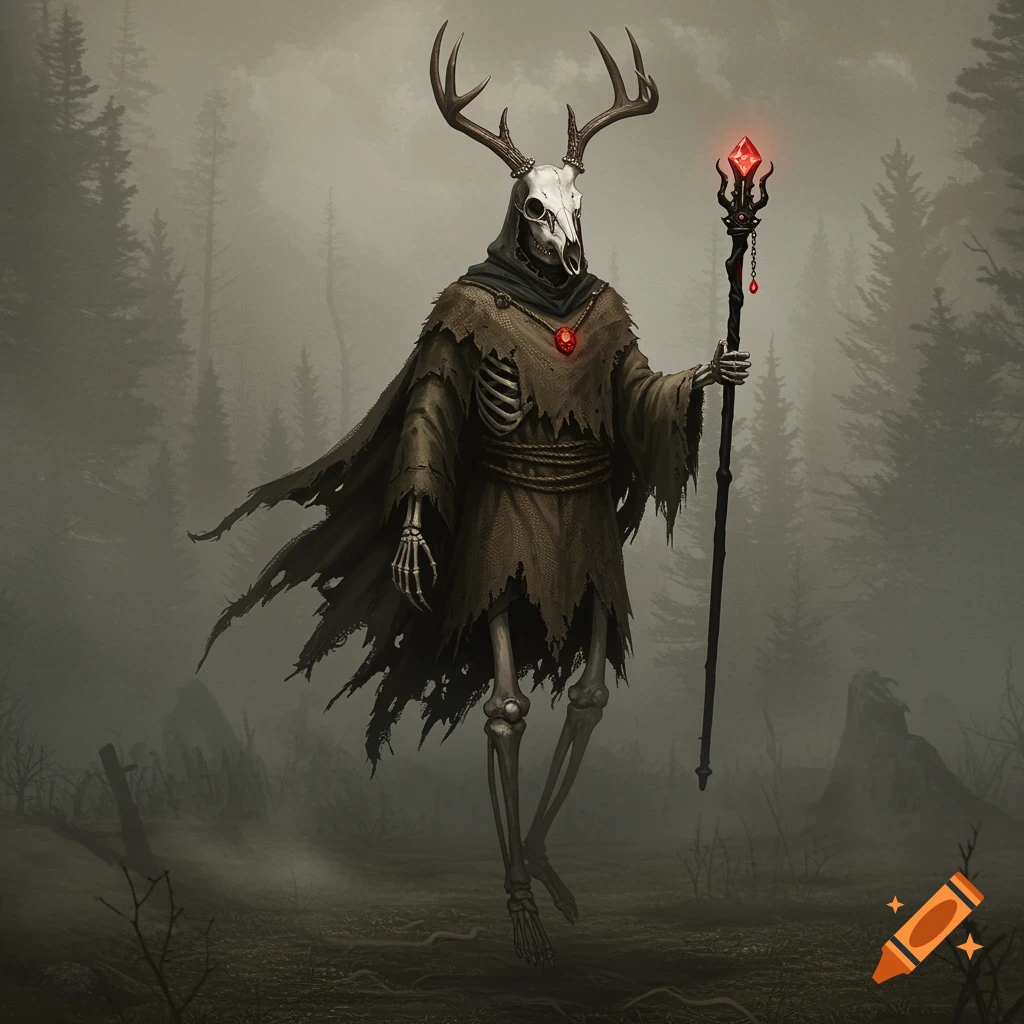
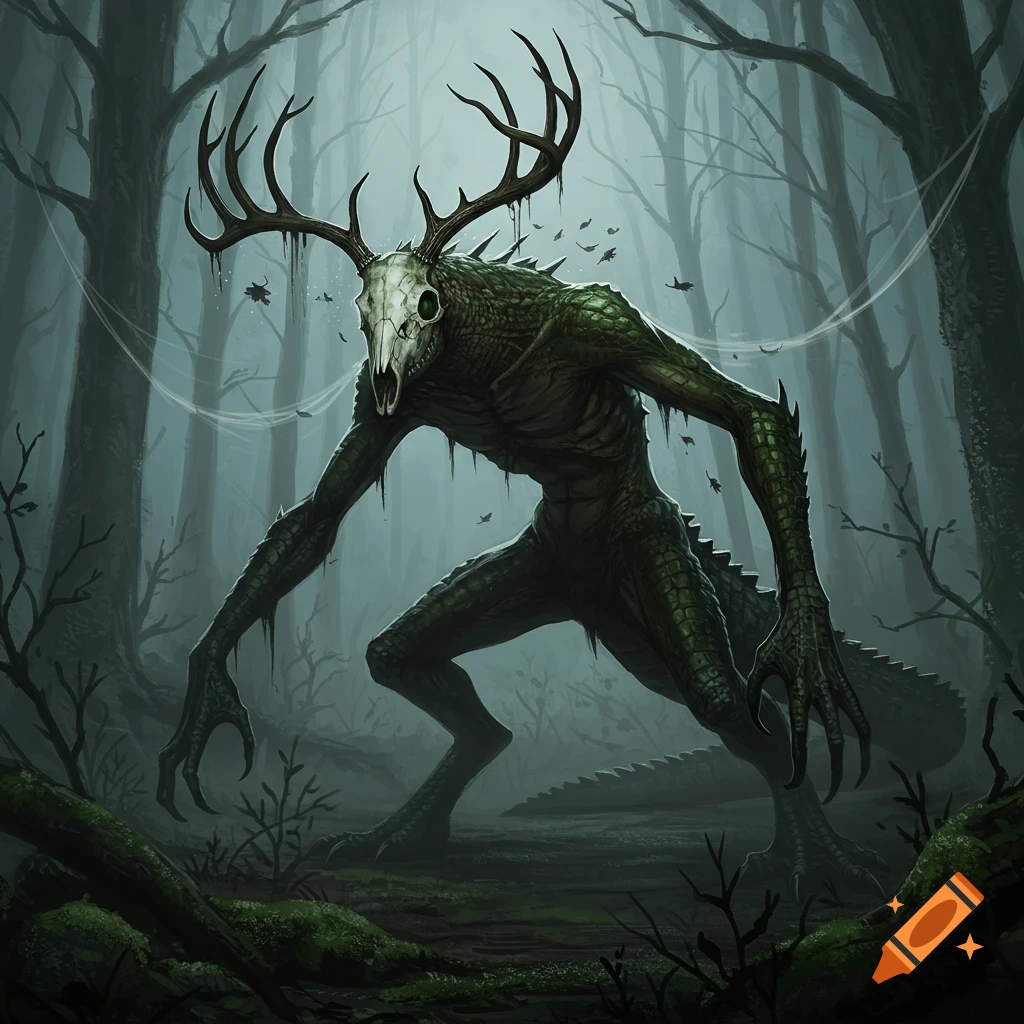
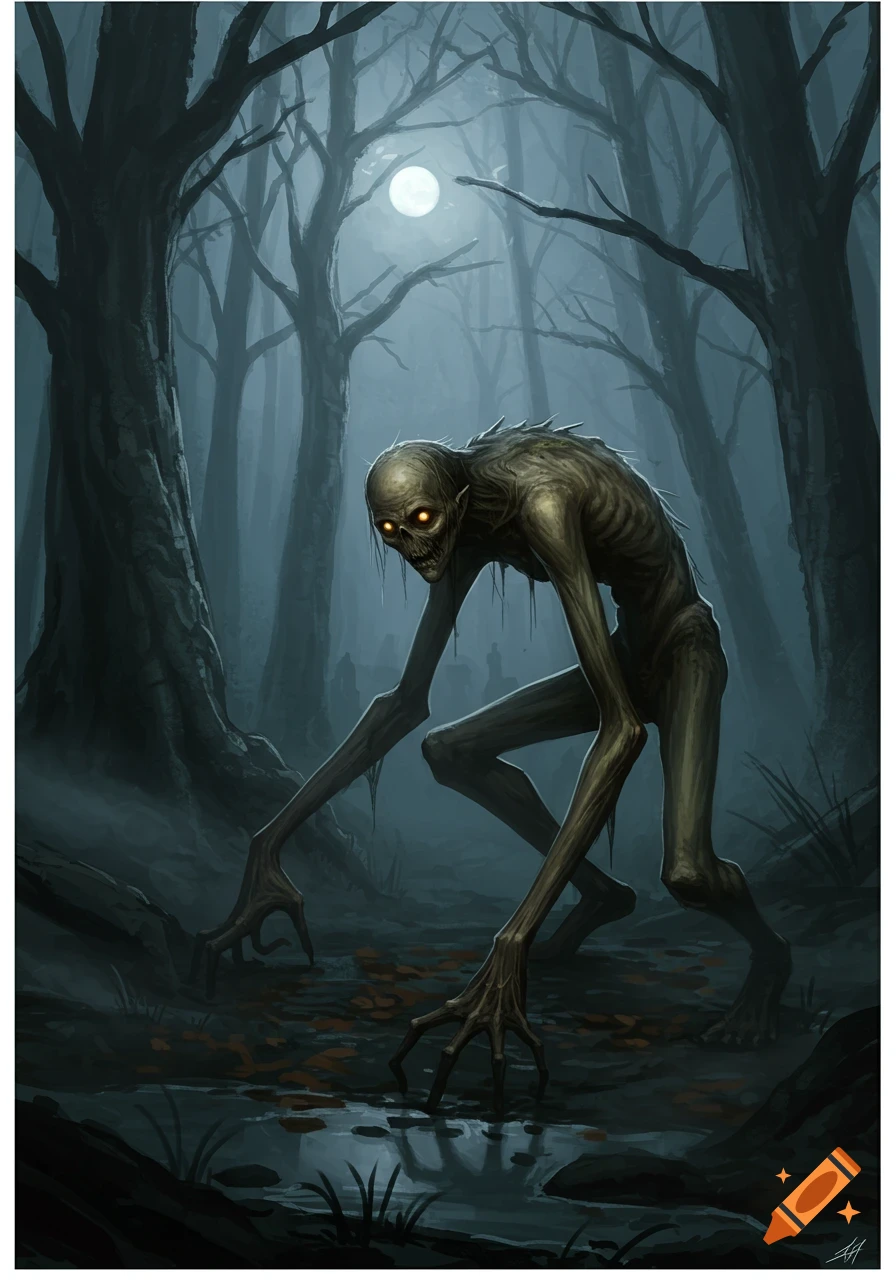
mythology of the wendigo The Wendigo is a chilling figure rooted in the mythology of Algonquian-speaking peoples of North America, particularly among the Cree, Ojibwe, and other First Nations tribes. Here's a deep dive into its mythological essence: 🧊 Origins and Cultural Context The Wendigo legend originates from northern Indigenous cultures, especially those living in harsh winter climates like Canada and the northern U.S. It served as a cautionary tale about greed, isolation, and cannibalism, often told during times of famine to reinforce communal values2. 🧟♂️ Nature of the Wendigo The Wendigo is described as a malevolent spirit or monstrous creature that embodies insatiable hunger, particularly for human flesh1. It is said to possess individuals who commit cannibalism, transforming them into Wendigos themselves—a metaphor for losing one’s humanity2. 🧠 Symbolism and Transformation The Wendigo represents spiritual corruption and unchecked desire. Once a person becomes a Wendigo, they are doomed to eternal starvation—the more they eat, the hungrier they become. In some traditions, the transformation can occur through spiritual possession, dreams, or even being bitten by a Wendigo. 👹 Physical Description Often depicted as: Gaunt and skeletal, with ashen or decaying flesh Glowing or sunken eyes, sharp claws and fangs Sometimes with antlers or the head of a deer, blending human and beast1 Its odor of decay and ability to move silently through snow make it a terrifying See more