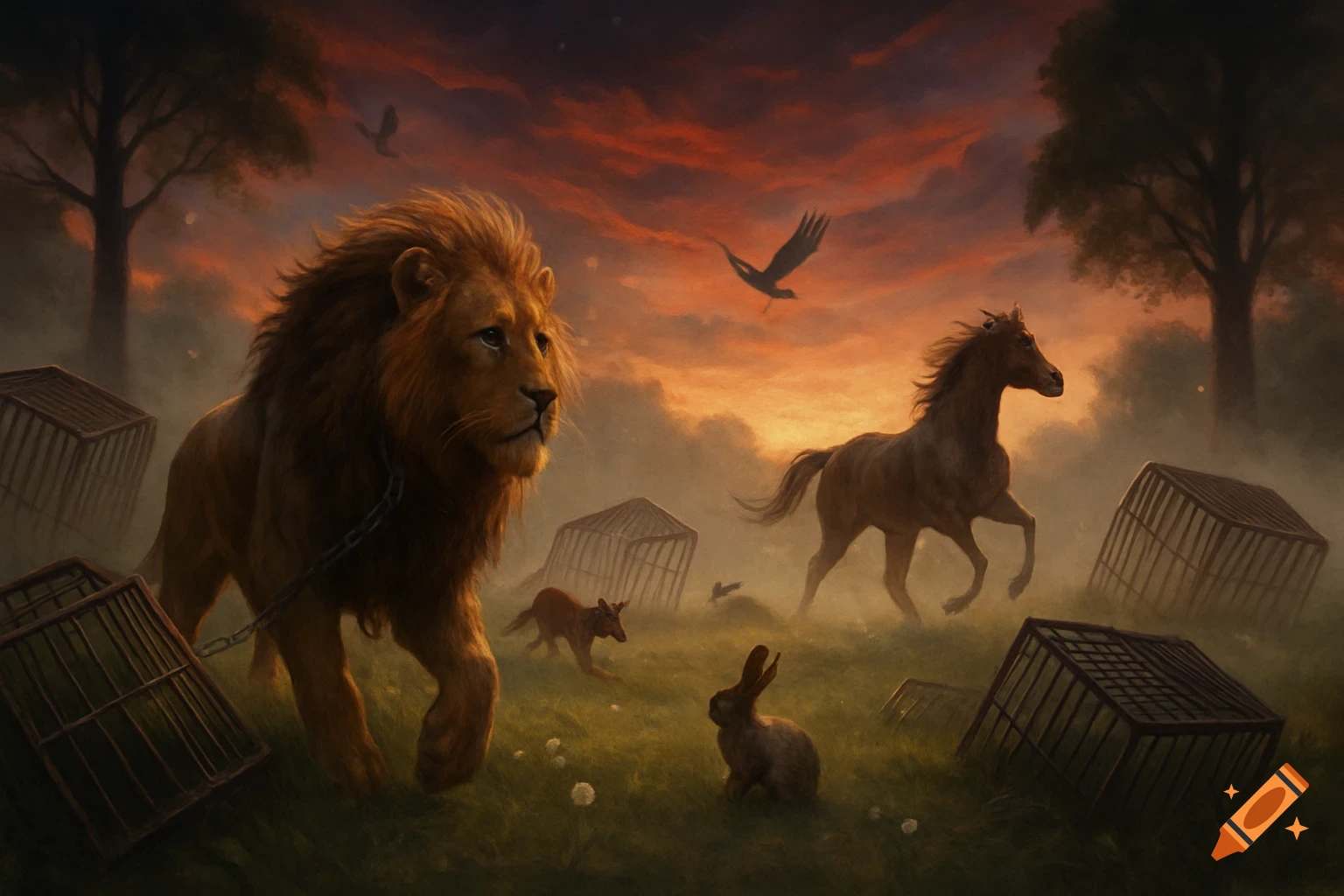
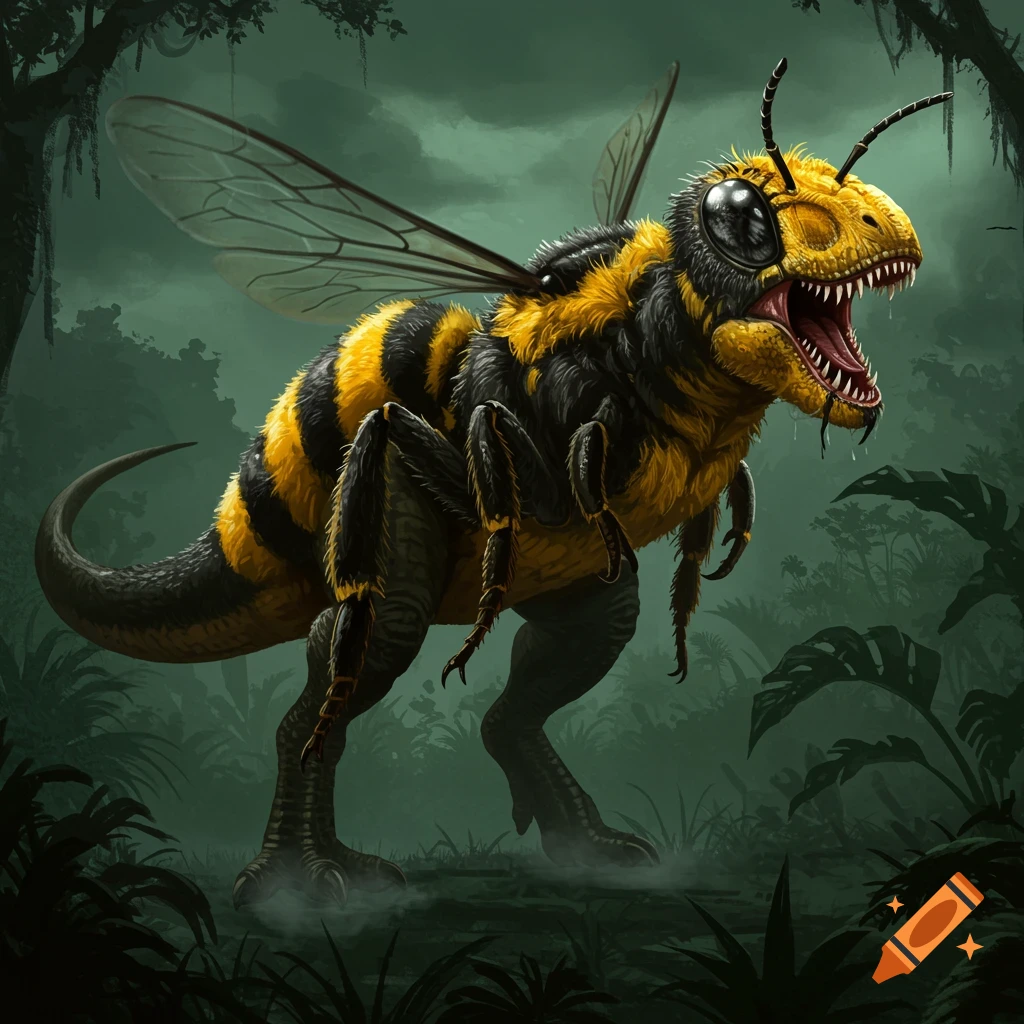
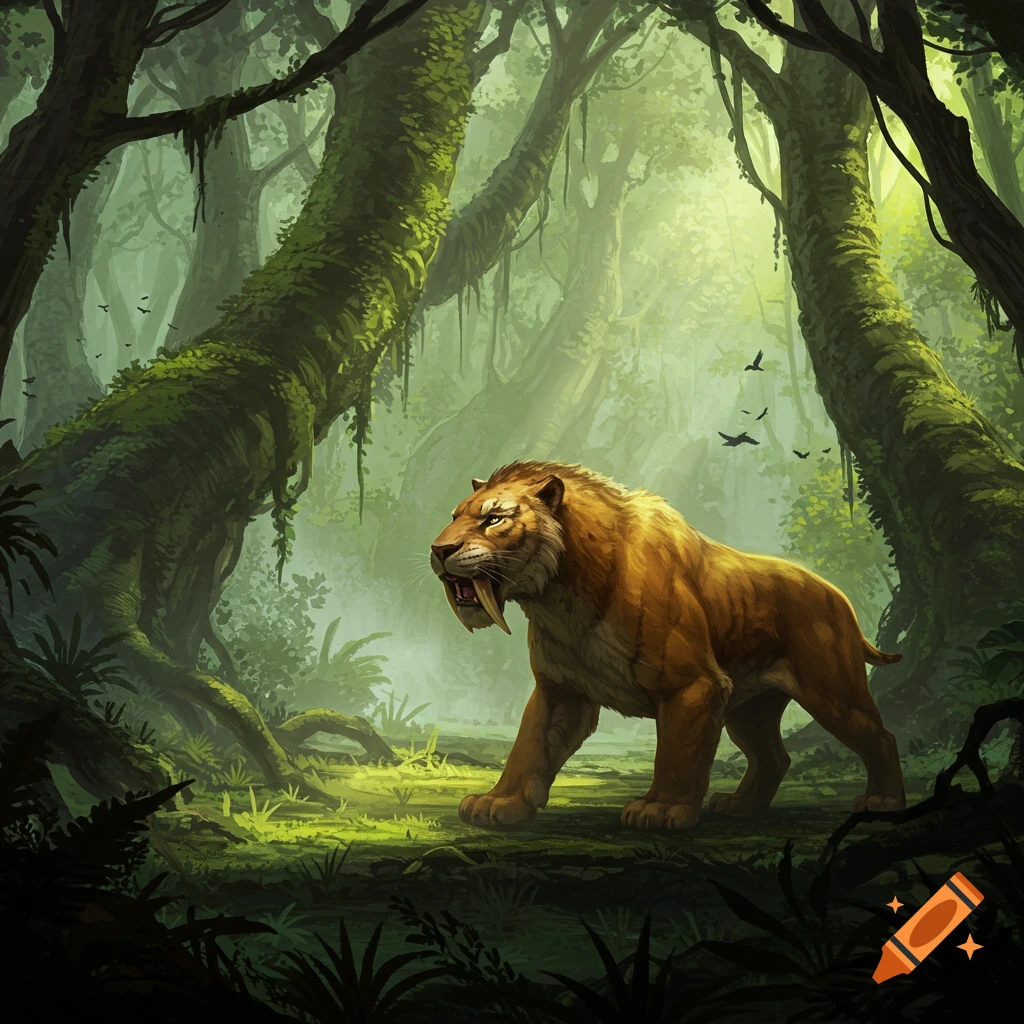
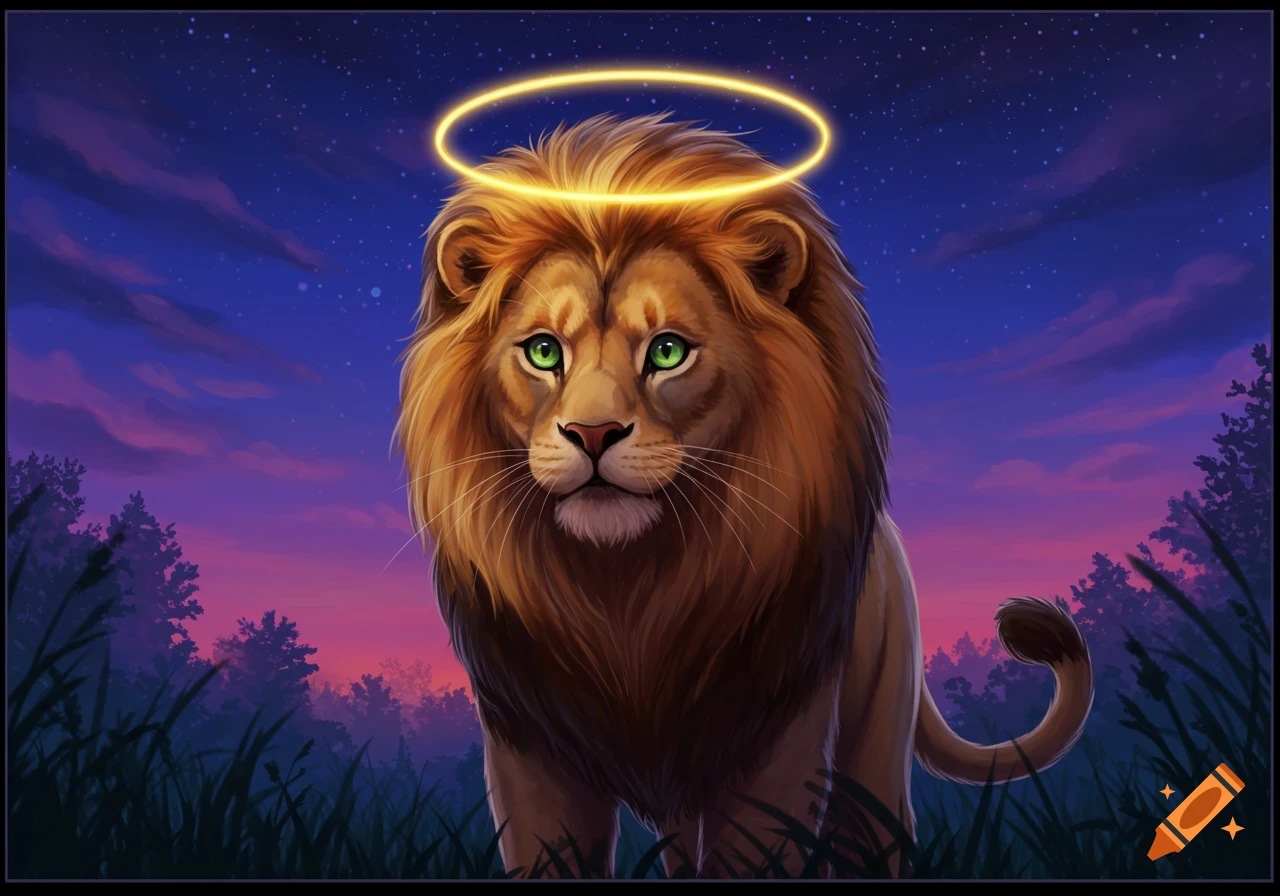
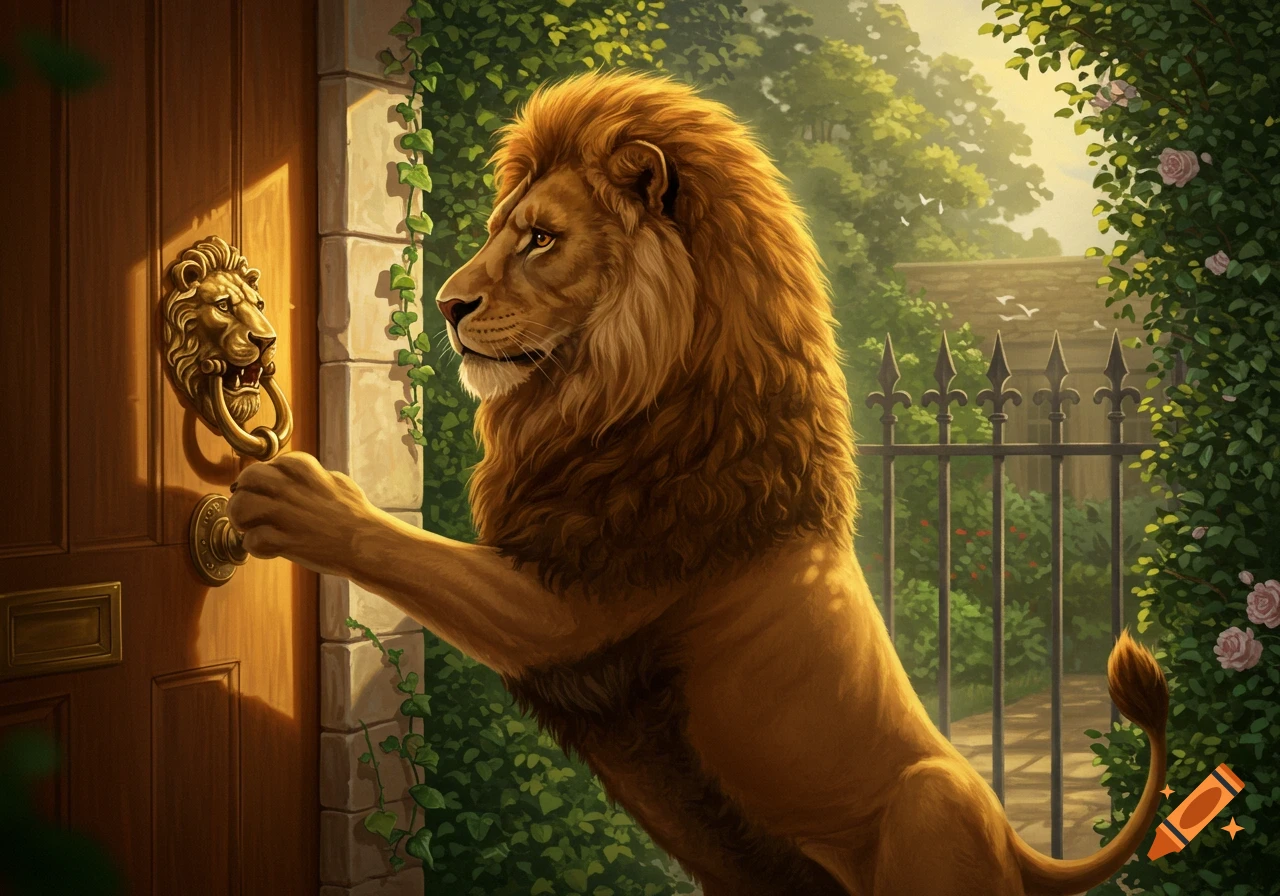
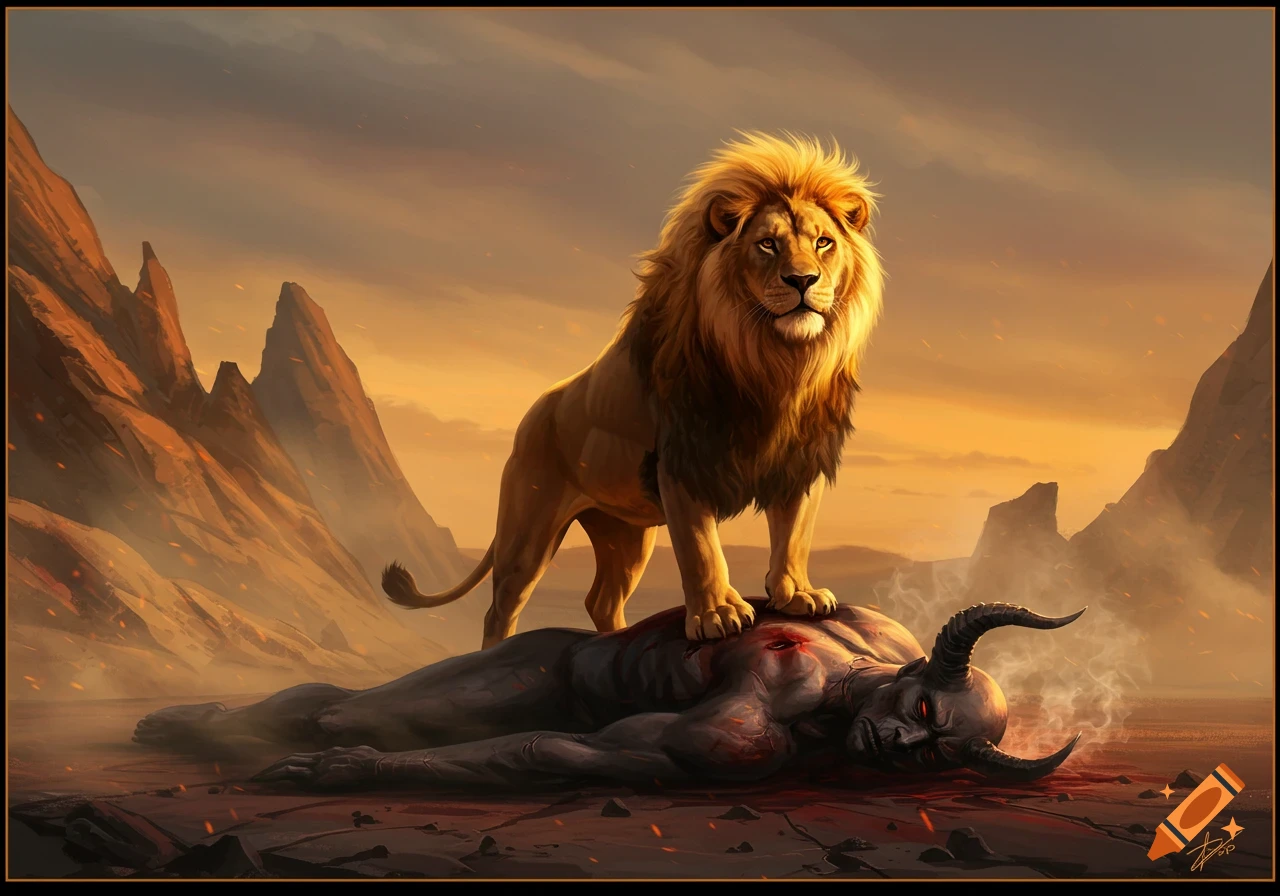
Painted illustration of a dead lion with honey dripping from its mouth and bees swarming around it in a forest clearing.
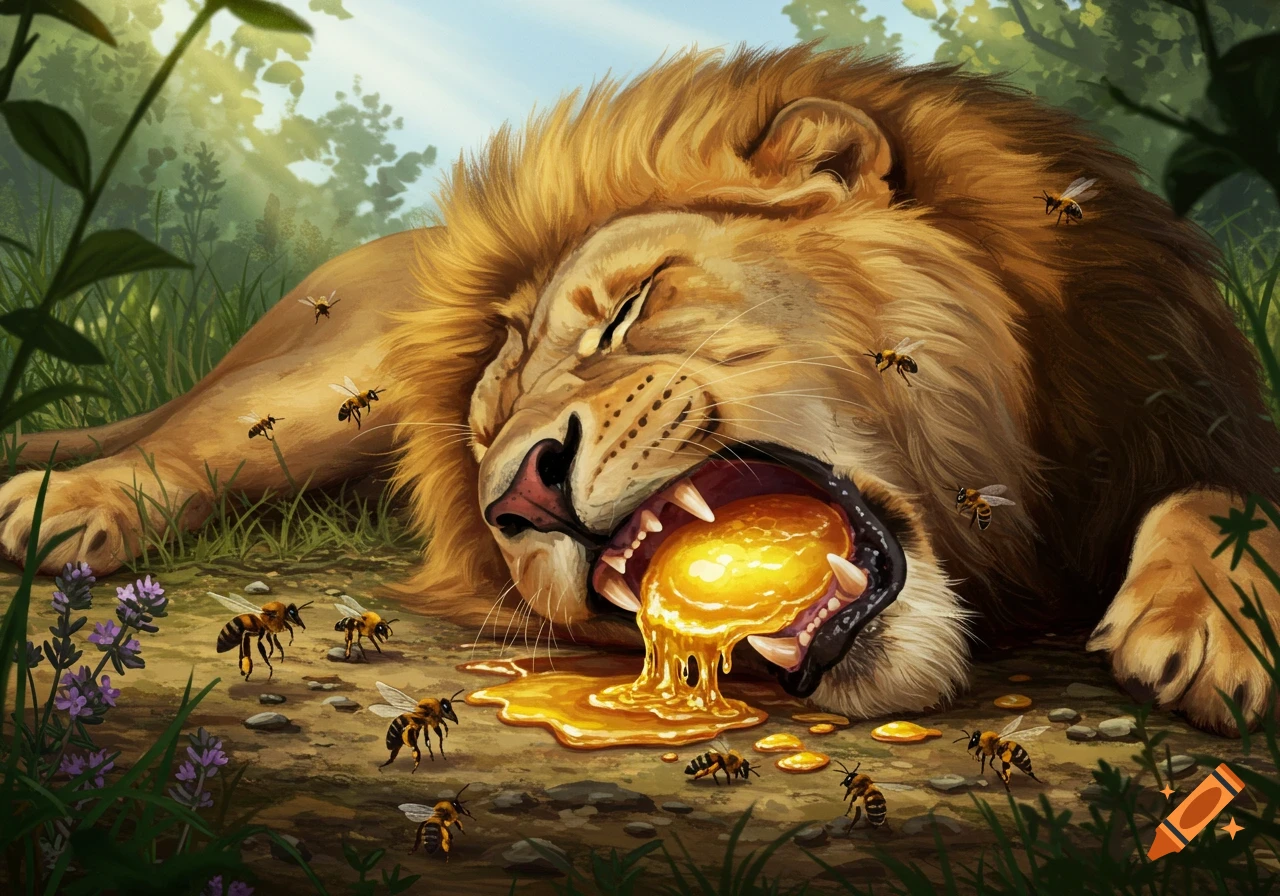
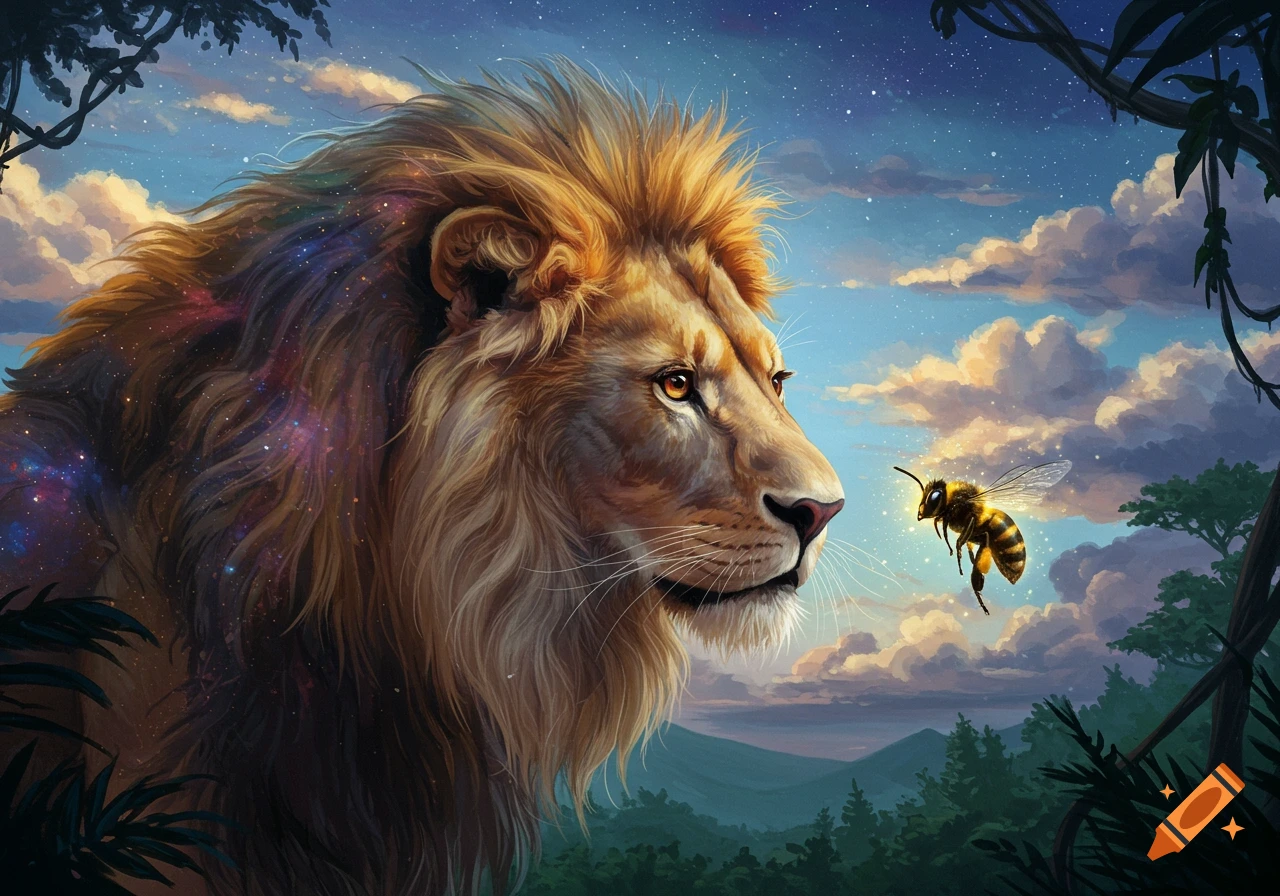
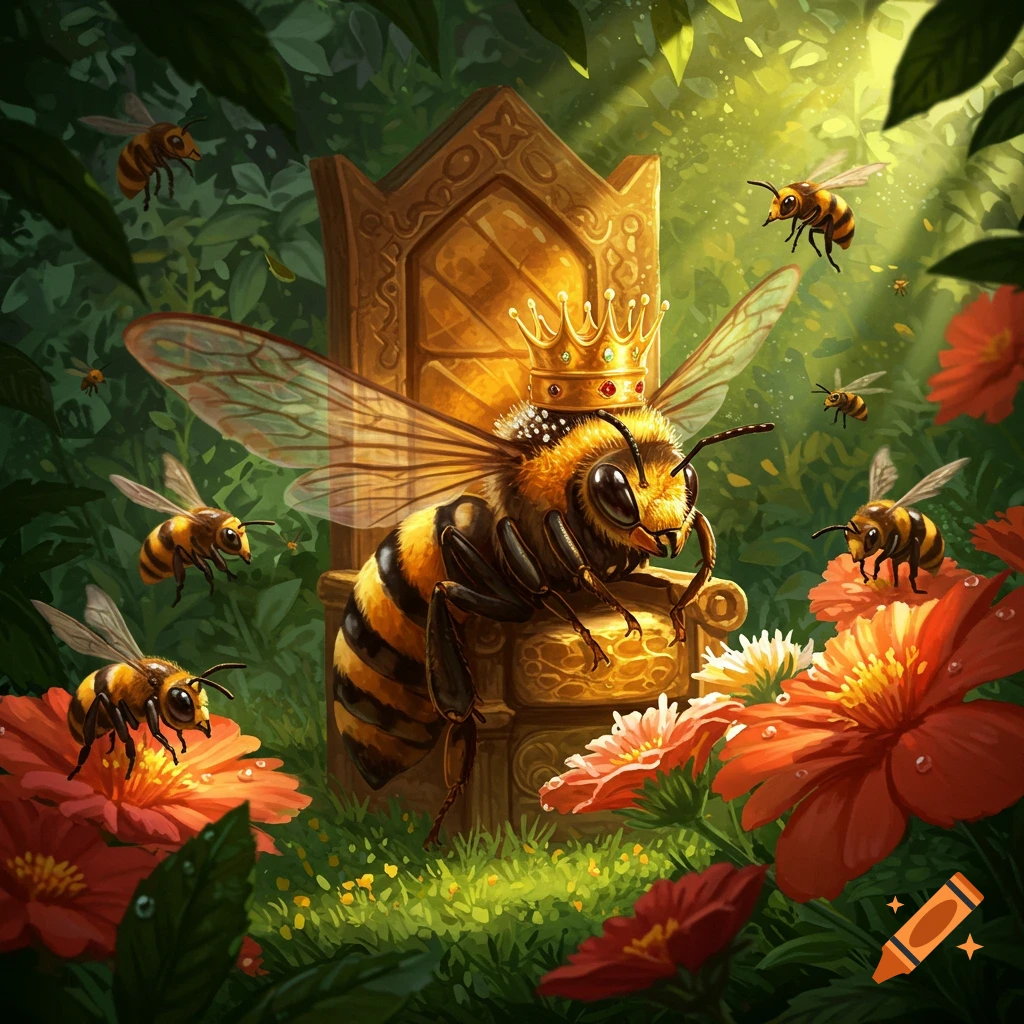
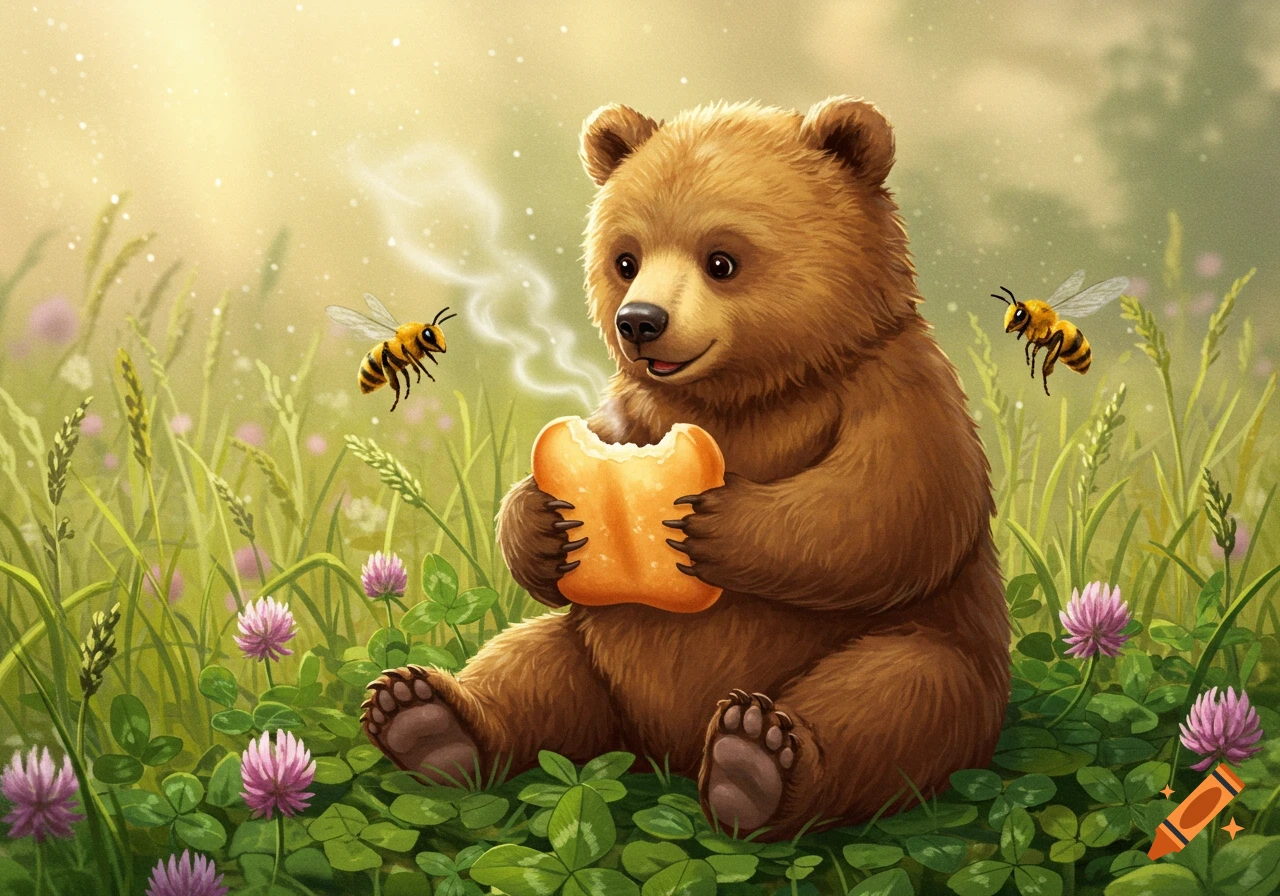
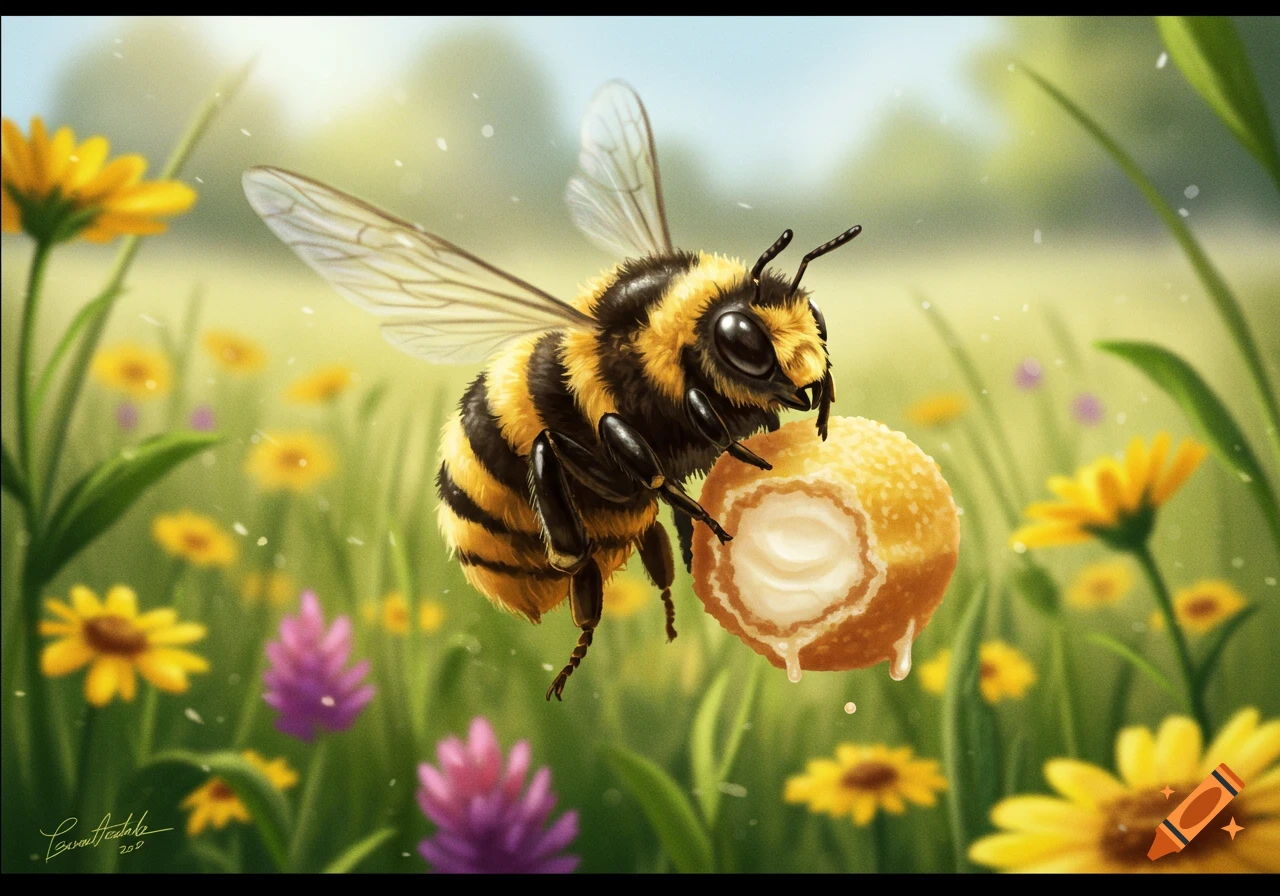
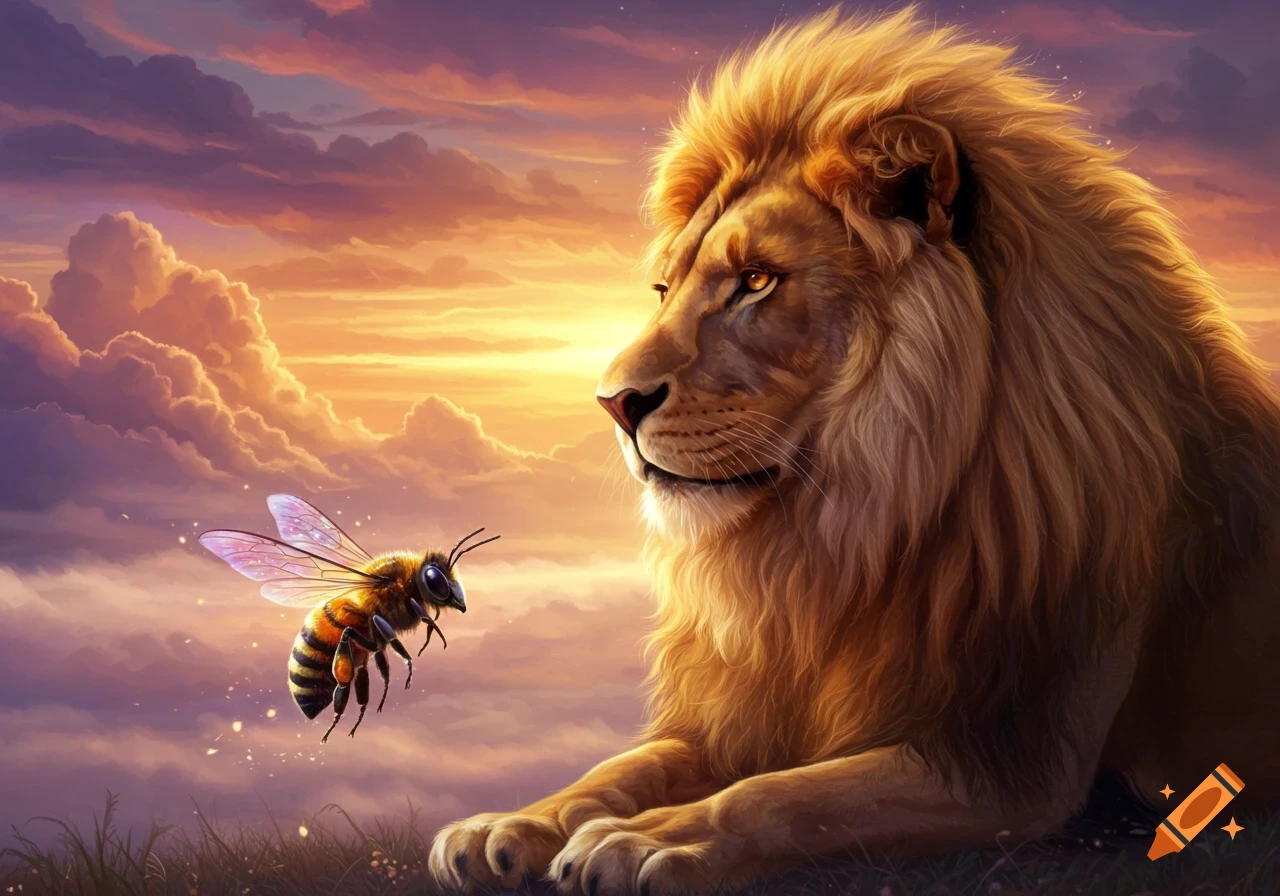
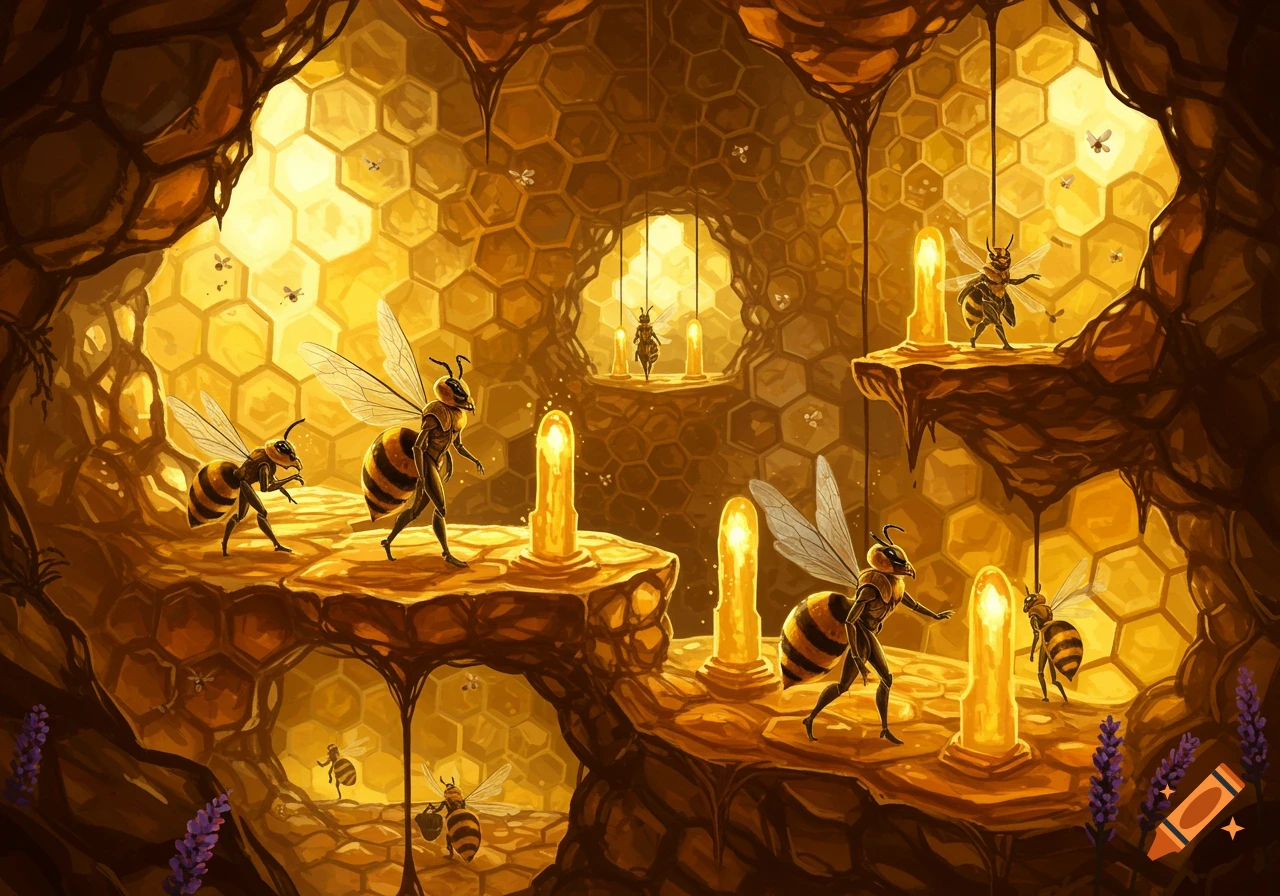
Imagined Scene: The Dead Lion and the Honey with Bees In a quiet, sun-dappled wilderness, a majestic lion lies motionless on the earth, its powerful body now still, a testament to divine strength and victory. Its thick mane, once a symbol of regal power, is slightly disheveled, tinged with the dust of the wilderness. Within the open maw of the lion, where once fierce teeth had guarded its prey, a golden, glistening glob of honey rests, sticky and sweet. The honey shines like a tiny sun, a divine treasure hidden in death, symbolizing God's grace working through the destruction of the beast. Around the carcass, a swarm of bees hum softly, busy and diligent. They move in a rhythmic dance, collecting nectar from nearby wildflowers—lilies, thyme, and wild herbs—and transforming it into honey, the "sweetness of divine wisdom." Their gentle buzzing adds a sacred harmony to the scene, echoing the hymn of creation. The bees land on the honey, their tiny bodies coated in golden pollen, as they work tirelessly in the service of God's creation. Some hover near the lion’s open mouth, drawn by the sweet scent, embodying the divine grace that flows from the death of the beast—an emblem of how life and blessing emerge from what seems to be decay. In the background, the sky is bright, with rays of sunlight breaking through the leaves, symbolizing divine illumination. The scene captures a moment of sacred mystery—God's grace hidden in death, a reminder of His providence, and the promise of See more