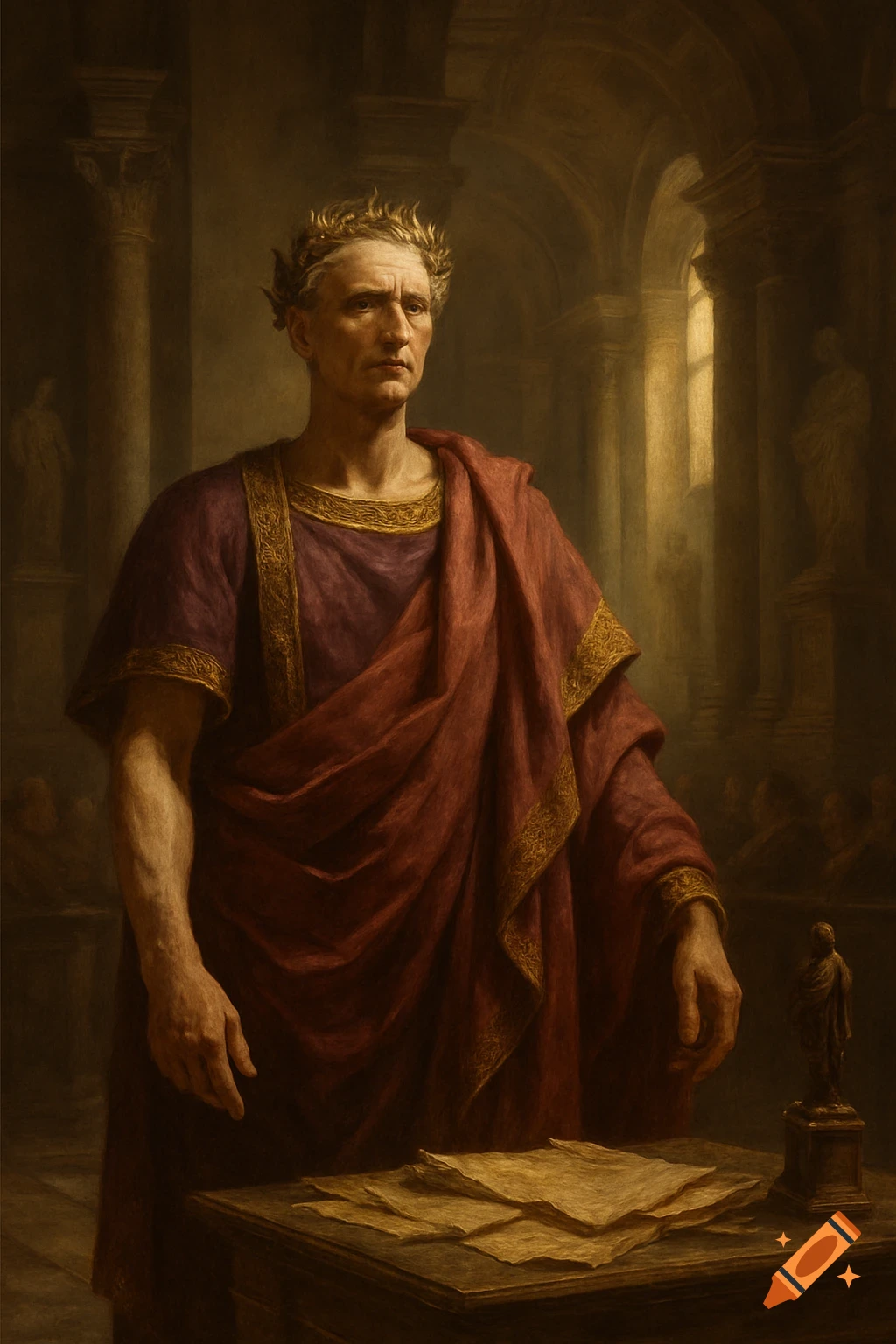
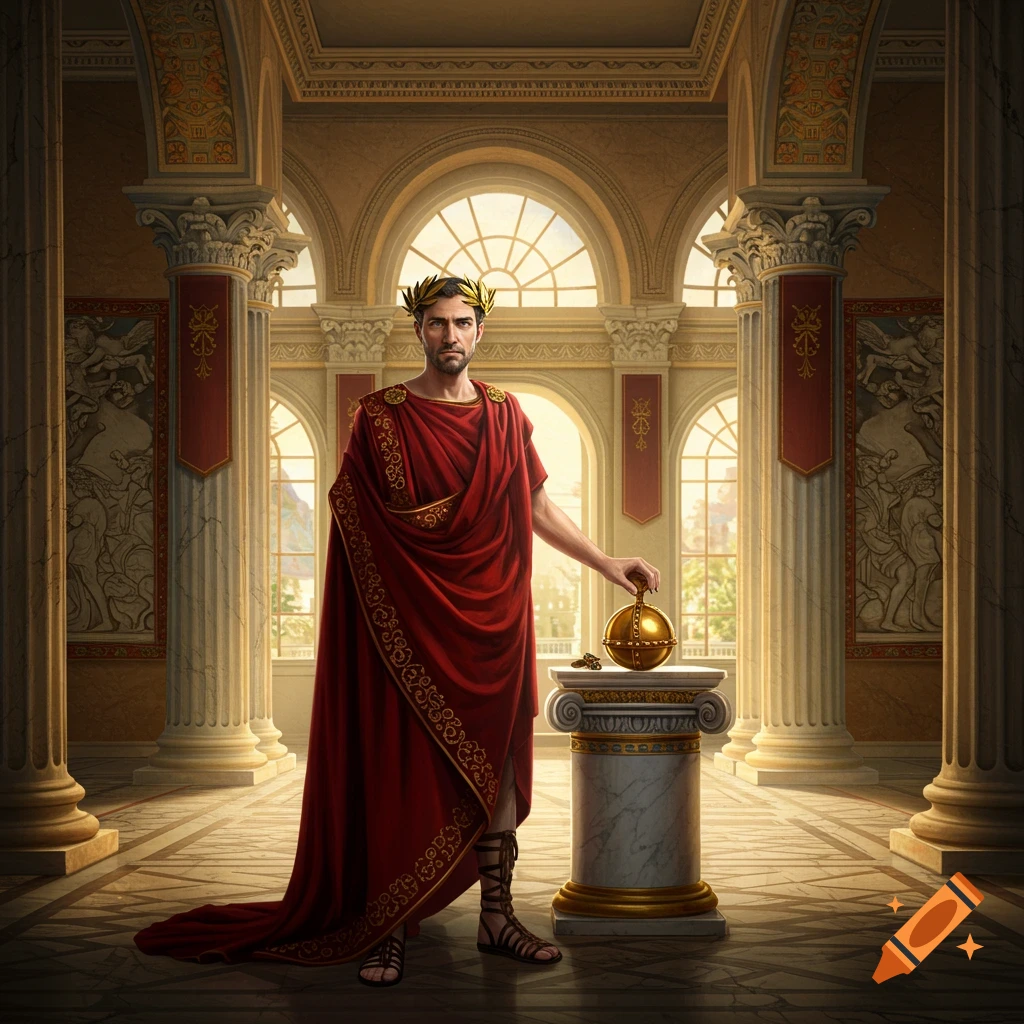
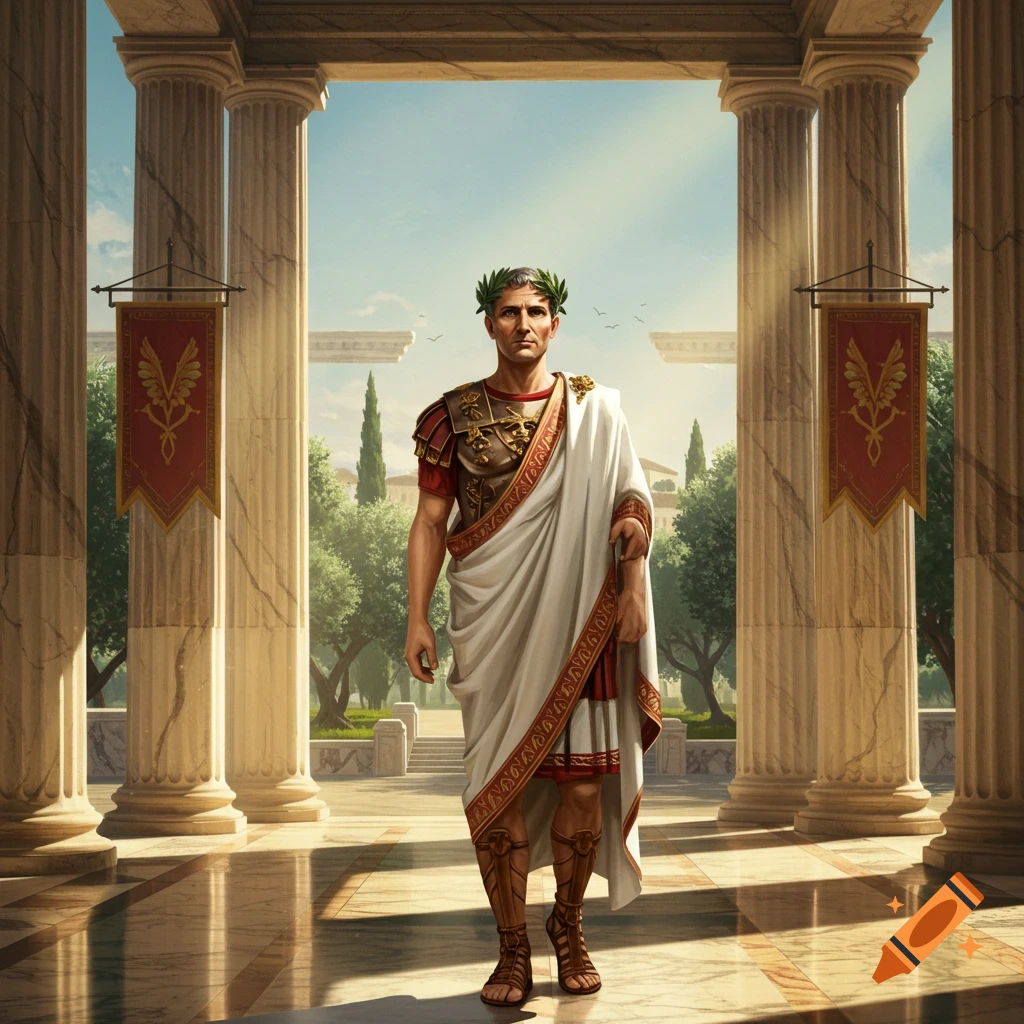
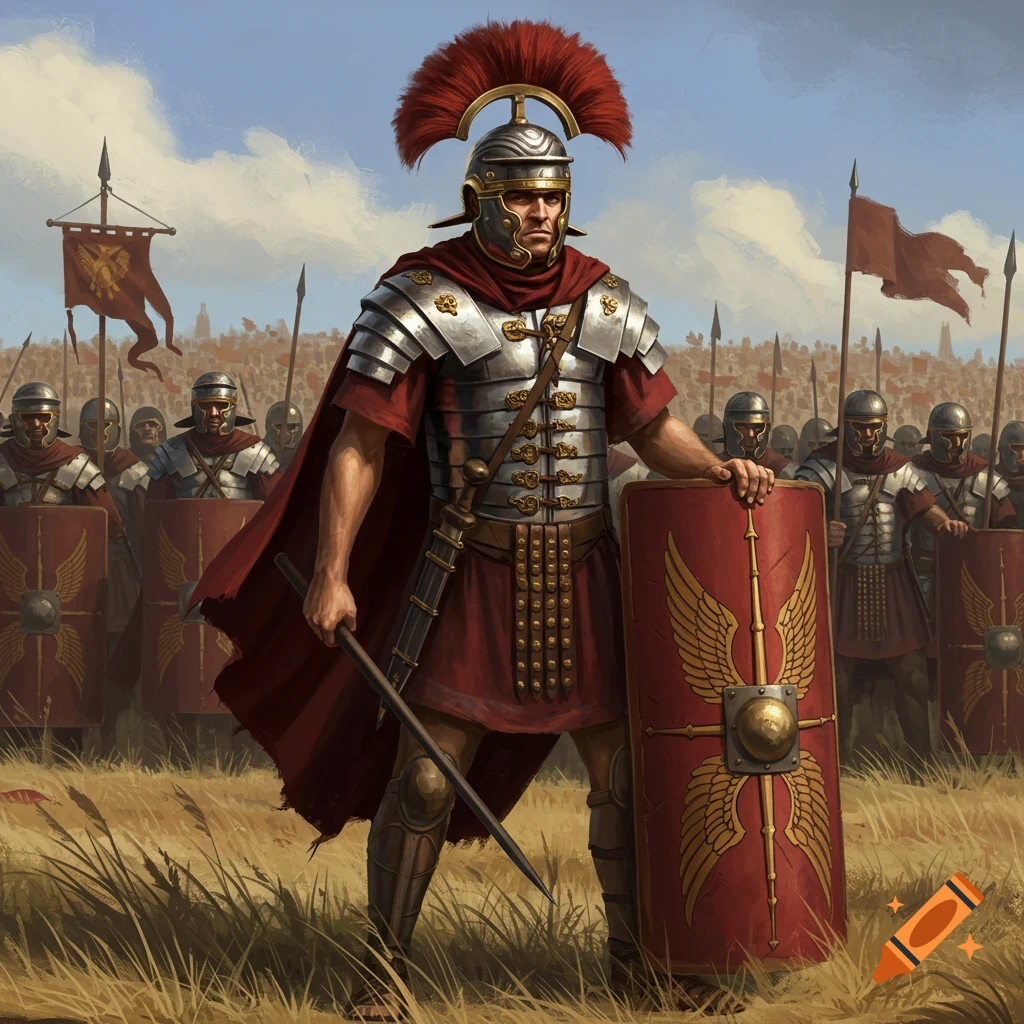
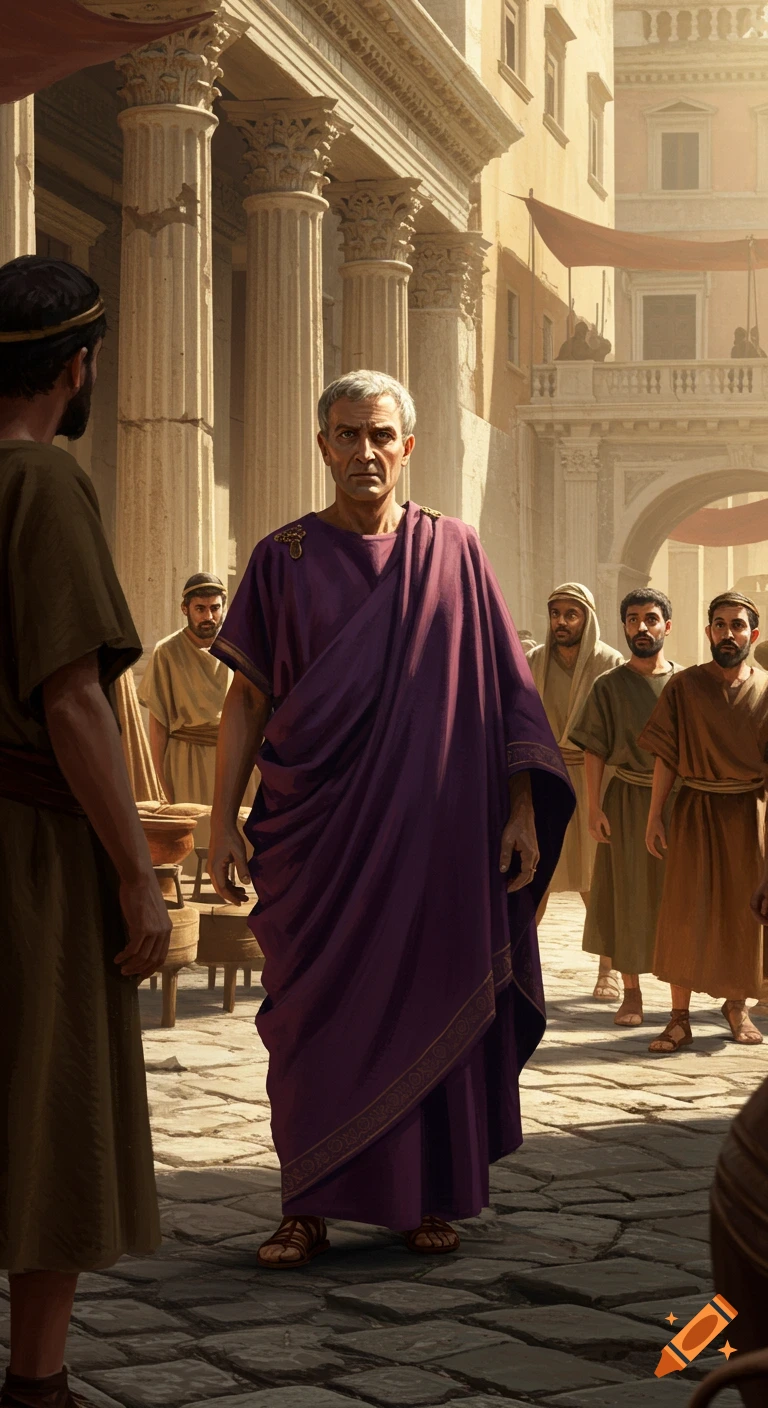
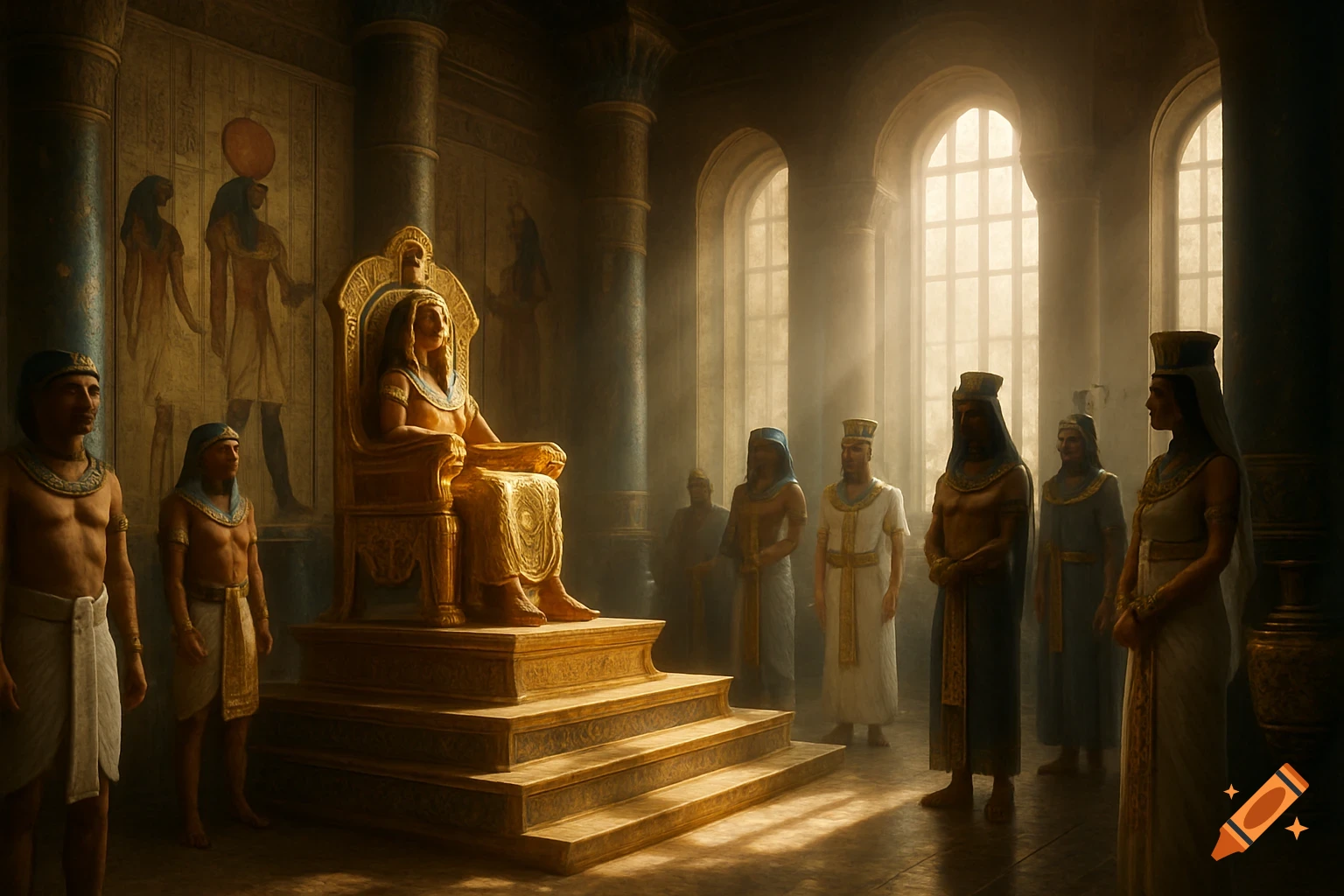
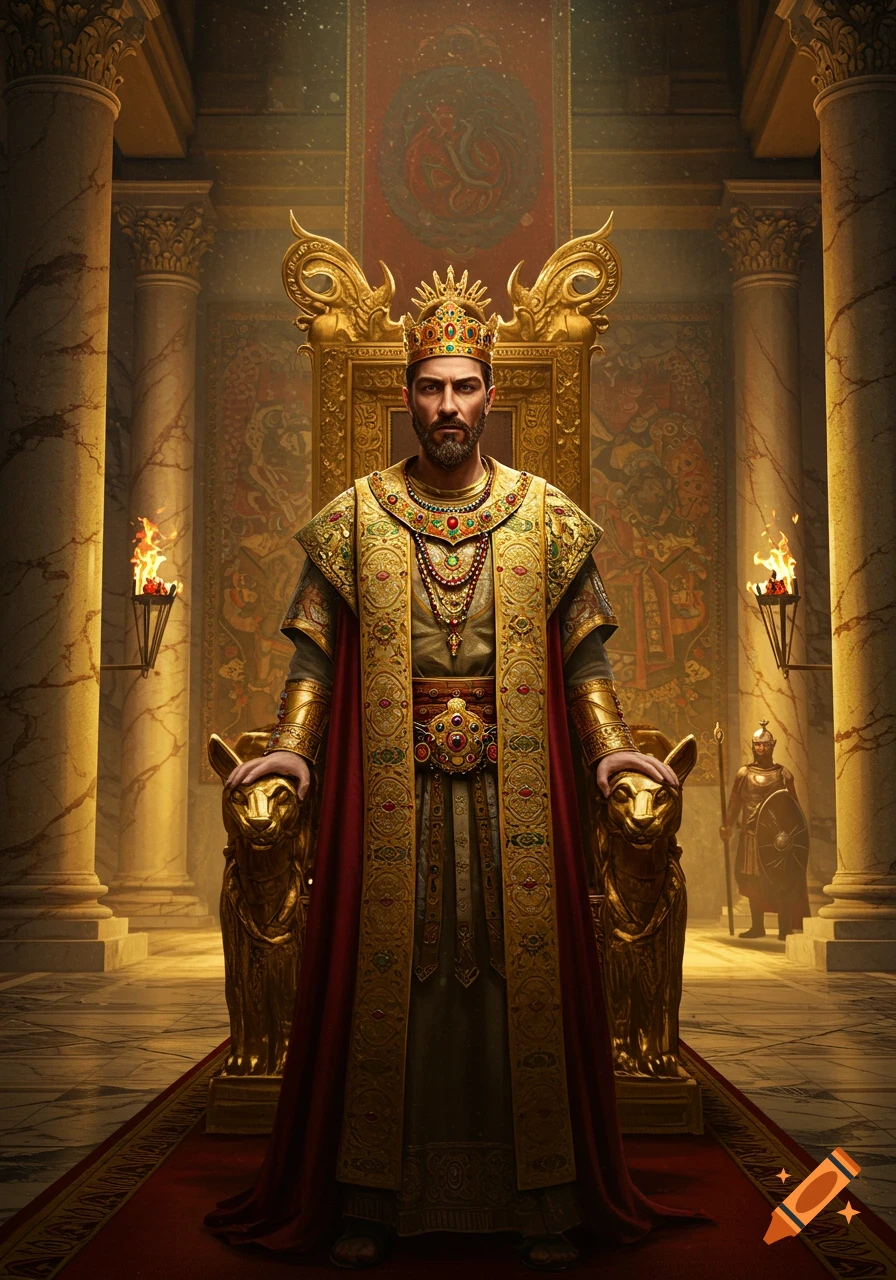
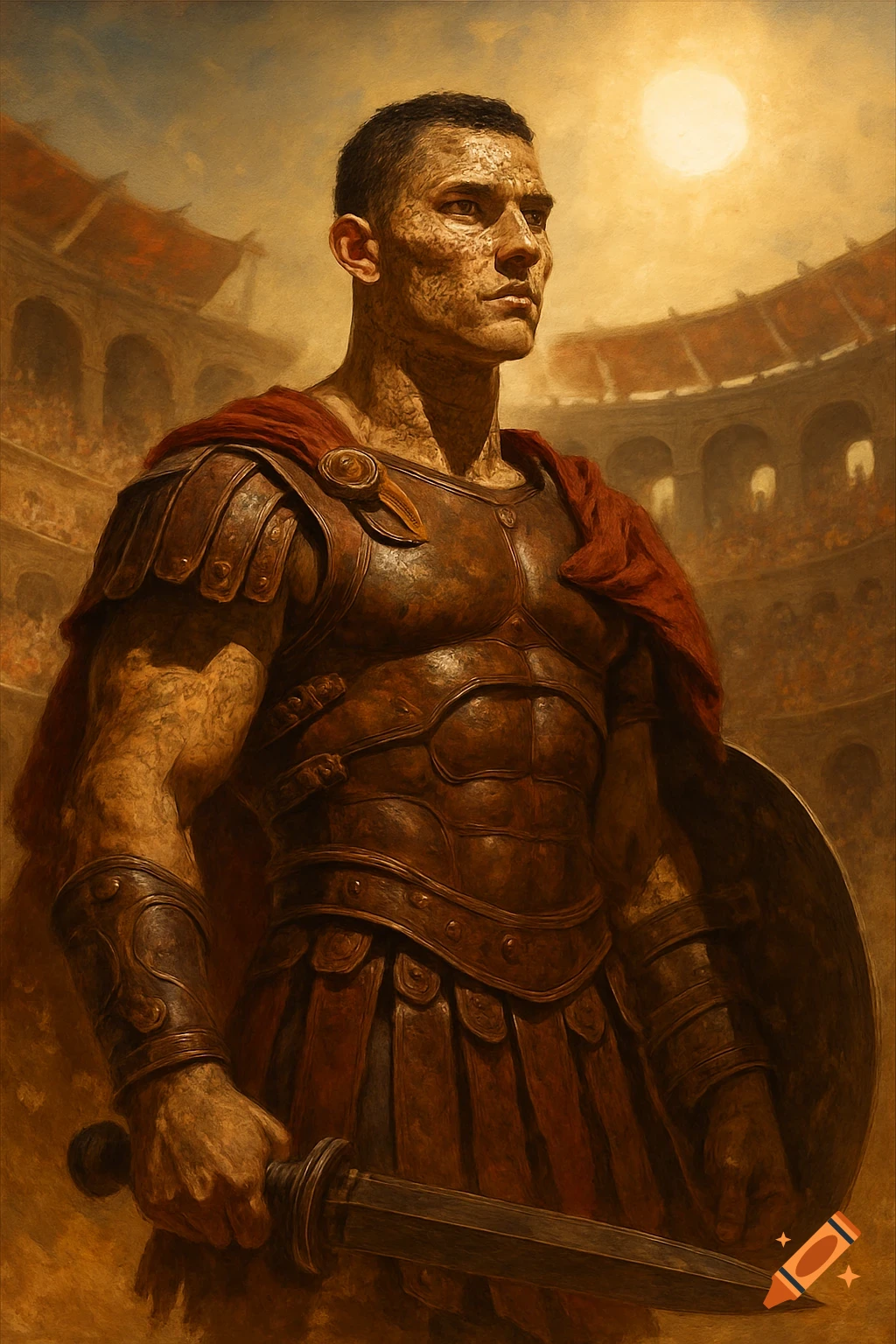
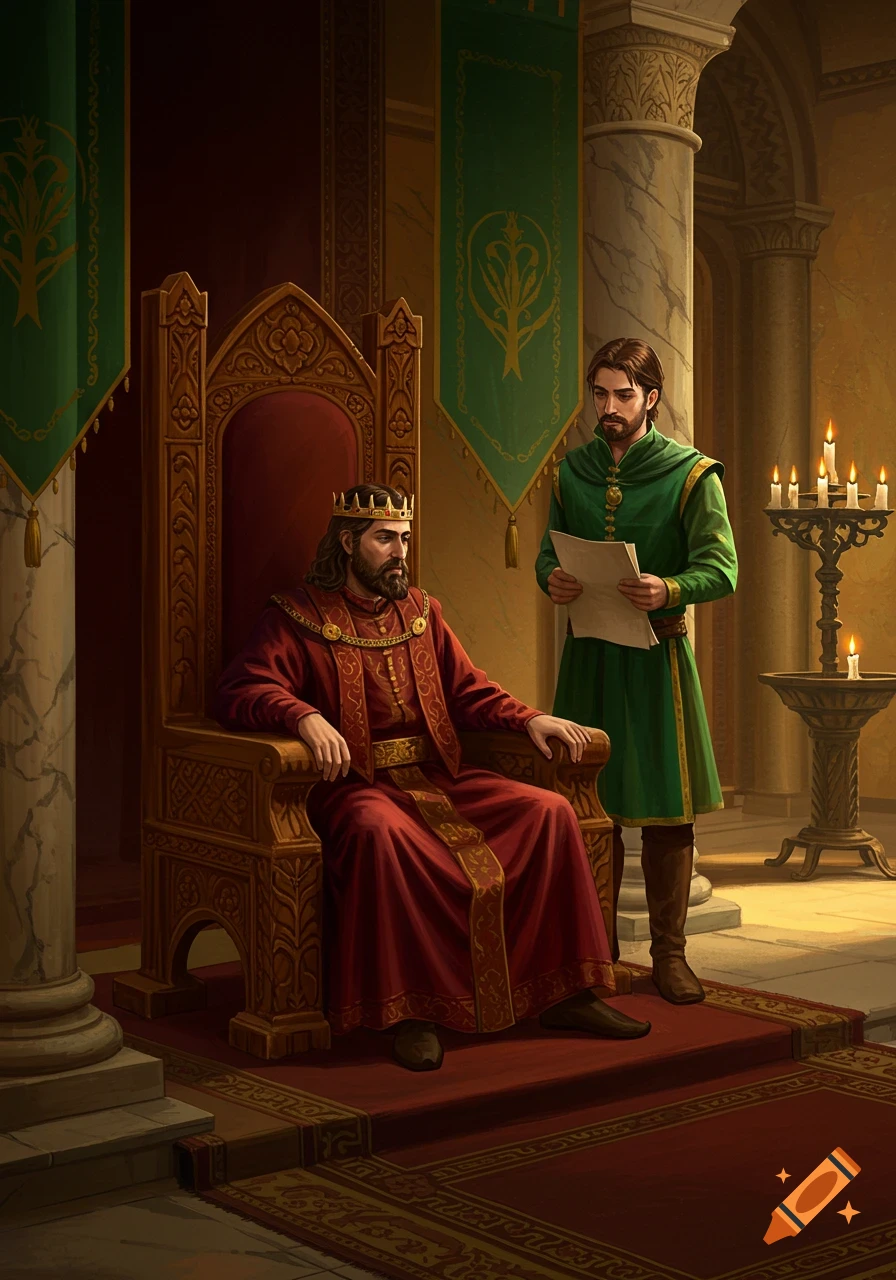
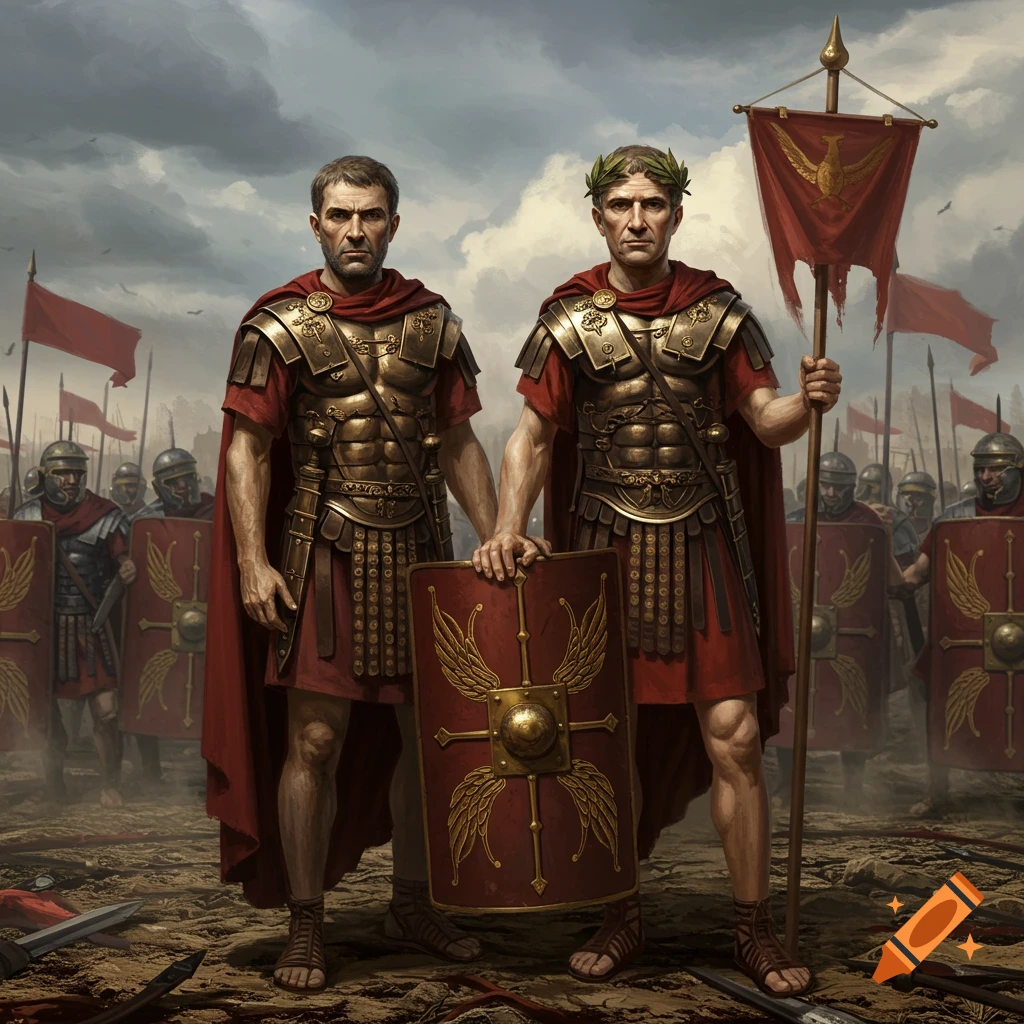
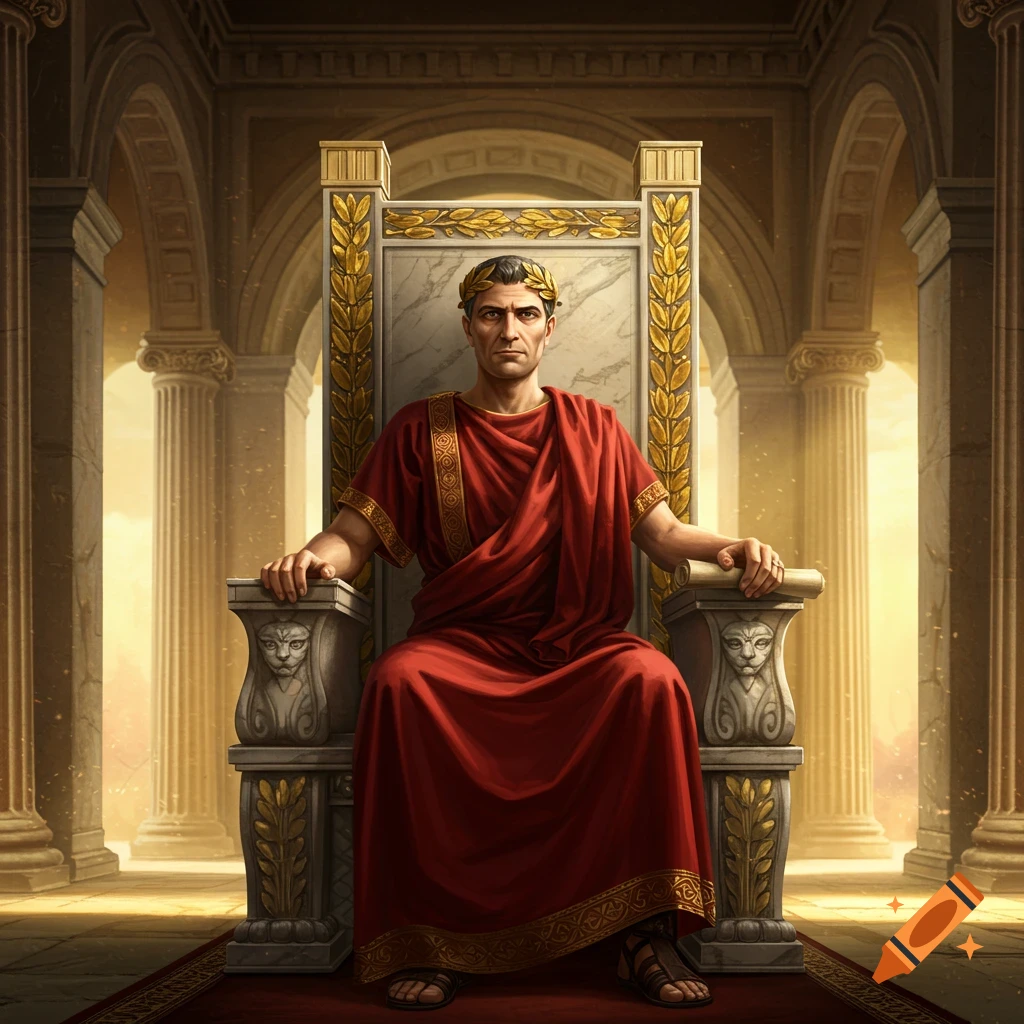
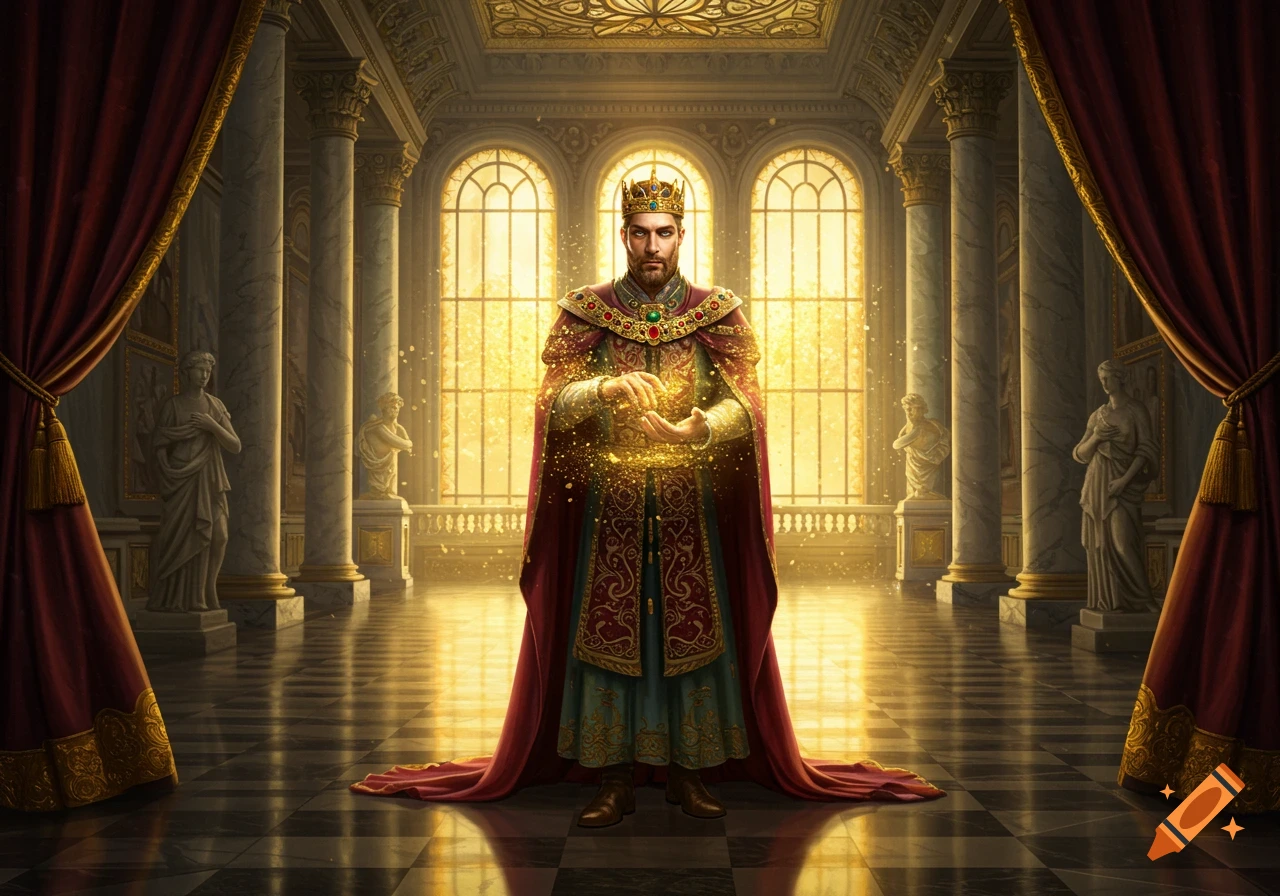
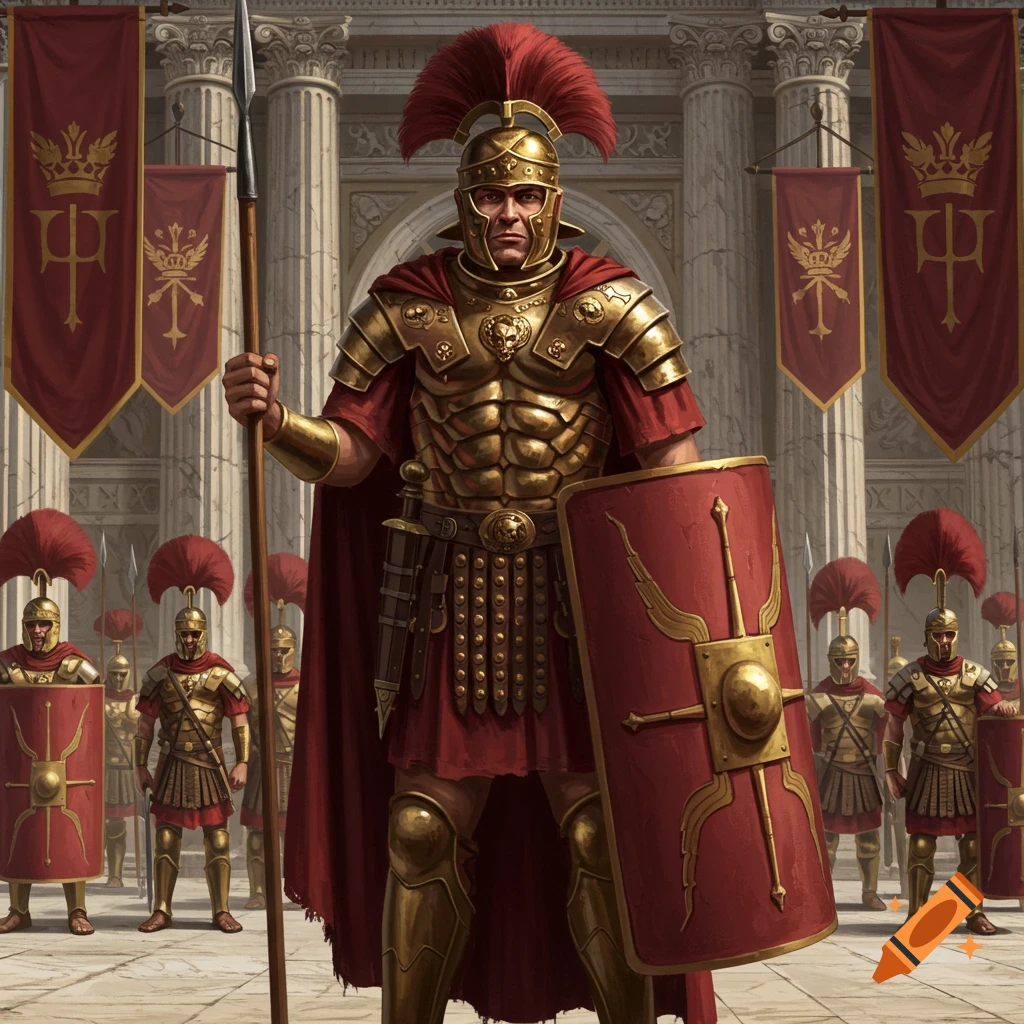
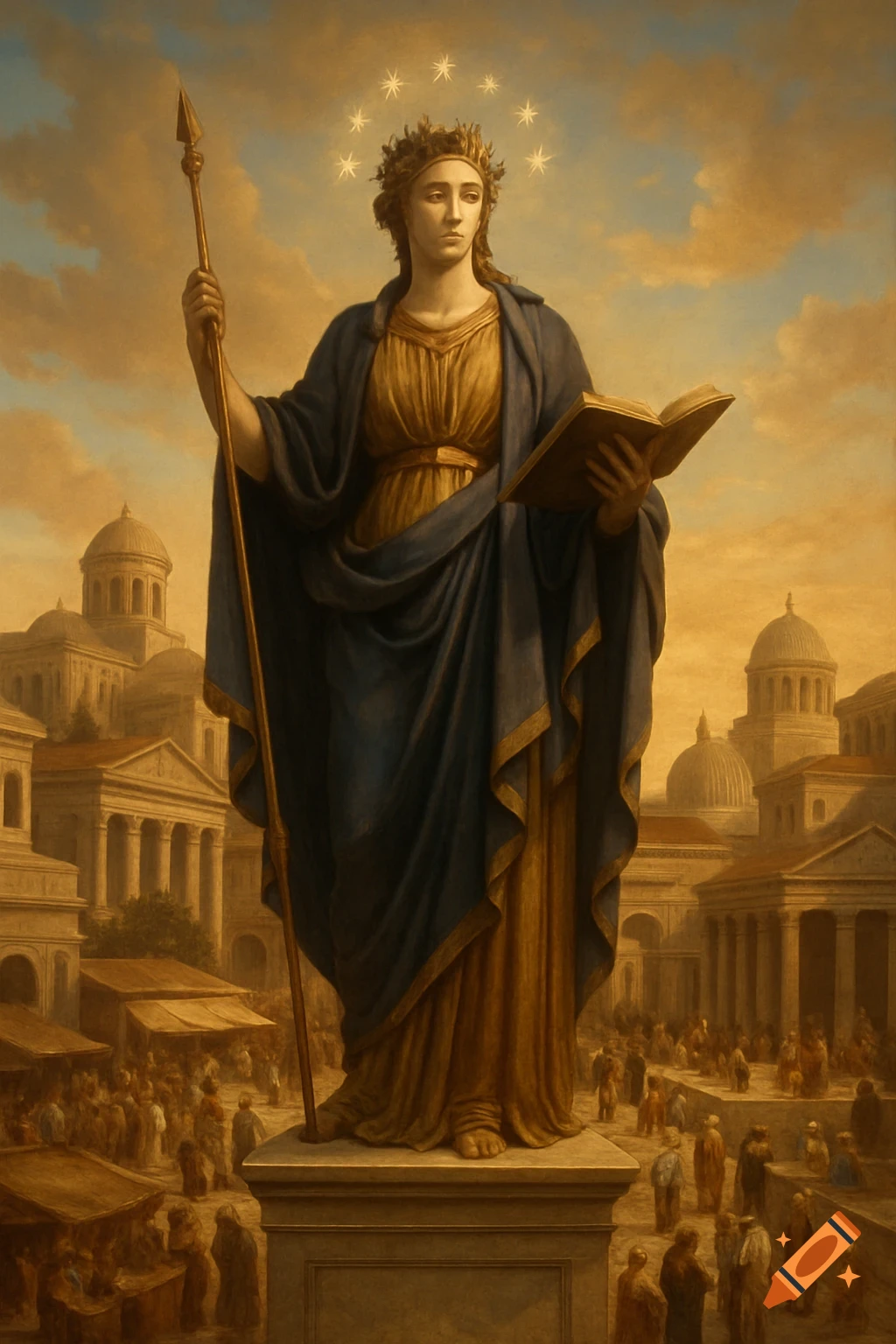
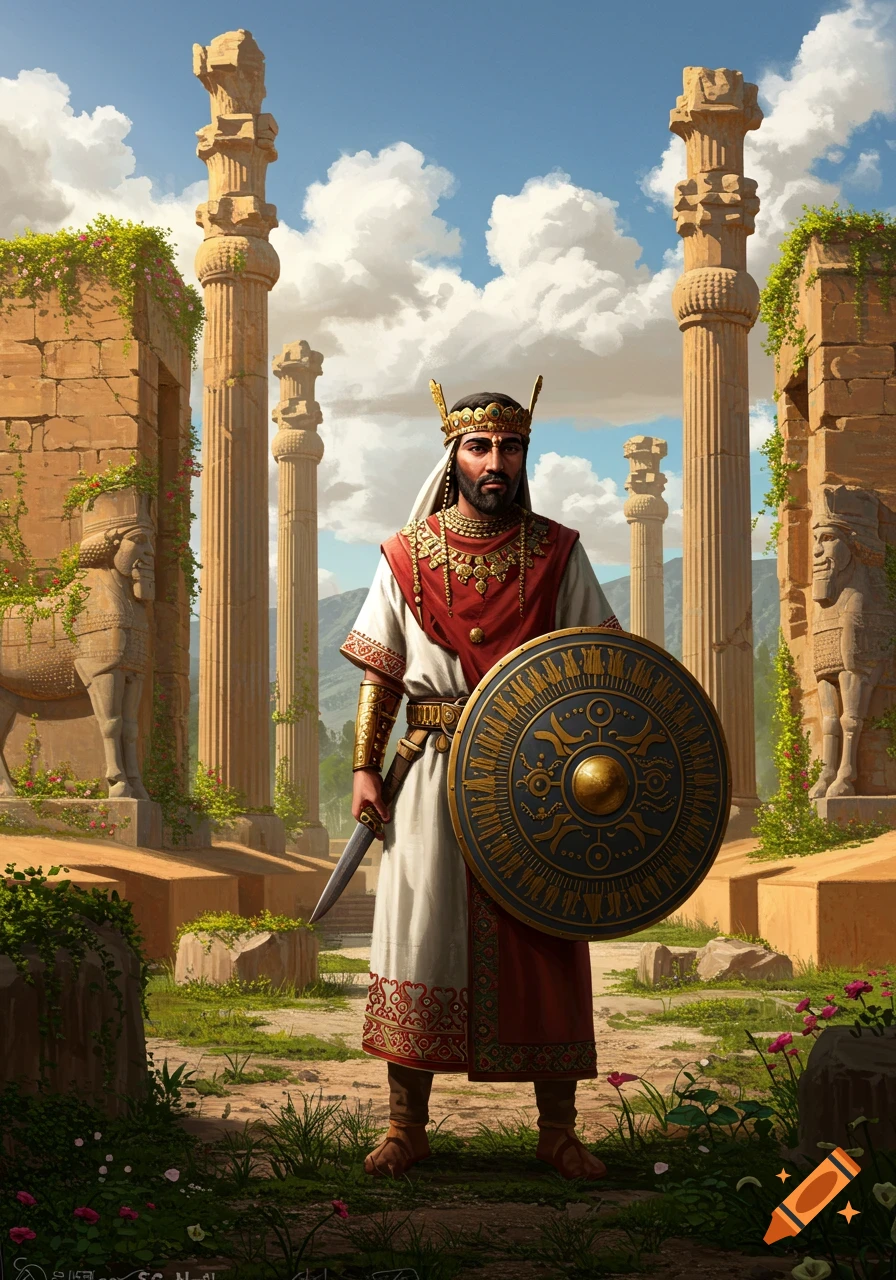
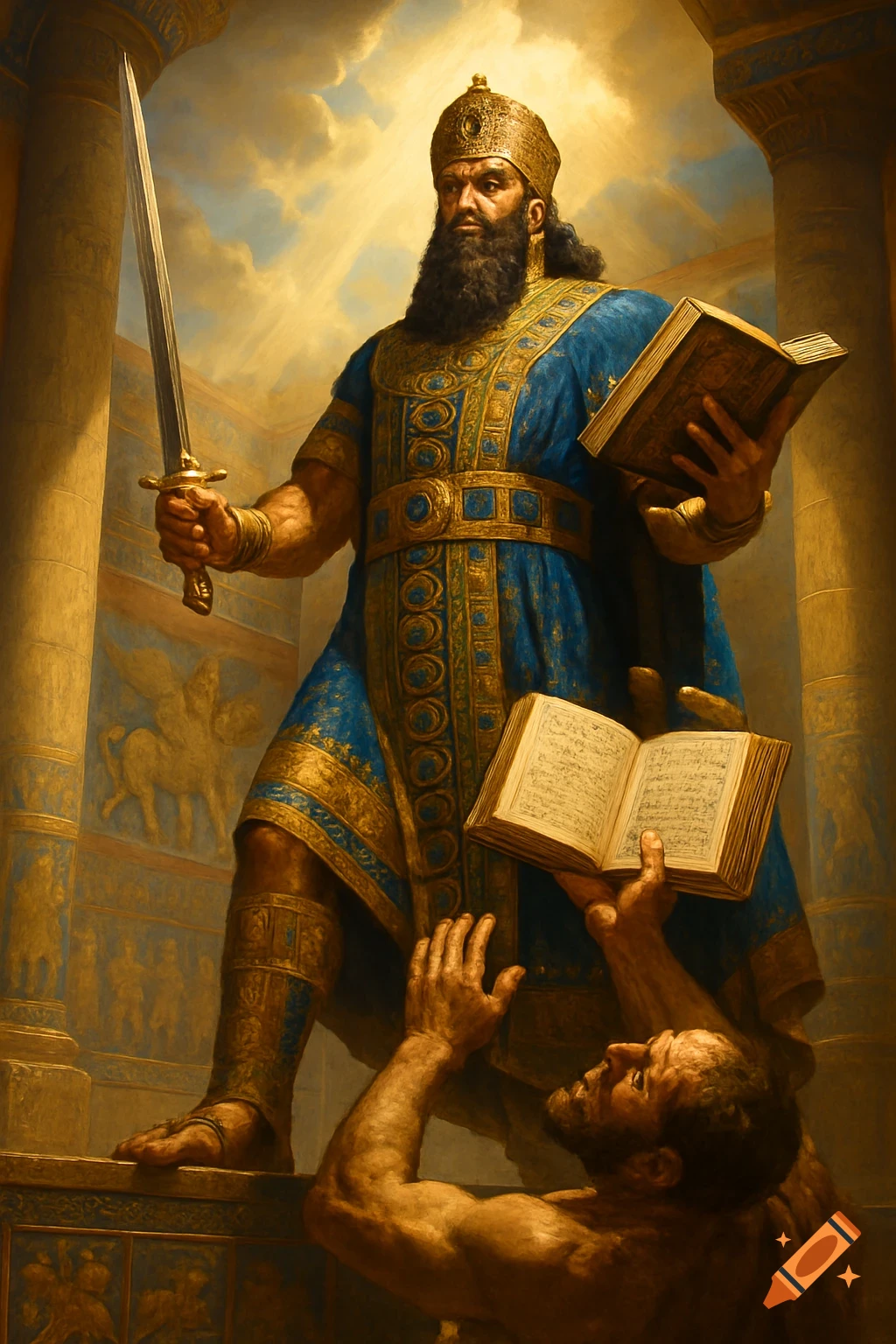
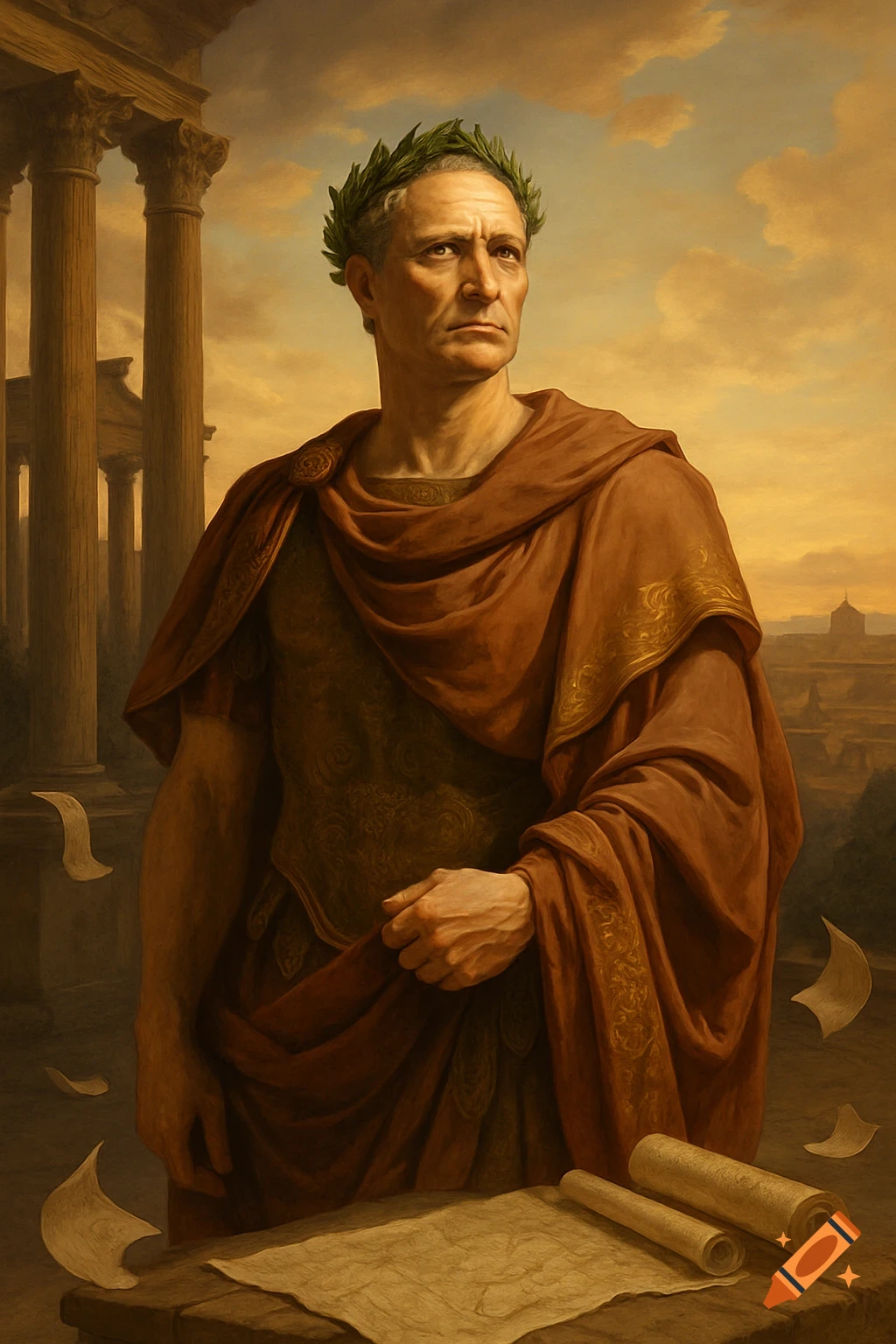
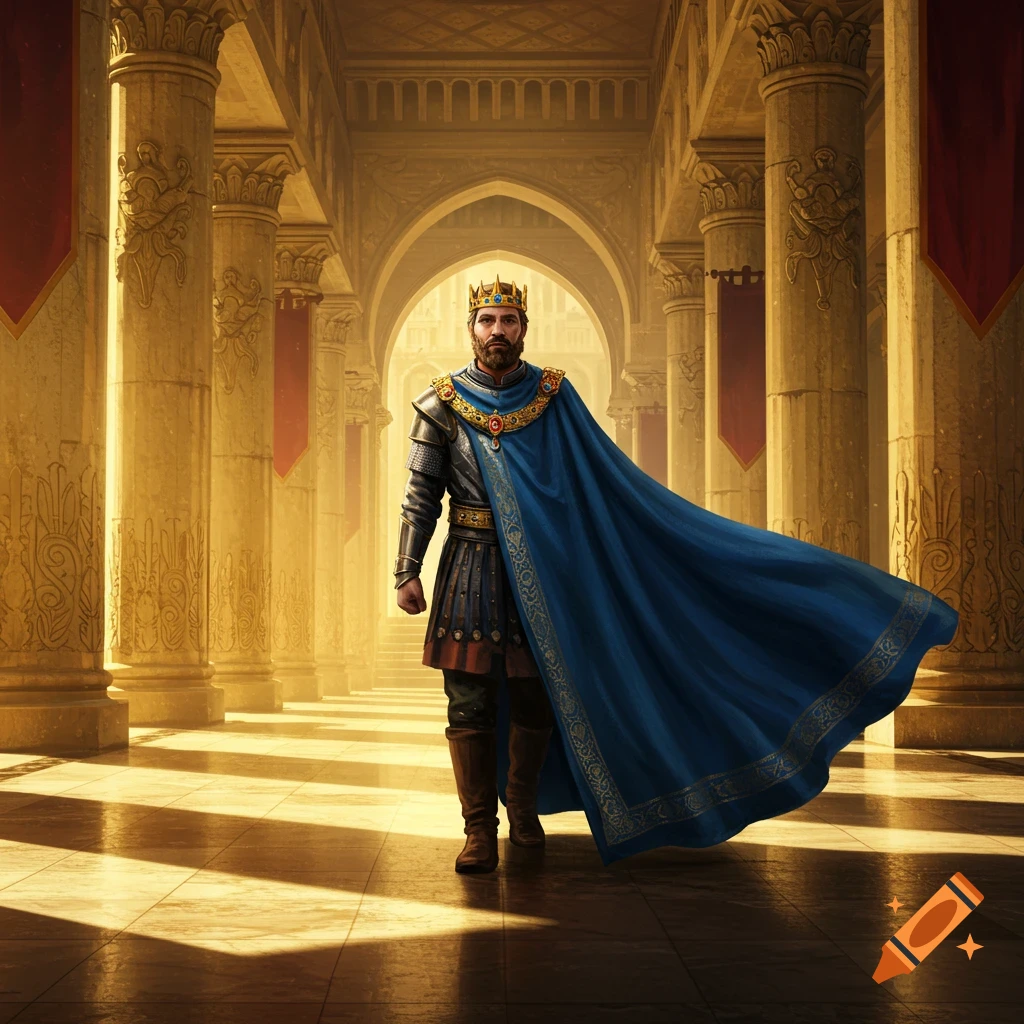
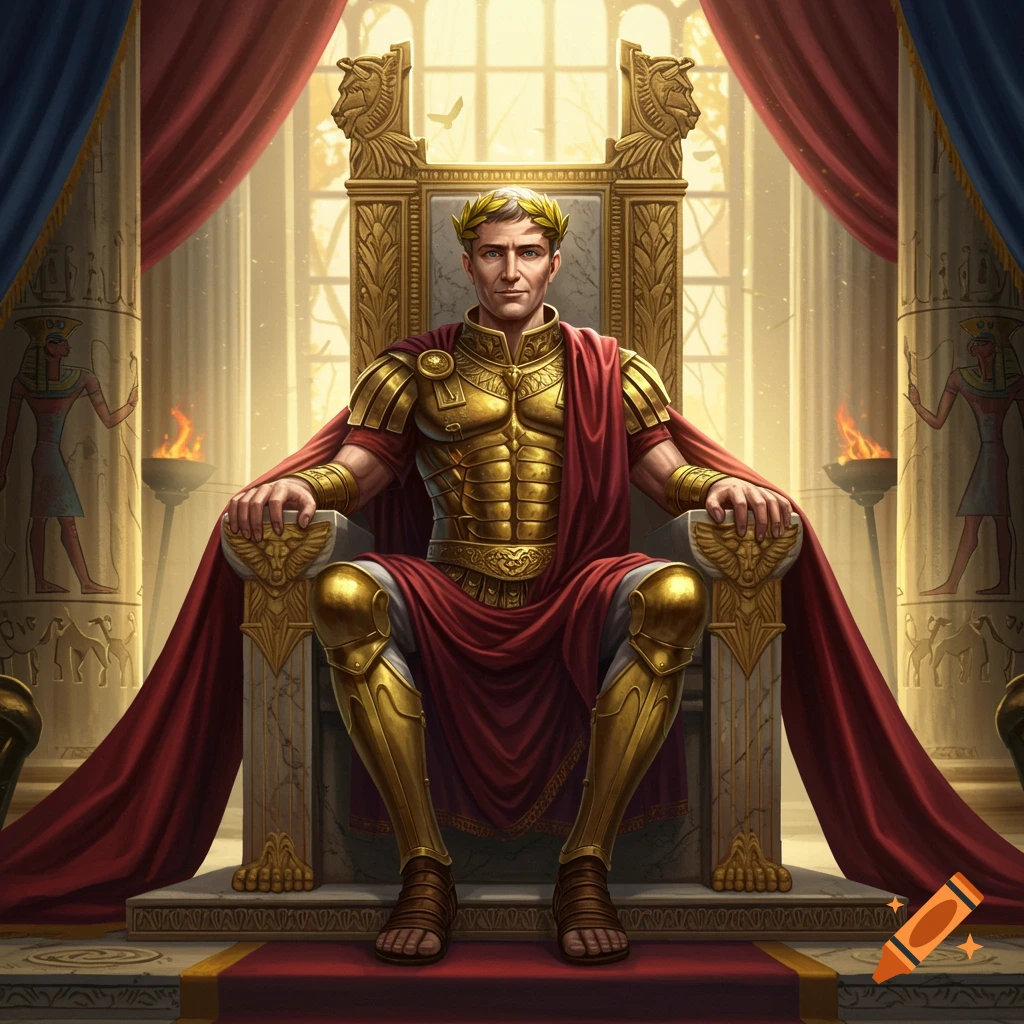
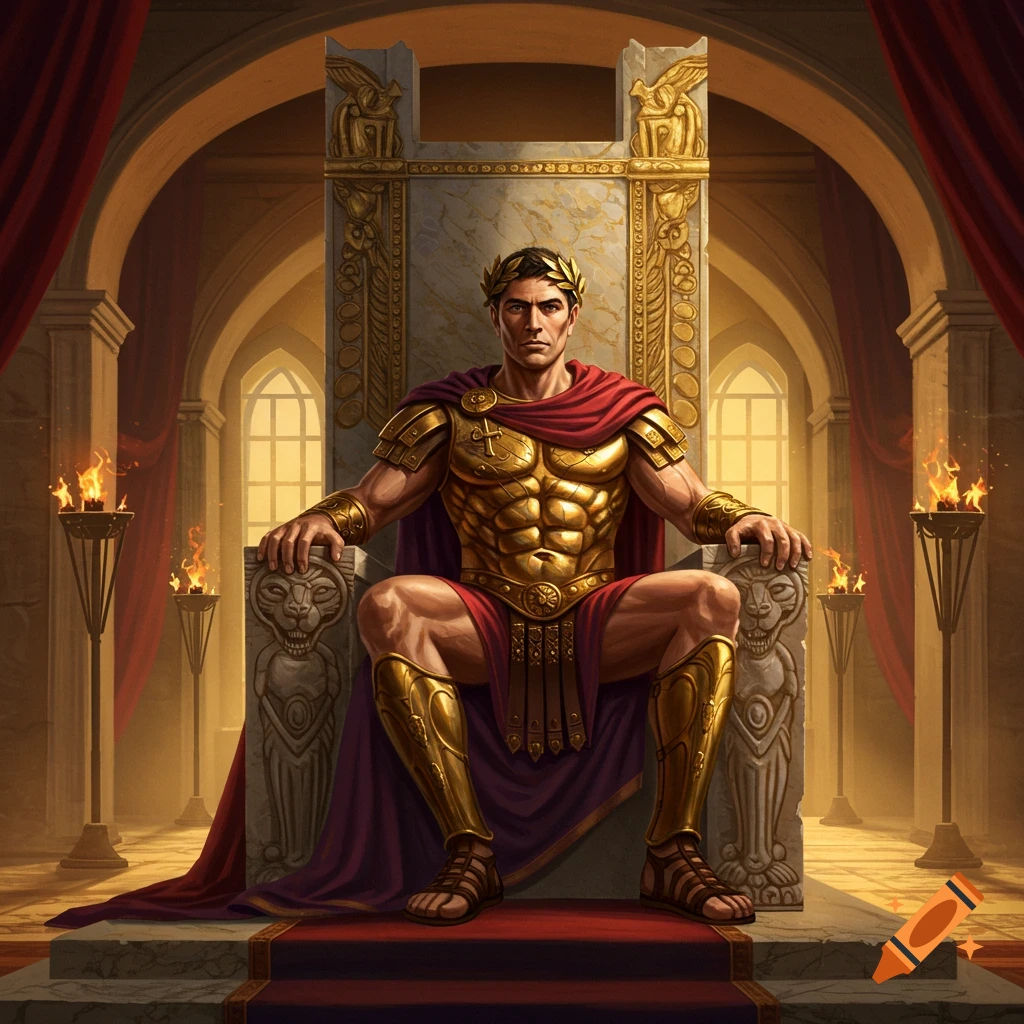
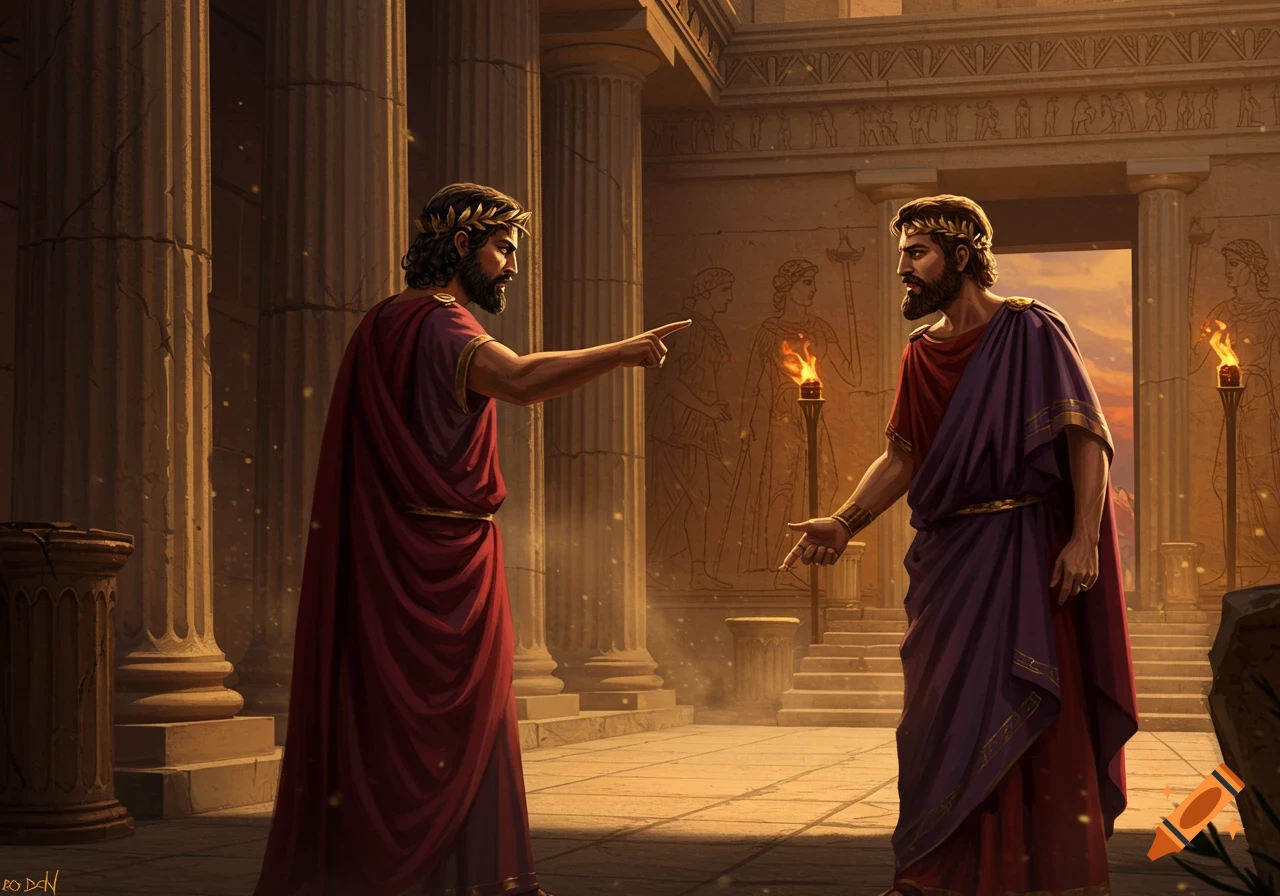
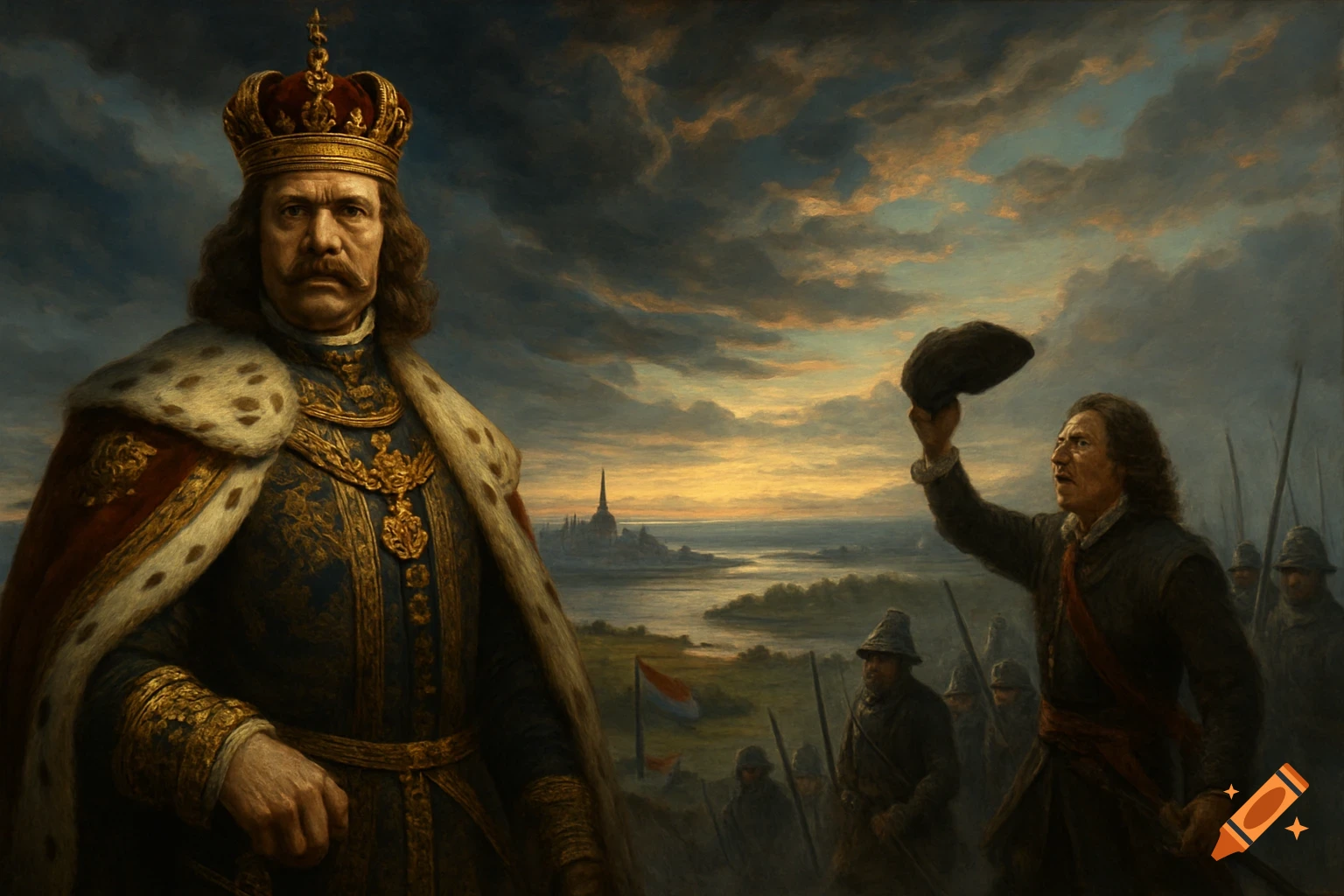
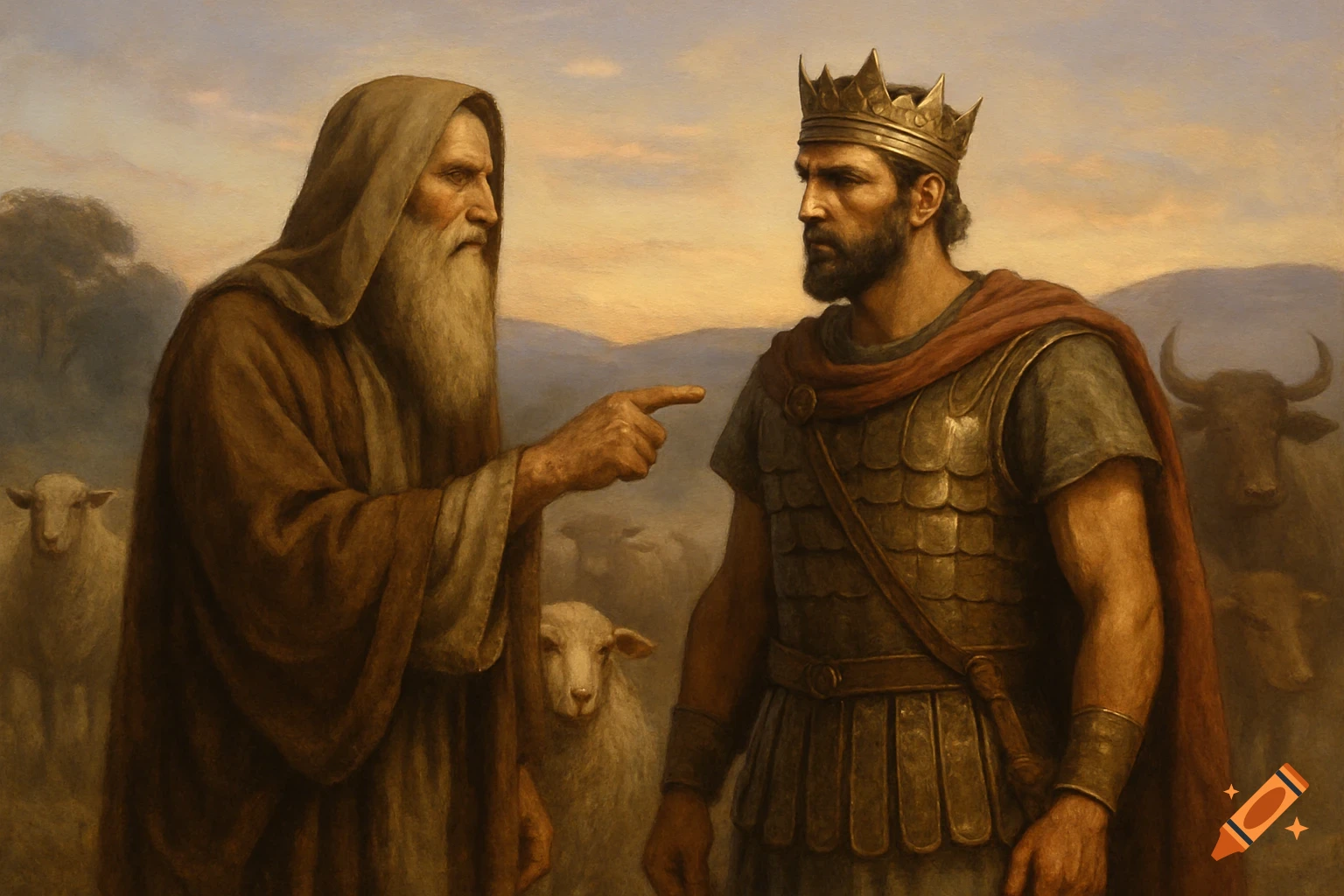
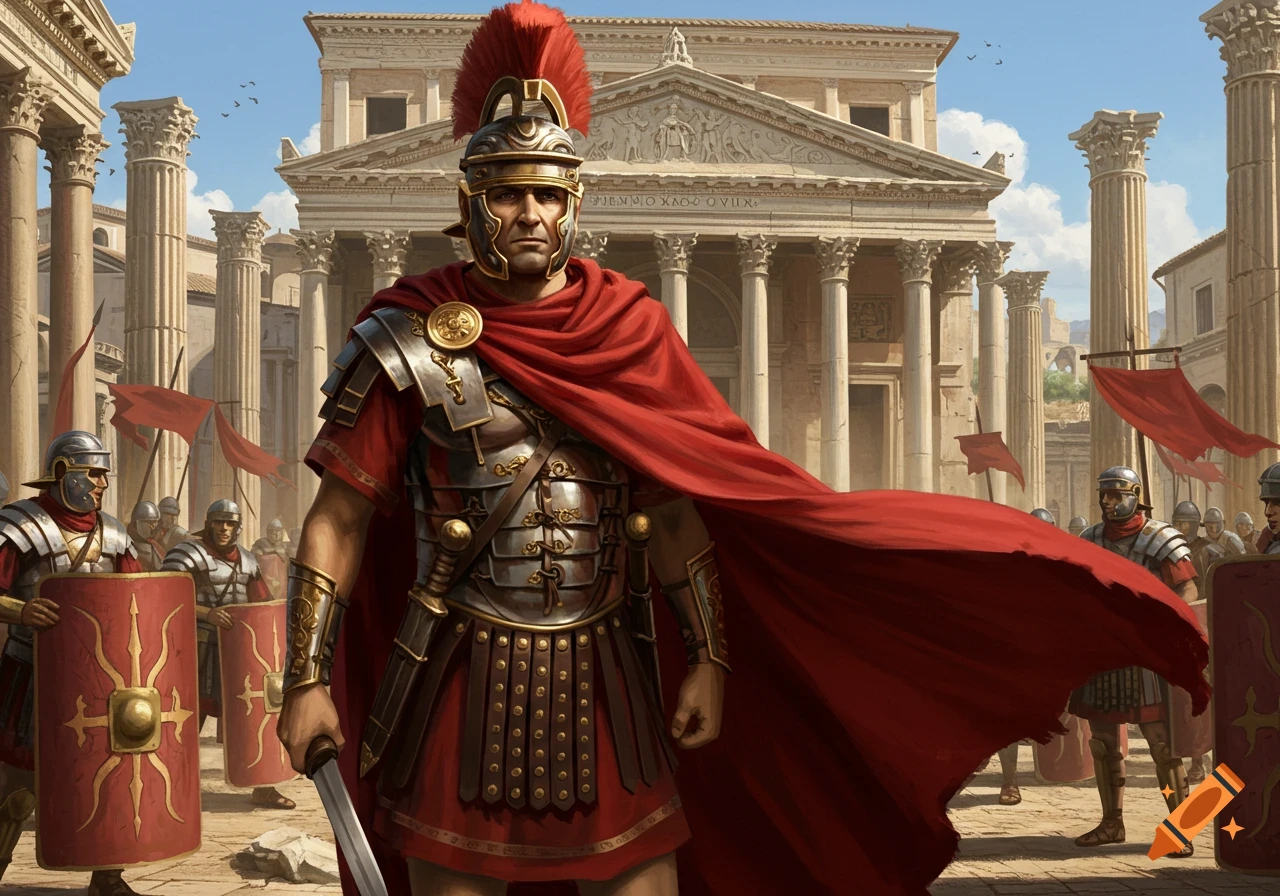
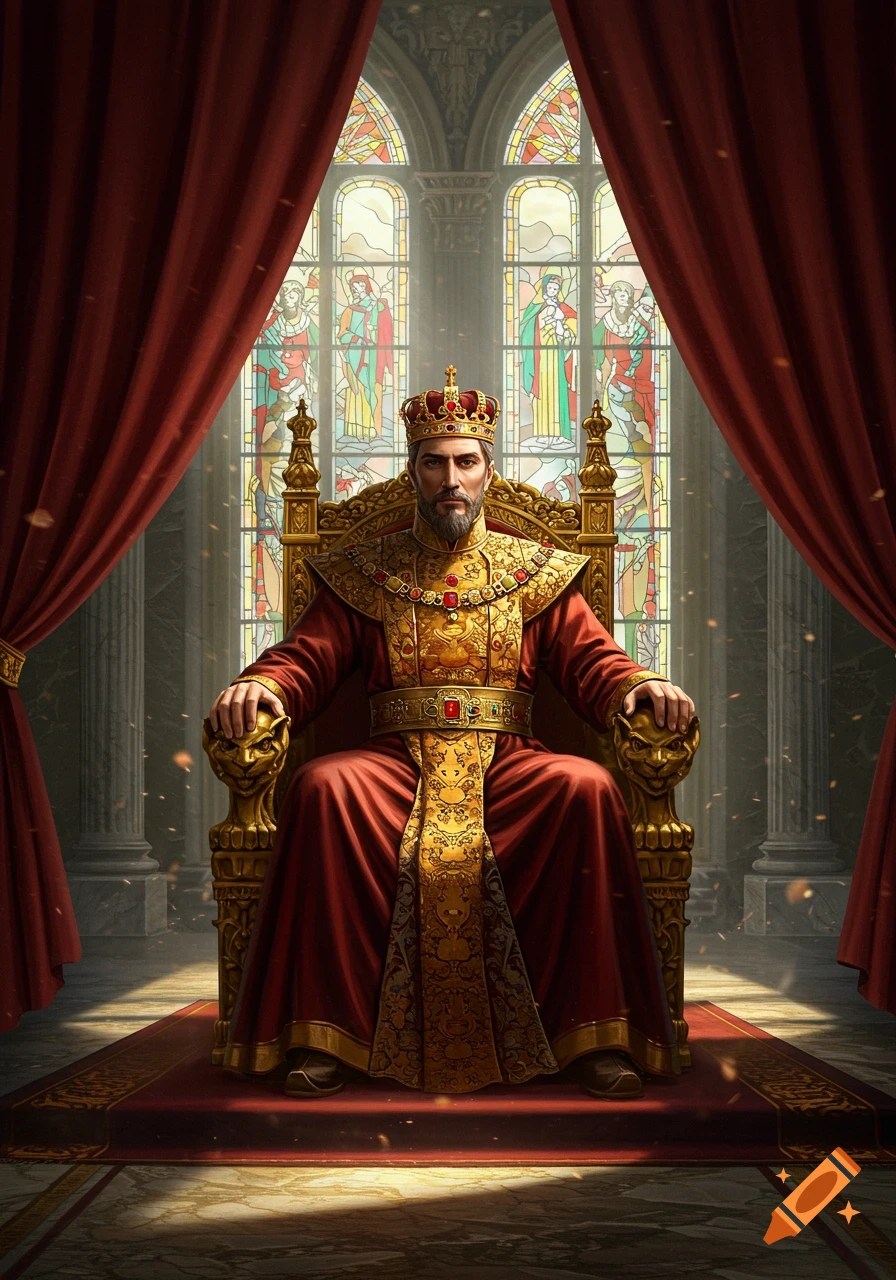
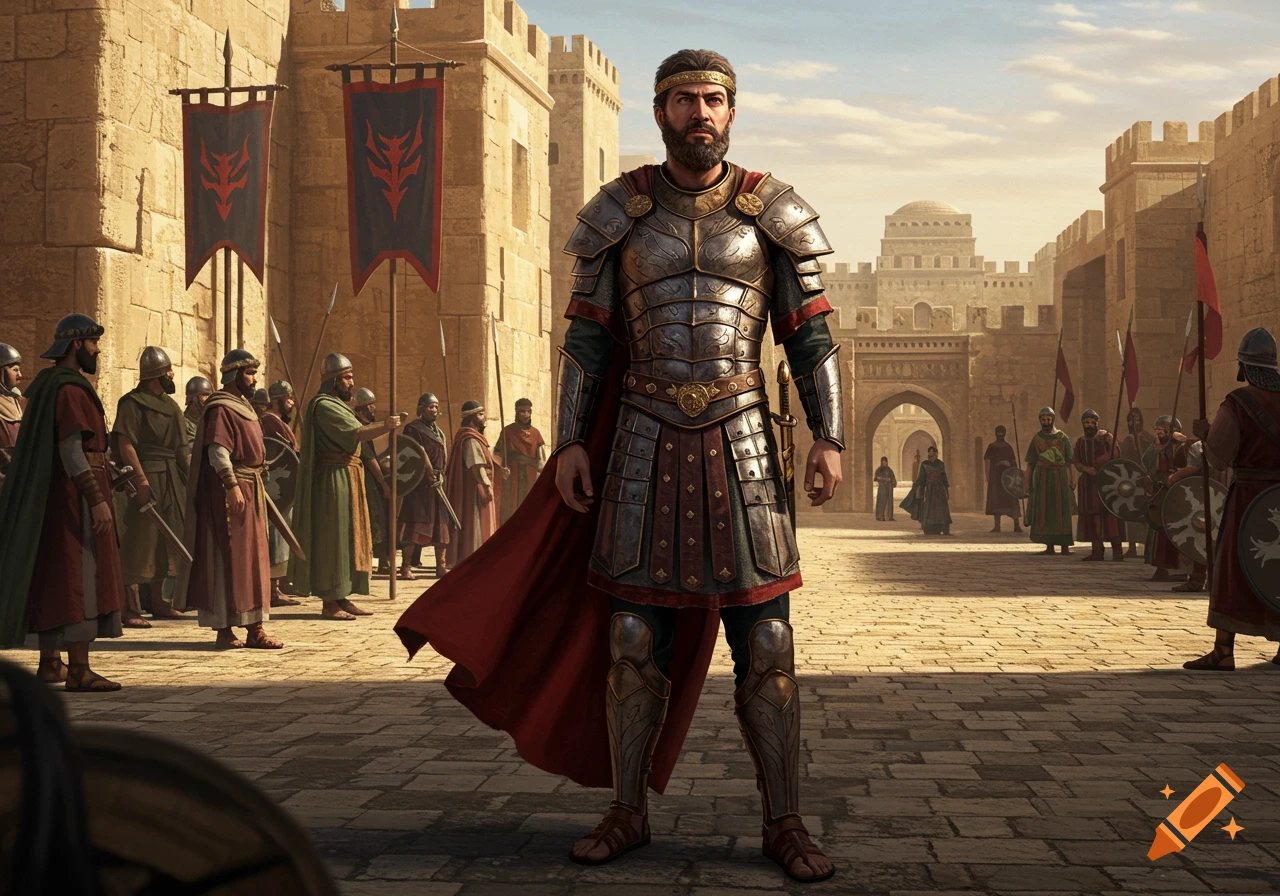
Painting of two ancient kings in a royal court. One king in armor shakes hands with another seated king, a queen between them. Another panel shows a king studying a map.
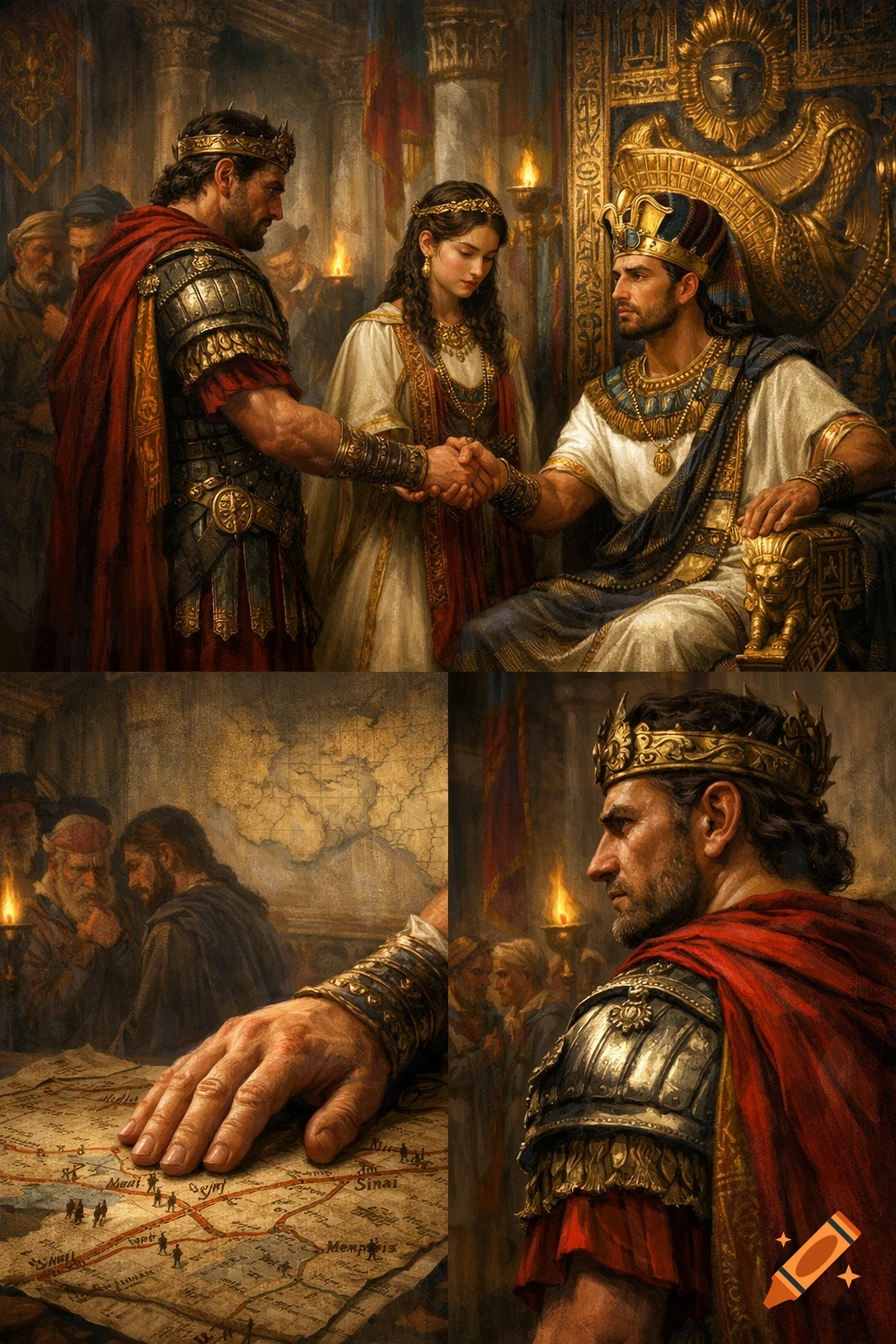
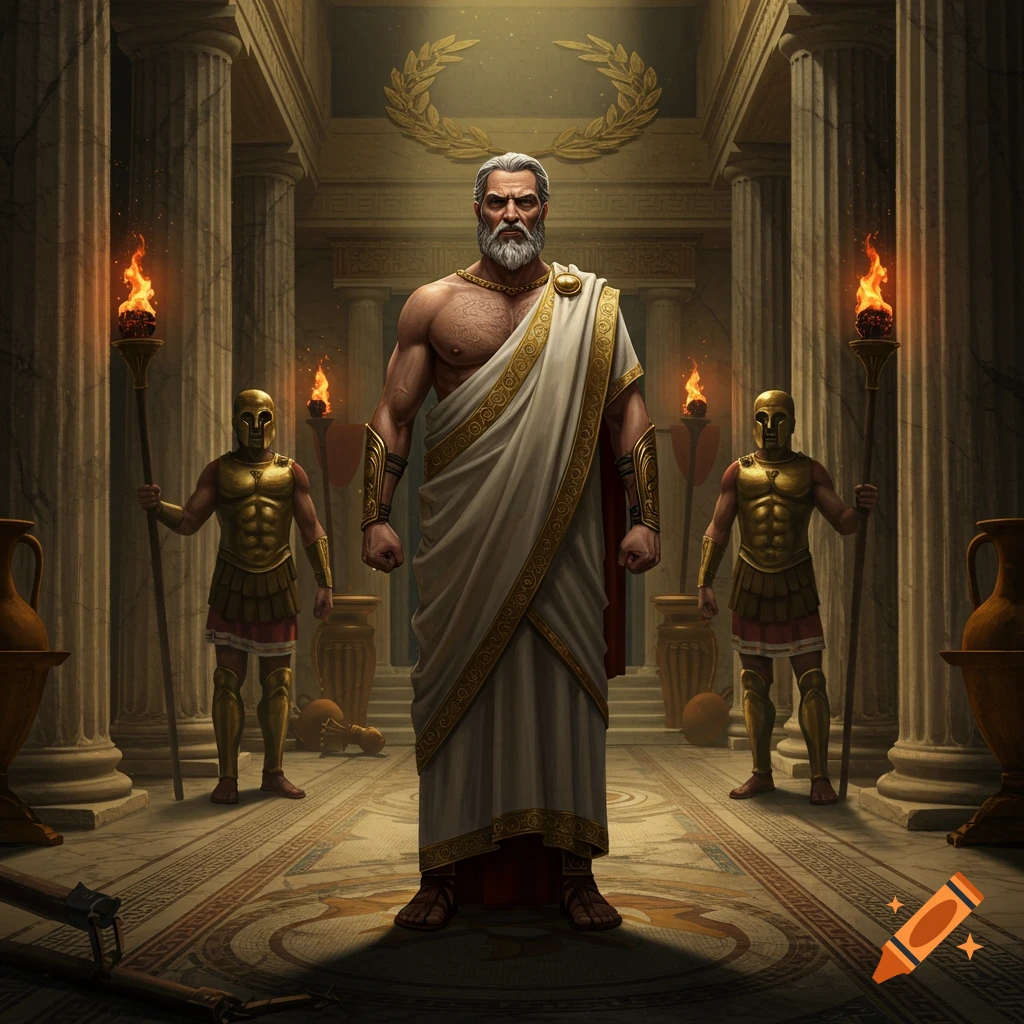
An ancient royal court in the Hellenistic world, richly decorated with stone columns, banners, and carved reliefs bearing Seleucid symbols. Antiochus III, stern and calculating, stands in regal military attire, his expression cold and deliberate. Beside him stands his young daughter, dressed in elegant but restrained royal garments, her face conflicted and solemn. Across from them is Ptolemy V of Egypt, seated on a throne adorned with Egyptian motifs, gold accents, and carved hieroglyphs. The atmosphere is tense beneath the formality—this is not a union of love, but political strategy. Antiochus places his daughter’s hand into Ptolemy’s hand in a formal gesture of marriage. His eyes briefly harden, revealing hidden intent. Subtle visual cues—Antiochus glancing toward advisors, whispering strategists nearby, maps of Egypt faintly visible in the background—suggest his scheme to infiltrate Egypt through marriage. The camera cuts to Antiochus turning away, his face set with ambition, while his daughter looks back once, torn between loyalty to her father and her new allegiance. Shadows lengthen across the palace floor, symbolizing deception and political maneuvering. The scene closes with Antiochus standing over a map of Egypt, marked with borders and military routes, his hand resting where he believes his plan will succeed—yet the mood subtly foreshadows failure. Ultra-detailed historical realism, muted regal colors, dramatic lighting, slow cinematic camera movement, ancient See more