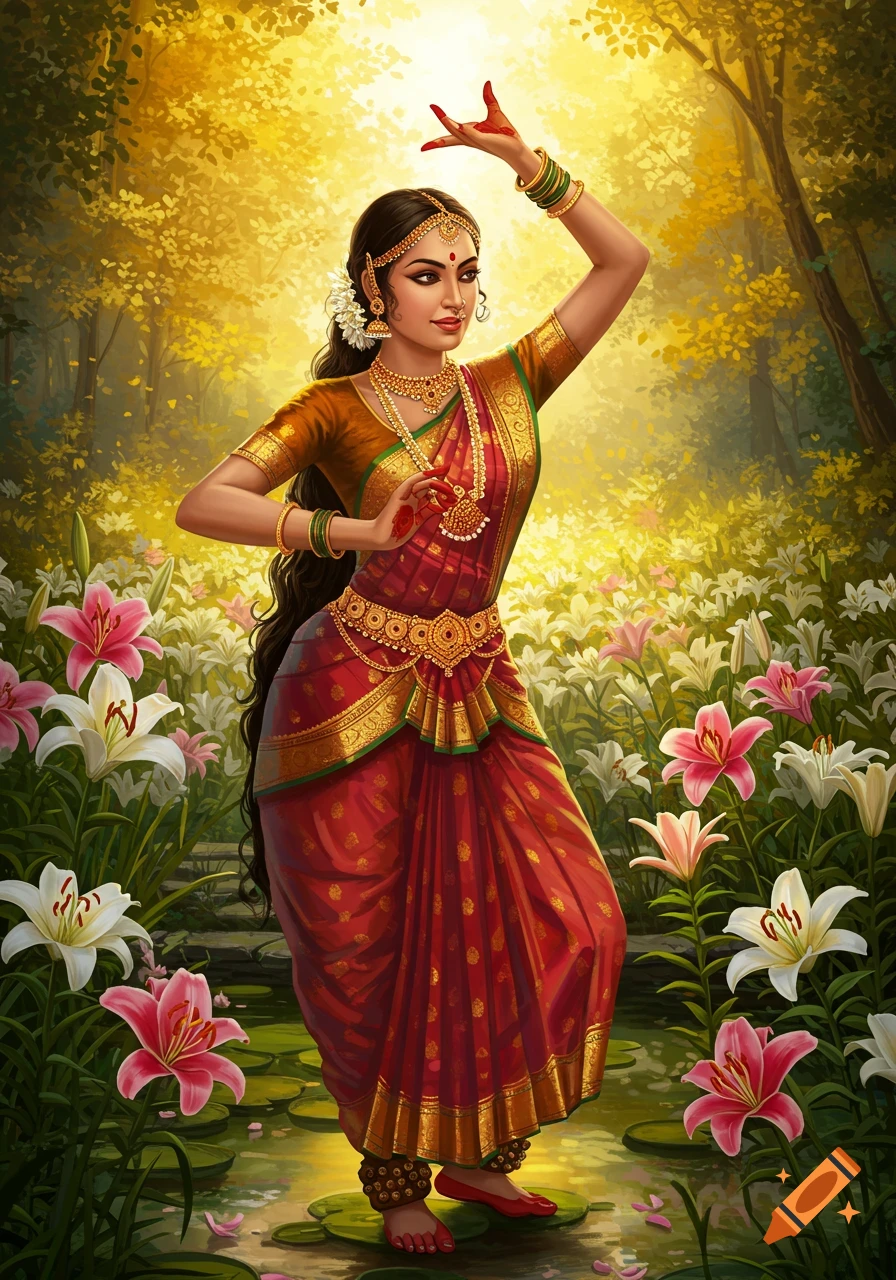
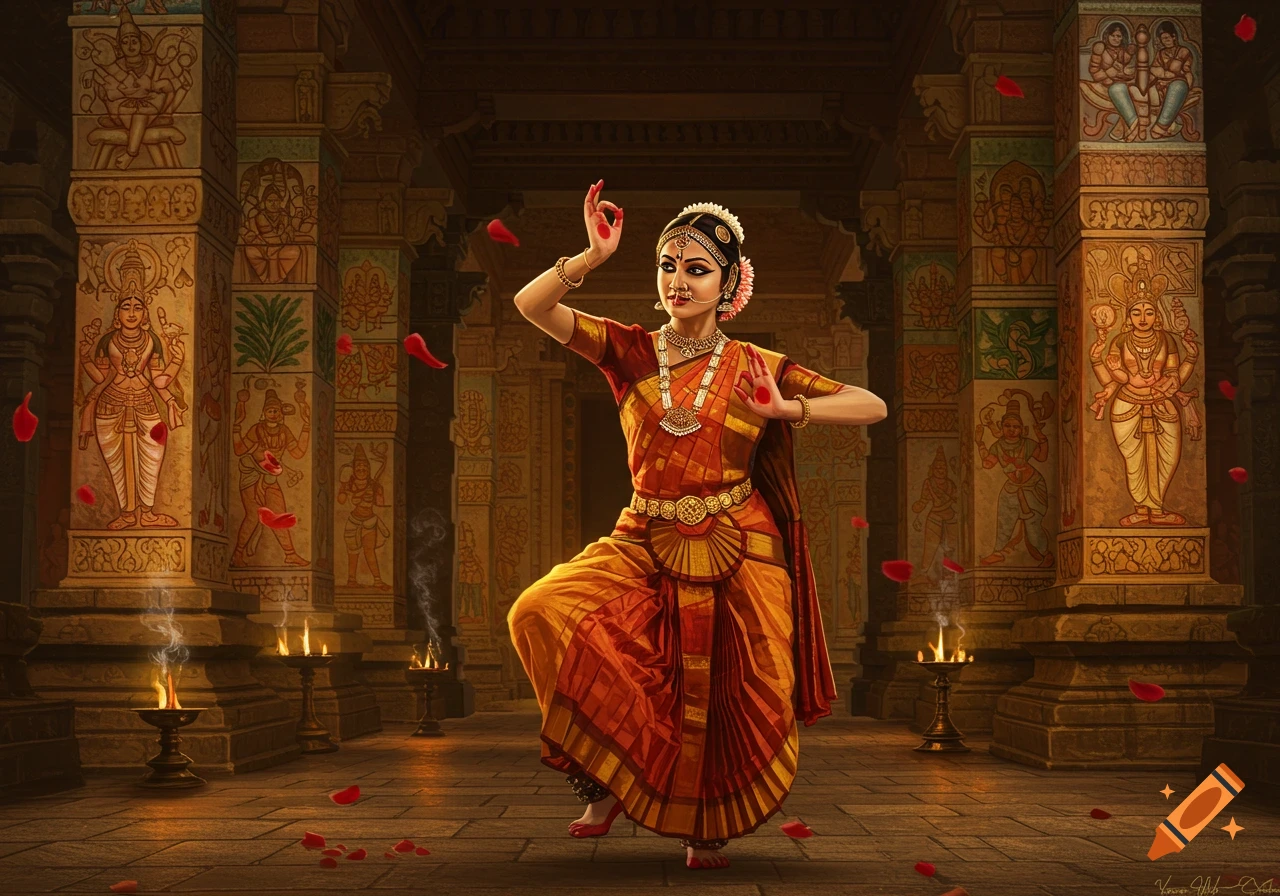
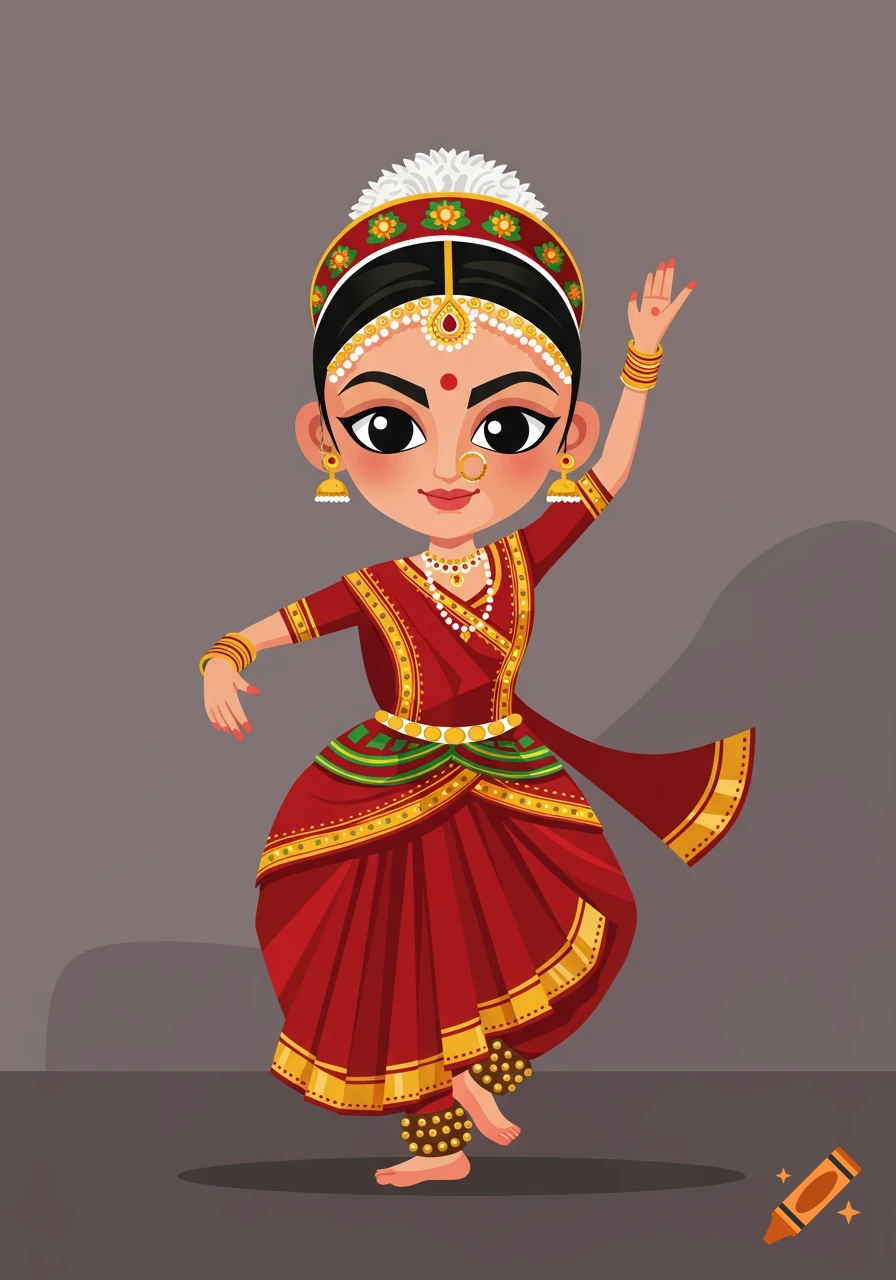
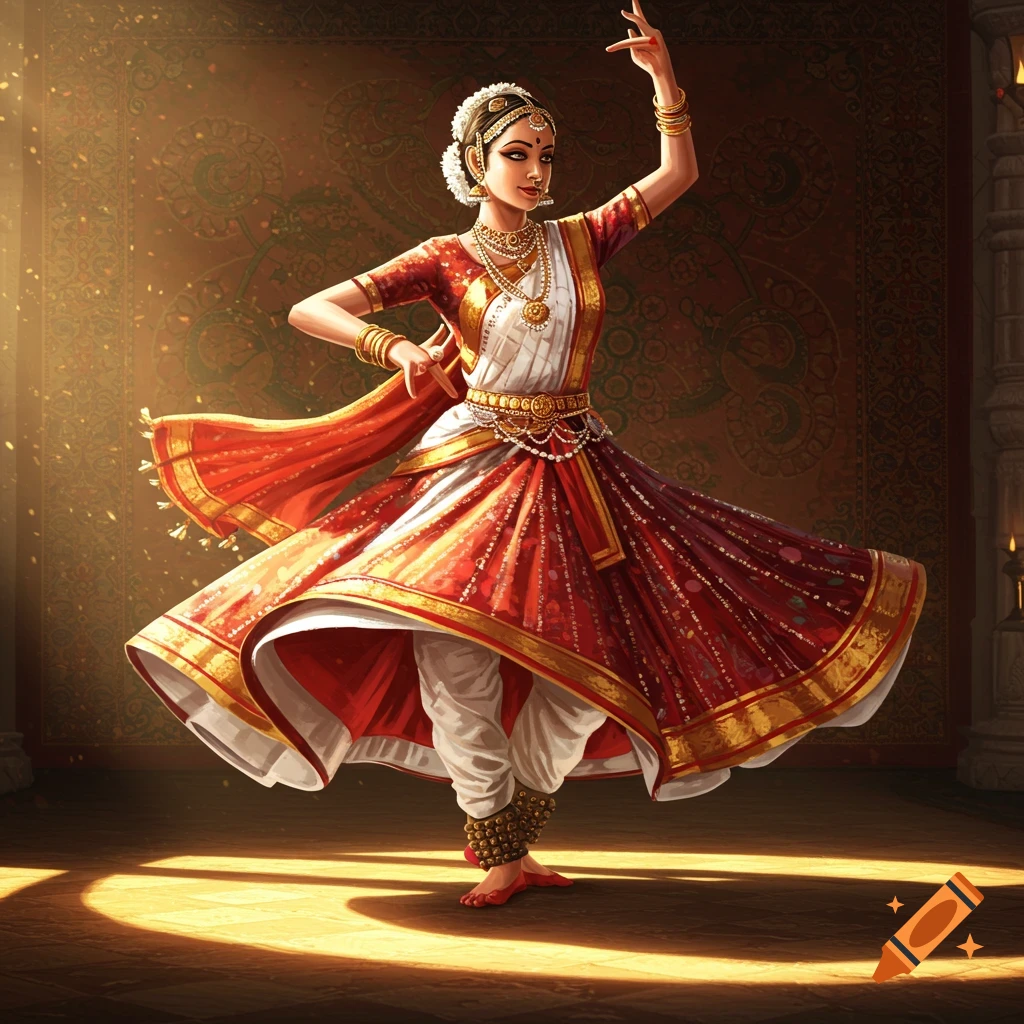
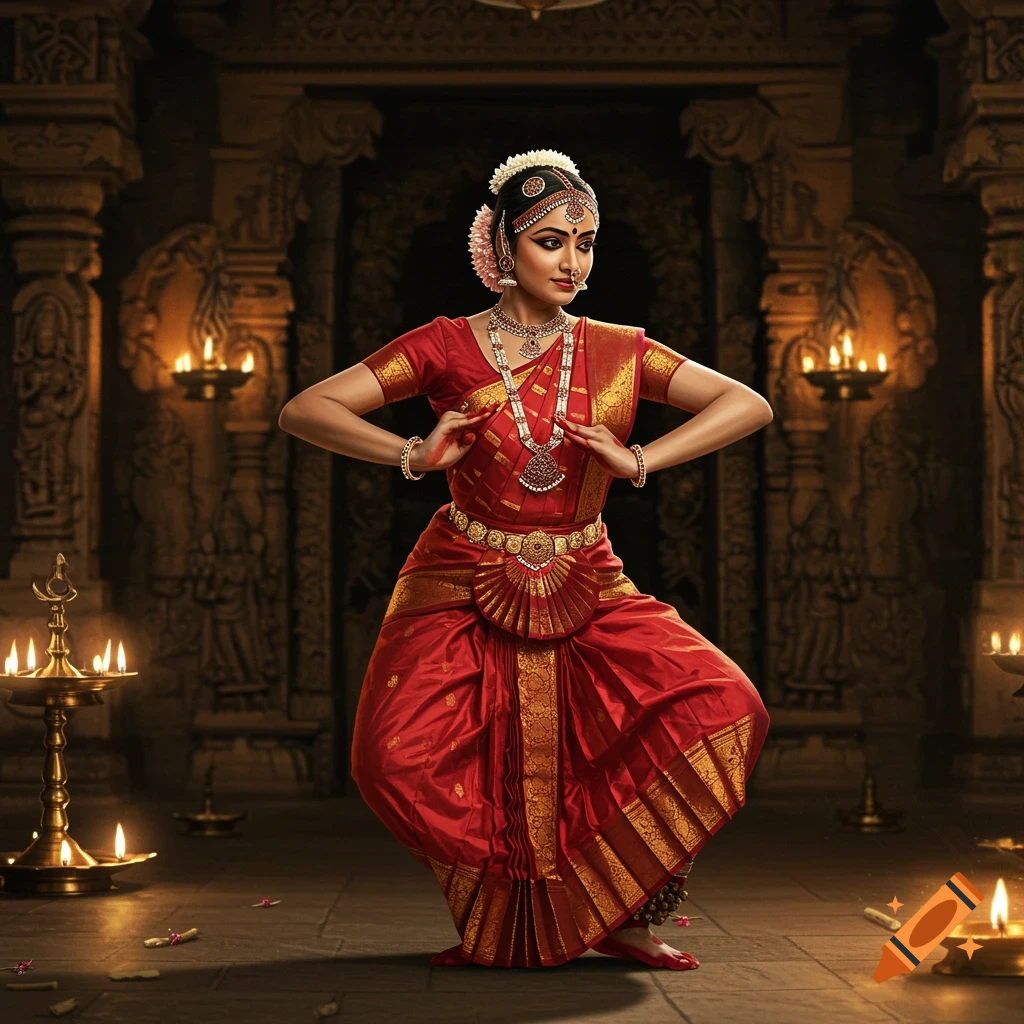
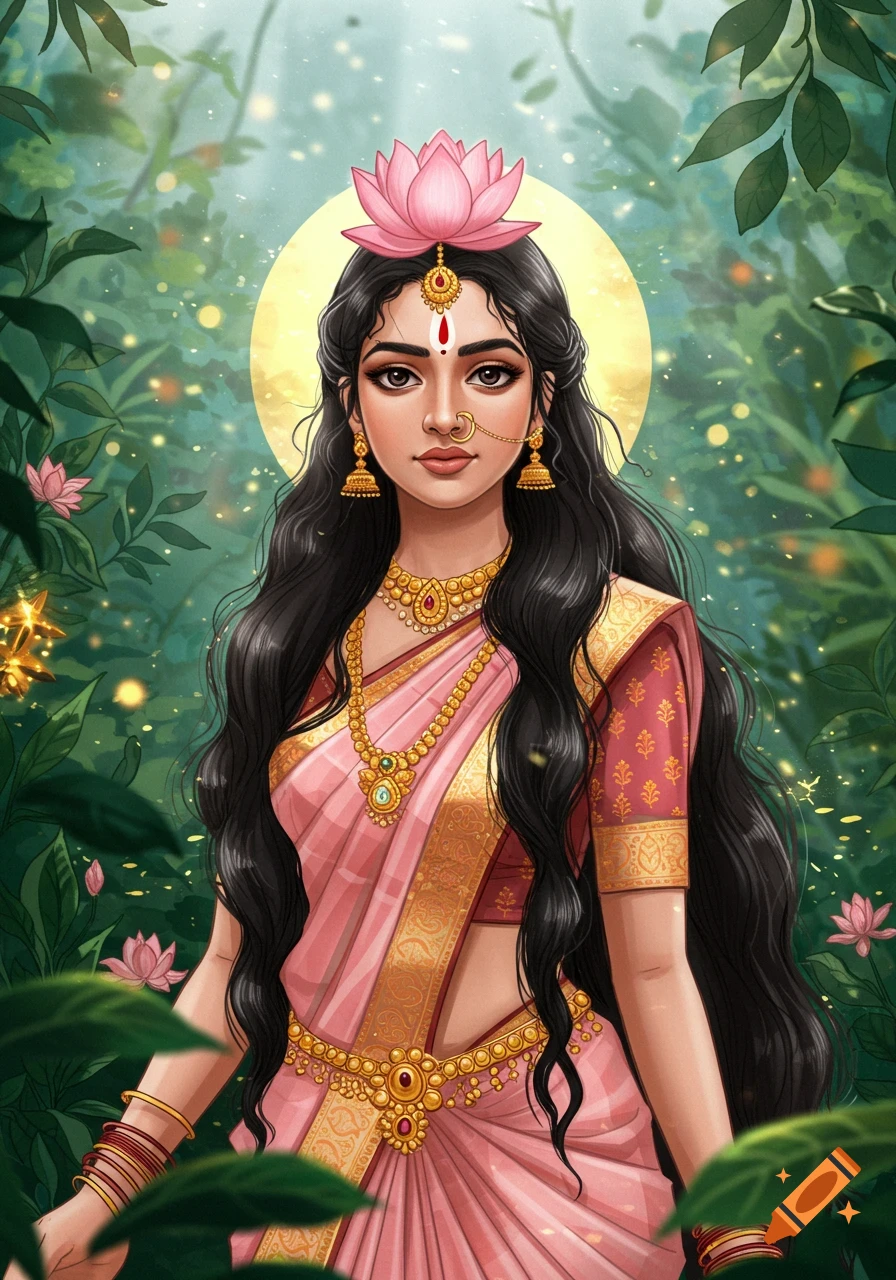
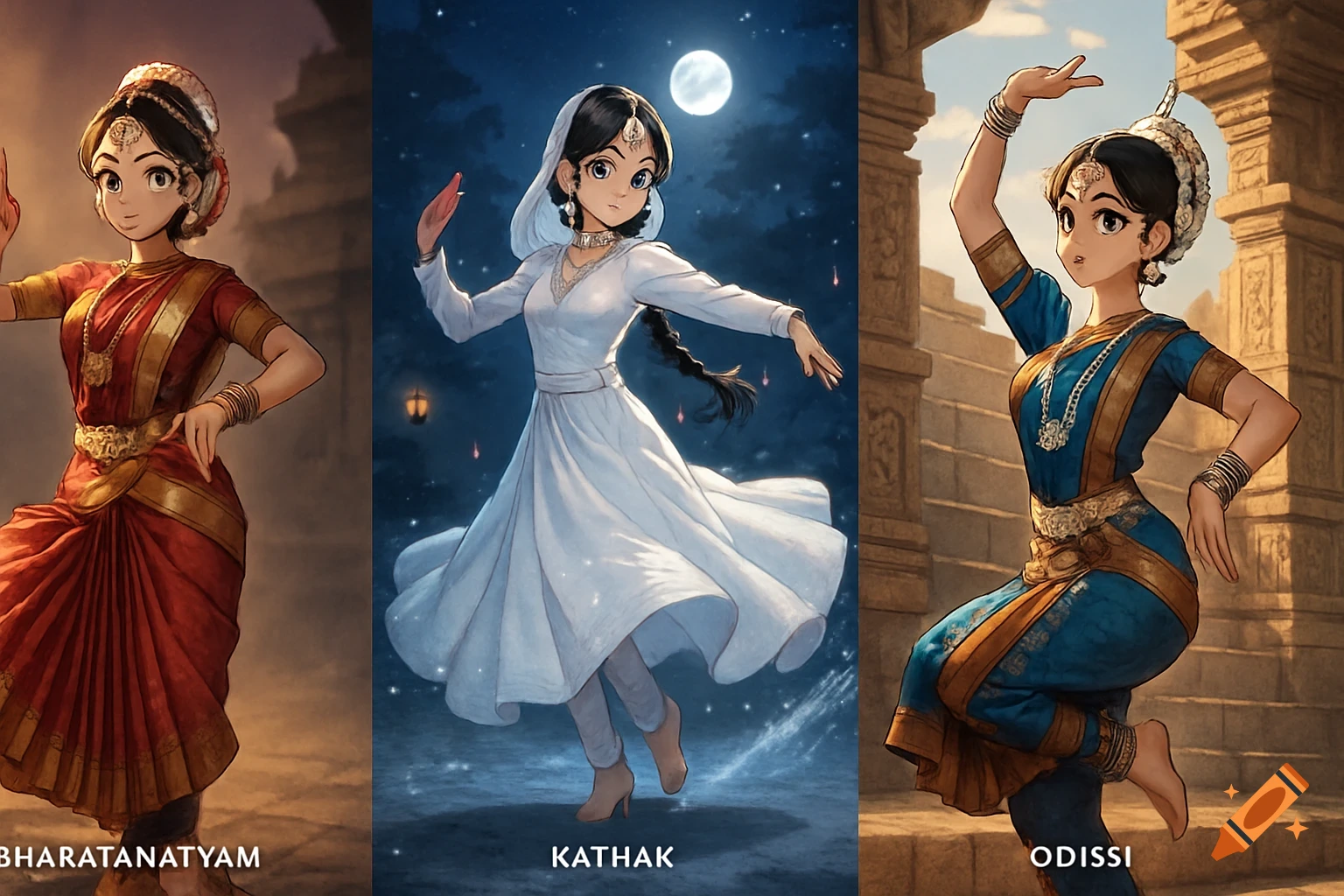
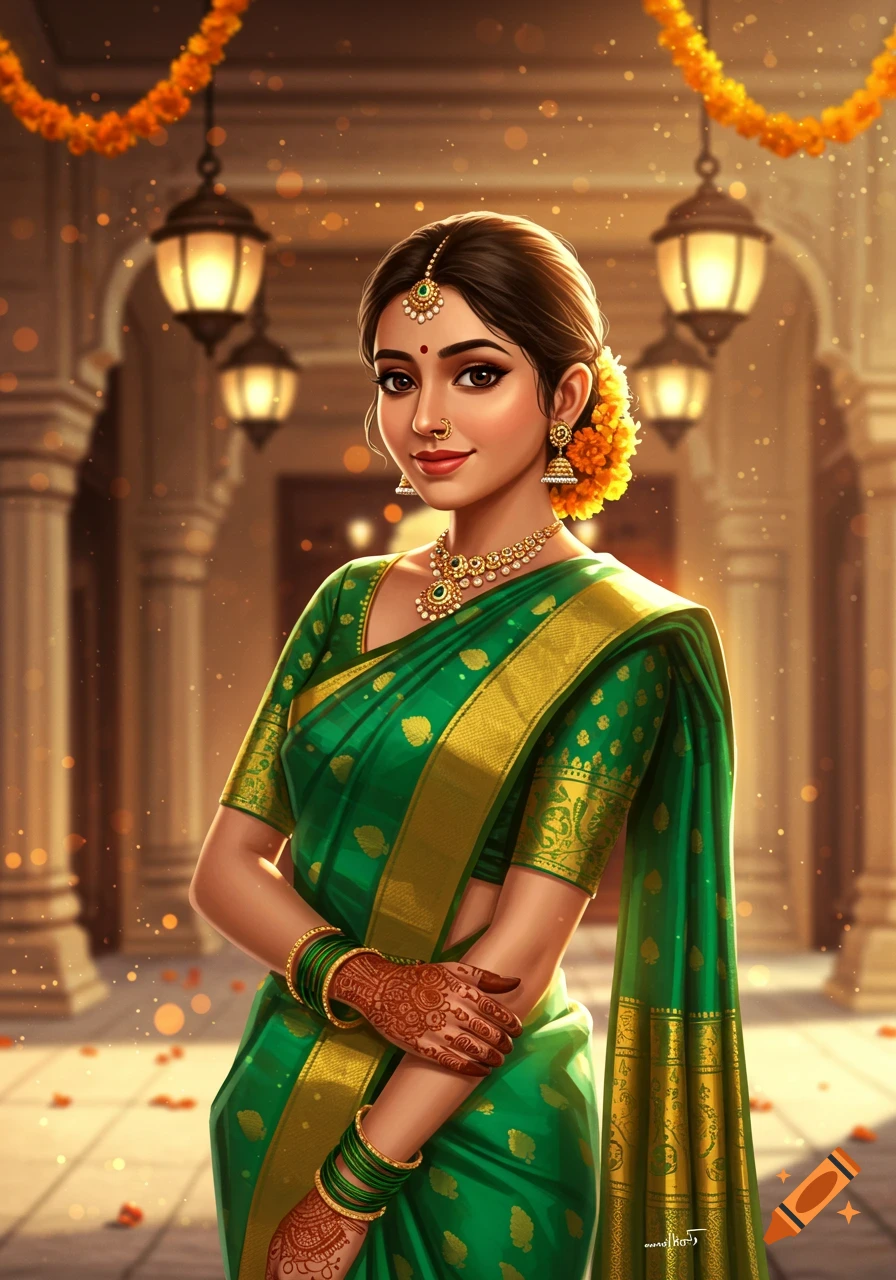
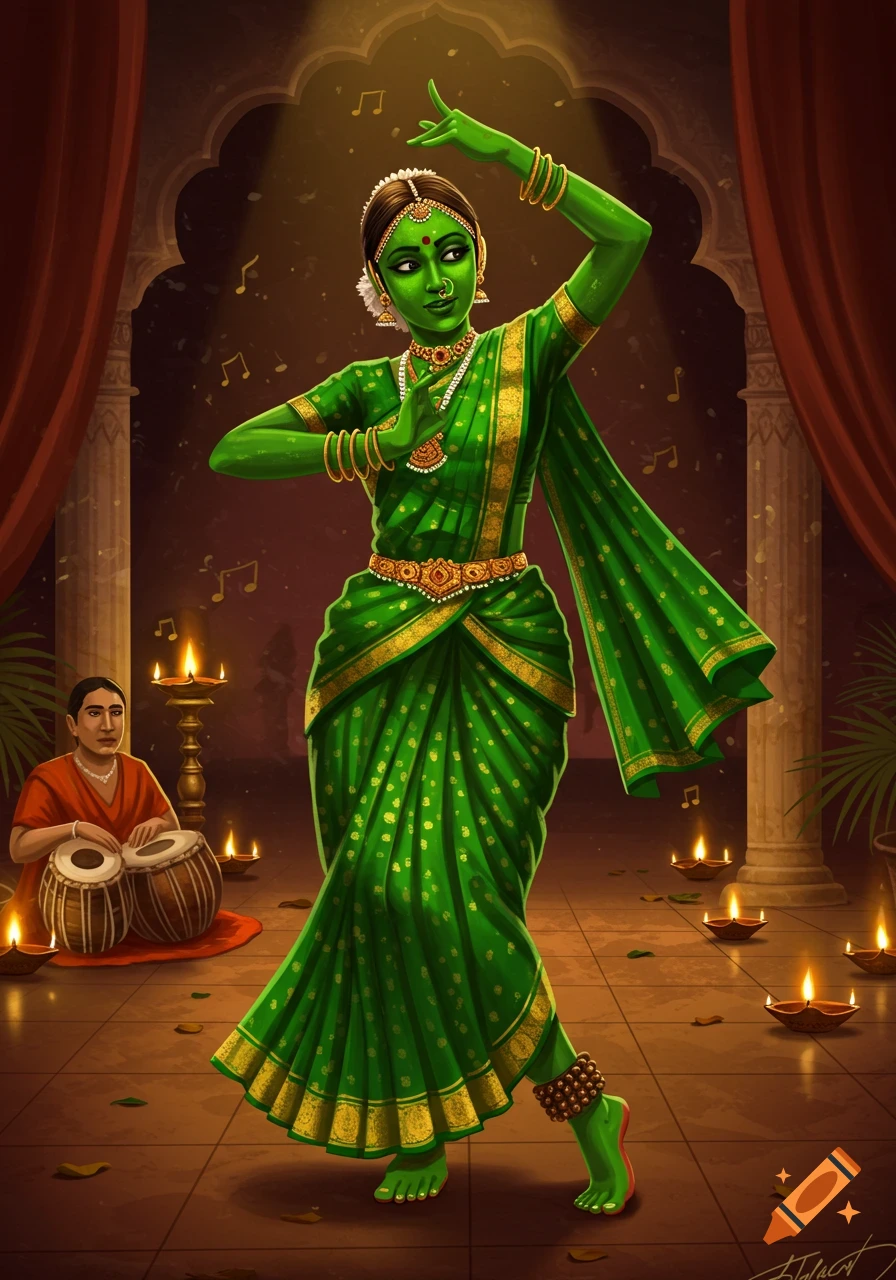
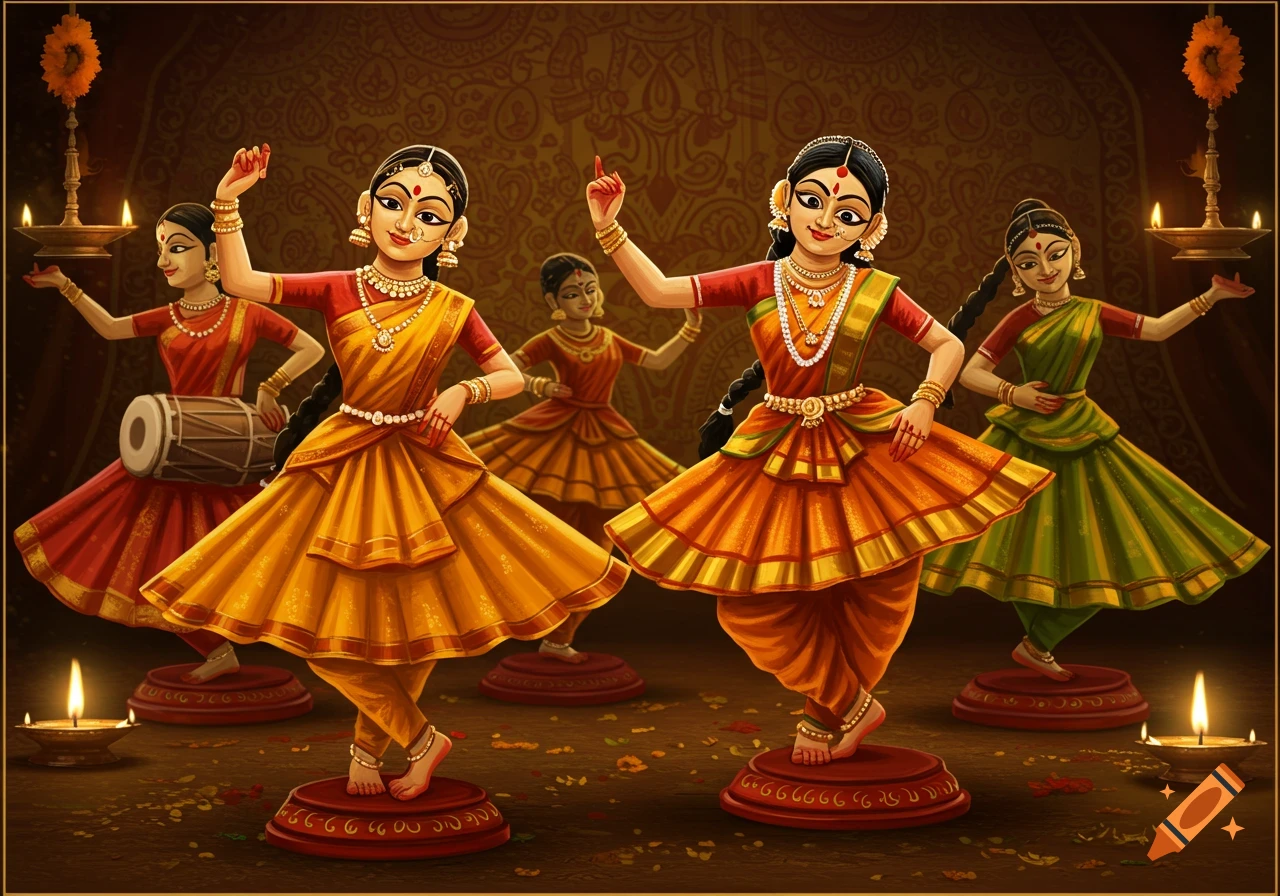
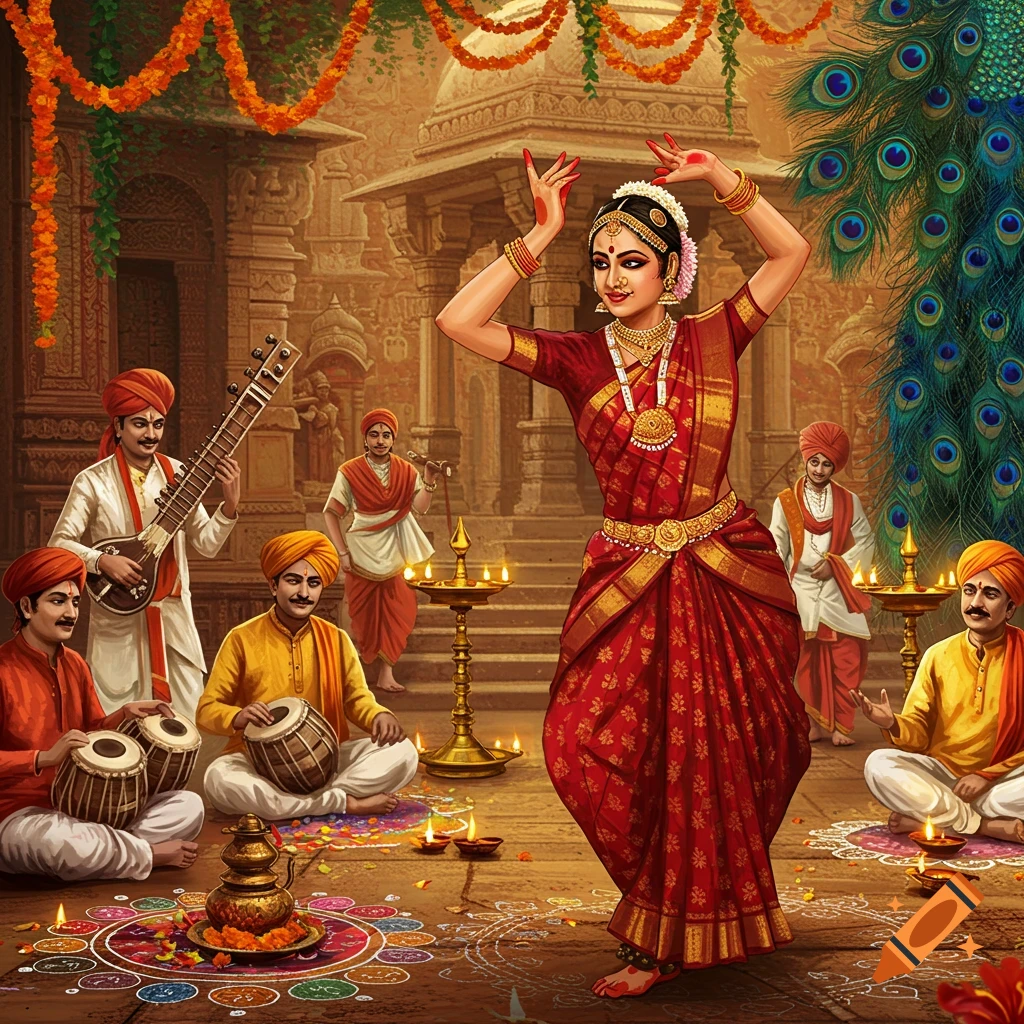
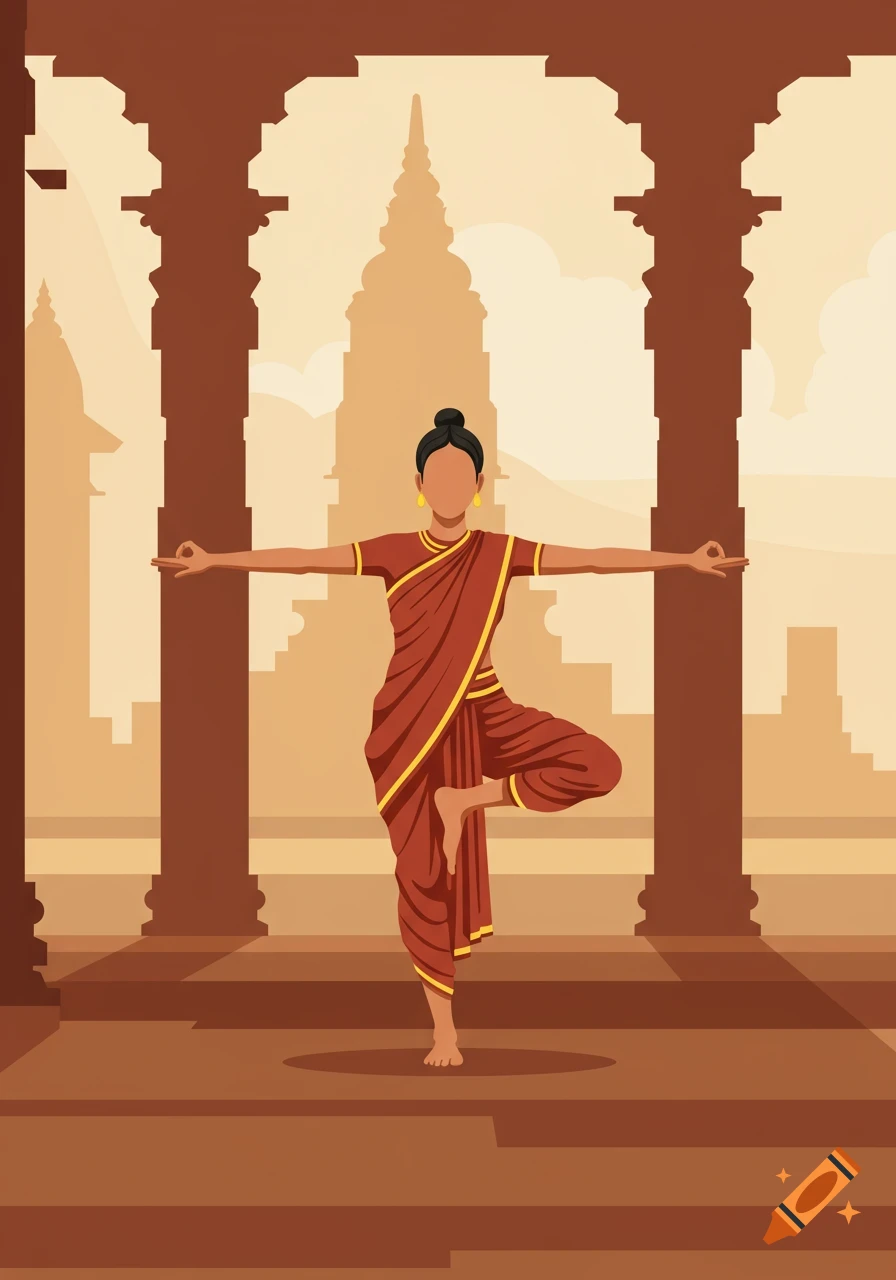
A stylized illustration of a woman transforming from stone into a Bharatanatyam dancer holding a hammer and chisel.
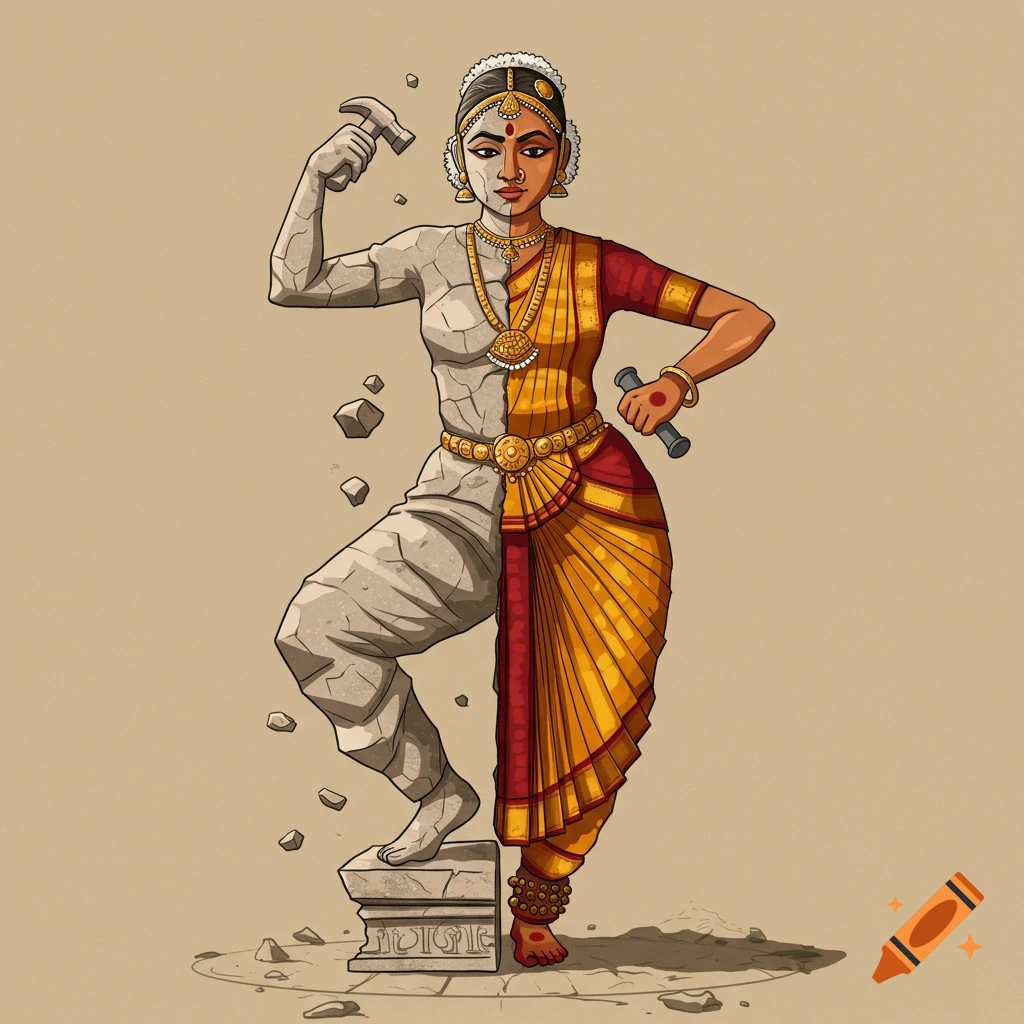
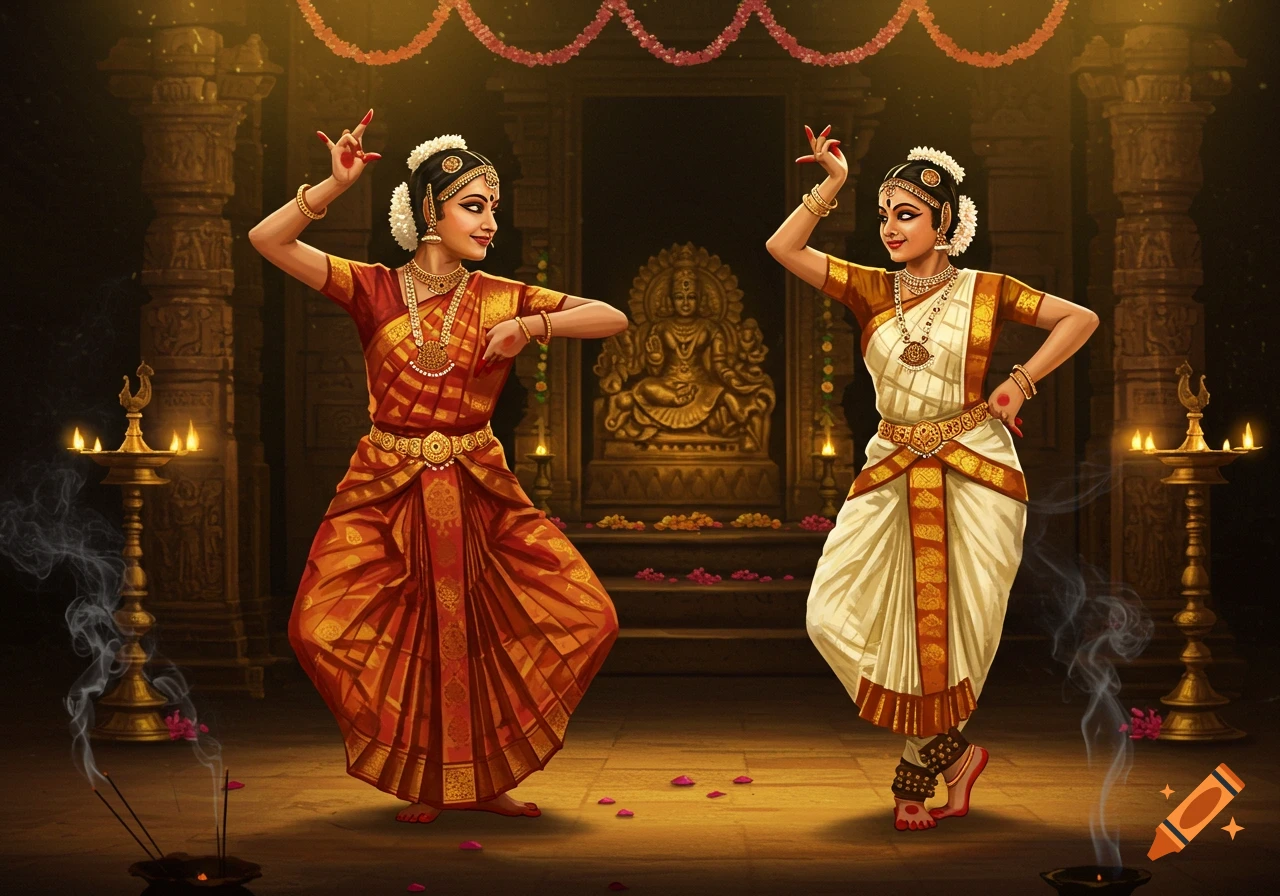
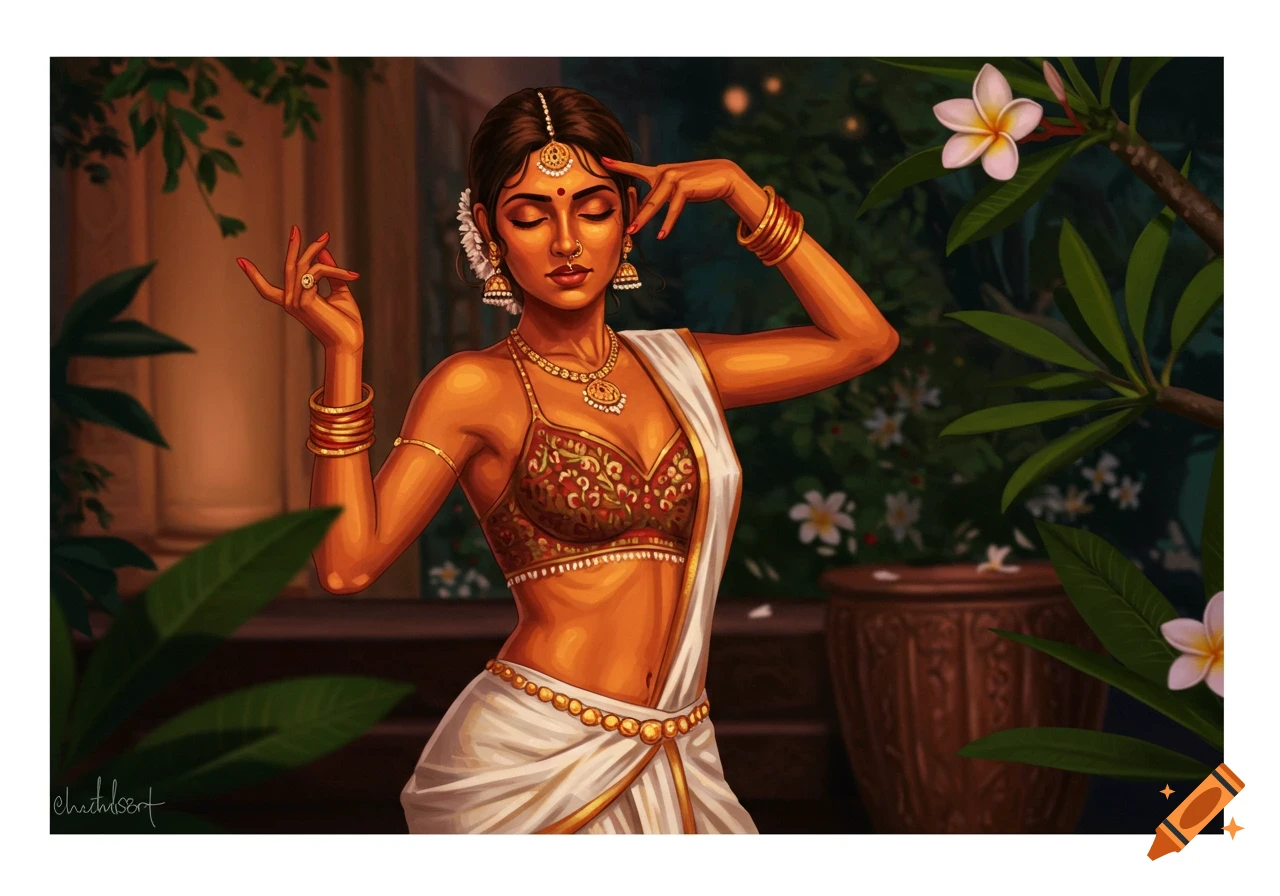
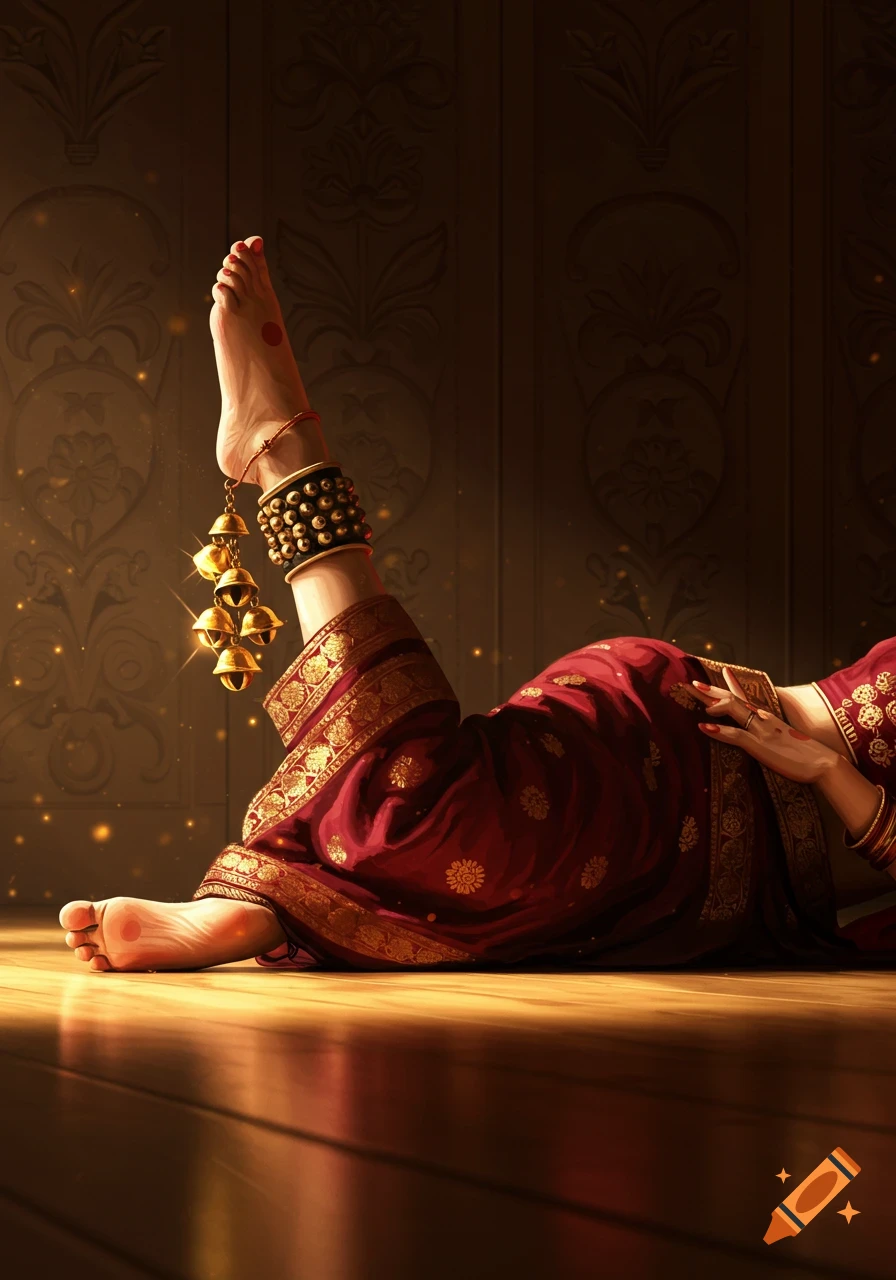
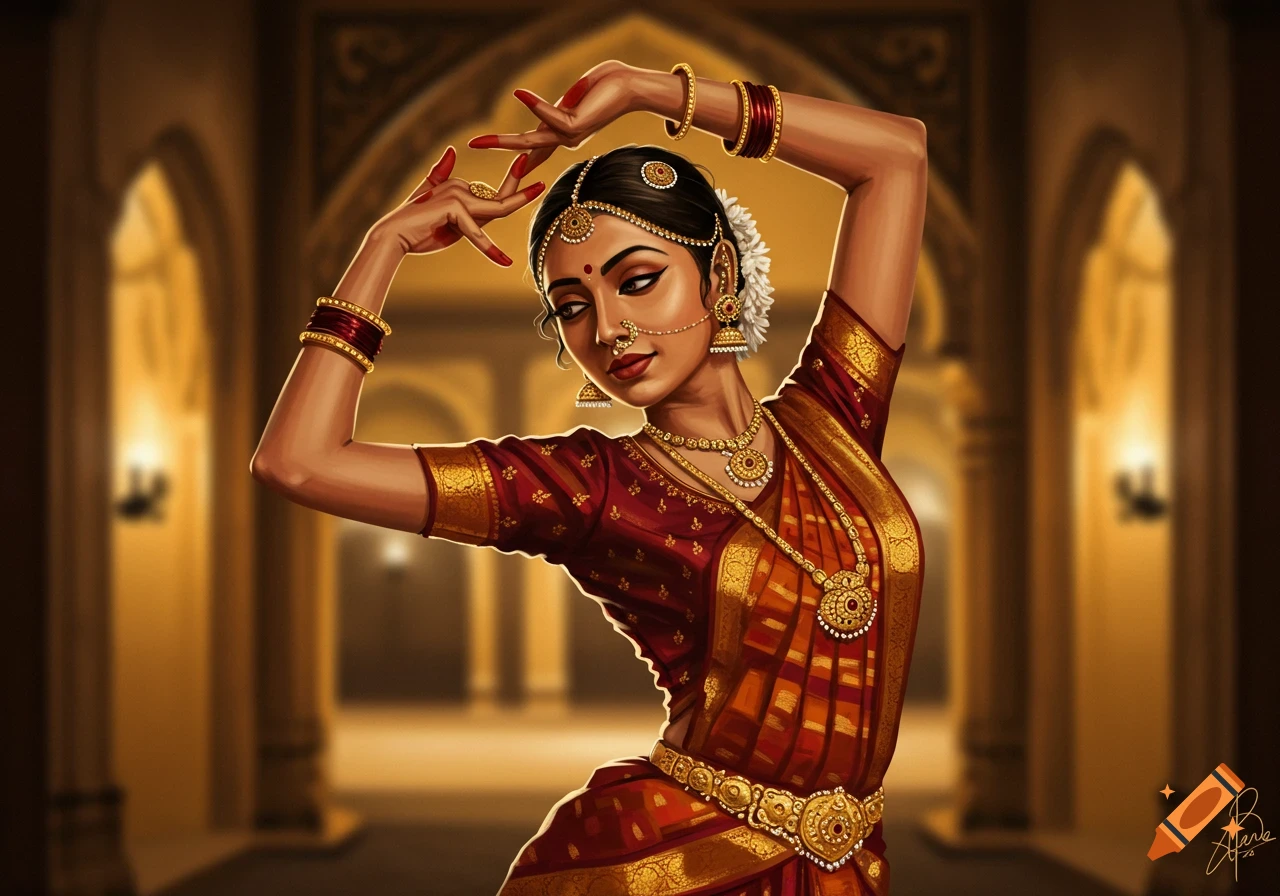
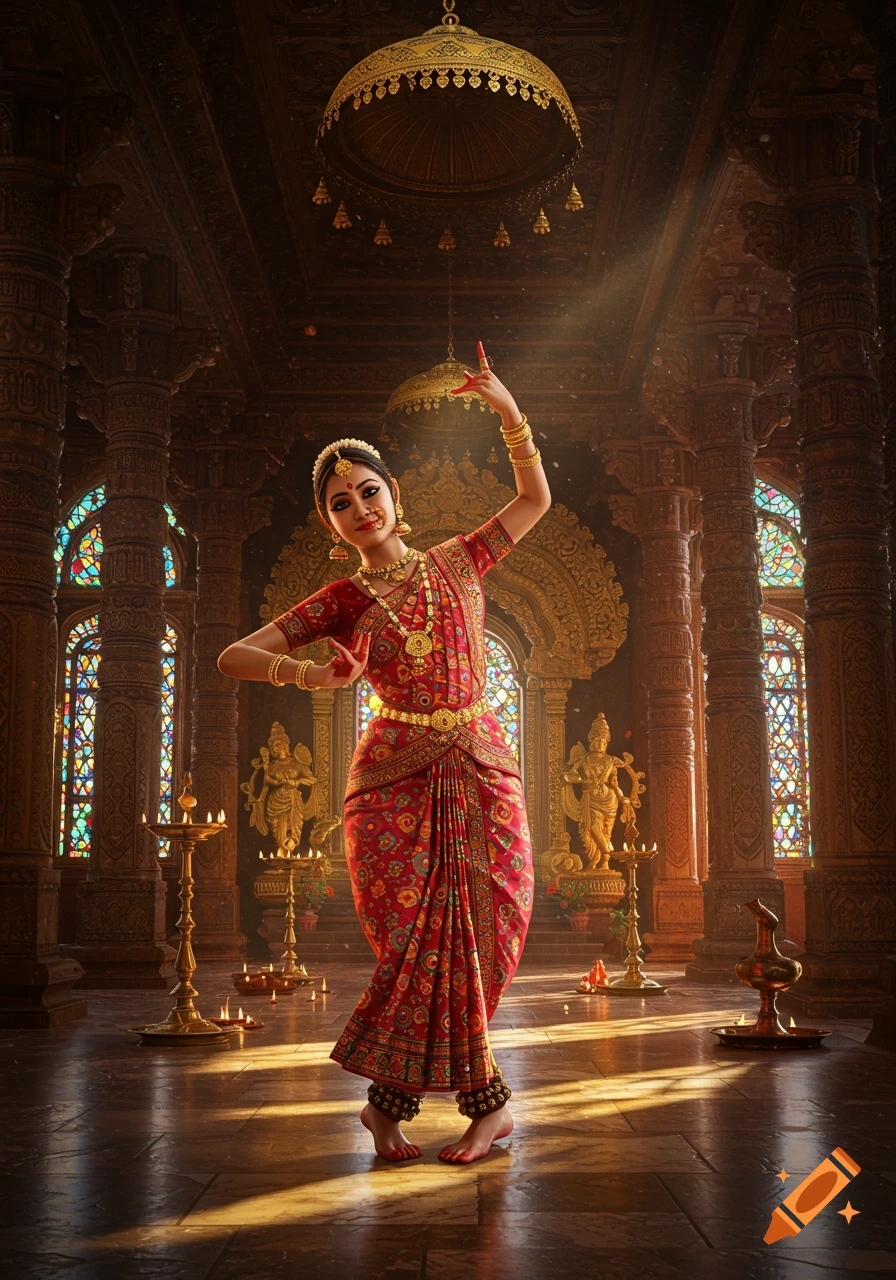
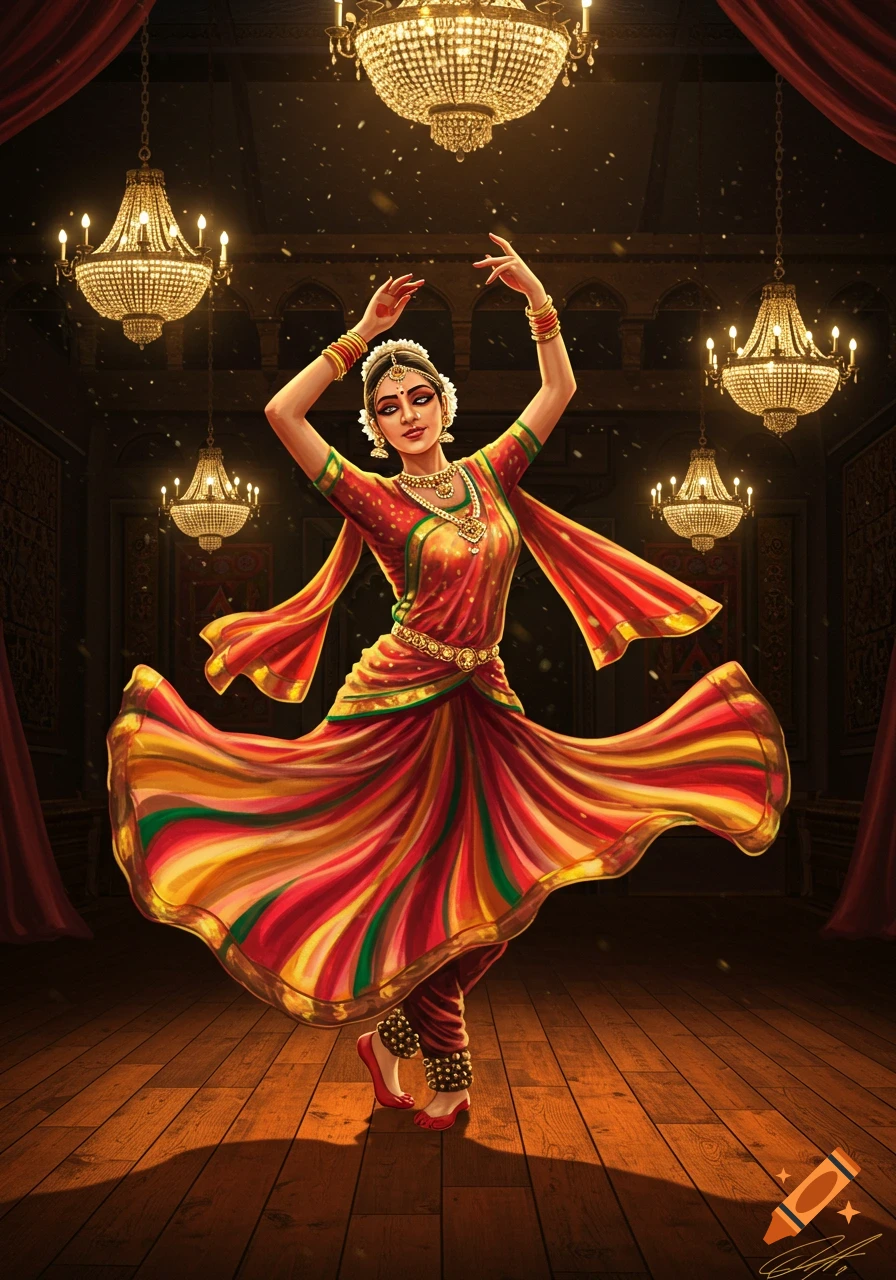
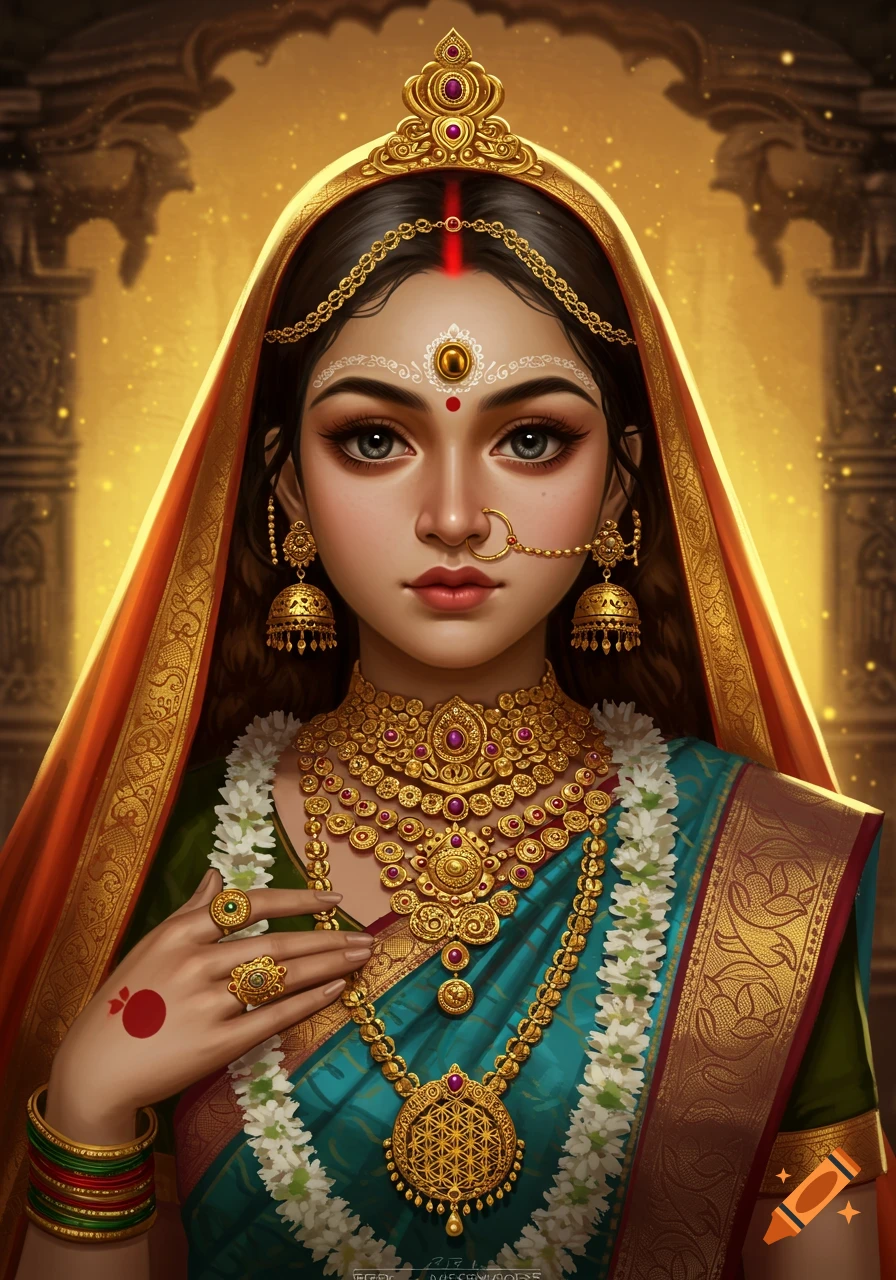
Core Imagery: 1. Woman emerging from stone (central figure): The woman should be in mid-transformation: half of her body still rough stone, the other half a graceful Bharatanatyam dancer in a classical pose (like Aramandi or Natyarambhe). One of her hands should be holding a chisel and the other a hammer, poised over the stone portion — implying she’s sculpting herself. Her expression should reflect focus, strength, and grace — symbolizing self-discipline and spiritual awakening. 2. Costume details (on the sculpted half): Traditional Bharatanatyam attire: pleated fan-like saree, temple jewelry, ankle bells (salangai), and expressive eye makeup. Make the jewelry and attire intricate but stylized, so it’s not overly detailed and remains recognizable at small sizes. 3. Stone base or pedestal (foundation): A roughly carved stone base below her feet, possibly with subtle classical motifs or ancient temple carvings. This represents tradition, foundation, and culture — grounding her transformation. Color Palette: Warm earth tones for the stone (beige, sandstone, light grey). Deep maroon, gold, and peacock green for the costume (very traditional Bharatanatyam colors). Subtle use of white or light gold highlights for light/glow effects — indicating enlightenment or self-realization. See more