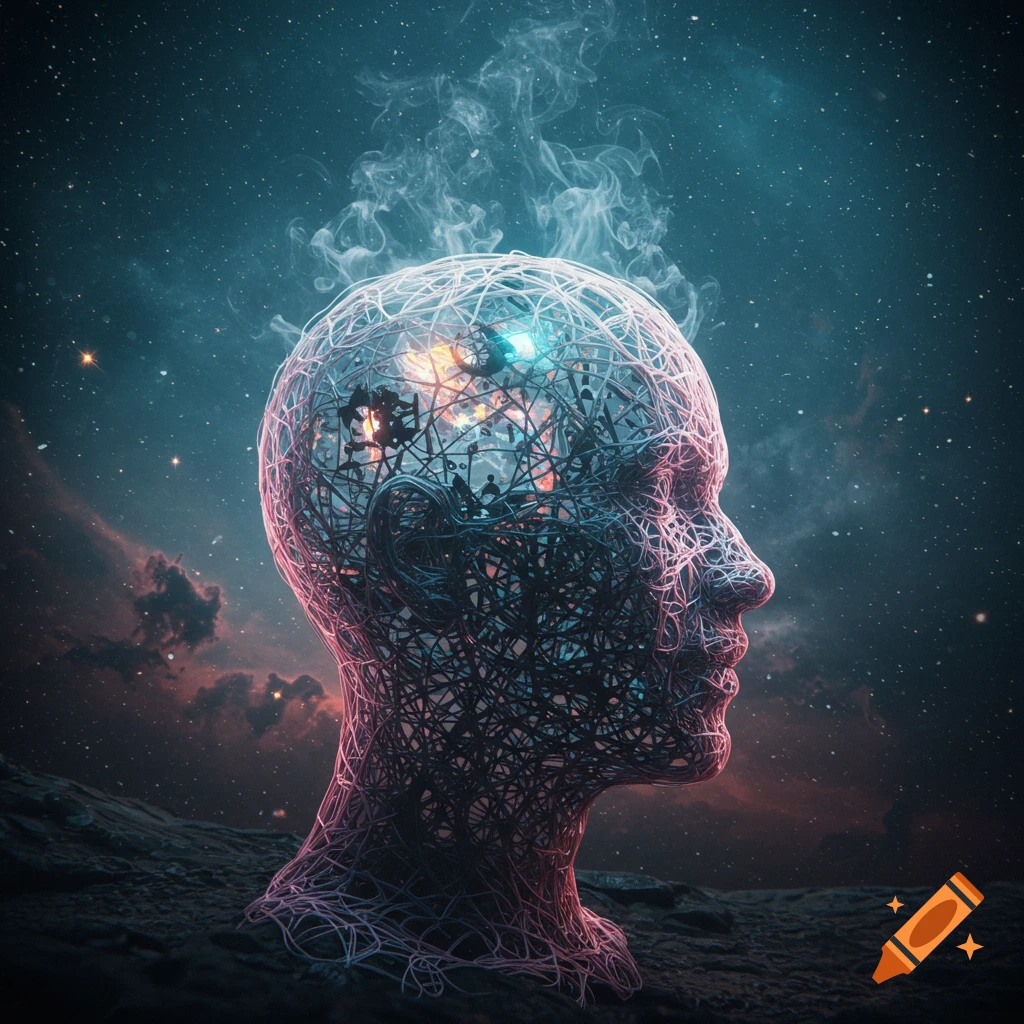
A person stands at a crossroads, gazing at a sunrise and a vibrant explosion of colorful abstract smoke representing concepts like logic, intuition, emotion, and context in the night sky. Glowing ethereal structures appear on either side of the path.

Imagine standing at a crossroads, faced with a tough decision—say, whether to trust a friend’s advice or follow your gut. Your mind doesn’t just pick one path and stick to it. Instead, it juggles multiple perspectives: logic, emotion, intuition, and context, all weaving together to guide you to a choice. This mental juggling act, where no single “truth” dominates until the pieces align, is at the heart of how we think. Yet, traditional logic, with its rigid true-or-false structure, struggles to capture this dynamic process. Enter Resolution Matrix Semantics (RMS), a groundbreaking approach to modal logic that embraces ambiguity and mirrors the mind’s ability to dance across multiple streams of reasoning. This new framework, explored in a recent philosophical study by Andrey Kuznetsov (https://philpapers.org/rec/KUZRKR), not only reshapes how we understand logic but also offers profound insights into human cognition, artificial intelligence, and even quantum physics. See more