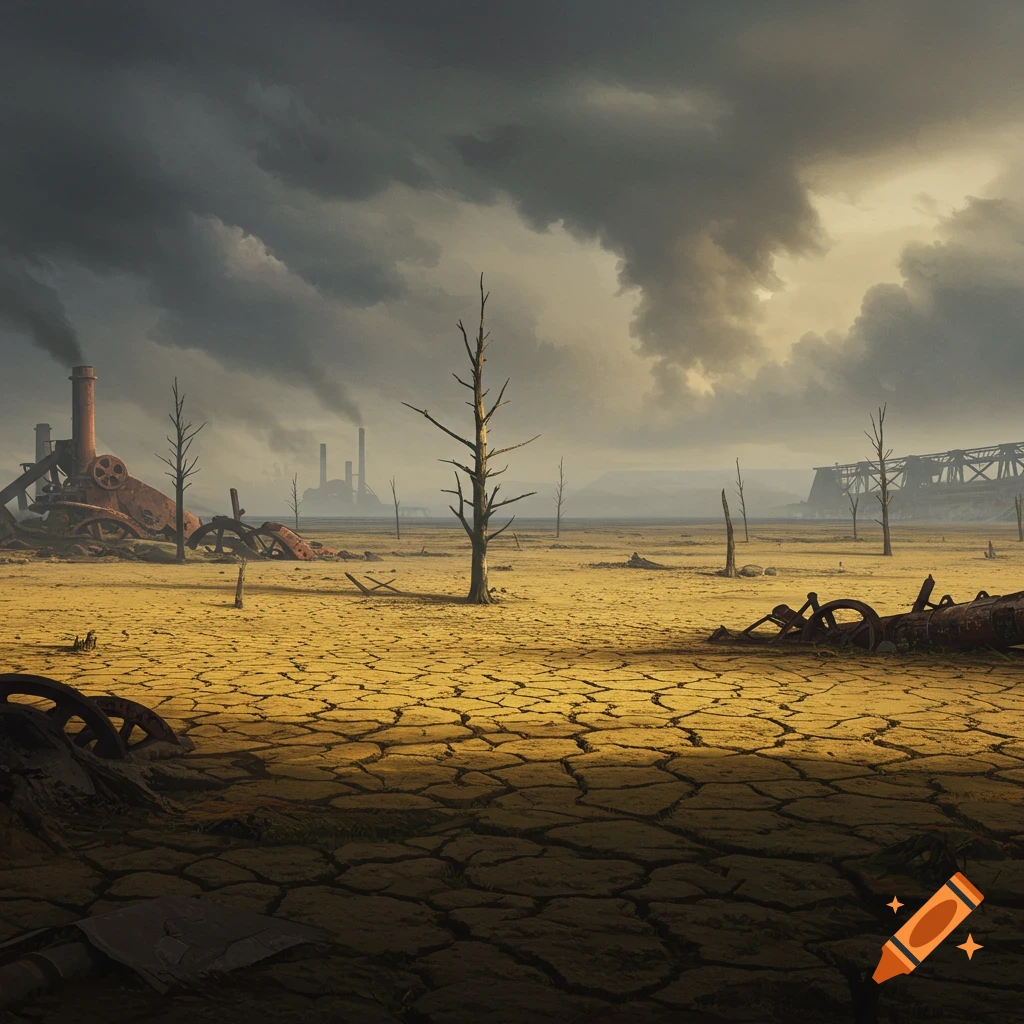
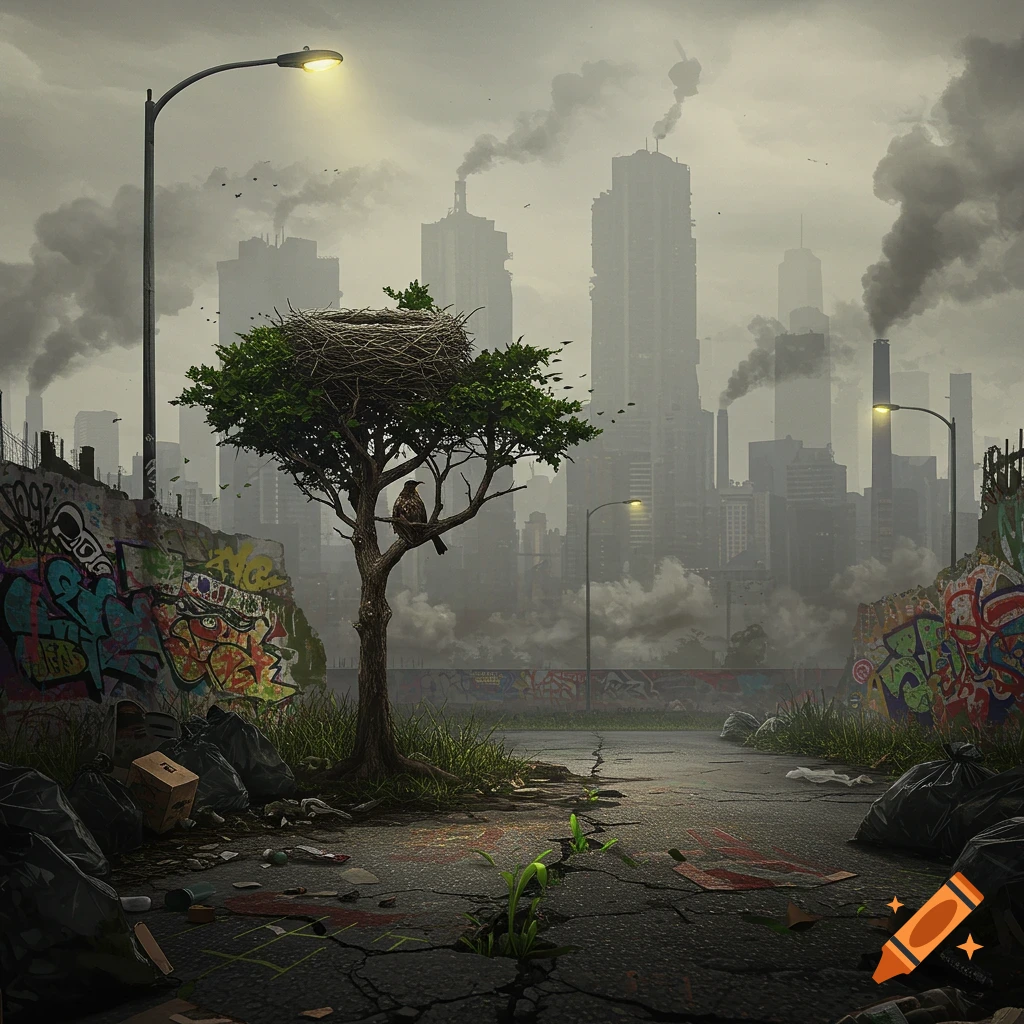
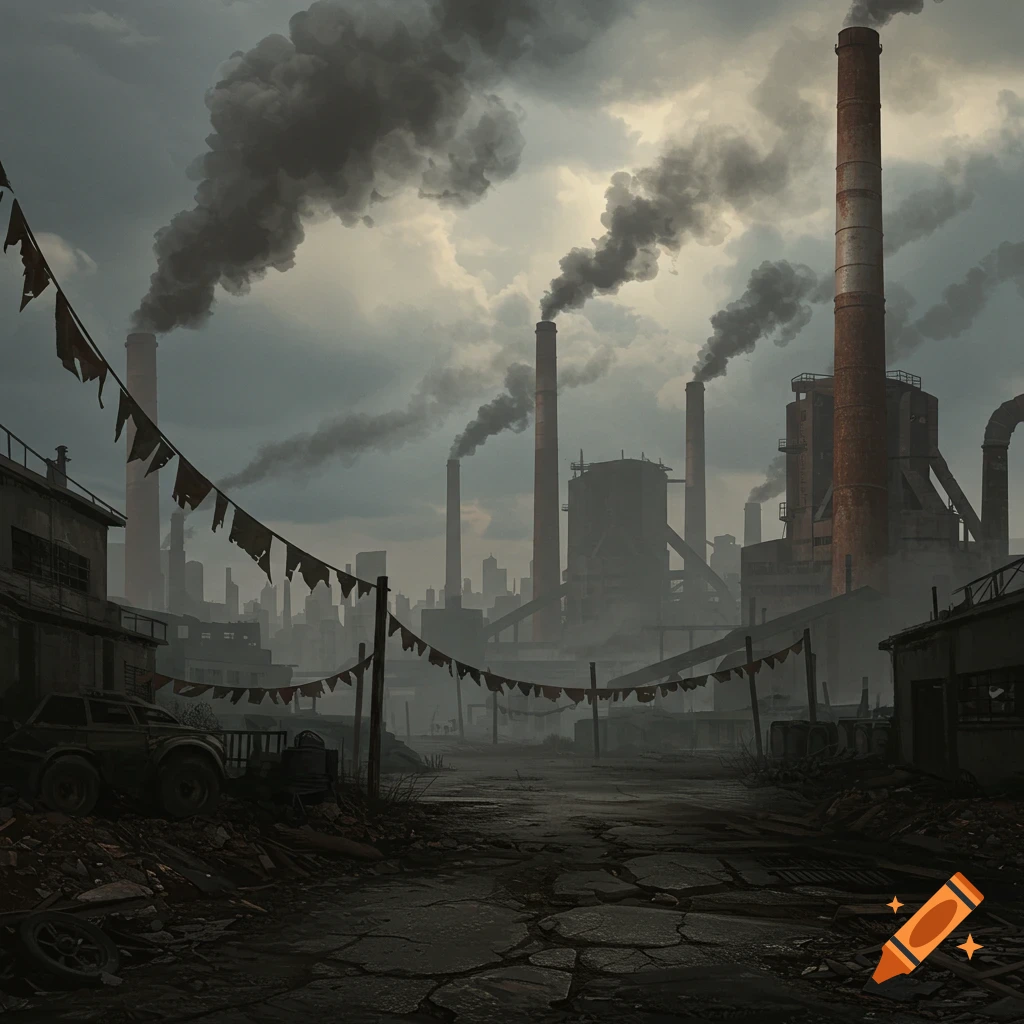
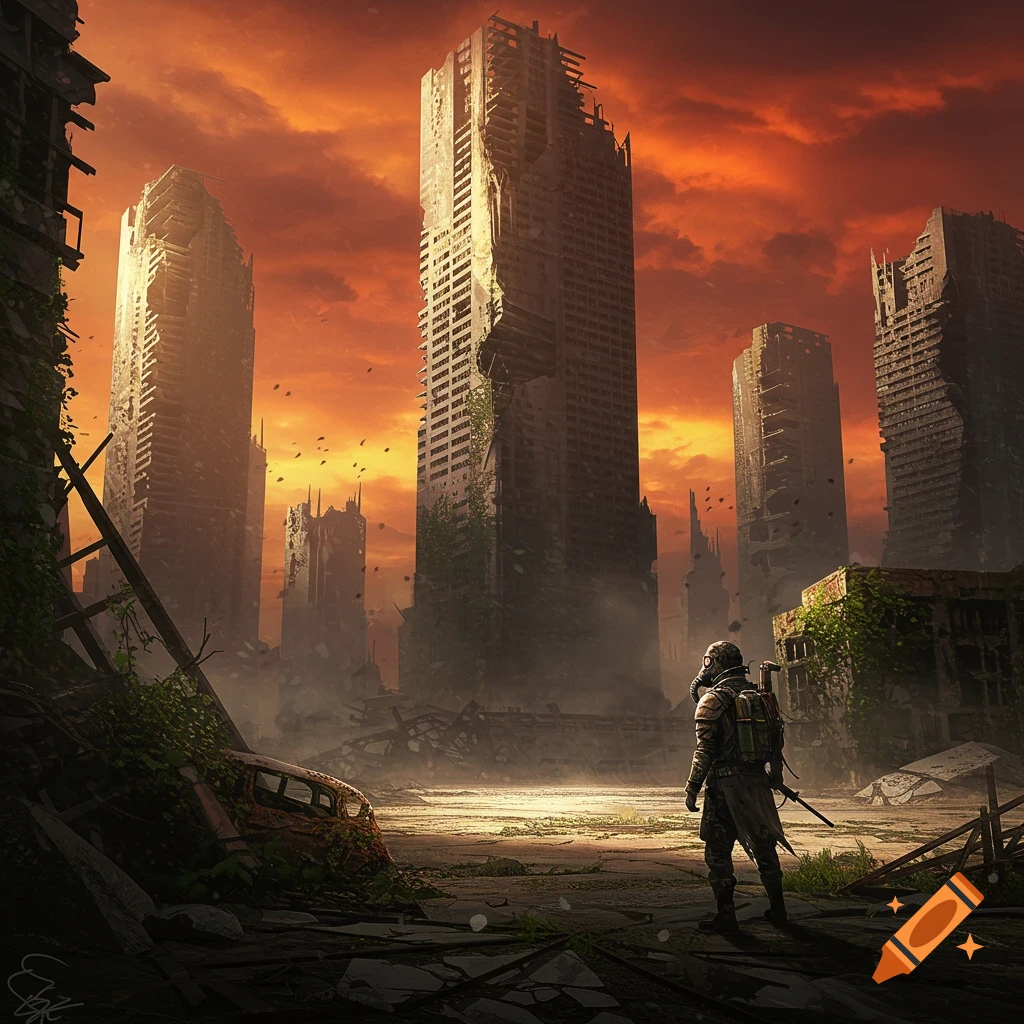
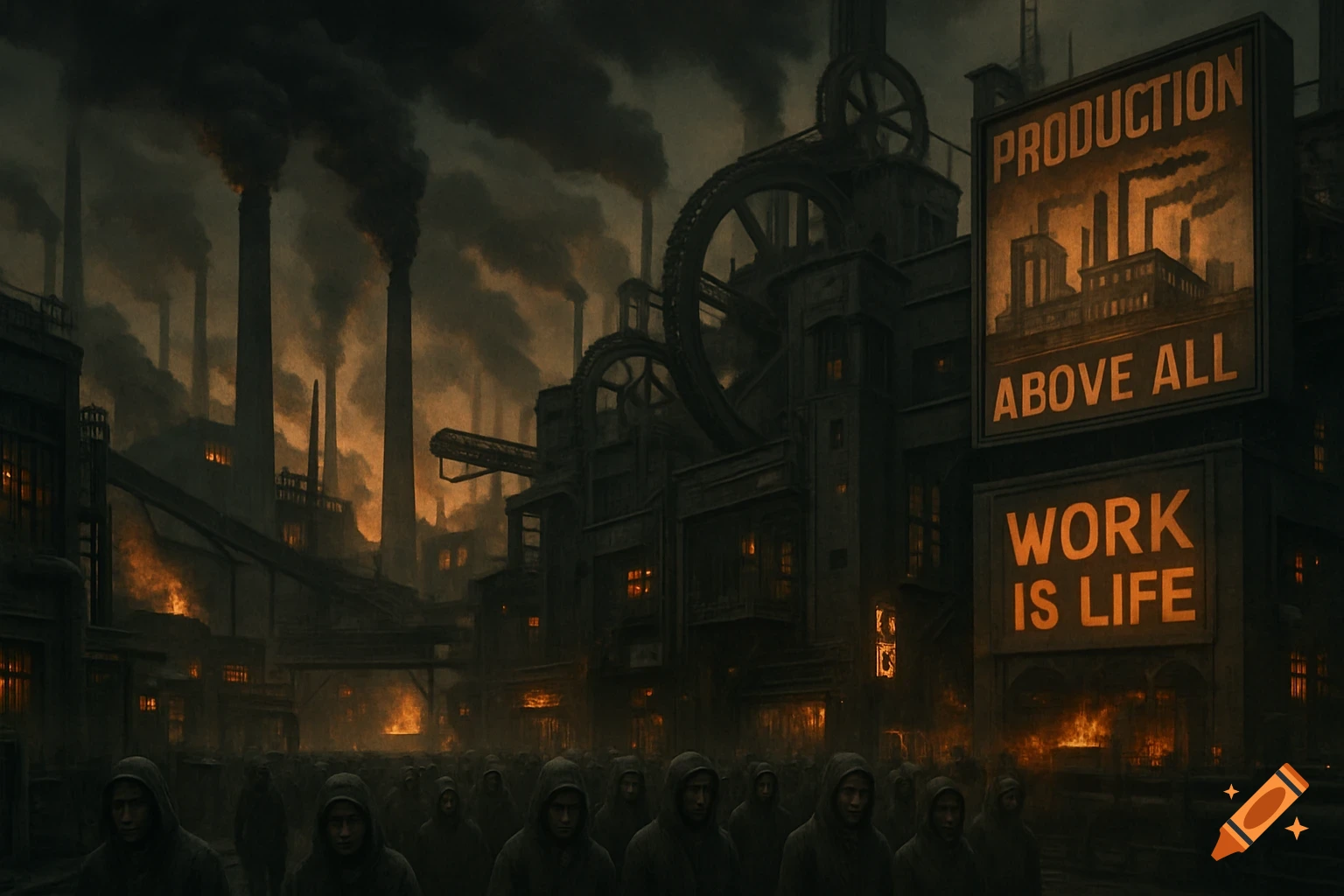
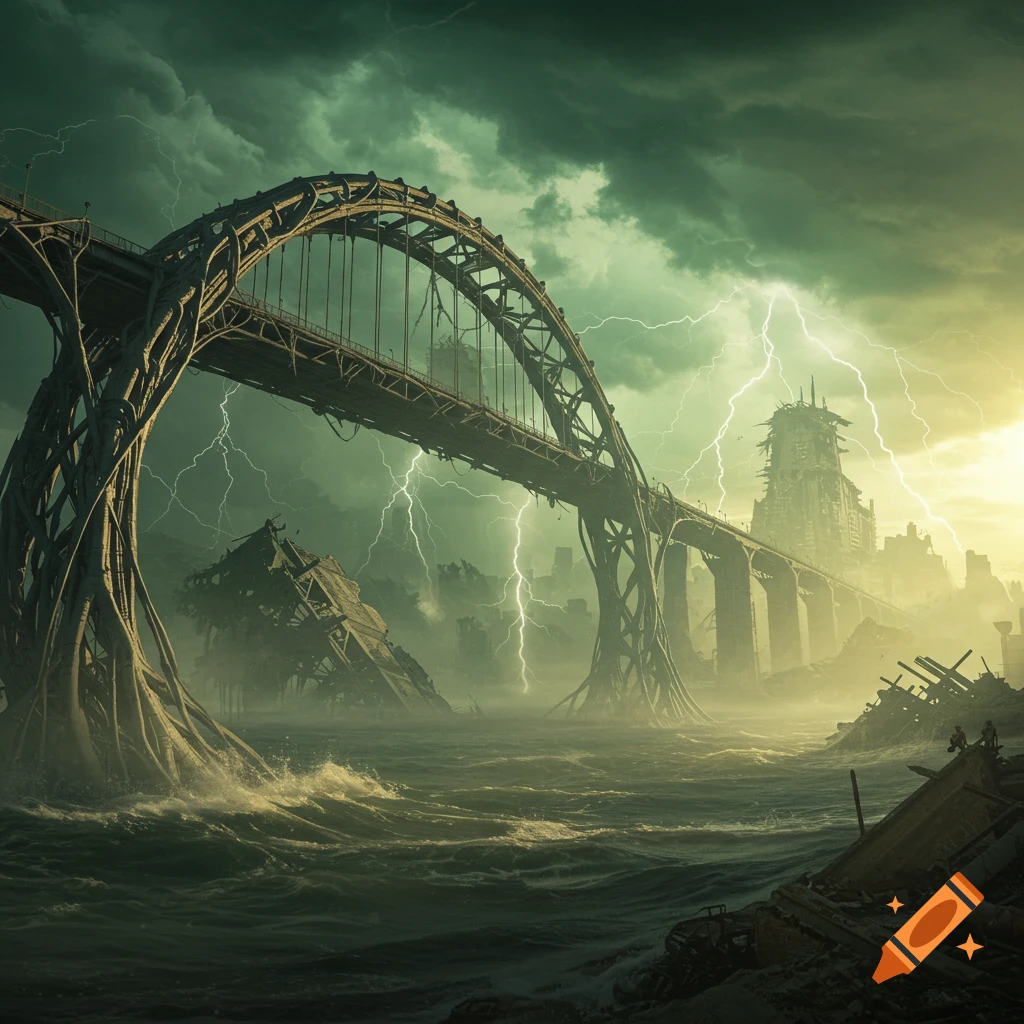
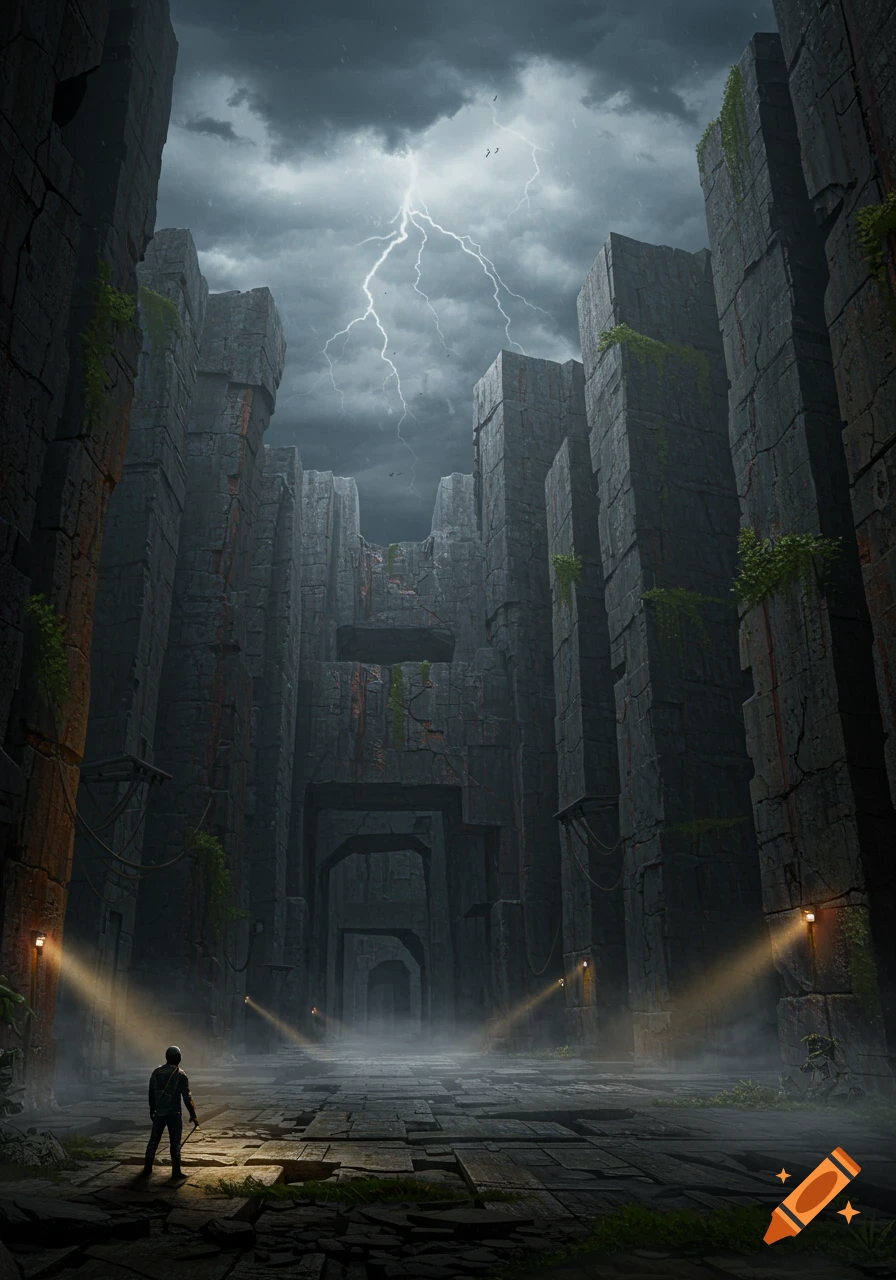
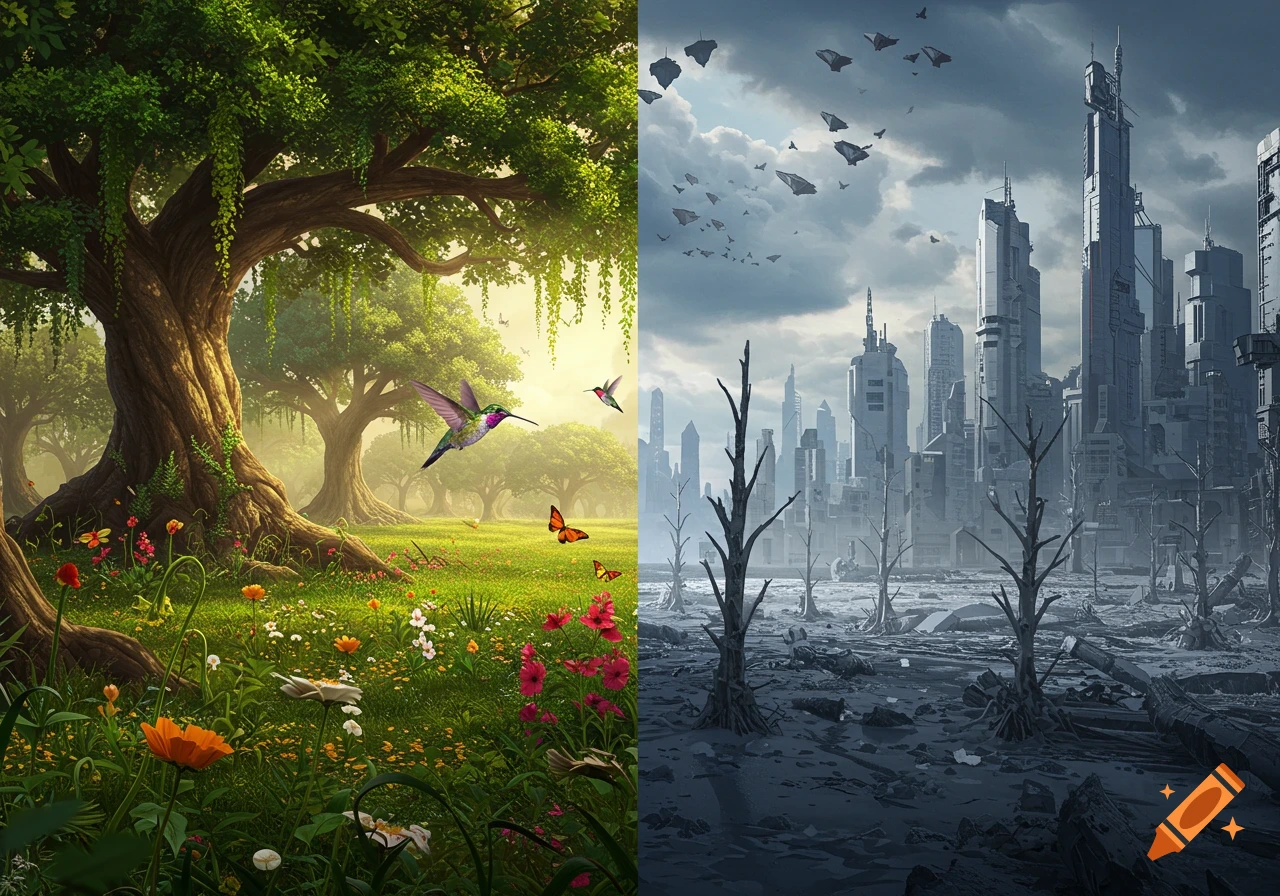
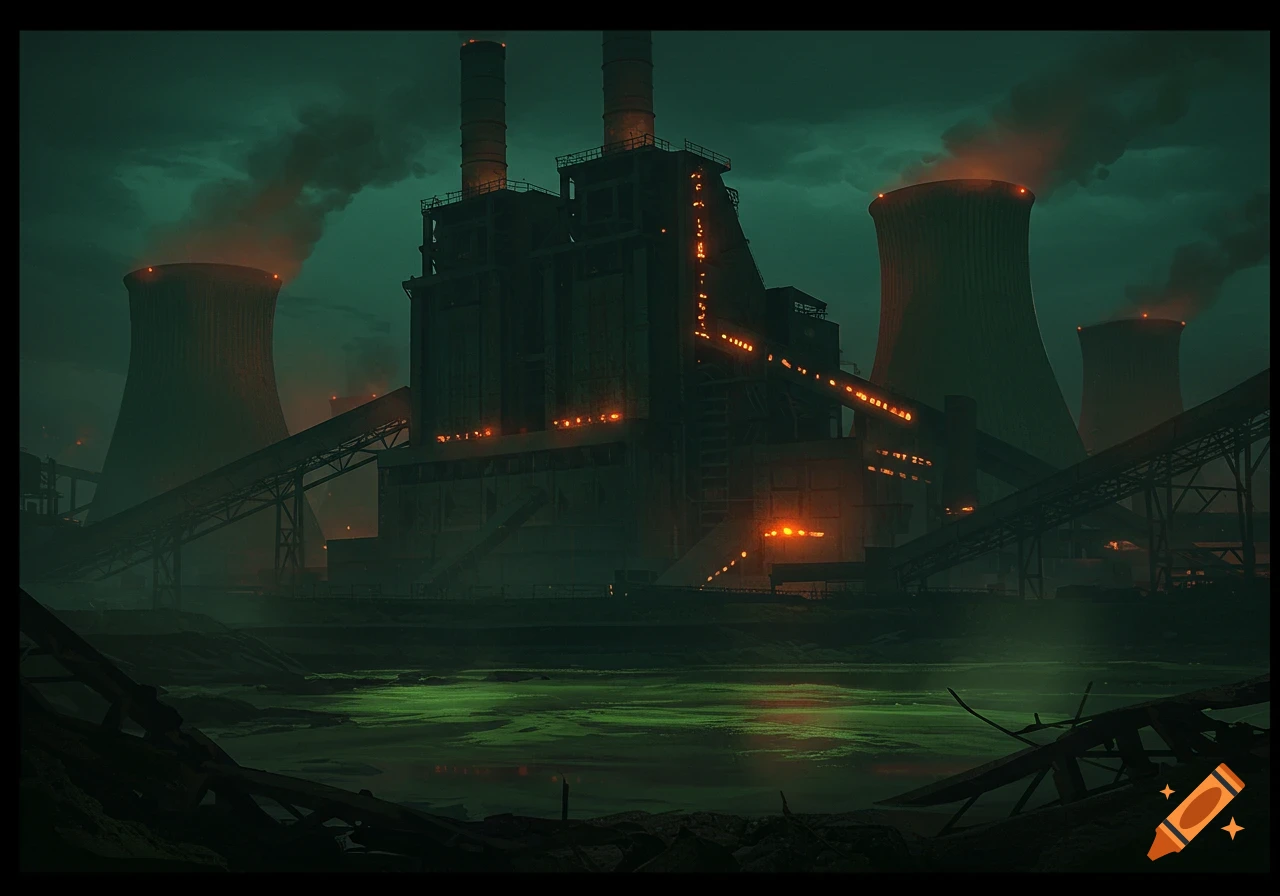
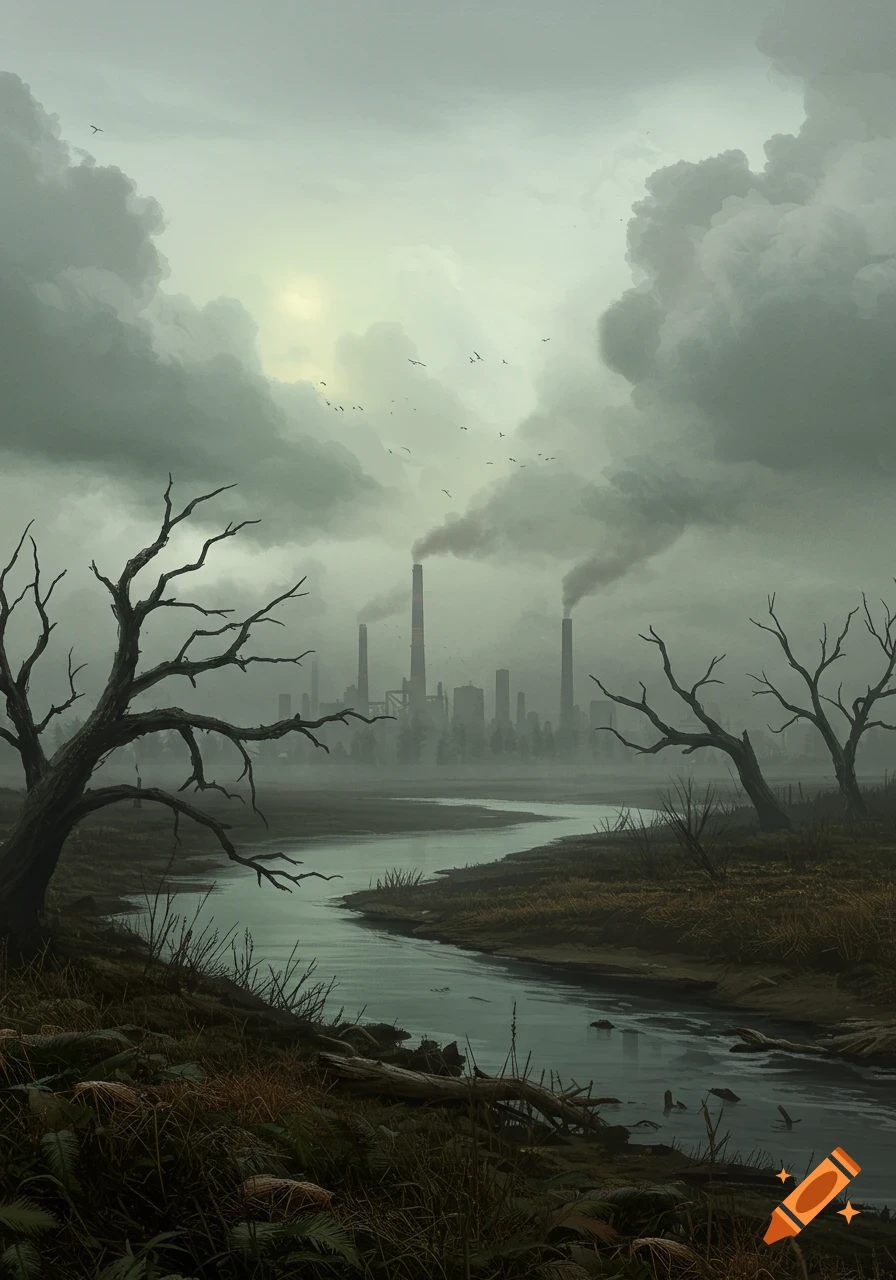
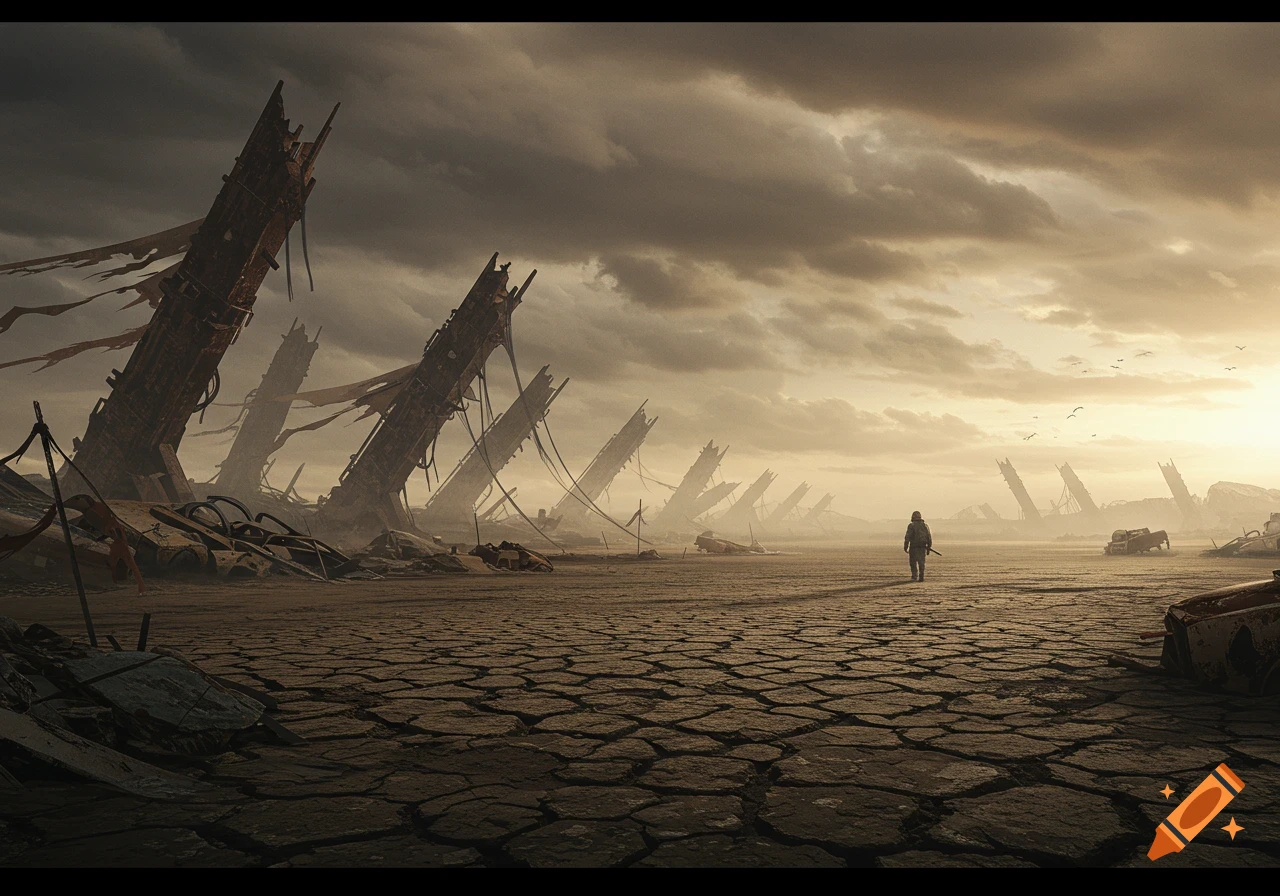
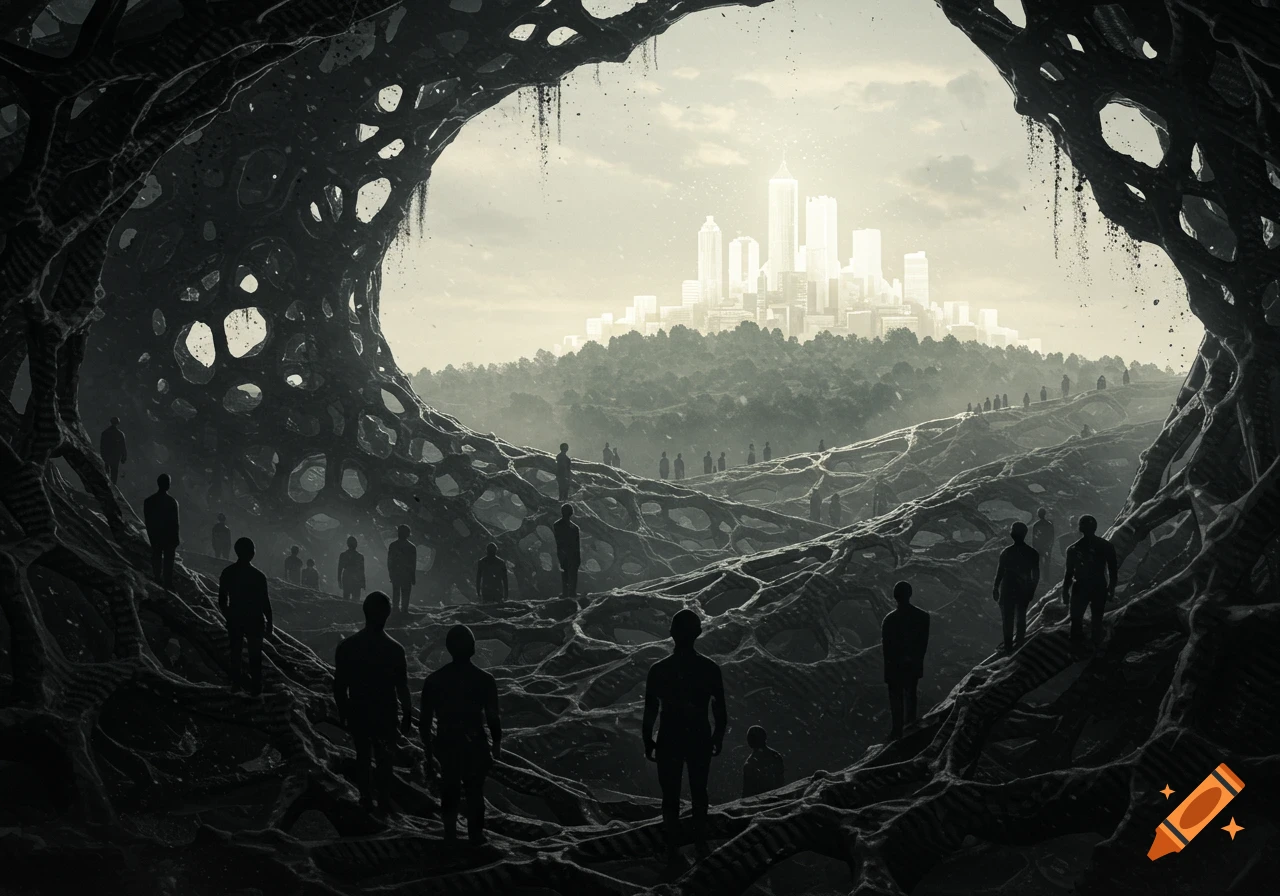
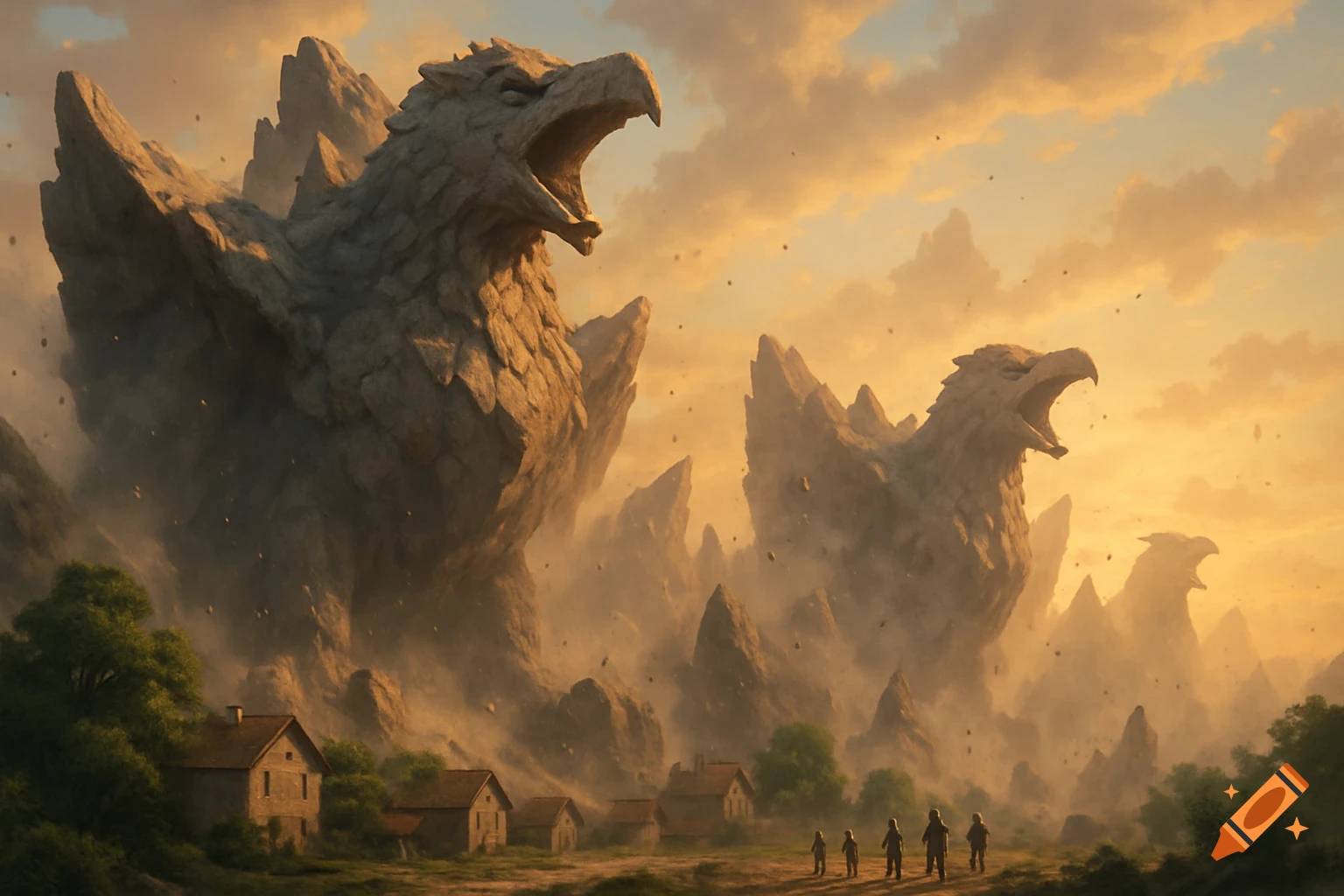
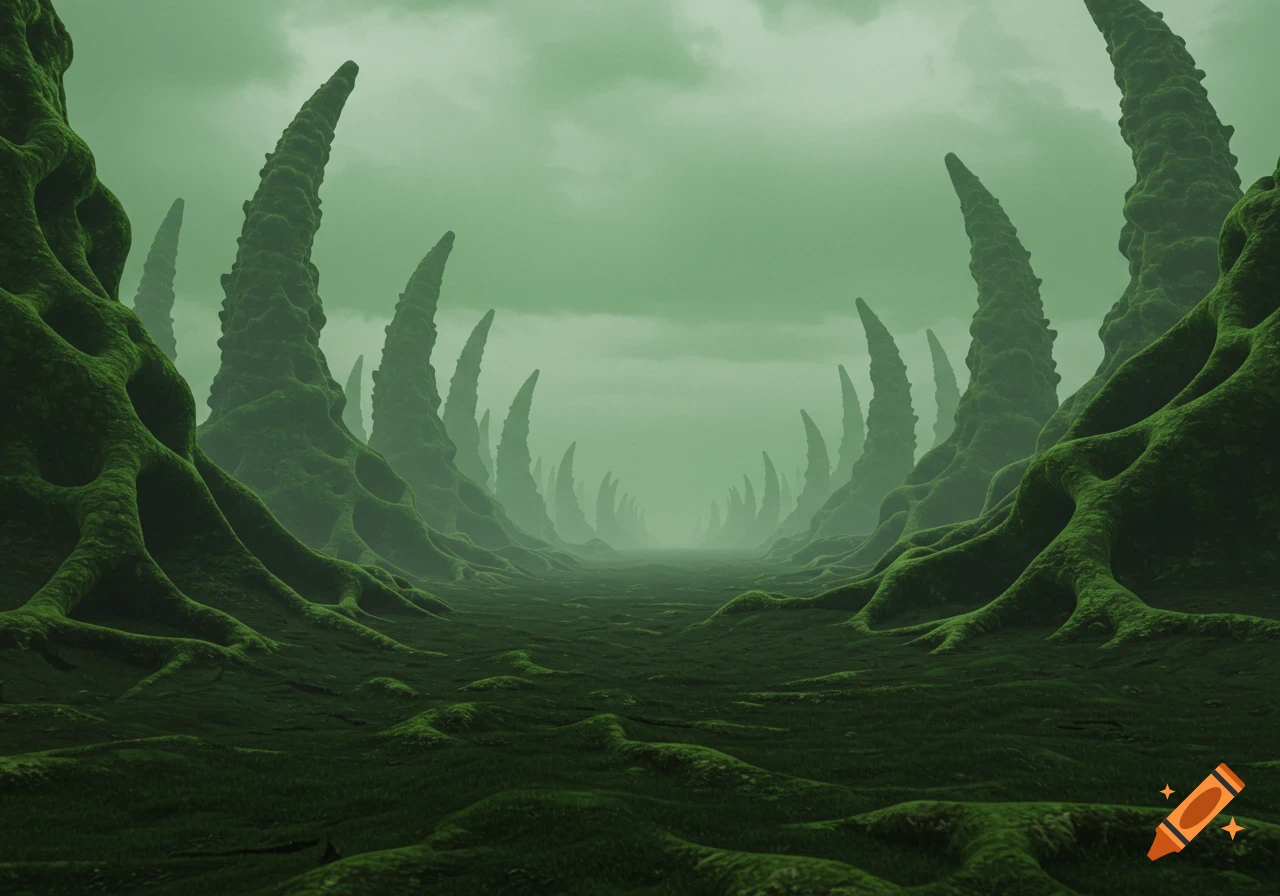
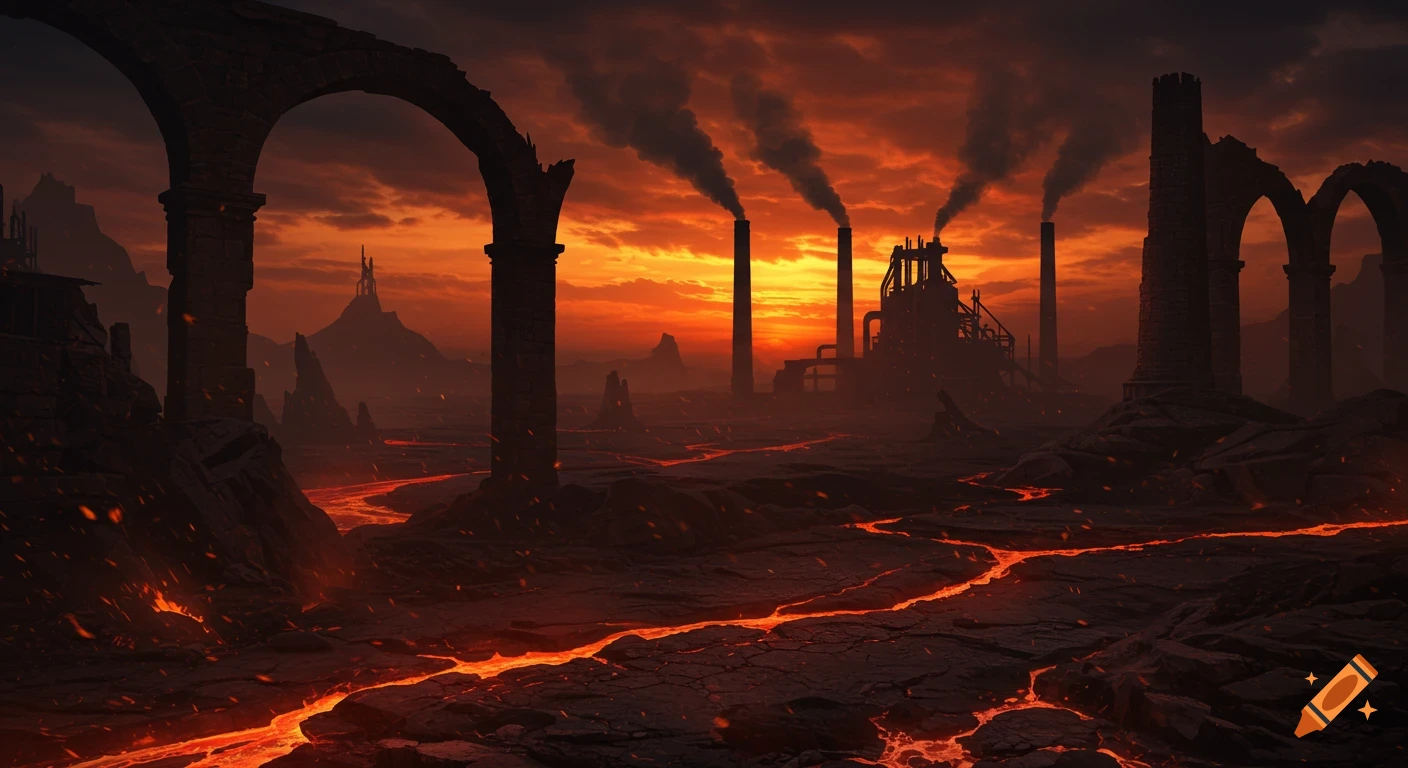
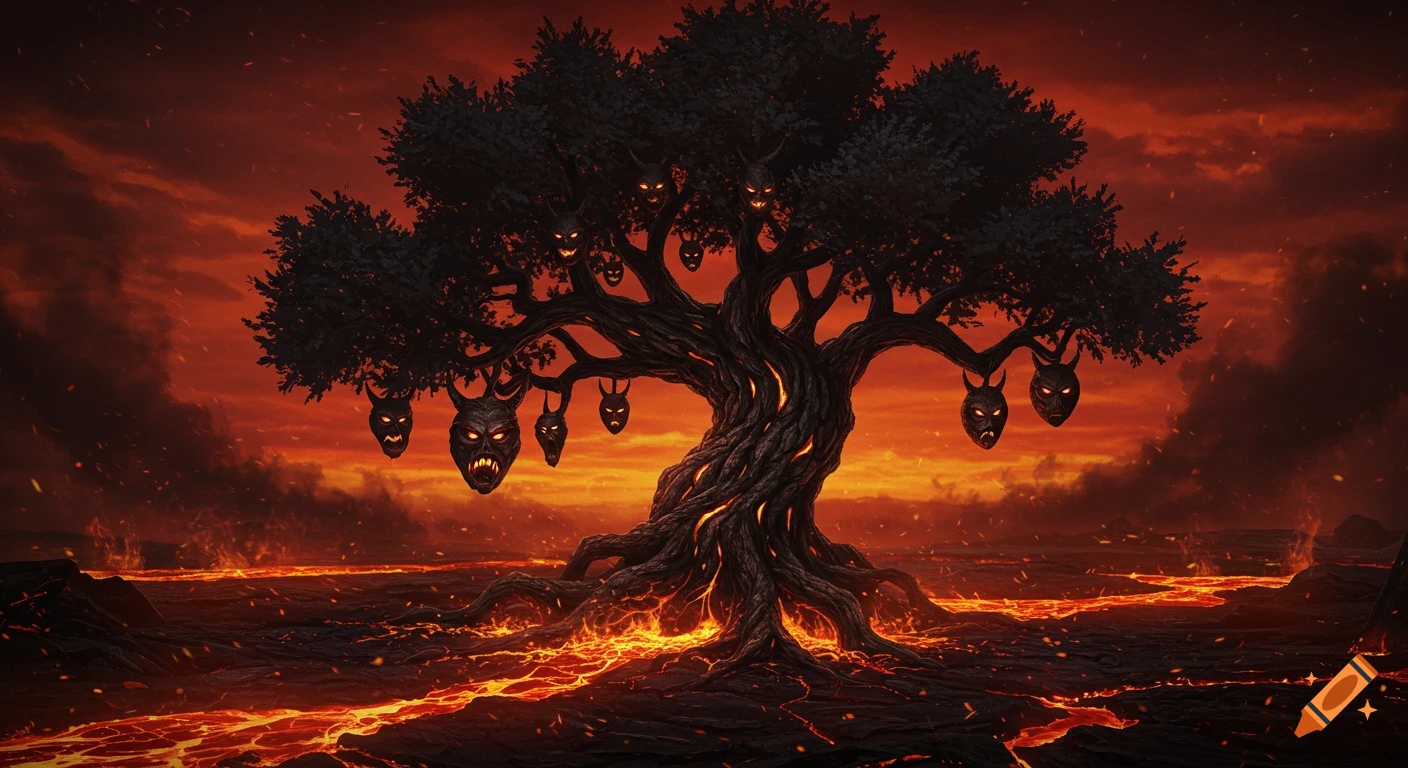
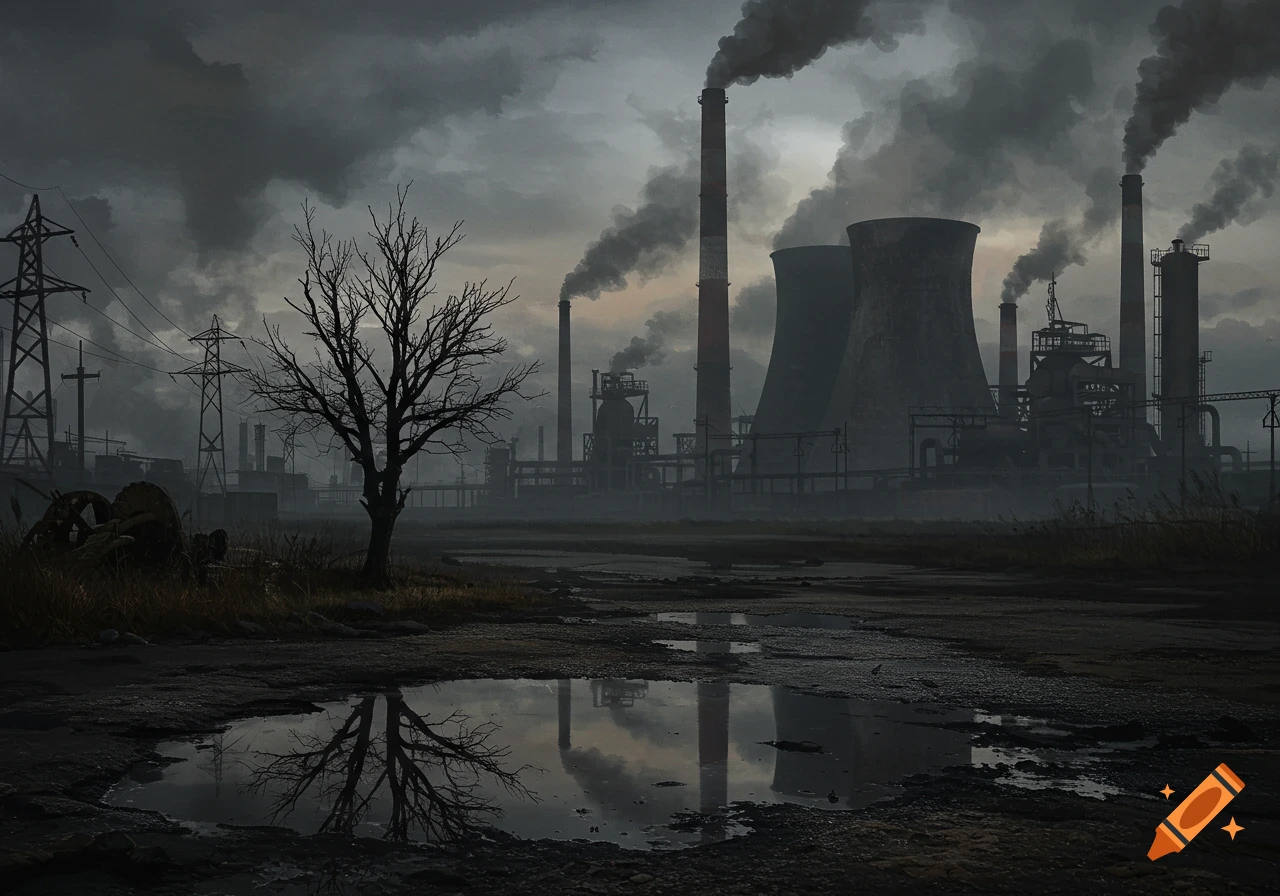
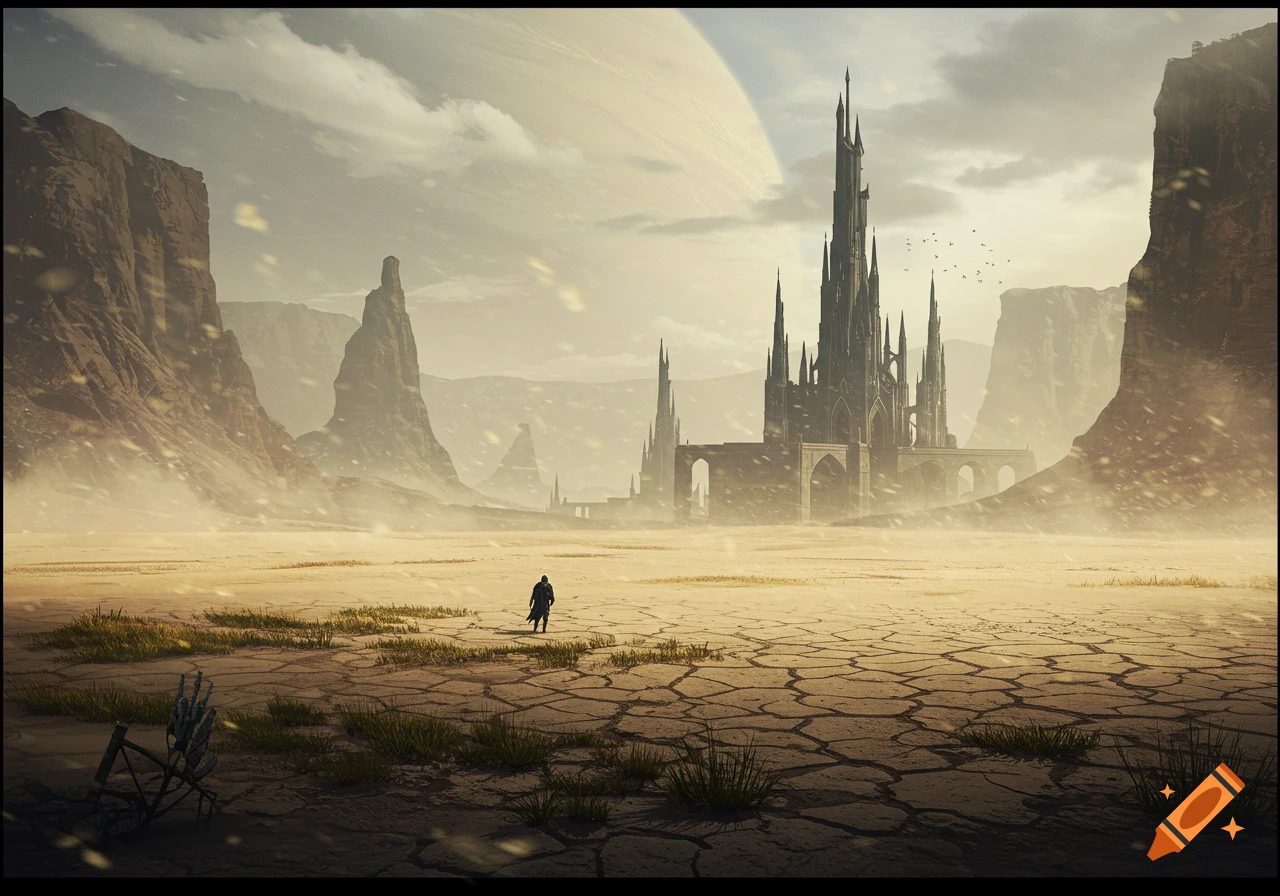
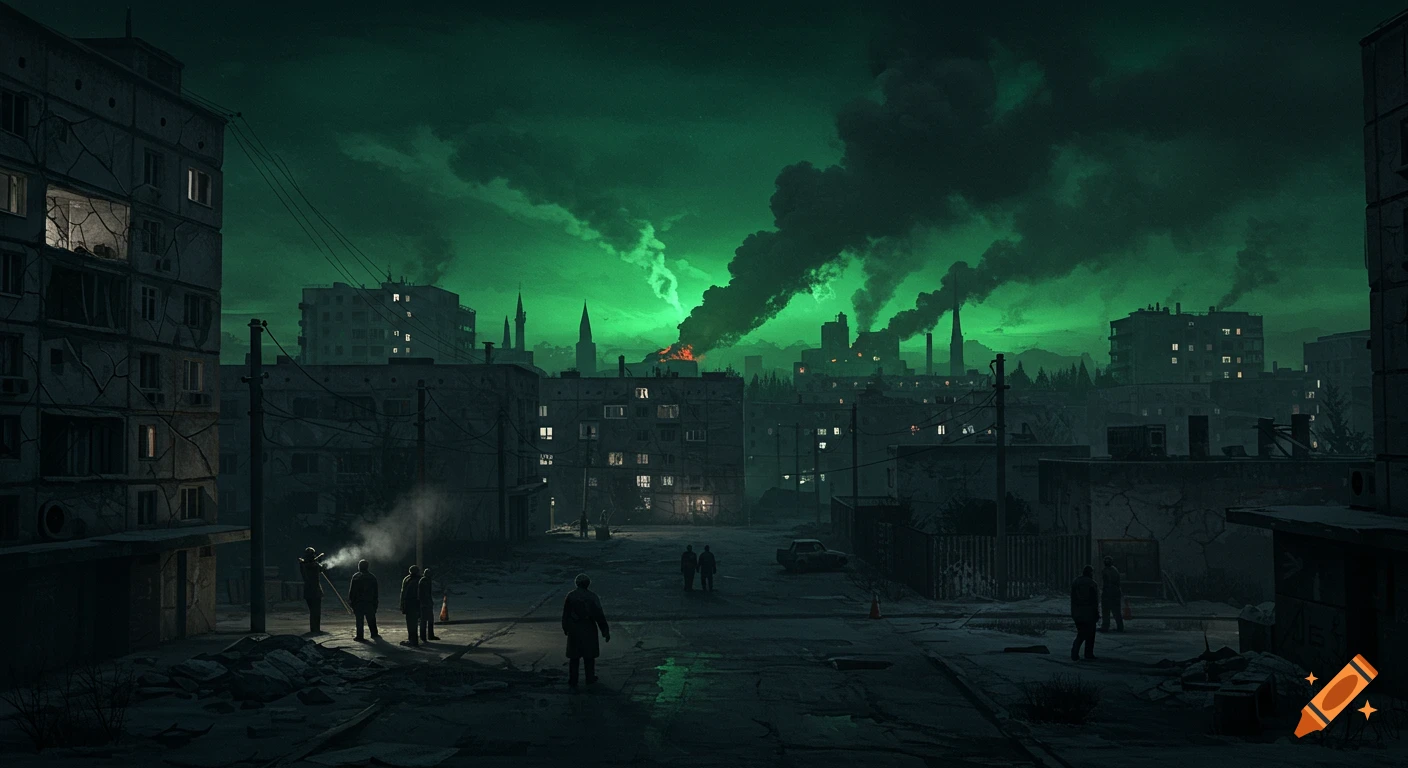
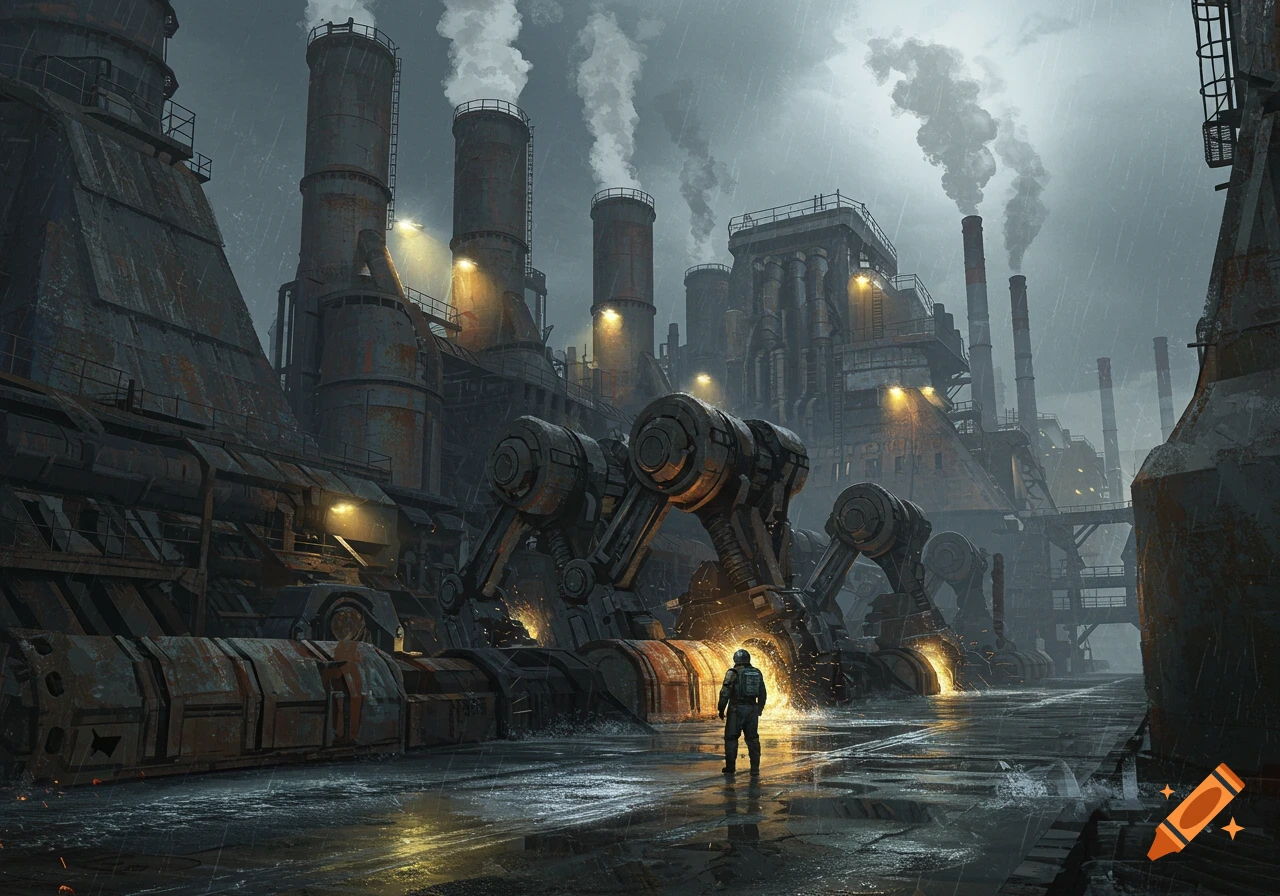
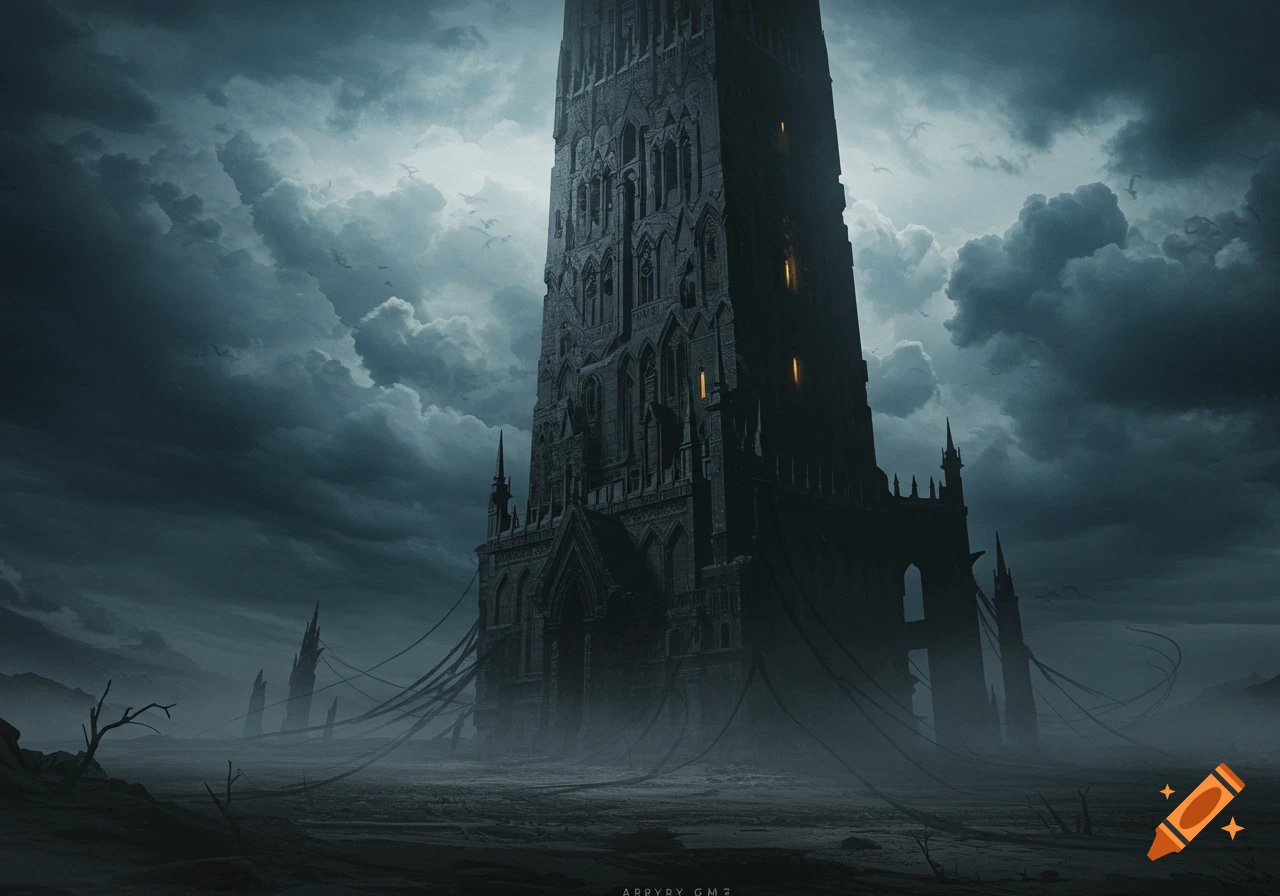
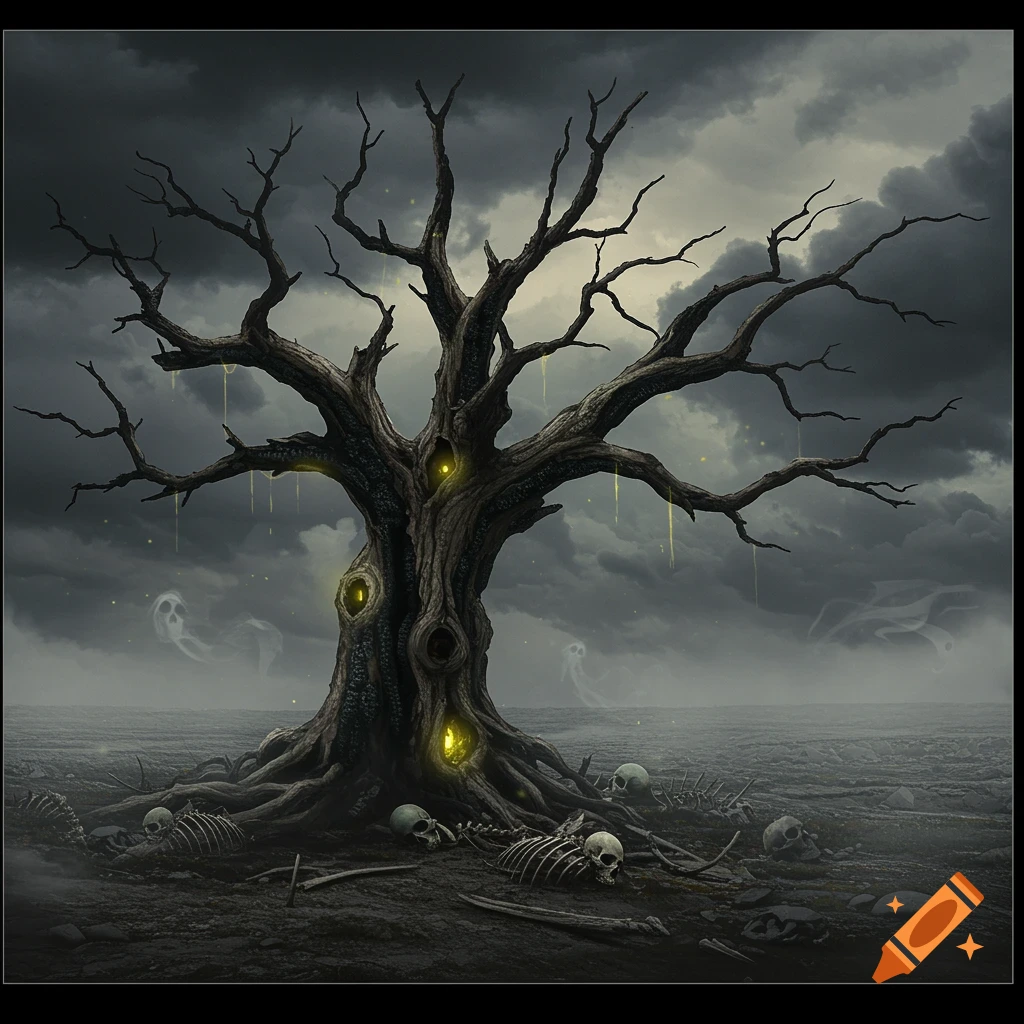
A grim, stylized painting of figures extracting gold from a chained tree, feeding a smoking industrial factory in a desolate land.
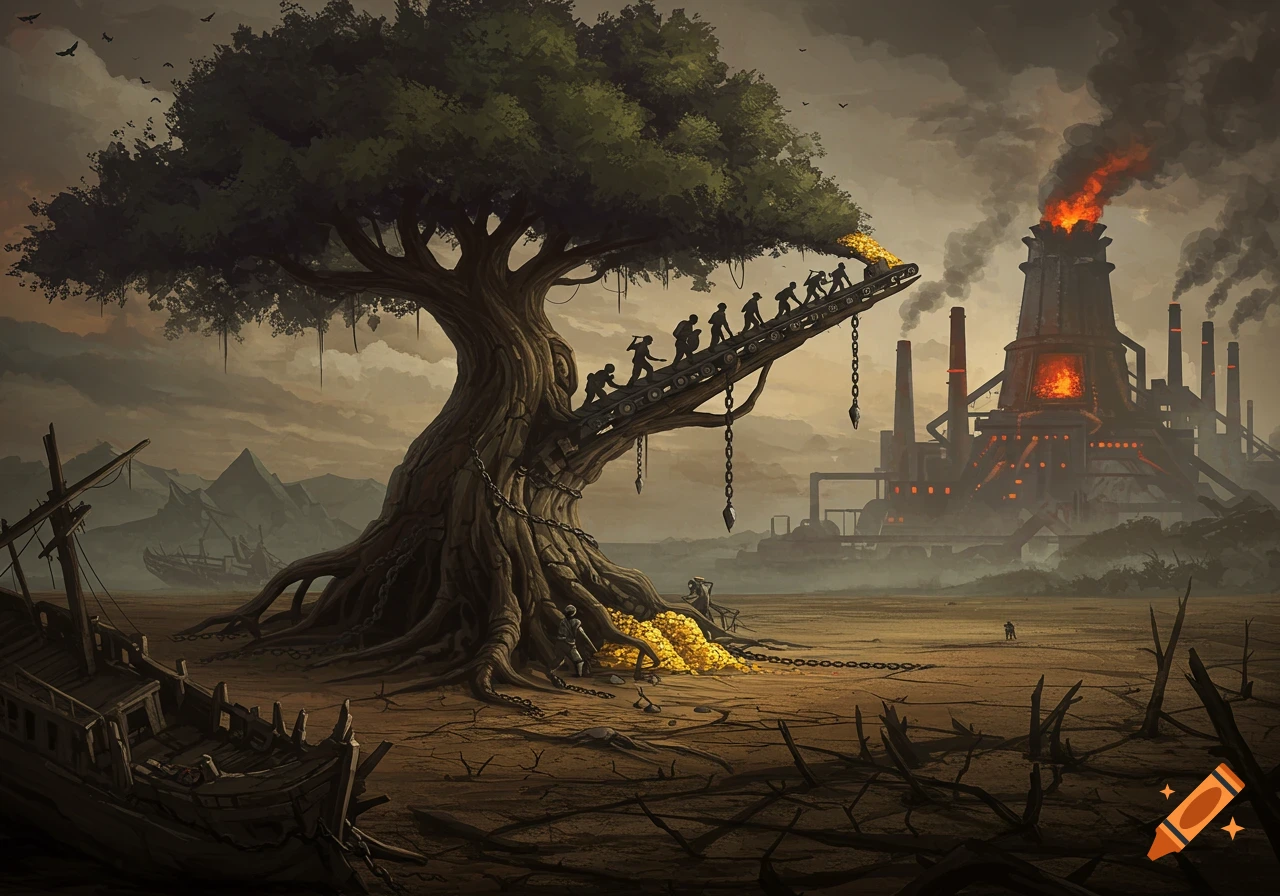
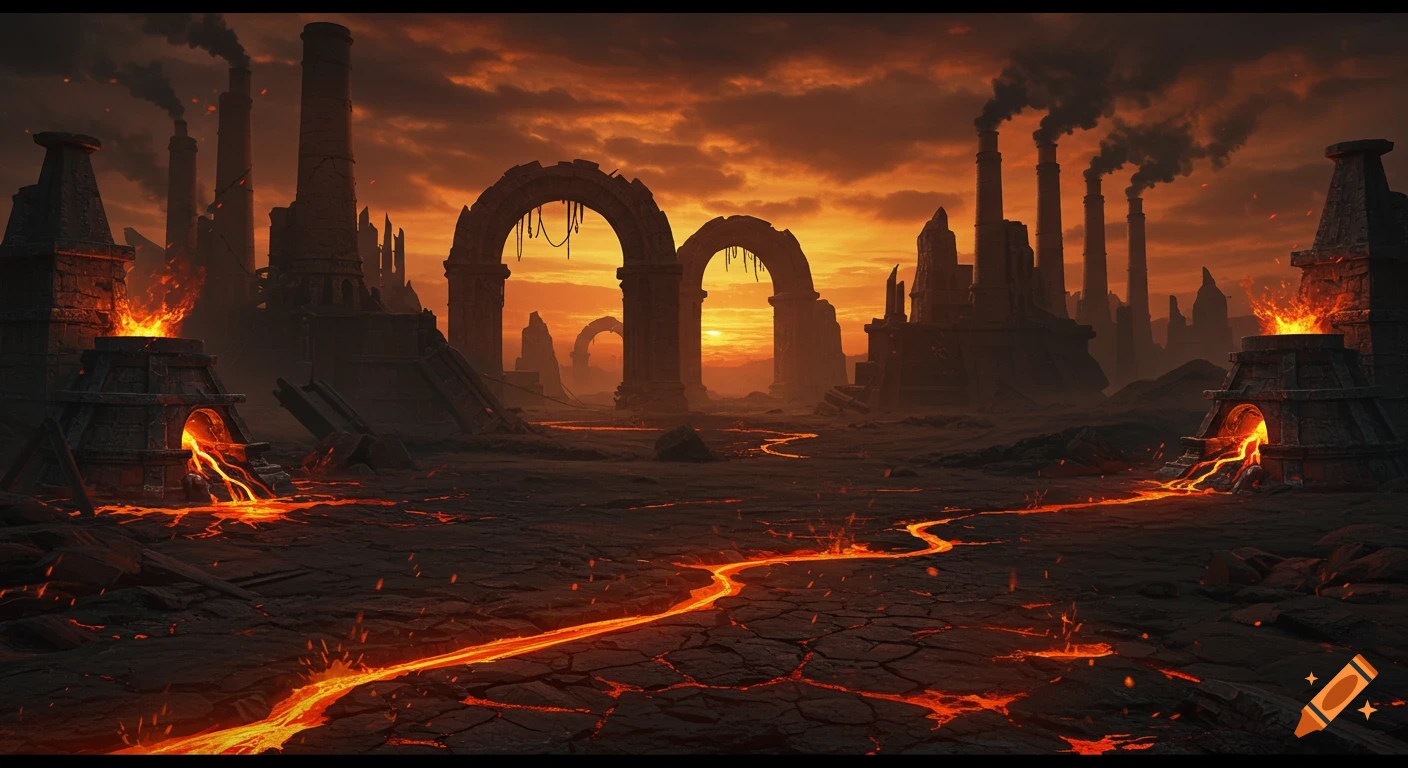
The image is structured like a grim, industrial-era fresco or a colossal, ruined monument. The overall color palette is desaturated, dominated by shades of sepia, ash-gray, rust-red, and deep shadow, with only a few stark points of color. The composition is divided into three interconnected tiers, representing a brutal cycle: 1. The Foreground: The Engine of Colonization A massive, weathered colonial ship is beached on a foreign shore, its hull broken open like a carcass. From its splintered planks grows a grotesque, industrial tree. The roots are not of wood, but of chains and iron manacles, digging deep into the soil of a vibrant land now cracked and barren. This represents the violent arrival and the foundational act of colonization, which is rooted in bondage. 2. The Midground: The Machinery of Slavery & Exploitation The trunk and branches of the iron tree form a conveyor belt system or a giant press. On this conveyor belt, countless silhouetted figures are shown performing back-breaking labor—harvesting cane, mining ore, building railroads. Their forms are anonymous, representing the dehumanization of enslaved and colonized peoples. The "fruit" falling from this metallic tree is not food, but raw materials: gold bars, cotton bales, and gemstones, which are being fed into the next stage. 3. The Background: The Specter of Genocide The riches produced by the labor in the midground are funneled into a colossal, smoking factory furnace that dominates the horizon. Instead of See more