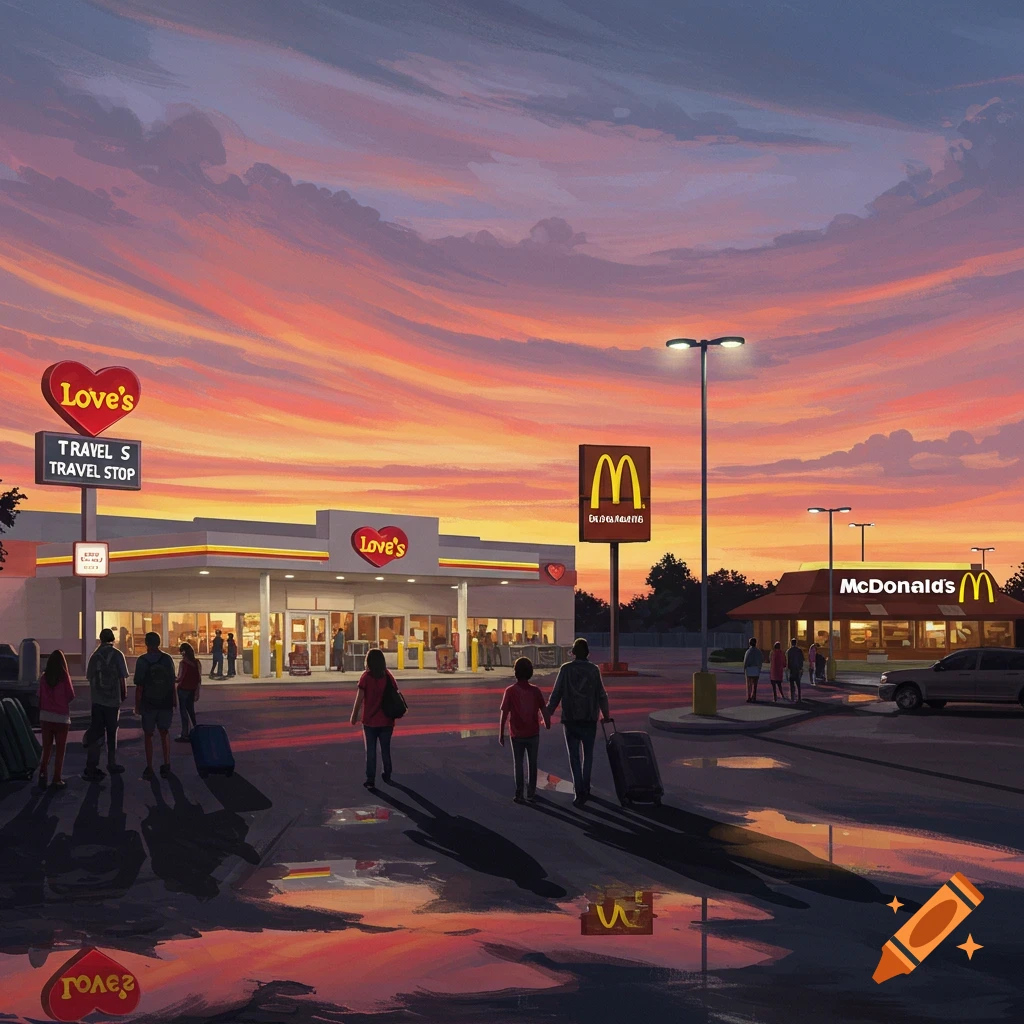
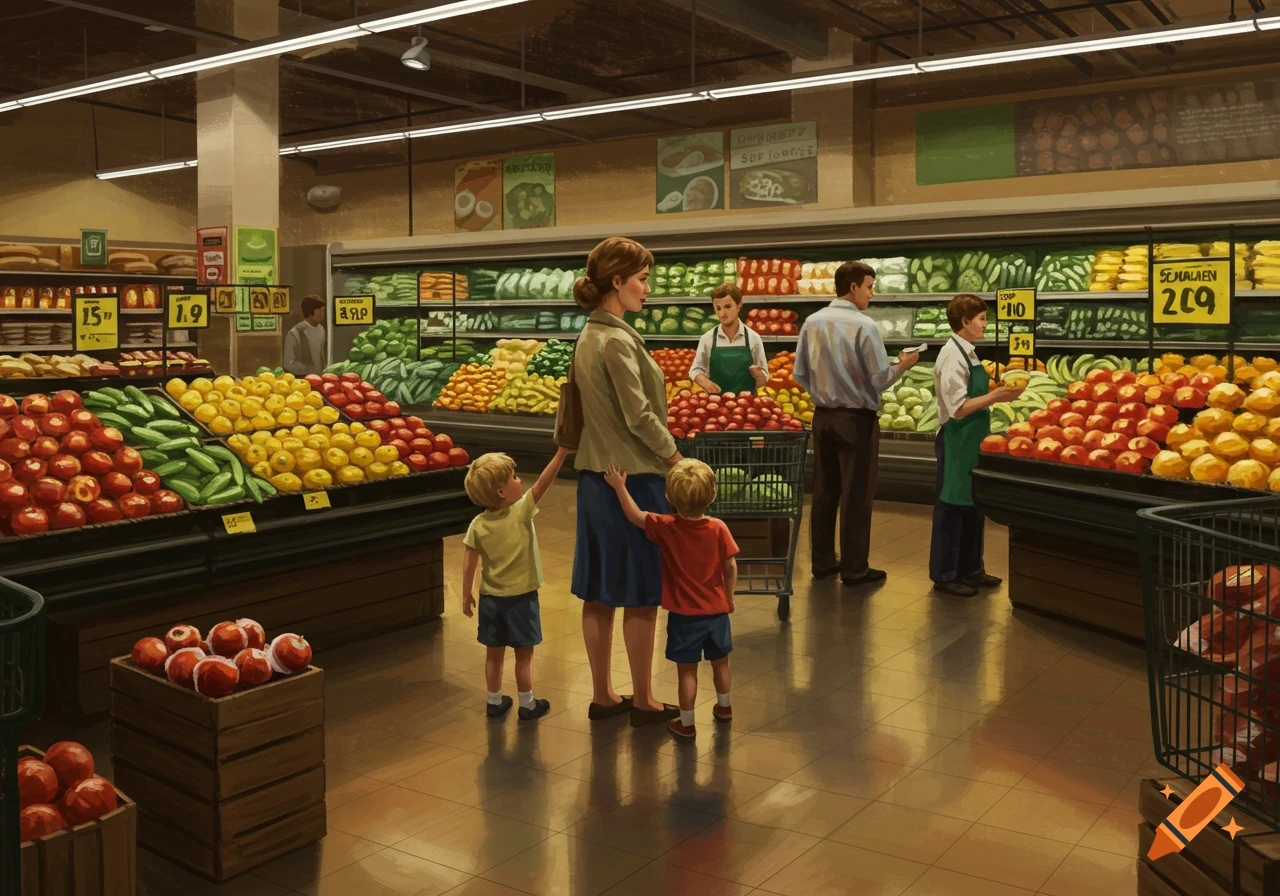
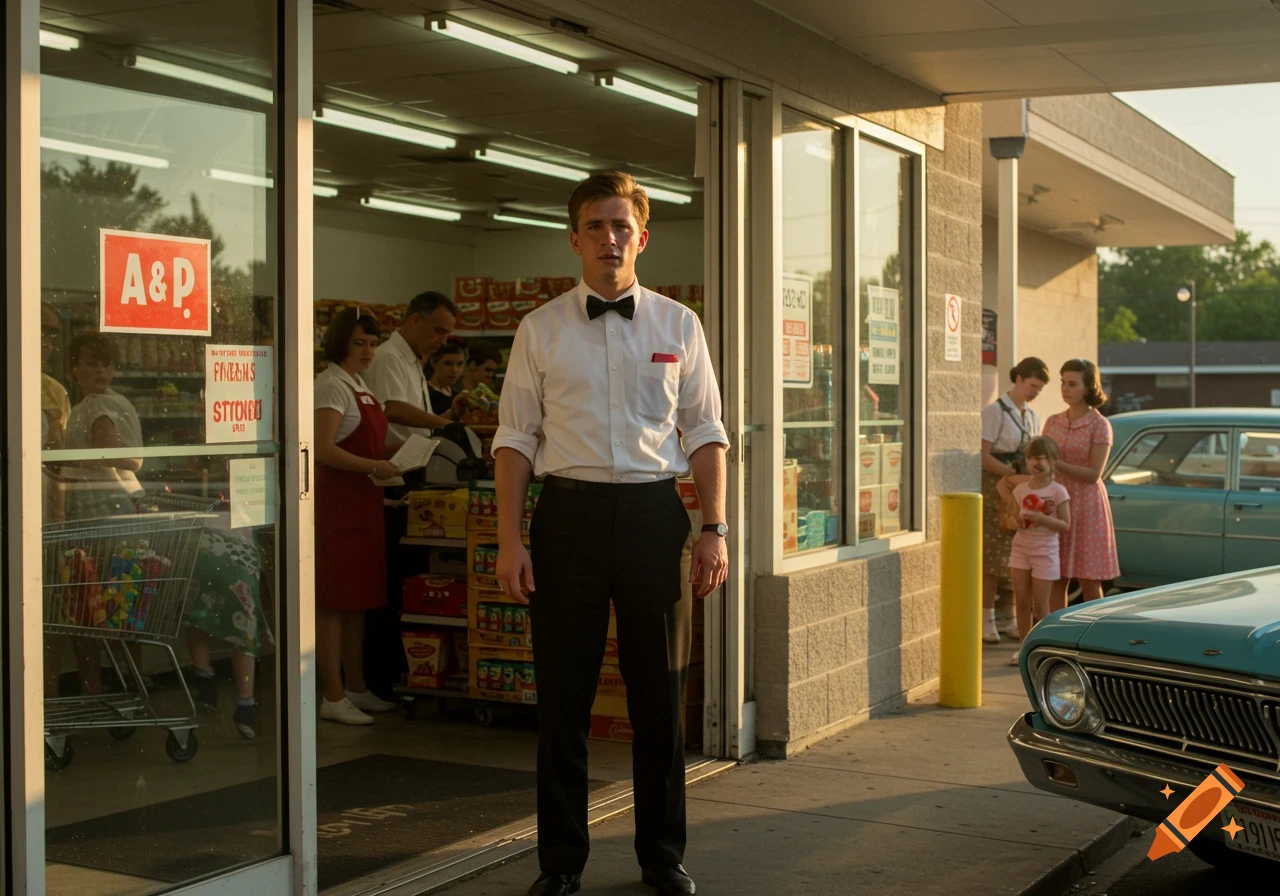
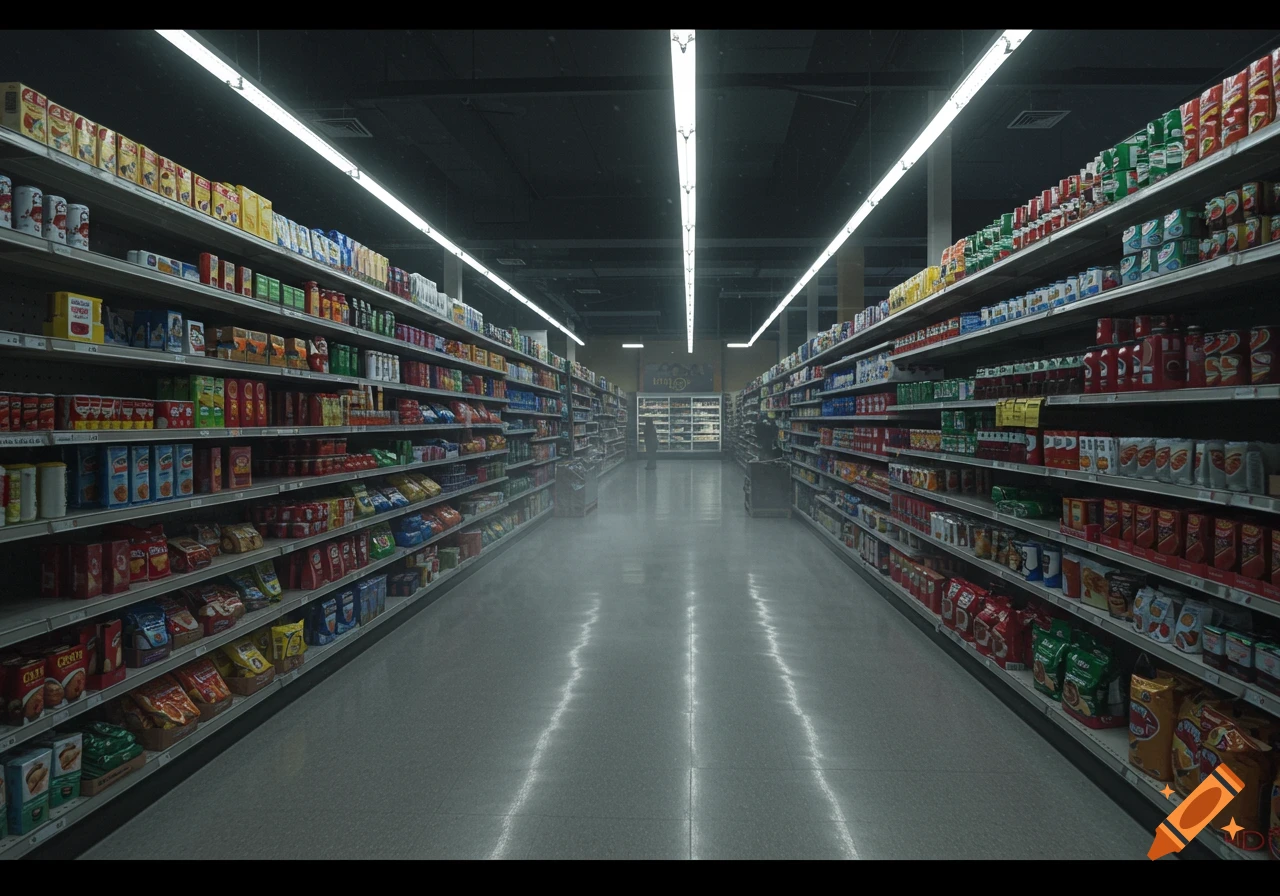
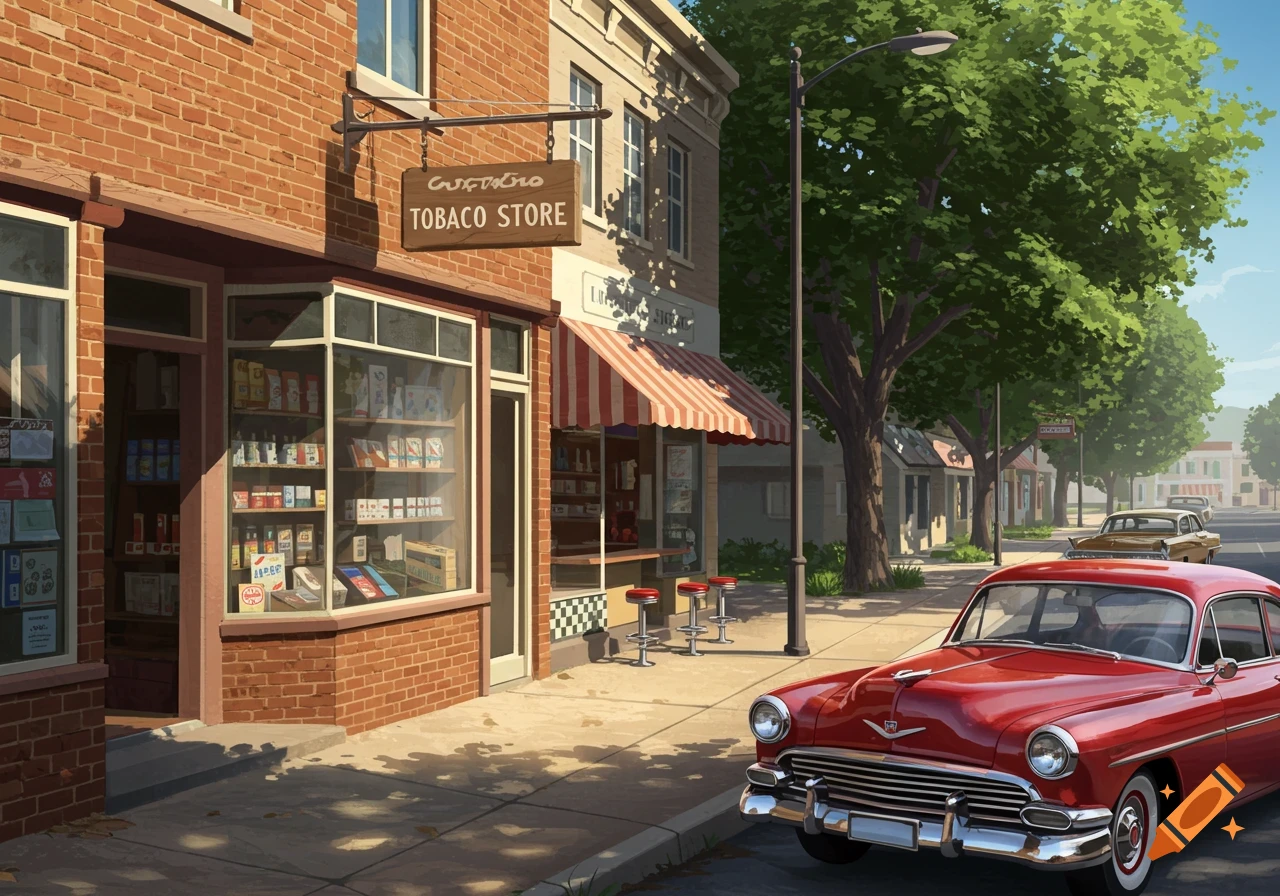
A nostalgic illustration of a 1960s A&P grocery store with a male employee by the entrance, a mother with children and a vintage car outside.
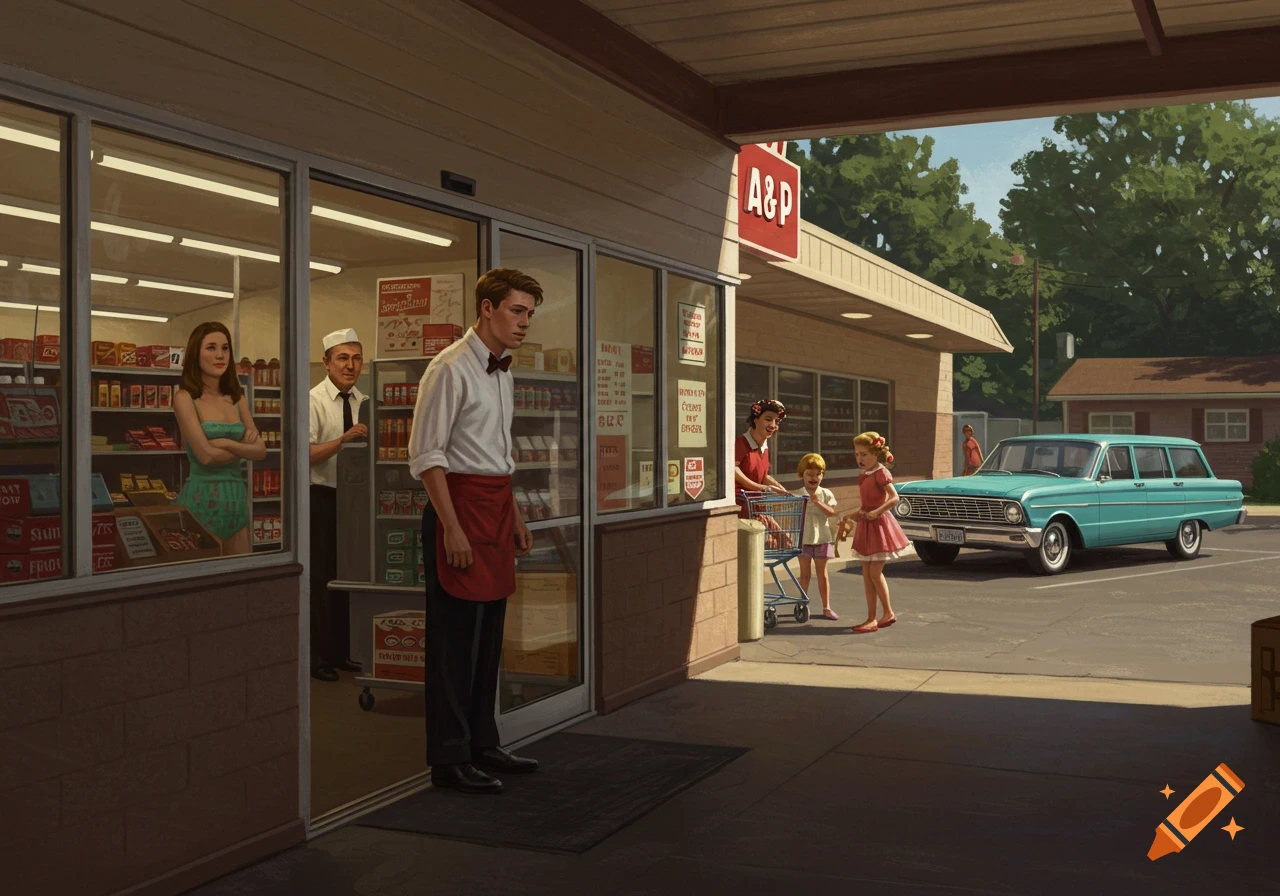
Outside a mid-century suburban A&P grocery store on a sweltering 1960s summer afternoon, a 19-year-old white teenage boy stands just beyond the automatic glass doors. He wears a crisp white button-down shirt and black slacks, but his red-stitched name-tagged apron and black bow tie lie folded on the counter inside, visible through the glass. He squints into the harsh, golden sunlight, his brow furrowed, his body slightly slouched, scanning the nearly empty parking lot where the three teenage girls in bathing suits have already vanished. The pavement gleams with heat waves, and a powder-blue 1960s Ford Falcon station wagon is parked near the entrance, where a young mother in curlers struggles to control two loud children reaching for candy. Through the store windows behind him, the interior glows with cold fluorescent light—orderly aisles, indifferent shoppers, and a middle-aged man in a dress shirt now working at Sammy’s register. The boy’s expression is conflicted—part regret, part awakening—as he realizes the girls never looked back, and that his impulsive rebellion has left him alone at the threshold between youth and the hard reality of adulthood. The emotional contrast between the shimmering, chaotic world outside and the rigid, artificial calm inside emphasizes his quiet moment of irreversible change. See more