Silhouette of a person watching a glowing Tetris-like game on a brick wall, with a neon clock and origami crane above.
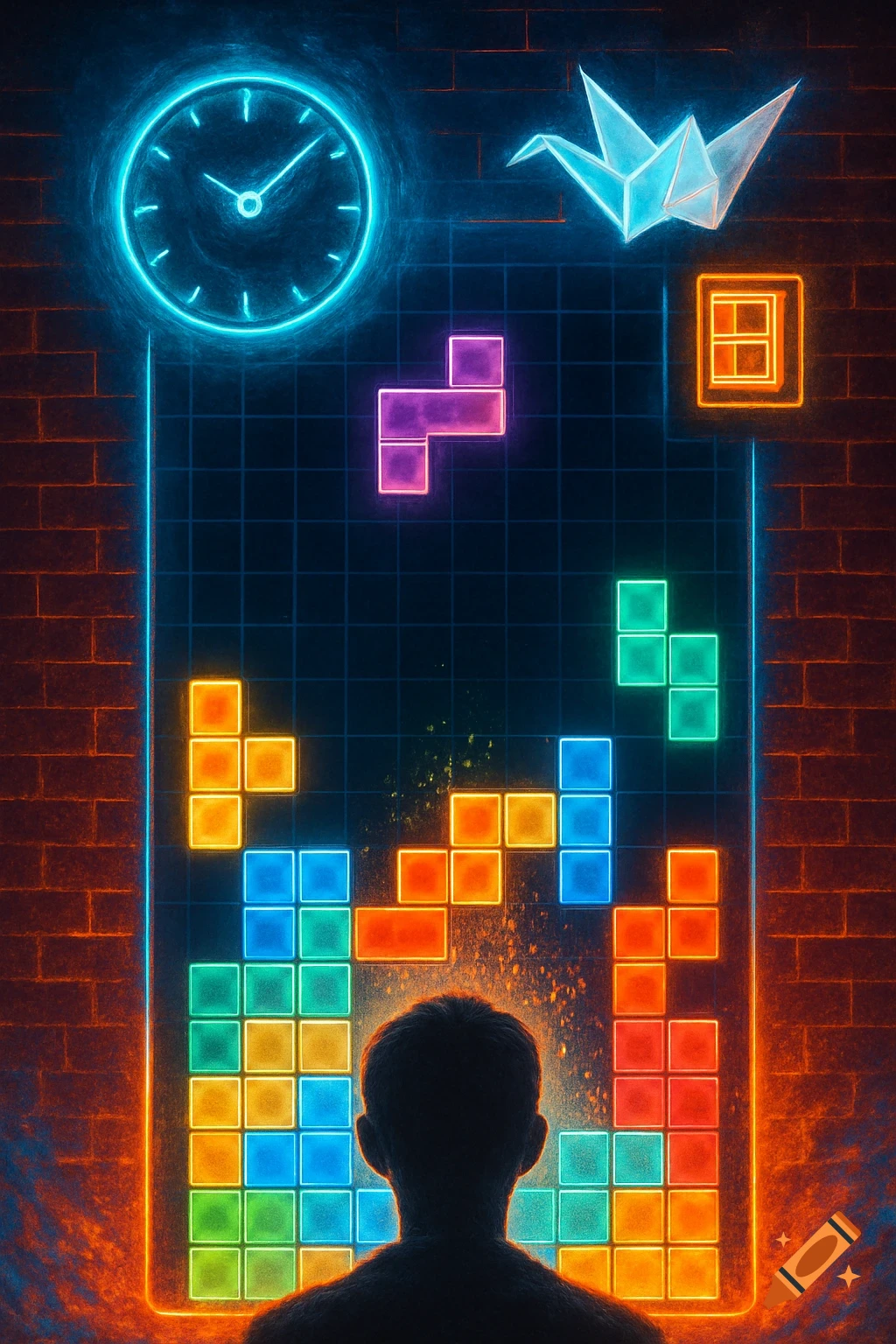
This chapter explains why certain games—especially Tetris—are so addictive. In Tetris, you never get to admire your successes for long because completed lines disappear instantly. What stays on the screen are your mistakes, so the game pushes you to keep fixing them. This creates a powerful loop: you feel close to mastery, so you keep playing as the game gets faster. The chapter compares this to research showing that people value things they build themselves much more than things already made (like IKEA furniture or handmade origami). We become attached to what we create, even if it’s not very good. This sense of effort + progress is one of the forces behind behavioral addictions—like games, social media, or work—because they feel productive even when they’re harmful. The chapter also explains psychologist Lev Vygotsky’s idea of the Zone of Proximal Development: we stay most motivated when challenges are just slightly above our current skill level—not too easy, not too hard. Games like Tetris constantly keep players in that “almost there” zone, creating the illusion that you’re learning and improving. This feeling of constant near-success is what keeps people hooked. See more