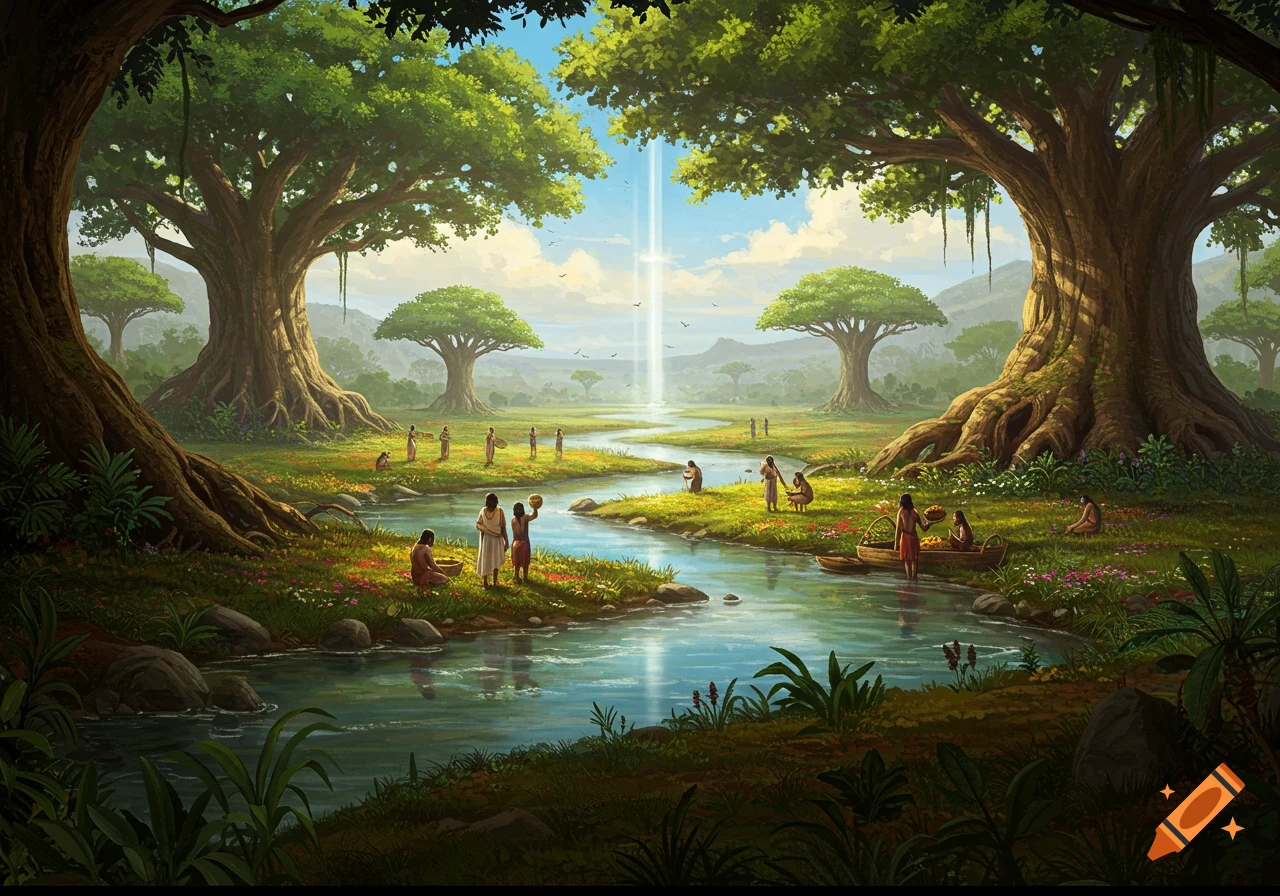
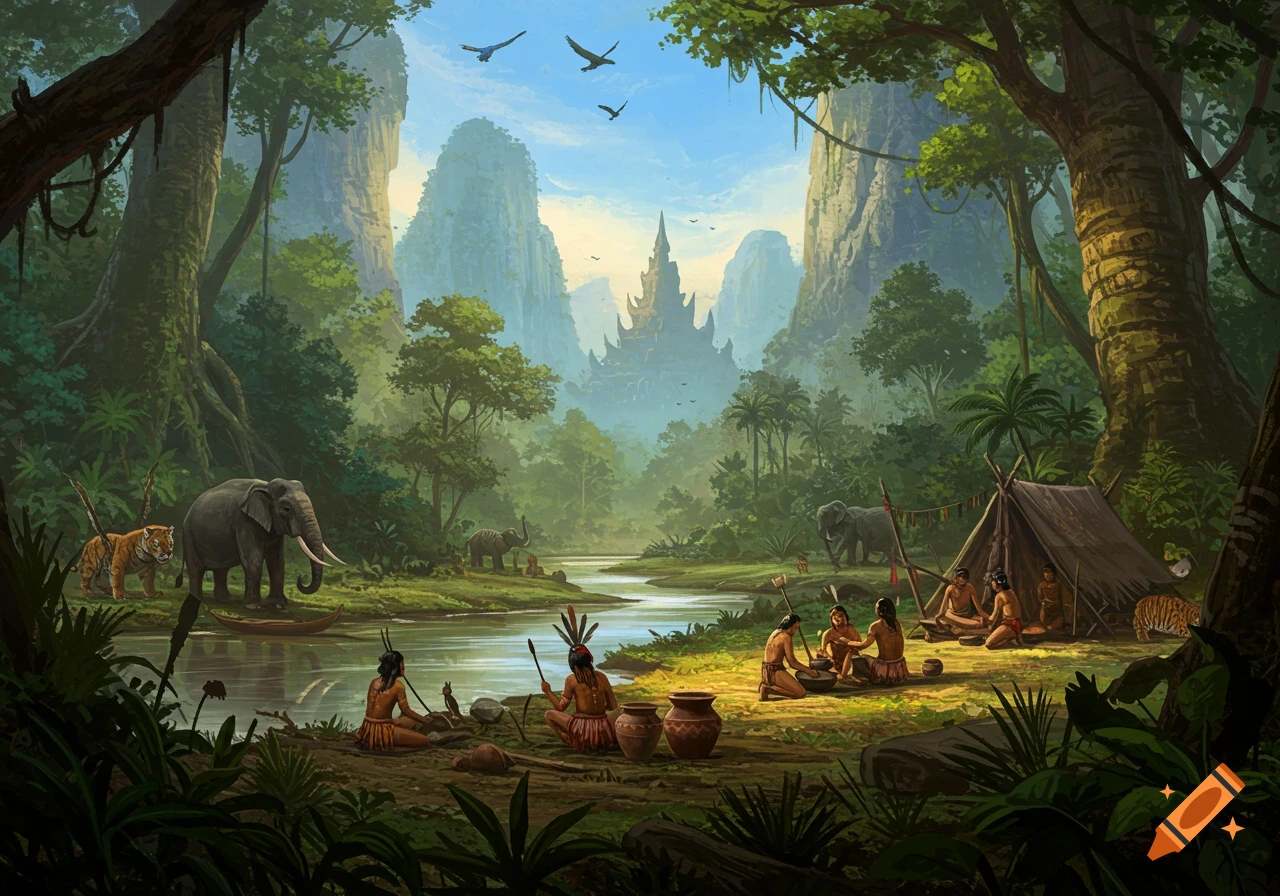
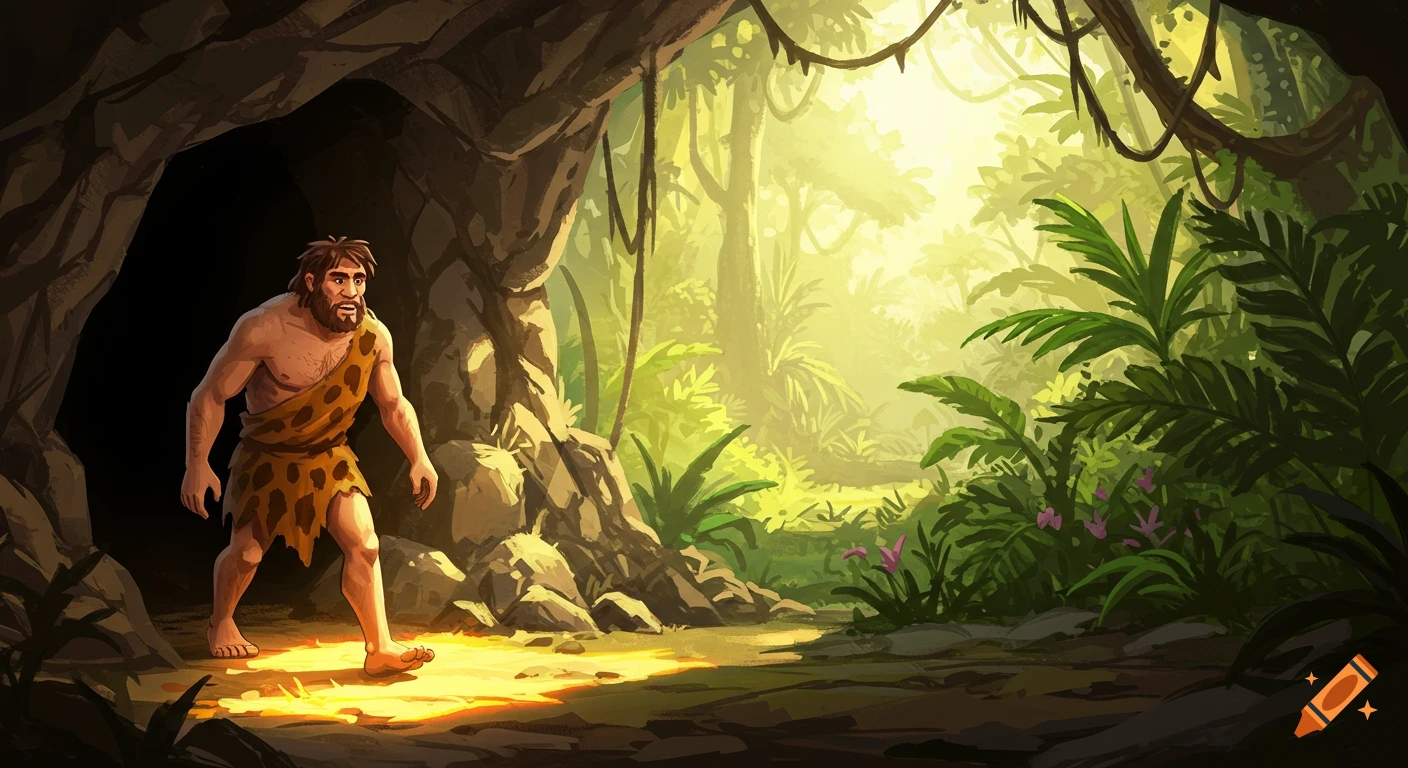
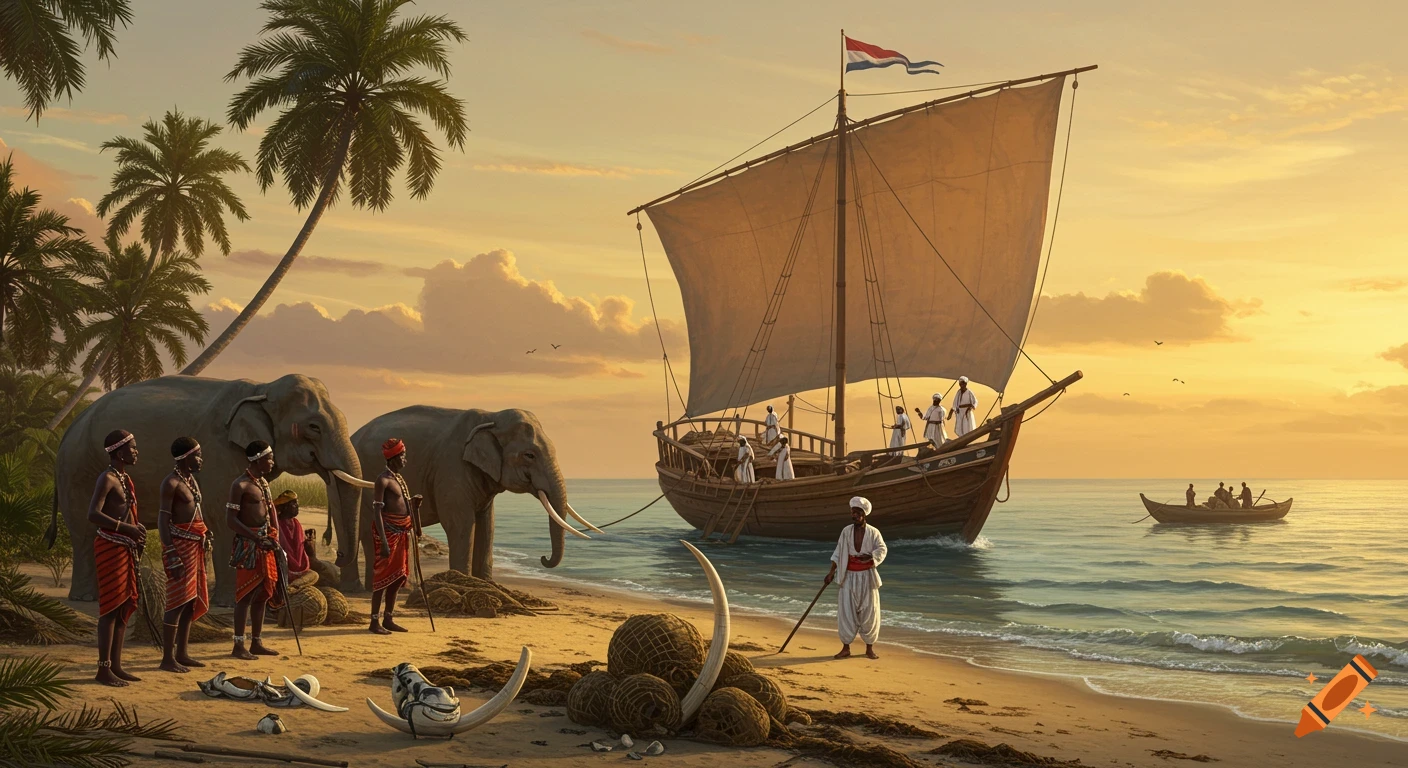
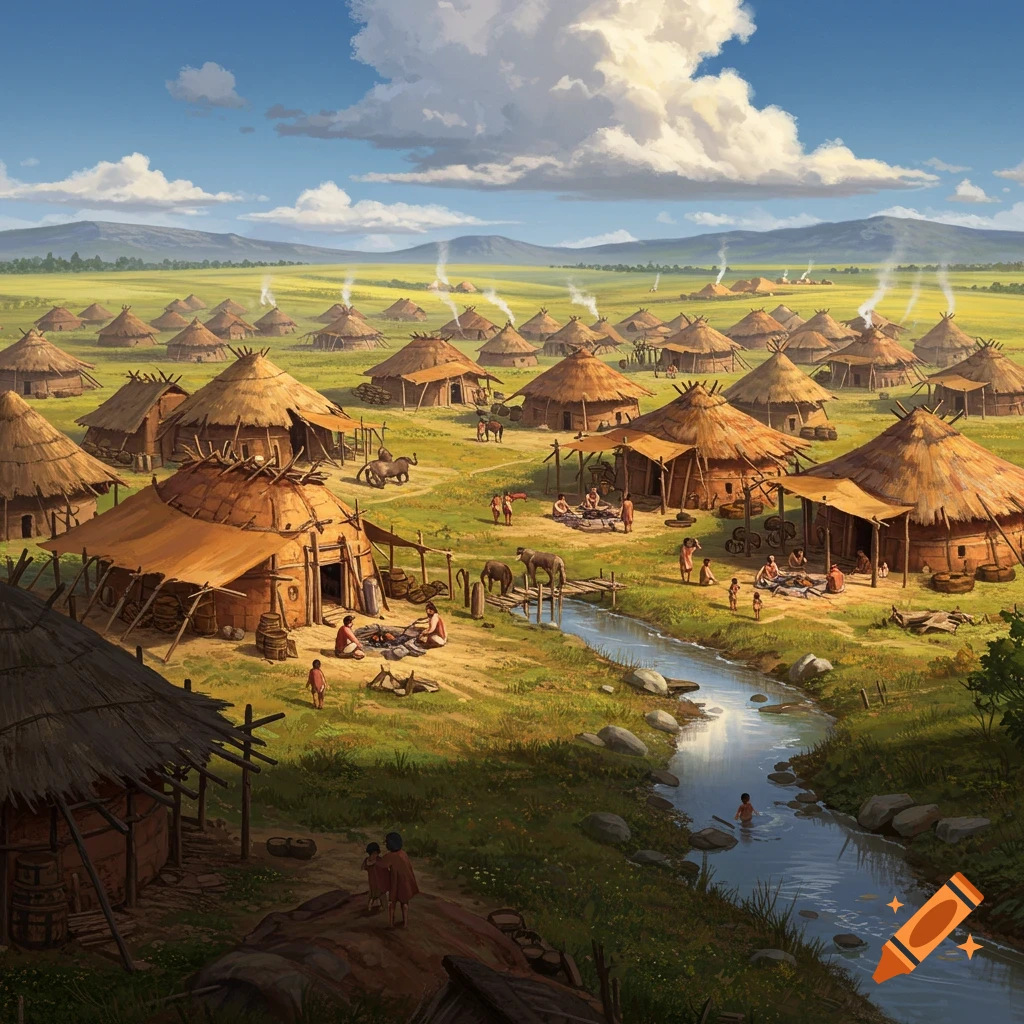
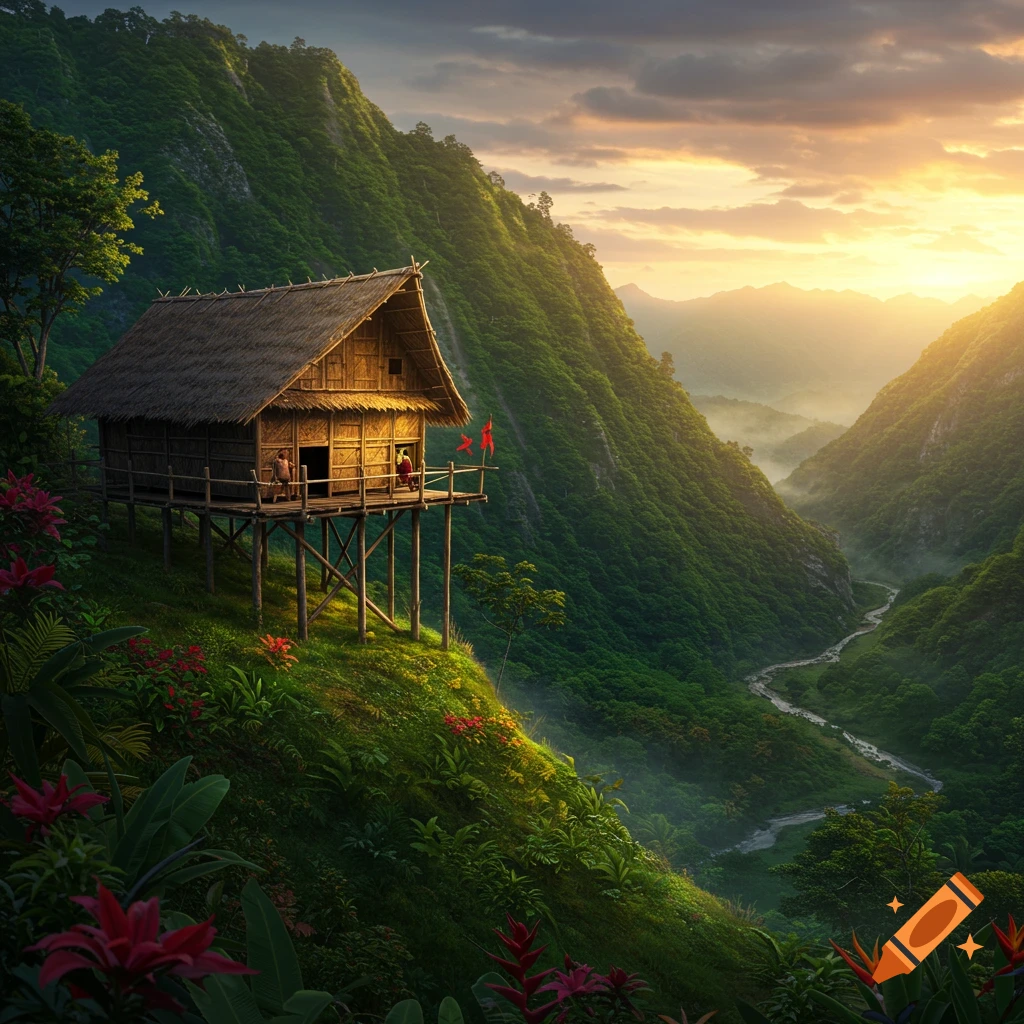
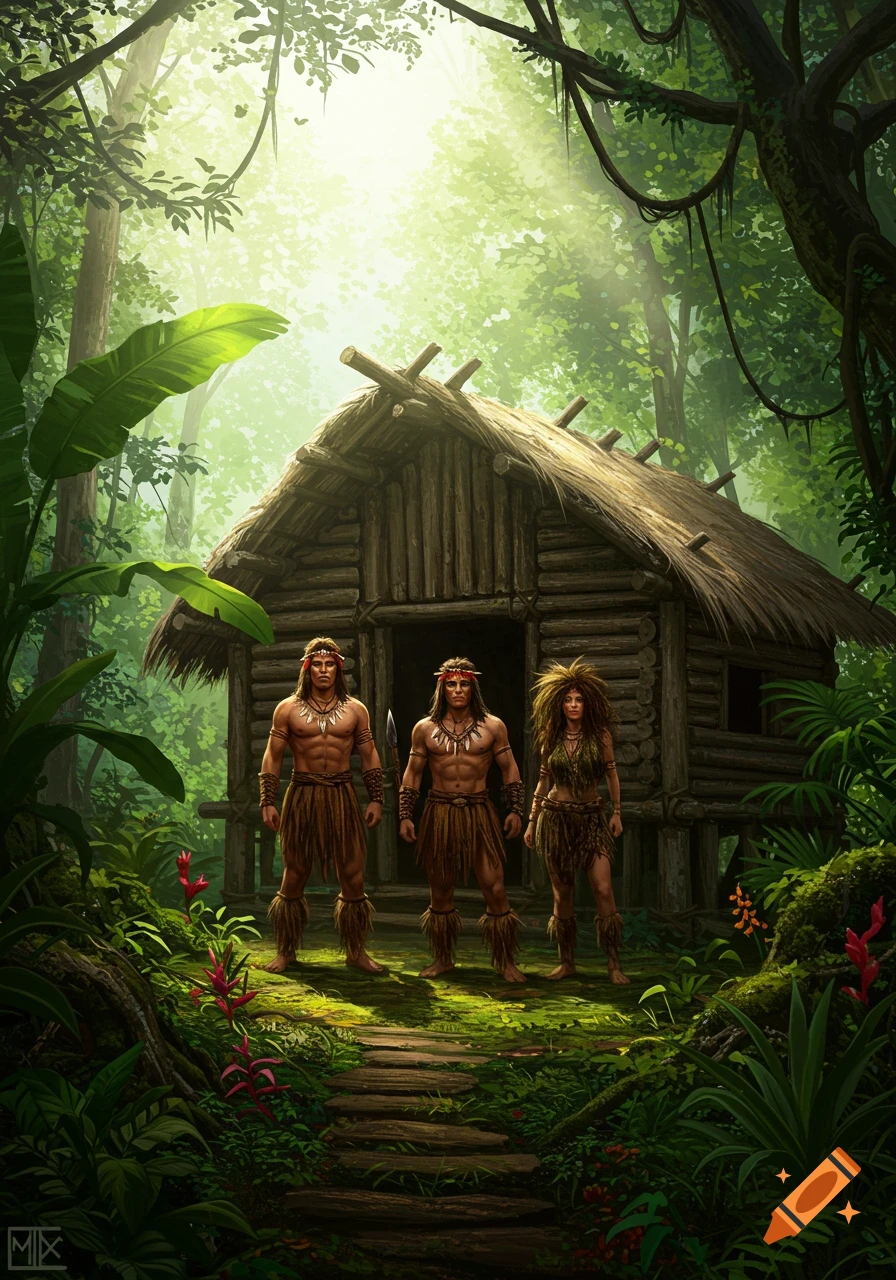
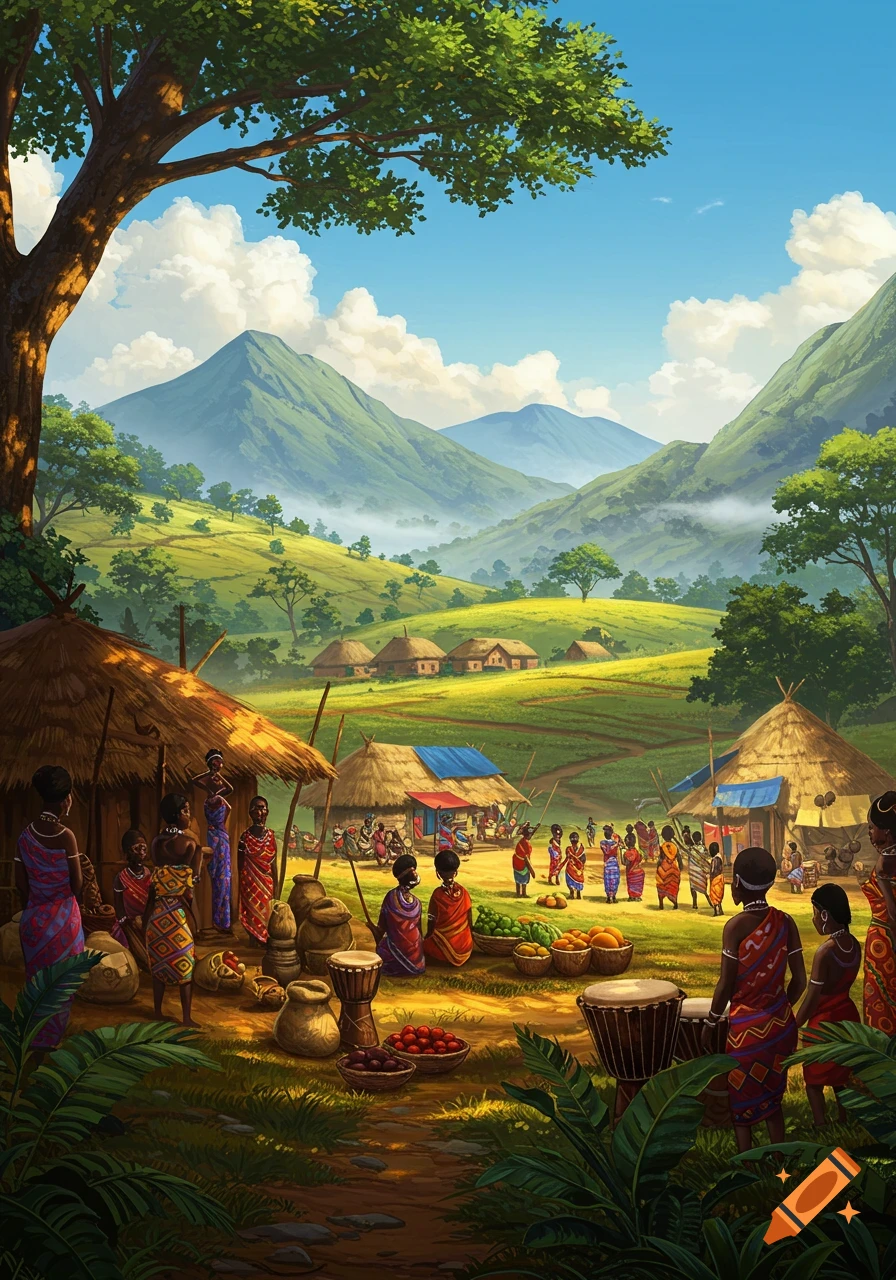
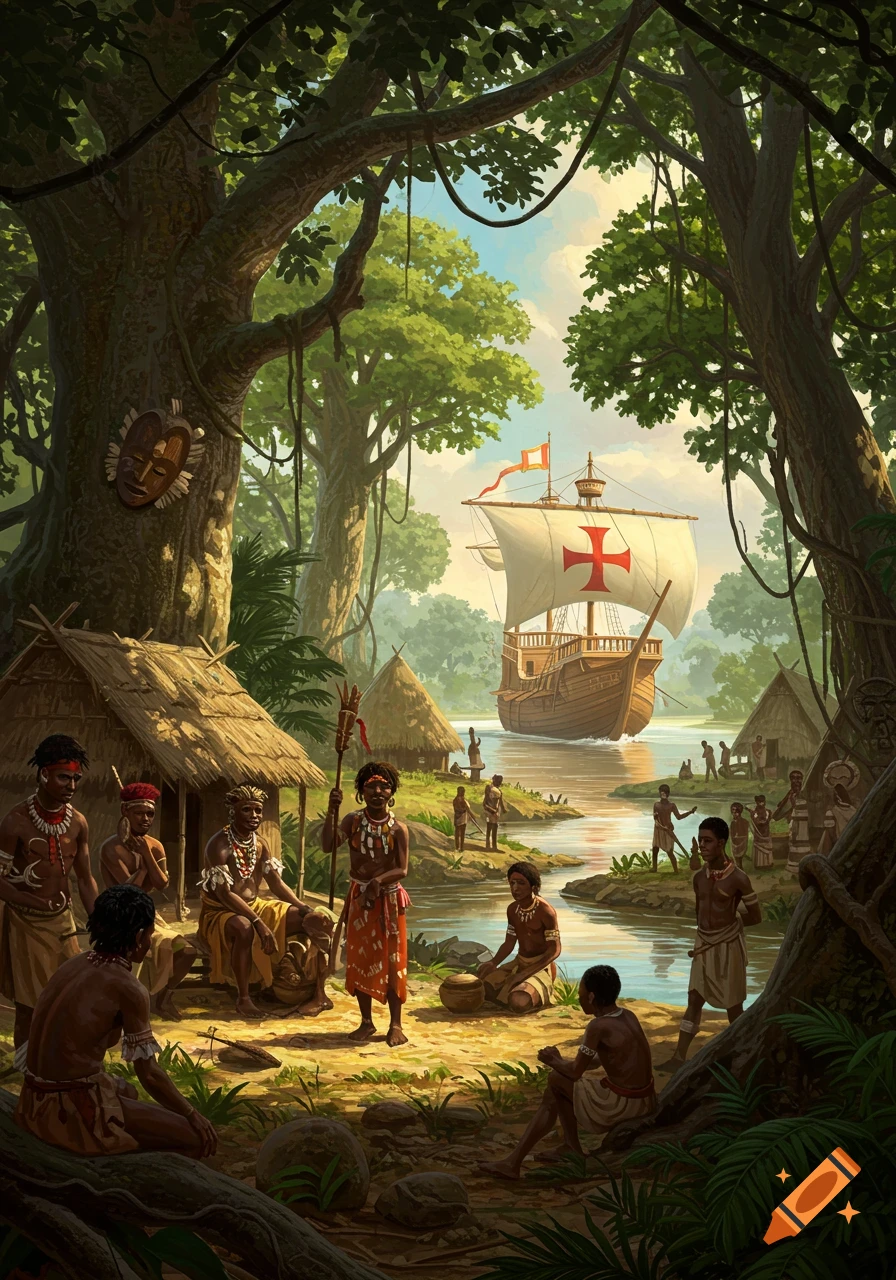
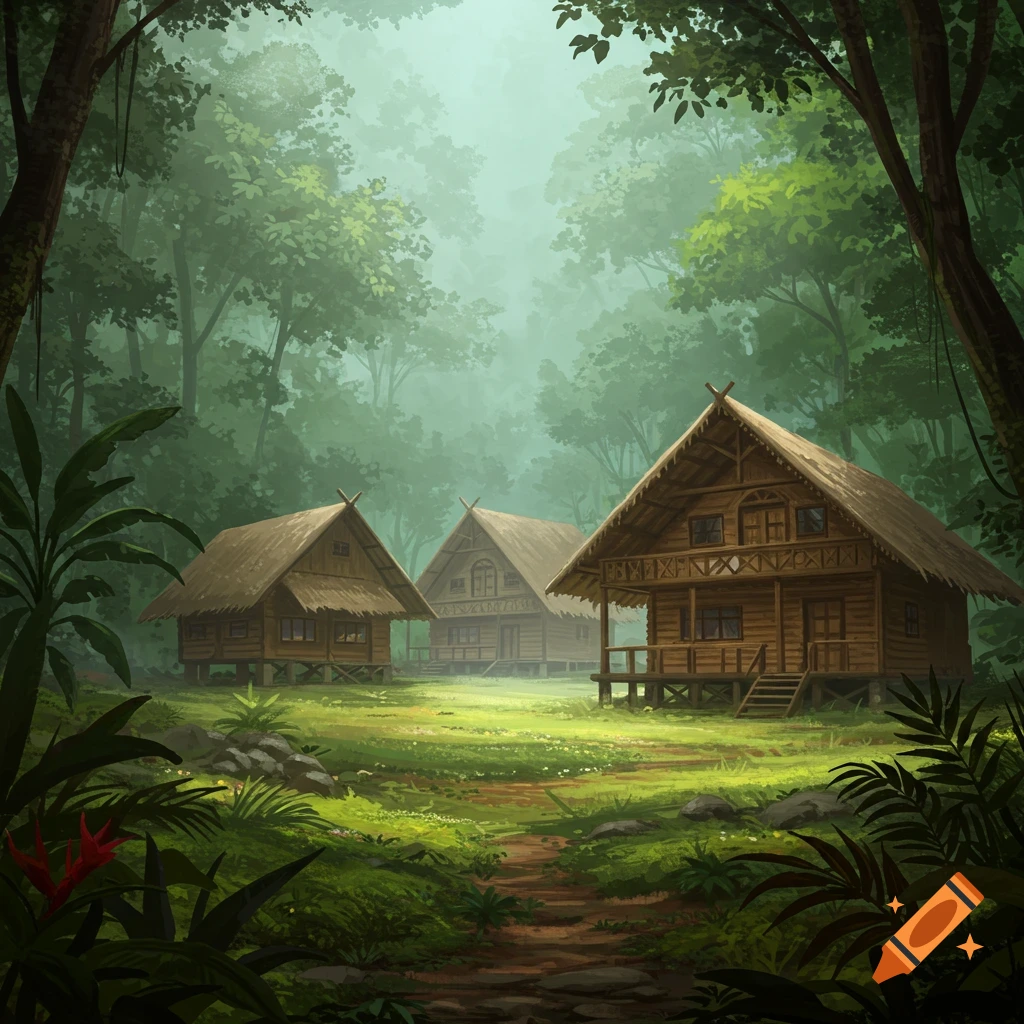
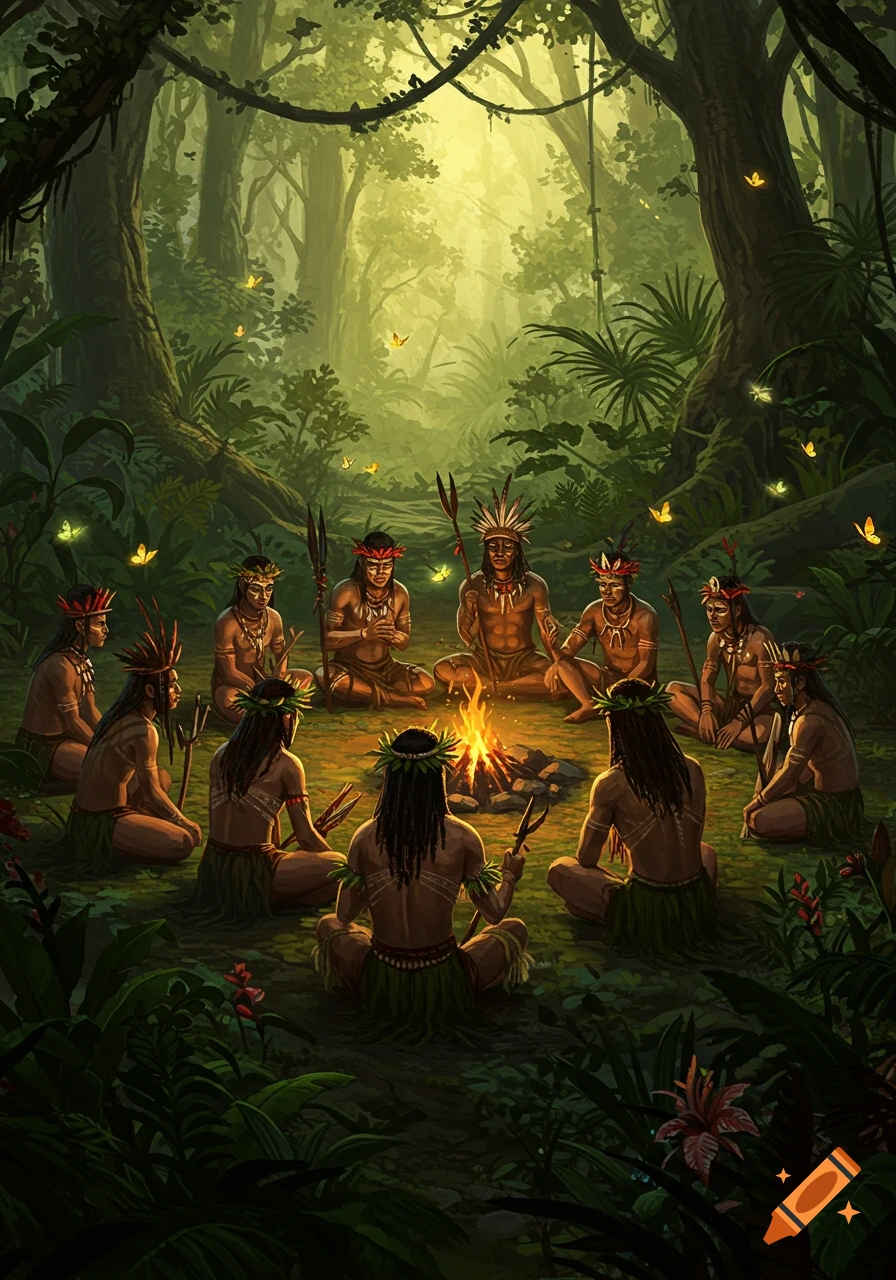
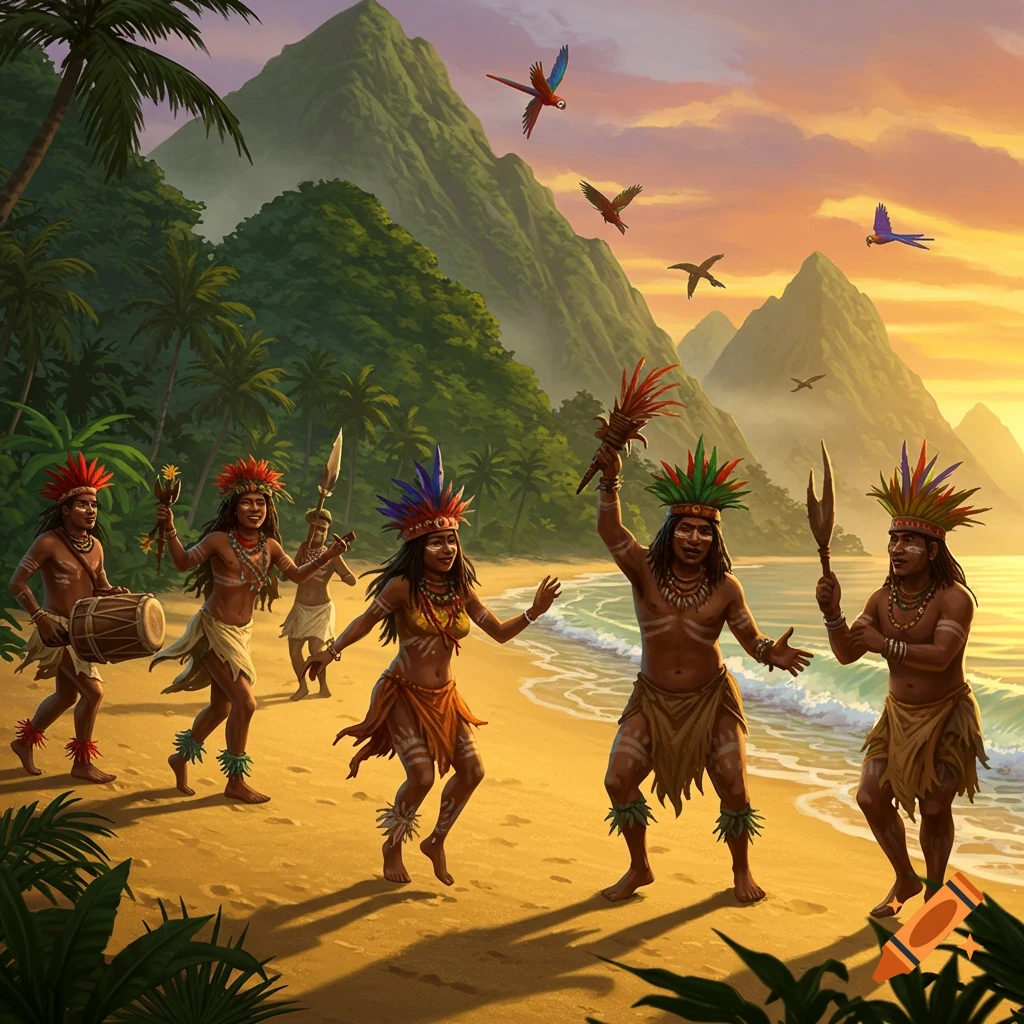
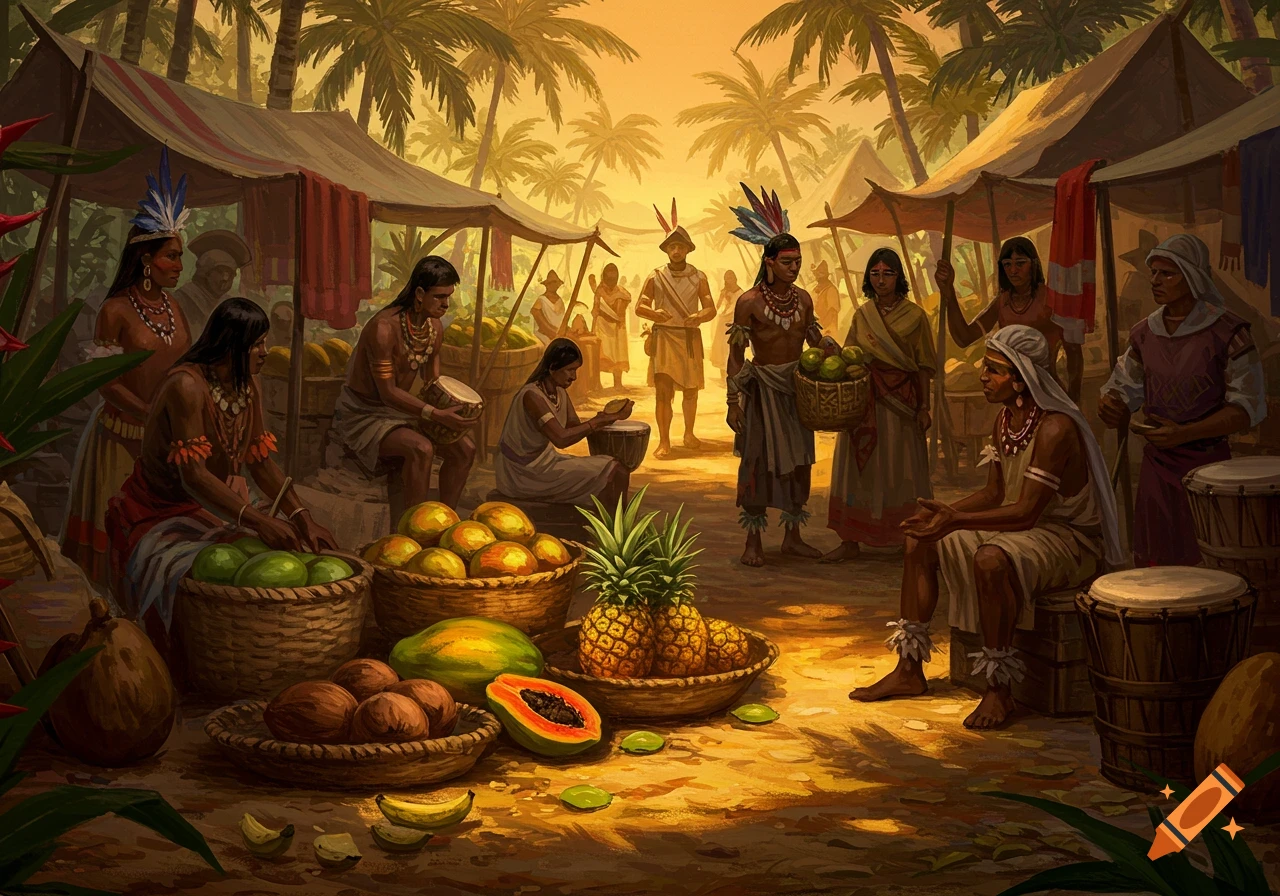
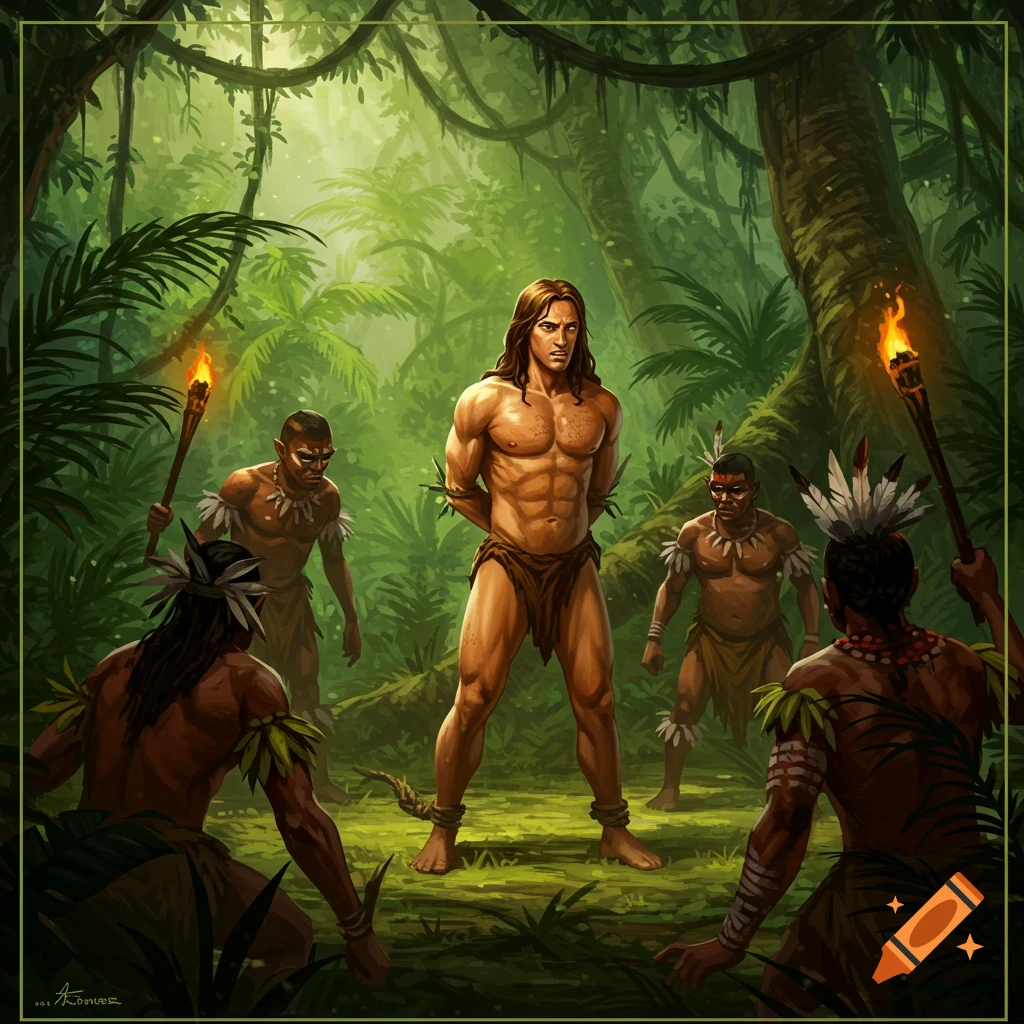
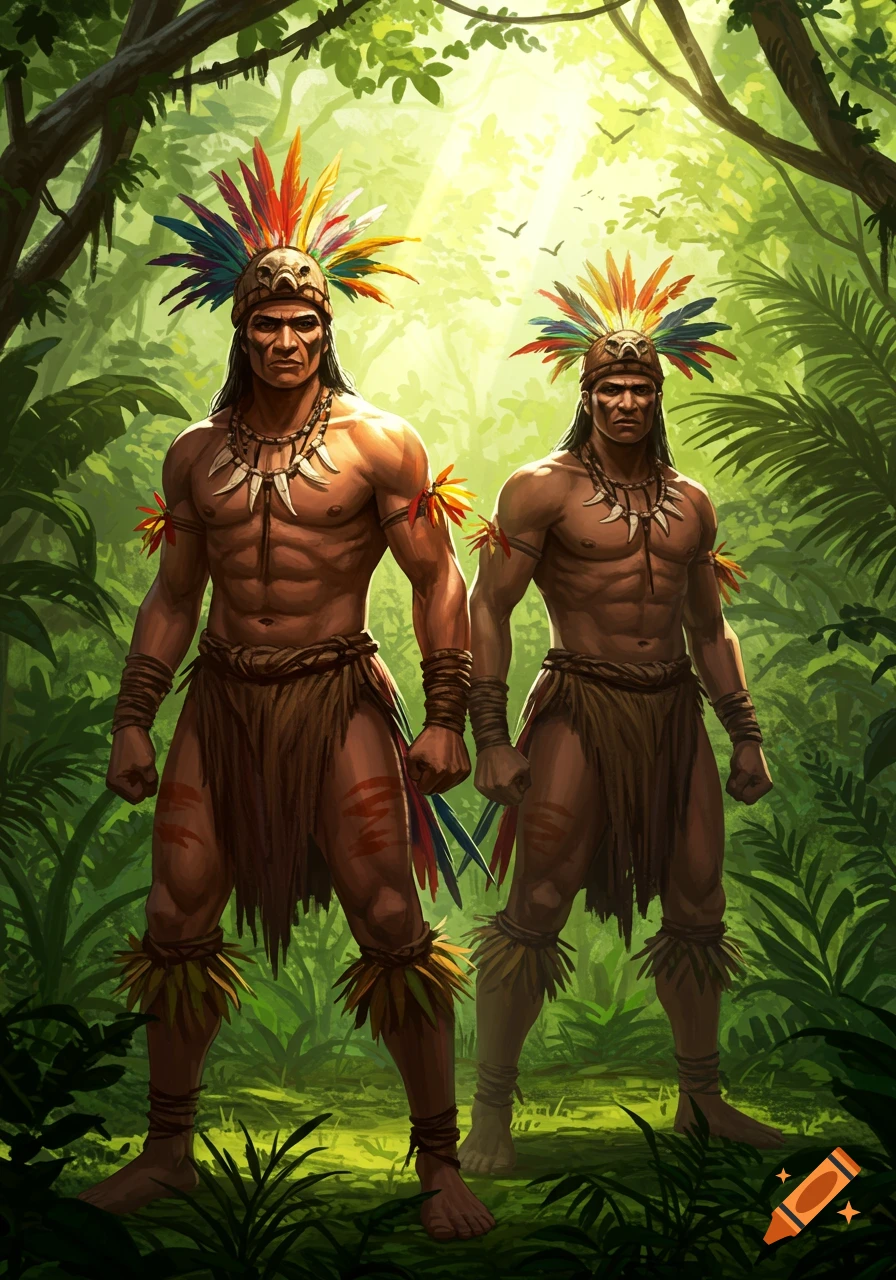
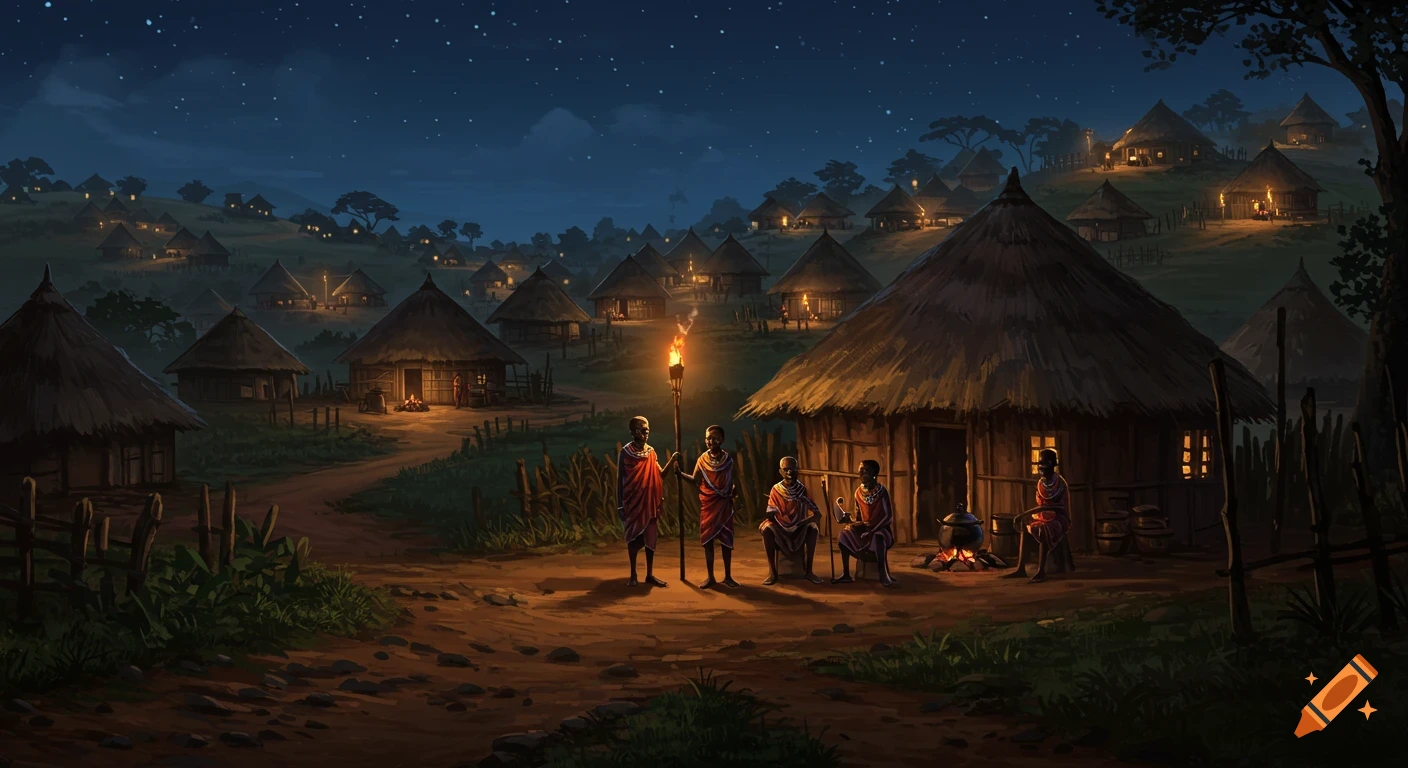
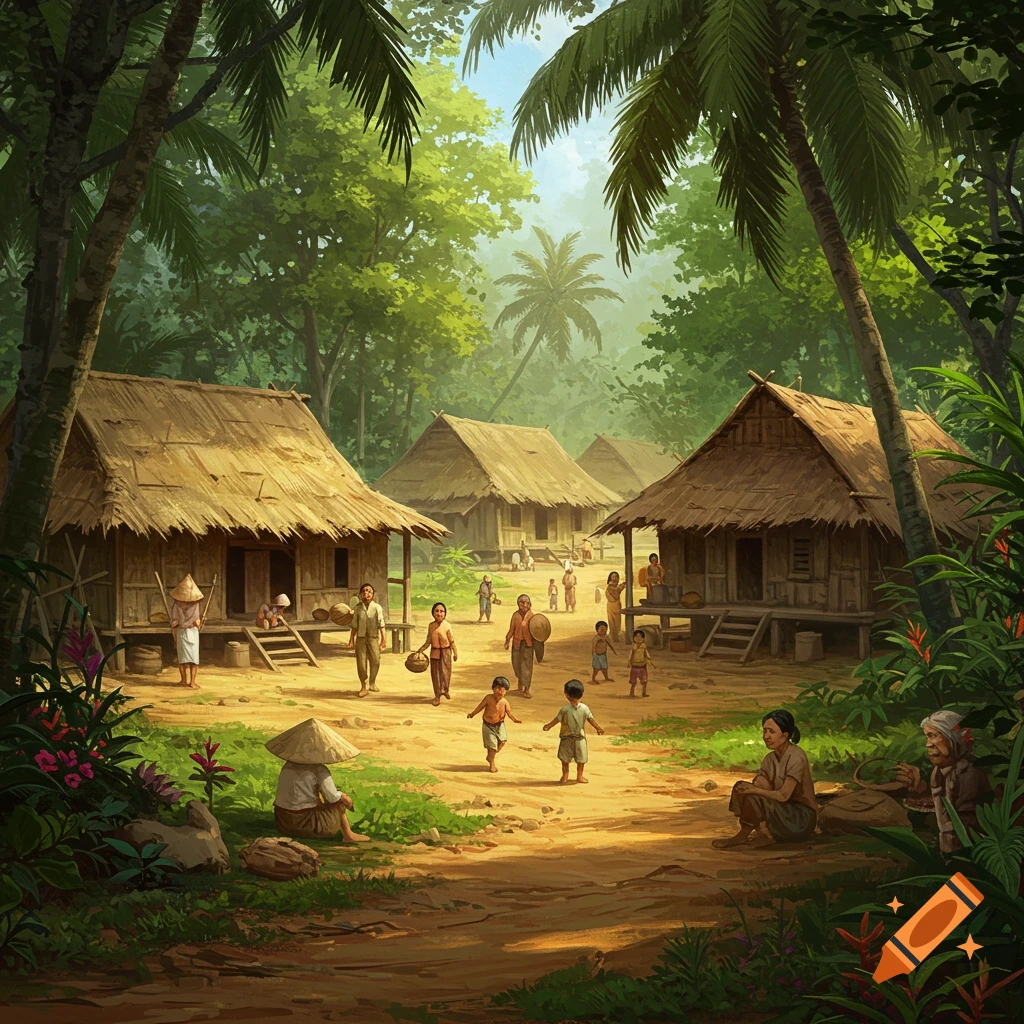
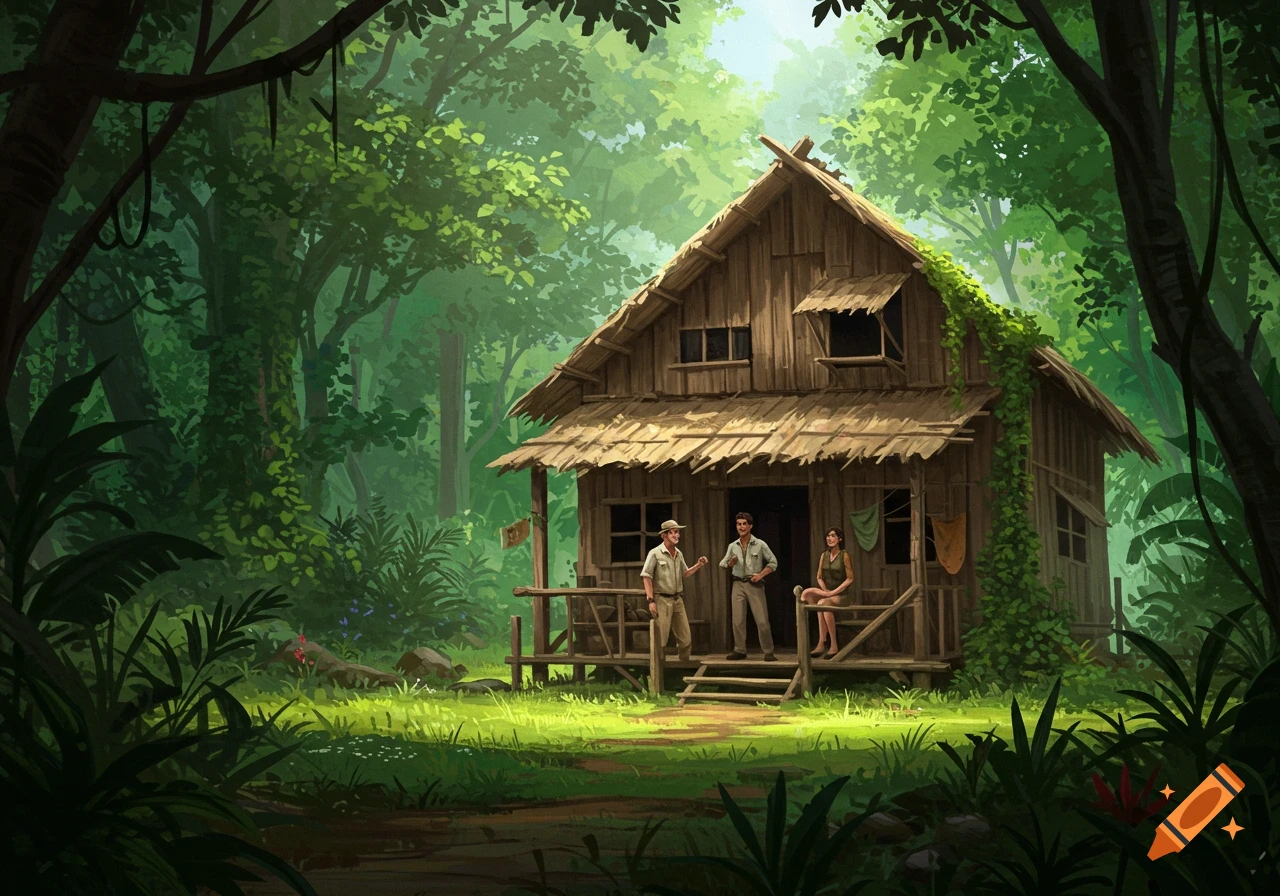
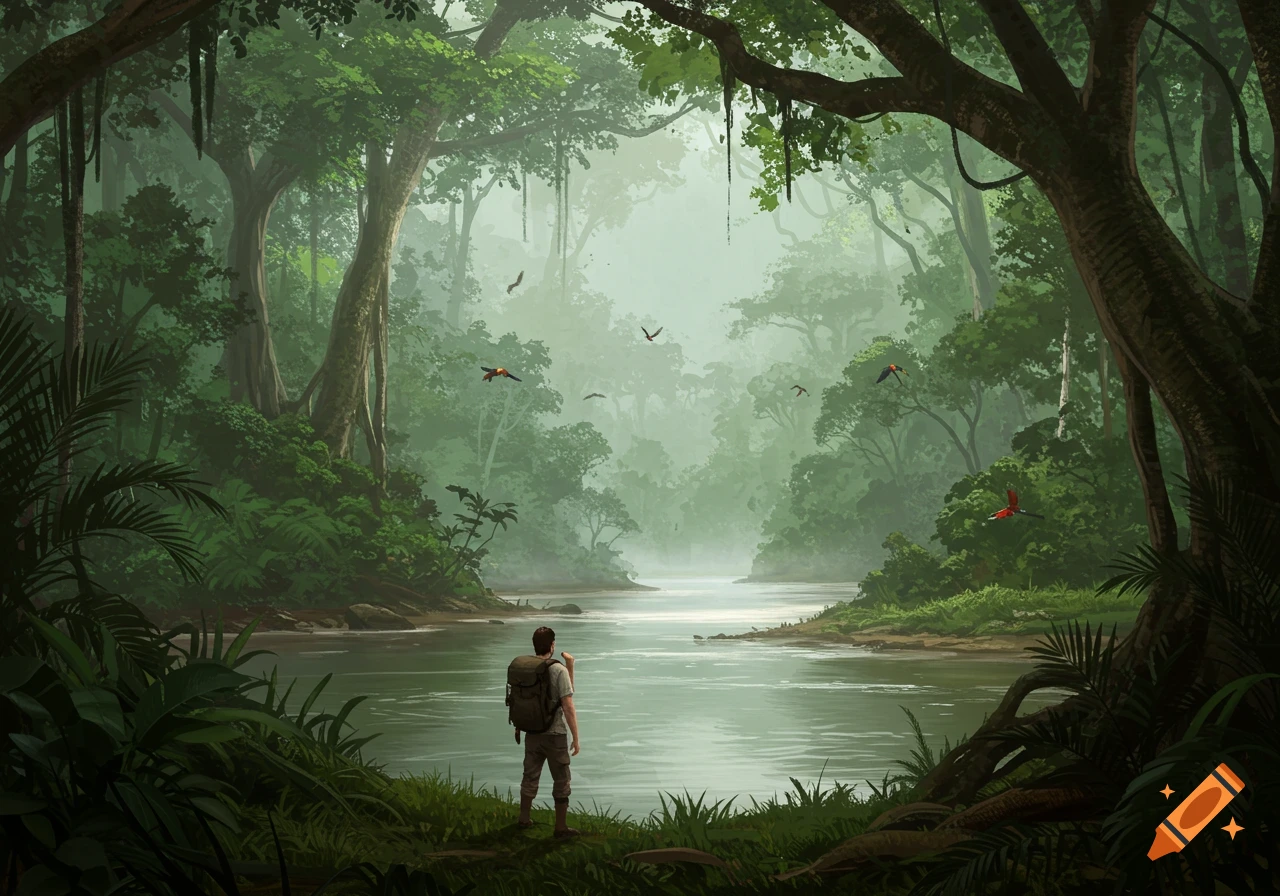
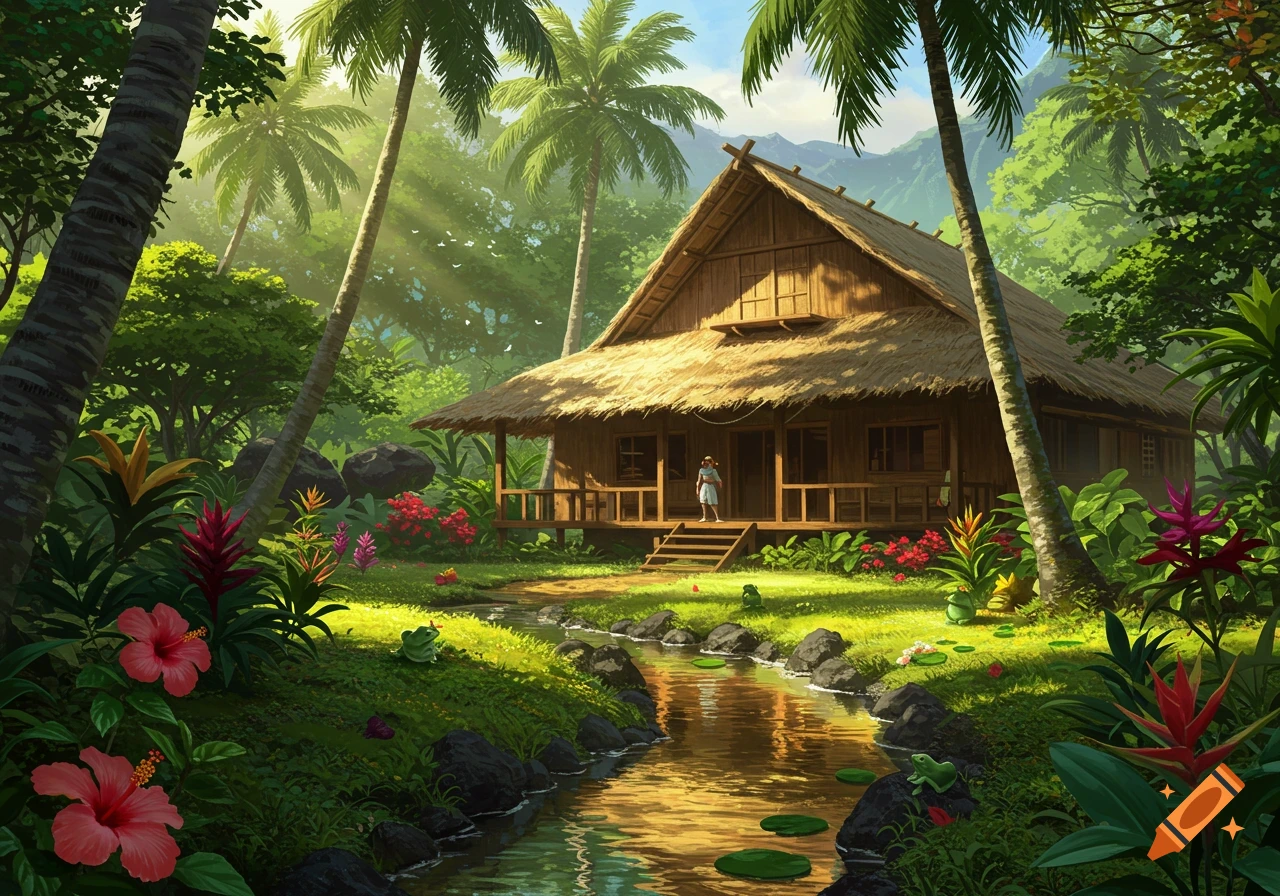
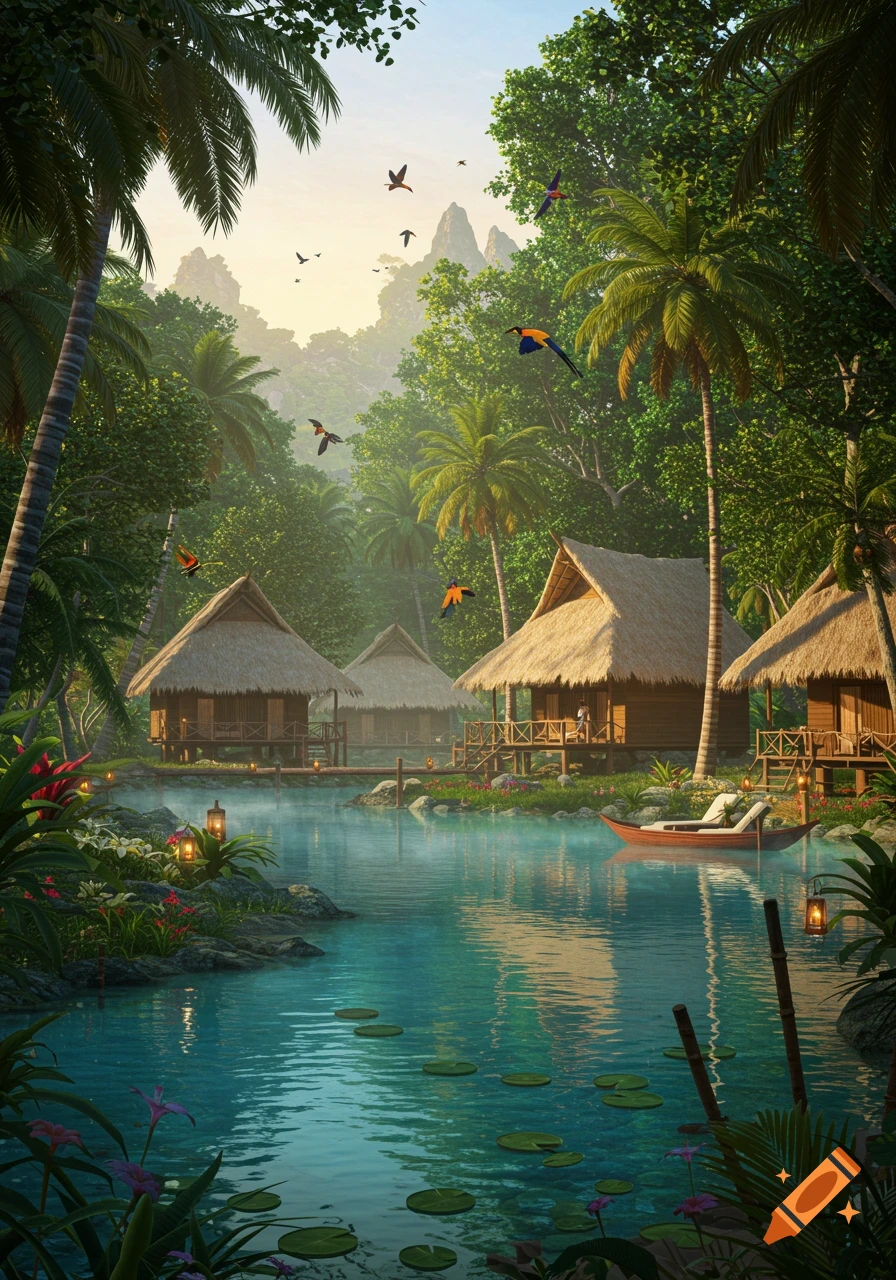
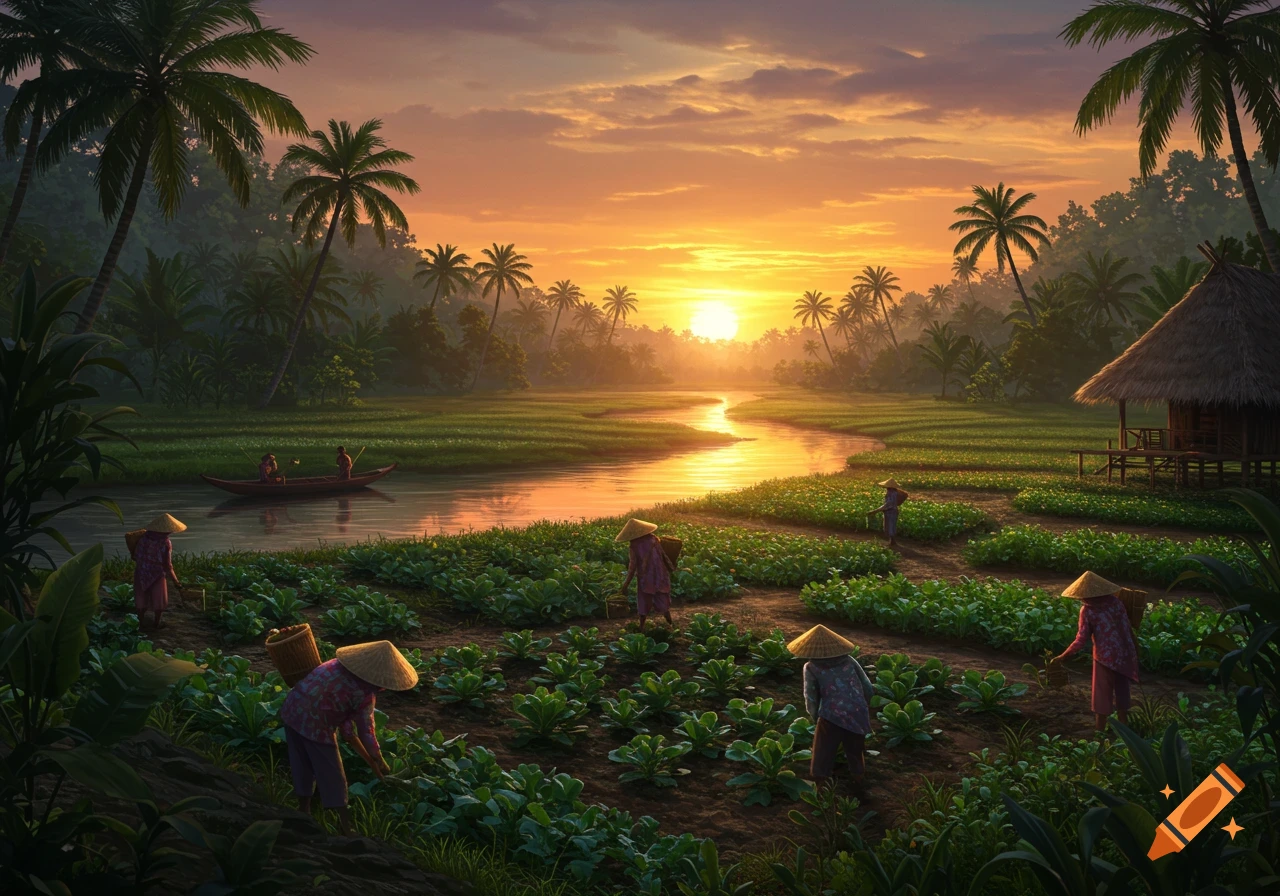
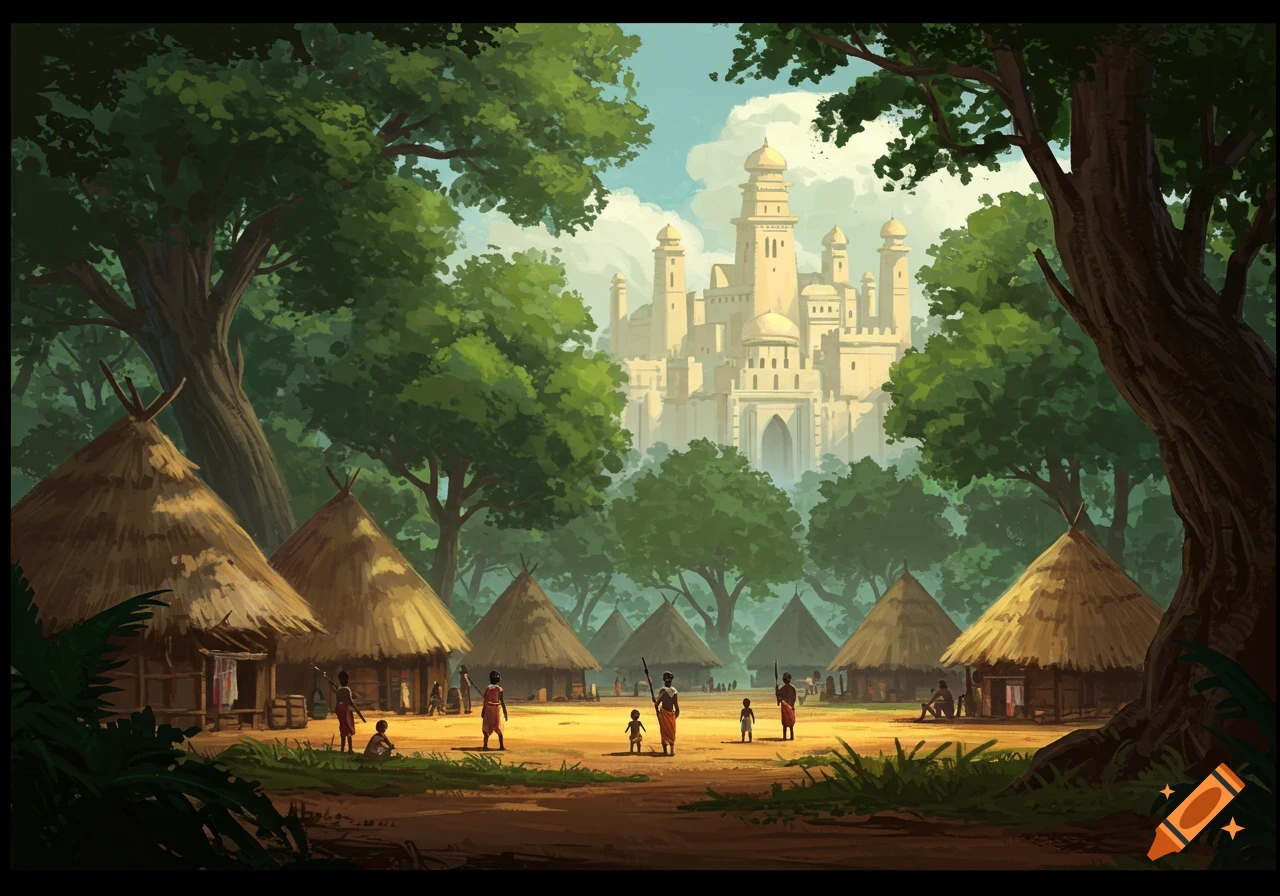
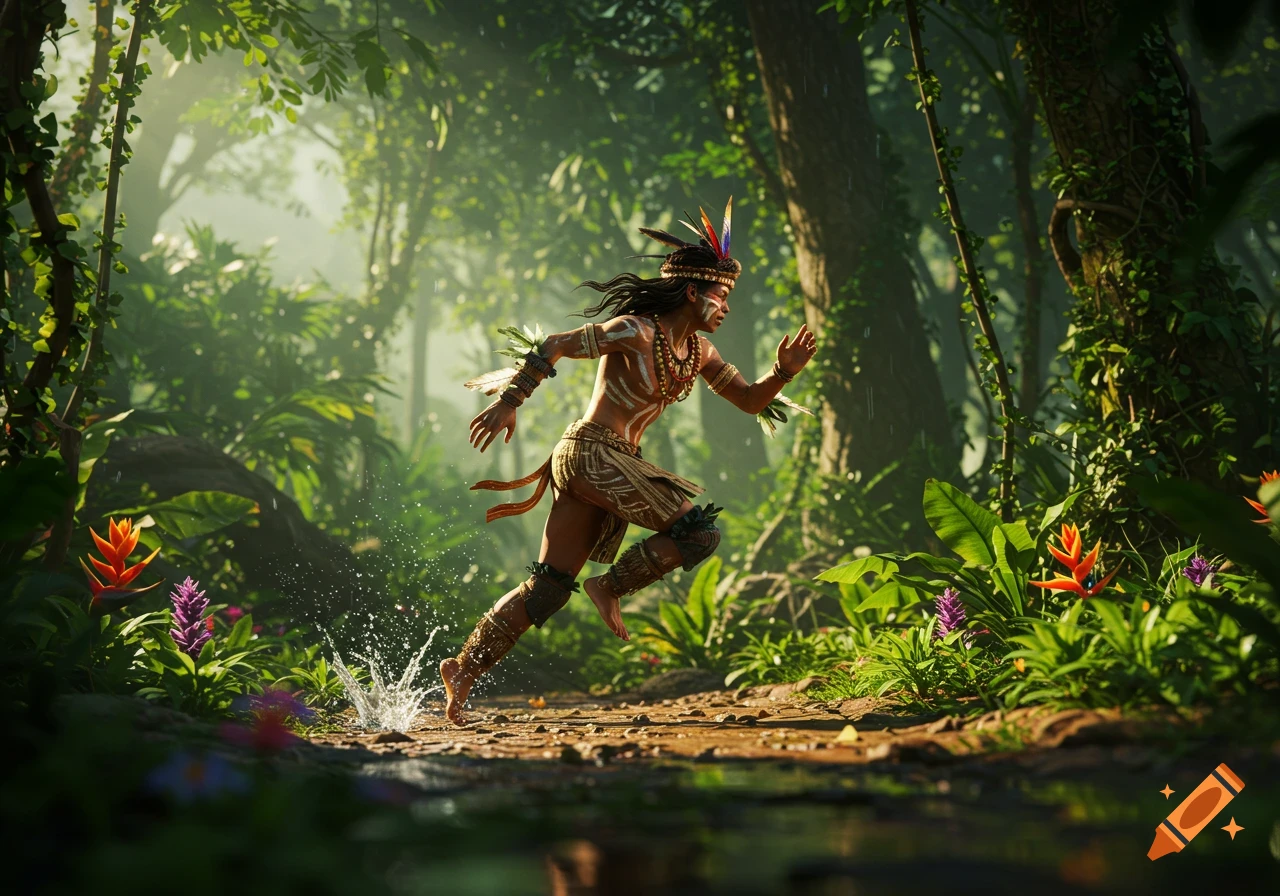
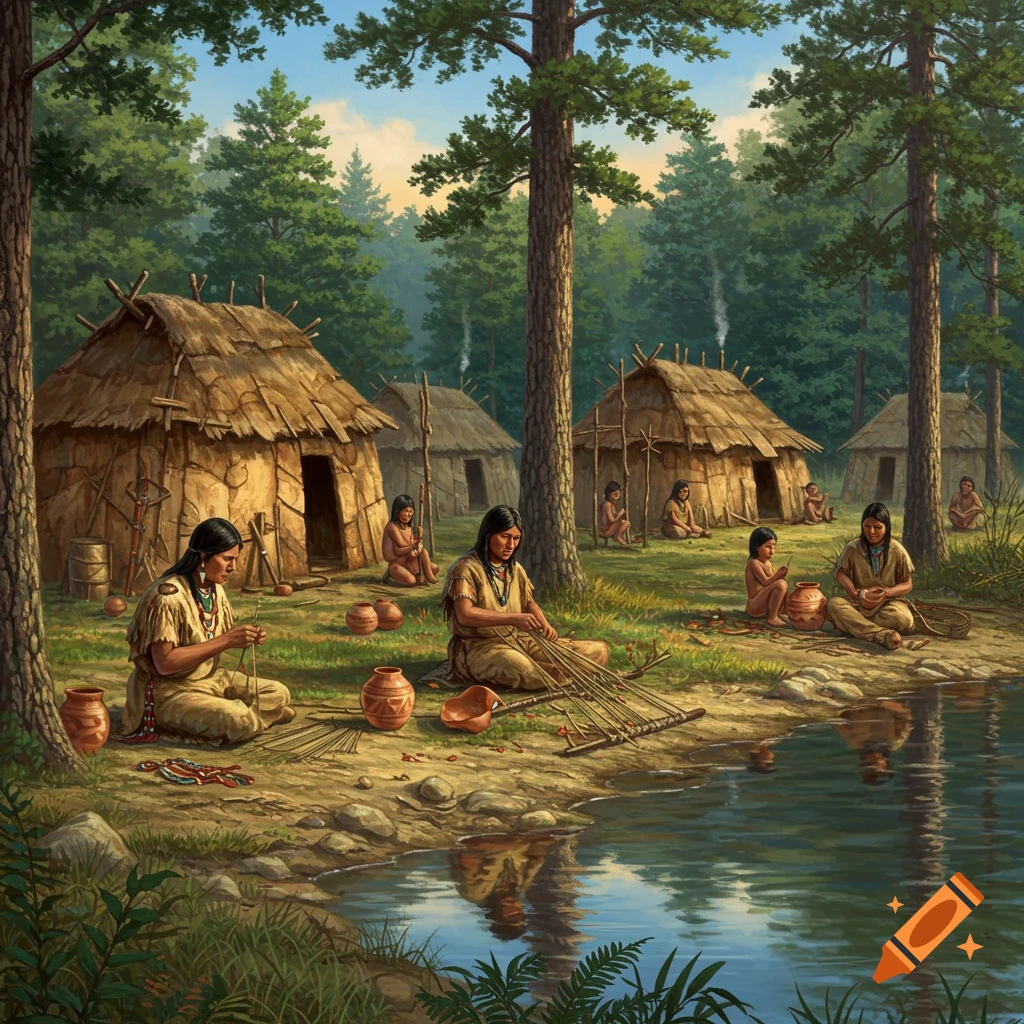
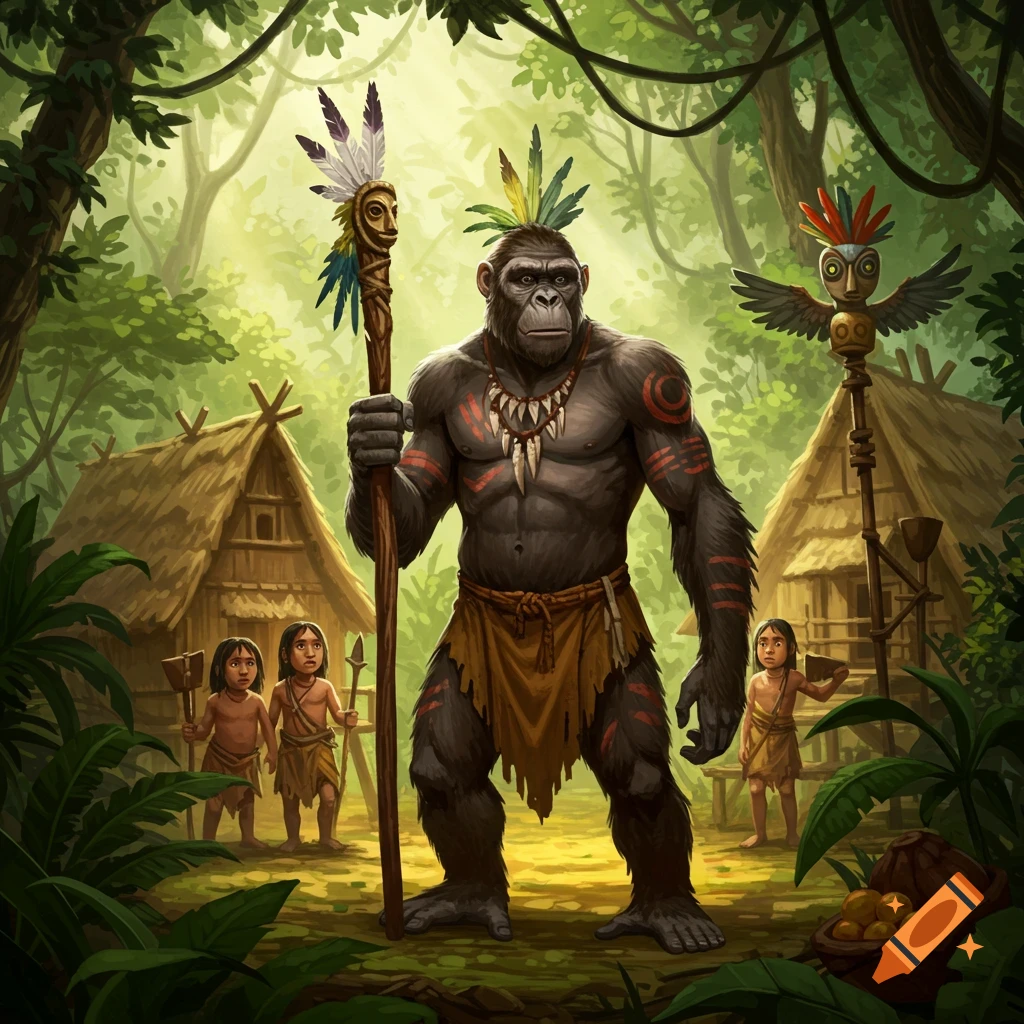
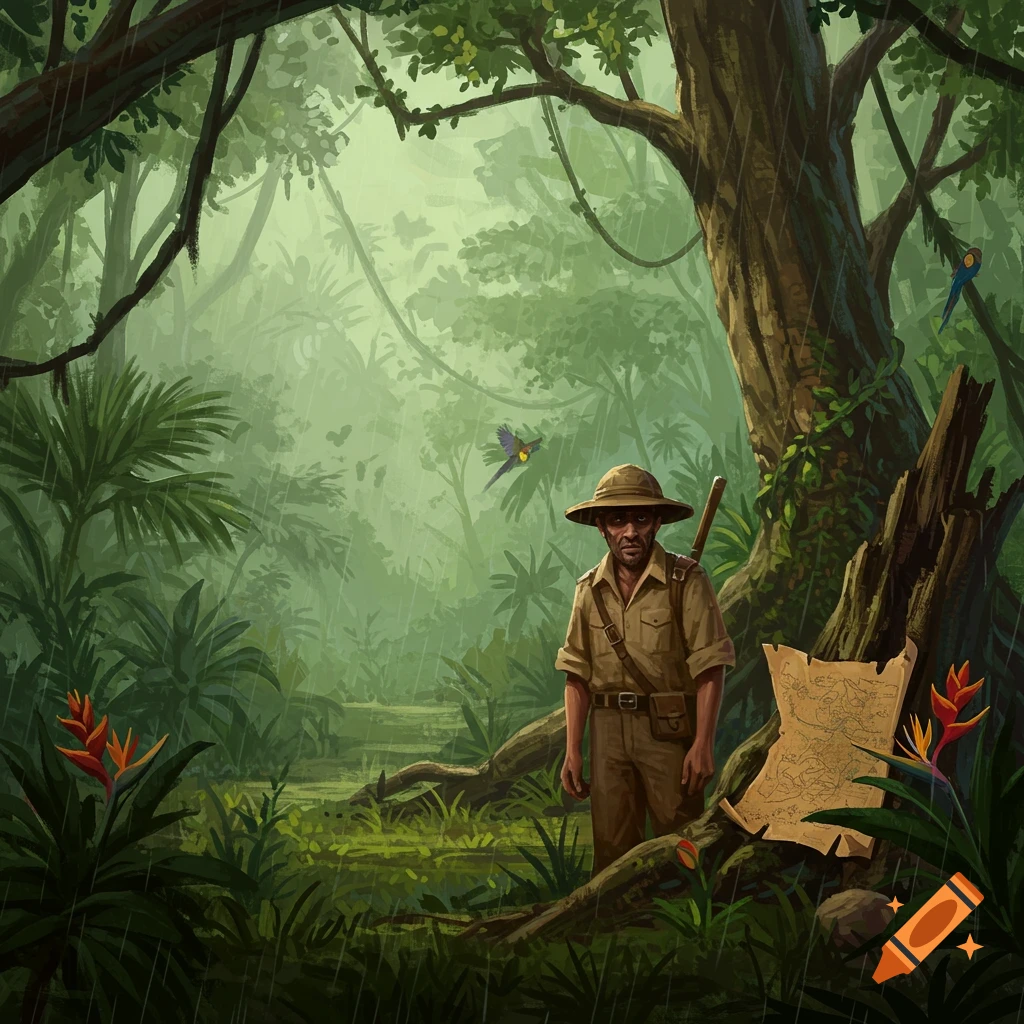
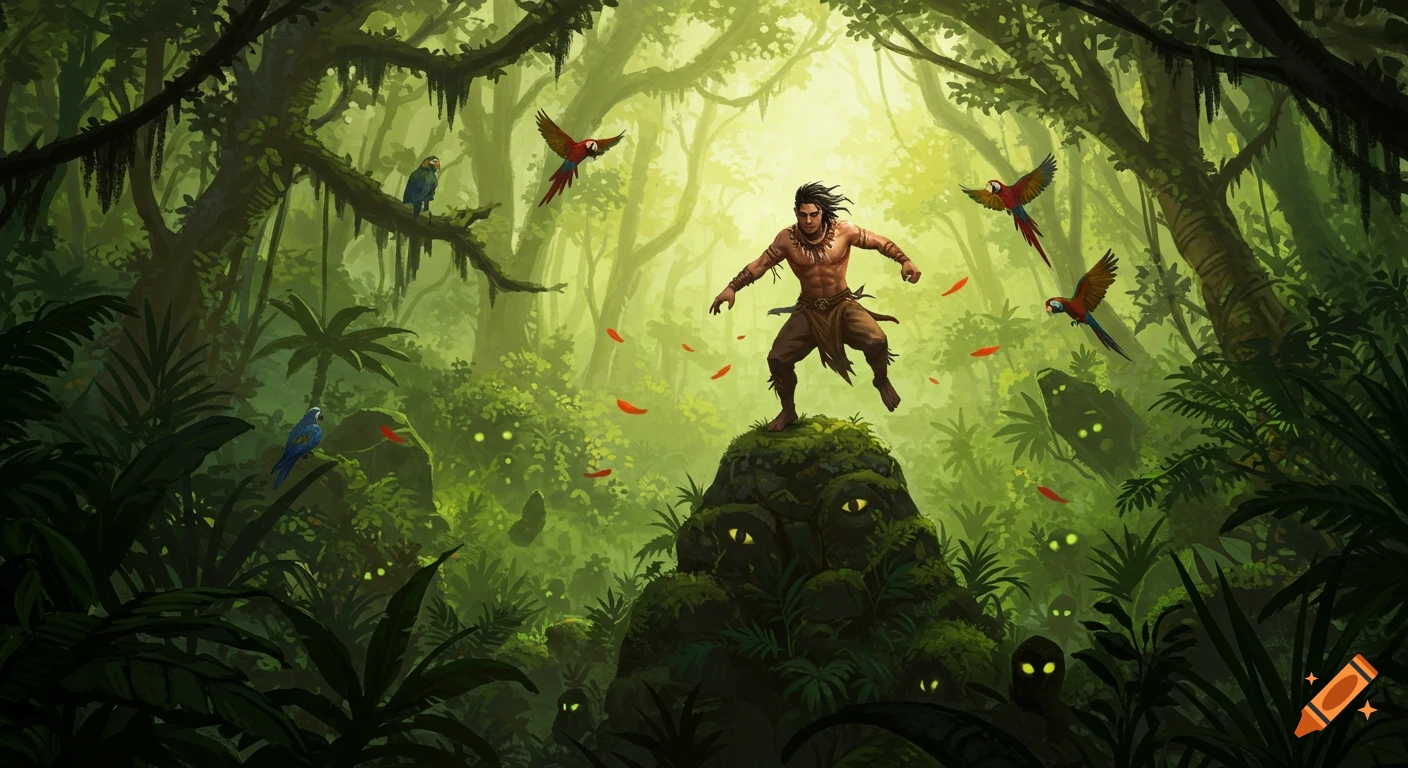
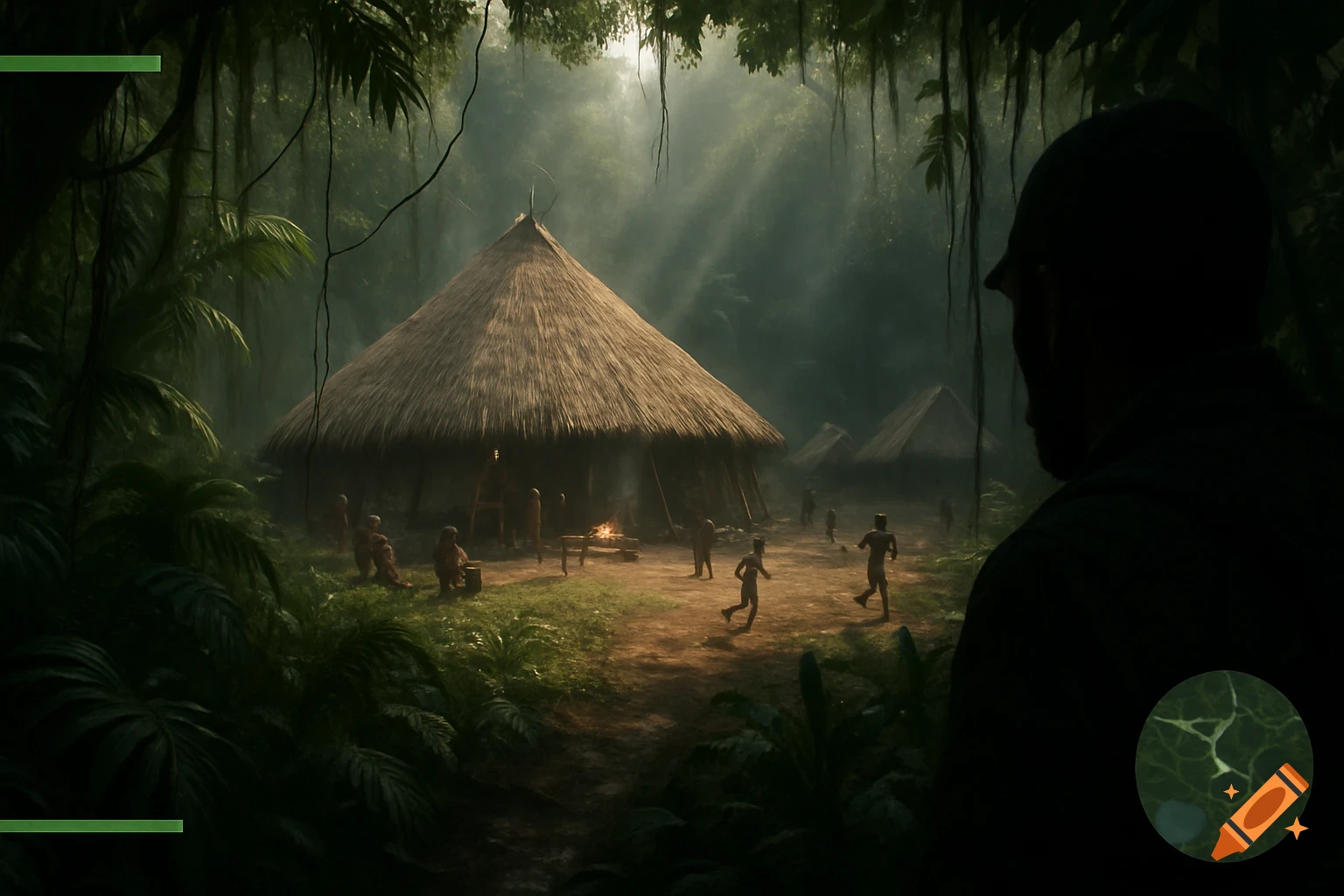
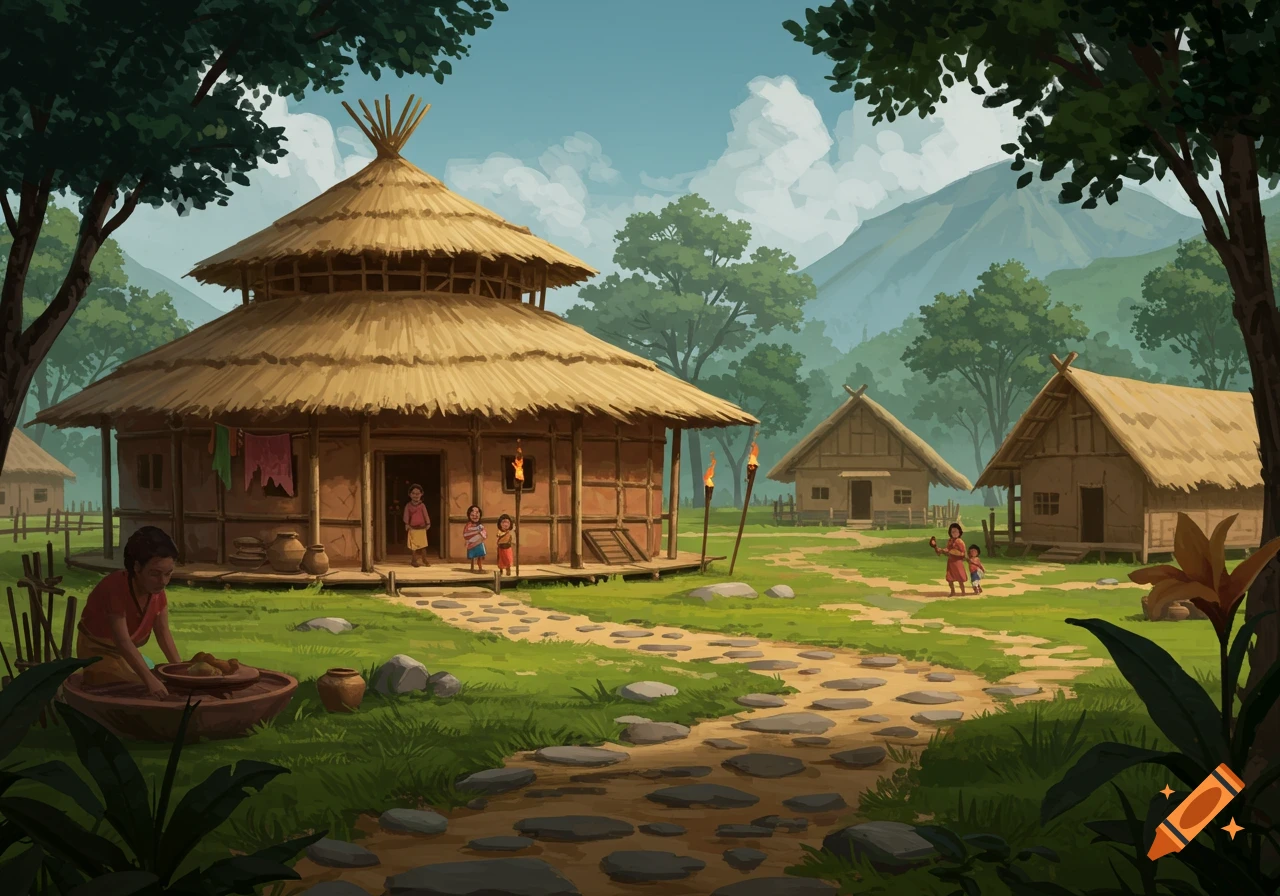
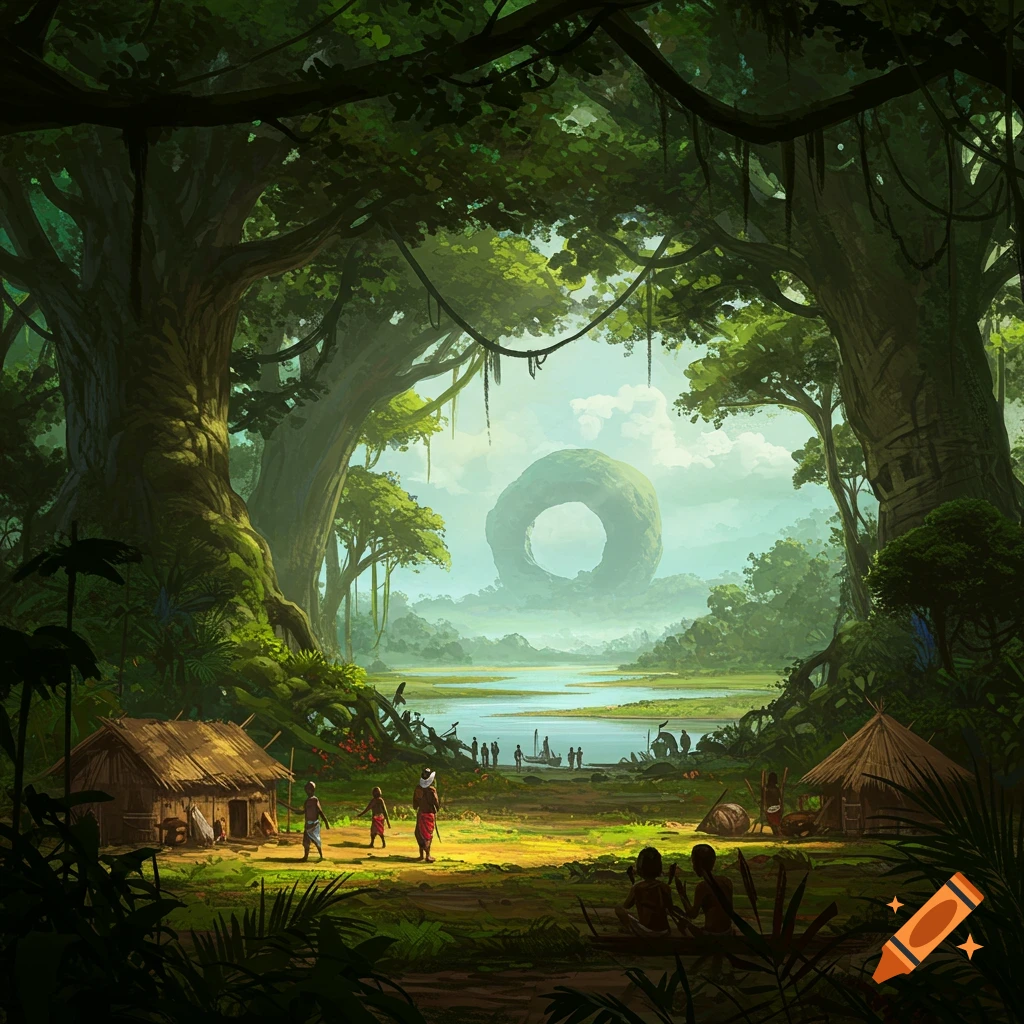
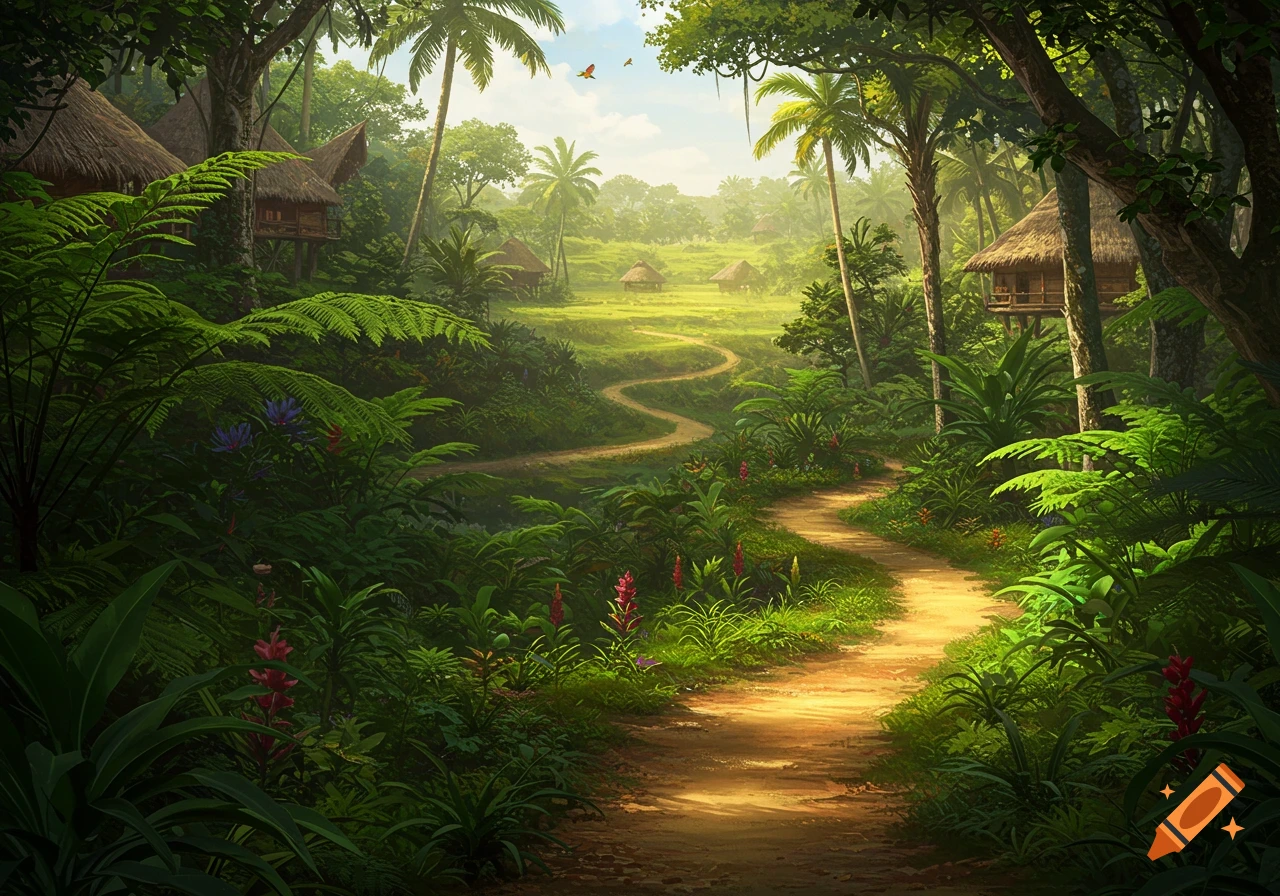
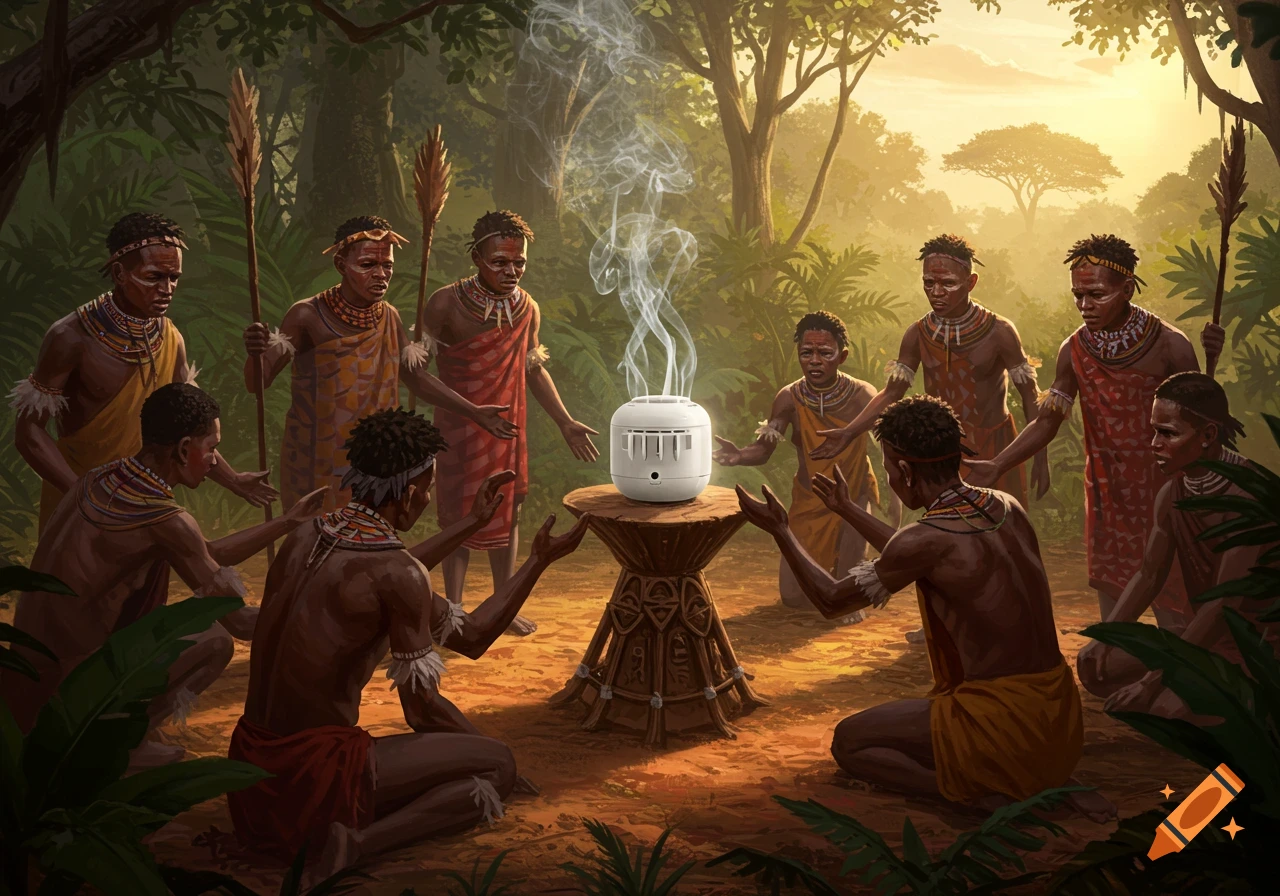
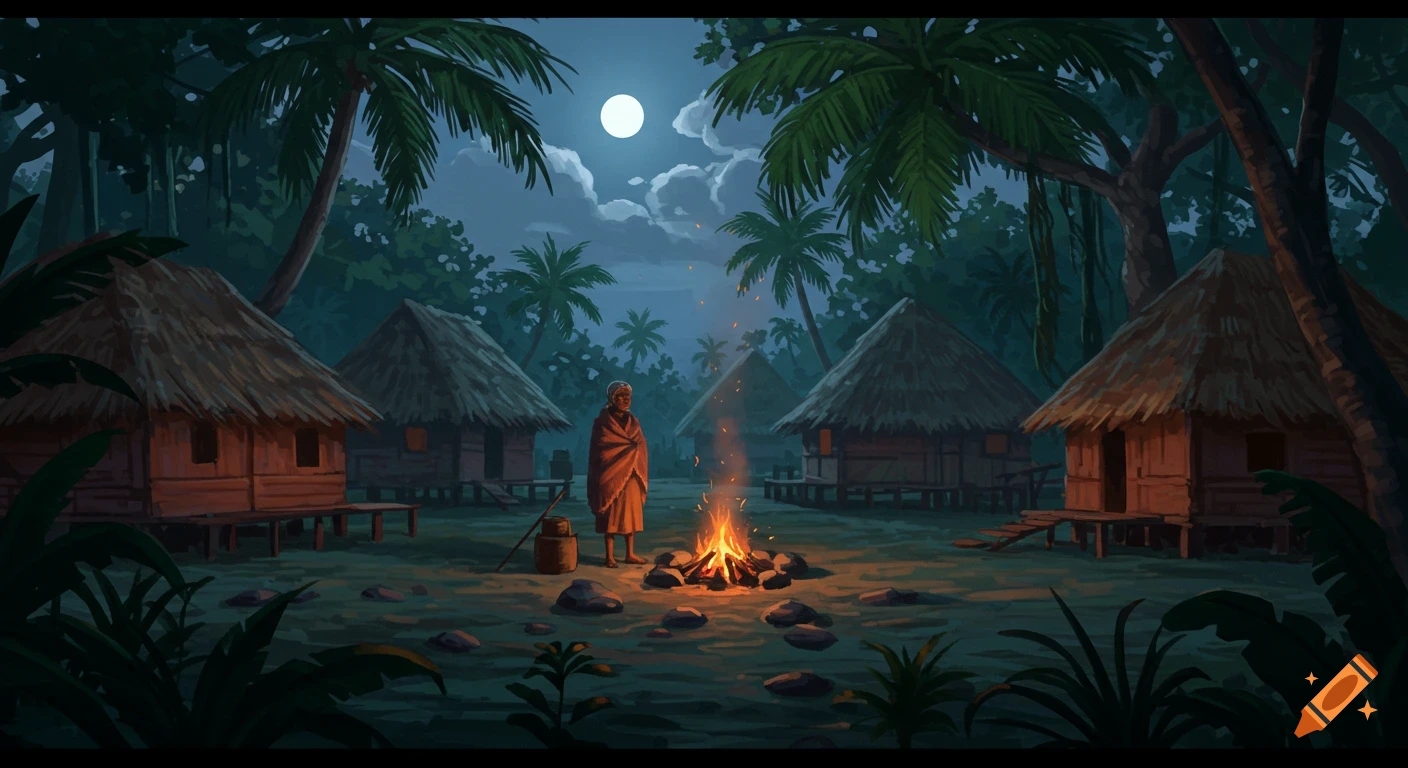
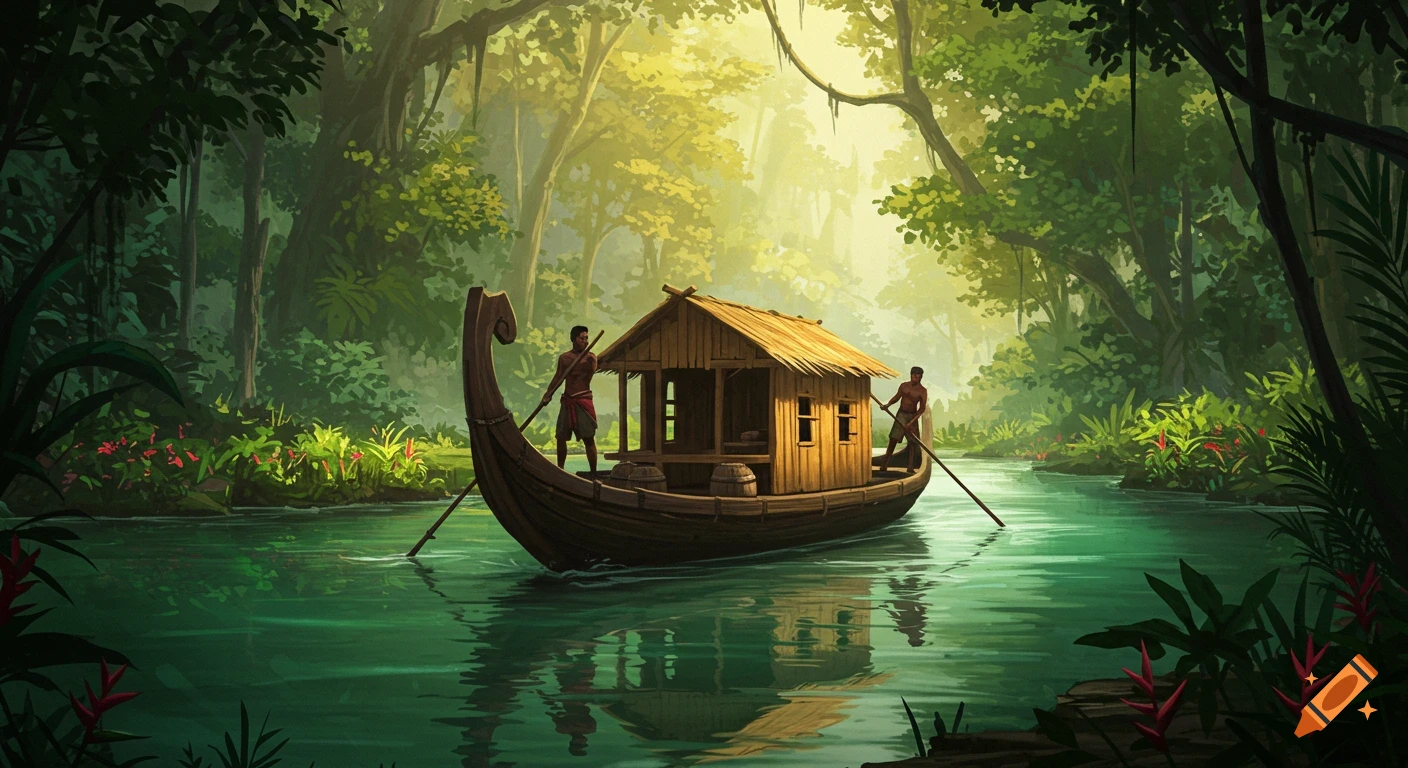
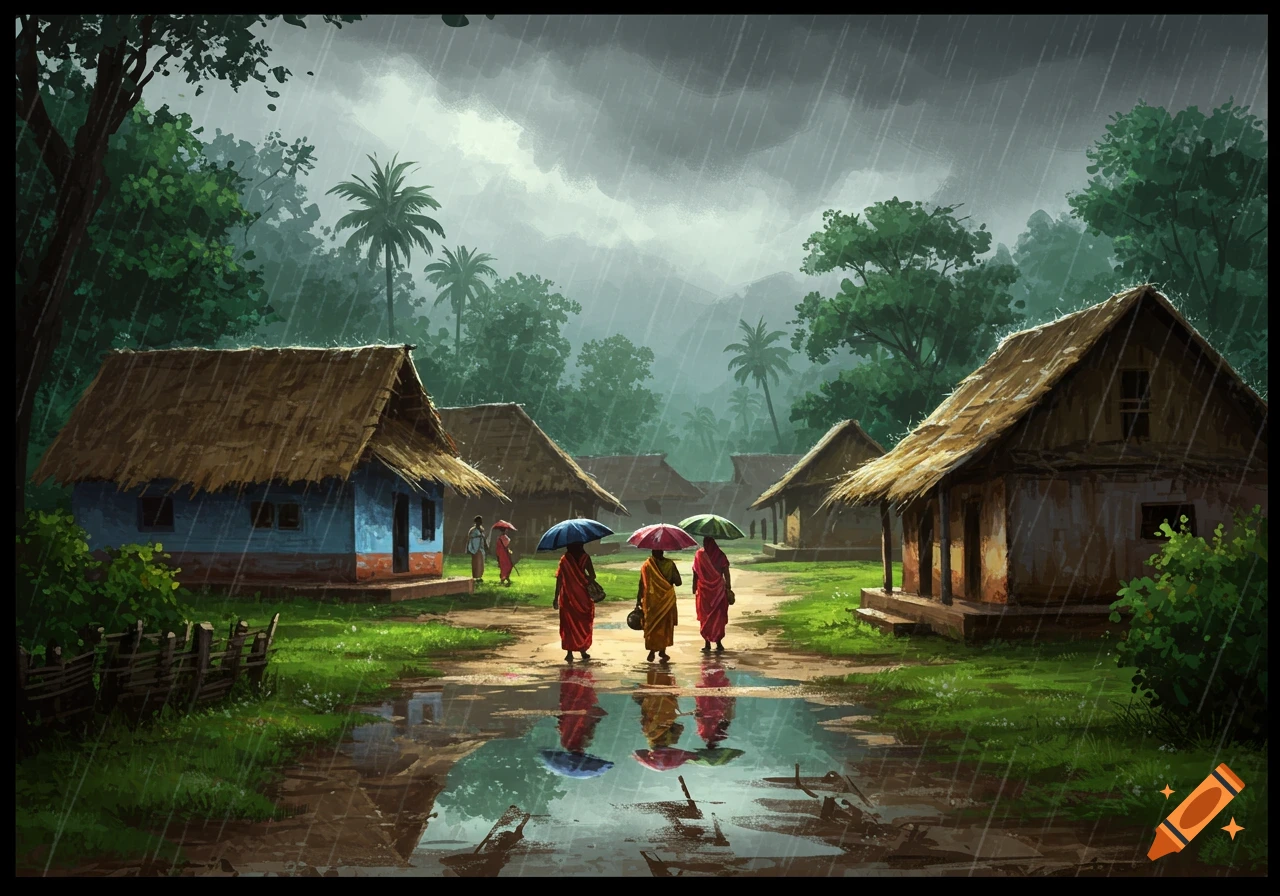
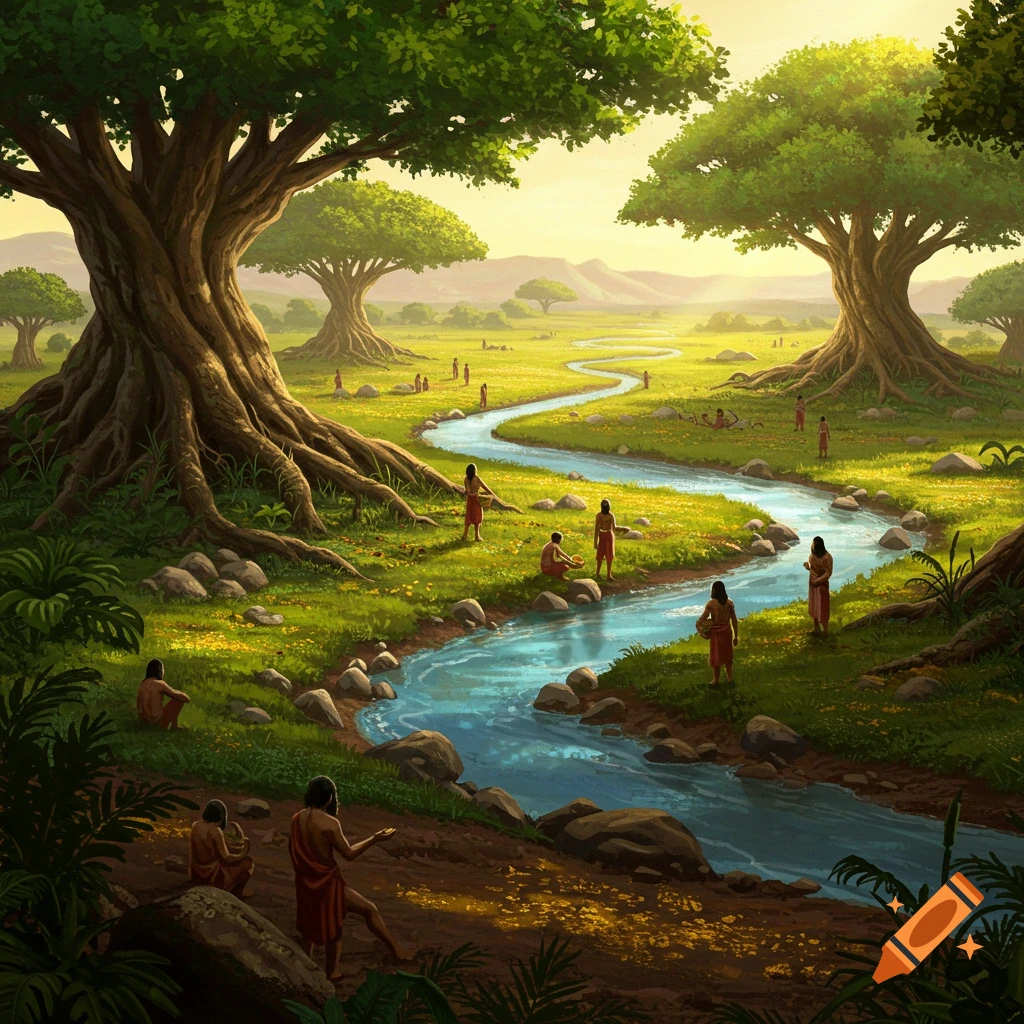
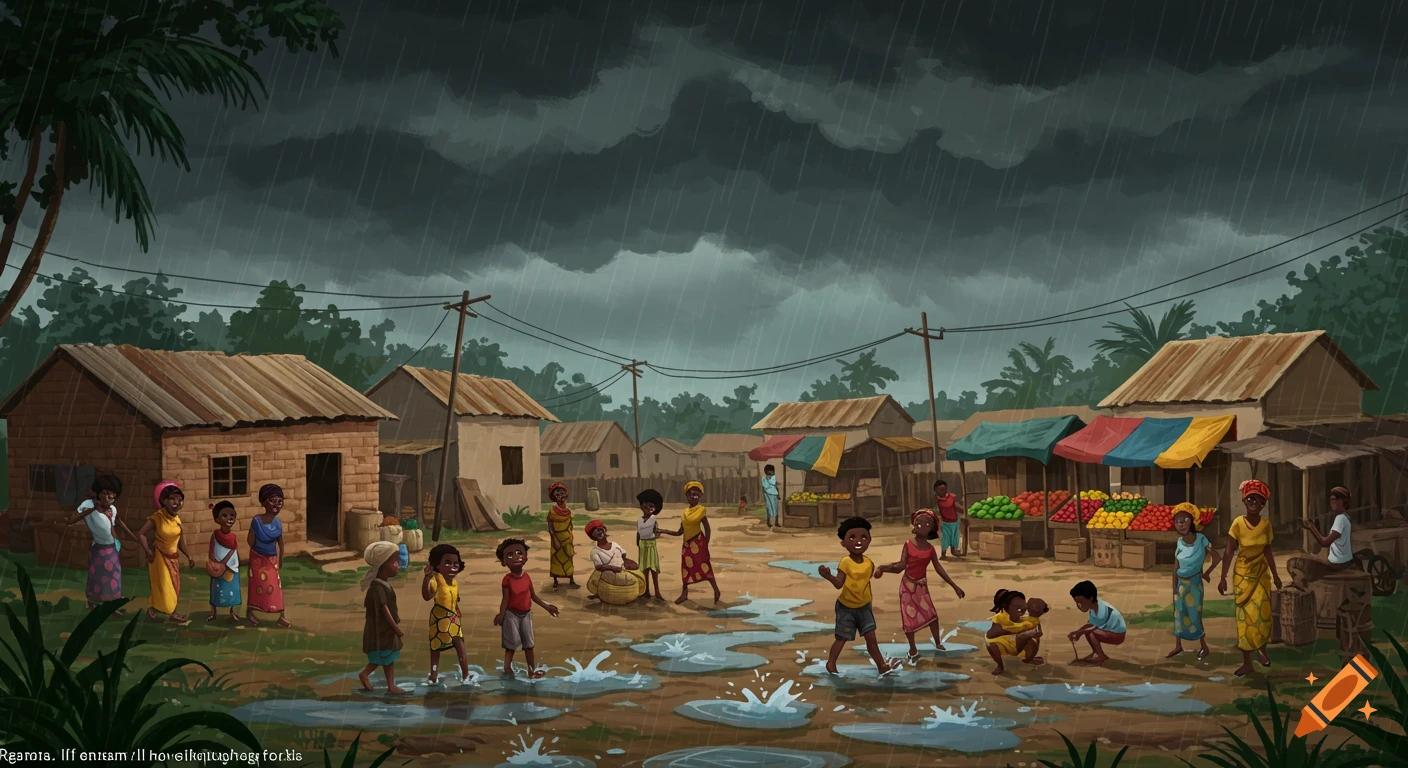
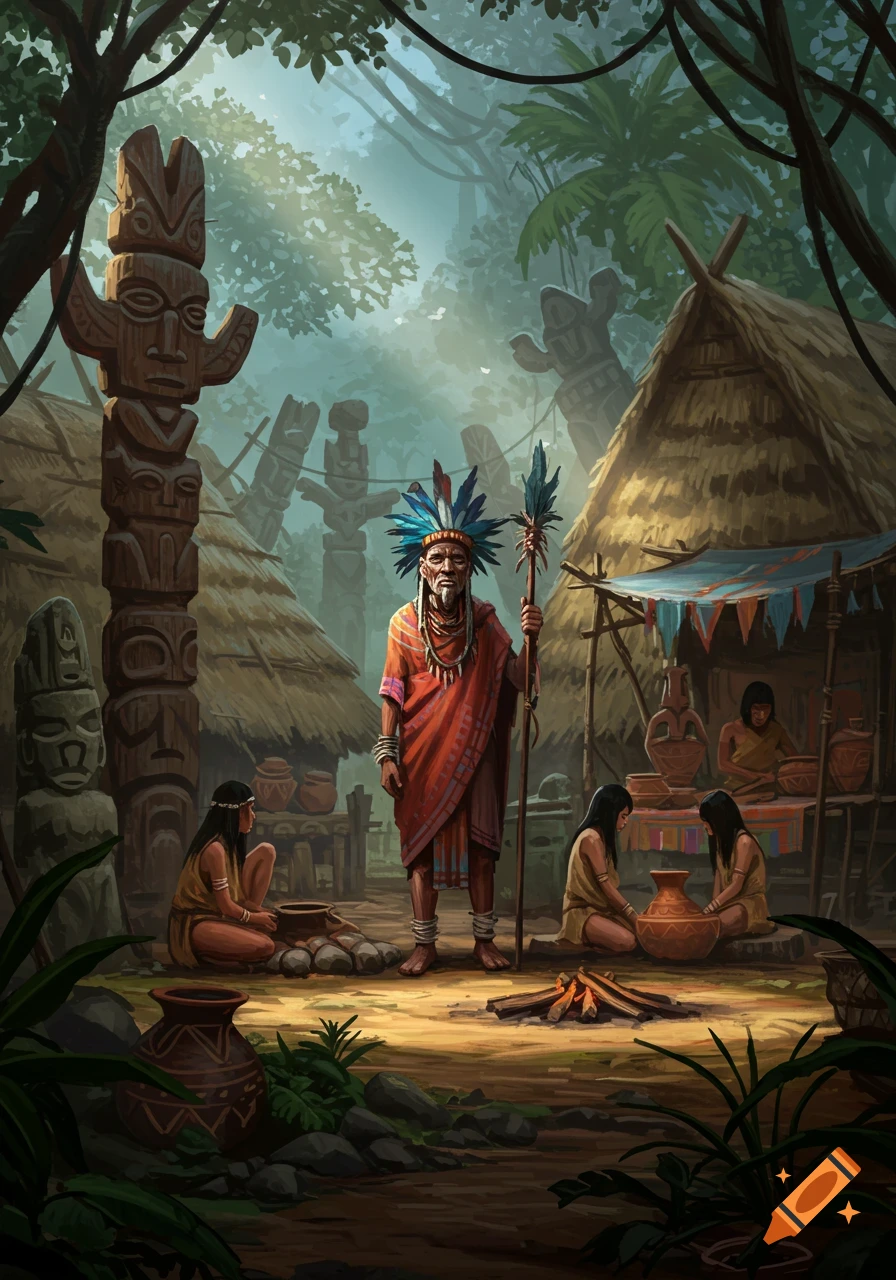
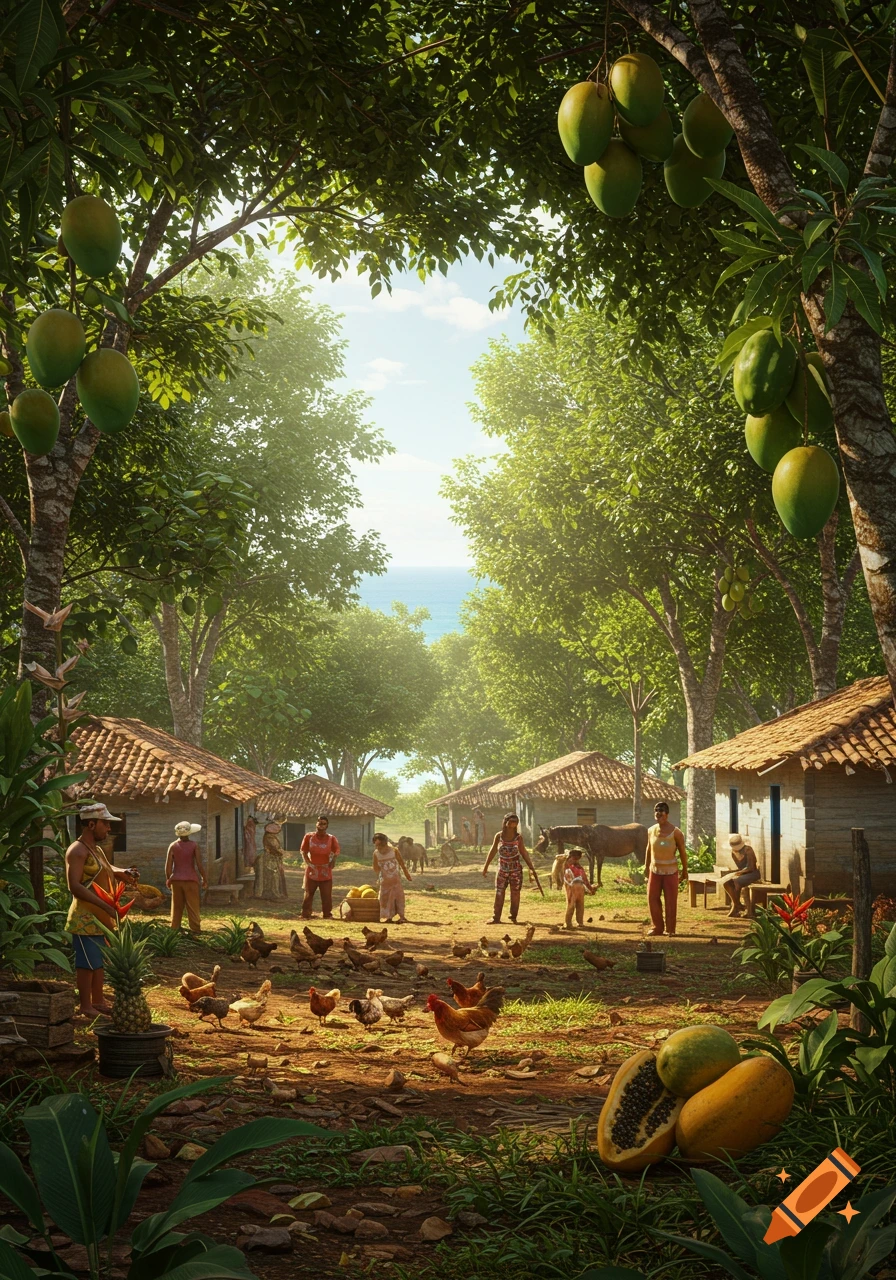
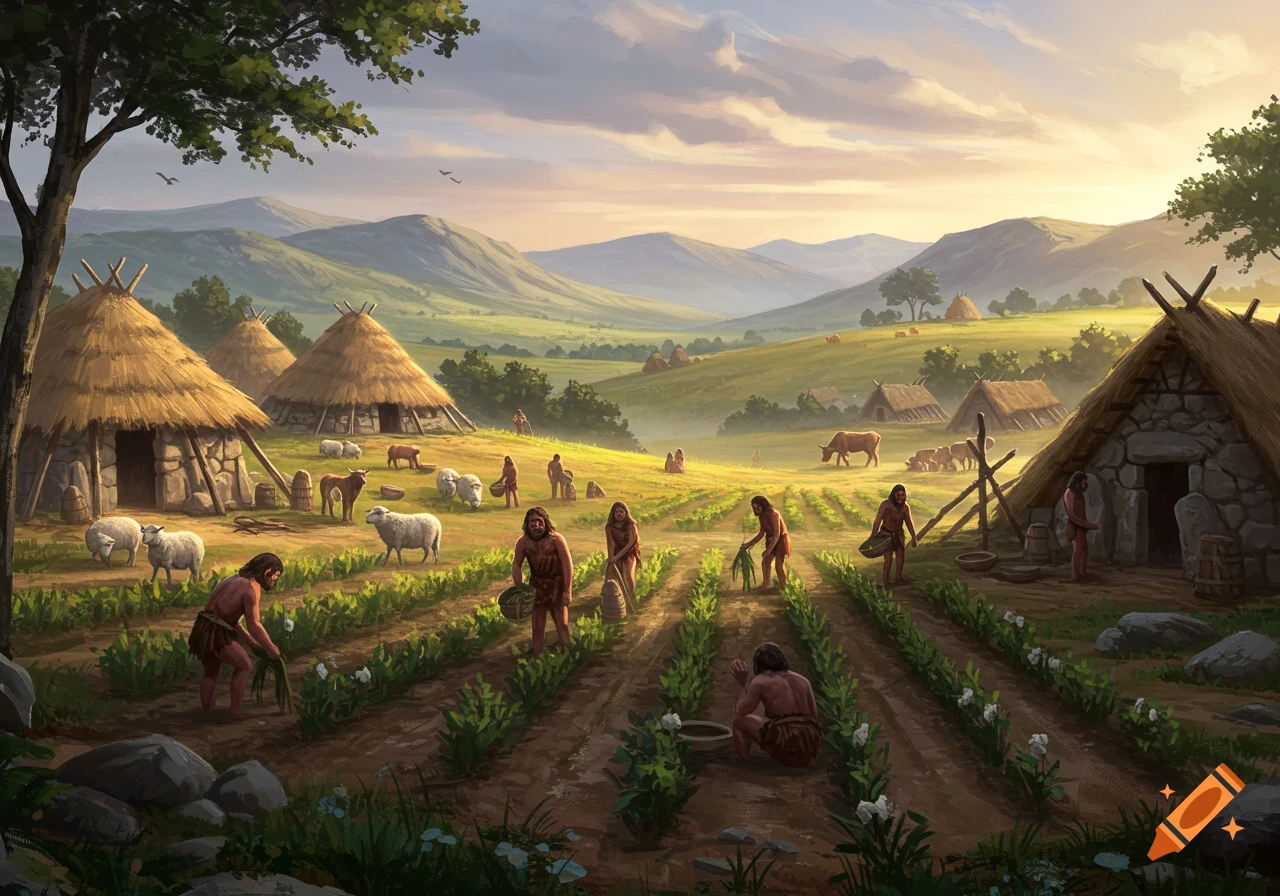
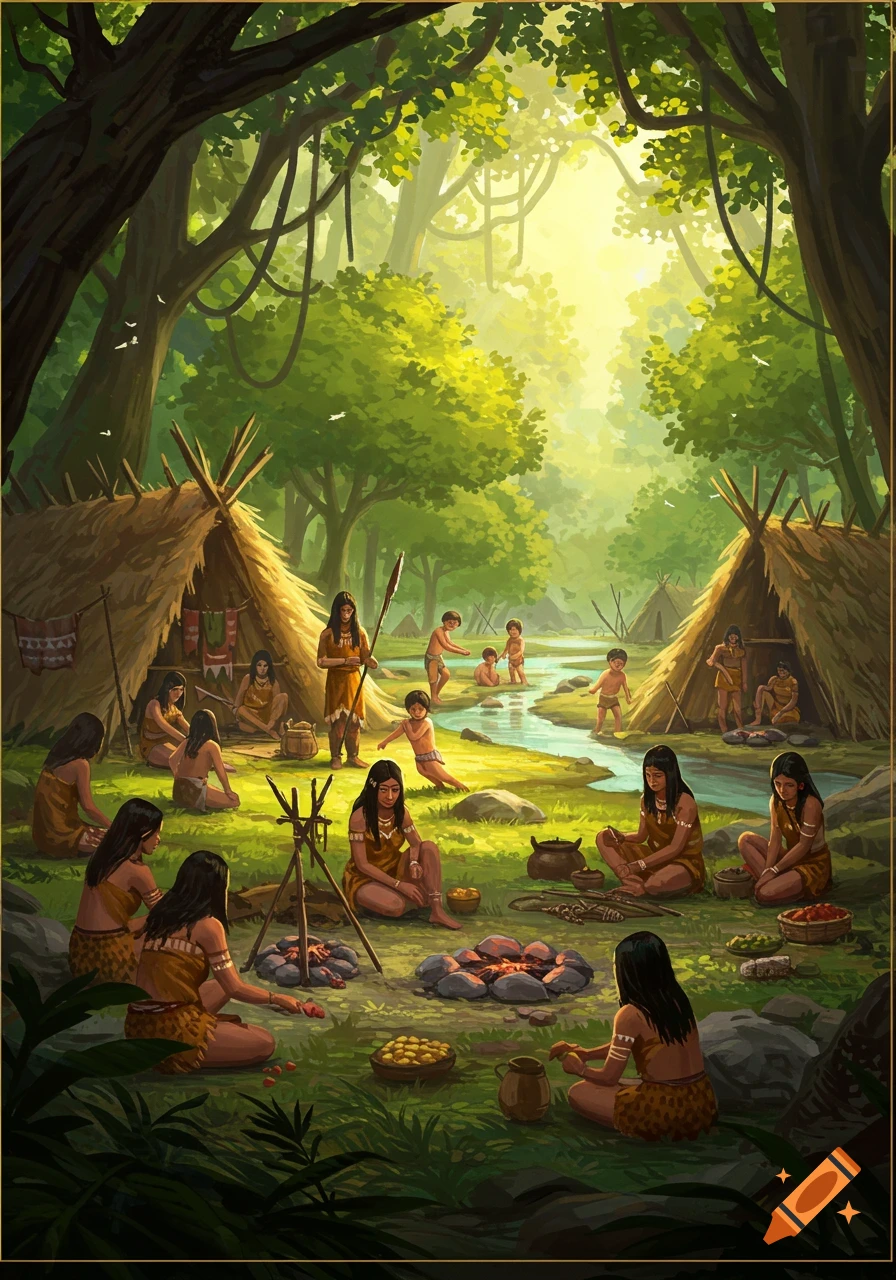
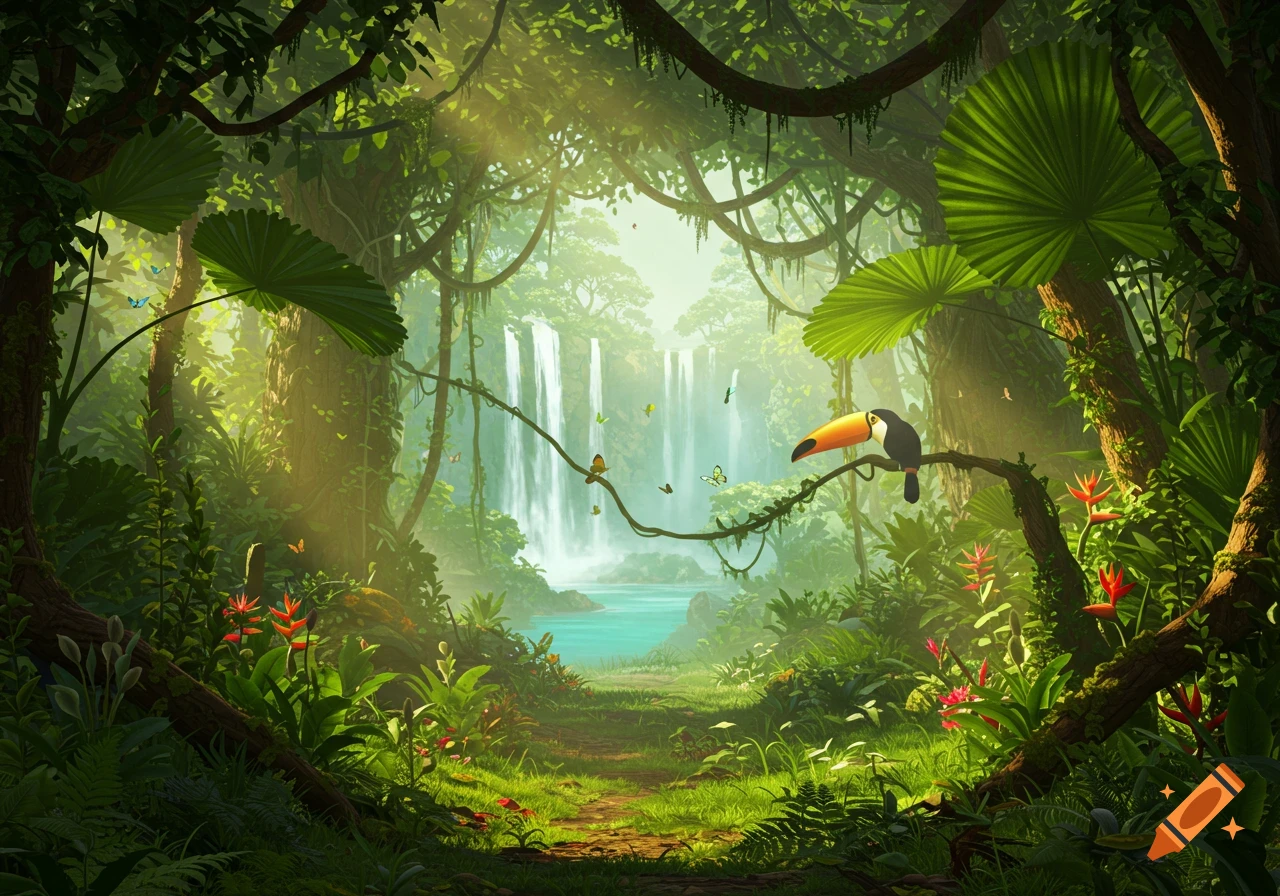
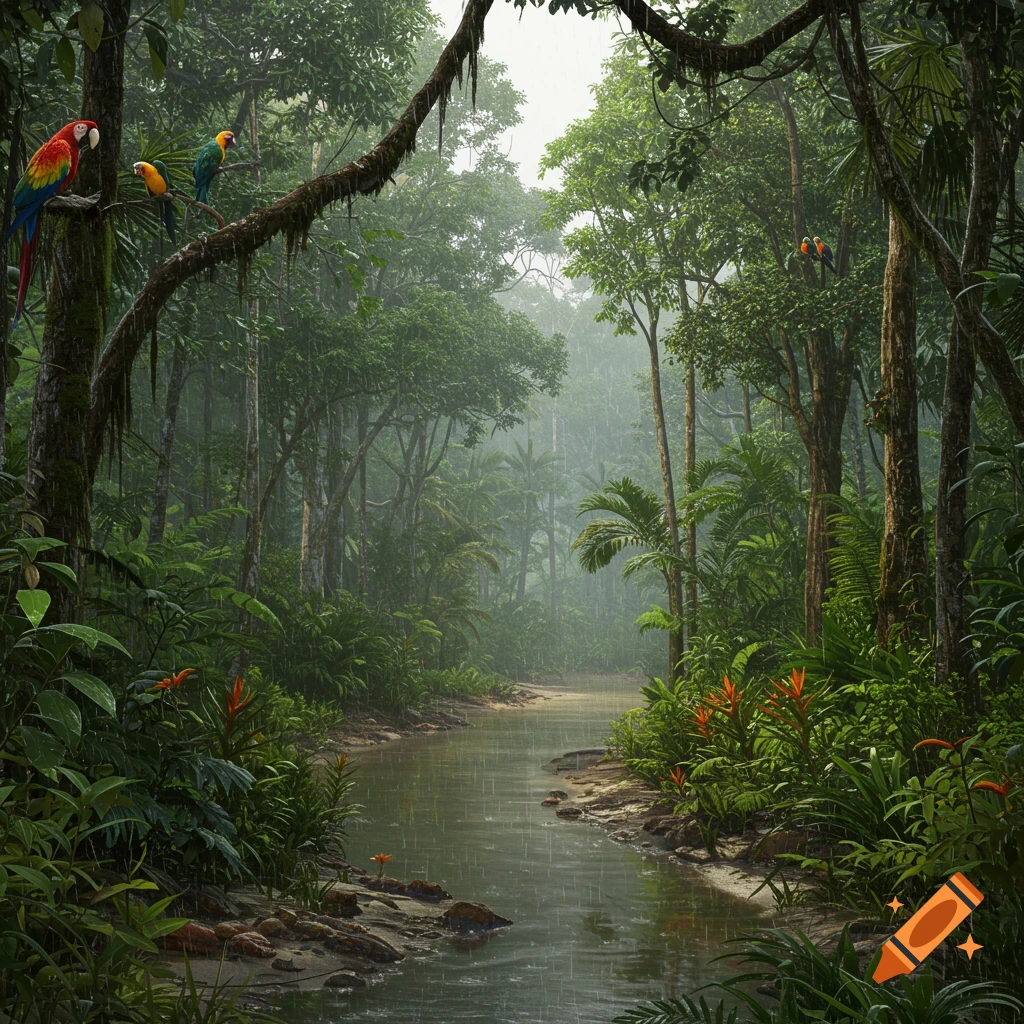
Photorealistic image of an indigenous tropical village with thatched huts, lush jungle, and people in traditional attire by a river.
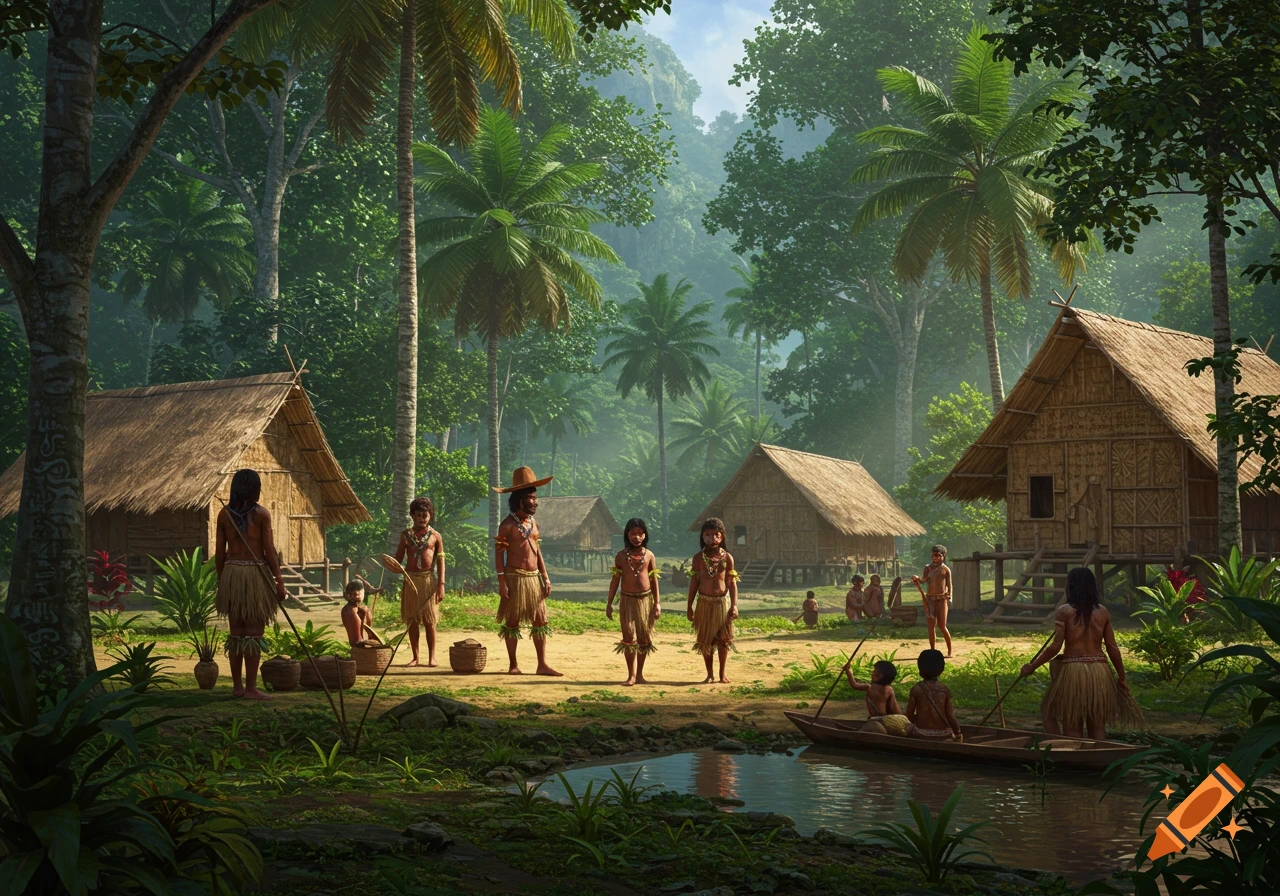
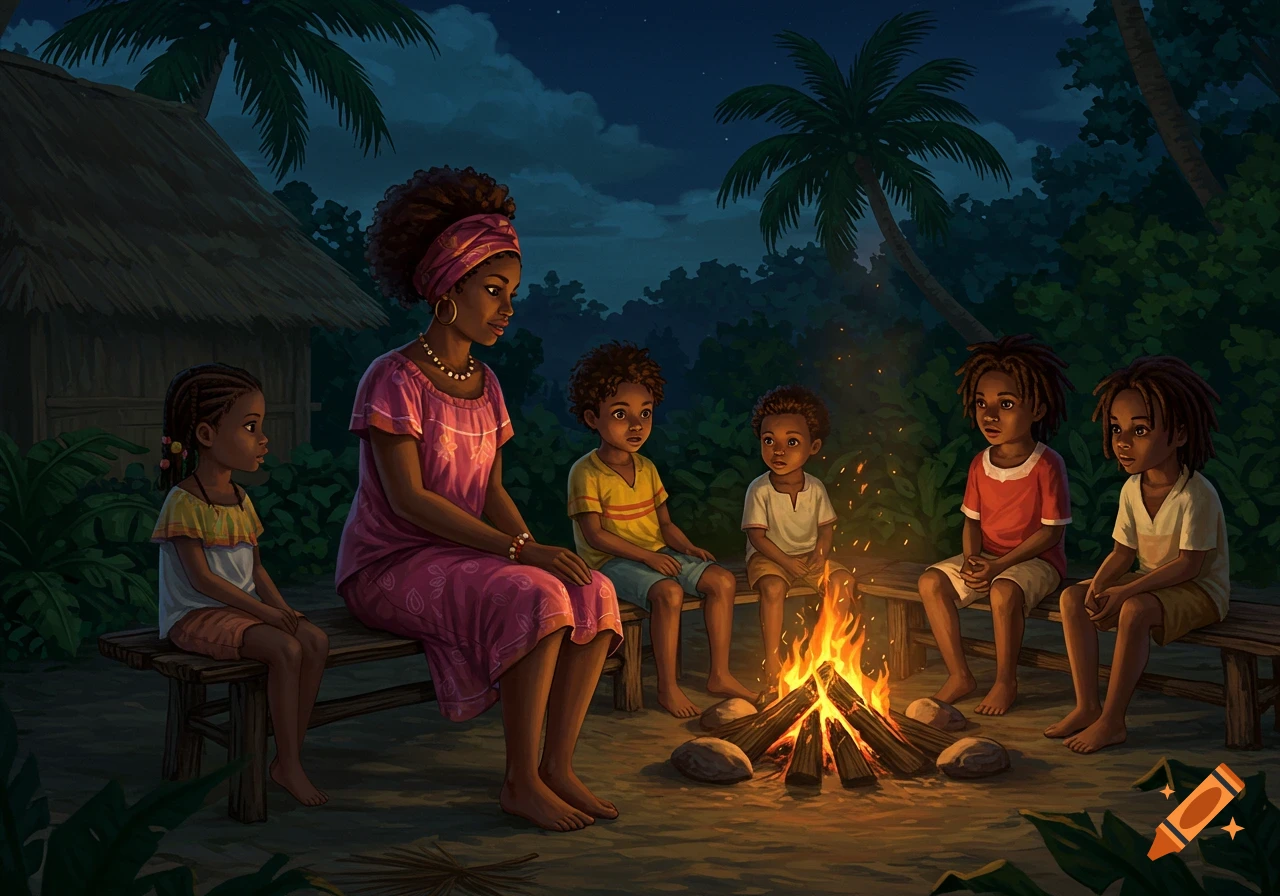
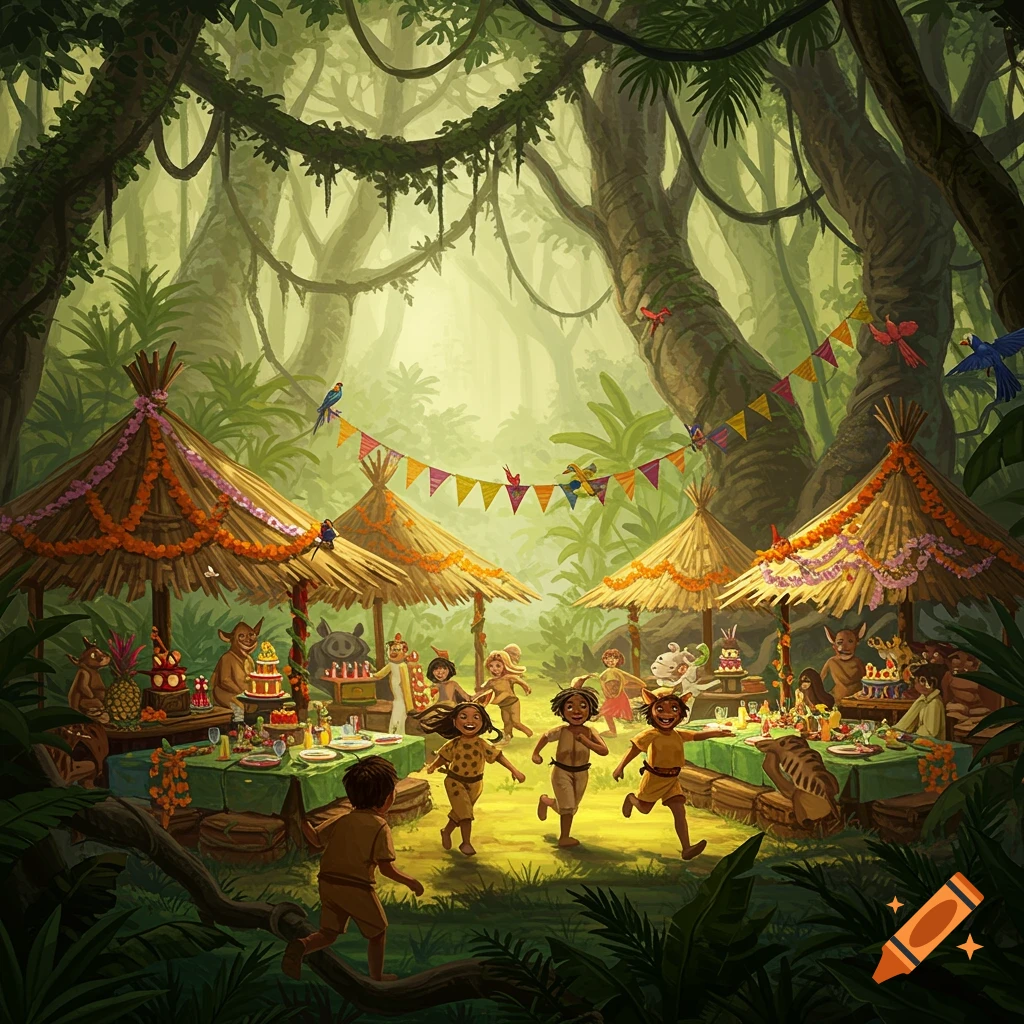
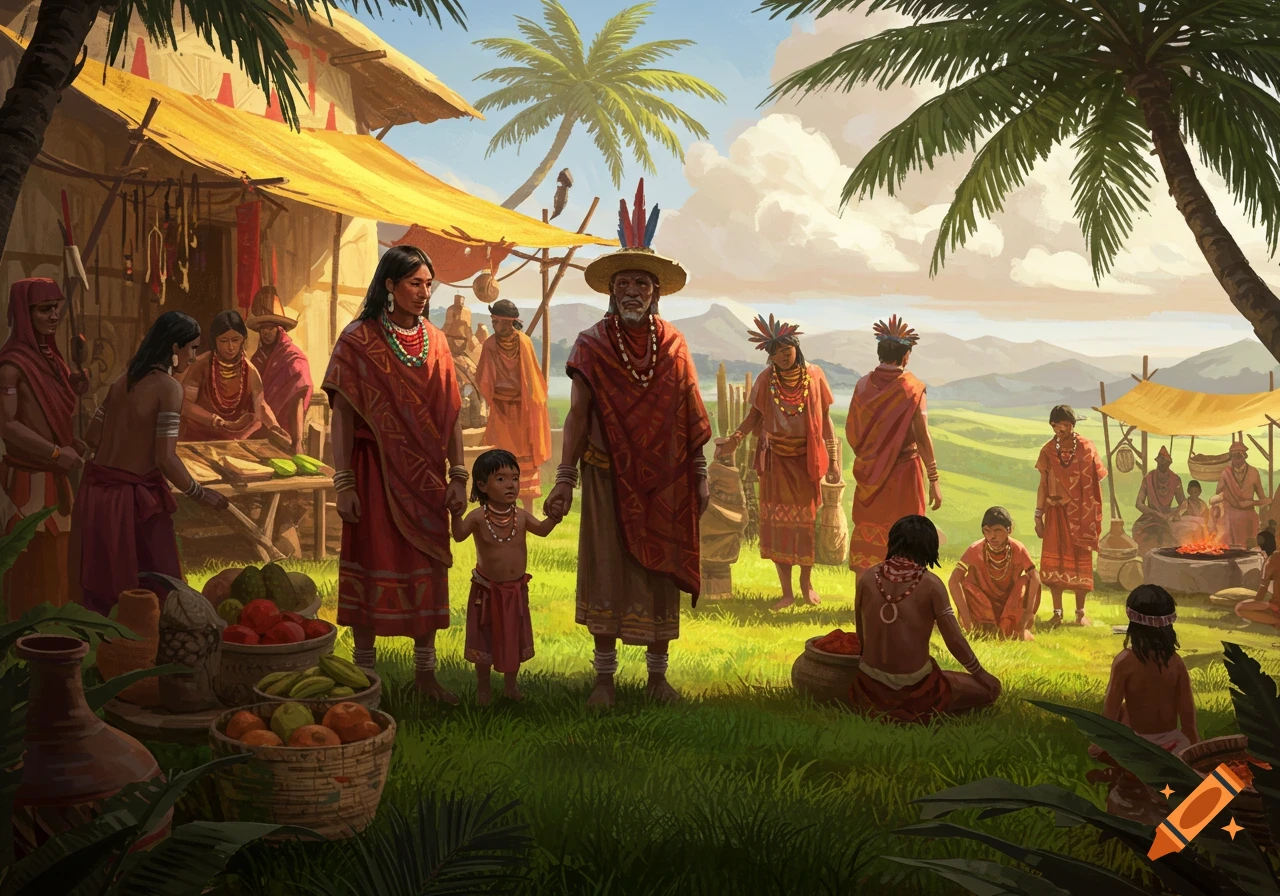
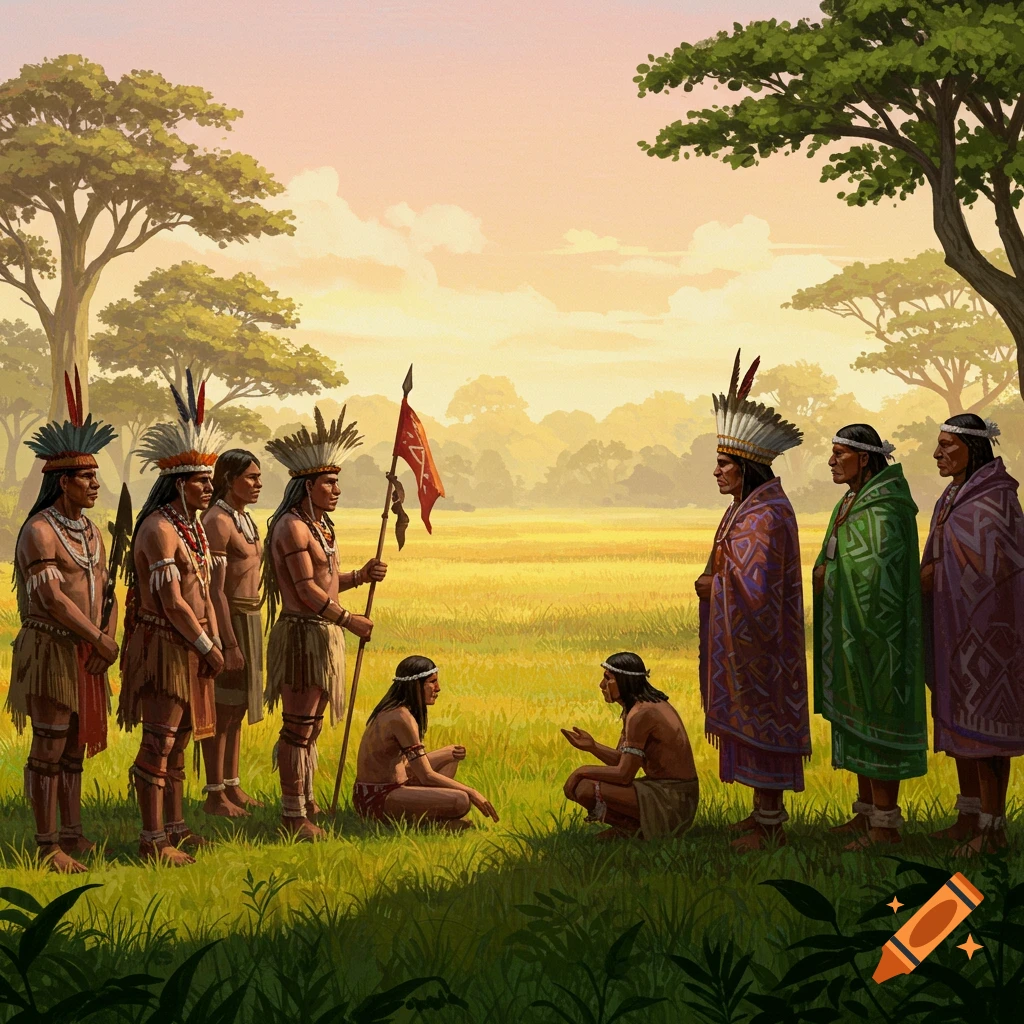
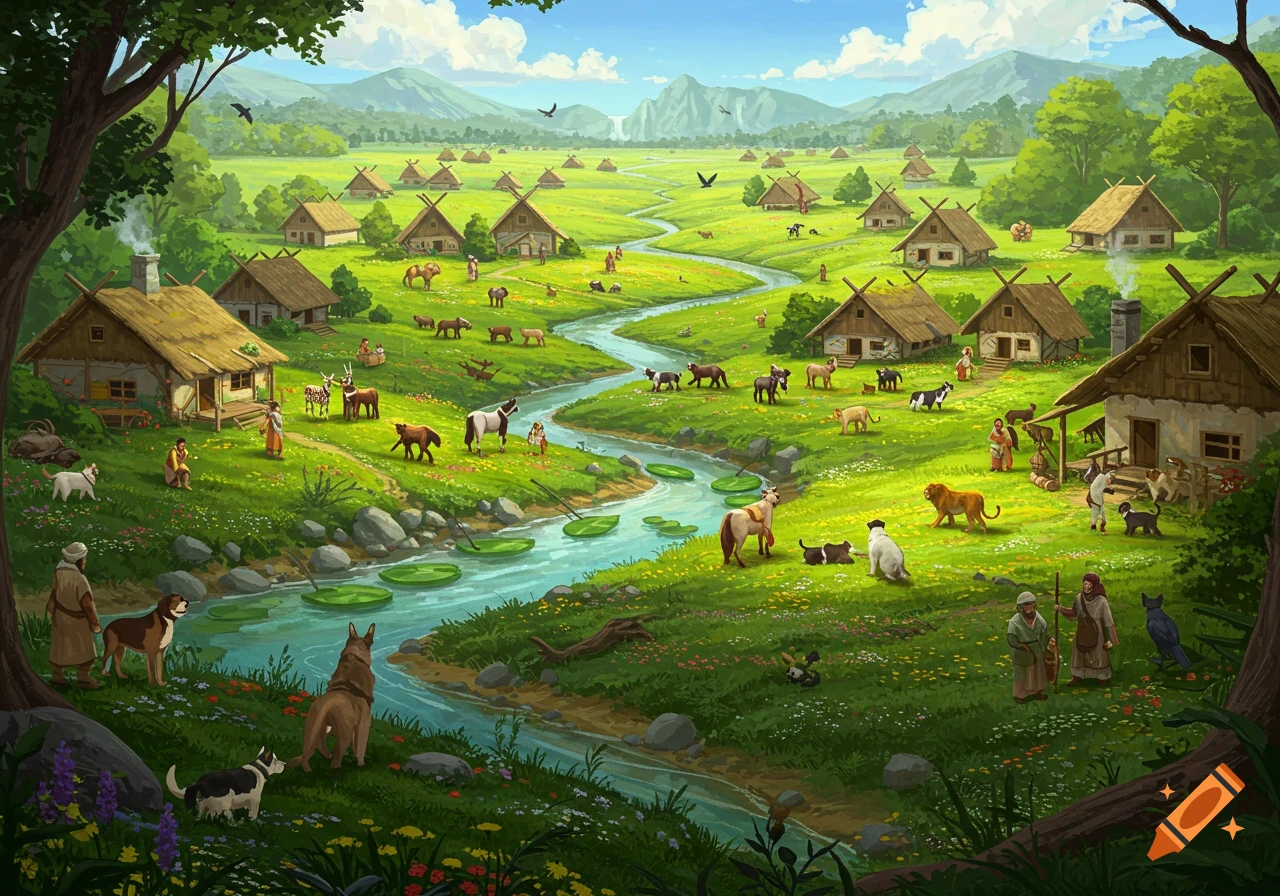
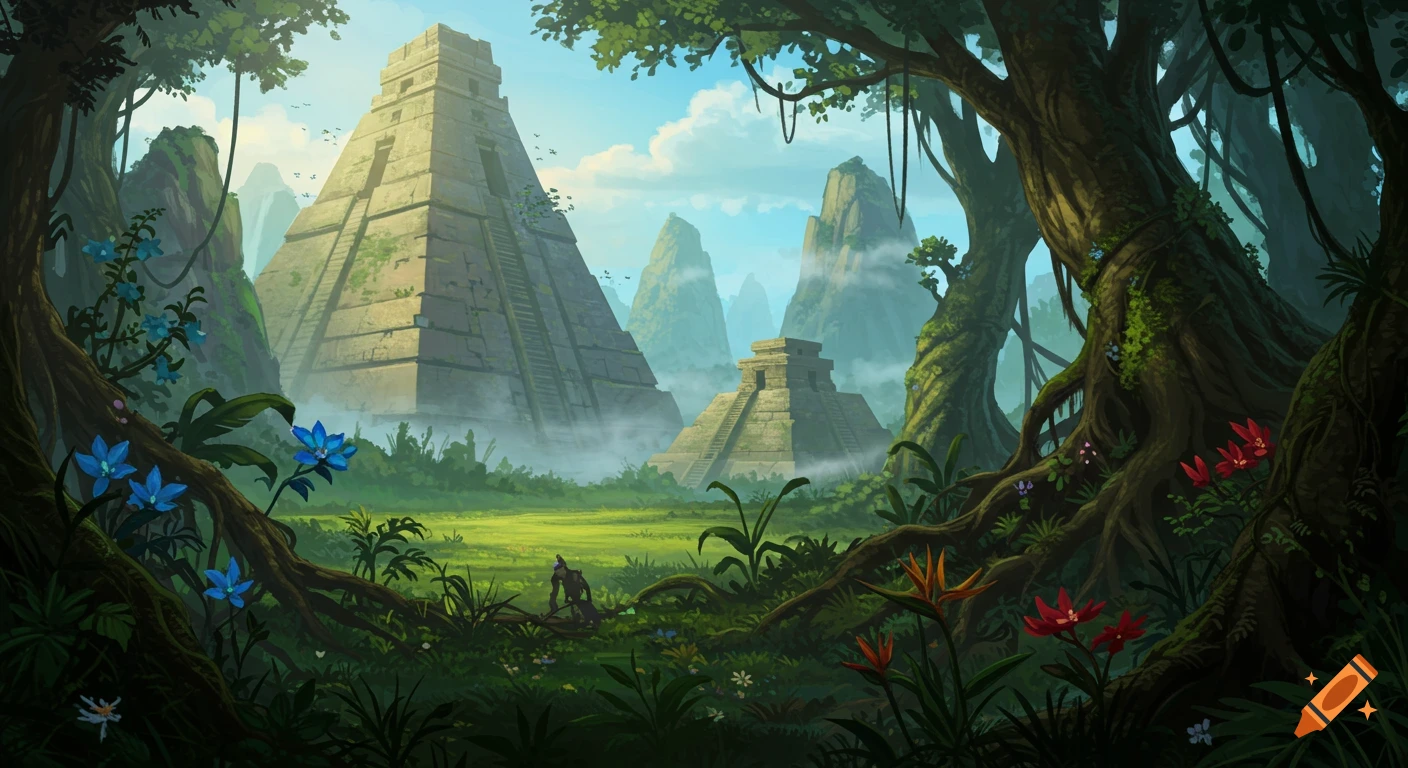
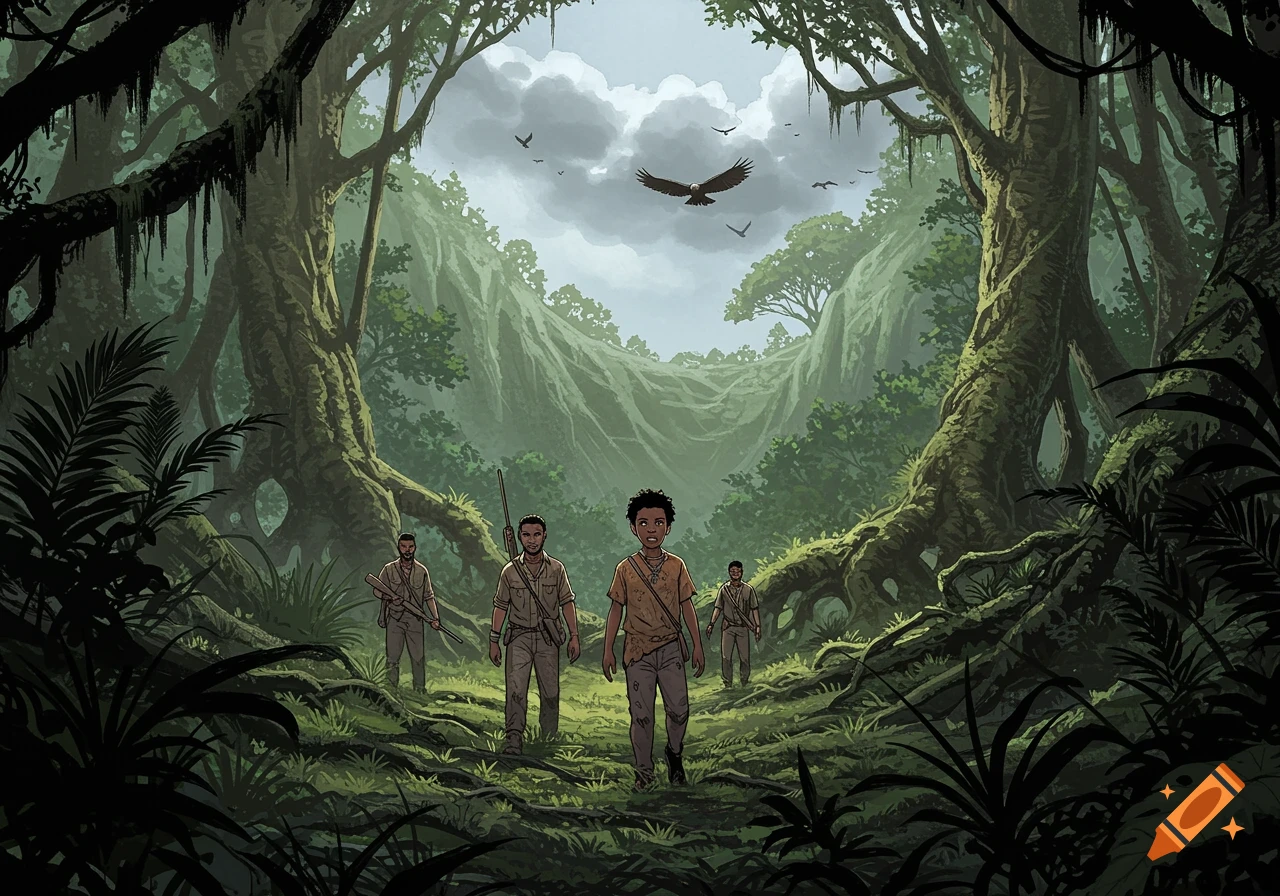
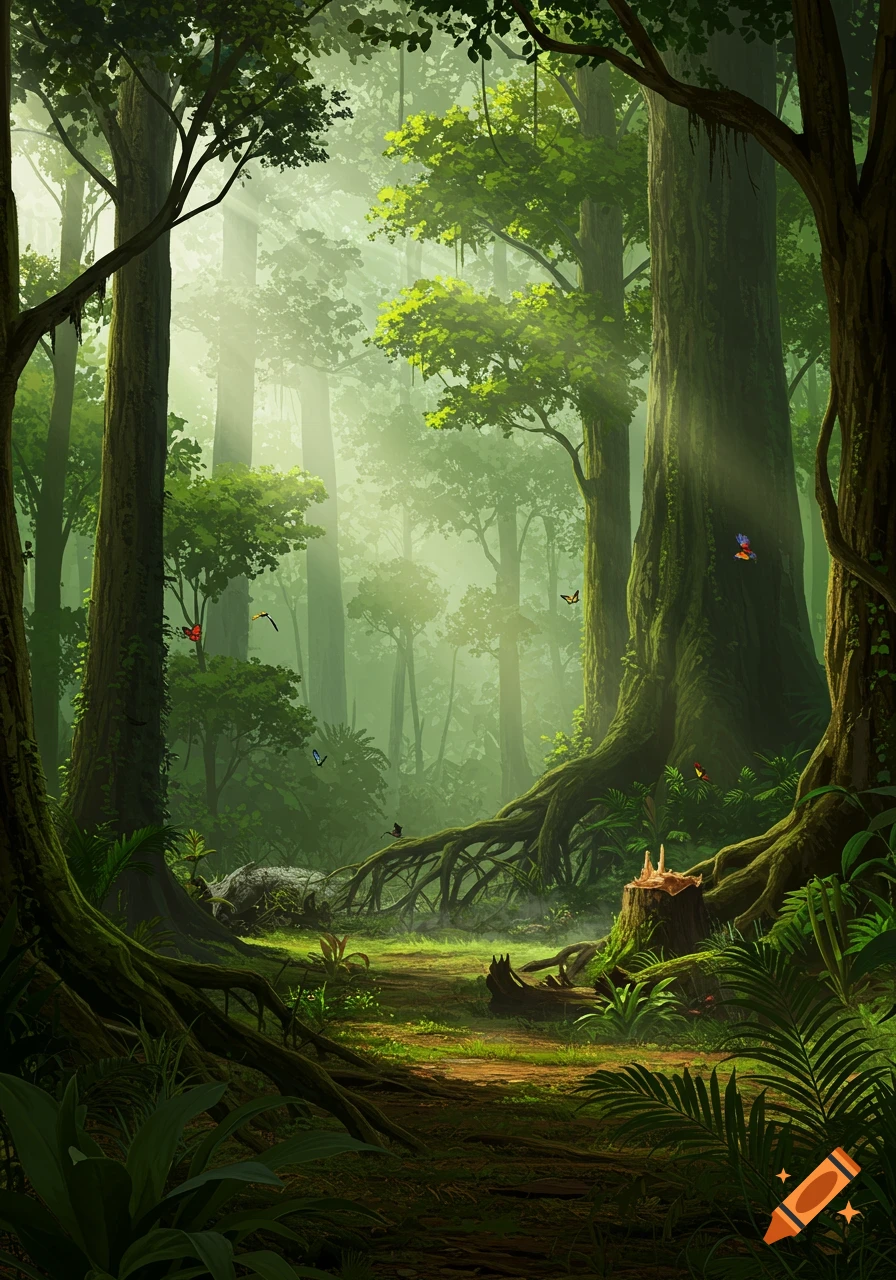
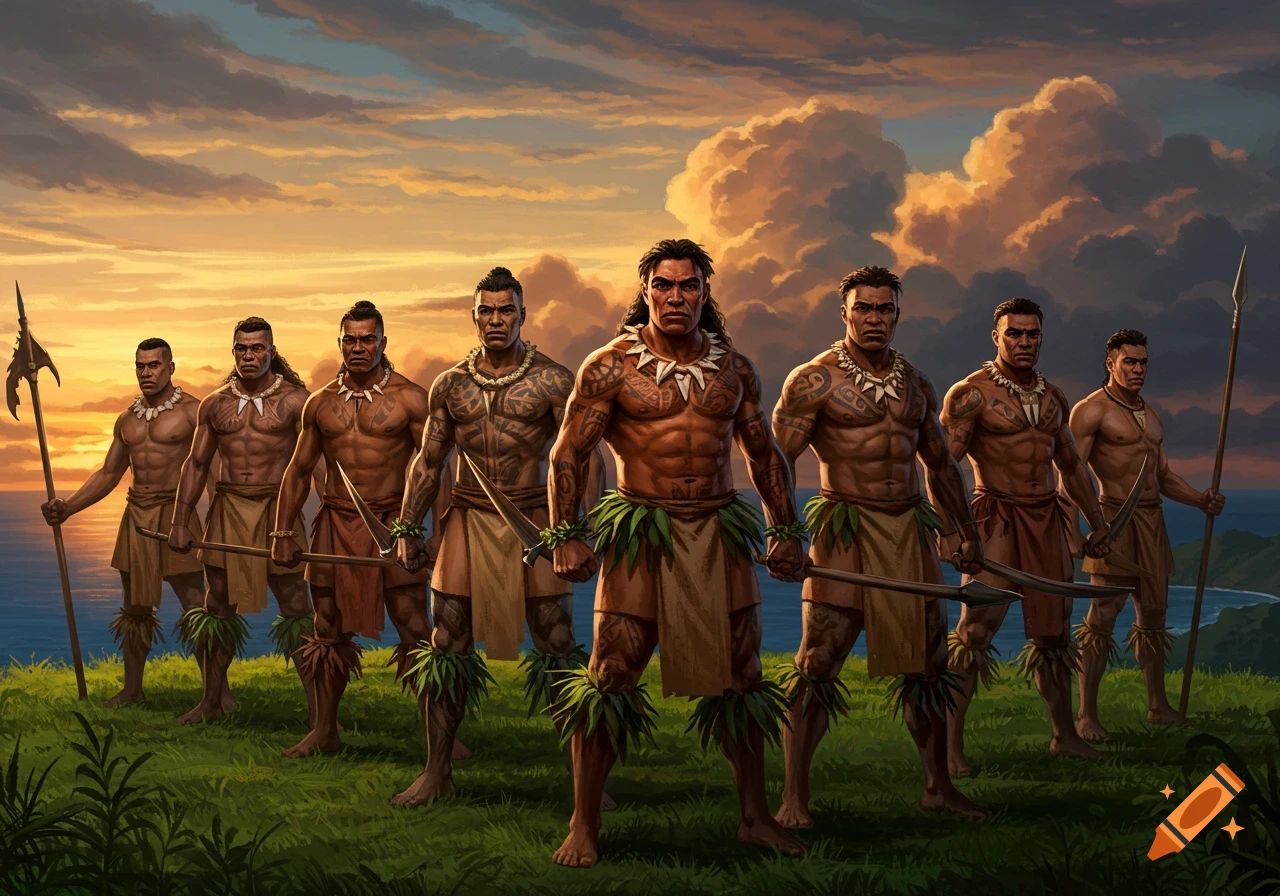
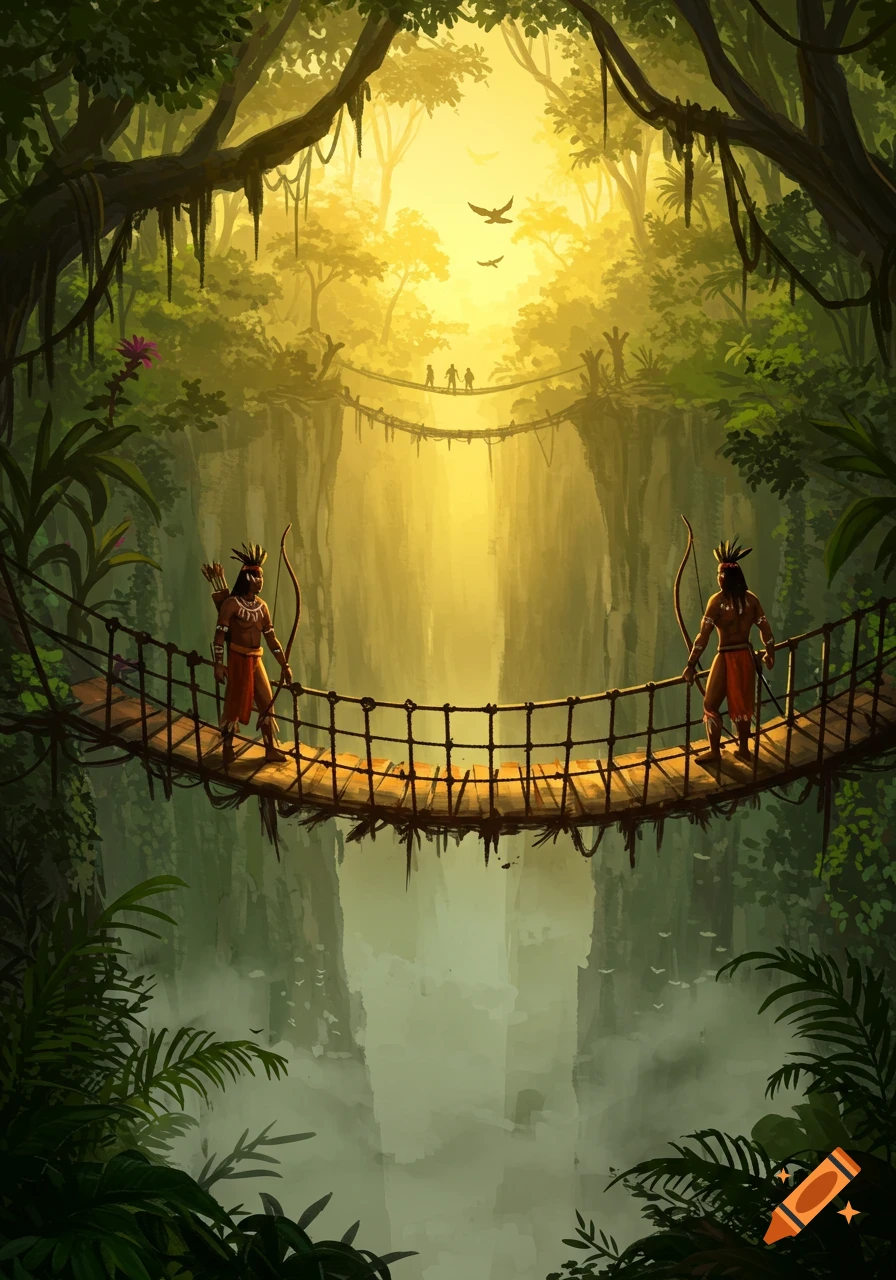
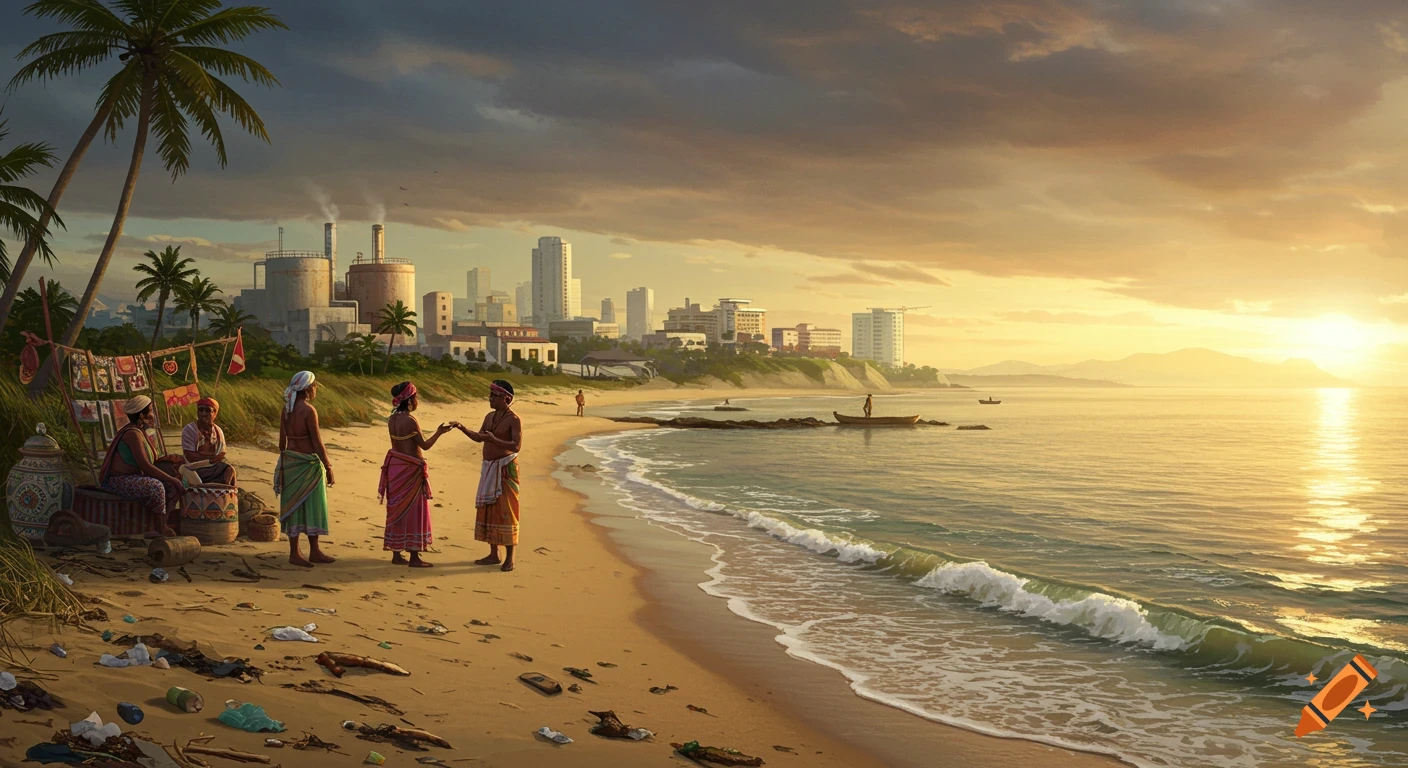
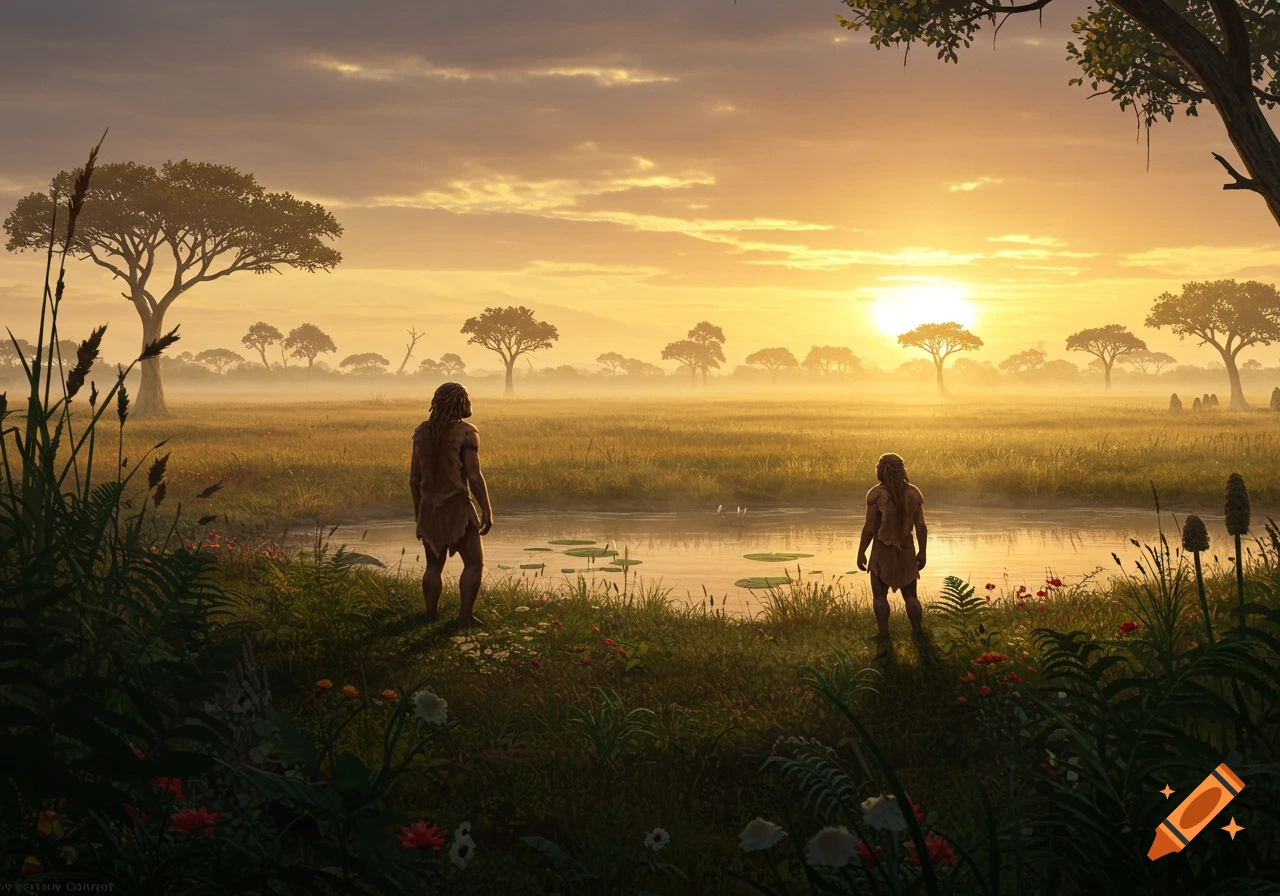
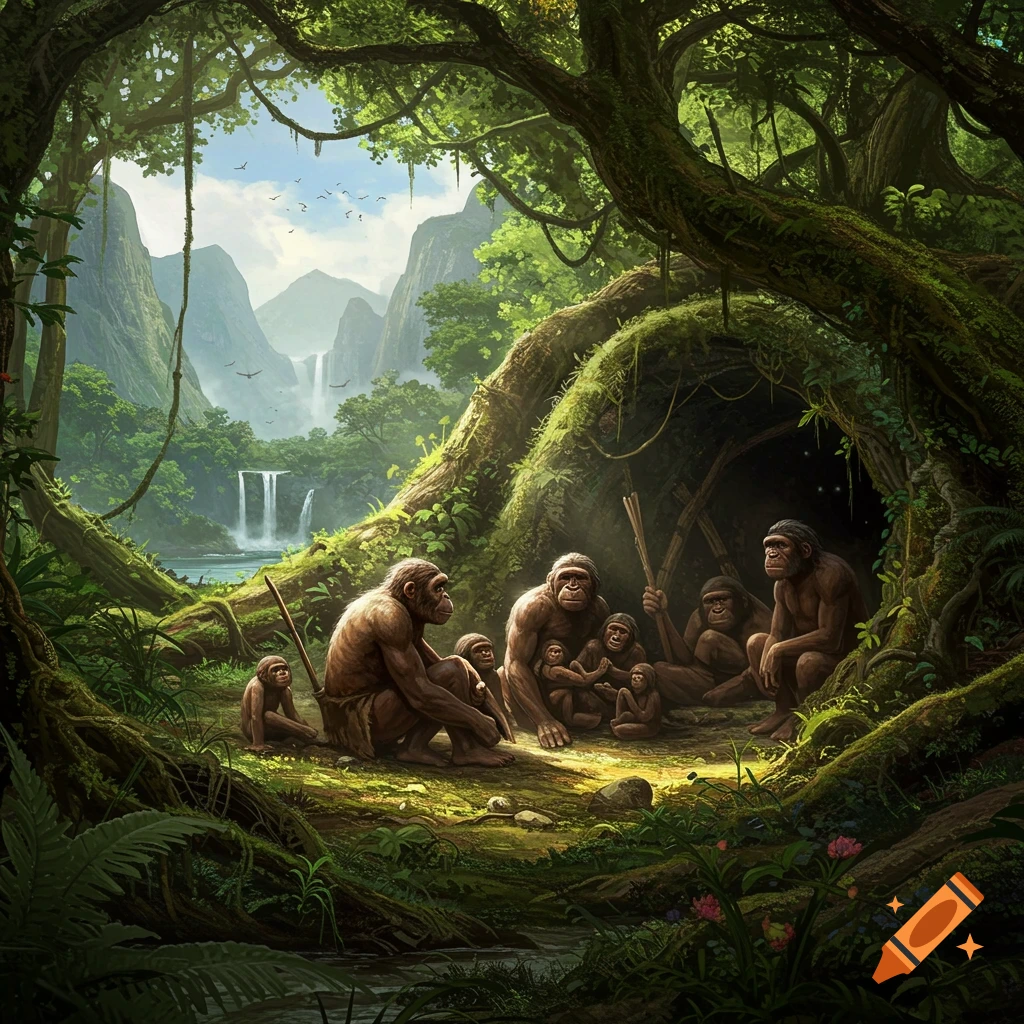
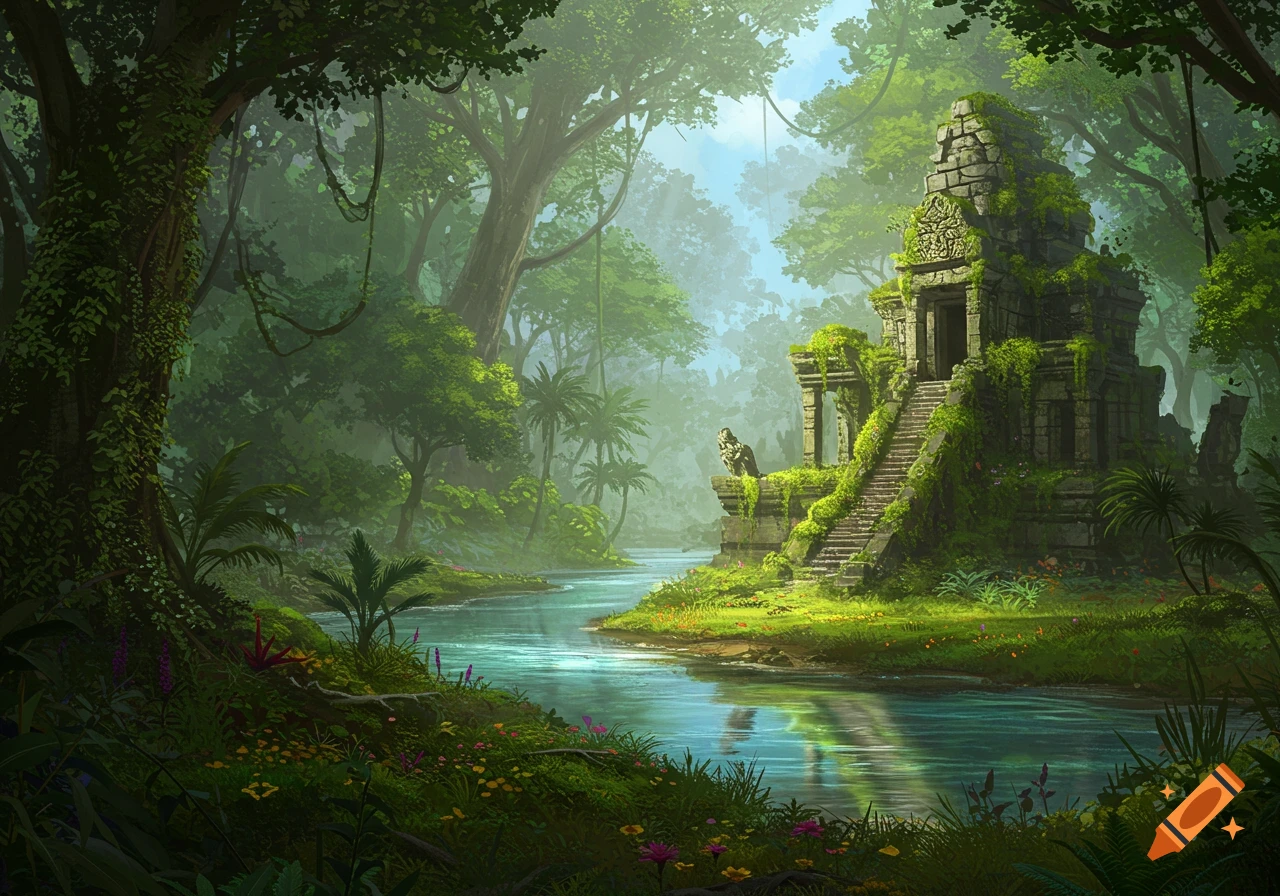
In a tropical region where the air stays warm year-round, people live close to nature in open-air villages surrounded by dense greenery. Tall palms and broad-leafed trees create a canopy that filters sunlight into shifting patterns across the ground. Homes are built from local materials — woven palm leaves, wood, and clay — and are arranged in small circles or along a riverbank. Clothing is simple and practical, often made from plant fibers, bark cloth, or woven grasses. Many adults and children wear little more than adornments such as beads, shells, or body paint, each design holding social or spiritual meaning. The absence of heavy clothing isn’t about modesty or exposure; it reflects comfort, climate, and centuries of adaptation. Daily life follows the rhythms of nature. People fish in the rivers, tend to small gardens, and gather fruit from the forest. The sounds of conversation, birds, and running water blend into a calm hum. Elders share stories under the shade of trees while children play nearby. Harmony with the land — and with one another — defines the community far more than material possessions or fashion. See more