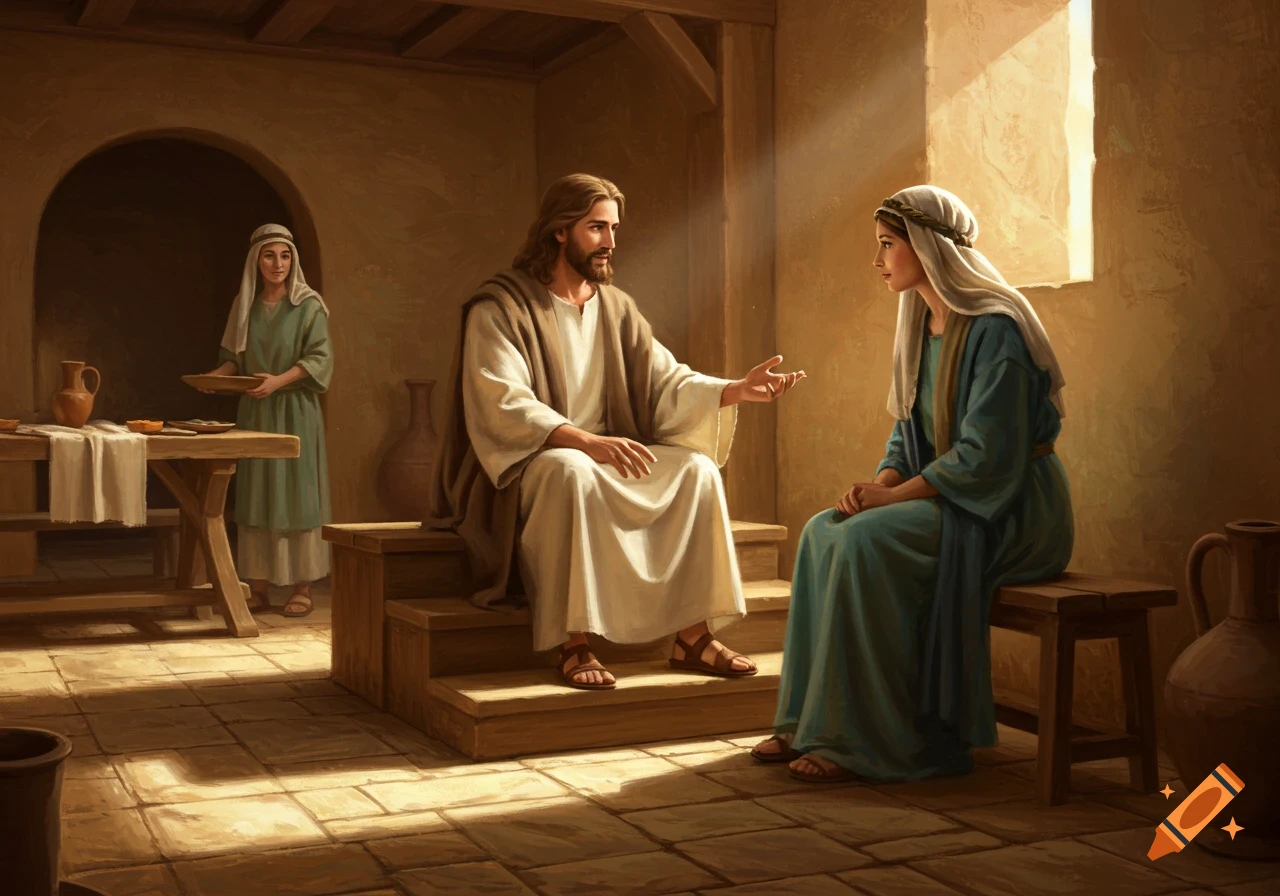
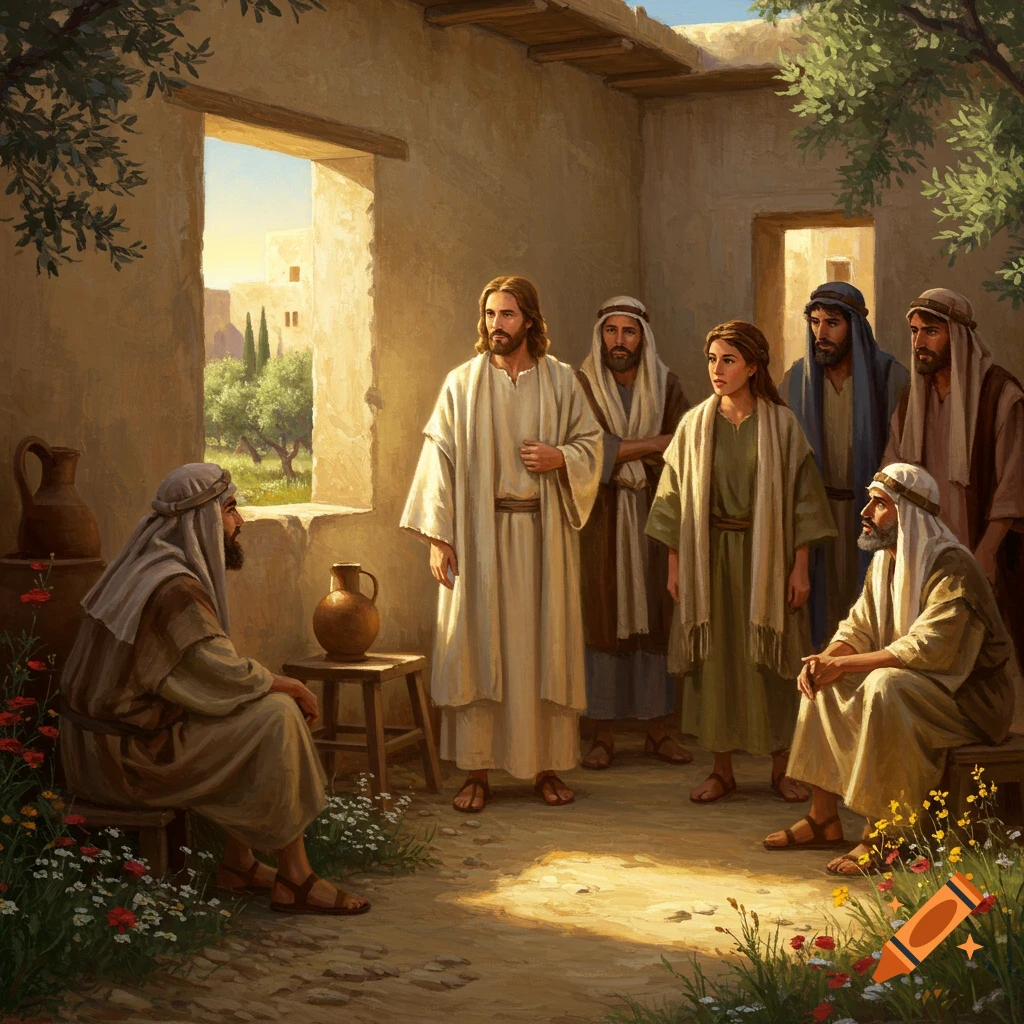
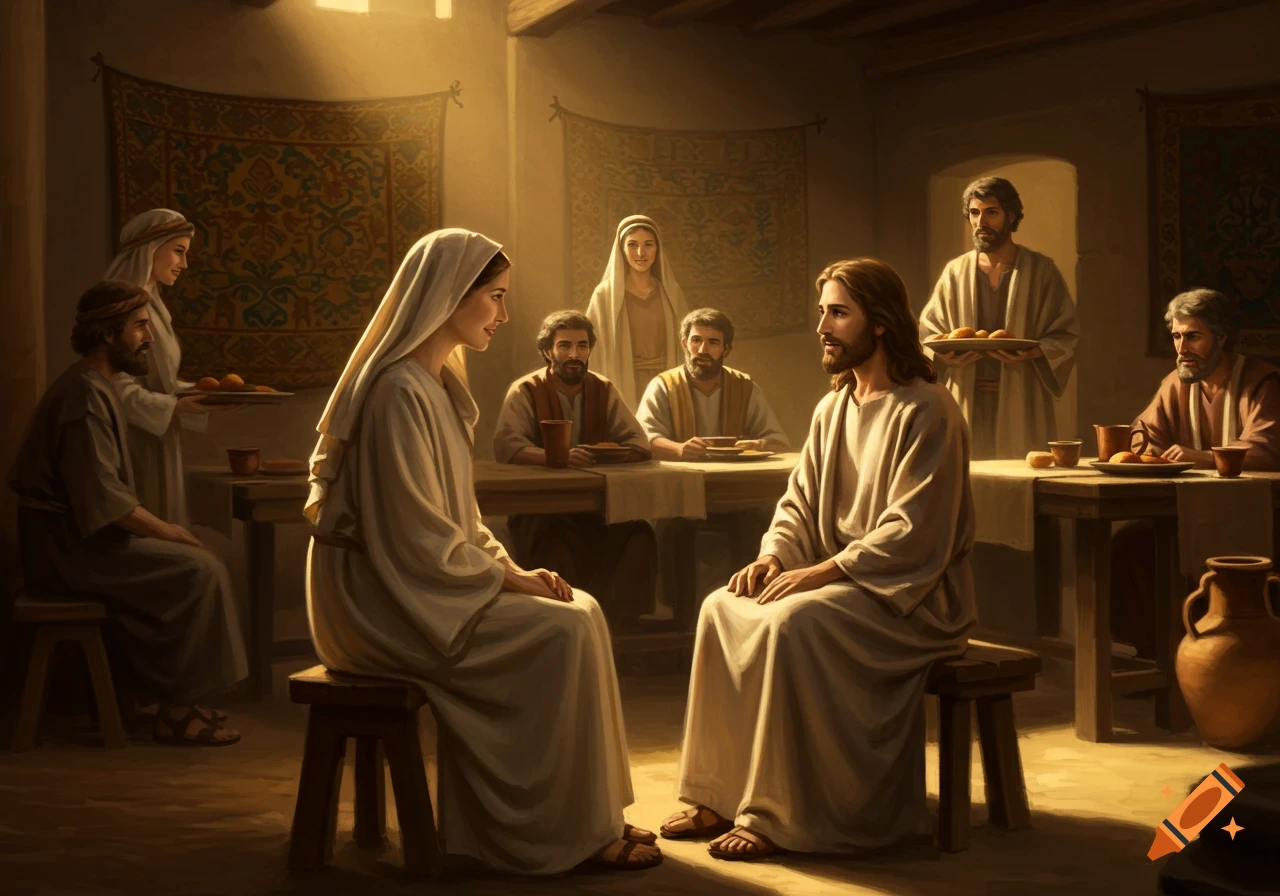
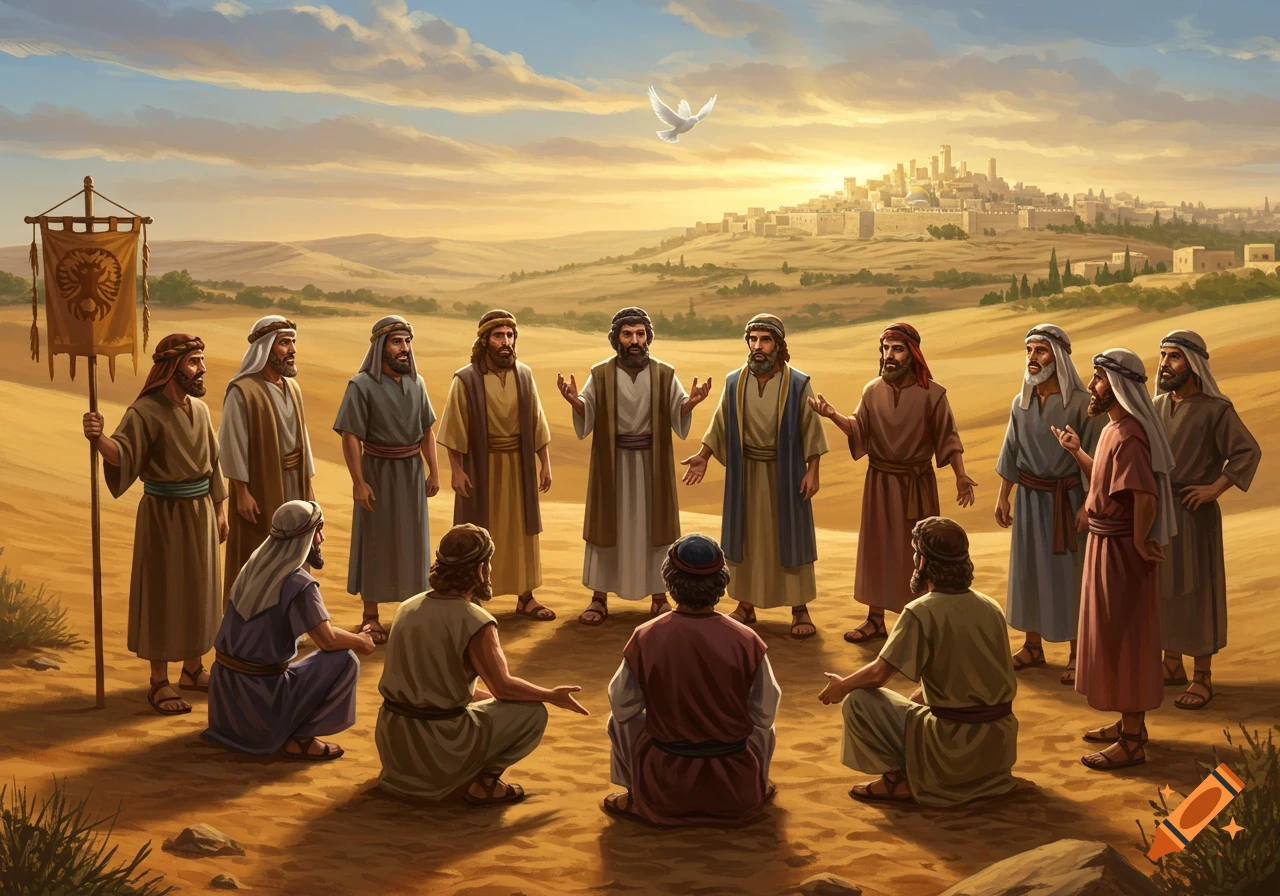
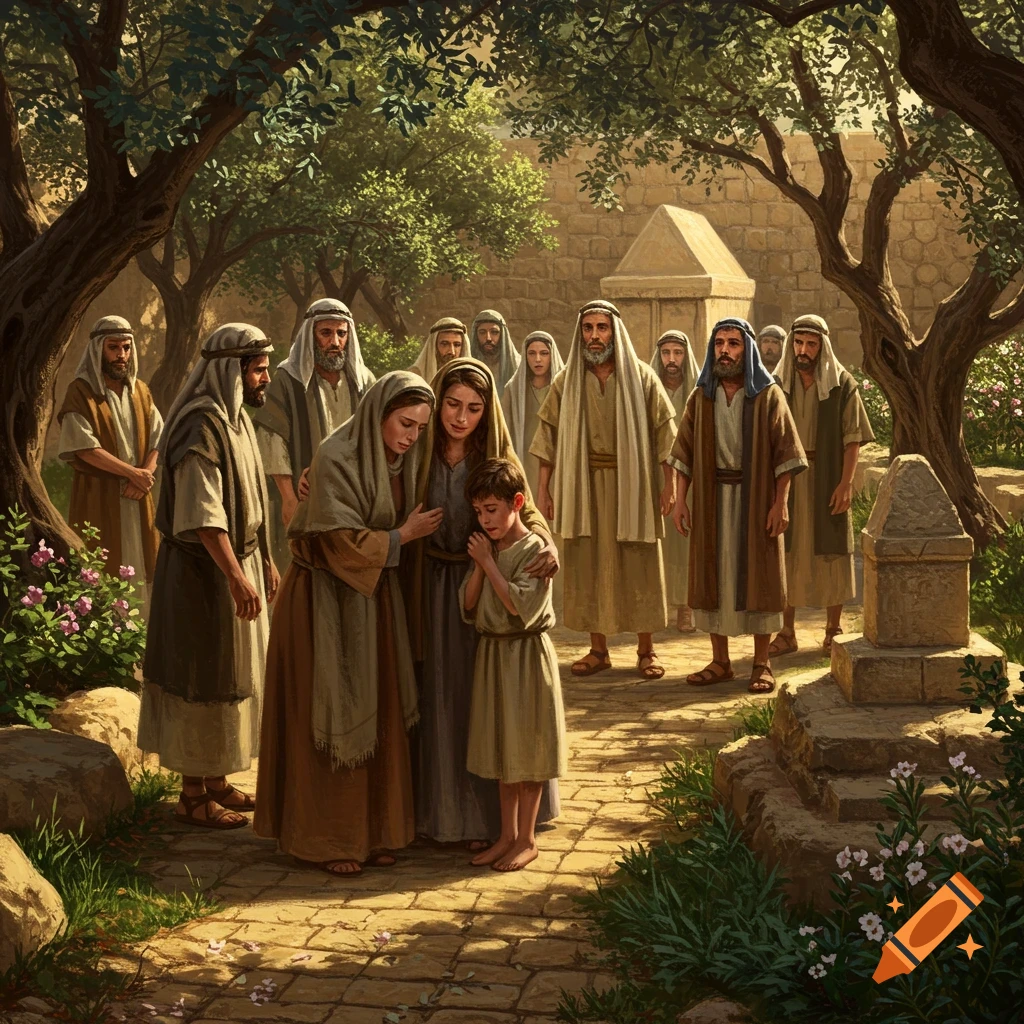
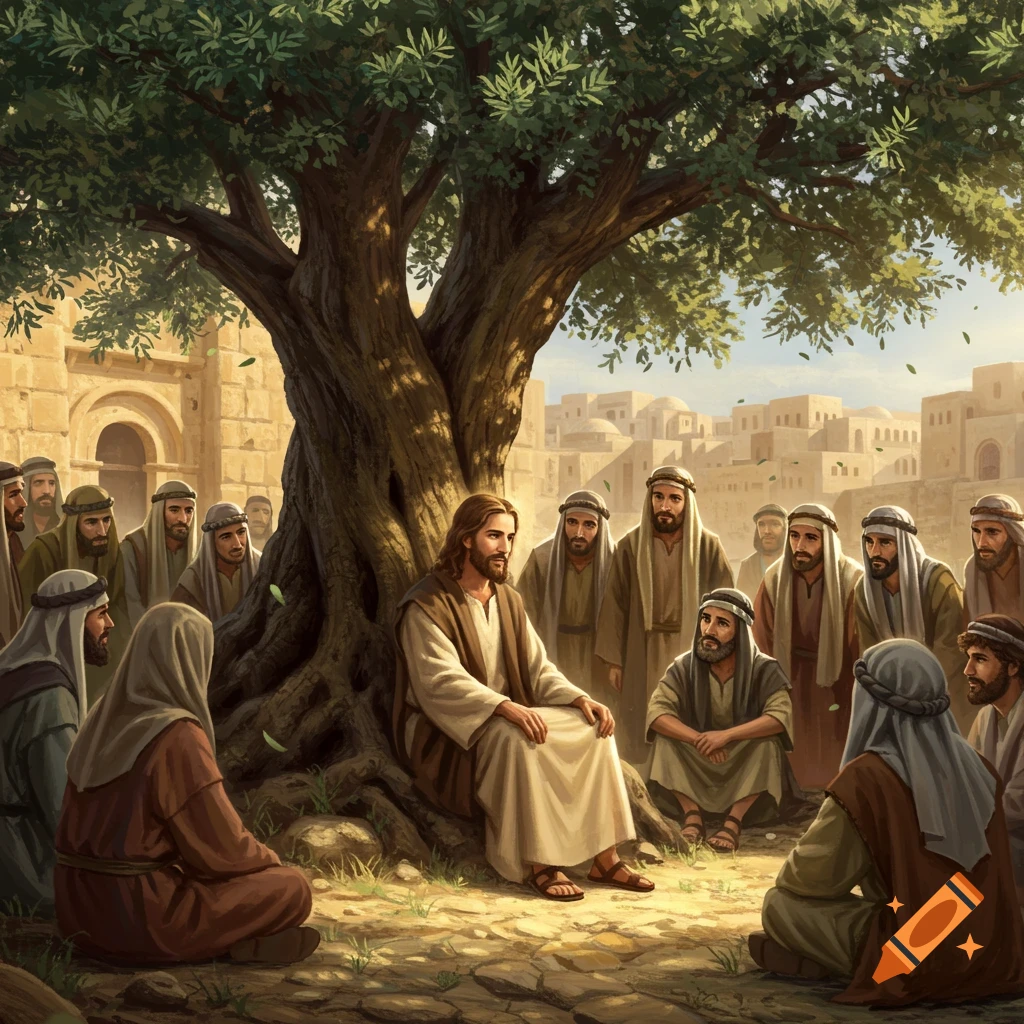
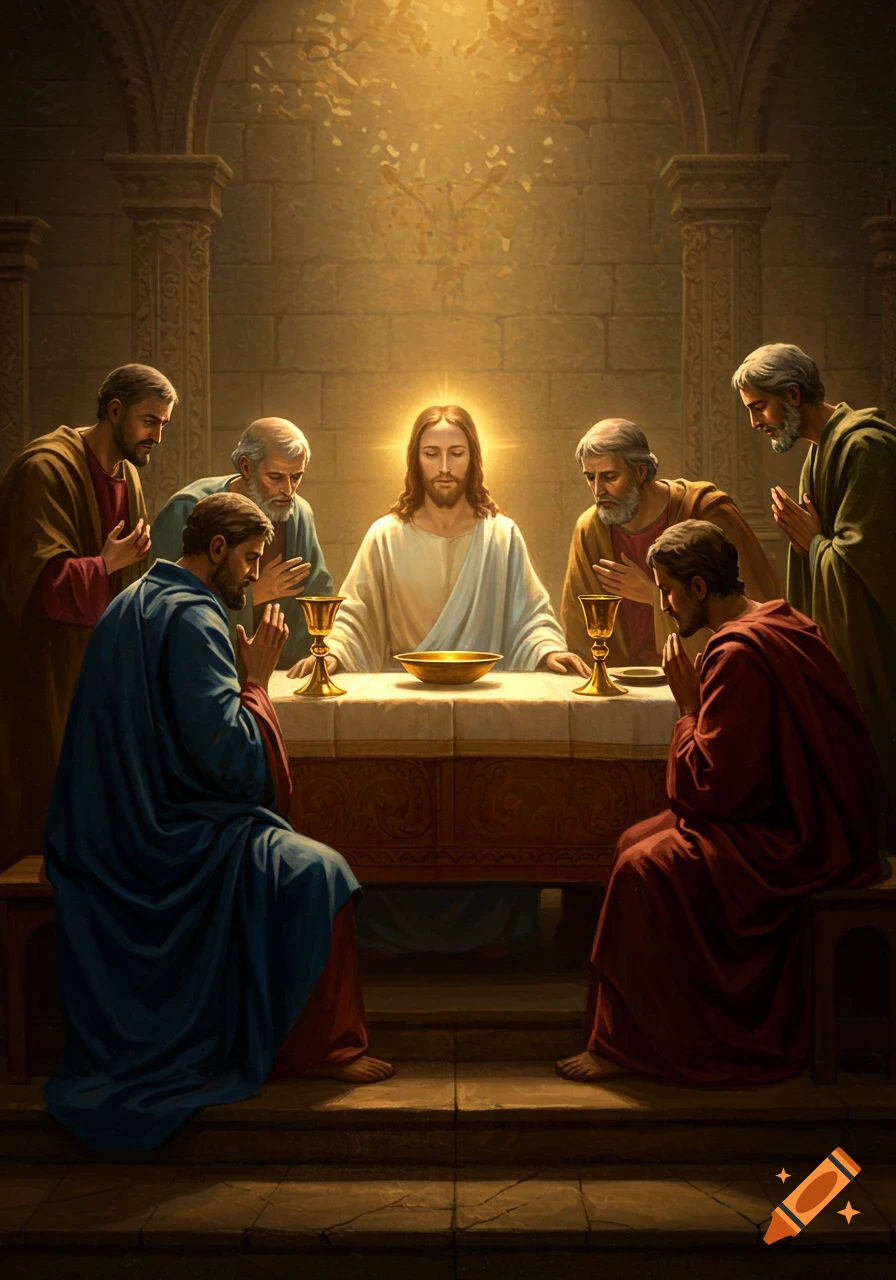
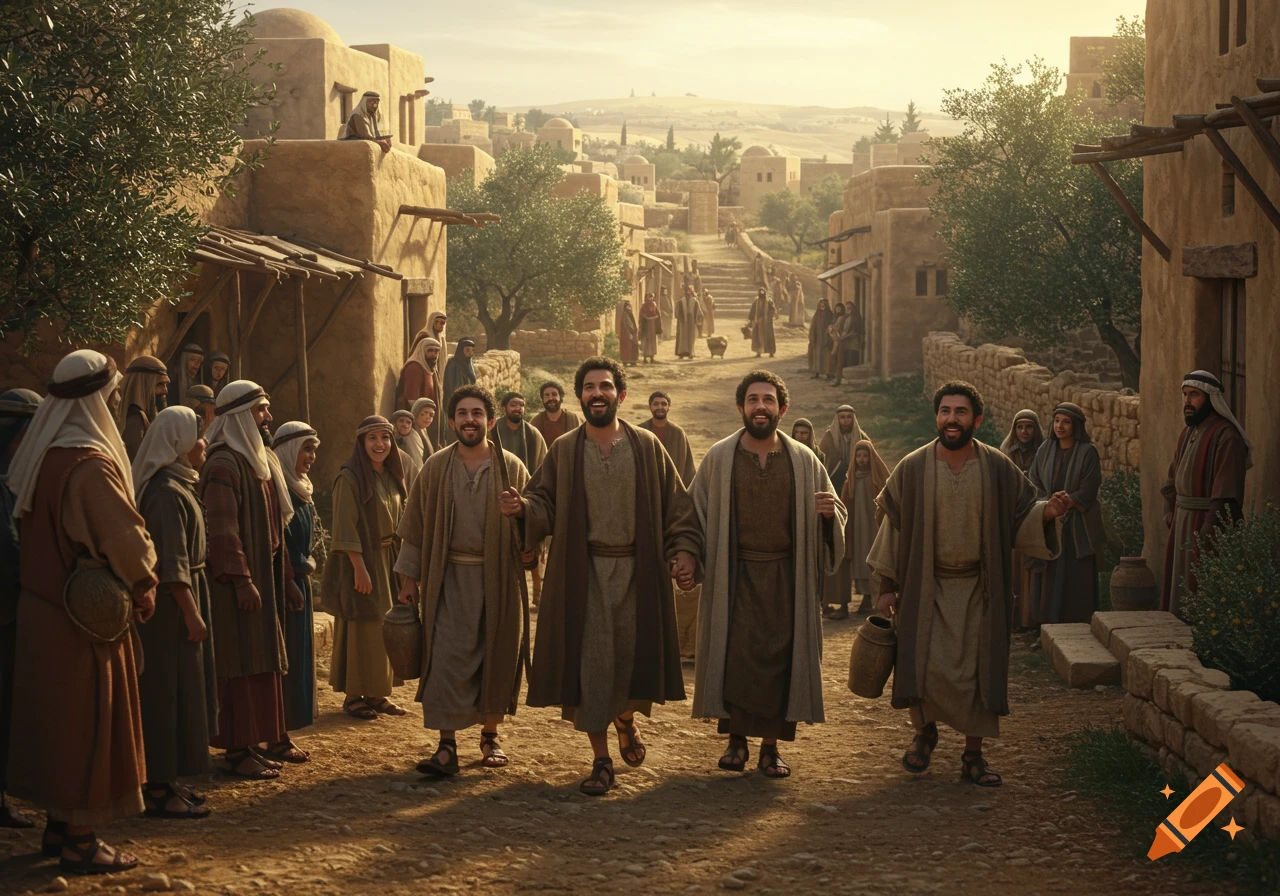
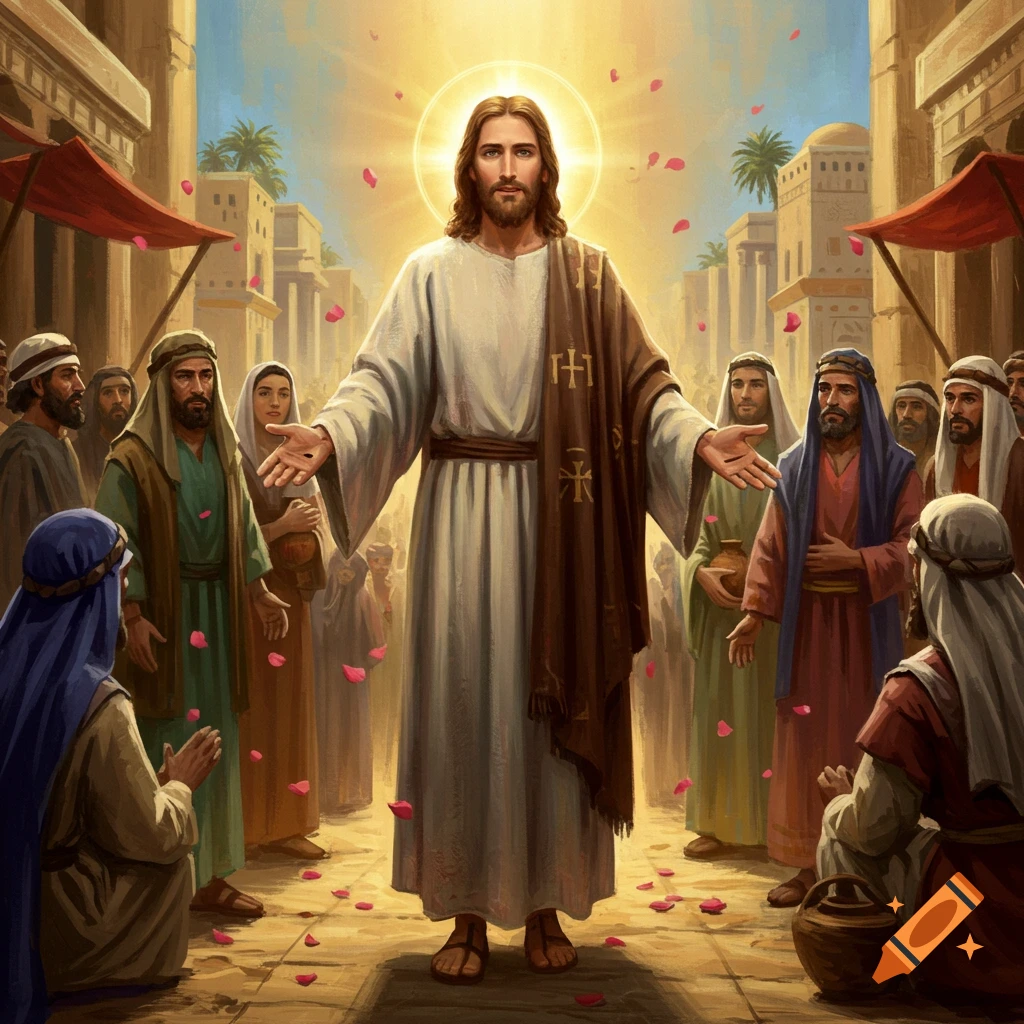
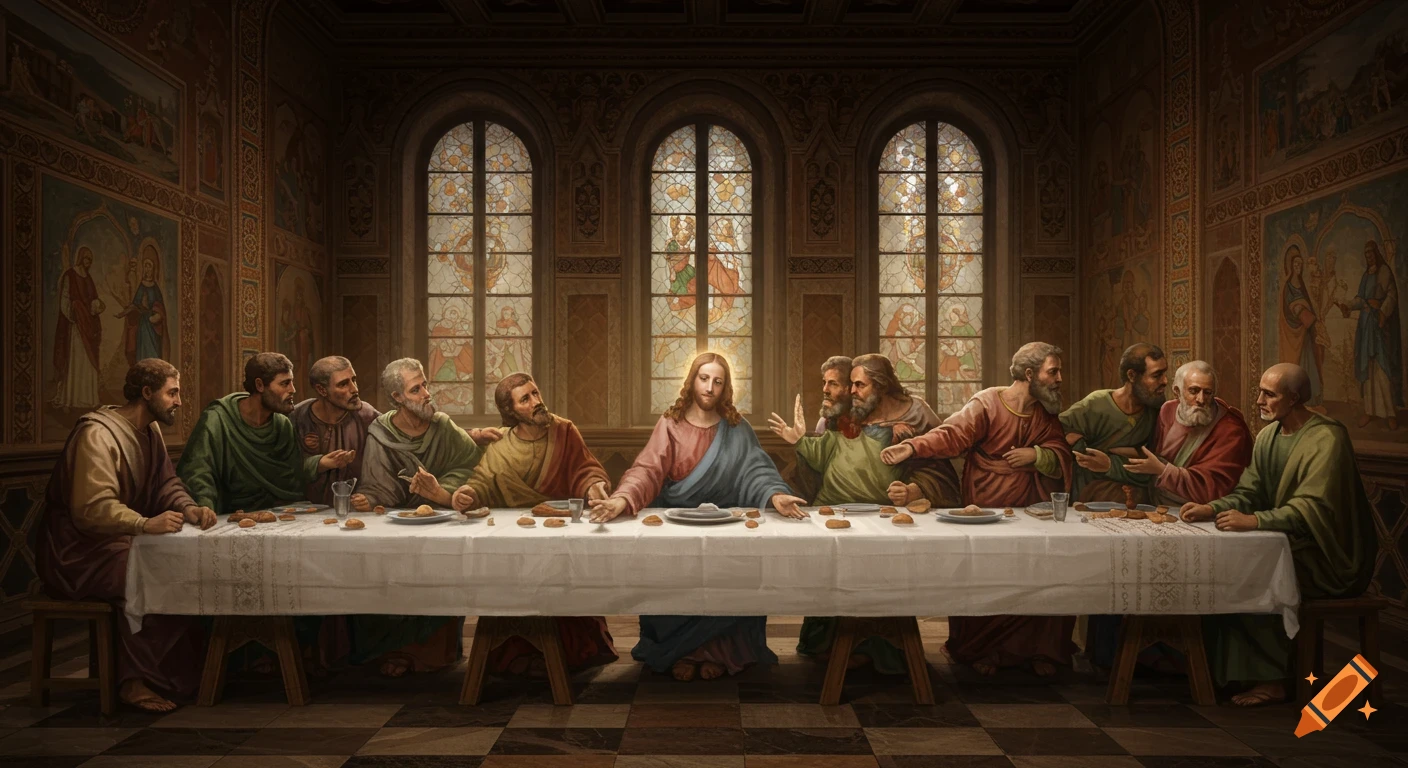
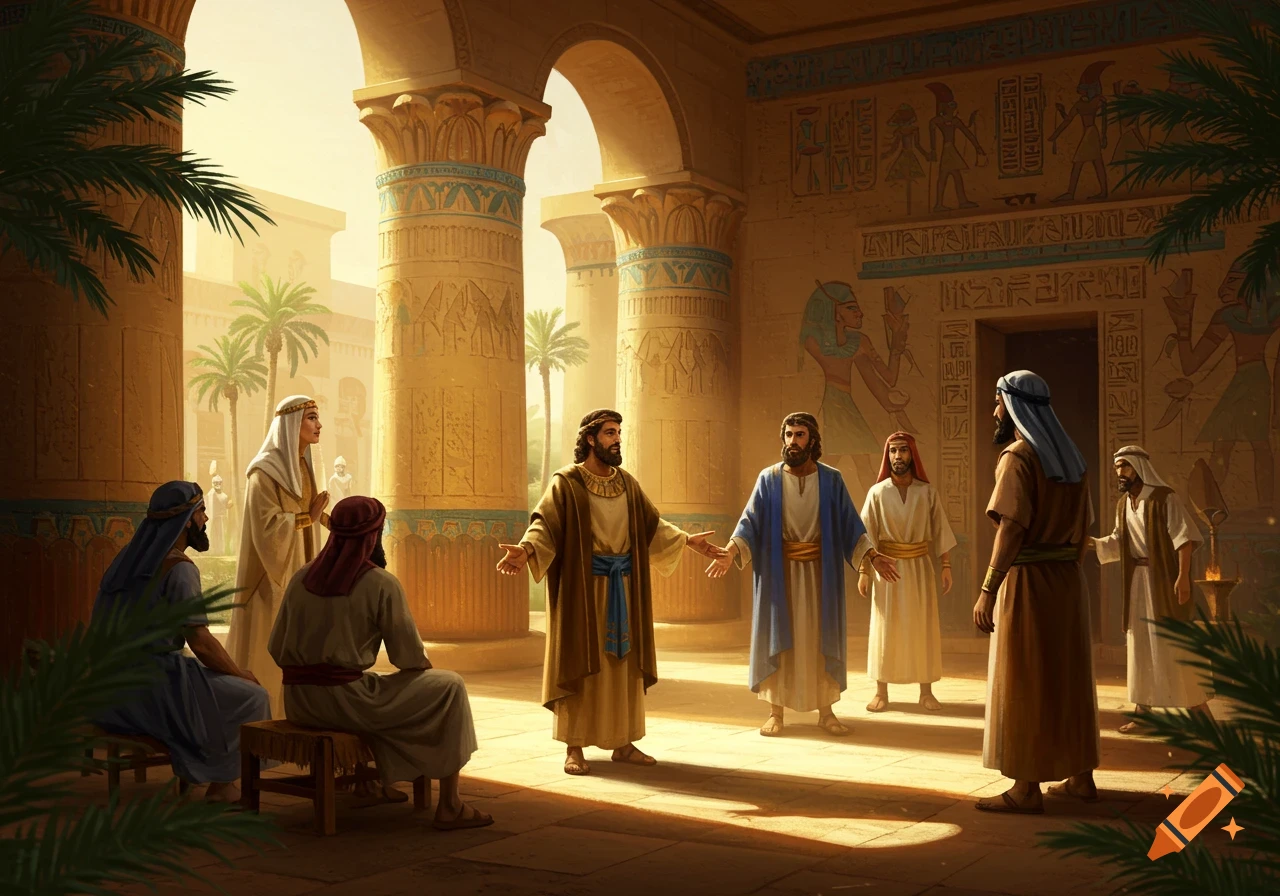
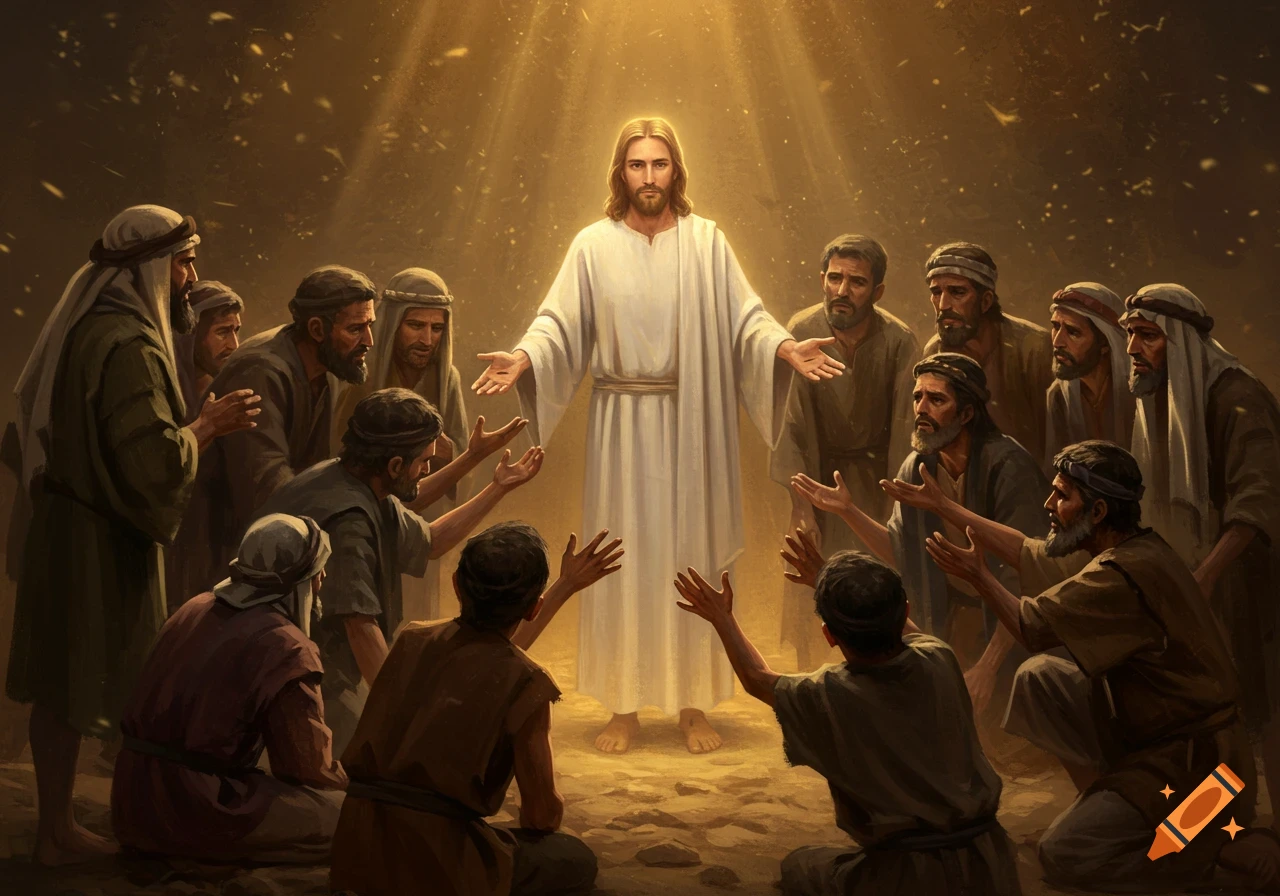
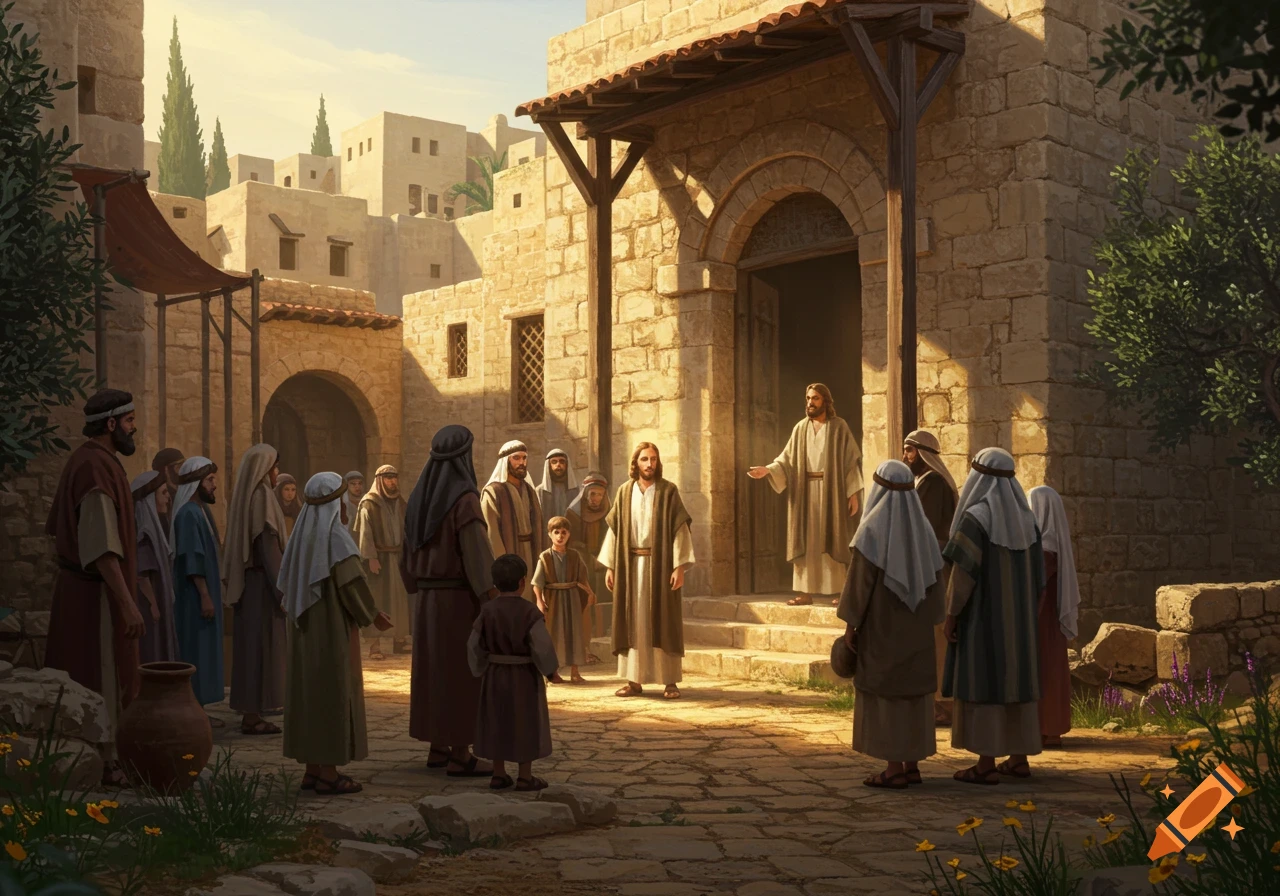
A Jewish betrothal ceremony in 1st-century Judea, with a couple under a canopy, surrounded by family.

Biblically accurate depiction of a Jewish betrothal ceremony in 1st-century Judea, late afternoon golden light, solemn and sacred atmosphere. Simple open-air courtyard of a stone house in Galilee. A plain linen or wool canopy (early form of huppah) on four poles is held above the couple, symbolizing the future home they will share only after the second stage . Center: A young groom (short beard, simple wool tunic and mantle) faces his bride (modest young woman with hair completely covered by a veil, long embroidered dress). The groom holds a plain wine cup on one hand and another hand hold the bride hands. Two bearded witnesses in tallitot stand close, watching intently (their presence makes the act legally binding). A respected elder or the groom’s father has just pronounced the betrothal blessing (birkat erusin) Family members watch quietly from the sides; joy is present but restrained — everyone understands that from this exact moment the woman is fully his wife in the eyes of Jewish law, forbidden to all other men, though the couple will not live together or consummate the marriage until the nissuin ceremony months later. Hyper-realistic biblical style in the manner of James Tissot, warm earth tones, dramatic golden-hour lighting, dust motes in the air, reverent and legally weighty mood, historical accuracy, no modern wedding elements. See more